
A Day in Paris With Edith Wharton

I just finished The Age of Desire by Jennie Fields, and I couldn’t wait to get back to Paris to play “Edith For A Day.”

The Age of Desire is the fictionalized story of Edith Wharton’s steamy mid-life extramarital affair with Morton Fullerton between the years of 1907-1910. It’s not just another imagined love story, this novel is based on Edith Wharton’s own letters, which Morton Fullerton saved and which are now housed in a collection at the University of Texas.

Edith Wharton’s life in Paris was one of upper-crust privilege, governed by strict rules of propriety. But these private letters show that she still found a way to carve out space for another secret life, one that was free, defiant and passionate. It’s a great story – who doesn’t wonder how Edith, such a grand dame of New York high society, could become so unhinged by an unreliable, bisexual American boulevardier?

Let’s walk in her footsteps and see where she pursued this double life. Follow along on my Edith Wharton Tour on this Google Map.

Edith Wharton arrived in Paris in the winter of 1907 along with her wet-blanket husband Teddy and her long-time secretary Anna. Edith was 45 years old and had recently published The House of Mirth. As Edith herself later said in A Backward Glance, she was looking for a flat in Paris so she could “see people who shared my tastes.”

And Edith had good taste. The Whartons rented a Left Bank apartment owned by George Vanderbilt.  As Fields said in Age of Desire:

Edith was enamored the moment she stepped in to visit George a few seasons ago. It boasts all the Faubourg’s most ravishing touches: high ceilings, exquisite boiseries and elegant moldings. George’s oriental vases and lush Aubusson carpets only make it more elegant.

The Vanderbilts obviously had a good sense for real estate. The townhouse came with its own staff, although the Whartons also hired their own local bonne. The top floor featured a common room where the servants gathered in the evening.

You can visit 58 rue de Varenne, but you can’t get inside. It is now a carefully guarded annex to the Prime MInister’s office, which is across the street in the Hotel Matignon.
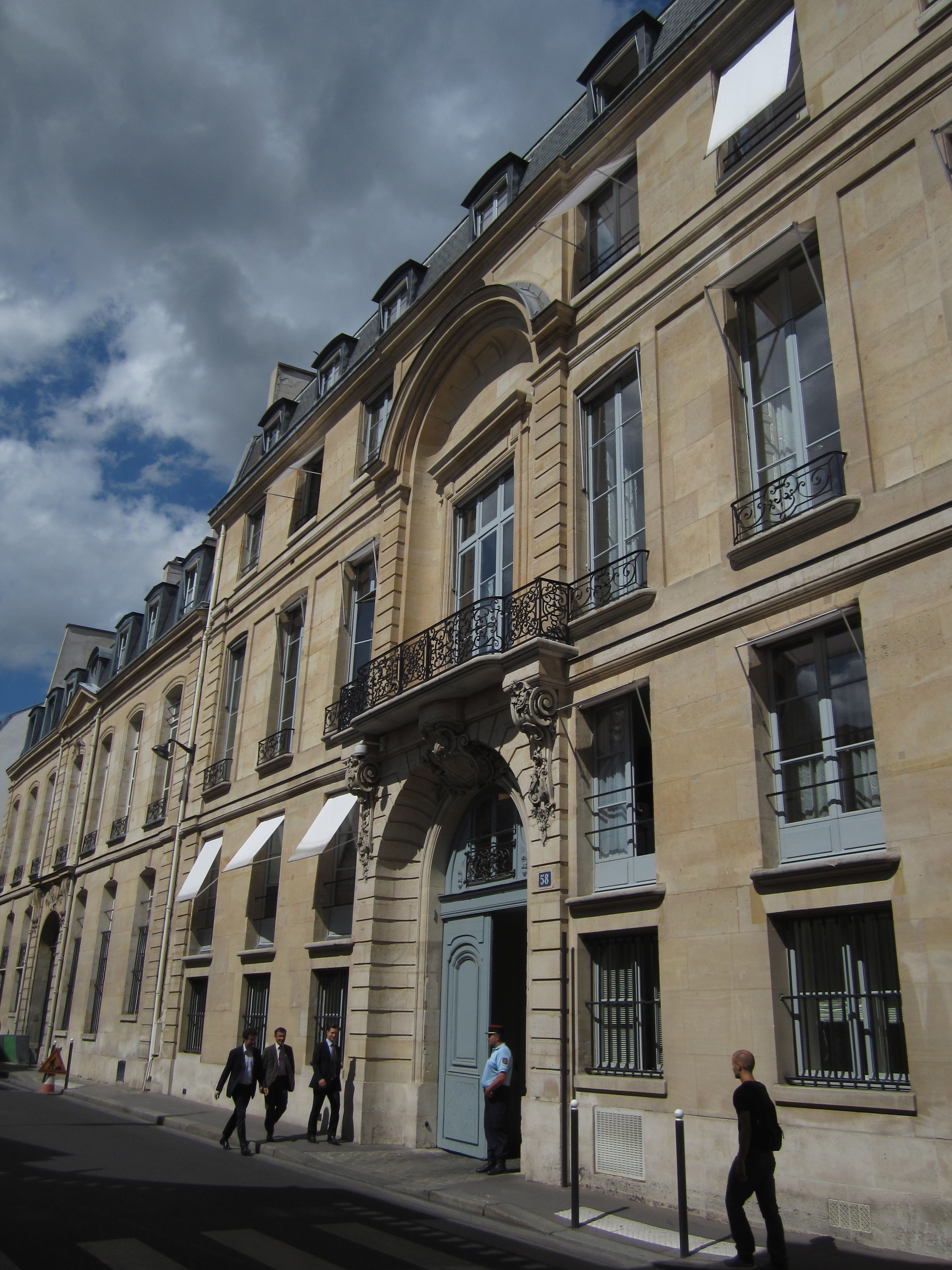
58 rue de Varenne, Edith Wharton’s first apartment in Paris (1907-1909). Rented from George Vanderbilt. Currently an annex of the Prime Minister’s office across the street in Hotel Matignon. The day I went to visit, the doorway to the courtyard was open but I was quickly chased away. The guard thought I was crazy when I told him L’Americaine Edith Wharton used to lived there. “Non, le PM!”

After the guard escorted me out of the courtyard and back onto the sidewalk, he did allow me to take this photo looking back into the courtyard. Can you picture Edith back there, greeting Henry James or Morton Fullerton at the door?

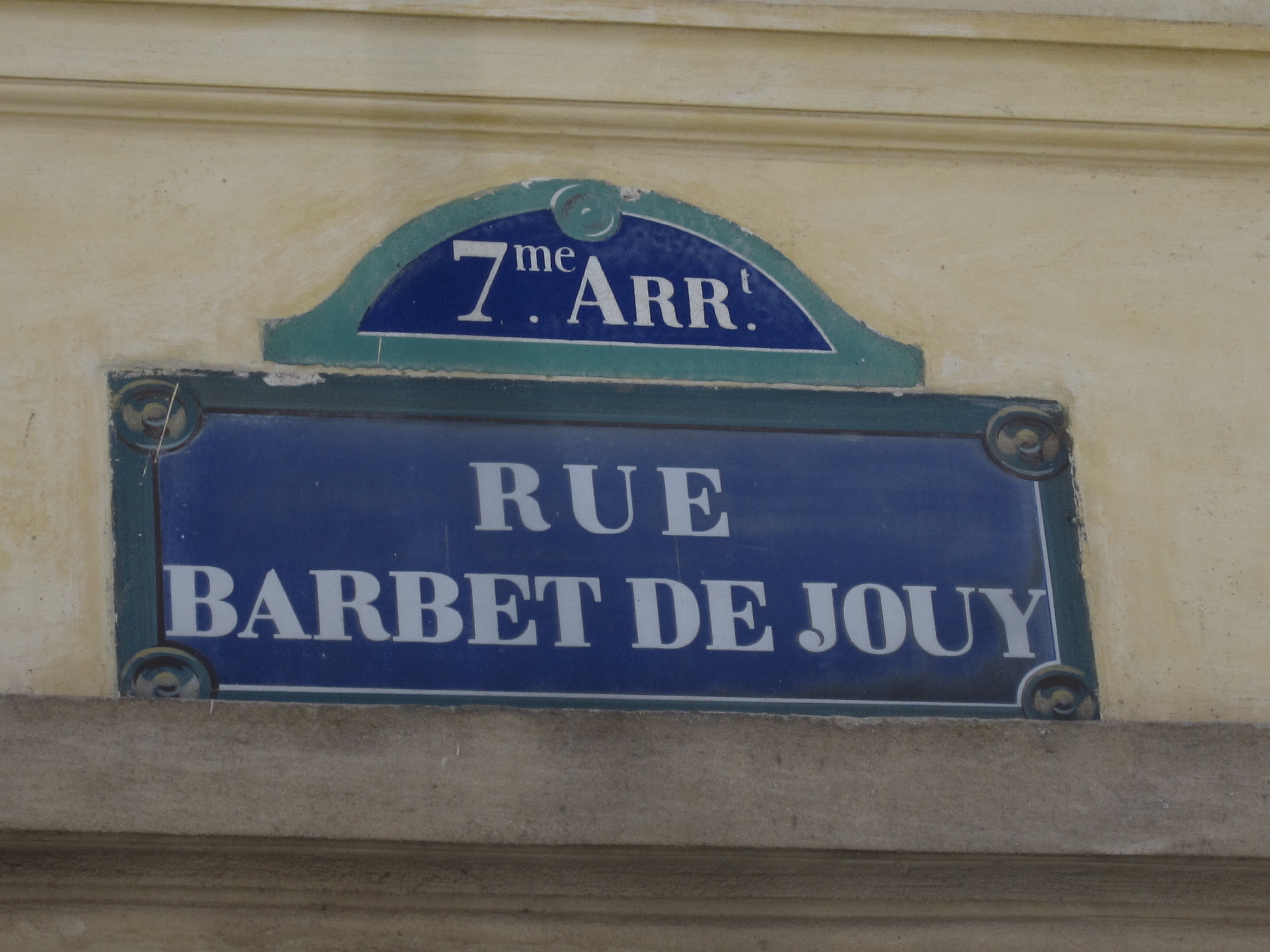
Edith enjoyed her social life in the Left Bank world of teas and salons. She was good  friends with the French author Paul Bourget, who lived around the corner with his wife Minnie on rue Barbet de Jouy.
Edith loved attending the Tuesday night salons of the widowed Comtesse Rosa de FitzJames at 142 rue de Grenelle, which is now the Swiss Embassy. In fact, it was at Rosa’s salon that Edith first met the roguish Morton Fullerton.
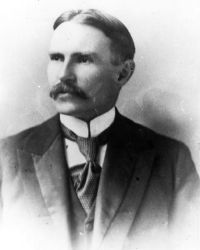
Morton Fullerton

You can tell that Jenny Fields had fun playing with the attraction between Edith and Morton in Age of Desire. At their first meeting, Morton told Edith that he’d read and enjoyed The House of Mirth, and impressed Edith by asking about Lily Bart. Nice ice breaker for a writer, right? When they discovered they were mutual friends of Henry James, Edith was definitely intrigued. She couldn’t wait to see Morton again.

But Edith would have to wait. Discretion prevailed. When Henry James came for an extended visit at Edith’s, Morton dropped by as often as he could. Edith and Morton finally had a private get-to-know-you walk through Edith’s posh Left Bank neighborhood, “the sun . . . splash[ing] itself all along the high-walled hotel particuliers of the rue de Varenne.” 

In the pages of Age of Desire, Edith and Morton strolled down to the nearby lawns of Les Invalides. When they sat down in a nearby garden, things really started to buzz:

In the garden, they locate a bench and sit side by side. She can sense his body heat, and takes in his odor of driftwood and lavender. Edith feels something she hasn’t felt in a long time and cannot name. . . .

[Morton says,] “See that honeybee?”  On the hedge behind them, a honeybee as far as a blackberry is trying to wedge himself greedily into the narrow trumpet of a pink flower. Fullerton turns his gaze to her and says, “That’s how drawn  I am to you.”

Really, Morton, you little devil. No more Age of Innocence for Edith.

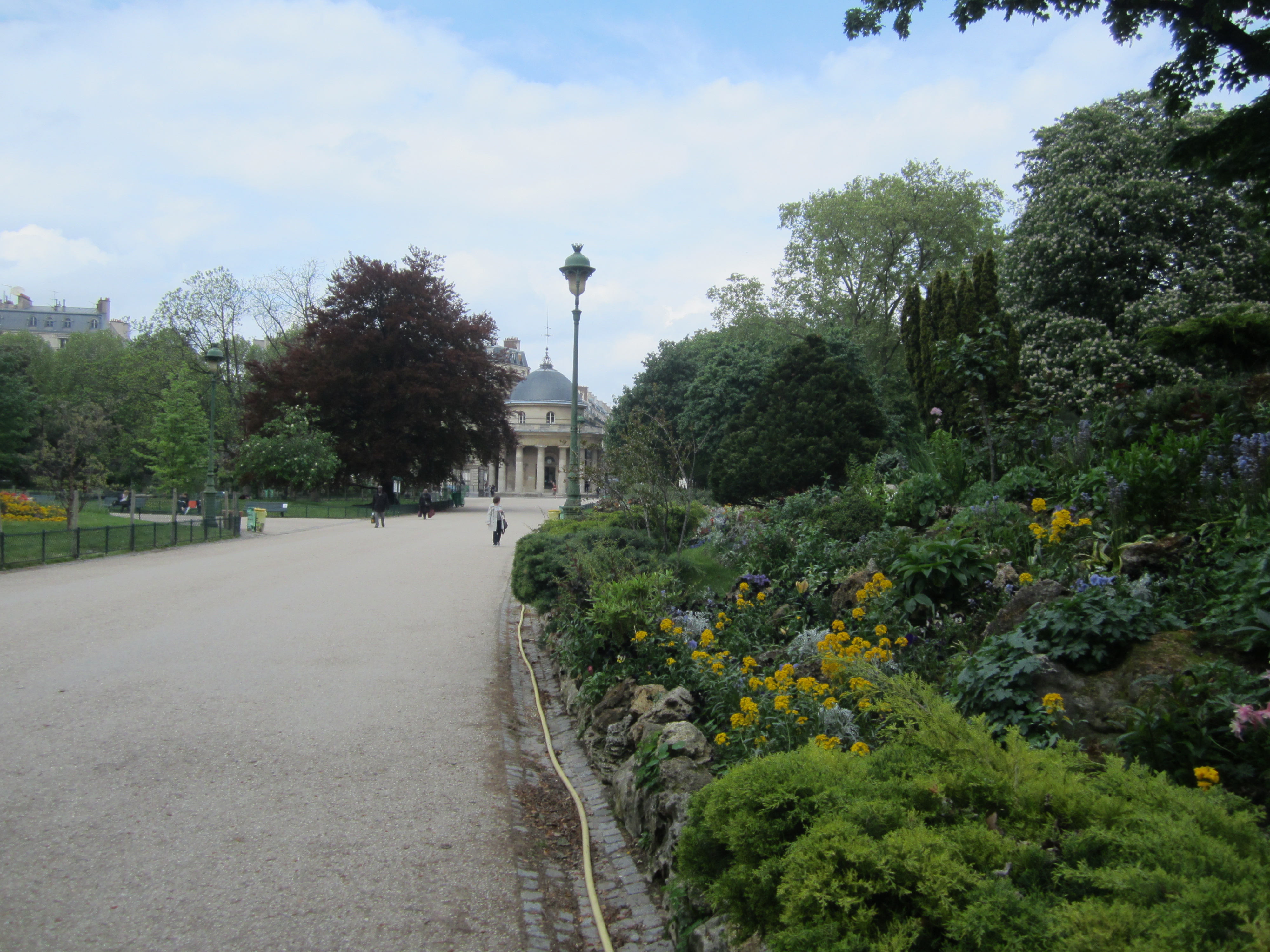
Square d’Ajaccio near Les Invalides in Paris. I could easily picture Edith and Morton on one of those benches. It was a pretty romantic park in real life.  One amorous couple kissed shamelessly on a bench while another were entangled in the grass. Ah, Paris!

Unfortunately, Edith’s newfound passion would have to wait some more. The Whartons returned each spring to their palatial home (The Mount) in Lenox, Massachusetts, and would not return to Paris until December, 1907.

Edith and Morton’s relationship finally escalated the next season in Paris. They snuck off on long walks through Montmartre, the Tuileries, and Luxembourg Gardens. They met at the Louvre, took daring trips in her car. Their love become ostentatious; people took notice. But Edith didn’t care. How can a woman say no to those little green boxes of macarons framboise from La Durée?
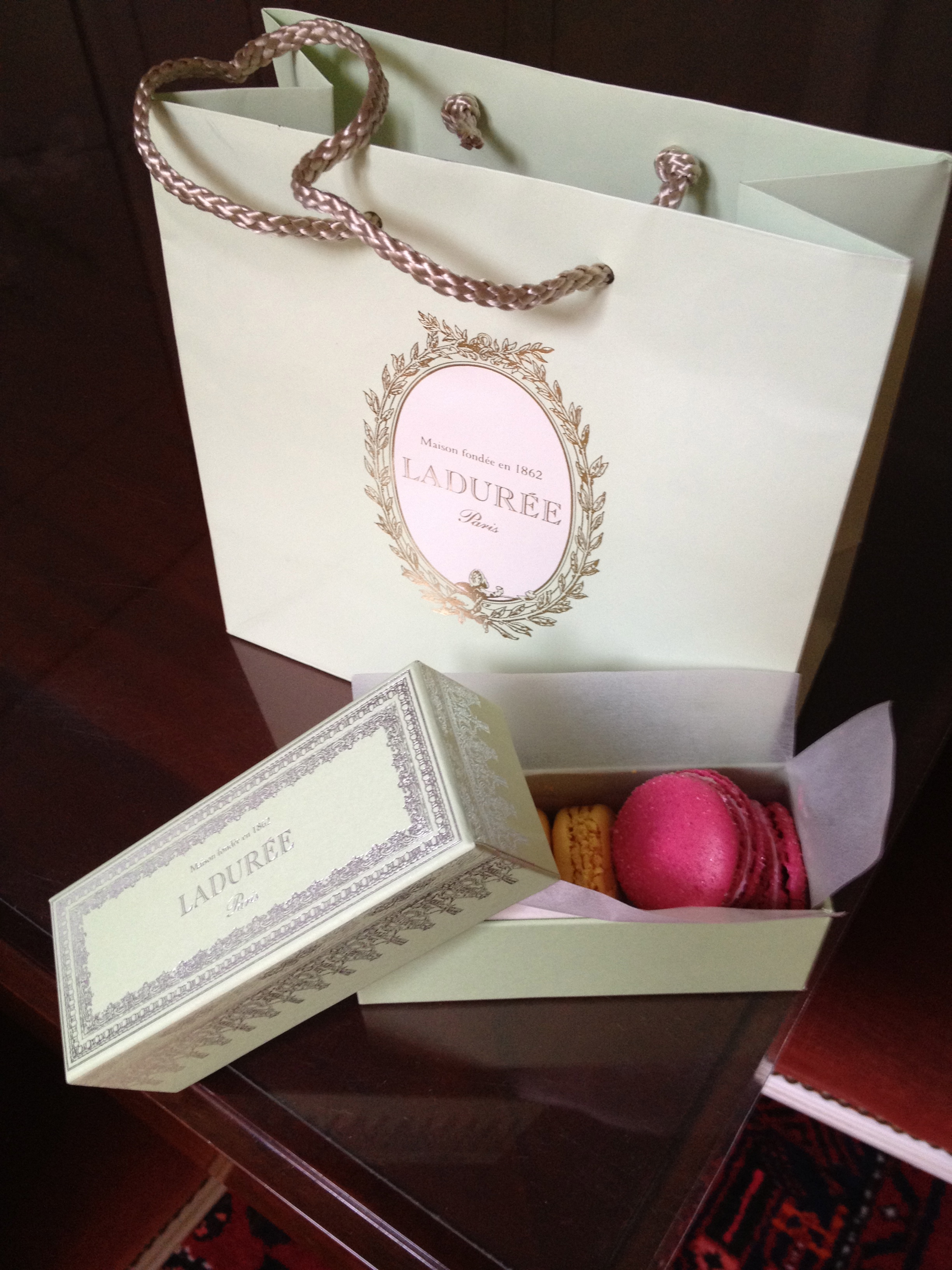
“Instead of flowers, [Morton] proffers a pale green box of gleaming pastel macaroons from Laduré, the pastry shop on Rue Royale.”

After a long, romantic winter, the Vanderbilt lease was up and it was time for Edith to return to the United States. Before her ship set sail, Edith spent a few weeks at her brother’s townhouse at Place des ´Etas-Unis on the Right Bank. When Morton came to visit her there, Edith felt the need to apologize for her brother’s trés American taste:

“It’s just like my brother to choose to live in Paris but reside on a street called American Place,” she says.

“Ah yes [says Morton]. Sophisticated Mrs. Wharton wouldn’t be caught dead here . . . and yet here you are!”

A lovely old residence on Place Etat-Unis, a beautiful square in the 16th arrondissement where Edith’s brother Harry Jones lived.  Yes, it’s true, a lot of Americans lived there and still do. In this scene in the novel, Fields does a great job of capturing Edith’s Left Bank snobbery.

Hotel Crillon, Edith Wharton’s home base in Paris.
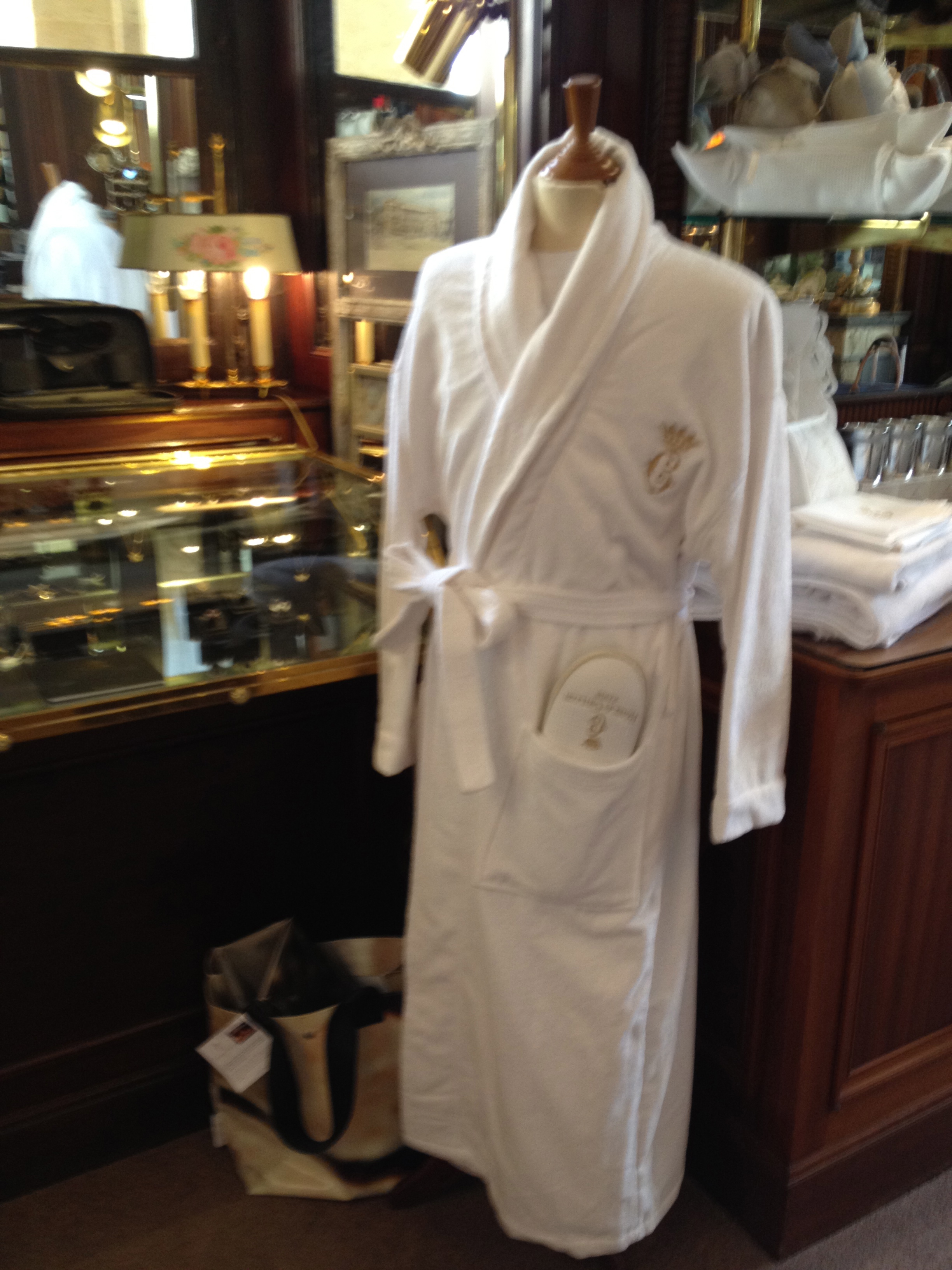
The folks at the Crillon’s boutique were good sports and let me take this photo of a Hotel Crillon bathrobe. I was trying to picture Edith in a robe and slippers, scribbling away about Undine Spragg’s time in Paris, but that got a little weird.
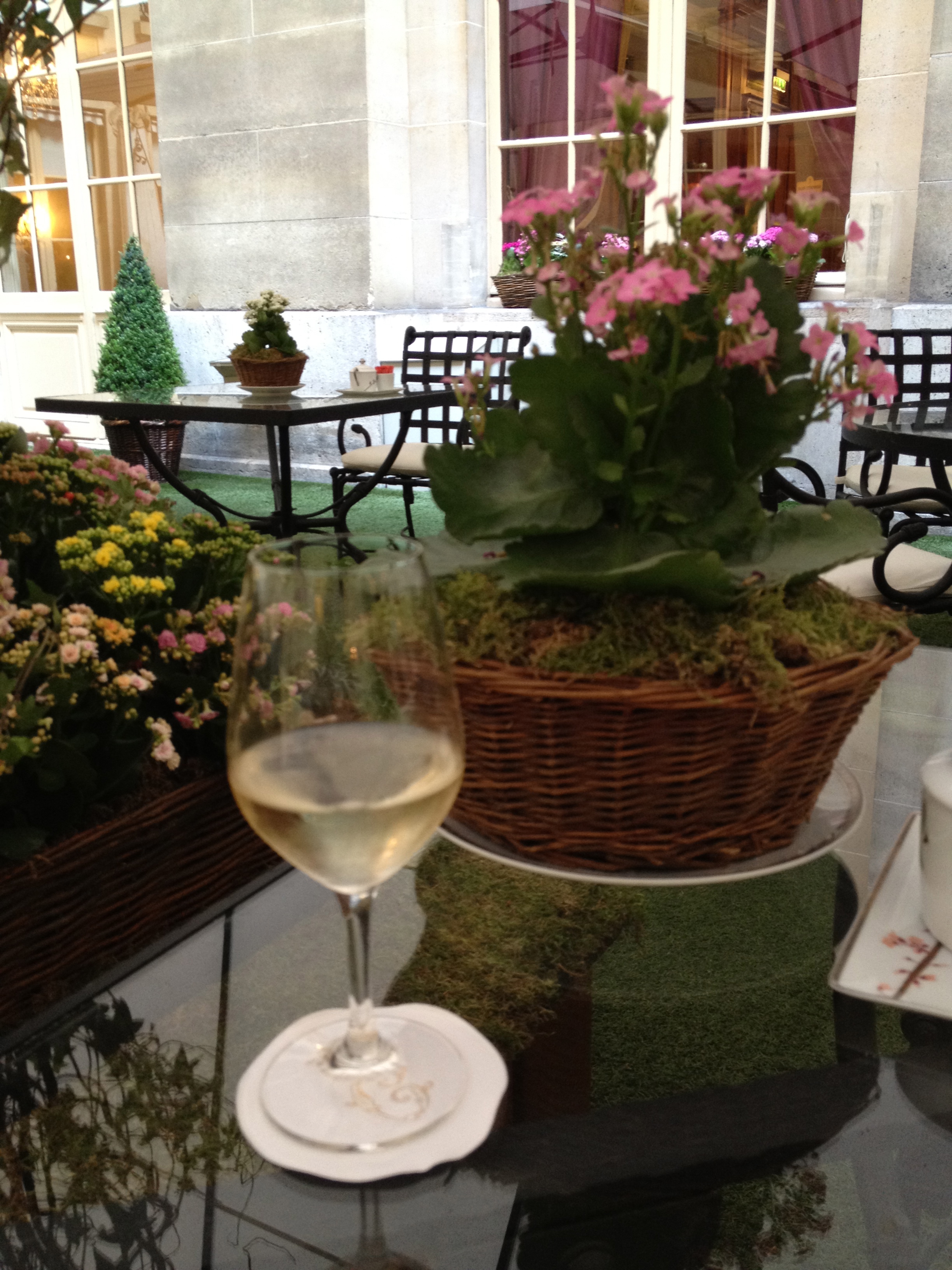
Even if you can’t swing a month at the Crillon like Edith, you can still enjoy a nice Sancerre on the terrace.


Edith lands on the perfect apartment at last. And to think it’s just across the street from the Vanderbilts’ on the Rue de Varenne. But bigger, and newer, with its own guest suite and servants’ quarters and steam heat! Unheard of in Paris. And what makes it so extraordinary is that the rooms are luxuriously spacious and overlook a small but elegant garden. A garden! It’s all she could want in space and light. Precisely in the part of the Faubourg she loves.
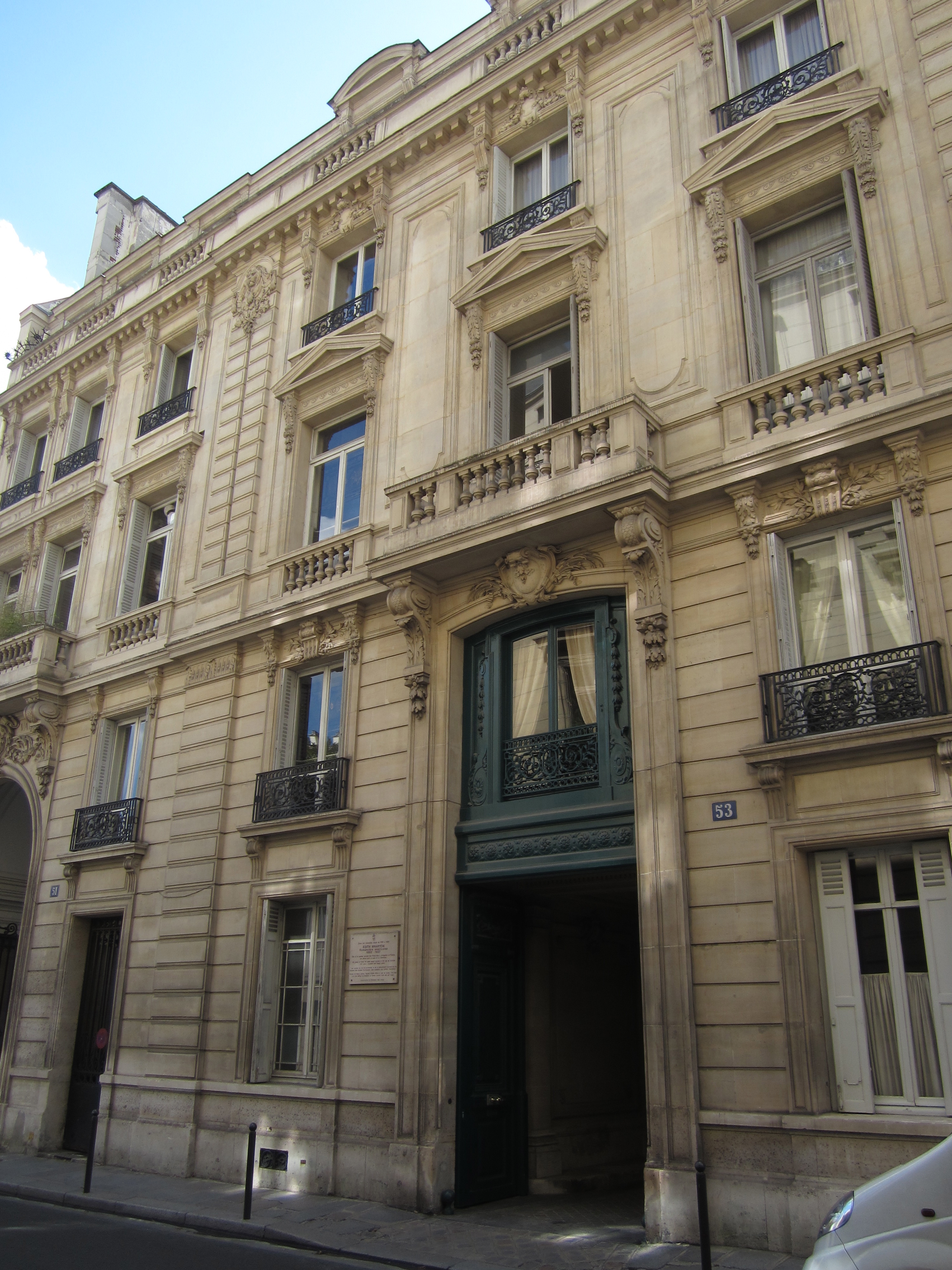
53 rue de Varenne, Edith Wharton’s home in Paris.
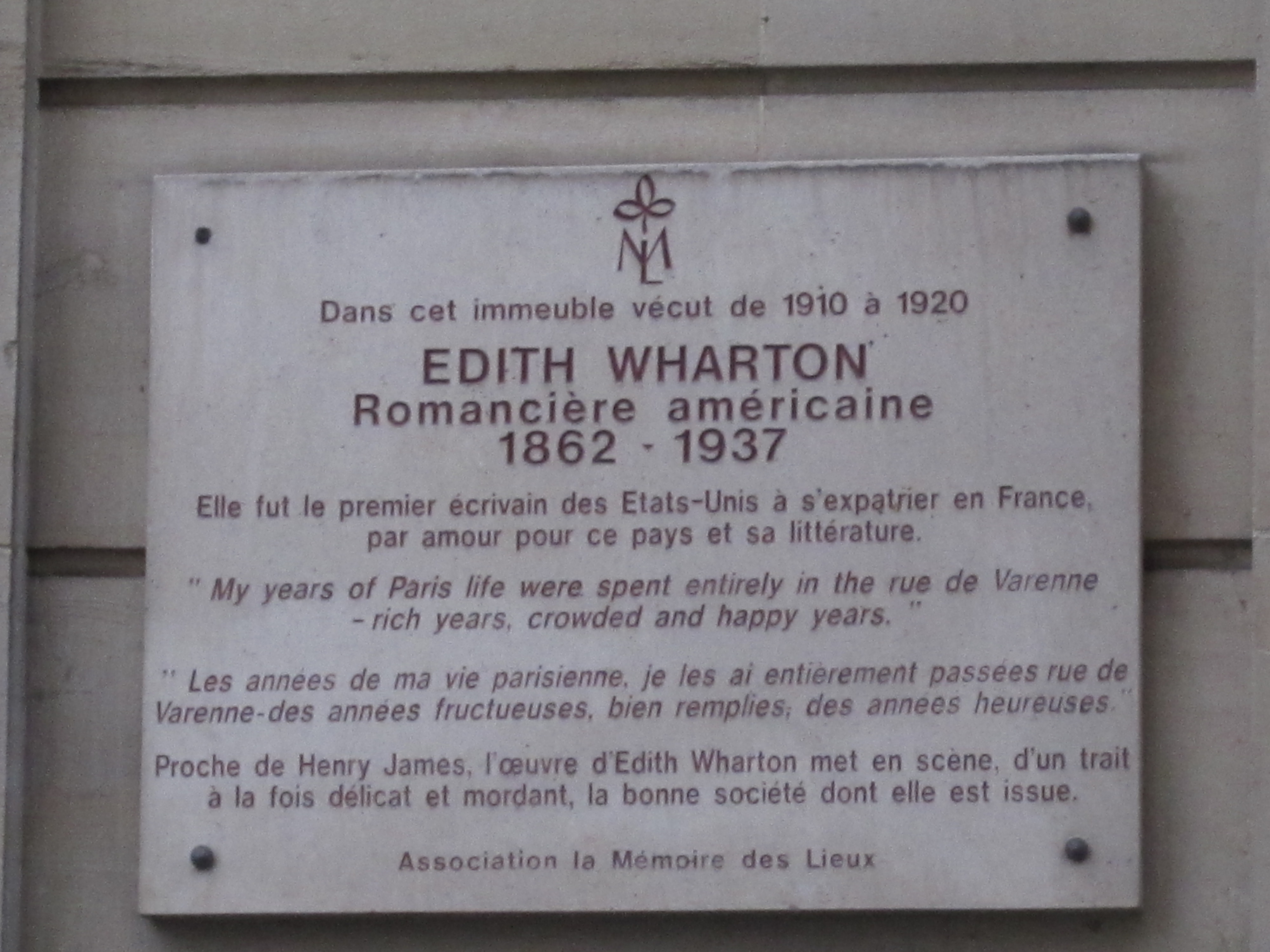
The plaque at 53 rue de Varenne commemorating Edith Wharton’s years here (1910-1920),  her love for France and her friendship with Henry James.
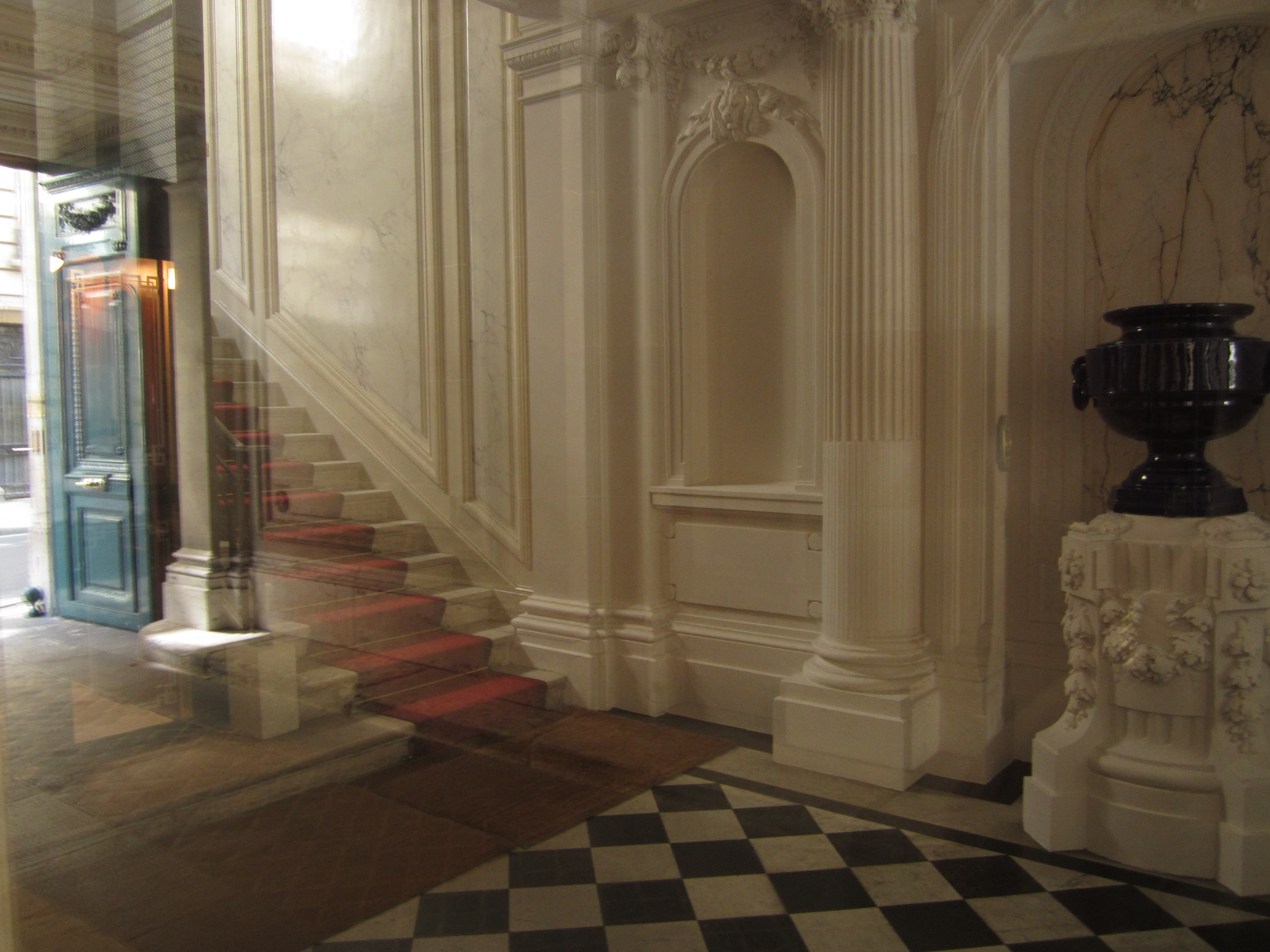
The carriage door was open, so I was able to walk inside toward the courtyard and glimpse a peek of the lovely tiled lobby of Edith Wharton’s former townhouse at 53 rue de Varenne.
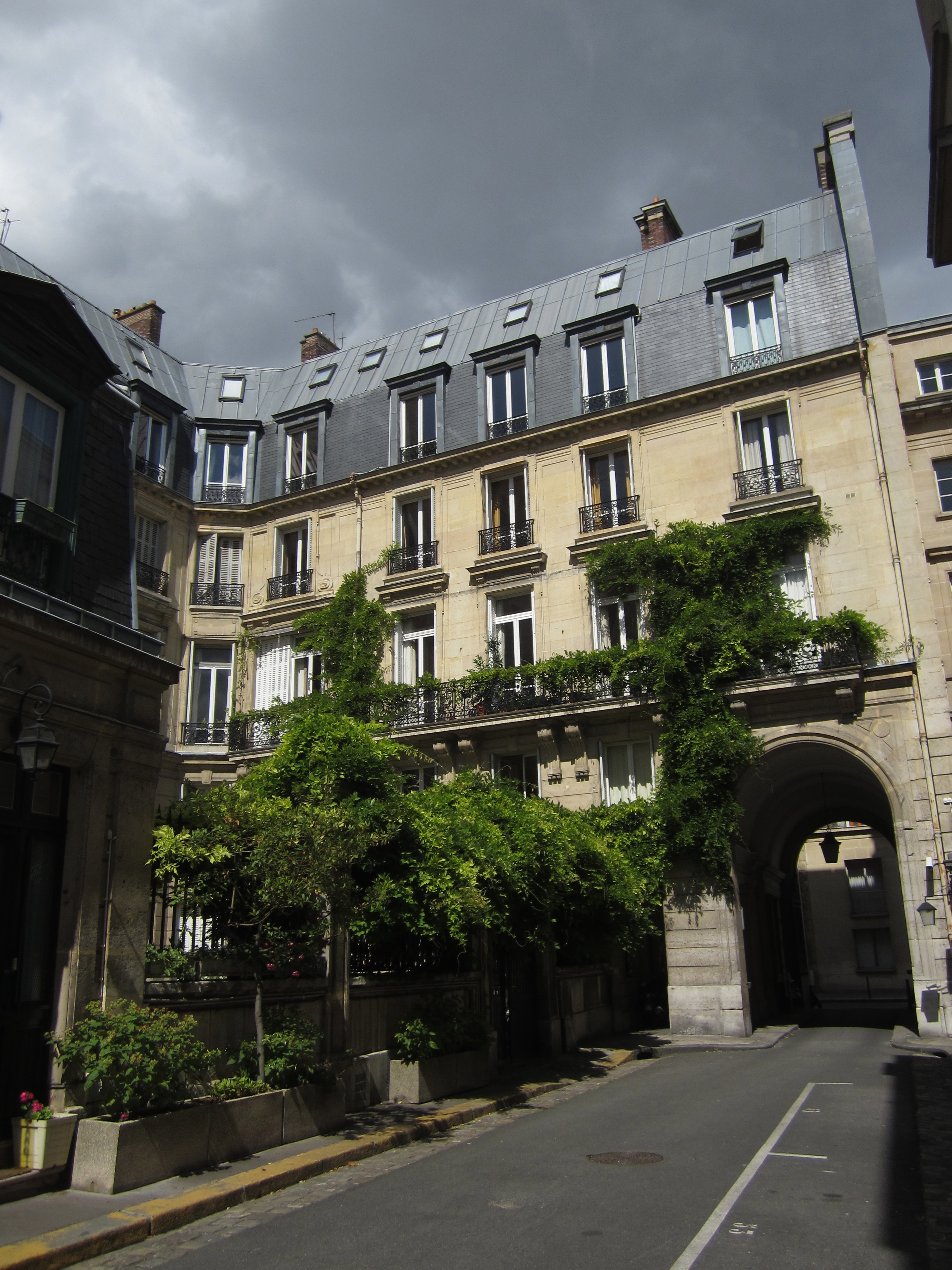
The view of the back of Edith Wharton’s apartment at 53 rue de Varenne, which overlooked beautiful private gardens. Look again at the cover of Age of Desire. Looks like Edith could be standing right there, doesn’t it?
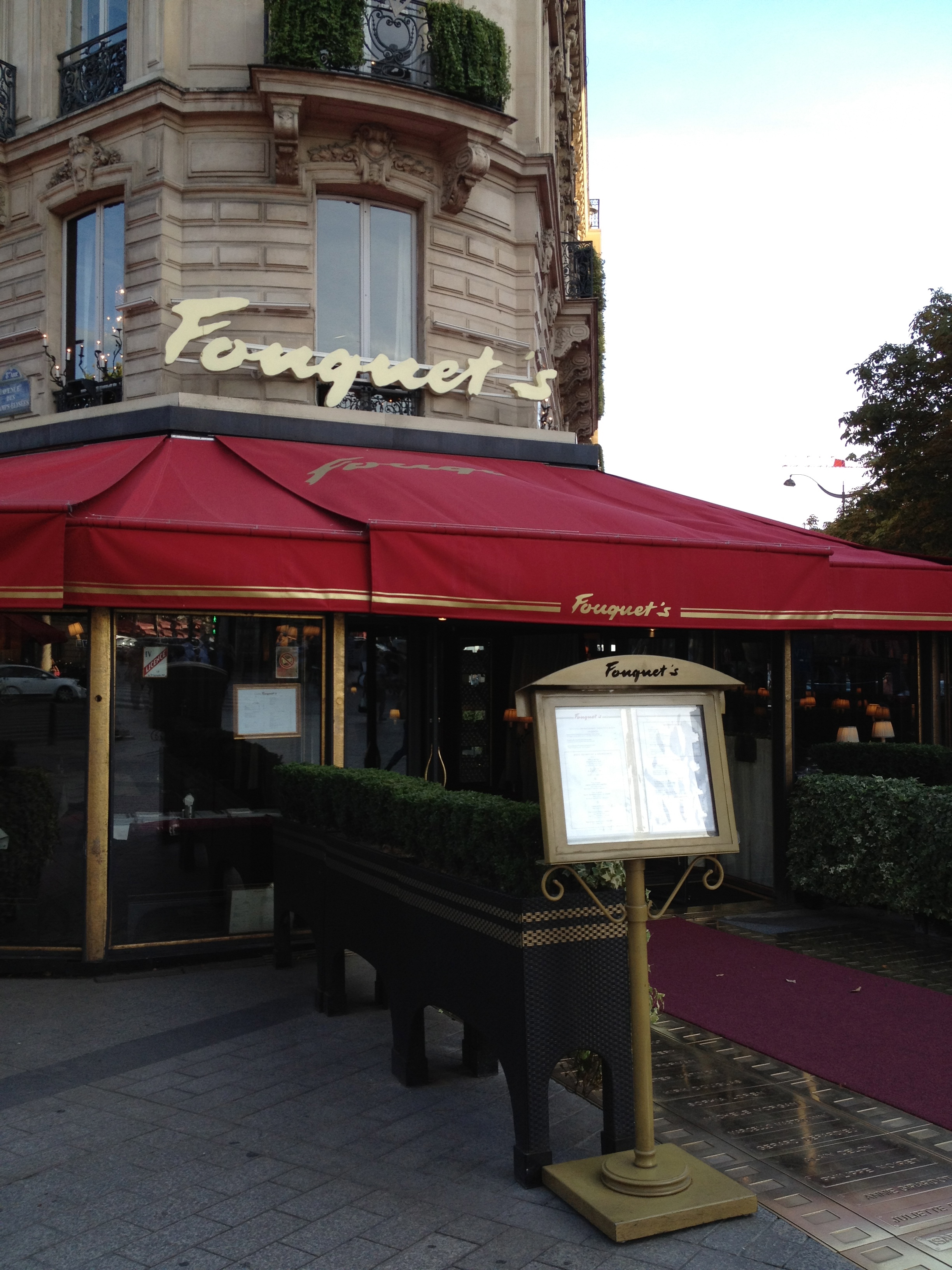
Fouquet’s on Champs  Elysée. You can have a perfectly pleasant (although pretty expensive) dinner there, unlike the miserable dinner Edith and Morton had toward the end of the book!

If you find yourself in Paris and would like to have your own Edith Wharton Day, just follow along on my Google Map. I would recommend starting at the Rue de Bac Métro stop, walking down the rue de Varenne, and then heading over to Les Invalides. From that point you can walk across the Seine or hop back on the Métro to get to the Crillon, La Durée and Fouquet’s. After some macaroons from La Durée, a glass of wine at the Crillon and dinner at Fouquet’s, you’ll definitely feel spoiled, and perhaps, a little like Edith.

Age of Desire is an entertaining treat for Edith Wharton fans, but is also a good read for those who haven’t yet read her work. Be prepared, though, because after you read Age of Desire, you could end up spending the next month holed up in a chair, getting nothing else done, reading or re-reading all of Edith Wharton’s marvelous novels and stories. To those  purists who object when their favorite literary icons are injected with thoughts and actions from another author’s imagination, I say just give it a try. Play along.

Jennie Fields does a fabulous job following Edith and Morton through Paris and beyond. In the course of her research, Jennie visited Herblay, Senslis and Montmorency, some of the towns outside Paris to which Edith and Morton snuck off to for their trysts. Field’s research pays off. I thought it was beautifully imagined and very well researched. It’s definitely a recommended read.

Dreams of Giverny


Time flies. The 25th Anniversary Edition of Linnea in Monet’s Garden is about to be released this fall by Sourcebooks. It doesn’t seem that long ago that my daughter received her own treasured copy from her grandmother. We read that book over and over, dreaming of the day when we could travel to Giverny together to stand on that bright green bridge over the lily pond.

We finally did.

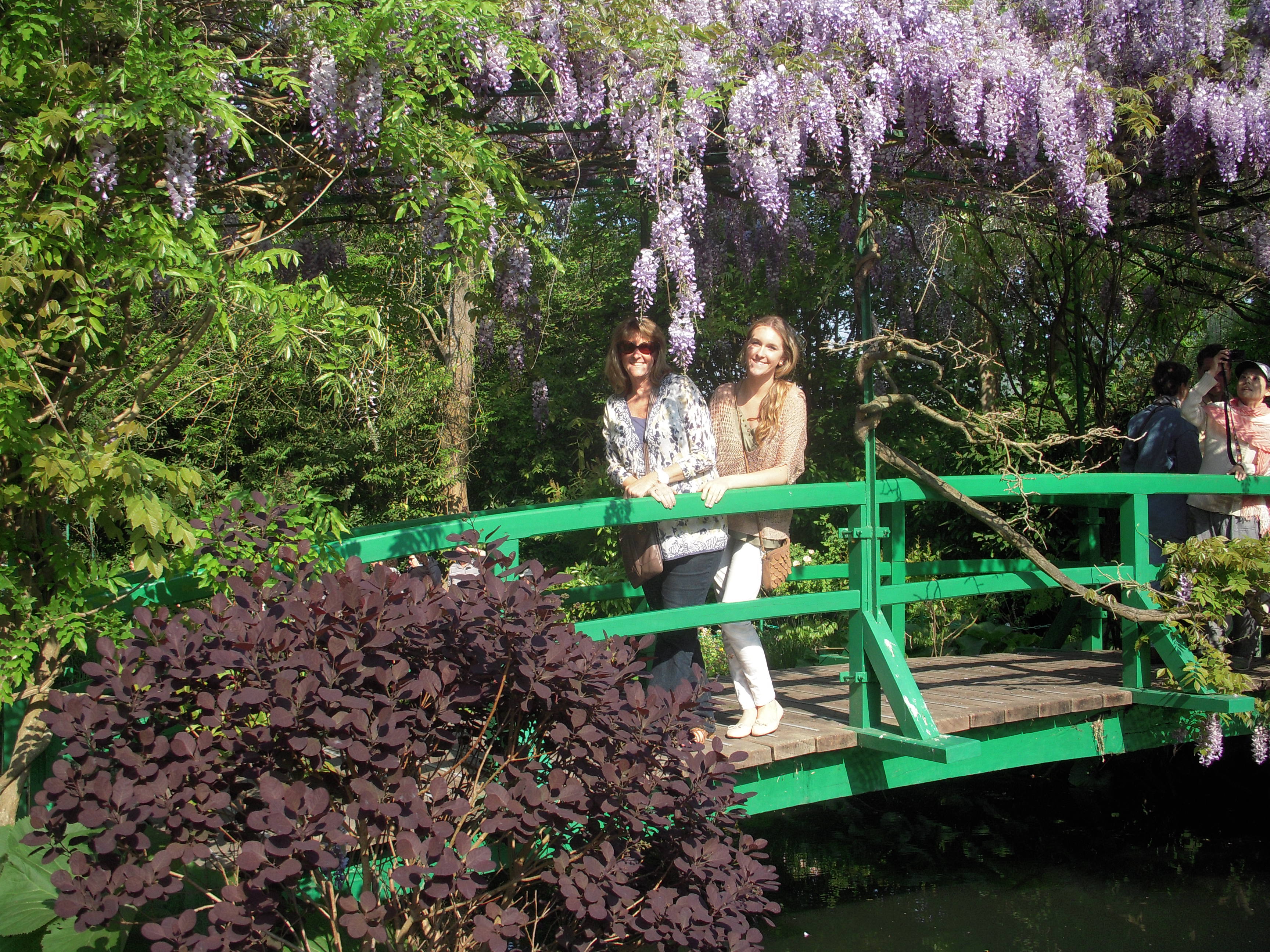
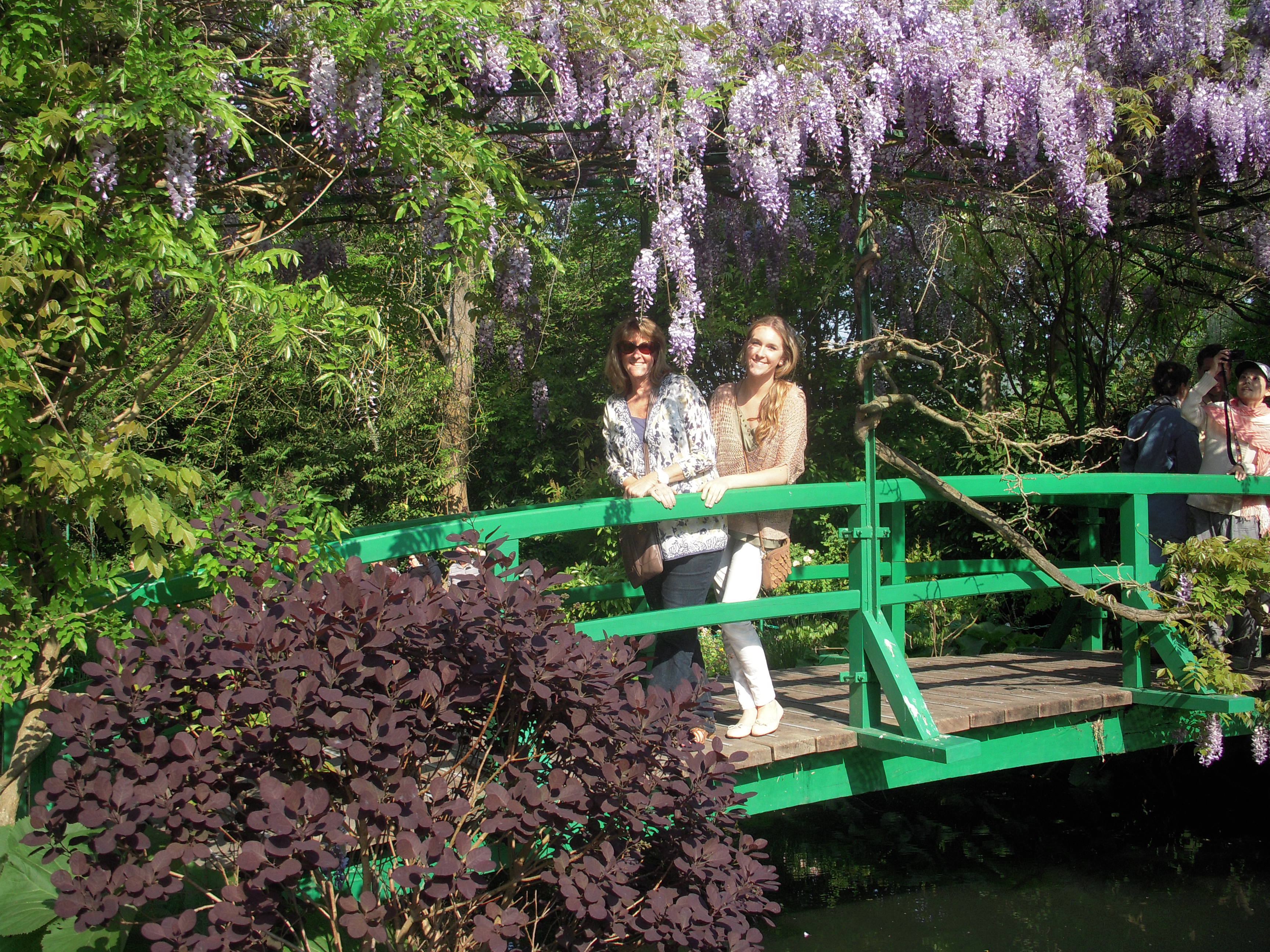
My daughter and I are standing on Monet’s bridge, after dreaming about it for nearly 20 years. Inspired by one of our favorite children’s books, Linnea in Monet’s Garden.

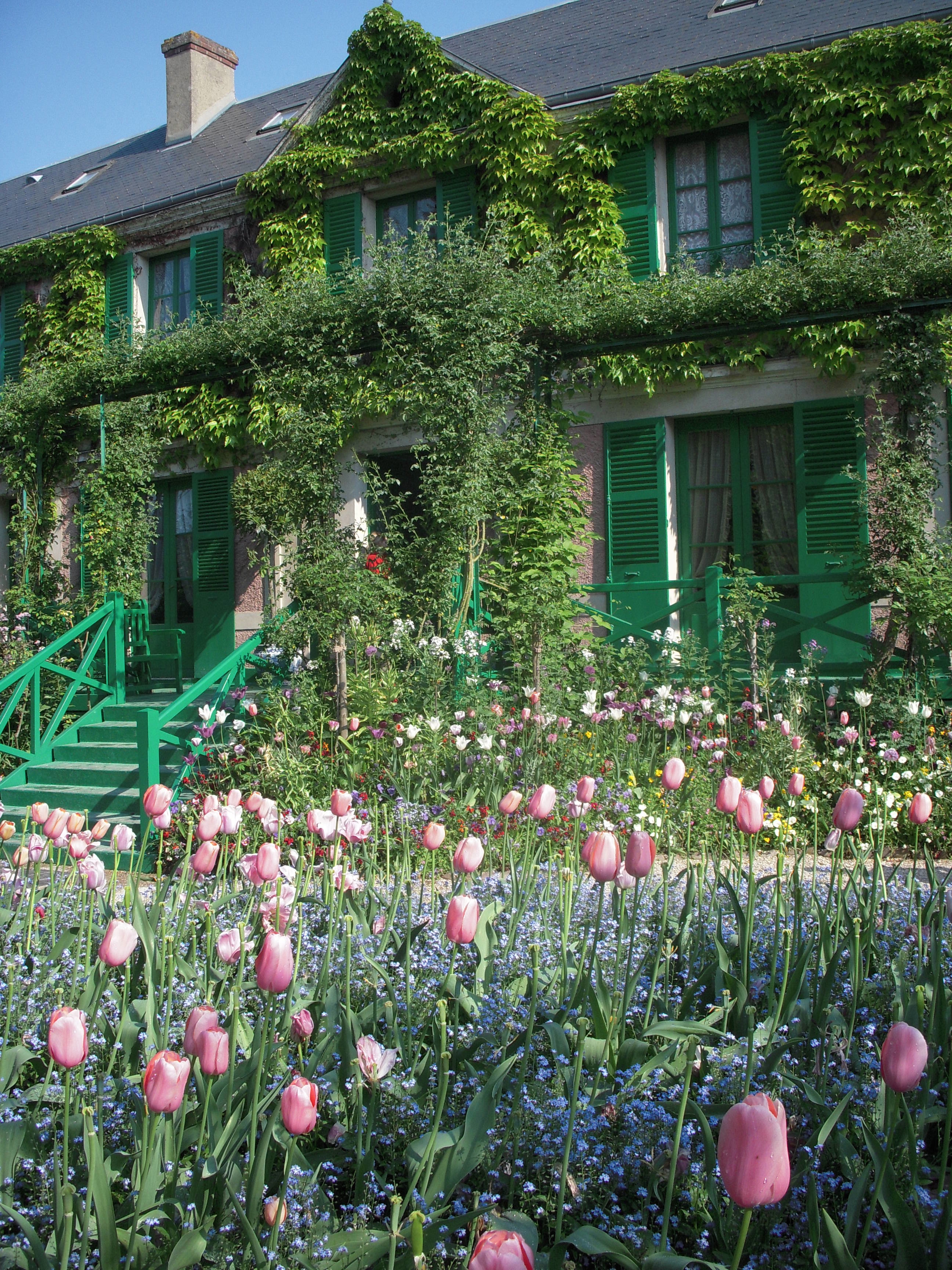
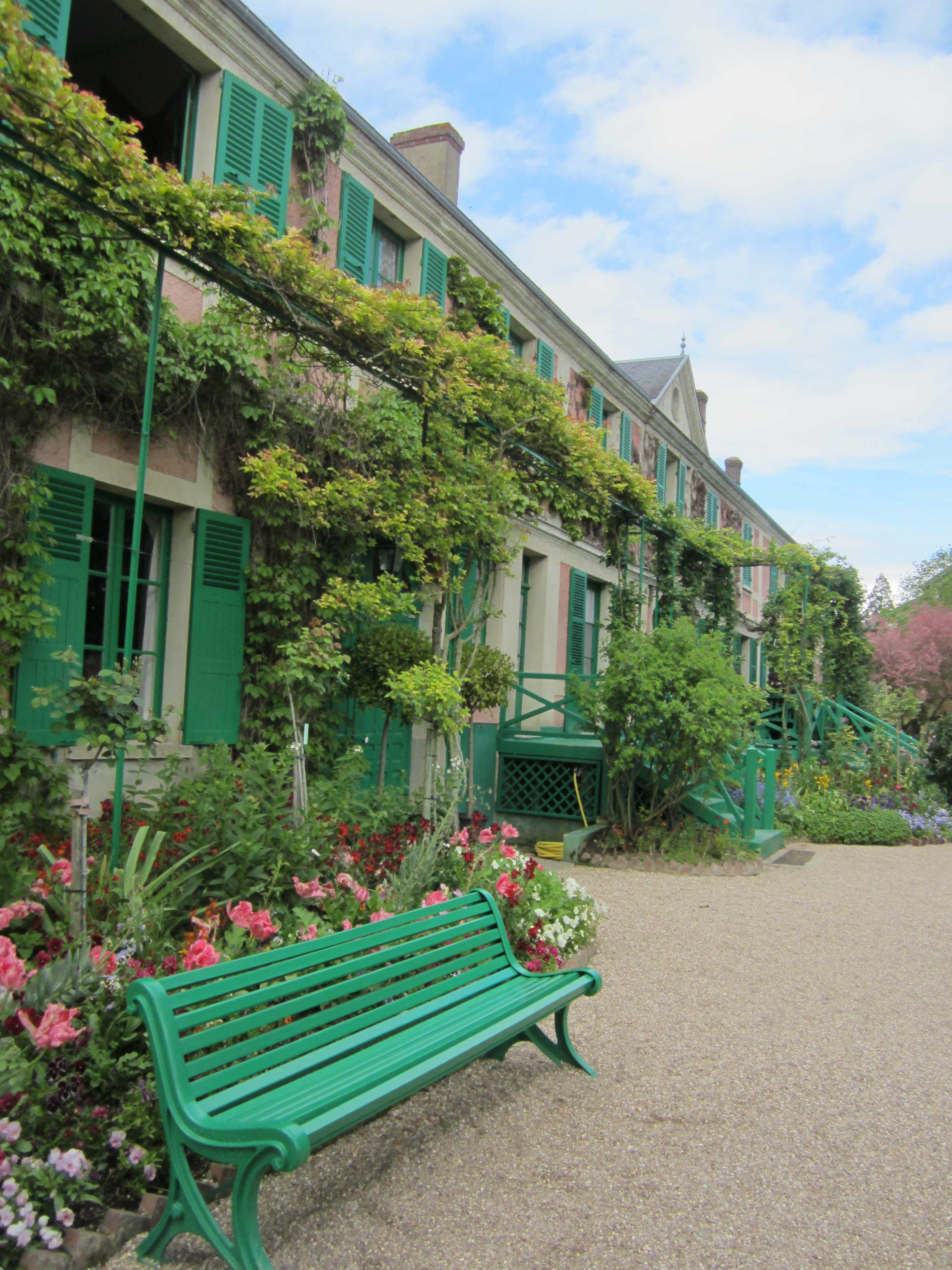
It was everything we dreamed of. The pink house, the yellow kitchen, the pebbled garden walk. Except for the crowds. I was stunned at the number of visitors in Giverny as compared to my first visit to in the late 80’s. You have to snap your photos fast, before yet another group of cruise boat tourists wanders into your viewfinder. We’re still glad we went – it’s a treasure of a place.

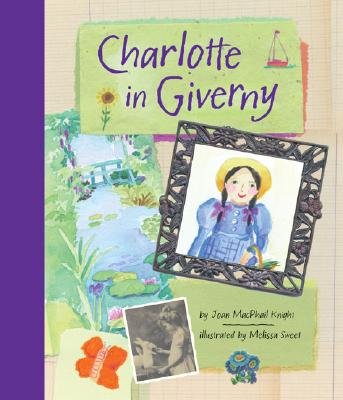
Once my mission had been accomplished with my own daughter, I thought it was time to get a new generation of girls in my family dreaming about Giverny. I had planned on buying a copy of Linnea in Monet’s Garden for a niece’s birthday, but the current edition was out of print, and I didn’t want to wait until October for Sourcebooks’ anniversary edition. Luckily, I stumbled upon another lovely children’s book called Charlotte in Giverny (Chronicle Books).

Charlotte in Giverny is the fictional journal and scrapbook of a young girl whose family travels to the Giverny art colony in 1892. The book contains whimsical watercolor illustrations, historical photographs and museum reproductions of famous Impressionist paintings created in Giverny.

It’s a terrific little book and it’s not just for kids. It’s got a lot of art history that’s quick and easy to browse through. Charlotte is a bright and observant little journalist, and brings a youthful sense of wonder to the subject. Charlotte in Giverny offers much more than the story of Claude Monet. You get to hear about the whole colony, and about other American artists such as Lilla Cabot Perry, Thomas Robinson and Mary and Frederick MacMonnies.

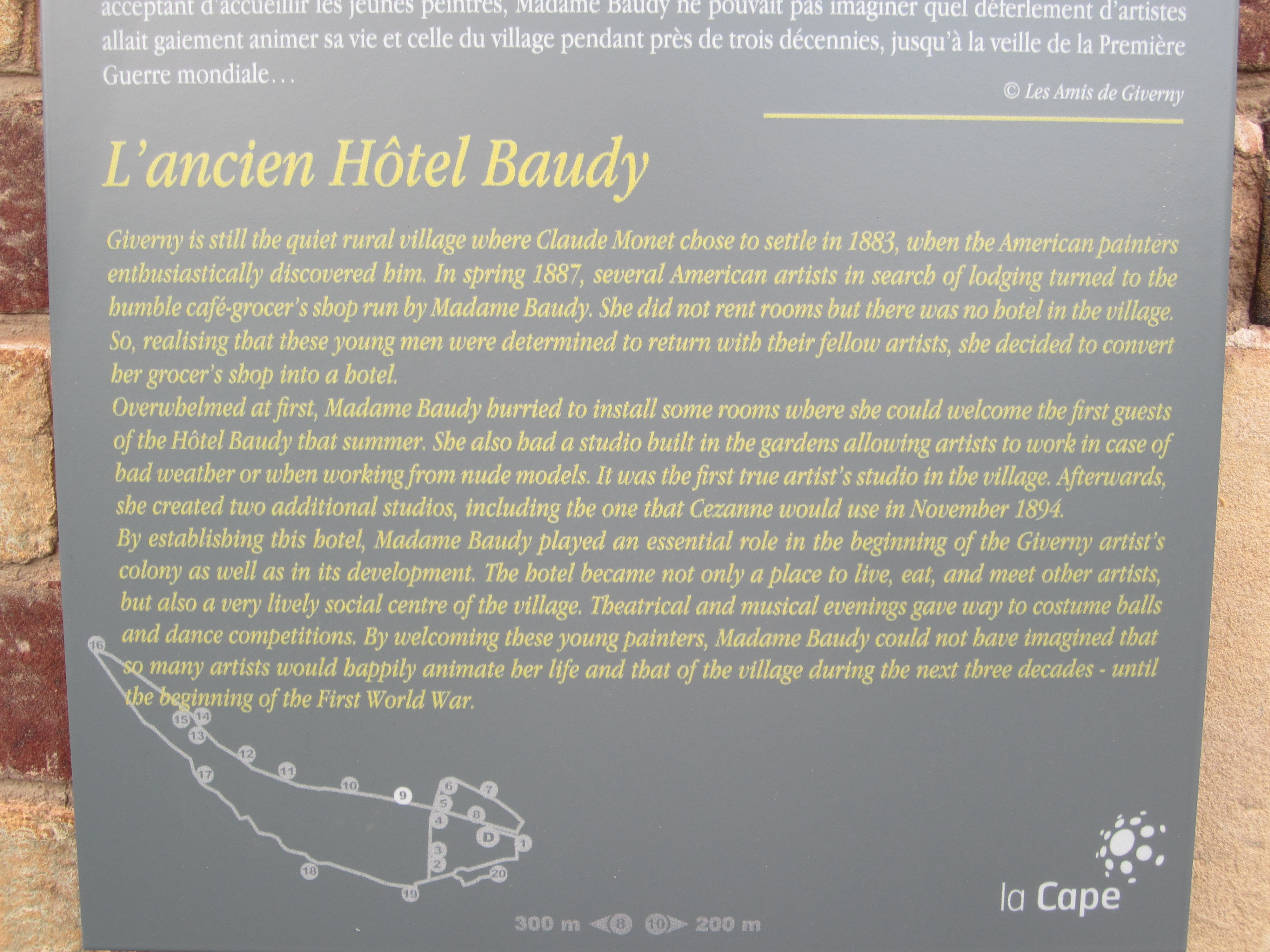
Charlotte and her family check into Hotel Baudy upon their arrival in Giverny, just like so many of the visiting American artists in the late 19th century. Charlotte enjoys the boisterous life at the hotel, where the artists often pay their hotel bills by leaving a painting behind. If you visit Giverny today, you can enjoy lunch inside the old Hotel Baudy, or on the terrace where the old tennis courts might have once stood.

Hotel Baudy in Giverny

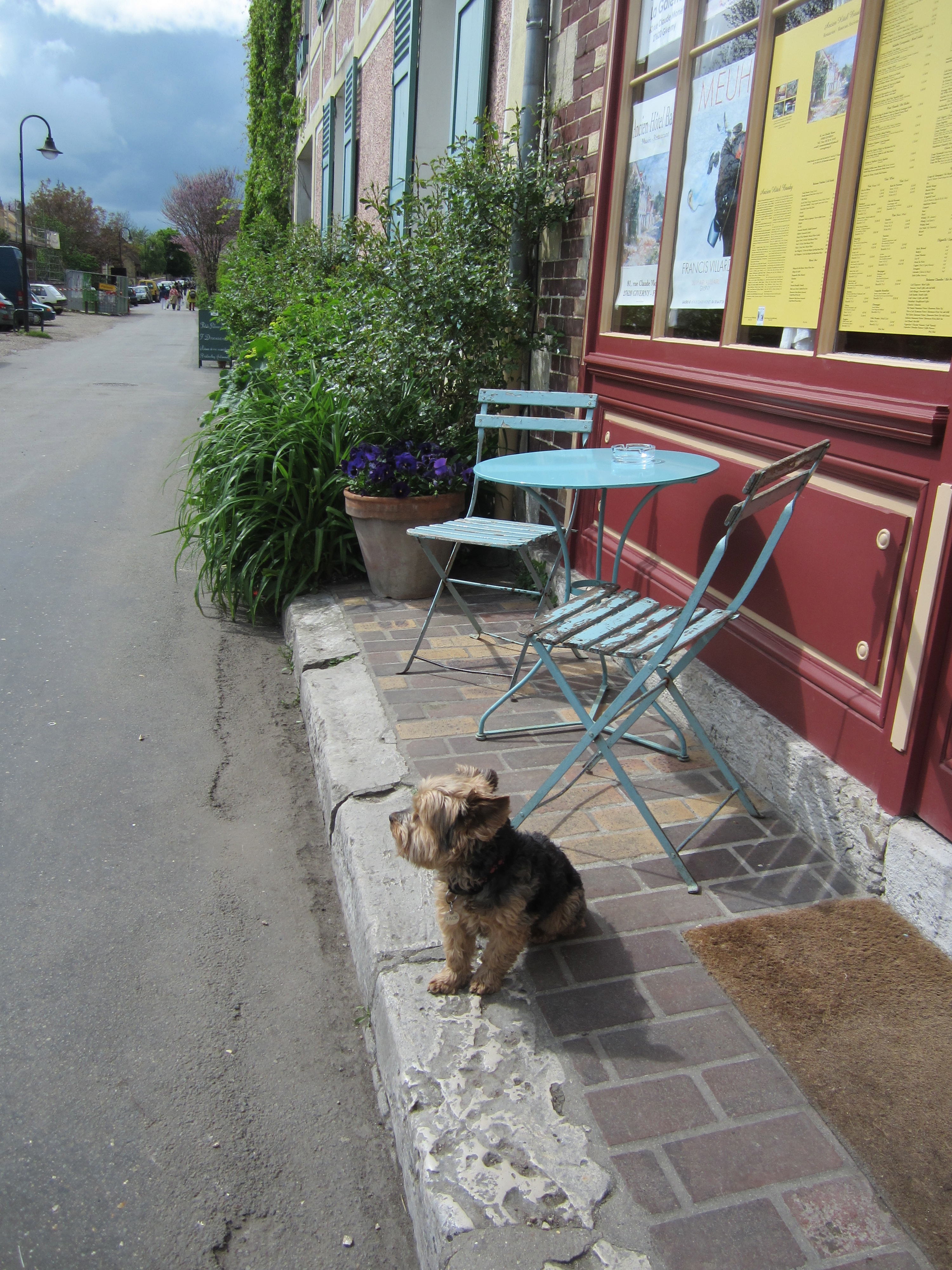
Degas, is that you? In Charlotte in Giverny, Charlotte meets the American painter Lilla Cabot Perry and her young daughter Edith. The Perrys had a little dog named “Degas” who looks a lot like this petit chien!

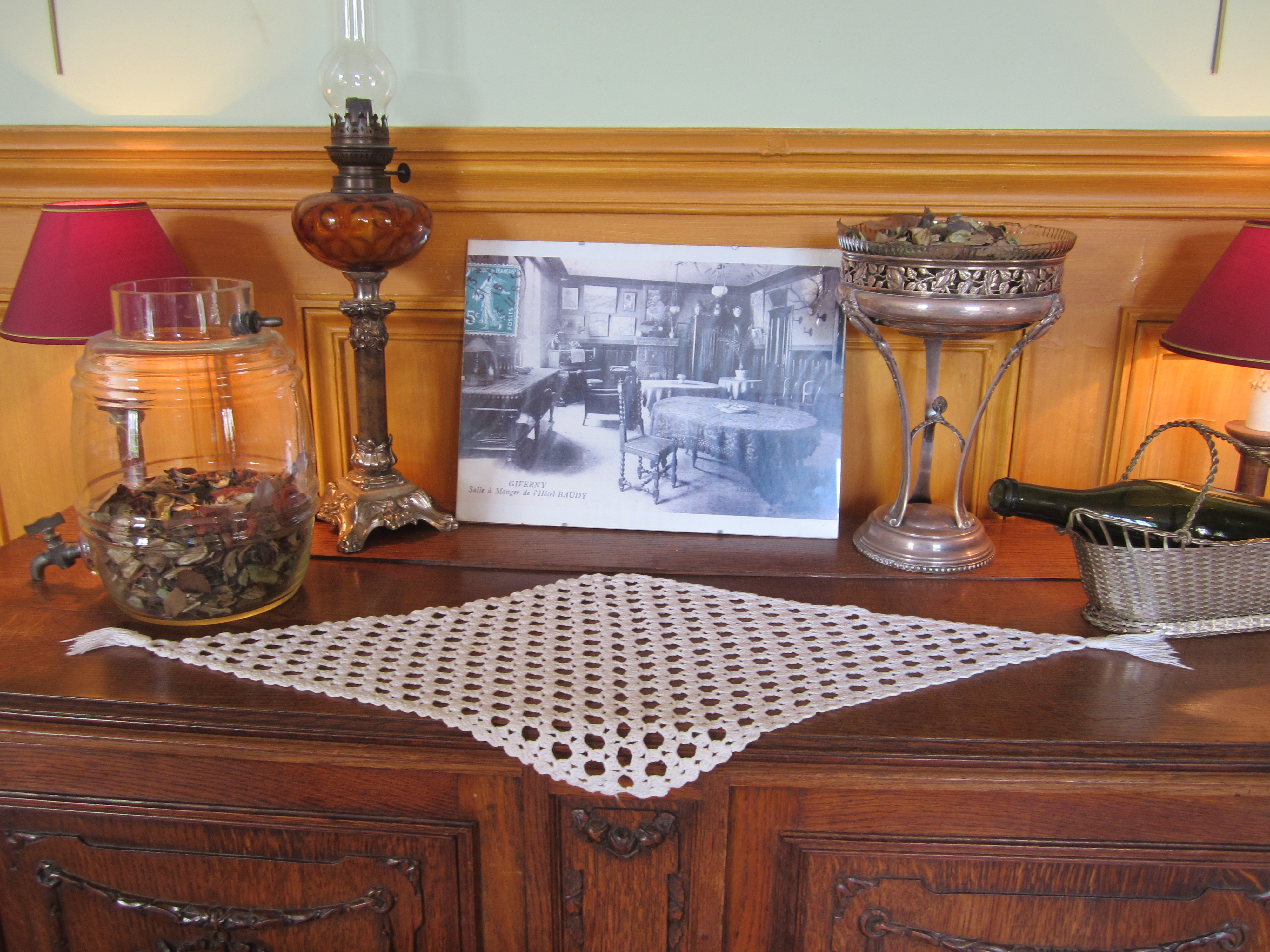
A Who’s Who of Artists Visited Hotel Baudy.

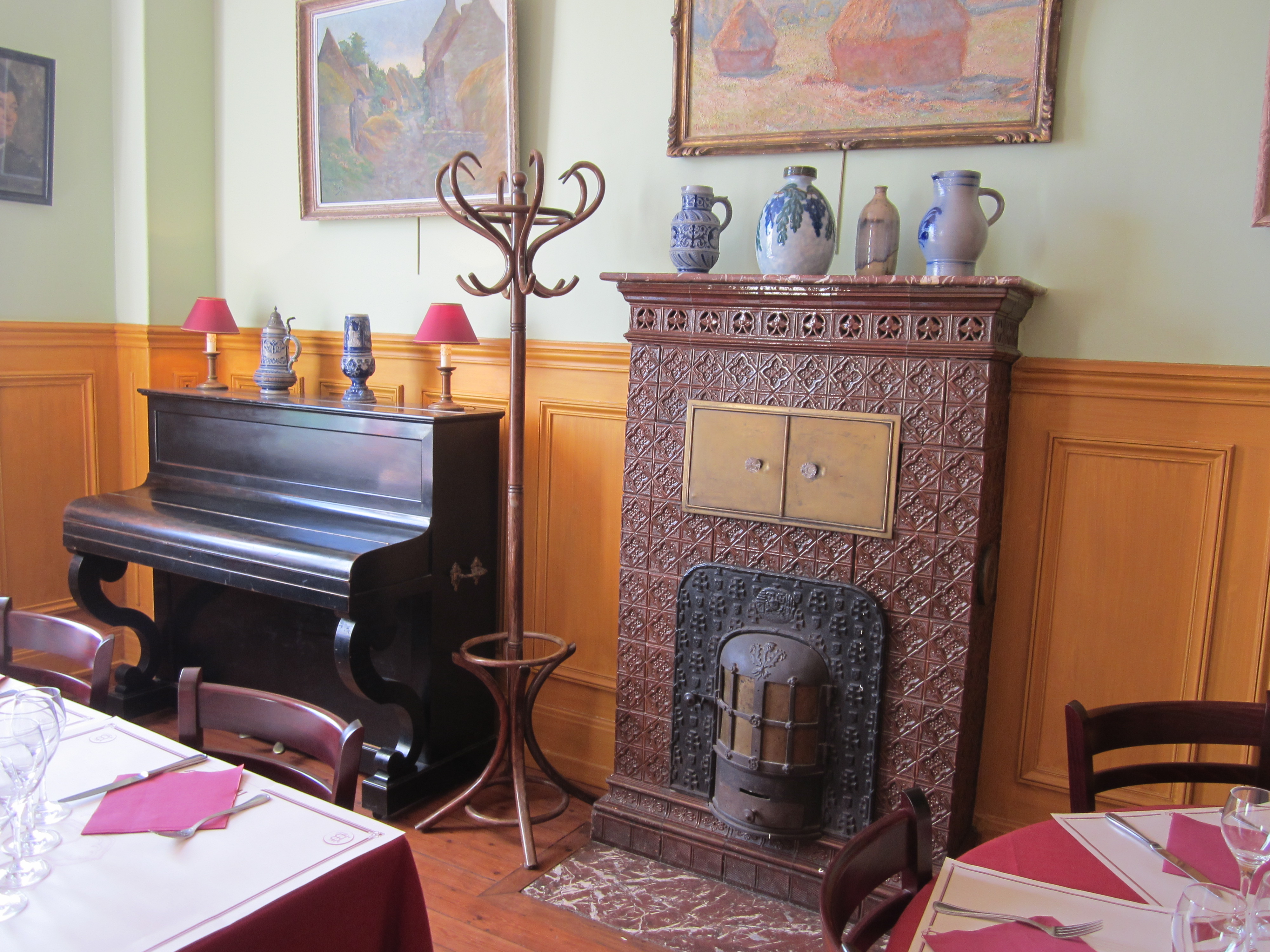
The interior of the Hotel Baudy, where you can imagine all of the fun bohemian evenings singing songs near the fire. The walls are full of Impressionist reproductions that might have been left behind by starving artists unable to pay their bills.

You can enjoy lunch on the terrace of the Hotel Baudy, which might be the site of Hotel Baudy’s old tennis court. Karl Anderson’s painting called “Tennis Court at the Hotel Baudy” (1910) depicts a tennis scene on a court right outside the hotel.  To me, it looks as though it could have been right here. See for yourself on the Terra Museum website.


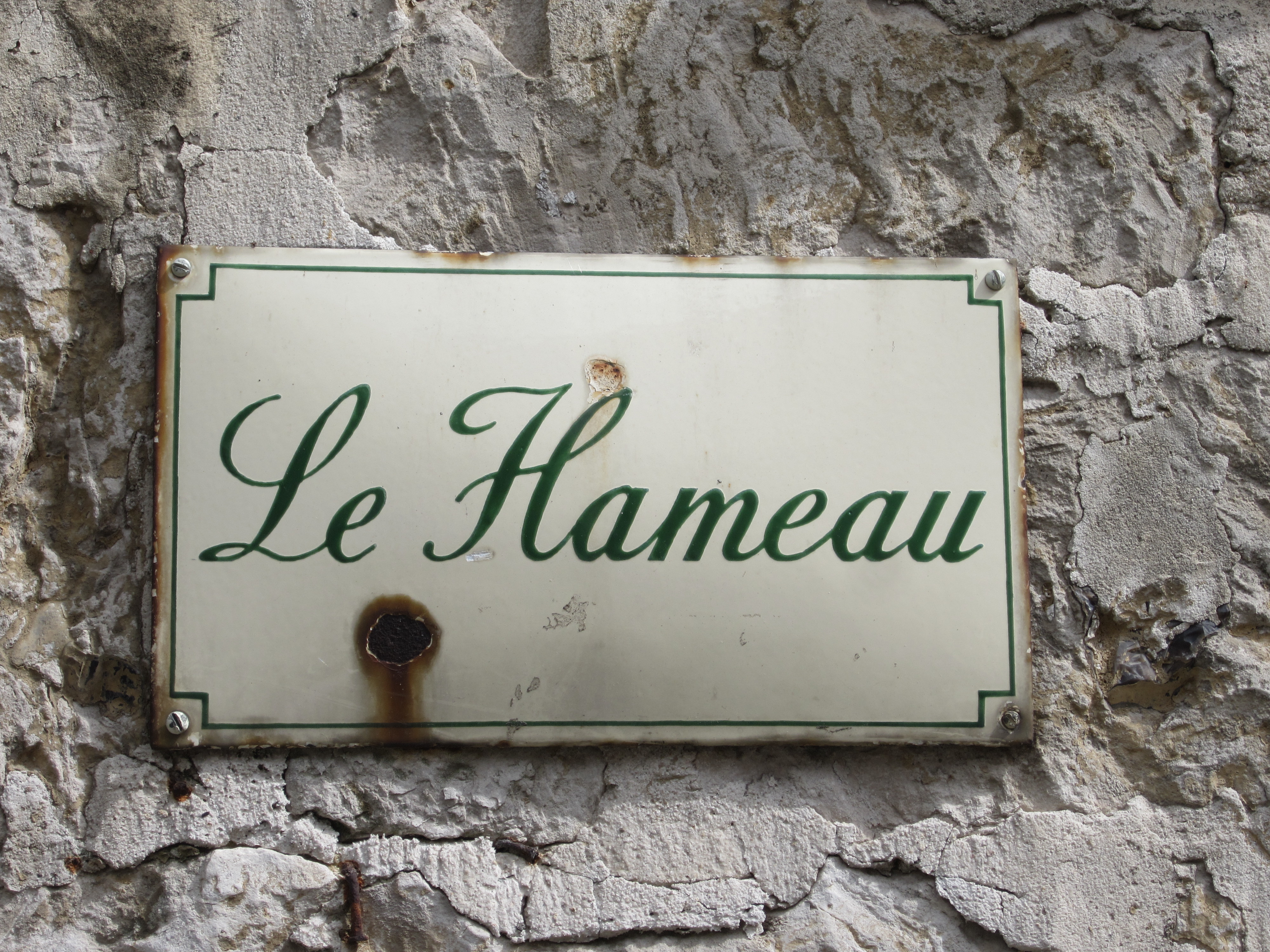
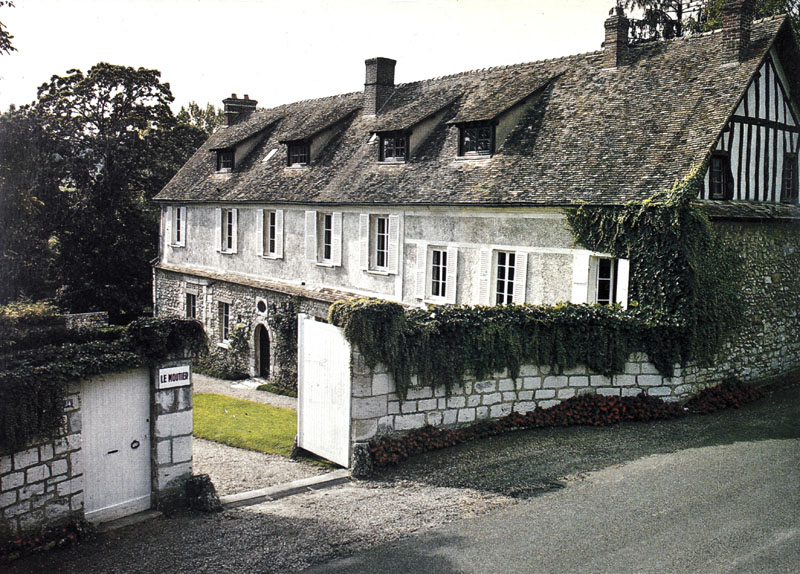
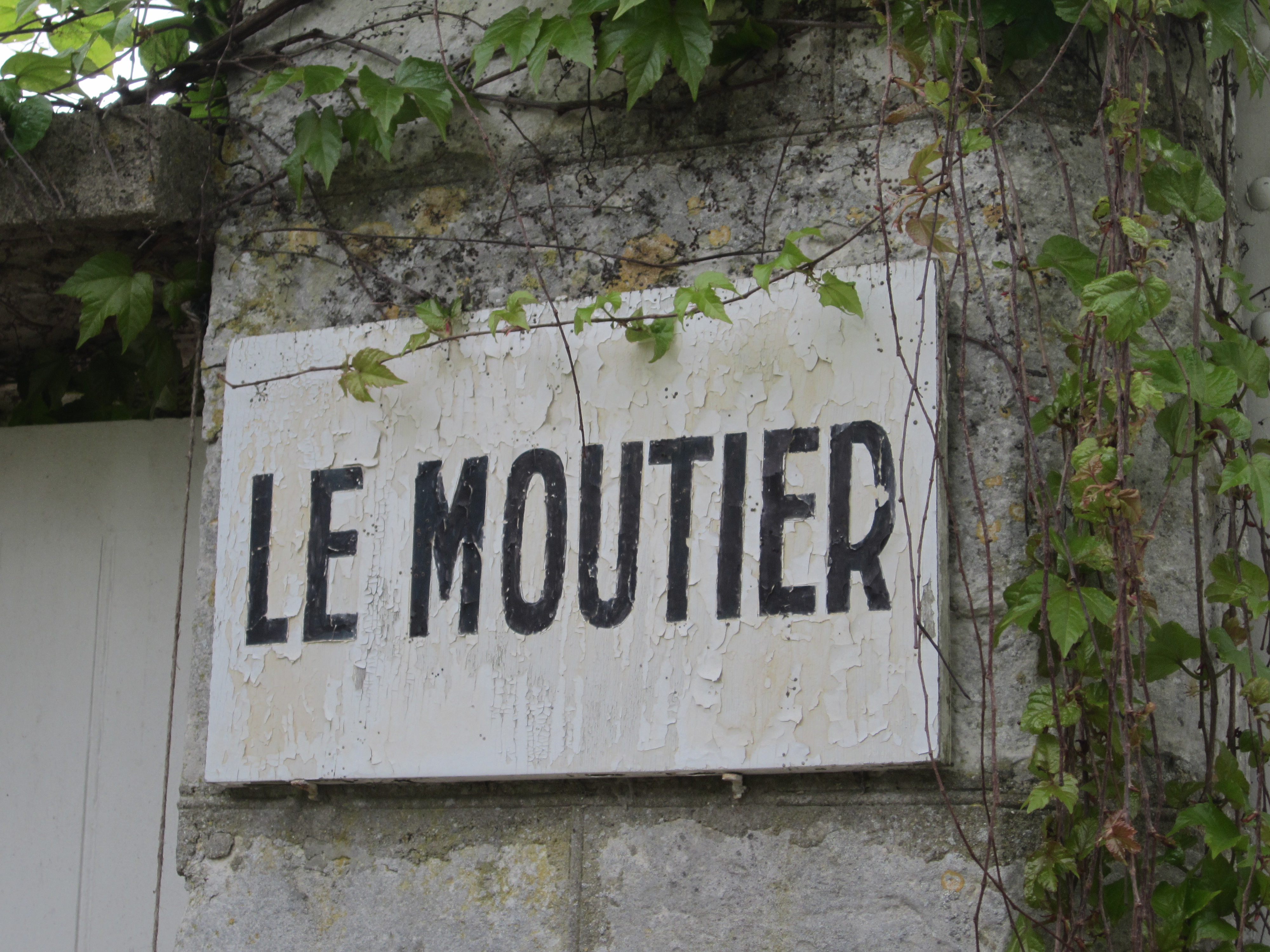
Charlotte gets to know the other American artists who called Giverny home, including Lilla Cabot Perry who rented Le Hameau in the summertime, and Frederick and Mary Fairchild MacMonnies (later known as Mary Fairchild Low) who lived in Le Moutier, a former monastery which was jokingly referred to as “MacMonastery.”

Le Hameau – the summer home of Lilla Cabot Perry and family from 1889-1909

Le Hameau

Le Moutier – from a 1960s era postcard. The former home of American artist power couple Frederick and Mary Fairchild MacMonnies.

Today, Le Moutier is privately owned and protected by high walls, just like it was back in the “MacMonastery” days.

Despite the crowds, you can’t beat a day trip to Giverny in Charlotte or Linnea’s footsteps. It’s a lovely village full of art, history and pastoral beauty. You don’t need to have a daughter to enjoy the trip or these books. You just need to have the heart of an artist.

Recommended visit: Take the train to nearby Vernon, rent a car, or take a bus tour from Paris that allows you an entire day to wander through the streets of Giverny. Don’t rush back!

Additional recommended reading: Charlotte in Paris

John Singer Sargent and Madame X in Paris

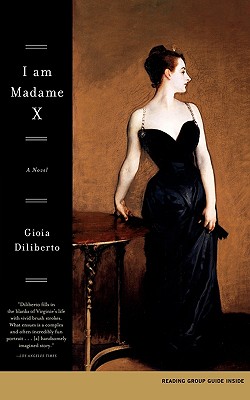
I am Madame X by Gioia Diliberto


I first read Gioia Diliberto’s  I Am Madame X back in 2004. I might have even picked it as a book club read. It’s a fabulous Belle Epoque novel about the life and times of the celebrated 19th century American portrait artist John Singer Sargent and his most infamous model, American beauty Virginie Gautreau.

I read it again recently, because John Singer Sargent’s name keeps popping up on my travels through Paris art history. This book is even better the second time around, especially now that I know my way around Paris and I can really appreciate what it meant to be a Left Bank artist versus a Right Bank Artist.

John Singer Sargent had the best of both worlds.

He was the son of a wealthy, cosmopolitan American family that had lived abroad for decades by the time they arrived in Paris in 1874. They settled into a posh Right Bank apartment near the Champs-Élysées, which has since become a commercial building at 52 rue La Boétie. Sargent’s father took him to meet the young teaching master Carolus-Duran, who ran a popular Left Bank painting atelier in the heart of Montparnasse.

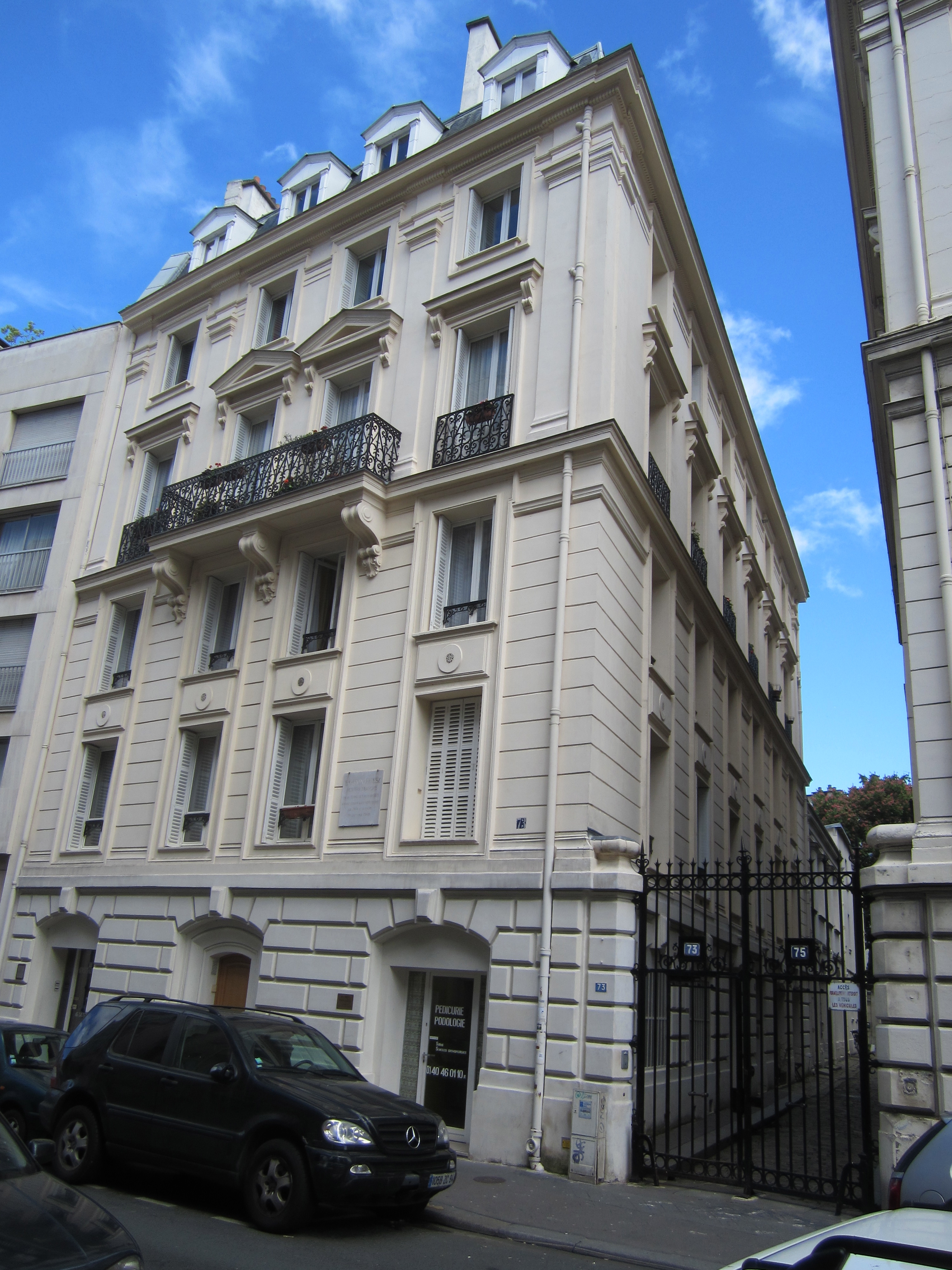
Sargent was only 18 years old, but he was already bursting with talent. He quickly earned the admiration of his fellow students and within a year was accepted at the rigorous L’Ecole des Beaux Arts. In 1875, Sargent moved out of the family’s home and into a fifth-floor studio apartment at 73 rue Notre-Dame-des-Champs with fellow art student James Carroll Beckwith.

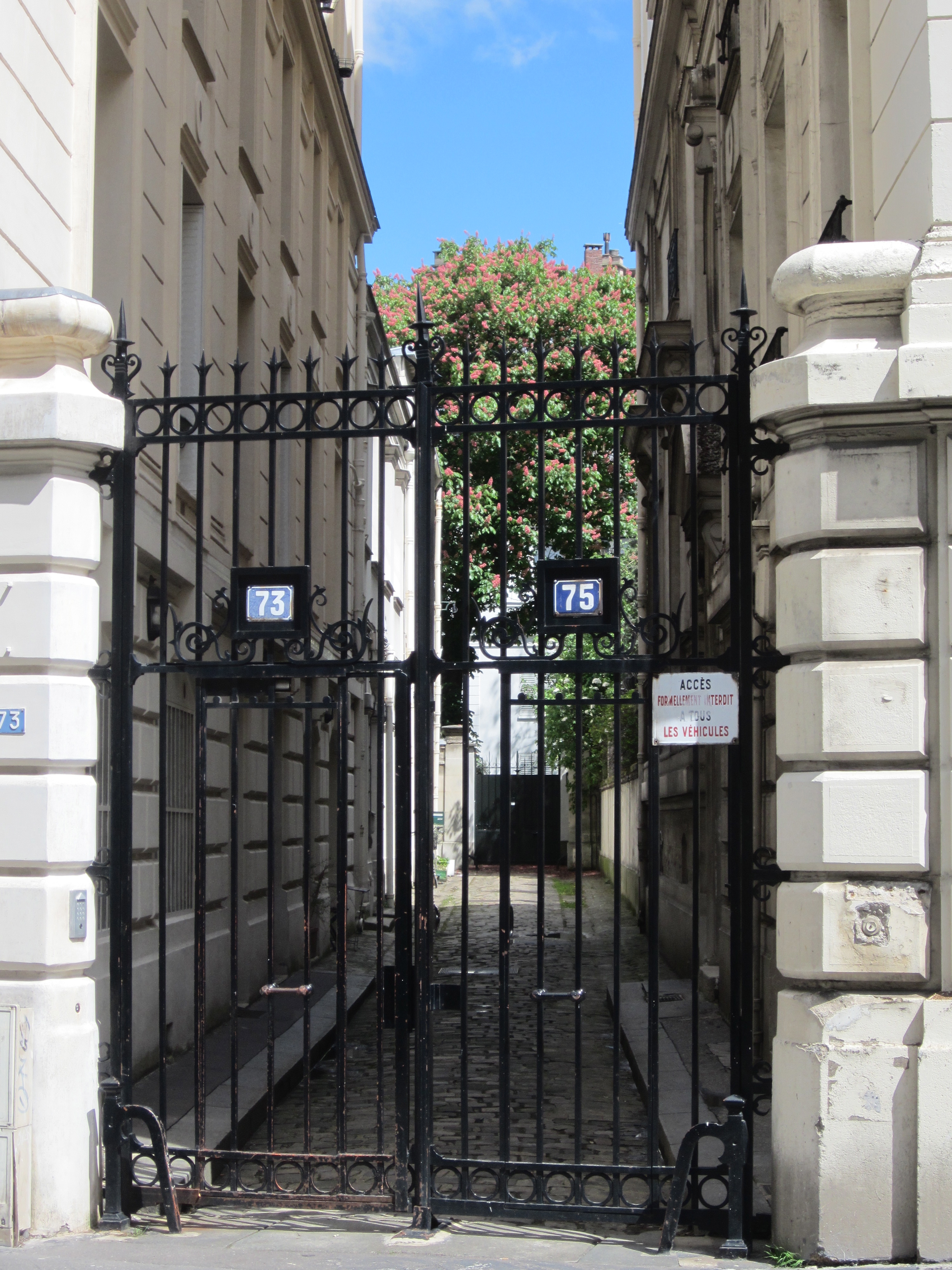
The young American artists had found a promising location. The studios at 73 rue Notre-Dame-des-Champs had also housed the famous French painter Jean-Paul Laurens, while 75 was the mansion-atelier of Adolphe William Bourguereau. By the 1860s, this small, winding road had already been nicknamed “the royal road of painting.” Even today, the address looks inspiring. It still has an impressive entrance and an inviting green courtyard.

Sargent, Beckwith and their pals led a young bohemian life in the Left Bank. They worked hard but still had time for wild evenings, moving the easels aside for dancing and drinking right in the studio. Sargent was known for entertaining his guests on a rented piano. On Sunday nights, they would clean themselves up for  a proper dinner party at Sargent’s family’s home with “educated and agreeable” conversation.

73 rue des Notre-Dame-des-Champs, once the art studio of John Singer Sargent

Courtyard of 73-75 rue Notre-Dame-des-Petit-Champs. Back in the 1870s, the gardens probably went all the way through to Luxembourg Gardens

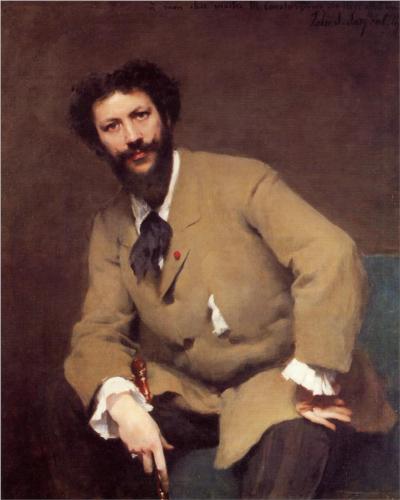
John Singer Sargent, Portrait of Carolus-Duran (1879)

In 1879, Sargent painted the portrait of his art teacher Carolus-Duran, and it absolutely launched his career. It was bold, theatrical, and presented a stunning likeness in both spirit and physicality. Sargent was only 23 years old and already one of the best portrait artists in France.

In Diliberto’s novel, Sargent meets the future Madame X at a Montparnasse restaurant. In reality, they may have met when Gautreau attended an informal party at Sargent’s studio on rue de Notre-Dame-des-Champs in 1881. Sargent was celebrating the completion of his portrait of Dr. Pozzi, one of Gautreau’s many reputed lovers. According to Diliberto, Gautreau was shocked by Sargent’s portrayal of Dr. Pozzi, a charismatic ladies man (and gynecologist) who had ungraciously tossed her aside before her marriage to Pierre Gautreau:

On an easel near the French doors stood Sargent’s painting of Dr. Pozzi. It looked like a portrait of the devil. Virtually the entire canvas was red – the sumptuous curtains in the background, the carpeted floor. The doctor himself was dressed in red slippers and the red wool dressing gown that I had seen him wear dozens of times. His pose was hypertheatrical; his face was caught in an intense observance of an object outside the canvas, and his elongated fingers tugged nervously at his collar and the drawstring of his robe. His fingers were as sharp as pincers and seemed spotted with blood. Had Pozzi just performed a gynecological operation? Deflowered a virgin?

I just love how Diliberto gave Gautreau such a blunt and penetrating voice. She is clearly no innocent about men, or for that matter, about Sargent’s ability to portray a model’s true character.

John Singer Sargent, Dr. Pozzi at Home (1881)

Sargent was determined to get the chance to paint Gautreau’s portrait. He obviously understood the PR value of painting the “professional beauty” who was the focus of such much attention and gossip in the affluent social circles of Paris. Gautreau thought about giving her business to other more traditional French portrait artists, but she may have felt a special connection to Sargent. They were both up-and-coming Americans with something to prove to the French.

In the meantime, steady commissions enabled Sargent to buy a large, new home and studio on the Right Bank, closer to all of his wealthy patrons. In the winter of 1883-84, Sargent moved to 41 boulevard Berthier, on the shaded side of a wide street whose light made it a popular location for art studios. It wasn’t far from the new mansions near Parc Monceau, and in fact just a few blocks from Madame Gautreau who lived at 80 rue Jouffroy d’Abbans.

In The Greater Journey, David McCullough describes Sargent’s new Right Bank studio:

. . .  a workplace elegantly furnished with comfortably upholstered chairs, Persian rugs, and drapery befitting his new professional standing, and with an upright piano against one wall, . . .

No longer would Sargent’s patrons have to track through the mud and past the questionable bohemians on rue Notre-Dame-des-Champs.

41 boulevard Berthier has been replaced by a newer building, but this one next door is a good example of the types of buildings that once dominated the street, with large windows  and skylights on the top floors.  It was on this street that Virginie Gautreau would have gone to pose for her portrait.

Parc Monceau in the 17th, the center of the fashionable new Plaine Monceau area of the 1870s-80s. Monet painted this park several times.

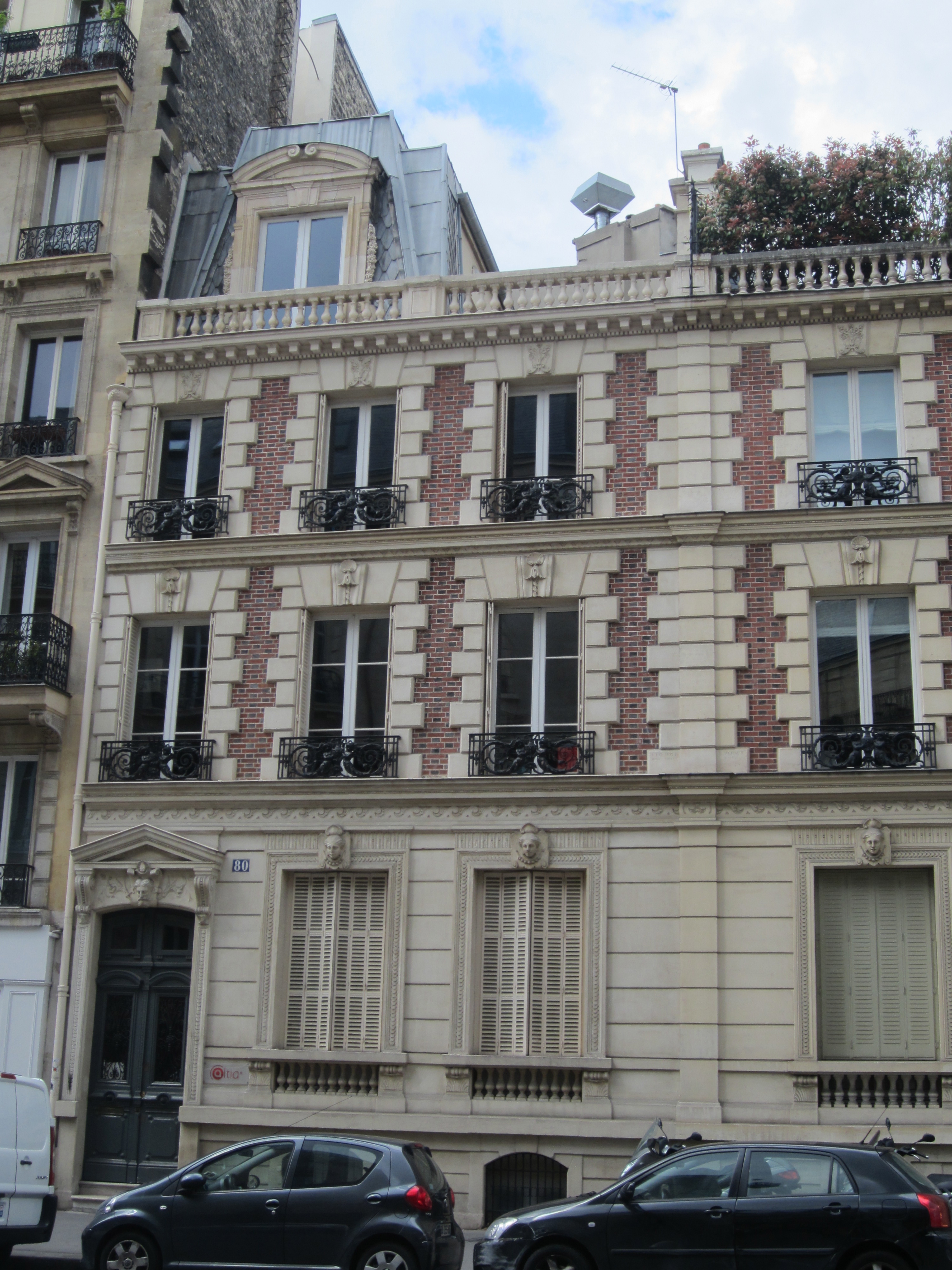
80 rue Jouffroy, the home of Virginie and Pierre Gautreau in the 1880s.

By 1883, Gautreau finally agreed to pose for Sargent. He talked her into wearing a black dress that would highlight her unusual color, which included rouged ears, white pastey skin (thanks to lavender skin cream) and brightly hennaed hair. At the end of the day, Sargent may have painted her color a little too well. He captured her true character, just like he had with Dr. Pozzi. Her pose was so confident it seemed haughty.
But the strap was the last straw. The painting we know now, as it appears at the Metropolitan Museum in New Yorkwas retouched. The original painting looked like this – a little risqué, no doubt, but more balanced and much more interesting.

Nevertheless, it was a disaster at the 1884 salon. “Quelle horreur!” said polite Paris society. One critic said the flesh “more resembles the flesh of a dead than a living body.”

Sargent soon left for the summer in London while Gautreau disappeared to Brittany, far from the judgment of Paris. Sargent would keep his Paris studio on boulevard Berthier for two more years, where he proudly displayed Madame X. 

Although Sargent may have misjudged the limits of Right Bank tolerance and underestimated their hypocrisy (after all, many of the traditional paintings in the Salon were nudes, and they’re complaining about a little strap?), he would later say that Madame X was “the best thing I have done.”

John Singer Sargent in his boulevard Berthier studio with a retouched Madame X. The strap is repainted.

If your read I am Madame X you will find out much more about Virginie Gautreau: her New Oreans background, her family’s escape to Paris during the Civil War, her early years in a Paris convent school. It’s a well-told story in the voice of a fascinating woman.

 I am Madame X by Gioia Diliberto: HIghly recommended.

Paris, I Love You But You’re Bringing Me Down

I can’t say enough about Rosecrans Baldwin’s new book, Paris, I Love You But You’re Bringing Me Down (Farrar, Strauss & Giroux). This memoir is witty, charming and laugh-out-loud funny (make that snort-out-loud, while I was reading in a Paris restaurant, no less), based on the eighteen months Baldwin and his wife spent in Paris a couple-few years ago.

It’s a perfect romantic comedy, like a cross between The Office (Paris Edition) and Midnight in Paris (without the time travel). I’m already doing the casting in my head.
Baldwin tells his Paris story with a smart and fresh spin. He worked crazy hours at a Champs Élysée advertising agency, writing copy and making sales pitches to luxury clients like Luis Vuitton, while she attended immersion French language classes, played the part of a femme au foyer and tried to write screenplays in a dark and dismal apartment surrounded on five sides by construction. Americans have no simple love affair with Paris. But that revelation isn’t enough to make this book unique. It’s the complexity of Baldwin’s voice: he’s tender, wise, and smitten, but also droll and irreverent. Who knew the French were so darn funny?

Baldwin’s tales from the office sound more like the reports of an American mole secretly planted in a Parisian workplace. Baldwin’s primary source is a rough-around-the-edges colleague, a “stocky and morose” Parisian who loves nothing more than his cigarettes and his Yamaha scooter. It’s a point of view most Americans never get to see, a bit like having a disgruntled French Danny De Vito as your tour guide.

Baldwin’s riffs on French anti-P.C. office politics are hilarious:

Either Murphy Brown never aired in France, or Paris was stuck in the early nineties. . . . In meetings, if someone called your idea P.C., pay-say, there was no possible recovery. The label was nuclear. Anyone accused of pay-say during un brainstorming would be shouted down – Don’t be so American! . . .

Baldwin’s inside knowledge leads to surprising discoveries, like the French affection for McDonald’s: a French colleague, confused, “You don’t go to McDonald’s in the United States?” Baldwin can deal the scoop on their Frenchified Mac-attacks (a multi-course meal, starting with McNuggets as an appetizer, a sandwich, then a salad and finally dessert). Who knew? And now that we know, won’t it be a fun fact to remember the next time a stuffy French waiter gives you the stink-eye?

Baldwin already spoke some French when he arrived, thanks to his beloved seventh grade French teacher Madame Fleuriot, from whom he learned how to pronounce kir royale. Madame would say it dreamily, fondly: “just the word ‘Paris,’ she was undone a bit.” About the same time, Baldwin’s family took a one-week vacation to Paris, where he watched his mother swoon over her café au lait, tres noir. Says Baldwin, “‘French’ became an umbrella term for me, describing things I liked before I knew why I liked them.”

So when Baldwin and his wife Rachel had the chance, off they went to Paris. Like all good expats, they felt humbled by their inadequate French, and worked hard to improve it. Nevertheless, their language faux-pas (is there a plural for faux pas?) make for absolutely delightful stories. We’ve all been there, but never quite like this.

One time Rachel was picking out some champagne to celebrate the sale of Baldwin’s first novel, un roman in French (You Lost Me There, Riverhead Books 2010). The Frenchman gave her a strange look. He thought she said her husband had sold his first “Roman,” like some kind of Italian slave trader. Yah, that’s right, monsieur, you know us crazy Americans – we always pop the champagne for our first slave trade.

Like many Americans, the Baldwins had a love-hate list for Paris (love: walking across the Alexandre III Bridge, food from Picard, men who read in public; hate: long grey winters, the bureaucracy, construction noise, stores that close on Sundays). And inevitably comes the question, “so how long do you want to stay here in Paris?” And no matter how idyllic it can be to take a nap in a field of tulips on a daytrip to Giverny, they realize that they are ready to go home.

Ah, yes, home.

So obviously, I loved this book. I think you will too, whether you love or hate Paris, or maybe a little of both. You can read an excerpt here.

Leaving Van Gogh in Auvers

When Vincent Van Gogh died in Auvers-sur-Oise, France in July 1890, he left behind so many burning questions.

How did he die? Was it a self-inflicted gunshot wound or homocide? And why was the gun never found? How did Van Gogh ever manage to complete over 70 dazzling paintings in just 70 days in Auvers? It’s all such a mystery.

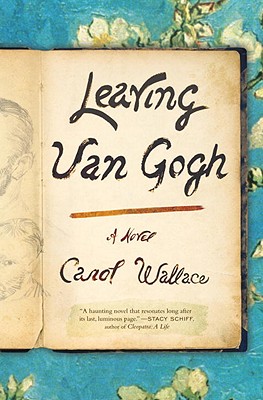
In the novel Leaving Van Gogh, Carol Wallace takes on the legend of Van Gogh’s last 70 days through the eyes of Dr. Paul Gachet, a widowed doctor, painter and art collector who owned a country house in Auvers. Wallace’s theory – buy it or not – is that the smoking gun belonged to Dr. Gachet.

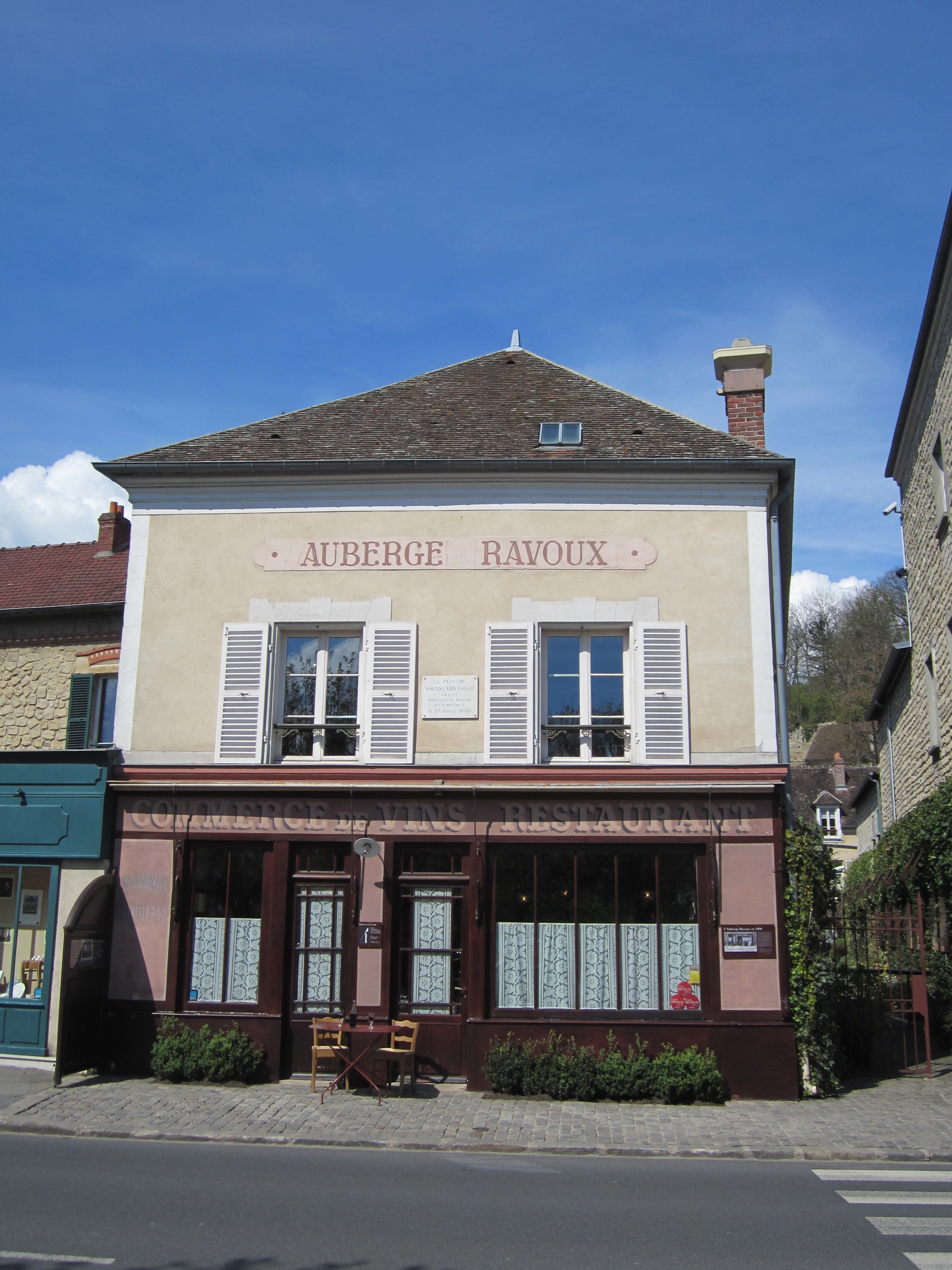
Dr. Gachet specialized in treating mental disorders and was a friend and collector of many of the Impressionists, including Cezanne, Sisley, Monet and Renoir. Vincent’s brother, the art dealer Theo Van Gogh, asked Dr. Gachet to  take Vincent under his care. Dr. Gachet found Vincent inexpensive lodging in what is now the Auberge Ravoux in Auvers, and prescribed painting as the best treatment for his mental illness: “If I understand you at all, Monsieur Van Gogh, your painting is the reason you continue to live, is it not? . . . Then paint, . . . Paint and live. And come to me if you feel disturbed.”

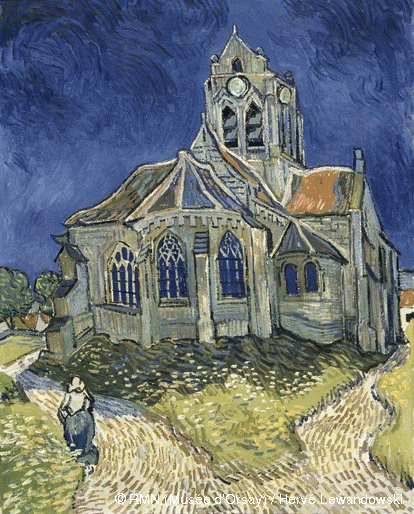
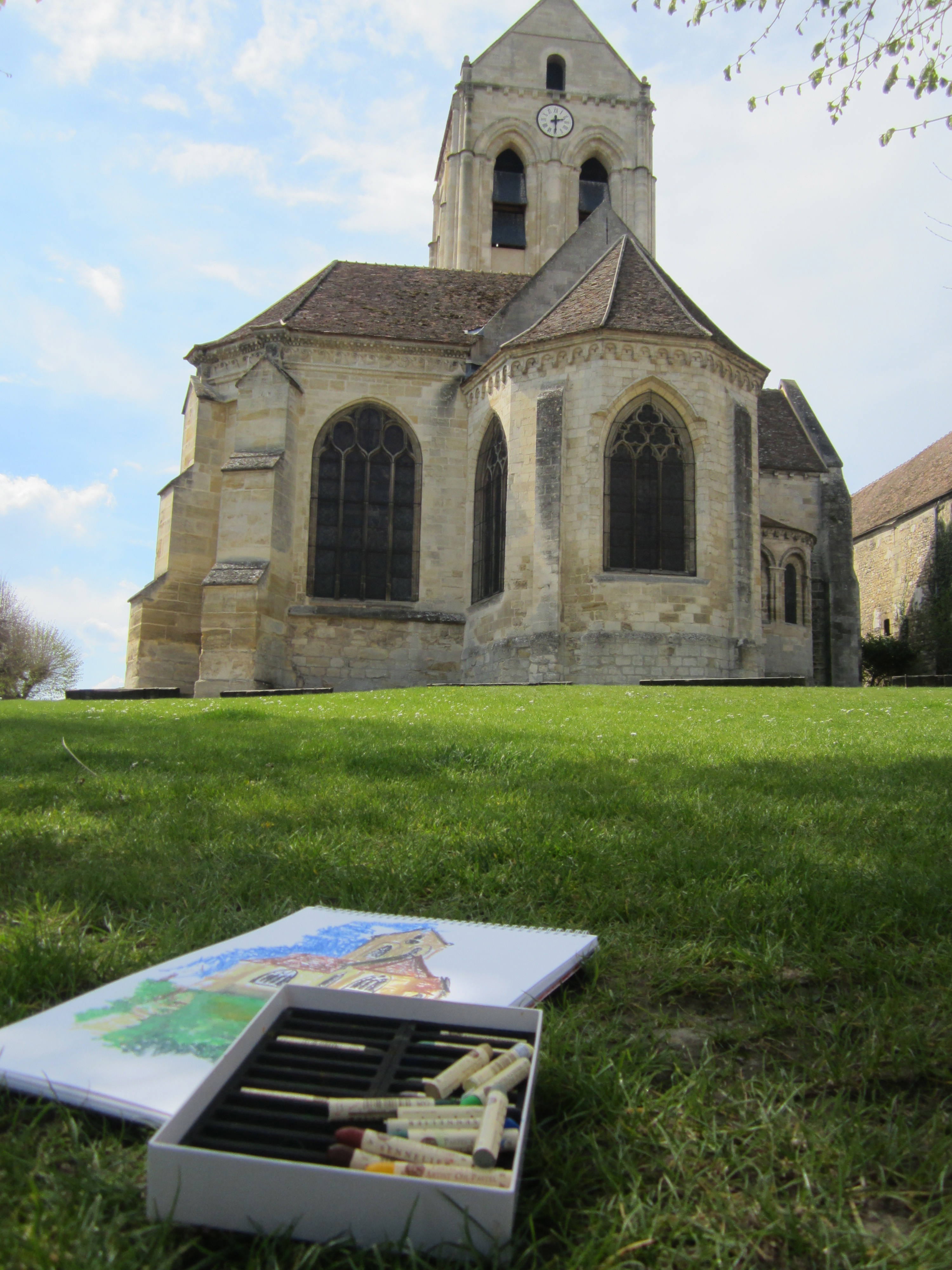
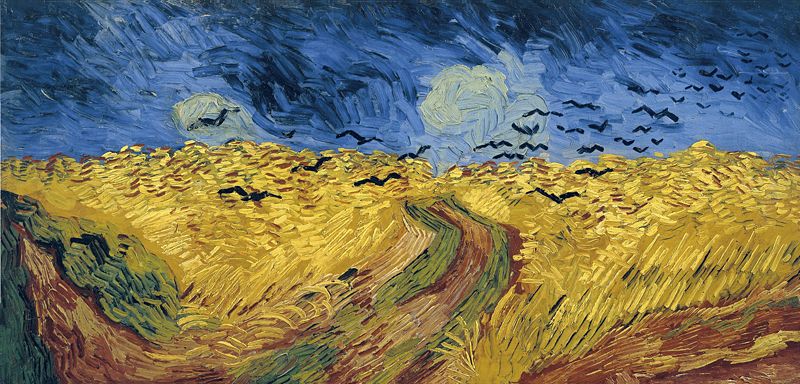
Van Gogh followed his doctor’s orders, pouring out such wonders as The Church in Auvers, Dr. Paul Gachet, Wheatfield with Crows from May through July, 1890.

Wallace’s book is nicely researched, from Dr. Gachet’s 19th century medical training at a women’s psychiatric hospital in Paris to the details of Van Gogh’s brief painting history in Auvers. But more than that, Wallace captures the intensity of Van Gogh’s genius and madness, the creative spark behind his strong, bold colors and swirling brushstrokes. She appraises Van Gogh’s art through Dr. Gachet’s eyes, who trained and exhibited as an artist. No doubt it helps that Wallace is herself an art historian and knows her way around paints and palettes.

Here is Dr. Gachet when he sees Van Gogh’s painting of the Church in Auvers for the first time:

I had not seen the painting of the church that he had mentioned and was curious to know how he had portrayed it. . . . The sky he painted in several shades of blue, the darkest of which almost matched the color of the stained glass. The result was that the building seemed to be a mere façade, as if we were looking through the apse to empty blue air beyond. And this was not all: the stonework of the church, so rigid in life, became flexible under Vincent’s brush. The rooflines wavered. The tower tilted. The space of the apse seemed swollen. Gray stone was touched with dashes of blue and green, as if the surrounding grass were beginning to swallow the dissolving structure.

Leaving Van Gogh has it all: wonderfully artsy writing, accurate art history and a compelling human story. It’s also a moving contemplation on how to care for those who suffer from mental illness. The circumstances of Van Gogh’s death would make for great book club debates, especially if you ambitious enough to compare Wallace’s theory to that propounded in the recently released, 900-plus page biography called Van Gogh, The Life by Steven Naifeh and Gregory Smith.

It’s a compelling mystery.

             *       *       *       *       *

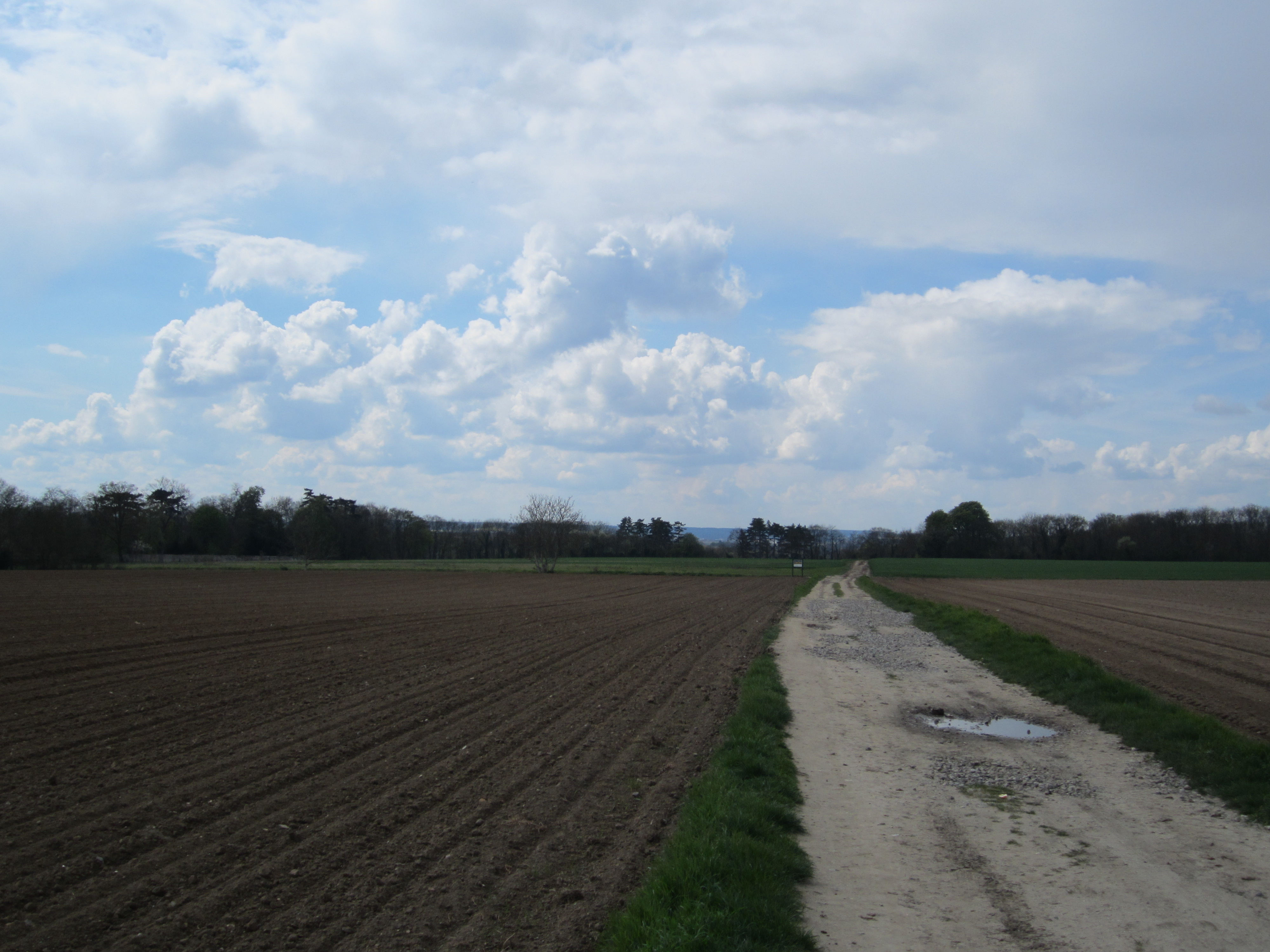
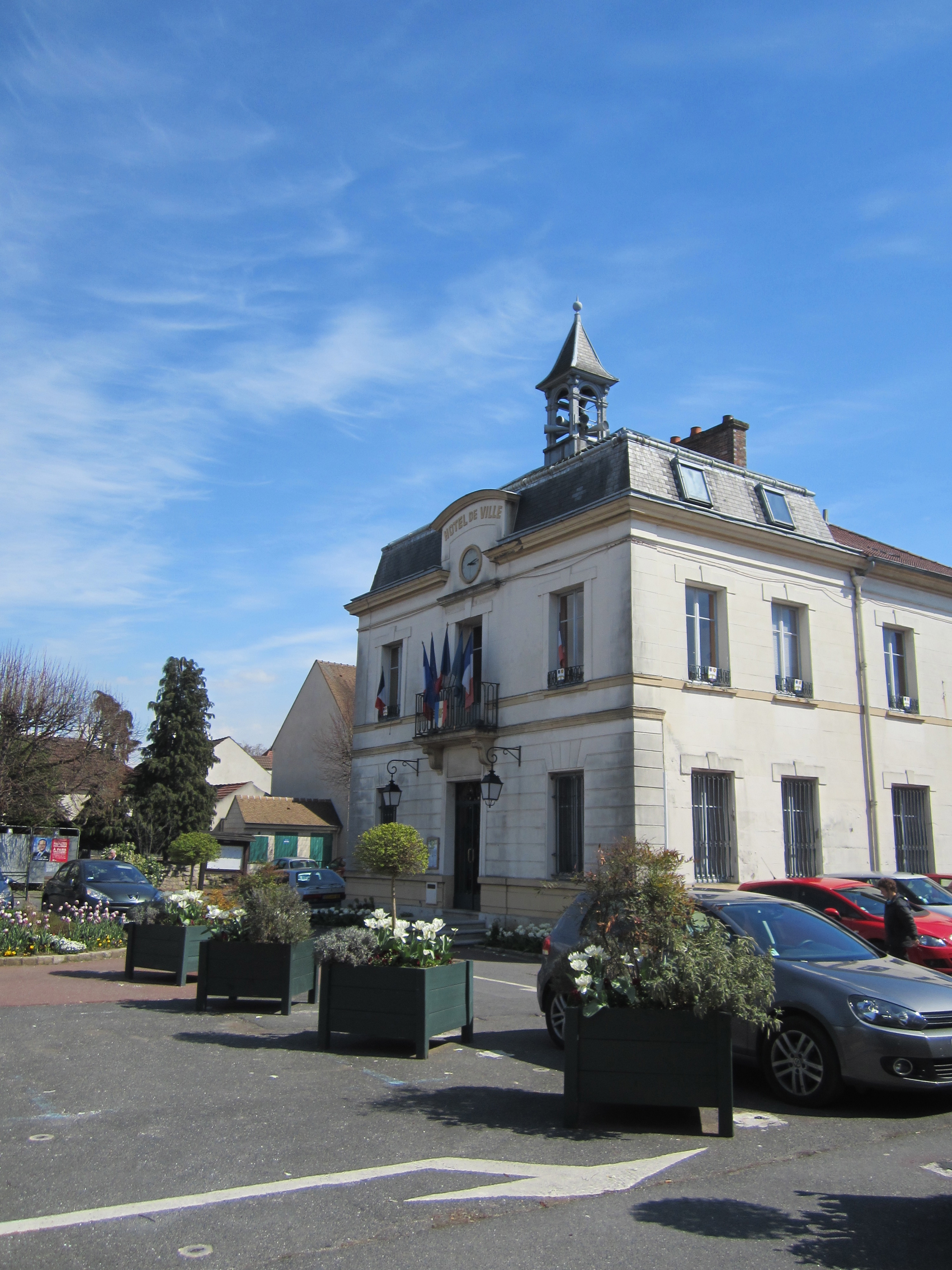
With Wallace’s book and my sketchpad in my tote bag, I ventured off to Auvers-sur-Oise myself. I hoped to see some sights that Van Gogh had painted, and thought I’d find some of the scenes from the book, but I never expected to have the book and Van Gogh’s story came alive right in front of my eyes. Check out these photos and these images of Van Gogh’s paintings and you’ll see what I mean.

Auberge Ravoux today, the inn where Van Gogh spent his last 70 days

Church in Auvers (1890), Musée D'Orsay

Church in Auvers (2012) - I got inspired to use bolder colors in my own pastel sketch

Wheat Field with Crows (1890), Van Gogh Museum, Amsterdam

Too early for wheat, but yes, there were crows

Town Hall at Auvers (1890), private collection

Town Hall at Auvers (2012)

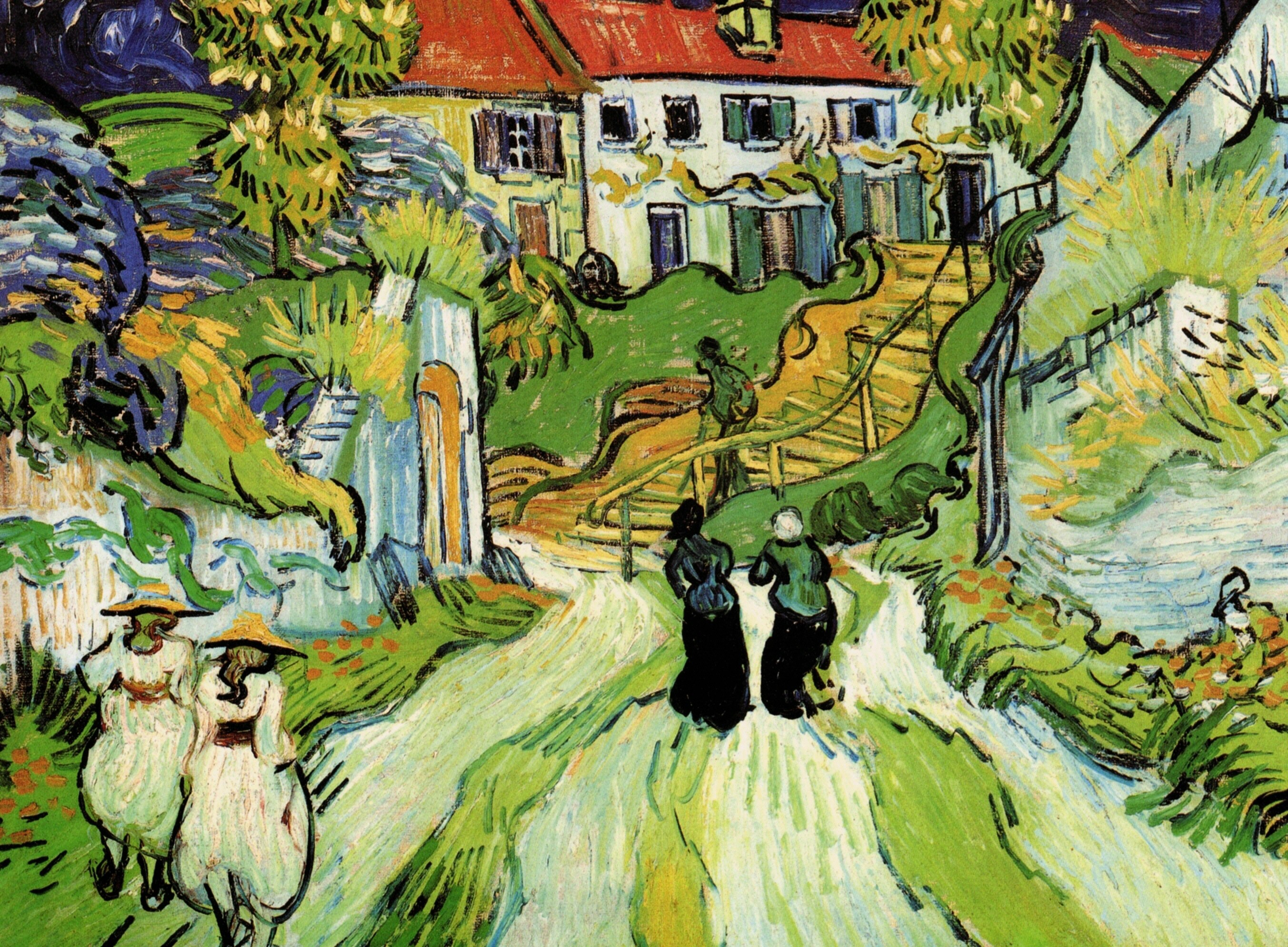
Village Street and Steps In Auvers With Figures (1890), private collection

Village street in Auvers with car and figures (2012)

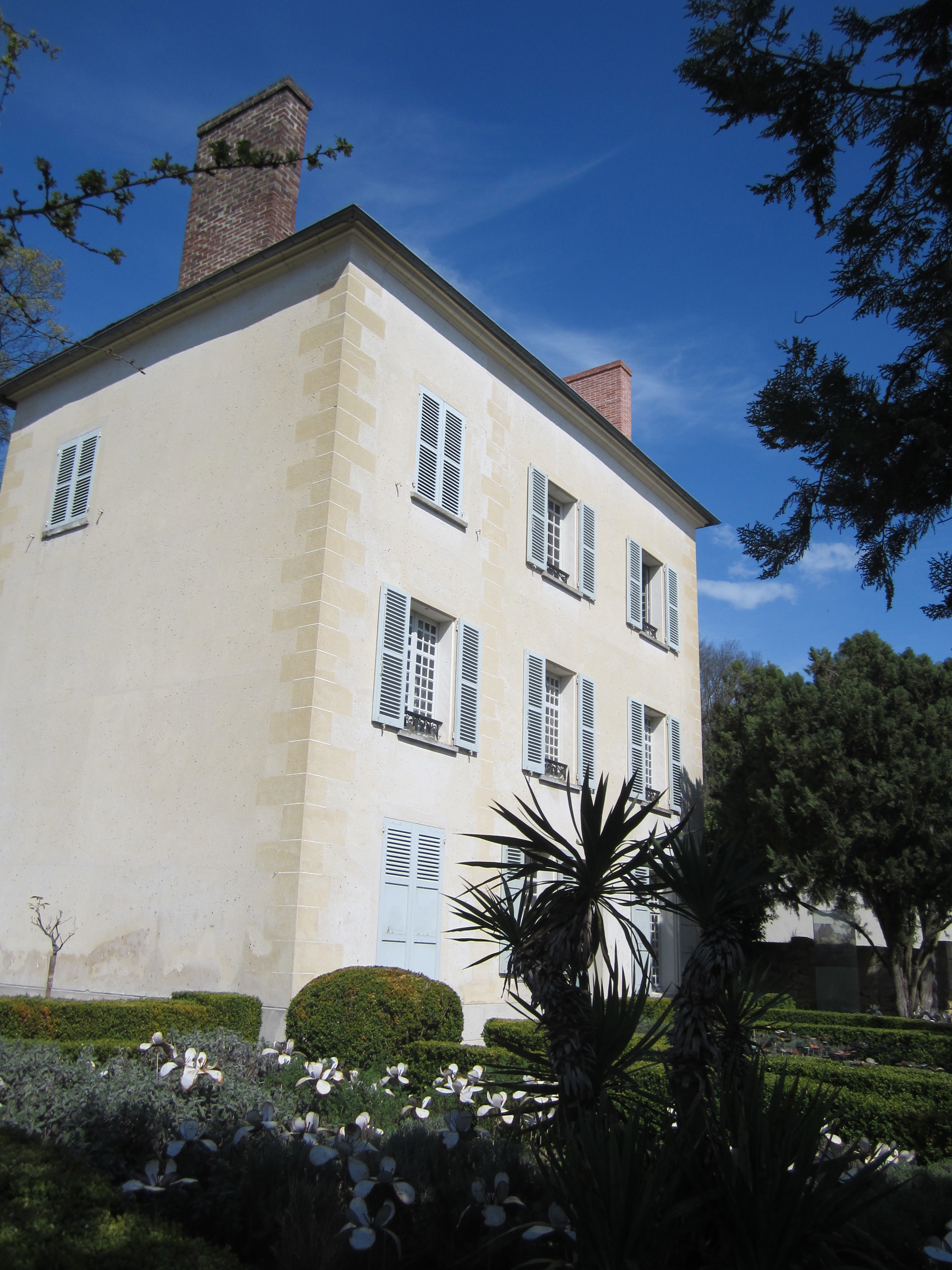
Dr. Gachet's house, now a museum in Auvers. Note the palm tree in the garden. Van Gogh painted the garden facing the other direction.

Dr. Gachet's Garden in Auvers (1890), Musée D'Orsay

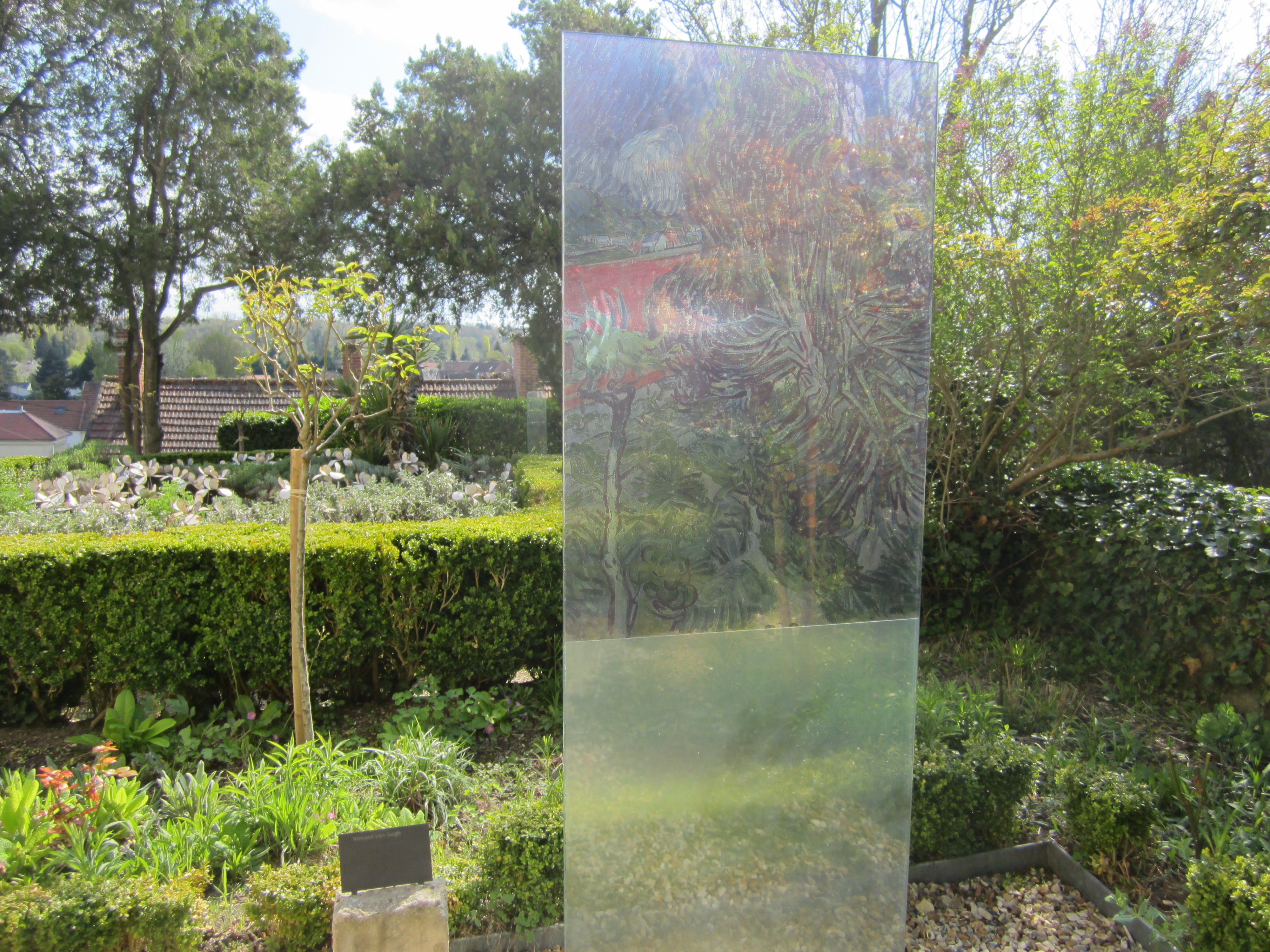
Dr. Gachet's garden today, with see-through screen of the painting to enhance the view.

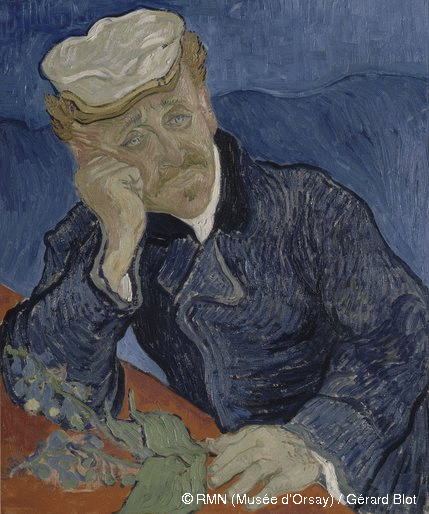
Dr. Gachet (1890), Musée D'Orsay

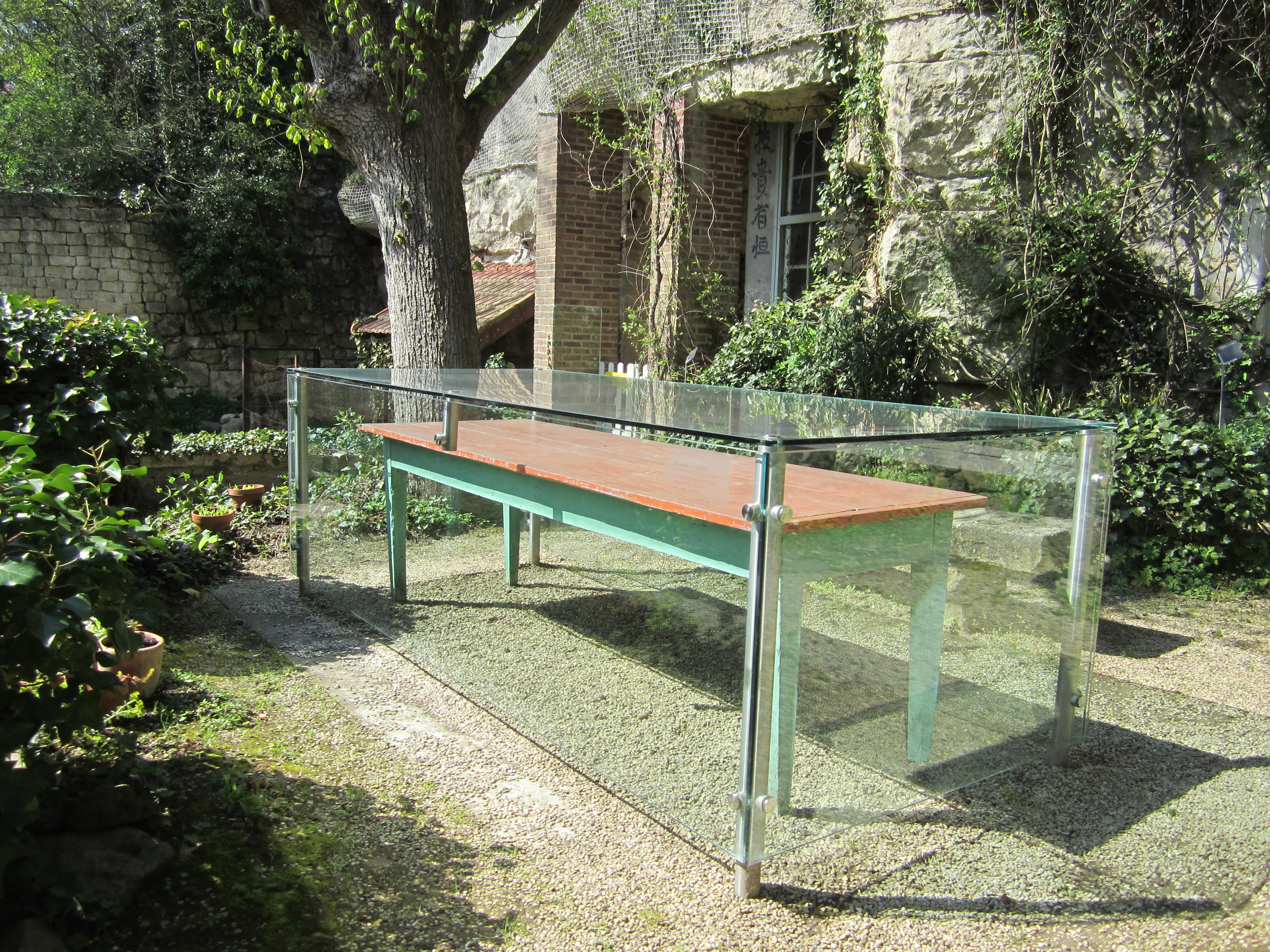
The table Dr. Gachet was leaning on in his portrait, in the garden of Maison Gachet

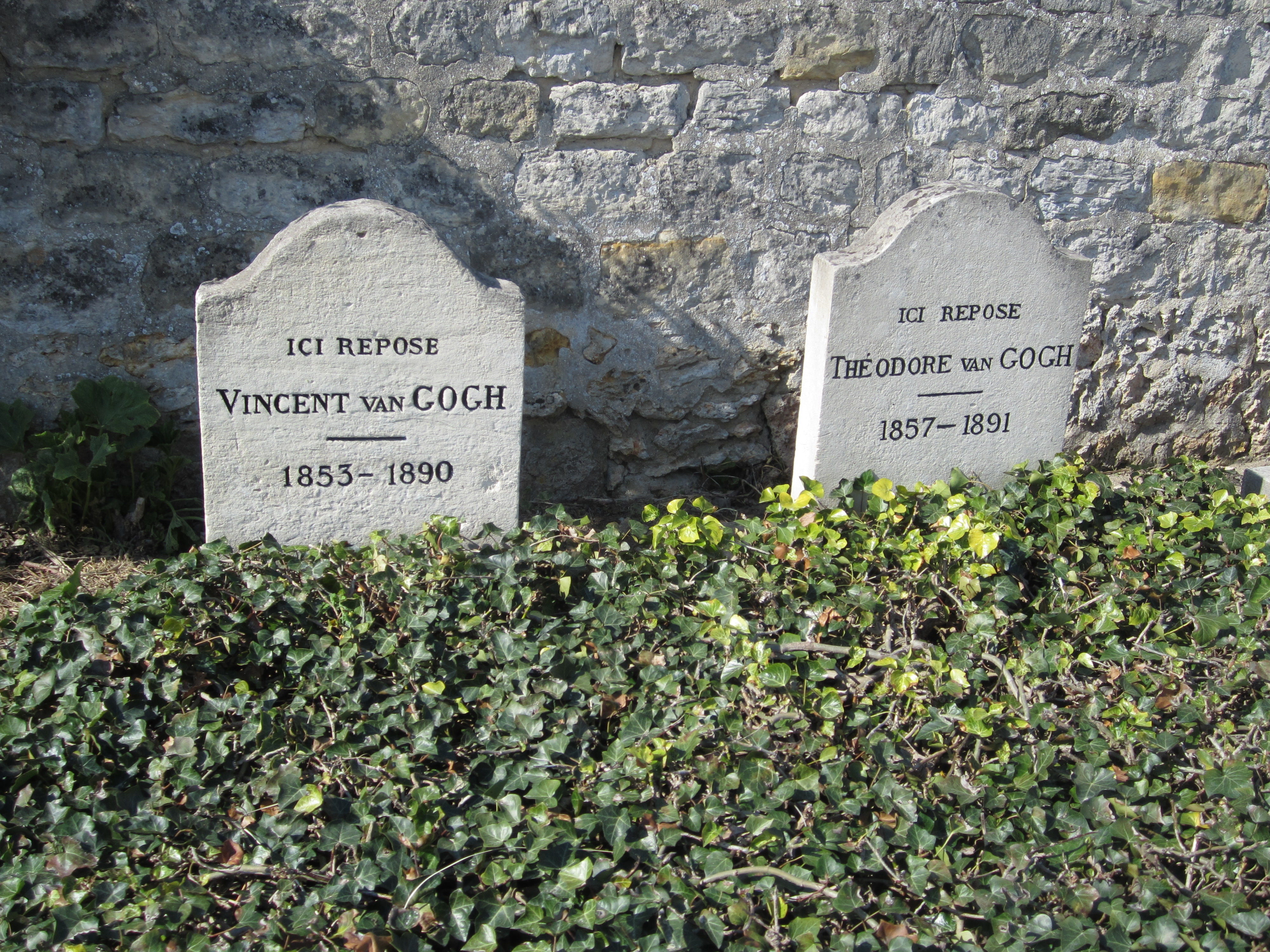
Vincent and Theo Van Gogh's tombstones in the cemetery in Auvers

*           *          *         *

A few travel tips before you go. There are trains from Gare St. Lazare And Gare Nord to Auvers, but during the week there is a connection through Pontoise. On Saturday there is a direct train. Check the SNCF website for ticket and schedule information at http://www.transilien.com.  I chose to rent a car and drive out to Auvers.

Once I got to Auvers, I was glad I had driven, because even though the train station is close to Auberge Ravoux and Maison Van Gogh, it would have been about a mile each way to walk out to Maison Gachet. I’m a good walker, but I’d gotten a late start, and I had already had a nice walk up the hill from the Auberge to the church and the cemetery. The Maison Van Gogh website has a map, so you can decide for yourself. Maison Gachet has just been repoened after a five year renovation, and it’s a beautiful museum – a site you really don’t want to miss.  From March 1st through October 28th, they are open Wednesdays through Sundays, but check the websites for holidays and hours.

By car, take the A15 motorway, direction Cergy-Pontoise, exit number 7 (Saint-Ouen-l’Aumône) then the RT184 direction Amiens-Beauvais. Exit Méry-sur-Oise/Auvers-sur-Oise.  Once in the village, follow directions for Auvers-sur-Oise.

I highly recommend you pair your trip with Leaving Van Gogh by Carol Wallace.

*          *          *          *          *

Luncheon of the Boating Party: A Day in Chatou

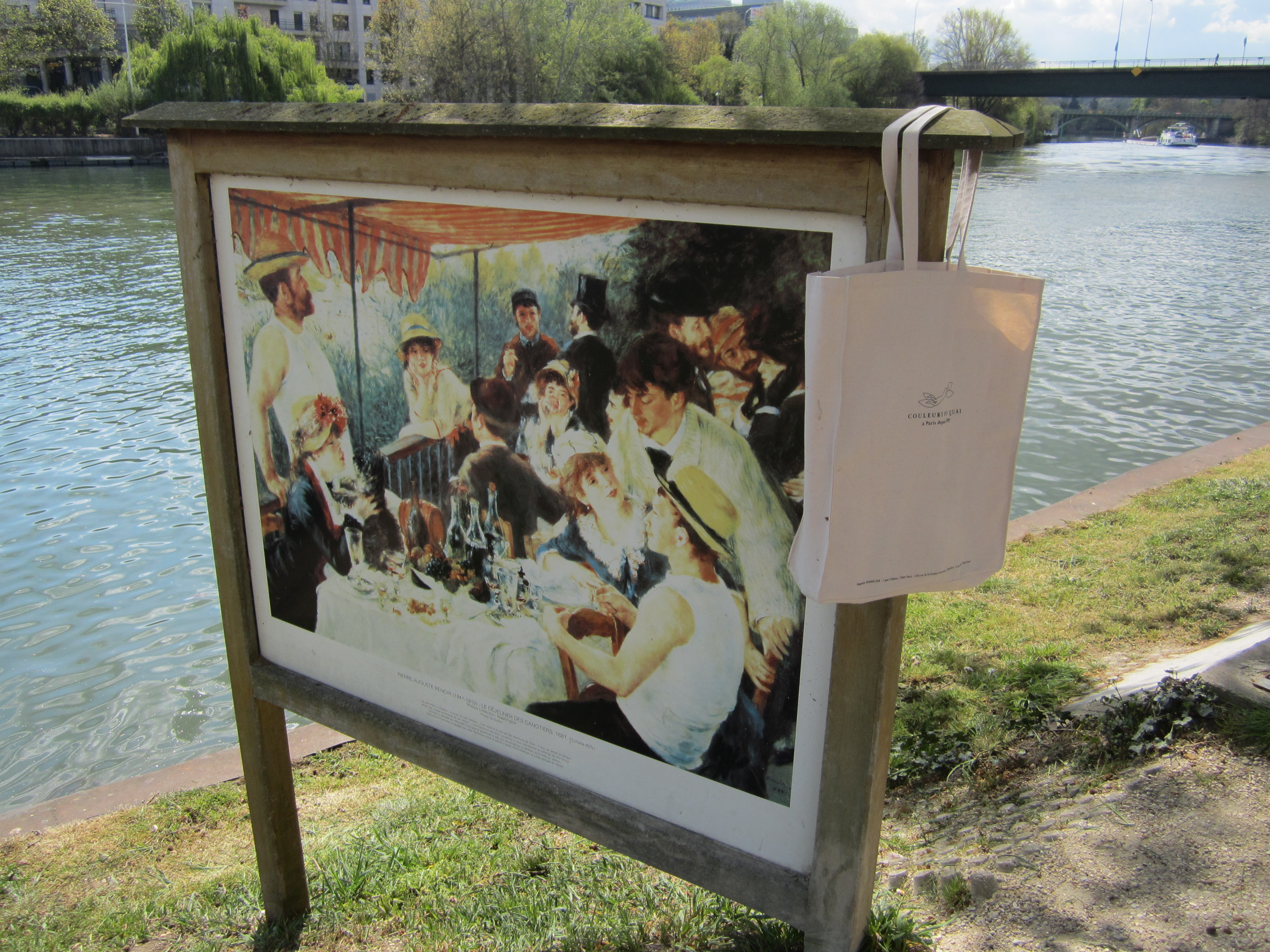
Renoir’s Luncheon of the Boating Party (1880-1) makes me want to pull up a chair, sit down next to Gustave Caillebotte (right foreground) and pour myself a glass of wine. Maybe I would even feed the doggie some grapes and chat with Aline Charigot, Renoir’s future wife (the pretty woman in the red-flowered hat).

This is an accessible, sunny painting that reflects a leisurely Sunday afternoon at one of Renoir’s favorite hang-outs, Restaurant de la Maison Fournaise, just outside Paris in Chatou on the Seine. Did you know that you can still go there today? As Renoir said himself: “You won’t regret the trip, I assure you. There isn’t a lovelier place in all Paris surroundings.”

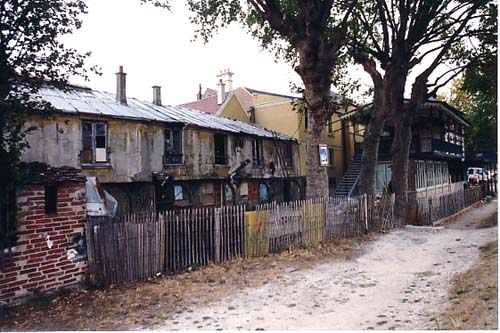
For a long time, the restaurant suffered from neglect and deterioration. As Renoir’s son Jean said in his book, Renoir, My Father (1962):  “I paid a visit to the place last year. How depressing it was! Nothing but factories, mounds of coal, blackened walls and dirty water. The leprosy of modern industry has eaten away the little woods and luxuriant grass.”

Maison Fournaise before renovation. From the restaurant’s website.

From 1984 to 1990, the restaurant was completely renovated with a combination of art grants and philanthropy. Today, the scene is much improved.

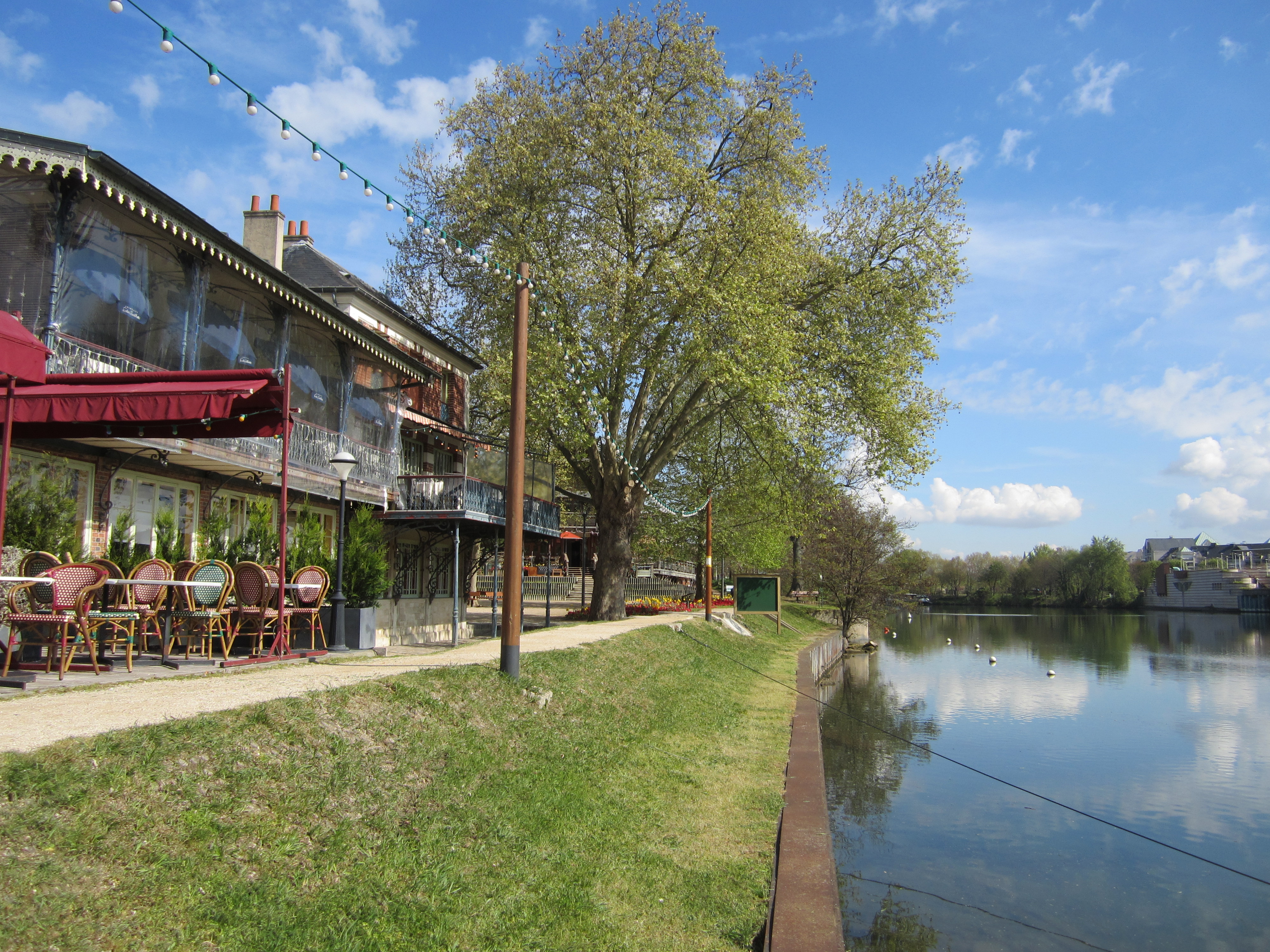
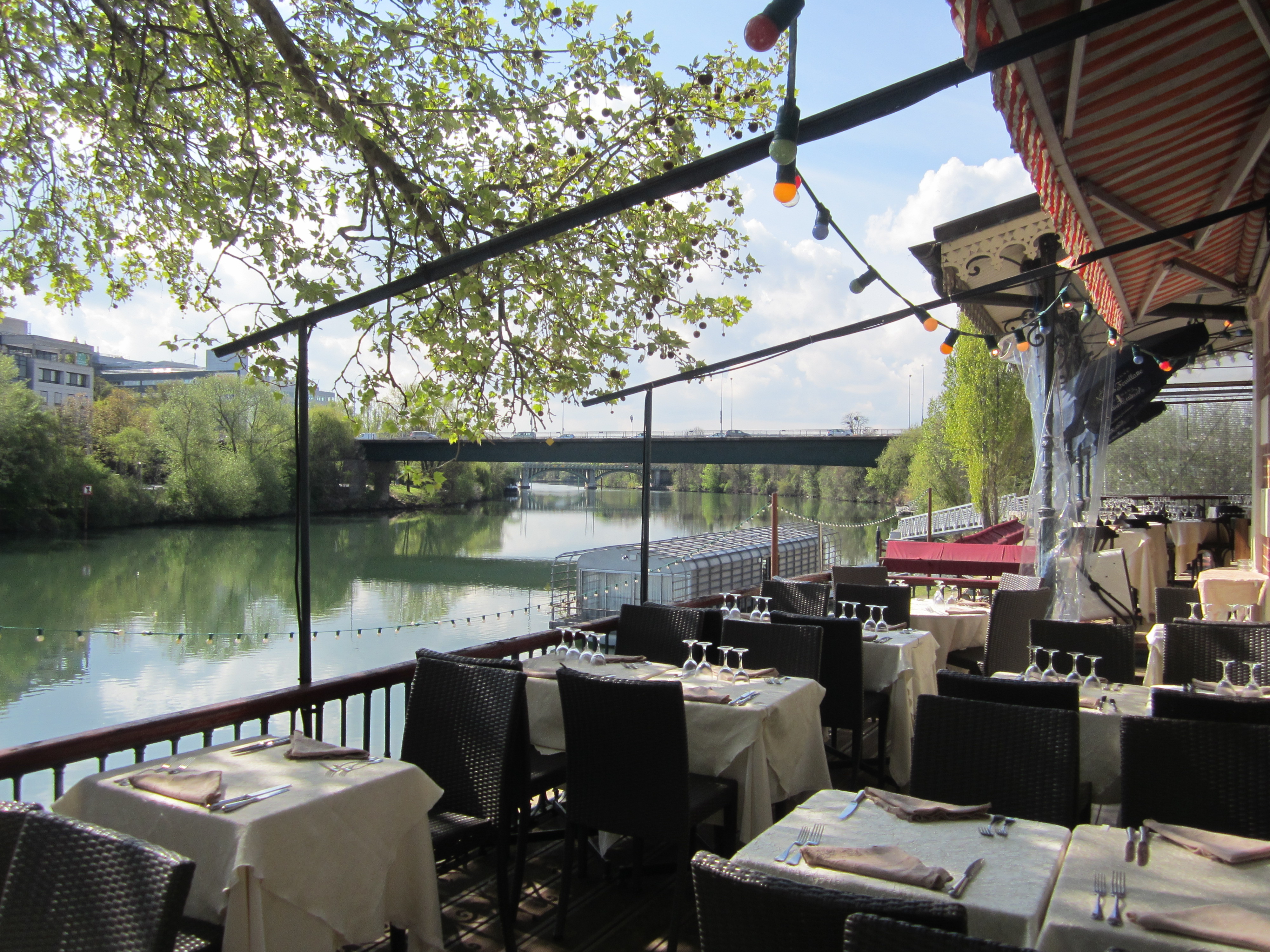
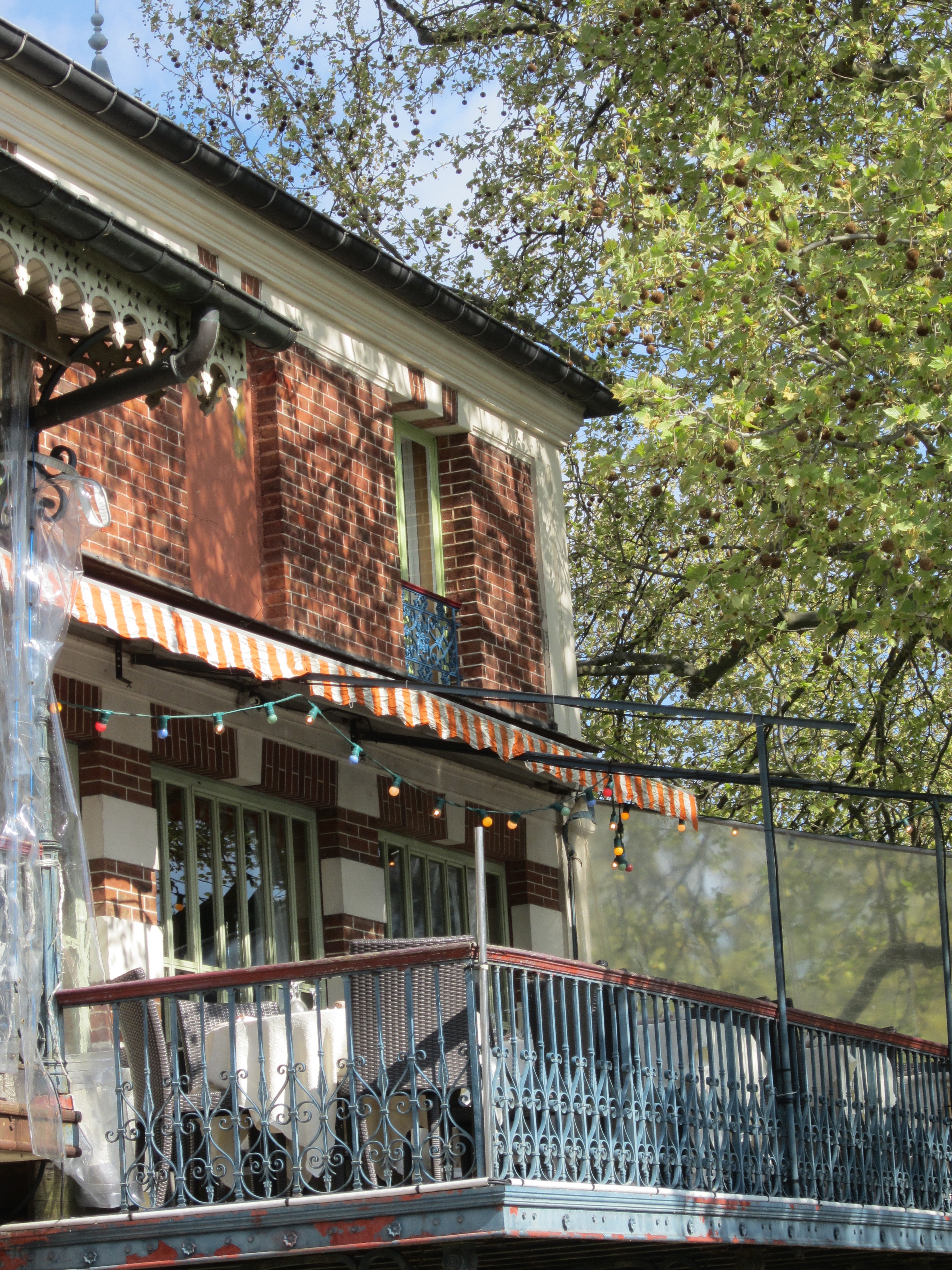
Maison Fournaise today

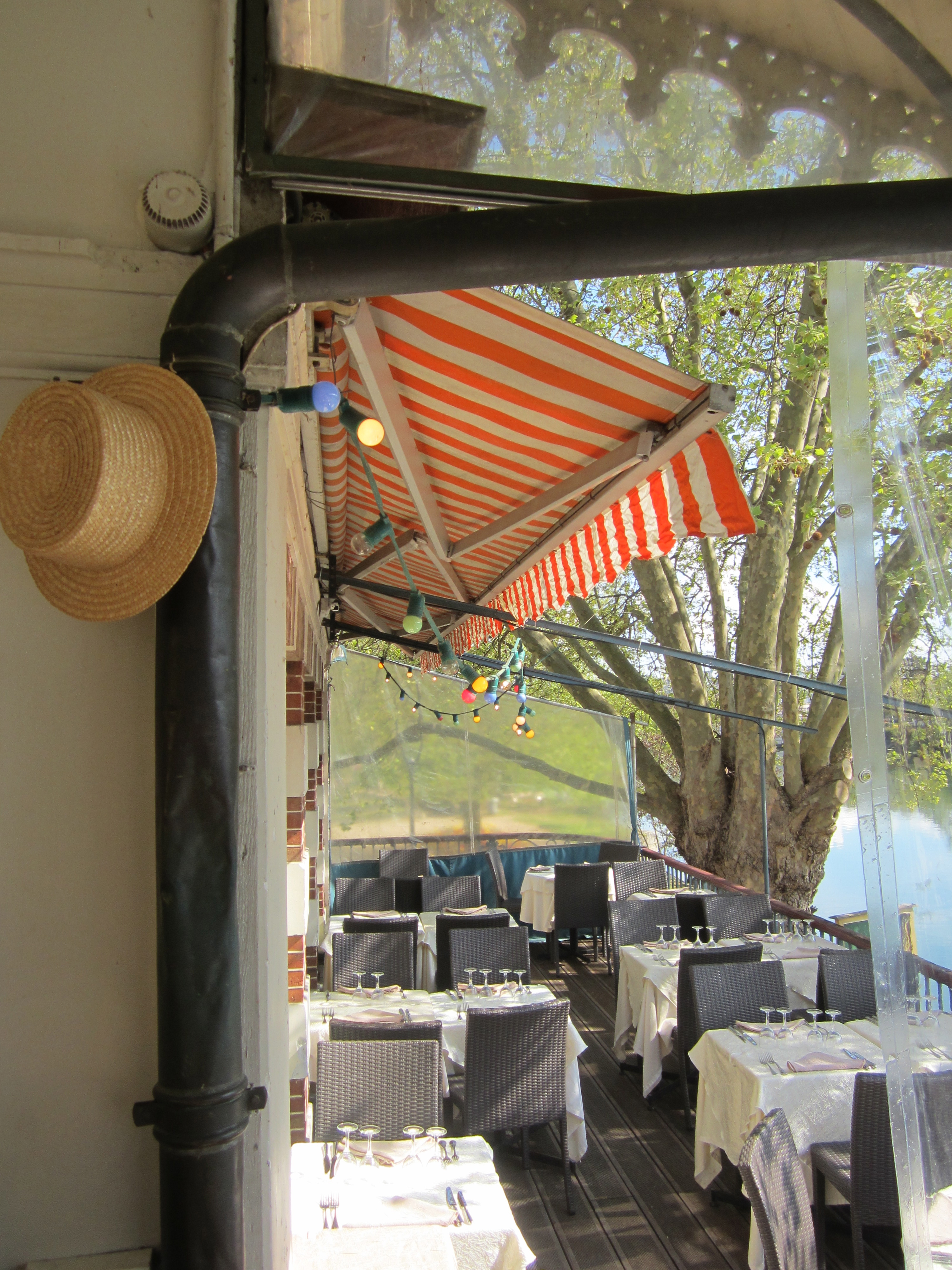
Renoir’s balcony still stands, complete with the orange striped awning. 

The view from Renoir’s easel. 

“The place was delightful; a perpetual holiday. . . . At night there was always someone about who volunteered to play the piano for dancing. The tables on the terrace were pushed back into a corner. . . . the music floated out through the open window.” – Jean Renoir, in Renoir, My Father

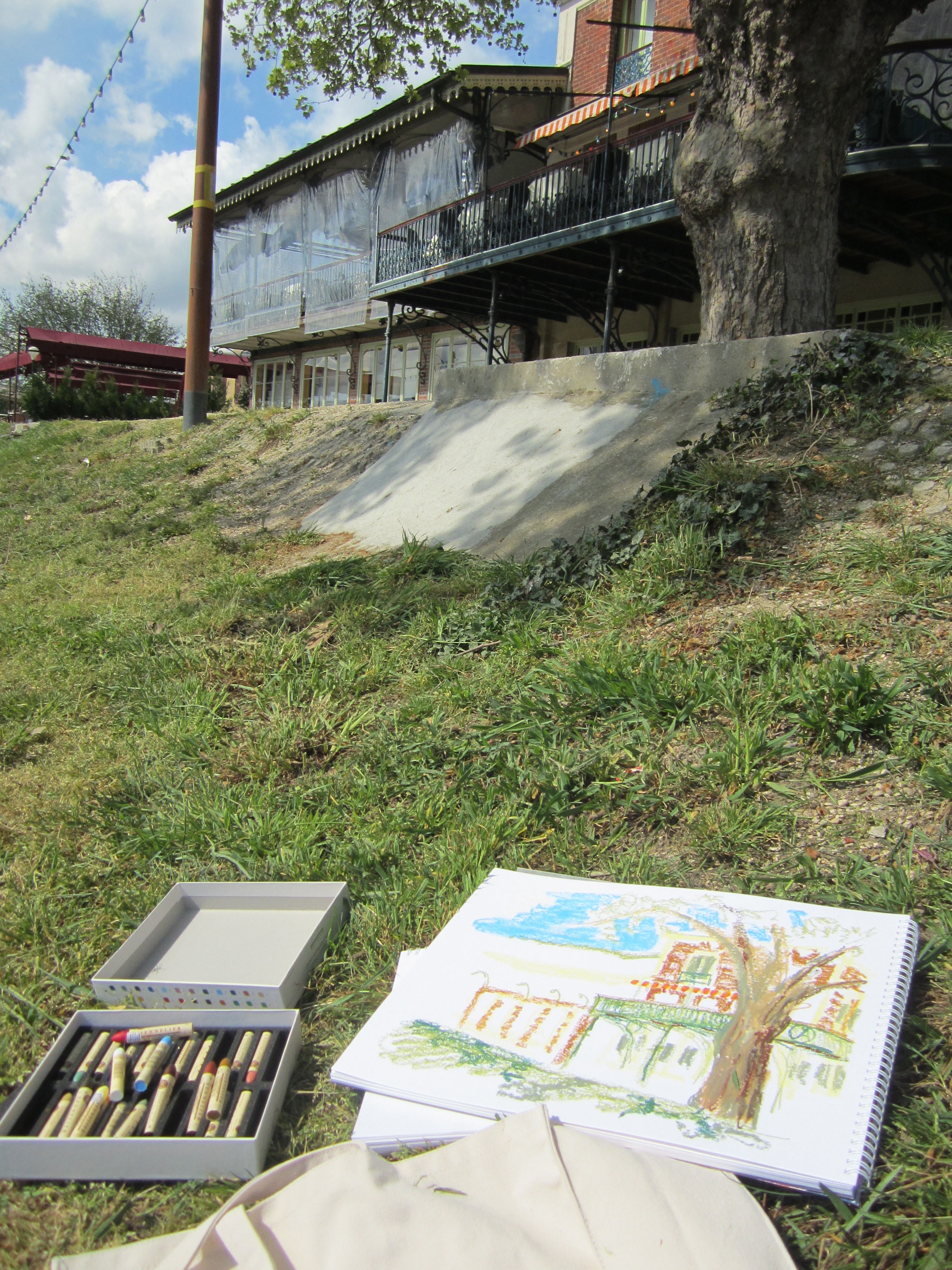
I even brought out my own pastels and tried to capture the scene, but alas, I’m no Renoir.

My art bag and I were here. . . . I just wish some “Midnight in Paris” magic would transport me back to the day. . . .

Restaurant de la Maison Fournaise is easily reached by car or by train. You can take the same route that Renoir did from Paris to the Chatou-Croissy station via the RER A1 Line (Zone 4), where it is only a few minutes walk to what is now called “Ile des Impressionistes.”

It was this easy access that made the restaurant Renoir and Aline’s favorite meeting place back in 1880. According to Jean Renoir: “It was easy to reach. . . . There was a local Saint Germain train, every half hour, that stopped at the Chatou bridge station. At the Fournaises’ [my parents] found a group of friends who seemed to watch over their idyl with tender interest. The painter Caillebotte looked after Aline Charigot like a younger sister.”

You can read an imagined story of the couple’s developing romance in Luncheon of the Boating Party by Susan Vreeland, who said that she had often admired the painting and wondered about the models. Who were they, and why did they pose like they did?  “I saw tremendous story potential in these appealing characters, flushed with pleasure and enjoying a summer day on a terrace overlooking the Seine.” Vreeland imagines a love triangle between Renoir, Aline, and another woman in the painting, Alphonsine Fournaise, the daughter of the restaurant owner.

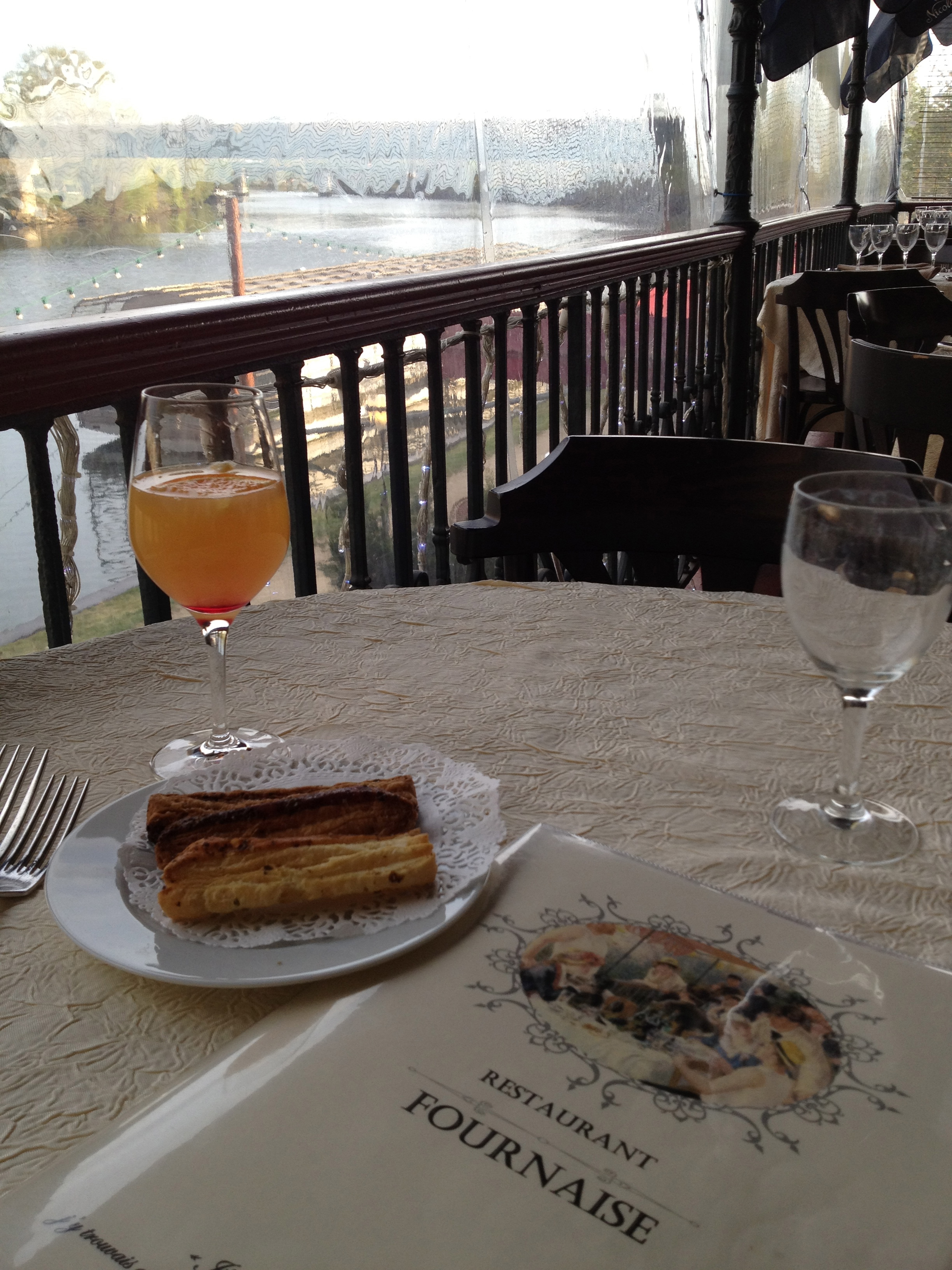
You can enjoy your own toast to Renoir and his women at the restaurant, where they offer an apertif called “The Alphonsine,” made of orange juice, champagne and grenadine.

My own book club back in Chicago read and enjoyed Susan Vreeland’s book, which I highly recommend. Right now, I am in the middle of Renoir, My Father by Jean Renoir, and I am pleasantly surprised what a good read it is. Jean’s memory was incredibly good, his writing is thoughtful, and the stories his father used to tell him make captivating history.

If you or your book club can’t get to Paris, maybe you can schedule a visit to the Phillips Collection in Washington, D.C. to see the original painting. At the Art Institute of Chicago you can see another of Renoir’s paintings from Chatou called Lunch at the Restaurant Fournaise (The Rower’s Lunch) (1875).

At the very least, you can enjoy some art history at the website of Maison Fournaise here.

Paris, My Sweet

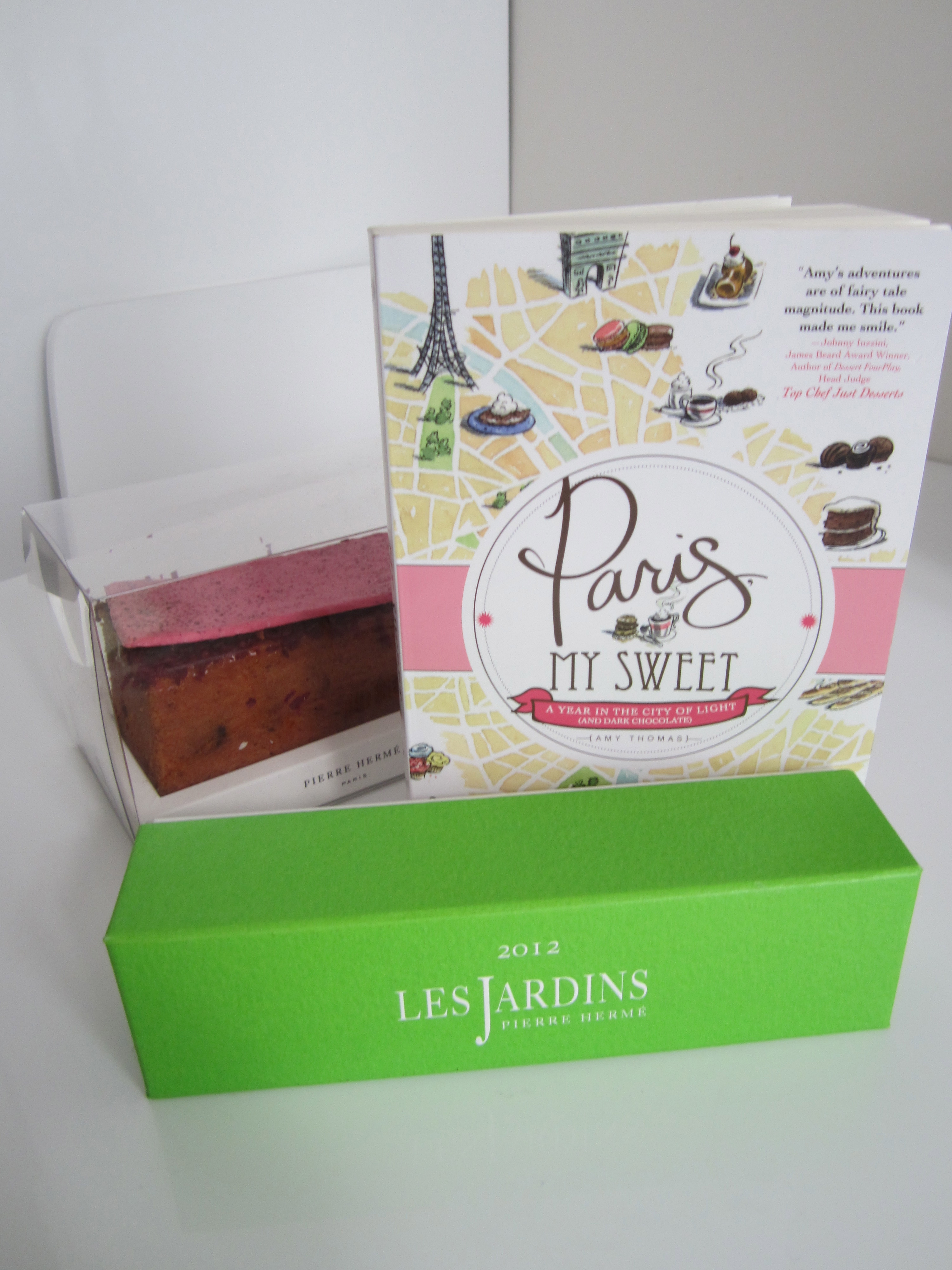
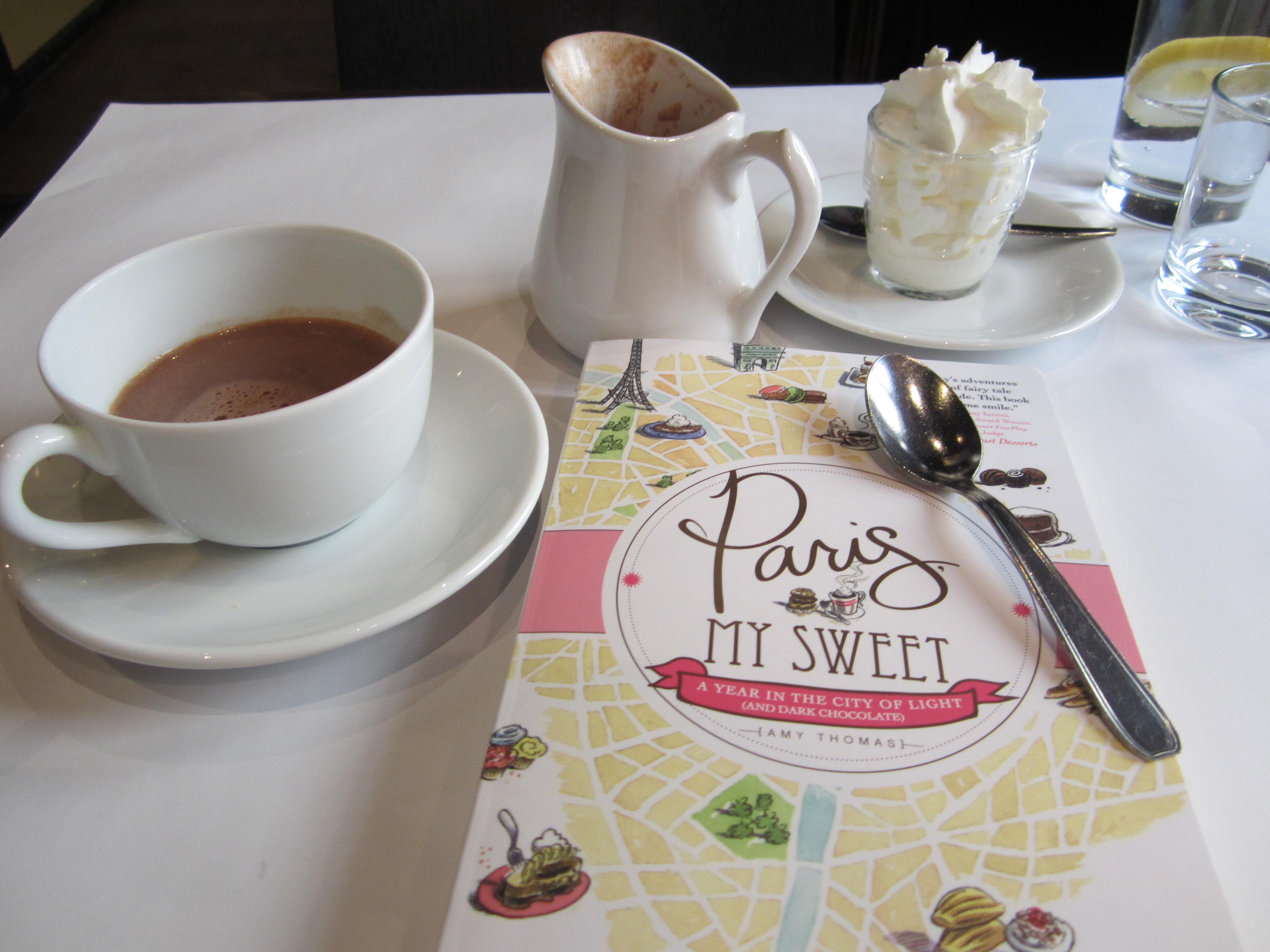
As an artist with a sweet tooth who loves to explore Paris, no book was more likely to catch my eye than Paris, My Sweet: A Year in the City of Light (And Dark Chocolate) by Amy Thomas (Sourcebooks 2012). First, there’s the whimsical cover art by illustrator Gary Hovland who captures the essence of Paris on a watercolor map. And then of course there are . . . the sweets.

Amy Thomas is a self-admitted sweet freak who landed an advertising job in Paris for two years, and who used her spare time to explore the patisseries and boulangeries of Paris. The story of her search for a rich and sweet life, along with all of her mouth-watering recommendations can be found in Paris, My Sweet.

I kept this book in my tote bag for a several weeks, right along with my never-leave-the-apartment-without-it blue book of Paris Arrondissements. I used it like a guidebook to Paris, calories be damned. After several months living in Paris now, I’ve learned that it often makes sense to skip lunch and indulge in a mid-afternoon snack with some café and some pastries instead. That way I can make it until dinner, which at 8-9pm, starts awfully late for my midwestern habits. (At least that’s now I’ve justified it to myself . . .  just work with me here.)

Not only have I discovered streets and neighborhoods I might have otherwise missed, I feel as if I’ve had a wonderful introduction to French pastry tasting. The choices in Paris patisseries, while eye-poppingly beautiful, can be overwhelming. But thanks to Amy Thomas’ book, I’m learning.

And what a fun education it’s been. From Jean-Paul Hévin’s on rue St. Honoré, to Stohrer’s on rue Montorgueil, my sweet tooth and I are having a great time learning about France.

I brought home a drop-dead-delicious rasberry cake and an assortment of macarons from Pierre Hermé.

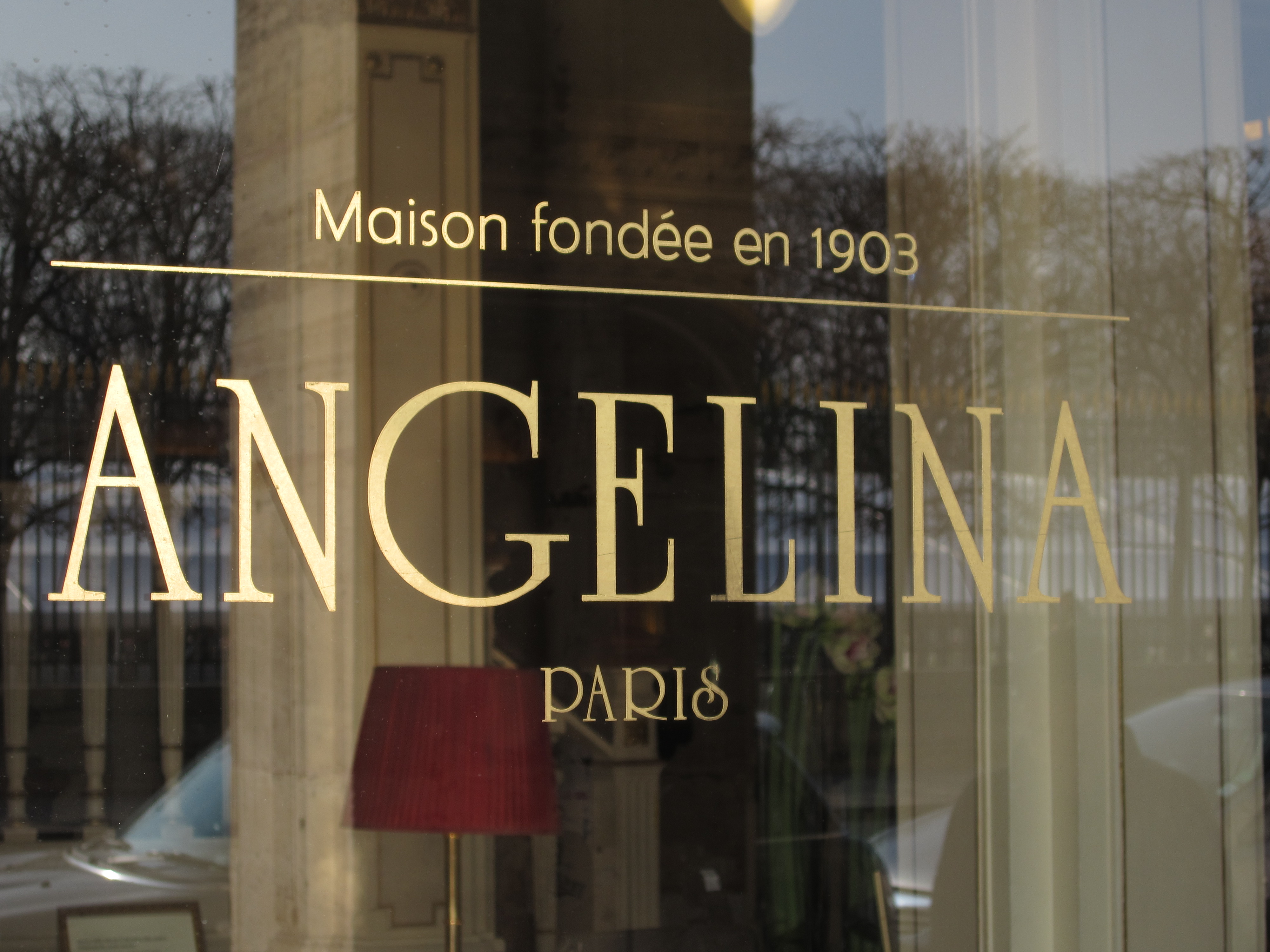
I had been avoiding Angelina's on rue de Rivoli because I was afraid it would be a tourist trap, but as Amy points out, it's worth it just for the chocolat chaud. "Obscenely thick and outrageously rich." Yum.

The Belle Epoque elegance of Angelina's makes you feel as though Edith Wharton or Coco Chanel could have once sat at your very table.

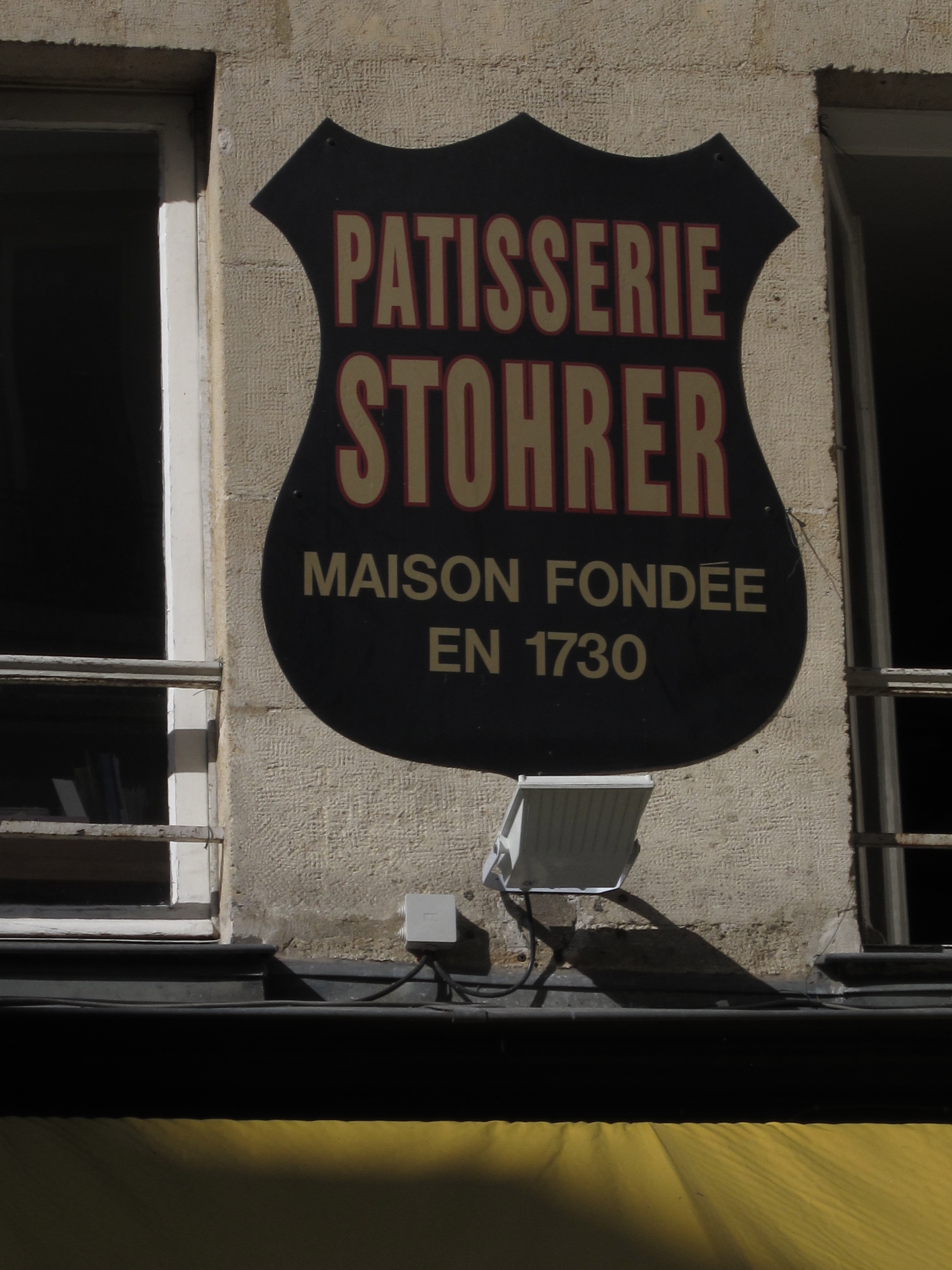
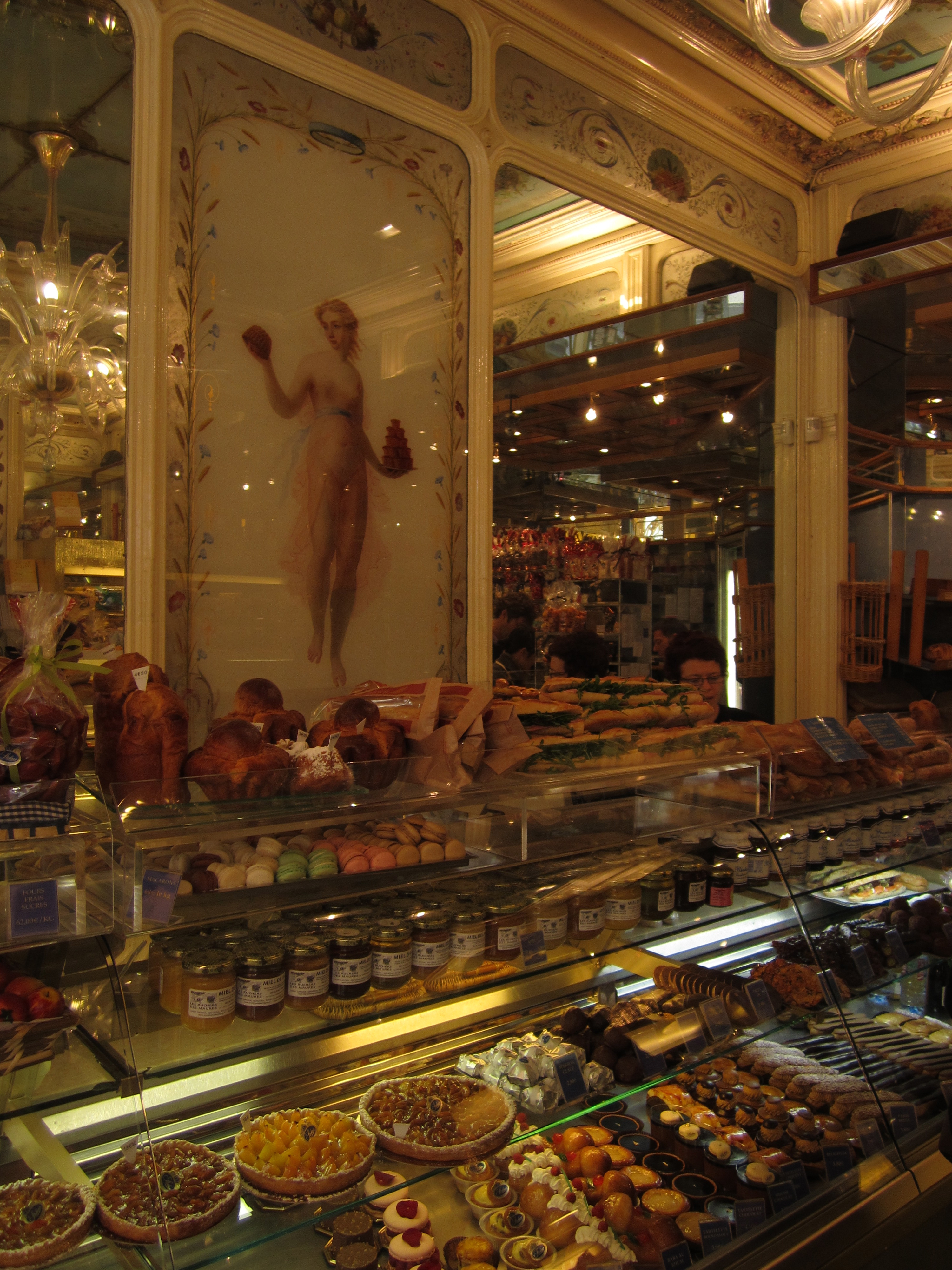
I'd been down rue Montorgueil in the nighttime, but thanks to Amy's book, I went back in the daytime in order to enjoy all of the shops. I love this sign: Stohrer's Maison Fondée En 1730. You just can't find that in the midwest - unless of course some French fur trappers set up a shop way back when. Stohrer's is the real deal, just ask Queen Elizabeth, who's been here herself.

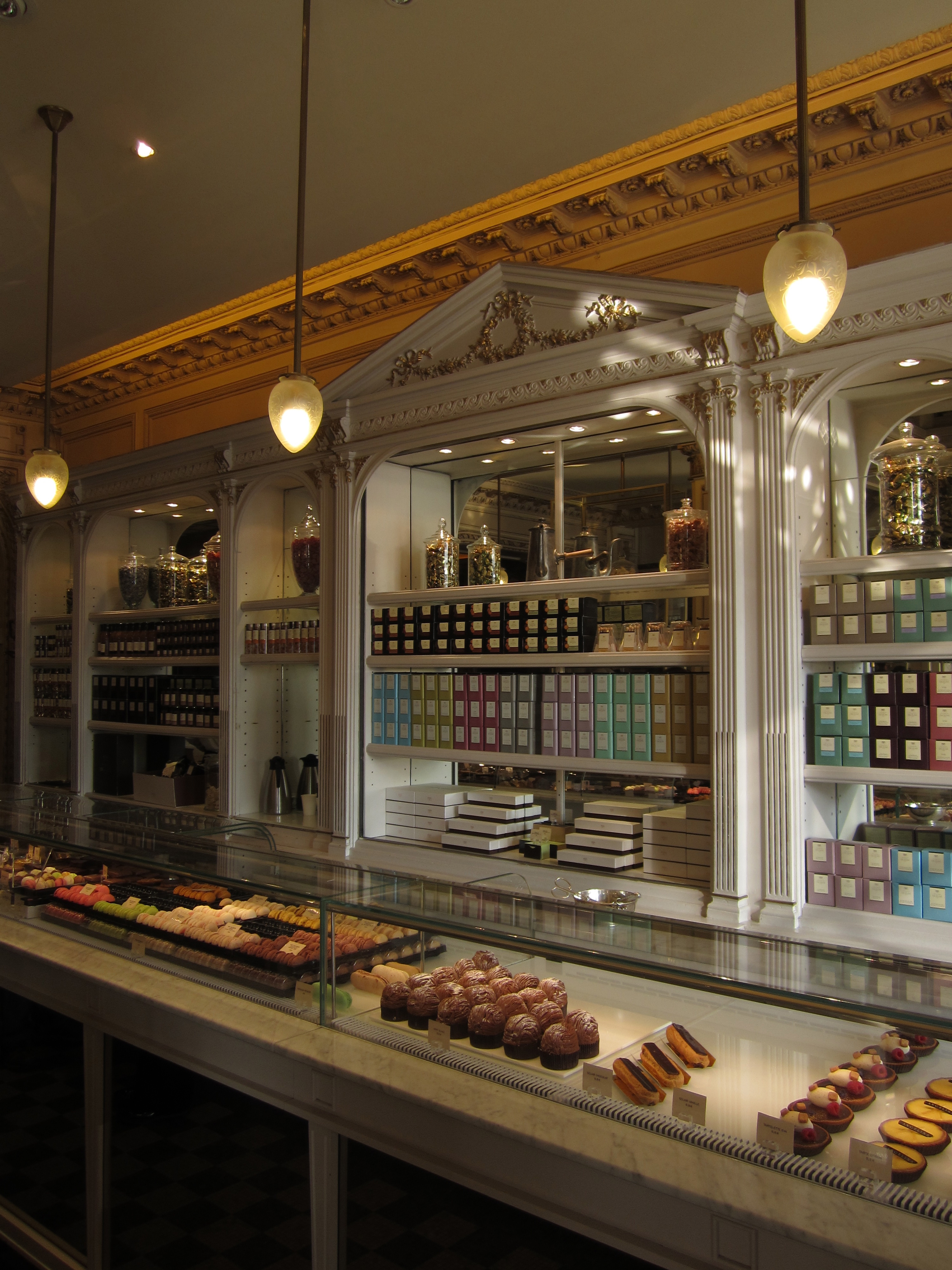
This is what I mean by overwhelming, How to choose? I settled on a chocolate éclair. Ooh, good choice.

You just can't say no to a macaron from LaDurée. Or two or three.

I had a delicious chicken salad at Jean-Pierre Levin on rue St. Honoré followed by a soothingly rich cup of hot chocolate. Oh dear, just look at all of that whipped cream - I'm afraid I ate it all.

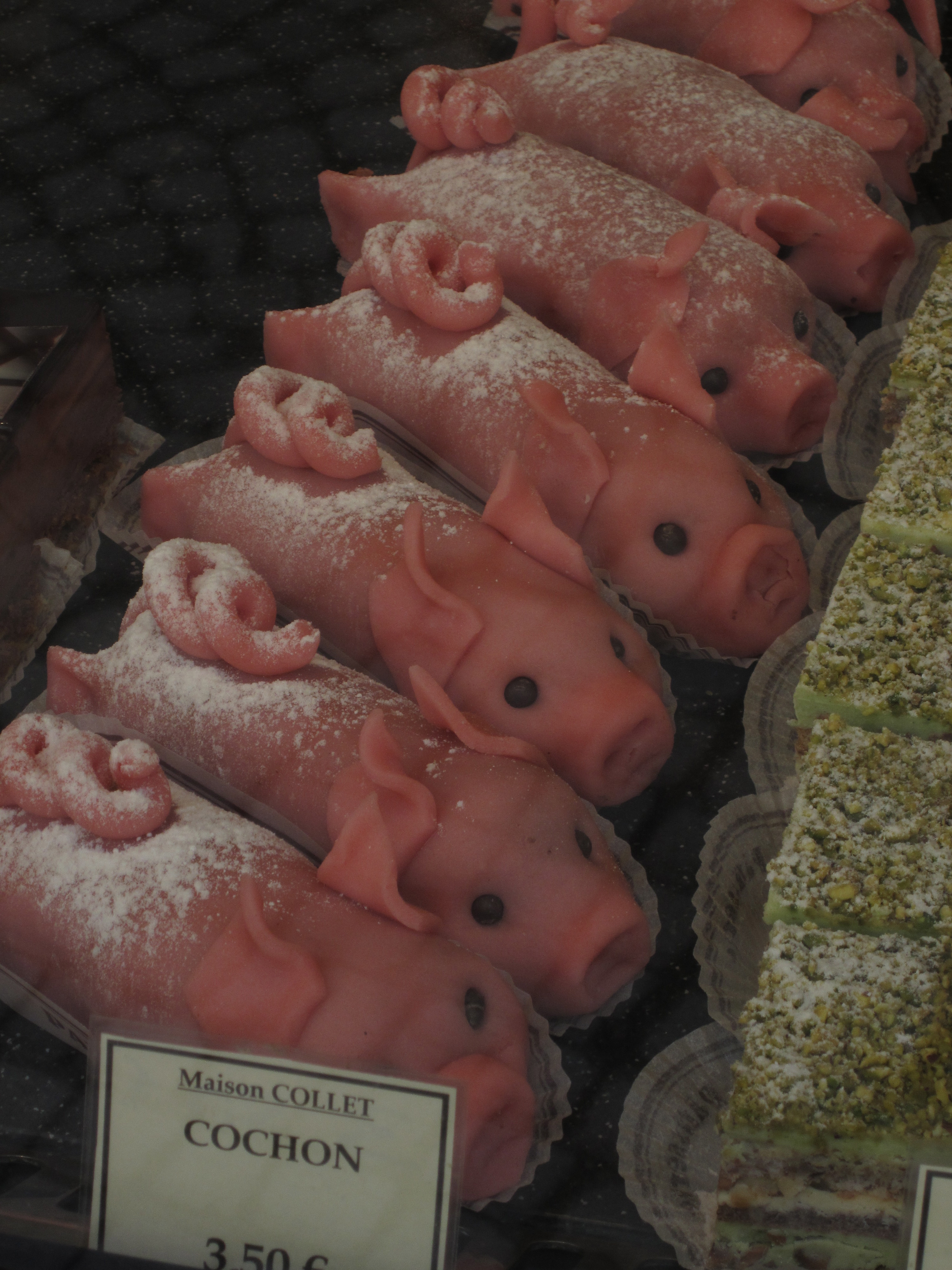
These little piggies are edible pastries, and I regret now that I didn't sample them. I guess I'll have to return to Maison Collet at 100, rue Montorgueil.

The thing I loved about Paris, My Sweet was that it was so much more than just a guidebook and a list of pastry shops. It also tells Amy’s story about the joy and challenges of settling into a Paris life, and then once you do, the difficulty of figuring out where you really belong. As Amy put it: “I was an American in Paris – an American in love with Paris – and yet I still couldn’t decide where my heart, my life, belonged.”

Ah yes, the Paris life. I’m tasting as much as I can while I can.

Sacré Bleu: A Comedy D’Art

Sacré Bleu by Christopher Moore (Harper Collins, April 2012) reminds me of one of my favorite scenes in Midnight in Paris, when Adrien Brody nails it as Salvador Dali  (“Rhinocéros!”). Like Midnight in Paris, Sacré Bleu is a smart artsy romp through the bohemian past of Paris.

In Sacré Bleu, Moore turns the clock back even further to the age of the Impressionists, he adds a little black magic, a lot of bawdy humor and a bit of bizarre mystery — and serves up an outrageously playful historical comedy (truly, “A Comedy D’Art”).

There are no fussy painters in long white beards and frock coats here. This is an irreverent mystery with a sexy muse named Bleu and her partner-in-crime, “The Colorman,” whose magical blue paint works a devilish spell on the young French Impressionists, including Manet, Renoir, Pissaro, Van Gogh, Monet, Morrisot, Seurat and Toulouse-Lautrec.

Set in Paris from 1863, the year of the Salon des Refusées, to 1891, a year after Van Gogh’s death, this book stirs up big trouble for each of the Impressionists. Bleu arrives and inhabits the bodies of the artists’ favorite muses, from Manet’s Victorine in Dejeuner sur l’Herbe and Olympia to Monet’s first wife Camille, to Renoir’s Margot in Bal du moulin de la Galette. Each painter is seduced to use more magical blue paint, which just happens to be Bleu’s and The Colorman’s lifeblood.

Ever wonder why so many of the Impressionists and their muses died so young? Did you ever question the story about Van Gogh’s supposed suicide, in which he shot himself with his own gun at an impossible angle and then hiked a mile up a country road to get help? And why did Monet paint a blue-tinged portrait his wife on her deathbed? Let’s just say that Bleu and The Colorman know the truth.

A fictional young painter named Lucien Lessard carries the story. Working in the family’s boulangerie on the butte de Montmarte, he becomes the story’s Forrest Gump: he’s a young rat catcher during the Siege of Paris in 1870, he helps Renoir carry his large canvas of Bal du moulin de la Galette to his studio in 1876 (“Oh la la, the wind. We had to pick leaves and pine needles out of the paint every week.”), he was Monet’s assistant at the Gare Saint Lazare in 1877, he runs around the bars and brothels of Pigale with Toulouse-Lautrec. He sees it all.

Lucien comes of age, becomes a painter, and falls under the spell of his own little muse. Although Juliette is hard to resist, Lucien pieces together the various blue clues. He and his studio-mate Toulouse-Lautrec chase Bleu and the Colorman through the cobblestone streets and rat-filled catacombs of Paris. They discover a cache of mysterious blue canvases in the limestone caves and encounter even more death-defying magic.

It’s a good story, but trying to make sense of each twist and turn of the time-jumping plot can be a little confusing. Just go with it – don’t sweat the details or the timeline and just enjoy the ride. After all, you’re on the Christopher Moore L’Express.

Highly recommended.

*  *  *  *

If you live in Paris or if you’re planning a visit soon, I recommend that you pair than this book with a trip up to Montmartre. You might want to pick up Paris by the Plaque, an excellent guidebook to the history and sights of Montmartre. Paris Walks offers an English-speaking group walking tour every week, but if you’d like an in-depth personal guide I also recommend Pamela Grant at Paris Perspectives. If you’re just an armchair traveler, Christopher Moore has already created a Paris photo guide to some of the scenes from the book, which you can enjoy here (Chapter One – Auvers sur Oise) and here (Chapter Two – Montmartre, Pigale).

Before you start thinking about following in Christopher Moore’s footsteps, you should really pick up an early copy of the book. The first edition of the book will images of the paintings and prints in full color. Subsequent editions will just be in black and white. I’m just saying, you might want to click here to order yours now.

The Hadley Hemingway Tour

American women just love The Paris Wife. Perhaps we’ve read Moveable Feast or maybe we just heard the buzz through our book club, but it seems we just love getting the scoop on Ernest Hemingway through the eyes of his first wife Hadley.

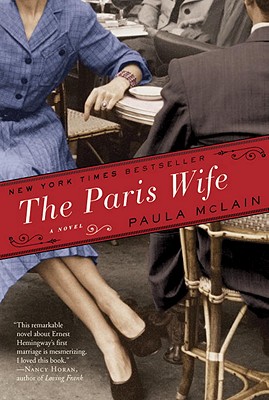
As most readers seem to have heard by now, The Paris Wife by Paula McLain (Ballantine Books 2011) is about Ernest and Hadley Hemingway’s brief but passionate years together in Paris in the early 20s. Ernest Hemingway was a charismatic and gifted writer, the genius of his generation, but he was also a narcissist, a cheater and a big drinker. No one better to deal the dirt than the first wife.

 In addition to The Paris Wife, there’s an excellent nonfiction book about the same years called Paris Without End by Gioia Diliberto (Harper Perennial 2011). One of my favorite authors (she’s also written I Am Madame X, The Collection and A Useful Woman), Diliberto’s nonfiction format  allows us to know more about Ernest’s developing affair with Pauline Pfeiffer than Hadley did at the time, back when Hadley was in the dark – or in denial, or a little of both. Diliberto is also able to compare the fictional events and characters in Hemingway’s stories to the real stuff going on in his life, which is a real bonus if you’re familiar with his work.

Whether you prefer the fictional drama in The Paris Wife or a more thorough nonfictional approach in Paris Without End, you’re sure to enjoy some of these Paris photographs, depicting scenes from both books. You can’t find a better Paris walk than the neighborhoods of the Latin Quarter, St. Germain and the Luxembourg Gardens. You can follow along on a Google Map here.

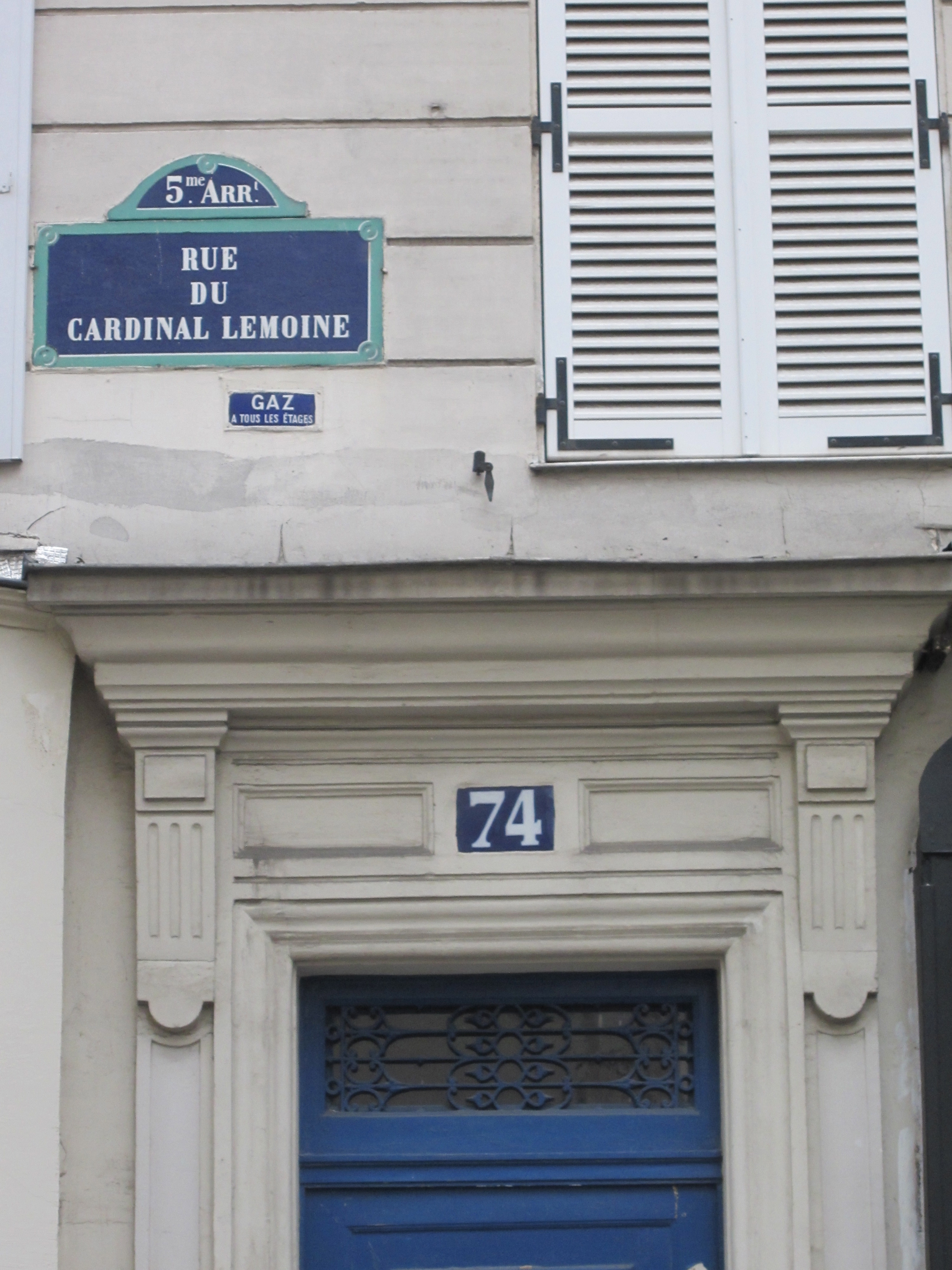
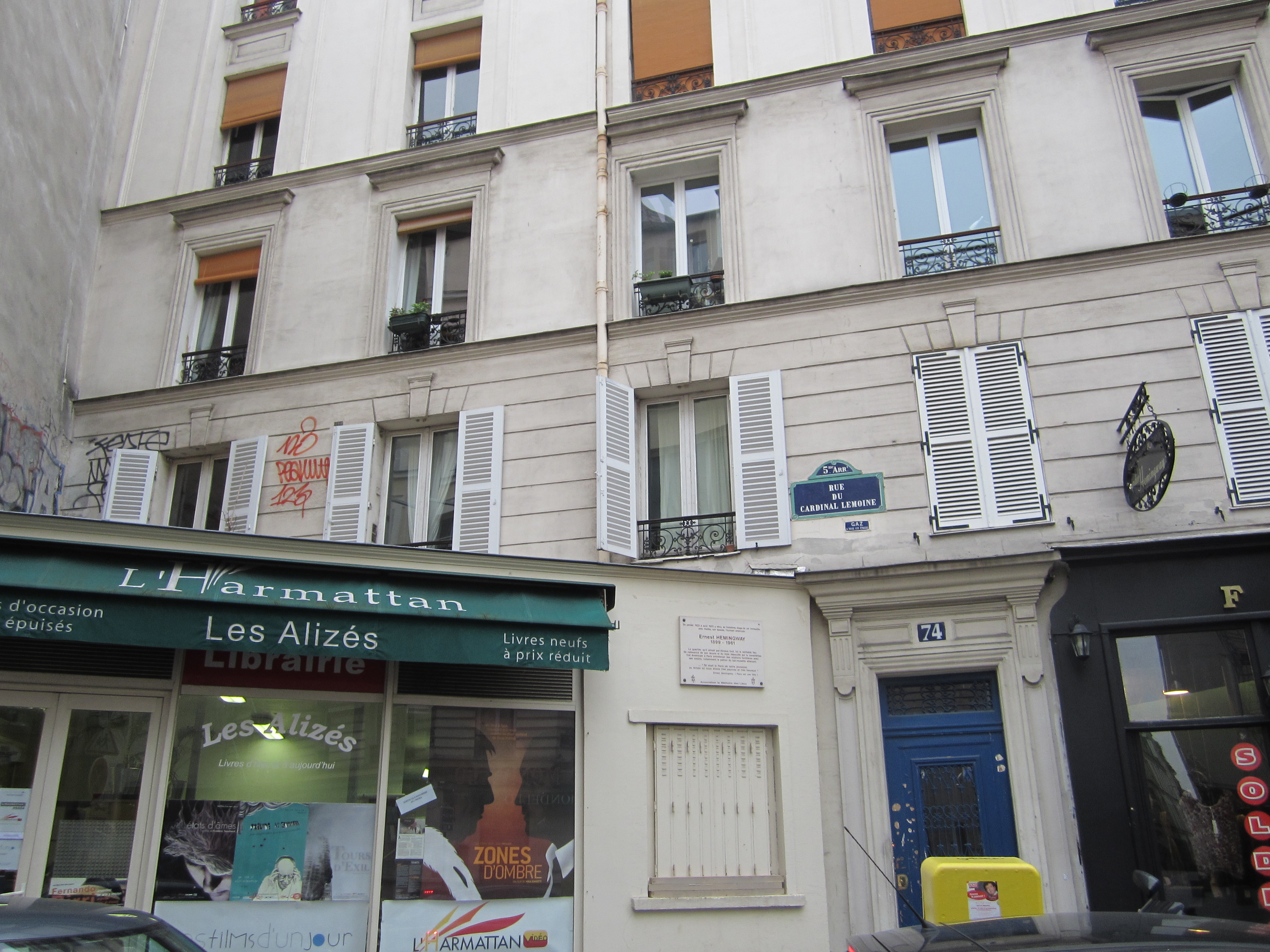
Ernest and Hadley moved into this apartment, at 74 rue du Cardinal-Lemoine in a working-class neighborhood of the 5th arrondissement in January, 1922. It was a two-room flat on the fourth floor without hot water or a private toilet. Hadley later said that "the apartment wasn't ghastly. In fact, it was kind of fun." She remembered that "The steep winding staircase had a niche on each flight for a step-on-two-pedals toilet."

The shop with the green awning below the Hemingways' window was once a loud and popular dance hall called Le Bal du Printemps. Ernest described it as a "noisy, rough music hall and hangout for sailor, whores, 'apaches' (French gang members) and American expatriates, who nicknamed it 'Bucket of Blood.' "

Ernest Hemingway rented an attic apartment in this building at 39 rue Descartes from 1921-1922. It served as his getaway and writing studio, and was just around the corner from his apartment with Hadley.

The plaque on the building at 39 rue Descartes giving recognition to Ernest Hemingway, although it does not appear that Hemingway continued to rent the studio after 1922.

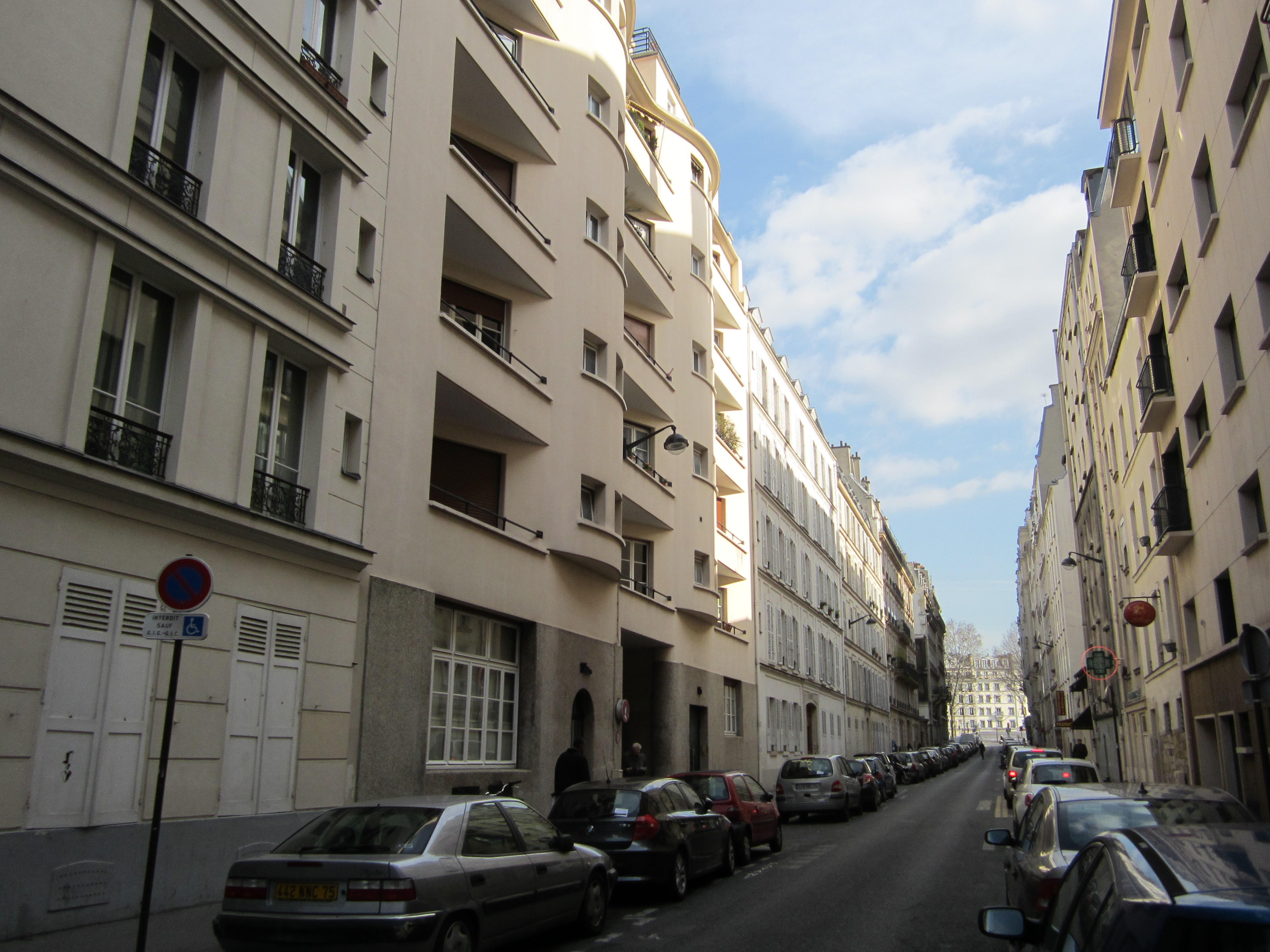
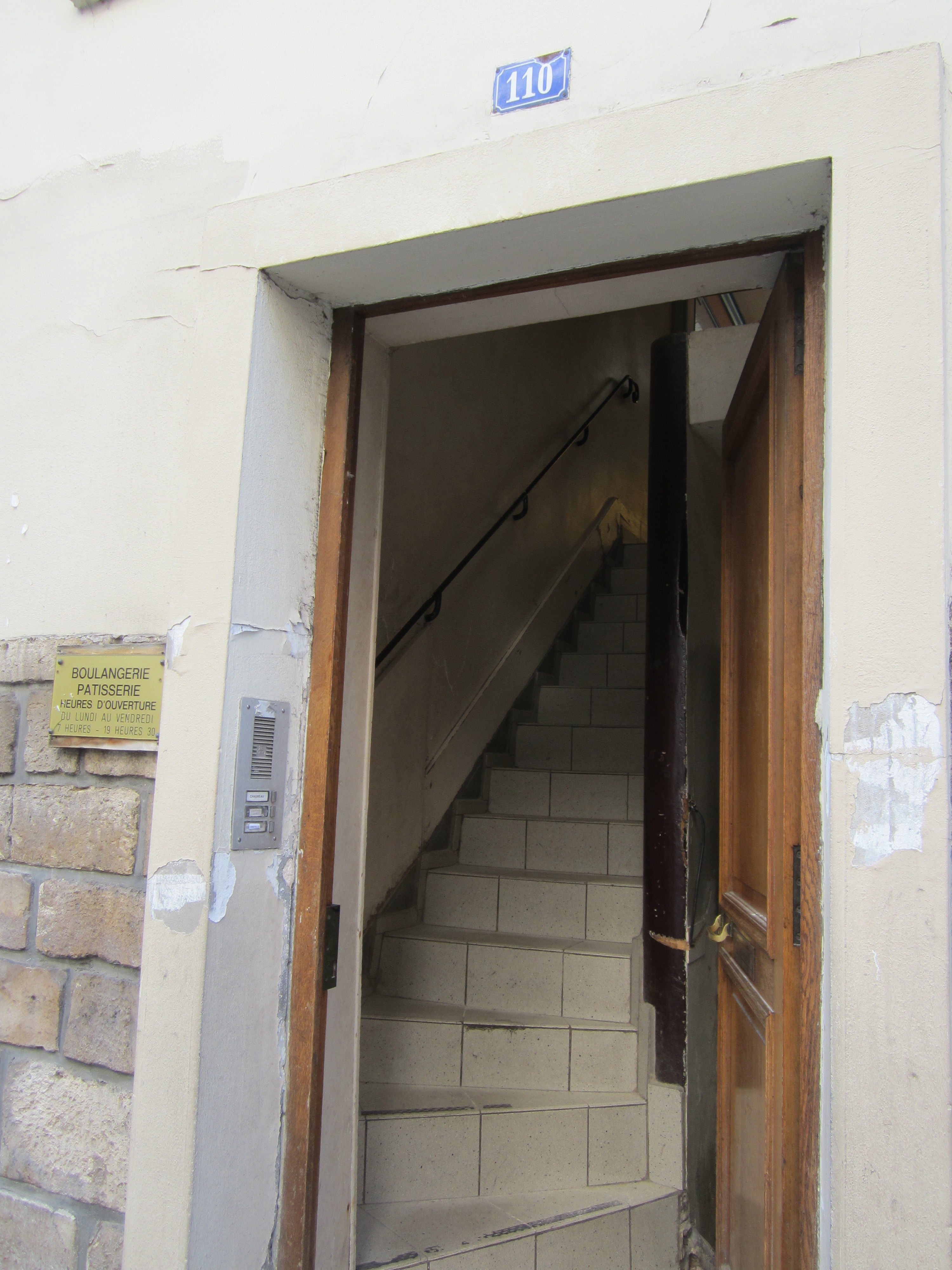
Hadley and Ernest left Paris in August 1923 to have their baby "Bumby" in Toronto. When they returned in January 1924, they found another fairly shabby apartment at 113 rue Notre-Dame-des-Champs. It was a carpenter's loft over a working sawmill. The sawmill was torn down long ago and was replaced with the uninspiring school buildings that you see today.

.”].” “]

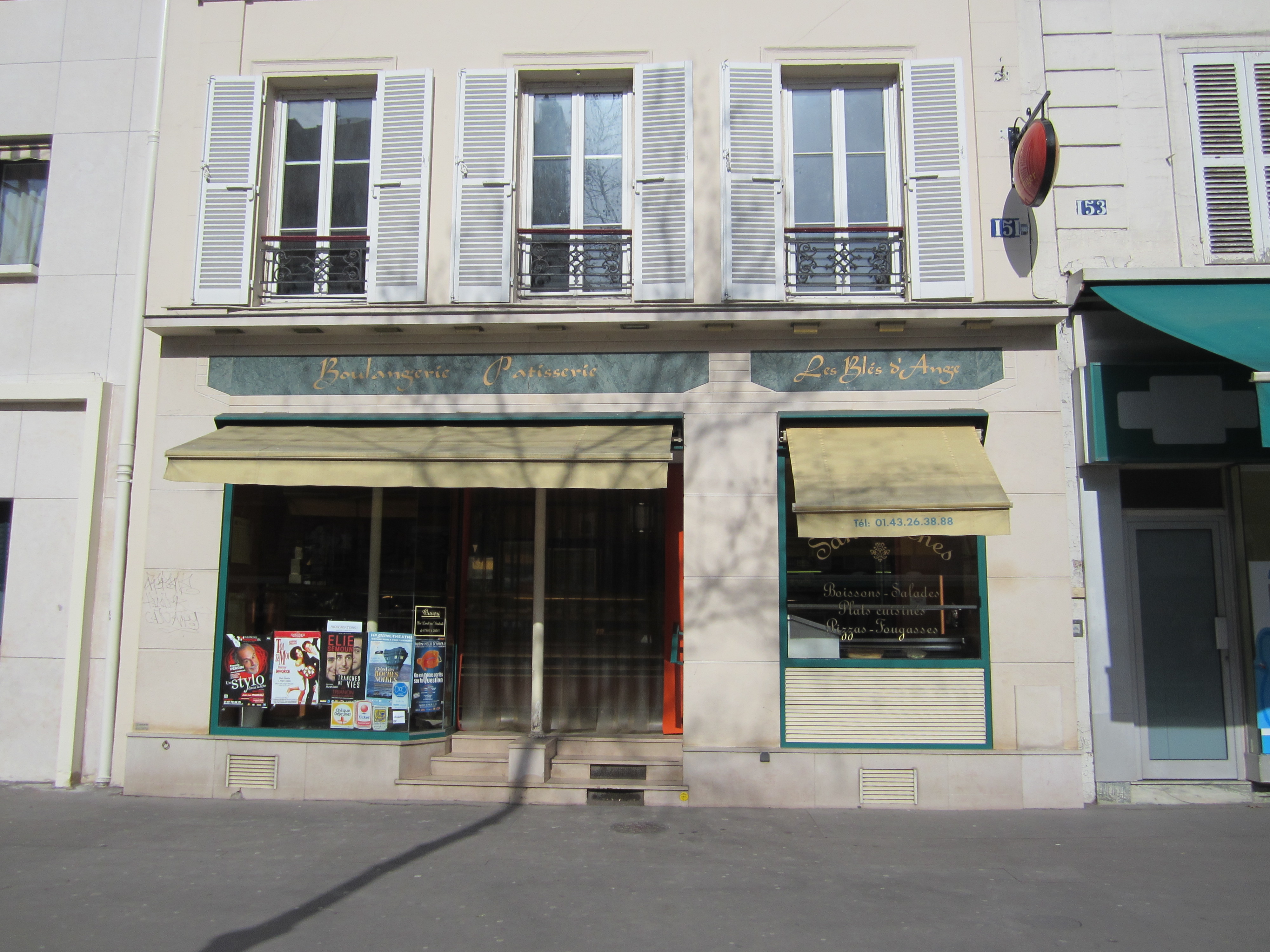
The front door of the Les Blés D'Ange bakery at 151 Bis boulevard Montparnasse. Just like Ernest and Hadley, I cut through myself and stopped to buy a croissant, which I enjoyed on a bench right outside the bakery.

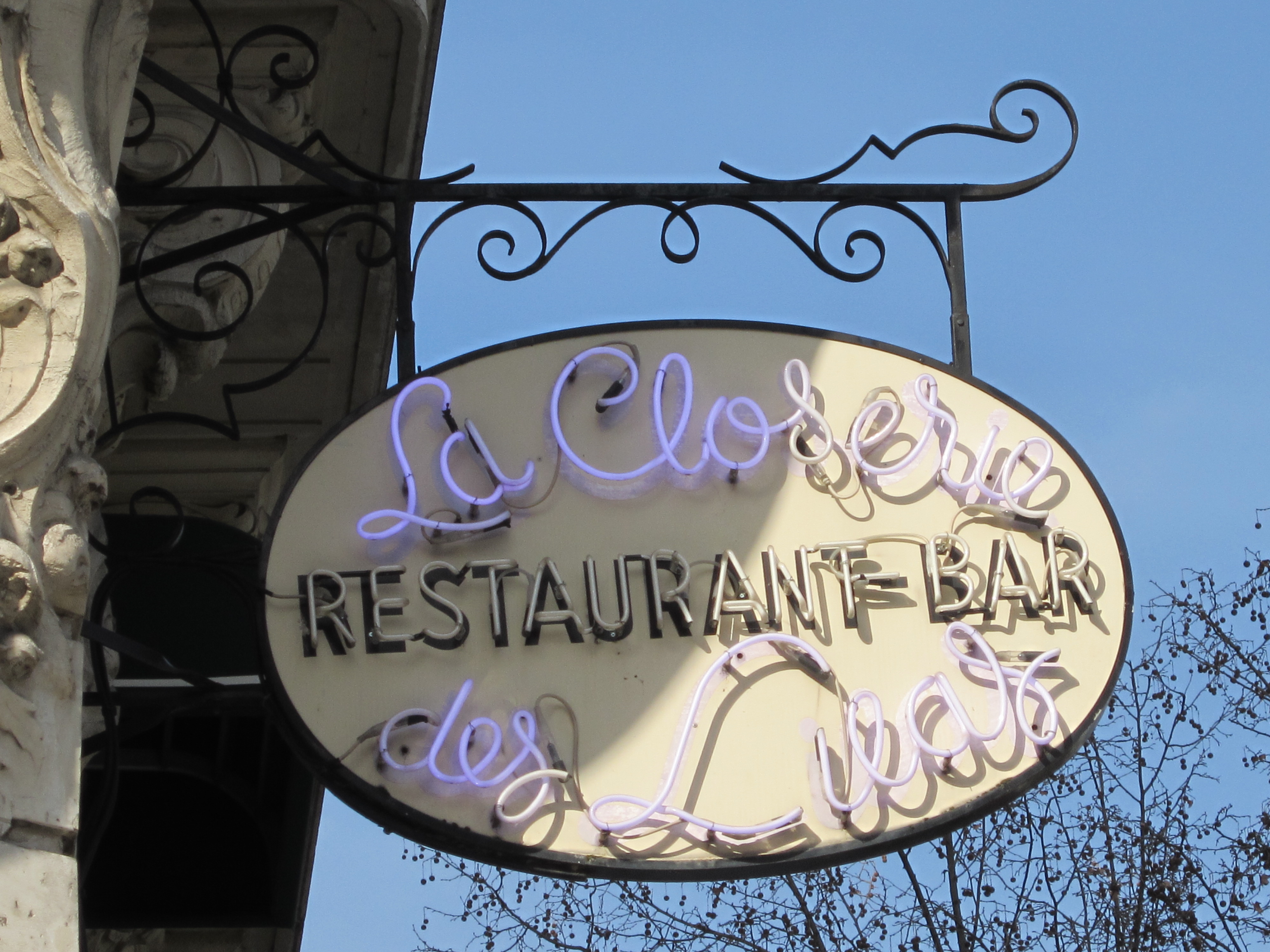
Ernest had no separate writing studio while they lived in the sawmill loft, , so he spent hours at the nearby café, La Closerie des Lilas, 171 boulevard du Montparnasse. You can go there today and try for the seat with the Hemingway plaque.

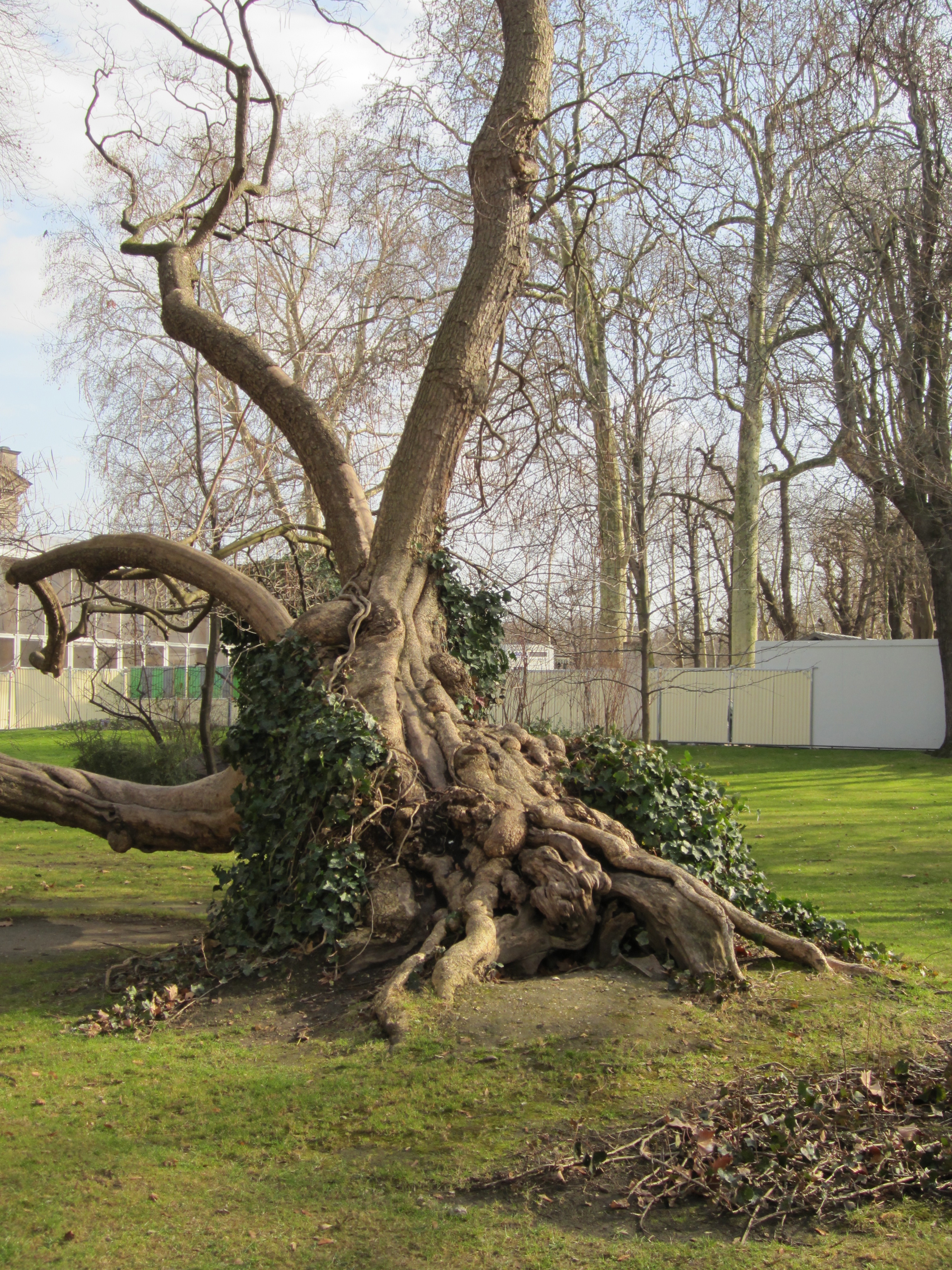
While Ernest worked away at Closerie des Lilas, Hadley and little Bumby would escape the apartment and go to the nearby Luxembourg Gardens. I could picture little Bumby trying to scramble around on this old tree, which certainly looks as if it would have been around in 1925.

Hemingway tended to embellish the extent of his and Hadley's poverty during their Paris years. Ernest claimed that he sometimes killed pigeons in the Luxembourg Gardens and brought them home to eat. Hadley said that wasn't true.

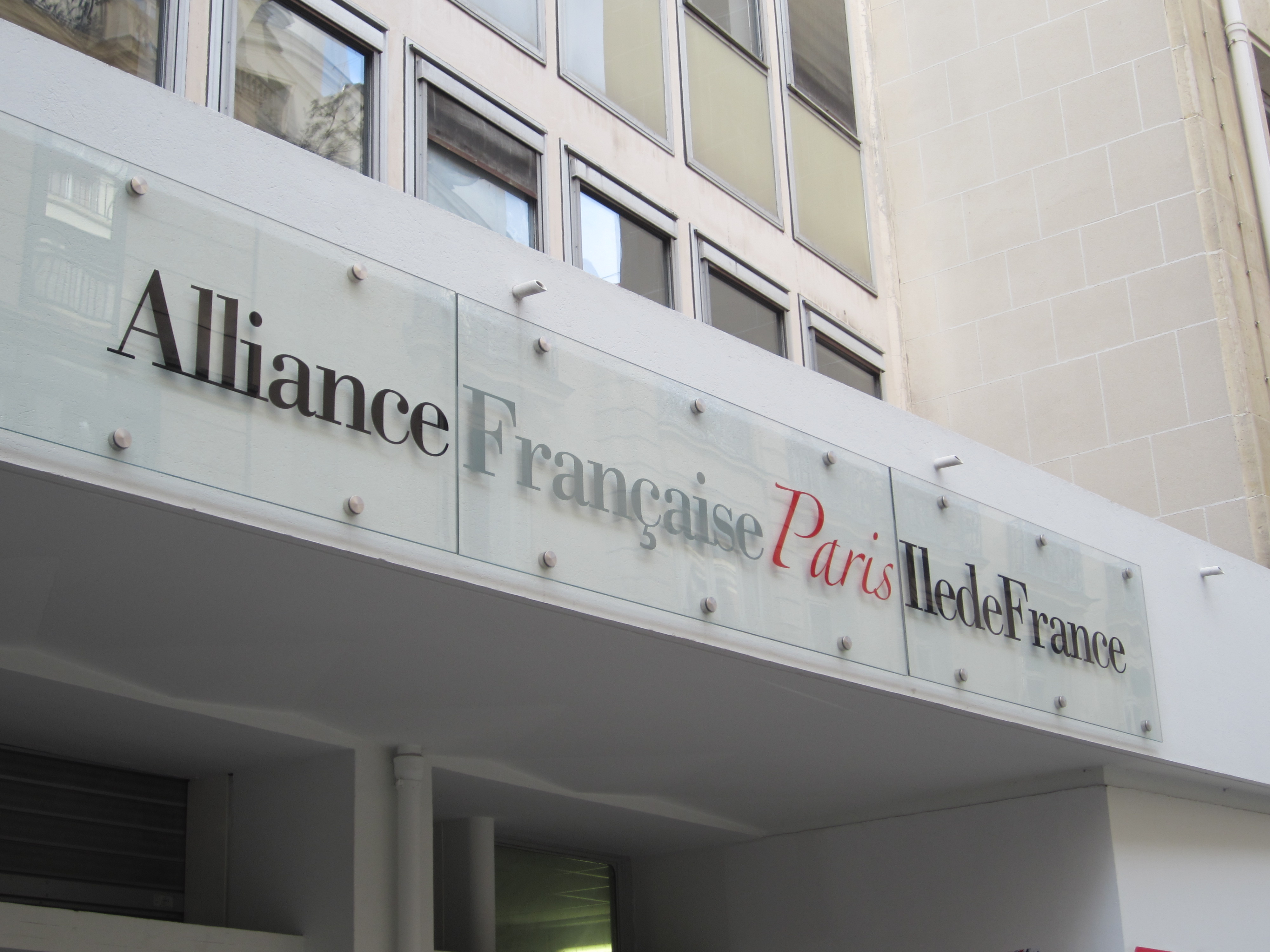
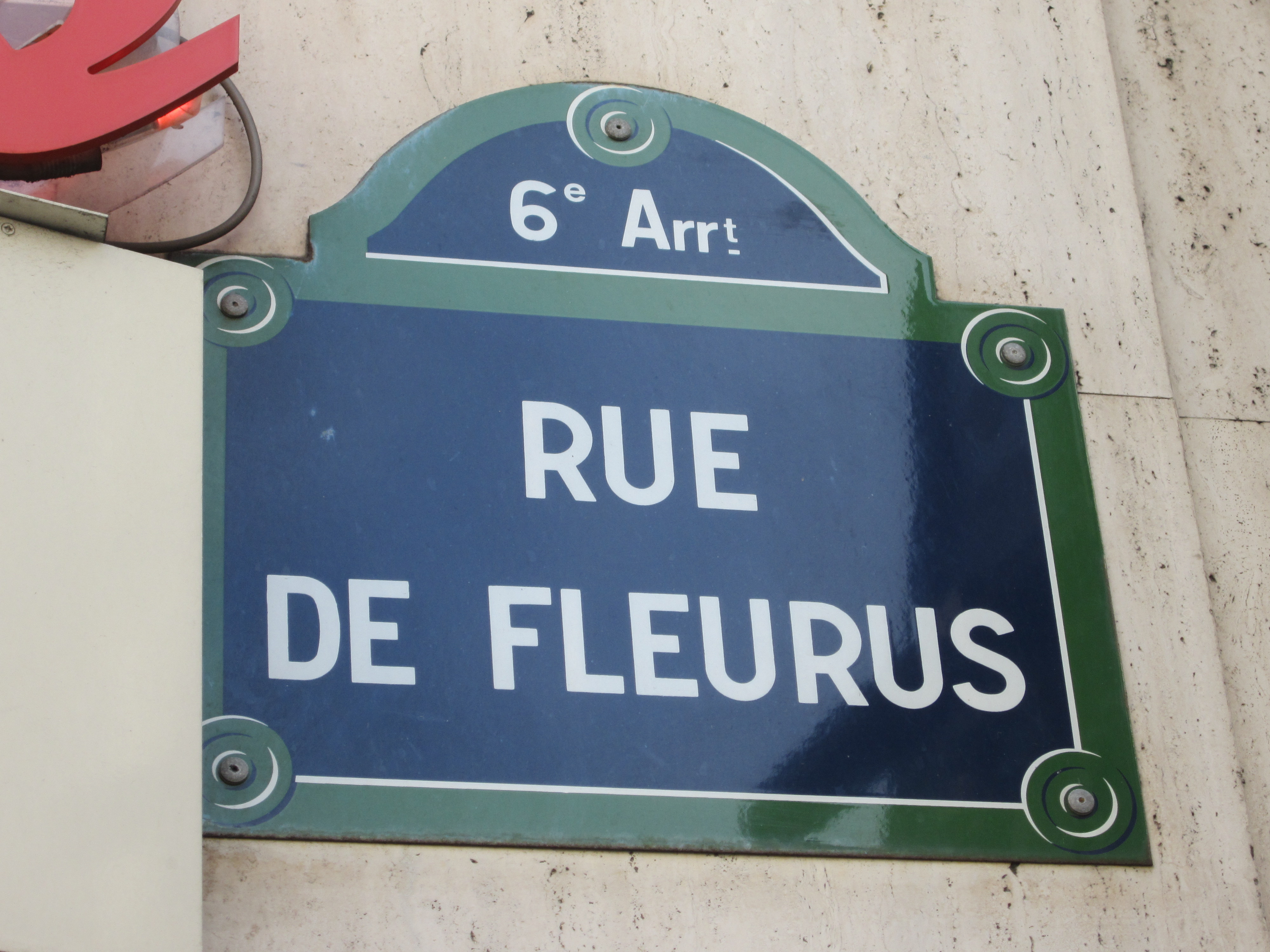
The site of Hadley's first post-separation apartment at 35 rue de Fleurus near boulevard Raspail. The building was torn down and the address is now a part of Alliance Française. Hadley and Ernest separated in August 1925 after it became clear that Ernest's affair with Pauline Pfeiffer would not just die out. When Ernest and Hadley first separated, he stayed in a studio loaned to him by Gerald Murphy on rue Froievaux, and Hadley stayed in the Hotel Beauvoir on avenue l'Observatoire. In October 1925, Hadley and Bumby moved in their solo apartment, which was only two doors down from Gertrude Stein.

According to Gioia Diliberto, Hadley couldn't bear to go back to their sawmill apartment, so Ernest made several trips with a handcart in order to deliver her things to her on rue de Fleurus. He is said to have pushed the handcart "weeping down the street."

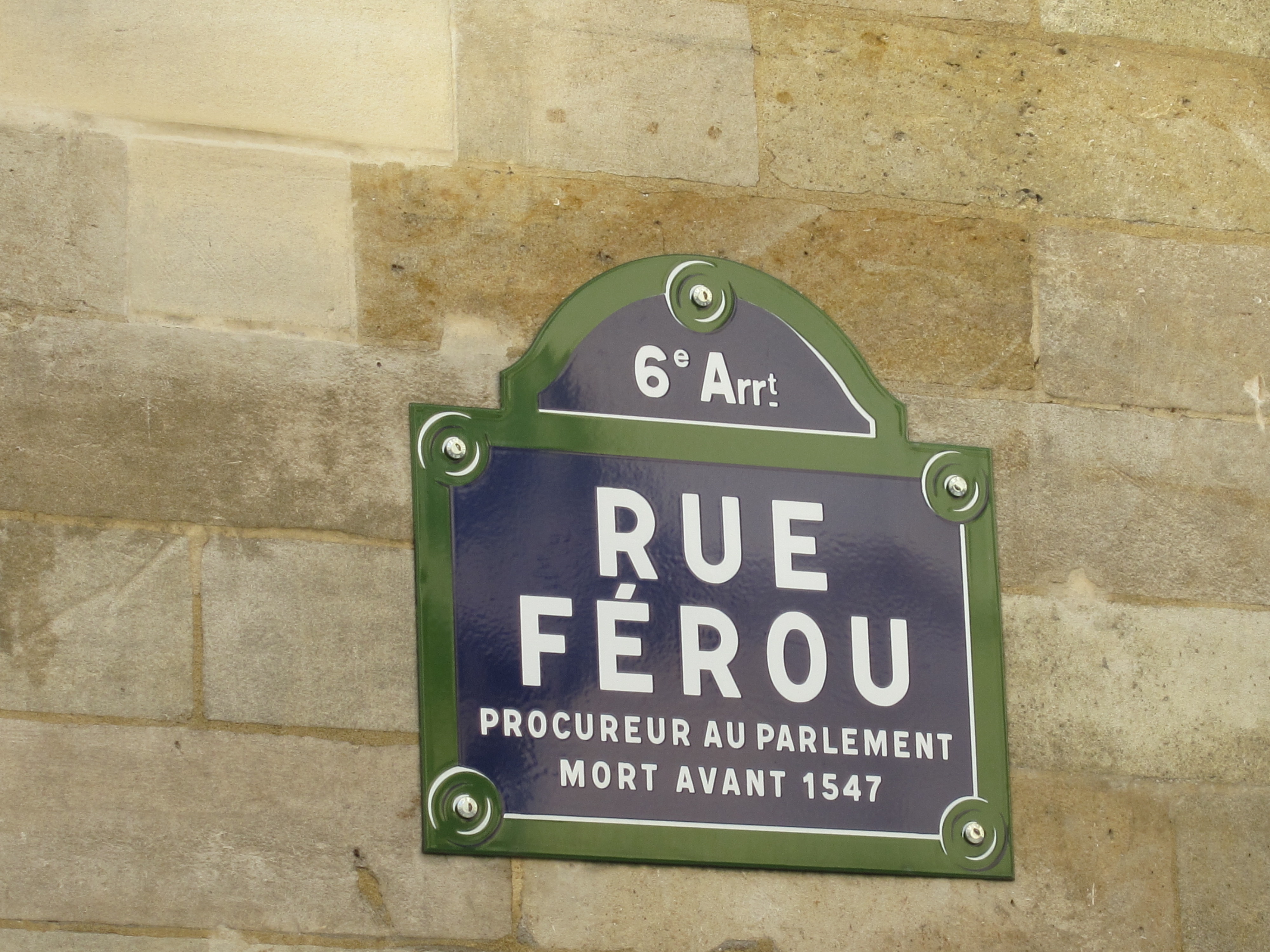
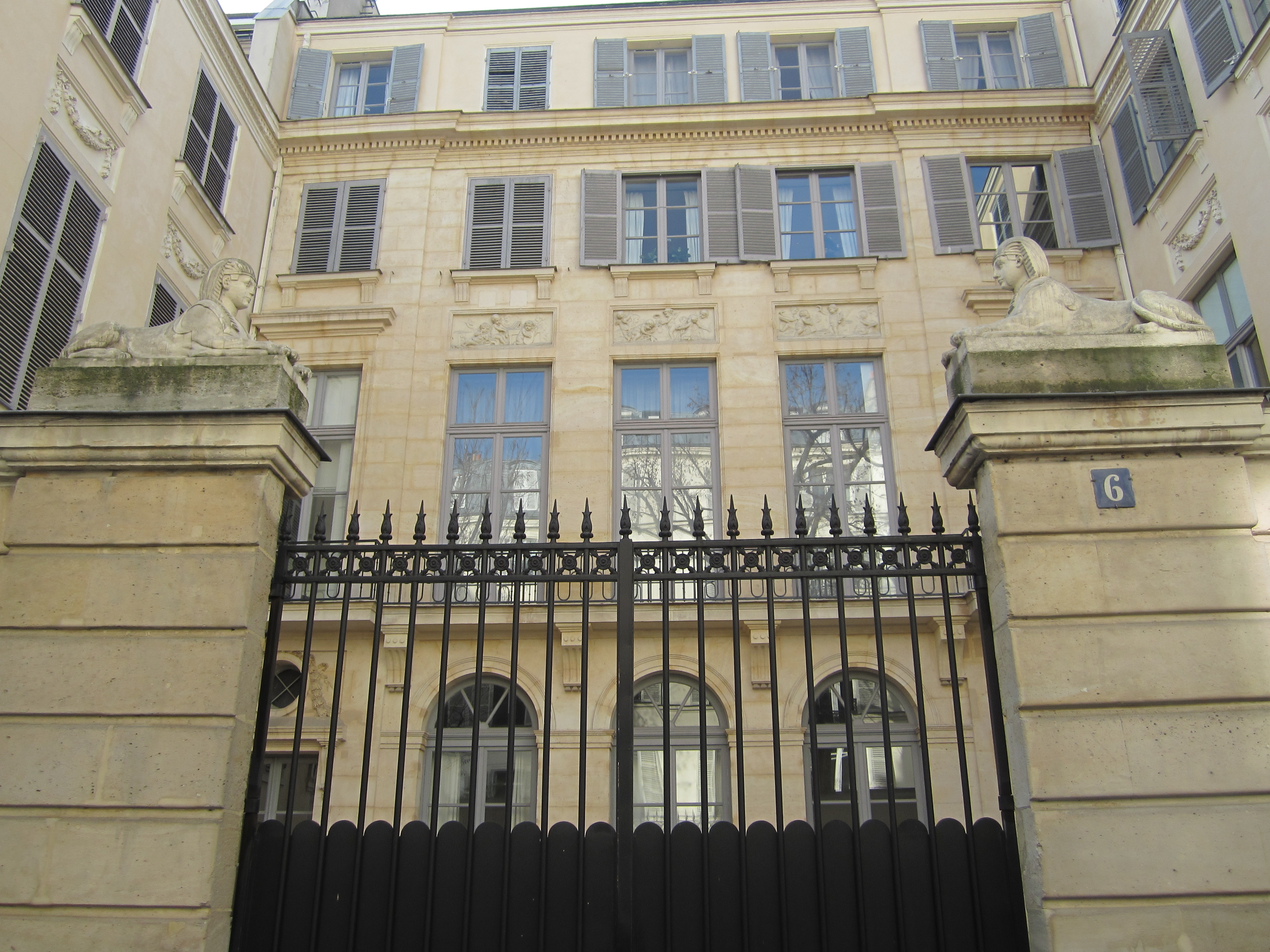
Ernest and Pauline marry in May, 1926 and move into a posh apartment on rue Férou, a quiet street that leads down from the Luxembourg Gardens into Place Saint Sulpice.

Ernest and Pauline's home at 6 rue Férou, which was paid for by Pauline's uncle. According to Gioia Diliberto, it was "lavishly furnished with antiques by the bride." Pretty obvious that Ernest is no starving bohemian anymore. Nevertheless, Hadley continued to have a friendly relationship with Ernest and Pauline, and often sent Bumby to stay with them here.

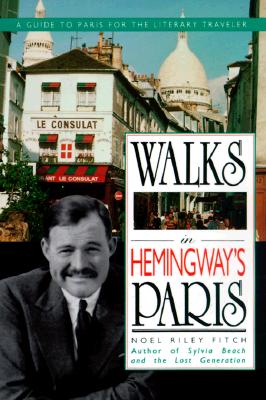
I would never have been able to piece together this Hadley Hemingway tour without the help of Walks in Hemingway’s Paris: A Guide to Paris for the Literary Traveler by Noel Riley Fitch, which I highly recommend. This guide is incredibly complete, and includes walking tours of Saint Germain, Montparnasse, L’Odeon, Hemingway’s Right Bank and more. I can’t imagine a better way to explore Paris.

Stealing Magic in Paris

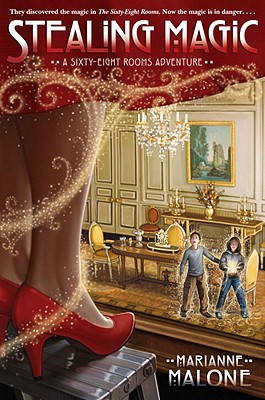
I have a special treat for the kids back home in the States: a photo tour of the Paris scenes in one of their favorite books, Stealing Magic (Random House 2012) by Marianne Malone.

In addition to  my year-long adventure in Paris, I am also a bookseller back in the United States. Some of my bookstore’s most popular children’s books are by Illinois art teacher and author Marianne Malone, including 68 Rooms and Stealing Magic.

Malone’s books start out in the Thorne Miniature Rooms at the Art Institute of Chicago. During a field trip to the “68 Rooms” at the Art Institute, Malone’s young characters find a magical key that enables them to shrink and time travel through the miniature rooms.

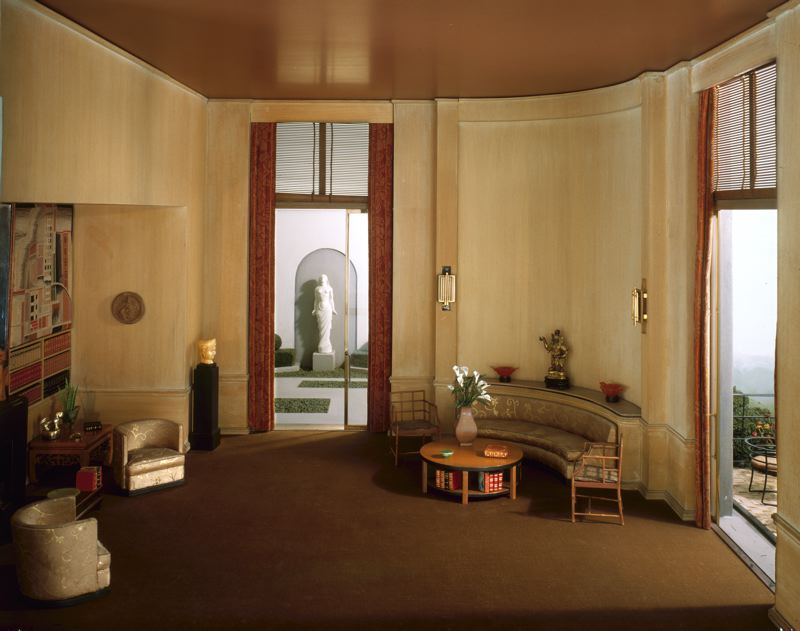
In Stealing Magic, the children time travel through Thorne Room E-27, French Library of the Modern Period, 1930s, and find themselves in Paris during the 1937 World’s Exposition. They tour the fairgrounds located at the feet of the Eiffel Tower and befriend a young Jewish girl named Louisa. When Ruthie and Jack time travel back to the United States, they realize they must return to 1930s Paris to warn their friend Louisa about the rising Nazi threat in Europe. It’s a wonderful story with a blend of history, danger, art and adventure.

Thorne Room E-27, French Library of the Modern Period, 1930s, Art Institute of Chicago.

As a treat for all of the 68 Rooms fans back in the States, I mapped out the scenes in the book, and took my camera to the Trocadéro neighborhood for a Stealing Magic literary tour of Paris.

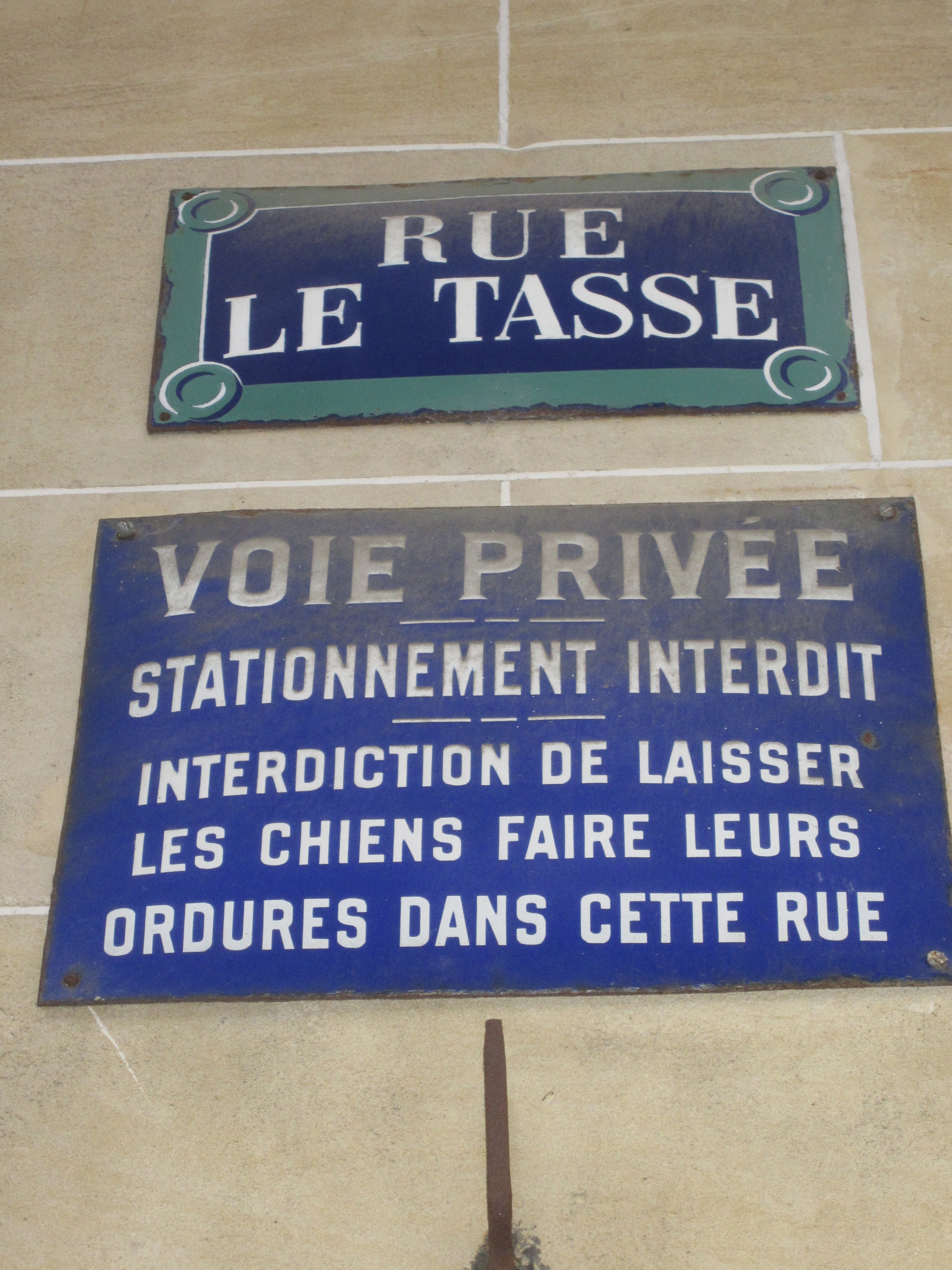
rue Le Tasse, the location of Louisa Meyer's apartment in Paris. Louisa and her family lived on a quiet, private street in a very nice neighborhood. So nice, in fact, that dogs are prohibited from "doing their business" (les chiens faire leurs ordures) on the street.

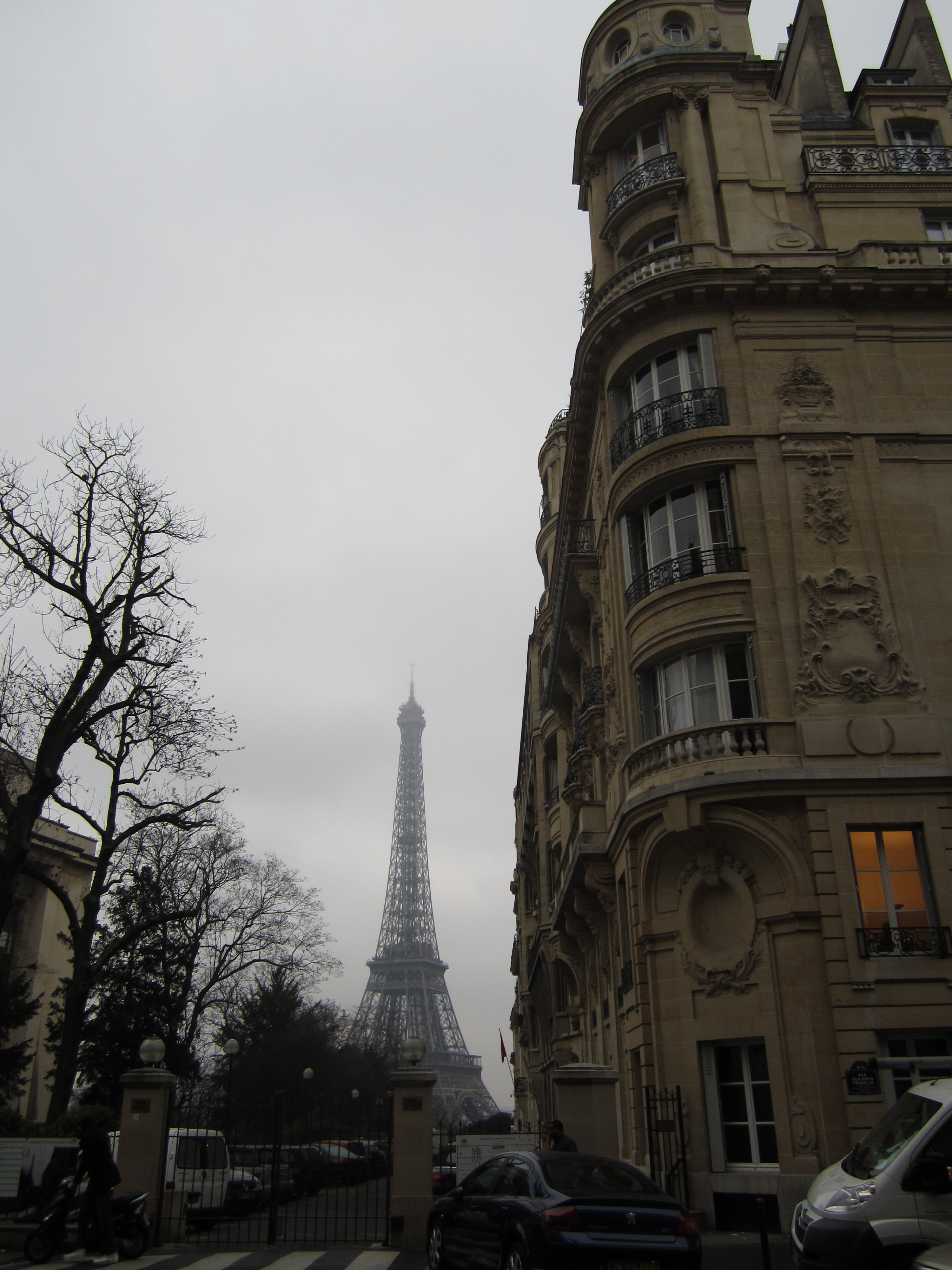
After Louisa meets Ruthie and Jack, she shows them where she lives: "She pointed across the park to a row of beautiful buildings." . . . "Number seven, rue Le Tasse. Second from the end. . . ." From rue Le Tasse you have a beautiful view of the Eiffel Tower.

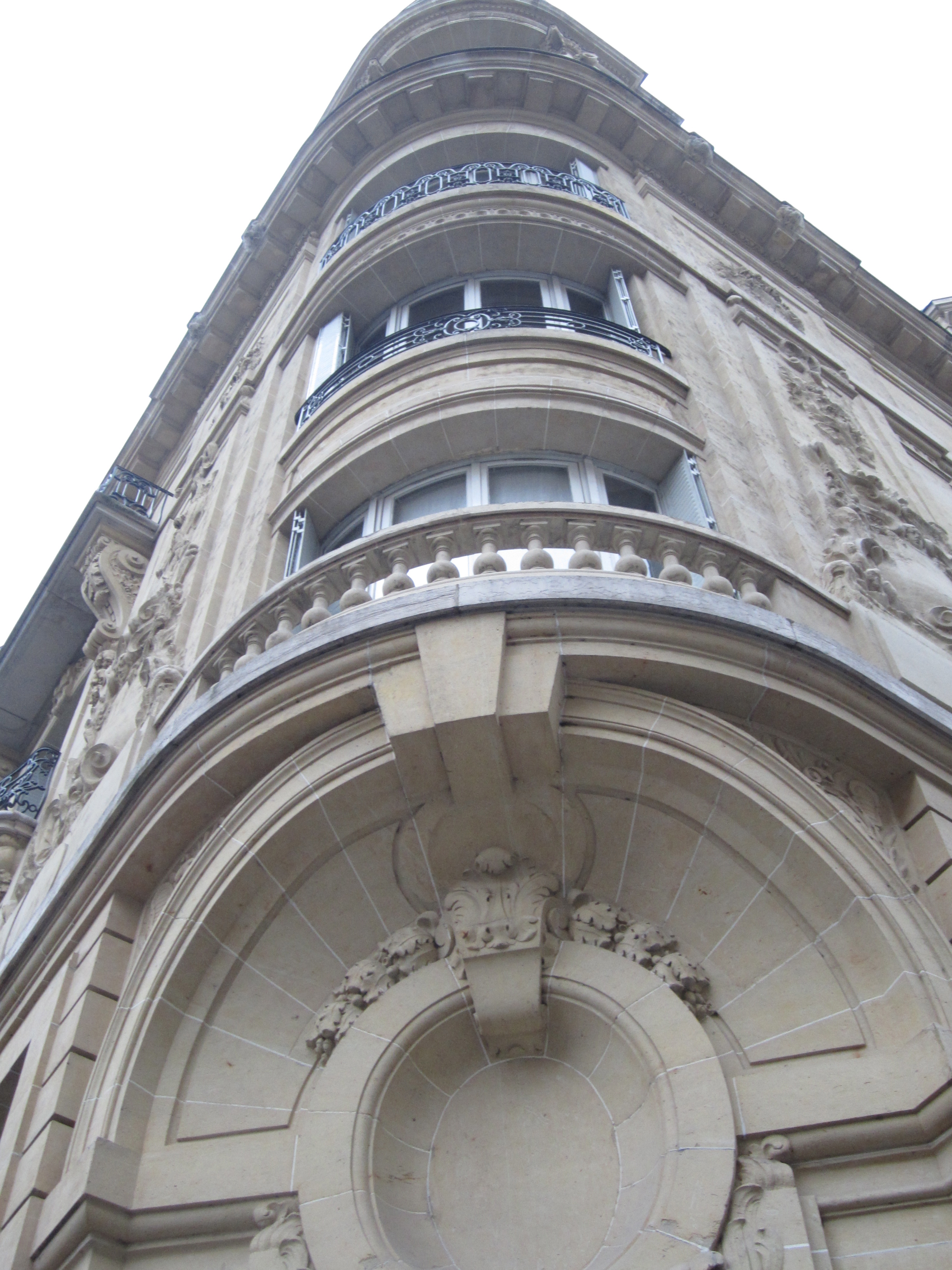
See all of the fancy decoration on the building facade? Doesn't it look just like the illustration in the book? Louisa waved at Ruthie and Jack from her balcony of her apartment at 7 rue Le Tasse (p. 175).

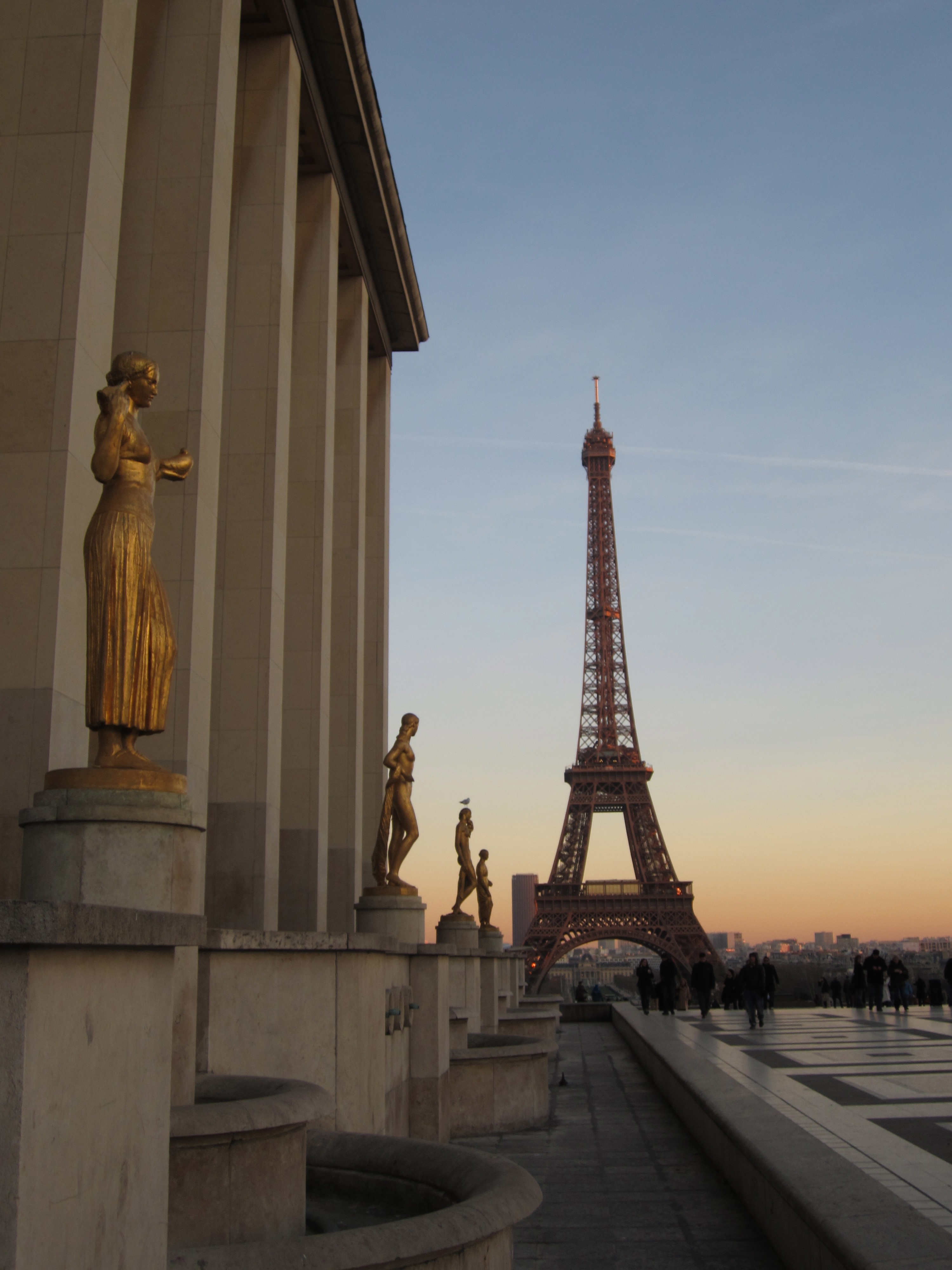
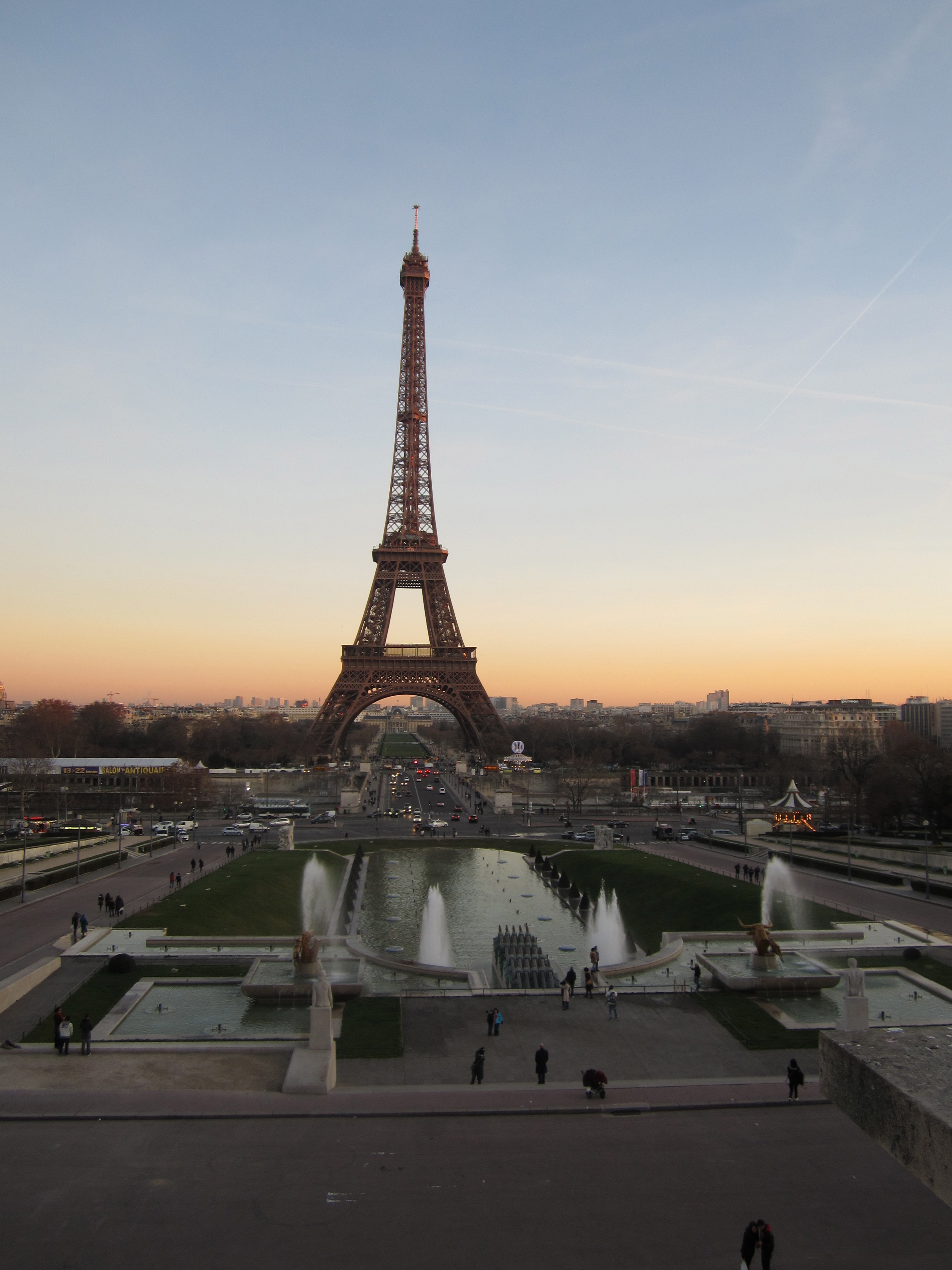
The view of the Eiffel Tower from the Trocadéro. Jack and Ruthie would have seen many more buildings near the base of the Eiffel Tower than we see today, including the German and the Soviet pavillions that were build for the 1937 fair. Most of the buildings from the World's Exposition were torn down afterwards.

Ruthie and Jack's view of the Jardins du Trocadéro and the Eiffel Tower. "A long, rectangular fountain ran down the center of the gardens, its jets spraying water dramatically into the air. The ground sloped to the Seine River and a bridge that people walked across to the Eiffel Tower."

Marianne Malone does a wonderful job of portraying Paris life in the 1930s, from the baguettes in the bicycle baskets to the fashionable women in their high heels and skirts. I couldn’t help but smile when she described the small elevator in Louisa’s apartment building: “the accordion-style metal gate . . . only big enough for two,” because for me, that lovely little detail seems to capture the essence of Paris apartment life, whether it’s 1937 or 2012.

Stealing Magic also teaches grade school children about Nazism and the Holocaust in an  age appropriate way. When Louisa’s mother expresses her disbelief about the danger and says: “But surely Hitler can’t control Paris,” we are reassured that Ruthie and Jack know better. It makes for a good story, and at the same time, a valuable learning opportunity.

I highly recommend Stealing Magic and I hope you enjoyed the photo tour.