
Where the Light Falls: An American Artist in Paris

wherethelightfalls

Where The Light Falls by Katherine Keenum is a lovely painterly novel set in late 19th century Paris. What a perfect book for a review and literary tour by The American Girls Art Club in Paris.

You can find various sites in the book on Where the Light Falls Literary Tour in Google Maps.

The story begins when a young artist named Jeannette Palmer gets expelled from Vassar College for helping her roommate elope.  Despite her public shaming, Jeannette talks her prominent Ohio family into supporting further art studies in Paris.

Jeannette and her chaperone, a “spinster” cousin, find lodging in a pension on rue Jacob on the Left Bank, while Jeannette enrolls in the women’s drawing class at the Académie Julian. Had Jeannette arrived in Paris a decade or so later, she could have easily been one of the lodgers at The American Girls Art Club in Paris, which opened its doors in 1893. Instead, Jeannette would be one of the first-wave  trailblazers of American women artists to journey to France.

Jeannette’s story is loosely based on the life of the author’s own great-grandmother, who was indeed expelled from Vassar College and who traveled to Paris to study art with Carolus-Duran. Because no journals, letters or memoirs survived, Katherine Keenum had to rely on her imagination to tell her great-grandmother’s story.

Keenum’s research is considerable, but it feels like a natural part of the story. When Jeannette is learning from such famous masters as William-Adolphe Bouguereau or Carolus-Duran, you feel like you’re there too. Keenum places Jeannette in Paris at a turning point in the history of art; it is remarkable how much Jeannette and her cousin Effie get to witness in just two years.

One of Keenum’s primary sources for the life and times of an American art student abroad  was Abigail May Alcott Nieriker’s guidebook for women artists called Studying Art Abroad and How to Do it Cheaply (1879), which describes May’s studies at Académie Julian, her approach to life in Paris, and her travels throughout France. (In a previous blog post here called Little Women in Dinan, France, I wrote about May and her famous sister’s travels abroad.) 

Jeannette begins her studies at the Académie Julian, a private art school which welcomed women into segregated studios, unlike L’Ecole des Beaux Arts. The first women’s atelier at Académie Julian was located in the Passage des Panoramas in the 2nd arrondissement of Paris. This Paris Passage still stands today – it it a lovely historic covered mall at 11 Boulevard Montmartre.

In Chapter 8, Jeannette has a hard time finding the stairs that led to the second floor studio of the Académie Julian. Keenum describes a set of service stairs along one of the transverse passages, but on my various visits to the Passage des Panoramas during my year in Paris, I was never able to find them. I could see a second floor under the peaked glass ceiling, I just couldn’t get there. I’d love to hear from any of my followers to see if they’ve ever managed to gain access to the second floor of the Passage des Panormas, or if it’s a place that belongs only to the past.
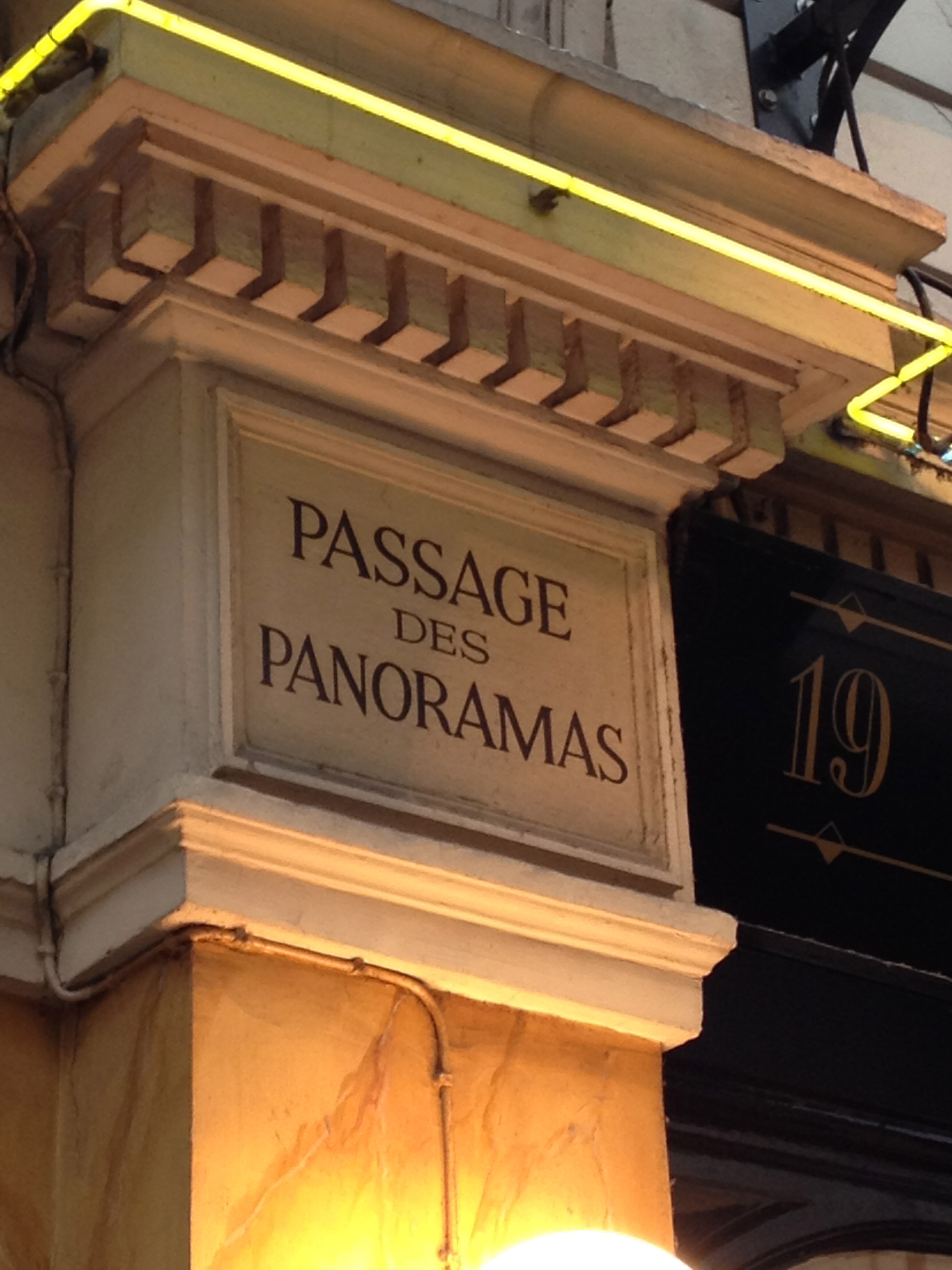
Passage des Panoramas in the 2nd arrondissement of Paris, the location of one of Académie Julian's atelier for women

An old sign inside the Passage des Panoramas in the 2nd arrondissement of Paris, the location of Académie Julian’s first atelier for women in the 1870s. You can still walk through the Passage today for a sense of the 19th century.
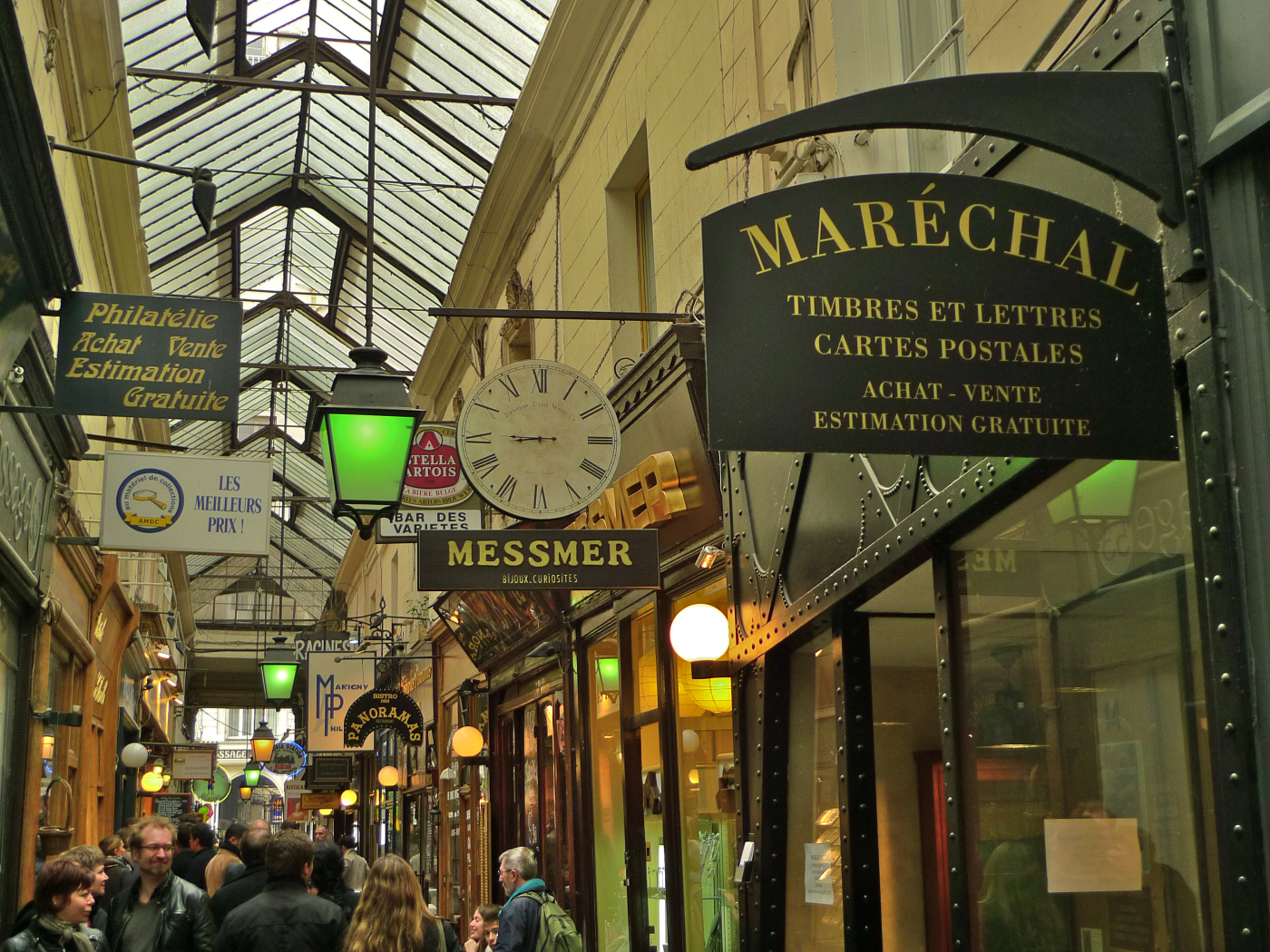
An interior view of the Passage des Panoramas in which a second floor is visible. I just couldn't figure out how to get up there.

An interior view of the Passage des Panoramas. In Chapter 8, Keenum describes it like this: “Inside, restaurants and small specialty shops crowded both sides of an arcade. Painted signs hung out at right angles overhead like banners; a tiled mosaic floor ran for two blocks. Above a second story of shops, the whole length was roofed with a peaked ceiling of glass.”

Passage des Panoramas

Passage des Panoramas entrance at 11 Boulevard Montmartre
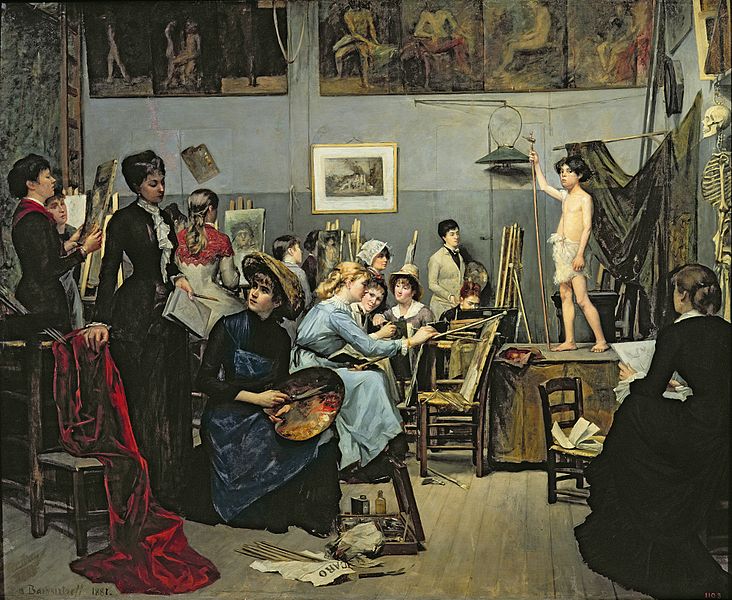
Marie Baskirtsheff, In The Studio (1881). A painting of the women of Académie Julian.

Marie Baskirtsheff, In The Studio (1881). A painting of the women of Académie Julian by one of its most famous students. Although the women were allowed to paint from live nude models, this painting avoids controversy and shows a draped figure of a young boy. Dnipropetrovsk State Art Museum, Ukraine. In Chapter 8, one of Jeanette’s classmates points out their fellow student “The Countess,” [Countess Marie Bashkirtseff] “a star student in the class for the full nude.” The Countess is supposedly picture in the center of this painting with the palette in her lap.
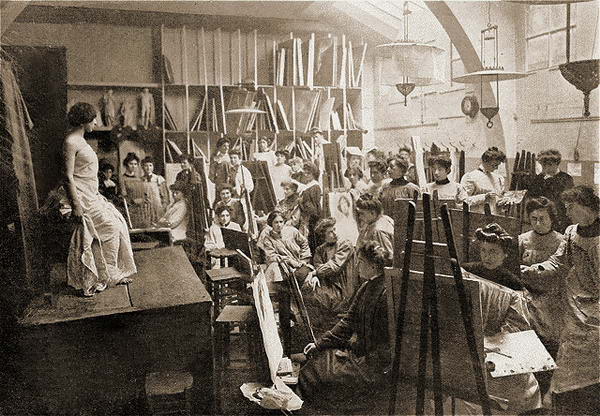
Atelier Julian, undated, so it is possible it is from the other women's atelier on rue de Berri. Source:http://verat.pagesperso-orange.fr/la_peinture/Mixite_Beaux-Arts.htm

A photo of one of the women’s classes a Académie Julian. It is undated, so it is possible it is from the other women’s atelier which opened in the 1880s on rue de Berri near the Champs Elysée. Source:http://verat.pagesperso-orange.fr/la_peinture/Mixite_Beaux-Arts.htm
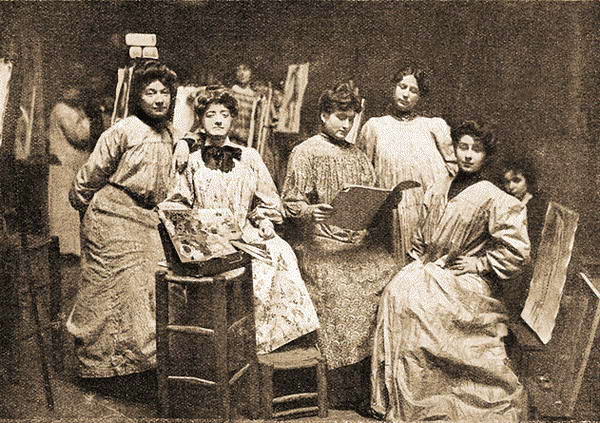
A photography of some of the female messiers (studio assistants) of the Académie Julian. Source:http://verat.pagesperso-orange.fr/la_peinture/Mixite_Beaux-Arts.htm
A photograph of some of the female messiers (studio assistants) of the Académie Julian. Source:http://verat.pagesperso-orange.fr/la_peinture/Mixite_Beaux-Arts.htm

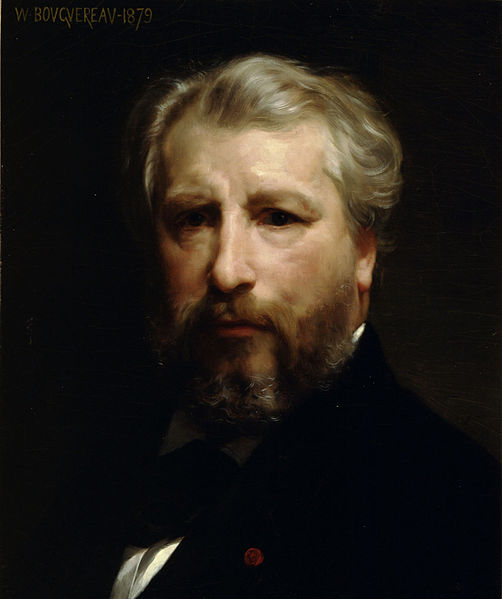
William-Adolphe Bougeureau, Self-Portrait (1879)

William-Adolphe Bouguereau, Self-Portrait (1879). Bouguereau was a famous 19th century Salon artist who provided private instruction for both men and women at the Académie Julian. He would be engaged to one of his American students, Elizabeth Jane Gardner, for 17 years. They would finally marry in 1896 after the death of his mother, who strongly disapproved of the match.
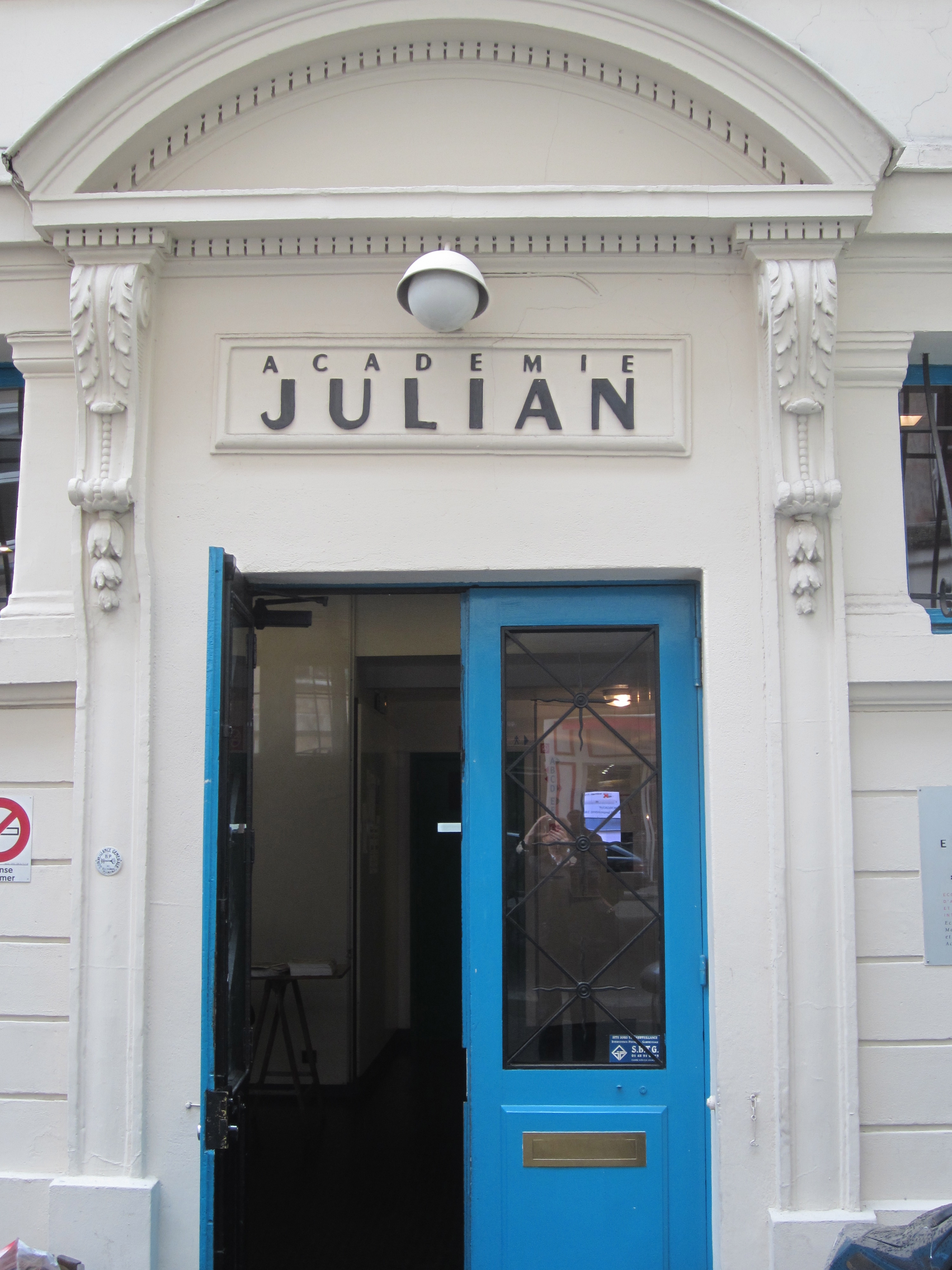
The Académie Julian still stands today on the rue du Dragon.

The Académie Julian still stands today on the rue du Dragon in the 6th arrondissement of Paris. This was originally one of the men’s ateliers, but has long accepted both men and women.

Jeannette enjoys her studies at the Académie Julian under William-Adolphe Bouguereau, but really, Bouguereau only passes through the class a couple of times a week with a few comments like pas mal, pas mal. Although she’s making friends with her fellow art students from around the world and learning all about the Paris art world, Jeannette couldn’t help but aspire for better art instruction.

Jeannette gets her big break when she makes the acquaintance of Carolus-Duran through   a wealthy friend of the family who is having her portrait done. Duran invites Jeannette for a studio visit at 58 rue Notre Dame des Champs. When Jeannette and Effie arrive at his address, they quickly realize what a celebrity painter he is. There are three carriages at the curb and a servant to greet the guests. Effie gushes: “Why, it’s as elegant as a hotel lobby or a fashion house!”
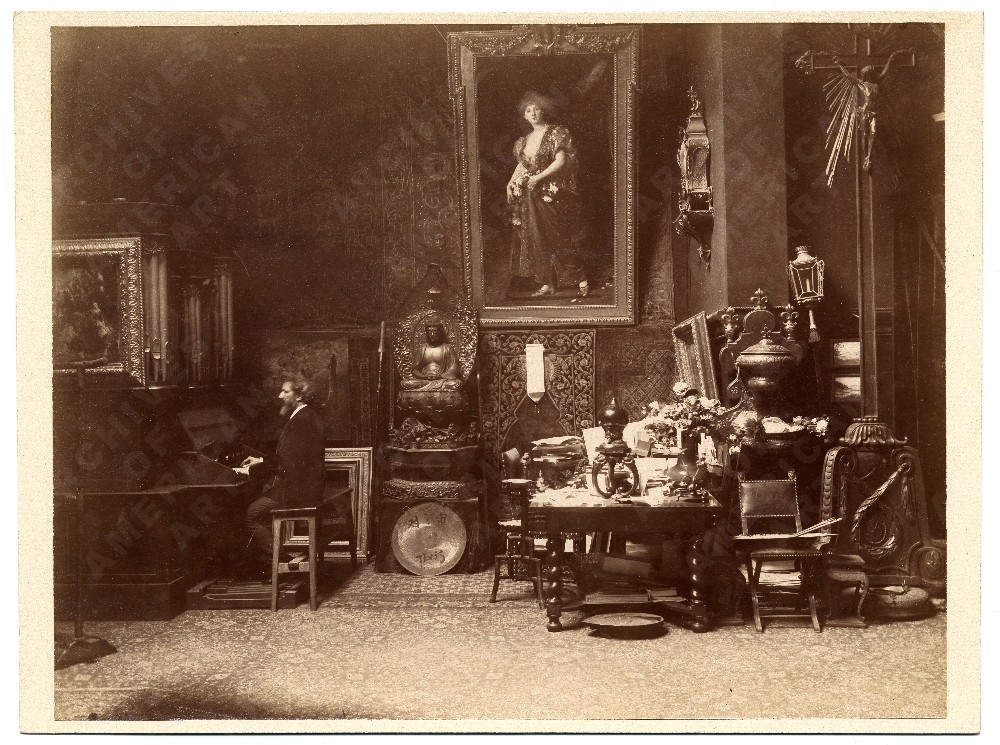
A photo of Carolu-Duran playing the organ in his art studio (1885). From the image gallery at the American Archives of Art. Keenum gets it right when she describes the studio as being "strewn with thick Persian rugs and hung with tapestries and pictures."

A photo of Carolus-Duran playing the organ in his art studio (1885). From the digital image gallery at the American Archives of Art called “Photographs of Artists in their Paris Studios (1880-1890).” Keenum gets it right when she describes the studio as being “strewn with thick Persian rugs and hung with tapestries and pictures.”
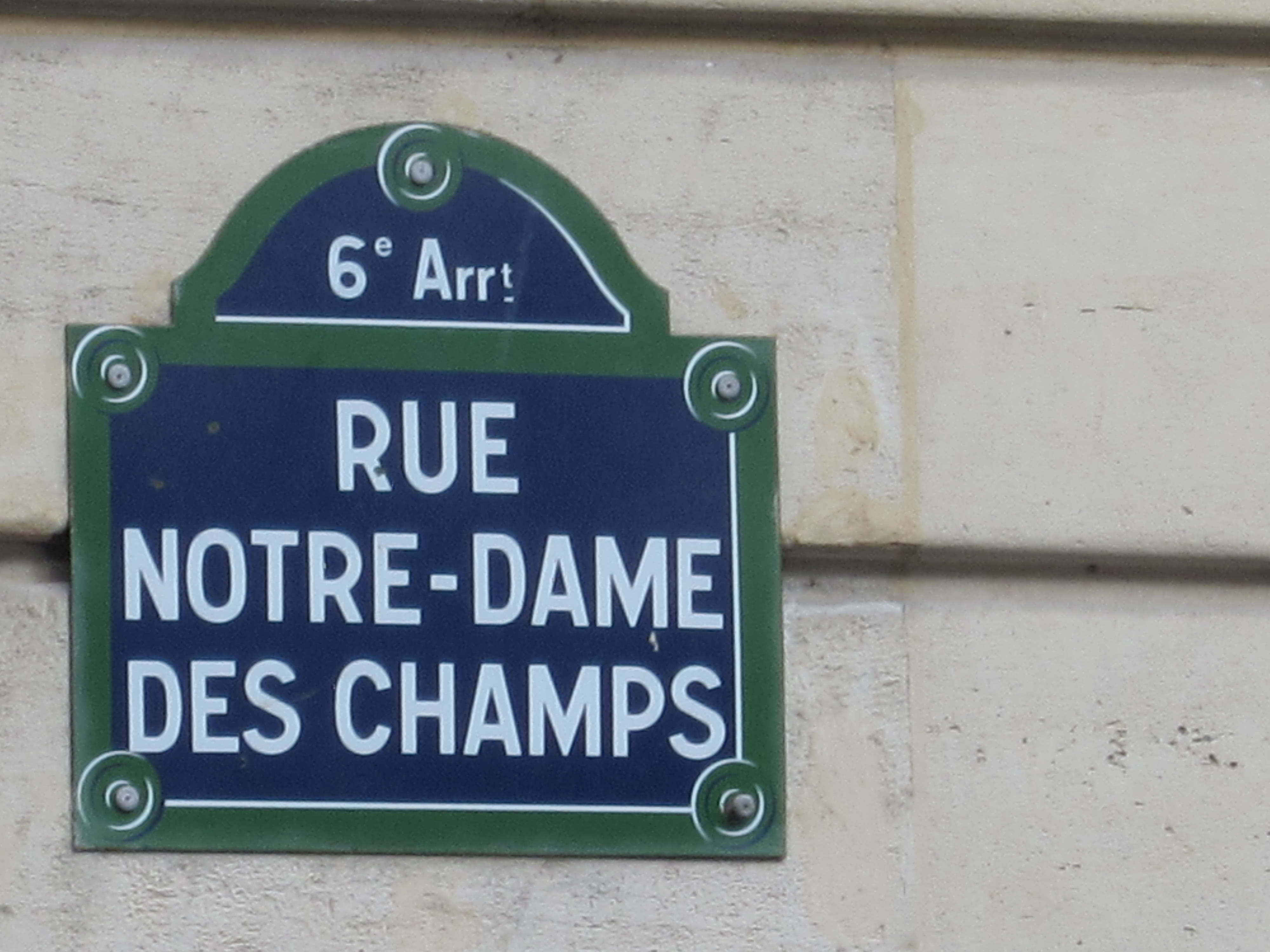
rue Notre Dame des Champs, a narrow winding road through Montparnasse which earned its title as "the royal road of painting" because of all the famous French artists who lived there, including Bouguereau,  Courbet and Carolus-Duran.

Rue Notre Dame des Champs, a narrow winding road through Montparnasse which earned the title “the royal road of painting” because of all the famous French artists who lived there, including Bouguereau, Courbet and Carolus-Duran.

Carolus-Duran invites Jeannette to join his women’s painting classes at 11 Passage Stanislaus in Montparnasse. Passage Stanislaus is now known as rue Jules Chaplain, a small street just off of rue Notre Dame des Champs.
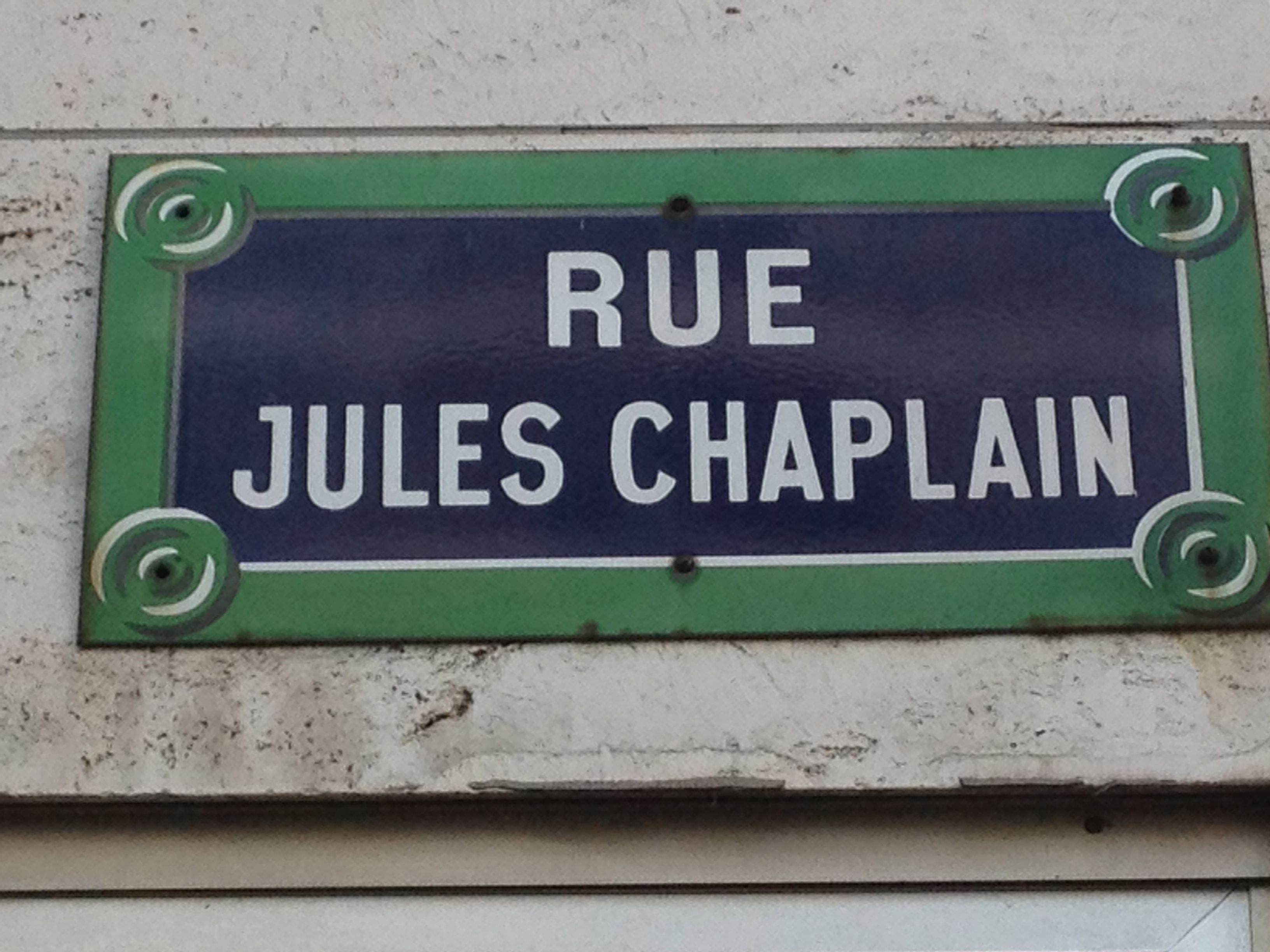
Rue Jules Chaplain, once Passage Stanislaus and the home of Carolus-Duran's atelier for women.

Rue Jules Chaplain, once Passage Stanislaus and the home of Carolus-Duran’s atelier for women.

Jeannete struggles to find the extra money to enroll in Carolus-Duran’s classes, but once she does, she gets to observe one of the true masters of the art. One of my favorite scenes in the book is in Chapter 30, when Carolus-Duran pulls Jeannette right up next to him to demonstrate the essence of portrait painting:

Study where the light falls and where the shadows lie. We commence by indicating the darkest masses. . . .

Either way, what is most important now is to find the demi-teinte generale. Half close your eyes, mademoiselle; regard the model.

It’s enough to make you want to find a model and set up and easel right nowisn’t it?

Jeannette is in the perfect place and time to witness art history. She meets a young John Singer Sargent, a fellow student in Carolus-Duran’s men’s atelier who would have been only 23 years old at the time. Jeannette and her classmates celebrate when Sargent’s portrait of Carolus-Duran wins an Honorable Mention at the Paris Salon of 1879.
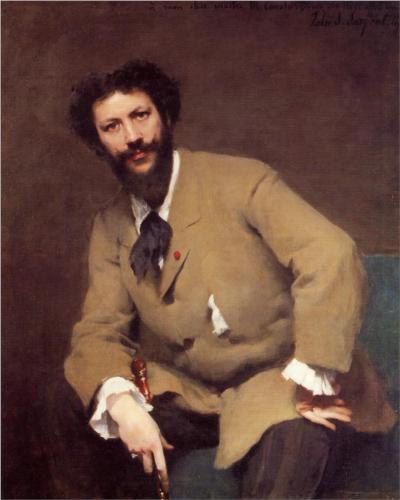
John Singer Sargent's portrait of Carolus- Duran (1879), Clark Art Institute, Williamston, Massachusetts. When Jeanette meets JOhn Singer Sargent at a garden party, she says: "I hear your portrait of Carolus is wonderful."

John Singer Sargent’s portrait of Carolus- Duran (1879), Clark Art Institute, Williamston, Massachusetts. When Jeanette meets John Singer Sargent at a garden party, she says: “I hear your portrait of Carolus is wonderful.”

There are plenty of other moments in art history that Jeannette gets to be a part of, including the Fourth Impressionist Exhibit of 1879, where she sees and critiques Mary Cassatt’s Little Girl in a Blue Arm Chair (1878):

That grumpy little girl sprawled on the aqua-blue chair – well, she’s vivid, but all that other aqua furniture climbing to the ceiling, . . . it’s hideous!

Don’t blame Jeannette. Most of the world wasn’t yet ready for the Impressionists either.

Mary Cassatt, Little Girl in a Blue Armchair (1878), National Museum of Art.

Mary Cassatt, Little Girl in a Blue Armchair (1878), National Museum of Art.

It is an incredible time in the history of art, and Jeannette is it the middle of it all. What a wonderful way for Katherine Keenum to honor the memory of her great-grandmother, who really did have a chance to be a part of history. In ways we can only imagine.

Where the Light Falls by Katherine Keenum: Highly recommended.

Where the Light Falls Literary Tour: As created by The American Girls Art Club in Paris.

Paris Was the Place

pariswastheplace

You probably think I will buy any book with a picture of Paris on the cover. No, really. I won’t. I’m not that easy.

But when your cover is this pretty, the font this inviting, and you have blurbs on the back from the likes of Lily King, Richard Russo, Ayelet Waldman, Margot Livesy, Maryann O’Hare and Sarah Blake, you’ve got me.

Paris Was The Place by Susan Conley is the story of a young woman’s experience while working at an immigration detention center for girls in Paris. You could say it’s Little Bee in Paris, but that would be missing half of the book’s appeal.
In some ways, Willow (“Willie”) Pears is a refugee too. Broken and lost after her mother’s recent death, Willie leaves California and comes to Paris in search of connections. Willie is estranged from her father, but wants to be closer to her brother Luke who lives in Paris with his boyfriend. Willie is a poetry professor at the Academy of France, and begins volunteering at an immigration center for girls. As Willie draws out the refugees’ heartbreaking stories, which they need to prepare for their asylum hearings, she becomes deeply involved in their desperate hope for a better life in France. In the meantime, Willie makes her own “French Connection” with an immigration lawyer who works at the center.

Part of the appeal of Willie’s story is the way she makes Paris her place. When Willie first arrives in Paris she is mystified by the geography of the city:

The sequencing of the neighborhoods here baffles me – arranged like the curvature of some terrestrial snail. I’m in the tenth arrondissement, anchored by two of Paris’s great train stations, where the alleyways weave into mapless places. I’m not embarrassed to carry my Michelin.

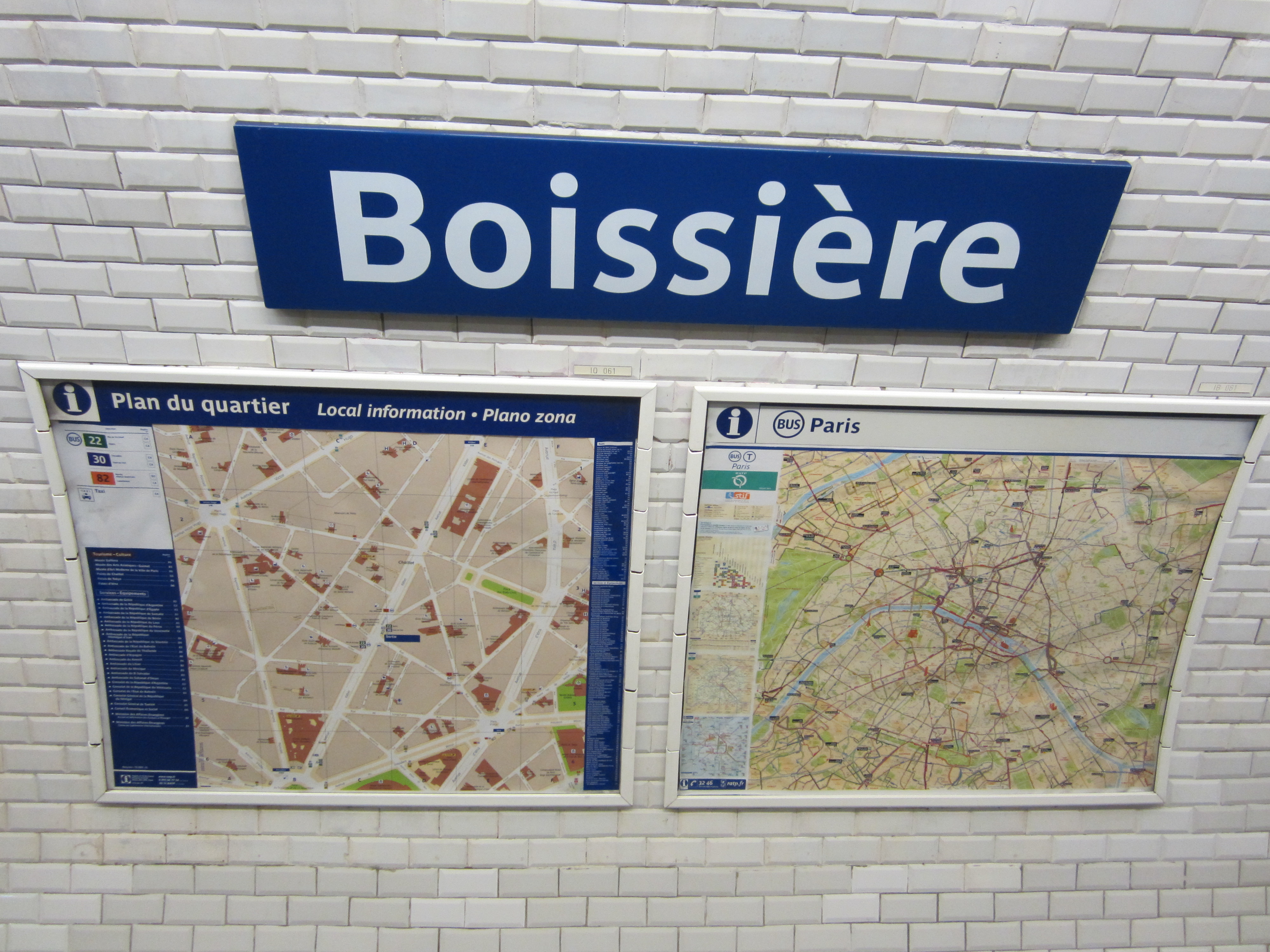
With her Michelin in hand, Willie maps her way through Paris, narrating her trips and transfers on the Métro, guiding us through each arrondissement. From her brother’s nice apartment on Victor Hugo in the 16th, her own apartment on Rue de la Clef in the Latin Quarter, the detention center on Rue de Metz in the 10th, and the Academy of France in the 6th, Willie stakes her claim on her new city.

Just for fun, I plotted out Willie’s Paris on this Google Map. Now you can walk in the footsteps of the characters of Paris Was the Place too.

Willie’s Michelin guide helps her unlock the baffling secrets of Paris. And isn’t that exactly the way it is when you’re a tourist or an expat in France? You might not understand half of what is said around you every day, but at least you can read your Métro map. Like color-coded bread crumbs that will always lead you home.

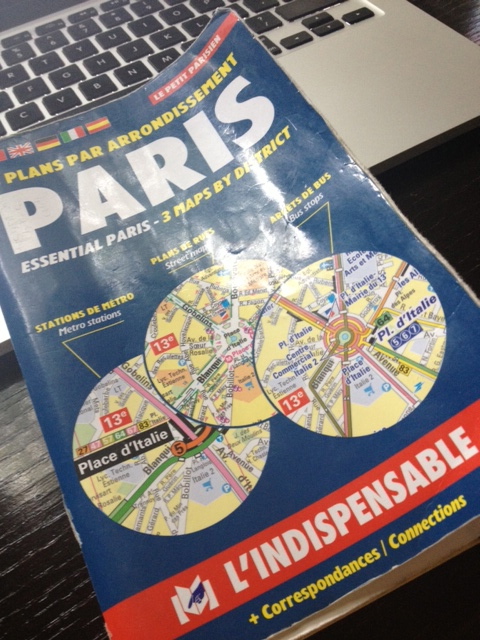
But there’s rarely a direct route. You need to study the map and plot your connections. What’s the best way to get from the 16th to the 10th? Can I get there without having to crowd in with all the tourists on Line 1? Can I do it with only one transfer? I used to start every day with my home-brewed espresso, plotting out my day on my own dog-eared Paris L’Indispensable.

And then, one day, just like Willie, you’ve mastered the Métro and you’ve developed an instinct for the spiraling arrondissements. You learned to cope with a life that isn’t always linear. You’ve made your connection and you feel like you belong. Paris is your place.

What makes Paris Was The Place so wonderful is the way Willie’s search for geographical connections runs parallel with her efforts to navigate through her personal connections: with her brother, her French lover, the girls at the detention center, her complicated family history, her widowed father. Some connections are made, while others are tragically lost. The fact that Willie’s estranged father is a mapmaker adds even more depth and grace to her story. Because belonging isn’t always just a matter of maps and Métros. It’s about making connections in the baffling, mapless places of the human heart.

My dog-eared L'Indispensable Paris Arrodissement Map. My own personal Rosetta Stone.

My dog-eared L’Indispensable Paris Arrondissement Map. My own personal Rosetta Stone.

IMG_2075

My home stop on Line 6 in the 16th, which Willie calls “the grown-up part of Paris” with “older women in pencil skirts walking their miniature poodles.” Ouch. That hurts. I swear I don’t own a pencil skirt or a miniature poodle.

IMG_2436

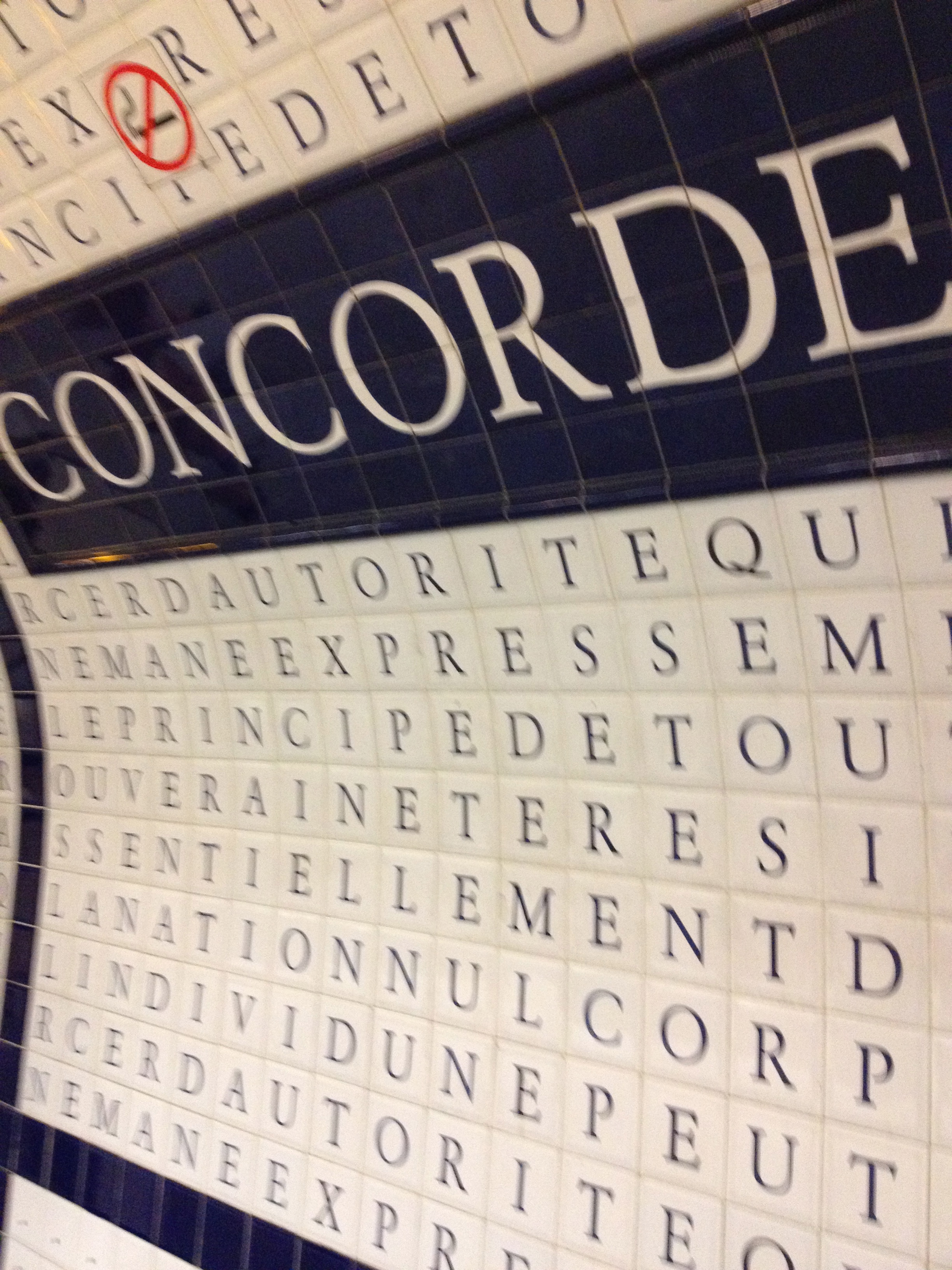
Willie, a fellow word nerd, would have loved this Métro stop too. The words from the Declaration of the Rights of Man form a word search at this Concorde Métro stop.

_DSC1014

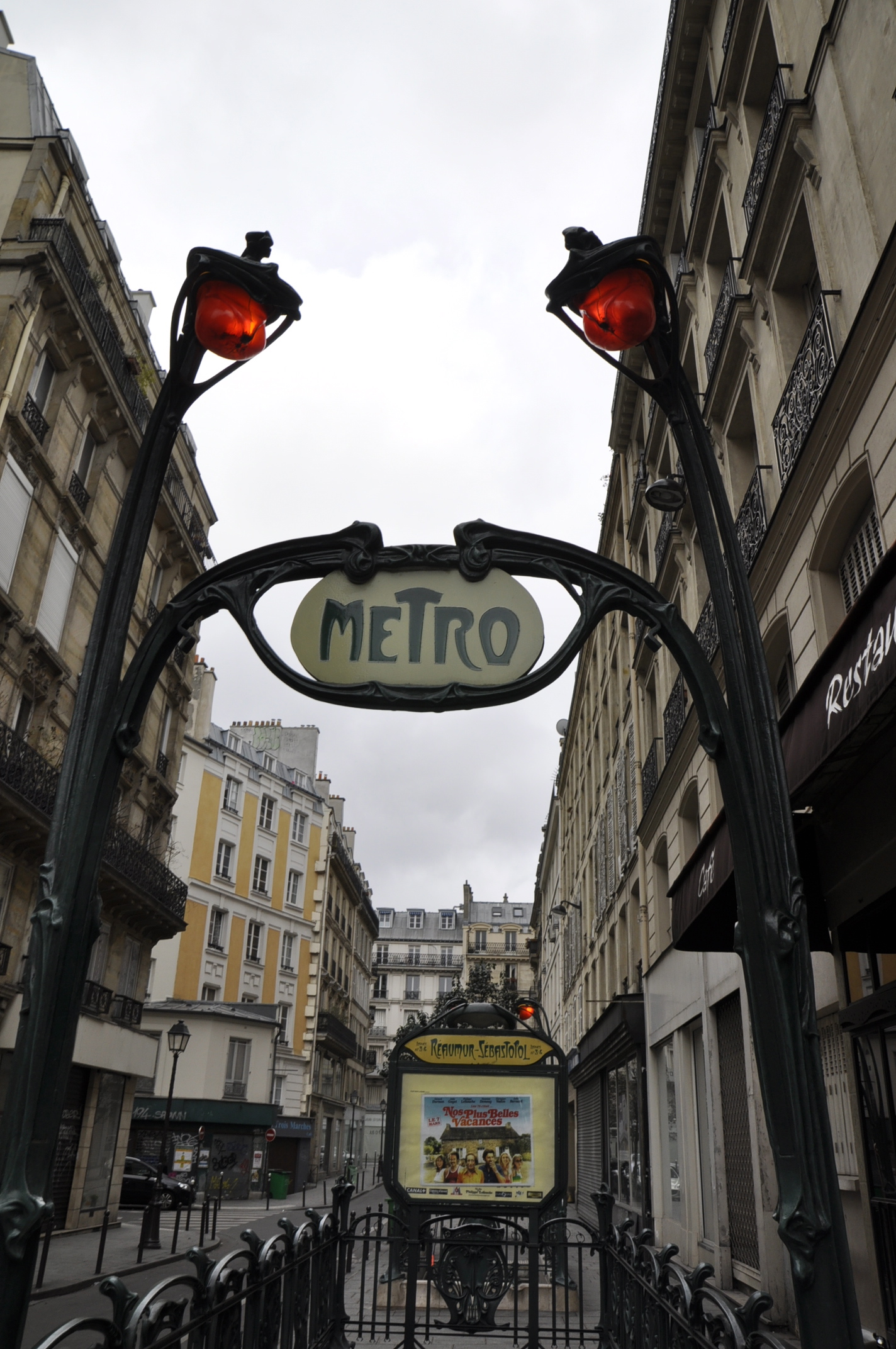
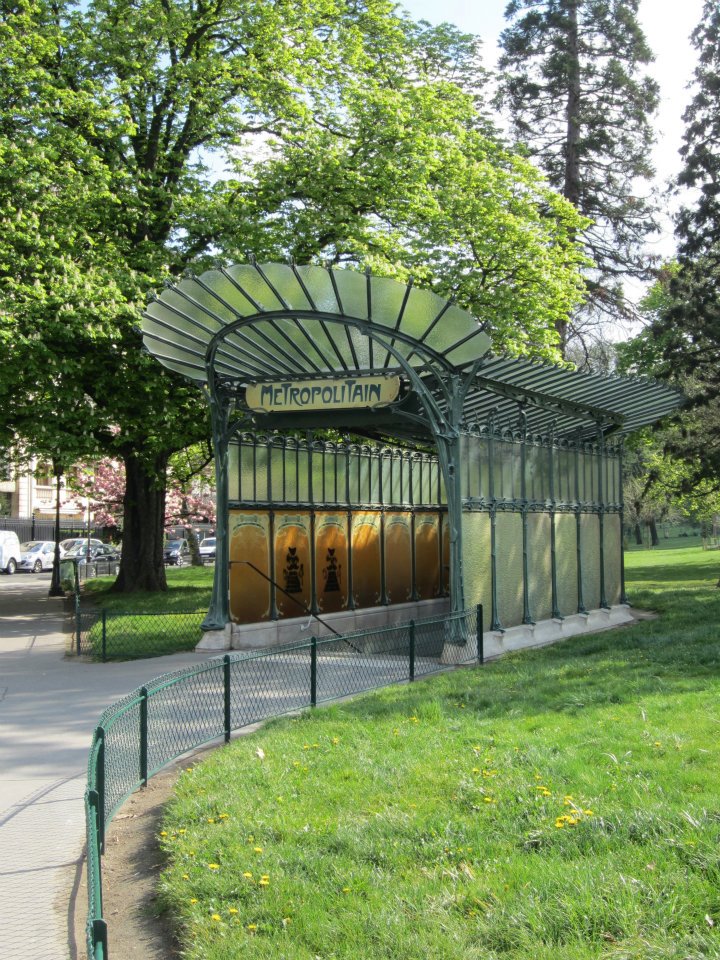
I love this Art Nouveau Métro stop at Réaumur Sébastopol on Line 4. Only one more stop until Willie’s stop for the Rue de Metz detention center.

One of my favorite Métro stops. The Port Dauphine Métro stop on Line 2, just one stop past Luke's apartment on Victor Hugo.

One of my favorite Métro stops. The Port Dauphine Métro stop on Line 2, just one stop past Luke’s apartment on Victor Hugo. Just a short walk from the lovely Bois de Boulogne.

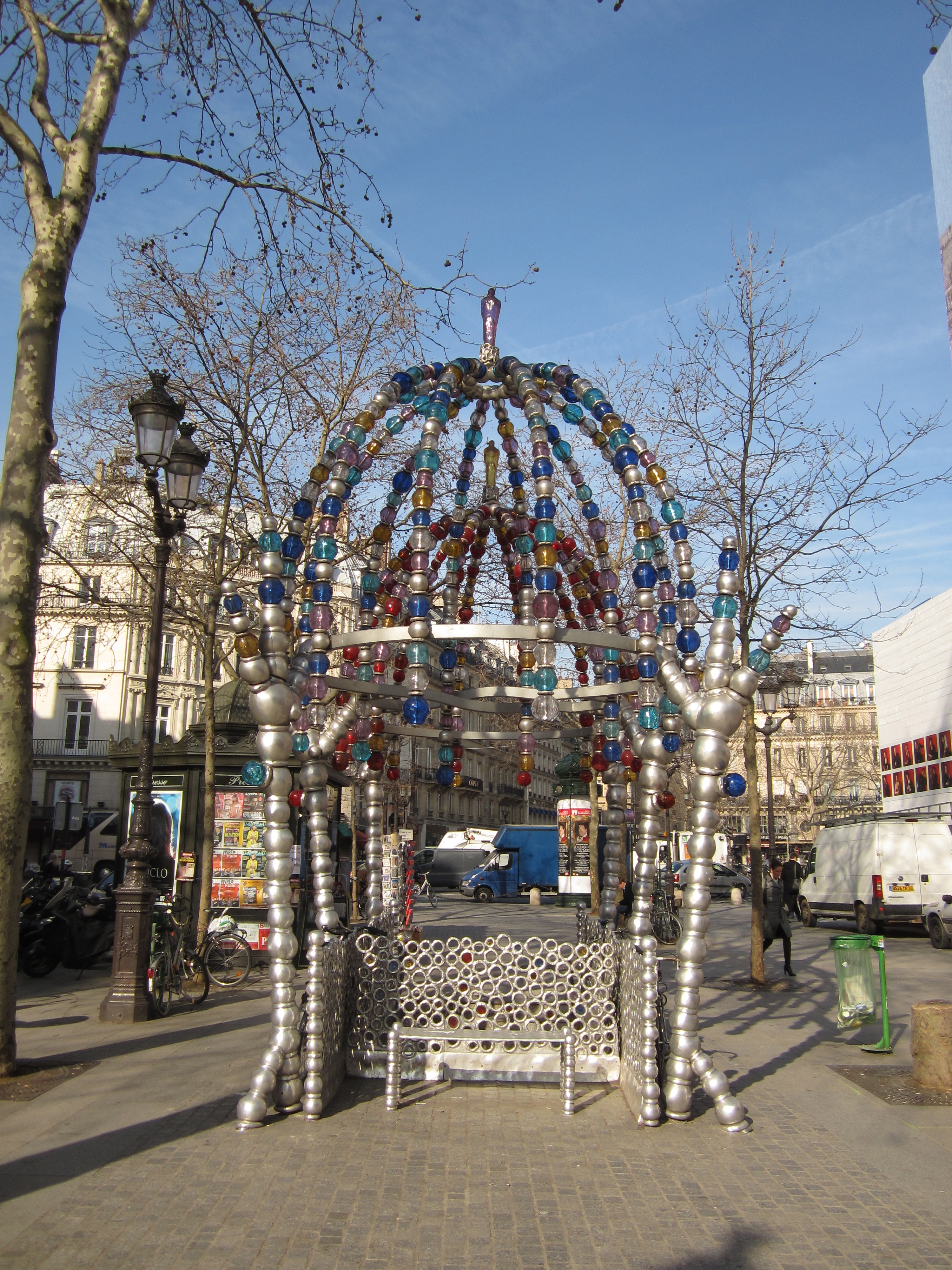
Who doesn't love the whimsical Louvre-Rivoli Métro stop?

Who doesn’t love the whimsical glass beads in the design of the Palais-Royal-Musée de Louvre Métro stop at Place Colette?

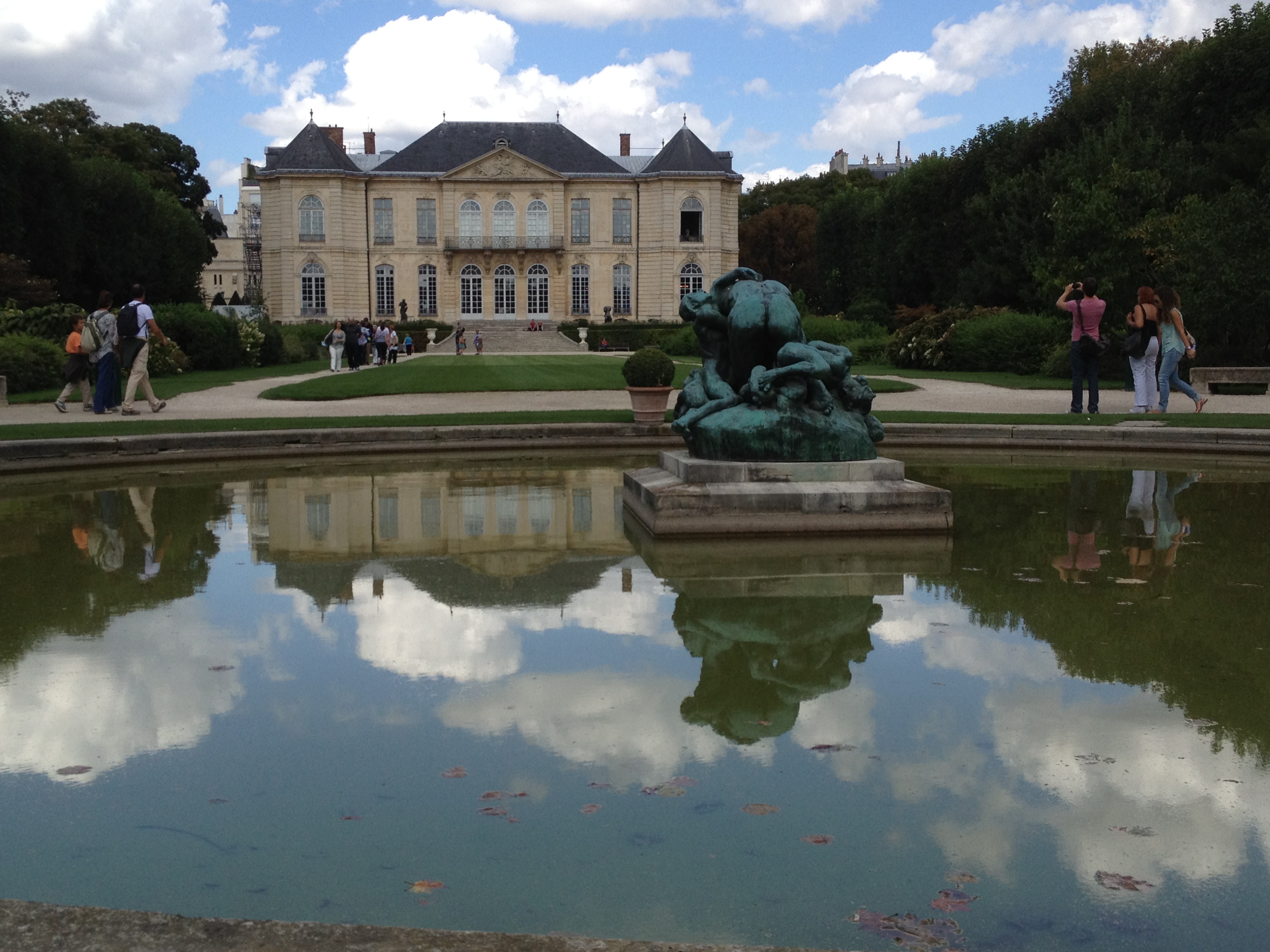
The gardens of Musée Rodin, the site of Willie and Gita's field trip

The gardens of Musée Rodin, the site of Willie and Gita’s field trip

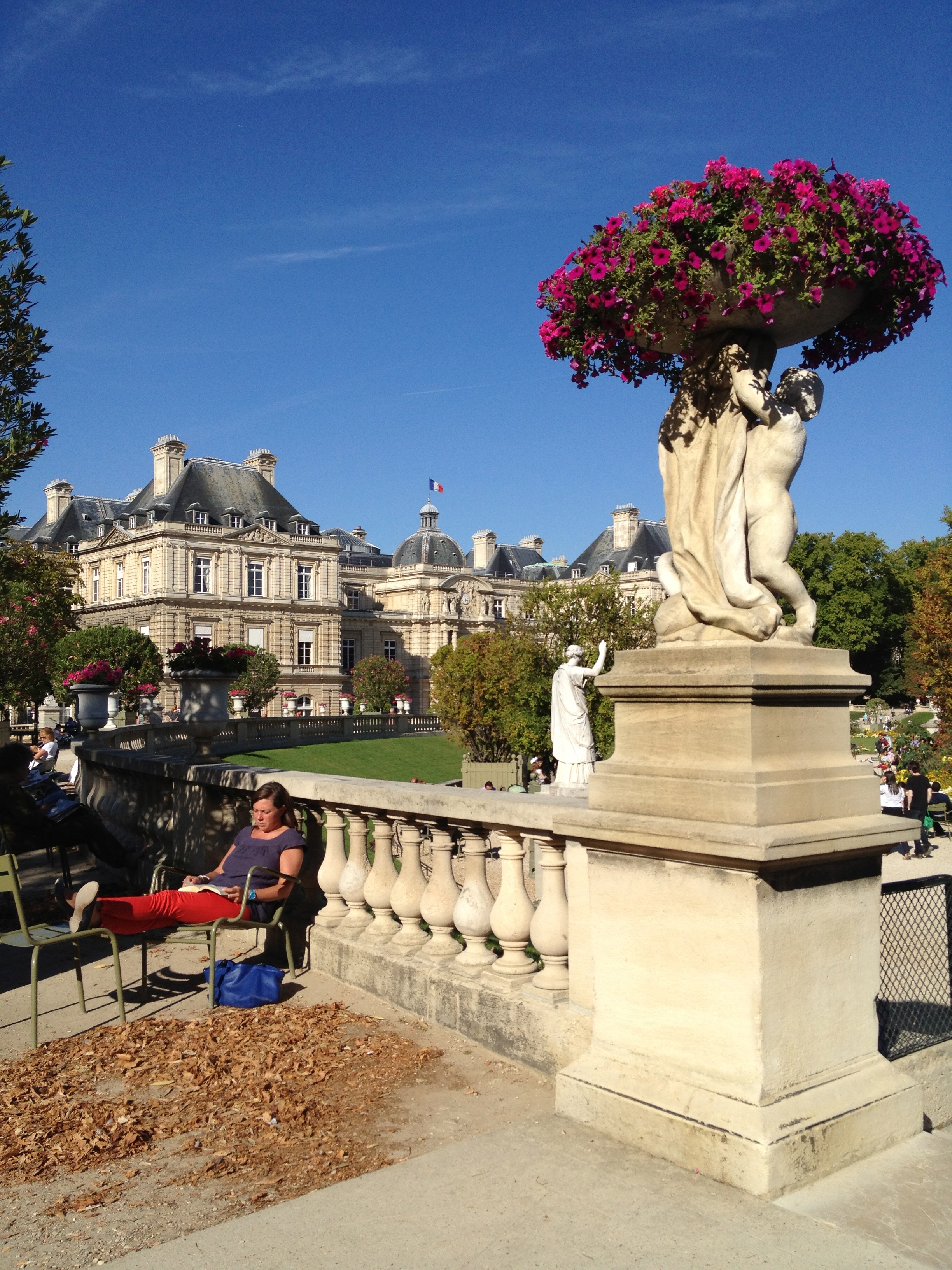
Luxembourg Gardens - where Willie and Gita enjoyed their brown-bag lunches together

Luxembourg Gardens – where Willie and Gita enjoyed their brown-bag lunches together

I have a feeling that it’s not just Willie and I who share this need to map out our place in Paris. Check out this quote from Susan Conley’s website, where she talks about her own Paris map OCD:
My craziest Francophile moment came when I found myself making these gigantic maps of the Paris neighborhoods covered in my novel. I used indelible markers on poster board in my little rabbit warren of an office on the third floor of our old house, and I tried to recreate the streets that Willie and Macon walked on in Paris. These hand-scrawled maps were my blue print of the city. They’re almost illegible but they gave me access to the parts of the city I really had to make sure the novel rendered fully. I needed to make the maps to feel like I was there in Paris. Then I knew that the reader would (hopefully!) feel like they were there too.
Yes, Susan, when I read your book I felt like I was in Paris too. Thanks for that, because now I miss it just a little less.

Paris Was The Place by Susan Conley:  Highly recommended.

Paris L’Insdispensable: Indispensable.

Zelda and Scott in Paris

z

Therese Fowler’s new novel Z: A Novel of Zelda Fitzgerald (St. Martin’s Press 2013) is a welcome reboot in the field of Lost Generation literature. This is the turbulent story of Zelda Sayre, a young handful of a southern girl, the daughter of a prominent Montgomery, Alabama judge, who married the not-yet-successful F. Scott Fitzgerald after meeting him at a country club dance in 1918.

Z presents a refreshing and much needed counterpoint to Hemingway’s Moveable Feast and Scott’s Fitgerald’s Tender is the Night. It might cause you to reconsider nearly everything you thought was true about Scott and Zelda’s marriage, about their relationship with Ernest Hemingway, and about the cause of Zelda’s mental illness. It’s finally Zelda’s turn, and she doesn’t hold back.

Have you noticed that I’ve completely fallen for the illusion that Zelda is the one who is talking in Z, and not Fowler? That’s how well this book seems to capture Zelda’s voice.

Z brought me back to my own year in Paris, when I walked the same streets as Zelda and Scott, hung out at the same cafés and brasseries, enjoyed the exhilerating (but thankfully much tamer) life of an American expat. I took every literary tour I could, so of course I have some photos of the places and scenes mentioned in the book Z.

Just a caveat: all of the stories I tell in the captions below about what happened at the sites are a mixture of the truth and myth that circulates through literary circles in Paris. I can’t vouch for the stories, except to say this is what somebody told me and I believed them.
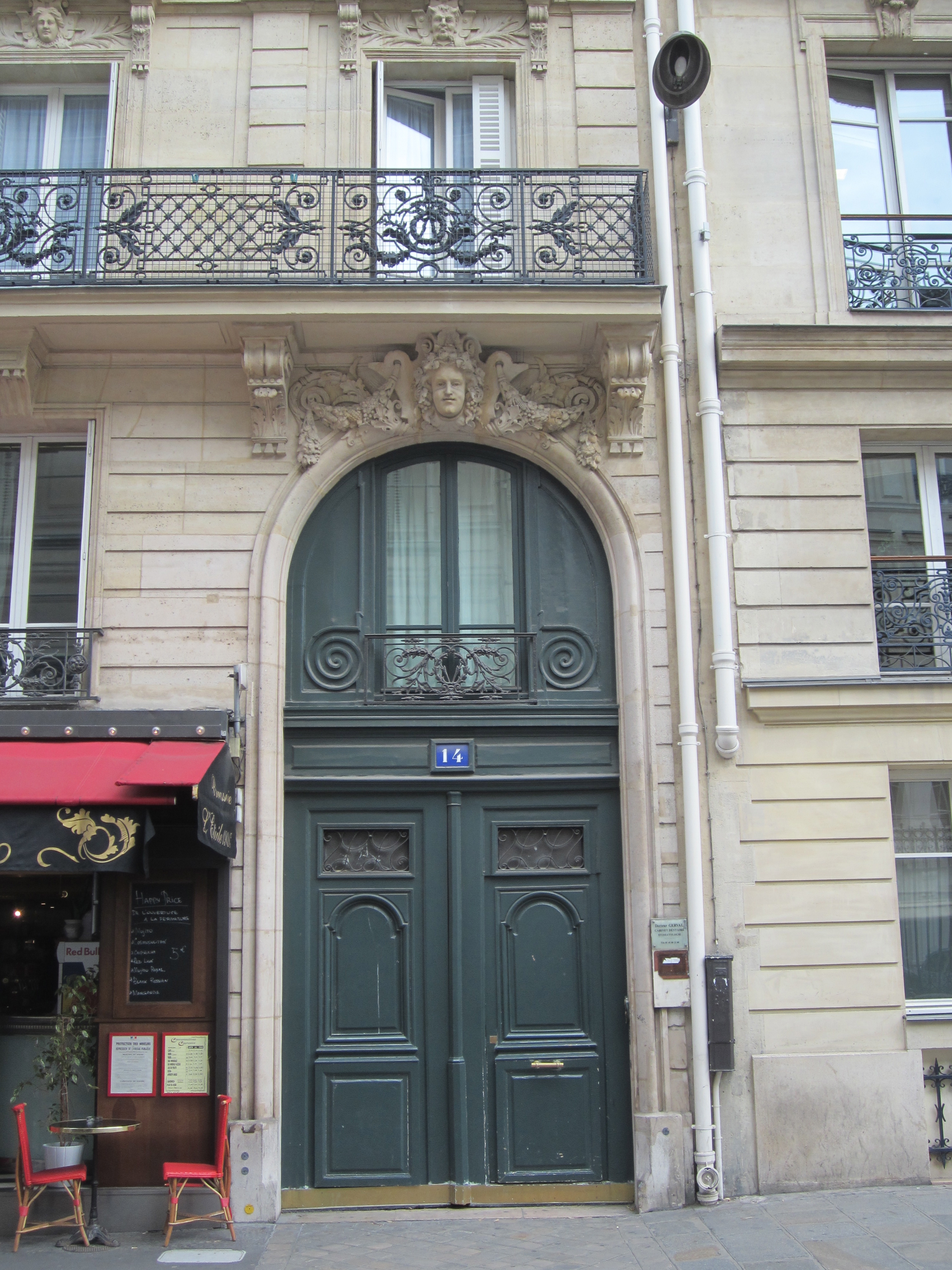
14 rue de Tilsitt, Zelda and Scott's first apartment in Paris in about 1925. It's located on the right bank in the 8th arrondissement, which is still home to some of the most expensive real estate in Paris. Hemingway used to claim that he felt uncomfortable going to the Fitzgerald's apartment, that he much preferred his slummier surroundings on the Left Bank.

14 rue de Tilsitt, Zelda and Scott’s first apartment in Paris in about 1925. It’s located on the right bank in the 8th arrondissement, just a block away from the Arc de Triomphe. It’s a lovely area within a block or two of Champs Elysées. Hemingway used to claim that he felt uncomfortable going to the Fitzgerald’s apartment, that he much preferred his slummier surroundings on the Left Bank.

Another view of 14 rue de Tilsitt, which currently houses a street level café. Rue de Tilsitt is a small little street which forms the first circle around L'Etoile.

Another view of 14 rue de Tilsitt, which currently houses a street level café. Rue de Tilsitt is a small little street which forms the first circle around L’Etoile.

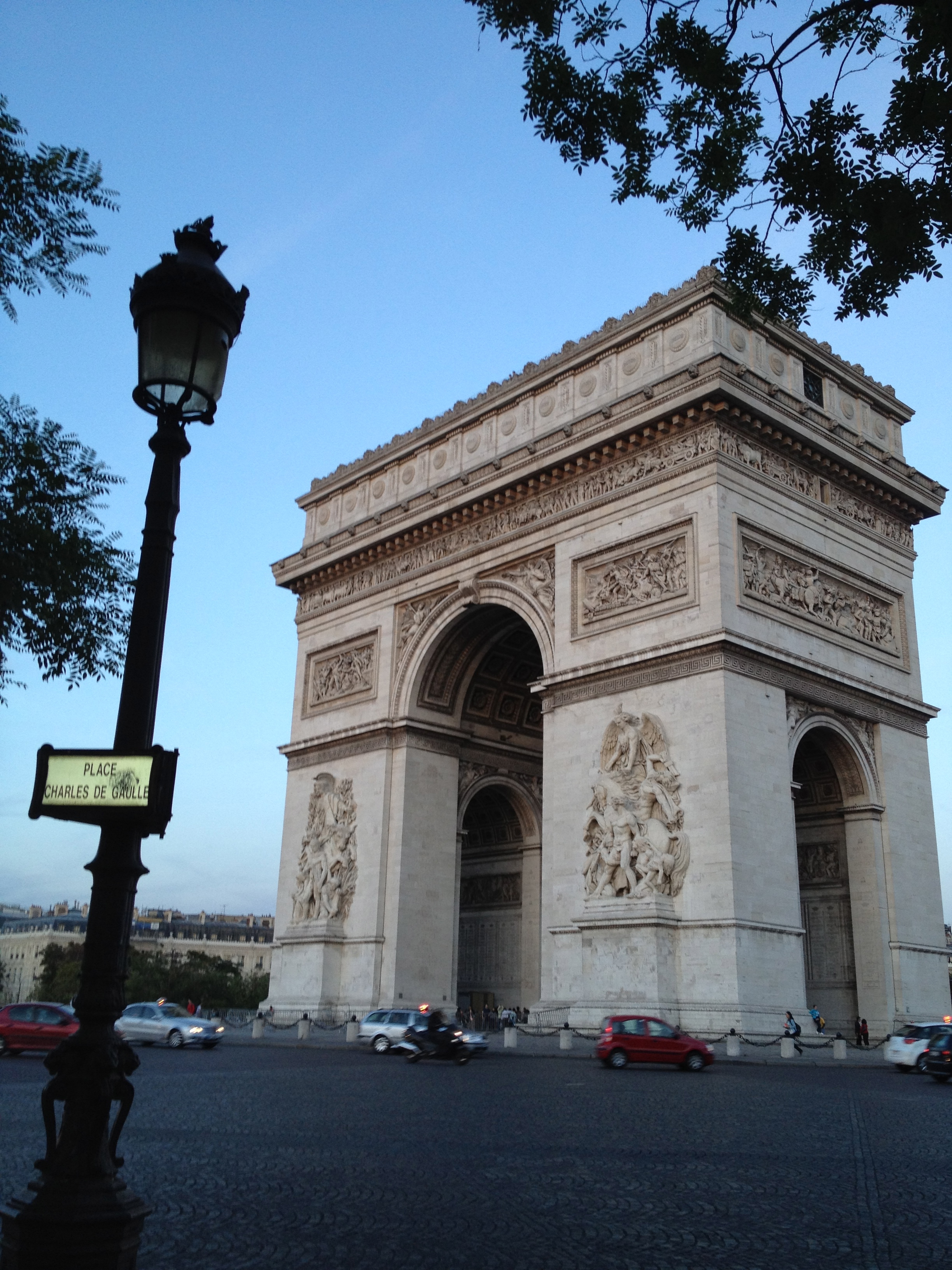
Zelda and Scott's view of the Arc de Triomphe from the corner of L'Etoile closest to their apartment. Not bad.

Zelda and Scott’s view of the Arc de Triomphe from the corner of L’Etoile closest to their apartment. Not bad. Supposedly, Scott once rode a tricycle down the Champs Elysées after he’d had too much to drink, hitting passerby with a baguette.

L'Auberge de Venise at 10 rue Delambre in Monparnasse. Formerly The Dingo, where Scott Fitzgerald met Ernest Hemingway in 1925.

L’Auberge de Venise at 10 rue Delambre in Monparnasse. Formerly The Dingo, where Scott Fitzgerald met Ernest Hemingway in 1925.

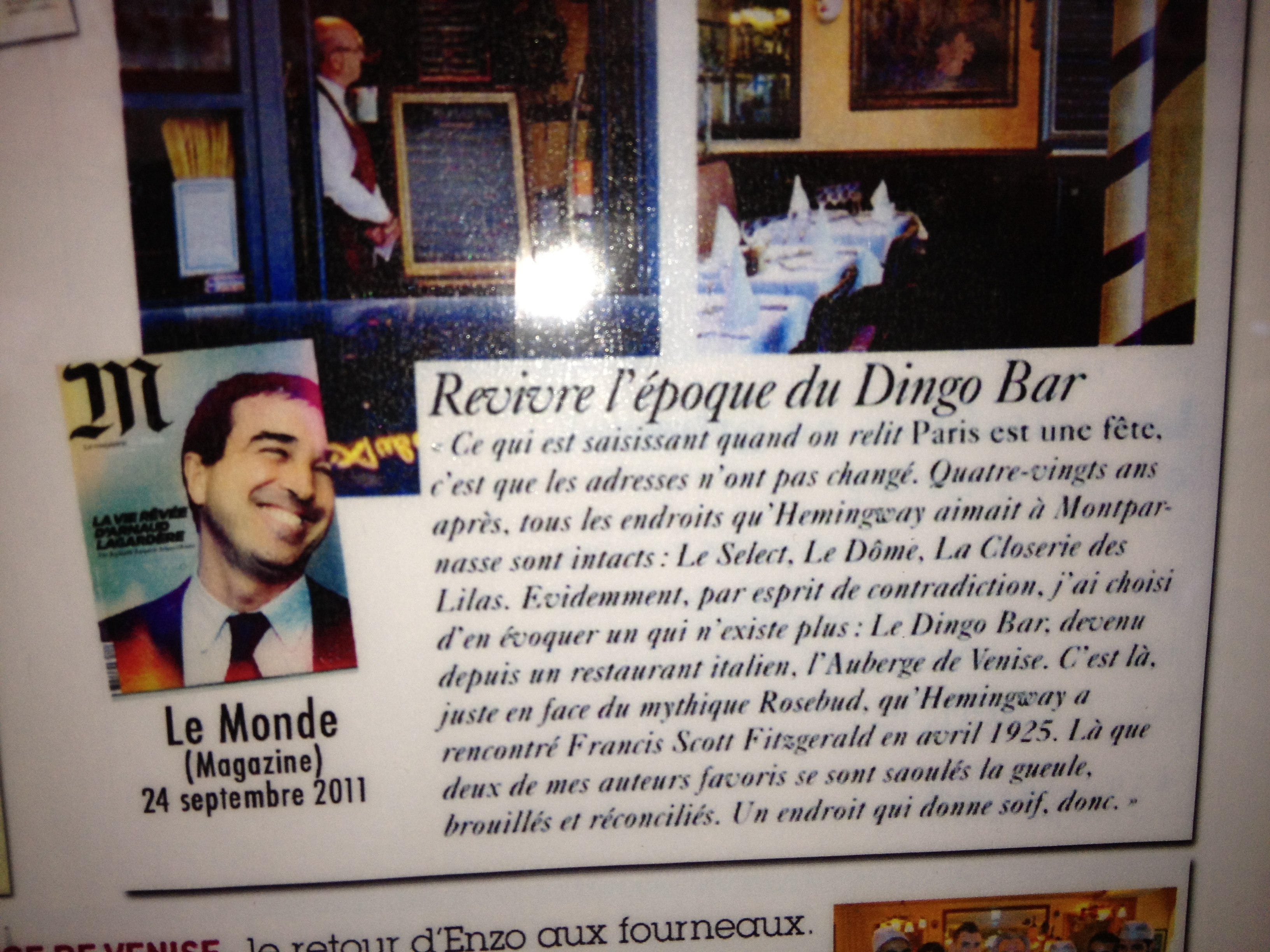
In the window of L'Auberge de Venise is an article from La Monde titled "Remembering the Epoque of the Dingo Bar."  It's hard for me to translate, but it says something like: this is where two of my favorite authors used to get blasted ("drunk mouth"), blurry and reconciled. A place to make you thirsty, for sure.

In the window of L’Auberge de Venise is an article from La Monde titled “Remembering the Epoque of the Dingo Bar.” It’s hard for me to translate, but it says something like: this is where two of my favorite authors used to get blasted (“drunk mouth”), blurry and reconciled. A place to make you thirsty, for sure.

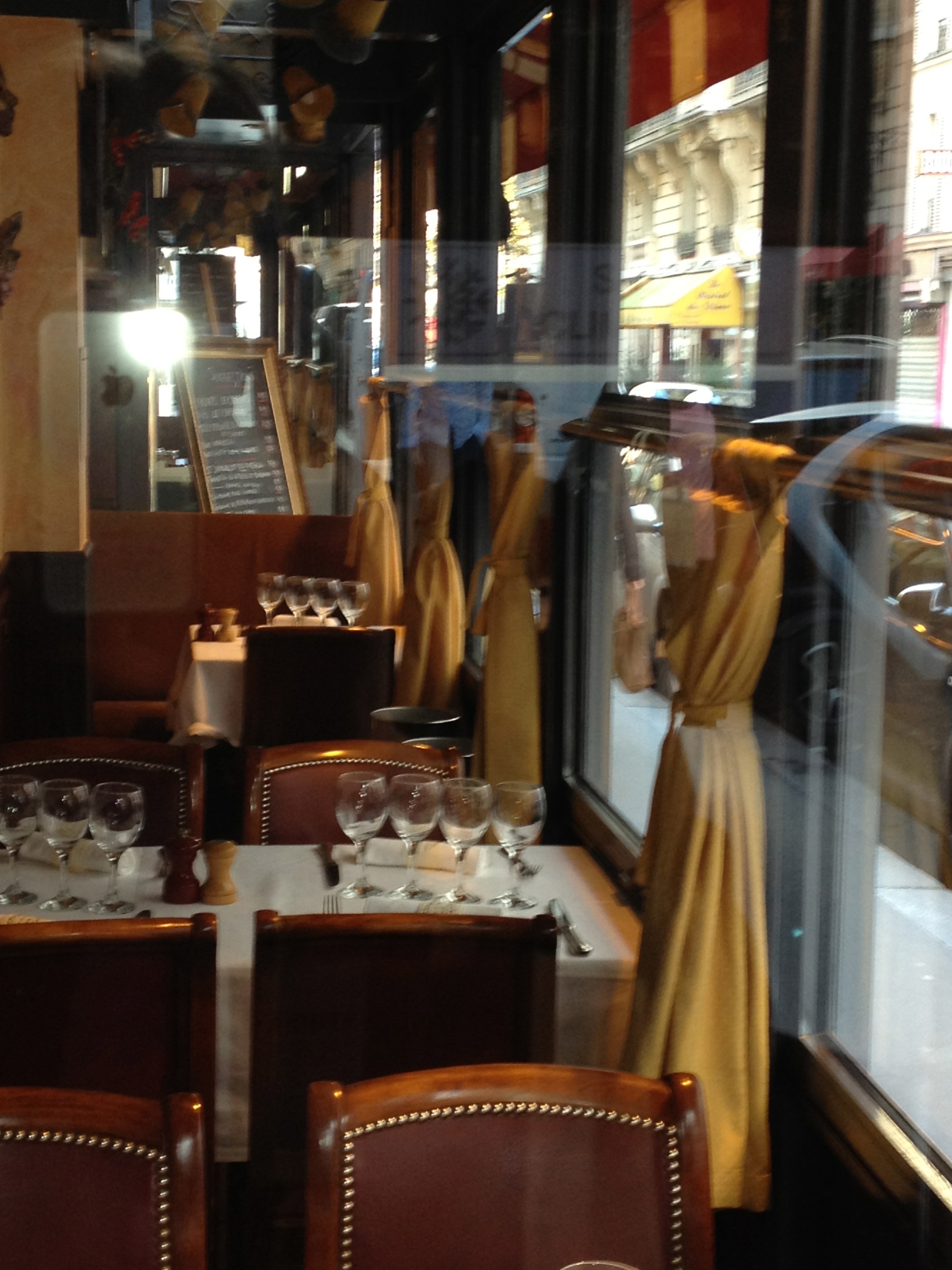
The view inside the former Dingo Bar. I've heard two different versions of how Fitzgerald and Ernest met, but in both versions, serious drinking was involved.

The view inside the former Dingo Bar. I’ve heard two different versions of how Fitzgerald and Ernest met, but in both versions, serious drinking was indeed involved.

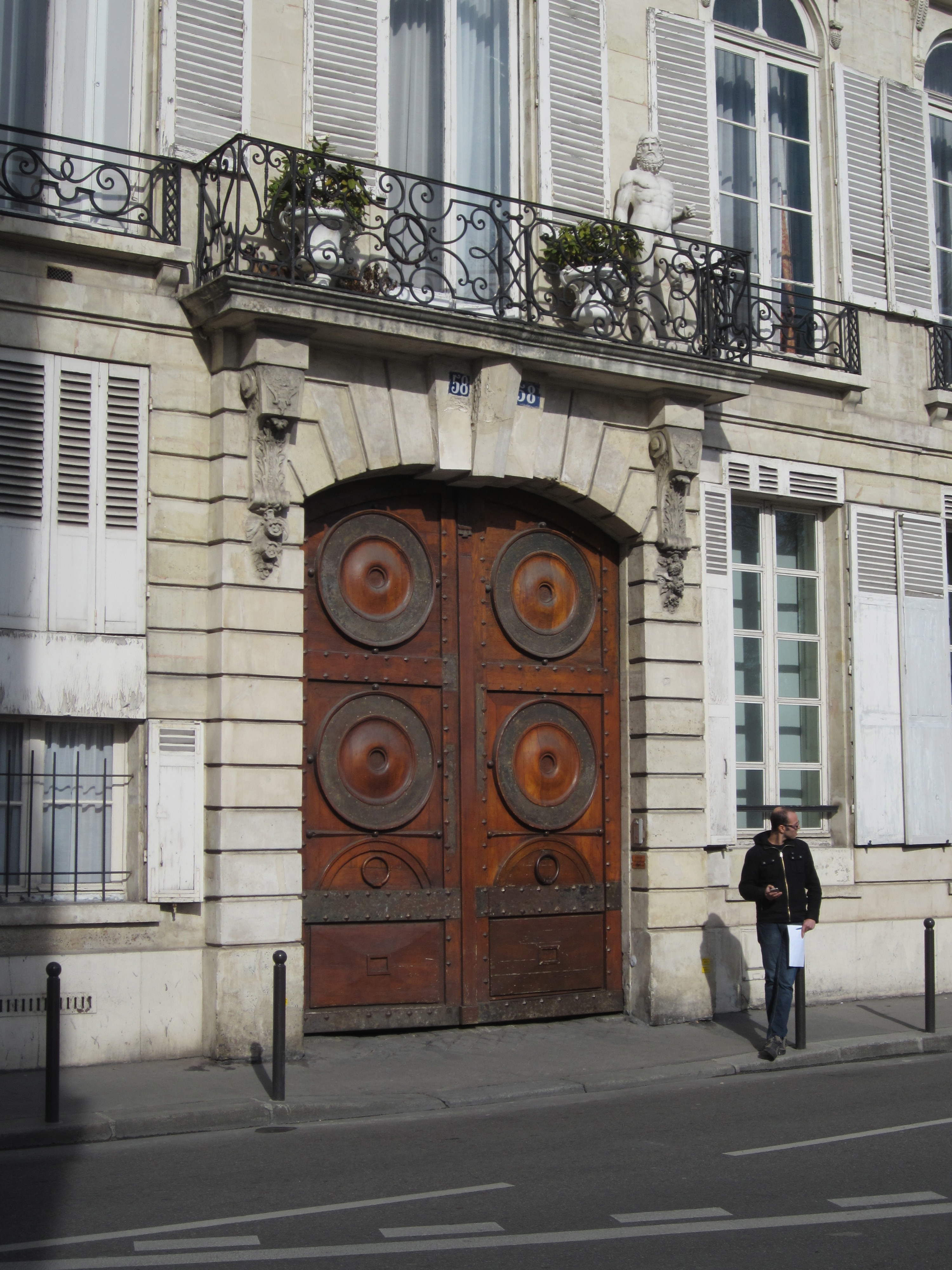
The doorway to Zelda and Scott's other Paris apartment (1928-ish?) on the corner of Luxembourg Gardens. The Fitzgeralds knew how to spend money - this is some of the best and most expensive real estate in Paris.
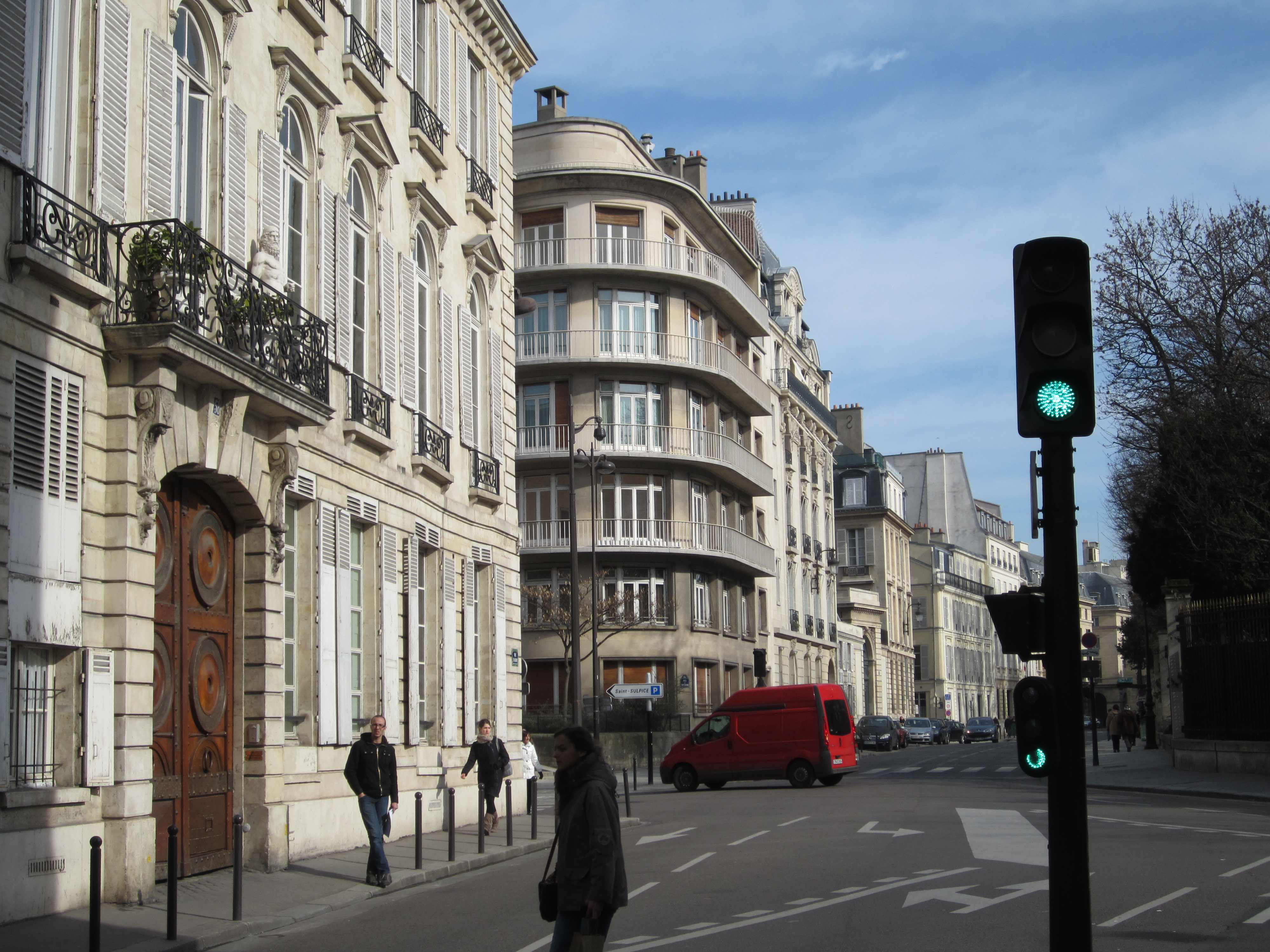
The doorway to Zelda and Scott’s other Paris apartment where they lived in 1928 at 58 rue Vaugirard on the corner of Luxembourg Gardens. The Fitzgeralds knew how to spend money – this is some of the most expensive real estate in Paris.

Another view of the Fitzgerald's apartment at 58 rue de Vaugirard. They lived here on their third trip to Paris in 1928. Their daughter Scottie enjoyed playing in the nearby gardens.
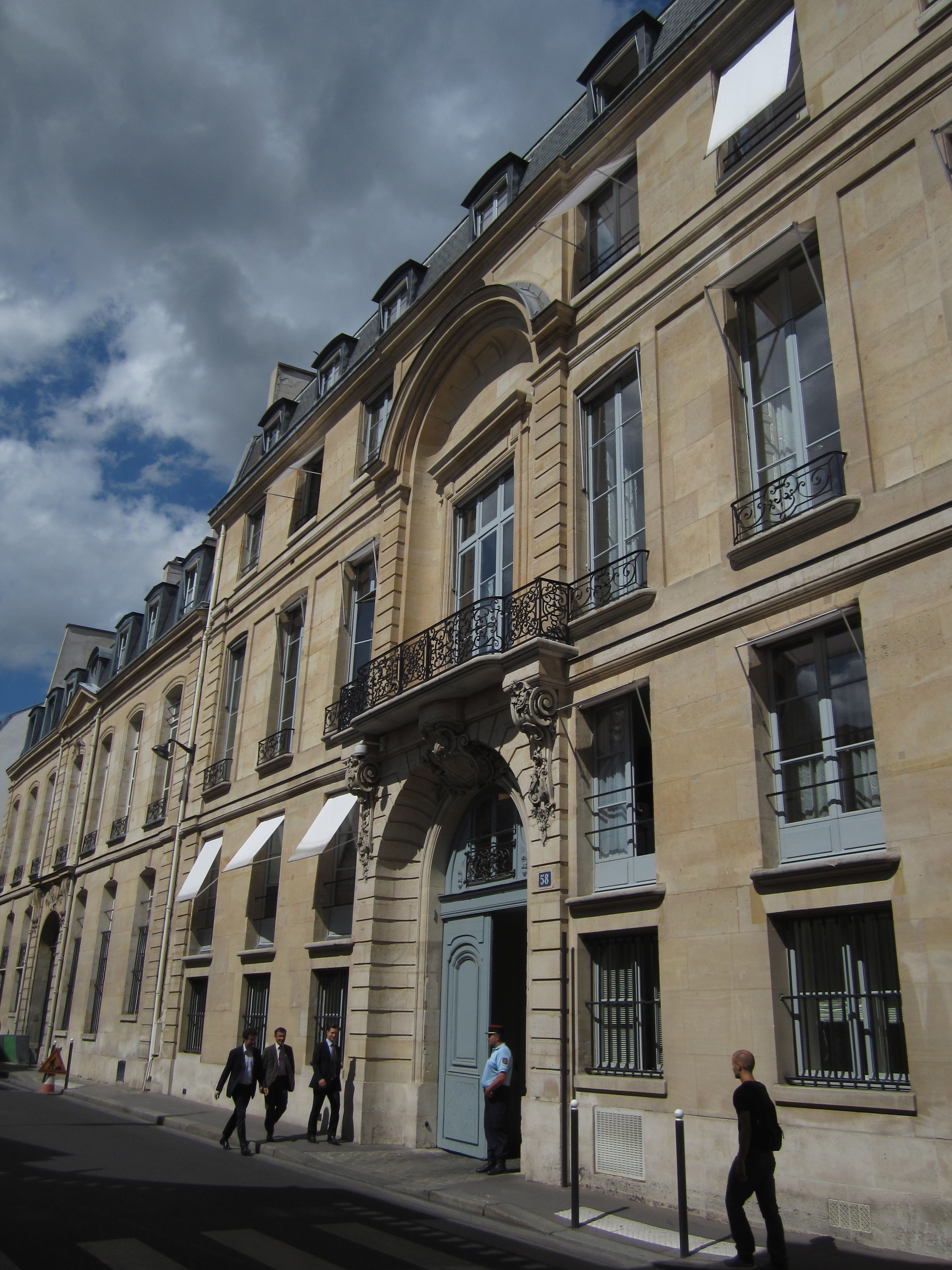
Another view of the Fitzgerald’s apartment at 58 rue de Vaugirard. They lived here on their third trip to Paris in 1928. Their daughter Scottie enjoyed playing in the nearby gardens. This building would be subsequently damaged by gunfire during the liberation of Paris in 1944.

Picture little Scottie playing with the sailboats in Luxembourg Gardens. Then picture Zelda nursing a horrible hangover in one of the low-slung  "Luxembourg chairs." For my fellow Francophilles: did you know you can order these chairs and have them shipped to the United States? Check out the website of Deyrolle, at 46 rue de Bac in Paris. This happens to be the same taxidermy shop used as a film location in Midnight in Paris. If you can't find the Luxembourg chairs on their website, you can always try to email them. I came **this close** to ordering one for my husband for Christmas last year. We loved them THAT much.

Picture little Scottie playing with the sailboats in Luxembourg Gardens. Then picture Zelda nursing a horrible hangover in one of the low-slung “Luxembourg chairs.”

My friends and I enjoying a fall day in my favorite Luxembourg chairs. For my fellow Francophiles: did you know you can order these chairs and have them shipped to the United States? Check out the website of Deyrolle at 46 rue de Bac in Paris. (Which just happens to be the same taxidermy shop filmed in Midnight in Paris.) If you can't find the chairs on their website, you can always try to email them. I came **this close** to ordering one for my husband last Christmas. We loved them that much.

My friends and I enjoying a fall day in my favorite Luxembourg chairs. For my fellow Francophiles: did you know you can order these chairs and have them shipped to the United States? Check out the website of Deyrolle at 46 rue de Bac in Paris. (Which just happens to be the same taxidermy shop filmed in Midnight in Paris.) If you can’t find the chairs on their website, you can always try to email them. I came **this close** to ordering one for my husband last Christmas. We loved them that much.

La Closerie des Lilas, the restaurant where Scott and Ernest met to plan their drive to Lyons together - a trip that would cement their friendship.

La Closerie des Lilas, the restaurant where Scott and Ernest met to plan their drive to Lyons together – a trip that would cement their friendship.

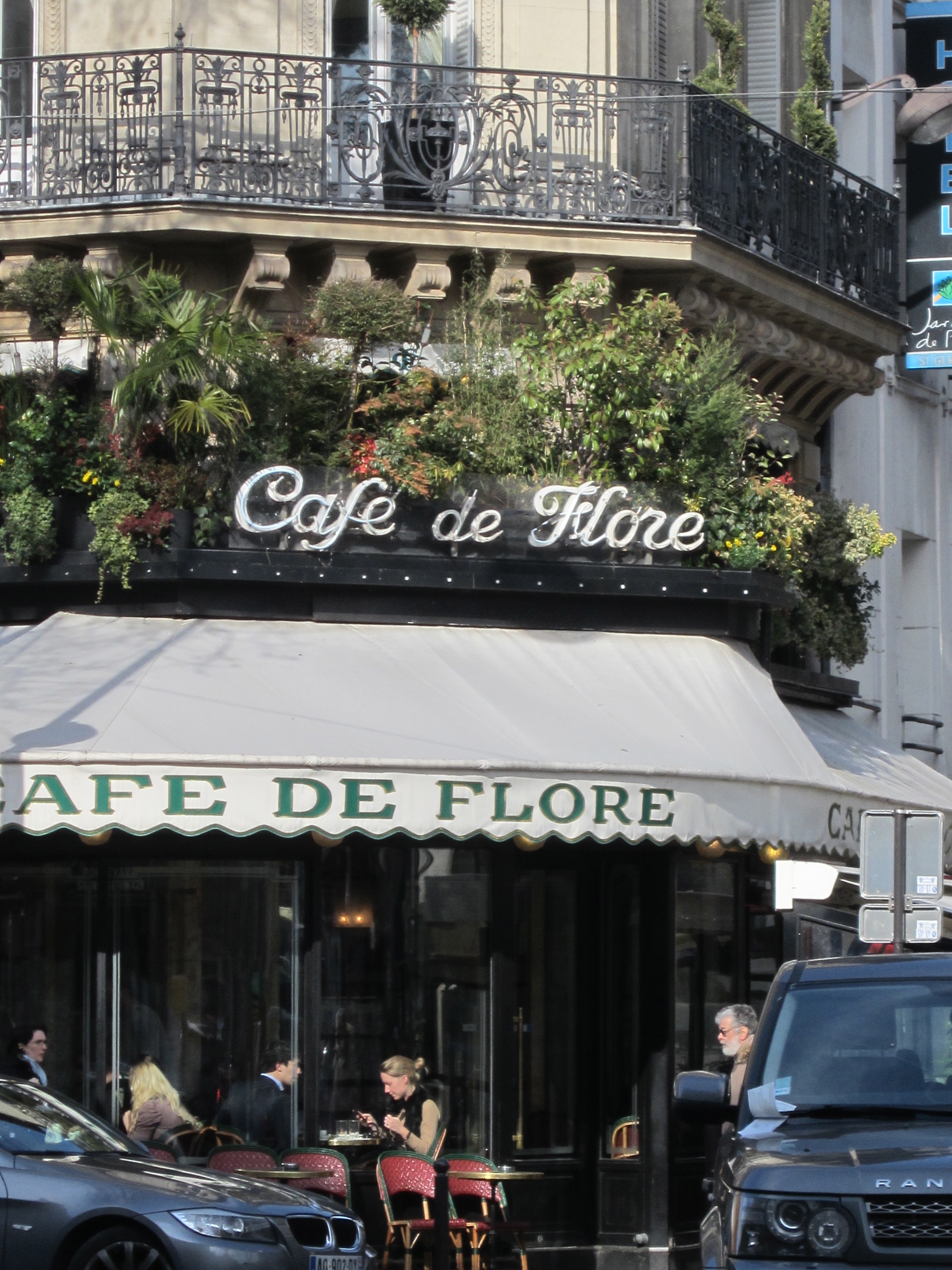
Café de Flore, another St.Germain café where the Fitzgeralds hung out with the rest of the Lost Generation.

Café de Flore, another St. Germain café where the Fitzgeralds hung out with the rest of the Lost Generation.

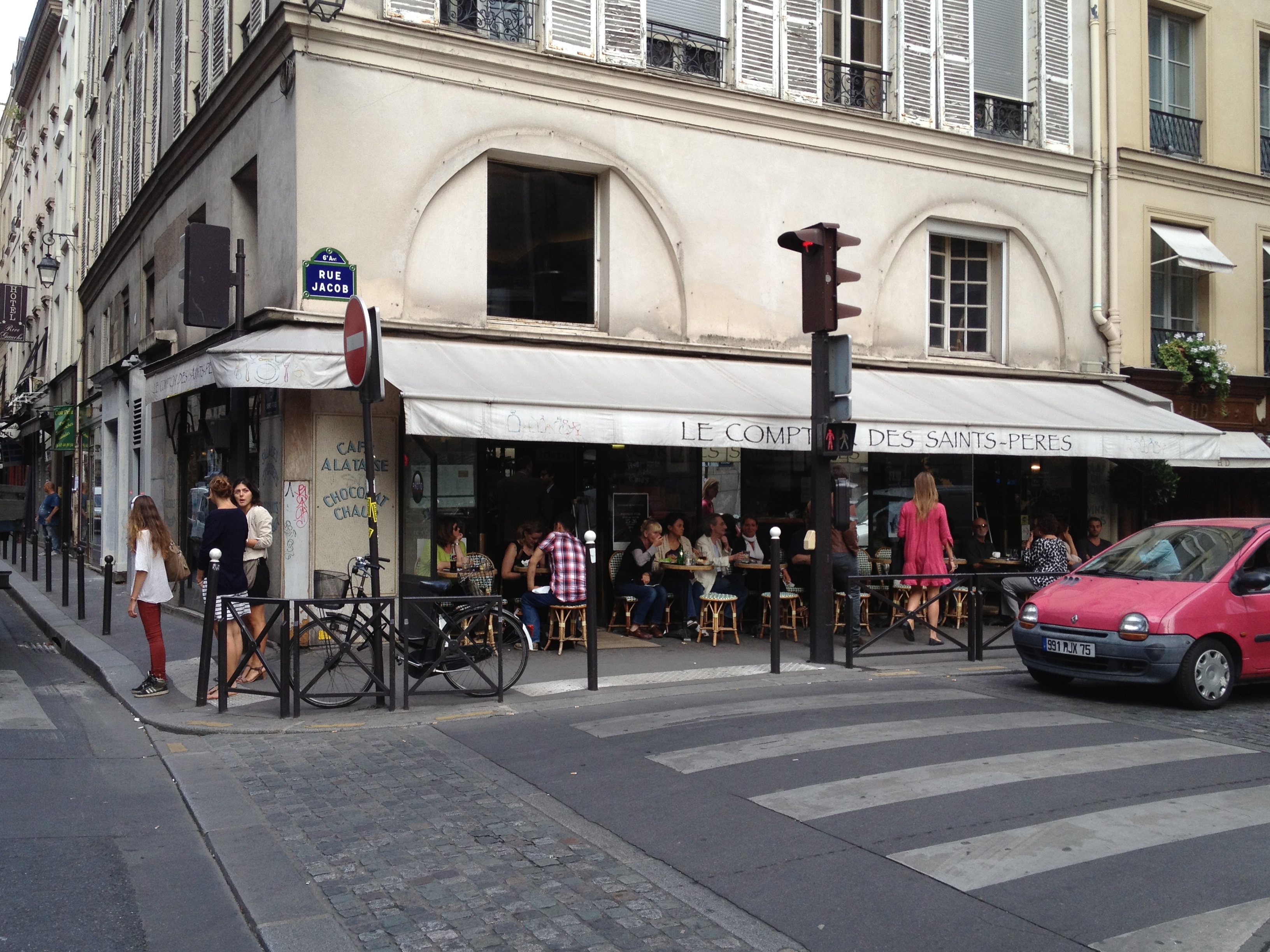
This is the site of Michaud’s, a fashionable restaurant in St. Germain where the Fitzgeralds often dined. It is now Le Comptoir des Saints Pere, located on the corner of rue Jacob and rue des Saints Pere. It is the place where Hemingway’s infamous “show me your penis” story takes place. In Moveable Feast, Fitzgerald supposedly confessed to Hemingway his insecurities about the size of his penis, thanks to a nasty comment fron Zelda. Hemingway is supposed to have invited Scott downstairs to the bathroom, where Hemingway took a look for himself and told Scott that he was perfectly normal, and that Scott shouldn’t listen to Zelda. “Zelda’s crazy,” Hemingway said. In Z, Zelda gets her long-awaited revenge against her “frenemy” Hem. Zelda has a deliciously alternative story comparing Scott and Hem’s measurements. I’m not sure which version I believe, but I am definitely leaning toward Team Zelda. (If your book club is anything like mine, this is going to be a hot discussion topic after a few bottles of vin rouge!)

Z by Therese Fowler: Highly, highly, highly recommended.

I hope you pick up your own copy of Z very soon. And by “pick up” I mean “buy.” And by “buy” I really mean that you should rush down to your local independent bookstore to grab a copy as soon as you can. If you don’t have a local indie of your own, feel free to buy it in ebook form from the bookstore I work for in Glen Ellyn, Illinois. All you have to do is create a Kobo account on the website. We’d appreciate your support. Then come back here to the comments and tell me what you think!

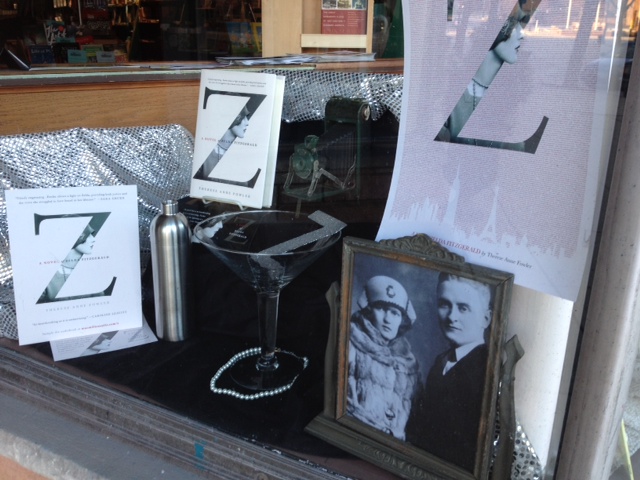
The folks at The Bookstore in Glen Ellyn, Illinois love Z so much we've decorated our front window in honor of Zelda.

The folks at The Bookstore in Glen Ellyn, Illinois love Z so much we’ve decorated our front window in honor of Zelda.

The Painted Girls: Degas and the Dancers

painted girls

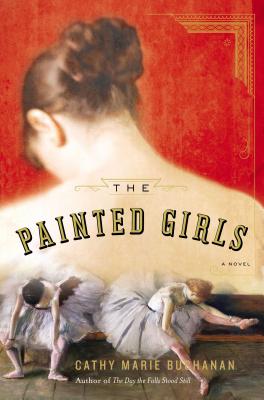
If you like historical art fiction, it doesn’t get much better than The Painted Girls, Cathy Buchanan’s new novel about the young ballerinas Degas used to paint and sculpt. Set in the seedy side streets of Belle Epoque Paris, this book tells the desperate story of three sisters who must find their way to survive in the dark world of the Paris demimonde.

The Painted Girls is based on the true story of the van Goethem sisters who danced at the Paris Opéra in the late 1870s and early 1880s. They lived on the slopes of Montmartre on rue de Douai, and after their father died, they had to scrounge for a living as best they could.

Although they were not classic beauties, the van Goethem sisters were talented enough to earn a place among the other novices, the “Petit-Rats” of the Paris ballet. But they still had to supplement their meager earnings with grueling jobs as laundry women or early morning bread makers. Soon, the younger sister Marie had a better opportunity.

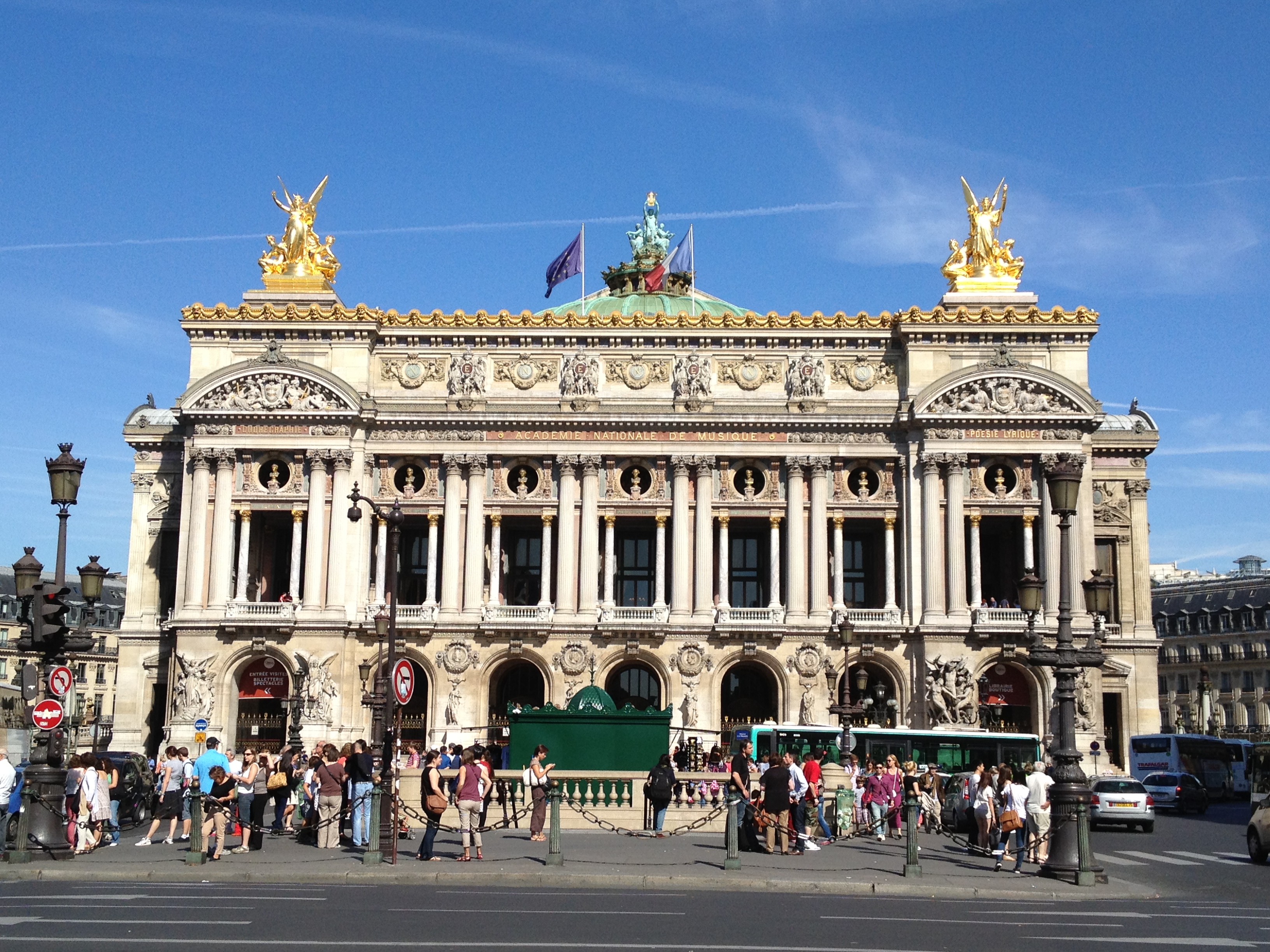
The Paris Opéra

The Opéra Garnier

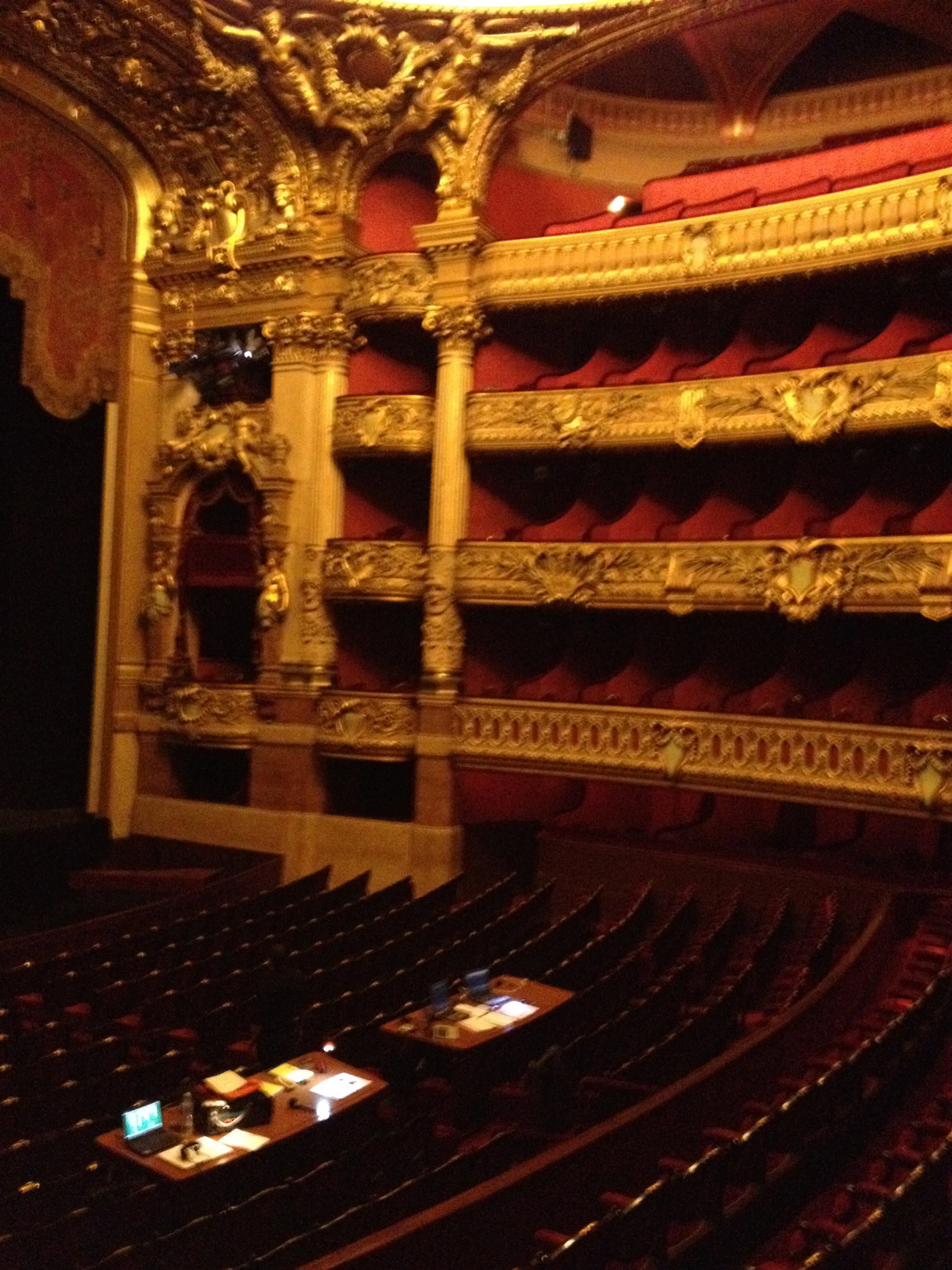
Inside the Opéra Garnier

Inside the Opéra Garnier

A regular at the opéra, Edgar Degas noticed skinny young Marie, the middle van Goethem sister, and asked her to model for him. She was honored to accept and relieved to earn extra money for the family. She was thrilled at the prospect of seeing her likeness at the Fifth and Sixth Impressionist Exhibits in 1880 and 1881.

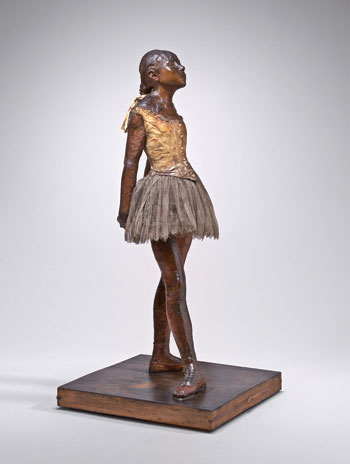
Little Dancer Age 14, NATIONAL GALLERY OF ART, WASHINGTON, D.C., COLLECTION OF MR. AND MRS. PAUL MELLON

Little Dancer Age 14, Wax sculpture by Edgar Degas.
NATIONAL GALLERY OF ART, WASHINGTON, D.C., COLLECTION OF MR. AND MRS. PAUL MELLON. Bronze copies were made after Degas’ death, including the one at the Musé d’Orsay in Paris.

The modeling scenes are some of my favorites in the book. Degas’ studio on rue Fontaine was just around the corner from Marie’s home in the 9th arrondissement. It is in that studio, overflowing with canvases, paints and pastels, that Degas began the sketches for Little Dancer Aged Fourteen, as well as numerous charcoal and pastel sketches of young Marie.

Cathy Buchanan’s website contains images of all of the artwork mentioned in the book. You can click on an image and read a related quote from the book. It’s just wonderful.

But there’s so much more to The Painted Girls than pleasant little scenes in Degas’ art studio. In fact, there is very a dark side to the van Goethem sisters’ lives. The oldest sister Antoinette gets involved with a violent young man of the streets, and Marie is singled out by one of the wealthy older patrons of the Opéra known as abonnées. The reader knows exactly where Marie’s relationship with Monsiuer Lefebvre is heading, that such gifts and favors are never bestowed without a price.

The sisters’ fall from innocence is tragic but not utterly without hope. In one particularly moving scene, young Marie is in despair, and raises a timeless question:

I want to put my face in my hands, to howl, for me, for Antoinette, for all the women of Paris, for the burden of having what men desire, for the heaviness of knowing it is ours to give, that with our flesh we make our way in the world. For there is a cost. . . . Would they say there is no cost, not so long as a girl takes no more than what a man decides her flesh is worth?

Both sisters make troubling choices, and find themselves even more deeply involved in the demimonde of Paris. When Antoinette’s love interest is arrested and accused of murder, the sisters’ conflicting loyalties nearly tear them apart. Can their family repair the damage and find a way to survive the poor, dangerous streets of Paris, without having to trade what men desire?

It’s an excellent read, although some might find the story drags a little during the criminal trials of Antoinette’s love interest, which could have been condensed down to one trial instead of two. However, that minor flaw still shouldn’t discourage you from seeking out and thoroughly enjoying this otherwise riveting book.

And when you’re done with the book, go back and enjoy more Cathy Buchanan’s website where she has also posted photos from her Paris research trip. I couldn’t create a better literary tour myself!

The Read: The Painted Girls, Highly recommended.

The Paris Tour: Take the Palais Garnier tour, a must-see in Paris. You can make an  Unaccompanied Visit nearly every day, or an English Guided Tour available three days per week. If you’re really lucky, you might be able to catch a ballet performance. Check out their 2012-13 schedule here. Then follow up with a visit to the Musée d’Orsay, where you can see one of the copies of Young Dancer, Age Fourteen, as well as one of my favorites, The Ballet Class. If you have the time to stroll through lower Montmartre, catch the Métro line 2 to the Blanche stop or line 12 to the Pigalle stop and browse through the van Goetham sisters’ old neighborhood.

van Goetham Home: 35 rue de Douai

Degas studio: rue Pierre Fontaine

Degas home: 6 boulevard Clichy

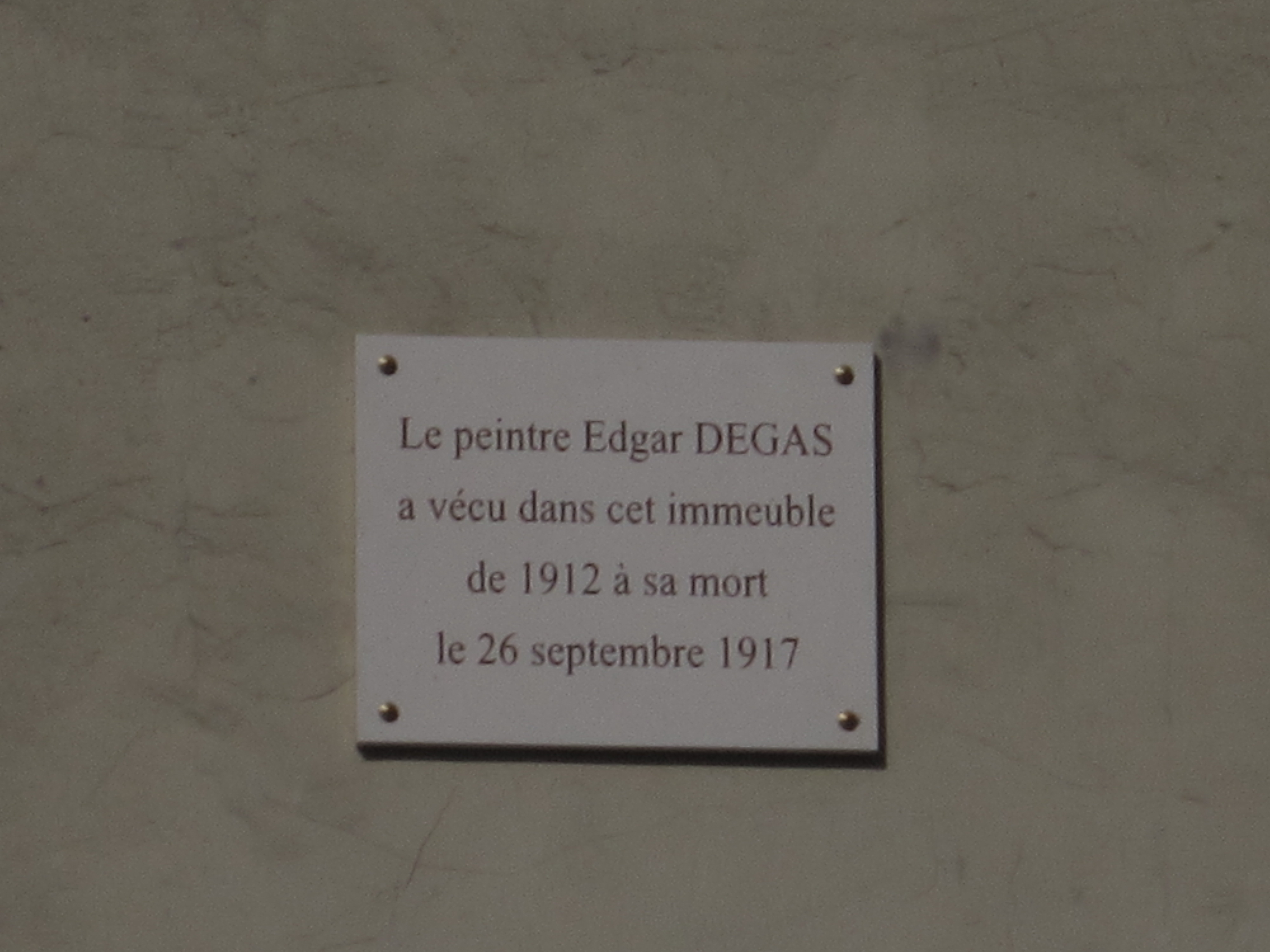
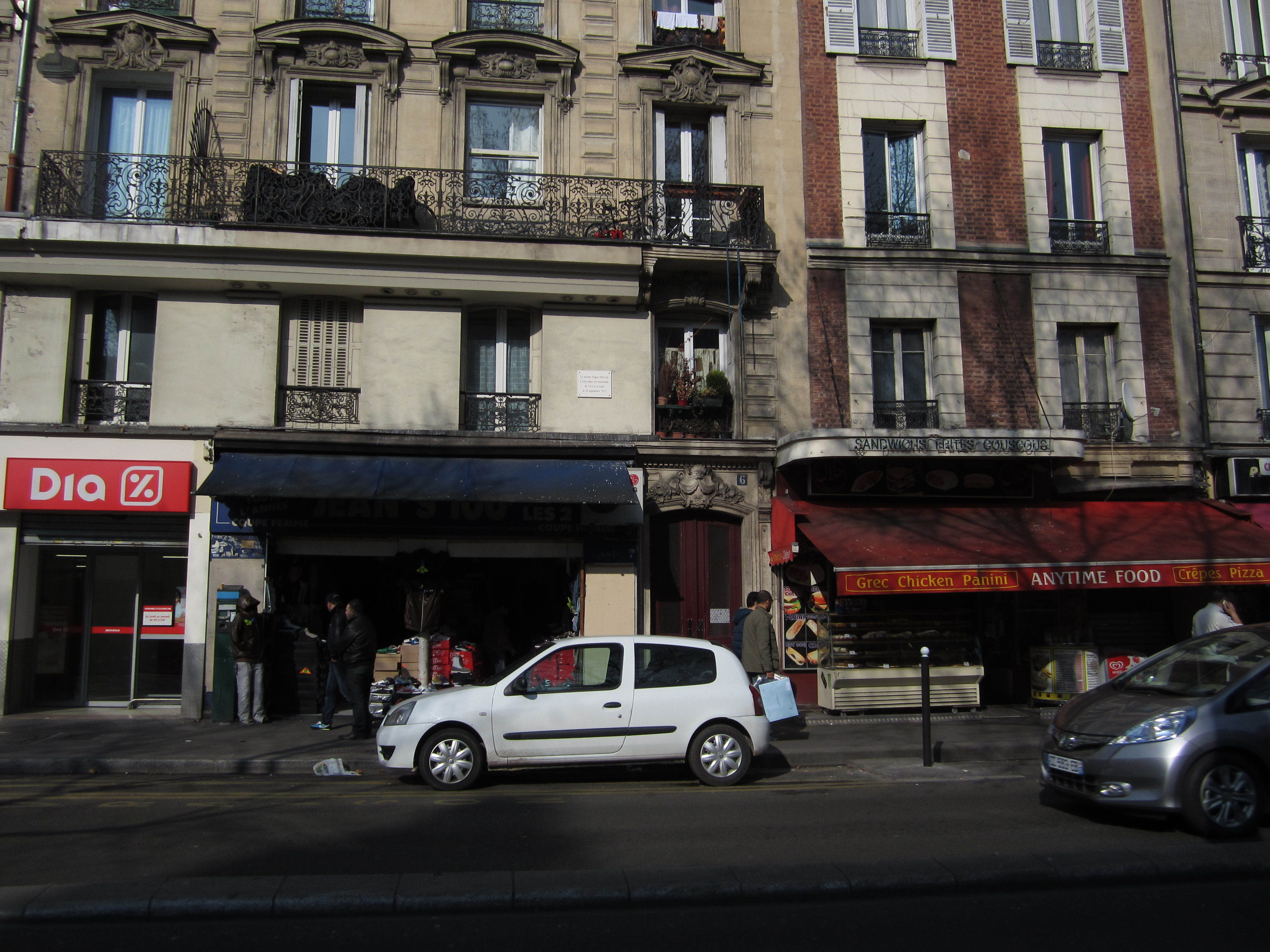
The plaque at the last home of Degas, 6 boulevard Clichy, Paris

The plaque at the last home of Degas, 6 boulevard Clichy, Paris

IMG_2799

The last home of Edgard Degas from 1912-1917.

Say Yes To The Dress: Claude and Camille and Fashion

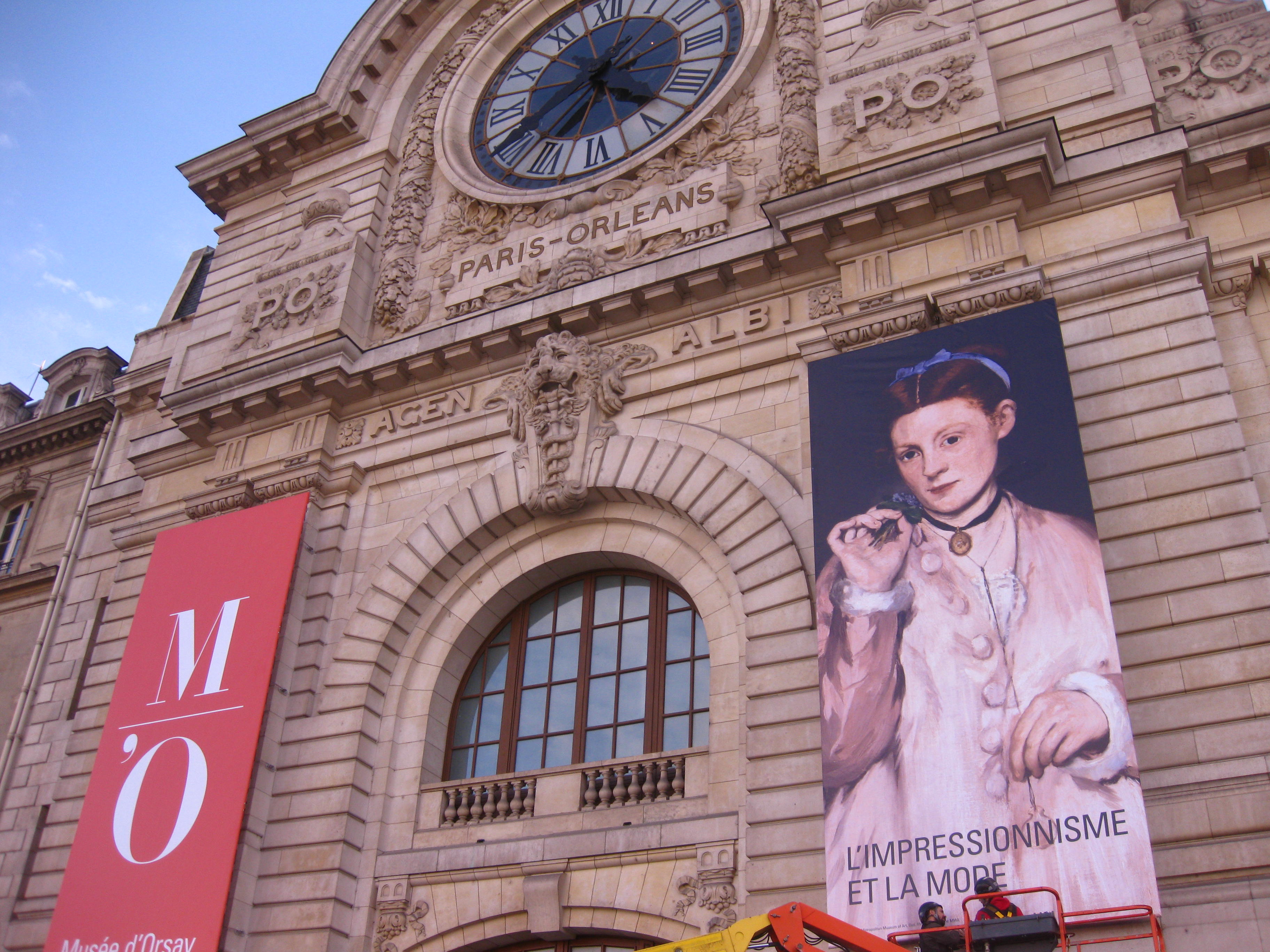
So, I have to admit I’m a little nuts about the Impressionism and Fashion Exhibit at the Musée d’Orsay. In my last months in Paris, I went four times. I had a lot of American visitors who wanted to go, but I truly did want to keep going back. Each time I found something new.

One of my favorite rooms of the exhibit was the last room, decorated to look like a park. That’s where you could find Monet’s oversized plein air paintings with Camille in her huge, fabulous dresses. I grabbed my visitors, and said, that’s Camille! Like I knew her.

But I kind of do. A couple of years ago, I read Claude and Camille: A Novel of Monet by Stephanie Cowell, and I even hosted Stephanie at a literary luncheon at the Downtown Glen Ellyn BookFest, an annual event sponsored by my local library and bookstore. The book is all about Claude Monet and his first wife Camille. How they met, how she posed, where he painted.

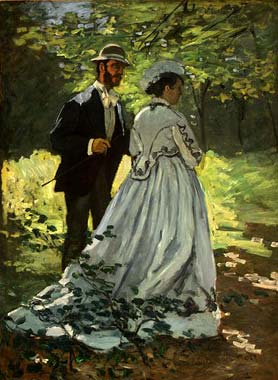
So when I saw this painting (below) at the exhibit, a study of Bazille and Camille (1865), on loan from the National Gallery of Art in Washington, D. C., I stopped and gaped. It was Camille and Bazille, shortly after she’d met Claude. I’d read about their summer trip to Fountainbleu in Claude and Camille. How the 18 year-old Camille had snuck out of the house without her parents’ permission, bringing along her older sister as a chaperone.

Claude Monet, Camille and Bazille (Study for Luncheon on the Grass) 1865. National Gallery of Art, Washington, D.C.

This painting was just a study, painted quickly en plein air in the Fountainbleu Forest, but I think it’s almost better than the final painting, Luncheon on the Grass (1865-66), shown below. It feels fresh and immediate, as if you’re standing right there spying on this couple from the dappled shade behind the bushes. According to the article Fashion En Plein Air by Birgit Haase in the Exhibit Catalog, the dress that Camille is wearing would have been a highly fashionable outfit for women on trips to the countryside that year. Camille, who left her corset at home, is the perfect model for modern leisure wear in 1865. Monet obviously said yes to this dress – the embroidery, the cut and draping of the back of the dress and jacket seems to be the focus of the whole painting.

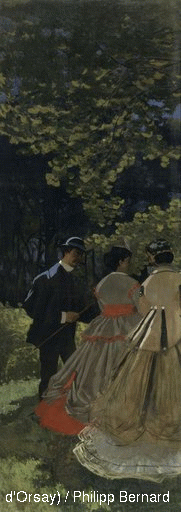
After the summer in Fountainbleu, Monet went back to Paris with the plan of turning his small plein air studies into a bold large canvas suitable for the Paris Salon. He made all kinds of changes to the dresses and the poses, but was so dissatisfied that he abandoned the project. What is left of the final painting appears in two giant panels at the Musée d’Orsay.


The story of how this celebrated painting got divided into separate panels is a good one. In Stephanie Cowell’s novel, Monet struggled all winter trying to paint Luncheon on the Grass, but he was so disappointed with the result that he decides not to enter it in the next Salon:

What he had seen so clearly on a summer’s day in the forest was not on the canvas before him. People were clumsily placed; the brushstrokes were all wrong. It had been repainted many times and he had never found the balance of human form and light, It was not a masterpiece at all. How could he not have seen it before? How could he have made such a mess of it?

In the novel Claude and Camille, Monet rips the canvas off the frame, rolls it up and moves on to the next painting. Thanks to the Musée d’Orsay, we have Monet’s own explanation for what happened next:

I had to pay my rent, I gave [Luncheon on the Grass] to the landlord as security and he rolled it up and put in the cellar. When I finally had enough money to get it back, as you can see, it had gone mouldy.

Monet retrieved the painting in 1884 and cut it into separate panels. Two of the three panels have survived and are included in the Impressionism and Fashion Exhibit.

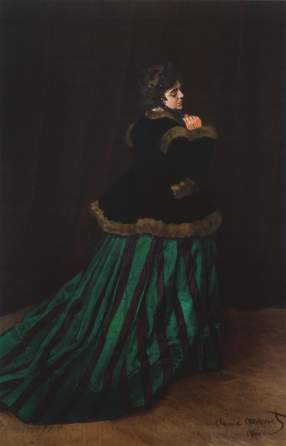
After abandoning Luncheon of the Grass, Monet decided to ask Camille into pose again, this time in a green and black striped taffeta silk dress with an enormous train. Art historians don’t know exactly where this dress came from. They speculate that because of its sumptuous fabric and fur, it would have been beyond the financial means of either Monet or Camille. Stephanie Cowell imagines that Monet’s friend Bazille rented it for a painting of his own, and was willing to loan it to Monet. In fact, there is evidence to support Stephanie’s theory. In an 1866 letter to his mother, Bazille mentions a green satin dress that he had rented.

Wherever it came from, it was a dress that inspired a painting. In the novel, Claude whispers to Camille: “I could make an unforgettable picture of you in that dress.”

Claude Monet. Camille (1866). Kunsthalle Bremen, on loan to the Impressionism and Fashion  Exhibit in New York and Chicago.

Camille said yes to the dress. She added with a fur-trimmed jacket and empire hat, and posed as if she was heading out the door. Once again, she appeared to lack a corset, a sign of independence and modernity.

Stephanie Cowell’s book goes on to describe the days that Monet spent in his studio, painting Camille in the green dress, the attraction between them building each day. Claude and Camille would later marry over the strong objections of her parents. Camille died in 1879 at the age of 32.

The painting would become known as Camille, The Green Dress (1866). It was accepted at the 1866 Salon.

This painting did not appear in Paris, but it will travel to New York and Chicago as part of the Impressionism and Fashion Exhibit, along with a real green tafetta dress from 1865, thanks to the costume collection of the Manchester Gallery of Art in England.

I can’t imagine a better book club pick than Claude and Camille, paired with a field trip to see the Impressionism and Fashion Exhibit at the Musée d’Orsay (September 25, 2012 – January 20, 2013), the Metropolitan Museum of New York (February 26- May 27, 2013) or the Art Institute of Chicago (June 26- September 22, 2013).

Impressionism, Fashion and Modernity: Highly recommended

Claude and Camille by Stephanie Cowell: Highly recommended

A Day in Paris With Edith Wharton

I just finished The Age of Desire by Jennie Fields, and I couldn’t wait to get back to Paris to play “Edith For A Day.”

The Age of Desire is the fictionalized story of Edith Wharton’s steamy mid-life extramarital affair with Morton Fullerton between the years of 1907-1910. It’s not just another imagined love story, this novel is based on Edith Wharton’s own letters, which Morton Fullerton saved and which are now housed in a collection at the University of Texas.

Edith Wharton’s life in Paris was one of upper-crust privilege, governed by strict rules of propriety. But these private letters show that she still found a way to carve out space for another secret life, one that was free, defiant and passionate. It’s a great story – who doesn’t wonder how Edith, such a grand dame of New York high society, could become so unhinged by an unreliable, bisexual American boulevardier?

Let’s walk in her footsteps and see where she pursued this double life. Follow along on my Edith Wharton Tour on this Google Map.

Edith Wharton arrived in Paris in the winter of 1907 along with her wet-blanket husband Teddy and her long-time secretary Anna. Edith was 45 years old and had recently published The House of Mirth. As Edith herself later said in A Backward Glance, she was looking for a flat in Paris so she could “see people who shared my tastes.”

And Edith had good taste. The Whartons rented a Left Bank apartment owned by George Vanderbilt.  As Fields said in Age of Desire:

Edith was enamored the moment she stepped in to visit George a few seasons ago. It boasts all the Faubourg’s most ravishing touches: high ceilings, exquisite boiseries and elegant moldings. George’s oriental vases and lush Aubusson carpets only make it more elegant.

The Vanderbilts obviously had a good sense for real estate. The townhouse came with its own staff, although the Whartons also hired their own local bonne. The top floor featured a common room where the servants gathered in the evening.

You can visit 58 rue de Varenne, but you can’t get inside. It is now a carefully guarded annex to the Prime MInister’s office, which is across the street in the Hotel Matignon.

58 rue de Varenne, Edith Wharton’s first apartment in Paris (1907-1909). Rented from George Vanderbilt. Currently an annex of the Prime Minister’s office across the street in Hotel Matignon. The day I went to visit, the doorway to the courtyard was open but I was quickly chased away. The guard thought I was crazy when I told him L’Americaine Edith Wharton used to lived there. “Non, le PM!”

After the guard escorted me out of the courtyard and back onto the sidewalk, he did allow me to take this photo looking back into the courtyard. Can you picture Edith back there, greeting Henry James or Morton Fullerton at the door?

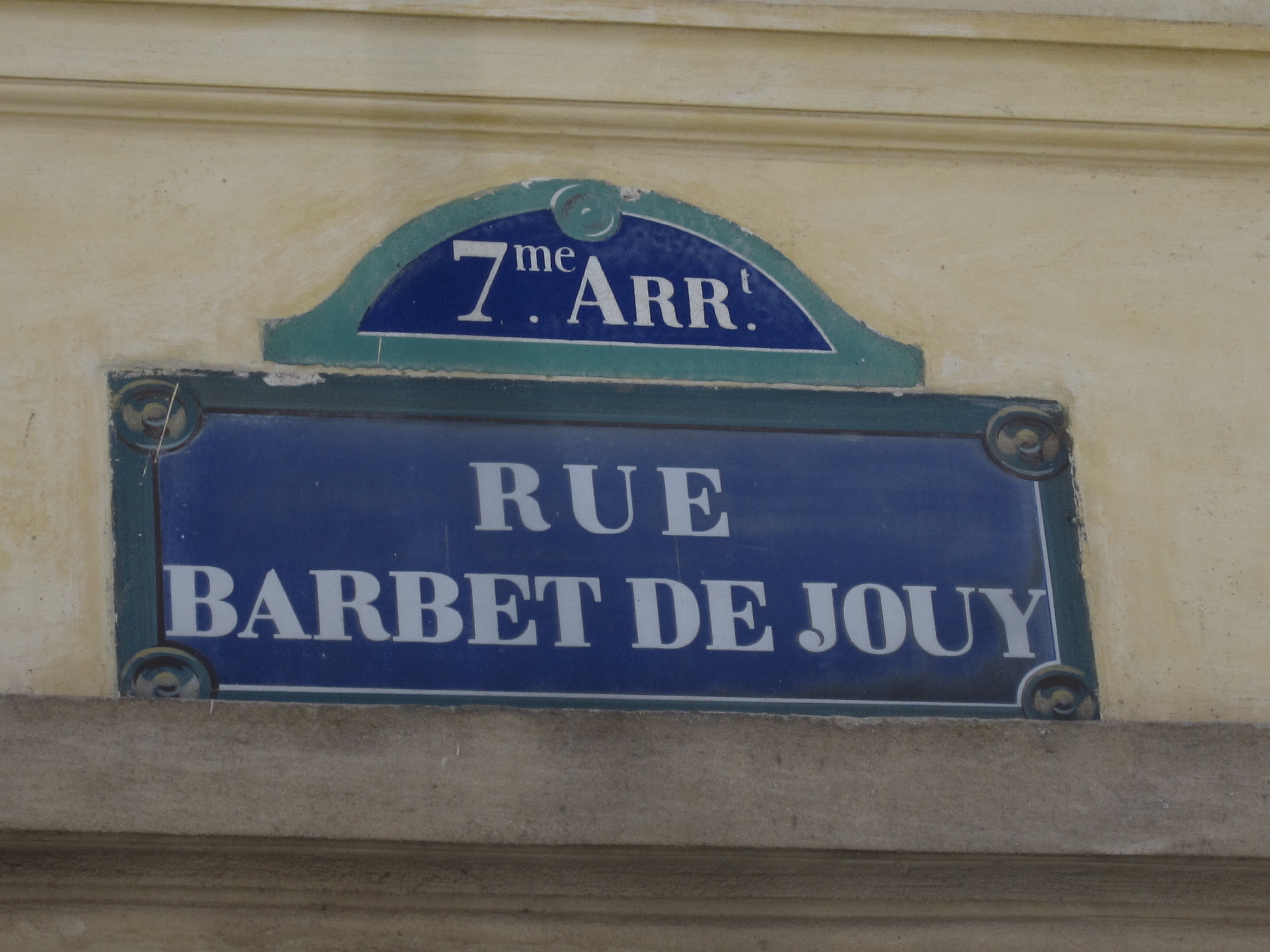
Edith enjoyed her social life in the Left Bank world of teas and salons. She was good  friends with the French author Paul Bourget, who lived around the corner with his wife Minnie on rue Barbet de Jouy.

Edith loved attending the Tuesday night salons of the widowed Comtesse Rosa de FitzJames at 142 rue de Grenelle, which is now the Swiss Embassy. In fact, it was at Rosa’s salon that Edith first met the roguish Morton Fullerton.

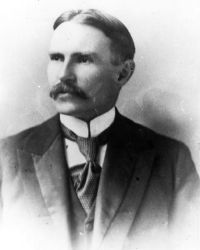
Morton Fullerton

You can tell that Jenny Fields had fun playing with the attraction between Edith and Morton in Age of Desire. At their first meeting, Morton told Edith that he’d read and enjoyed The House of Mirth, and impressed Edith by asking about Lily Bart. Nice ice breaker for a writer, right? When they discovered they were mutual friends of Henry James, Edith was definitely intrigued. She couldn’t wait to see Morton again.

But Edith would have to wait. Discretion prevailed. When Henry James came for an extended visit at Edith’s, Morton dropped by as often as he could. Edith and Morton finally had a private get-to-know-you walk through Edith’s posh Left Bank neighborhood, “the sun . . . splash[ing] itself all along the high-walled hotel particuliers of the rue de Varenne.” 

In the pages of Age of Desire, Edith and Morton strolled down to the nearby lawns of Les Invalides. When they sat down in a nearby garden, things really started to buzz:

In the garden, they locate a bench and sit side by side. She can sense his body heat, and takes in his odor of driftwood and lavender. Edith feels something she hasn’t felt in a long time and cannot name. . . .

[Morton says,] “See that honeybee?”  On the hedge behind them, a honeybee as far as a blackberry is trying to wedge himself greedily into the narrow trumpet of a pink flower. Fullerton turns his gaze to her and says, “That’s how drawn  I am to you.”

Really, Morton, you little devil. No more Age of Innocence for Edith.

Square d’Ajaccio near Les Invalides in Paris. I could easily picture Edith and Morton on one of those benches. It was a pretty romantic park in real life.  One amorous couple kissed shamelessly on a bench while another were entangled in the grass. Ah, Paris!

Unfortunately, Edith’s newfound passion would have to wait some more. The Whartons returned each spring to their palatial home (The Mount) in Lenox, Massachusetts, and would not return to Paris until December, 1907.

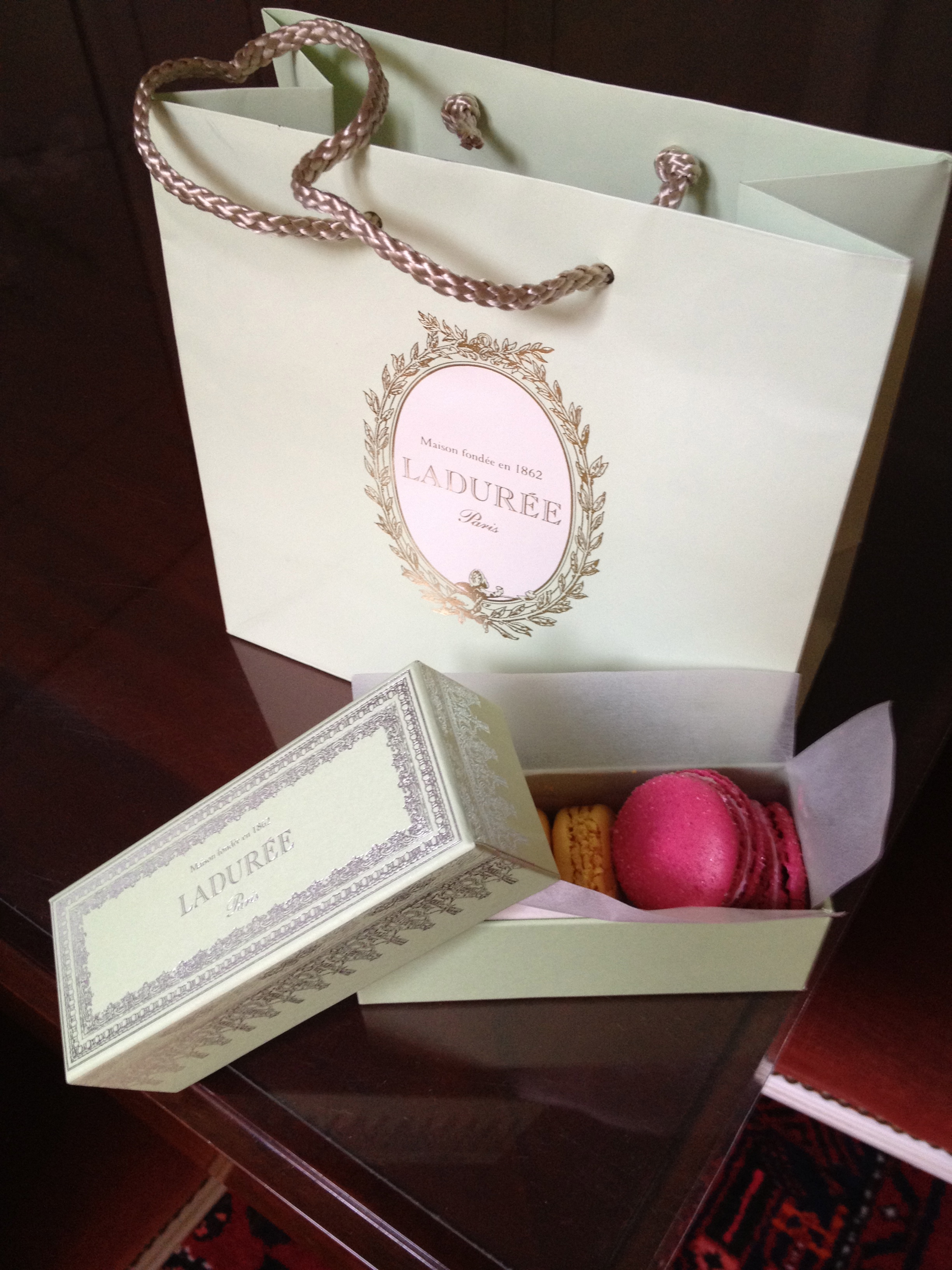
Edith and Morton’s relationship finally escalated the next season in Paris. They snuck off on long walks through Montmartre, the Tuileries, and Luxembourg Gardens. They met at the Louvre, took daring trips in her car. Their love become ostentatious; people took notice. But Edith didn’t care. How can a woman say no to those little green boxes of macarons framboise from La Durée?

“Instead of flowers, [Morton] proffers a pale green box of gleaming pastel macaroons from Laduré, the pastry shop on Rue Royale.”

After a long, romantic winter, the Vanderbilt lease was up and it was time for Edith to return to the United States. Before her ship set sail, Edith spent a few weeks at her brother’s townhouse at Place des ´Etas-Unis on the Right Bank. When Morton came to visit her there, Edith felt the need to apologize for her brother’s trés American taste:

“It’s just like my brother to choose to live in Paris but reside on a street called American Place,” she says.

“Ah yes [says Morton]. Sophisticated Mrs. Wharton wouldn’t be caught dead here . . . and yet here you are!”

A lovely old residence on Place Etat-Unis, a beautiful square in the 16th arrondissement where Edith’s brother Harry Jones lived.  Yes, it’s true, a lot of Americans lived there and still do. In this scene in the novel, Fields does a great job of capturing Edith’s Left Bank snobbery.

Hotel Crillon, Edith Wharton’s home base in Paris.

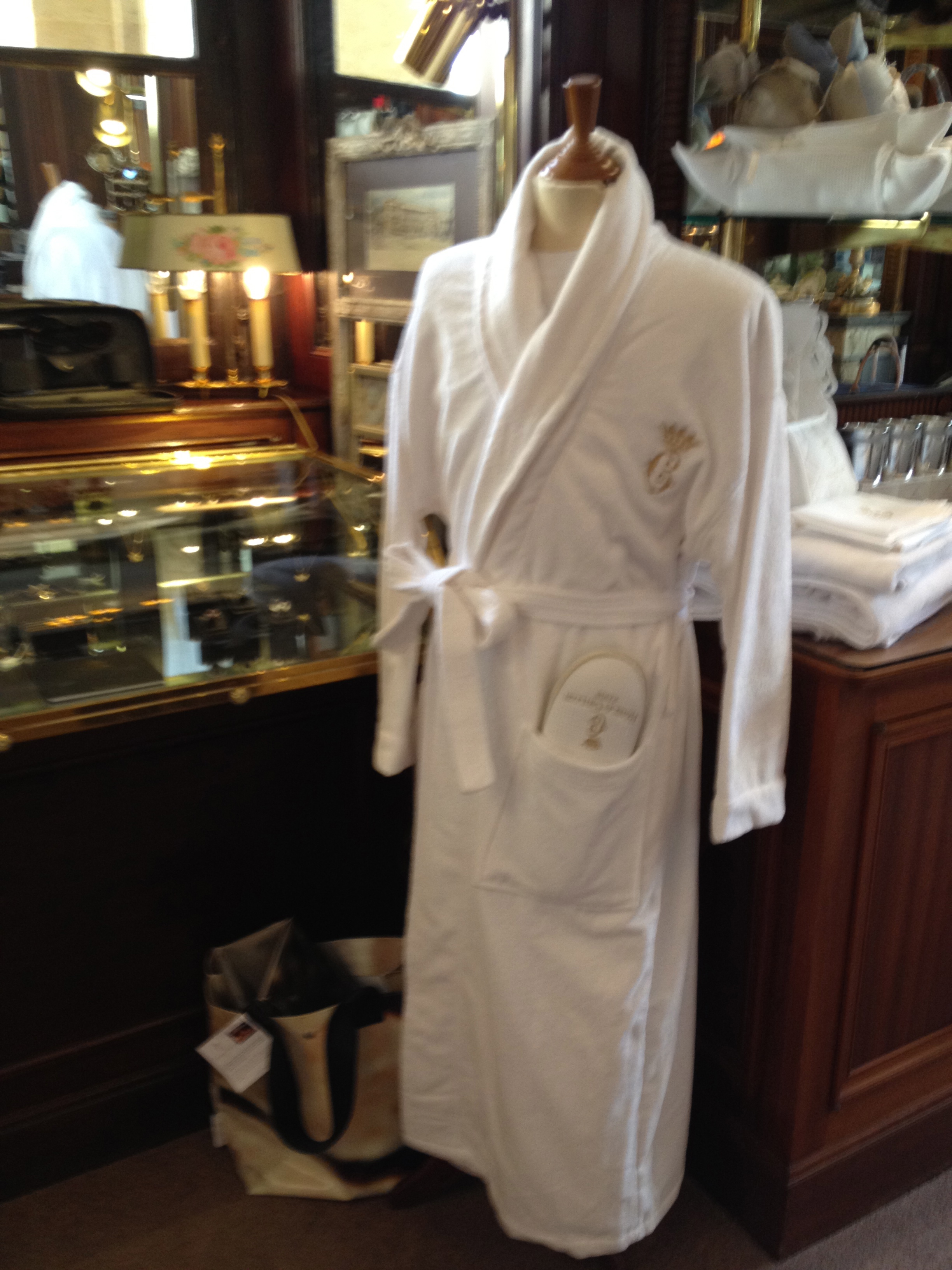
The folks at the Crillon’s boutique were good sports and let me take this photo of a Hotel Crillon bathrobe. I was trying to picture Edith in a robe and slippers, scribbling away about Undine Spragg’s time in Paris, but that got a little weird.

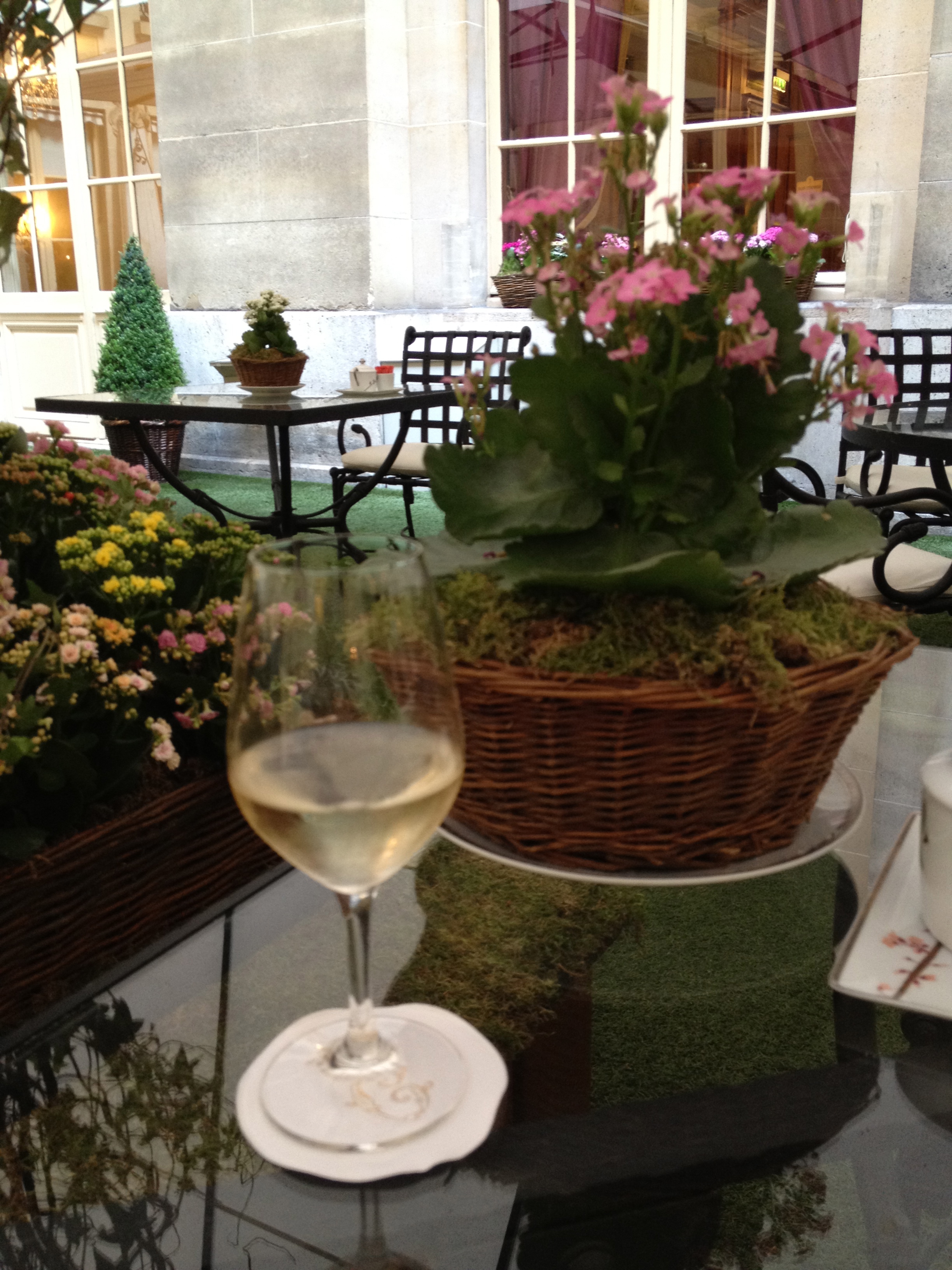
Even if you can’t swing a month at the Crillon like Edith, you can still enjoy a nice Sancerre on the terrace.


Edith lands on the perfect apartment at last. And to think it’s just across the street from the Vanderbilts’ on the Rue de Varenne. But bigger, and newer, with its own guest suite and servants’ quarters and steam heat! Unheard of in Paris. And what makes it so extraordinary is that the rooms are luxuriously spacious and overlook a small but elegant garden. A garden! It’s all she could want in space and light. Precisely in the part of the Faubourg she loves.

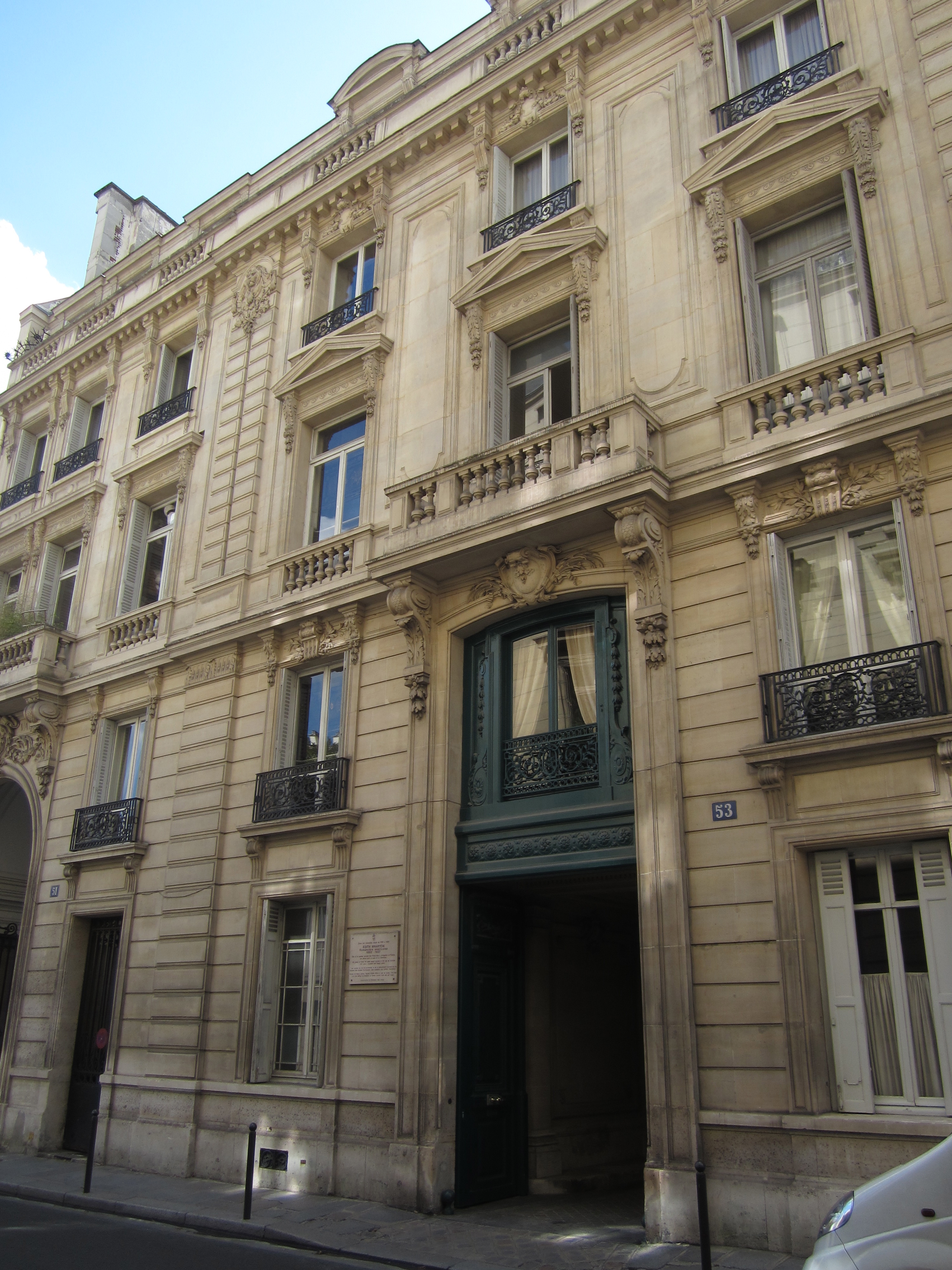
53 rue de Varenne, Edith Wharton’s home in Paris.

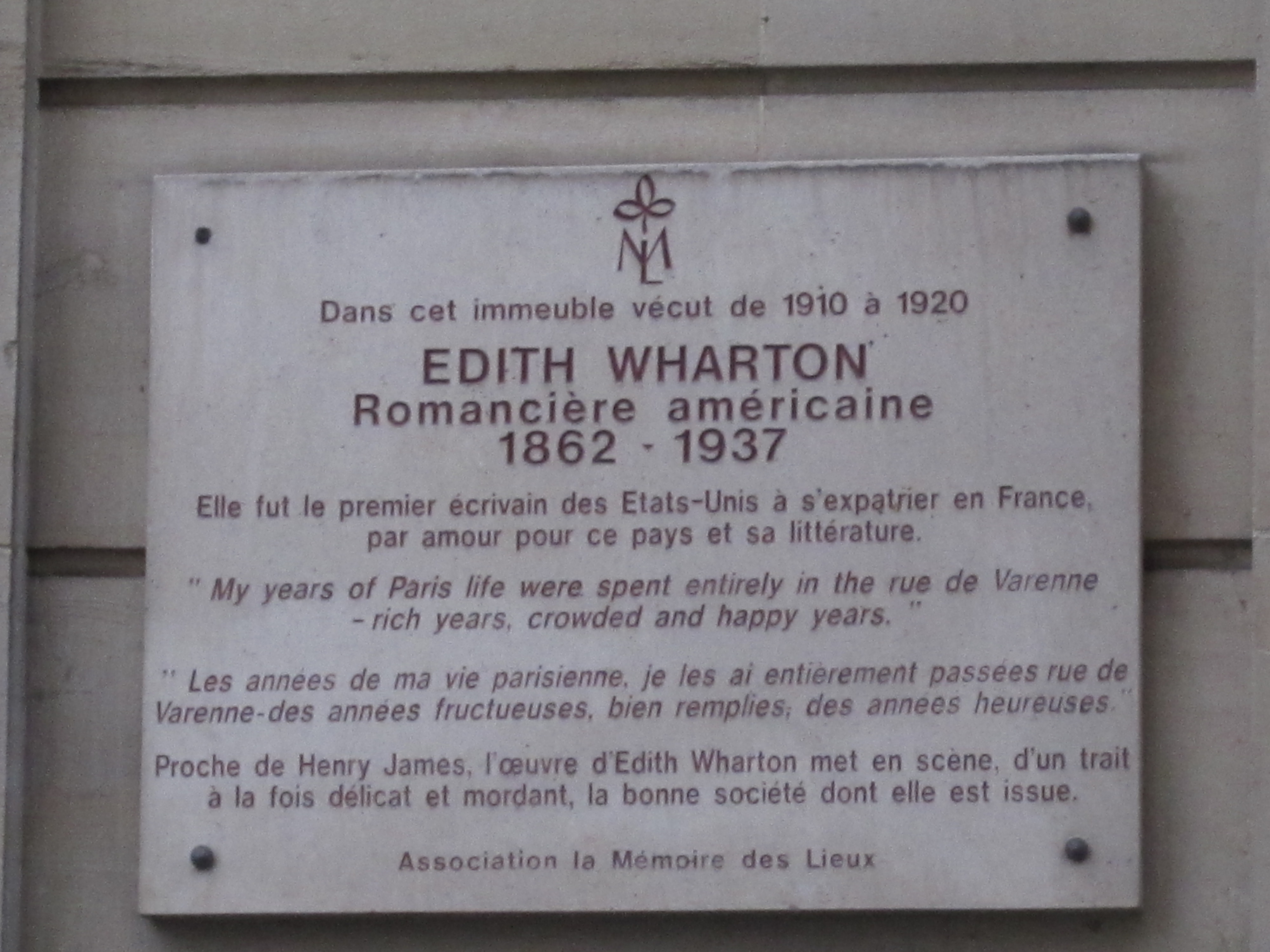
The plaque at 53 rue de Varenne commemorating Edith Wharton’s years here (1910-1920),  her love for France and her friendship with Henry James.

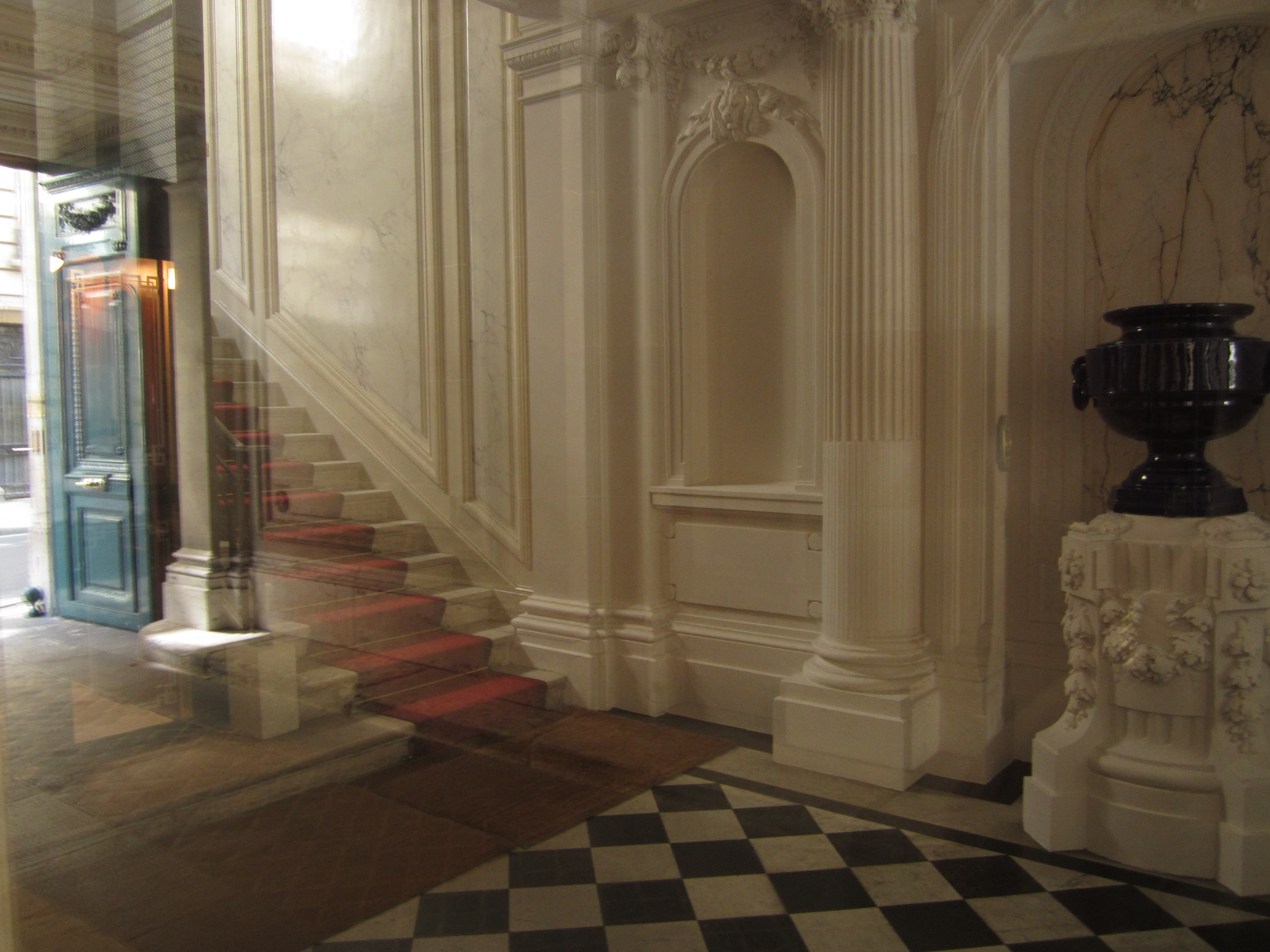
The carriage door was open, so I was able to walk inside toward the courtyard and glimpse a peek of the lovely tiled lobby of Edith Wharton’s former townhouse at 53 rue de Varenne.

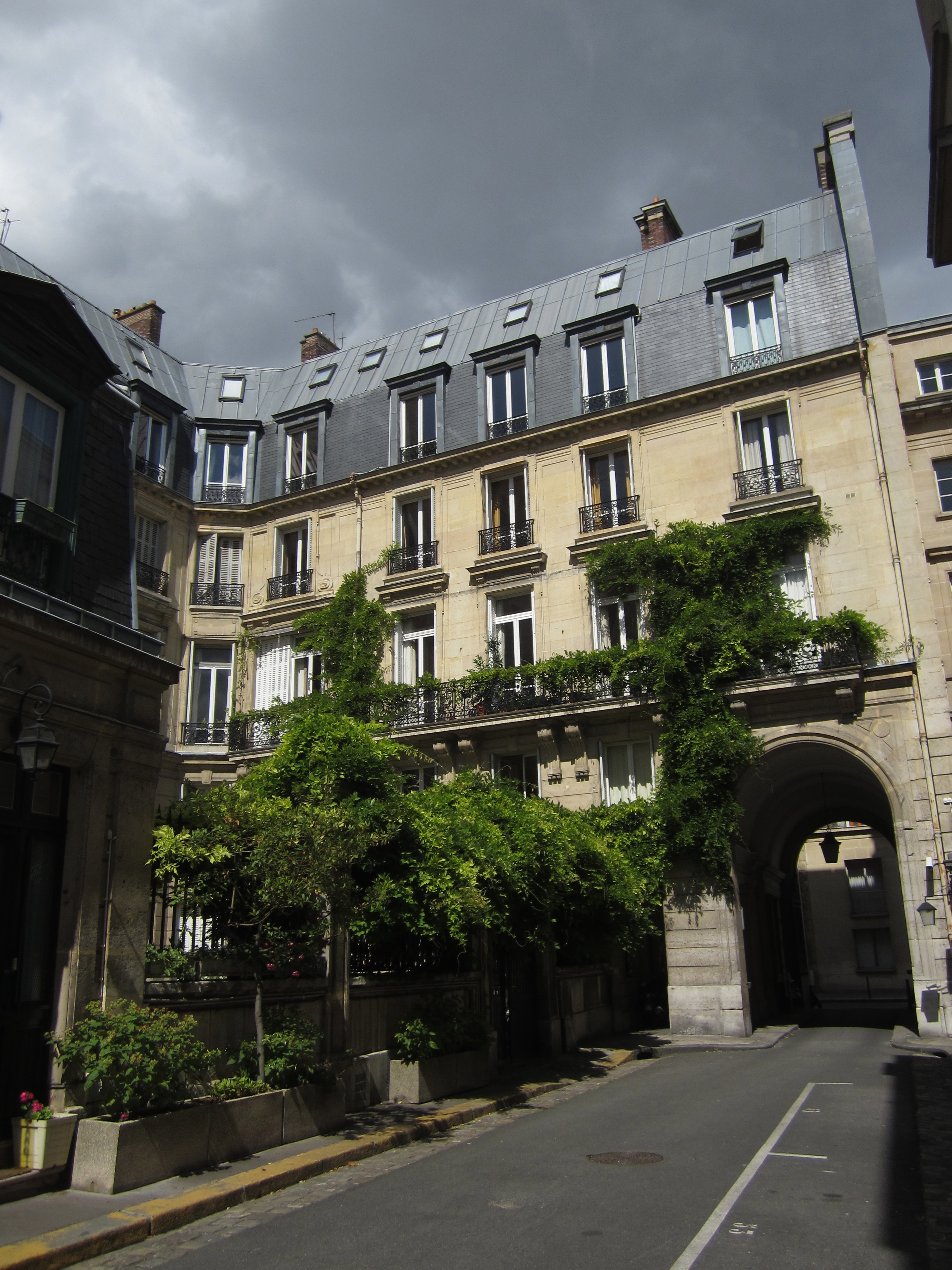
The view of the back of Edith Wharton’s apartment at 53 rue de Varenne, which overlooked beautiful private gardens. Look again at the cover of Age of Desire. Looks like Edith could be standing right there, doesn’t it?

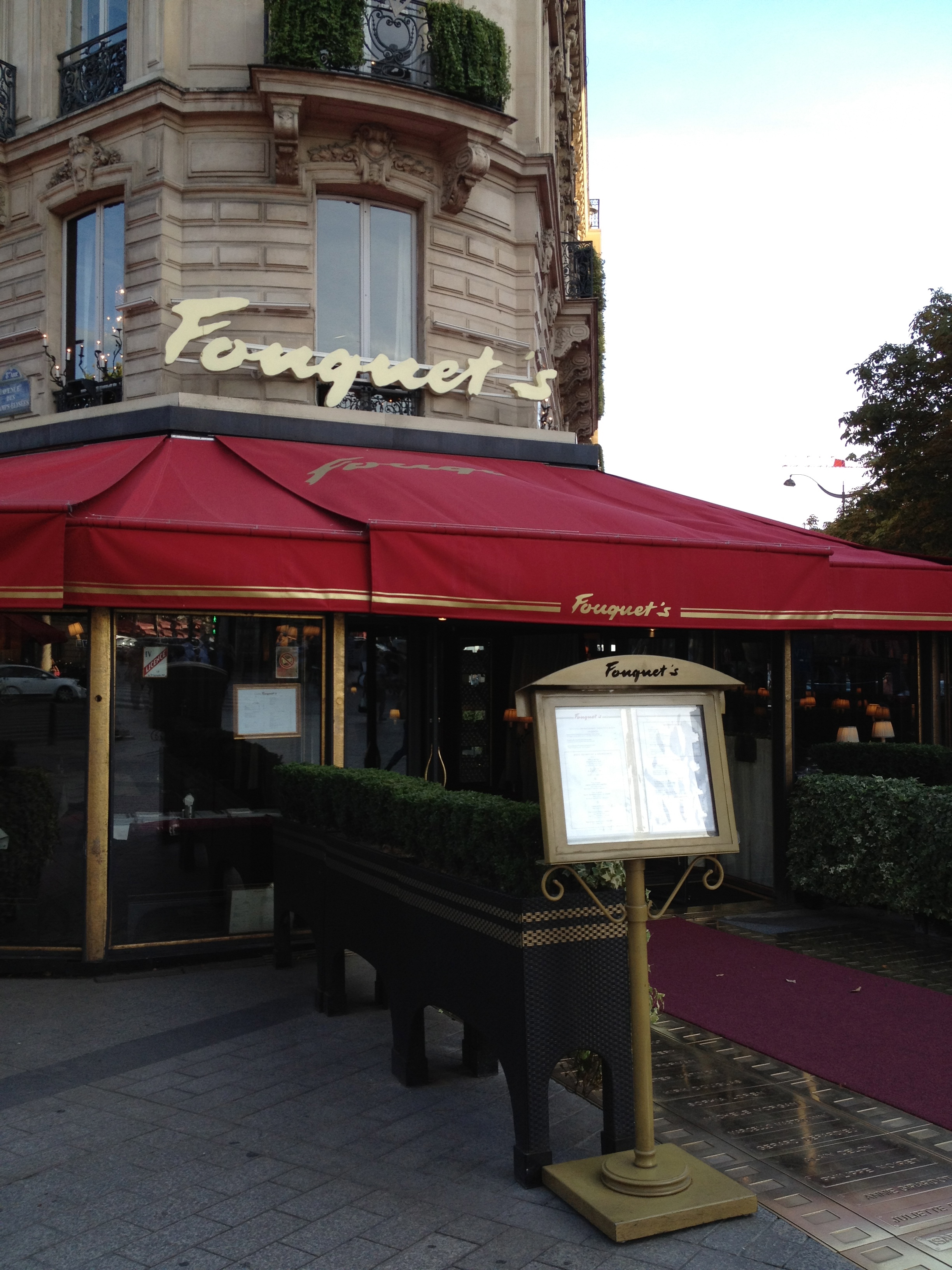
Fouquet’s on Champs  Elysée. You can have a perfectly pleasant (although pretty expensive) dinner there, unlike the miserable dinner Edith and Morton had toward the end of the book!

If you find yourself in Paris and would like to have your own Edith Wharton Day, just follow along on my Google Map. I would recommend starting at the Rue de Bac Métro stop, walking down the rue de Varenne, and then heading over to Les Invalides. From that point you can walk across the Seine or hop back on the Métro to get to the Crillon, La Durée and Fouquet’s. After some macaroons from La Durée, a glass of wine at the Crillon and dinner at Fouquet’s, you’ll definitely feel spoiled, and perhaps, a little like Edith.

Age of Desire is an entertaining treat for Edith Wharton fans, but is also a good read for those who haven’t yet read her work. Be prepared, though, because after you read Age of Desire, you could end up spending the next month holed up in a chair, getting nothing else done, reading or re-reading all of Edith Wharton’s marvelous novels and stories. To those  purists who object when their favorite literary icons are injected with thoughts and actions from another author’s imagination, I say just give it a try. Play along.

Jennie Fields does a fabulous job following Edith and Morton through Paris and beyond. In the course of her research, Jennie visited Herblay, Senslis and Montmorency, some of the towns outside Paris to which Edith and Morton snuck off to for their trysts. Field’s research pays off. I thought it was beautifully imagined and very well researched. It’s definitely a recommended read.

Happy 100th Birthday “Dearie” – A Julia Child Tour of Paris

August 15, 2012 marks the 100th anniversary of Julia Child’s birth, and with perfect timing, Bob Spitz has authored an affectionate and definitive biography called Dearie (Knopf, August 8, 2012). I just downloaded my own Google ebook edition from my favorite independent bookstore.

If you admire this quirky powerhouse of a woman, you’ll love reading about her upbringing in California and her work at a spy agency during World War II, as well as her life in France and beyond.

For me, Julia’s 100th birthday is the perfect time to reflect on my good fortune in being able to walk in her footsteps in Paris. On a freezing cold day last January, I joined the American Women’s Group in Paris on a private  Julia Child Tour.

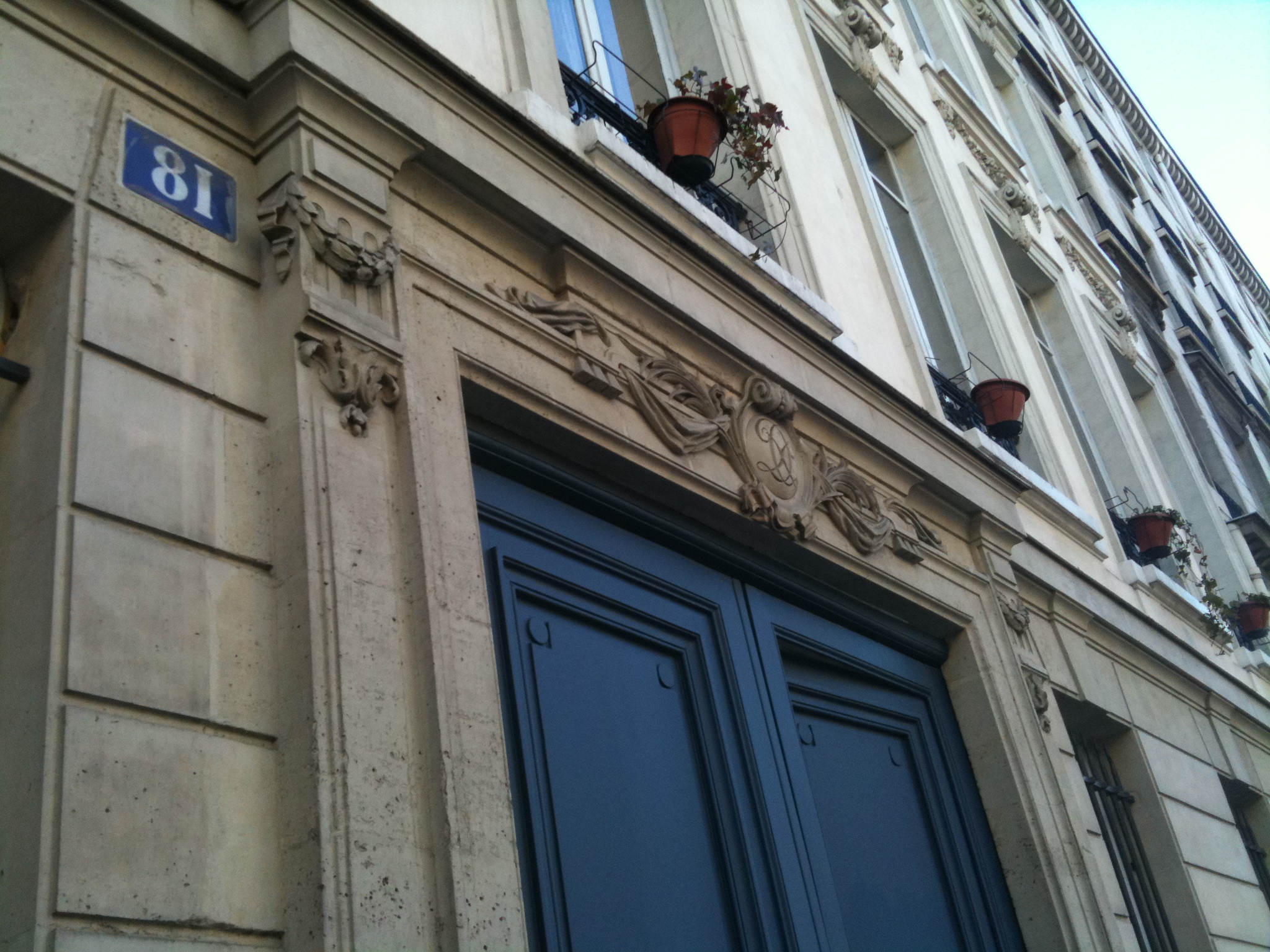
We were already shivering and stomping our cold feet when we met at the site of Julia Child’s Paris apartment at 81 rue de L’Université (or as Julia and Paul cheerfully called it, “Rue de Loo.”) We had private arrangements to meet the landlord in the courtyard of the building. We didn’t know what to expect, and were excited just to be there, despite the historically low temperatures.

It turned out that the landlady was an utterly charming French woman. She came out into the courtyard dressed in a fashionable fur coat, with her gray hair neatly brushed back into a black velvet headband. She spoke only French, but our tour guide was able to translate what we were unable to understand on our own.

Madame was happy to share her deceased husband’s stories about growing up as a neighbor of Julia and Paul Child. He was a young boy at the time, and would often ride his bicycle in the courtyard. Julia was never too busy to stop and visit with him, and obviously enjoyed the company of children. Julia’s French neighbors adored her. According to Madame, they remembered her as tall, outgoing and extremely friendly.

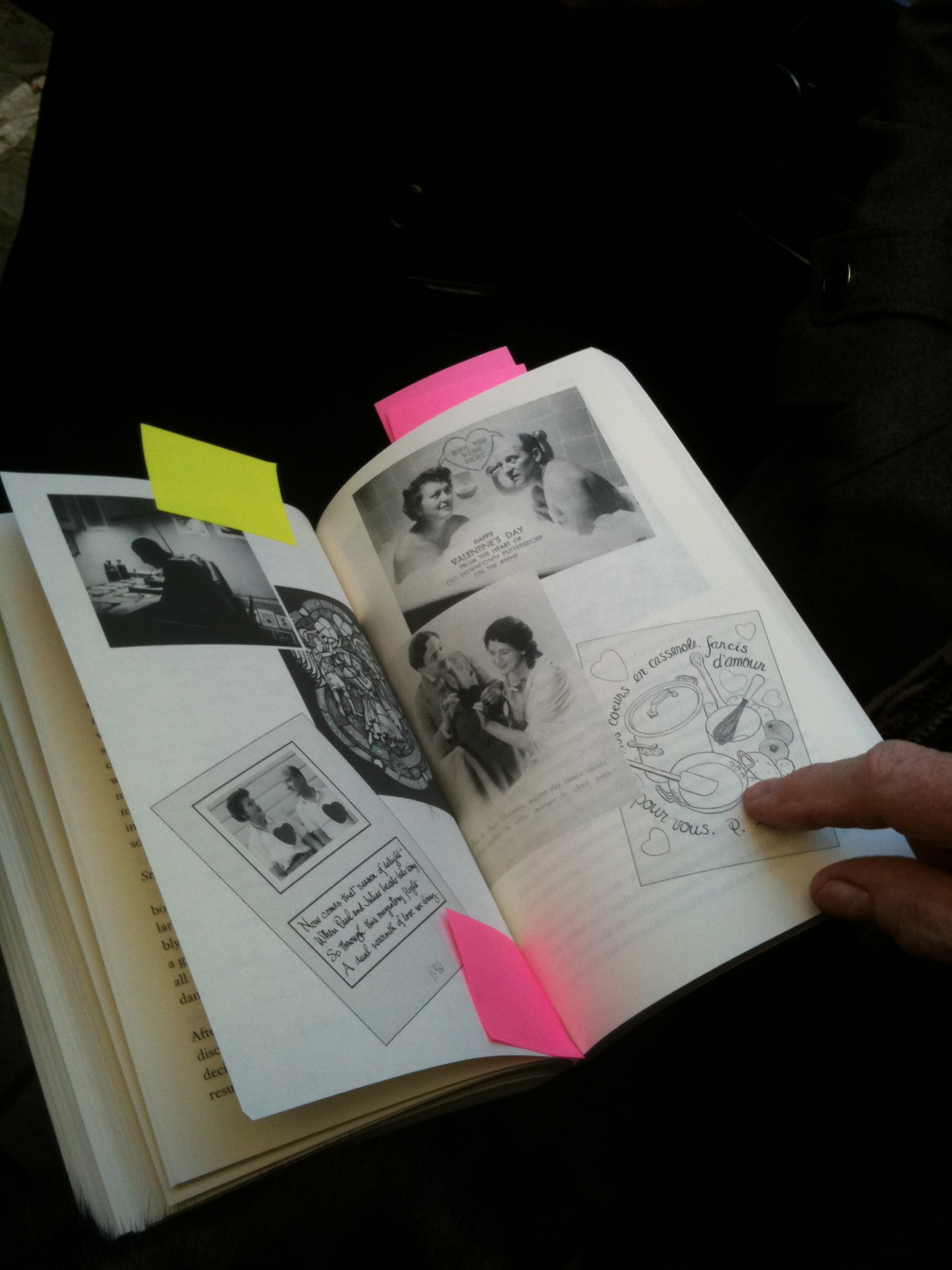
Madame told us that her husband’s family received Christmas cards from Julia and Paul for many years, even after they had left Paris. Madame apologized: she had searched for them among her old scrapbooks and souvenirs before our visit but couldn’t find them. She paged through her copy of My Life in France and pointed to the famous Christmas card with Julia and Paul in the bathtub, and said proudly: “I have this one somewhere!”

We were thrilled when Madame invited us up to her apartment, and not just because we were eager to escape the cold. We got a glimpse at an apartment similar to the one Julia and Paul lived in. While the living room and dining room were lovely, with classic wood parquet floors, gloriously tall windows and exquisite decorative wood moulding, the kitchen was excrutiatingly small. We got to peek up the stairs toward the third floor, and I couldn’t help but think of one of my favorite scenes in the Julie and Julia movie when Paul used to come home for lunch and a “nap” in the middle of the day.

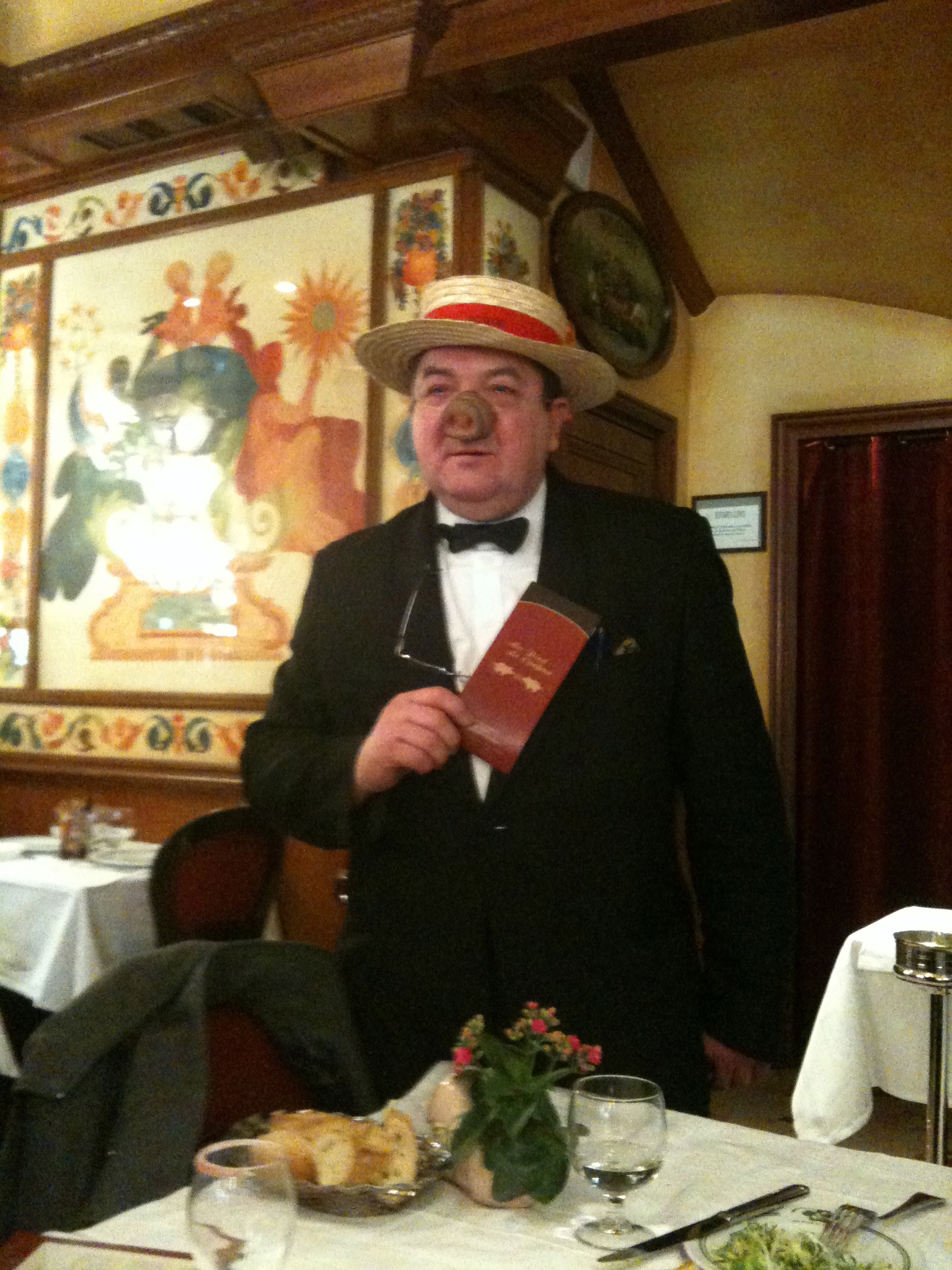
In our best intermediate French (“Merci beaucoup Madame! Enchanté!”) we thanked Madame for her hospitality. We then hopped on a bus and continued our tour in the Les Halles neighborhood, where Julia used to shop for ingredients and cooking supplies. We finally warmed up with traditional French Onion Soup and a little white wine at Au Pied du Couchon, just like Julia did so many years ago. What fun.

Happy Birthday, Julia! And Madame, thanks for the memories.

Another ordinary looking apartment building in the 7th arrondissement in Paris. There is no plaque, so most passerby would never realize that this was once the home of Julia and Paul Child.

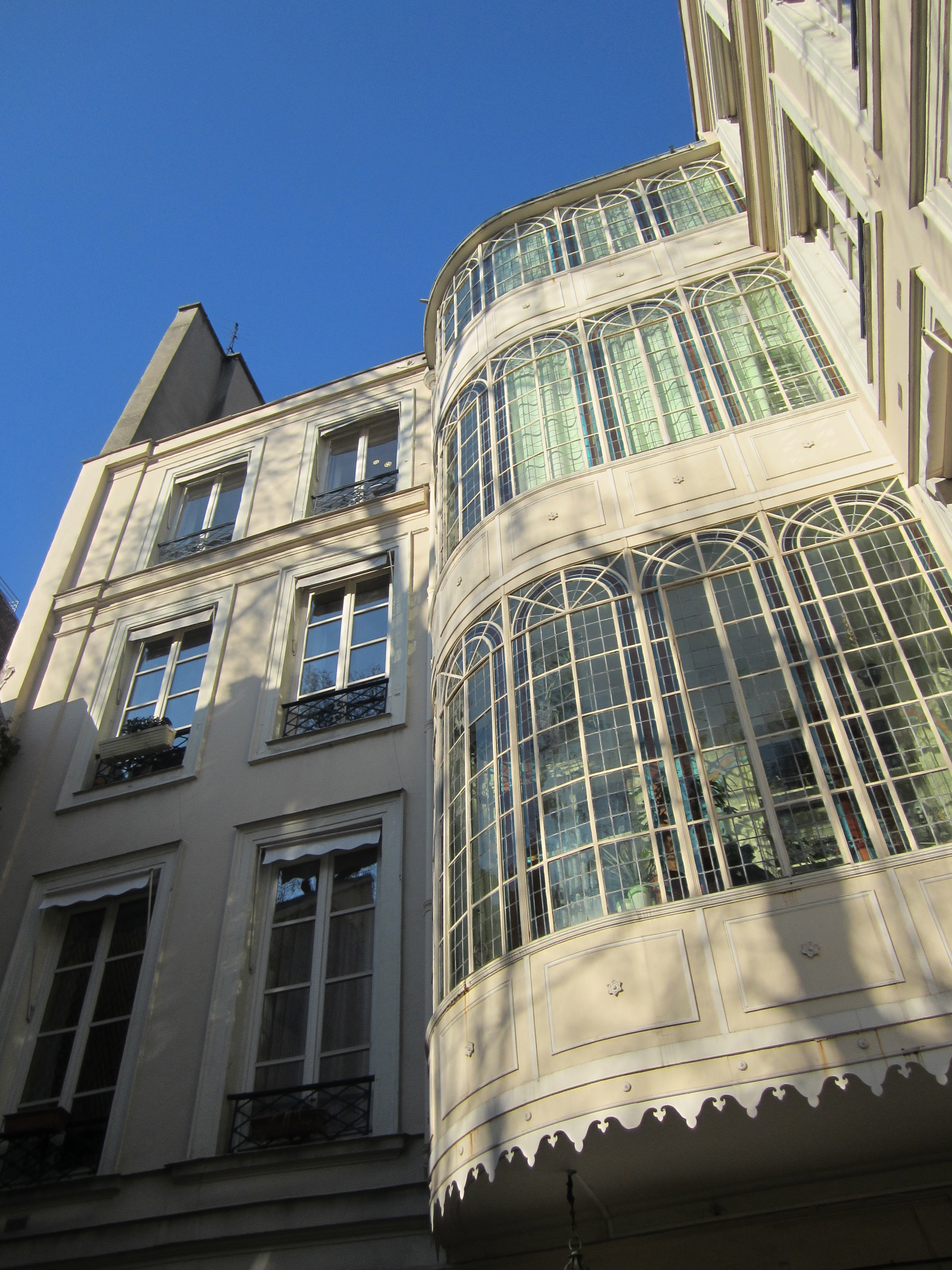
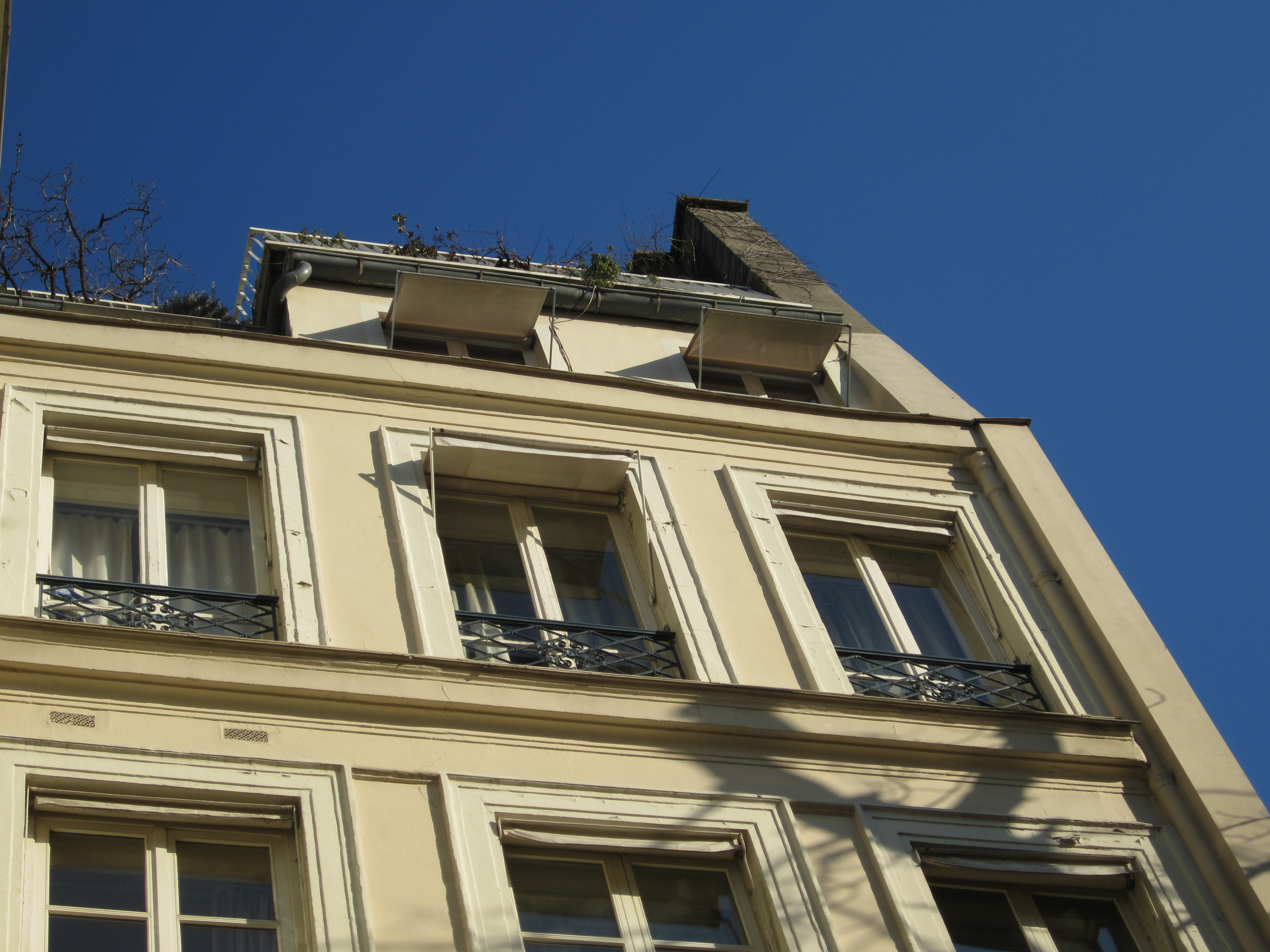
Julia and Paul’s apartment was on the third floor. (In France, they don’t count the ground floor as the first floor – get s a bit confusing sometimes!) A photo of these very windows appears in My Life in Paris.

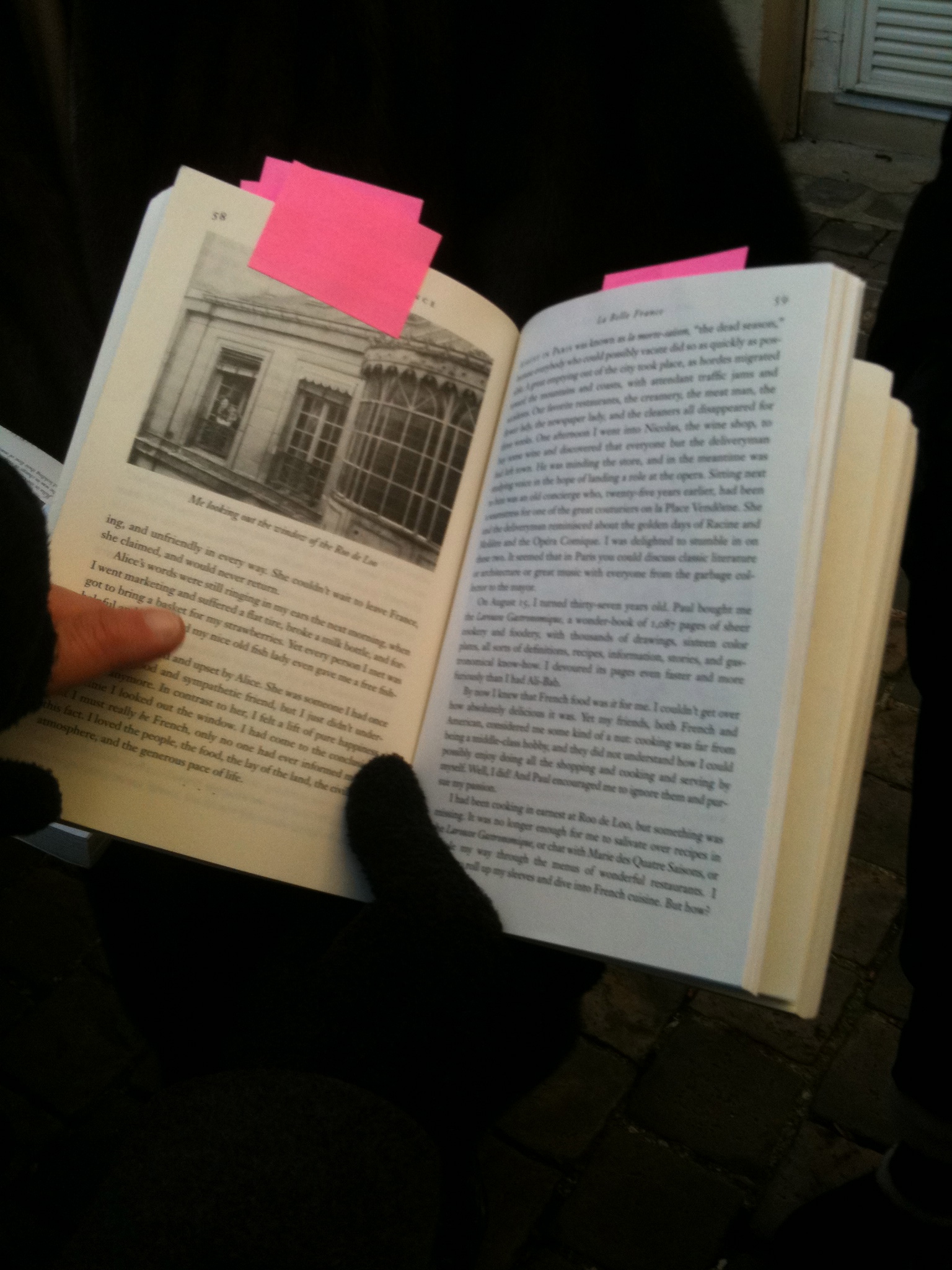
Madame brought her own stickered-up copy of My Life in France in order to compare the photos to the scene in the courtyard. She pointed up at the windows to show us where Julia and Paul had lived.

Julia and Child’s apartment was on the third floor. Julia began cooking in the original kitchen, which was extremely small even by Paris standards. They later converted the small attic apartment above into a separate kitchen. Paul took the photo that appears in My Life in France (pictured above) from one of these third floor windows, aimed across the courtyard and toward the decorative windows in the other wing of the apartment.

Madame is pointing out the photos of Julia and Paul’s Christmas cards that her husband’s family used to receive. She apologized because she hadn’t been able to find the scrapbook where they had been stored!

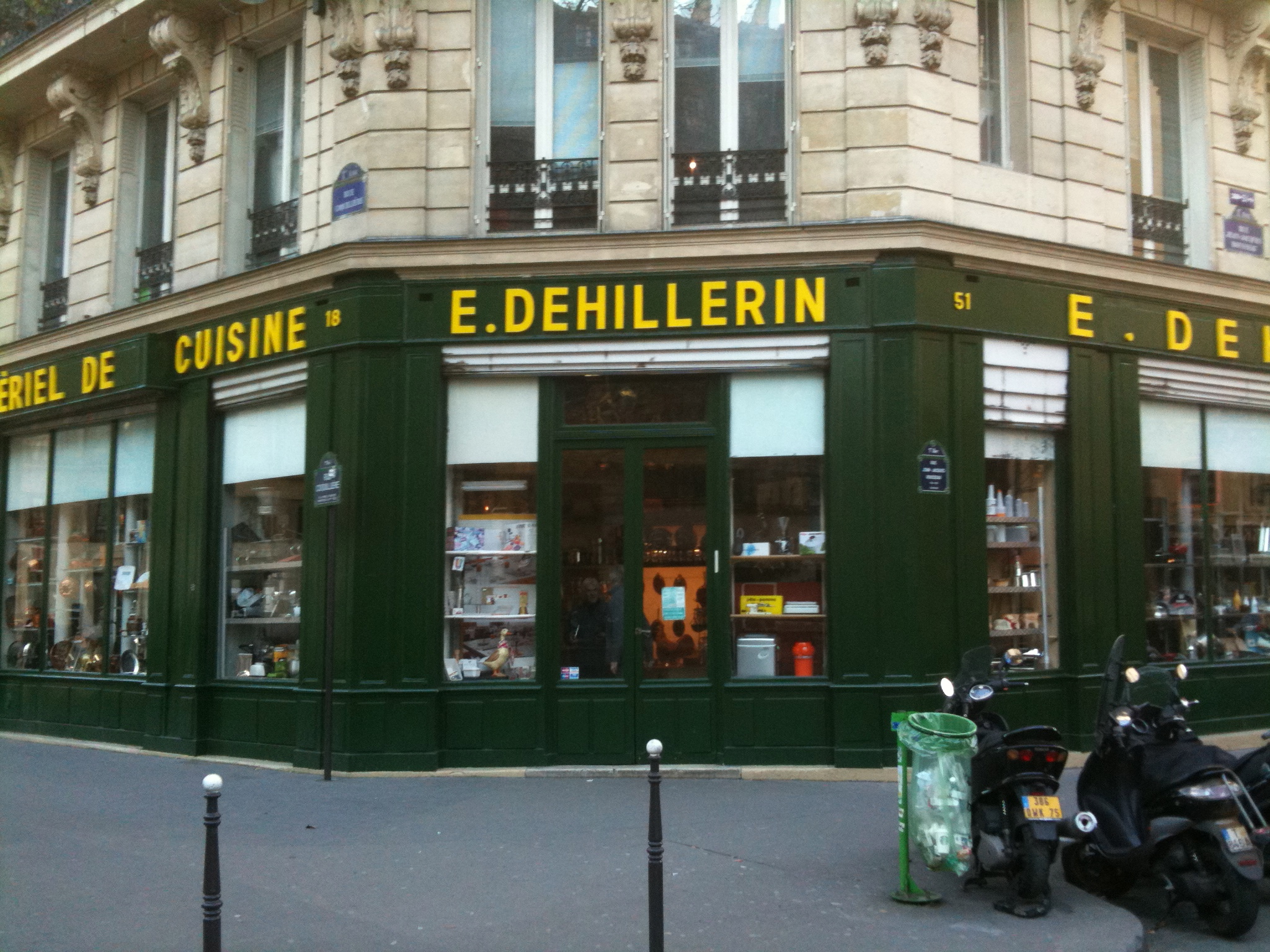
E. Dehillerin in Les Halles, a classic French cooking supply store where Julia used to shop. Still a very friendly place to browse.


Our crazy French waiter at Au Pied du Couchon, who led us in a traditional French chanson, complete with a pig nose!

Additional reading:

Mary Cassatt’s Greater Journey

In The Greater Journey (Simon & Schuster), McCullough turns his storytelling gifts to the many Americans who came to Paris between 1830 and 1900. As McCullough says, “Not all pioneers went west.”

Among these pioneers were young men and women who would come to study art in Paris, including George P. Healy, John Singer Sargent, Mary Cassatt and Augustus St. Gaudens.

First Mary Cassatt. Because I love her story.

Cassatt was from a proper and prosperous Pennsylvania family who could afford to travel through Europe. After studying art in Philadelphia, she told her father that she wanted to study art abroad. He tried to discourage her (“I’d almost rather see you dead than become an artist!”) but he gave in like dads are known to do.

Cassatt would travel and study through Europe in the 1860s and early 70s, from Italy to Spain to France, studying under such French masters as Jean-Léon Gérome, Charles Chaplin and Thomas Couture. She would succeed in having her first painting accepted to the Paris Salon in 1868. According to McCullough:

For Mary her time in France had determined she would be a professional, not merely “a woman who paints,” as was the expression. Commenting in a letter on just such an acquaintance, she was scathing: “She is only an amateur and you must know we professionals despise amateurs. . . .”

Cassatt would decide to live in Paris in 1874, and thereafter make France her home for the rest of her life. Mary and her older sister Lydia moved into a small apartment on rue de Laval (now Victor Massé). It was a street known for artist’s homes and studios. Cassatt would become close friends with Degas (who lived and worked on rue Victor Massé for many years), discovering his pastels in a gallery window on nearby boulevard Haussman.

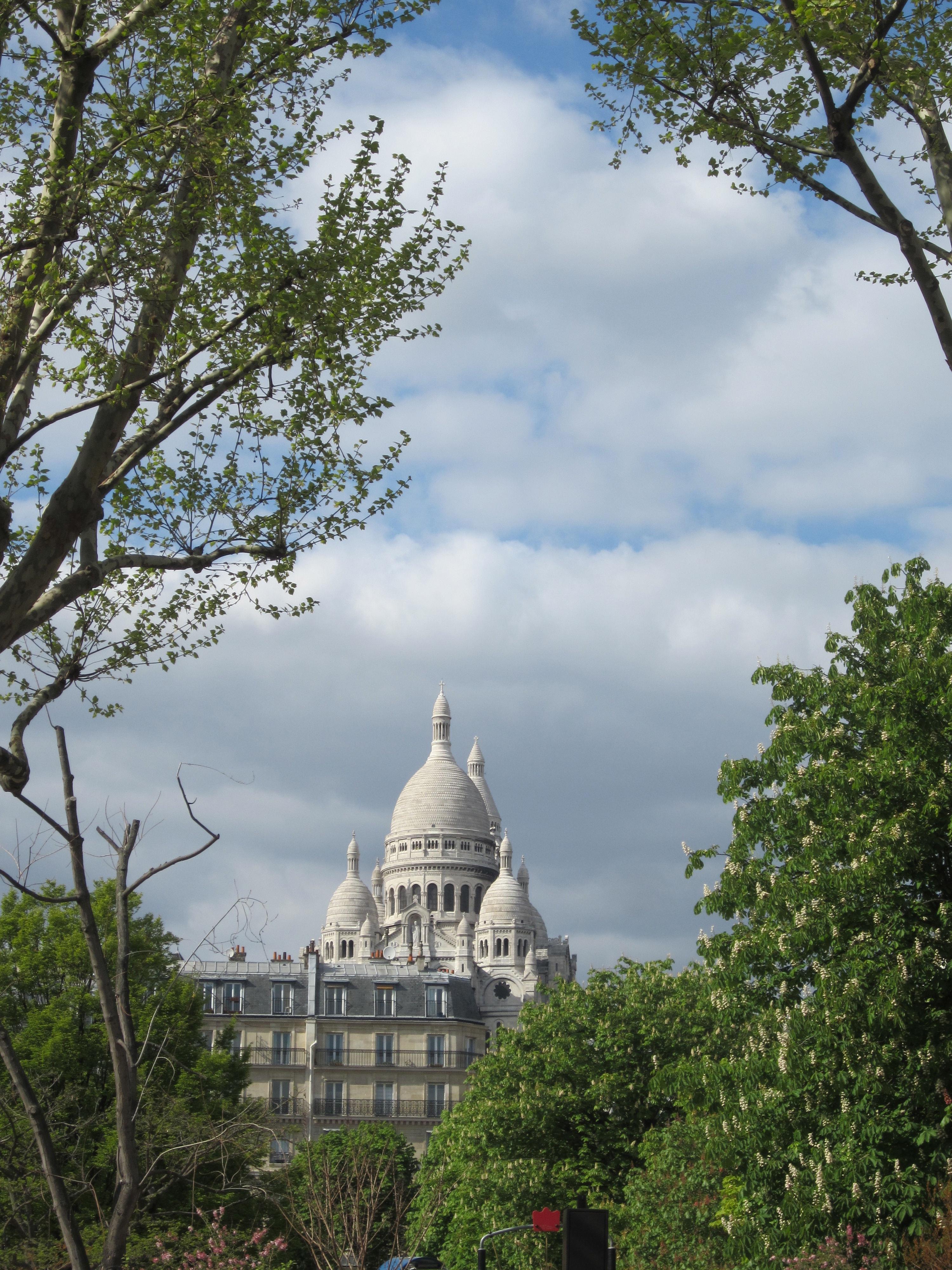
In 1878, Cassatt’s parents decided to come live in Paris, and together they moved to a larger apartment at 13 avenue Trudaine, in the respectable streets at the foot of Montmartre. There, Cassatt could be close enough to walk to her and her friends’ art studios, but yet  far enough away to be proper. They had a beautiful view of Sacré Couer from their fifth floor apartment.

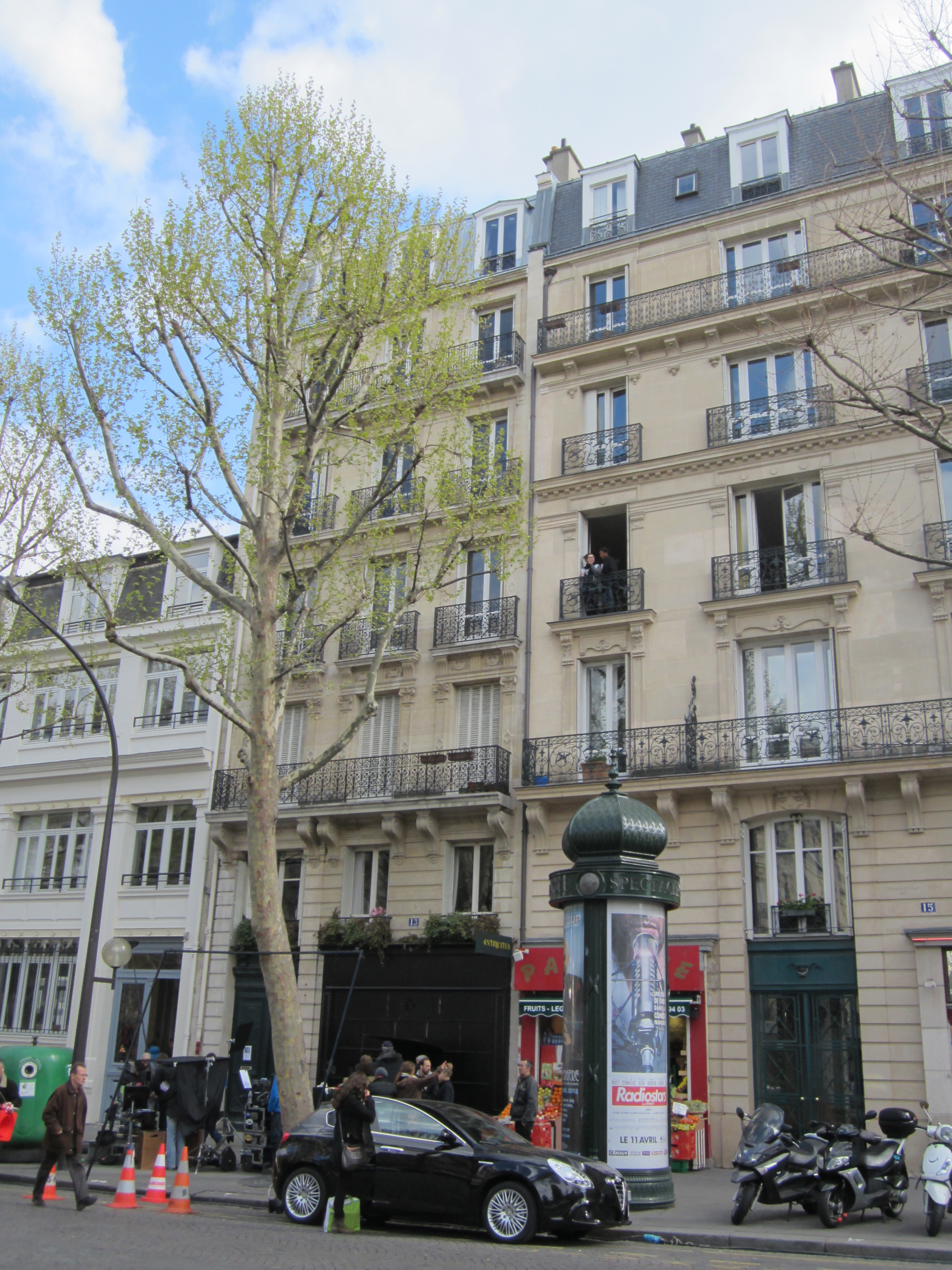
13 avenue Trudaine, home of Mary Cassatt and family from 1878-1884. (Funny anecdote: the day I tracked down this address, I was excited to notice a film crew on the street in front of the former Cassatt home, and I thought, “How exciting! They’re filming a movie about Cassatt!” No, they were filming next door. Nothing to do with Cassatt. I obviously live in a bubble of art history and assume the rest of the world does too.)

The view of Sacré Couer from the park across the street from Cassatt’s avenue Trudaine apartment.

At about this same time, Degas invited Cassatt to join the Impressionists, the first and only American in the group, and only the second woman (besides Berthe Morisot). Cassatt would join in their Fourth Impressionist Exhibit in 1879. It was a good fit for Cassatt, who despite her thoroughly conventional background, had an independent and blunt personality. She was not well suited for the politics and brown-nosing required to fit in the Paris art establishment:

Finally I could work with absolute independence without concern for the eventual opinion of the jury. . . . I detested conventional art and I began to live.

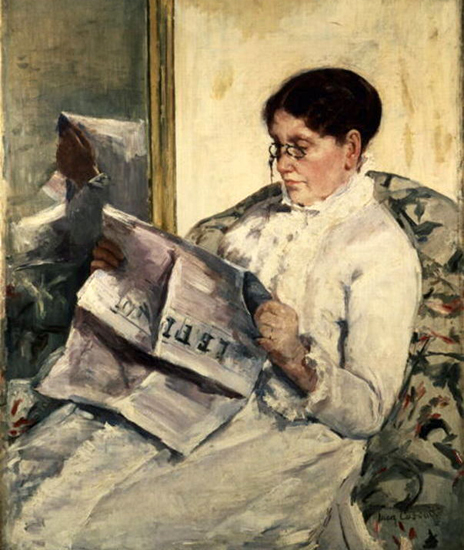
Once her parents moved to Paris, Cassatt turned her focus toward domestic family portraits of her mother, sister, nieces and nephews. Her portraits would not be highly flattering society portraits, but rather, beautiful studies in composition and mood. Her women would be introspective and intellectual, utterly without pretense, often concentrating on a task, a newspaper or a book. In Cassatt’s 1878 portrait of her mother, Cassatt builds an intriguingly complex composition through the use of a mirror on the left half of the canvas that emphasizes the act of reading.

Mary Cassatt, Reading Le Figaro (Portrait of Cassatt’s Mother) 1878. Displayed in Fourth Impressionist Exhibit in 1879.

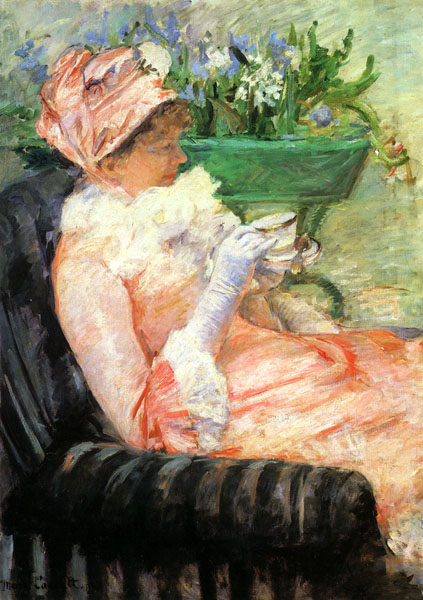
Mary Cassat, The Cup of Tea (Portrait of her sister Lydia) 1880

Cassatt may suffer from a modern feminist bias against highly domestic scenes with women and children, as if Cassatt agreed that this was the only proper sphere for women. In fact, Cassatt was a highly ambitious artist who never married and who was responsible for earning her own living. Cassatt’s tough-love-count-every-penny father demanded that she pay for her own studios and art supplies from the sale of her work. She did.

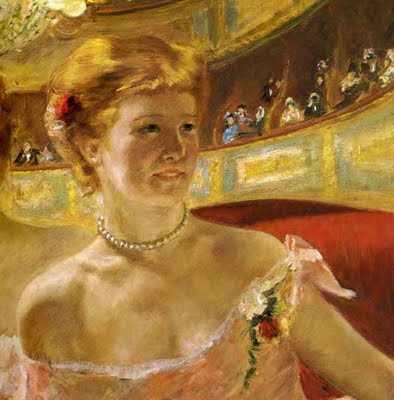
Unlike the male Impressionists, Cassatt could not properly hang out at the cafés and nightclubs of Montmartre. However, she did enjoy going to the opera about four times a week in the company of close friends and family. Here she would be able to sketch out a fascinating series of paintings.

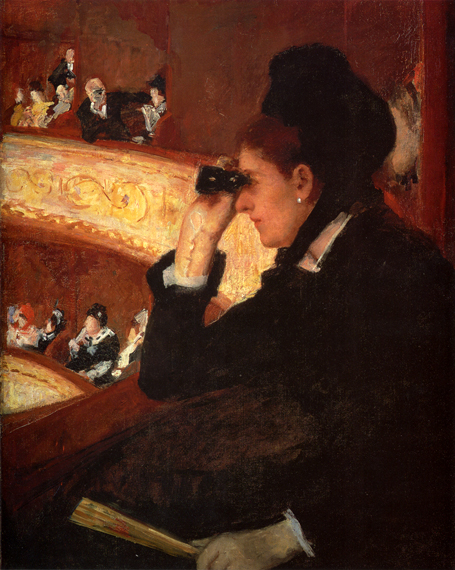
While the painting of Cassatt’s sister Lydia in the evening dress might be more traditionally pretty, it is her pose in a black dress at a matinée that is more interesting, and seems to have the more to say. In fact, if you have a couple extra minutes, you should really listen to this “Smart Art History” video about Cassat, the Paris Opera and the painting below.

Mary Cassatt, In The Loge (Mary’s sister Lydia) 1880

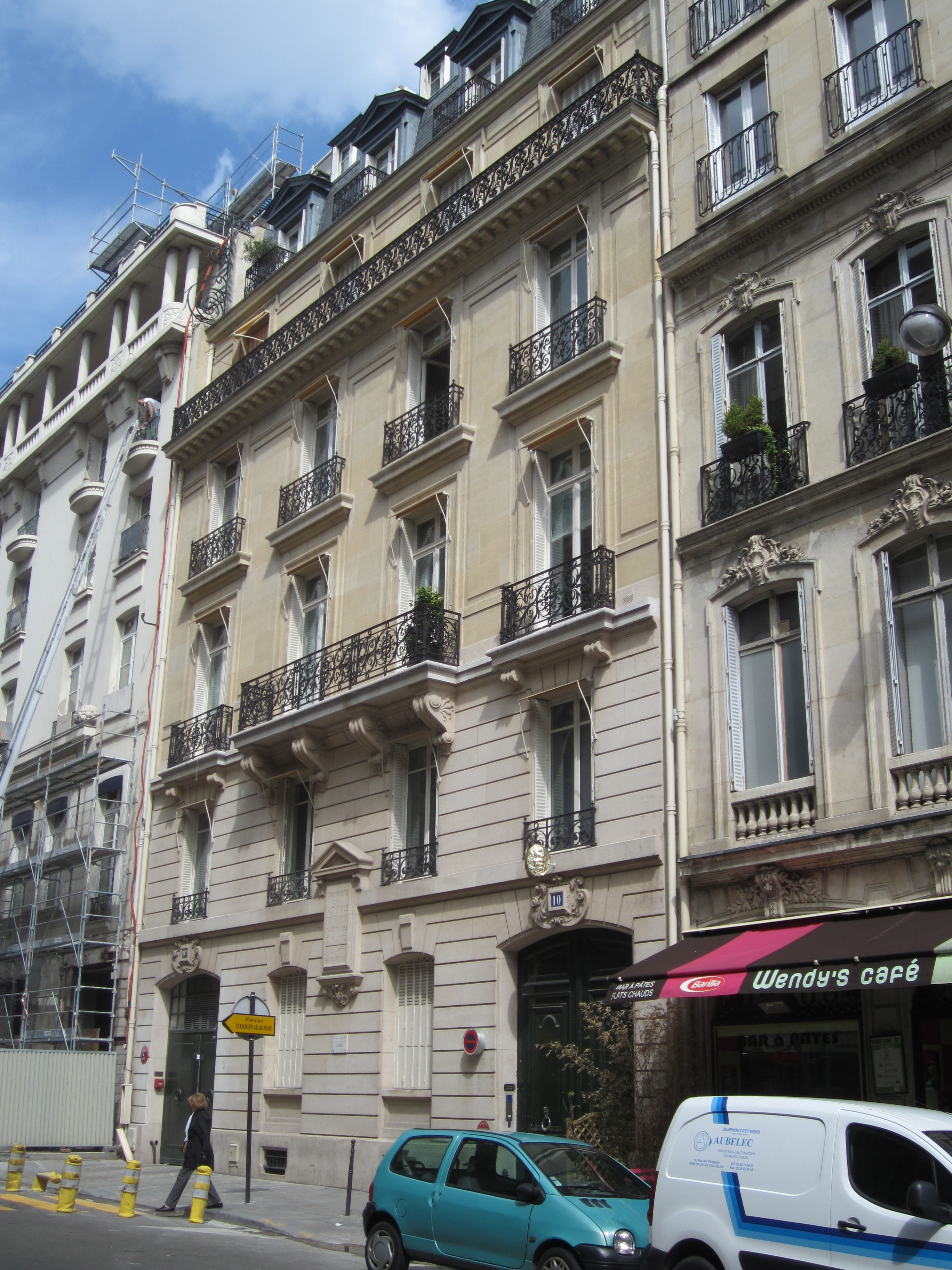
By the late 1880s, Cassatt was finding her own success and beginning to sell many of her paintings. She and her family would find a larger apartment in an even nicer part of Paris at 10 avenue Marignan near the Champs-Élysées by 1887. Cassatt would keep this apartment for the rest of her life, although she and her family would rent numerous summer homes in the suburbs of Paris.

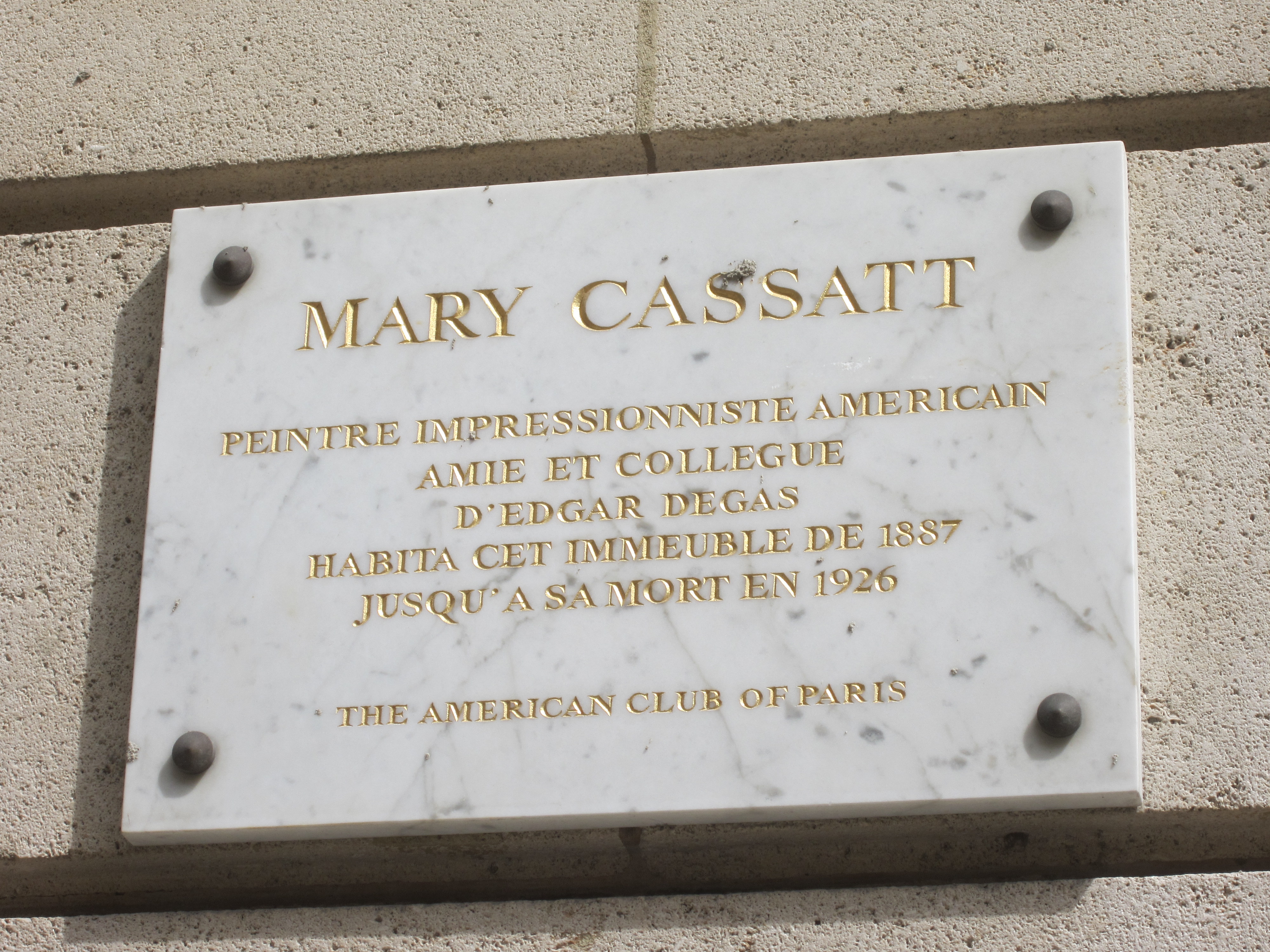
The plaque at 10 rue de Marignon in the 8th arrondissment of Paris: “American Impressionist Painter – Friend and Colleague of Edgar Degas.” (Commentary: Why do the plaques commemorating a woman have to mention their relation to a man? I noticed the same thing on Edith Wharton’s plaque on rue Varenne in Paris, which mentioned that Wharton was a friend of Henry James.)

10 rue Marignan, Paris home of Mary Cassatt from 1887-1926

Mary Cassatt lived the rest of her life in Paris and its suburbs, dying in 1926 at her country chateau in Beaufresne, one of the last of her generation who had come to Paris in the 1860s. She was a significant part of America’s “Greater Journey.” And because she was a woman, her story is even more remarkable. Like Ginger Rogers, she had to do it “backwards and in heels.”

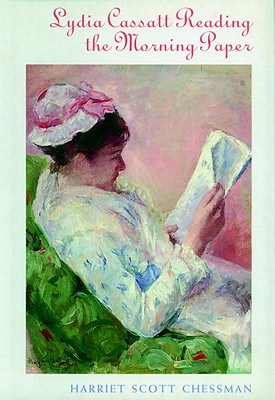
The Greater Journey by David McCullough: Highly recommended. Also recommended, Lydia Cassatt Reading the Morning Paper by Harriet Scott Chessman.

John Singer Sargent and Madame X in Paris

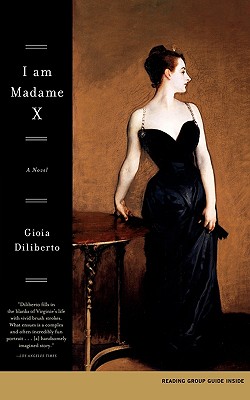
I am Madame X by Gioia Diliberto


I first read Gioia Diliberto’s  I Am Madame X back in 2004. I might have even picked it as a book club read. It’s a fabulous Belle Epoque novel about the life and times of the celebrated 19th century American portrait artist John Singer Sargent and his most infamous model, American beauty Virginie Gautreau.

I read it again recently, because John Singer Sargent’s name keeps popping up on my travels through Paris art history. This book is even better the second time around, especially now that I know my way around Paris and I can really appreciate what it meant to be a Left Bank artist versus a Right Bank Artist.

John Singer Sargent had the best of both worlds.

He was the son of a wealthy, cosmopolitan American family that had lived abroad for decades by the time they arrived in Paris in 1874. They settled into a posh Right Bank apartment near the Champs-Élysées, which has since become a commercial building at 52 rue La Boétie. Sargent’s father took him to meet the young teaching master Carolus-Duran, who ran a popular Left Bank painting atelier in the heart of Montparnasse.

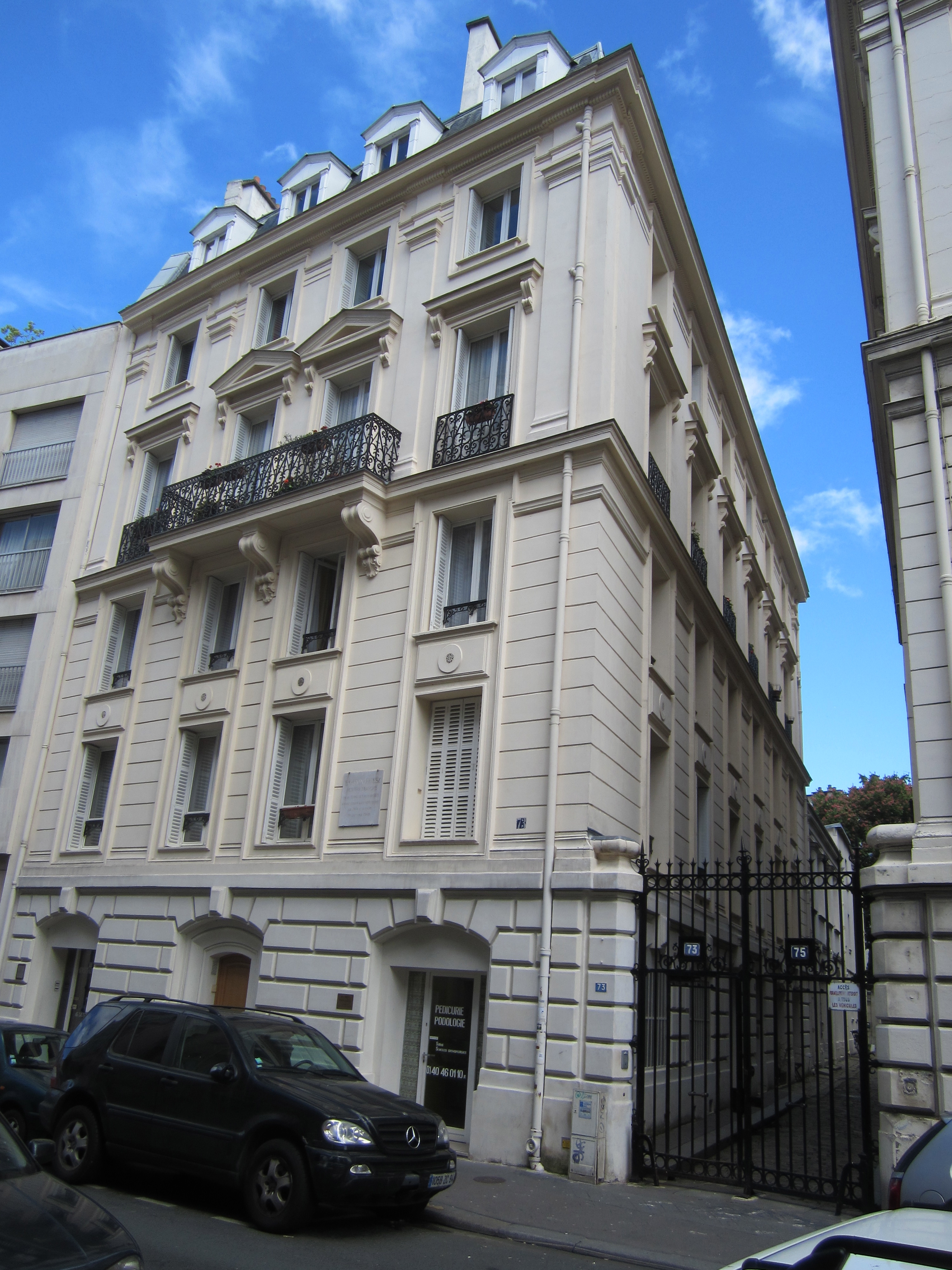
Sargent was only 18 years old, but he was already bursting with talent. He quickly earned the admiration of his fellow students and within a year was accepted at the rigorous L’Ecole des Beaux Arts. In 1875, Sargent moved out of the family’s home and into a fifth-floor studio apartment at 73 rue Notre-Dame-des-Champs with fellow art student James Carroll Beckwith.

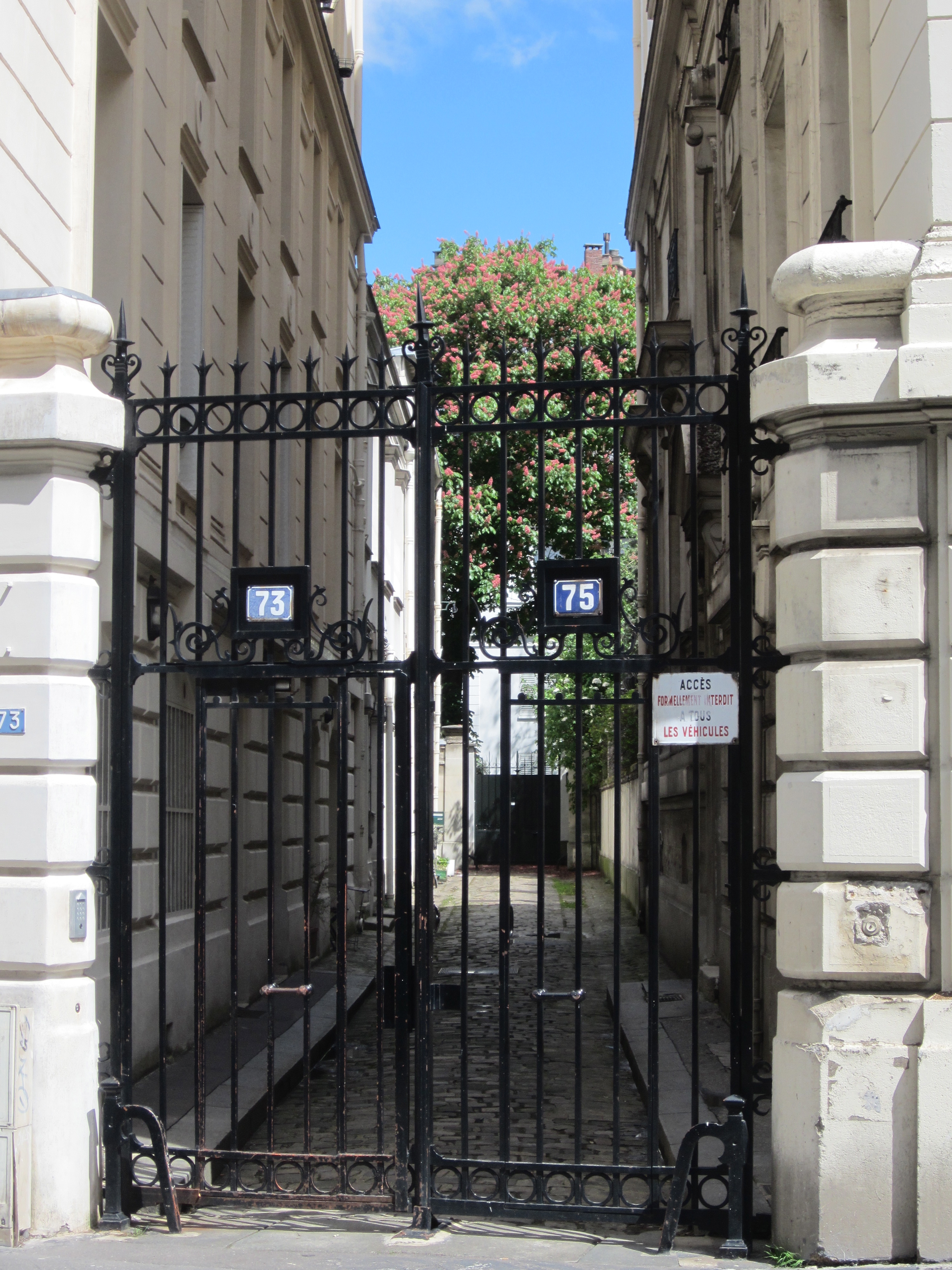
The young American artists had found a promising location. The studios at 73 rue Notre-Dame-des-Champs had also housed the famous French painter Jean-Paul Laurens, while 75 was the mansion-atelier of Adolphe William Bourguereau. By the 1860s, this small, winding road had already been nicknamed “the royal road of painting.” Even today, the address looks inspiring. It still has an impressive entrance and an inviting green courtyard.

Sargent, Beckwith and their pals led a young bohemian life in the Left Bank. They worked hard but still had time for wild evenings, moving the easels aside for dancing and drinking right in the studio. Sargent was known for entertaining his guests on a rented piano. On Sunday nights, they would clean themselves up for  a proper dinner party at Sargent’s family’s home with “educated and agreeable” conversation.

73 rue des Notre-Dame-des-Champs, once the art studio of John Singer Sargent

Courtyard of 73-75 rue Notre-Dame-des-Petit-Champs. Back in the 1870s, the gardens probably went all the way through to Luxembourg Gardens

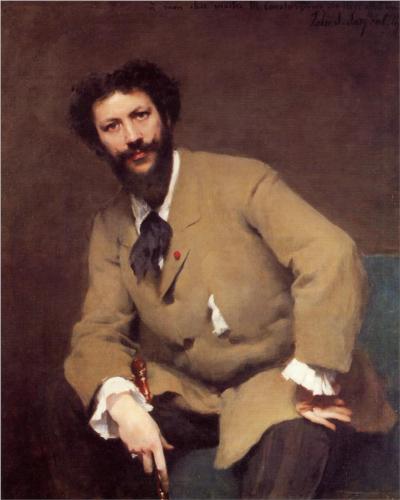
John Singer Sargent, Portrait of Carolus-Duran (1879)

In 1879, Sargent painted the portrait of his art teacher Carolus-Duran, and it absolutely launched his career. It was bold, theatrical, and presented a stunning likeness in both spirit and physicality. Sargent was only 23 years old and already one of the best portrait artists in France.

In Diliberto’s novel, Sargent meets the future Madame X at a Montparnasse restaurant. In reality, they may have met when Gautreau attended an informal party at Sargent’s studio on rue de Notre-Dame-des-Champs in 1881. Sargent was celebrating the completion of his portrait of Dr. Pozzi, one of Gautreau’s many reputed lovers. According to Diliberto, Gautreau was shocked by Sargent’s portrayal of Dr. Pozzi, a charismatic ladies man (and gynecologist) who had ungraciously tossed her aside before her marriage to Pierre Gautreau:

On an easel near the French doors stood Sargent’s painting of Dr. Pozzi. It looked like a portrait of the devil. Virtually the entire canvas was red – the sumptuous curtains in the background, the carpeted floor. The doctor himself was dressed in red slippers and the red wool dressing gown that I had seen him wear dozens of times. His pose was hypertheatrical; his face was caught in an intense observance of an object outside the canvas, and his elongated fingers tugged nervously at his collar and the drawstring of his robe. His fingers were as sharp as pincers and seemed spotted with blood. Had Pozzi just performed a gynecological operation? Deflowered a virgin?

I just love how Diliberto gave Gautreau such a blunt and penetrating voice. She is clearly no innocent about men, or for that matter, about Sargent’s ability to portray a model’s true character.

John Singer Sargent, Dr. Pozzi at Home (1881)

Sargent was determined to get the chance to paint Gautreau’s portrait. He obviously understood the PR value of painting the “professional beauty” who was the focus of such much attention and gossip in the affluent social circles of Paris. Gautreau thought about giving her business to other more traditional French portrait artists, but she may have felt a special connection to Sargent. They were both up-and-coming Americans with something to prove to the French.

In the meantime, steady commissions enabled Sargent to buy a large, new home and studio on the Right Bank, closer to all of his wealthy patrons. In the winter of 1883-84, Sargent moved to 41 boulevard Berthier, on the shaded side of a wide street whose light made it a popular location for art studios. It wasn’t far from the new mansions near Parc Monceau, and in fact just a few blocks from Madame Gautreau who lived at 80 rue Jouffroy d’Abbans.

In The Greater Journey, David McCullough describes Sargent’s new Right Bank studio:

. . .  a workplace elegantly furnished with comfortably upholstered chairs, Persian rugs, and drapery befitting his new professional standing, and with an upright piano against one wall, . . .

No longer would Sargent’s patrons have to track through the mud and past the questionable bohemians on rue Notre-Dame-des-Champs.

41 boulevard Berthier has been replaced by a newer building, but this one next door is a good example of the types of buildings that once dominated the street, with large windows  and skylights on the top floors.  It was on this street that Virginie Gautreau would have gone to pose for her portrait.

Parc Monceau in the 17th, the center of the fashionable new Plaine Monceau area of the 1870s-80s. Monet painted this park several times.

80 rue Jouffroy, the home of Virginie and Pierre Gautreau in the 1880s.

By 1883, Gautreau finally agreed to pose for Sargent. He talked her into wearing a black dress that would highlight her unusual color, which included rouged ears, white pastey skin (thanks to lavender skin cream) and brightly hennaed hair. At the end of the day, Sargent may have painted her color a little too well. He captured her true character, just like he had with Dr. Pozzi. Her pose was so confident it seemed haughty.

But the strap was the last straw. The painting we know now, as it appears at the Metropolitan Museum in New Yorkwas retouched. The original painting looked like this – a little risqué, no doubt, but more balanced and much more interesting.

Nevertheless, it was a disaster at the 1884 salon. “Quelle horreur!” said polite Paris society. One critic said the flesh “more resembles the flesh of a dead than a living body.”

Sargent soon left for the summer in London while Gautreau disappeared to Brittany, far from the judgment of Paris. Sargent would keep his Paris studio on boulevard Berthier for two more years, where he proudly displayed Madame X. 

Although Sargent may have misjudged the limits of Right Bank tolerance and underestimated their hypocrisy (after all, many of the traditional paintings in the Salon were nudes, and they’re complaining about a little strap?), he would later say that Madame X was “the best thing I have done.”

John Singer Sargent in his boulevard Berthier studio with a retouched Madame X. The strap is repainted.

If your read I am Madame X you will find out much more about Virginie Gautreau: her New Oreans background, her family’s escape to Paris during the Civil War, her early years in a Paris convent school. It’s a well-told story in the voice of a fascinating woman.

 I am Madame X by Gioia Diliberto: HIghly recommended.

Paris, I Love You But You’re Bringing Me Down

I can’t say enough about Rosecrans Baldwin’s new book, Paris, I Love You But You’re Bringing Me Down (Farrar, Strauss & Giroux). This memoir is witty, charming and laugh-out-loud funny (make that snort-out-loud, while I was reading in a Paris restaurant, no less), based on the eighteen months Baldwin and his wife spent in Paris a couple-few years ago.

It’s a perfect romantic comedy, like a cross between The Office (Paris Edition) and Midnight in Paris (without the time travel). I’m already doing the casting in my head.

Baldwin tells his Paris story with a smart and fresh spin. He worked crazy hours at a Champs Élysée advertising agency, writing copy and making sales pitches to luxury clients like Luis Vuitton, while she attended immersion French language classes, played the part of a femme au foyer and tried to write screenplays in a dark and dismal apartment surrounded on five sides by construction. Americans have no simple love affair with Paris. But that revelation isn’t enough to make this book unique. It’s the complexity of Baldwin’s voice: he’s tender, wise, and smitten, but also droll and irreverent. Who knew the French were so darn funny?

Baldwin’s tales from the office sound more like the reports of an American mole secretly planted in a Parisian workplace. Baldwin’s primary source is a rough-around-the-edges colleague, a “stocky and morose” Parisian who loves nothing more than his cigarettes and his Yamaha scooter. It’s a point of view most Americans never get to see, a bit like having a disgruntled French Danny De Vito as your tour guide.

Baldwin’s riffs on French anti-P.C. office politics are hilarious:

Either Murphy Brown never aired in France, or Paris was stuck in the early nineties. . . . In meetings, if someone called your idea P.C., pay-say, there was no possible recovery. The label was nuclear. Anyone accused of pay-say during un brainstorming would be shouted down – Don’t be so American! . . .

Baldwin’s inside knowledge leads to surprising discoveries, like the French affection for McDonald’s: a French colleague, confused, “You don’t go to McDonald’s in the United States?” Baldwin can deal the scoop on their Frenchified Mac-attacks (a multi-course meal, starting with McNuggets as an appetizer, a sandwich, then a salad and finally dessert). Who knew? And now that we know, won’t it be a fun fact to remember the next time a stuffy French waiter gives you the stink-eye?

Baldwin already spoke some French when he arrived, thanks to his beloved seventh grade French teacher Madame Fleuriot, from whom he learned how to pronounce kir royale. Madame would say it dreamily, fondly: “just the word ‘Paris,’ she was undone a bit.” About the same time, Baldwin’s family took a one-week vacation to Paris, where he watched his mother swoon over her café au lait, tres noir. Says Baldwin, “‘French’ became an umbrella term for me, describing things I liked before I knew why I liked them.”

So when Baldwin and his wife Rachel had the chance, off they went to Paris. Like all good expats, they felt humbled by their inadequate French, and worked hard to improve it. Nevertheless, their language faux-pas (is there a plural for faux pas?) make for absolutely delightful stories. We’ve all been there, but never quite like this.

One time Rachel was picking out some champagne to celebrate the sale of Baldwin’s first novel, un roman in French (You Lost Me There, Riverhead Books 2010). The Frenchman gave her a strange look. He thought she said her husband had sold his first “Roman,” like some kind of Italian slave trader. Yah, that’s right, monsieur, you know us crazy Americans – we always pop the champagne for our first slave trade.

Like many Americans, the Baldwins had a love-hate list for Paris (love: walking across the Alexandre III Bridge, food from Picard, men who read in public; hate: long grey winters, the bureaucracy, construction noise, stores that close on Sundays). And inevitably comes the question, “so how long do you want to stay here in Paris?” And no matter how idyllic it can be to take a nap in a field of tulips on a daytrip to Giverny, they realize that they are ready to go home.

Ah, yes, home.

So obviously, I loved this book. I think you will too, whether you love or hate Paris, or maybe a little of both. You can read an excerpt here.