
Unknown's avatar

About americangirlsartclubinparis

Books, wine, art and travel. Preferably all at the same time. If possible, in France.

Coco Chanel: Sleeping with the Enemy

Sleeping With the Enemy is a bubble-bursting kind of book.

When most people think of Coco Chanel, they probably picture her like I used to, as played by Audrey Tautau in Coco Before Chanel (2009). Either a hard-working young thing from the provinces, or the ambitious and innovative fashion icon she became later in her life.

After reading Hal Vaughan’s 2011 book, Sleeping with the Enemy: Coco Chanel, Nazi Agent, a new image comes to mind, and it’s not good. At best, Chanel was a powerful woman who would do anything to survive, to succeed, and to walk away from the war unscathed. At worst? Chanel was an anti-semitic Nazi collaborator and morphine-addicted snob who not only slept with the enemy, but aided them.

U.S. Edition (2011)

Hal Vaughan’s book relies on documents from a variety of archives and other legitimate sources, including German files discovered in the Soviet Union. They show that Chanel had a long-term love affair with a Nazi spy, the handsome, aristocratic and half-British Baron Hans Gunther von Dincklage, known to his intimates as “Spatz.”  At the beginning of the Second World War, Chanel sought help to obtain her nephew’s release from a prisoner of war camp in Germany. Spatz was the perfect string-puller. It didn’t take long until the two formed a long-lasting romantic alliance.

Chanel’s relationship with Spatz enabled Chanel to keep living in luxury in the midst of war. Although Chanel initially departed for Vichy, France, Spatz called in a favor with the German High Command and they invited Chanel to move into the Cambon wing of the Ritz as the Nazi’s “Privatgast.” Chanel’s new rooms weren’t quite the same as her old suite facing Place Vendome, but they would do.

While other Parisians suffered through severe food rationing during the long, desperate years of occupation, Chanel sipped champagne with the top German officials who had taken over the Ritz. Chanel and Spatz dined at Maxim’s, went to black-tie affairs at the opera, and attended glamourous dinner parties at the German Ambassador’s residence on the Left Bank.

But of course, there was a price to be paid for Spatz’s favors. And it appears Chanel had no trouble paying it. Chanel and Spatz traveled to Berlin to meet with with a top SS intelligence chief, and Chanel became German Secret Agent F-7124, code name “Westminster.” If Vaughan’s book has a weakness, it is here, where he seeks to explain the nature of Chanel’s missions on behalf of the Germans. It is not entirely clear what specific traitorous acts she performed against the interests of the French people. Nevertheless, it is perfectly clear that Chanel was a pro-German collaborator who was not quiet about her dislike for Jews.

Chanel didn’t just nod when other people said bad things about Jews at German dinner parties. She spouted quite a bit of venom herself. But even worse, she actually tried to use anti-semitic laws to fight for the ownership of Chanel No. 5. Back in 1924, Chanel had sold her highly successful perfume line to the Jewish Wertheimer family, and  she wanted it back. Spatz introduced Chanel to the senior Nazi official in charge of the “Aryanization” of Jewish property in France, and he helped her try to wrestle the control of Chanel No. 5 away from the Wertheimers. However, the Wertheimers were prepared and had already placed the company into a trust. For once, Chanel did not succeed.

It is still a mystery how Chanel was ever able to avoid arrest and prosecution after the war. According to Vaughan, a case was opened against her and she appeared for an interrogation, but the case went nowhere. The rumor is that Winston Churchill intervened on her behalf. Chanel slipped out of France and headed straight to Switzerland, where she spent several more years living with Spatz.

Chanel made a huge comeback in Paris in 1954. She was in her 70’s and the French didn’t wanted to be reminded of who did what in the the war. She died in her rooms at the Paris Ritz in 1971, the past varnished over. She was a fashion icon worth over $54 million. And the brand lives on.

Despite everything I learned from Vaughan’s book, and I was still interested in going on the Paris Walks Fashion Tour, which I did just this week. The tour guide was well informed about Chanel’s past, and offered a middle-of-the-road, no-one-really-knows interpretation of Chanel’s role with the Nazis. The tour guide shared a particularly interesting quote. When asked about her relationship with Spatz, Chanel supposedly said: “At my age, I’m so happy to have a lover, I don’t ask for a passport.”

In any event, here are some photos from the Paris Walks Tour, which I highly recommend.

And just in case – like me – you don’t have the right credentials to get on the Chanel VIP list for current tours of Chanel’s apartments, at least we can enjoy the photos of someone who does. Check out this story from the Guardian, complete with eye-popping photos of Chanel’s glamorous lifestyle on rue Cambon.
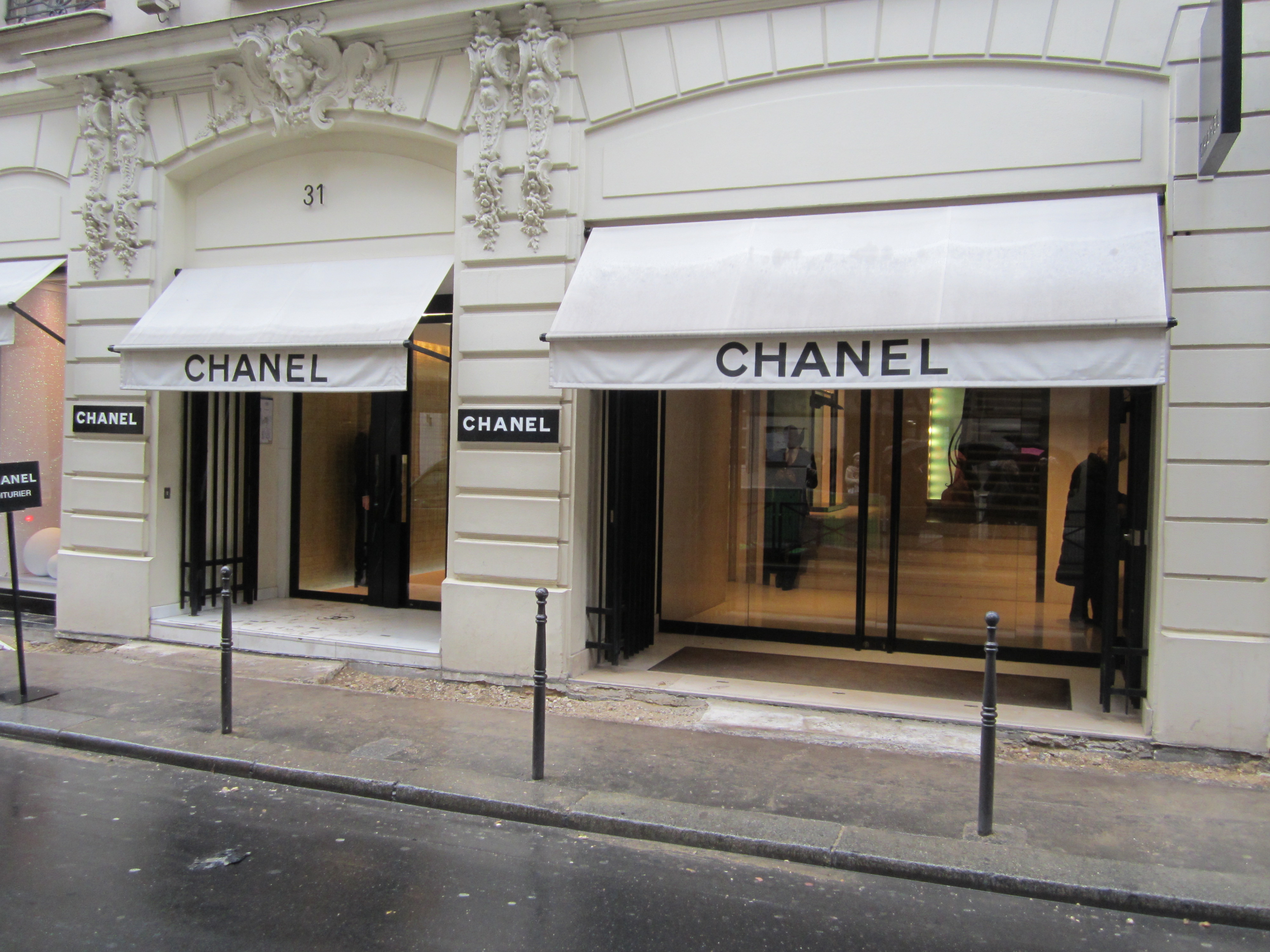
The flagship Chanel boutique at 31, rue Cambon in Paris. Chanel had apartments above the boutique where she entertained her clients, but she did not sleep there. She slept at her apartment in the Ritz, just across the street.
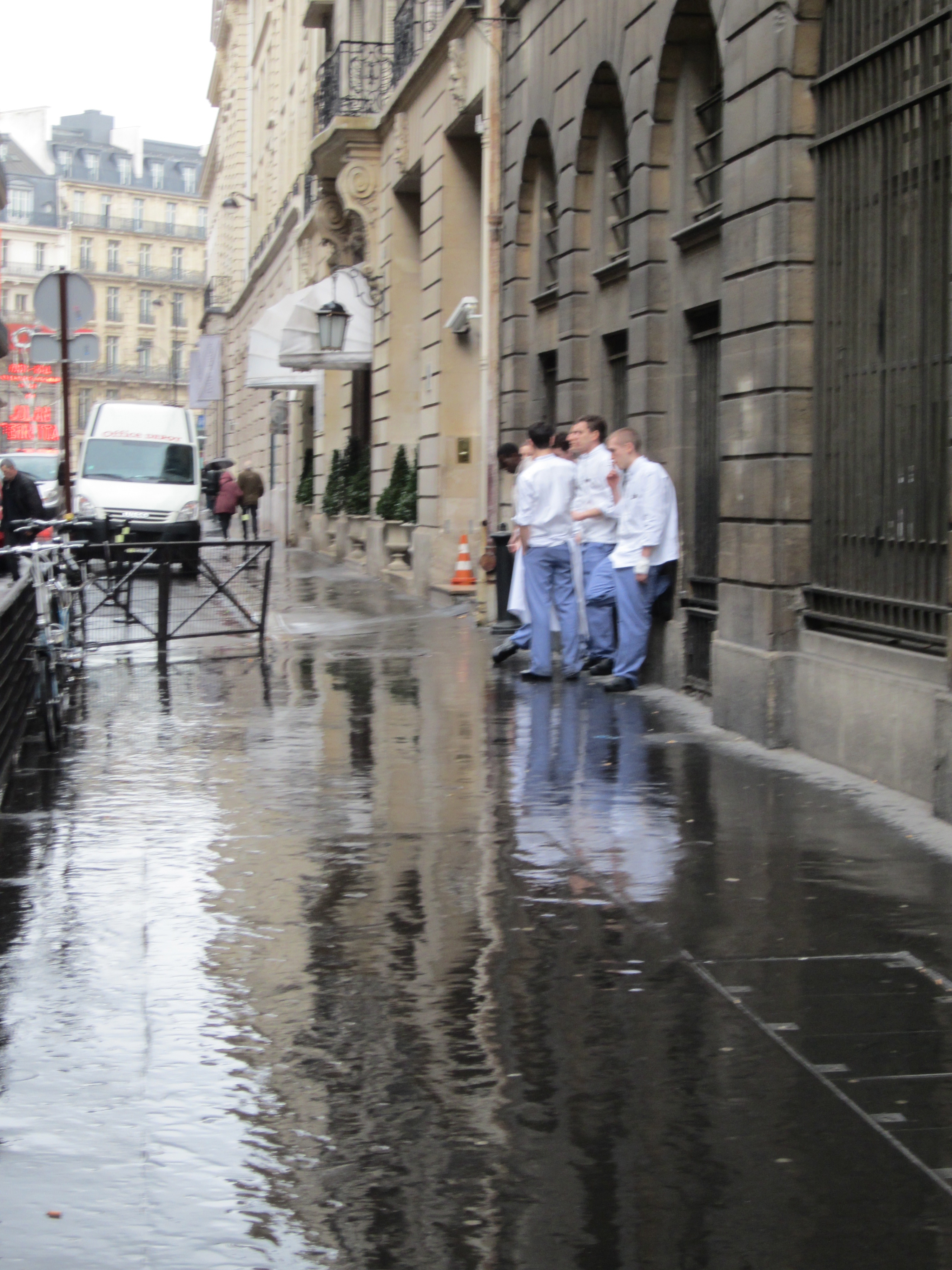
The back entrance to the Ritz on rue Cambon. Chanel's apartments during the war would have overlooked this street.
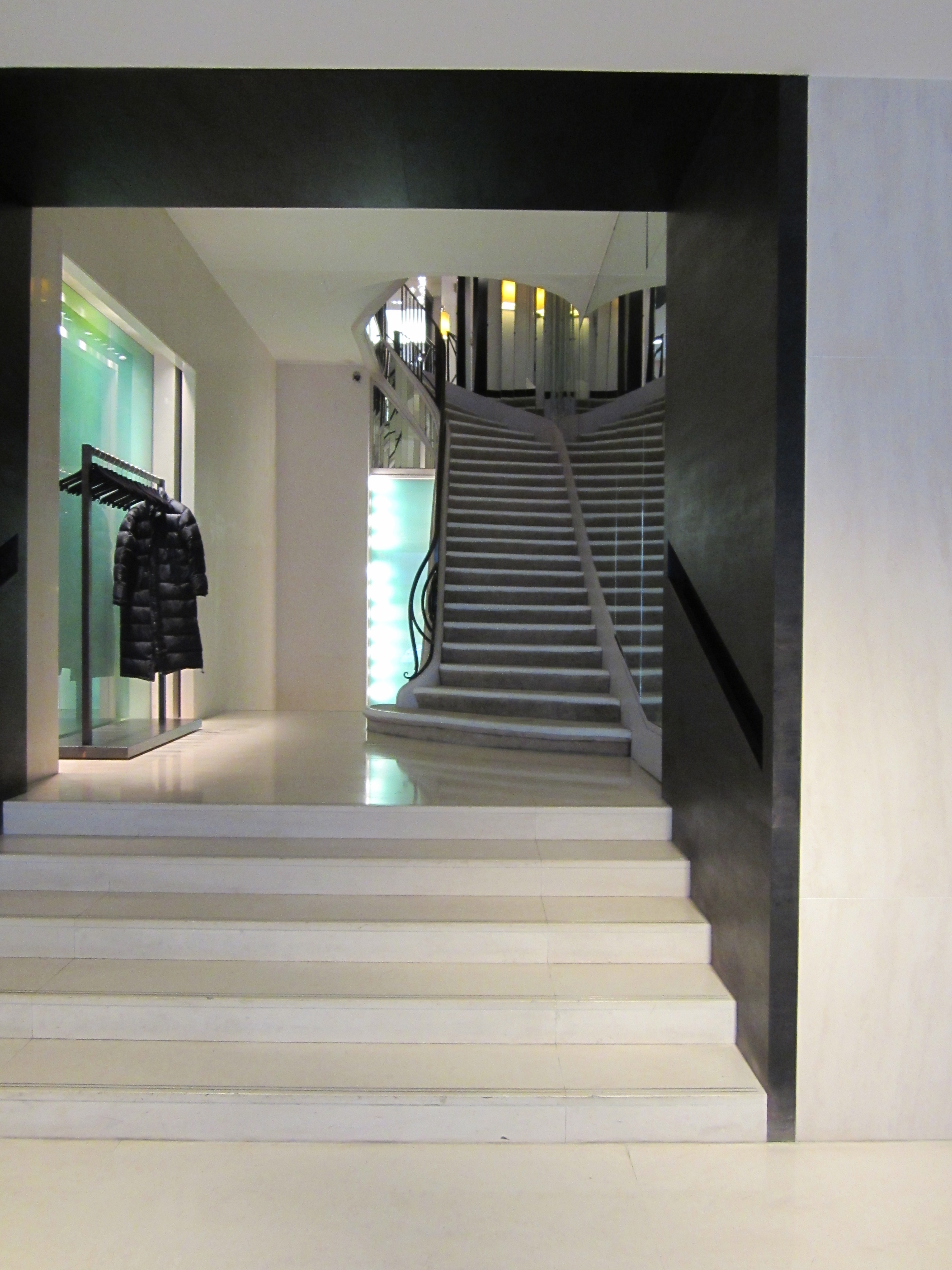
The famous mirrored staircase leading up from the boutique to Chanel's private apartments. Picture Spatz and Chanel here.
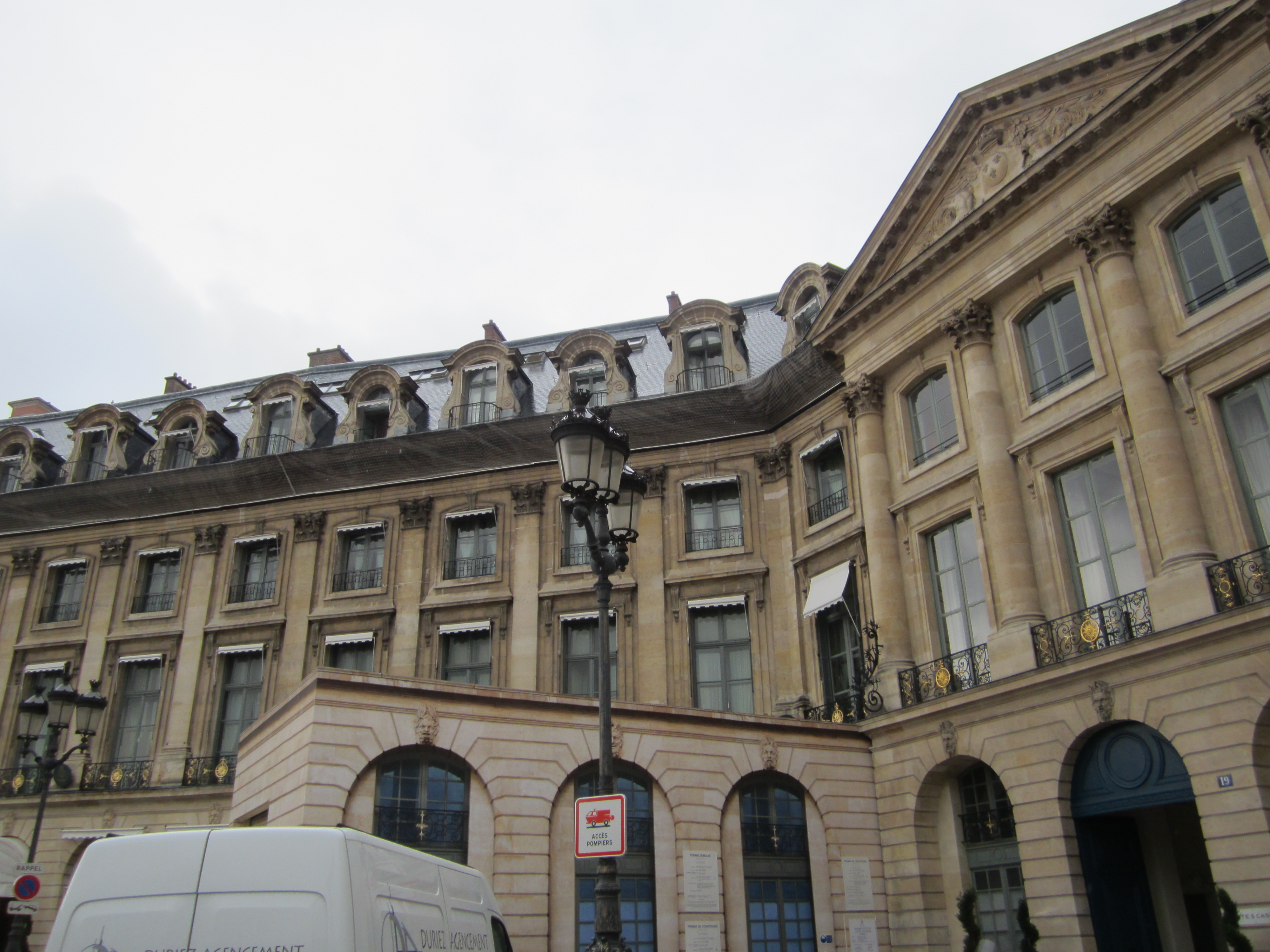
Chanel's suite at the Ritz before WWII, facing Place Vendome. It can be yours now for only 8,500 Euros per night. (Hopefully without any smoke damage from the recent garage fire!)

Pleasure Seeking in Amsterdam

History of a Pleasure Seeker (Knopf 2012)

Amsterdam. That is where I discovered an immensely pleasurable novel by Richard Mason.

Based on the exploits of a handsome young tutor in a grand Amsterdam canal house at the height of the Belle Époque, History of a Pleasure Seeker is like a fun, sexed-up Downton Abbey.

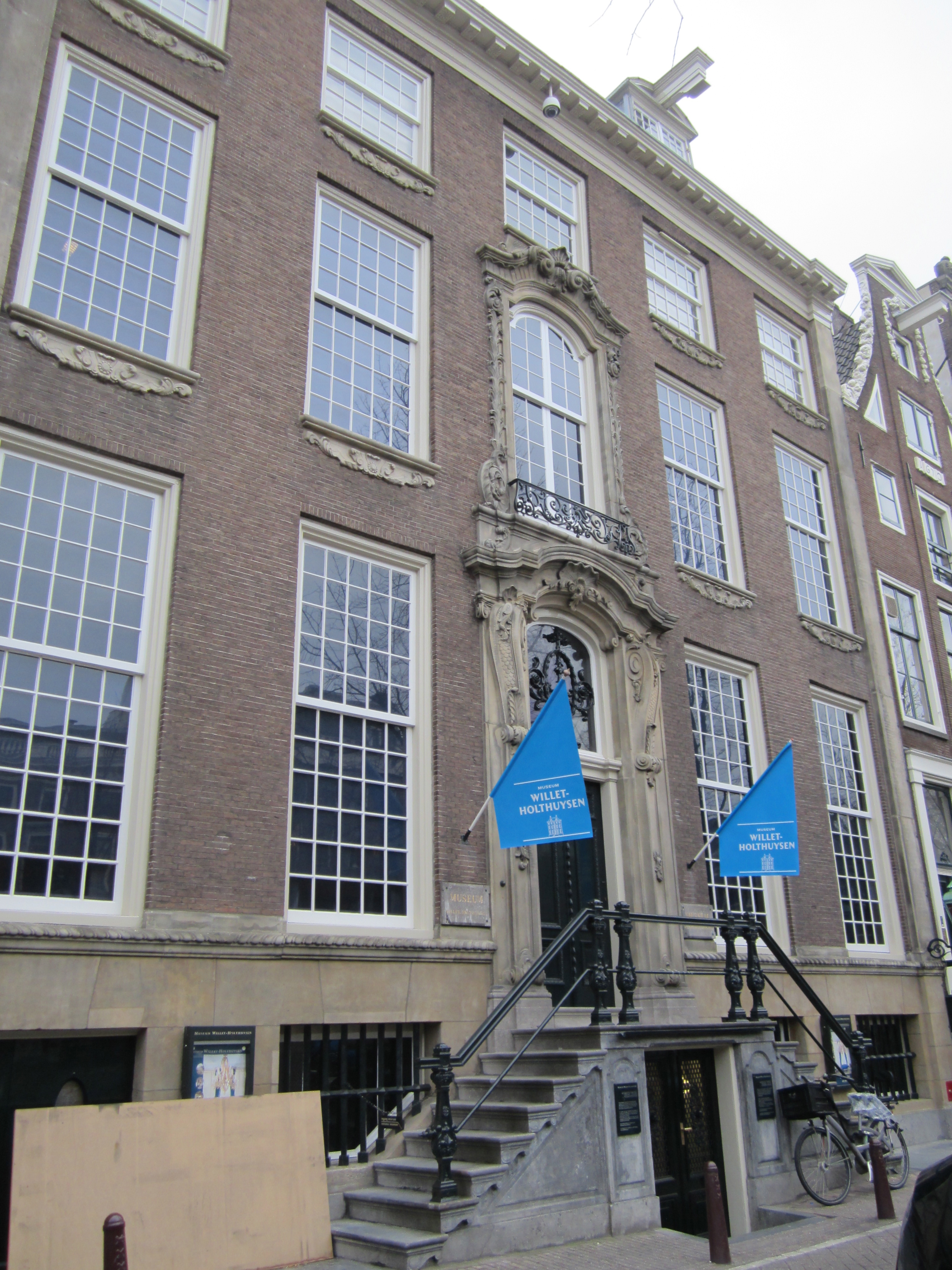
Canal houses in Amsterdam are a real pleasure to visit. On a recent trip, I toured the Willet-Holthuysen Museum at 605 Herengracht. I just love a good display of decadent Belle Époque excess.

Days later, I spotted a striking paperback novel in an Amsterdam bookstore. It had an eye-catching design in turquoise and black, with a row of gold-colored canal houses across the top. (Knopf released the U.S. edition pictured above in February 2012, but I came across the Orion UK paperback edition pictured here.)  I bought the book and dove right in at a nearby café. Only then did I learn that it was set in the very canal house I had recently visited. And just like the characters in the book, I quickly succumbed to its protagonist’s charms.

Entertaining and roguish, Piet Barol is the only child of a disappointing marriage between an uninspired Dutchman and a Parisian singing teacher. He grows up at the piano with his mother, where he learns the language of love and desire. Piet is attracted to the scent of power and is closely attuned to the distinctions of class. Piet nurses his ambition in private until he arrives at the front door of 605 Herengracht for a job interview.

Fortunately, Jacobina Vermeulen-Sickerts, the middle-aged lady of the grand canal house, is desperate to find a tutor for her emotionally disturbed but musically gifted young boy. She asks Piet to audition on the piano. Piet quickly intuits what Jacobina’s true needs might be, and chooses to play the second nocturne of Chopin in E flat major (“the only key for love,” said his mother long ago). It is cunning musical success. Jacobina is left breathless – as are most readers, I would predict – and Piet is hired on the spot. Flirtatious, ambitious and irresistibly handsome, Piet seizes the opportunity and seduces his way up the gilded curve. His exploits are fueled by the adrenalin of risk, but he is not completely foolish or unkind. He is generously sexy with both men and women, but he is not completely promiscuous. He is wise enough to resist the temptations of flirtatious daughters, desperate fellow employees and the paid-for pleasures of the demi-monde. Piet might be an amoral opportunist, but he is never unlikable. His dangerous liaisons are like a tight-rope display that we watch with horror and suspense. He is naughty and ambitious and we love it.

Go, if you can, to the Willet-Holthuysen Museum the next time you’re in Amsterdam. Until then, I hope you’ll enjoy the photos I was able to take on my own recent visit. Mason has done a great job of capturing the magic and power of the canal house at the height of its glory. It is a beautiful setting – almost a character in its own right – as it clearly deserves to be.

Willet-Holthuysen Museum, Herengracht 605, Amsterdam ("The house was five windows wide and five storeys high, with hundreds of panes of glass that glittered with reflections of canal and sky.")


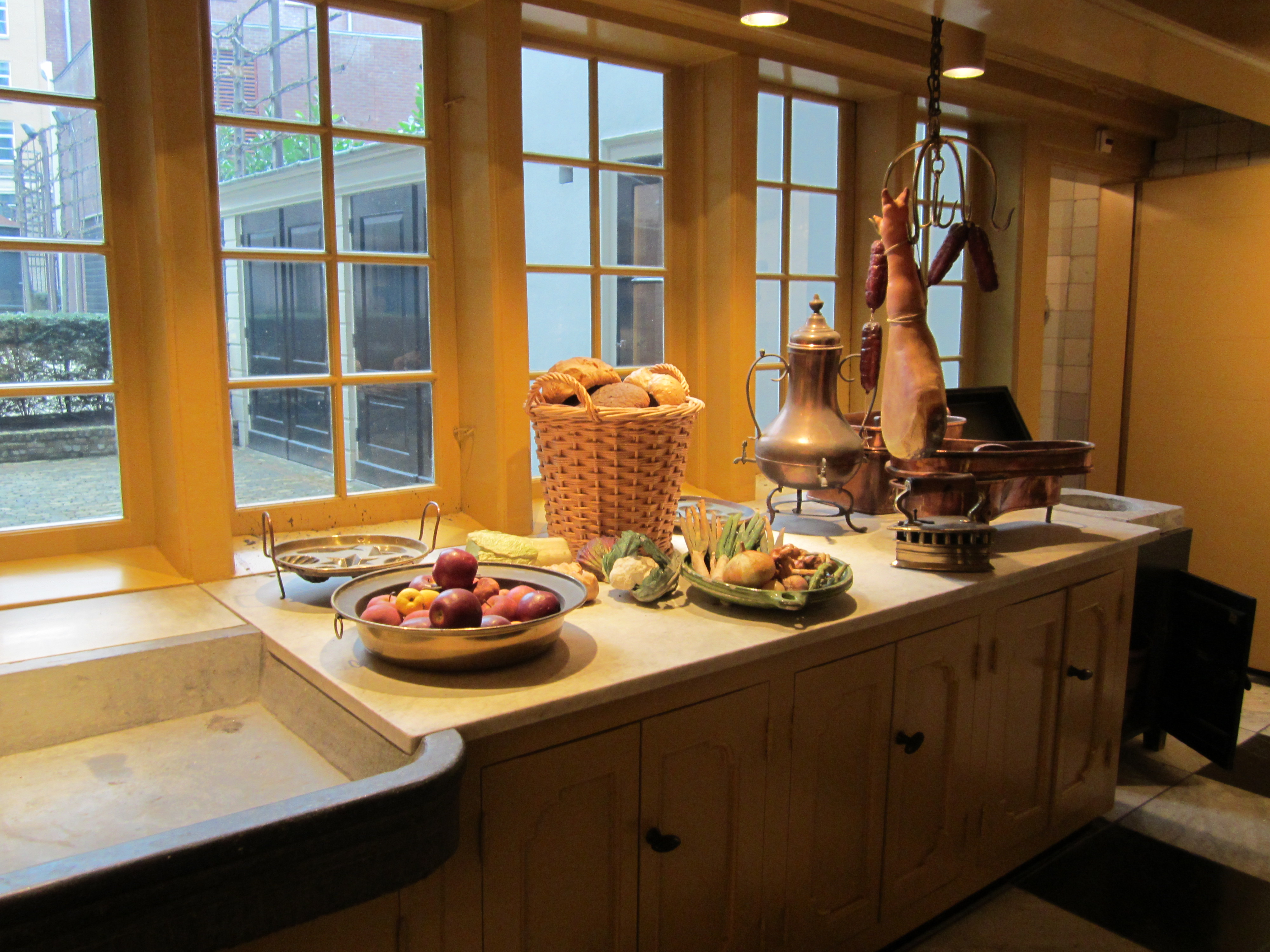
The Kitchen

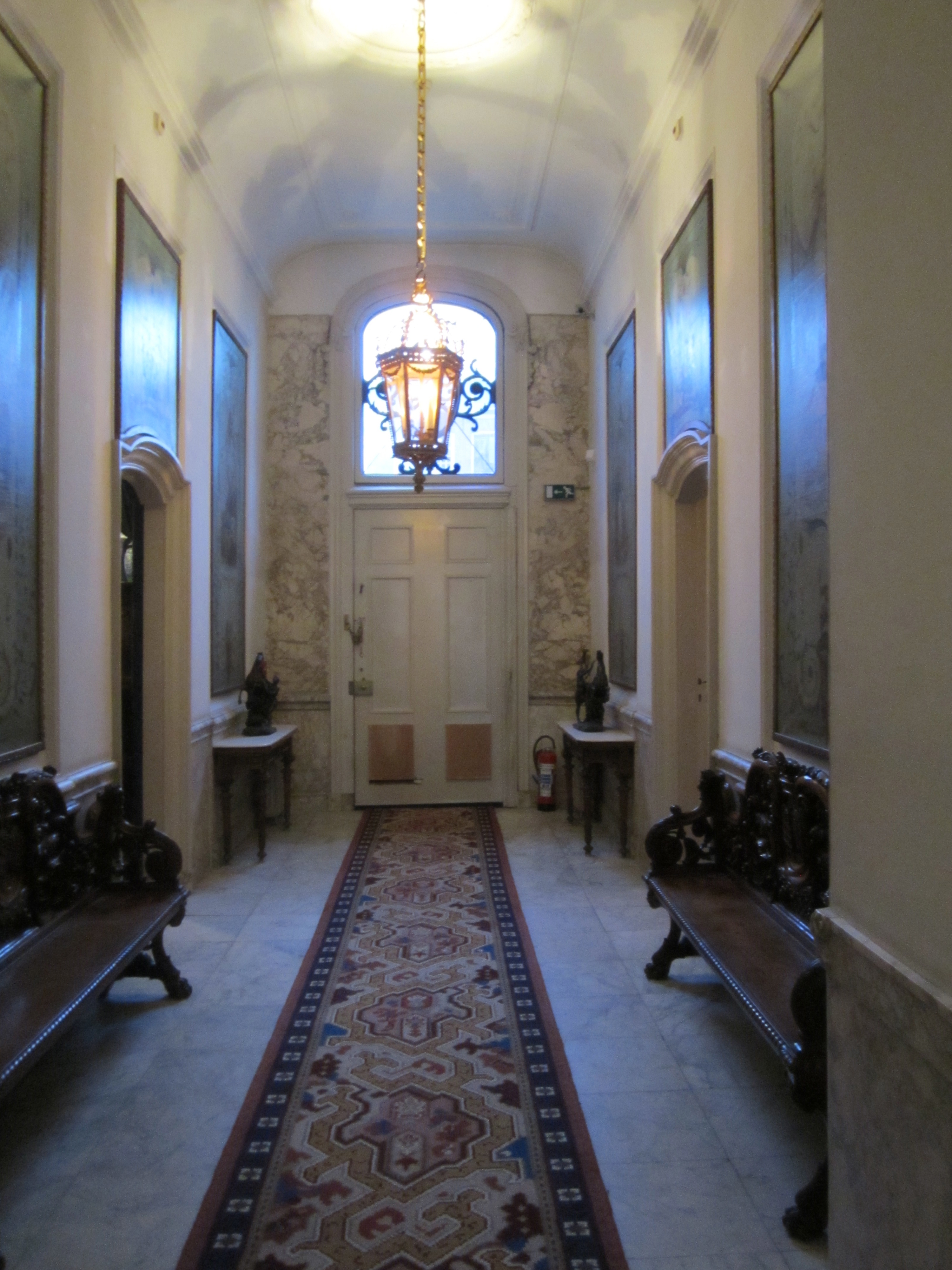
The Entrance Hall ("Piet did not wish to appear provincial, and his face gave no sign of the impression the entrance hall made.")

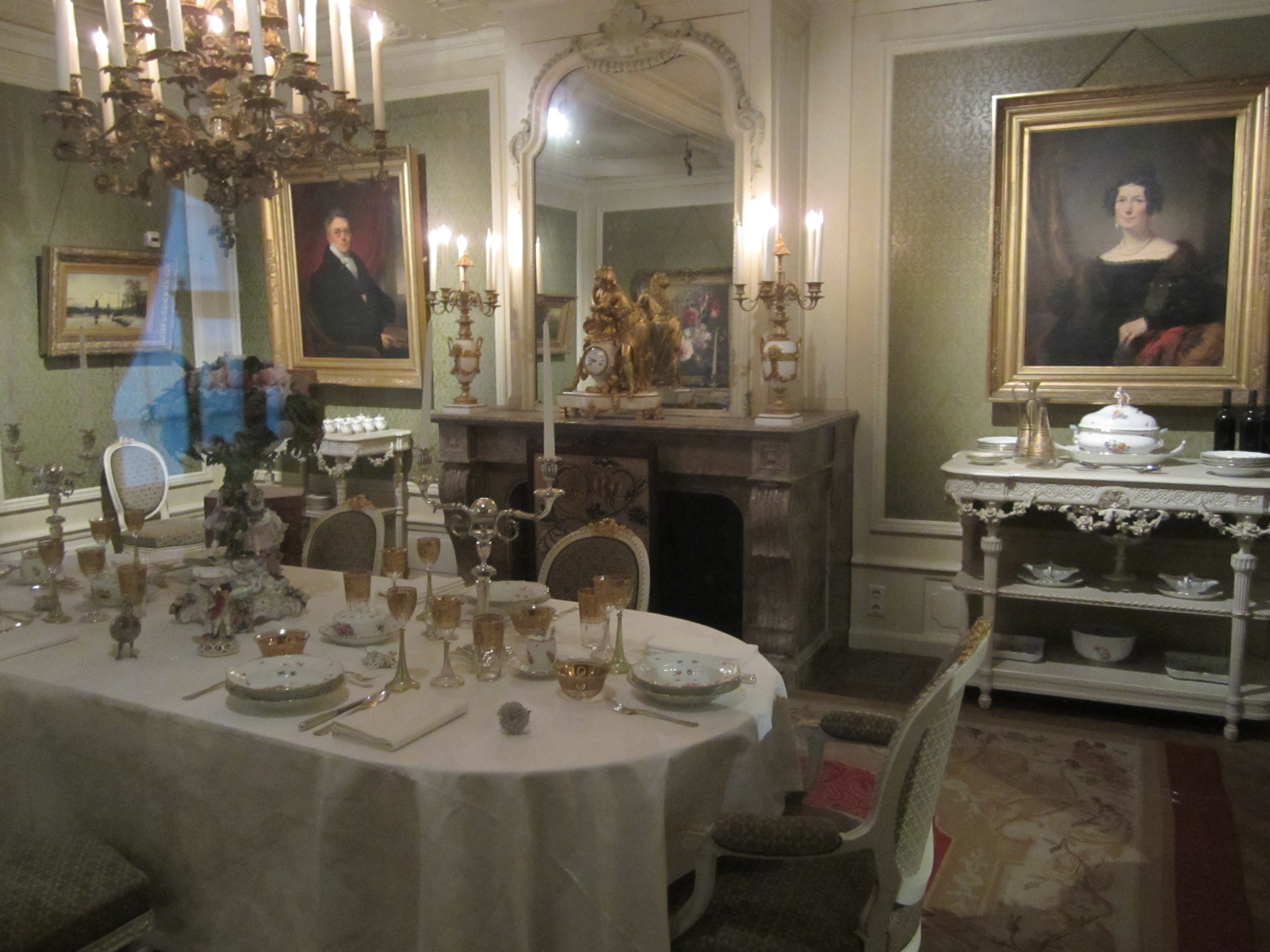
The Dining Room ("The table was Georgian, bought at an auction in London; the chairs were Louis XVI, resprung and upholsted in olive-green and white. The gilt salt cellars came from Hamburg, the clock on the mantelpiece from Geneva, the figures beside it from the Imperial Porcelain Factory in St. Petersburg. None of this detail was lost of Piet, who had a fine and instinctive appreciation of beauty.")

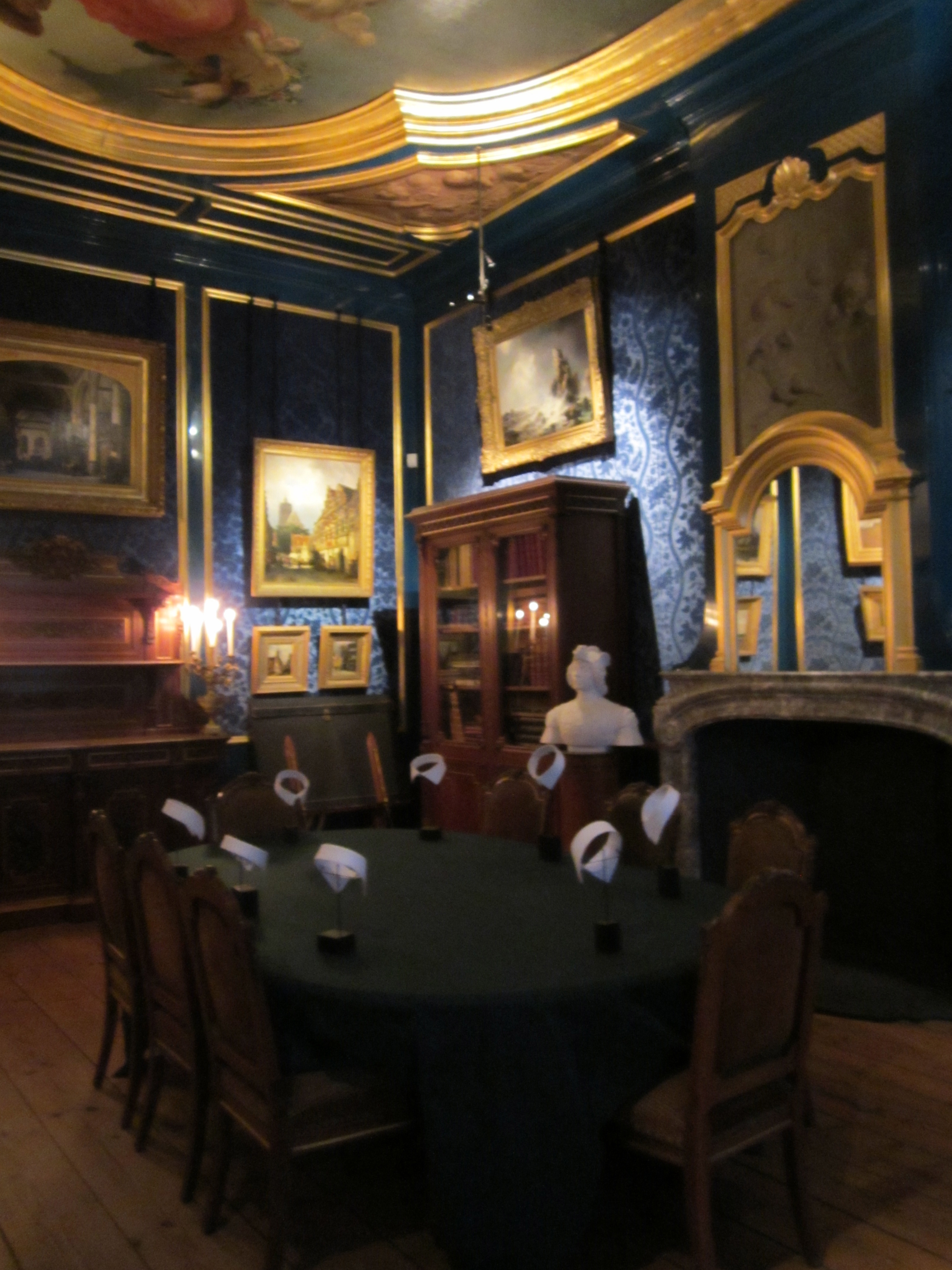
The Men's Parlor

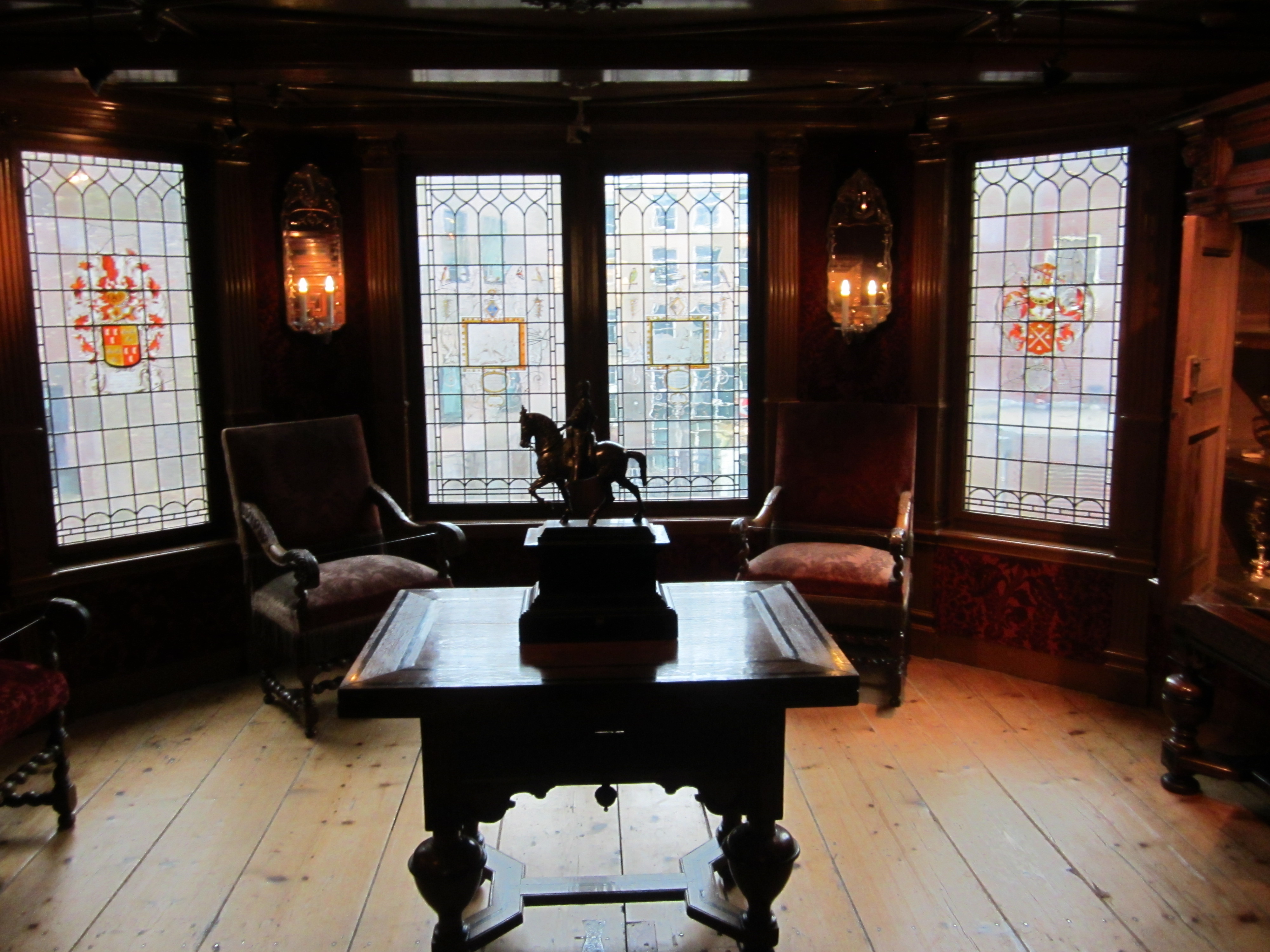
The Collector's Room ("...the room with the French windows, which was nothing but a tiny octagon, constructed of glass and stone and furnished with two sofas of extreme rigidity. It told him plainly that the splendours of the drawing room were reserved for men better and grander than he ...")

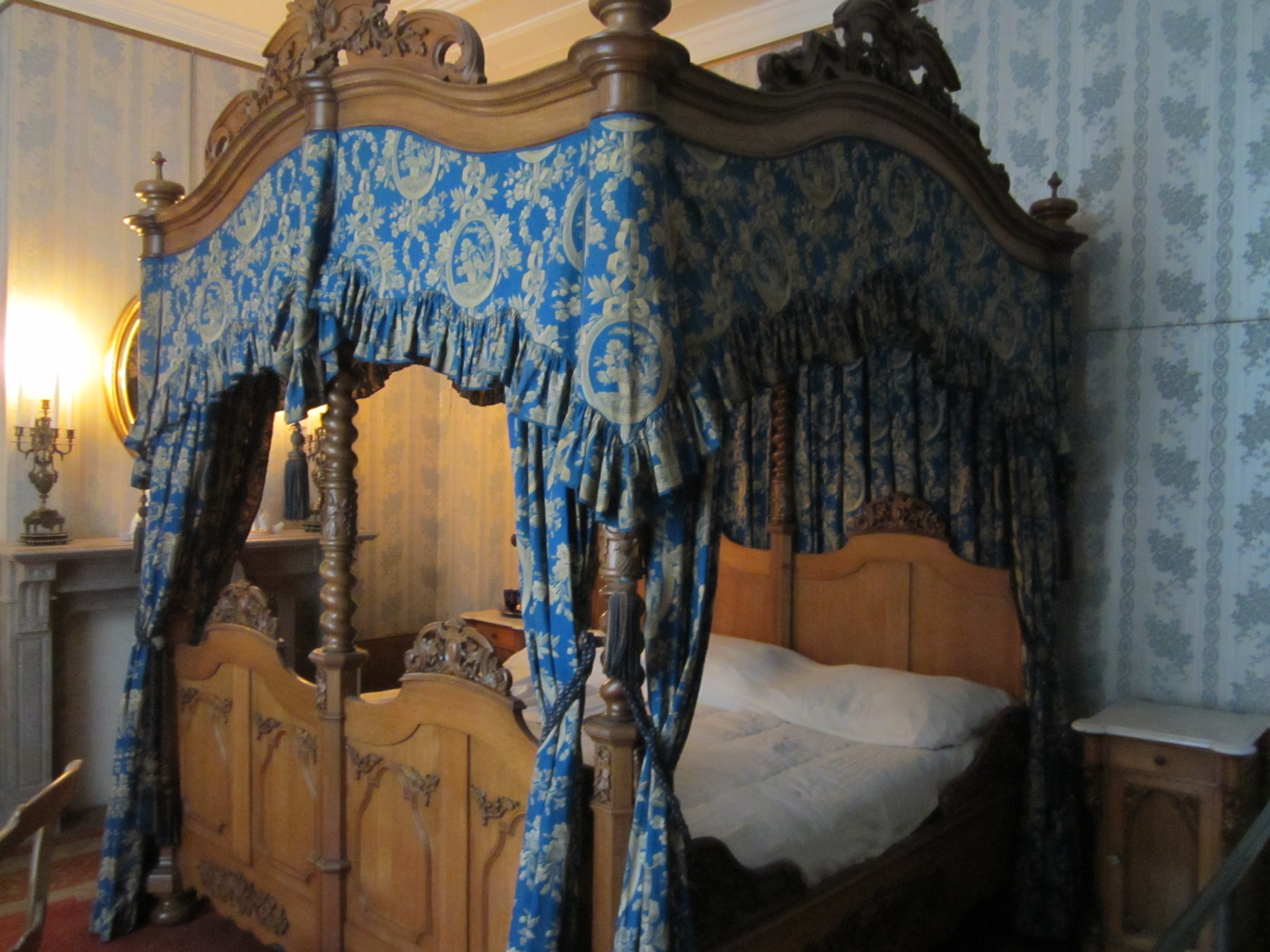
The Bedroom, the scene of an important climax in the book: ("Maarten took charge. 'My dear, let us go to bed.' He offered his wife his arm.")

Have you seen Richard Mason’s wonderful website? If you’re enticed to learn more, you can go there to listen to the music which is such a key part of the book. It is exactly what I wish for when I read a book with a strong musical element. Well done.

In case you noticed the strangely alphabetized paragraphs throughout this post, allow me to introduce you to two more wickedly fun characters in the book, Constance and Louisa, the two spoiled Vermeulen-Sickert daughters. As a co-employee explains to Piet: “Don’t let their politeness fool you. They’re vicious when they choose. . . . They like to humiliate people – but subtly, so their target never knows. Lately they’ve taken to leading their victim through a conversation in alphabetical order. Very funny when the poor fool doesn’t catch on.”

Just let me know if you caught on – perhaps by starting with K in the comments?

Sarah’s Key Paris Sites

Sarah’s Key Paris Literary Tour Map

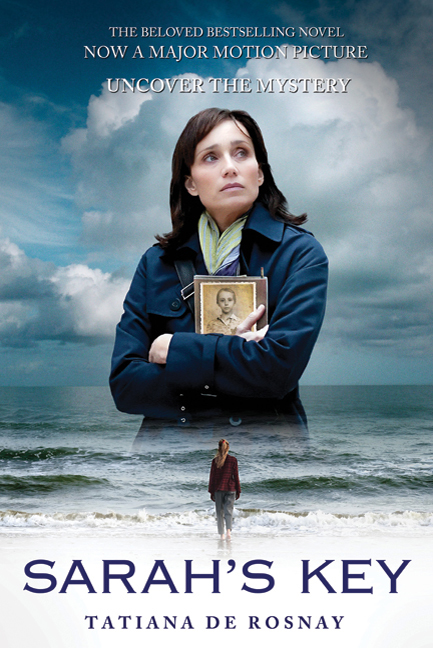
In Tatiana de Rosnay’s book Sarah’s Key, Sarah is a 10 year-old Jewish girl whose family is apprehended by the French police in the notorioius Vel’ d’Hiv’ Roundup on July 16, 1942.

In the pre-dawn hours of July 16th (just two days after Bastille Day) French police and members of a French fascist party collaborated with the occupying German authorities and began raiding Jewish homes and apartments throughout Paris, arresting over 13,000 adults and children.

Although most of those apprehended were eventually sent to extermination camps, they were first taken to a building known as the Vel’ d’Hiv’, or Vélodrome d’Hiver (Winter Cycling Track) located at the corner of the Boulevard de Grenelle and the rue Nelaton just west of the Eiffel Tower. The building was used for various events in the 1924 Olympics, and at the time of the roundup it was available for private rental. The Germans obtained the keys from the French owner, although it isn’t clear whether it was only through force or threat of force.

In the book, Tatiana de Rosnay depicts the appalling conditions at the Vel’ d’hiv through the eyes of 10 year-old Sarah. The prisoners were denied nearly all food, water and bathroom facilities. The windows were nailed shut to prevent escape, which made it even hotter inside. The prisoners were kept there for about five days, after which they were taken to different internment camps, including Drancy, Beaune-la-Rolande and Pithiviers. Many were eventually sent to Auschwitz where they lost their lives.

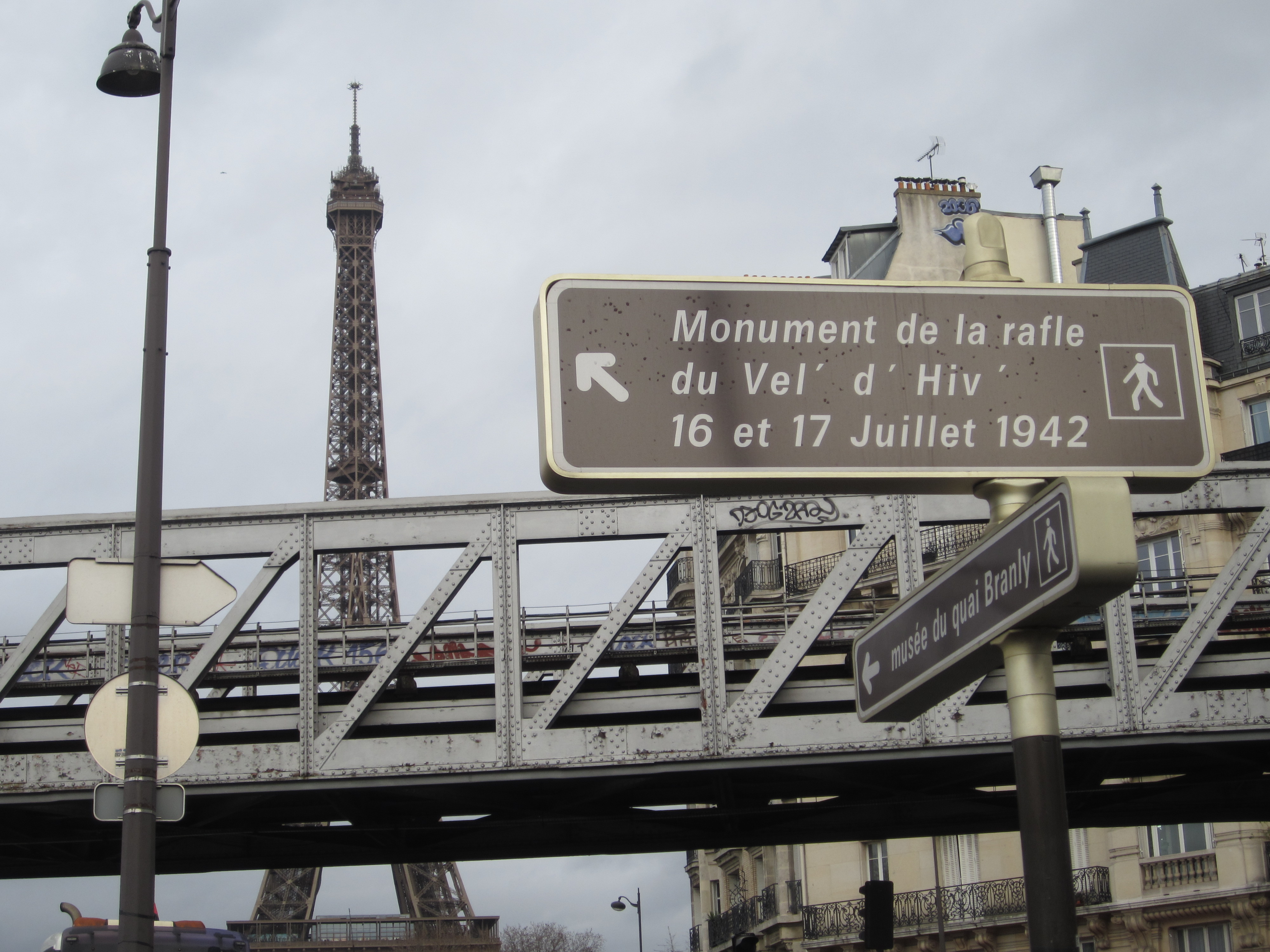
A fire destroyed much of the velodrome in 1959. It was demolished and replaced with a group of anonymous looking government buildings. In 1993, Francois Mitterand commissioned a monument to be erected near the site on the edge of the Quai de Grenelle, and in 2008, a plaque was installed at the nearby Bir-Hakeim Metro Station. It was at a memorial service at the site in 1995 that Jacques Chirac issued an apology on behalf of the French government.

 Vel d’Hiv Plaque and The Monument of the Deportees

Take Line 6 of the Paris Metro to the Bir-Hakeim station near the Eiffel Tower. Near the exit of the station along Boulevard de Grenelle, you will see the plaque, which acknowledges that 13,152 Jews were arrested and held there under inhumane conditions by the Vichy government, under orders of the occupying Nazis.

Vel' d'Hiv Plaque

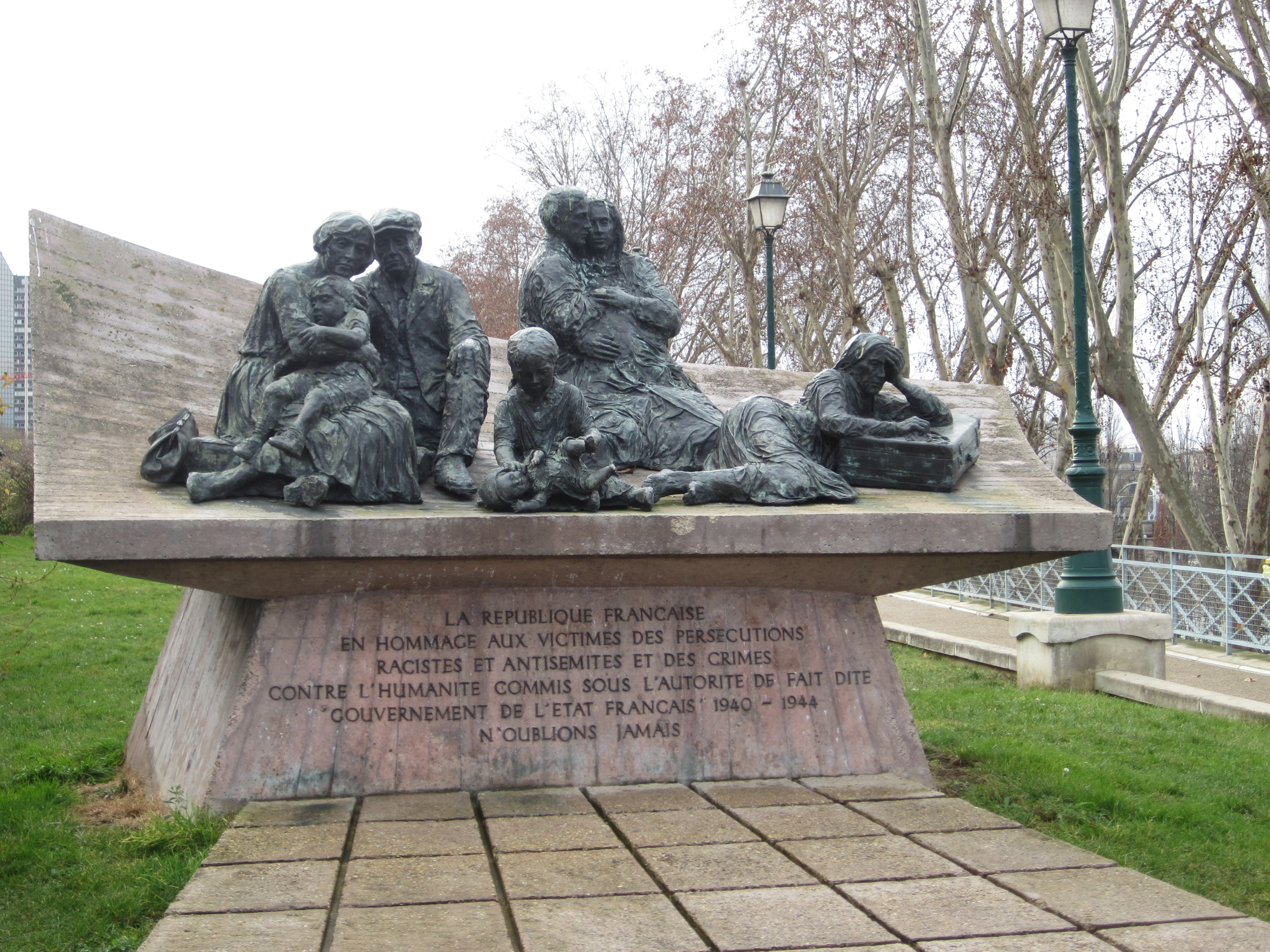
From the Metro station, walk north along Boulevard de Grenelle toward the Seine and cross to the opposite side of the Quai de Grenelle. There are a couple of entrances to the small park that contains the Vel’ d’hiv’ Momument.

The Square of the Jewish Matyrs of Vel' d'hiv: A quiet place to contemplate the sculpture.

A sculpture ". . . in homage to the victims of racist and antisemitic persecution and crimes against humanity committed pursuant to the authority of the French government. . . Never Forget."


Sarah’s Apartment at 36 rue de Saintonge

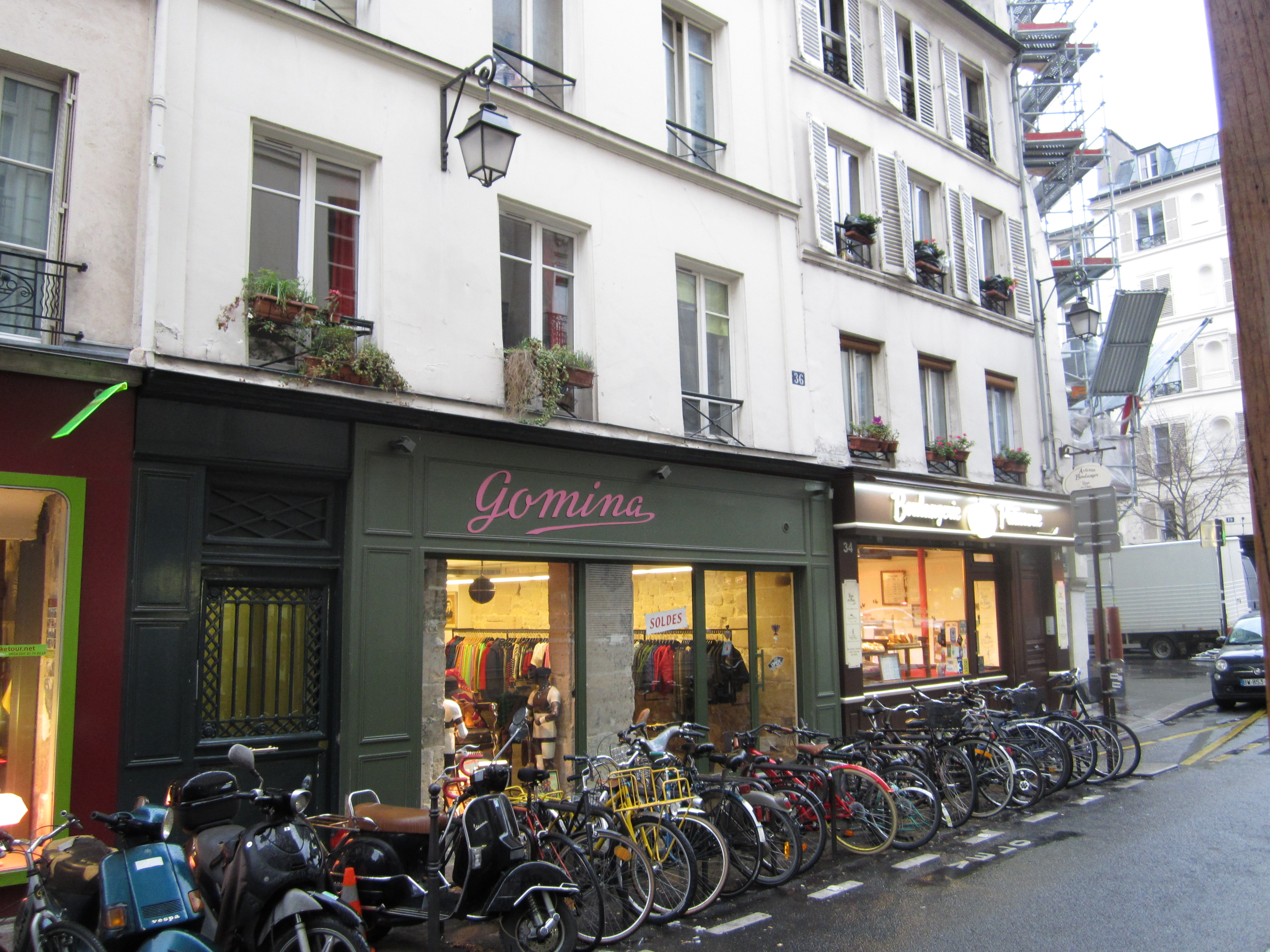
In the book, Sarah’s family lives at 36 rue de Saintonge, which is in the heart of the Marais district in the 3rd arrondissement of Paris. The Marais was the home of a thriving Jewish community that was the focus of the Vel’ d’Hiv Roundup. Although this is a fictional address, it is entirely possible that round-ups would have occurred on this block.

The area is within a short walking distance from the Arts and Metiers or Rambuteau Metro stops. I walked there on a dark and cloudy afternoon. The street is narrow and the old buildings lean gently inward. The street still has some sense of its former life as an old working class neighborhood, with some old-fashioned mom-and-pop tailoring and butcher shops still standing. However, the neighborhood has been gentrified, and a trendy women’s boutique now stands on the ground floor of Sarah’s fictional apartment building.

It’s a chilling feeling to stand on the quiet street full of cheerfully colored bicycles and motor scooters and imagine what could have happened there nearly 70 years ago.


36 rue de Saintonge

The Shoah Memorial (Mémorial de la Shoah)

The Shoah Memorial was completed in 2005 and is a memorial, a museum and an archive dedicated to the victims of the Holocaust. It is located at 17 rue Geoffroy l’Asnier in the 4th arrondissement. I walked from rue de Saintonge, but it’s also close to several Metro stations: Saint-Paul, Hotel de Ville and Pont Marie. It is open Sunday-Friday from 10am – 6pm. The Shoah Memorial is an intense experience, but sometimes it is necessary to be reminded of our shame and our loss.

Follow the signs from the Hotel de Ville, St.-Paul or Pont-Marie Metro stops.

The Shoah Memorial's Wall of Names

This entire Sarah’s Key literary tour could easily be accomplished in one day by hopping on and off the Metro. I can even recommend a nice cafe near the Arts et Metiers Metro Stop called Cafe des Arts et Metiers, at 51, rue de Turbigo. And of course there’s always the “best falafels in the world” at L’as du Falafel, 32 Rue des Rosiers in the Marais.

It will be a day you’ll probably never forget. If you haven’t already, pick up Sarah’s Key at your local independent bookstore and read its tragic but necessary story.

The Last Nude: More Paris Sights

Welcome back to my Last Nude Literary Tour of Paris, based on scenes from Ellis Avery’s 2011 novel The Last Nude. Click here for Part I of the tour, where I shared photos of Tamara de Lempicka’s fictional and real-life Paris apartments.

Whether you live in Paris and can wander through these sites at your leisure, or you’re just an armchair traveler who dreams of France, I hope you enjoy this literary tour.


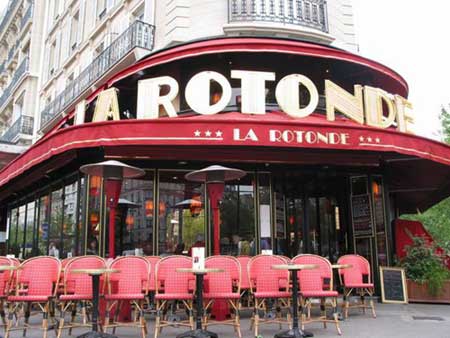
If you haven’t yet read the book, you should know that Rafaela, de Lempicka’s model and muse, is a new arrival to Paris, and is on the slippery slope of becoming a prostitute in order to survive. Early in the book, she heads over to La Rotunde,  a classic French brasserie that has been at the corner of Montparnasse and Raspail since 1911. Rafaela is hoping to run into some people she knows from her early days at Alliance Francaise (a nearby French language school) who might be willing to buy her dinner. Instead, Rafaela meets a character named Anson Hall, who invokes the spirit of Ernest Hemingway. The two are fellow lost spirits, and strike up a wonderful friendship.

La Rotunde is a great place to have some spirits of your own, especially if it’s a nice day and you can sit outside with a journal or sketchbook. Maybe you’ll strike up a conversation with the starving writer sitting next to you . . . and who knows!

La Rotunde Montparnasse


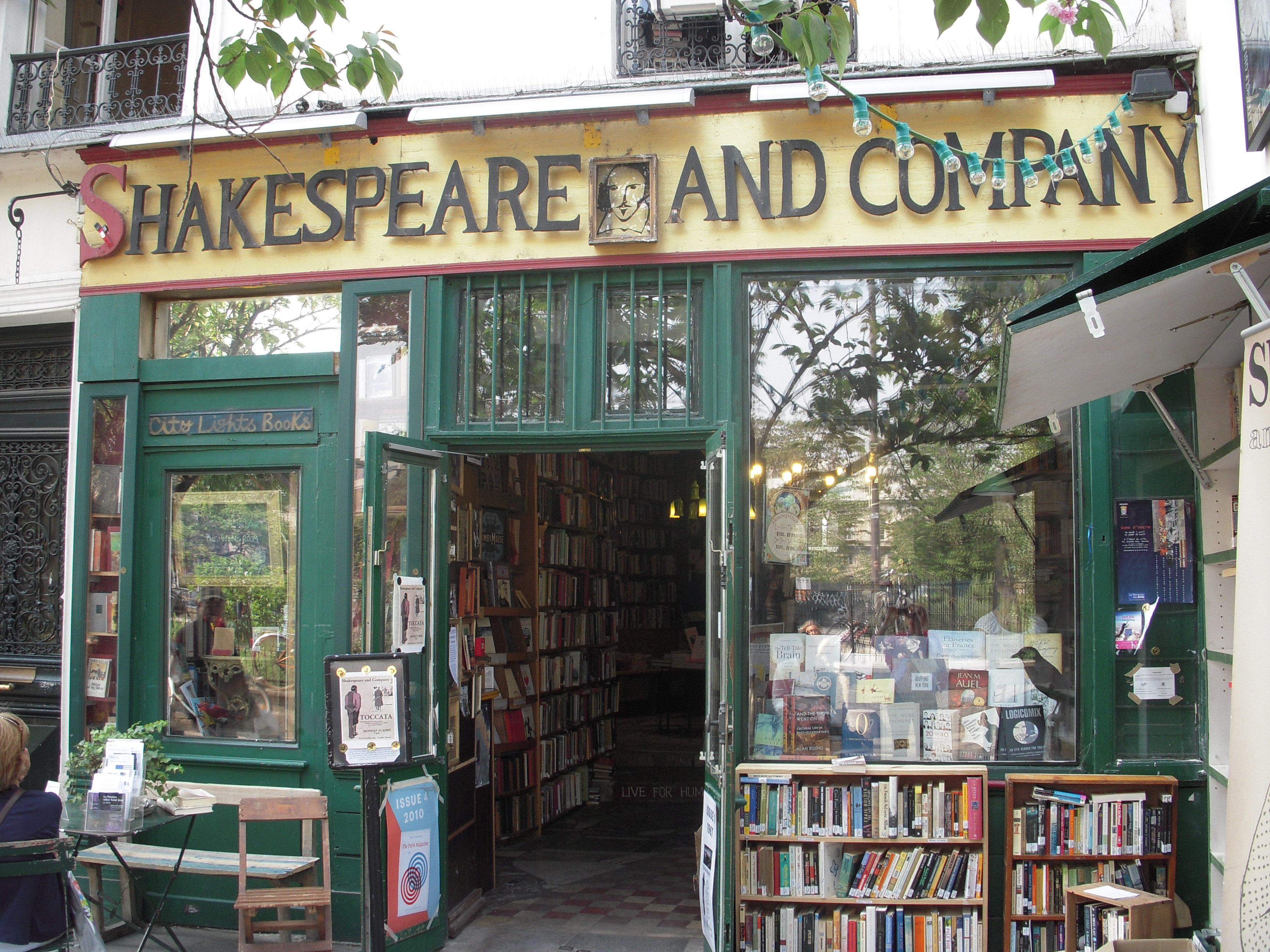
From La Rotunde, you can follow Rafaela’s Left Bank wanderings to the site of the original Shakespeare & Co, which as of 1922 was located at 12 rue de l’Odéon. In the novel, Rafaela meets and befriends Shakespeare & Co. owner Sylvia Beach and her partner Adrienne Monnier. For a great collection of photographs of Sylvia Beach and her bookshop, check out author John Baxter’s website, johnbaxterparis.

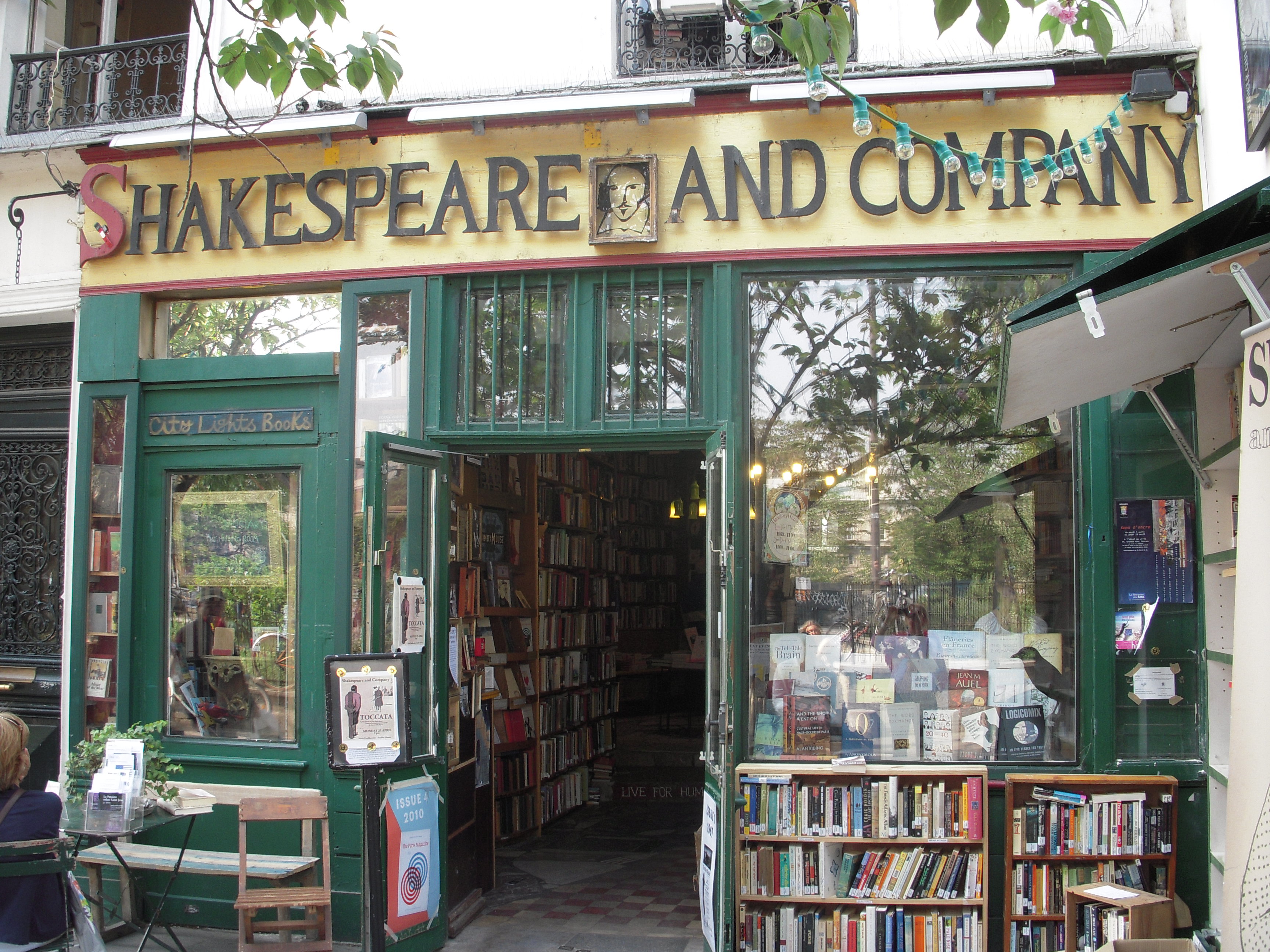
After you swing by the site of the old Shakespeare and Co., you really do need to stop in the “new” one. Today, Shakespeare & Co. is located at 37 Rue Bûcherie, just along the left bank of the Seine. The bookshop is still mourning the loss of George Whitman, who owned the bookshop from 1951 until his passing in December of 2011. There are some great historical photos on their website.

Once you’re there, you really do need to stay awhile. Buy more books than you intend and enjoy the spirit of the place. It’s a treasure. In addition to their quirky and delightfully haphazard selection of books, they have super cute tote bags. And don’t forget to ask them to stamp the first page  of your books with the official “Shakespeare & Co.” seal. You can’t get that from Amazon.

Shakespeare & Co., 2011


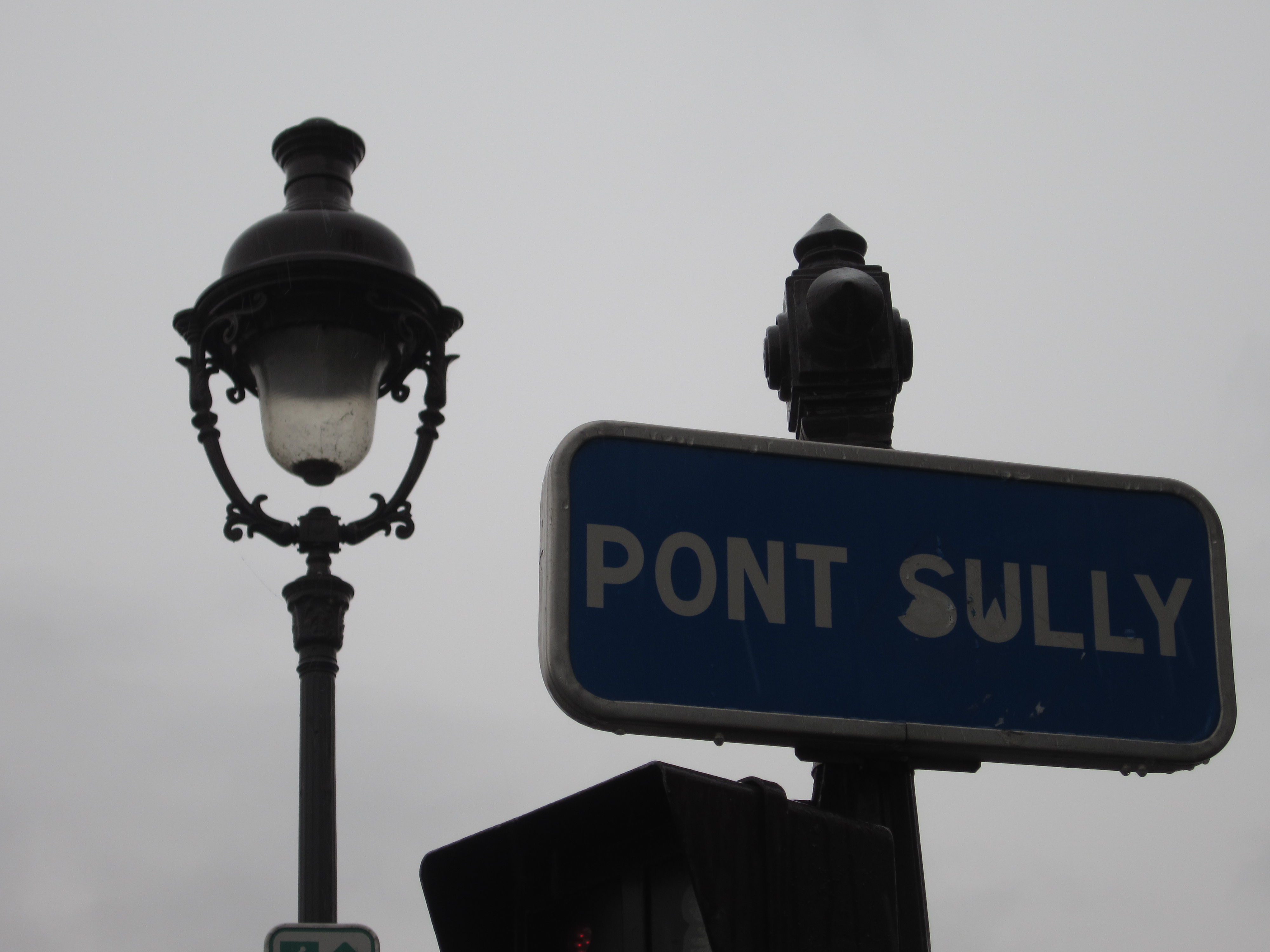
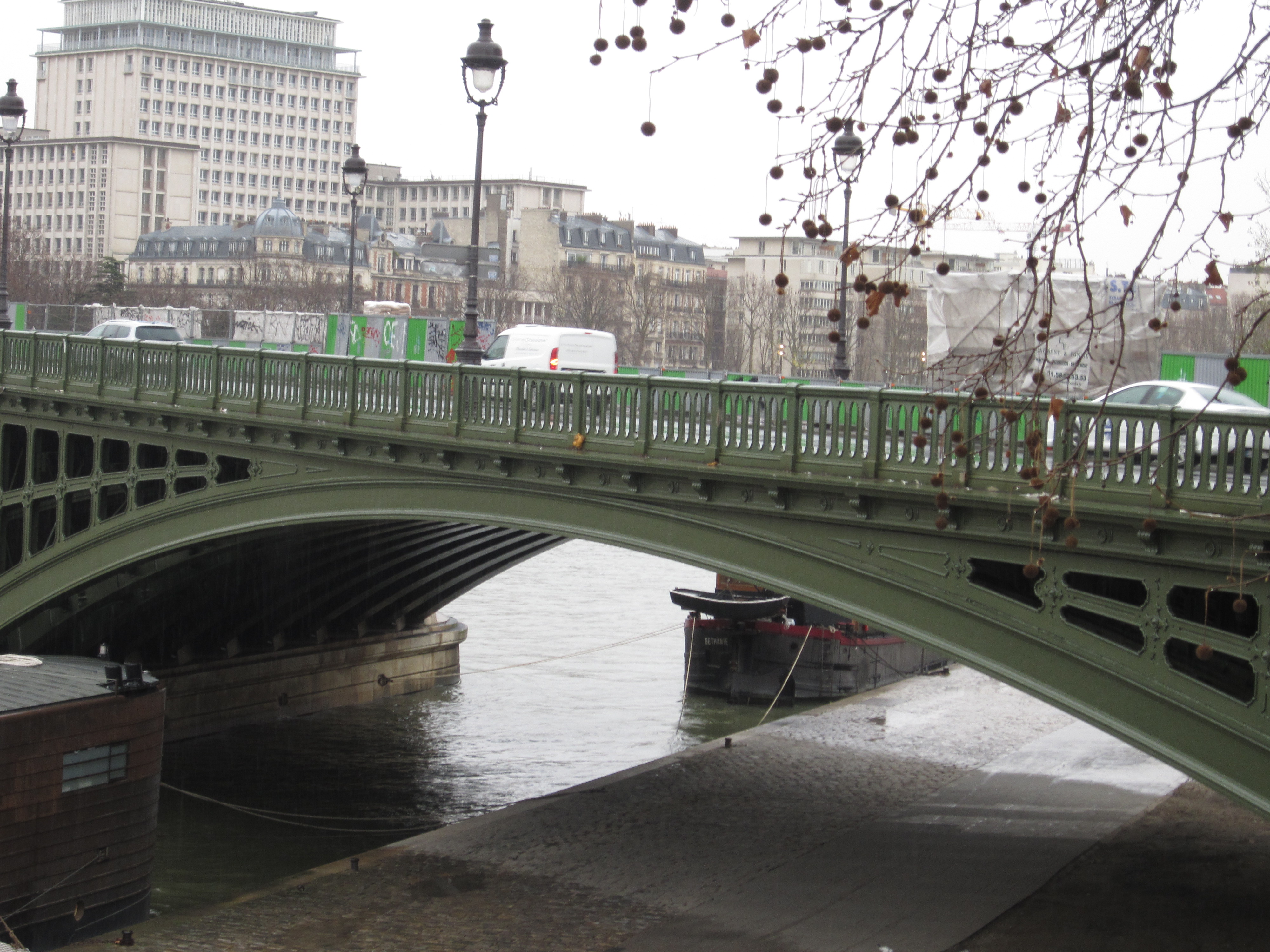
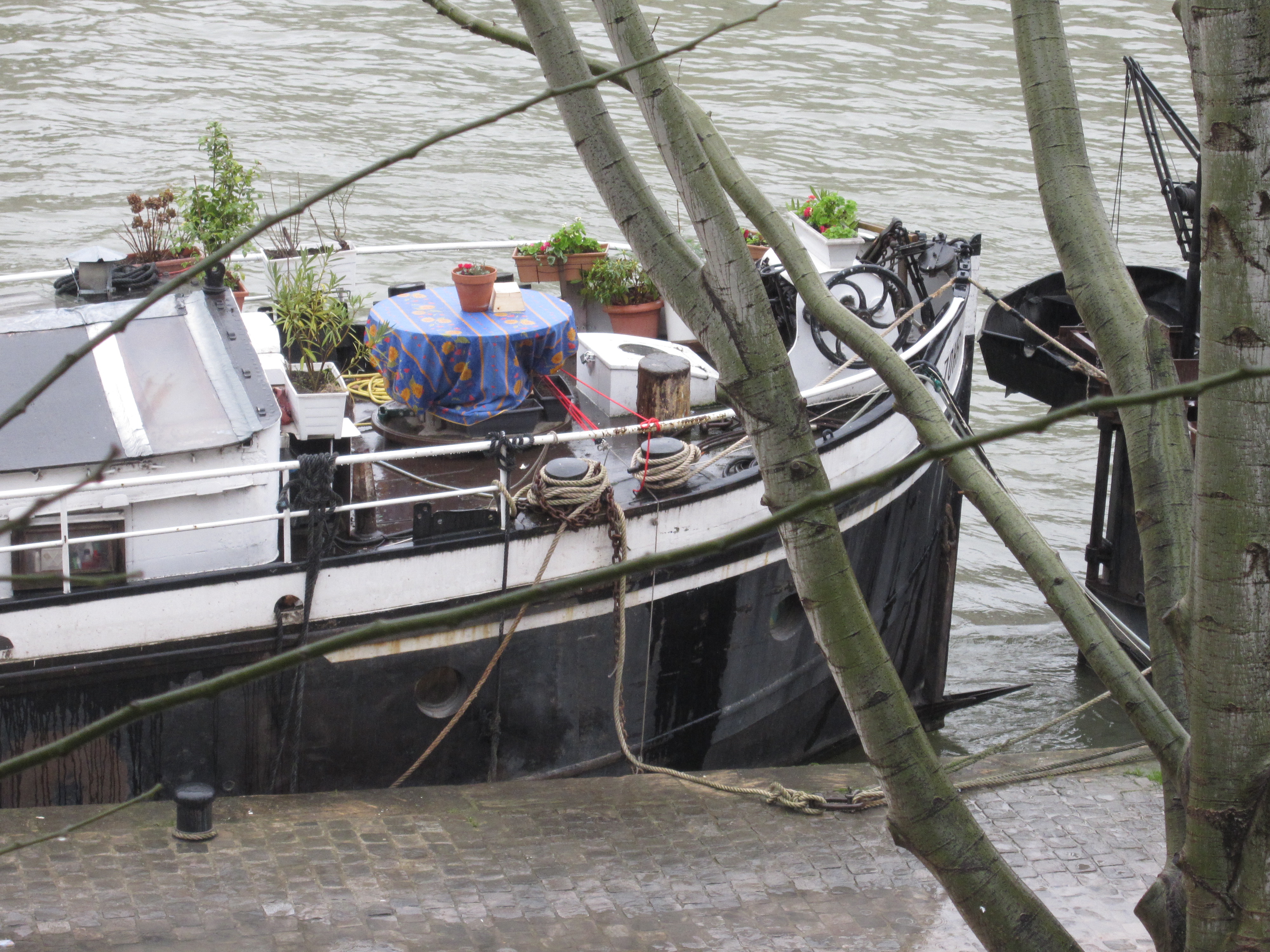
Finally, it’s an easy enough walk from Shakespeare & Co. to Pont de Sully, the bridge that connects the Left Bank to the far east end of Ile St. Louis. Toward the end of The Last Nude you will learn that Rafaela is living in a houseboat on the Seine near Pont de Sully. I can totally picture Anson and Rafaella having lunch on the deck of the houseboat pictured below. (Of course there’s a nice French tablecloth!) There is also a critical scene in the book that takes place on a bridge – I can picture it happening here.
Pont de Sully

Pont de Sully Houseboat


If you’re too tired to keep walking, the good news is that there is a terrific little brasserie on the Right Bank of Pont de Sully called Le Sully at 6 boulevard Henri IV in the 4th. Try their Crepes de Maison with some coffee, and between the sugar and the caffeine, you should recover quickly.

I hope you’ve enjoyed these photos from my Last Nude Literary Tour. There’s nothing better than exploring a city through the lens of a really good book. Especially one that honors the history, the art and the spirit of Paris.

In a future post, I’ll give you an exclusive peak at a deleted scene from The Last Nude, and maybe share some additional photos. In the meantime, you could always go pick up the book and start reading!


The Last Nude: A Literary Tour of Paris

The Last Nude by Ellis Avery is a perfect Paris read.

Set in the glamourous 1920’s Paris art world, it tells the story of the real-life Art Deco painter Tamara de Lempicka through the eyes of her lover, model and muse, the Italian-American Rafaela Fano. One of de Lempicka’s portraits of Rafaela (“The Dream”) graces the cover of the book.
For more about the book, check out the author’s interview with NPR and in Public Culture.


There are so many Paris treats in this book, from the original Shakespeare & Co., to houseboats on the Seine, to a character modeled after Ernest Hemingway, that I just couldn’t resist planning my own Last Nude Literary Tour of Paris. I’ll be sharing some of my photos and impressions from my tour over the next week, along with a sneak peek into a deleted excerpt from the book.

Tamara de Lempicka’s Fictional Apartment and Studio:

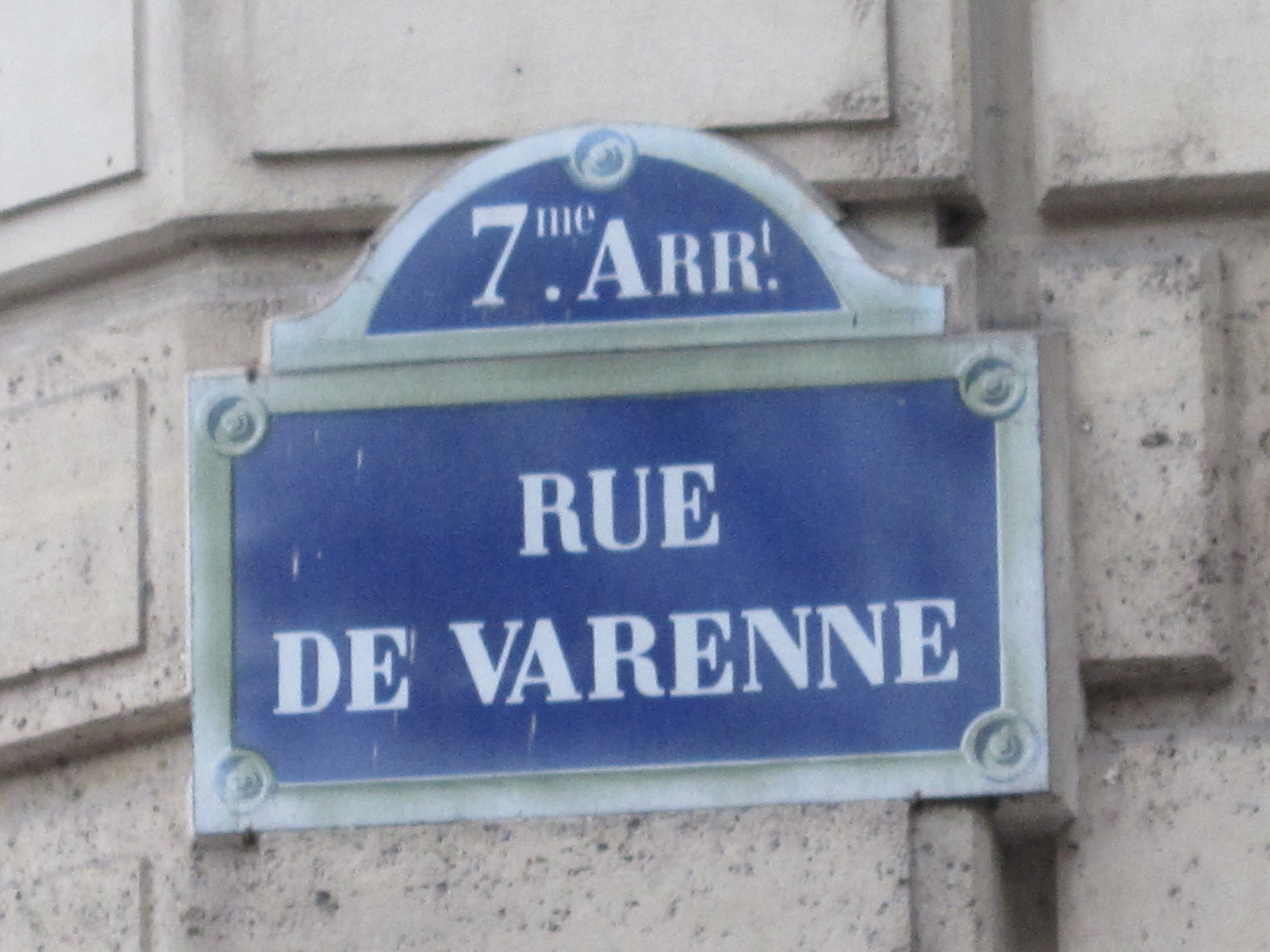
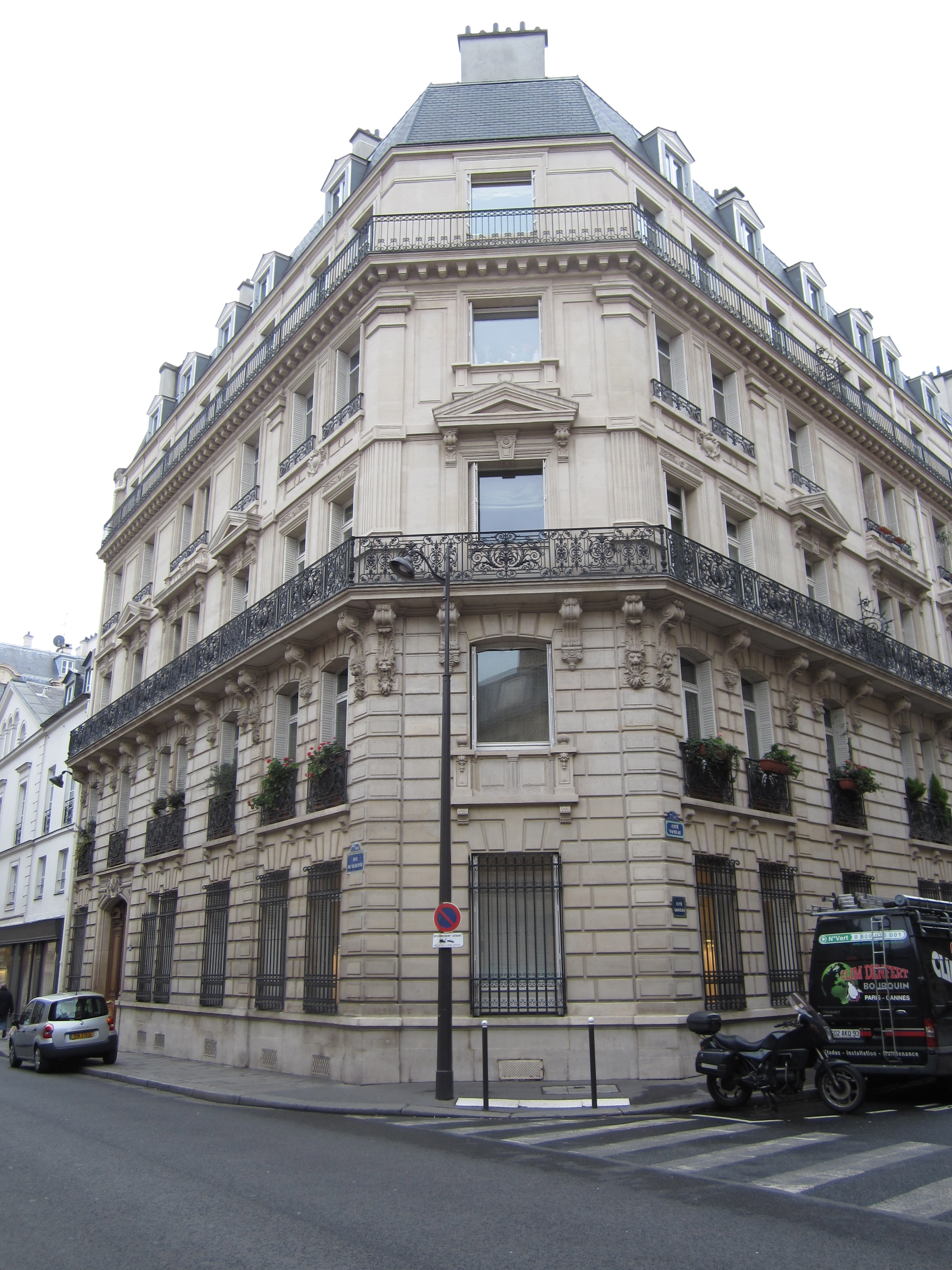
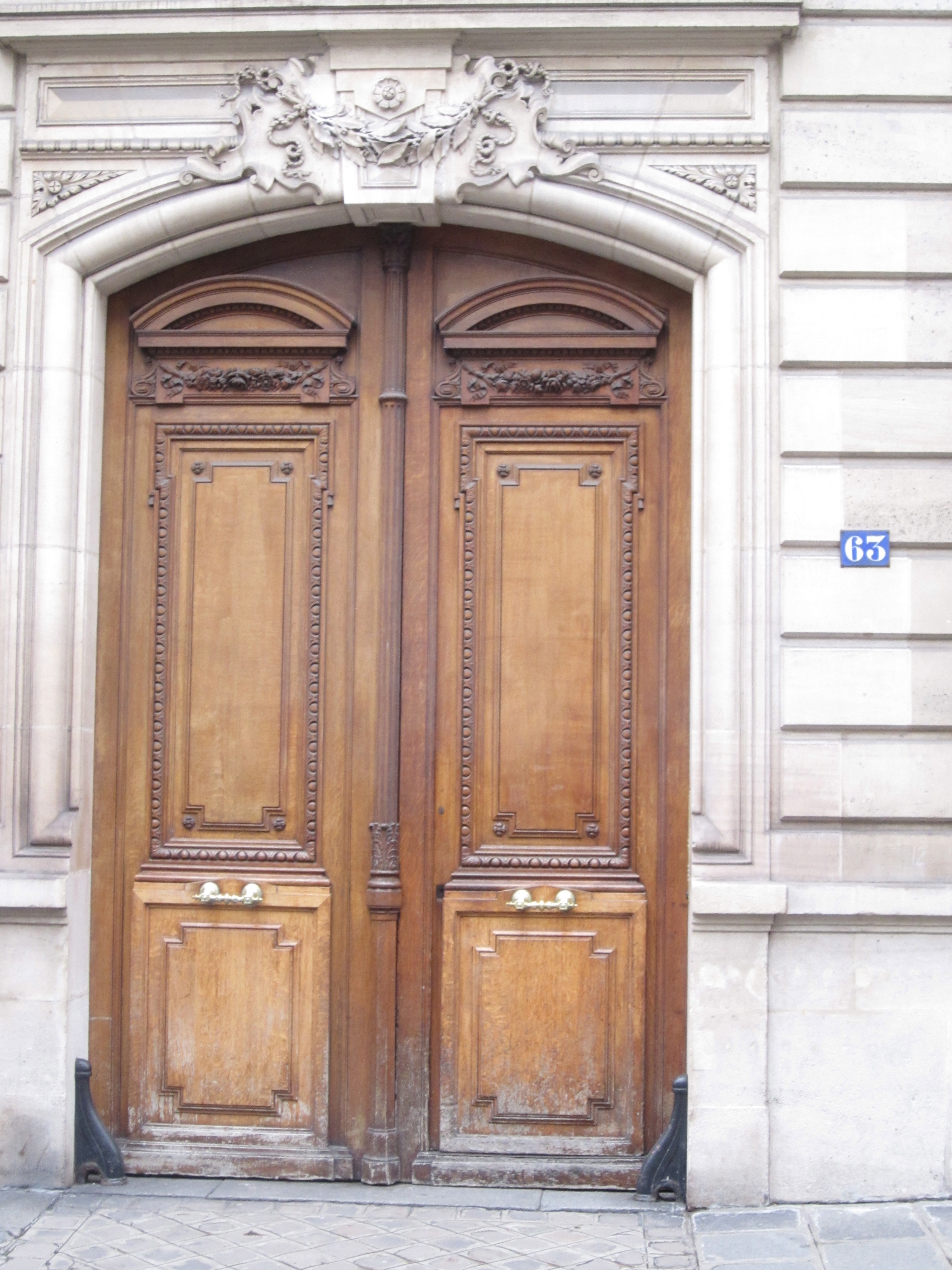
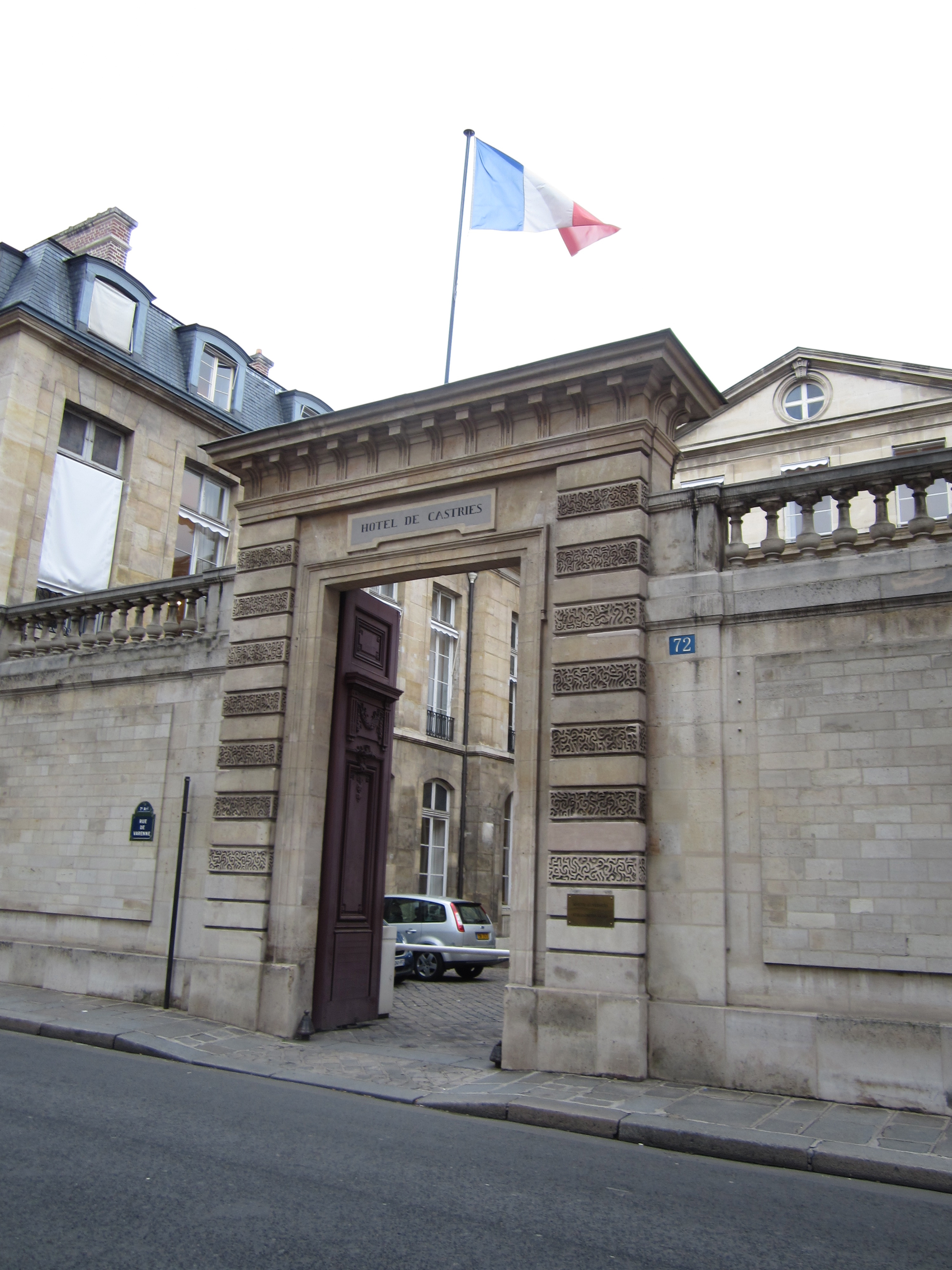
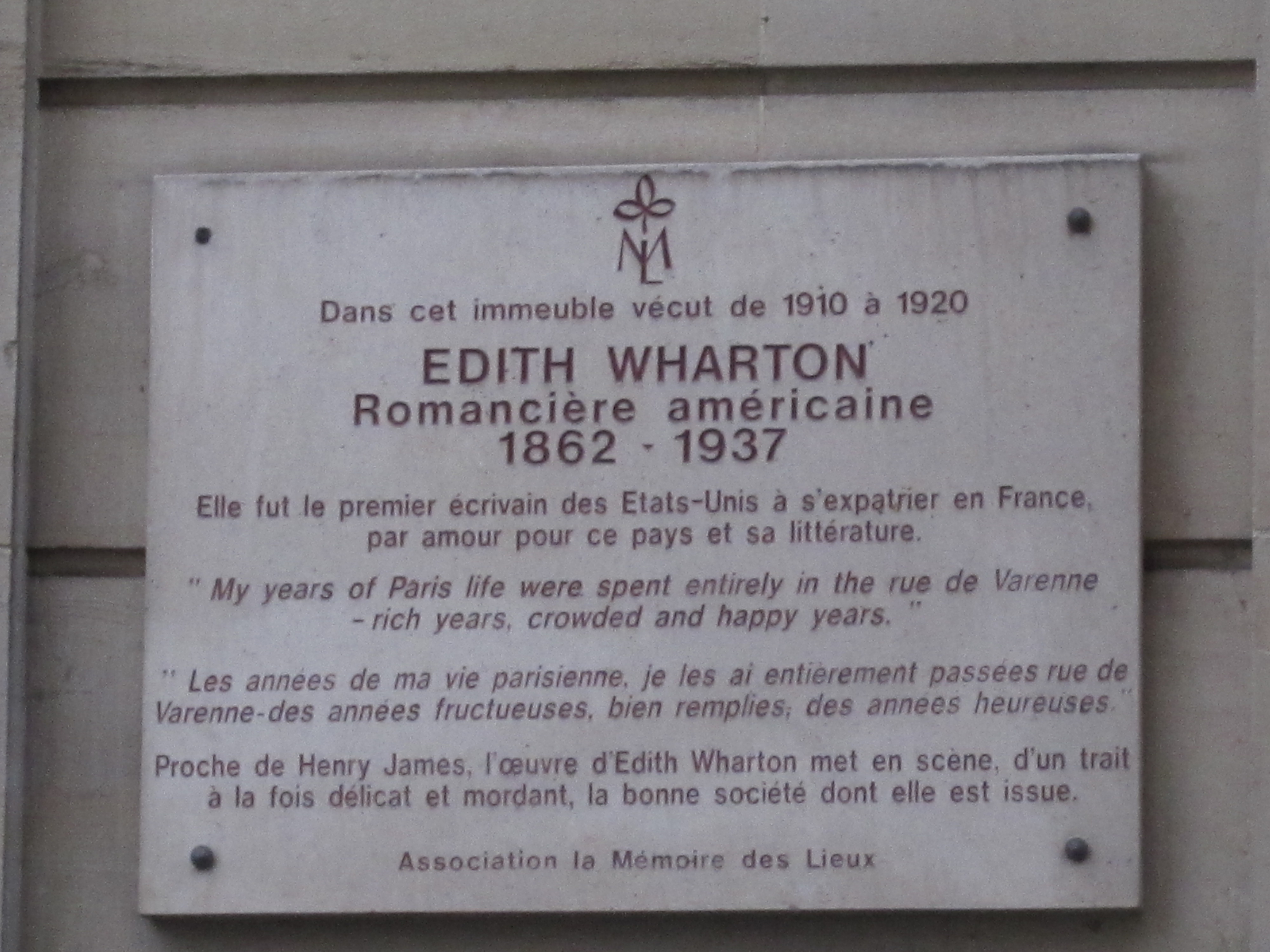
Tamara de Lempicka’s fictional apartment and art studio stands at 63 rue de Varenne in the 7th arrondissement on the Left Bank. Ellis Avery states that she selected this site because it would have had good northern light for painting. The address is directly across the street from the low-slung Hotel des Castries. It also happens to be down the street from one of the Paris homes of Edith Wharton at 53 rue de Varenne. What a lovely make-believe address for Tamara, a wealthy Russian aristocrat who enjoyed mingling with the champagne-sipping art collectors of Paris.

Corner of Varenne and Vaneau

Doorway to 63 rue de Varenne

Hotel de Castries

Edith Wharton Plaque at 53 rue de Varenne


Tamara’s Real Life Paris Home

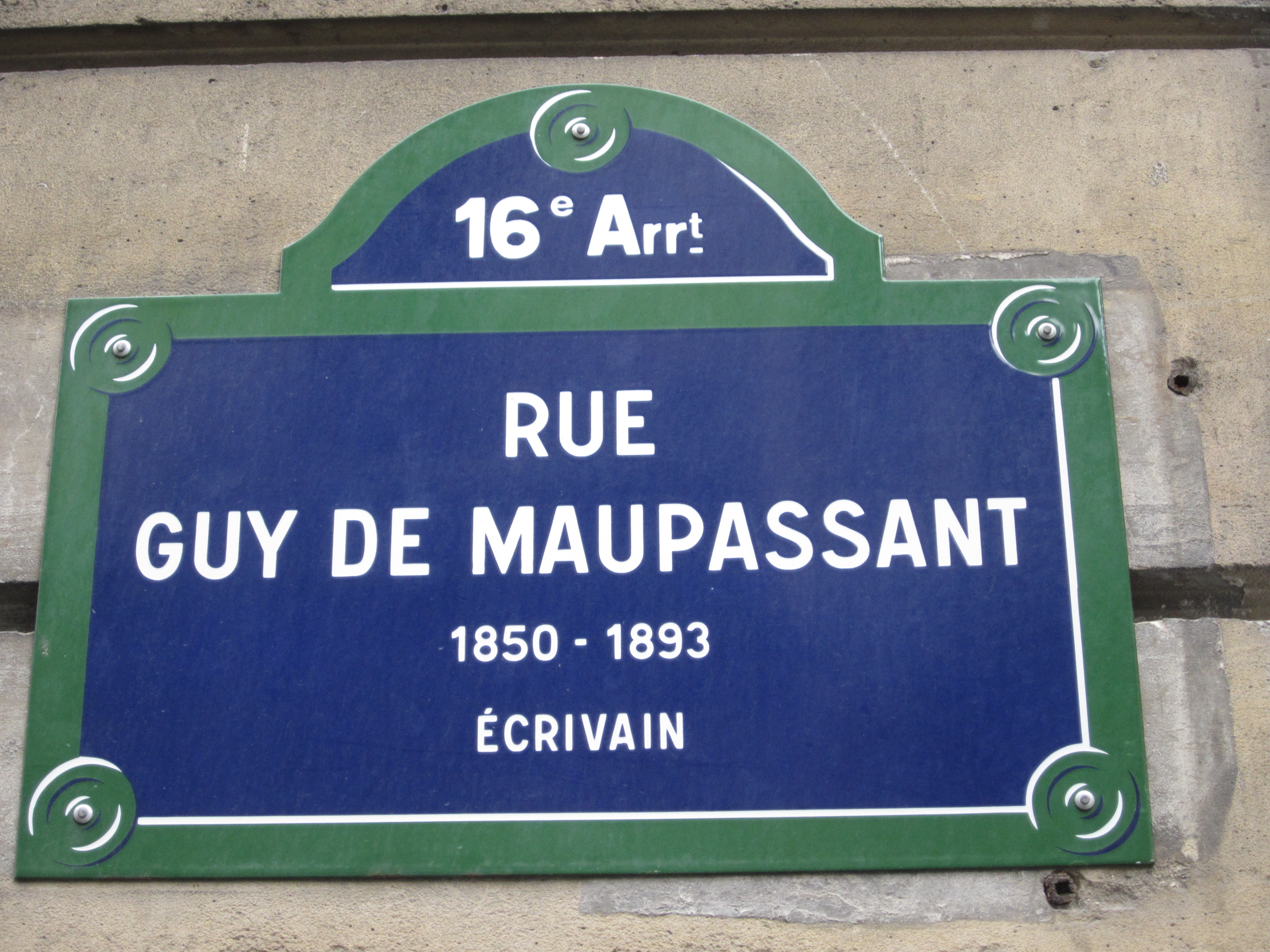
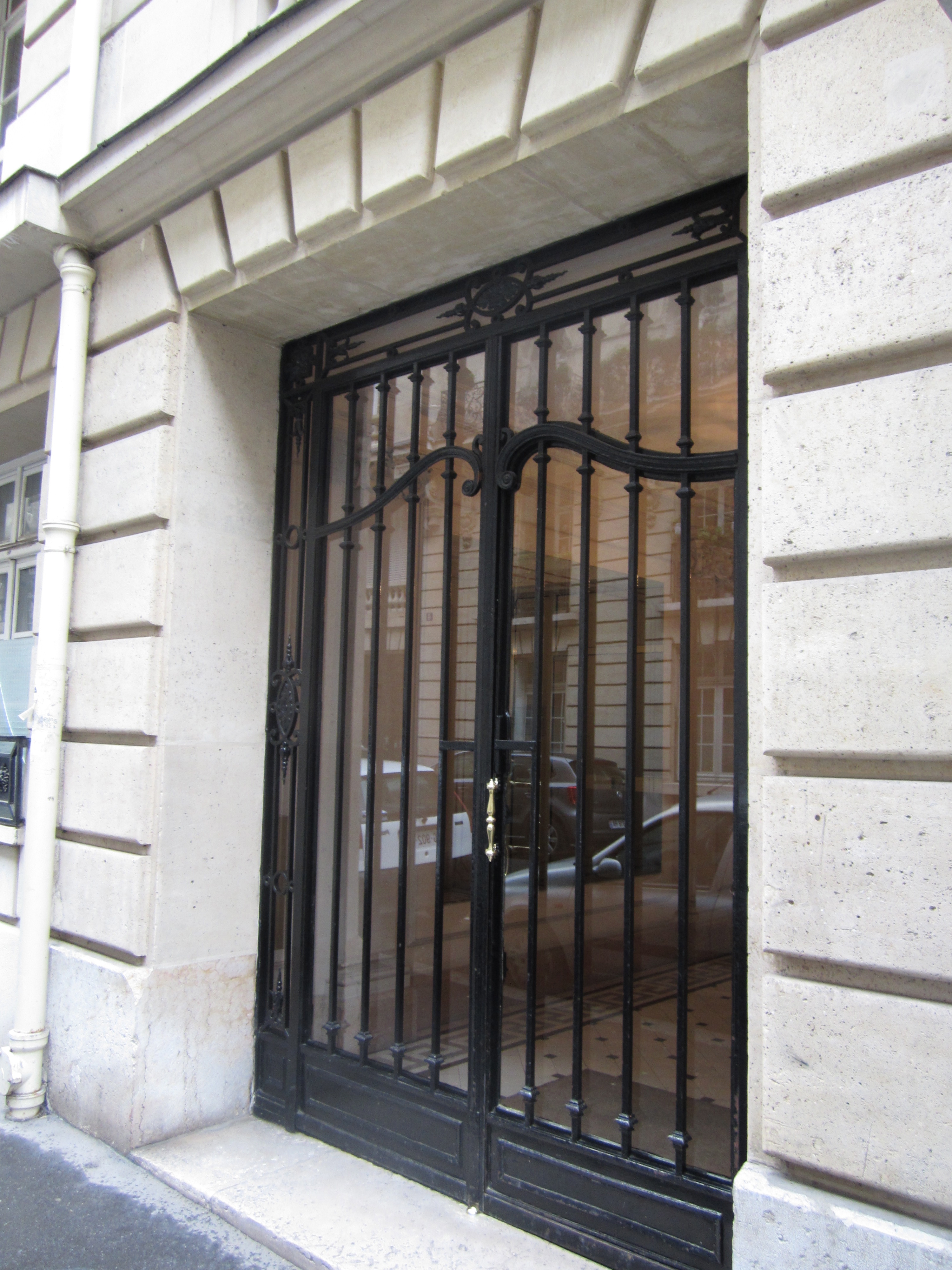
In real life, Tamara de Lempicka moved from St. Petersburg to Paris with her first husband in order to escape the Bolshevik revolution of 1917. They had one daughter and were soon divorced. Tamara first lived at 5 rue Guy du Maupassant in the 16th, then at 7 rue Mechain in the 14th, in a building she herself designed. I enjoyed taking an afternoon to walk through the La Muette area of the 16th, a very posh area full of bustling bistros and beautiful apartment buildings. Check out the nice lines of the doorway to Tamara’s first building on Maupassant.

Doorway of 5 rue Guy Maupassant


Stay tuned for more Paris scenes from The Last Nude. In the meantime, why don’t you pick up a copy from your closest independent bookstore and start reading along? I highly recommend it.


An Artist’s Weekend in Honfleur

Honfleur is an old harbor village in Normandy at the mouth of the Seine, just a two hour drive northwest of Paris. The perfect place to walk through the streets and scenes made famous in the paintings of Claude Monet, Eugene Boudin and many others.

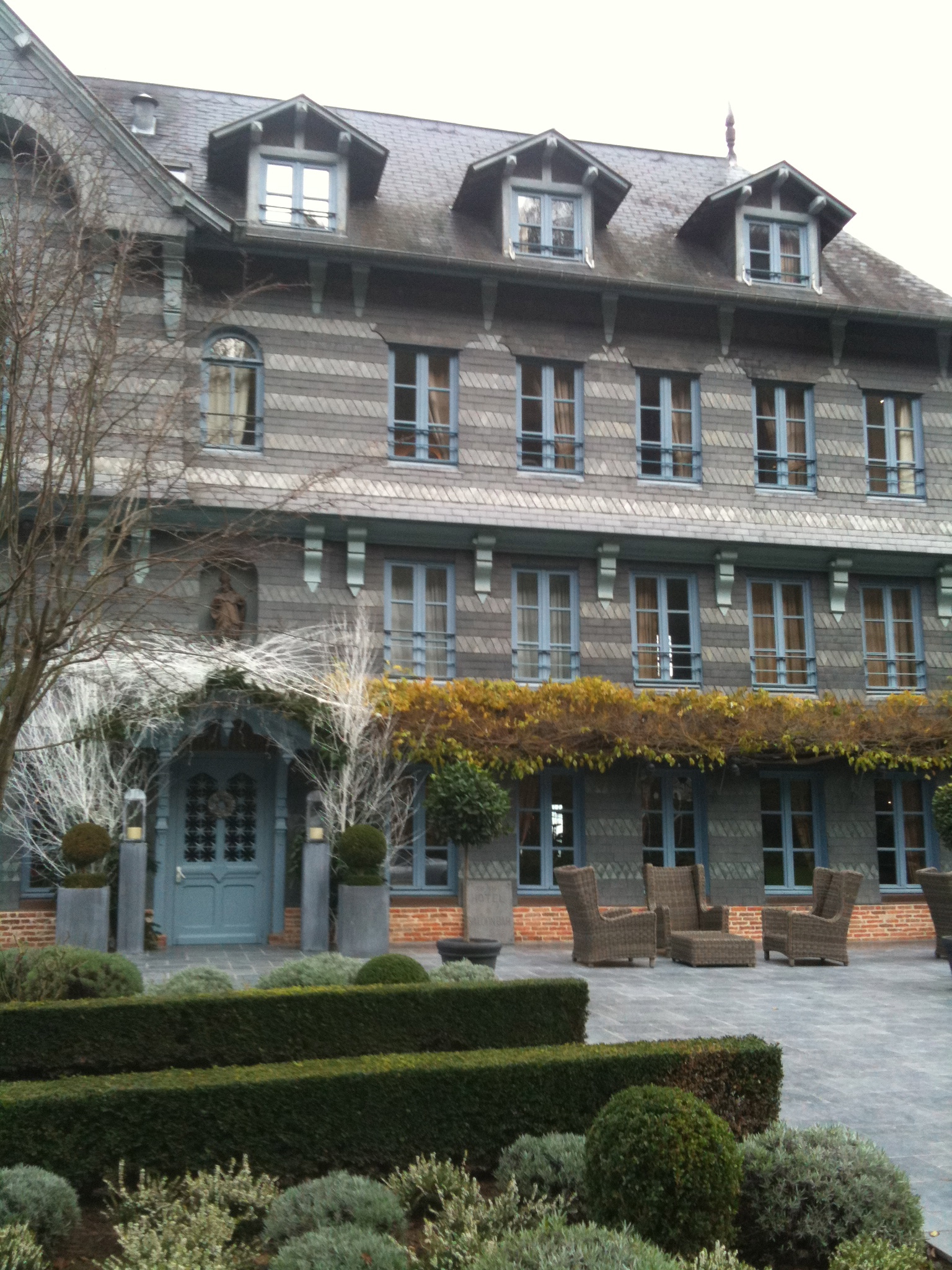
La Ferme Saint-Siméon

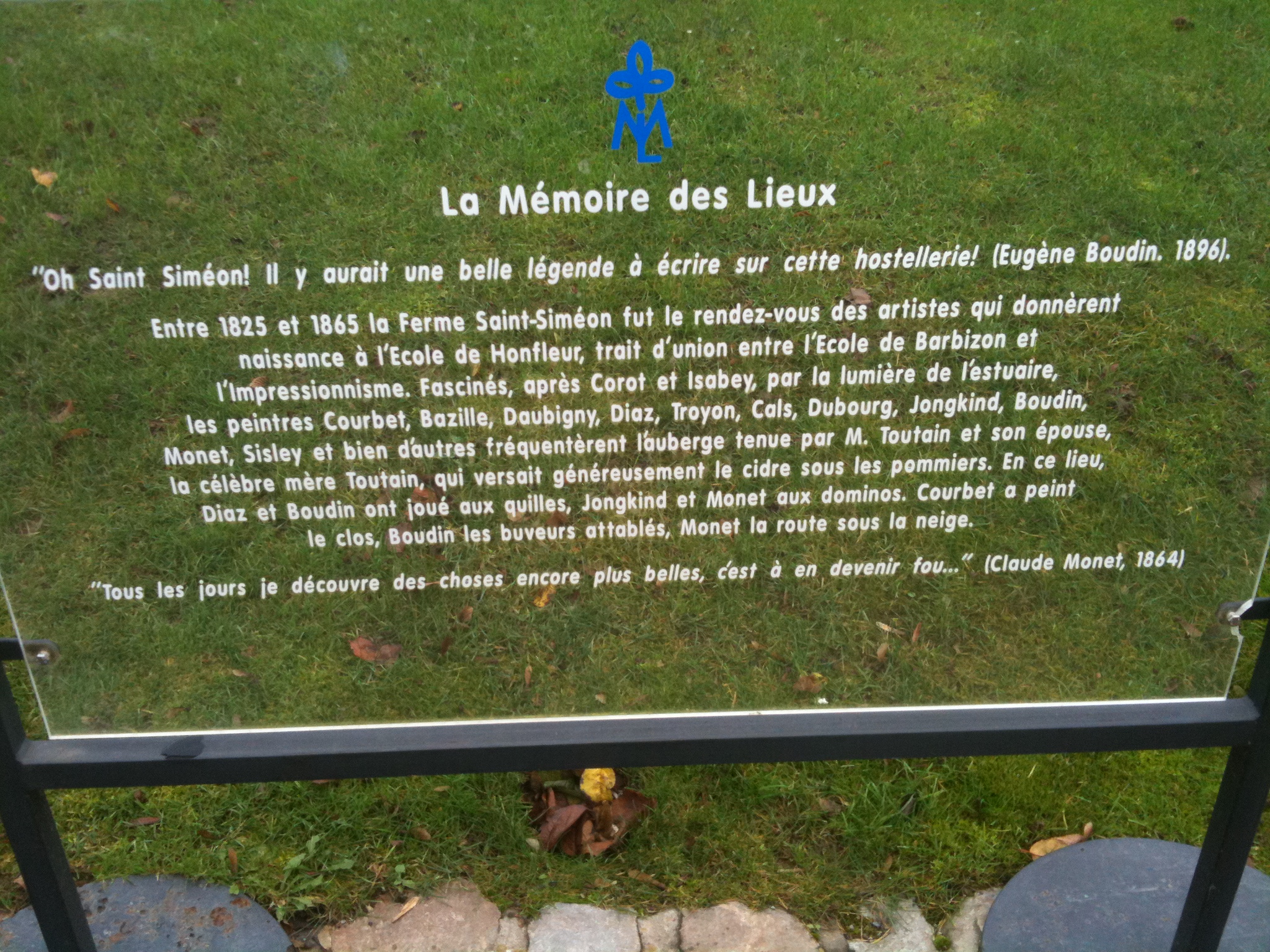
Ferme St. Simeon Plaque


“Monet Slept Here.” If your budget allows, stay at La Ferme Saint-Simeon, a beautiful 19th century farmhouse that overlooks the estuary of the Seine. It was once the gathering place of the early impressionists – the St. Simeon art colony. Now a Relais et Chateaux property, you can check into one of the rooms in the main building – I recommend the “Monet Room” – or into the Pressoir, a separate building that once housed a cider press.


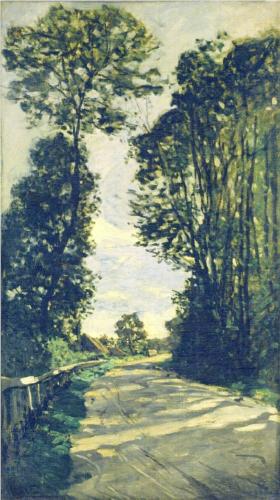
According to a plaque outside the inn, this place became the gathering place of the artists who would give birth to the Honfleur School, a movement in French art that fell between the Barbizon School and Impressionism. Artists such as  Courbet, Bazille, Boudin, Monet and Sisley frequented the farmhouse inn, where they enjoyed the apple cider of “old mother Toutain” and played dominos under the apple trees. It was here that Courbet painted the woods, Boudin painted his fellow drinkers sitting at the table, and Monet painted the road in the snow. Monet is quoted as having said: “Everyday I find more beautiful things, it’s crazy!”

Monet: The Road to the Saint-Simeon Farm (1864)


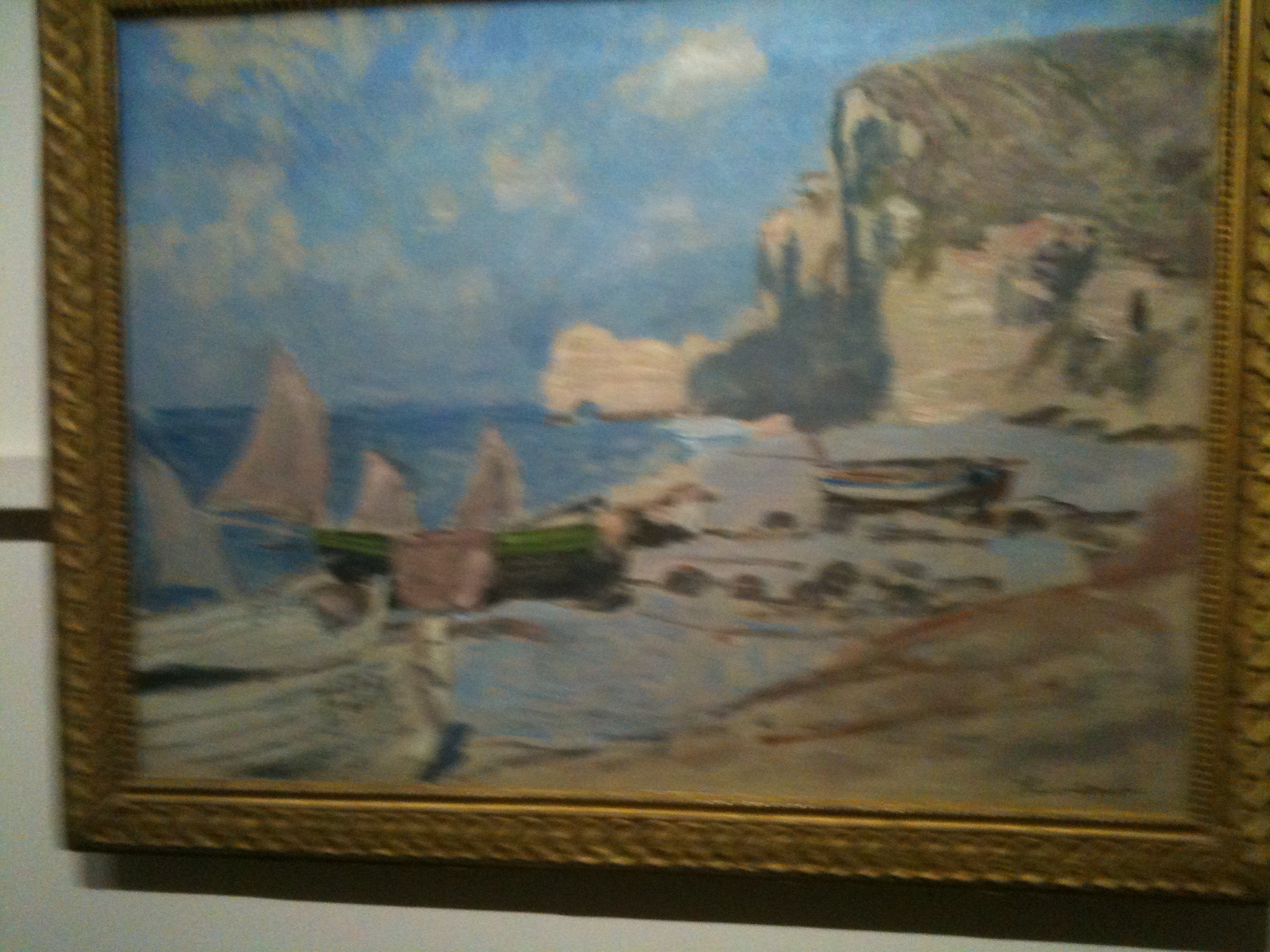
From La Ferme Saint Simeon you can easily walk or drive into town to visit The Boudin Museum, home to many lovely paintings set on the beach and harbor of Honfleur or the cliffs of Etretat.


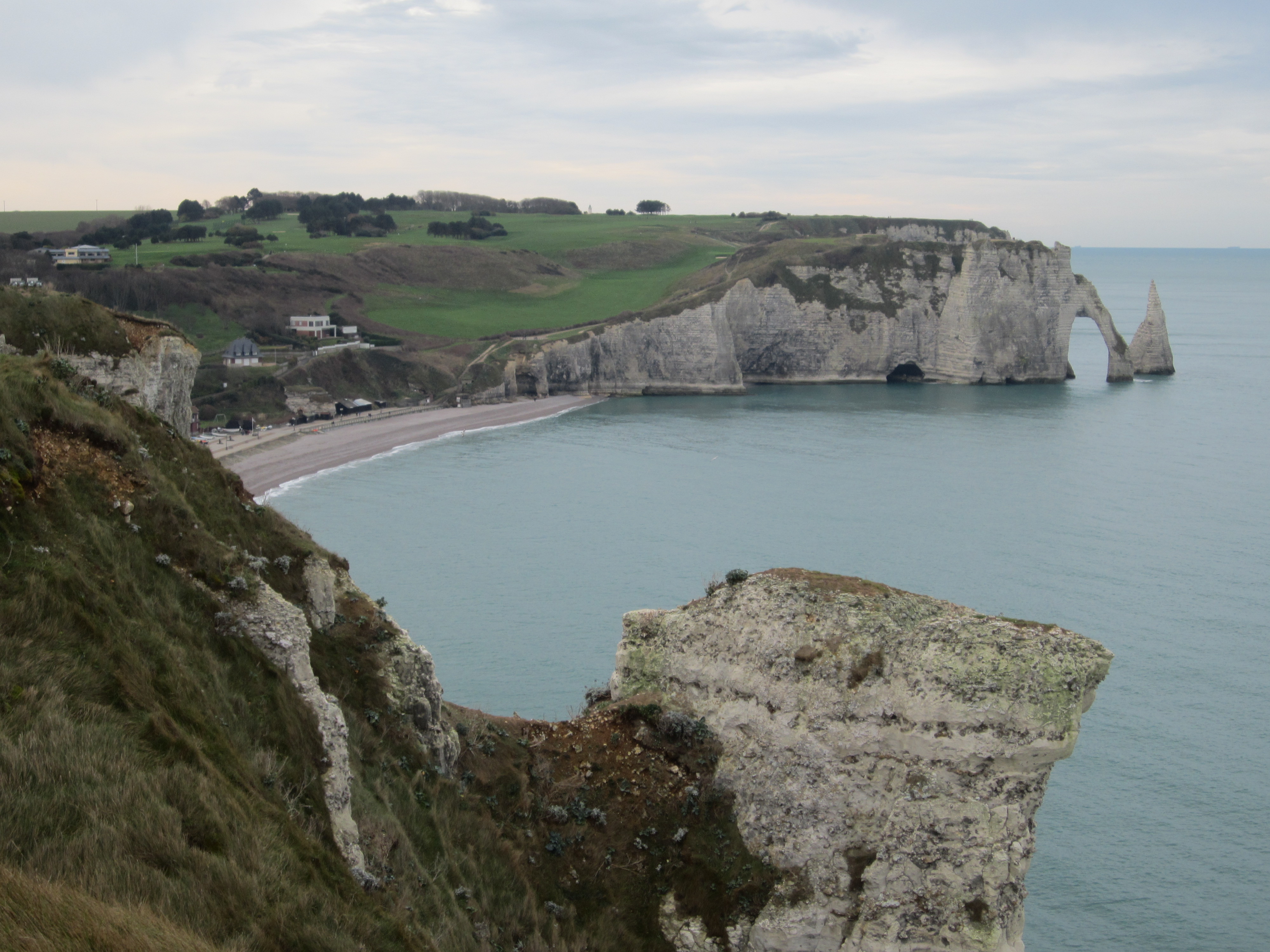
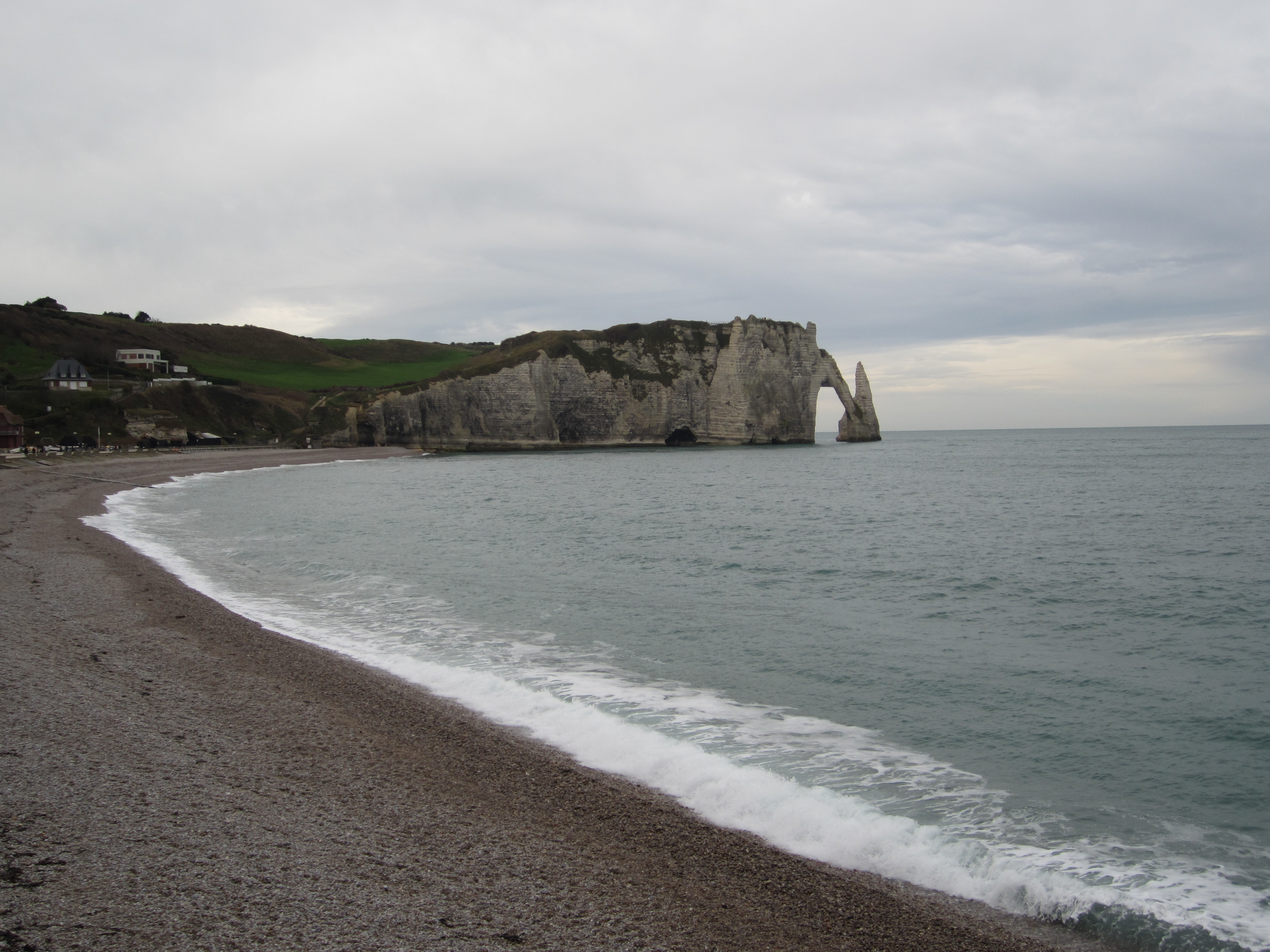
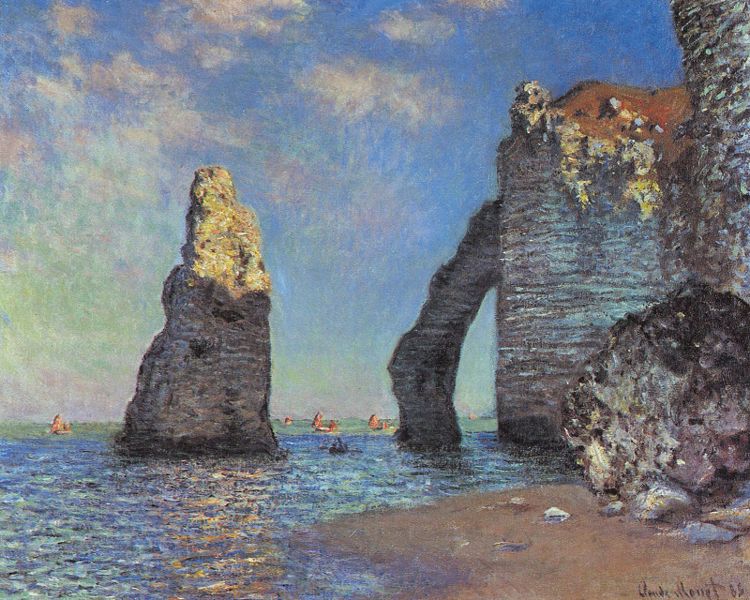
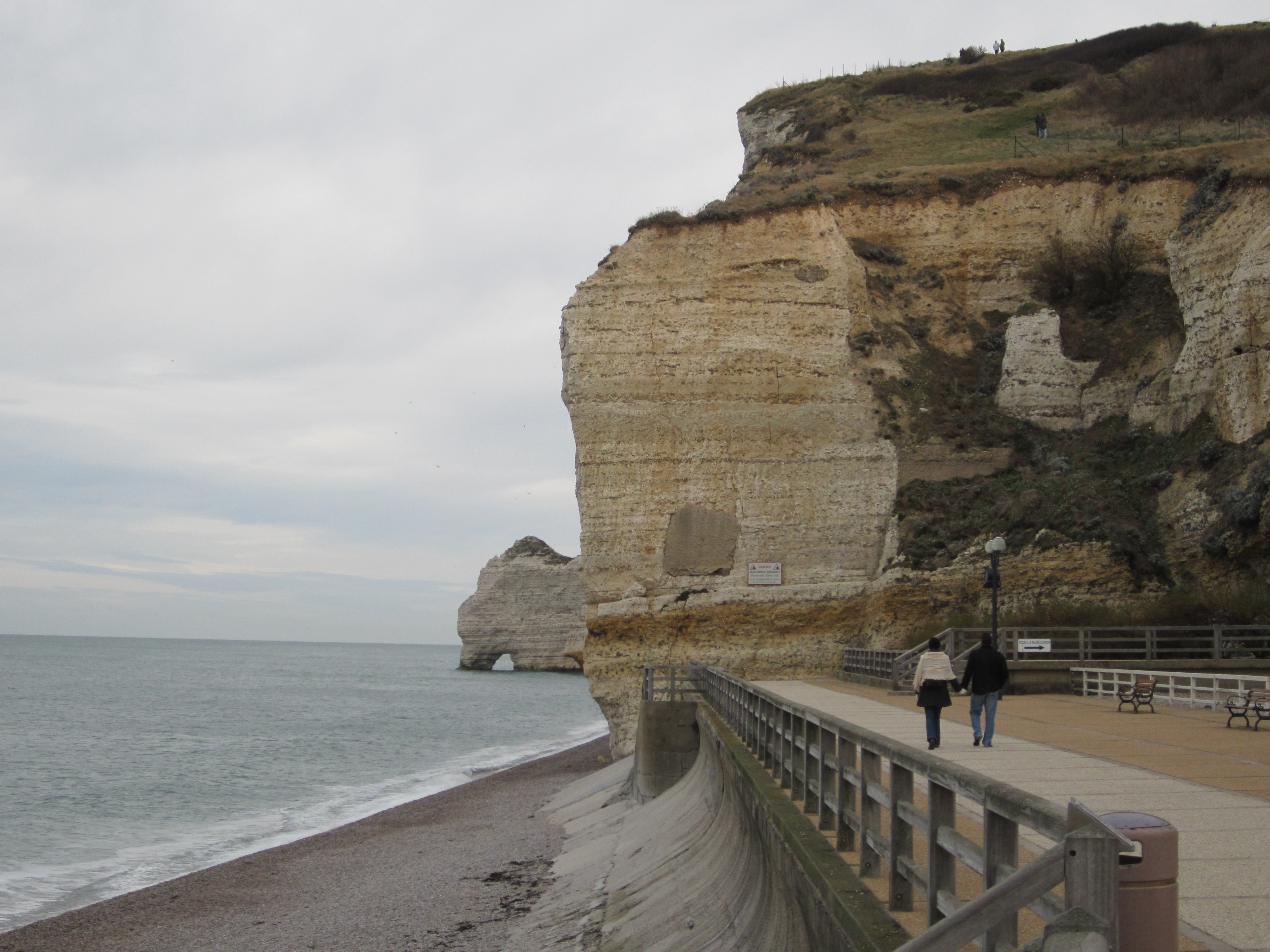
Etretat is a small seaside village about 45 minutes from Honfleur, across the big bridge to Le Havre and then up through quiet farm-lined roads along the northern coast. It was cold and blustery the day I was there, but I still couldn’t resist climbing to the tops of the cliffs that I have seen in paintings ever since I was a young girl. I tried to picture Monet climbing up there himself, with his paints and easel under his arm, fighting the wind. It was a cloudy day, but the air was never still. The clouds chased across the sky and the wind whipped up waves in the sea. It made for a very dramatic setting, and as a painter, it just makes you want to try to capture its spirit in paint.

The impressionists certainly did.


I would love to go back with my paints and my easel in the summer to try a little en plein air painting of my own. It won’t look anything like a Monet, but still. . . . I’d have a lot of fun trying.  And if not, well then I can always go drink some calvados at Le Ferme Saint Simeon.


Monet in Honfleur: A Guest Post by Author Stephanie Cowell

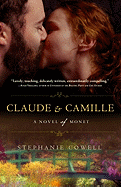
I am pleased to welcome Stephanie Cowell, award-winning author of Claude & Camille: A Novel of Monet to the American Girls Art Club in Paris. 

Claude & Camille is one of my favorite recent art history reads, and Stephanie is a real expert on Monet and his circle of French artists. When I told her that my husband and I were planning a weekend trip from Paris to Honfleur, she did some research for me and wrote this lovely piece about Monet’s early days in Honfluer. Enjoy, and stay tuned for a follow-up post with news and photos from my amazing trip.                                                                                

*****************************************************

HONFLEUR in Normandy, where Claude Monet first began to paint.

Claude at Twenty

If you walked along the port in the town of Honfleur in 1859 or thereabouts, you might pass two men strolling with portable easels over their shoulders, deep in conversation: the older of the two would be the landscape artist Eugène Boudin and the eager adolescent with dark burning eyes, Claude Monet. They were likely talking about the joy and difficulties of painting the sea and the light above it.

A hundred and fifty years have passed since then and Honfleur remains the same charming seafaring town with its narrow, cobbled backstreets, old houses and ancient wooden church.  It is located on the southern bank of the estuary of the Seine across from le Havre. The Seine had always in inspired artists and by the early nineteenth century they were coming steadily. It was the years when painters were discovering the constantly changing effects of weather on the landscape. Boudin who had been born in Honfleur was making a reputation as a painter when he discovered Claude Monet: a seventeen-year-old-with an attitude who hated school.

At that time Claude had no thought of oil paints or canvases; he made making a great deal more than pocket change sketching witty caricatures. Boudin persuaded the young man to come with him at dawn to paint outdoors. From that morning, Claude threw himself into a life of art. He went to Paris to study where instead of making money he almost starved. He never ceased to try to capture the light. He searched for it all his life and ended up painting its reflection in his water lily pond sixty years later. And he returned again and again to the towns of Normandy and medieval Honfleur.

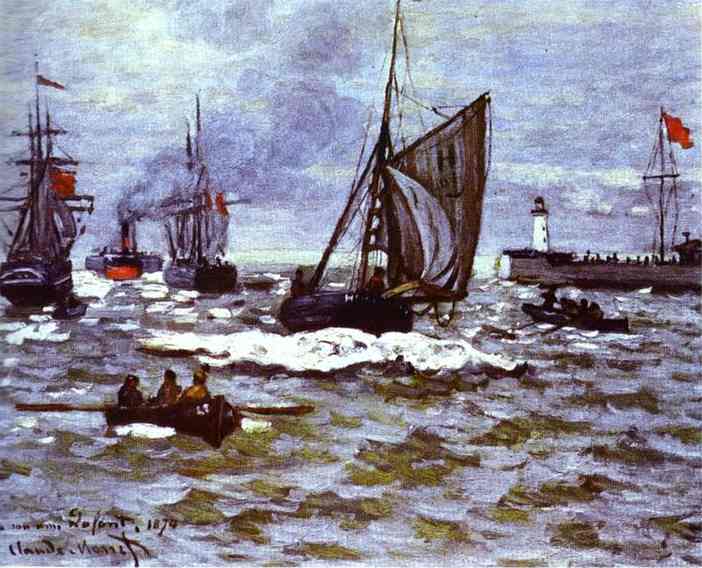
Claude Monet: Entrance to the Port of Honfleur (1870)

First mentioned in history a thousand years ago, Honfleur had long been a trading and seafaring town. Now tourists come from all over the world. With its population of around eight thousand (rather more intimate than Paris!), it is one of the of the most charming little towns in Normandy with many little shops and seafood restaurants.

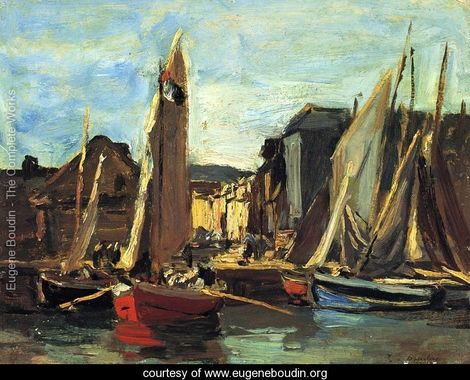
Boudin: the Entrance to the Port of Honfleur (1865)

There are interesting things to see and do. An old chapel houses a museum dedicated to Boudin.  Wander to the Vieux-Bassin (old dock) in the heart of the town, and stroll by the high, narrow houses which overlook the harbor on three sides. Visit St. Catherine’s Church, built entirely of wood or the vast stone salt granaries dating from 1670 which could store up to 10,000 tons of salt, but are now used for exhibitions and concerts.

But the best thing is to spend dreamy hours watching the light on the water. Sit in a café by the dock. Stay in a hotel overlooking the boats. Better still, bring some water colors or a small box of oil paints and discover for yourself what Monet found when he was very young and never forgot.

***************************************************

Stephanie Cowell is the author of CLAUDE & CAMILLE, the story of the young Claude Monet’s struggling years to prove himself in the art world and the elusive model Camille whom he loved and married. She has published five novels and is the recipient of an American Book Award. Follow her on Twitter at @stephaniecowell.

Stumbling into History: Square Louis XVI

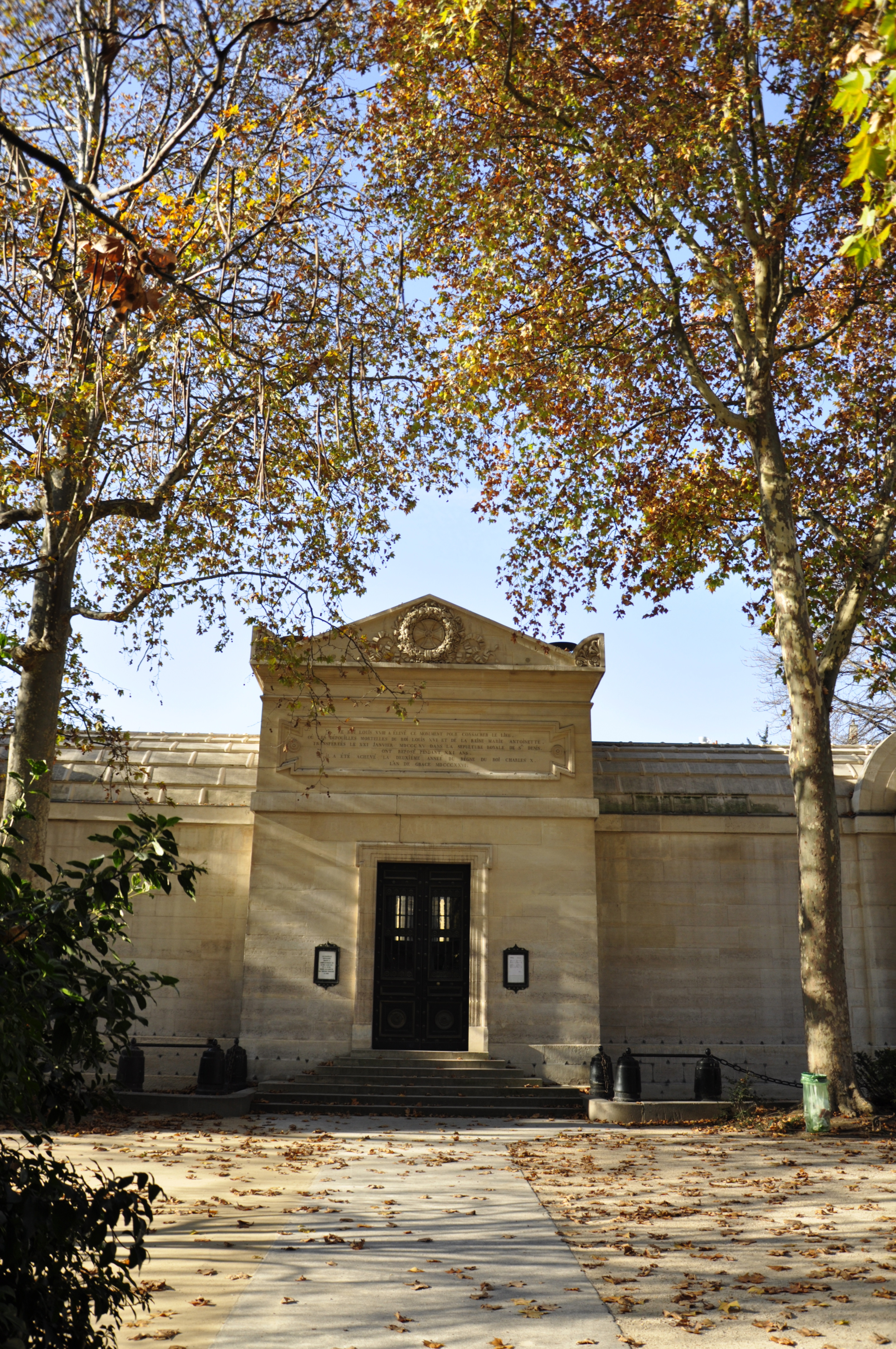
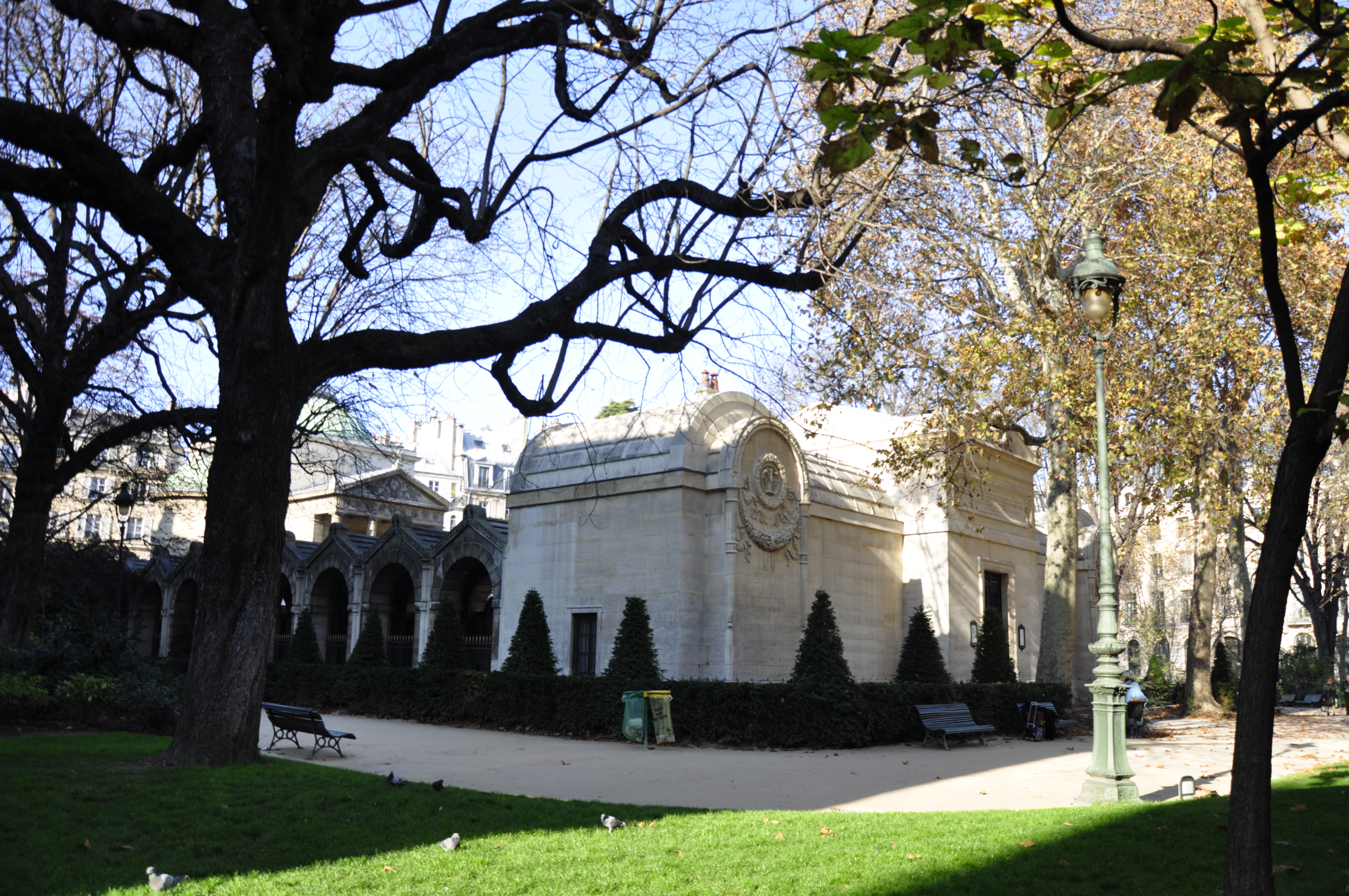
When you walk the streets of Paris you just never know what you’re going to stumble onto next. Back in November, I was walking in the Malesherbes neighborhood on my way to Galleries Lafayette and I passed a pretty little square, so I went in and sat down to read for awhile. It was only later that I realized what kind of history I had stumbled into.

I’d been sitting on top of a mass grave dating back to the French Revolution.

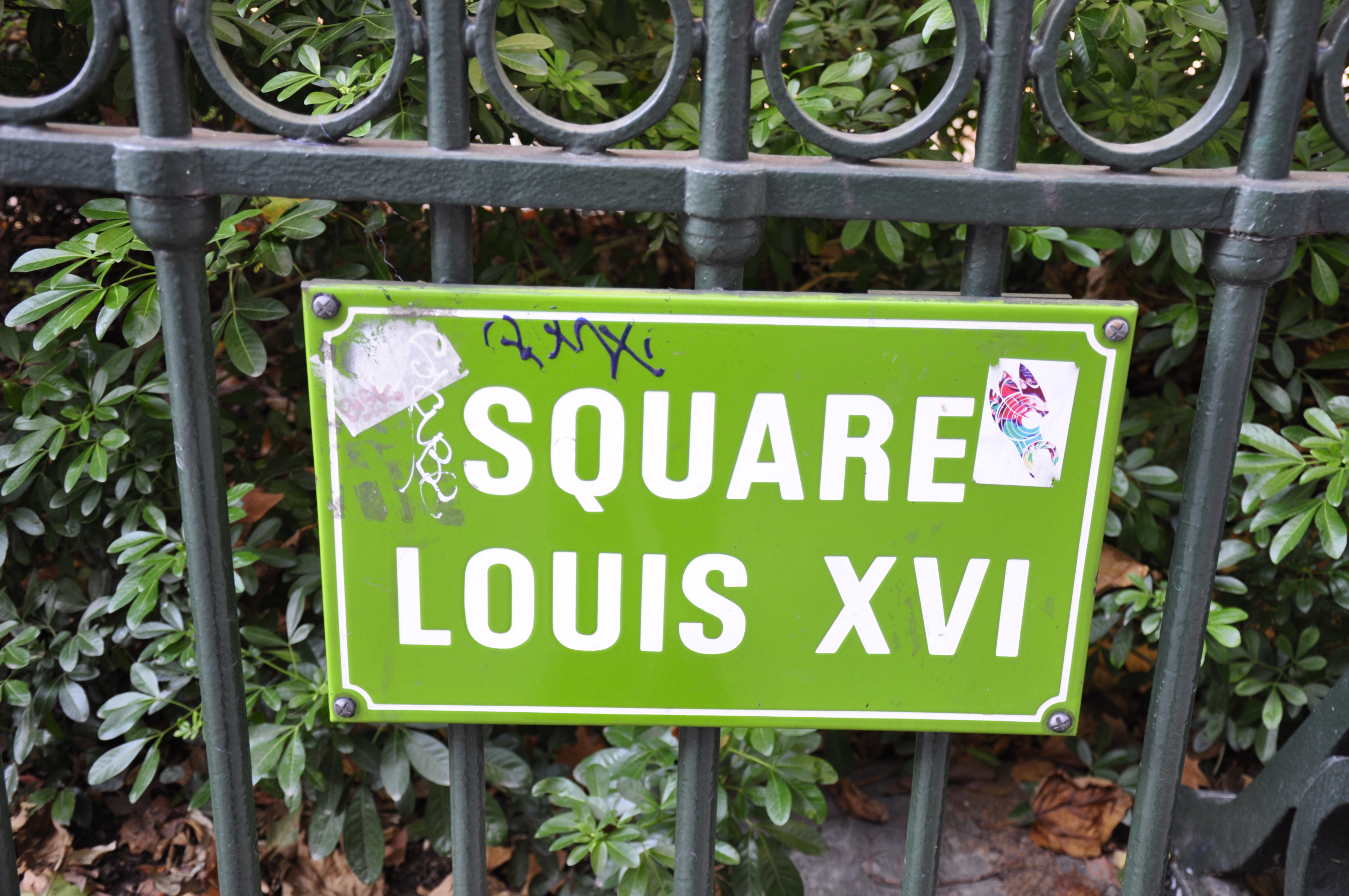
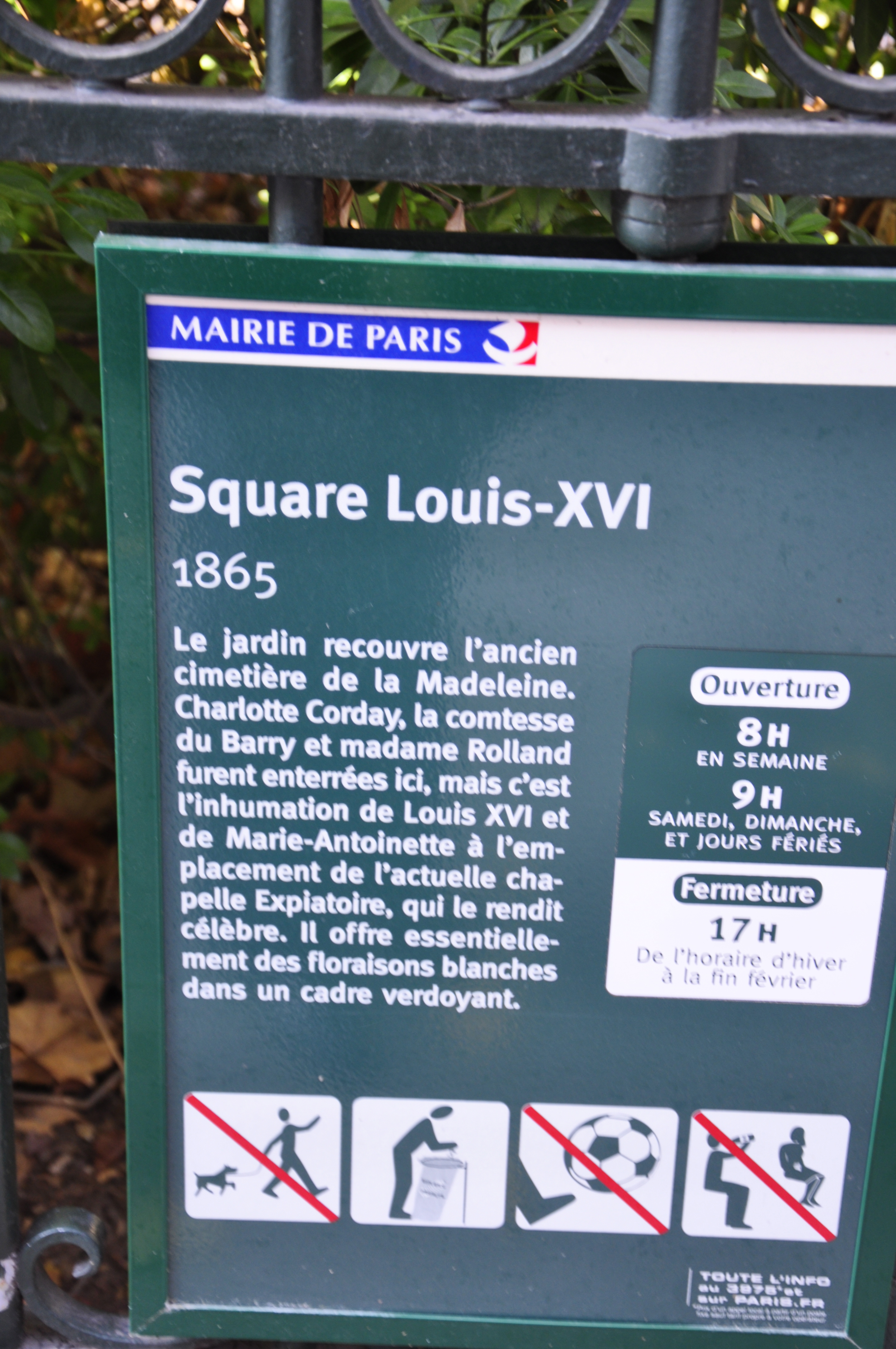
Square Louis XVI was a cemetery for the nearby Madeleine church back in the 18th century. King Louis XVI and Marie Antoinette were buried here after their execution by guilloutine at Place de la Concorde. They were buried in a mass grave along with about 3,000 other victims of the French Revolution. Twenty-one years later, King Louis XVIII exhumed their bodies and moved them to the Bascillica of St. Denis for a proper royal burial.

There is some debate whether the King and Queen’s bodies were properly identified when they were exhumed. There is some evidence that the King and Queen’s bodies were the only bodies actually placed in coffins, or that their burial places were marked with trees and hedges. However, some claim that their bodies, like all of the others, had been covered with quicklime, so that their remains would have been too decomposed to identify some twenty years later. Enjoy some of the debate and discussion at author Catherine Delor’s blog.  Either way it’s pretty creepy.

Louis XVIII built the Chapelle Expiatoire in the square to commemorate the first burial place of the royals. I didn’t go in the chapel (it’s only open Thursday-Saturday afternoons), but for some great photos and more information about the sculptures and a crypt inside, go to Travel with Terry’s Paris blog. The crypt contains a black coffin that supposedly marks the original site of the King and Queen’s burial plot.

If you know me, you know that’s all I needed to get inspired to do some reading about the French Revolution. I highly recommend Madame Tussaud by Michelle Moran (Broadway, 2011, now available in paperback), which I hear is going to be turned into a television miniseries by the same folks that brought us The Tudors. Count me in for that – the book was fascinating. Gruesome, but in a good way – did you know Madame Tussaud was compelled to make death masks of the key players of the French revolution? Ewww.

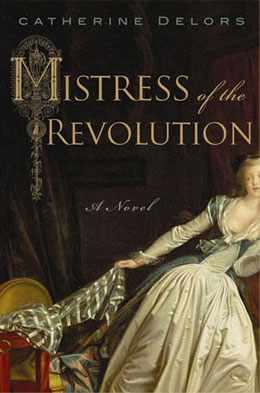
I need to add Mistress of the Revolution (NAL 2009) by Catherine Delors to my reading list now too. Check out Delors’ blog post  called “La Chapelle Expoatoire, and Marie-Antoinette’s smile” to learn about the connection between Square Louis XVI and her book.

Oh-oh, I can tell I’m going to get on another one of my “reading rolls.” Please leave some comments and let me know what French Revolution era books you recommend, whether fiction or nonfiction.


With thanks to Travel with Terry’s blog, here are the details you will need to visit the Chapel inside Square Louis XVI:

Chapelle Expiatoire
29, rue Pasquier – Square Louis XVI
Open Thursdays, Fridays & Saturdays 1-5 pm; entrance fee 5 Euros (free to holders of the Paris Museum Pass)
Closed January 1, May 1, November 1, November 11, December 25.
http://chapelle-expiatoire.monuments-nationaux.fr/en/
Métro: St-Augustin

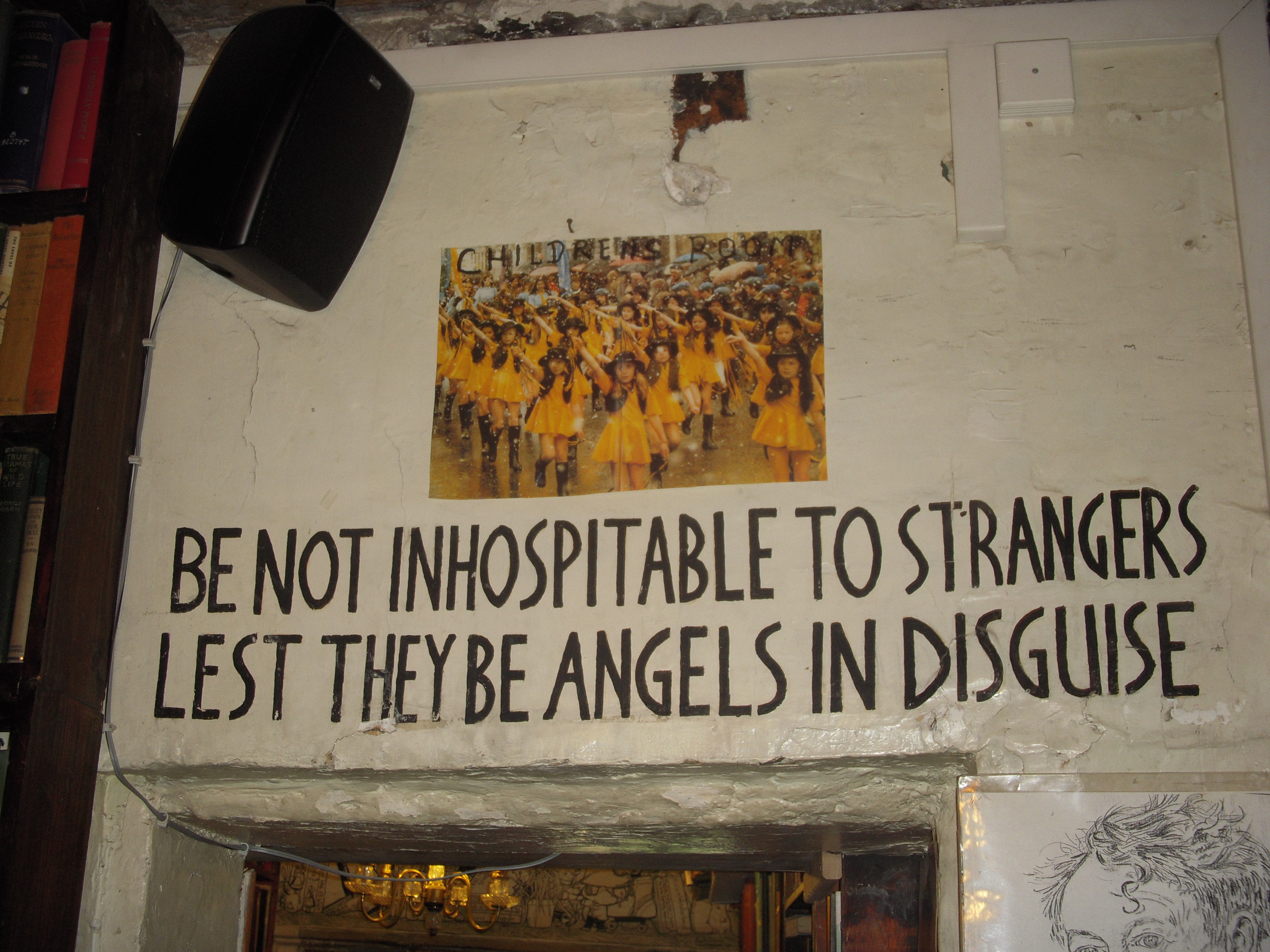
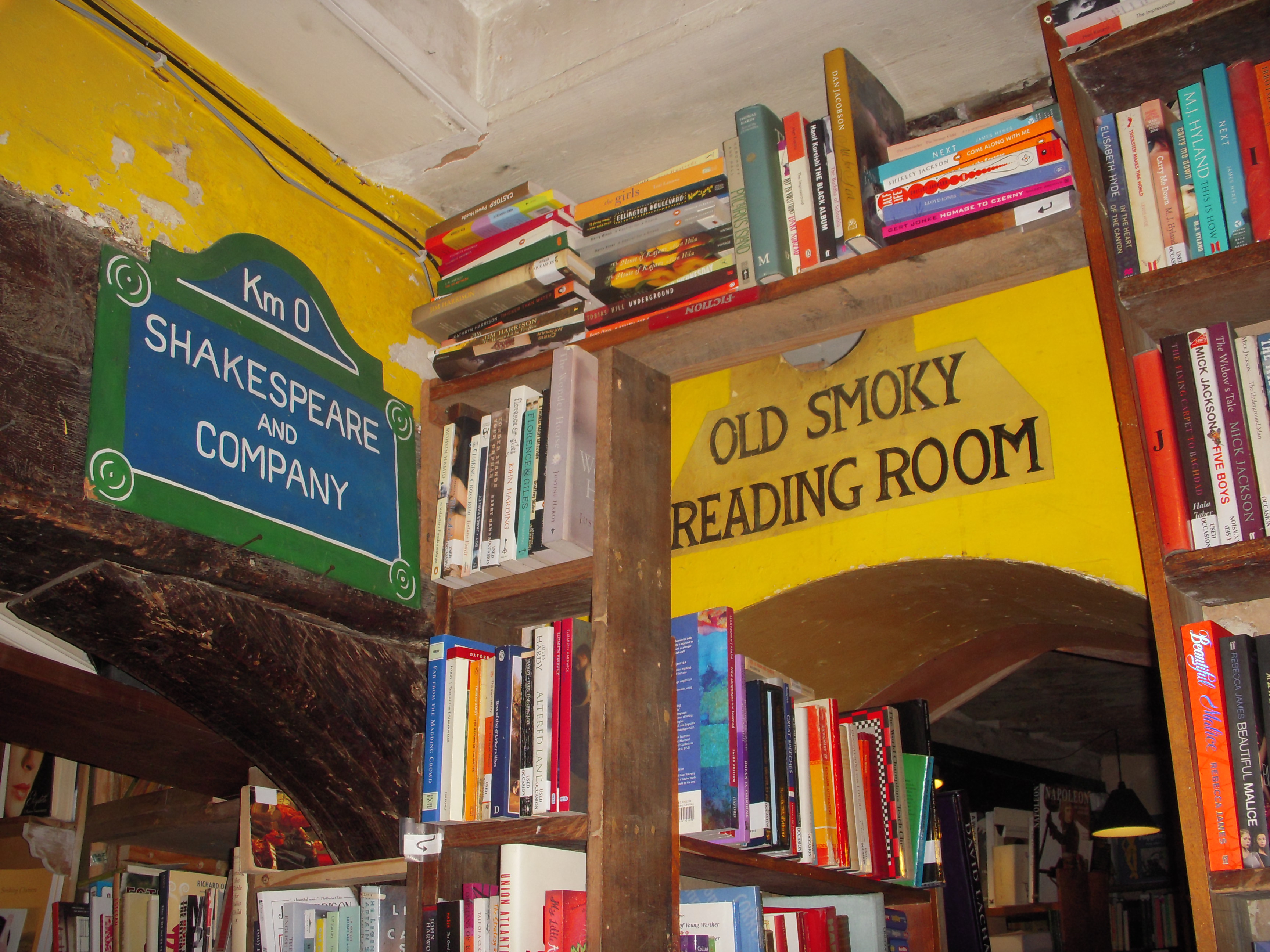
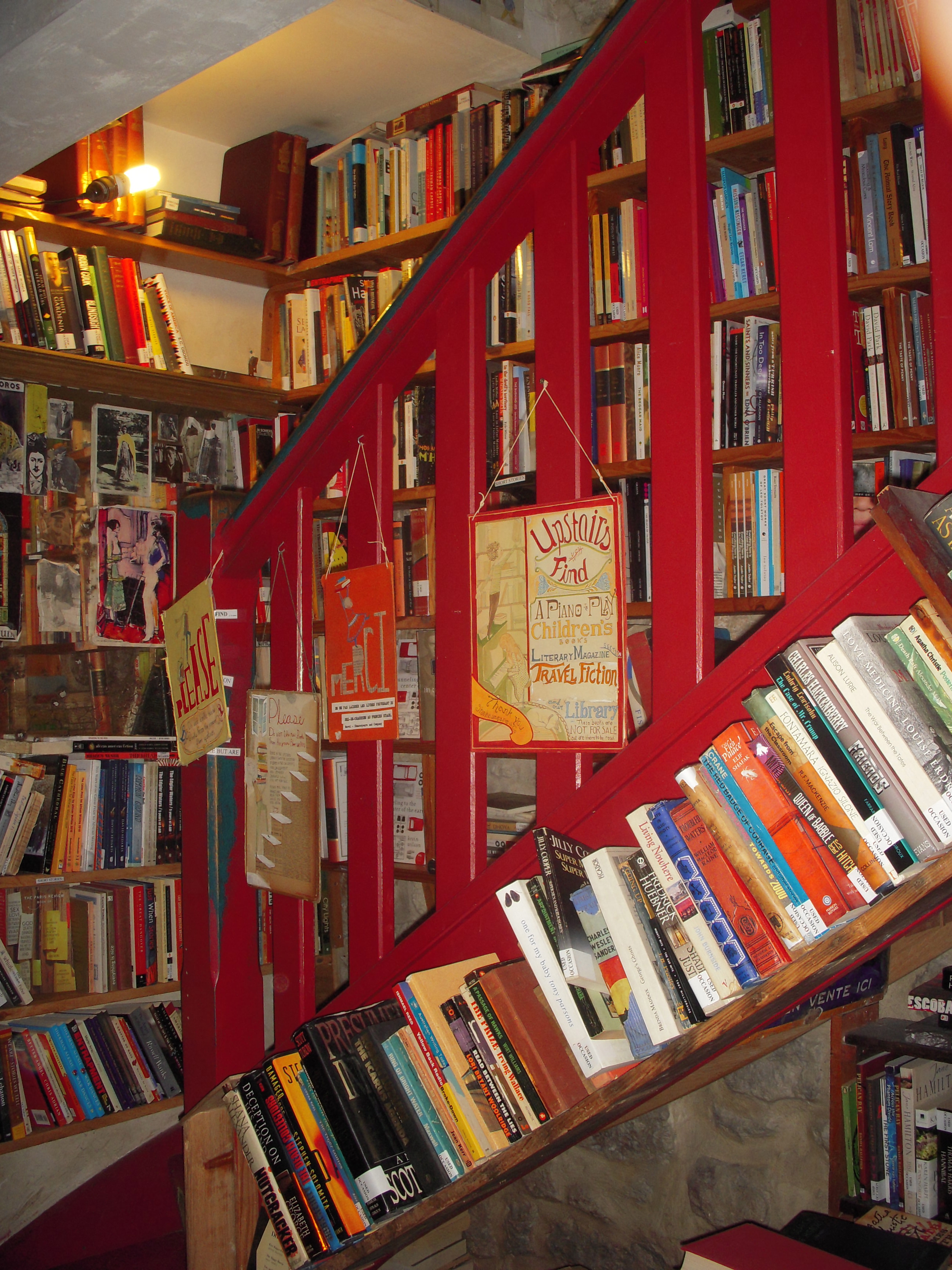
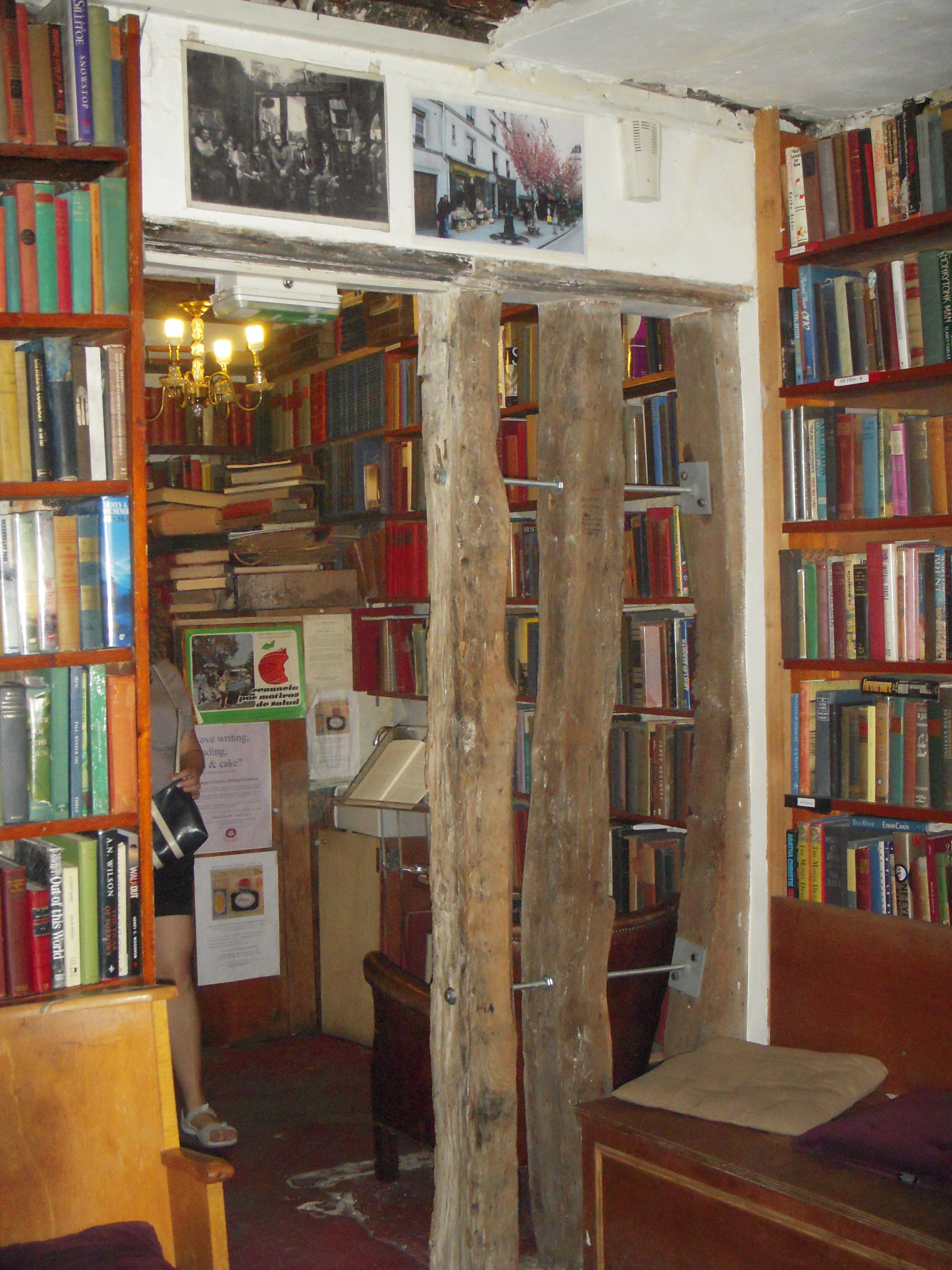
Shakespeare & Co.

A tribute to Shakespeare & Co and George Whitman (1913-2011). One of my favorite bookstores in the whole wide world.

Art Nouveau Toilets Down the Drain

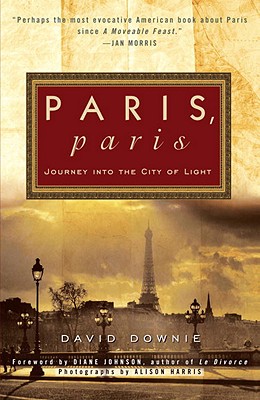
David Downie’s book Paris, paris: Journey Into the City of Light (Broadway Paperbacks 2011has been a great source of information and inspiration as I settle into my temporary home in Paris. Each chapter contains a lovely essay about another unusual part of this city, with some history, some photographs, and plenty of quirky information that you just can’t find in your ordinary guide books. I’ve been planning long walks around some of the chapters, and it’s made for a wonderful introduction to Paris.

One of my favorite chapters, The Janus City, or, Why the Year 1900 Lives On, is about how the Belle Epoque period of Paris is alive and well in the contemporary City of Light. One of Downie’s recommended 1900 era sites are the Art Nouveau toilets on the Place de la Madeleine. According to Downie’s directions, there is a spiraling staircase across the street from  Cafe Le Paris-London, where you could find “a lavish cavern of carved wood, brass, and mirrors, with floral frescoes and stained-glass windows in each cabinet.”

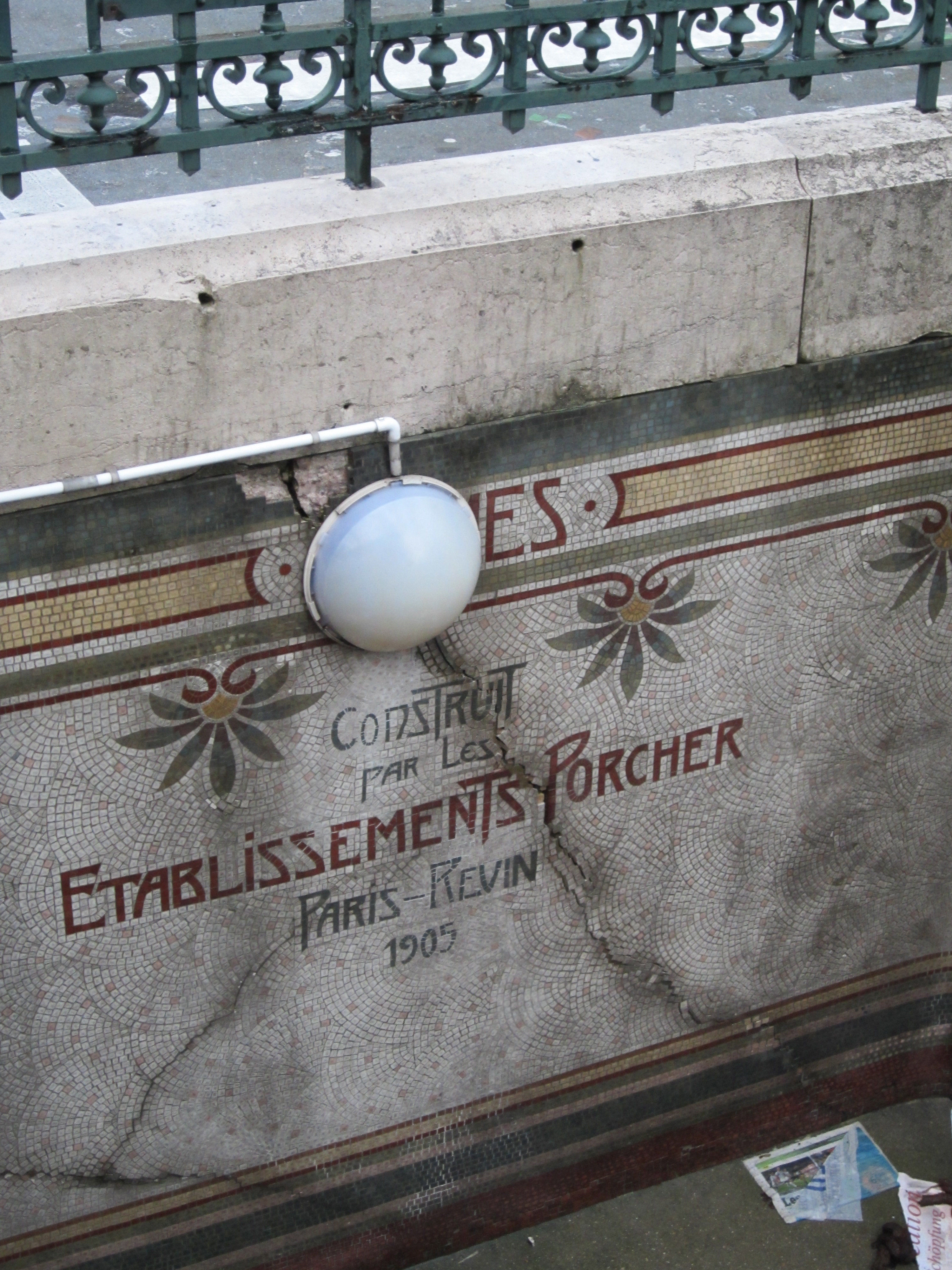
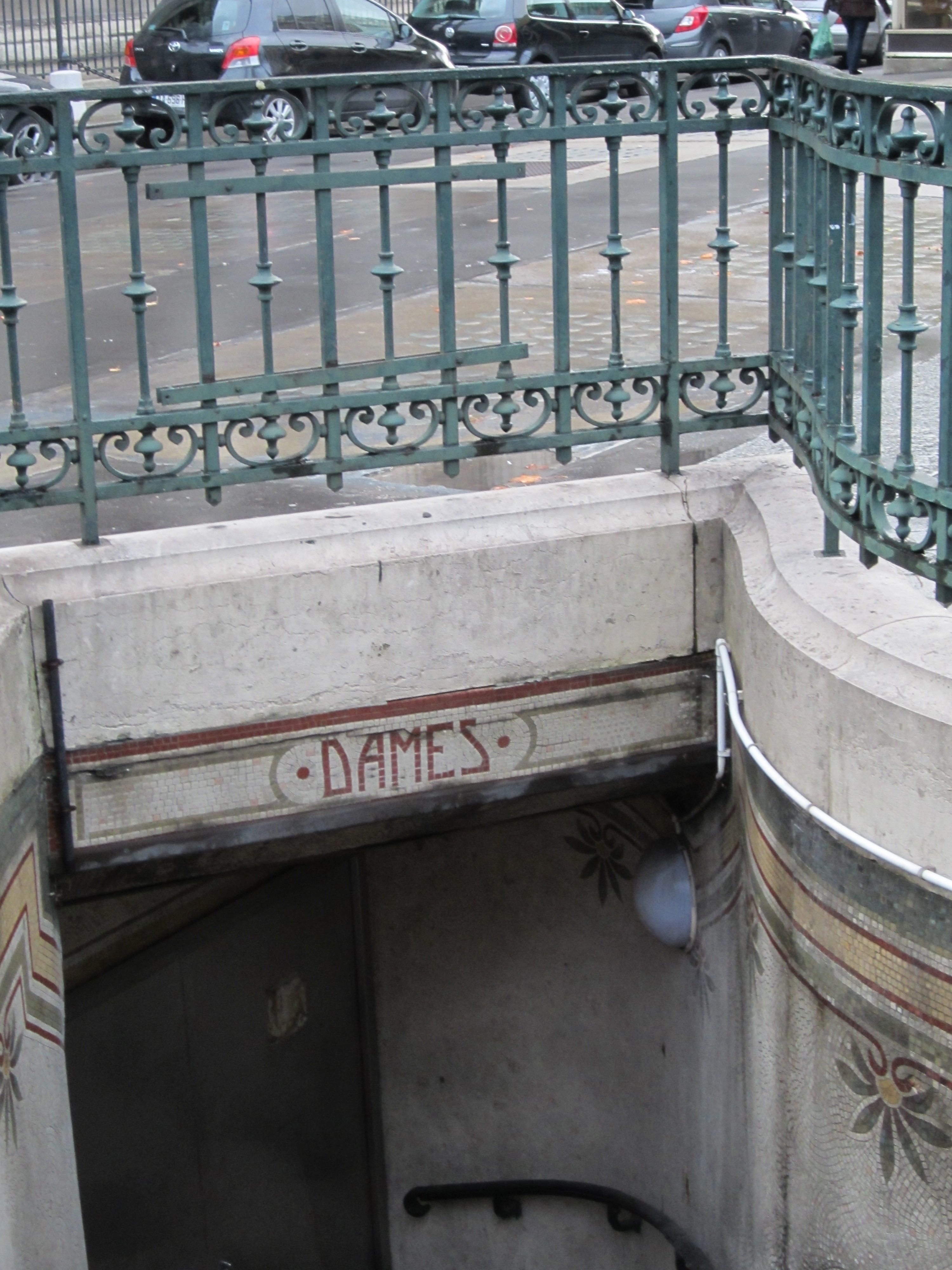
I looked forward to finding a site so weird and off-the-beaten-track, and it took me a little while to find the right spot. Unfortunately, the toilets are now closed. I asked the woman at the nearby flower stand, and she said they are closed for good, “c’est tout.” So for now, until the toilets are ever renovated, the photos below will show you all that you can find.

Art Nouveau Toilets at Place de la Madeleine

Art Nouveau Toilets in Paris pour les Dames