
Mary Cassatt’s Greater Journey

In The Greater Journey (Simon & Schuster), McCullough turns his storytelling gifts to the many Americans who came to Paris between 1830 and 1900. As McCullough says, “Not all pioneers went west.”

Among these pioneers were young men and women who would come to study art in Paris, including George P. Healy, John Singer Sargent, Mary Cassatt and Augustus St. Gaudens.

First Mary Cassatt. Because I love her story.

Cassatt was from a proper and prosperous Pennsylvania family who could afford to travel through Europe. After studying art in Philadelphia, she told her father that she wanted to study art abroad. He tried to discourage her (“I’d almost rather see you dead than become an artist!”) but he gave in like dads are known to do.

Cassatt would travel and study through Europe in the 1860s and early 70s, from Italy to Spain to France, studying under such French masters as Jean-Léon Gérome, Charles Chaplin and Thomas Couture. She would succeed in having her first painting accepted to the Paris Salon in 1868. According to McCullough:

For Mary her time in France had determined she would be a professional, not merely “a woman who paints,” as was the expression. Commenting in a letter on just such an acquaintance, she was scathing: “She is only an amateur and you must know we professionals despise amateurs. . . .”

Cassatt would decide to live in Paris in 1874, and thereafter make France her home for the rest of her life. Mary and her older sister Lydia moved into a small apartment on rue de Laval (now Victor Massé). It was a street known for artist’s homes and studios. Cassatt would become close friends with Degas (who lived and worked on rue Victor Massé for many years), discovering his pastels in a gallery window on nearby boulevard Haussman.

In 1878, Cassatt’s parents decided to come live in Paris, and together they moved to a larger apartment at 13 avenue Trudaine, in the respectable streets at the foot of Montmartre. There, Cassatt could be close enough to walk to her and her friends’ art studios, but yet  far enough away to be proper. They had a beautiful view of Sacré Couer from their fifth floor apartment.
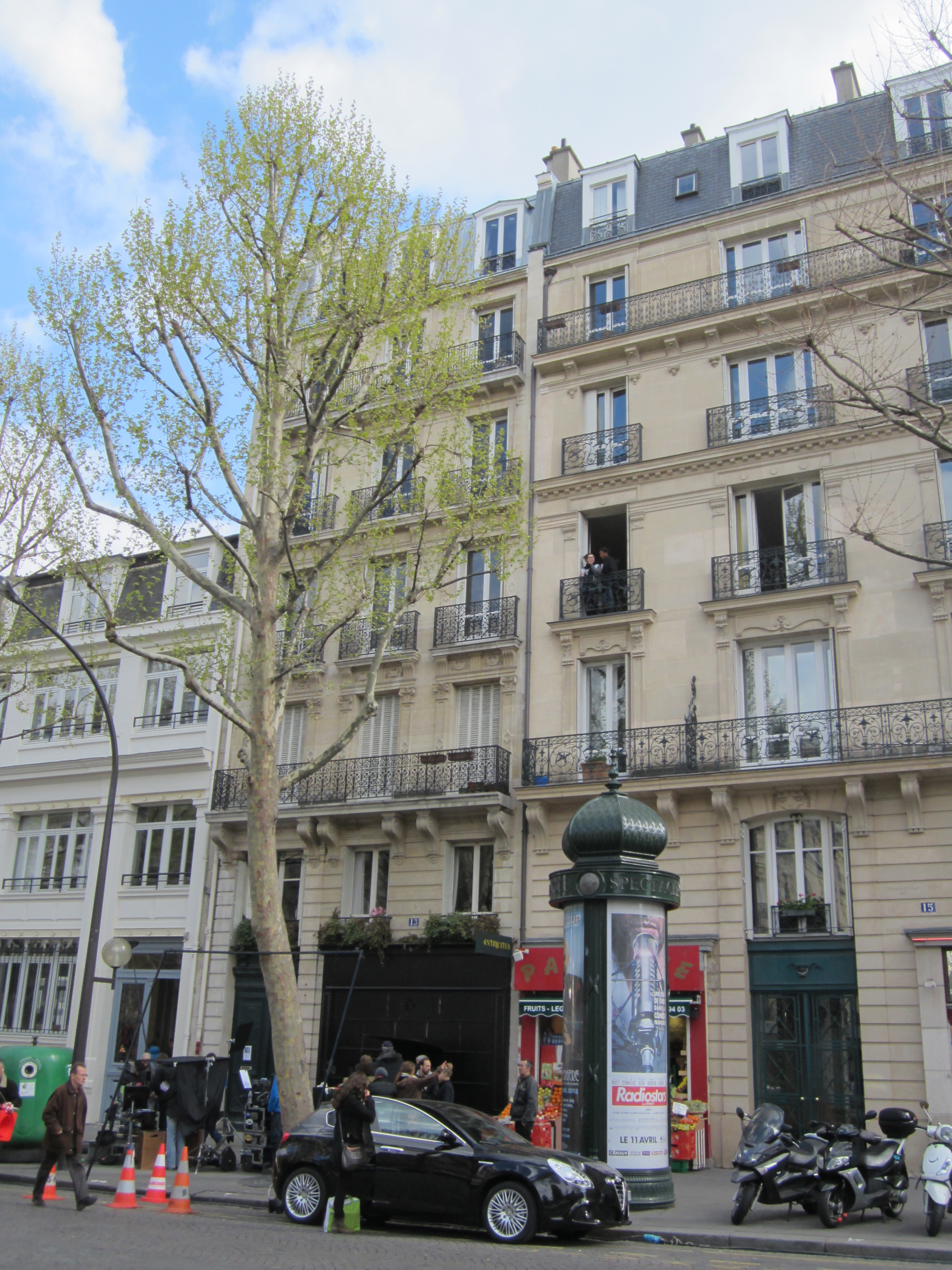
13 avenue Trudaine, home of Mary Cassatt and family from 1878-1884. (Funny anecdote: the day I tracked down this address, I was excited to notice a film crew on the street in front of the former Cassatt home, and I thought, “How exciting! They’re filming a movie about Cassatt!” No, they were filming next door. Nothing to do with Cassatt. I obviously live in a bubble of art history and assume the rest of the world does too.)
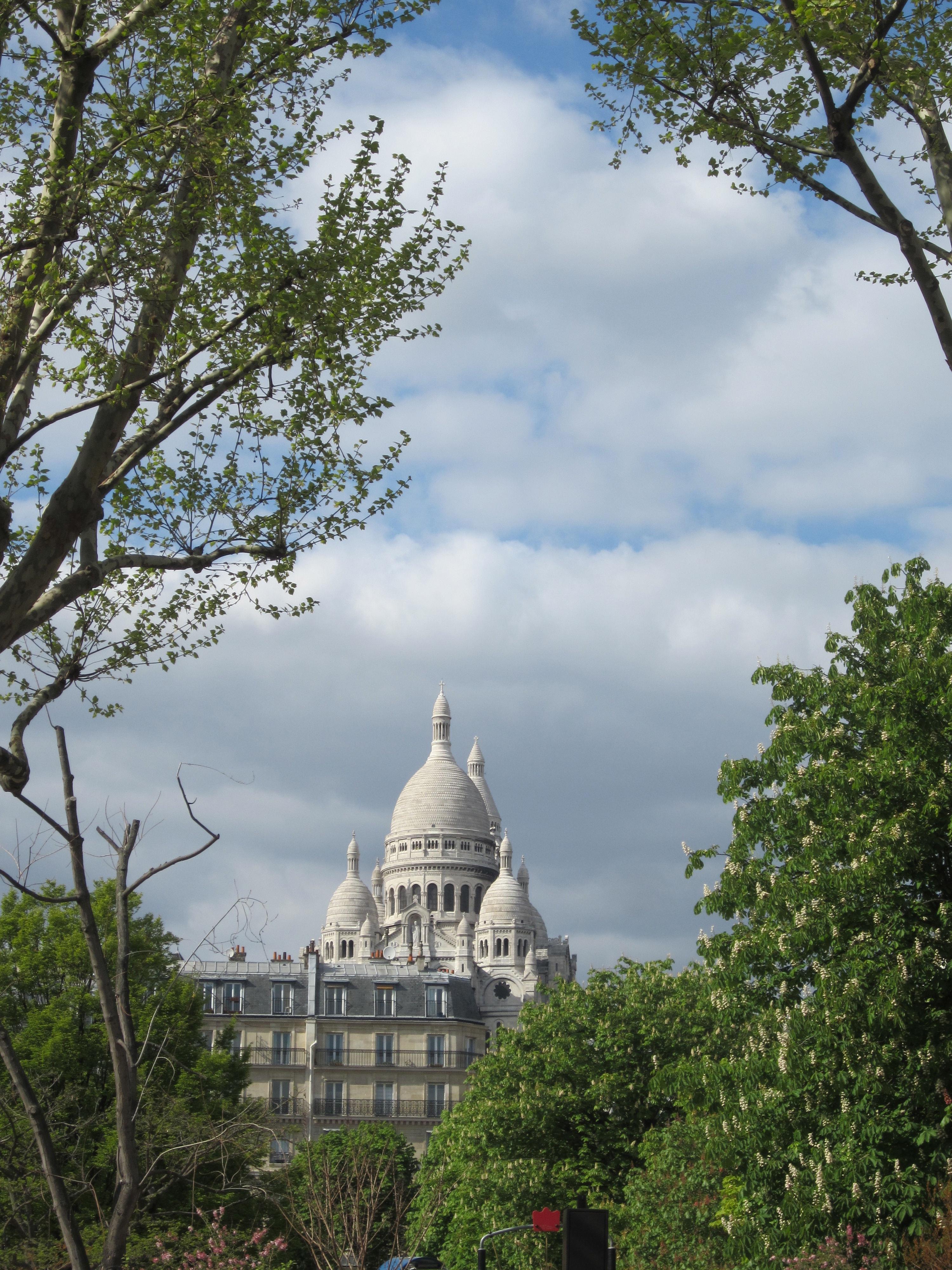
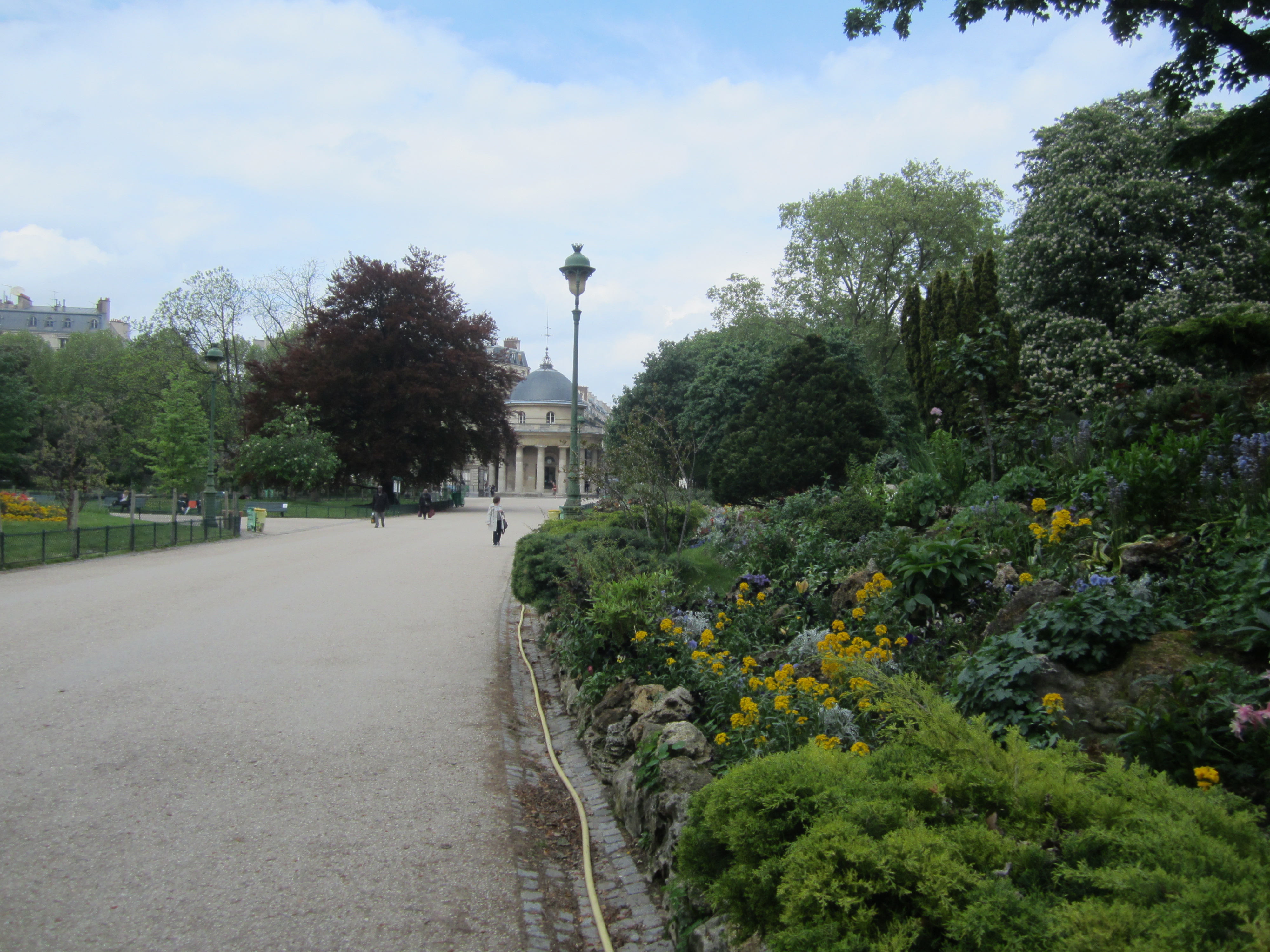
The view of Sacré Couer from the park across the street from Cassatt’s avenue Trudaine apartment.

At about this same time, Degas invited Cassatt to join the Impressionists, the first and only American in the group, and only the second woman (besides Berthe Morisot). Cassatt would join in their Fourth Impressionist Exhibit in 1879. It was a good fit for Cassatt, who despite her thoroughly conventional background, had an independent and blunt personality. She was not well suited for the politics and brown-nosing required to fit in the Paris art establishment:

Finally I could work with absolute independence without concern for the eventual opinion of the jury. . . . I detested conventional art and I began to live.

Once her parents moved to Paris, Cassatt turned her focus toward domestic family portraits of her mother, sister, nieces and nephews. Her portraits would not be highly flattering society portraits, but rather, beautiful studies in composition and mood. Her women would be introspective and intellectual, utterly without pretense, often concentrating on a task, a newspaper or a book. In Cassatt’s 1878 portrait of her mother, Cassatt builds an intriguingly complex composition through the use of a mirror on the left half of the canvas that emphasizes the act of reading.
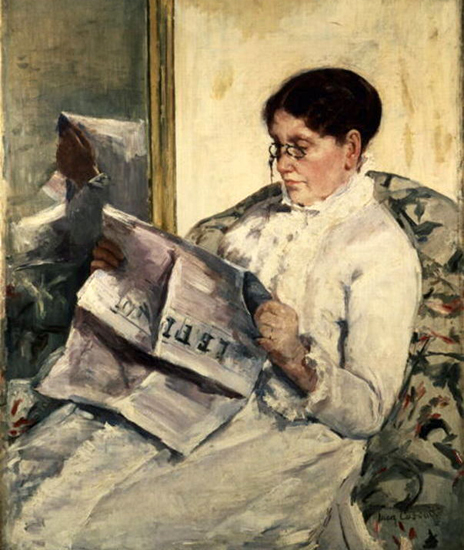
Mary Cassatt, Reading Le Figaro (Portrait of Cassatt’s Mother) 1878. Displayed in Fourth Impressionist Exhibit in 1879.
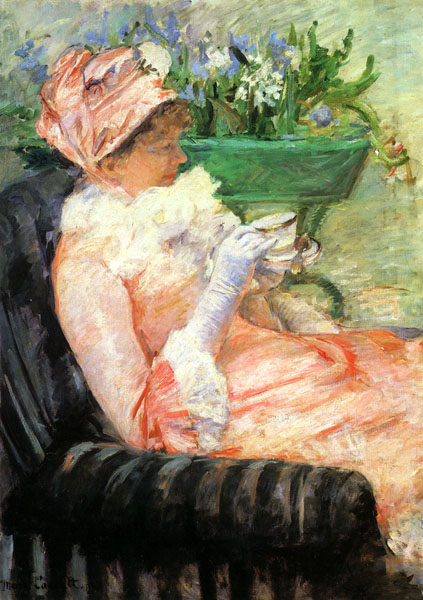
Mary Cassat, The Cup of Tea (Portrait of her sister Lydia) 1880

Cassatt may suffer from a modern feminist bias against highly domestic scenes with women and children, as if Cassatt agreed that this was the only proper sphere for women. In fact, Cassatt was a highly ambitious artist who never married and who was responsible for earning her own living. Cassatt’s tough-love-count-every-penny father demanded that she pay for her own studios and art supplies from the sale of her work. She did.
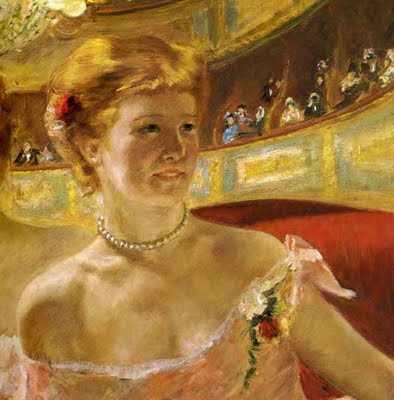
Unlike the male Impressionists, Cassatt could not properly hang out at the cafés and nightclubs of Montmartre. However, she did enjoy going to the opera about four times a week in the company of close friends and family. Here she would be able to sketch out a fascinating series of paintings.

While the painting of Cassatt’s sister Lydia in the evening dress might be more traditionally pretty, it is her pose in a black dress at a matinée that is more interesting, and seems to have the more to say. In fact, if you have a couple extra minutes, you should really listen to this “Smart Art History” video about Cassat, the Paris Opera and the painting below.
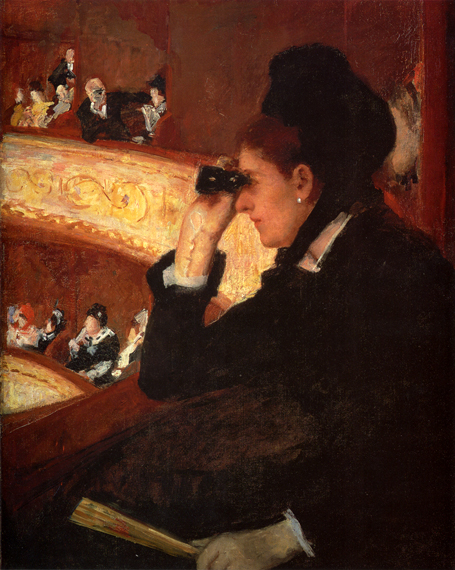
Mary Cassatt, In The Loge (Mary’s sister Lydia) 1880

By the late 1880s, Cassatt was finding her own success and beginning to sell many of her paintings. She and her family would find a larger apartment in an even nicer part of Paris at 10 avenue Marignan near the Champs-Élysées by 1887. Cassatt would keep this apartment for the rest of her life, although she and her family would rent numerous summer homes in the suburbs of Paris.
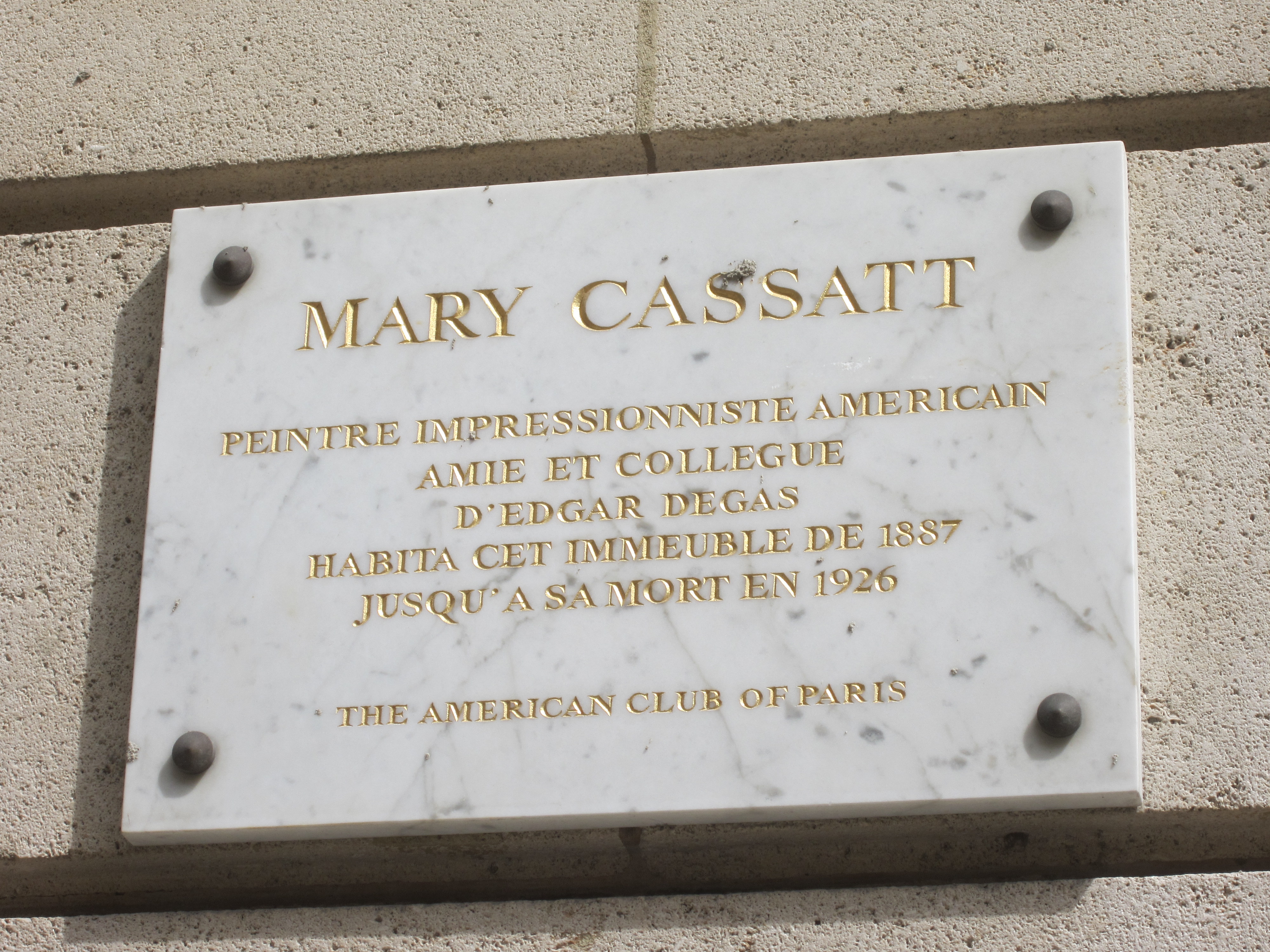
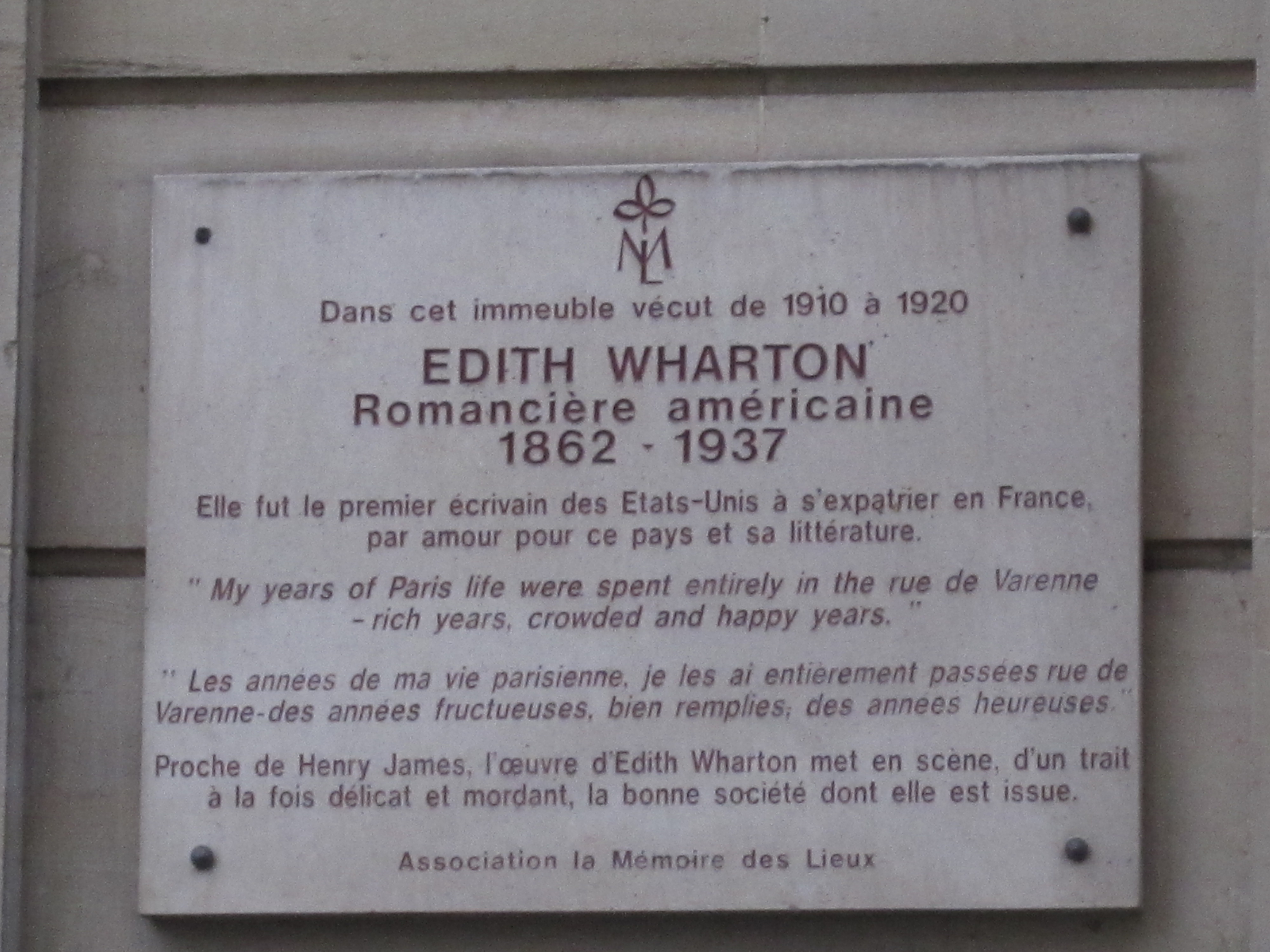
The plaque at 10 rue de Marignon in the 8th arrondissment of Paris: “American Impressionist Painter – Friend and Colleague of Edgar Degas.” (Commentary: Why do the plaques commemorating a woman have to mention their relation to a man? I noticed the same thing on Edith Wharton’s plaque on rue Varenne in Paris, which mentioned that Wharton was a friend of Henry James.)
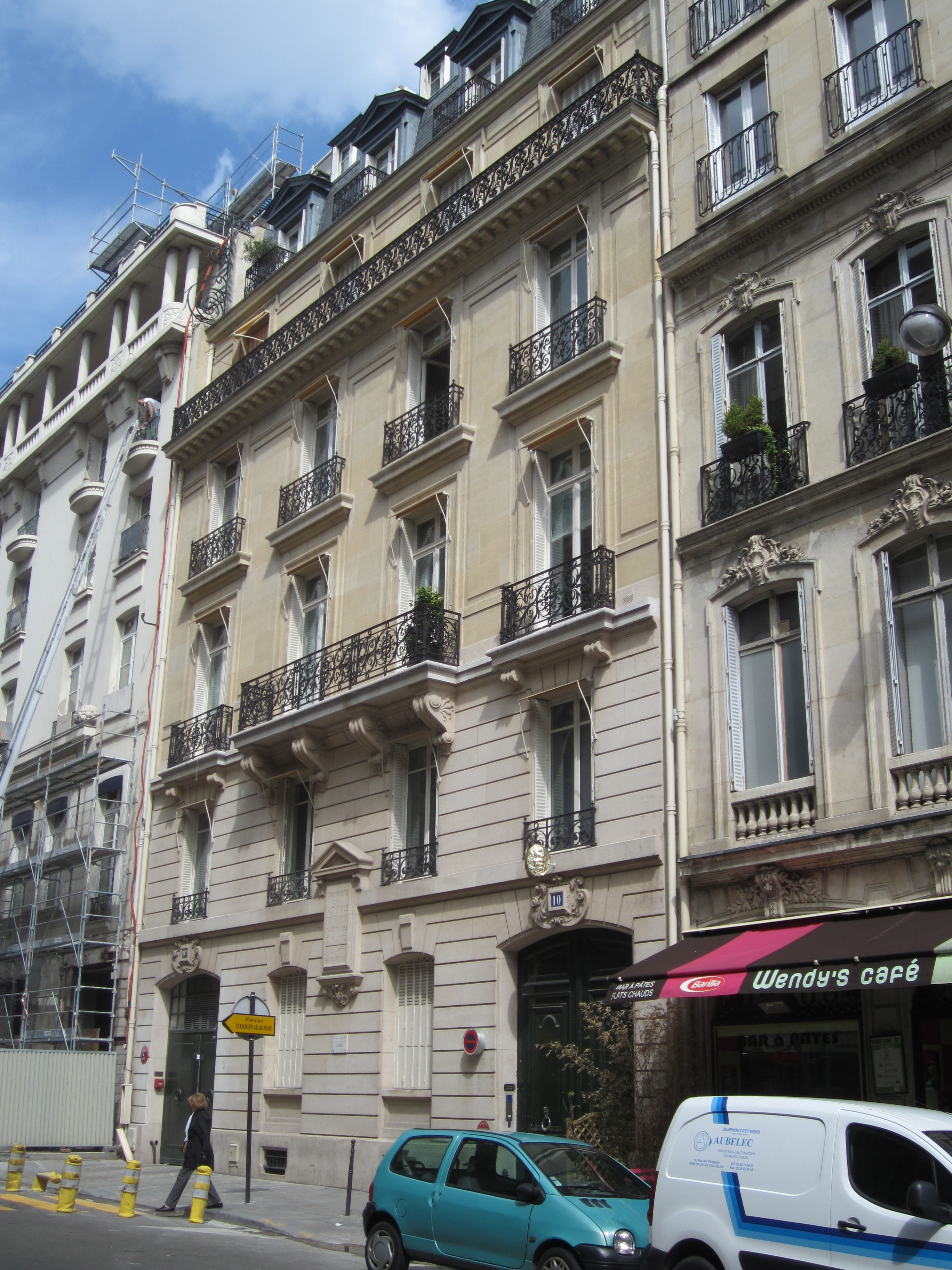
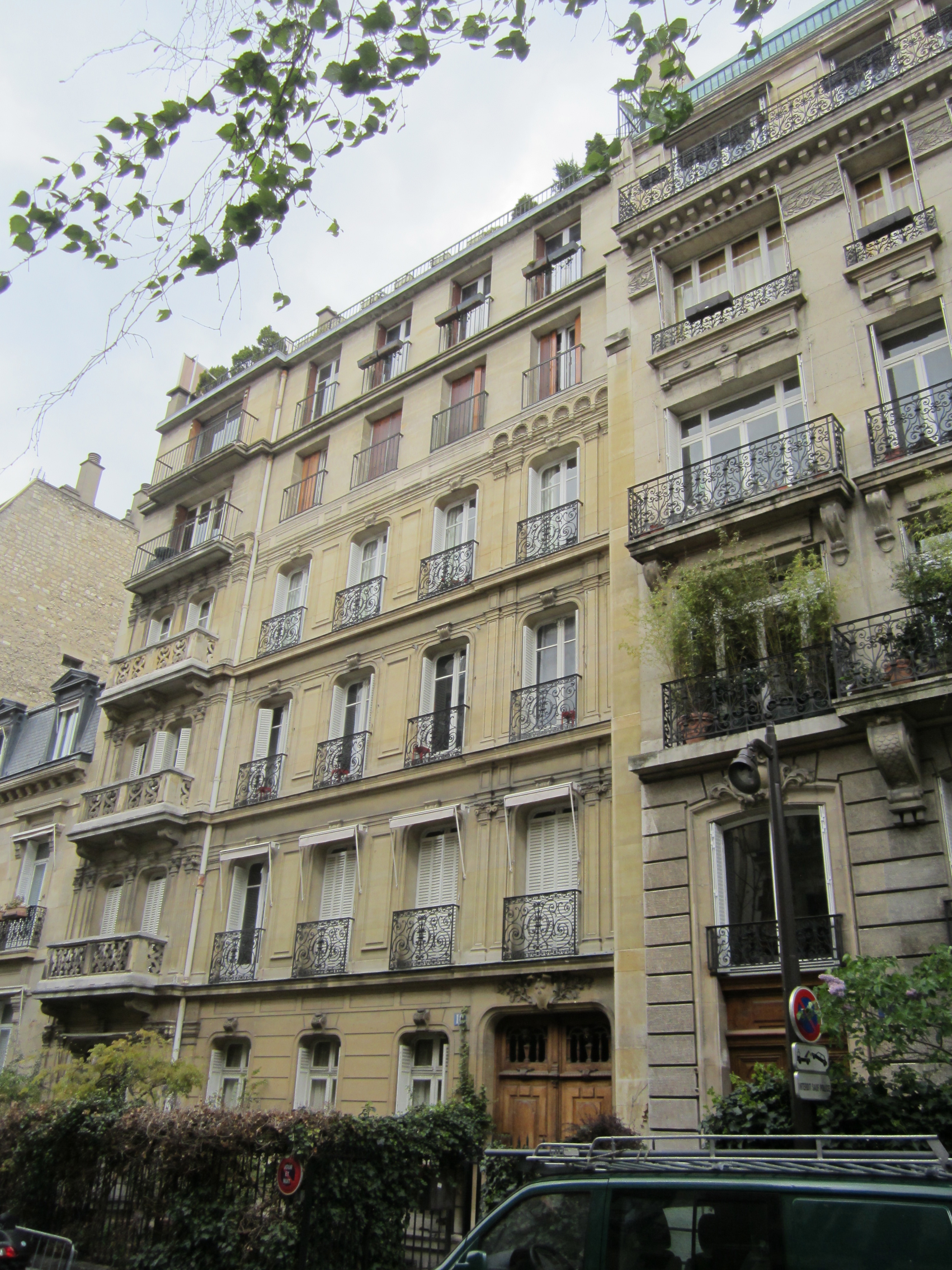
10 rue Marignan, Paris home of Mary Cassatt from 1887-1926

Mary Cassatt lived the rest of her life in Paris and its suburbs, dying in 1926 at her country chateau in Beaufresne, one of the last of her generation who had come to Paris in the 1860s. She was a significant part of America’s “Greater Journey.” And because she was a woman, her story is even more remarkable. Like Ginger Rogers, she had to do it “backwards and in heels.”

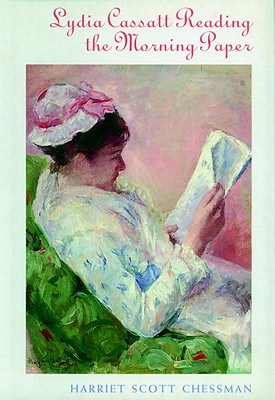
The Greater Journey by David McCullough: Highly recommended. Also recommended, Lydia Cassatt Reading the Morning Paper by Harriet Scott Chessman.
John Singer Sargent and Madame X in Paris

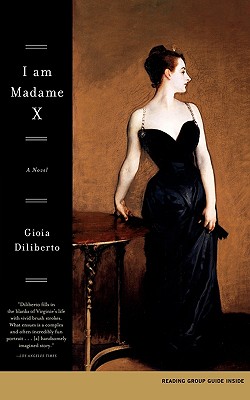
I am Madame X by Gioia Diliberto


I first read Gioia Diliberto’s  I Am Madame X back in 2004. I might have even picked it as a book club read. It’s a fabulous Belle Epoque novel about the life and times of the celebrated 19th century American portrait artist John Singer Sargent and his most infamous model, American beauty Virginie Gautreau.

I read it again recently, because John Singer Sargent’s name keeps popping up on my travels through Paris art history. This book is even better the second time around, especially now that I know my way around Paris and I can really appreciate what it meant to be a Left Bank artist versus a Right Bank Artist.

John Singer Sargent had the best of both worlds.

He was the son of a wealthy, cosmopolitan American family that had lived abroad for decades by the time they arrived in Paris in 1874. They settled into a posh Right Bank apartment near the Champs-Élysées, which has since become a commercial building at 52 rue La Boétie. Sargent’s father took him to meet the young teaching master Carolus-Duran, who ran a popular Left Bank painting atelier in the heart of Montparnasse.

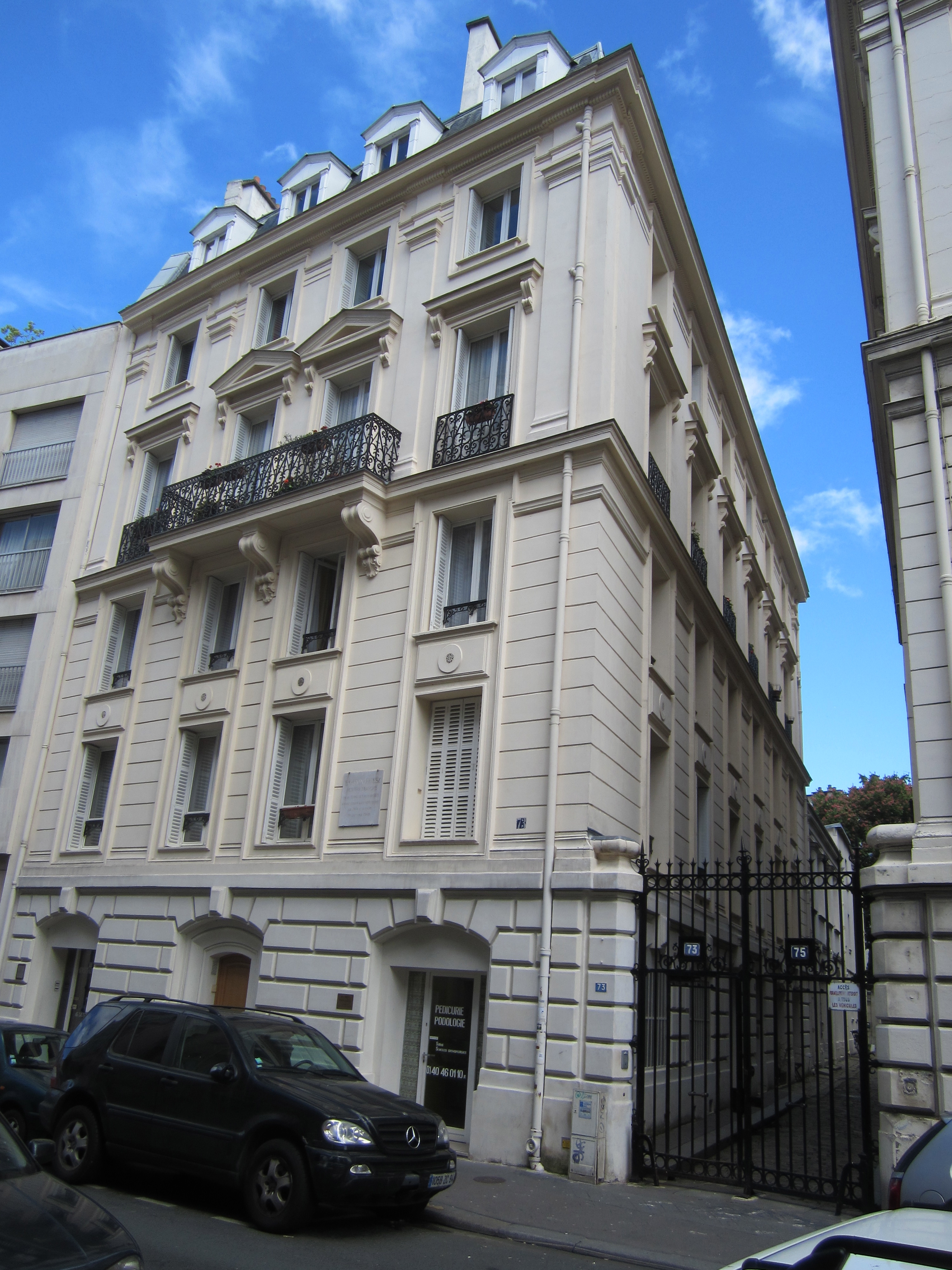
Sargent was only 18 years old, but he was already bursting with talent. He quickly earned the admiration of his fellow students and within a year was accepted at the rigorous L’Ecole des Beaux Arts. In 1875, Sargent moved out of the family’s home and into a fifth-floor studio apartment at 73 rue Notre-Dame-des-Champs with fellow art student James Carroll Beckwith.

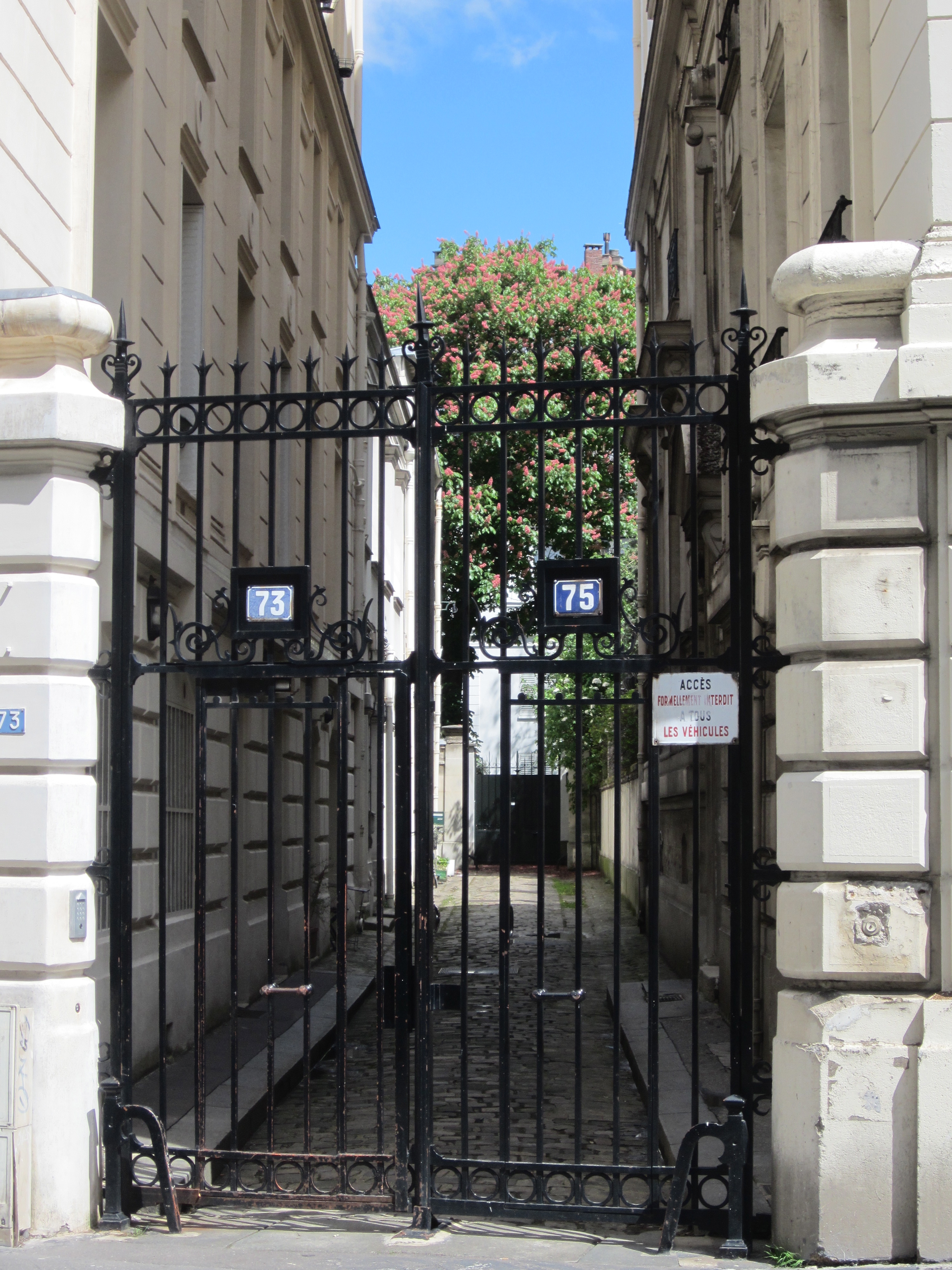
The young American artists had found a promising location. The studios at 73 rue Notre-Dame-des-Champs had also housed the famous French painter Jean-Paul Laurens, while 75 was the mansion-atelier of Adolphe William Bourguereau. By the 1860s, this small, winding road had already been nicknamed “the royal road of painting.” Even today, the address looks inspiring. It still has an impressive entrance and an inviting green courtyard.

Sargent, Beckwith and their pals led a young bohemian life in the Left Bank. They worked hard but still had time for wild evenings, moving the easels aside for dancing and drinking right in the studio. Sargent was known for entertaining his guests on a rented piano. On Sunday nights, they would clean themselves up for  a proper dinner party at Sargent’s family’s home with “educated and agreeable” conversation.

73 rue des Notre-Dame-des-Champs, once the art studio of John Singer Sargent

Courtyard of 73-75 rue Notre-Dame-des-Petit-Champs. Back in the 1870s, the gardens probably went all the way through to Luxembourg Gardens

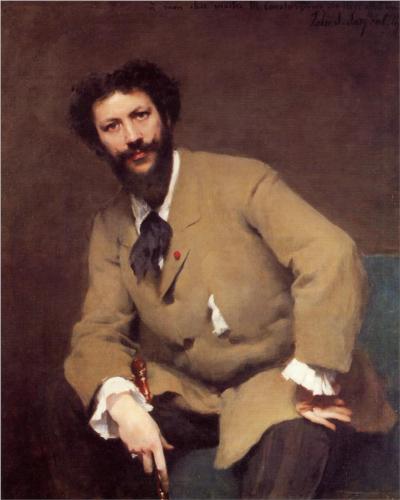
John Singer Sargent, Portrait of Carolus-Duran (1879)

In 1879, Sargent painted the portrait of his art teacher Carolus-Duran, and it absolutely launched his career. It was bold, theatrical, and presented a stunning likeness in both spirit and physicality. Sargent was only 23 years old and already one of the best portrait artists in France.

In Diliberto’s novel, Sargent meets the future Madame X at a Montparnasse restaurant. In reality, they may have met when Gautreau attended an informal party at Sargent’s studio on rue de Notre-Dame-des-Champs in 1881. Sargent was celebrating the completion of his portrait of Dr. Pozzi, one of Gautreau’s many reputed lovers. According to Diliberto, Gautreau was shocked by Sargent’s portrayal of Dr. Pozzi, a charismatic ladies man (and gynecologist) who had ungraciously tossed her aside before her marriage to Pierre Gautreau:

On an easel near the French doors stood Sargent’s painting of Dr. Pozzi. It looked like a portrait of the devil. Virtually the entire canvas was red – the sumptuous curtains in the background, the carpeted floor. The doctor himself was dressed in red slippers and the red wool dressing gown that I had seen him wear dozens of times. His pose was hypertheatrical; his face was caught in an intense observance of an object outside the canvas, and his elongated fingers tugged nervously at his collar and the drawstring of his robe. His fingers were as sharp as pincers and seemed spotted with blood. Had Pozzi just performed a gynecological operation? Deflowered a virgin?

I just love how Diliberto gave Gautreau such a blunt and penetrating voice. She is clearly no innocent about men, or for that matter, about Sargent’s ability to portray a model’s true character.

John Singer Sargent, Dr. Pozzi at Home (1881)

Sargent was determined to get the chance to paint Gautreau’s portrait. He obviously understood the PR value of painting the “professional beauty” who was the focus of such much attention and gossip in the affluent social circles of Paris. Gautreau thought about giving her business to other more traditional French portrait artists, but she may have felt a special connection to Sargent. They were both up-and-coming Americans with something to prove to the French.

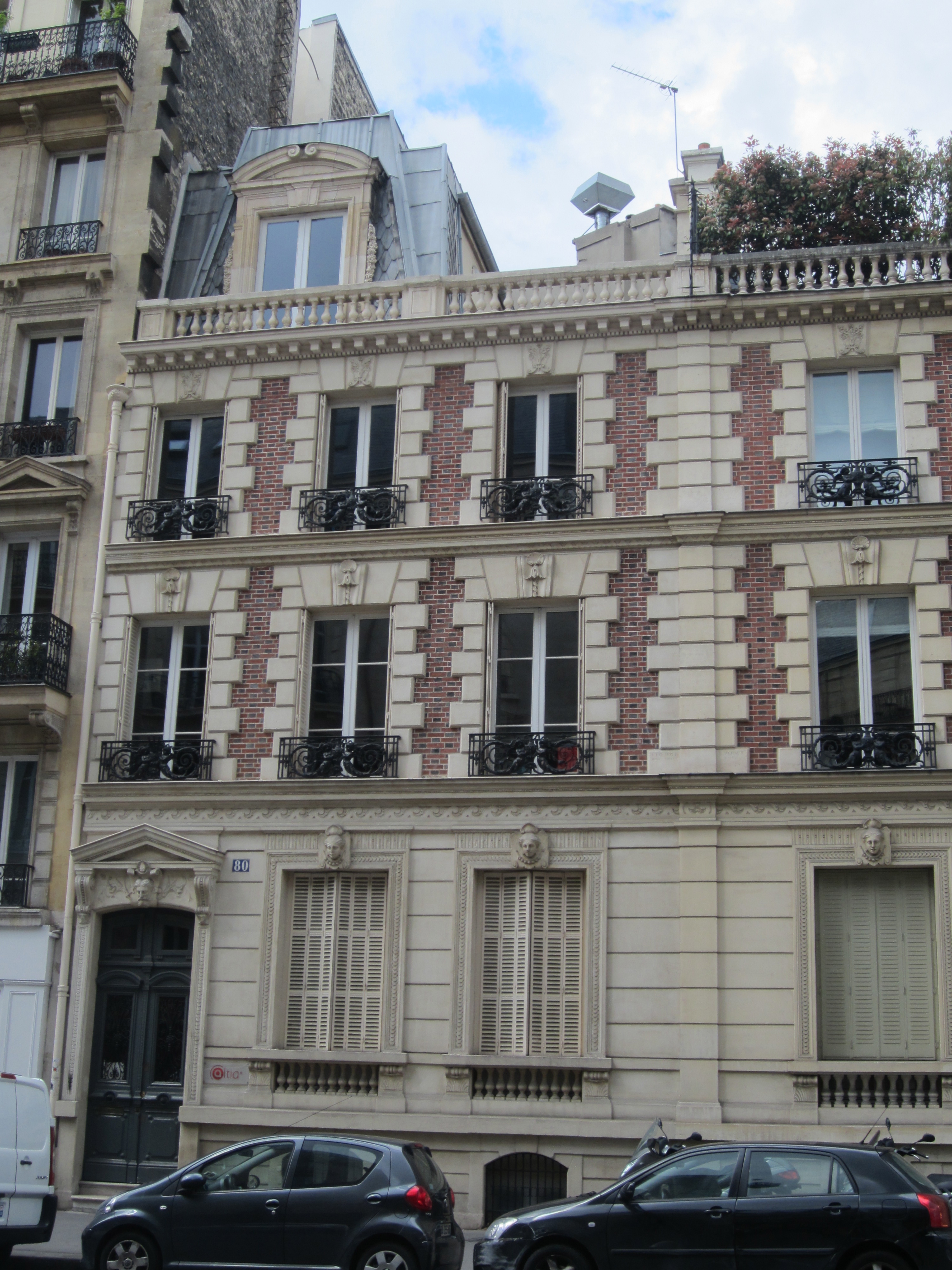
In the meantime, steady commissions enabled Sargent to buy a large, new home and studio on the Right Bank, closer to all of his wealthy patrons. In the winter of 1883-84, Sargent moved to 41 boulevard Berthier, on the shaded side of a wide street whose light made it a popular location for art studios. It wasn’t far from the new mansions near Parc Monceau, and in fact just a few blocks from Madame Gautreau who lived at 80 rue Jouffroy d’Abbans.

In The Greater Journey, David McCullough describes Sargent’s new Right Bank studio:

. . .  a workplace elegantly furnished with comfortably upholstered chairs, Persian rugs, and drapery befitting his new professional standing, and with an upright piano against one wall, . . .

No longer would Sargent’s patrons have to track through the mud and past the questionable bohemians on rue Notre-Dame-des-Champs.

41 boulevard Berthier has been replaced by a newer building, but this one next door is a good example of the types of buildings that once dominated the street, with large windows  and skylights on the top floors.  It was on this street that Virginie Gautreau would have gone to pose for her portrait.

Parc Monceau in the 17th, the center of the fashionable new Plaine Monceau area of the 1870s-80s. Monet painted this park several times.

80 rue Jouffroy, the home of Virginie and Pierre Gautreau in the 1880s.

By 1883, Gautreau finally agreed to pose for Sargent. He talked her into wearing a black dress that would highlight her unusual color, which included rouged ears, white pastey skin (thanks to lavender skin cream) and brightly hennaed hair. At the end of the day, Sargent may have painted her color a little too well. He captured her true character, just like he had with Dr. Pozzi. Her pose was so confident it seemed haughty.

But the strap was the last straw. The painting we know now, as it appears at the Metropolitan Museum in New Yorkwas retouched. The original painting looked like this – a little risqué, no doubt, but more balanced and much more interesting.

Nevertheless, it was a disaster at the 1884 salon. “Quelle horreur!” said polite Paris society. One critic said the flesh “more resembles the flesh of a dead than a living body.”

Sargent soon left for the summer in London while Gautreau disappeared to Brittany, far from the judgment of Paris. Sargent would keep his Paris studio on boulevard Berthier for two more years, where he proudly displayed Madame X. 

Although Sargent may have misjudged the limits of Right Bank tolerance and underestimated their hypocrisy (after all, many of the traditional paintings in the Salon were nudes, and they’re complaining about a little strap?), he would later say that Madame X was “the best thing I have done.”

John Singer Sargent in his boulevard Berthier studio with a retouched Madame X. The strap is repainted.

If your read I am Madame X you will find out much more about Virginie Gautreau: her New Oreans background, her family’s escape to Paris during the Civil War, her early years in a Paris convent school. It’s a well-told story in the voice of a fascinating woman.

 I am Madame X by Gioia Diliberto: HIghly recommended.

Berthe Morisot’s Interior

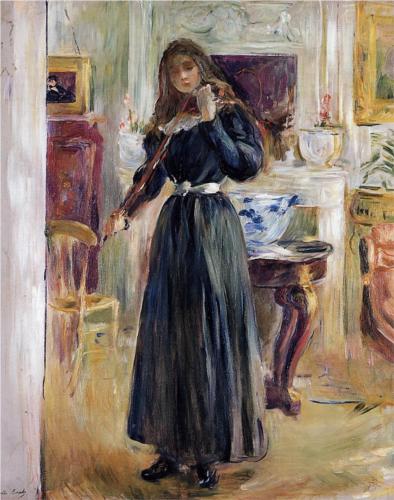
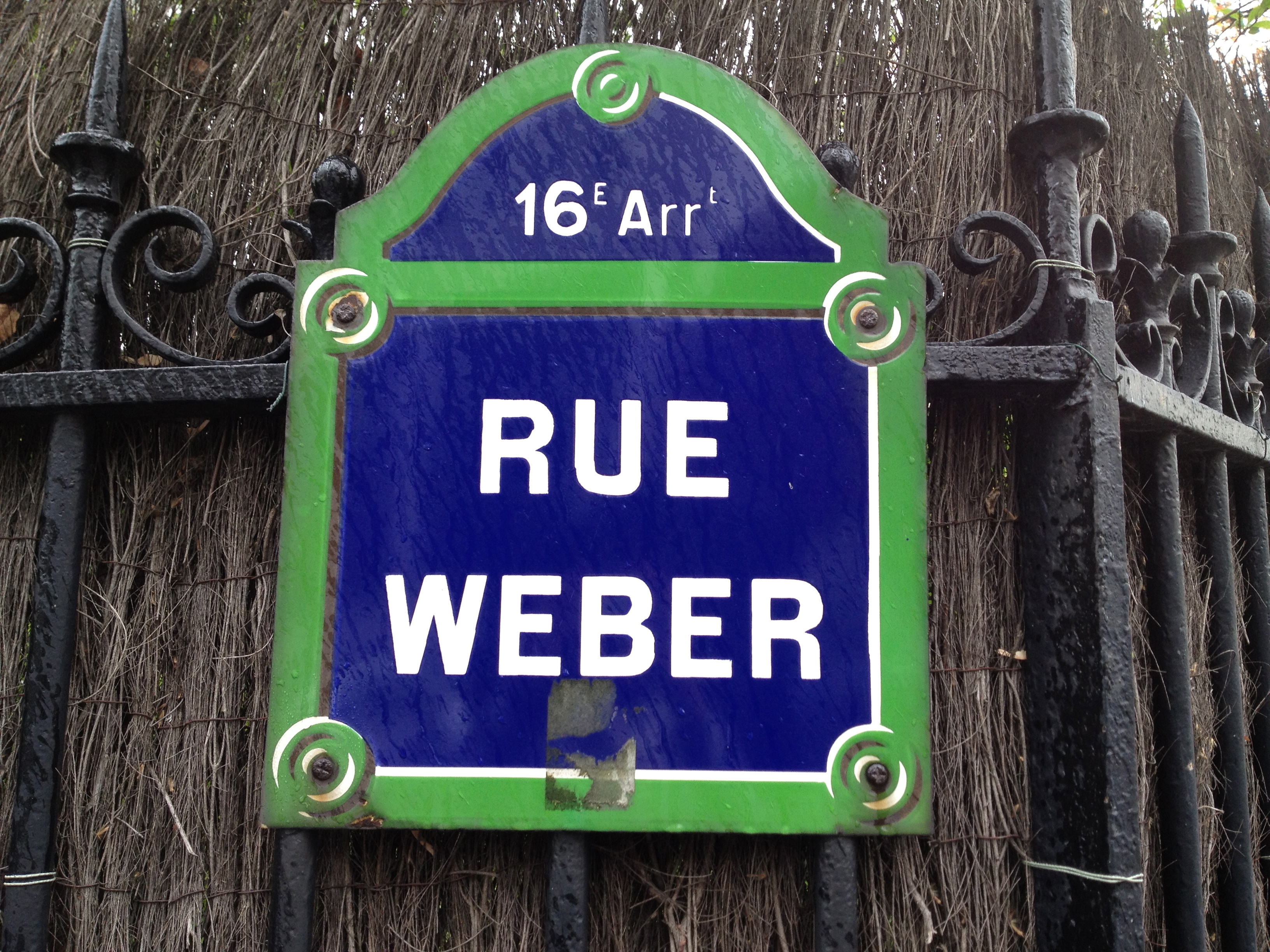
In this 1893 painting, Berthe Morisot pictures her teenage daughter Julie in the interior of their apartment at 10 rue Weber, where they moved after the 1892 death of Morisot’s husband Eugene Manet. I think it tells us a story about the interior of Morisot’s own life.

Berthe Morisot, Julie Playing a Violin (1893)

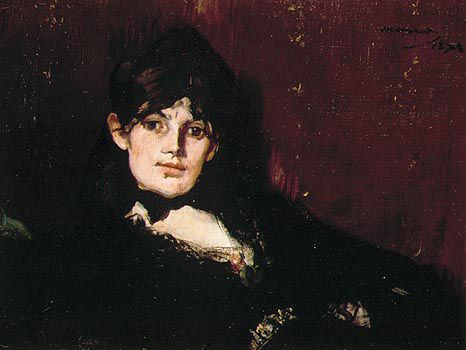
One of the first things I notice is the portrait of Morisot hanging on the wall to the left of the fireplace. Her brother-in-law Édouard Manet painted it in 1873, when Morisot was thirty-two years old and had just started showing with the Impressionists. Manet gave it to Morisot as a gift. I am always struck by the pose and the gaze that Manet captured. Pretty sensuous. Yet one year later, Morisot would marry Édouard’s brother. Twenty years later, after both Édouard and Eugene have died, Morisot paints a picture with this portrait in the background.

Edouard Manet, Berthe Morisot Reclining (1873)

There are a few other interesting details in the painting of Julie and a Violin. According to Julie Morisot, who is quoted in the Exhibition Catalog for the Berthe Morisot Exhibit at the Musée Marmottan, the painting to the right of the fireplace – which is cut off and barely even depicted – is a painting of her father by Degas. In the center of the painting behind Julie, there is a large Chinese bowl, a treasured gift from Édouard Manet. Notice how close it is to the fireplace, how bright and prominent it is in the center of the room next to Julie. Finally, consider the empty yellow chair facing Morisot’s own portrait. It has been placed there on purpose – why else would it be facing the wall and not Julie?

I think we know. The two most treasured people in Morisot’s life were her daughter and Édouard – not Eugene – Manet. But of course, I’m just speculating, drawing wild conclusions from a pretty painting. And yet, I know that everything in the background of a painting is carefully selected and placed there for a reason, just like the details in a book. I think this painting hints at a really good story.

If you go to rue Weber today, you can find Morisot’s lovely apartment still standing. There is no historical marker, and few of the neighbors I spoke to even know it was once Morisot’s home. It is one of the loveliest streets in Paris, in a quiet corner of the 16th arrondissement that ends at the Bois de Boulogne. Despite their loss and grief, Morisot and her daughter must have had some simple pleasures their last two years there together, with frequent walks and sketching opportunities in the nearby park.

Morisot would catch pneumonia in 1895 and die at the age of 52. Julie would come under the guardianship of a Manet family friend, the poet Stéphane Mallarmé, until his death in 1899.

Morisot’s secret interior would live on in her paintings. You can see many of them for yourself at the special Berthe Morisot Exhibit at the Musée Marmottan until July 1, 2012.

Berthe Morisot’s Garden

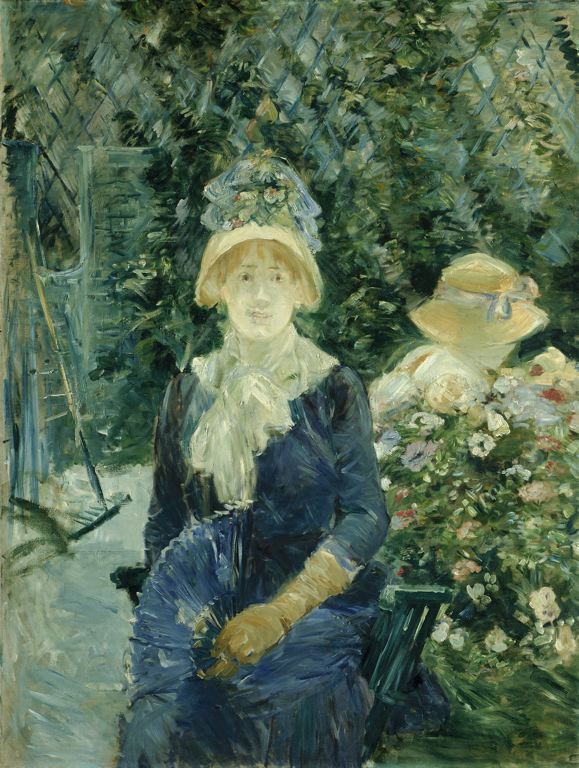
Berthe Morisot: “Woman in a Garden” (1882-83)

This lovely Berthe Morisot painting once traveled from Chicago to Paris, just like me. It was included in the Berthe Morisot Exhibit at Musée Marmottan in 2012.  It had been loaned out by The Art Institute of Chicago.

This exhibit represented the first major retrospective of Berthe Morisot’s work in over 40 years. There were over 150 works, including paintings, pastels, watercolors and drawings, gathered from museums and private collections all over the world. Some you might have seen before, whether at the Marmottan or the Musée D’Orsay, but there were some you may never have the chance to see again. The effect of seeing so many of her works together, in such a beautiful setting, is just plain stunning. Once in a lifetime perhaps.

But the exhibit offered much more than that. Together, Morisot’s collected works told the story of this remarkable woman’s life, from her earliest years as a copyist at the Louvre to her final years as a celebrated Impressionist and devoted mother.

In the Exhibition Catalogue you can find the details of Morisot’s life right alongside her paintings, all in chronological order. You can follow Morisot as she moves from home to home in the 16th arrondissement of Paris, from her parents’ homes at 12 and 16 rue Franklin, to her last home as a widow at 10 rue Weber. Aside from her travels and her summers in suburban Paris, she spent her entire life in the 16th.

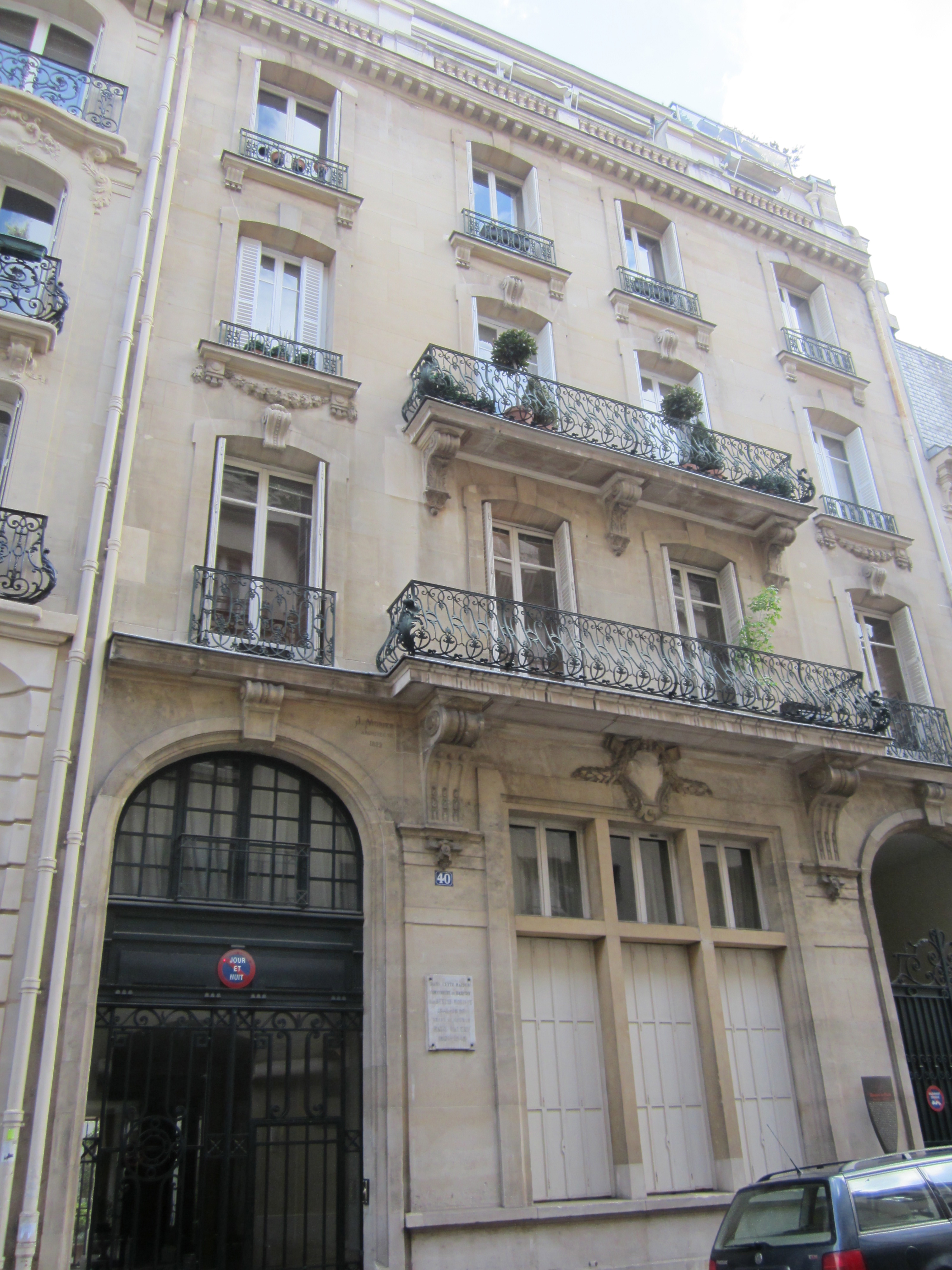
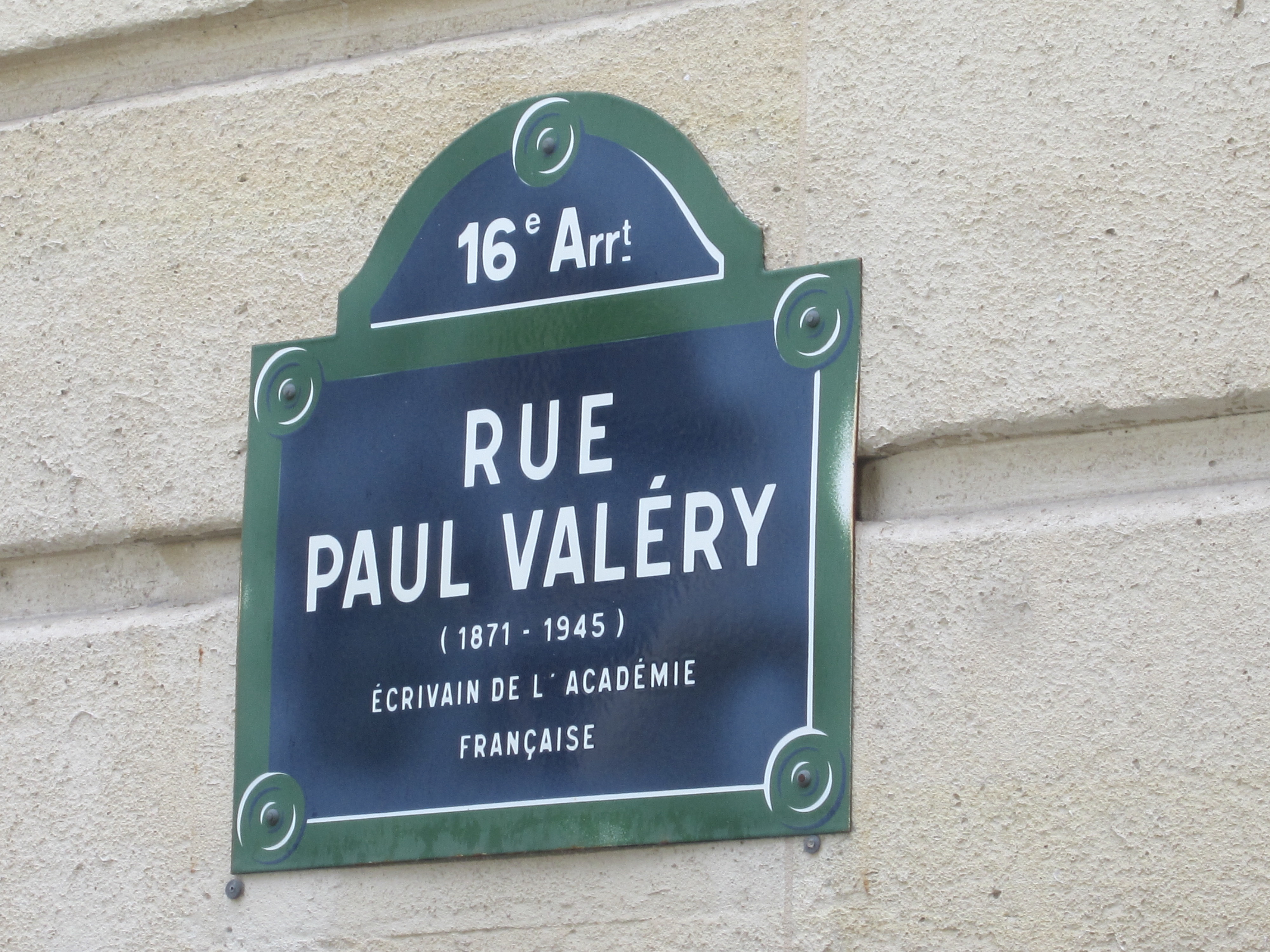
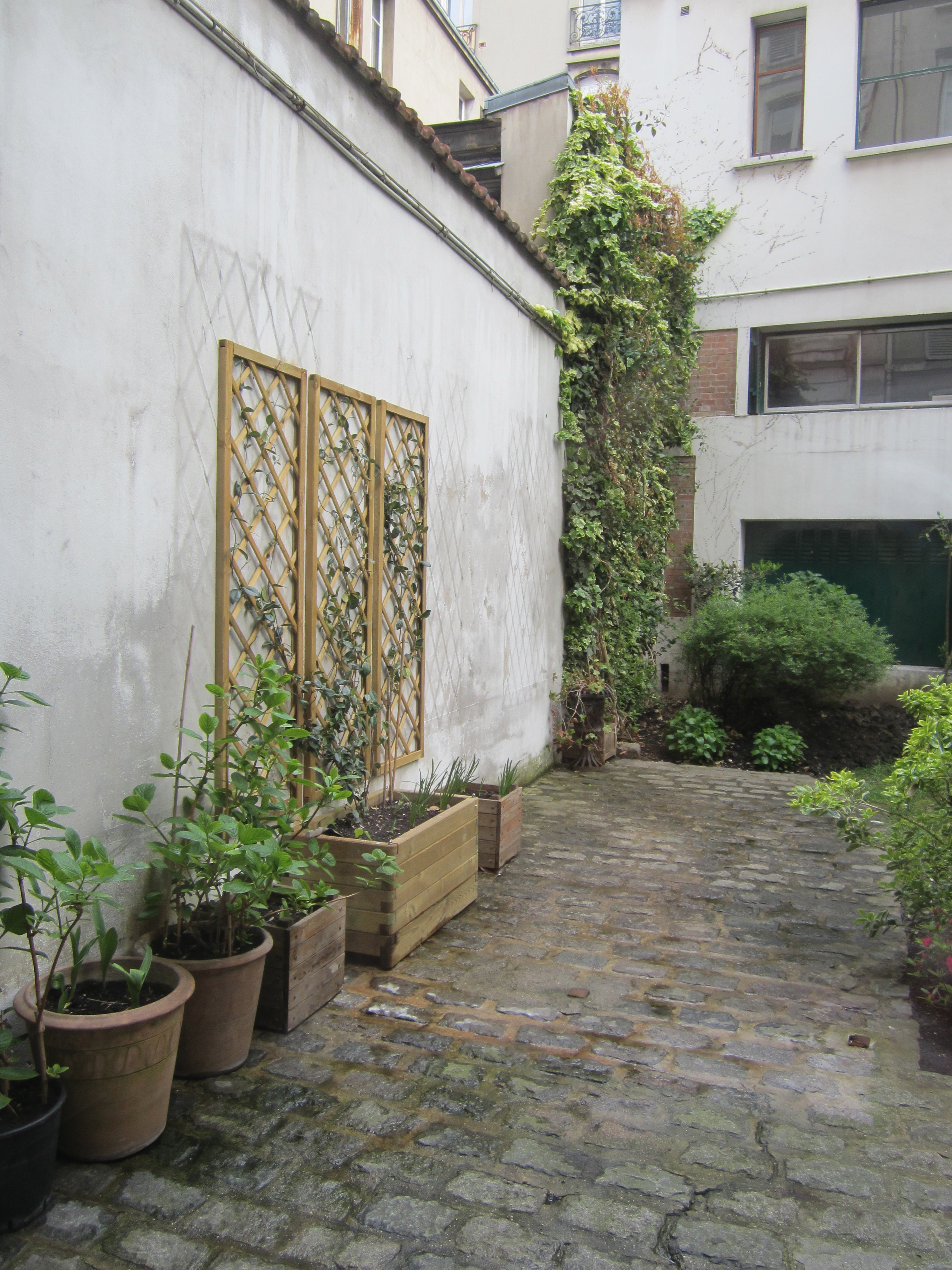
In fact, Morisot painted Woman in a Garden during the period she lived on rue Villejust, now known as rue Paul Valéry. Her home still stands today, with the same garden that she once could have painted in.

Morisot lived at 40 rue Villejust (40 rue Paul Valéry) from 1883-1893, during her marriage to Edouard Manet’s brother Eugene. They lived on the first floor and her mother-in-law lived on the second floor. Morisot hosted weekly salons where the Impressionists hung out. As Renoir’s son Jean said in his father’s biography: “In Berthe Morisot’s day the Manet circle had been one of the most authentic centers of civilized Parisian life. . . . It was not just intellectuals one met at Berthe Morisot’s, but simply good company. . . . Berthe Morisot acted like a special kind of magnet on people, attracting only the genuine. She had a gift for smoothing rough edges. ‘Even Degas was more civil when with her.’ “

After her husband Eugene died in 1893, Morisot and her daughter Julie moved out of the rue Villejust home.  In 1900, Morisot’s niece Jeannie Gobillard and her new husband, the French poet Paul Valéry, moved in.

rue Villejust was eventually renamed rue Paul Valéry. It is located in the northern part of the 16th arrondissement, not far from the Bois de Boulogne.

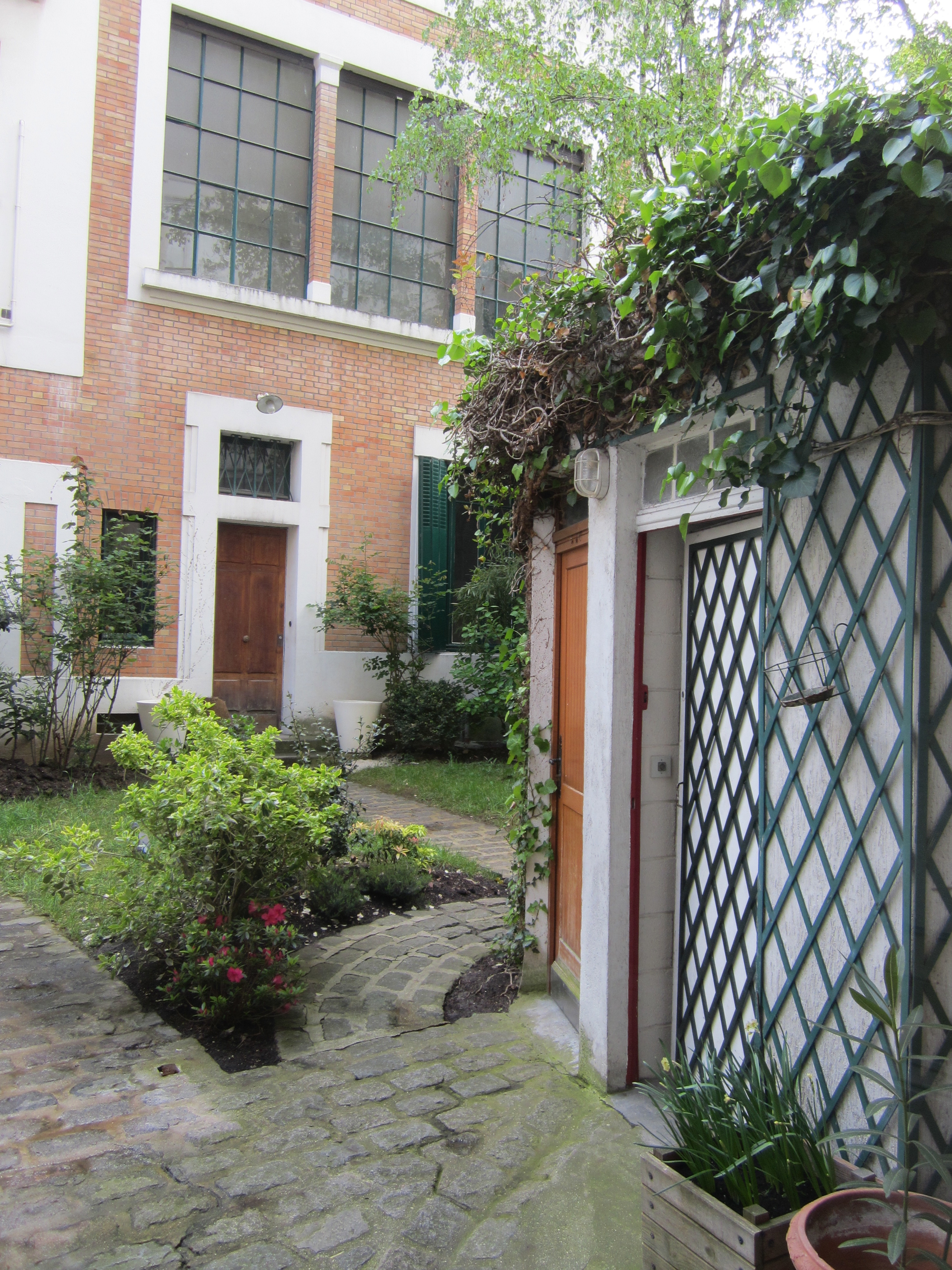
This was once Berthe Morisot’s private garden. It resembles the setting for Woman in a Garden, but Morisot also spent time at a suburban country home, so we do not know if this was the setting for the painting. I would like to think so, because, well, I was there. When the construction on the house was completed in 1893, Morisot’s husband planted the flowers and plants in the garden.

I love the green lattices in French courtyards. They certainly make for a beautiful background in Morisot’s painting.

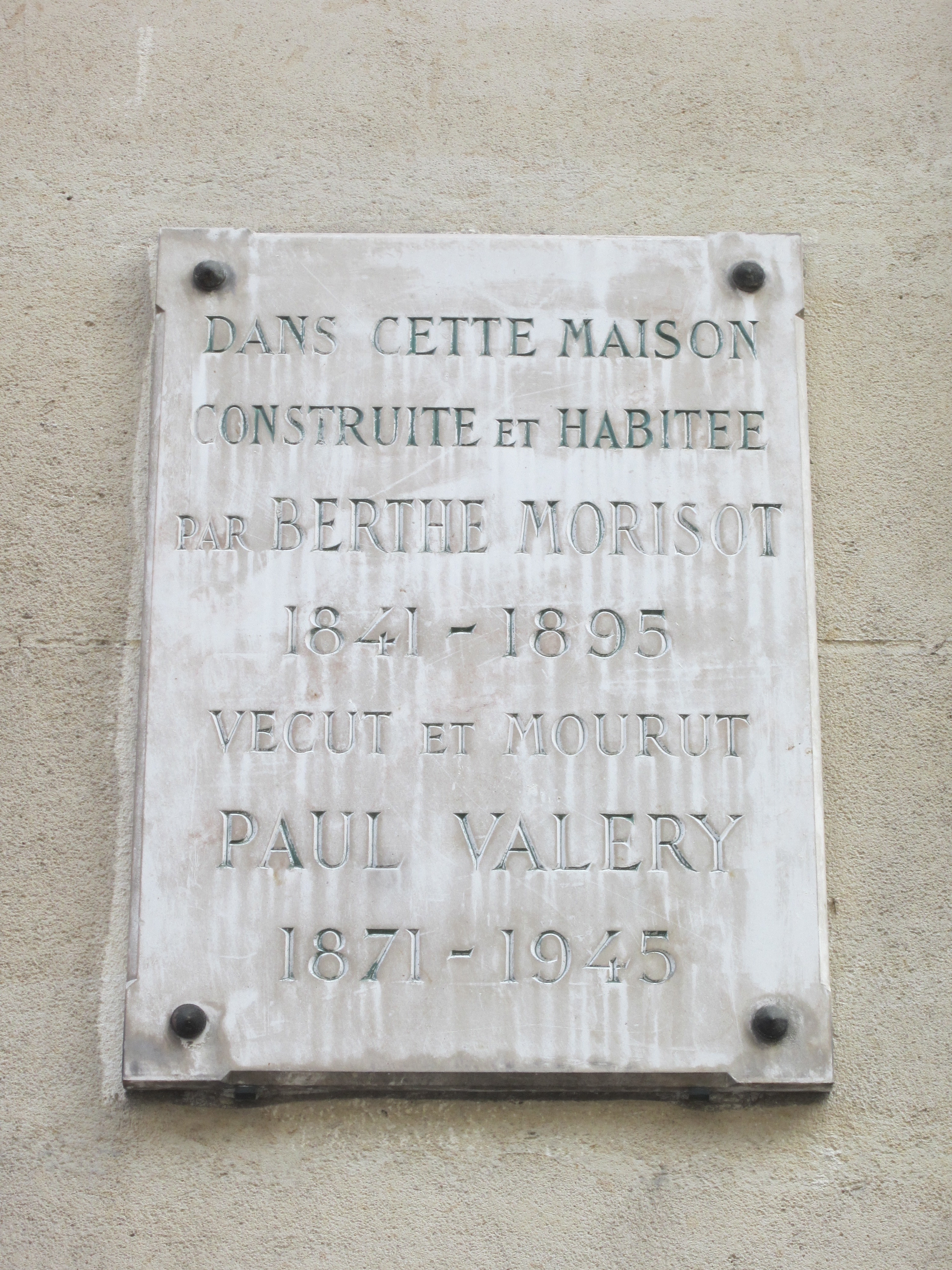
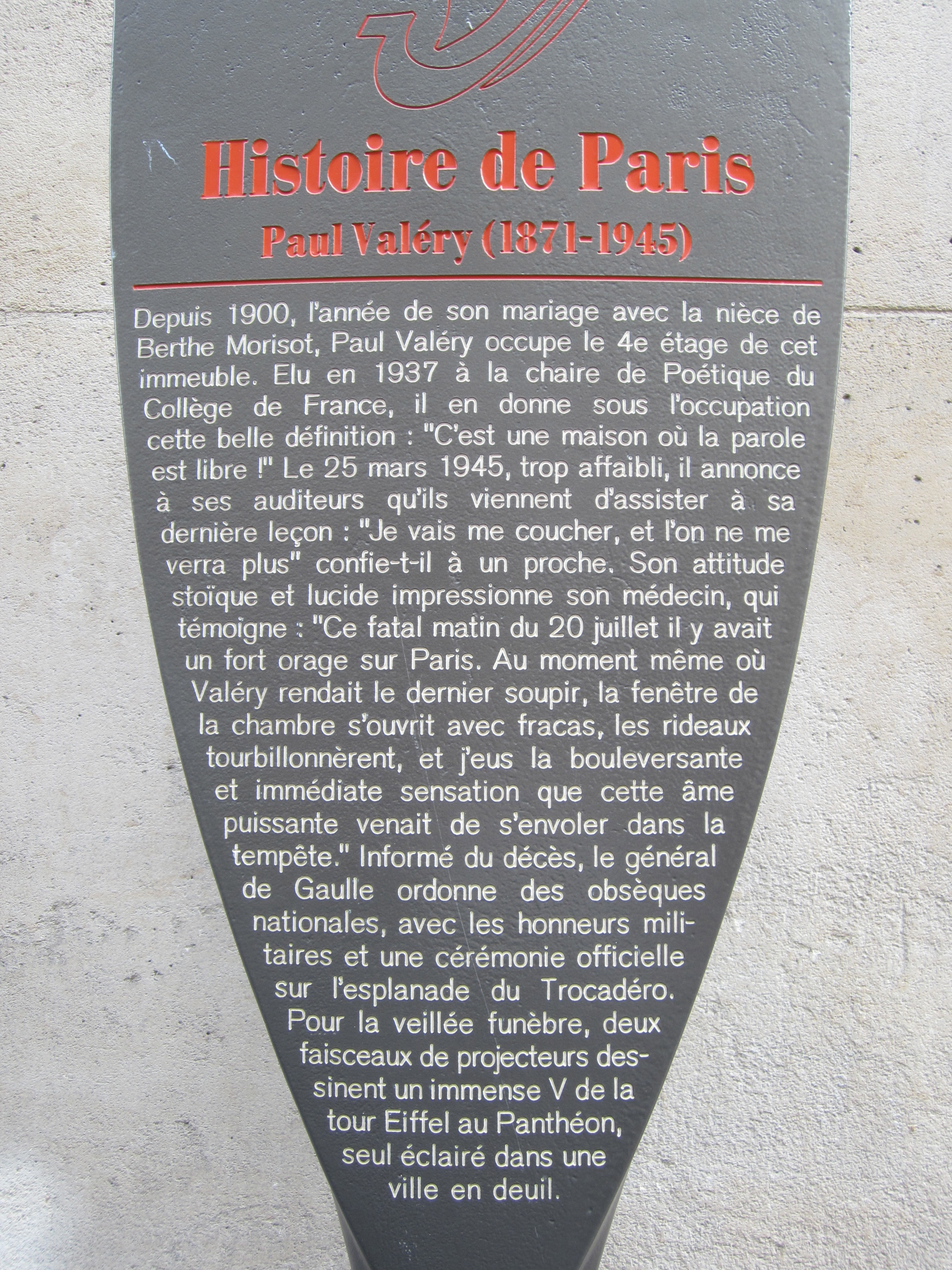
I must admit I was a little disappointed with the historical marker at 40 rue Paul Valéry. Its only reference to Berthe Morisot? Paul Valéry married her niece. That’s it. Every other line is devoted to Valéry.

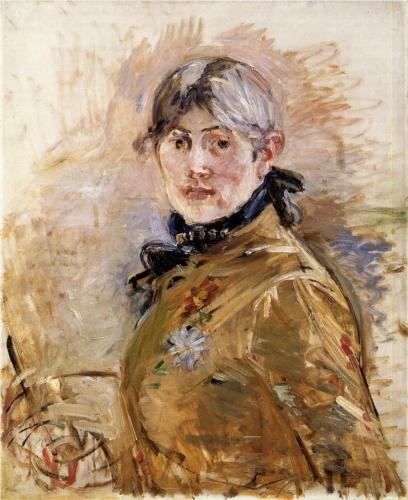
Berthe Morisot, Self-Portrait (1885). Morisot would have painted this in her home on rue Villejust, where she had no separate art studio. She managed to balance her career with motherhood by merging her home life and her painting life.

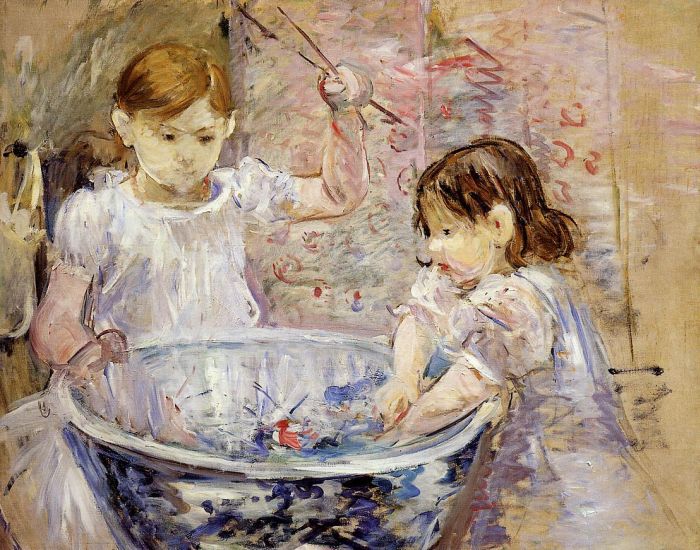
I admire Morisot’s skill and patience in being able to capture these busy girls (her daughter Julie age 8 and the concierge’s daughter, Marthe Givaudan) playing with goldfish in a valuable bowl, which was a treasured gift from Morisot’s brother-in-law Edouard Manet. The home as studio, yet a comfortable place where kids can be kids and mothers can be painters.

More photos and posts will follow from my Berthe Morisot tour of the 16th. There are no more historical markers, but there is plenty of art history. I hope you’ll follow along.

Leaving Van Gogh in Auvers

When Vincent Van Gogh died in Auvers-sur-Oise, France in July 1890, he left behind so many burning questions.

How did he die? Was it a self-inflicted gunshot wound or homocide? And why was the gun never found? How did Van Gogh ever manage to complete over 70 dazzling paintings in just 70 days in Auvers? It’s all such a mystery.

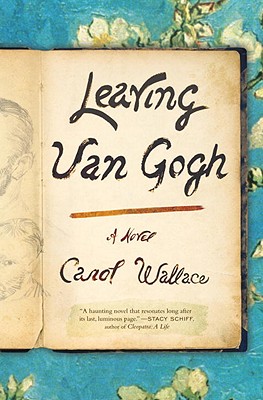
In the novel Leaving Van Gogh, Carol Wallace takes on the legend of Van Gogh’s last 70 days through the eyes of Dr. Paul Gachet, a widowed doctor, painter and art collector who owned a country house in Auvers. Wallace’s theory – buy it or not – is that the smoking gun belonged to Dr. Gachet.

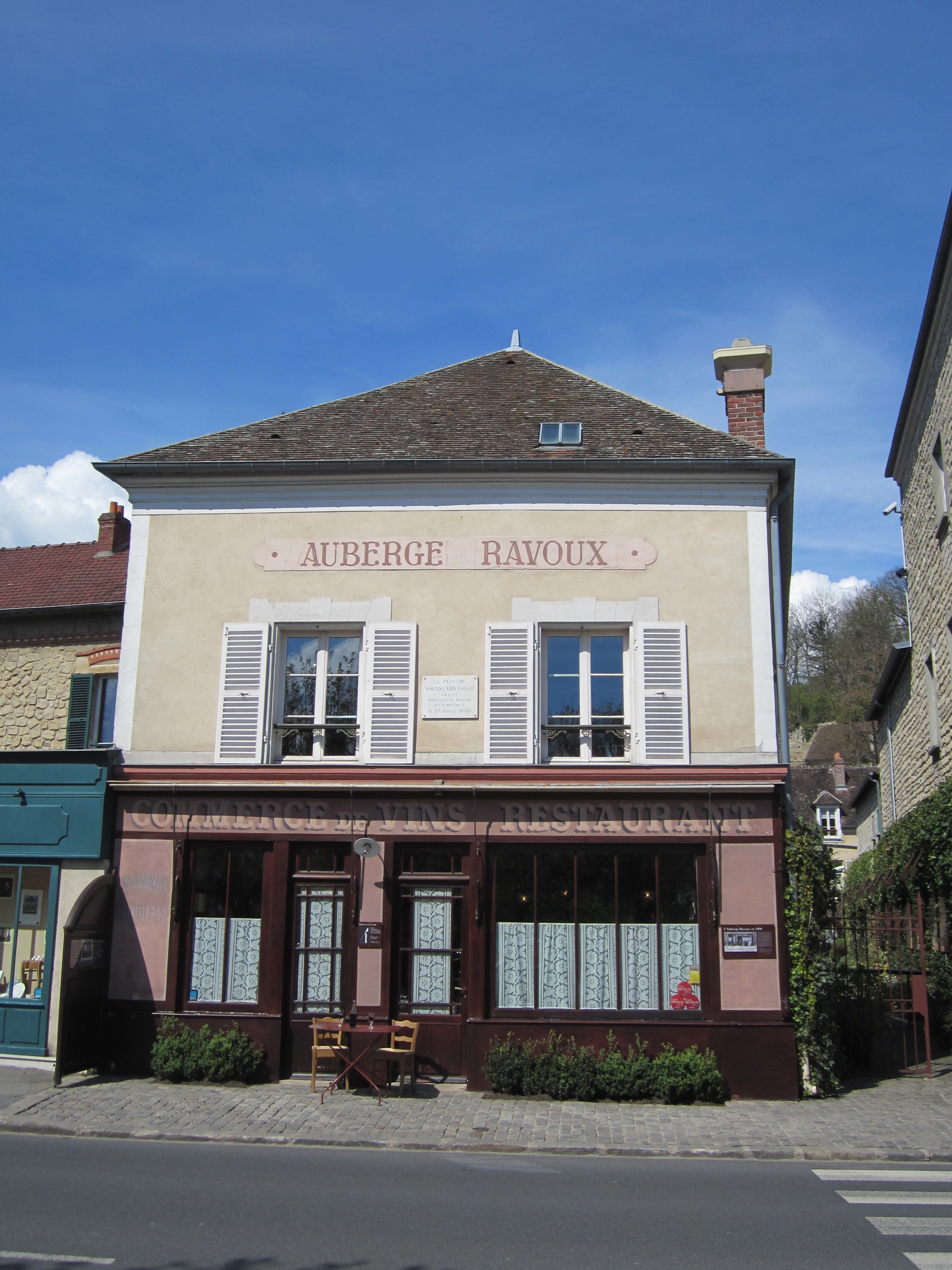
Dr. Gachet specialized in treating mental disorders and was a friend and collector of many of the Impressionists, including Cezanne, Sisley, Monet and Renoir. Vincent’s brother, the art dealer Theo Van Gogh, asked Dr. Gachet to  take Vincent under his care. Dr. Gachet found Vincent inexpensive lodging in what is now the Auberge Ravoux in Auvers, and prescribed painting as the best treatment for his mental illness: “If I understand you at all, Monsieur Van Gogh, your painting is the reason you continue to live, is it not? . . . Then paint, . . . Paint and live. And come to me if you feel disturbed.”

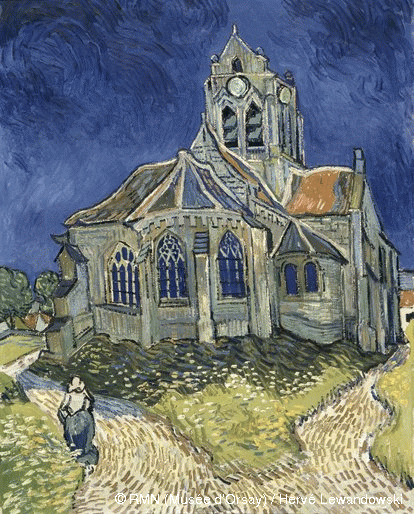
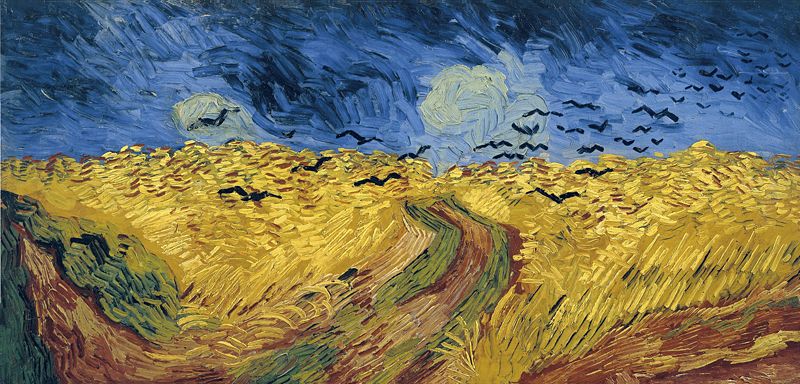
Van Gogh followed his doctor’s orders, pouring out such wonders as The Church in Auvers, Dr. Paul Gachet, Wheatfield with Crows from May through July, 1890.

Wallace’s book is nicely researched, from Dr. Gachet’s 19th century medical training at a women’s psychiatric hospital in Paris to the details of Van Gogh’s brief painting history in Auvers. But more than that, Wallace captures the intensity of Van Gogh’s genius and madness, the creative spark behind his strong, bold colors and swirling brushstrokes. She appraises Van Gogh’s art through Dr. Gachet’s eyes, who trained and exhibited as an artist. No doubt it helps that Wallace is herself an art historian and knows her way around paints and palettes.

Here is Dr. Gachet when he sees Van Gogh’s painting of the Church in Auvers for the first time:

I had not seen the painting of the church that he had mentioned and was curious to know how he had portrayed it. . . . The sky he painted in several shades of blue, the darkest of which almost matched the color of the stained glass. The result was that the building seemed to be a mere façade, as if we were looking through the apse to empty blue air beyond. And this was not all: the stonework of the church, so rigid in life, became flexible under Vincent’s brush. The rooflines wavered. The tower tilted. The space of the apse seemed swollen. Gray stone was touched with dashes of blue and green, as if the surrounding grass were beginning to swallow the dissolving structure.

Leaving Van Gogh has it all: wonderfully artsy writing, accurate art history and a compelling human story. It’s also a moving contemplation on how to care for those who suffer from mental illness. The circumstances of Van Gogh’s death would make for great book club debates, especially if you ambitious enough to compare Wallace’s theory to that propounded in the recently released, 900-plus page biography called Van Gogh, The Life by Steven Naifeh and Gregory Smith.

It’s a compelling mystery.

             *       *       *       *       *

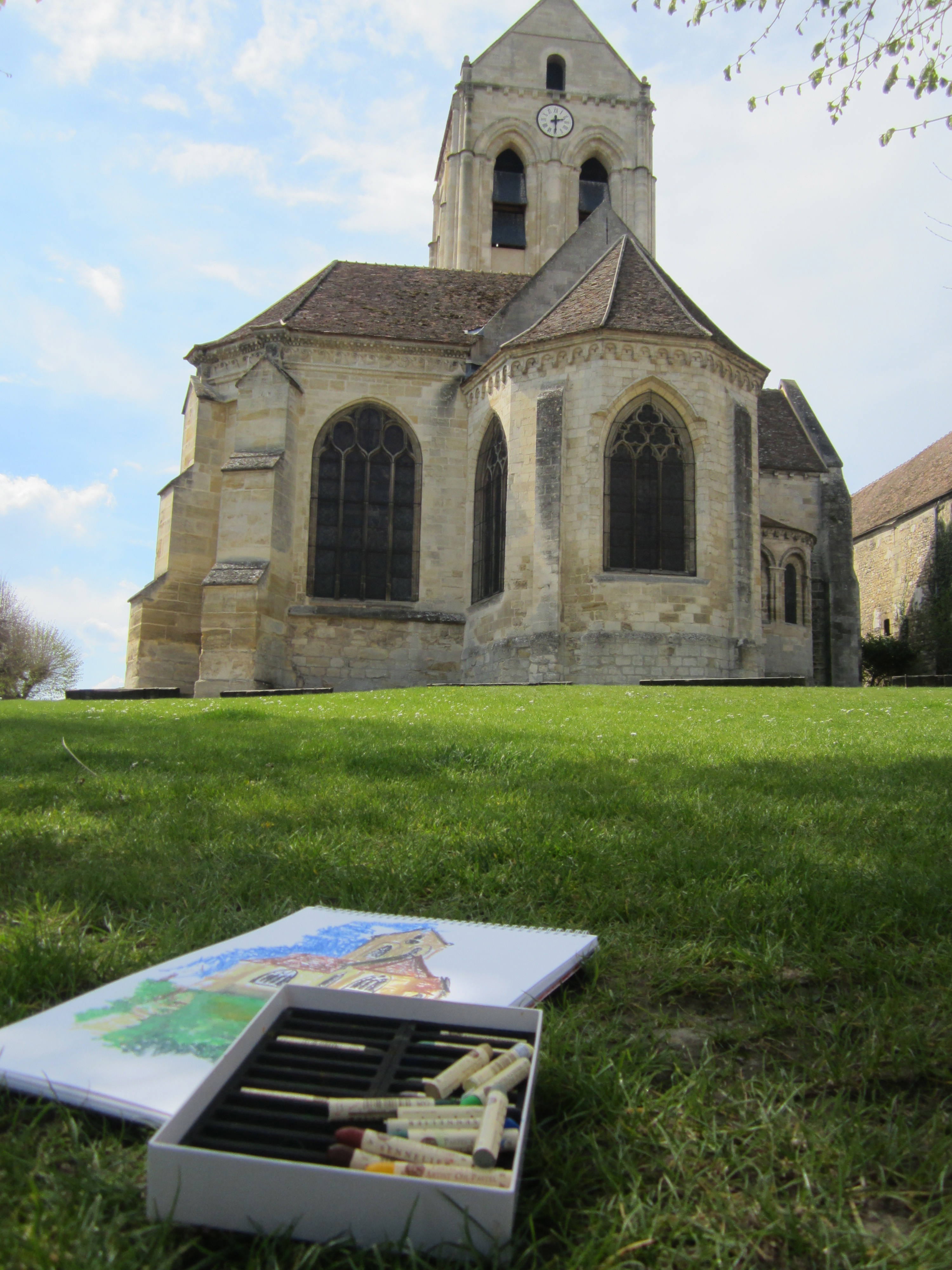
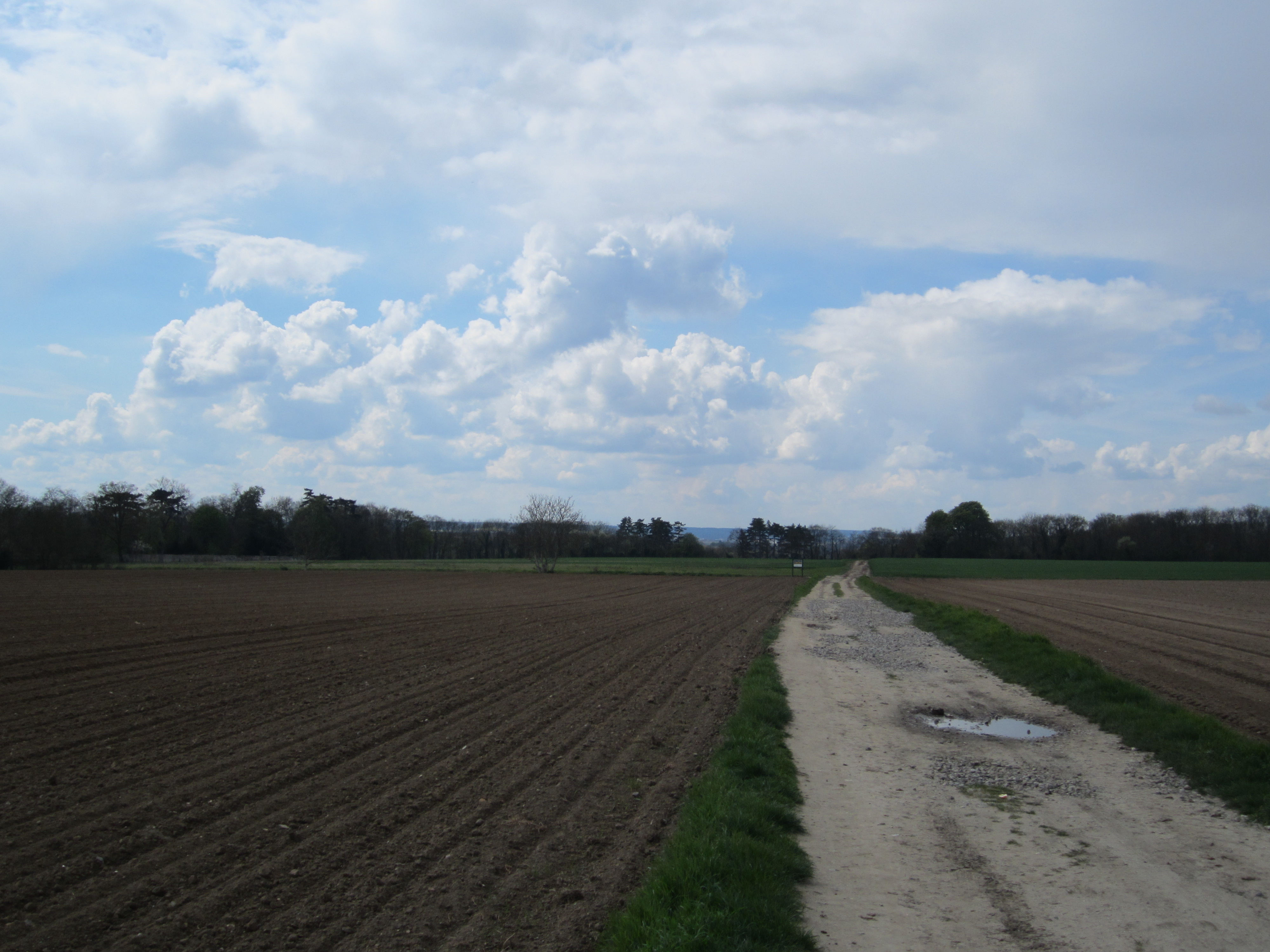
With Wallace’s book and my sketchpad in my tote bag, I ventured off to Auvers-sur-Oise myself. I hoped to see some sights that Van Gogh had painted, and thought I’d find some of the scenes from the book, but I never expected to have the book and Van Gogh’s story came alive right in front of my eyes. Check out these photos and these images of Van Gogh’s paintings and you’ll see what I mean.
Auberge Ravoux today, the inn where Van Gogh spent his last 70 days

Church in Auvers (1890), Musée D'Orsay

Church in Auvers (2012) - I got inspired to use bolder colors in my own pastel sketch

Wheat Field with Crows (1890), Van Gogh Museum, Amsterdam

Too early for wheat, but yes, there were crows

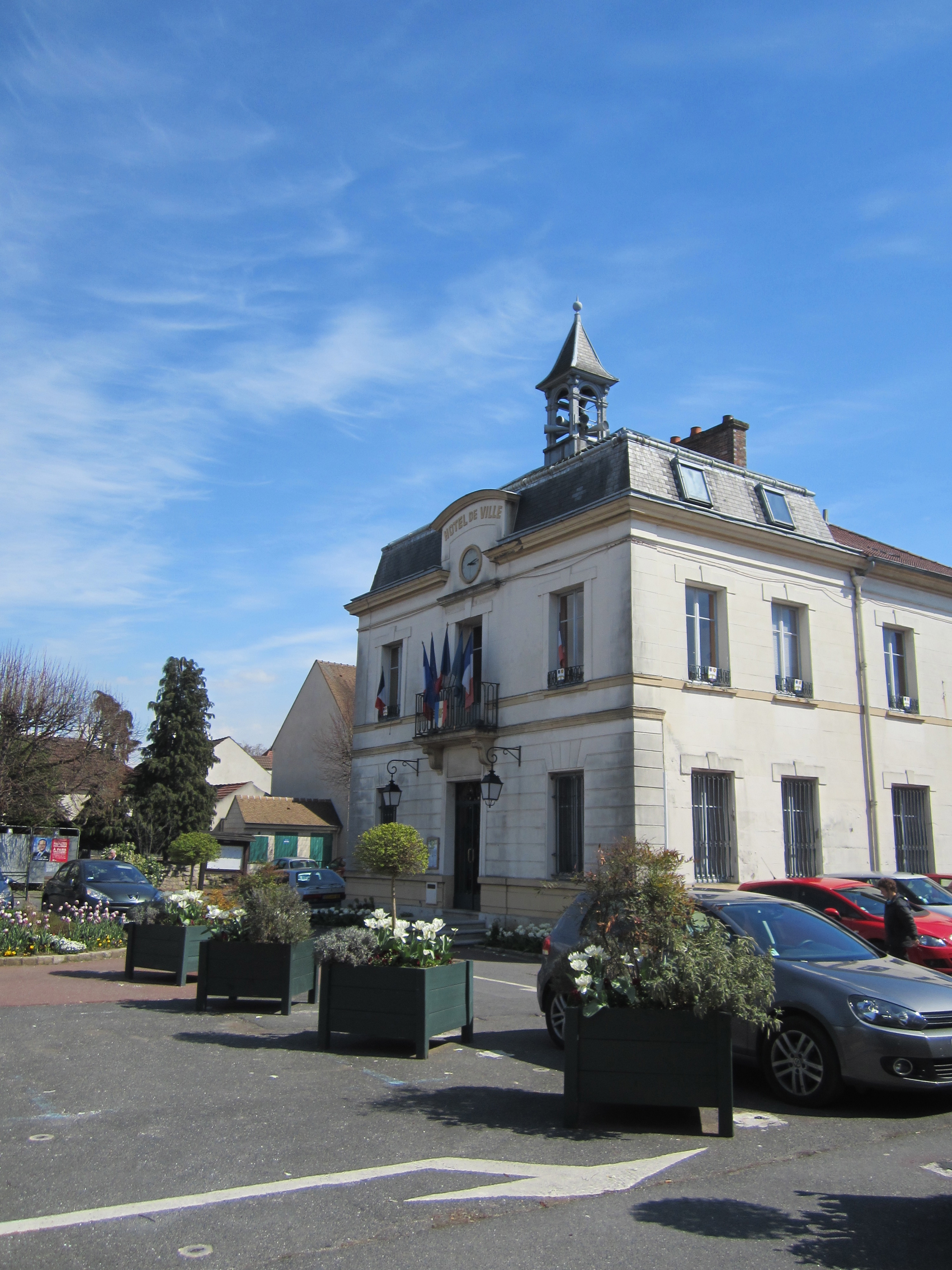
Town Hall at Auvers (1890), private collection

Town Hall at Auvers (2012)

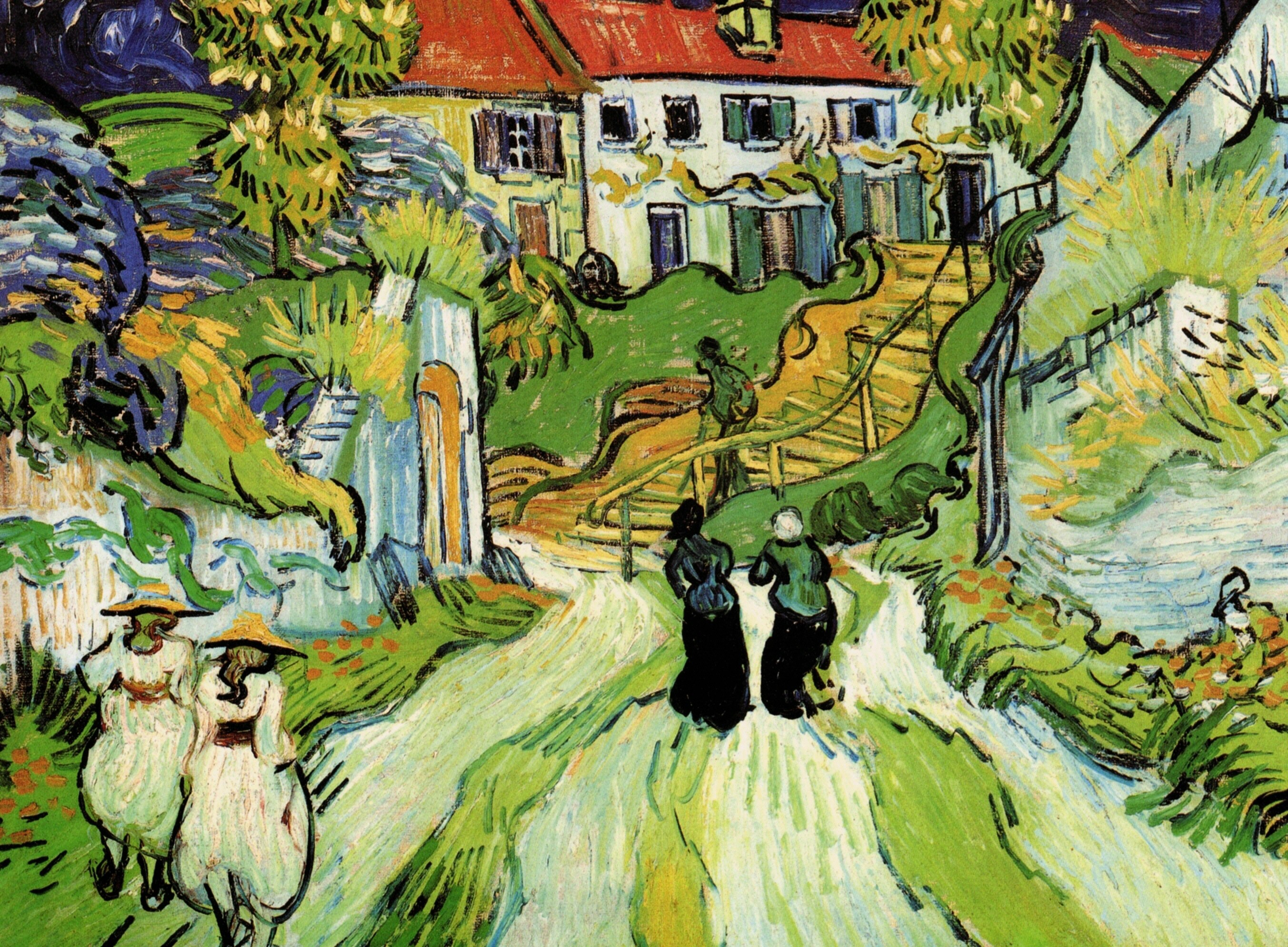
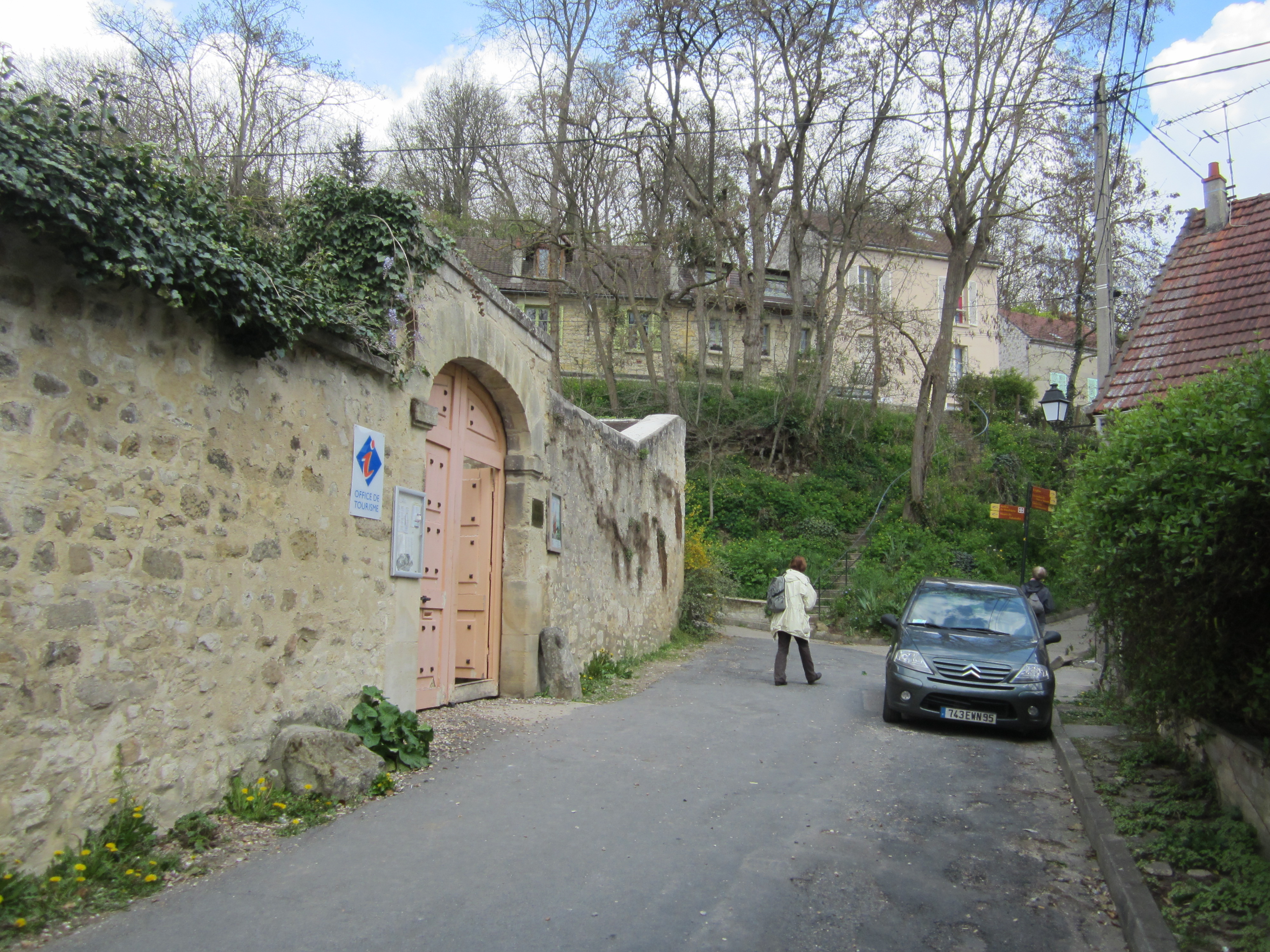
Village Street and Steps In Auvers With Figures (1890), private collection

Village street in Auvers with car and figures (2012)

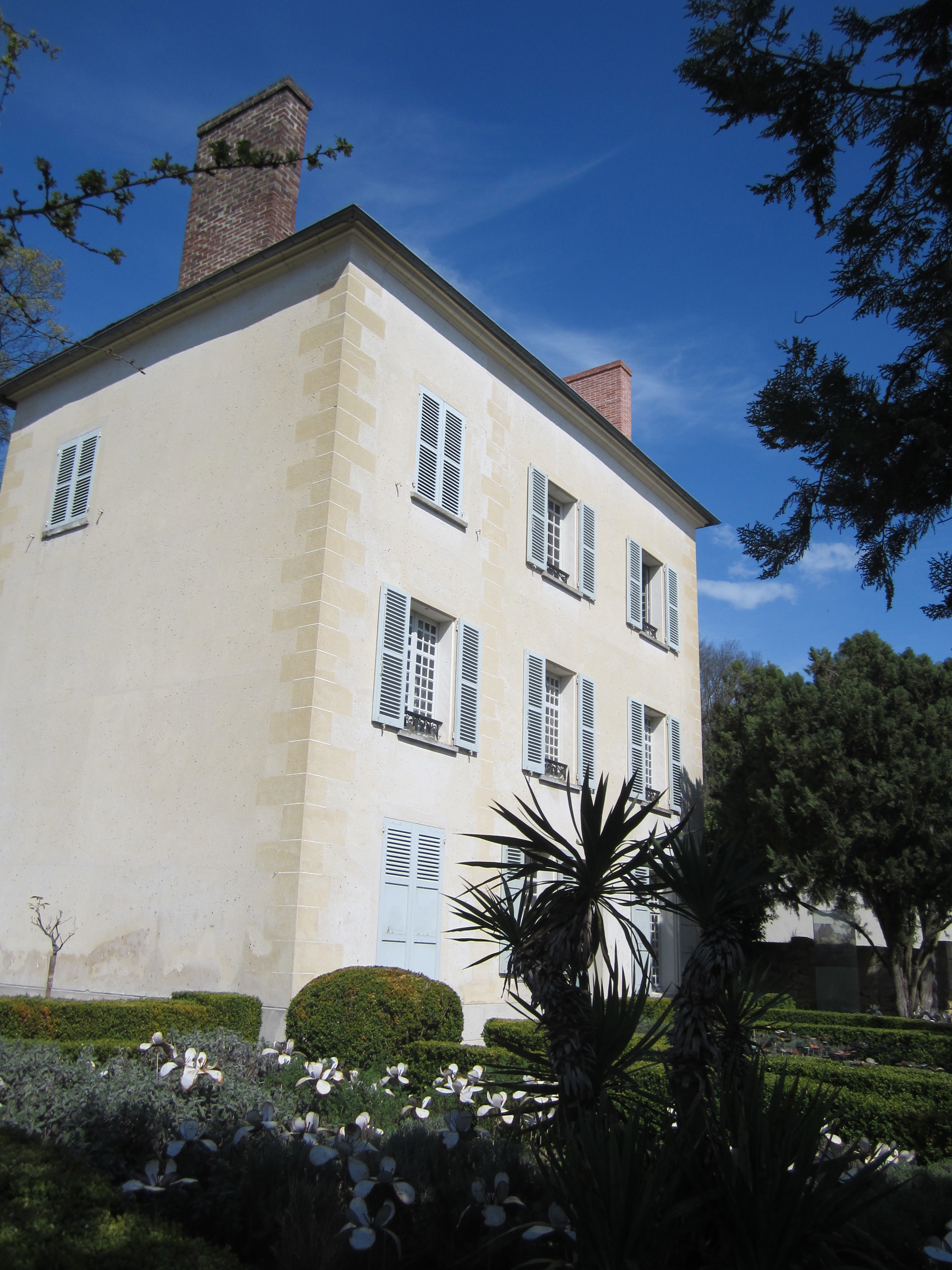
Dr. Gachet's house, now a museum in Auvers. Note the palm tree in the garden. Van Gogh painted the garden facing the other direction.
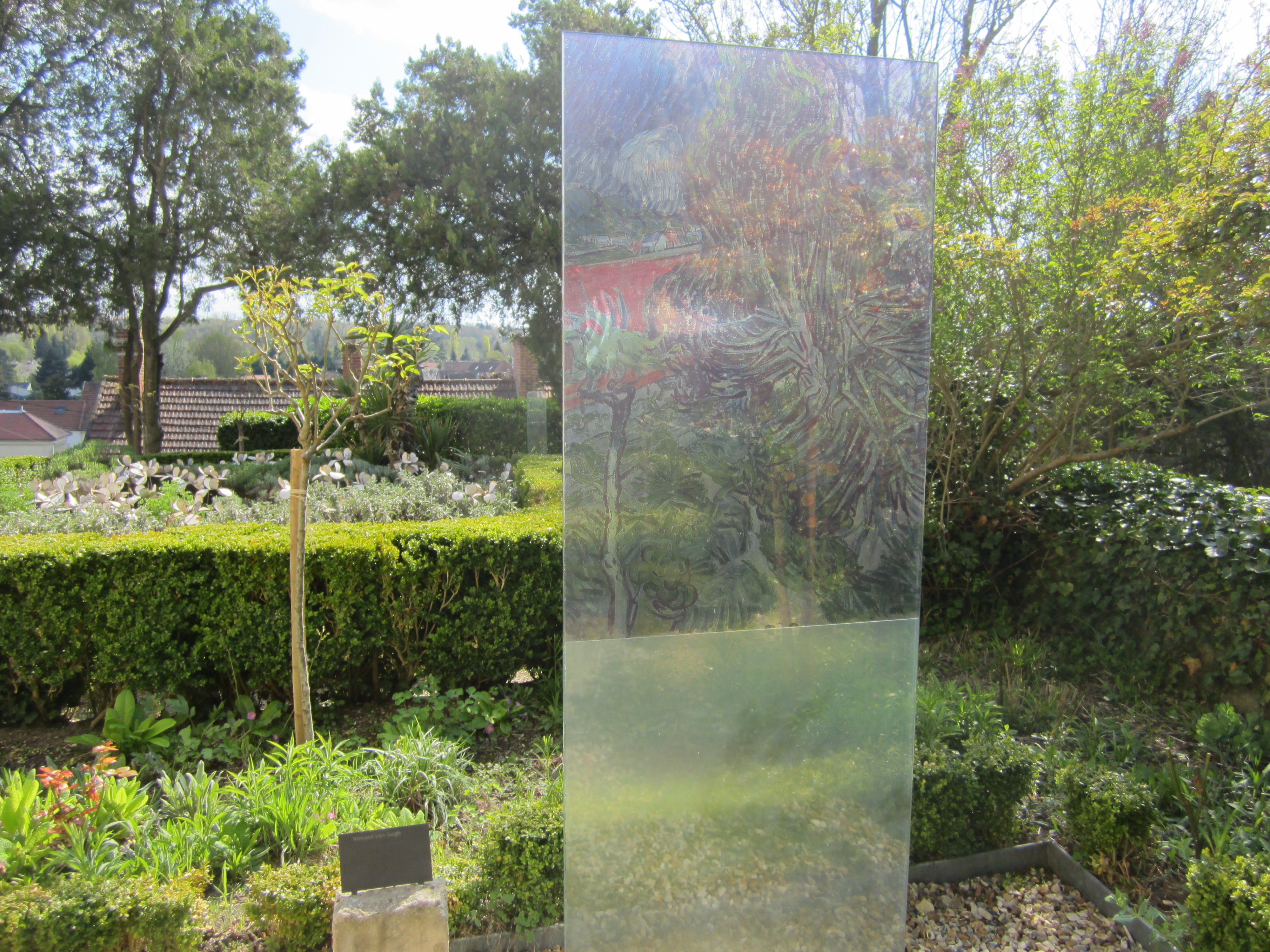
Dr. Gachet's Garden in Auvers (1890), Musée D'Orsay

Dr. Gachet's garden today, with see-through screen of the painting to enhance the view.

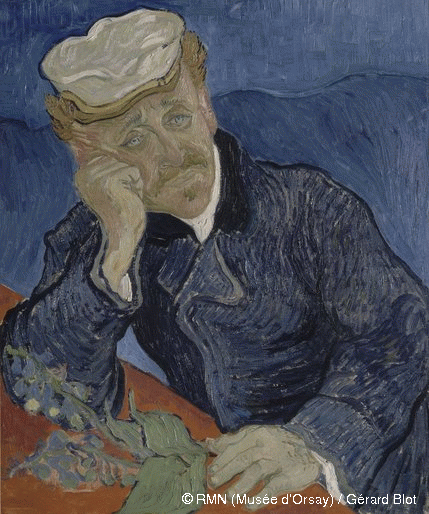
Dr. Gachet (1890), Musée D'Orsay

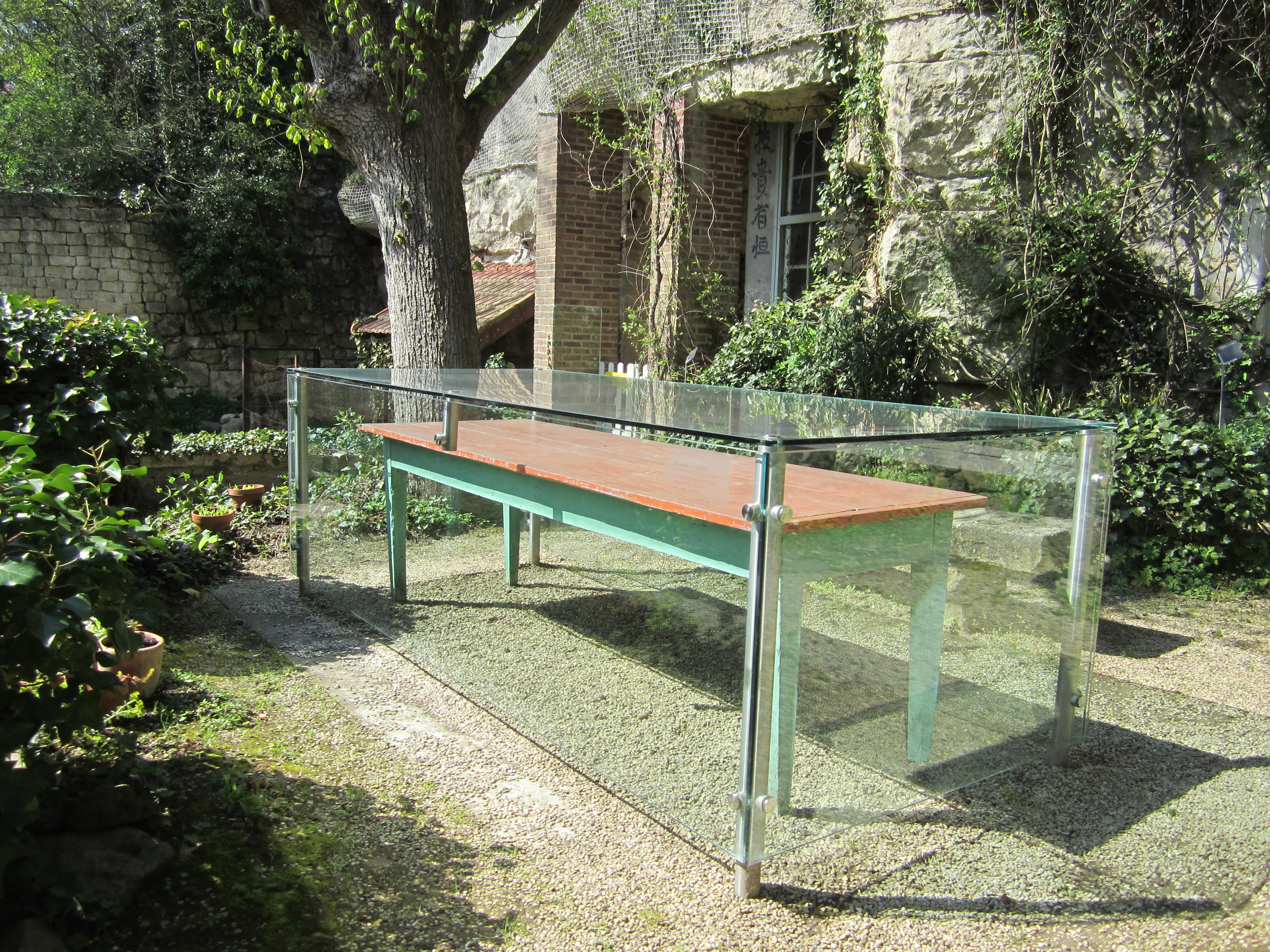
The table Dr. Gachet was leaning on in his portrait, in the garden of Maison Gachet

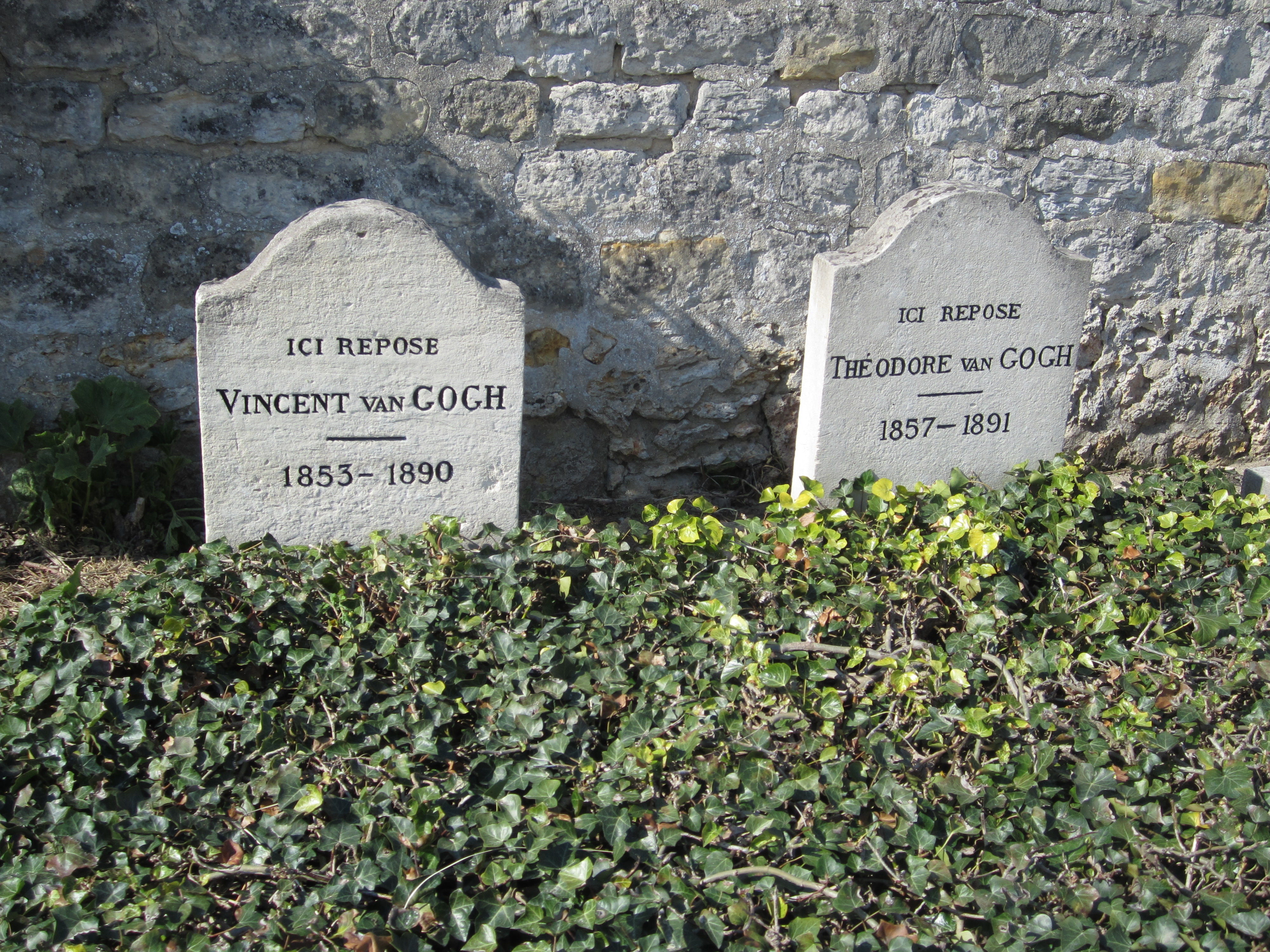
Vincent and Theo Van Gogh's tombstones in the cemetery in Auvers

*           *          *         *

A few travel tips before you go. There are trains from Gare St. Lazare And Gare Nord to Auvers, but during the week there is a connection through Pontoise. On Saturday there is a direct train. Check the SNCF website for ticket and schedule information at http://www.transilien.com.  I chose to rent a car and drive out to Auvers.

Once I got to Auvers, I was glad I had driven, because even though the train station is close to Auberge Ravoux and Maison Van Gogh, it would have been about a mile each way to walk out to Maison Gachet. I’m a good walker, but I’d gotten a late start, and I had already had a nice walk up the hill from the Auberge to the church and the cemetery. The Maison Van Gogh website has a map, so you can decide for yourself. Maison Gachet has just been repoened after a five year renovation, and it’s a beautiful museum – a site you really don’t want to miss.  From March 1st through October 28th, they are open Wednesdays through Sundays, but check the websites for holidays and hours.

By car, take the A15 motorway, direction Cergy-Pontoise, exit number 7 (Saint-Ouen-l’Aumône) then the RT184 direction Amiens-Beauvais. Exit Méry-sur-Oise/Auvers-sur-Oise.  Once in the village, follow directions for Auvers-sur-Oise.

I highly recommend you pair your trip with Leaving Van Gogh by Carol Wallace.

*          *          *          *          *

Luncheon of the Boating Party: A Day in Chatou

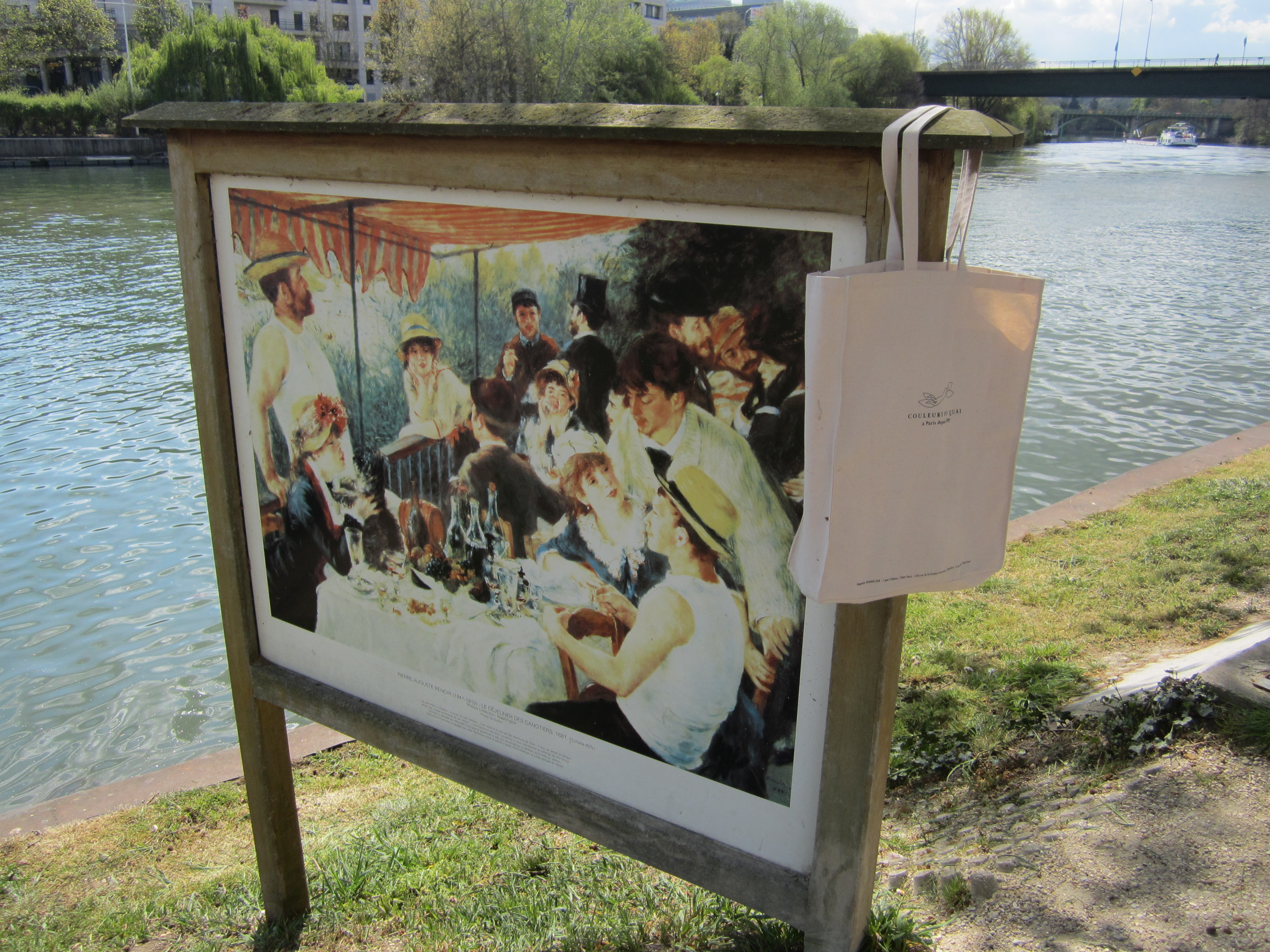
Renoir’s Luncheon of the Boating Party (1880-1) makes me want to pull up a chair, sit down next to Gustave Caillebotte (right foreground) and pour myself a glass of wine. Maybe I would even feed the doggie some grapes and chat with Aline Charigot, Renoir’s future wife (the pretty woman in the red-flowered hat).

This is an accessible, sunny painting that reflects a leisurely Sunday afternoon at one of Renoir’s favorite hang-outs, Restaurant de la Maison Fournaise, just outside Paris in Chatou on the Seine. Did you know that you can still go there today? As Renoir said himself: “You won’t regret the trip, I assure you. There isn’t a lovelier place in all Paris surroundings.”

For a long time, the restaurant suffered from neglect and deterioration. As Renoir’s son Jean said in his book, Renoir, My Father (1962):  “I paid a visit to the place last year. How depressing it was! Nothing but factories, mounds of coal, blackened walls and dirty water. The leprosy of modern industry has eaten away the little woods and luxuriant grass.”

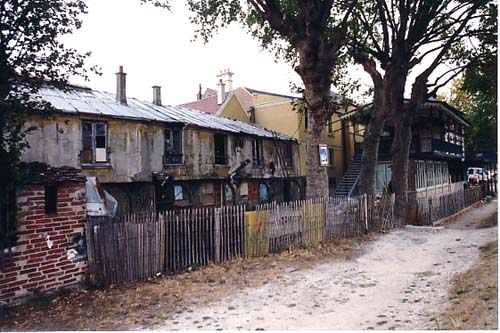
Maison Fournaise before renovation. From the restaurant’s website.

From 1984 to 1990, the restaurant was completely renovated with a combination of art grants and philanthropy. Today, the scene is much improved.

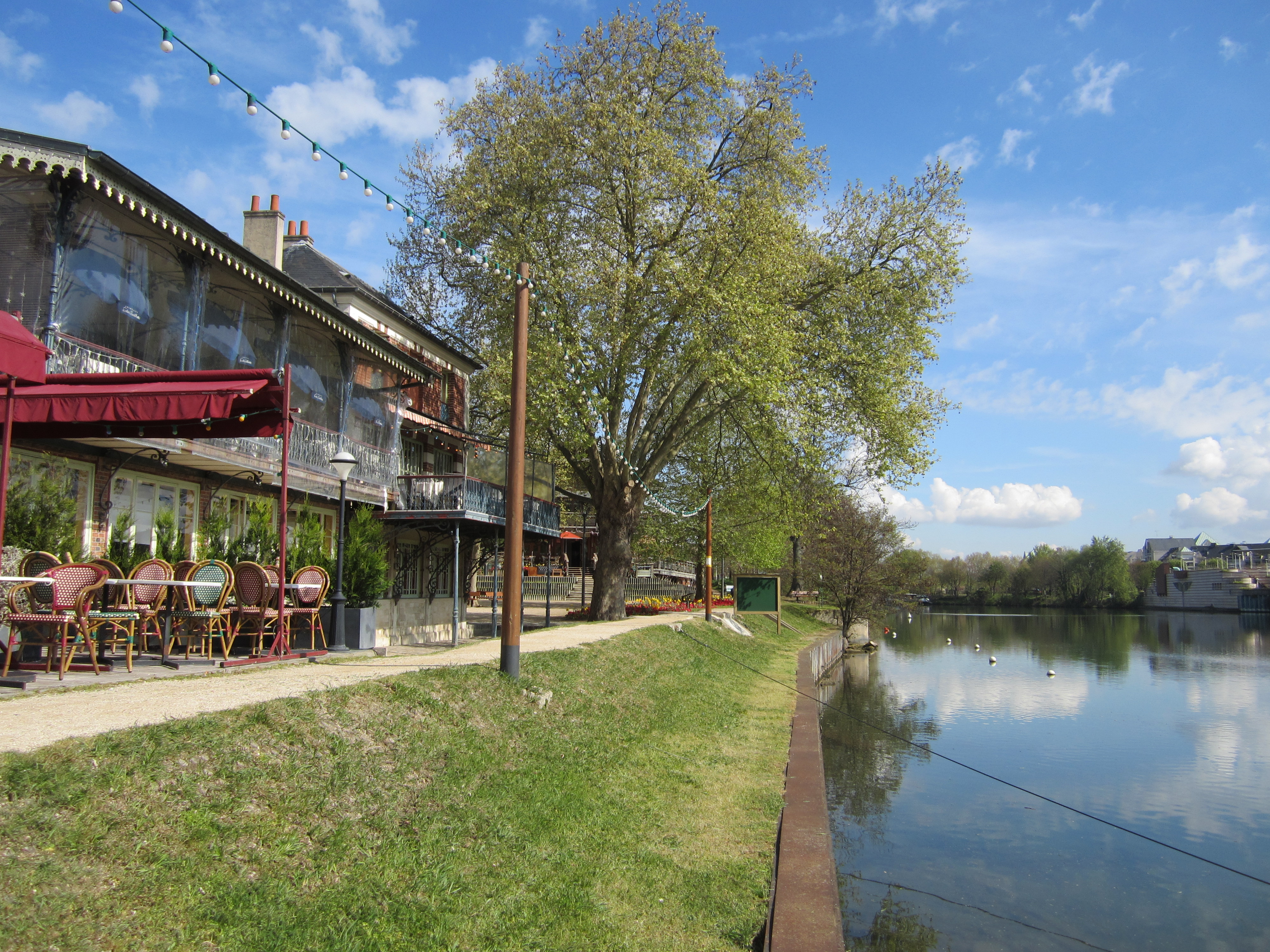
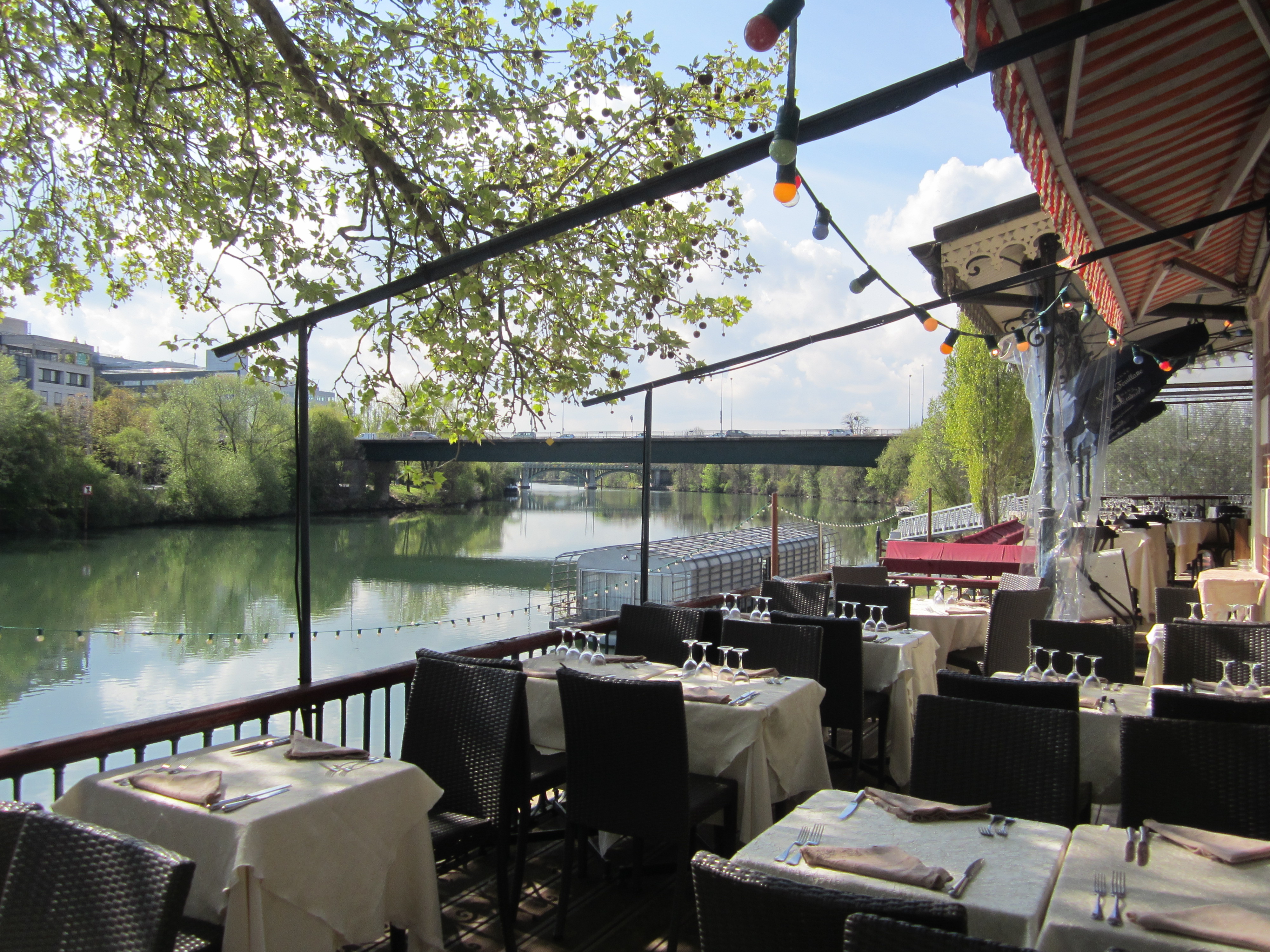
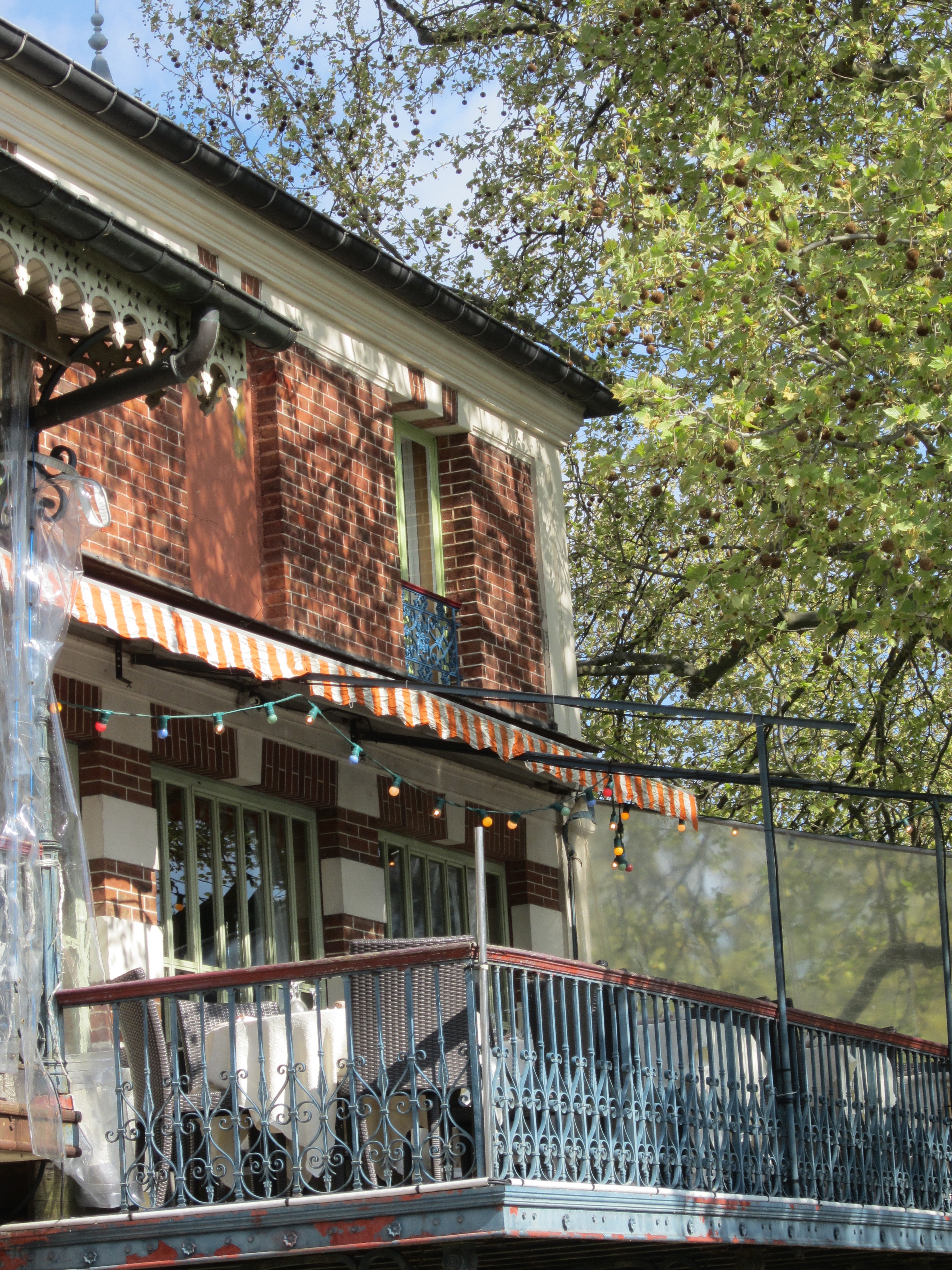
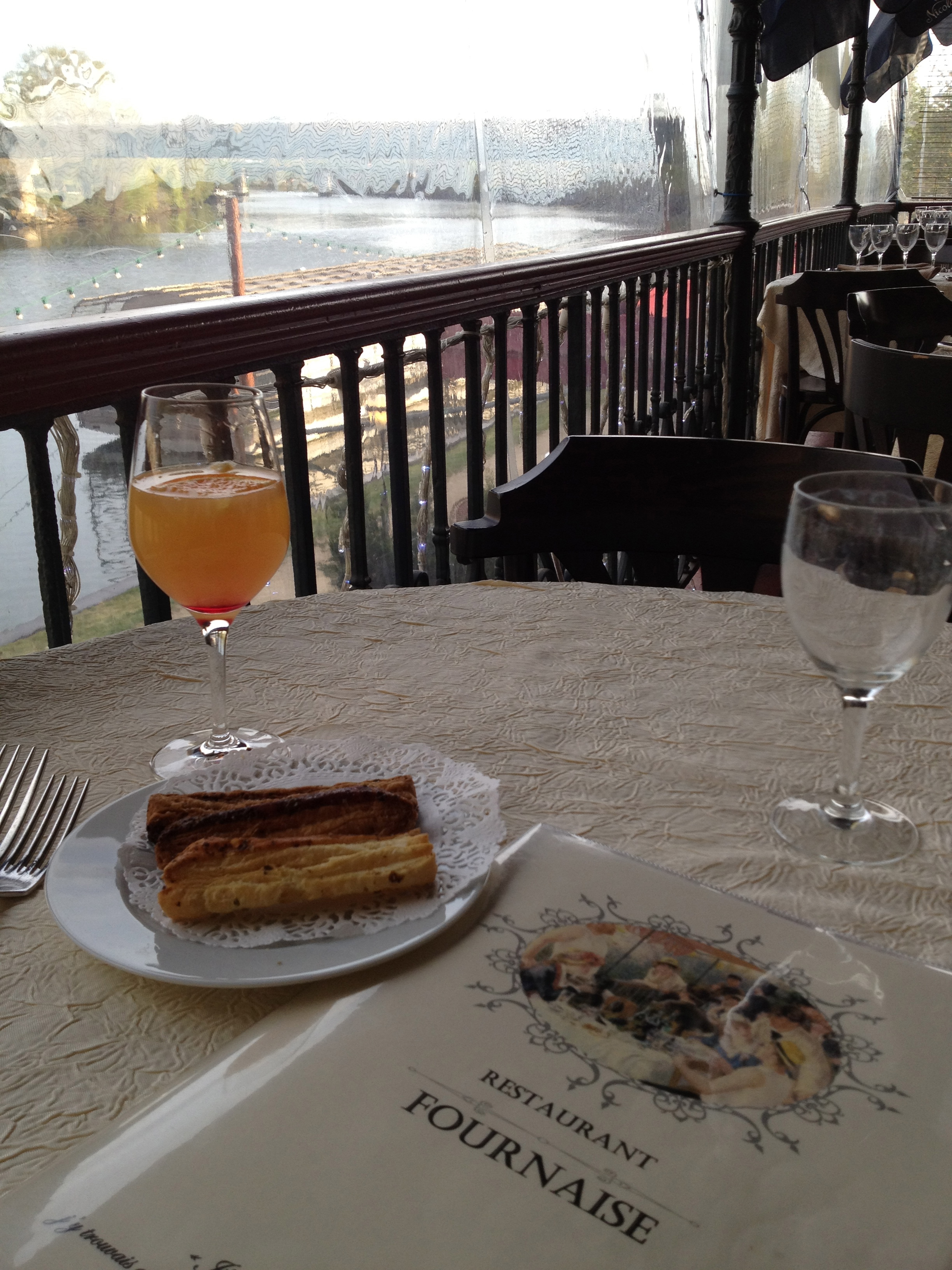
Maison Fournaise today

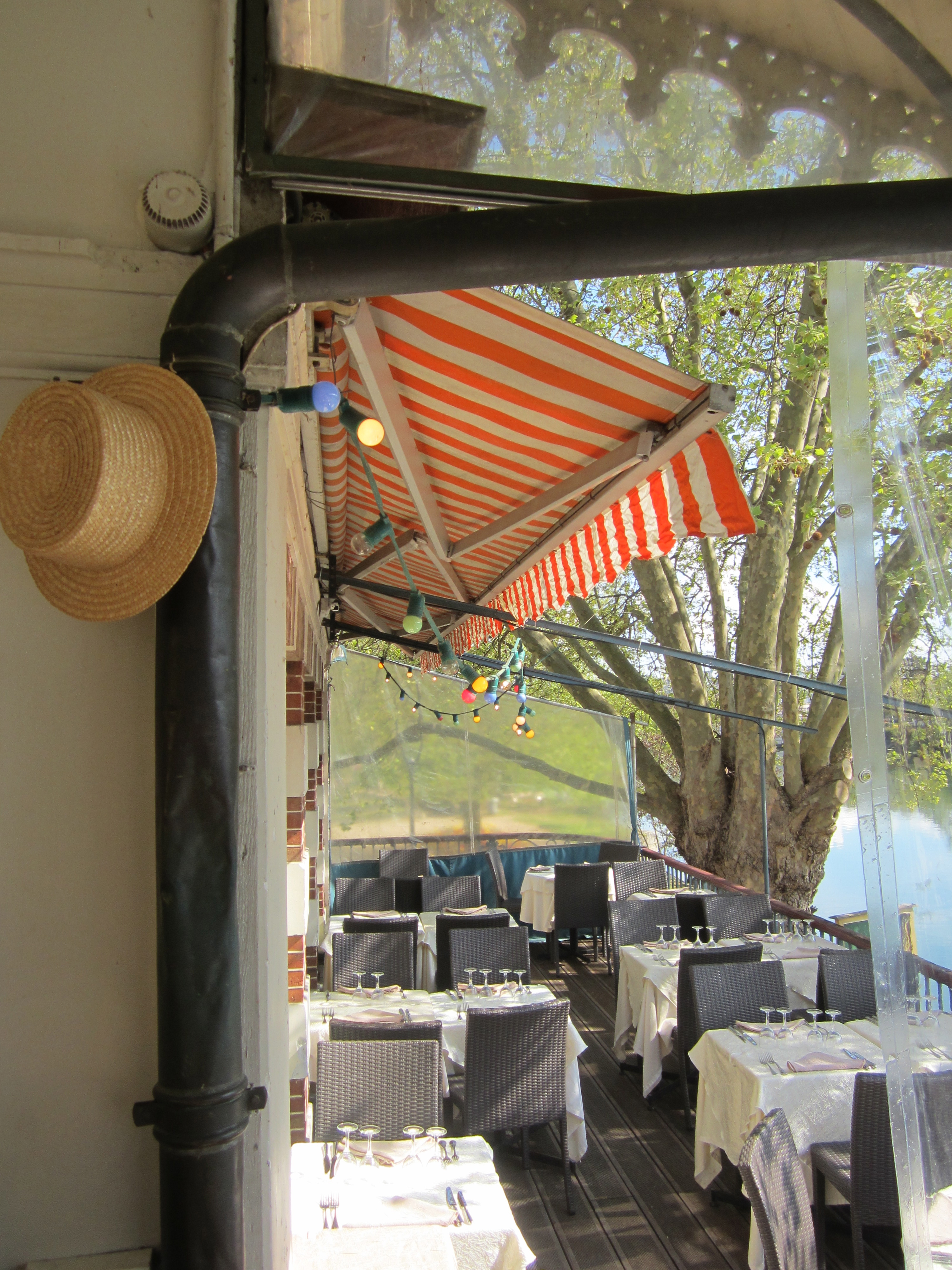
Renoir’s balcony still stands, complete with the orange striped awning. 

The view from Renoir’s easel. 

“The place was delightful; a perpetual holiday. . . . At night there was always someone about who volunteered to play the piano for dancing. The tables on the terrace were pushed back into a corner. . . . the music floated out through the open window.” – Jean Renoir, in Renoir, My Father

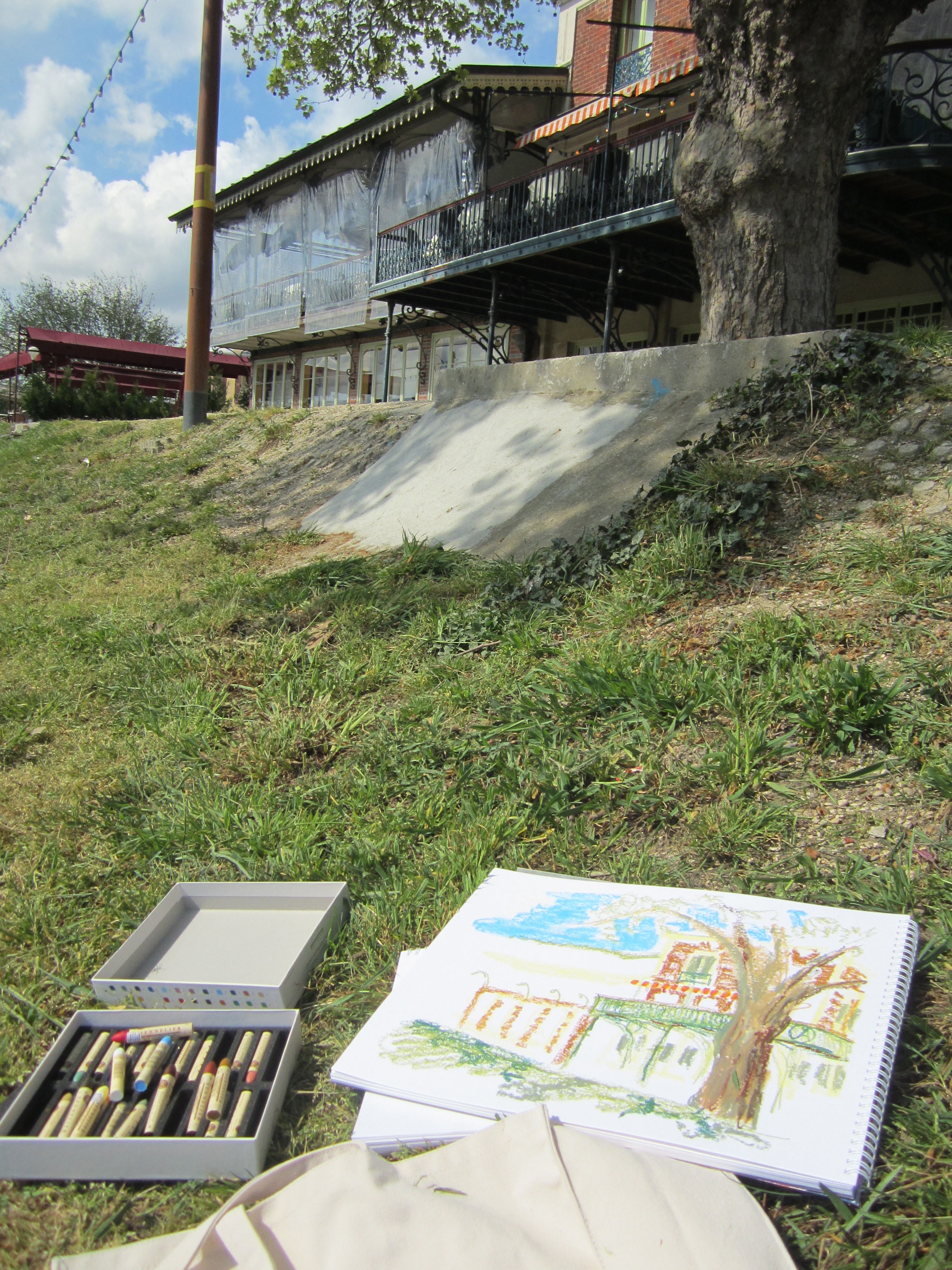
I even brought out my own pastels and tried to capture the scene, but alas, I’m no Renoir.

My art bag and I were here. . . . I just wish some “Midnight in Paris” magic would transport me back to the day. . . .

Restaurant de la Maison Fournaise is easily reached by car or by train. You can take the same route that Renoir did from Paris to the Chatou-Croissy station via the RER A1 Line (Zone 4), where it is only a few minutes walk to what is now called “Ile des Impressionistes.”

It was this easy access that made the restaurant Renoir and Aline’s favorite meeting place back in 1880. According to Jean Renoir: “It was easy to reach. . . . There was a local Saint Germain train, every half hour, that stopped at the Chatou bridge station. At the Fournaises’ [my parents] found a group of friends who seemed to watch over their idyl with tender interest. The painter Caillebotte looked after Aline Charigot like a younger sister.”

You can read an imagined story of the couple’s developing romance in Luncheon of the Boating Party by Susan Vreeland, who said that she had often admired the painting and wondered about the models. Who were they, and why did they pose like they did?  “I saw tremendous story potential in these appealing characters, flushed with pleasure and enjoying a summer day on a terrace overlooking the Seine.” Vreeland imagines a love triangle between Renoir, Aline, and another woman in the painting, Alphonsine Fournaise, the daughter of the restaurant owner.

You can enjoy your own toast to Renoir and his women at the restaurant, where they offer an apertif called “The Alphonsine,” made of orange juice, champagne and grenadine.

My own book club back in Chicago read and enjoyed Susan Vreeland’s book, which I highly recommend. Right now, I am in the middle of Renoir, My Father by Jean Renoir, and I am pleasantly surprised what a good read it is. Jean’s memory was incredibly good, his writing is thoughtful, and the stories his father used to tell him make captivating history.

If you or your book club can’t get to Paris, maybe you can schedule a visit to the Phillips Collection in Washington, D.C. to see the original painting. At the Art Institute of Chicago you can see another of Renoir’s paintings from Chatou called Lunch at the Restaurant Fournaise (The Rower’s Lunch) (1875).

At the very least, you can enjoy some art history at the website of Maison Fournaise here.

Sacré Bleu: A Comedy D’Art

Sacré Bleu by Christopher Moore (Harper Collins, April 2012) reminds me of one of my favorite scenes in Midnight in Paris, when Adrien Brody nails it as Salvador Dali  (“Rhinocéros!”). Like Midnight in Paris, Sacré Bleu is a smart artsy romp through the bohemian past of Paris.

In Sacré Bleu, Moore turns the clock back even further to the age of the Impressionists, he adds a little black magic, a lot of bawdy humor and a bit of bizarre mystery — and serves up an outrageously playful historical comedy (truly, “A Comedy D’Art”).

There are no fussy painters in long white beards and frock coats here. This is an irreverent mystery with a sexy muse named Bleu and her partner-in-crime, “The Colorman,” whose magical blue paint works a devilish spell on the young French Impressionists, including Manet, Renoir, Pissaro, Van Gogh, Monet, Morrisot, Seurat and Toulouse-Lautrec.

Set in Paris from 1863, the year of the Salon des Refusées, to 1891, a year after Van Gogh’s death, this book stirs up big trouble for each of the Impressionists. Bleu arrives and inhabits the bodies of the artists’ favorite muses, from Manet’s Victorine in Dejeuner sur l’Herbe and Olympia to Monet’s first wife Camille, to Renoir’s Margot in Bal du moulin de la Galette. Each painter is seduced to use more magical blue paint, which just happens to be Bleu’s and The Colorman’s lifeblood.

Ever wonder why so many of the Impressionists and their muses died so young? Did you ever question the story about Van Gogh’s supposed suicide, in which he shot himself with his own gun at an impossible angle and then hiked a mile up a country road to get help? And why did Monet paint a blue-tinged portrait his wife on her deathbed? Let’s just say that Bleu and The Colorman know the truth.

A fictional young painter named Lucien Lessard carries the story. Working in the family’s boulangerie on the butte de Montmarte, he becomes the story’s Forrest Gump: he’s a young rat catcher during the Siege of Paris in 1870, he helps Renoir carry his large canvas of Bal du moulin de la Galette to his studio in 1876 (“Oh la la, the wind. We had to pick leaves and pine needles out of the paint every week.”), he was Monet’s assistant at the Gare Saint Lazare in 1877, he runs around the bars and brothels of Pigale with Toulouse-Lautrec. He sees it all.

Lucien comes of age, becomes a painter, and falls under the spell of his own little muse. Although Juliette is hard to resist, Lucien pieces together the various blue clues. He and his studio-mate Toulouse-Lautrec chase Bleu and the Colorman through the cobblestone streets and rat-filled catacombs of Paris. They discover a cache of mysterious blue canvases in the limestone caves and encounter even more death-defying magic.

It’s a good story, but trying to make sense of each twist and turn of the time-jumping plot can be a little confusing. Just go with it – don’t sweat the details or the timeline and just enjoy the ride. After all, you’re on the Christopher Moore L’Express.

Highly recommended.

*  *  *  *

If you live in Paris or if you’re planning a visit soon, I recommend that you pair than this book with a trip up to Montmartre. You might want to pick up Paris by the Plaque, an excellent guidebook to the history and sights of Montmartre. Paris Walks offers an English-speaking group walking tour every week, but if you’d like an in-depth personal guide I also recommend Pamela Grant at Paris Perspectives. If you’re just an armchair traveler, Christopher Moore has already created a Paris photo guide to some of the scenes from the book, which you can enjoy here (Chapter One – Auvers sur Oise) and here (Chapter Two – Montmartre, Pigale).

Before you start thinking about following in Christopher Moore’s footsteps, you should really pick up an early copy of the book. The first edition of the book will images of the paintings and prints in full color. Subsequent editions will just be in black and white. I’m just saying, you might want to click here to order yours now.

The Last Nude: A Literary Tour of Paris

The Last Nude by Ellis Avery is a perfect Paris read.

Set in the glamourous 1920’s Paris art world, it tells the story of the real-life Art Deco painter Tamara de Lempicka through the eyes of her lover, model and muse, the Italian-American Rafaela Fano. One of de Lempicka’s portraits of Rafaela (“The Dream”) graces the cover of the book.

For more about the book, check out the author’s interview with NPR and in Public Culture.


There are so many Paris treats in this book, from the original Shakespeare & Co., to houseboats on the Seine, to a character modeled after Ernest Hemingway, that I just couldn’t resist planning my own Last Nude Literary Tour of Paris. I’ll be sharing some of my photos and impressions from my tour over the next week, along with a sneak peek into a deleted excerpt from the book.

Tamara de Lempicka’s Fictional Apartment and Studio:

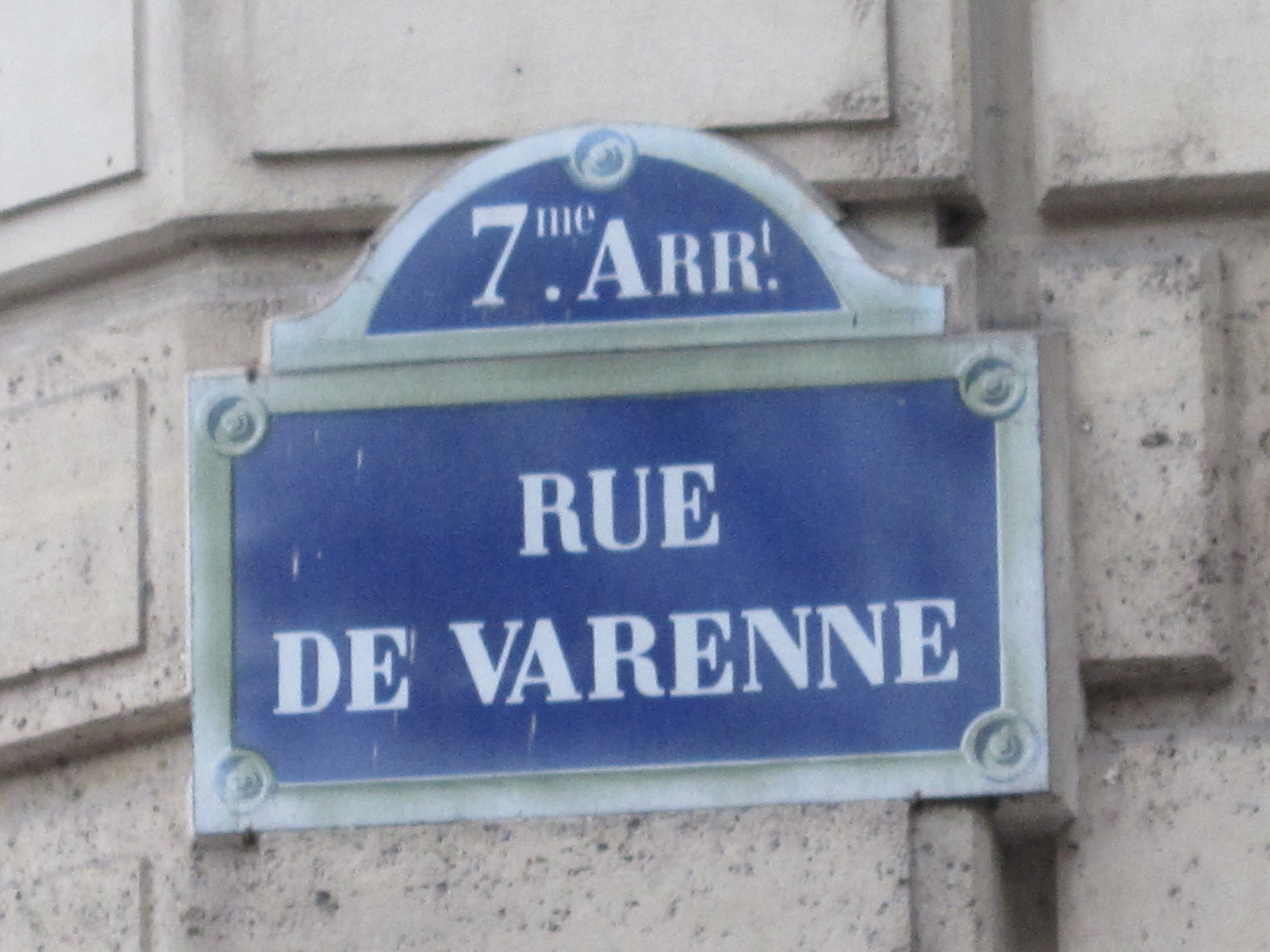
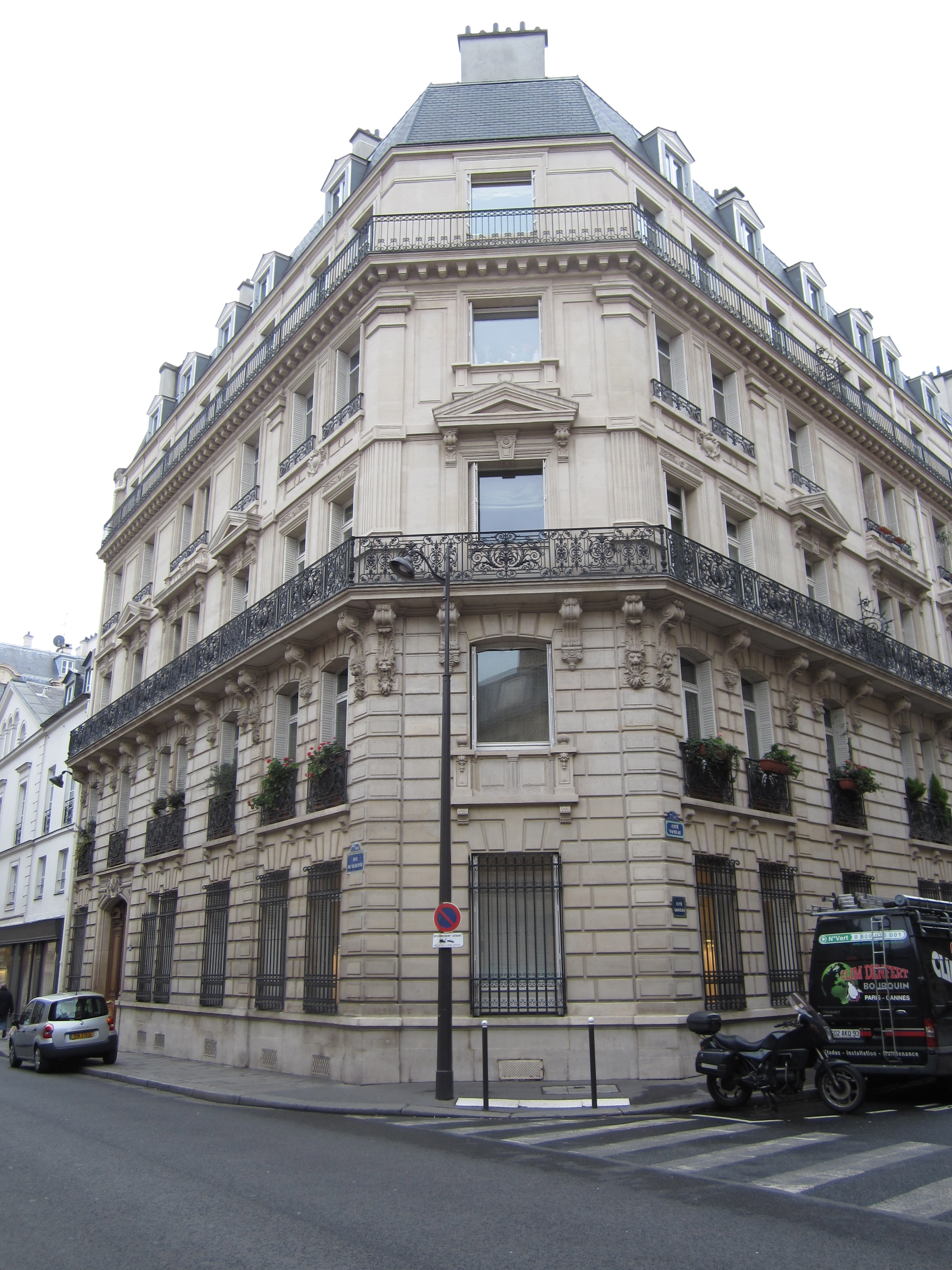
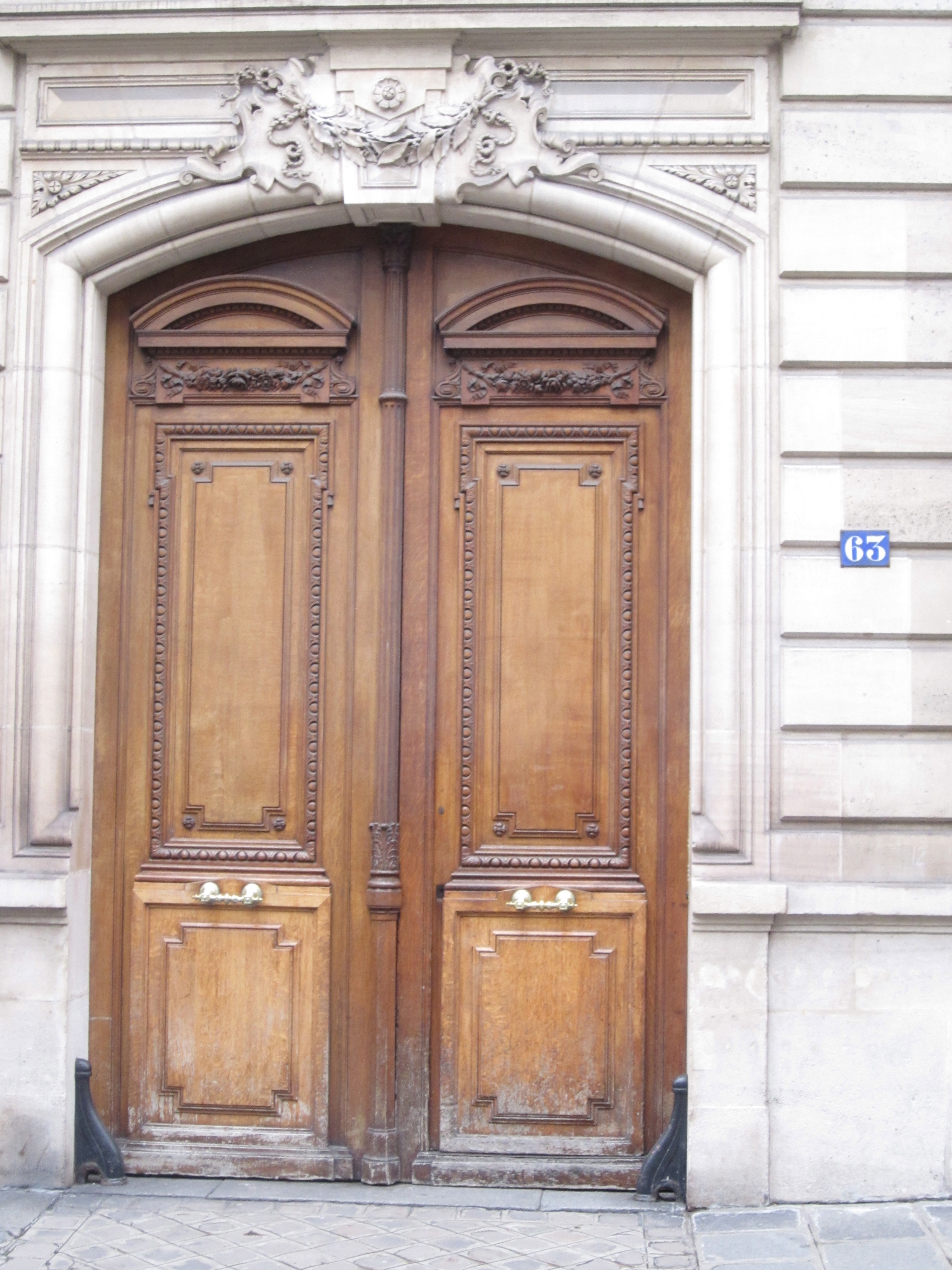
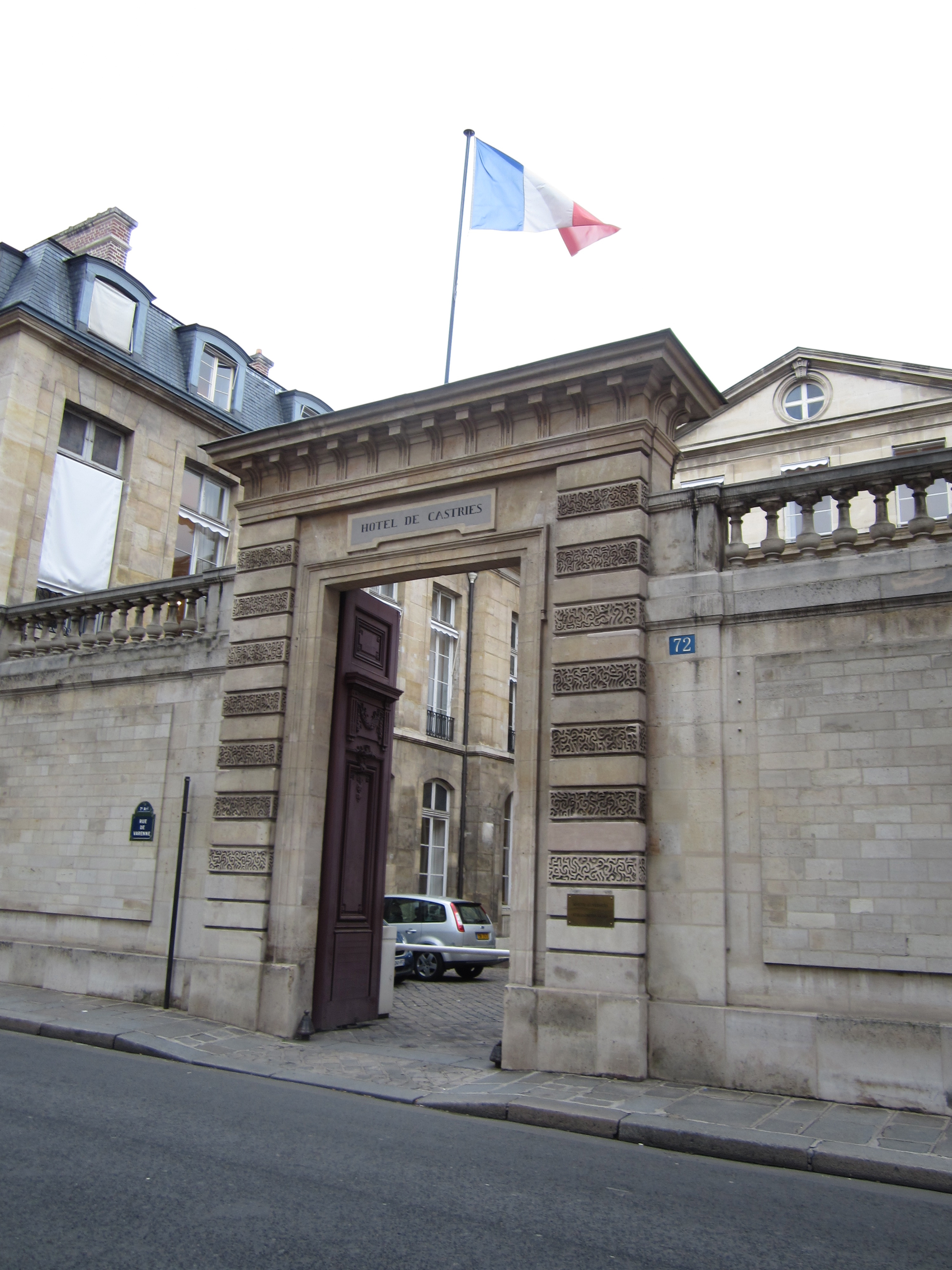
Tamara de Lempicka’s fictional apartment and art studio stands at 63 rue de Varenne in the 7th arrondissement on the Left Bank. Ellis Avery states that she selected this site because it would have had good northern light for painting. The address is directly across the street from the low-slung Hotel des Castries. It also happens to be down the street from one of the Paris homes of Edith Wharton at 53 rue de Varenne. What a lovely make-believe address for Tamara, a wealthy Russian aristocrat who enjoyed mingling with the champagne-sipping art collectors of Paris.

Corner of Varenne and Vaneau

Doorway to 63 rue de Varenne

Hotel de Castries

Edith Wharton Plaque at 53 rue de Varenne


Tamara’s Real Life Paris Home

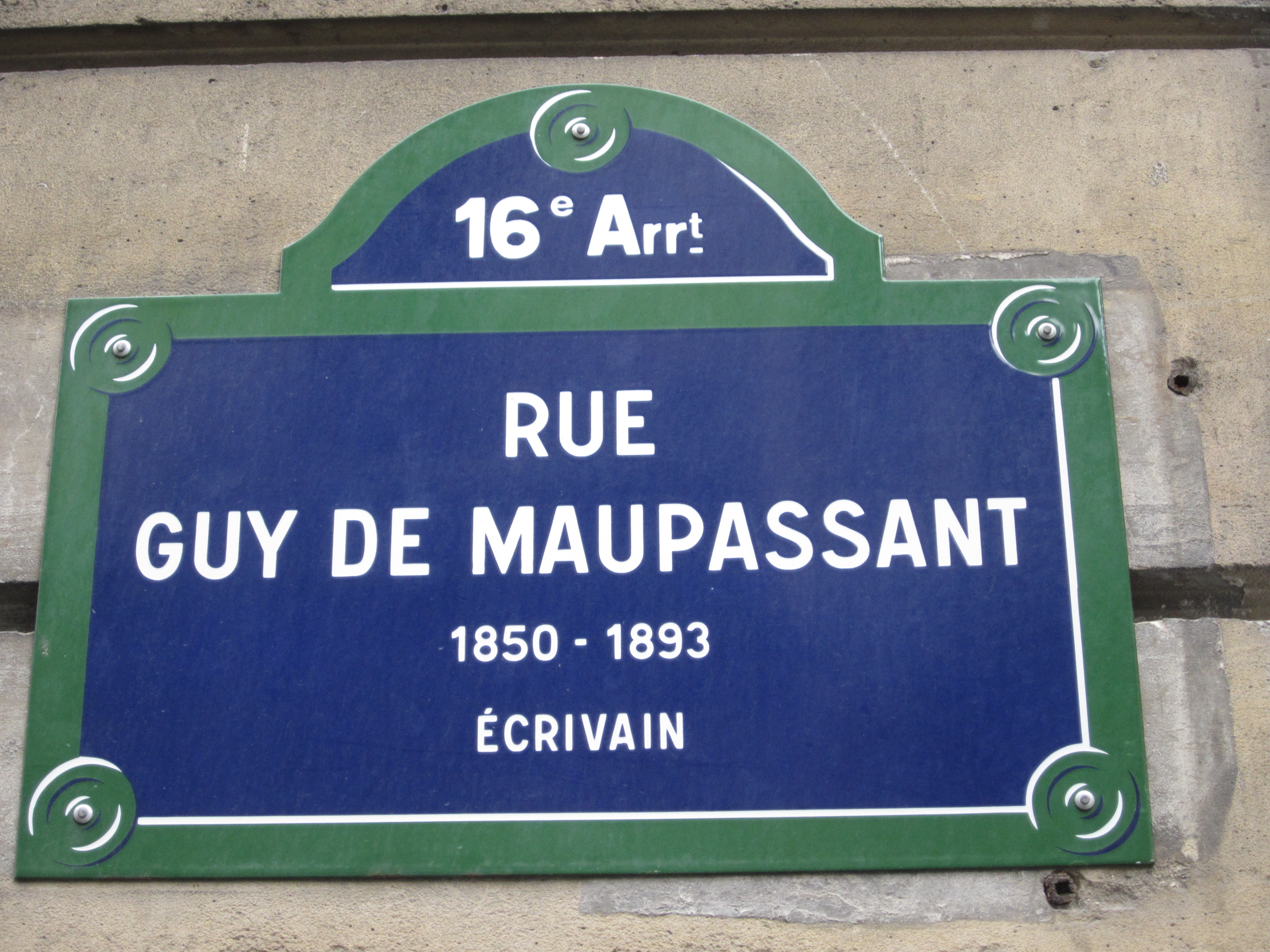
In real life, Tamara de Lempicka moved from St. Petersburg to Paris with her first husband in order to escape the Bolshevik revolution of 1917. They had one daughter and were soon divorced. Tamara first lived at 5 rue Guy du Maupassant in the 16th, then at 7 rue Mechain in the 14th, in a building she herself designed. I enjoyed taking an afternoon to walk through the La Muette area of the 16th, a very posh area full of bustling bistros and beautiful apartment buildings. Check out the nice lines of the doorway to Tamara’s first building on Maupassant.

Doorway of 5 rue Guy Maupassant


Stay tuned for more Paris scenes from The Last Nude. In the meantime, why don’t you pick up a copy from your closest independent bookstore and start reading along? I highly recommend it.


American Girls Art Club: History

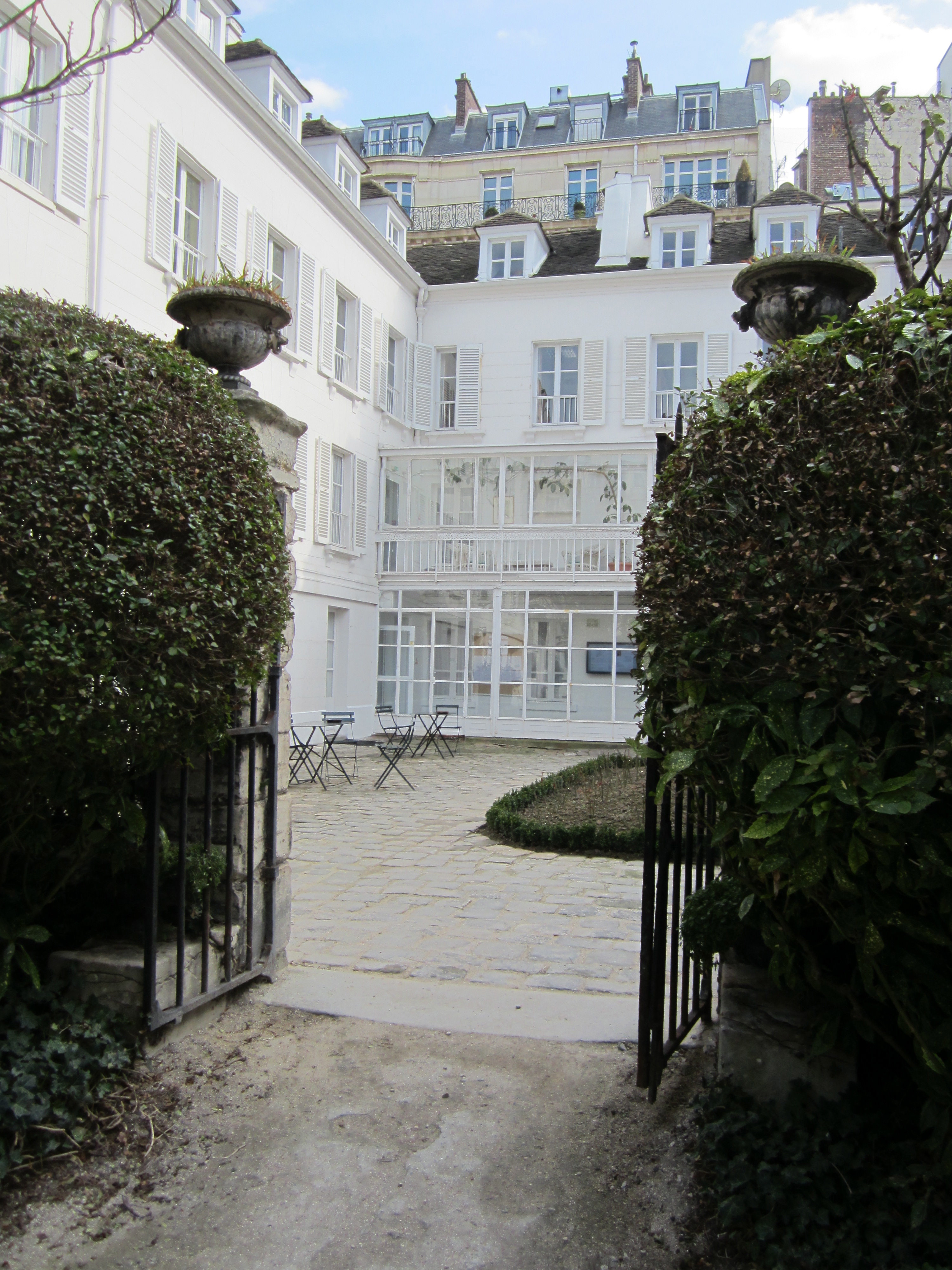
American Girls Art Club Courtyard in 2011

The American Girls Art Club, which once stood at 4 rue de Chevreuse on the Left Bank of Paris, is now known as Reid Hall, and is owned by Columbia University’s Global Centers Program.

The property was built by the Duc de Chevreuse and way back in the 18th century it housed the Dagoty porcelain factory. In 1834, the site was turned into a Protestant school for boys called the Keller Institute.

In the early 1890’s, Elisabeth Mills Reid, a wealthy American philanthropist and wife of the American ambassador, got the idea to start a residential club for American women artists in Paris. She knew about an arts club for men on the rue Paul Séjourné, and when she learned that the Keller Institute property was available, she got together with her friends, Reverend and Mrs. William Newell. The Newells were evangelicals who had been hosting Sunday evening social hours for American girls at their own home on the rue de Rennes. With the help of the Newells and the larger expatriate community in Paris, Elisabeth Reid established The American Girls Art Club in Paris, a residential club for young American women artists that provided matronly supervision and spiritual guidance.

The club thrived because it was affordable and very social. There was room for approximately 40-50 women in either single or double rooms at approximately $30 per month. There was a “dainty blue” receiving room for playing the piano and serving tea, as well as a reading room full of English-language books and magazines. The residents often strolled and sketched in the gardens of the courtyard. Each Sunday the Newells arranged an informal religious service followed by a social hour. The club hosted an elaborate Thanksgiving dinner every year.

The club was within walking distance of the Luxembourg Gardens, L’Ecole des Beaux-Arts, and many bookshops and restaurants along Boulevard Raspail. Although the female residents could not study at L’Ecole des Beaux Arts until 1897, many of them did study at prominent private ateliers in Paris, including the studios of Bouguereau, Whistler and Carolus-Duran.

The residents planned and hosted their own art exhibits at the club, inviting their fellow students and art teachers. In 1895, they formed the American Woman’s Art Association of Paris to host the annual show. Mary Cassatt, Mary Fairchild MacMonnies Low and other prominent women artists who were permanent residents of Paris helped preside over the club, serving as jurors and officers. Prominent Paris artists and art teachers attended the exhibitions, providing the members with valuable critiques and praise. Each year, the Art Club purchased one piece of art from the exhibition for display in the Club.

Anne Goldthwaite’s 1908 oil painting of the courtyard of the American Girls Art Club in Paris is in the collection of the Whitney Museum of American Art in New York. Take a peek at it here.

During World War I, the property became a hospital, and was held by the American Red Cross until 1922. Elizabeth Reid and her daughter-in-law then arranged for it to become Reid Hall, an association for American college women abroad. Gertrude Stein even made an appearance in 1931 at the invitation of one of Reid Hall’s art students.

In 1964, Reid Hall was bequeathed to Columbia University. Since then, it has been part of a network of international study programs. Since the time I founded this blog, Reid Hall has updated its website to include a great deal of information about the history of the building, including its time as the American Girls Art Club. For great historical photographs, a timeline and lists of women artists who lived, worked or visited the club, you can read more here. You could click their website around all day, it’s fascinating stuff.

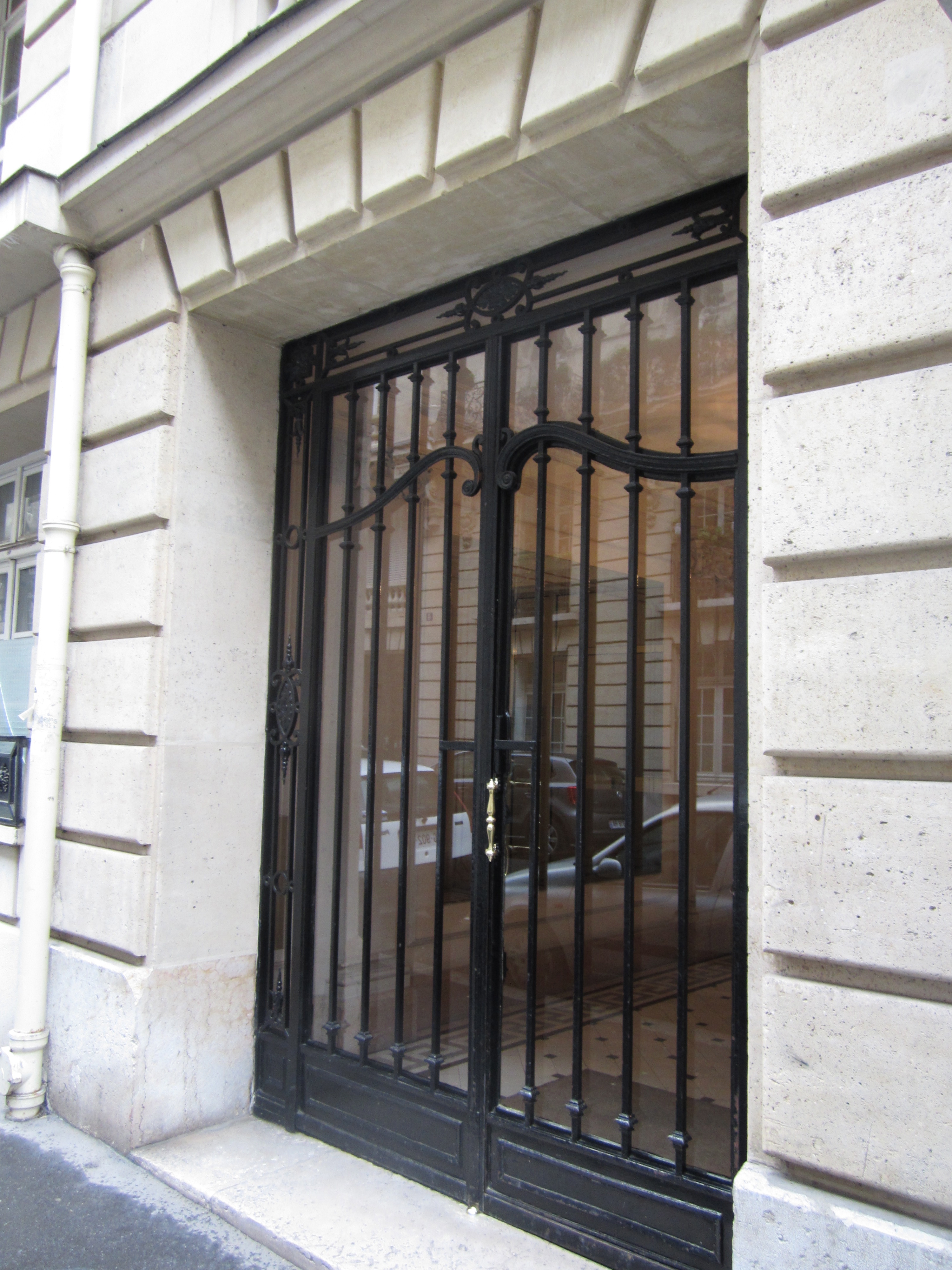
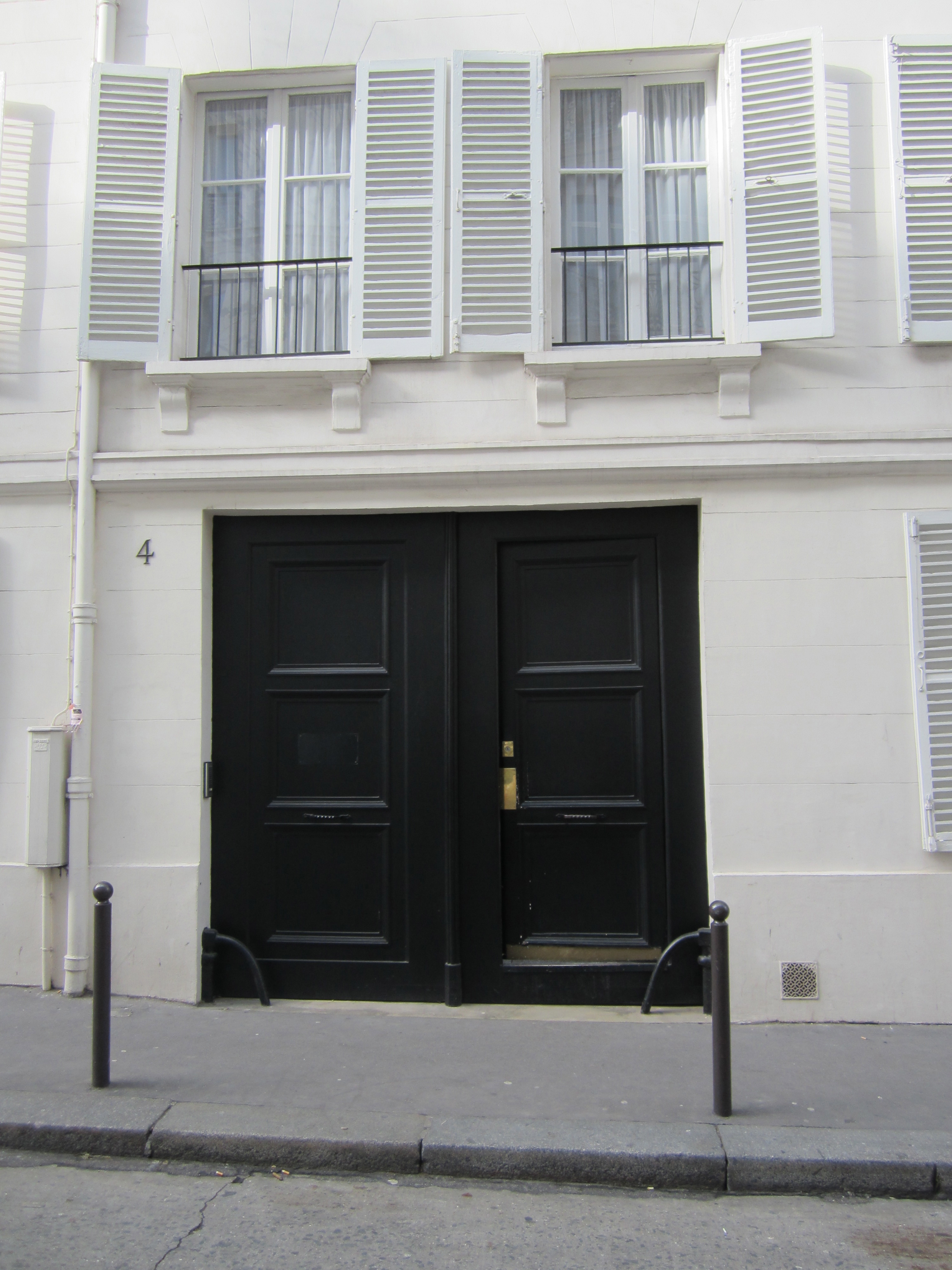
The unassuming front entrance to 4 rue de Chevreuse, the home of The American Girls Art Club in Paris from 1893- WWI.

The unassuming front entrance to 4 rue de Chevreuse, the home of The American Girls Art Club in Paris from 1893- 1914.

The view outside toward the courtyard

The view of the Reid Center outside toward the courtyard. Toward the back is a high wall that borders rue de la Grand Chaumiere, a street that is still full of art studios today. The lodgers could take a shortcut to their classes at nearby Académie Colarossi by exiting through a gate in this wall.

A green classroom shed that was once used as a hospital room for WWI soldiers

In the courtyard: a green classroom shed that was once used as a hospital room for WWI soldiers.

Courtyard seating at the Reid Center today. I wonder how old that tree is?

Courtyard seating at the Reid Center today. I wonder how old that tree is?

The view from the courtyard back toward the main entrance of the Reid Center

The view from the courtyard back toward the main entrance of the Reid Center

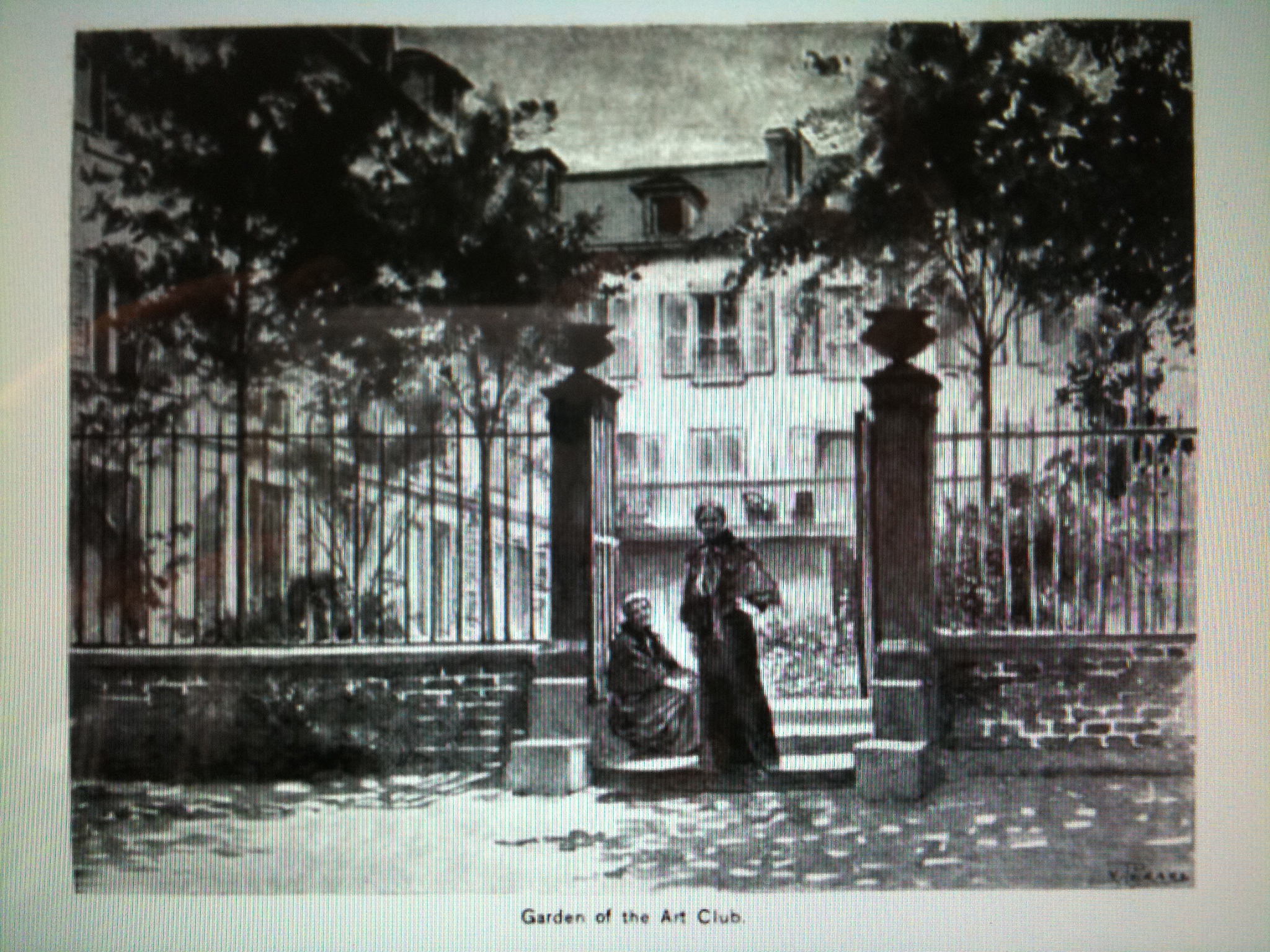
Few paintings or sketches of the American Girls Art Club remain, although I was able to find this rendering in a scholarly journal.

The American Girls Art Club

The garden of the American Girls Art Club, artist and date unknown. Source: Woman’s Art Journal Vol. 26. No. 1 (2005)

Sources: http://www.ReidHall.com and Woman’s Art Journal Vol. 26, No. 1 (2005)

Pictures at an Exhibition: Art, War And Memory in Paris

In the novel Pictures At An Exhibition, (Knopf Hardcover 2009, Vintage Paperback 2010) Sara Houghteling tells a captivating story of the Nazi looting of art in occupied Paris during World War II. Told through the eyes Max Berenzon, the son of a highly successful art dealer in Paris, this exceptionally researched and beautifully executed book is about lost paintings, lost love, the art of survival and the power of the imagination.

Max’s father is a leading Jewish art dealer with a gallery on Rue La Boetie in the 1920’s and 30’s. The gallery represents such artists as Picasso, Matisse, Manet and Morisot. In a wonderfully imagined scene in the book, Max’s father would pass by Picasso’s studio, just a couple of doors down from the gallery, and Picasso would raise his canvases up to the window for his dealer’s friendly thumbs-up.

Max grows up with artwork on his walls and and in his veins. Max’s father makes Max memorize the paintings of the wall at one of their exhibitions, in the exact order in which they appear. They are etched into his memory, a lesson that will prepare Max for the tragic mission that lies ahead.

Anti-semitism is building in Paris and Max’s family finally realizes the true danger and scope of the Nazi threat. They leave their gallery and artwork behind as they escape to a small village in southern France. Max’s youthful sidekick, Betrand Camondo, the grandson of Count Moises de Camondo, tries to stay in Paris too long and sadly becomes of les absents.

After three years in hiding, Max returns to liberated Paris and finds his father’s gallery completely looted. Max stumbles through Paris, searching for his friend Bertrand and hunting down his father’s lost art in the shady world of black market galleries and tight-lipped collaborators. Max seeks out his father’s former gallery assistant, Rose Clement, for whom he has long had unreciprocated feelings.

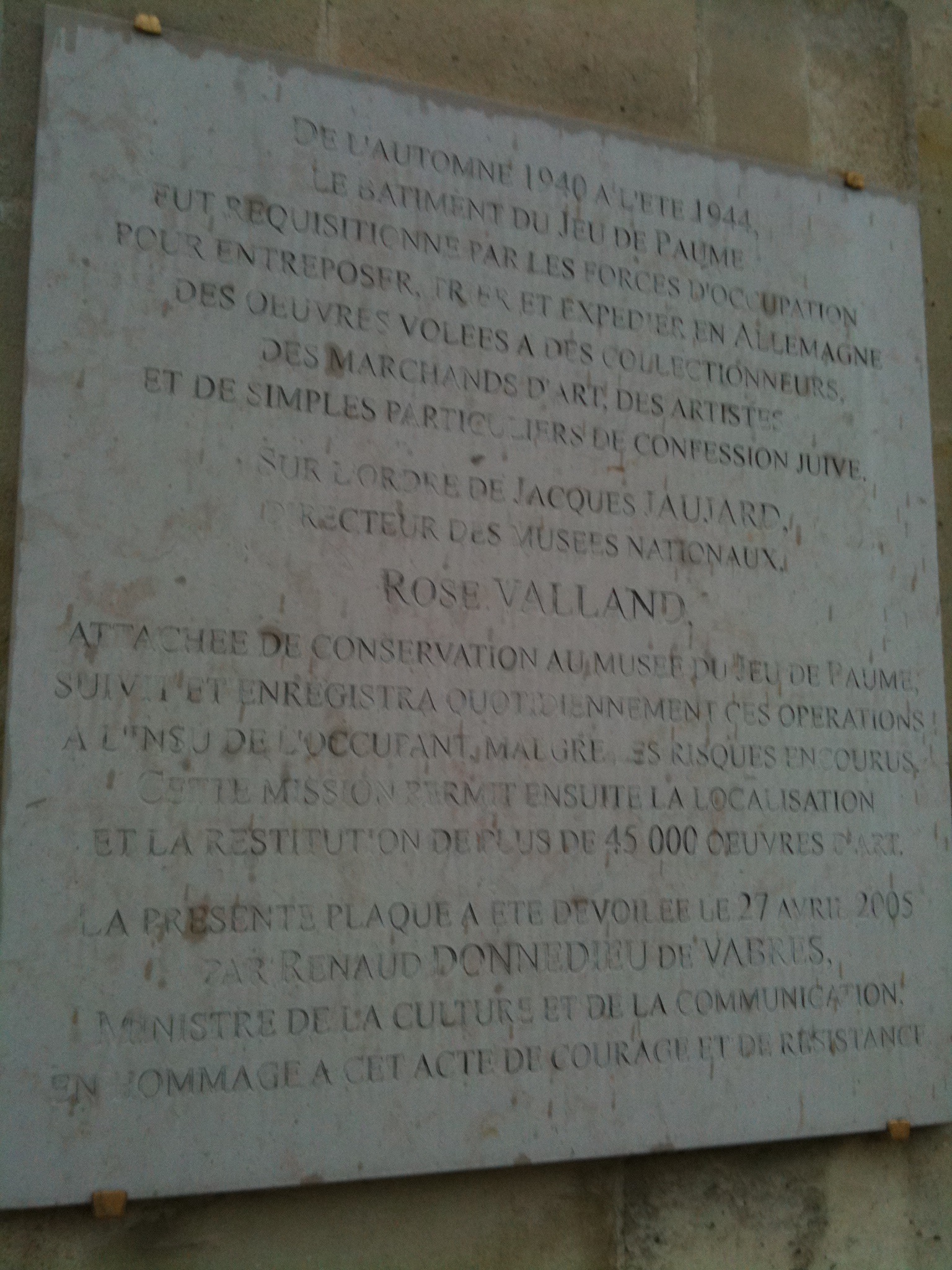
Rose is modeled after the real-life Rose Valland, who earned the French Legion of Honor for her work as a spy and gallery assistant in the Jeu de Paume during World War II. Valland covertly tracked most of the 20,000 pieces of the stolen art, enabling the Monuments Men to follow the front lines and rescue the art from Hitler’s private collection or secret hide-outs deep in the mountains of Germany.  In 2005, the French government placed a plaque on the outside of the Jeu de Paume to commemorates her heroism.

I enjoyed this book so much that I followed it up with Monuments Men by Robert Edsel and The Rape of Europa by Lynn Nicholson. In addition, fans of old movies might enjoy watching The Train, a hyped-up version of the Rose Valland story starring Burt Lancaster and Jeanne Moreau. For Rape of Europa is also available as a documentary film, which I highly recommend.

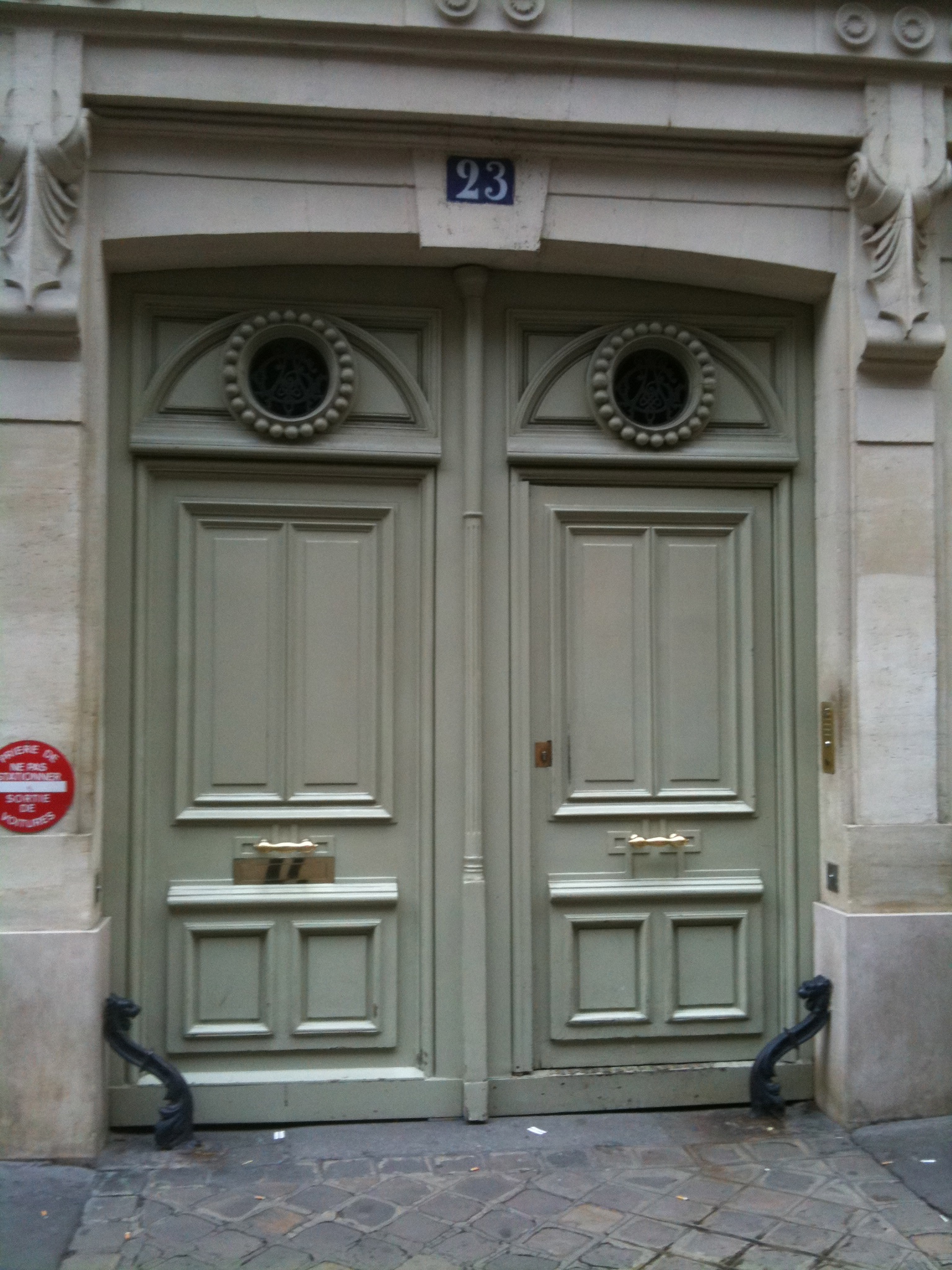
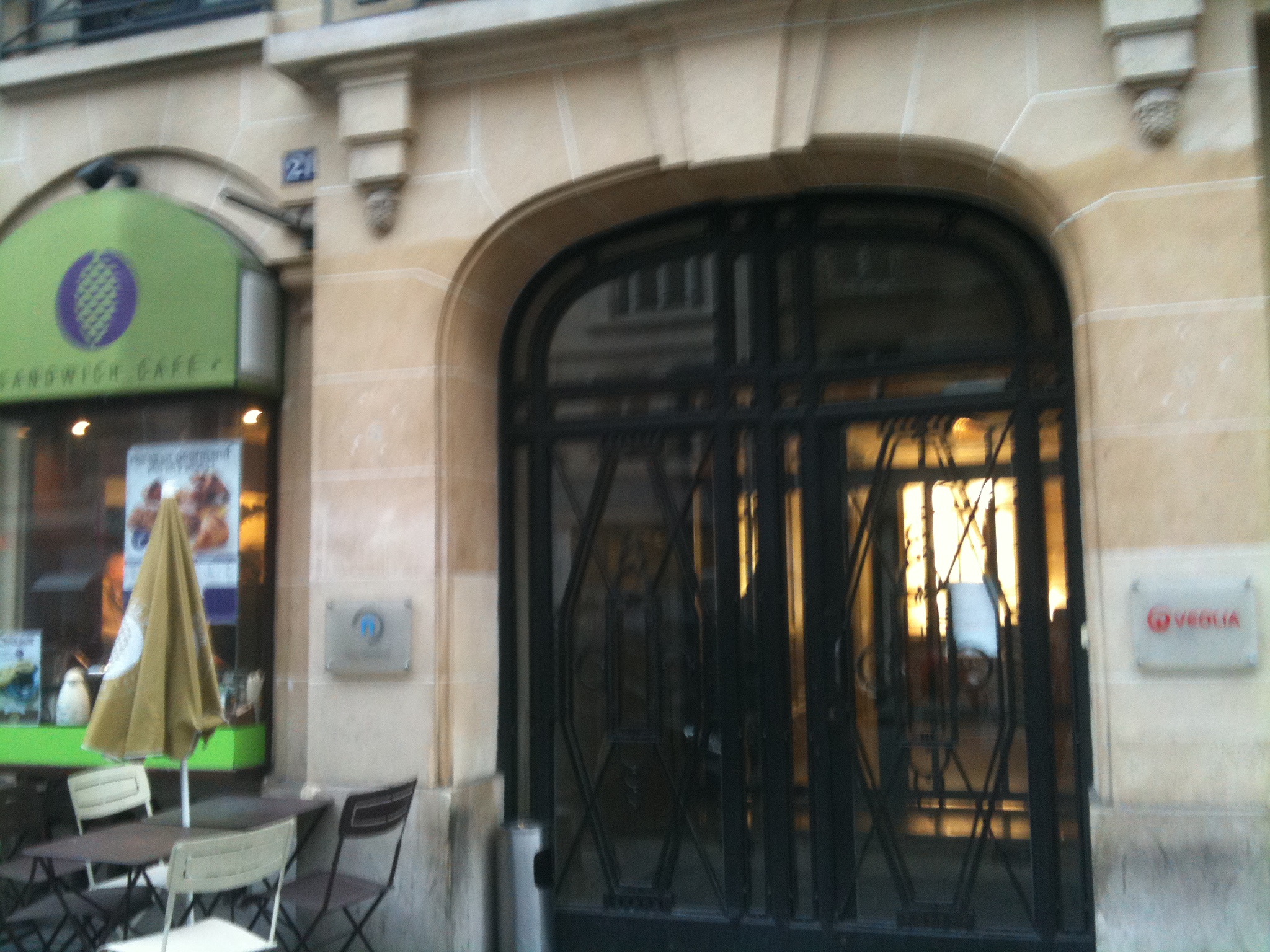
I can’t wait to sign up for a Paris During the Occupation walking tour. In the meantime, I took a short walk down Rue La Boetie to find the site of the Berenzon’s fictional gallery and Picasso’s former art studio. Because Sarah Houghteling has a Master of Fine Arts and researched the book while on a Fulbright scholarship to Paris, I wouldn’t be surprised if the addresses are based on historical fact. I really hope so. On my own visit, I sat down inside 21 Rue La Boettie (in what is now a Pomme et Pain restaurant) and enjoyed some hot vegetable soup, right in the spot where Picasso would have raised his canvas in a salute to  Daniel Berenzon.

I give my own salute to Sara Houghteling and Pictures At An Exhibition. Highly recommended. This would be a great book for a book club to read along with a trip to their favorite art museum. Or better yet, a trip to Paris!

23 Rue La Boetie: Berenzon Gallery

21, Rue La Boetie, Picasso's Studio

Rose Valland Plaque at Jeu de Paume