Van Gogh in St. Rémy

Van Gogh, Maison de Jeune (1888), Van Gogh Museum, Amsterdam

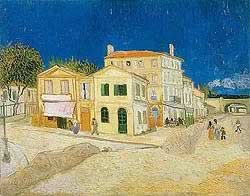
Van Gogh, Yellow House (1888), Van Gogh Museum, Amsterdam

You know the story. Van Gogh was living and painting in “The Yellow House” in Arles when he became increasingly unstable, began fighting with Gaugin, and cut off part of his own ear.

It happened just two days before Christmas in 1888. Van Gogh was hospitalized and by May of 1889 he had voluntarily committed himself to St-Paul-de-Mausole, a psychiatric asylum in Saint-Rémy-de-Provence.

When Van Gogh entered the asylum, he was diagnosed with a form of acute mania and epilepsy. The lead physician, Dr. Théophile Peyron, believed that only complete rest would help, but Theo Van Gogh convinced Peyron to allow his brother limited painting privileges. Van Gogh converted an adjacent cell into an art studio and began painting within the grounds of the hospital. Later, Van Gogh was considered stable enough to paint in the fields around Saint-Rémy as long as he was accompanied by a hospital aid.

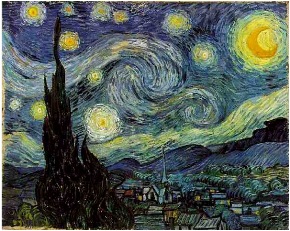
It is here that Van Gogh would paint Starry Night and some of his most magnificent paintings, over 130 of them during this one-year period alone.

Van Gogh, Starry Night (1889), Museum of Modern Art, New York

Van Gogh, Starry Night (1889), Museum of Modern Art, New York


A trip to St-Paul-de-Mausole was on this art lover’s travlist for years. St. Rémy is a lovely little town within a short drive of Avignon in southern France. I traveled there in September, when unfortunately no lavender or iris were in bloom. If you’re lucky enough to visit from late June through early August, you might catch the gardens at just the right time.

You can take a guided tour of the grounds of St-Paul through the St-Rémy tourist office or grab a map and do it yourself. There is a lovely pedestrian path with art walk signs all the way from the tourist office to St-Paul-de-Mausole (Le Promenade Dans L’Univers de Vincent Van Gogh).

maison-sante-st-remy-provence


Van Gogh, St-Paul-de-Mausole (1888), Private Collection

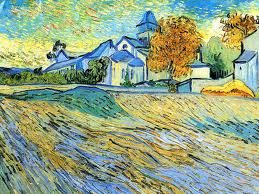
Van Gogh, Vue de l’Asile et de la Chapelle de Saint-Rémy (1888), Private Collection. The late actress Elizabeth Taylor bought this painting in 1963 and reportedly kept it above her mantel for the rest of her life. It was auctioned off to a private buyer in 2012 for $16 million, twice its estimated value at the time.


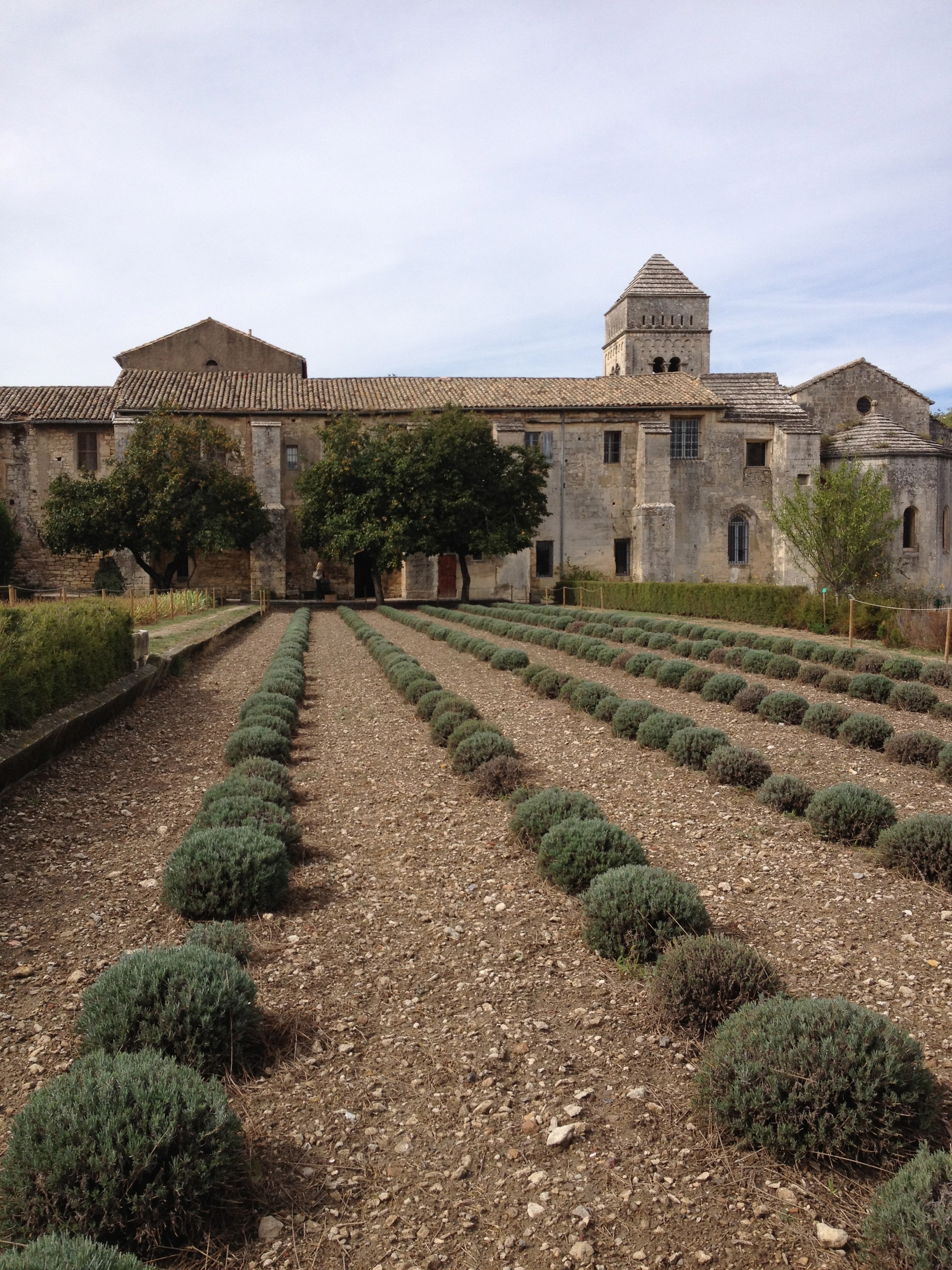
St-Paul-de-Mausole, view from the back gardens in September

St-Paul-de-Mausole, view from the back gardens in September


St-Paul-de-Mausole view from the back gardens in September

St-Paul-de-Mausole view from the back gardens in September


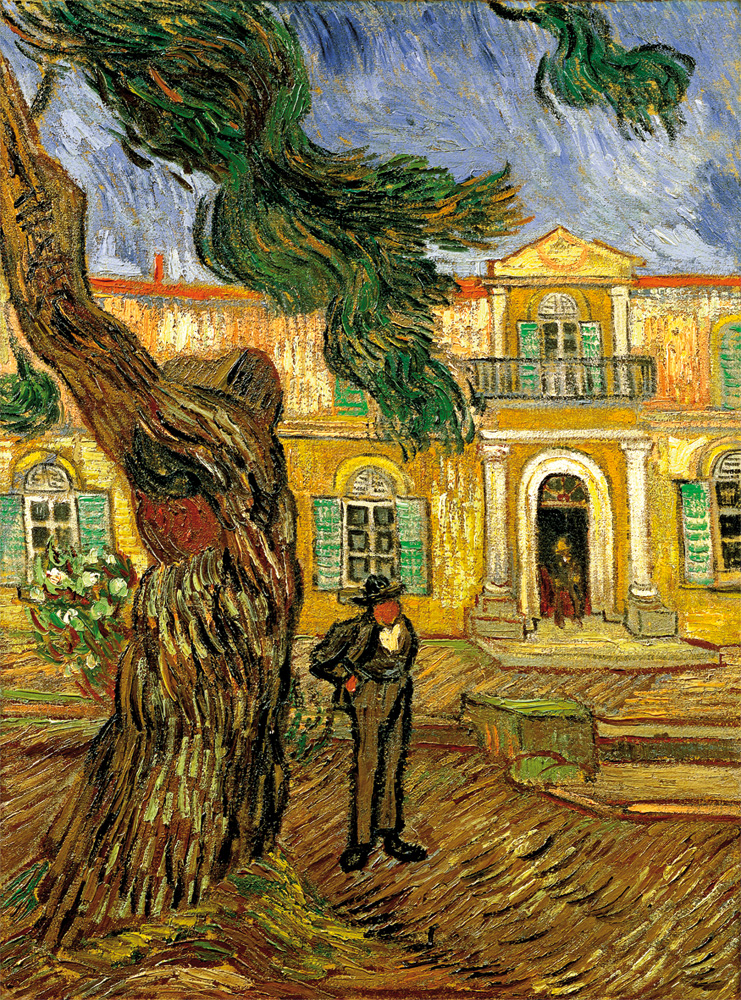
Van Gogh, St-Paul-de-Mausole, Dr. Peyron (1888)

Van Gogh, St-Paul-de-Mausole, Dr. Peyron (1888)


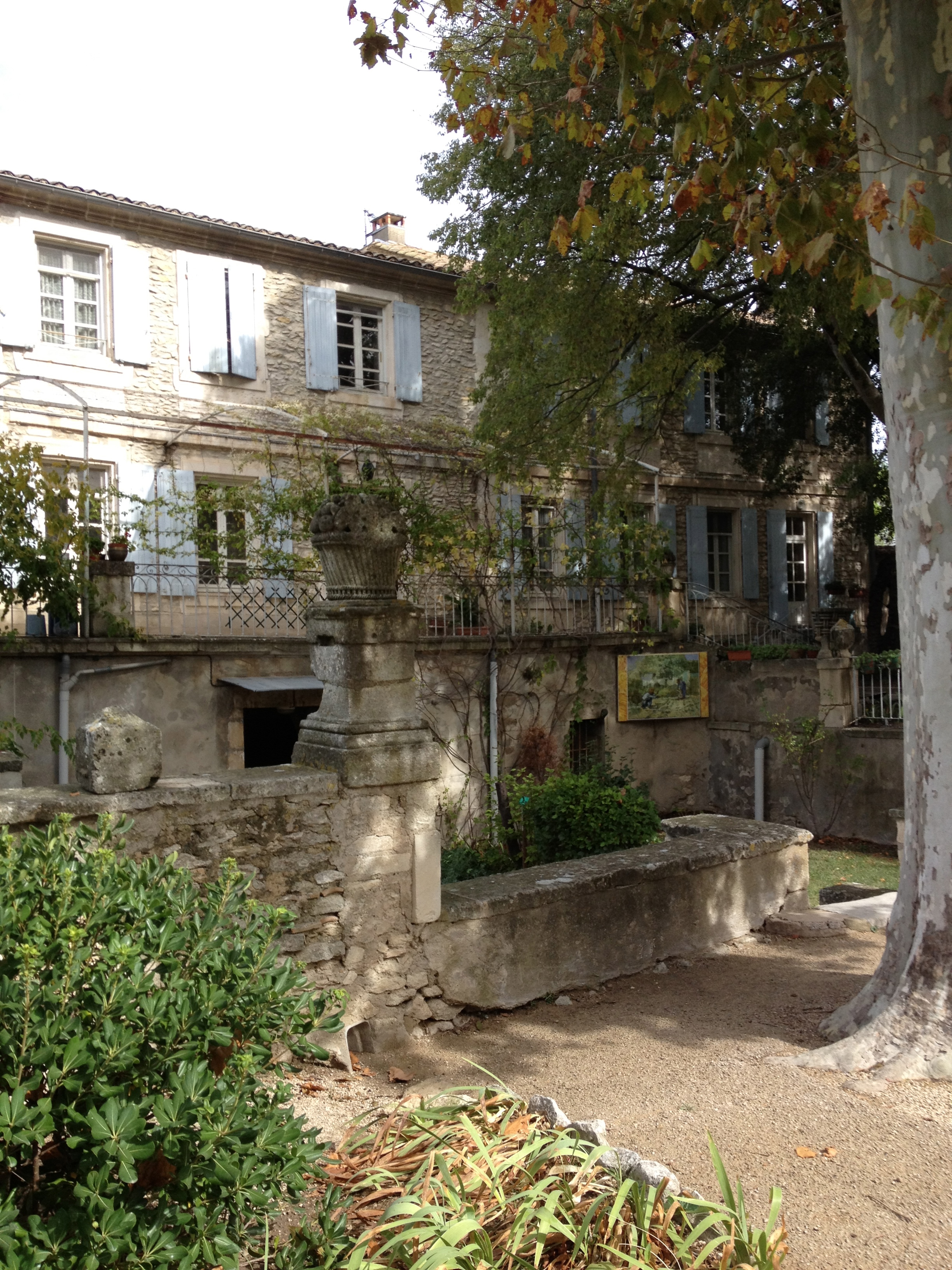
St-Paul-de-Mausole

St-Paul-de-Mausole, view with blue shutters but without Dr. Peyron


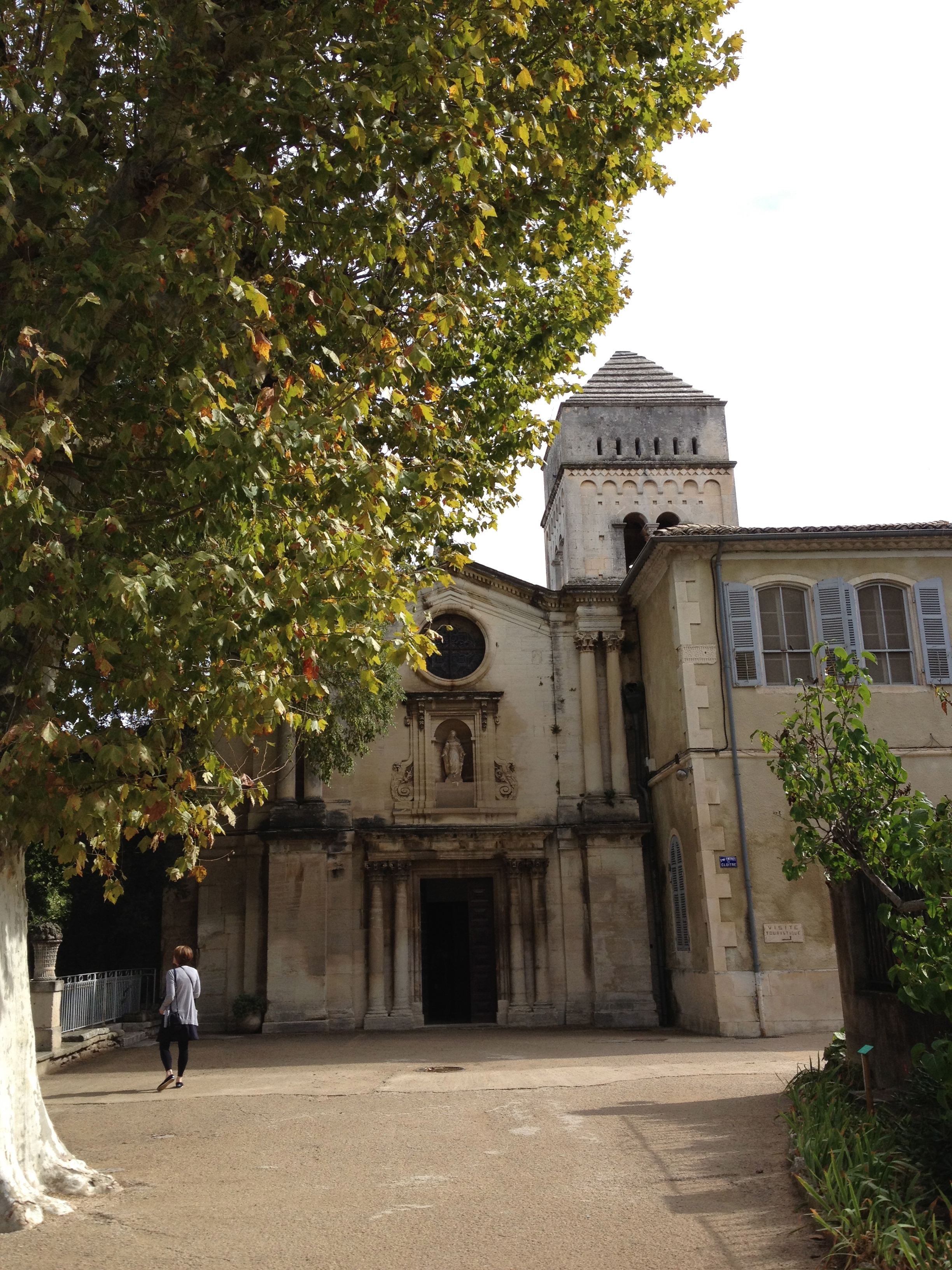
St-Paul-de-Mausole, front entrance

St-Paul-de-Mausole, front entrance

The Asylum Garden at Arles, 1889 (oil on canvas), Gogh, Vincent van (1853-90) / Oskar Reinhart Collection, Winterthur, Switzerland / The Bridgeman Art Library

Van Gogh. The Asylum Garden at Arles, 1889 (oil on canvas), Oskar Reinhart Collection, Winterthur, Switzerland


The inner courtyard garden of St-Paul-de-Mausole

The inner courtyard garden of St-Paul-de-Mausole


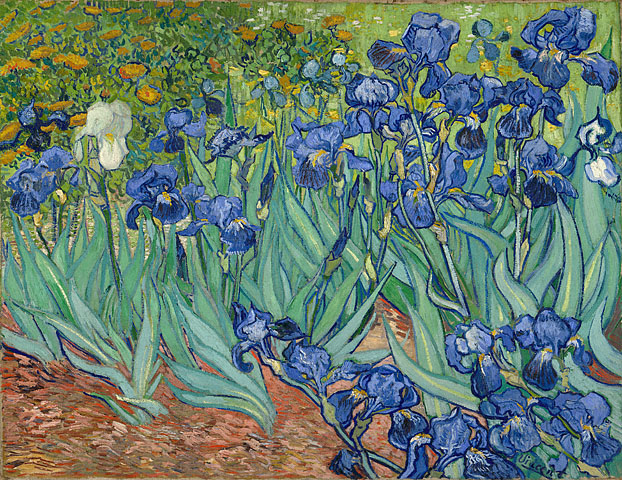
Van Gogh, Irises (1888), Getty Museum, Los Angeles

Van Gogh, Irises (1888), Getty Museum, Los Angeles


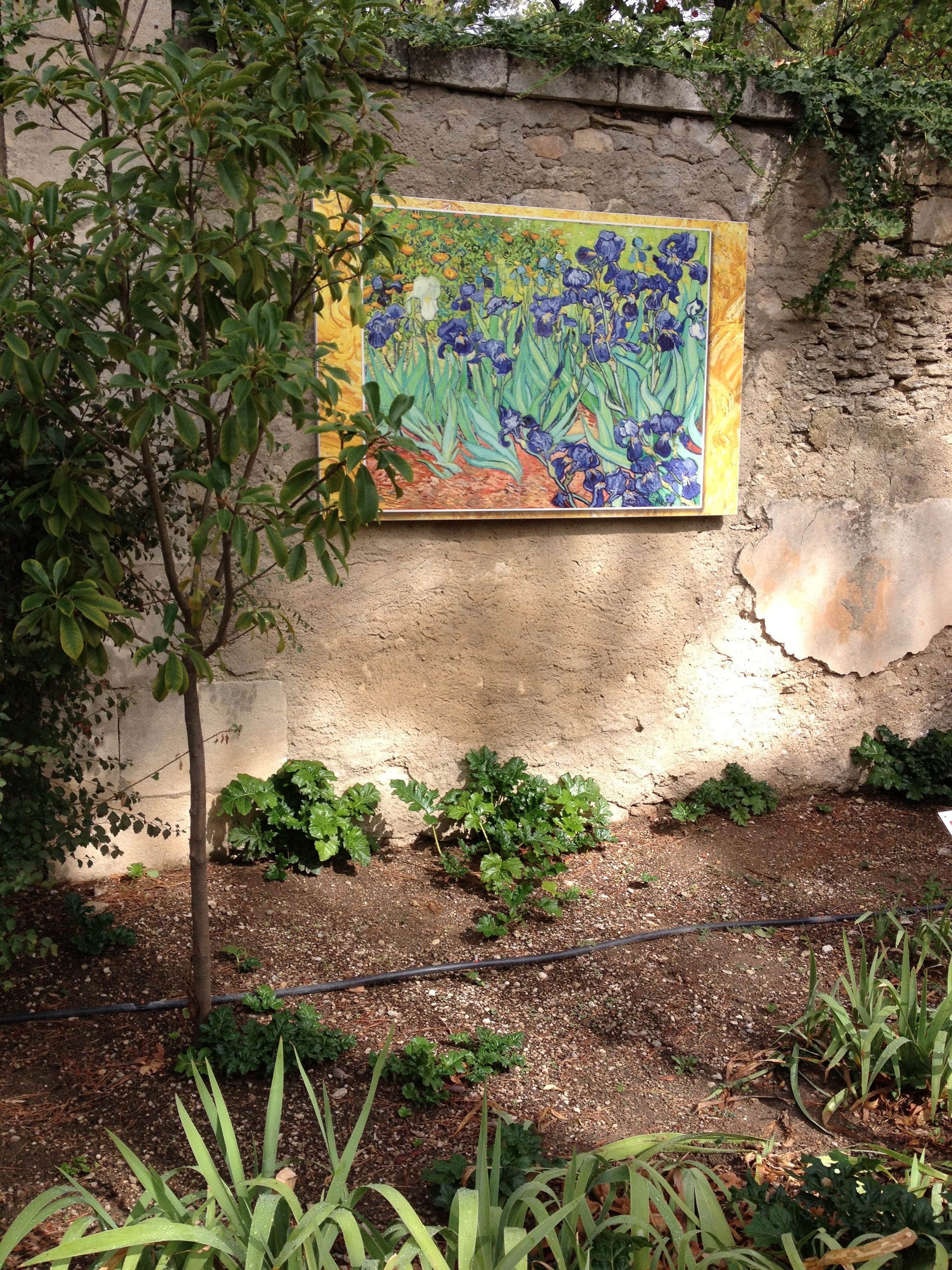
One of the art site signs at St-Pul-de-Mausole indicating the place where Van Gogh painted his Iris series

One of the art walk signs at St-Pul-de-Mausole indicating the place where Van Gogh painted his Iris series. Unfortunately, the irises weren’t in bloom at the time of my visit.

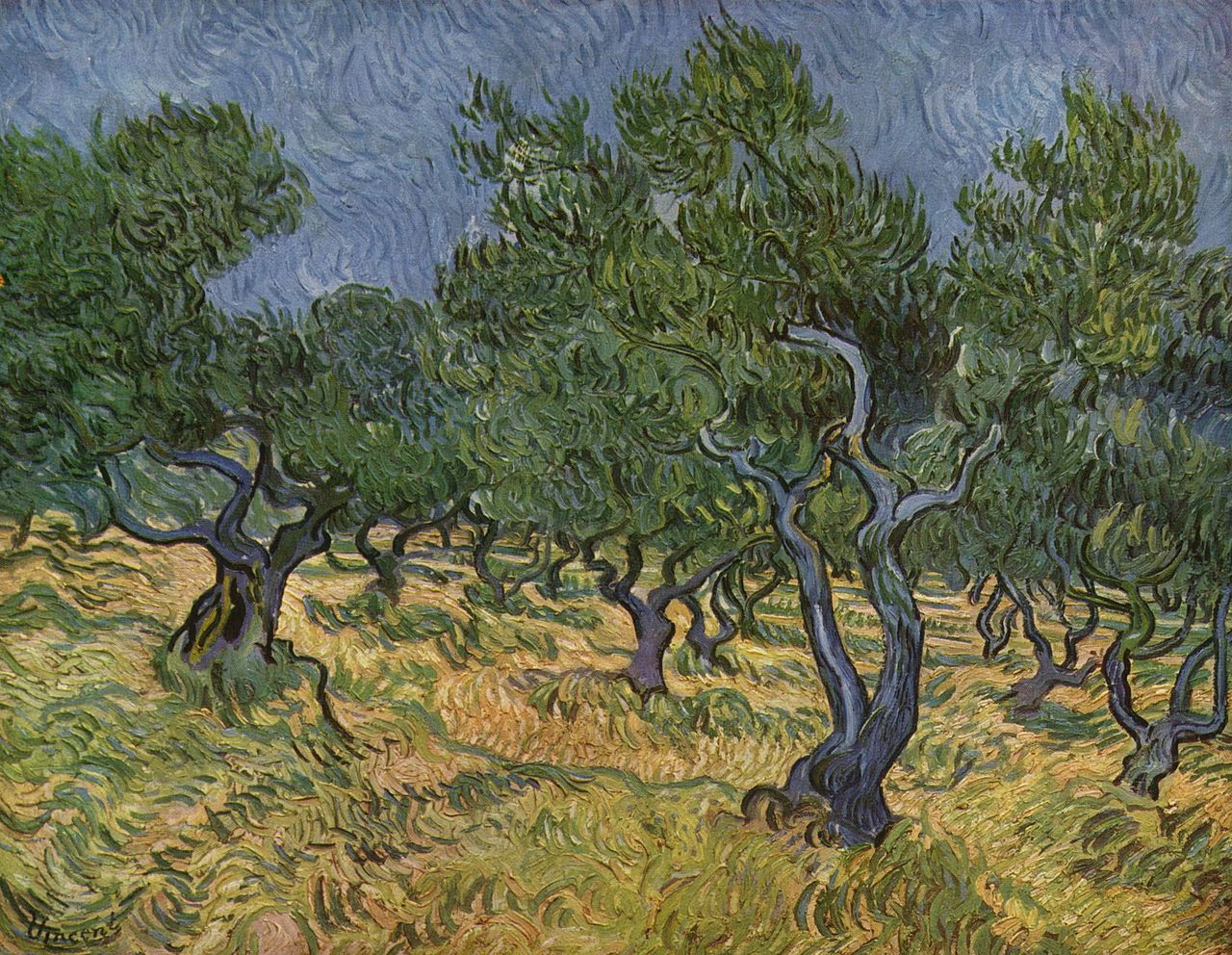
Van Gogh, Olive Orchard, June 1889 Nelson-Atkins Museum of Art, Kansas City

Van Gogh, Olive Orchard, June 1889 Nelson-Atkins Museum of Art, Kansas City

The olive trees surrounding St-Paul-de-Mausole

The olive trees surrounding St-Paul-de-Mausole

IMG_3706

One of the many lovely art walk signs in St. Remy identifying the site of a Van Gogh painting


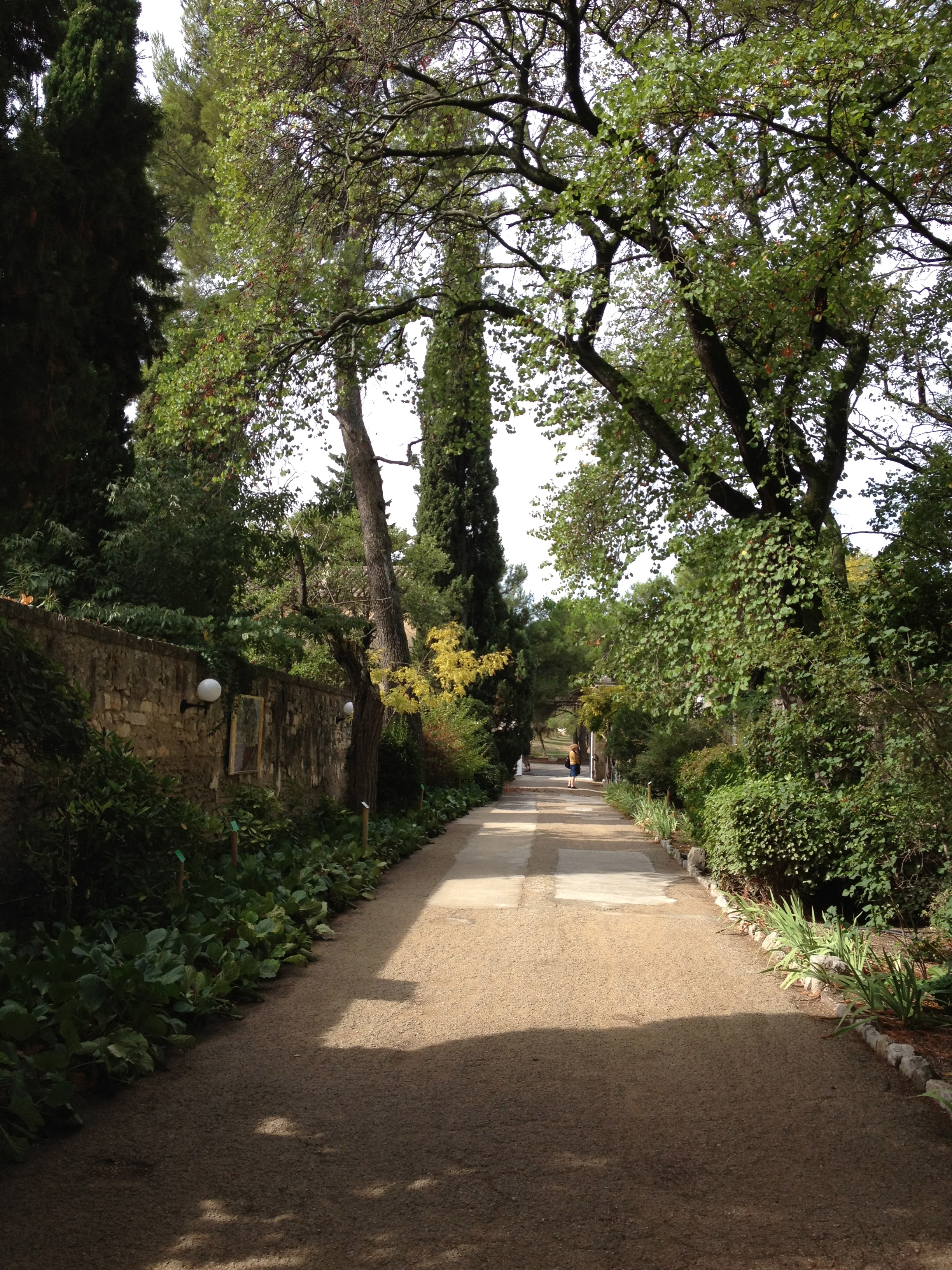
The lovely walk up to St-Paul-de-Mausole

The lovely walk up to St-Paul-de-Mausole

Entrance to St-Paul-de-Mausole

Entrance to St-Paul-de-Mausole

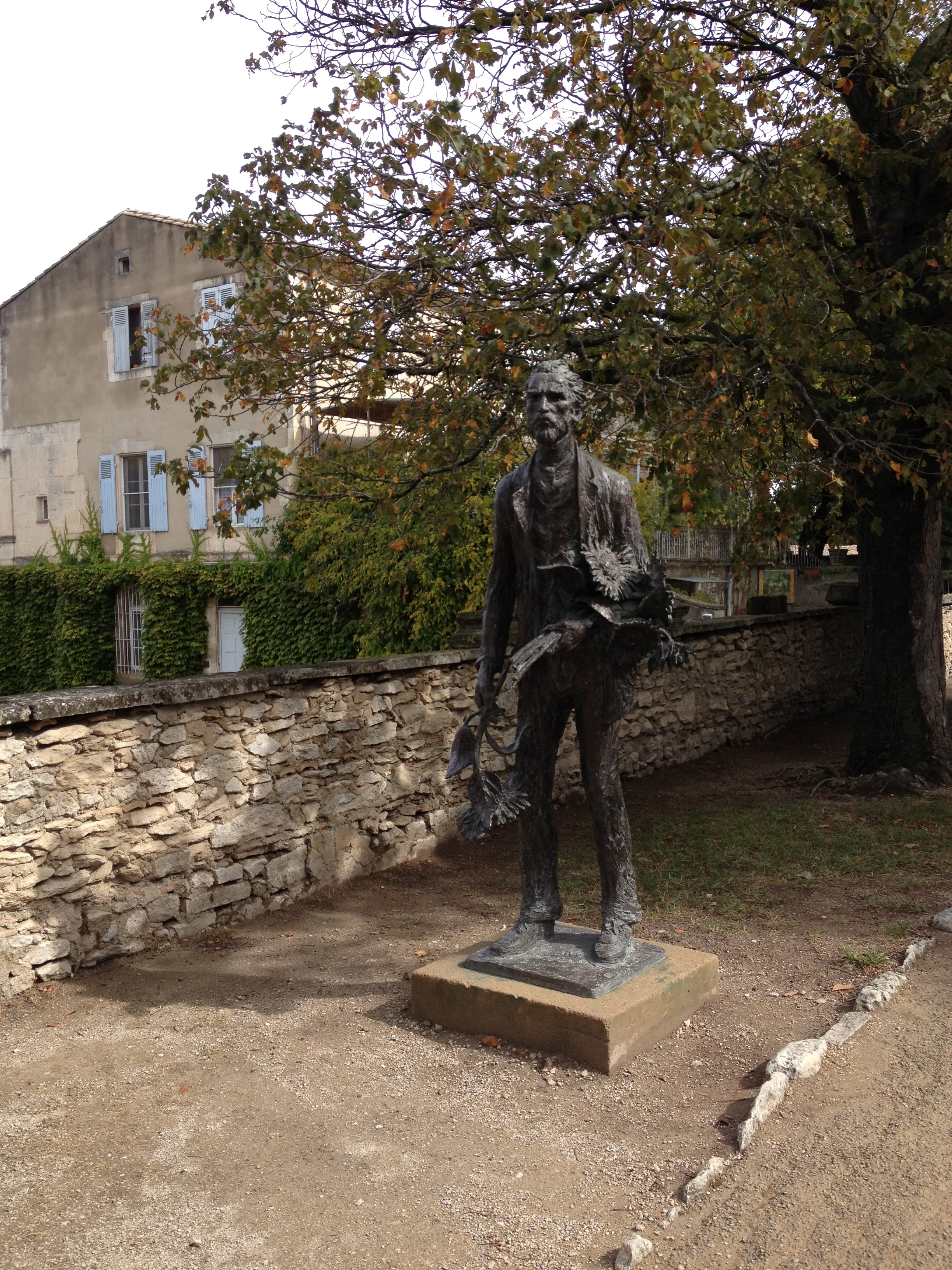
Sculpture of Van Gogh at the entrance of St-Paul-de-Mausole

Sculpture of Van Gogh at the entrance of St-Paul-de-Mausole

A quiet street in nearby St-Rémy

A quiet street in sunny St-Rémy

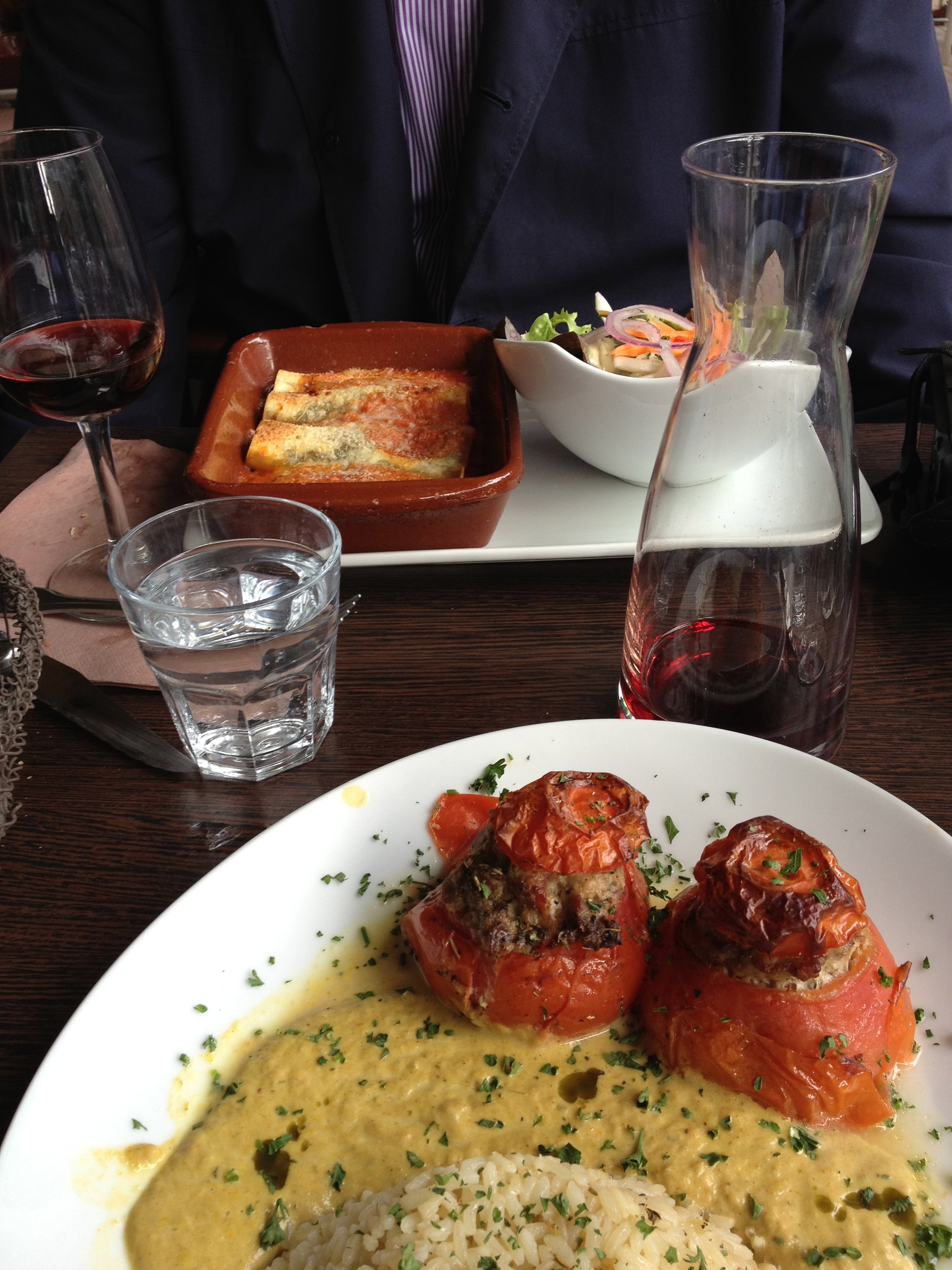
Delicious provençal dish for lunch in St-Rémy - Provençal Tomatoes

Delicious provençal dish for lunch in St-Rémy – Provençal Tomatoes


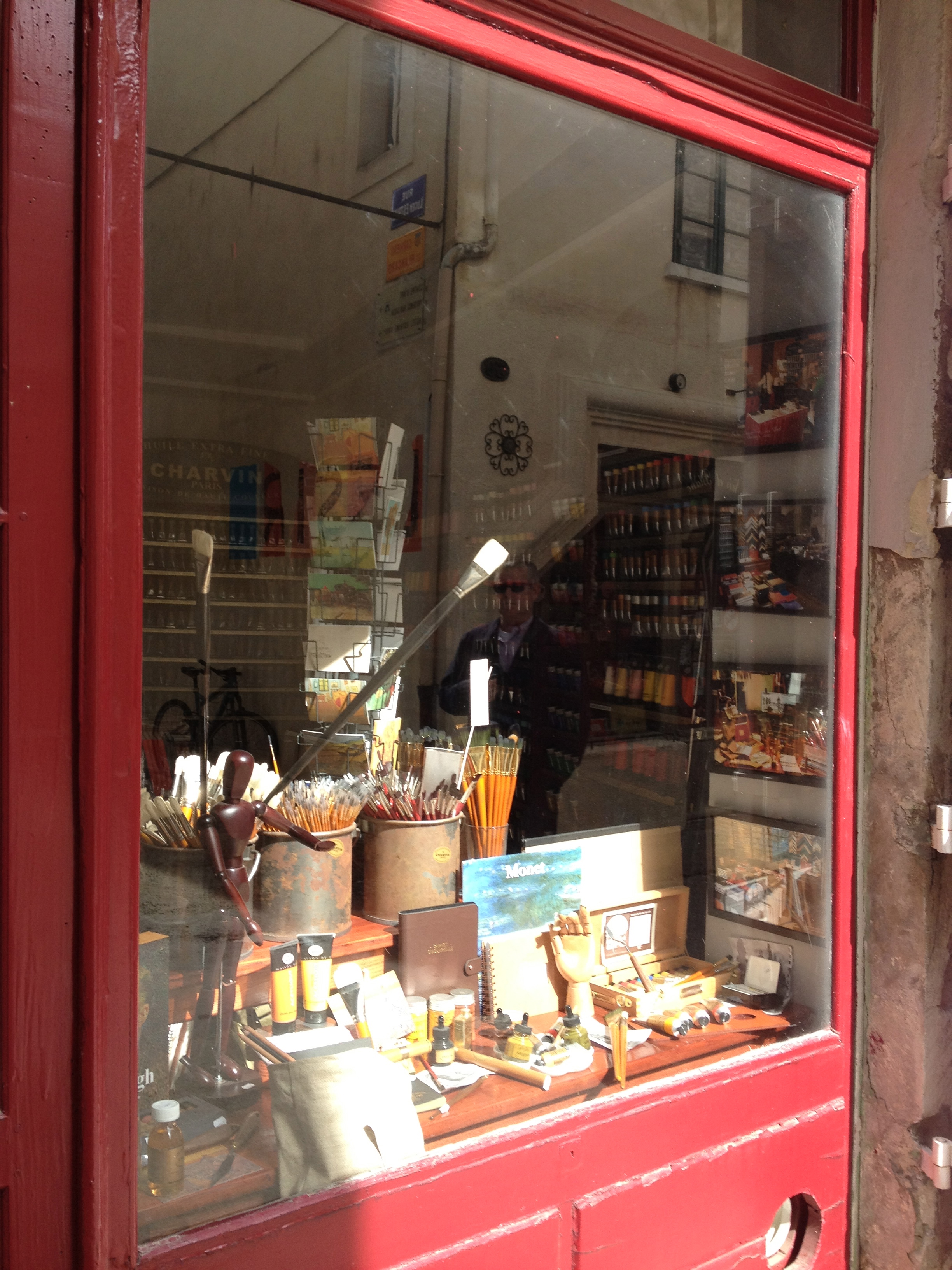
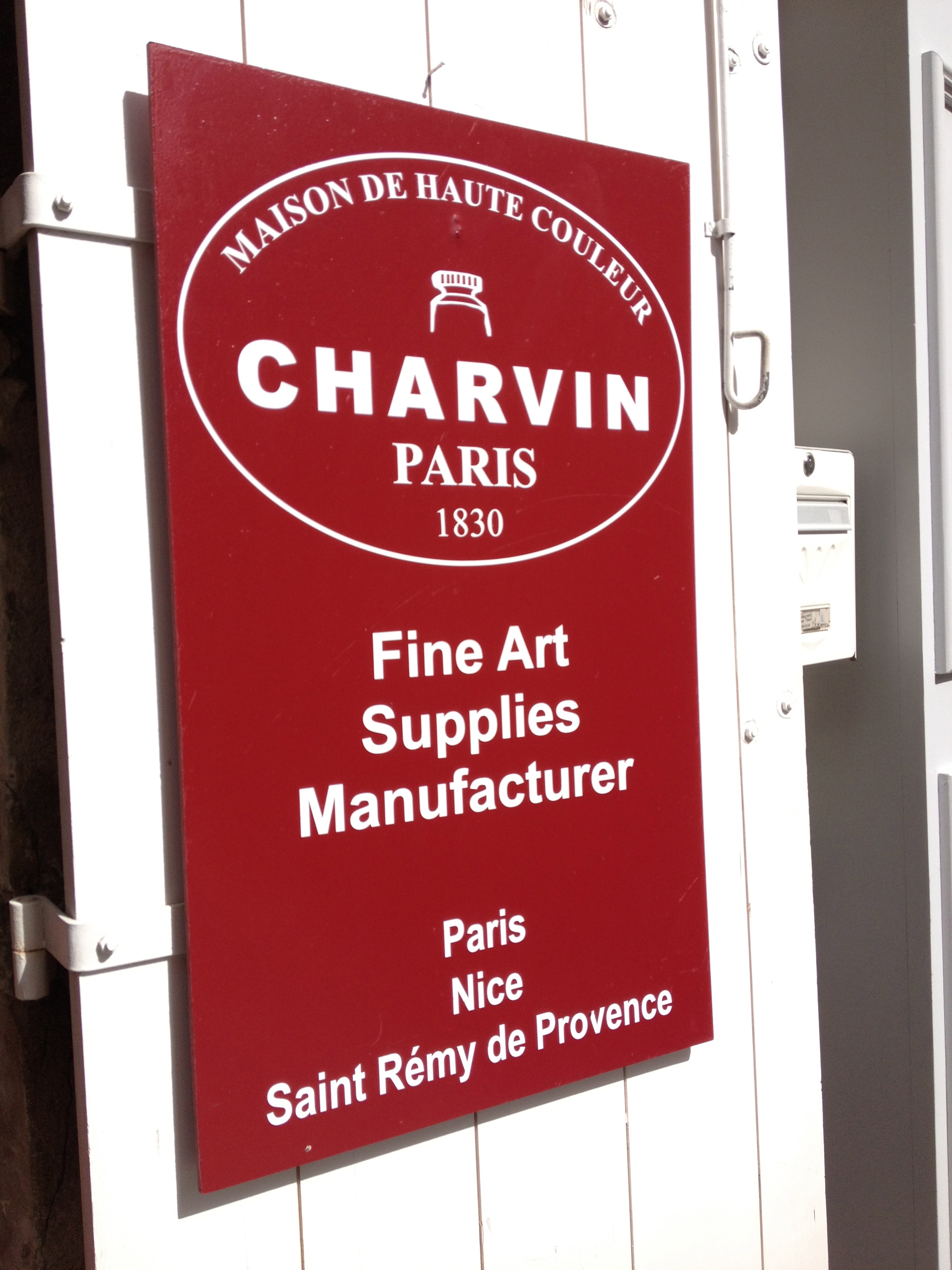
Lovely little art shop in nearby St-Rémy called Charvin

Lovely little art shop in nearby St-Rémy called Charvin

IMG_3756

A Paris Apartment: Boldini’s Madame de Florian

parisapartment


I’ve got a new Paris art novel for you: A Paris Apartment by Michelle Gable (St. Martin’s Press 2014).

It all began with an amazing but true story of a long-lost Boldini portrait of a woman named Marthe de Florian, pictured below.

Madame de Florian by Giovanni Boldini (1888), private collection. Sold for 2.1 million euros at a Drouot house auction in September, 2010.

In 2010, the London Telegraph reported the fascinating true story about an abandoned Paris apartment. When estate representatives entered the dusty apartment, it had been untouched for 70 years. They discovered roomfuls of antiques and what appeared to be a previously unknown portrait by the Italian painter Giovanni Boldini. It turns out the woman in the portrait was Marthe de Florian, who had lived in the abandoned apartment back in the 1890s. A love letter from Boldini to de Florian confirmed the painting’s provenance and a record-setting auction followed.

Marthe de Florian's apartment in Paris, abandoned by her descendants in 1940, reopened in 2010.

Marthe de Florian’s apartment in Paris, abandoned by her descendants in 1940, reopened in 2010. (Source: michellegable.com/2014/04/finding-inspiration-moving-forward )

This book brings to mind one of my favorite art history novels, Gioia Diliberto’s I Am Madame X, which told the story of the woman behind John Singer Sargent’s infamous painting. I’ve blogged about that book, that painting, and John Singer Sargent’s years in Paris here.

It turns out that Giovanni Boldini was a friend of John Singer Sargent’s and they traveled in the same Paris art circles. As Gable reveals in the book, Boldini took over Sargent’s art studio on rue Notre Dame des Champs after Sargent abandoned Paris in favor of London. Boldini’s style is similar to Sargent’s, but perhaps even bolder and more stylized. He was, as Michelle Gable says in the book, known as “The Master of Swish.”

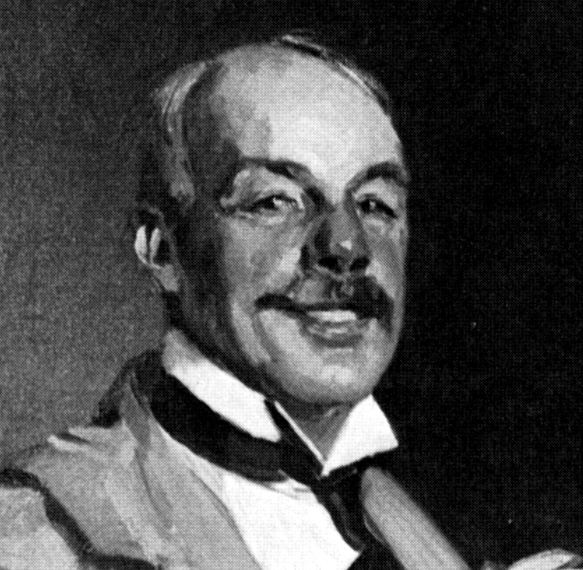
Giovani Boldini, Self-Portrait (1892)

Giovani Boldini, Self-Portrait (1892)

73 rue des Notre-Dame-Des-Champs, once Boldini's studio in Paris

73 rue des Notre-Dame-Des-Champs, once Boldini’s studio in Paris

But who was this Madame de Florian? We know that she was an actress and demimondaine who modeled for Boldini in a scandalously seductive pose. She lived in a lovely Paris apartment in the 9th arrondissement. She had at least one descendant who lived in the south of France and who cared little for the remnants of her grandmother’s life. But the limited information available about her just makes you want to know more. Wouldn’t it be great if she had left behind a diary, telling us the secrets behind this mysterious life?

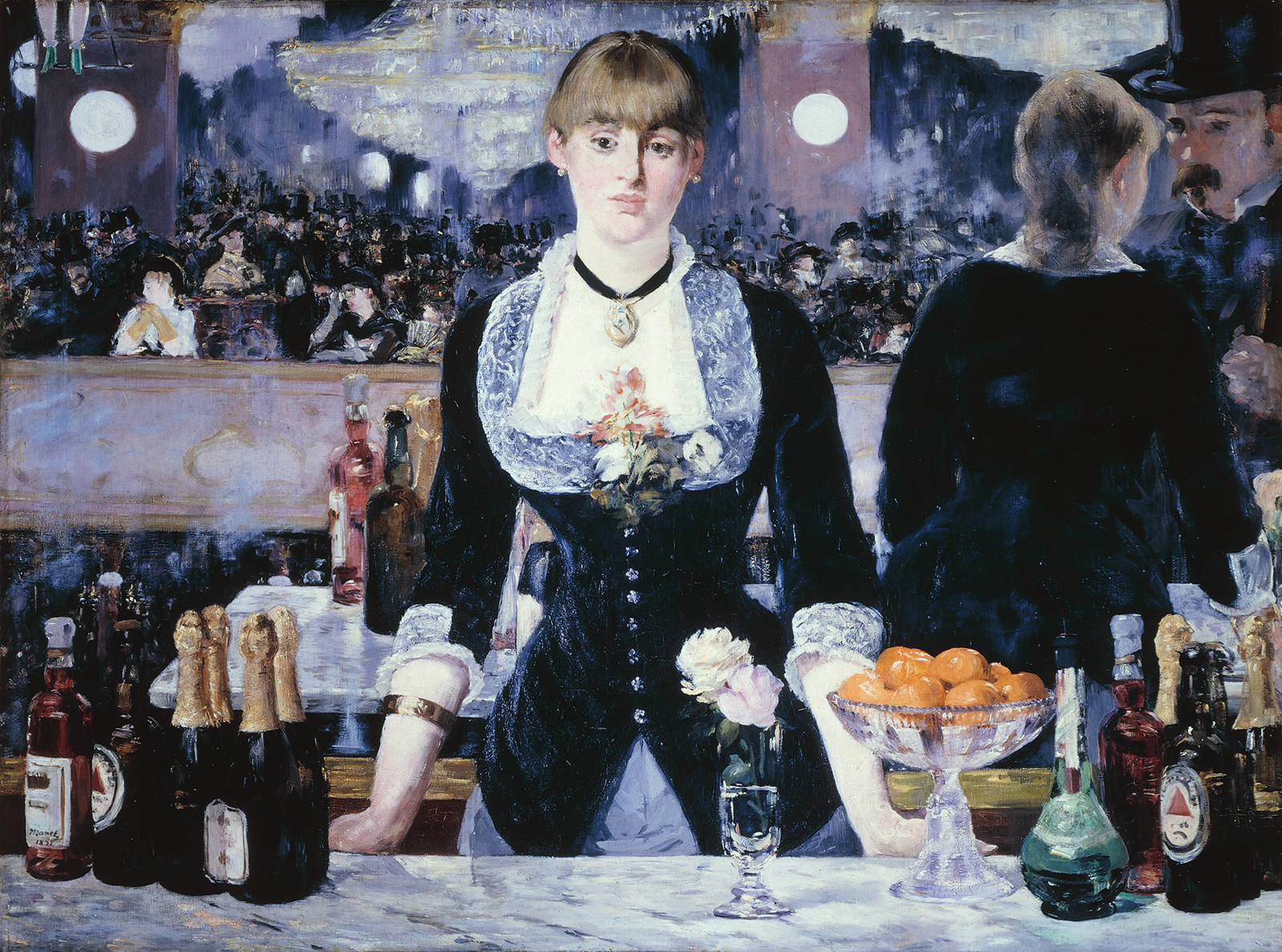
Thanks to Michelle Gable, that’s exactly what we get in A Paris Apartment. Marthe de Florian’s fictional diaries are rich, engaging and completely alive. Gable conjures up a woman who started as a bartender at Les Folies Bergères (I couldn’t help but picture her just like the bartender in Manet’s famous painting, including the dress and the jewelry). It was well known at the time that many of these bartenders were semi-prostitutes who supplemented their earnings at the bar with gifts and income from their customers. Michelle Gable’s Marthe de Florian knows just how to target the wealthiest customers, and soon she is living in a grand Paris apartment and wearing the most fashionable clothes.

Edouard Manet, A Bar at The Folies-Bergère (1881-1882)

Edouard Manet, A Bar at The Folies-Bergère (1881-1882)

Michelle Gable’s Marthe fully enjoys the demimonde lifestyle, sipping beer or absinthe with bohemian artists, writers and dandies, including Boldini, Singer Sargent, Proust, Zola, Dumas and the Count de Montesquiou. We even have an appearance by Victor Hugo’s granddaughter Jeanne. Like Marthe de Florian, many of these real-life characters posed for Boldini portraits, including de Montisquiou, Jeanne Hugo and Singer Sargent. A quick look at each of these portraits can really add to your enjoyment of these historical passages of the book.

Robert de Montisquiou as painted by Giovanni Boldini (1897), Musée d'Orsay

Giovanni Boldini,  Count Robert de Montesquiou (1897), Musée d’Orsay.  As Madame de Florian says in her fictional diary in the book: “According to Montesquiou, Boldini positively insisted on the inclusion of Le Compte’s beloved turquoise-handled cane in the portrait. He ordered Robert to hold it up near his mouth and gaze at it fondly, as one might an old lover one was glad to see again.”


Giovanni Boldini, Madame Georges Hugo (Jeanne Hugo) and Her Son, Charles Daudet (1897), private collection

Giovanni Boldini, Madame Georges Hugo (Jeanne Hugo) and Her Son, Charles Daudet (1898), private collection

Giovanni Boldini, JOhn Singer Sargent (1890), private collection

Giovanni Boldini, John Singer Sargent (1890), private collection

In addition to the story of Marthe de Florian, there is a parallel modern-day story of April Vogt, an American furniture expert from Sotheby’s who is called to Paris to help prepare the contents of the apartment for auction. Although these chapters might feel a little  “rom-com” predictable to some, they offer fascinating insights into the world of art world auction houses and estate sales, and add another layer of interest, romance and fun Paris scenery to the novel. One of the highlights is when April attends a traditional bal des pompiers (Fireman’s Ball) with an attractive French lawyer on the night before Bastille Day. I’m picturing the movie trailer already!

A Paris Apartment by Michelle Gable:  Highly Recommended

Related Reading: I Am Madame X by Gioia Diliberto

Related Post: John Singer Sargent and Madame X 

iammadamex


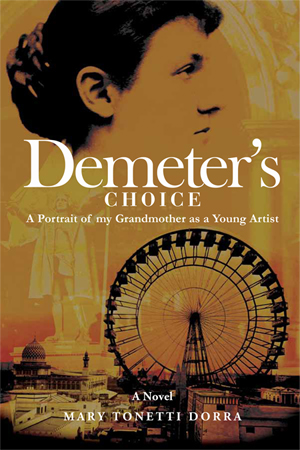
Demeter’s Choice: A Portrait of Artist Mary Lawrence Tonetti


Demeter's Choice

Demeter’s Choice: A Portrait of My Grandmother as a Young Artist is the story of a young American sculptor named Mary Lawrence Tonetti who began studying under Augustus Saint-Gaudens at a very young age. She came of age in the art studios of New York and Paris in the late 19th century, and is most famous for her sculpture of Christopher Columbus for the Chicago World’s Fair of 1893.

The author is the sculptor’s own granddaughter, Mary Tonetti Dorra, who had access to wonderful personal information to make the story rich with detail and insight. There are even copies of some of Mary Lawrence’s original pen and ink sketches and travel notes.

Demeter’s Choice tells the story of one woman’s choice between art and love. Mary Lawrence led a remarkable, artistic life both before and after her big choice. It’s a life worth knowing more about. And for the followers of this blog who like to hear about art history in Paris, I’ll point out all of the Paris sites and scenes of interest.

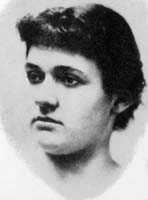
Mary Lawrence Tonetti (1868-1945). Source: sgnhs.org.

Mary Lawrence Tonetti (1868-1945). Source: sgnhs.org.

Mary Lawrence was a privileged young woman (her ancestors included a mayor of New York and Captain James Lawrence, a famous patriot famous for his wartime utterance: “Don’t give up the ship!”) who began a pampered life in Cliffside, her family’s large estate overlooking the Hudson River in Sneden’s Landing, New York. Mary was known to have grown up with a “robust temperament” and a taste for the outdoors. (Which to me is the Gilded Age way of saying she was a handful, a tomboy, a bit of a rebel. Funny how many of those kinds of Gilded Age girls turned out to be artists, especially sculptors….)

Mary enjoyed art from a very young age. When she was only seven years old, her family arranged for the up-and-coming Augustus Saint-Gaudens to come up to Sneden’s Landing to teach drawing and sculpture to Mary a group of other children. (Not a bad start for a kid!) When she was older, Mary continued art lessons at Saint-Gauden’s Fourteenth Street Studio in the German Savings Bank in New York City. Saint-Gaudens would have a huge influence on Mary’s life and career in art.

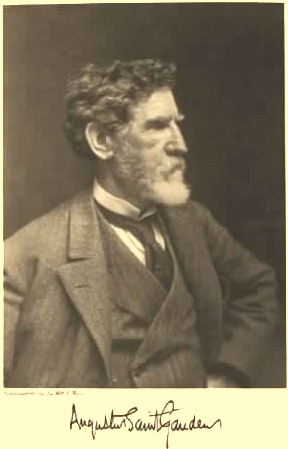
Augustus Saint-Gaudens, mentor and friend of Mary Lawrence

Augustus Saint-Gaudens, mentor and friend of Mary Lawrence

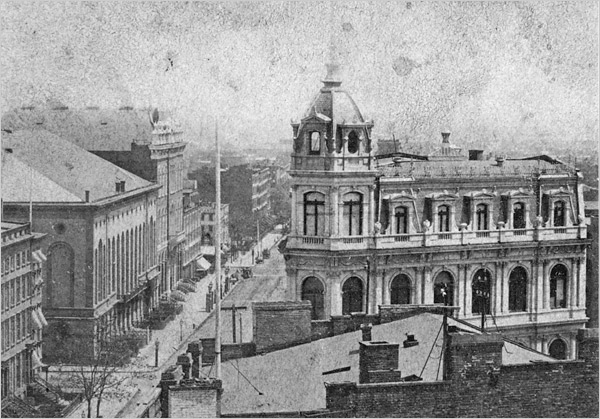
German Savings Bank around 1872, site of Augustus St. Gaudens studio. Source: Office for Metropolitan HIstory NYC

The German Savings Bank around 1872, the site of Augustus Saint-Gaudens 14th Street studio. Source: Office for Metropolitan History NYC.

By the time Mary was twenty years old, she was personal friends with Saint-Gaudens’ whole crowd, including the architects Charles McKim and Stanford White. Demeter’s Choice has a lovely scene where Saint-Gaudens, McKim and White joined Mary for a picnic at Sneden’s Landing before she set sail on her first Grand Tour of Europe in 1886. There were hints that Charles McKim, a married man of nearly forty, was already falling in love with her despite their vast difference in age.

Accompanied by a supportive aunt and her more conventional sister Edith, Mary Lawrence made the Grand Tour of Europe, including a summer of sightseeing through Belguim and Germany before she would settle in Paris and begin her art studies it the women’s atelier of the Académie Julian.

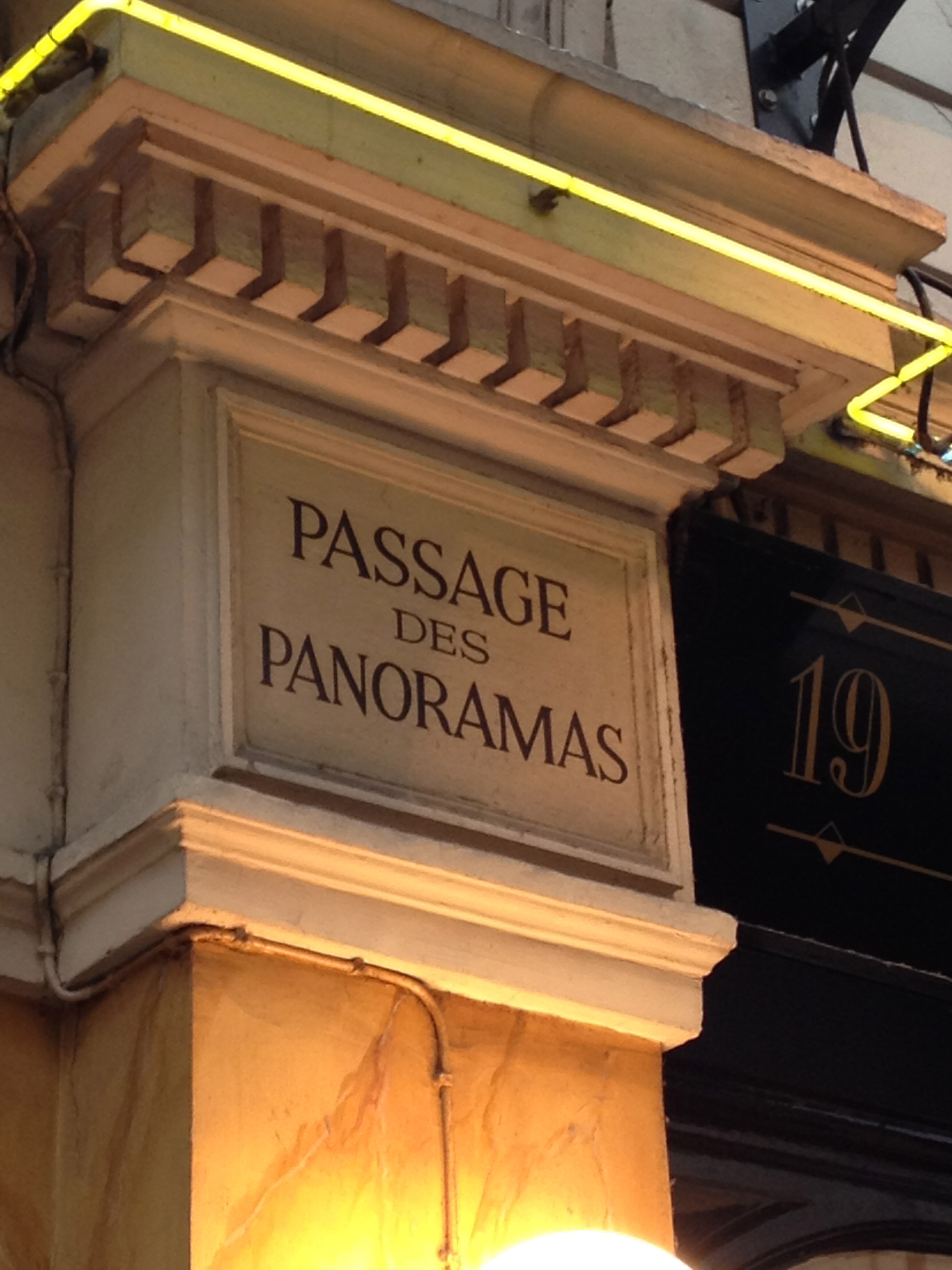
Passage des Panoramas in the 2nd arrondissement of Paris, the location of one of Académie Julian's atelier for women

Passage des Panoramas, just off of boulevard Montmartre in the 2nd arrondissement of Paris, the location of one of Académie Julian’s atelier for women. The studio is no longer there, but a stroll through the arcade will still give you a sense of the time and place.

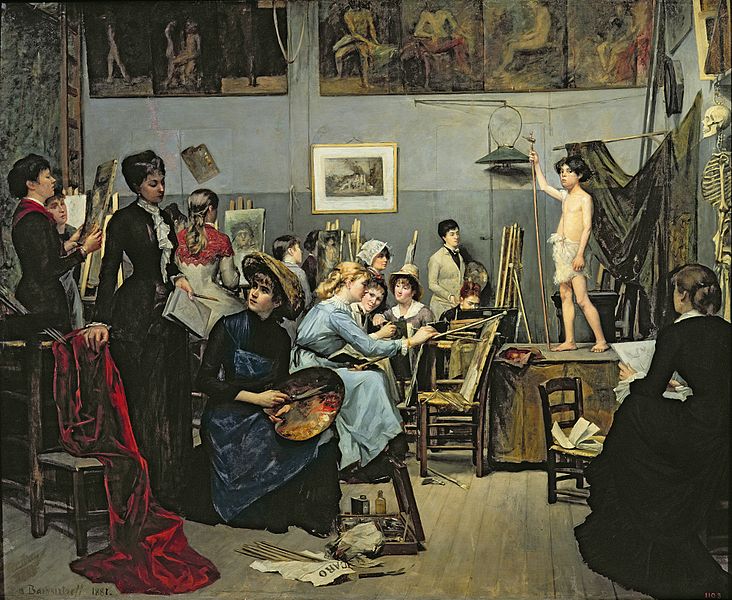
Marie Baskirtsheff, In The Studio (1881). A painting of the women of Académie Julian.

Marie Bashkirtseff, In The Studio (1881). A painting of the women of Académie Julian by a Russian student famous for her memoir, The Journal of Marie Bashkirtseff.

Being a friend and an assistant to Augustus Saint-Gaudens opened many doors upon Mary’s arrival in Paris. He introduced her to many of the American artists who worked or studied there, including Mary Louise Fairchild from St. Louis, who was studying with Carolus-Duran and the Académie Julian on a prestigious fellowship. In Demeter’s Choice, the two Marys meet at the opening night of the Paris Salon of 1886, where Mary Fairchild’s portrait of Sara Hallowell was on display. Sara Hallowell was an American art agent for wealthy American art collectors such as Bertha Palmer of Chicago. Sara lived part of the year in Paris developing close relationships with Mary Cassatt, Claude Monet, Edgar Degas and Auguste Rodin. Mary Lawrence was making all the right connections too, a rare opportunity for such a young artist.

Mlle S. H. (Sara Tyson Hollowell) by Mary Fairchild (1886). Source: www.pubhist.com)

Mlle S. H. (Sara Tyson Hollowell) oil on canvas by Mary Fairchild (1886). Property of The Warden and Fellows of Robinson College, University of Cambridge. This is the portrait that was exhibited in the 1886 Paris Salon where Mary Lawrence met Mary Fairchild and Sara Hallowell. Source: http://www.pubhist.com

Within a week of her arrival in Paris, Mary Lawrence was invited to Auguste Rodin’s art studio which he shared with his student and young mistress Camille Claudel. Together they strolled through the studio where Mary got to see the models for The Burghers of Calais and some of the figures from The Gates of Hell. Today you can see these works for yourself at the Musée Rodin, one of my favorite museums in Paris. Inside you can even see some of Camille Claudel’s sculptures as well.

Mary and her sister settled into their apartment at 56 rue Notre Dame des Champs in the heart of the Left Bank of Paris, within a few blocks of some of the biggest names in the art world, such as John Singer Sargent, Carolus-Duran, James Whistler and William-Adolphe Bouguereau. Saint-Gaudens and his wife lived nearby, at 3 rue Herschel just on the other side of the Luxembourg Gardens. Like many Americans ever since then, Mary came to adore Paris, from the macaroons at LaDurée, to the baguettes from her local boulangerie to a lovely stroll through the Palais Royal.

IMG_2263

.

Being a young woman of privilege in the Gilded Age meant you had the opportunity to travel throughout Europe instead of having to freeze or starve your way through a miserable winter in Paris. Mary Lawrence left Paris for a few winter months in Italy with her family entourage before she returned to New York in the summer of 1887. By the spring of 1888, she had returned to Paris for another season of classes at the Académie Julian.

Once her second session of Paris art studies were over, Mary returned to New York, where she taught at the Art Students League, served as Saint-Gaudens’ assistant and worked on her own sculpting projects.

In the fall of 1891, Mary learned that she would be awarded a contract to create a statue of Christopher Columbus for the Chicago World’s Fair under the supervision of Saint-Gaudens. It was a huge honor. Most women who received commissions for the fair (such as Mary Cassatt, Mary Fairchild MacMonnies and Sophia Hayden) were contracted through a separate Board of Lady Managers led by the Chicago society queen Bertha Palmer. Mary Lawrence received her commission directly from the Fair Commissioners, who were all male. You can read a fun 1893 New York Times article about Mary’s commission here.

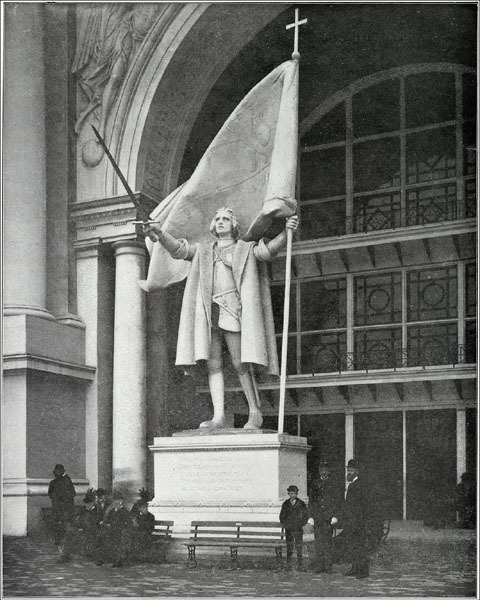
Demeter’s Choice tells the wonderful story of a fight between Mary Lawrence and her supporters versus Frank Millet, a particularly odious fair organizer, who objected to the prominent placement of her Columbus statue because it was made by a “female novice.” Millet actually arranged to have it moved to a spot near the train station. You’ll have to read for yourself to learn what happened next. If you look at the image below, it is amazing what a good job young Mary Lawrence did – she was young, but certainly no novice.

"Columbus Taking Possession." The Administration Building From Columbian Gallery: A Portfolio of Photographs of the World's Fair, The Werner Company. The prominent and handsome figure of Columbus, which stood in the portal, was the work of Miss Mary T. Lawrence, and represented the landing of Columbus, and the planting of the Spanish flag in the colonies of the New World. 1893. Source: http://www.flickr.com/photos/field_museum_library/3409425513/in/photostream/

“Columbus Taking Possession.”  Mary Lawrence’s statue of Columbus, which stood in the portal of the Administration Building at the Chicago Worlds Fair. Source: http://www.flickr.com/photos/field_museum_library/3409425513/in/photostream/

After the excitement of the Chicago World’s Fair was over, Mary went back to Paris. She continued her studies at the Académie Julian and renewed her many friendships with the artists of the Left Bank and beyond. Mary was on everyone’s guest list, attending soirées hosted by the likes of Charles Dana Gibson and James Whistler. It was at Gibson’s glamorous ball and then again at Whistler’s home at 110 rue de Bac that Mary Lawrence met François Tonetti, a sculpting assistant to Frederick MacMonnies. The rest, as they say, was history.

The plaque at James Whistler's home in rue de Bac where Mary Lawrence first met François Tonetti in 1893. Source: http://www.flickr.com/photos/monceau/7759948652/

The plaque at James Whistler’s home on rue de Bac, where Mary Lawrence and François Tonetti met for the second time in 1893. Source: http://www.flickr.com/photos/monceau/7759948652/

A close-up image of a portrait of François Tonetti by François Flameng. Source: http://palisadesny.com/nature/take-hike/

A close-up image of a portrait of François Tonetti by François Flameng. Source: http://palisadesny.com/nature/take-hike/

Even after she met the charming and passionate François, Mary Lawrence continued to work as a sculptor in her own Twenty-Third Street studio in New York and to teach Saint-Gaudens’ classes at the Art Students League through most of the1890s. Charles McKim continued to pursue her, as did François, her favorite Frenchman.

Saint-Gaudens didn’t want his protégée to marry, worried that she would give up her art for a house full of “festive children.” He asked: “wIll she just die and fade into the wife of François Tonetti…?” Others objected because François wasn’t from the “same stock” as the Lawrences. Mary’s own sister pressed her to choose Charles McKim, who offered a more proper and promising future than a bohemian artist could.

No matter what choice Mary Lawrence would make, it was clear that she wouldn’t die and fade away. She would always live in a world of art. Mary Lawrence lived the rest of her life surrounded by artists, founding and developing an artist’s colony in Sneden’s Landing. Generations of artists and actors have enjoyed living there, including Gerald and Sara Murphy, Orson Wells, Lawrence Olivier, Vivien Leigh, Al Pacino, Angelina Jolie, Bill Murray and Mikhail Baryshnikov. Just for fun, you can check out this recent gossip article about Tom Cruise checking out the real estate in Sneden’s Landing.

Quite a story and quite a legacy. We are so lucky that Mary Lawrence’s granddaughter wrote it all down. 

Mary Tonetti Dorra. Source: www.marytonettidora.com.

Mary Tonetti Dorra. Source: http://www.marytonettidorra.com.

Author Mary Tonetti Dorra has a list of appearances scheduled in early 2014. You can check them out for yourself on her website.

Review and Recommendation by Margie White of the American Girls Art Club in Paris

Fanny and Louis in Grez

wide starry sky

Nancy Horan, the bestselling author of Loving Frank, comes now with her long-awaited second novel, based on the nineteenth century love story between Fanny van de Grift Osbourne, a not-exactly-divorced American mother of three and the much younger writer Robert Louis Stevenson.

The pair met in the summer of 1875 in Grez, an art colony in France in the Fountainebleu Forest. Fanny had arrived in France the year before to escape her unhappy marriage and to study art alongside her 17 year-old daughter Belle.

Fanny and Belle were enjoying their studies in the women’s drawing classes at the Académie Julian alongside other international students, including May Alcott, Louisa May Alcott’s little sister. (You can read more about May Alcott’s art studies and travels through France at my previous post, Little Women in Dinan.)

After enduring an unspeakable tragedy in Paris, Fanny decides to bring her children to Grez for some quiet recovery time in the country. A fellow art student at the Académie Julian suggested a quiet place, “an inn at Grez, on the Loing River. It’s close to Barbizon but away from all the bustle, and cheap. It’s near the Fountainebleu Forest.” Fanny talks her estranged husband from California into supporting them for one more year in Europe.

Nancy Horan describes Grez-sur-Loing well:

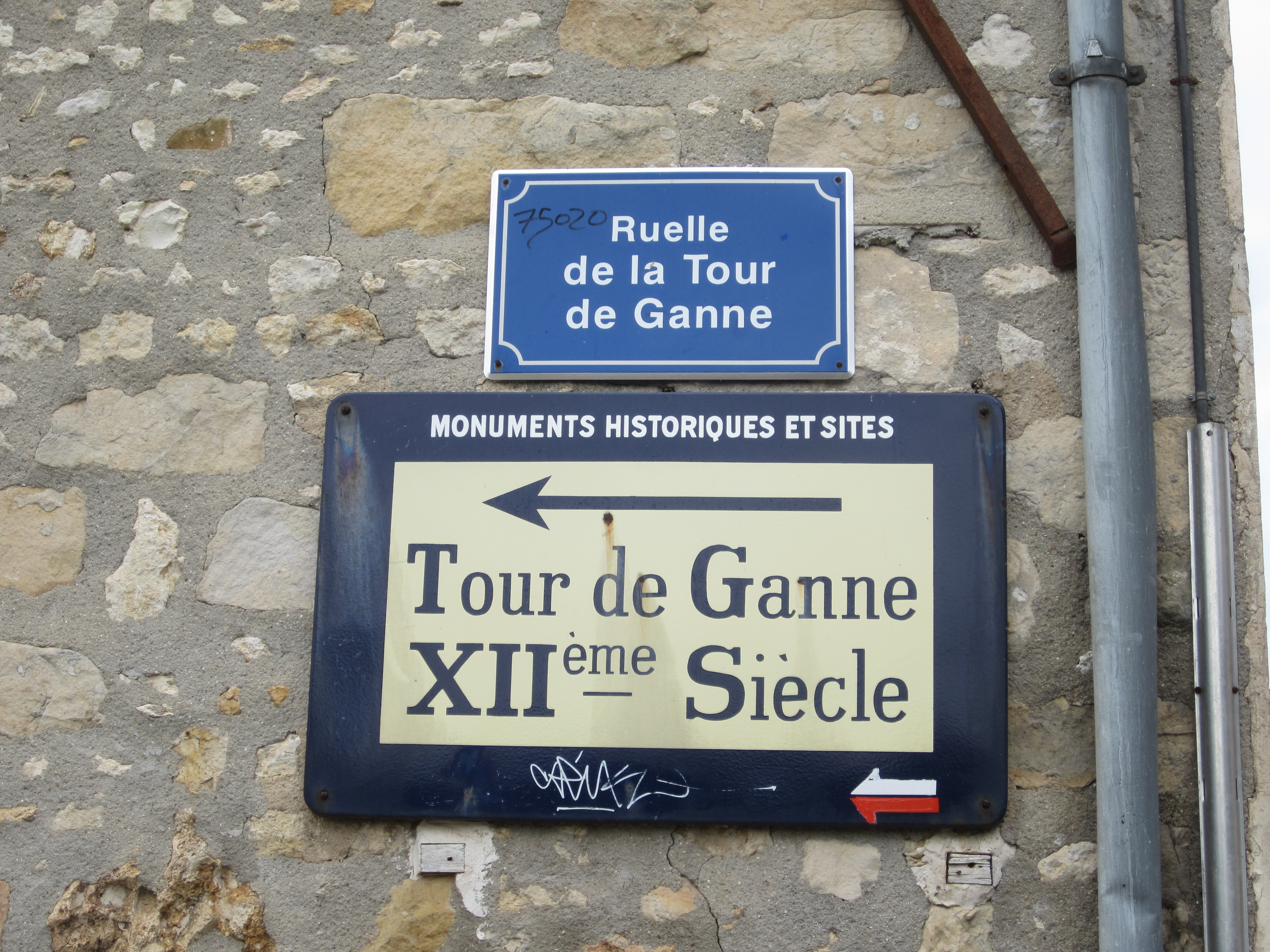
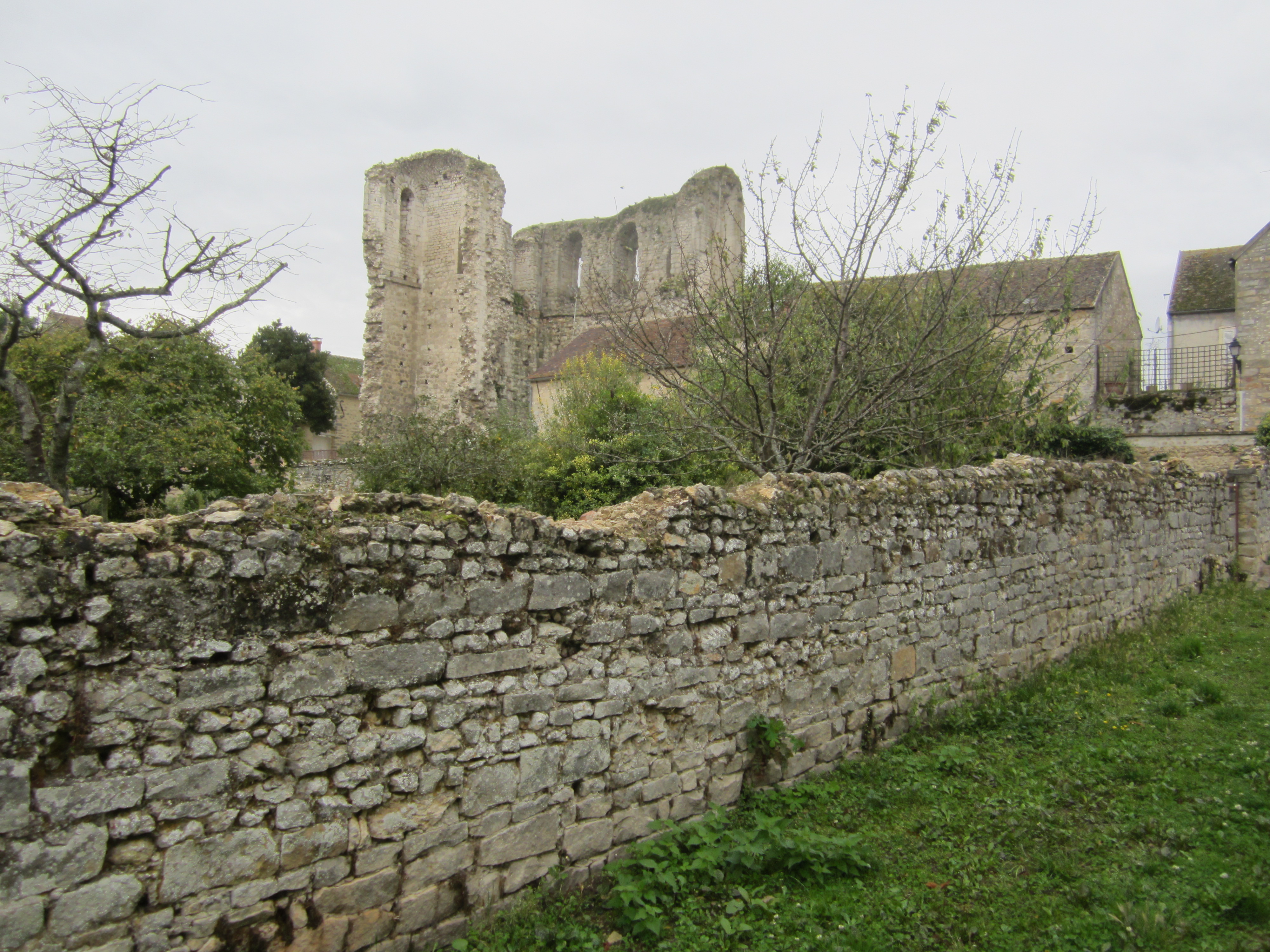
[N]estled in the midst of vast farm fields, the village was a smattering of stone houses, a picturesque bridge, and a ruined twelfth-century tower with ferns growing in its cracked walls.

During my year in France I loved to plan field trips to art history sites, and I just happened to spend a gray day in Grez myself. You can read another post (Visit an Art Colony in France: Grez-sur-Loing) about my trip to Grez, which includes directions and more information about the different artists who lived and painted there.

Here are some photos of Grez that readers of Under the Wide and Starry Sky and fans of Robert Louis Stevenson might especially enjoy:

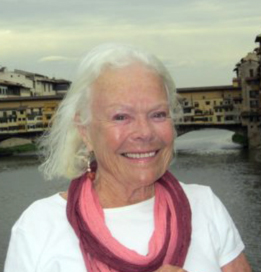
Standing in front of the bridge at Grez-sur-Loing in 2012.

Standing in front of the bridge at Grez-sur-Loing in 2012. The picturesque  12th century Tour de Ganne is in the background.

The 17th century Tour de Ganne in Grez

The 12th century Tour de Ganne in Grez

The Tour de Ganne in Grez from the grassy walk down toward the river

The Tour de Ganne in Grez as seen from the grassy walk down toward the river

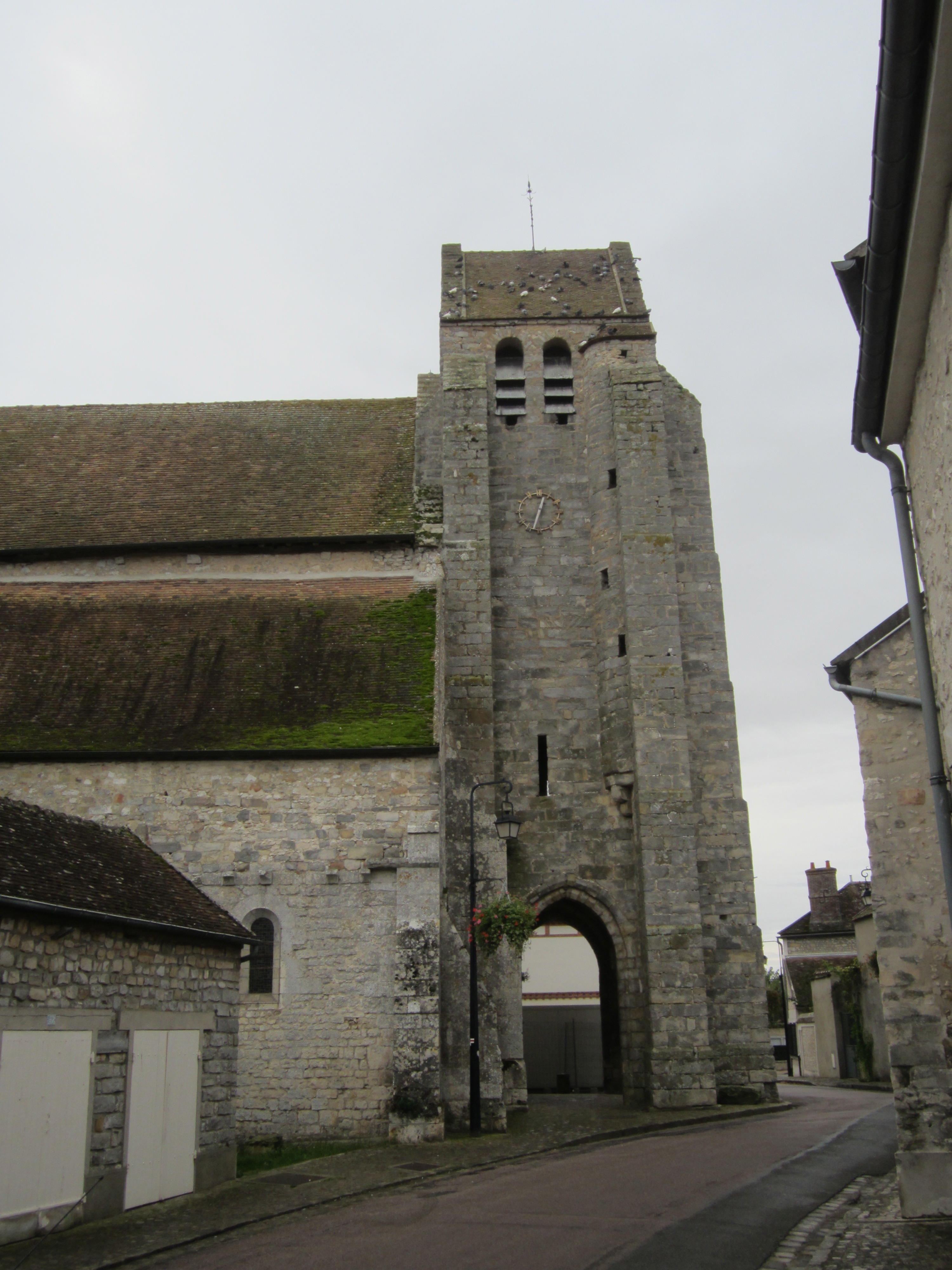
On the main street in Grez: Church of Our Lady and Saint Lawrence, 12th century

On the main street in Grez: Church of Our Lady and Saint Lawrence, 12th century

In the book, Nancy Horan has Fanny’s friend Margaret Wright tell her about the Hotel Chevillon in Grez, “one of the most bohemian of the bohemian gathering places near the Fountainebleu Forest.” Says Margaret:

Barbizon has become too fashionable. It’s overrun by poseurs more interested in the mis-en-scene than in producing any actual art. The real painters go to Grez. . . . And you needn’t worry. They will leave you alone, I think.

Little did Fanny know that the bohemians who enjoyed the summer season at Hotel Chevillon were dismayed to hear that an American woman and her children had arrived at the inn. Bob Stevenson (Robert Louis Stevenson’s cousin, and an artist in his own right) arrived ahead of the group of “Glasgow Boys” from Scotland with the intention of chasing Fanny away. In the book, Bob Stevenson hints Fanny might want to find other more suitable accommodations:

There’s an onslaught about to begin. . . . Once the others start to arrive you’ll discover this isn’t the place to be if you are hoping for a little peace. Madame Chevillon said you had come for the quiet. . . . There are places not far from here that would serve you much better if you are here to rest. . . .

But things would turn out much differently than the Stevensons had planned. Within a few short weeks, both of the Stevenson cousins would have a crush on Fanny. Although Fanny was 10 years older than Louis, they found comfort in each others hearts and minds. In the meantime, Fanny’s 17 year-old daughter Belle fell in love with the Irish artist Frank O’Meara.

The Hotel Chevillon still stands today, although it is not open to the public. It is a private art residency center operated by The Grez-sur-Loing Foundation in Sweden, which manages a stipend program for visiting artists, authors and photographers. There is even a Robert Louis Stevenson Fellowship available for interested writers (the application deadline for 2014 is February 28th, but it looks like it is limited to residents of Scotland.)

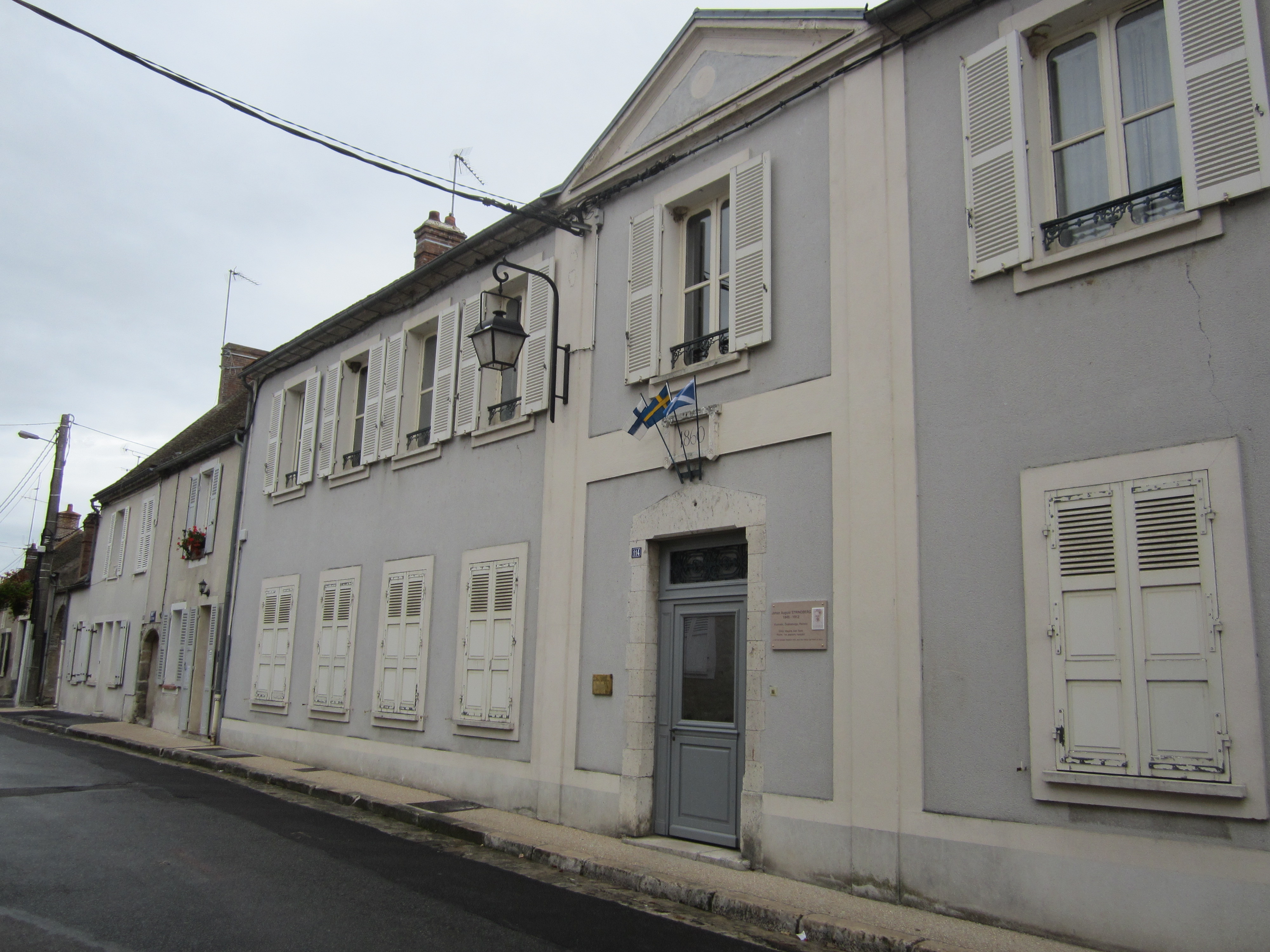
Hotel Chevillon is located on rue Carl Larsson, which is named after the Swedish painter.

Hotel Chevillon, the place where Fanny and Louis met,  is still standing! It is located on rue Carl Larsson, which is named after the Swedish painter. It was restored in 1994 and serves as an art center and residency program.

Hotel Chevillon: the place where Fanny Van de Grif Osbourne met Robert Louis Stevenson.

Hotel Chevillon from the street.

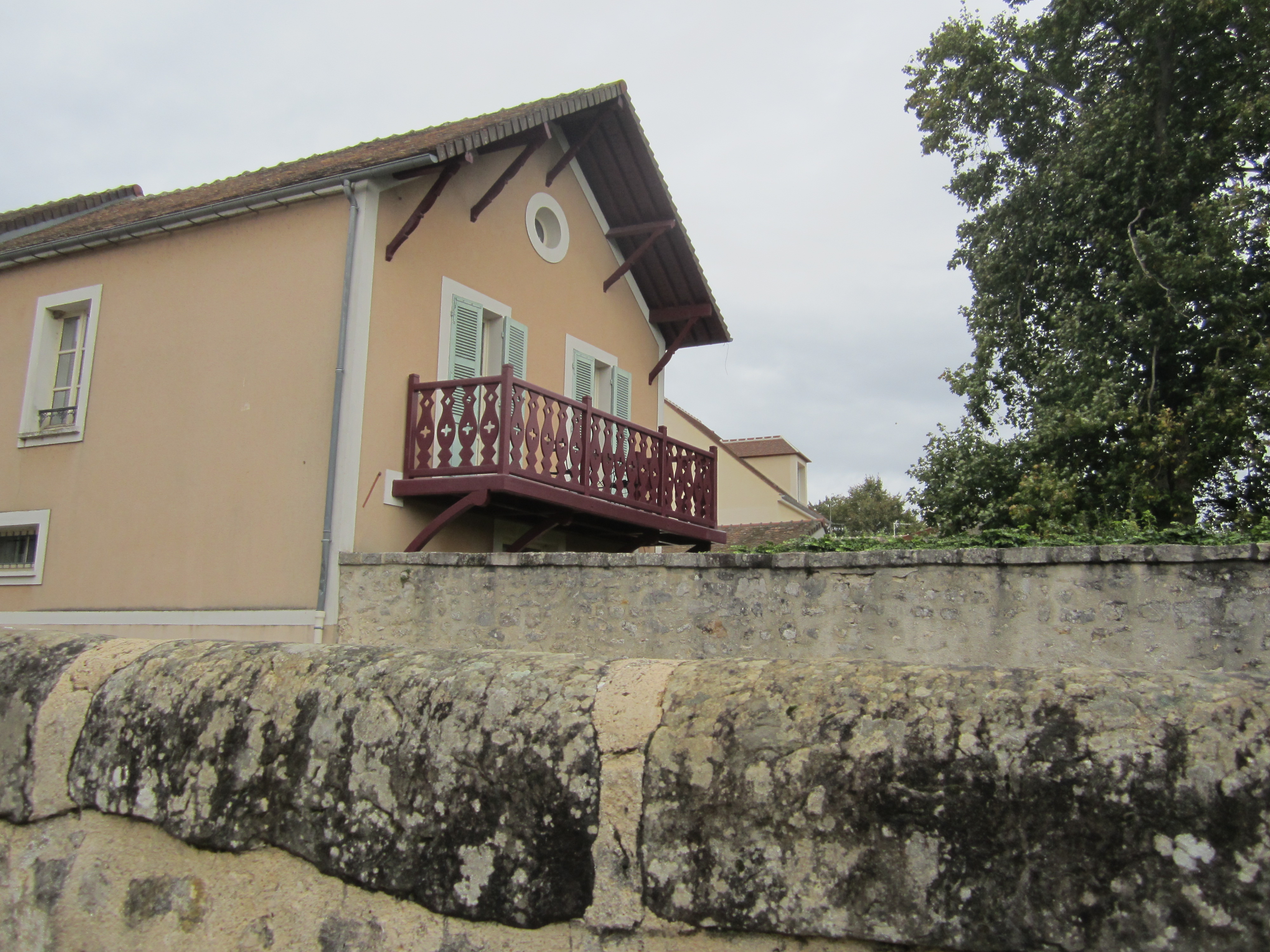
A view of the back balcony of Hotel Chevillon where Fanny, Louis and their fellow bohemians gathered to paint and relx by the river

A view of the back balcony of Hotel Chevillon from the nearby bridge. Just on the other side of this wall is where Fanny, Louis and their fellow bohemians gathered to paint and relax.

The backyard of the Hotel Chevillon today. Can you picture Fanny and Louis back there? Source: Carol Ferrelly, http://www.scottishbooktrust.com/blog/writing/2013/11/five-things-robert-louis-stevenson-fellowship

The backyard of the Hotel Chevillon today. Can you picture Fanny and Louis back there back in the day? Source: Carol Ferrelly, http://www.scottishbooktrust.com/blog/writing/2013/11/five-things-robert-louis-stevenson-fellowship

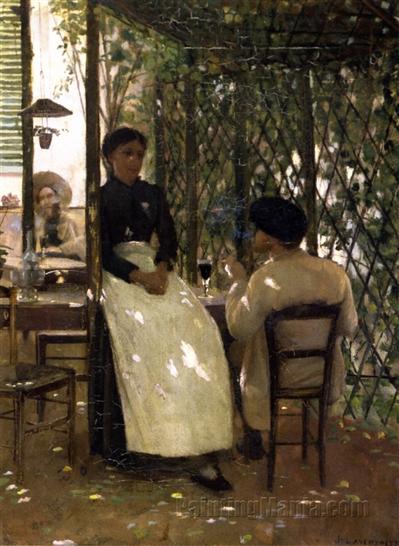
Hotel Chevillon by Sir John Lavery (1883), an Irish artist who visited Grez and painted this captivating picture of the garden at Hotel Chevillon.

Hotel Chevillon by Sir John Lavery (1883), an Irish artist who visited Grez. This painting captures the feel of the garden at Hotel Chevillon back in the time of Fanny and Louis. Source: http://www.paintingmainia.com

After their summer meeting in Grez, Fanny and her children returned to Paris, where they settled into an apartment in Montmartre. Louis would continue his pursuit of Fanny from Paris to California and beyond. They would finally marry in 1880 and spend their years traveling the world.

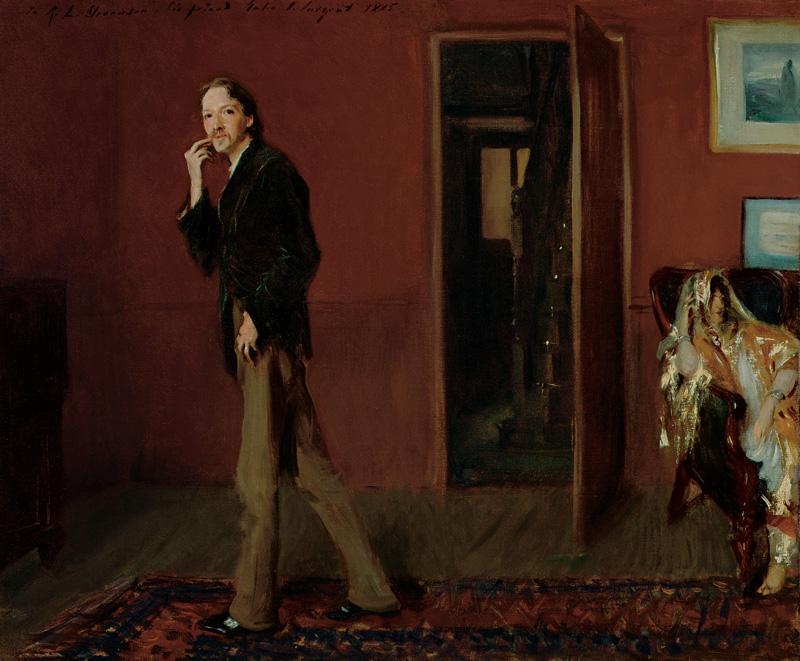
John Singer Sargent would paint a strange but perceptive portrait of RLS and Fanny when they were all living in Bournemouth, England in 1885. Apparently, Fanny was not too happy about the way she is marginalized and made to look so Moorish in this painting. As for me, I find it fascinating. What an odd pair.

Robert Louis Stevenson and His Wife by John Singer Sargent (1885)

Robert Louis Stevenson and His Wife by John Singer Sargent (1885)

Under The Wide and Starry Sky is an interesting portrait of an unorthodox and artistic couple from history, not unlike the story of Frank Lloyd Wright and Mamah Cheney. However, this love story didn’t seem nearly as compelling as Loving Frank, and I’m not sure why. Neither RLS nor Fanny are particularly admirable people, but then, neither were Frank and Mamah. For some reason, it bothered me that Fanny lacked any substantial talent or drive as an artist, that she acted so passively in the face of her son’s serious illness, and that she waffled over her commitment to a horrible marriage. Maybe it’s my mistake, expecting a 19th century woman to act with as much agency as a 21st century woman, but still, it interfered with my ability to identify and sympathize with Fanny. I have to admit, I take strange delight in the take-down Fanny suffers under the paintbrush of John Singer Sargent.

Even if Under the Wide and Starry Sky doesn’t measure up to Loving Frank, I would still recommend this book to fans of historical fiction, especially if you are interested in learning more about the writings of Robert Louis Stevenson or the 19th century art scene in Paris. And if you happen to be visiting Paris anytime soon, I highly recommend a day trip out to Grez.  

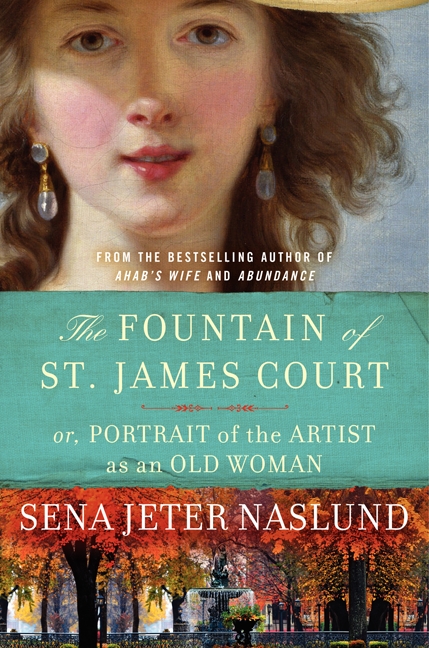
Elisabeth Vigée Le Brun: A Novel

fountain st. james court

Sena Jeter Naslund (the author of nine other novels, including my own personal favorites Ahab’s Wife and Abundance, A Novel of Marie Antoinette) has written a marvelous new novel focusing on the life of Louise-Elisabeth Vigée Le Brun, a highly successful female portrait artist in 18th century France.

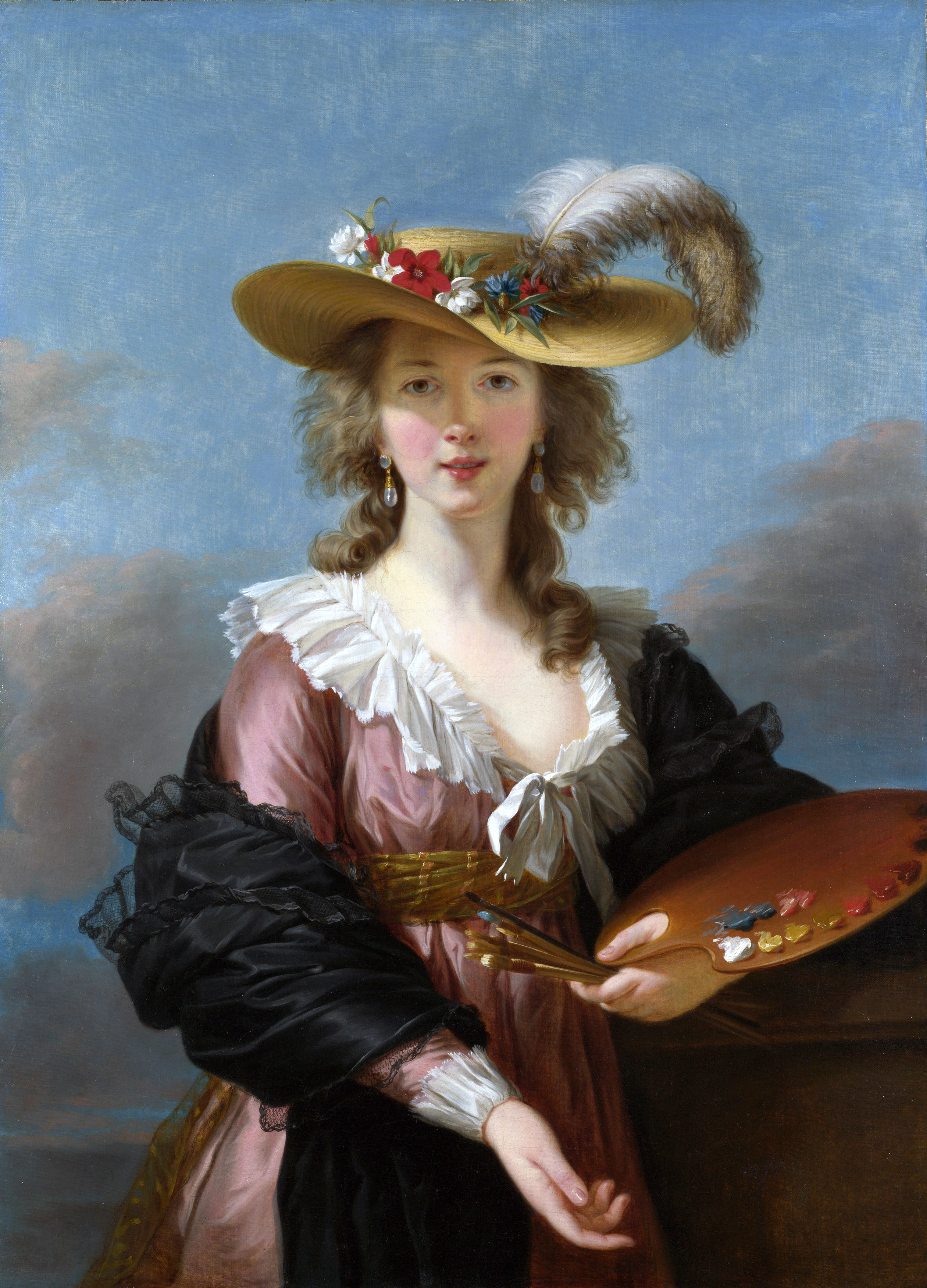
Vigée LeBrun’s own self-portrait (Self Portrait in a Straw Hat) gazes out at us from the book cover with an expression of confidence and contentment. Here is a woman who knew who she was and how to paint it.

Check out the full portrait below. Look how confidently Vigée Le Brun paints the light falling across her face, the glisten of her own lips, the cool shadows of her neck. And her hands, one firmly holding the tools of her profession, and the other, open, extended, and more feminine, welcoming the viewer’s closer scrutiny. The earrings, the flowers, the bows and the beauty: here I am, it says, I am a woman painter.

Self-Portrait in a Straw Hat by Elisabeth Vigée Le Brun (1782). Original in a private collection, copy at the National Gallery of London.

Self-Portrait in a Straw Hat by Elisabeth Vigée Le Brun (1782). Original in a private collection, copy at the National Gallery of London. (Source: Wikipedia)

The Fountain of St. James Court is much more than a biography of Vigée LeBrun’s life; its subtitle also makes clear that the book is an exploration of the lives of mature women artists, with a nod to James Joyce’s Portrait of the Artist as a Young Man. To me, the subtitle is a challenge: yes, Joyce’s portrait of a young man is masterful, but an equal if not superior wonder, is how female artists sustain joyful work over the course of a long and challenging life.

To answer this question, the novel follows a day in the life of Kathryn (“Ryn”) Callahan, a 69 year-old author who lives by herself in an older neighborhood known as St. James Court in Louisville, Kentucky. She has just finished the manuscript for her ninth novel, the story of Vigée Le Brun. Ryn spends much of the day contemplating her long artistic life that has included three unsuccessful marriages but many well-cultivated friendships, a satisfying career, and a devoted relationship with one adult son.

The two threads of this novel work together to explore the lives of women artists, who have so very much in common even though they are separated by over 200 years.

It’s probably no surprise that my favorite story line was that of Vigée LeBrun, who was born in Paris in 1755. Her father was an artist who gave Elisabeth her first set of pastels and allowed her to sit in on the evenings he hosted with the (male) artistic circles of Paris. By the time Elisabeth was 13 years old it was clear she was a gifted artist: she began taking art classes at the Louvre and painting stunning pictures of friends and family.

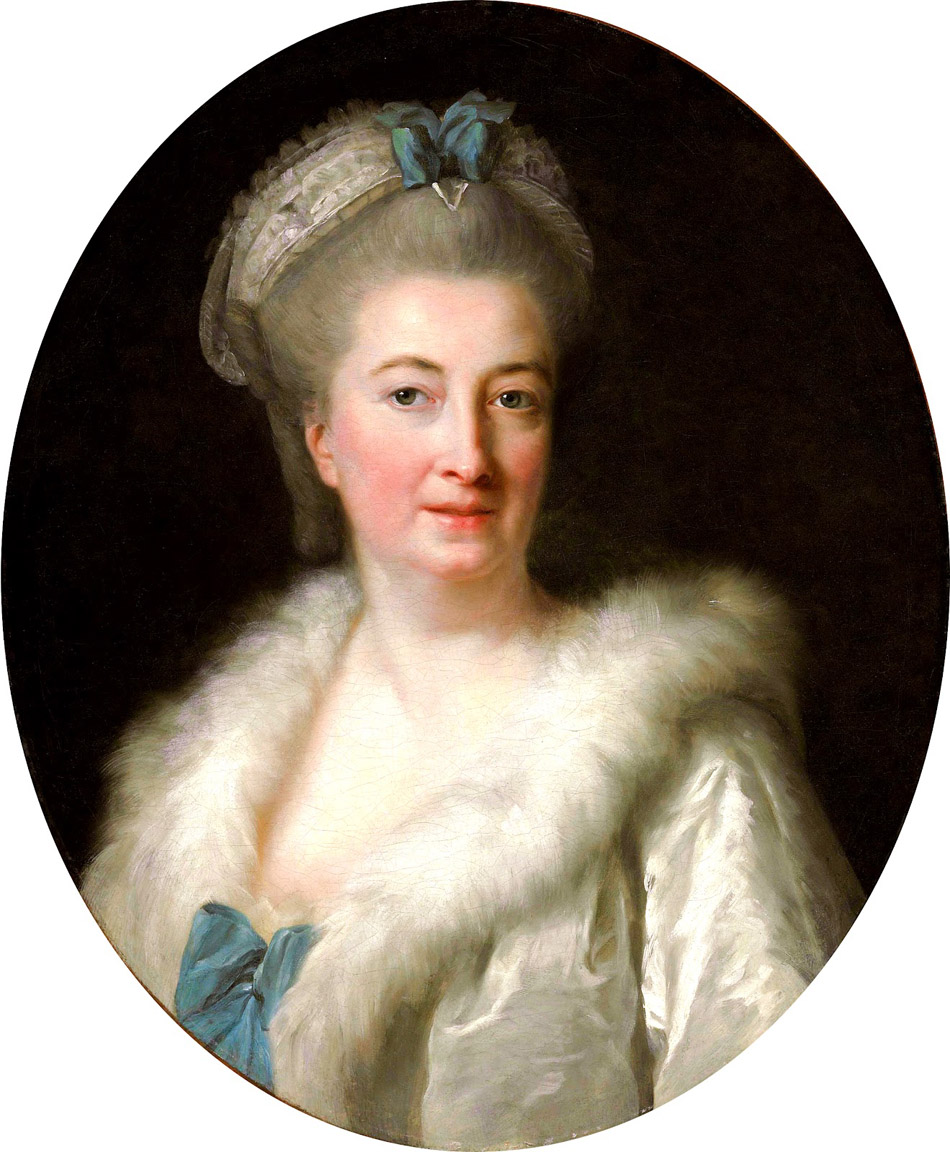
Portrait of The Artist's Mother, Madame Le Sevre (painted around 1768, when Elisabeth would have been only 13 years old.)  This painting was sold for $122,500 at a Christie's auction in 2012.

Portrait of The Artist’s Mother, Madame Le Sevre (painted around 1768-70, when Elisabeth would have been only 13-15 years old.) This painting was sold for $122,500 at a Christie’s auction in 2012. (Source: Christies.com)

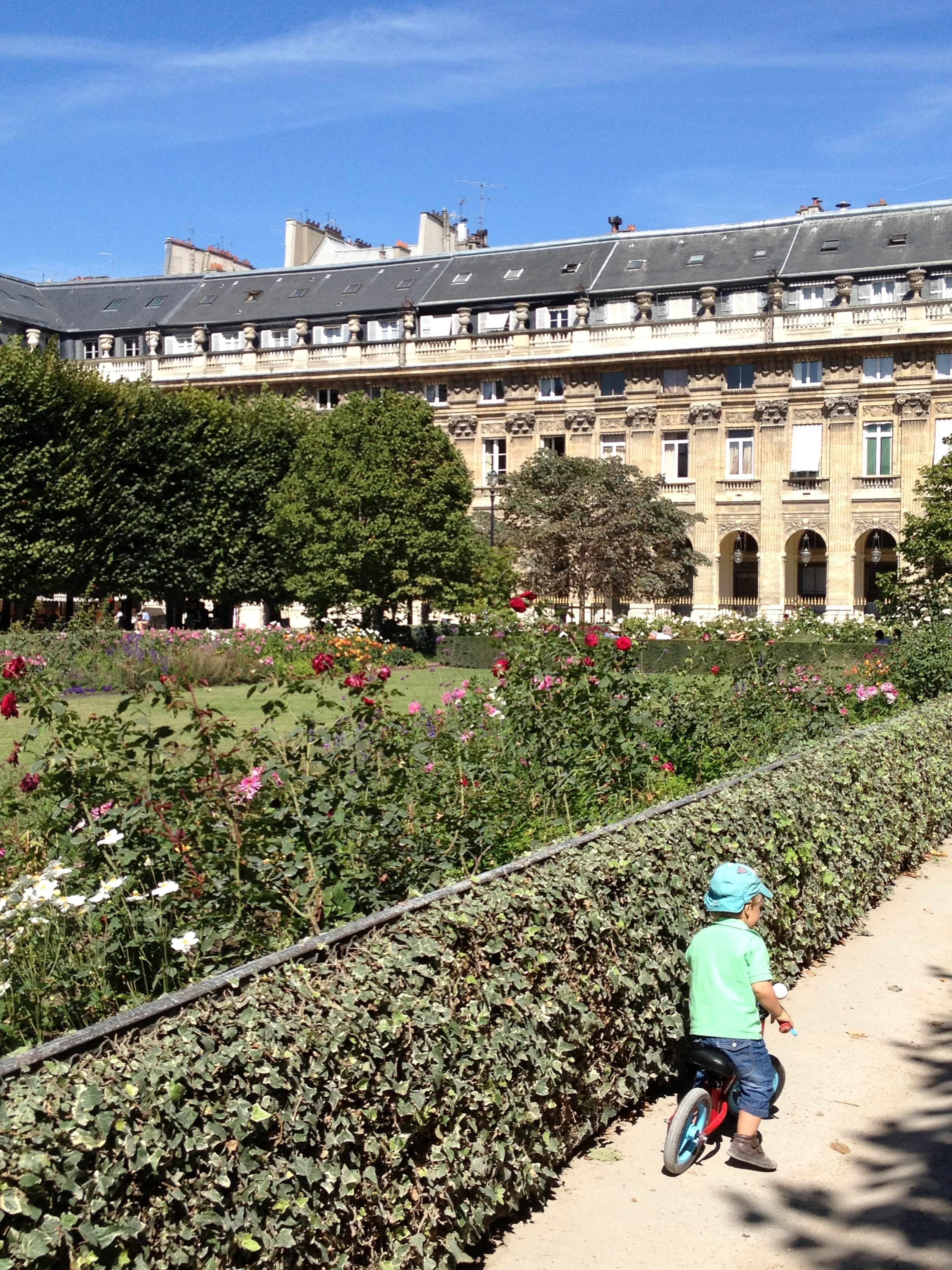
After the death of Elisabeth’s father, her mother insisted on moving to a more fashionable neighborhood on rue St. Honoré overlooking the terrace of the Palais-Royale, where they could meet more of the aristocracy who would support Elisabeth’s  painting career. Soon Elisabeth is painting the portraits of Dukes and Duchesses, including the Duchesse de Chartres and the Comtess de Brionne.

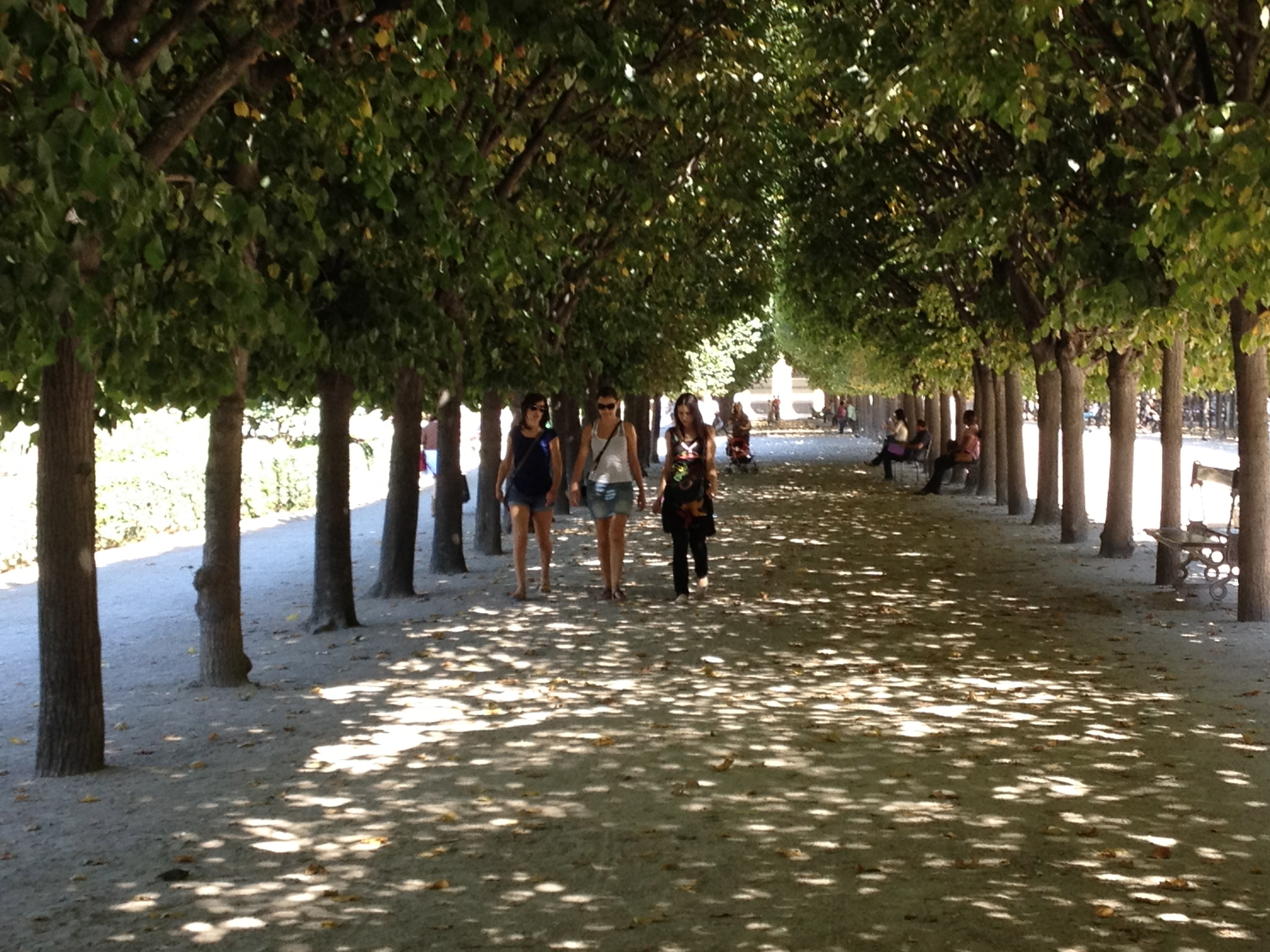
The gardens of the Palais-Royal, where Vigée Le Brun strolled alongside the French aristocracy who would commission her to paint their portraits.

The gardens of the Palais-Royal, where Vigée Le Brun once strolled alongside the French aristocracy. Today it’s still a lovely place for a walk or a picnic, with or without the aristocracy.

The carefully manicured trees cast dapples of shade in the gardens of the Palais-Royal, just as they would have 250 years ago in the days of Elisabeth Vigée Le Brun.

At the age of 20, Elisabeth married M. Le Brun, Parisian art dealer with whom she shared a love of art. Like her stepfather, her husband claimed all of her commissions, which was his legal right, and spent much of it on gambling and extravagant women. Elisabeth painted on, learning that “[a]s long as I can paint, I will always be happy.”

By the time she was 23, Elisabeth had been invited to Versailles to meet Marie Antoinette. Elisabeth was known for her flattering pictures of society women, so it was hoped that her paintings would present a more positive image of the increasingly unpopular queen. Elisabeth became a part of the royal inner circle and the royal family’s portraitist, making over 30 paintings of the queen and her family between 1778 and 1789.

Marie Antoinette by Elisabeth Vigée Le Brun (1778). Supposedly, Le Brun made 6 copies of this painting. Two are in the French state collection, one was lost or stolen when the US congress  was burned by the British in 1812, one was given to Catherine the Great (location now unknown) and two others are missing.

Marie Antoinette by Elisabeth Vigée Le Brun (1778). Supposedly, Le Brun made 6 copies of this painting. Two are in the French state collection, one was lost or stolen when the US congress was burned by the British in 1812, one was given to Catherine the Great (location now unknown) and two others are missing.

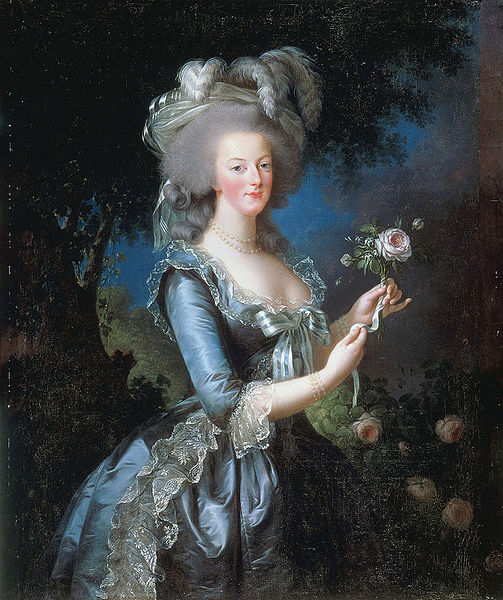
Marie Antoinette with a Rose by Elisabeth Vigée Le Brun (1783)

Marie Antoinette with a Rose by Elisabeth Vigée Le Brun (1783), in the Palace of Versailles.

Marie Antoinette and Her Children by Elisabeth Vigée Le Brun (1787).  One of the last paintings Elisabeth would ever make of the royal family before the revolution tore them away from Versailles. The painting can still be seen in the Palace of Versailles.

Marie Antoinette and Her Children by Elisabeth Vigée Le Brun (1787). One of the last paintings Elisabeth would ever make of the royal family before the revolution tore them away from Versailles. The painting can still be seen in the Palace of Versailles.

Vigée Le Brun’s career was not without controversy or criticism. She had to withstand the usual rumors about women artists: that she did not do her own work, that a man had to do it. Sena Jeter Nasland serves up a great line for Elisabeth’s response to this criticism in the book:

When I first hear the exclamation “Why, she paints like a man!” I am pleased; I take it only to mean that my work is truly excellent. But insult is also intended, and the innuendo, indeed the idea is expressed overtly, that my brush is my manly part!

Naslund’s story, then, serves as an obvious reminder that artistic gifts are not delivered on the basis of sex. But it is also so much more. It reveals the inner lives of gifted women who are learning not to discount themselves because of their sex or their age.

No matter how they compare to James Joyce’s Portrait of the Artist as a Young Man, Naslund’s portraits of Elisabeth Vigée Le Brun and Kathryn Callahan will likely stay with you for a long time. If you’re like me, you’ll find yourself dog-earring your book so you’ll be able to share all of your favorite passages with your book club.

The Fountain of St. James Court, or, Portrait of the Artist as an Old Woman by Sena Jeter Naslund (Harper Collins 2013): Highly recommended.

Also recommended for further reading:

The Project Gutenberg ebook of Vigée Le Brun by Haldane MacFall: http://www.gutenberg.org/files/30314/30314-h/30314-h.htm

The Project Gutenberg ebook of The Memoirs of Madame Le Brun by Marie Louise Elisabeth Vigée Le Brun: http://www.gutenberg.org/files/31934/31934-h/31934-h.htm

On Sisley’s Trail Outside Paris

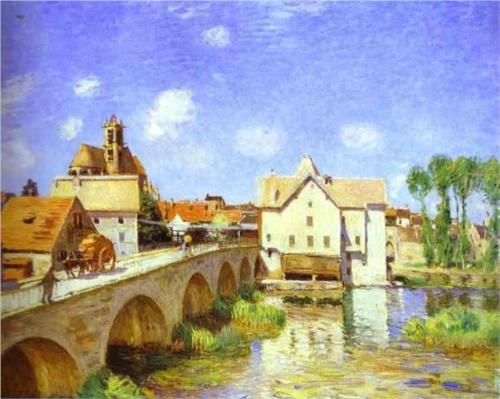
The Bridge at Moret, Alred Sisley (1893), Musée d'Orsay, Paris

The Bridge at Moret, Alfred Sisley (1893), Musée d’Orsay, Paris

On a recent trip to my neighborhood dry cleaners, I spotted this picture on a calendar thumbtacked to the wall. I snuck behind the desk to see it up close, and sure enough, it was a Sisley set in Moret. “I’ve been there!” (I kind of shrieked – the dry cleaning lady smiled indulgently.)

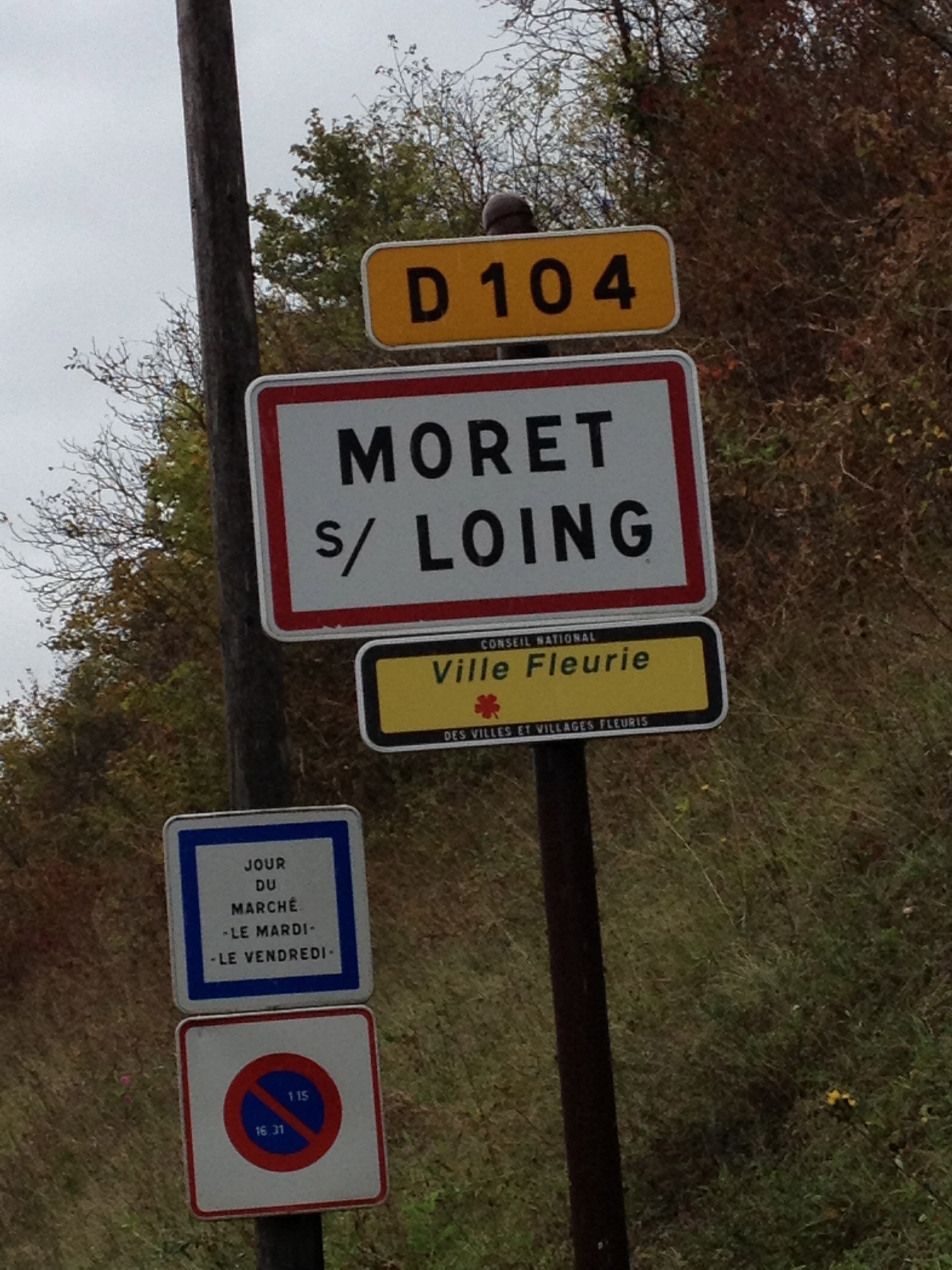
Moret-sur-Loing is one of the art villages and colonies I visited outside of Paris. Last year, I took two separate trip to the villages near the Fountainbleu Forest, including Barbizon, Grez, Moret-sur-Loing and Thomery. They’re all about an hour’s drive from Paris, and they make for a wonderful artsy day or weekend trip. I’ve previously written about visiting the historic art colony of Grez-sur-Loing here, and my tour of Rosa Bonheur’s Studio in Thomery here.

Moret-sur-Loing was the home of the Impressionist painter Alfred Sisley the last ten years before his death in 1899. Sisley also lived in the nearby town of Veneux-les-Sablons from 1883 to 1889. Walking through these towns is like stepping into a Sisley painting. Here is a Google Map of the various Sisley sightseeing locations in and near Moret and les Sablons.

Sisley’s backstory is interesting. He was from a wealthy British family and moved to Paris to study art in the 1860s. He took classes at the at the Académie Suisse, where he met Monet, Renoir and Bazille. They would become good friends and before long, they would develop their bold new Impressionist style. Sisley was able to rely on his family’s wealth to subsidize his art career until his father lost his fortune in the Franco-Prussian War. After that, Sisley became another starving artist just trying to get by.

After living in the Batignolles neighborhood of Paris through the 1860s and 70s, Sisley retreated to the village of Moret, where he lived a quiet painterly life with his common-law wife Eugénie (Marie) Lesouezec (they would not legally marry until 1897) and two children. Sisley died of throat cancer in 1899, but not before creating over 900 paintings, many of which depicted landscapes around the village of Moret.

Sisley’s paintings did not sell well during his lifetime. We now know that Sisley sold many of his paintings to local Moret townspeople at bargain prices just to pay the rent. Now, of course, a Sisley would sell in the millions.

This has all led to very curious consequences. According to this article from The Guardian, experts believe that locals in Moret are hoarding Sisley paintings that their ancestors may have purchased or bartered for many years ago. They’re hiding the pieces in attics or bank vaults because they’re afraid they will owe exorbitant inheritance taxes. It is possible that there are over 500 original Sisley paintings that have yet to be identified and authenticated. This in turn creates a ripe environment for forgery and art fraud: “Voila! Quelle suprise! An unknown Sisley in the attic!”

How fun to wander through the streets and pathways of Moret, to see the same sites that Sisley did over 125 years ago, and wonder what treasures might hidden in the attics and cellars of the longtime residents of this village.

IMG_4065

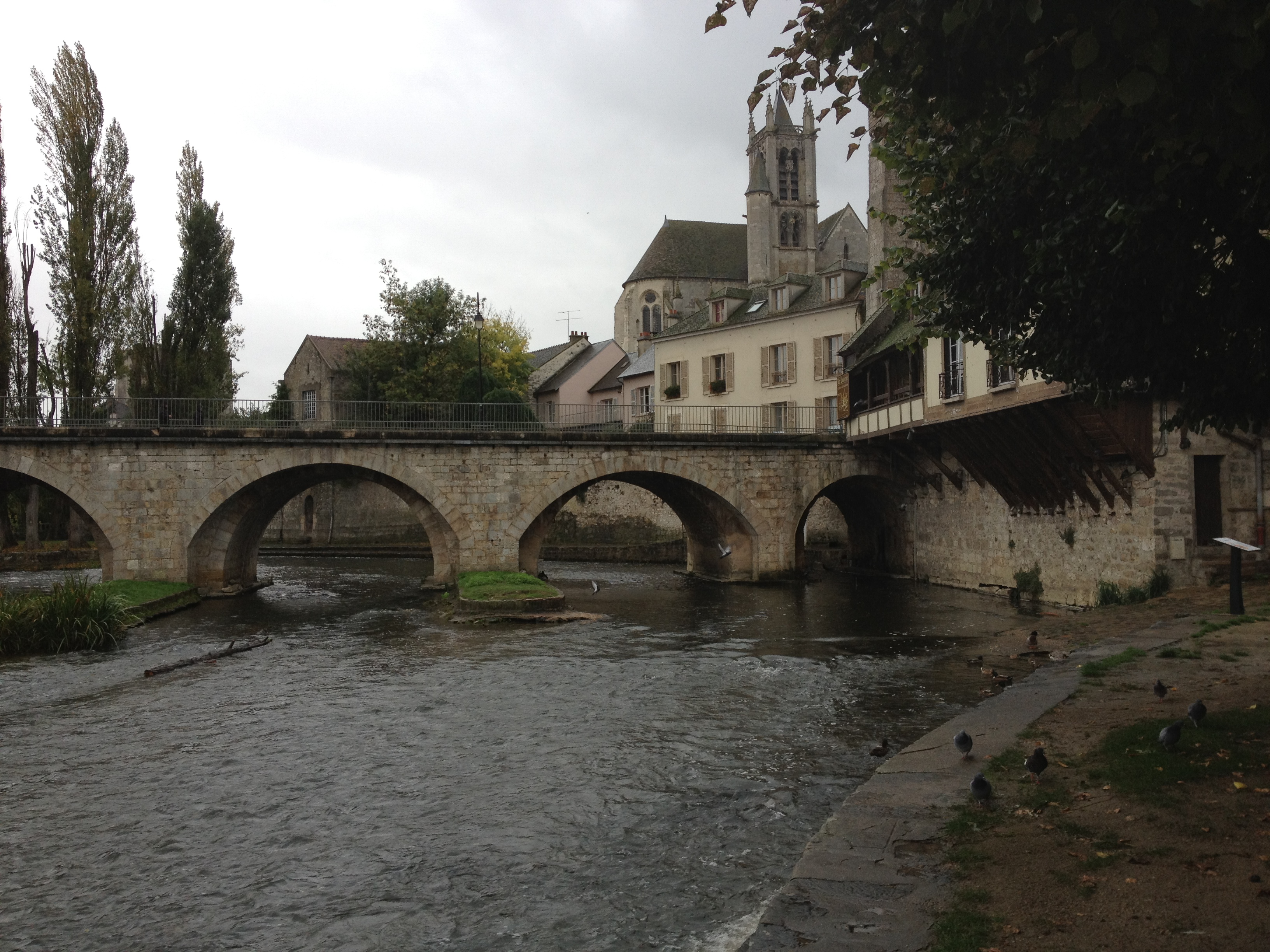
The bridge at Moret-sur-Loing on a gray day in 2011.

The bridge at Moret-sur-Loing on a gray day in 2011.

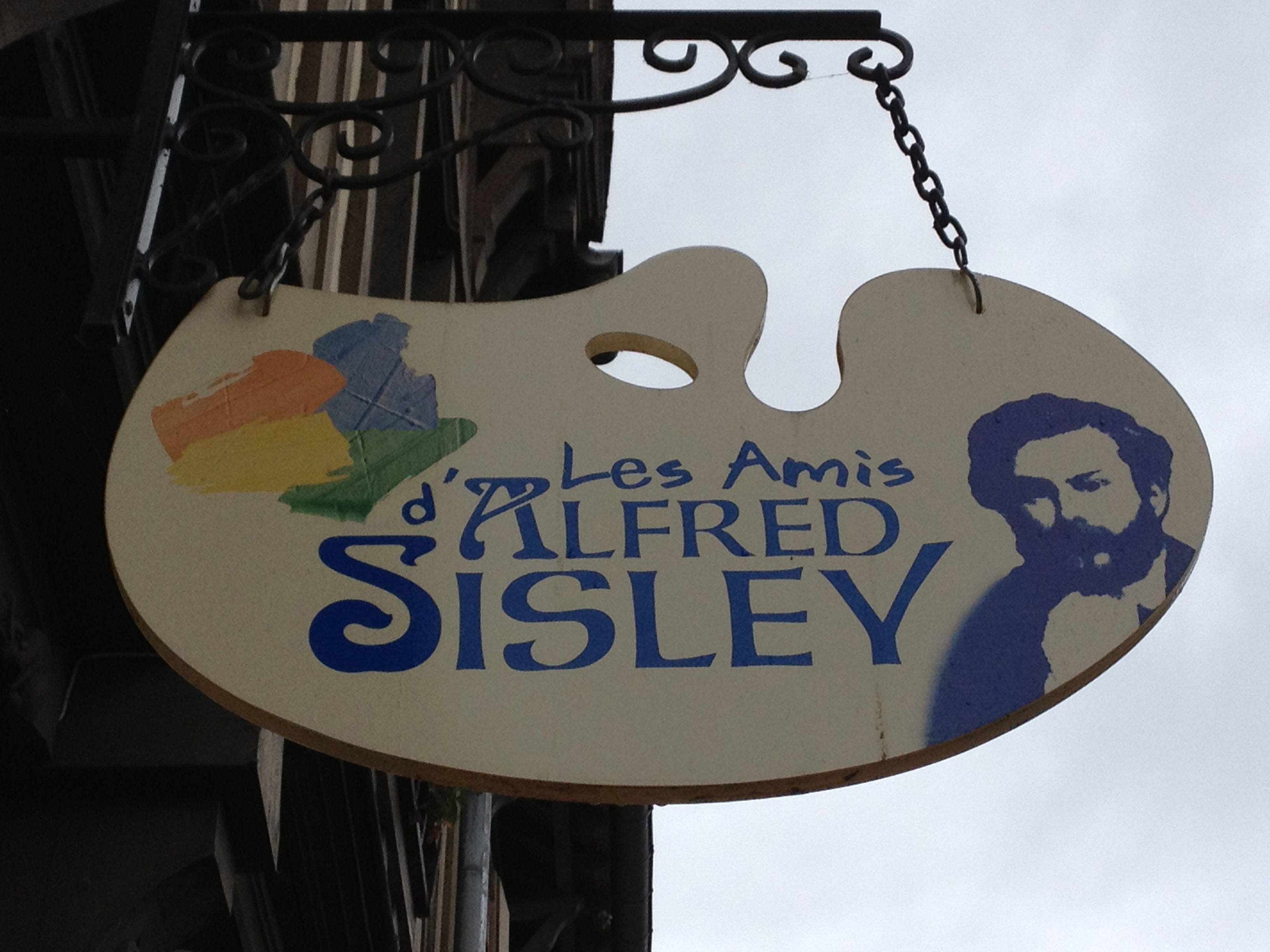
Les Amis d'Alfred Sisley: the Friends of Alfred Sisley, an art association that offers tourist information about Sisley. 24 rue Grande, Moret-sur-Loing.

Les Amis d’Alfred Sisley: the Friends of Alfred Sisley, an art association that offers tourist information about Sisley.
24 rue Grande, Moret-sur-Loing.

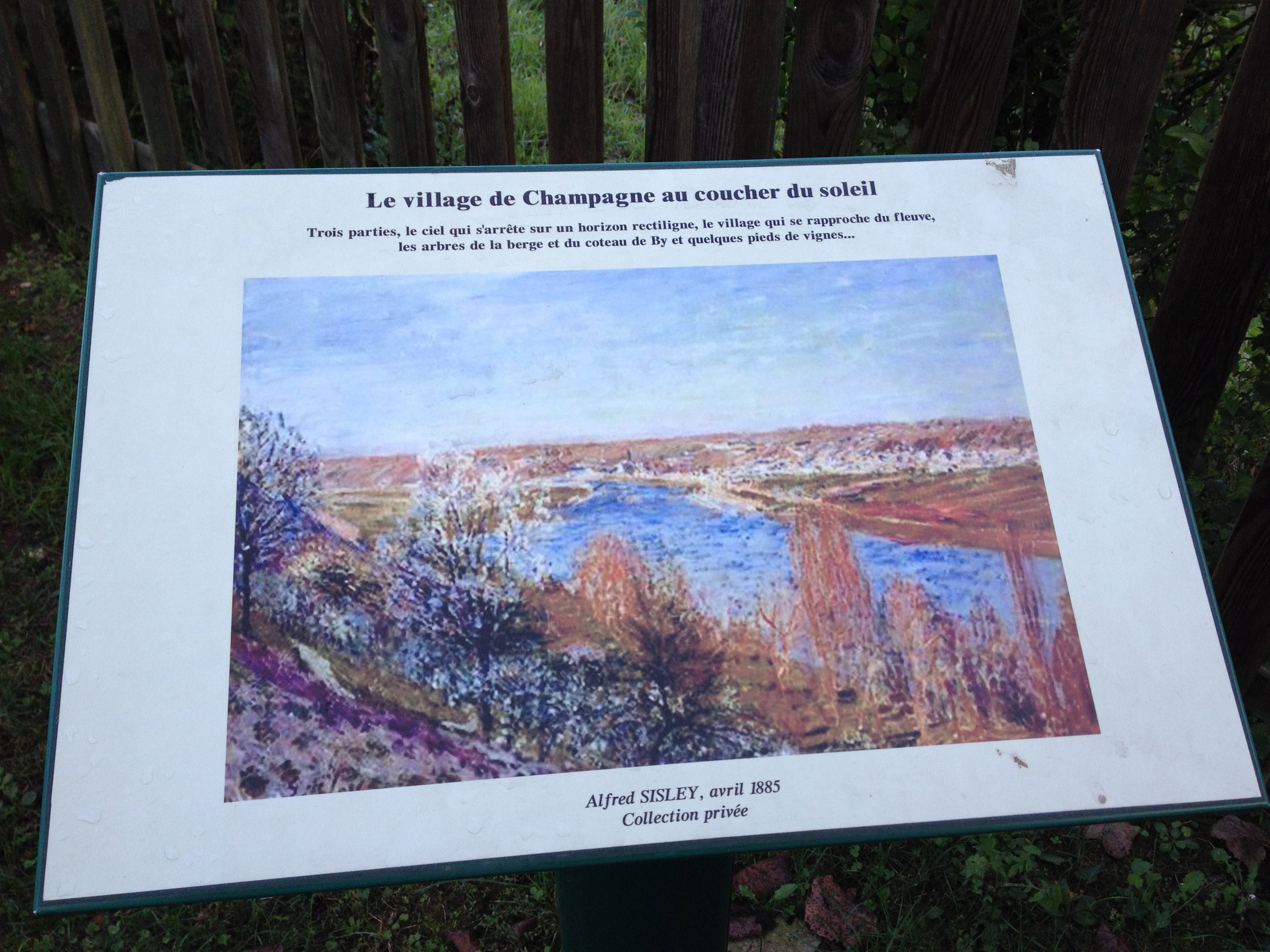
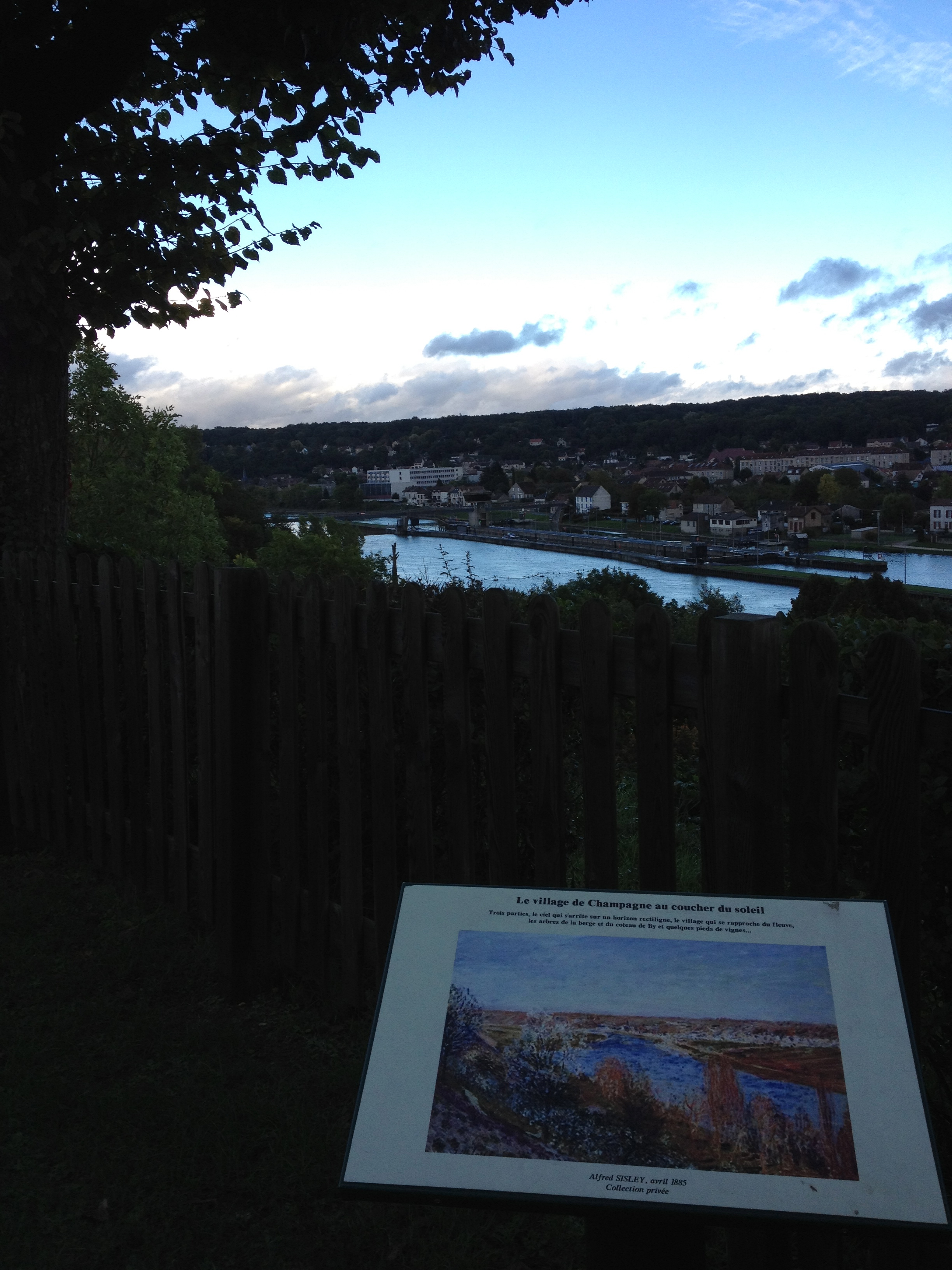
Just a mile from Moret along the Loing River, where the Loing meets the Seine, is the town of Veneux-les-Sablons. Sisley lived here from 1883-1889 and painted many scenes along down by the river. If you’re persistent, you can find some of the scenes for yourself, marked by a sign and a reproduction of his work. I marked them on this Google Map.

IMG_4115

The sign along the Seine that indicates where Sisley painted Le Village De Champagne au voucher du Soleil (1885)

IMG_4118

The light might have gotten pretty dim in this photo, but you can still make out the town of Champagne-sur-Seine across the river, much like it was in Sisley’s painting.

IMG_4120

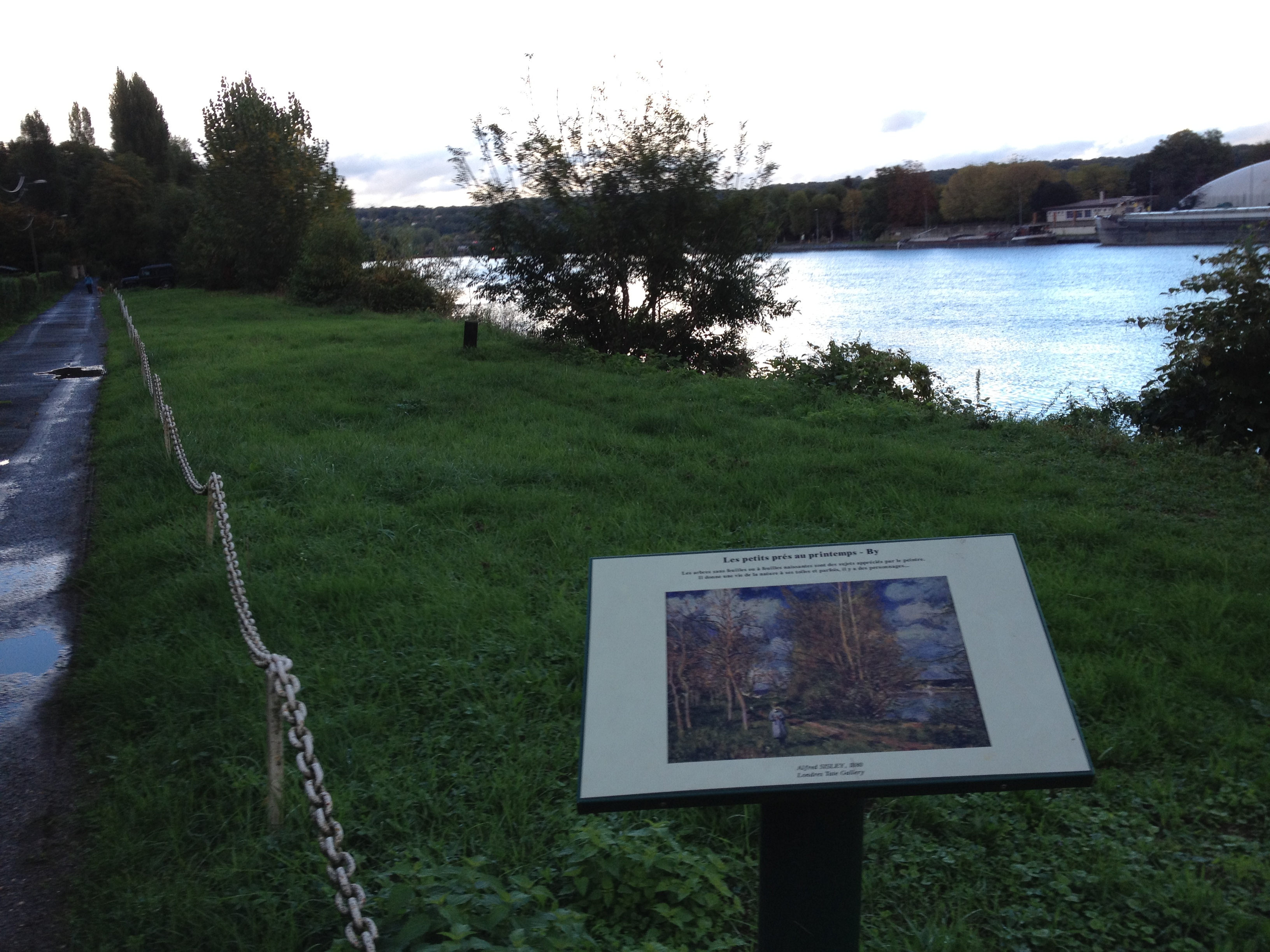
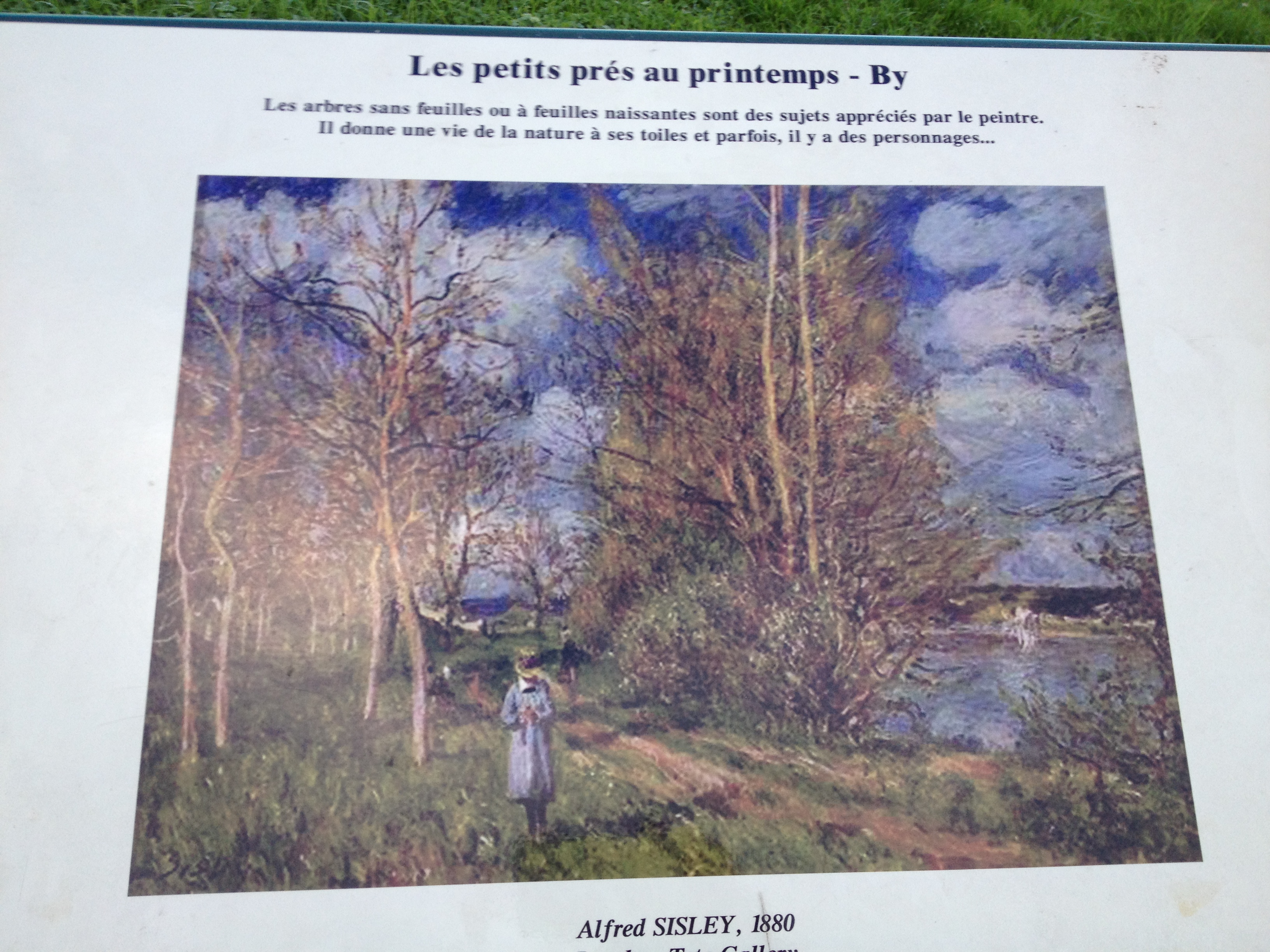
The path along the Seine as painted in “Les Petits Prés au Printemps – By (1880)

IMG_4121

The sign indicating where Sisley painted “Les Petits Prés au Printemps – By” (1880)

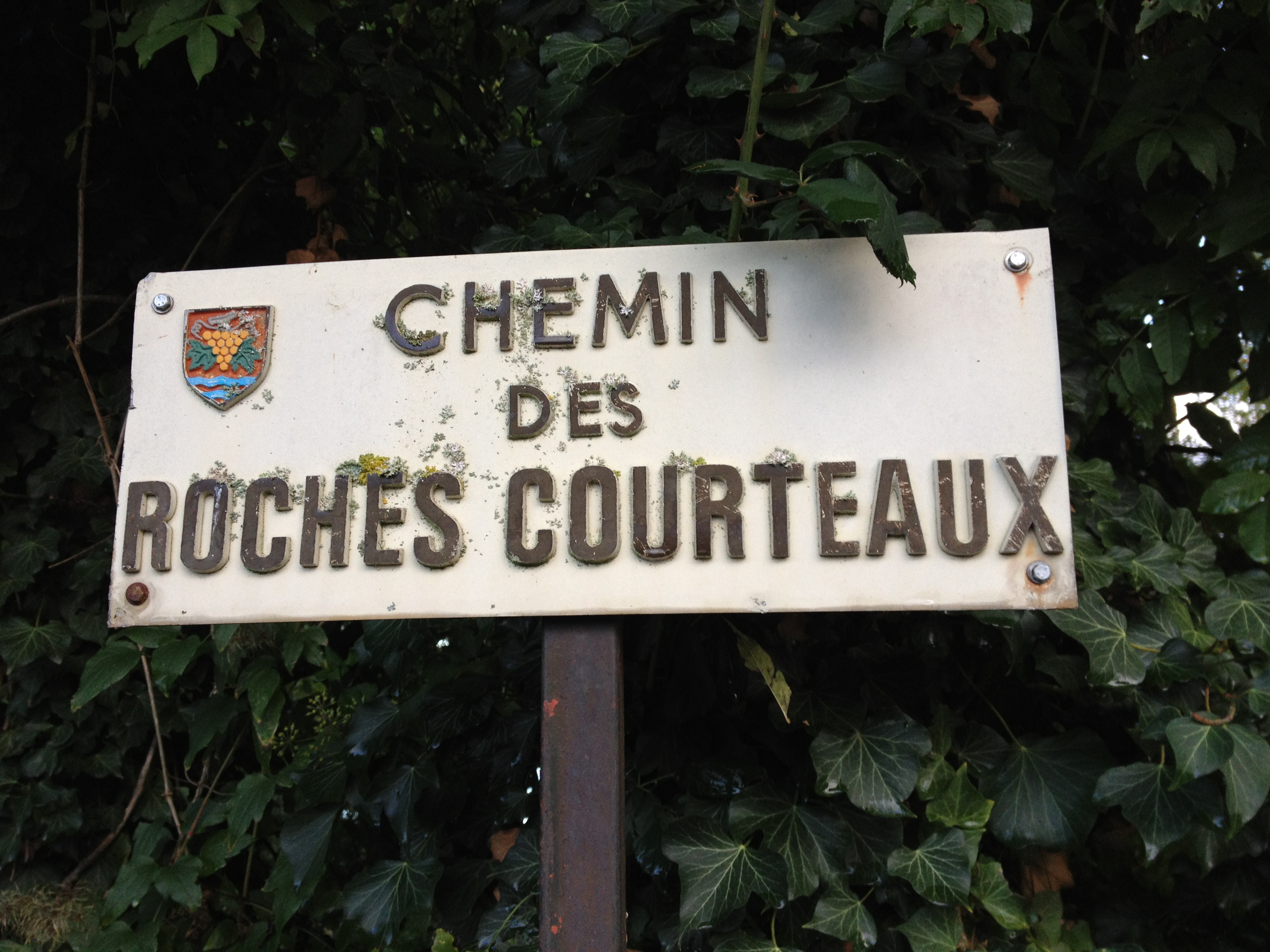
These signs might be hard to find without GPS. They're along a small little pathway called Chemin des Roches Courteuax that runs along the Seine.

The signs might be hard to find without GPS. They’re along a small little pathway called Chemin des Roches Courteuax that runs along the Seine.

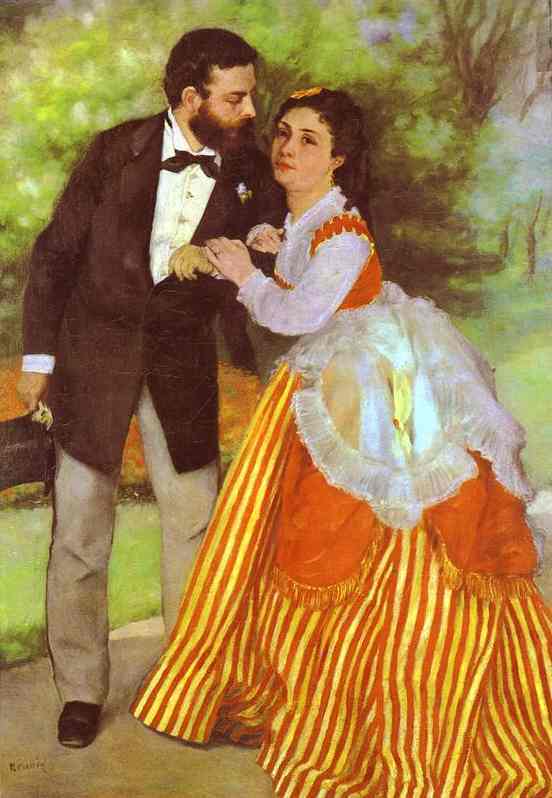
One final picture, a portrait of Sisley and his future wife Marie in 1868, a perfectly bourgeois couple who had not yet lost their family fortune in the Franco-Prussian War.

Renoir, Alfred Sisley and His Wife (1868)

Pierre-Auguste Renoir, Alfred Sisley and His Wife (1868), Wallraf-Richardz Museum, Cologne, Germany

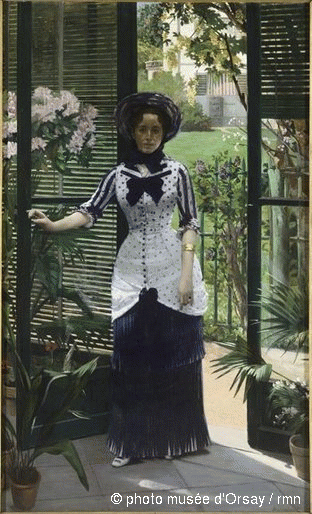
In the Conservatory with Madame Bartholomé

Albert Bartholomé, Dans la serre (1881), a portrait of his first wife Prospérie

Albert Bartholomé, Dans la serre (1881), a portrait of his first wife Prospérie. Musée d’Orsay, Paris, on loan to the Impressionism, Fashion & Modernity exhibit currently at the Art Institute of Chicago.

This painting, called Dans la Serre (In the Conservatory) is getting a lot of well-deserved attention in the Impressionism, Fashion and Modernity Exhibit currently on display at the Art Institute of Chicago (June-September 22, 2013).

In spite of the snippy things the New York Times had to say about it (“wide miss” and “cloying”), in my experience, this painting draws some of the biggest crowds at the exhibit, from Paris to Chicago. Behind it lies a tragic but fascinating story.

Albert Bartholomé (1848-1928) painted this portrait of his first wife Prospérie de Fleury (the daughter of the Marquis de Fleury) in 1881. She posed in a fashionable  dress in the conservatory of their home, which was located at 8 rue Bayard in Paris.


The dress of Prospérie Bartholomé, Musée d'Orsay

The dress of Prospérie Bartholomé, Musée d’Orsay.


The painting is large and captivating, but when exhibited right next to the very dress that Propérie (“Périe”) wore while she posed, it’s a show stopper. The detailing of the dress is as remarkable as its petite size. Seriously, I think I could have worn that dress in sixth grade.


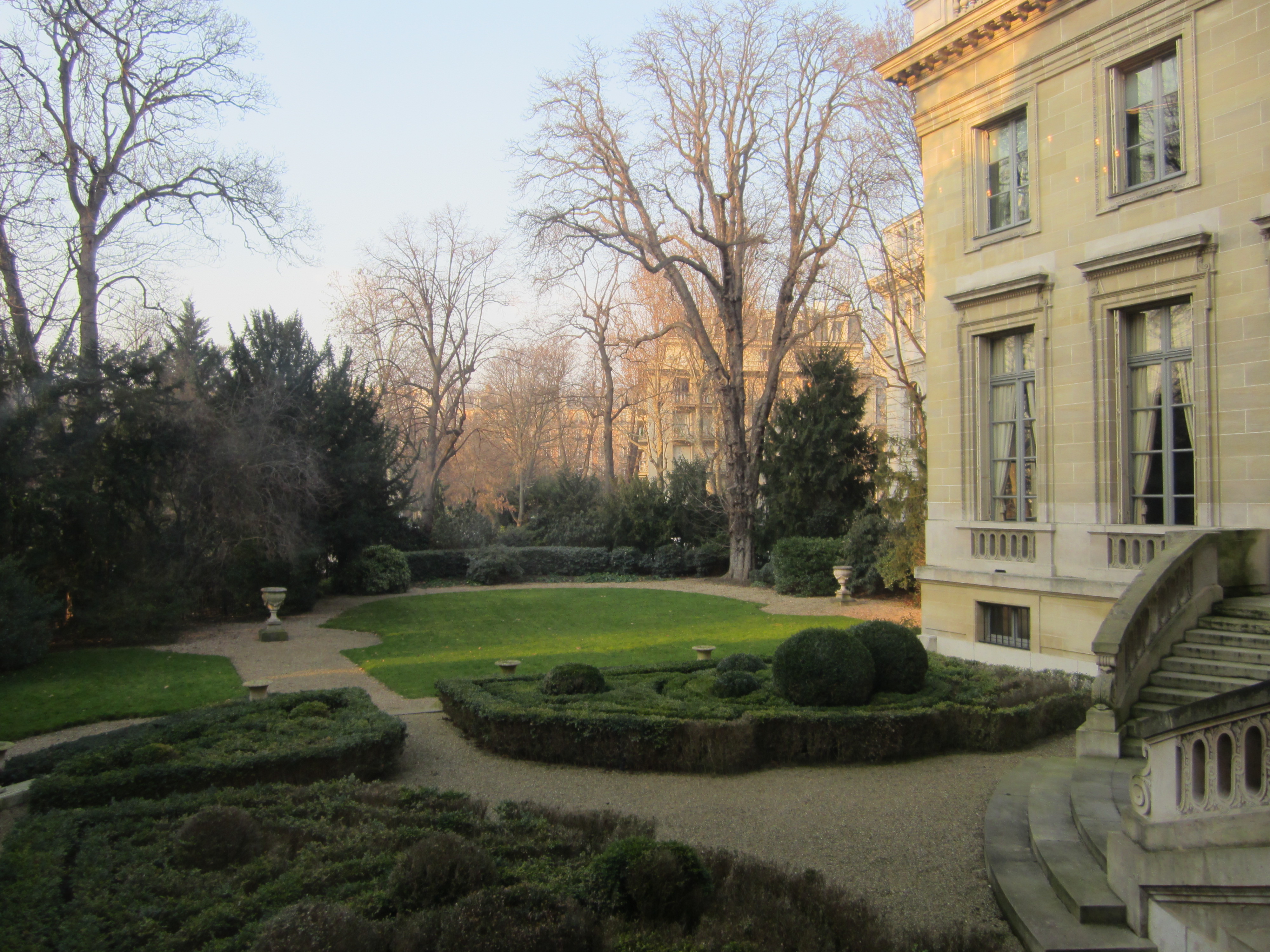
The setting of Dans Le Serre reflects the couple’s wealth and standing. The garden in the background reminds me of the beautiful gardens of the Musée Nissim de Camondo near Parc Monceau in Paris, another home of great wealth and history (a home I like to call the “Downton Abbey of Paris.”)

Backyard gardens of the Musée Nissim de Camondo in Paris.

Backyard gardens of the Musée Nissim de Camondo in Paris.

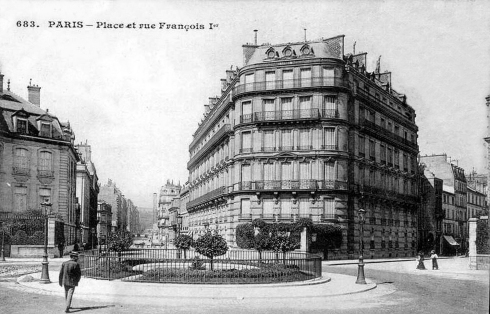
The Bartholomé home wasn’t in the fashionable Parc Monceau neighborhood, but it was located on an equally beautiful block in the “Golden Triangle” of the 8th arrondissement between the Seine and the Place de François 1er. This is what their block looked like back then:

Place François 1er before 1909, source: wikipedia.

Place François 1er before 1909, source: wikipedia.

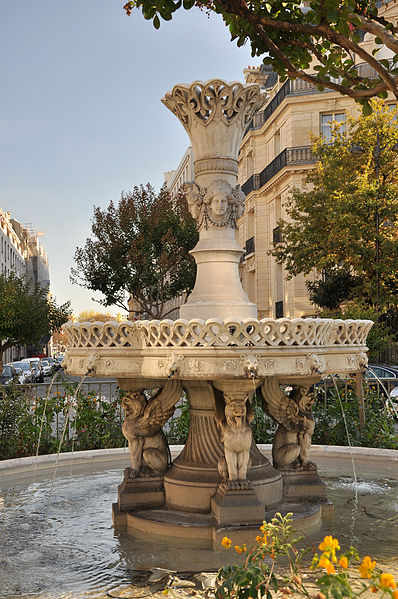
Fontaine de la Place François 1er, Paris. Source: wikipedia

Fontaine de la Place François 1er, Paris. Source: wikipedia


And here is the Place de François de 1er now, including the beautiful fountain you might recognize from the opening montage in Midnight in ParisThe Google Map Street View will give you a good glimpse of the structure that stands at 8 rue Bayard today.


According to the Musée d’Orsay, the Bartholomés enjoyed hosting salons for their artistic circle of friends (including Edgar Degas, Mary Cassatt and Jacques-Emile Blanche) with free-ranging intellectual discussions about music, painting and books.

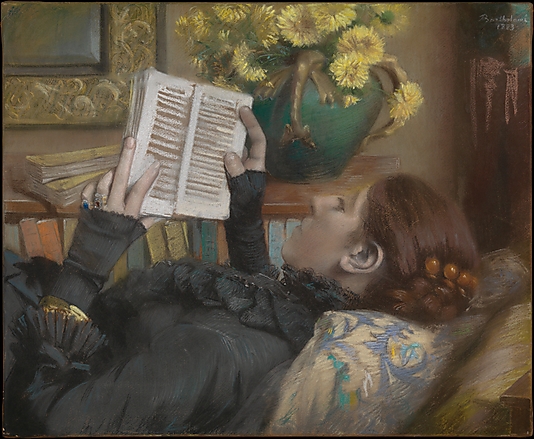
Two years after he painted Périe’s portrait in Dans le Serre, Bartholomé drew a pastel portrait showing her reading on the couch in front of a bookshelf. Clearly, their home was full of books. Périe is dressed in another fashionable dress, this one with black ruffles and resembling some of the other fashions in the Impressionism and Fashion exhibit, particularly Manet’s Parisienne. She seems to be wearing the same gold bracelet that she did in Dans le Serre.

Albert Bartholomé, The Artist’s Wife, Reading, pastel and charcoal (1883), The Metropolitan Museum of Art, Catharine Lorillard Wolfe Collection.

Two years later, Albert and Périe became the subject of a joint portrait by Edgar Degas, a painting started in 1885 called The Conversation. Once again, Périe’s outfit (in which her bustle resembles the tail plume of a turkey) seems to be the focus of the composition.

Edgar Degas, The Conversation (1885-1895), Yale University Art Gallery, Collection of Mr. and Mrs. Paul Mellon.

Edgar Degas, The Conversation (1885-1895), Yale University Art Gallery, Collection of Mr. and Mrs. Paul Mellon. Image: Yale Art Gallery e-catalogue.

Unfortunately, Prospérie was in poor health and would die in 1887, just two years after they posed for the Degas painting. Bartholomé was so overwhelmed with grief that he preserved the dress that Périe wore in the Dans le Serre. I’m not sure how it became the property of the Charles and André Bailly Gallery in Paris, but it was subsequently gifted to the Musée d’Orsay in 1991.

As if the Bartholomé story wasn’t sad enough, Périe’s death caused Albert to give up painting altogether. On the advice of his friend Edgar Degas, he took up sculpting instead. Maybe the highly physical act of molding large-scale plaster and bronze was more cathartic than painting with a brush.

His first sculpture was for his wife’s tomb in front of a church in Bouillant, France, near Crépy en Valois. Not only did Bartholomé express his own raw grief, he also captured his young wife’s likeness. She has the same delicately pointed nose that she does in the painting Dans la Serre.

Bartholomé sculpure on his first wife's tomb in Bouillant, France.

Bartholomé’s sculpture for his first wife’s tomb in Bouillant, France. Image: Parismyope.blogspot.com.

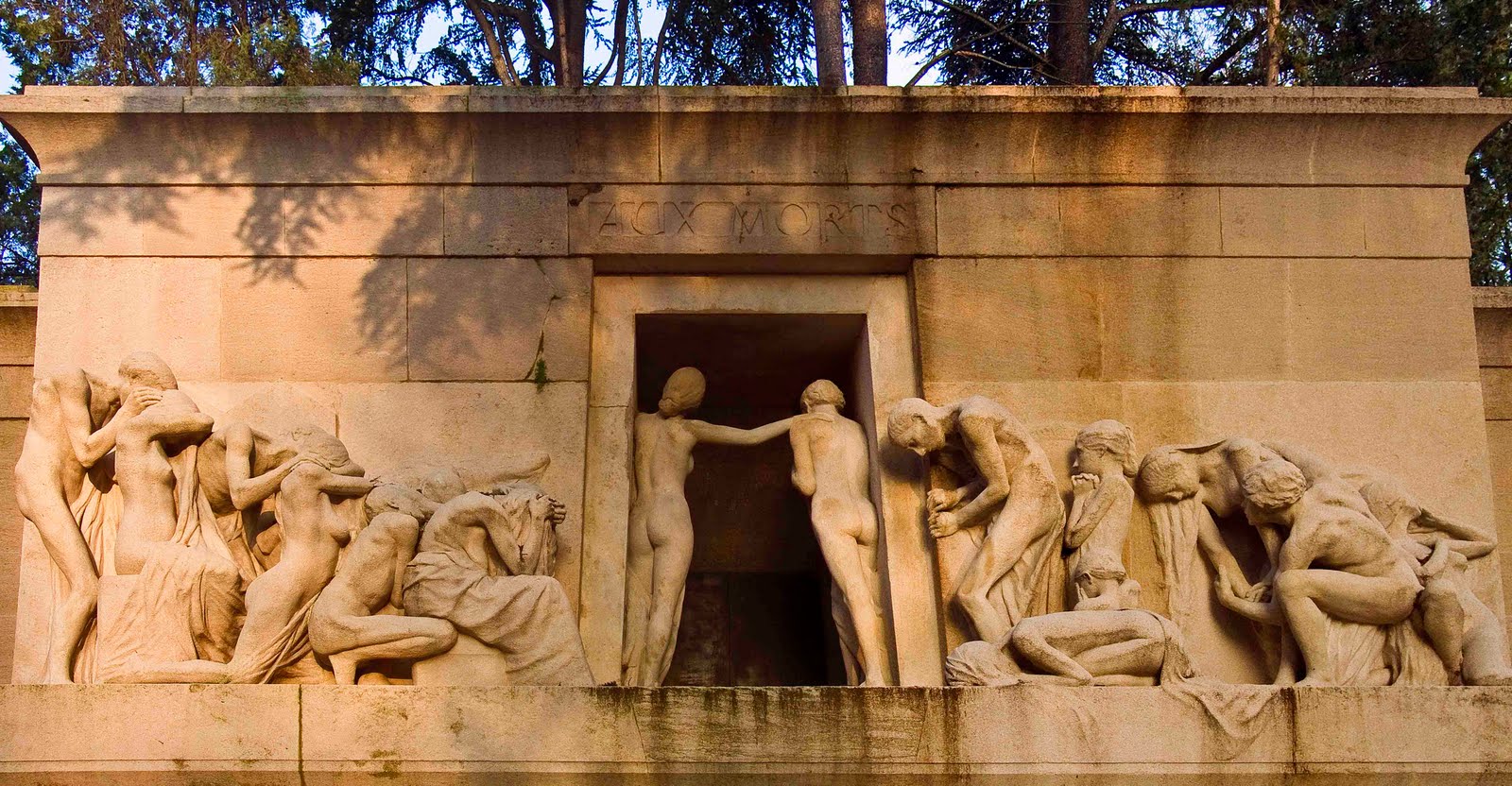
From that point on, Bartholomé’s entire oeuvre consisted of grief sculptures. He is probably best known for his Monument aux Morts at the Pere Lachaise Cemetery in Paris (1888-1889), which is heart wrenchingly sad.

Albert Bartholomé, Monuement aux Mortsu cimetière du Père Lachaise (1889-1899). Image: parismyope.blogspot. com.

Albert Bartholomé, Monuement aux Morts du cimetière du Père Lachaise (1889-1899). Image: parismyope.blogspot. com.

Despite Bartholomé’s deep and long-lasting grief, he did manage to remarry in 1901. I wish I knew the whole story, but all I can find is that his second wife Florence Letessier (18xx-1959) had been a model before their marriage, so presumably that’s how they met. Bartholomé would have been in his 50s at the time of his second marriage but Florence was much younger.

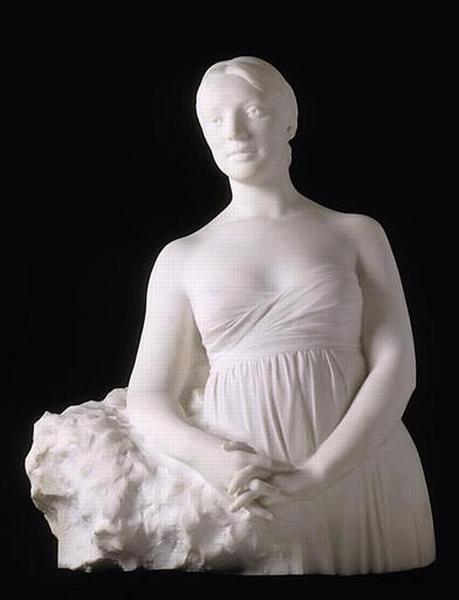
Bartholomé sculpted Florence in 1909, but it doesn’t look as though her youth and serenity captured his imagination as much as the memory of his first wife. Florence’s face looks full and healthy but her expression and posture are utterly bland.

Albert Bartholomé, Bust, Madame de Bartholomé, Née Florence Letessier, Second Spouse of the Artist (1909). Image:http://www.culture.gouv.fr/public/mistral/joconde

Albert Bartholomé, Bust, Madame de Bartholomé, Née Florence Letessier, Second Spouse of the Artist (1909), Musée d’Orsay. Image: http://www.culture.gouv.fr/public/mistral/joconde

Sometime after their marriage, Bartholomé and Florence moved to 1 rue Raffet in the 16th arrondissement of Paris, where he would have a sculpting studio right next door to their home. The home and studio are still standing, as you can see from Google Maps Street View. Today, the studio at 1 bis rue Raffet rents out separately from the apartment building next door.

On a side note, Bartholomé’s art studio on rue Raffet became part of a huge art controversy in the 1950s. Apparently, Degas allowed his good friend Bartholomé to make plaster casts of some of his sculptures for Bartholomé’s private collection, including a plaster cast of Little Dancer, Age 14. Florence inherited the plaster casts in upon Albert’s death in 1928, but they didn’t go on the art market until she was placed in an asylum in the 1950’s, creating a big controversy.

In any event, you shouldn’t miss the chance to go see Bartholomé’s portrait of his wife Périe in Dans le Serre at the Art Institute of Chicago’s Impressionism, Fashion and Modernity Exhibit. Just look into Périe’s eyes, and you can almost imagine their sad story. It’s anything but a wide miss.


Rainy Days in Paris

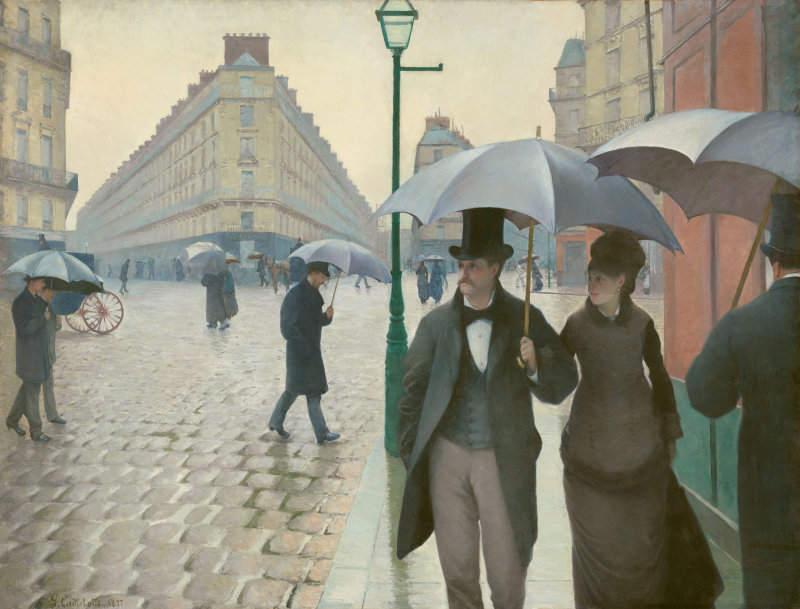
Gustave Caillebotte, Paris Street; Rainy Day (1877), Art Institute of Chicago, Charles H. and Mary F. S. Worcester Collection.

Gustave Caillebotte, Paris Street; Rainy Day (1877), Art Institute of Chicago, Charles H. and Mary F. S. Worcester Collection. Currently part of the Impressionism, Fashion and Modernity Exhibit (2013).

Who doesn’t love this painting? I’ve admired it ever since I first started visiting the Art Institute of Chicago as a young girl. It’s so big that it welcomes you in – it feels like you’re right there on the sidewalk. Maybe you were walking in front of this couple and turned around for a brief look at the intersection behind you. Do your shoes still feel wet from the rain?

I understand that Caillebotte did not actually stand in the street to paint on a rainy day.  (If he had, I guess you would call it en pleuviex air, not en plein air?) This was a studio painting, but no doubt, Caillebotte had plenty of experience observing the effect of rain on the streets of his neighborhood. We do know he drew a sketch of it first, most likely on site en plain air. The drawing is in the collection of the Art Institute of Chicago. As the Art Institute says, “This preparatory drawing seems to have been freely sketched on the spot before being laid out in the studio with a straightedge and compass to regularize the perspective lines.”

On my first trip to Paris, when I would look at every diagonal street corner and think of this painting. There are countless intersections like this in Paris, and so many rainy days. But there is only one Paris Street; Rainy Day. When I lived in Paris, I finally had time to track down the right place.

This iconic scene is located at the intersection of rue de Moscou and rue de St. Petersburg in the 8th arrondissement behind Gare St. Lazare, between Place de Clichy and Place de L’Europe. An easy walk from several Métro lines. I created a Google Map so you can check it out for yourself. Click on the street view and you’ll have the perfect view.

The scene of Caillebotte's Paris Street; Rainy Day (1877)

The scene of Caillebotte’s Paris Street; Rainy Day (1877). Funny that I should have captured this photo on a sunny day. It’s just not the same. (Not to mention the motorcycles and the lack of cobblestones!)

Rainy days in Paris can be beautiful. Or at least that’s what Parisians keep telling themselves so they don’t go bat-shit crazy during those long weeks of gloomy gray skies.

That’s what I told myself anyway. Check out these photos of mine and tell me you don’t agree. There’s just something about rainy days in Paris. . . .

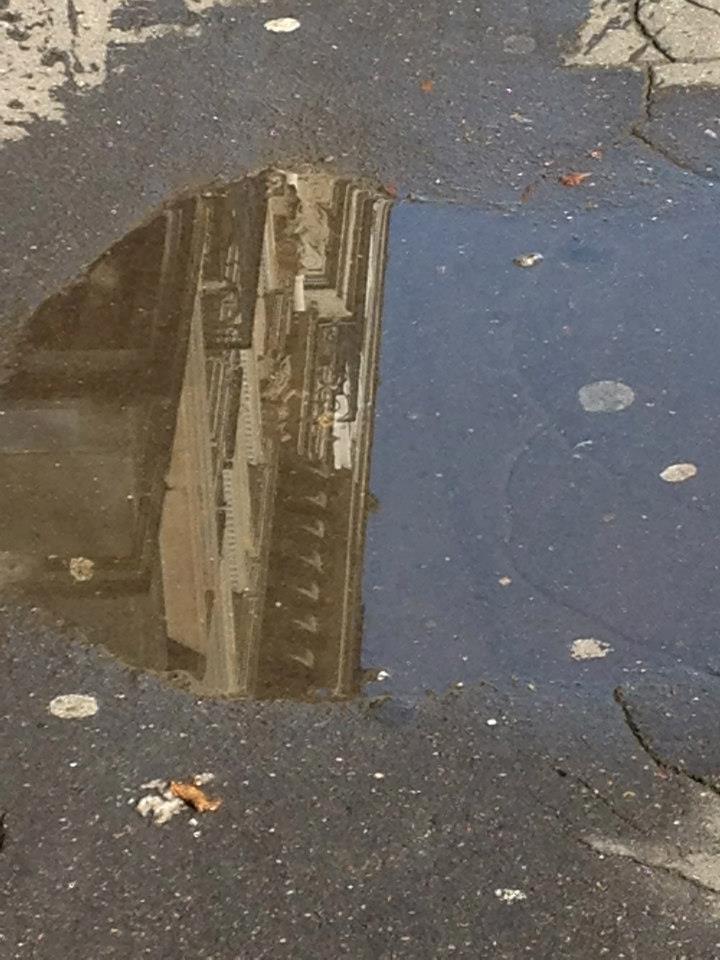
A Paris puddle on Avenue Kléber in the 16th

A Paris puddle on Avenue Kléber in the 16th

A Paris puddle on Avenue Kléber in the 16th

A Paris puddle on avenue Matignon in the 8th

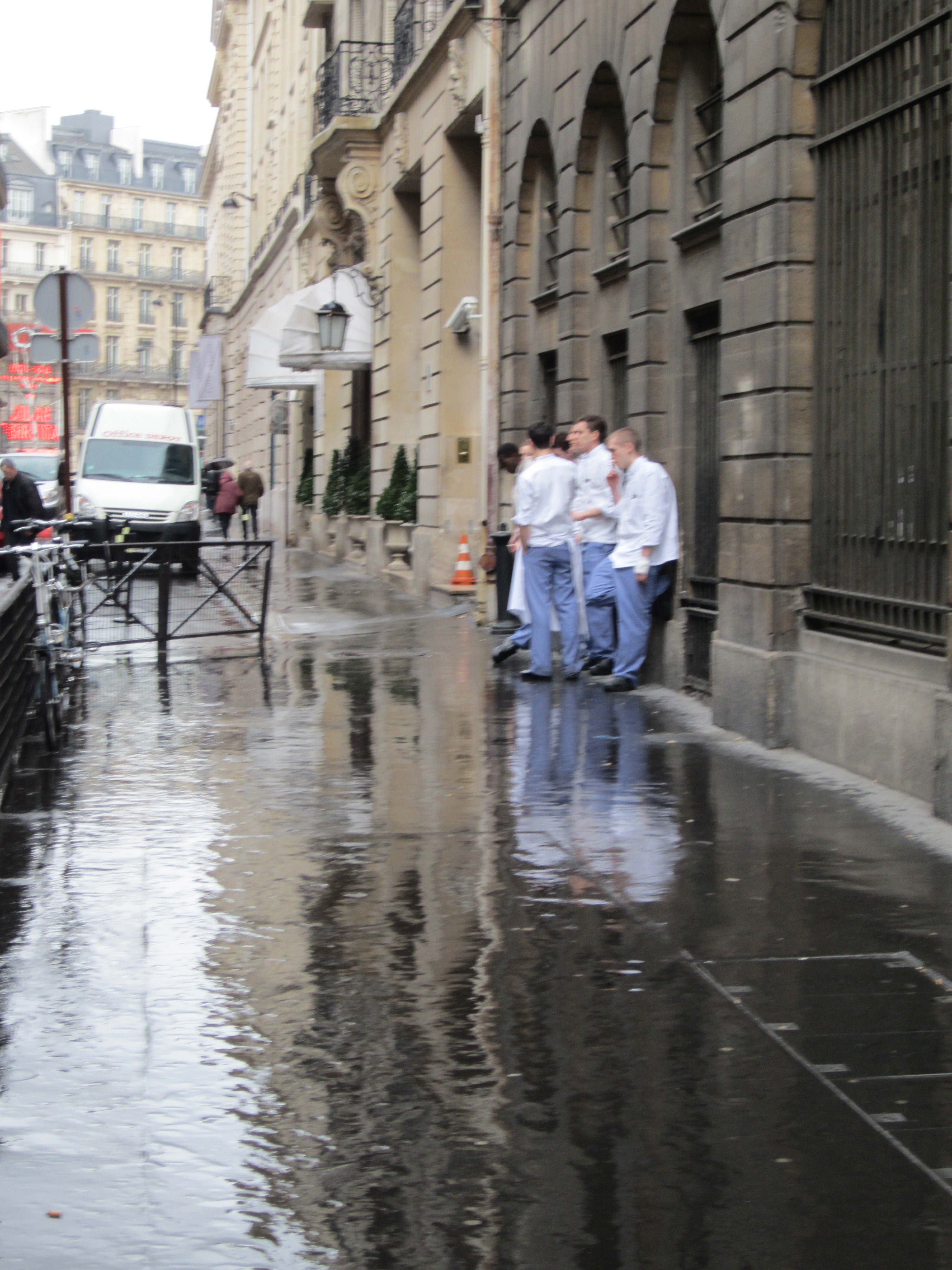
Rainy day, rue Cambon. Students on a cigarrette break from the Ecole Ritz Escoffier, across the street from Chanel Paris.

Rainy day, rue Cambon. Students on a cigarrette break from the Ecole Ritz Escoffier, across the street from Chanel Paris.

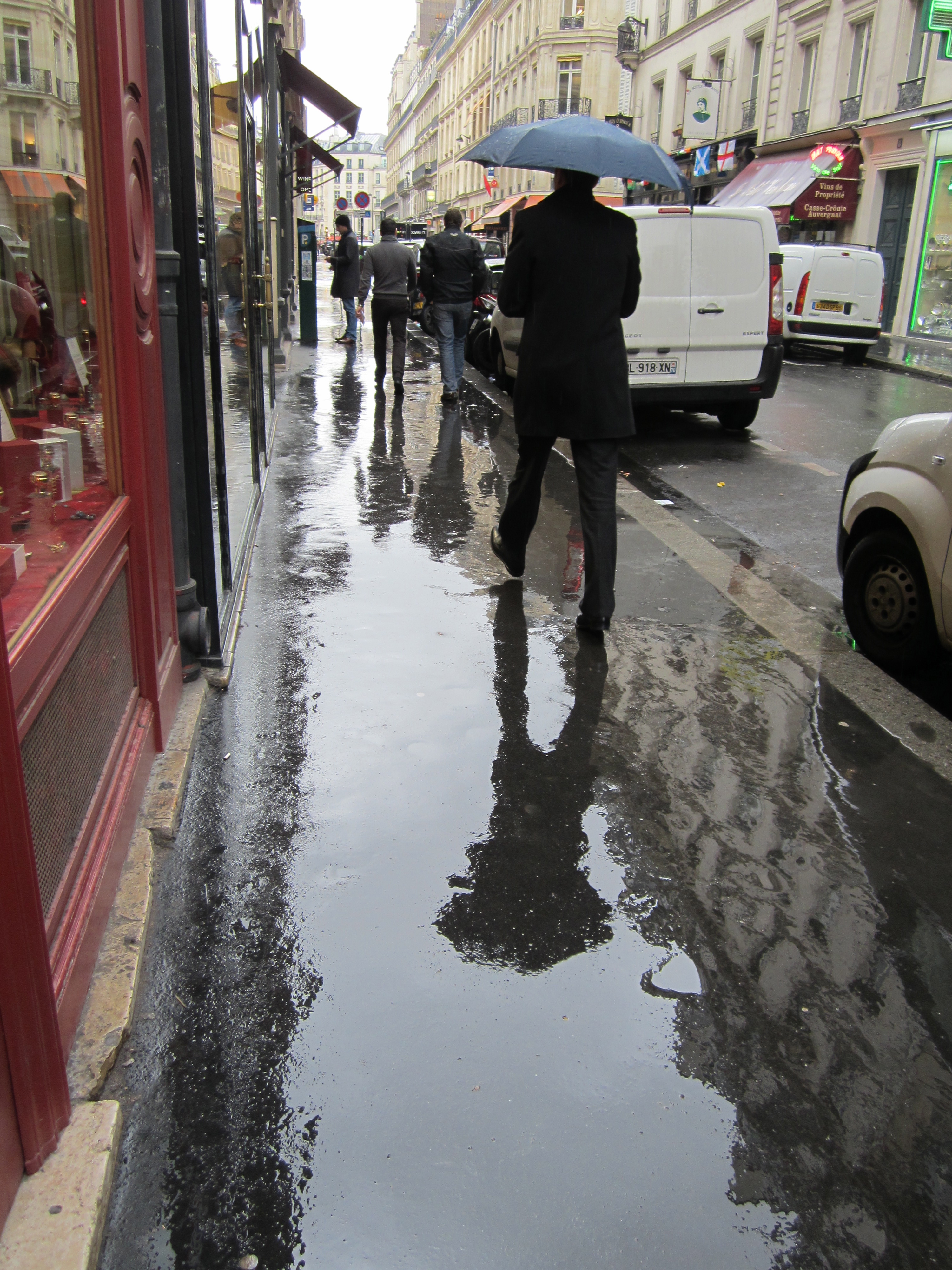
Paris street near Place de Vendome

Paris street near Place de Vendome

By now, Parisians are starting to wonder why I keep taking photos of the sidewalk.

At the corner of avenue Montaigne and avenue Gabriel in the 8th

Monet’s Window in Rouen

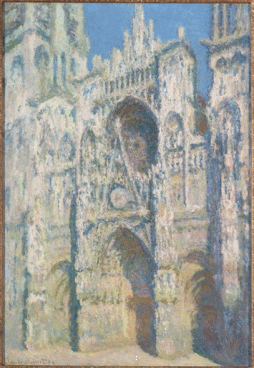
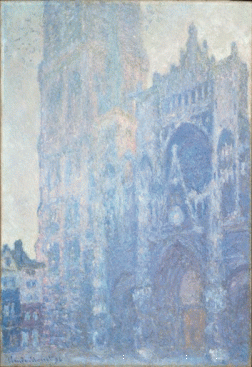
Many of us have seen the series of Monet’s paintings of the Rouen Cathedral at the Musée d’Orsay and have marveled at the difference in the light in each painting. We probably know the story: Monet kept up to 14 different canvases going at a time, and switched from one painting to another as the daylight shifted on the cathedral. It’s almost magical to see the differences.

tmp_8c5be5ac240e4976efde4db54b60e83atmp_d51228784af1404b5600cb06a29e6266

Here’s a great Smarthistory video created by two art historians, Dr. Beth Harris and Dr. Steven Zucker, in which they discuss Monet’s Rouen Cathedral Series. It’s worth a quick five minutes of your time if you’re a fan of Impressionism.

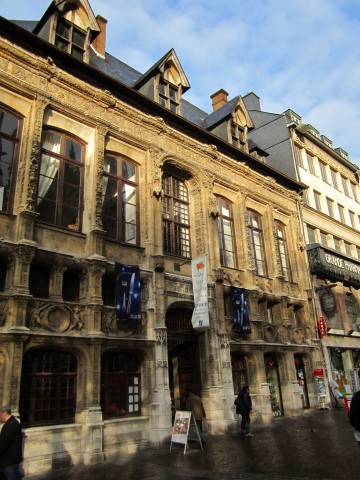
What a thrill it is to be able to travel to Rouen (just an hour’s drive from Paris, past Giverny  on the way to the Normandy shore) and stand in the very place where Monet stood when he created those paintings. He painted some of them en plein air from the Cour d’Albone in front of the cathedral,  but the rest from the second floor of the building across the street, 25 Place de la Cathédrale. Back in Monet’s day it was the Finance Bureau, but today this is the home of the Rouen Seine Valley Tourist Office.

It would be from this makeshift atelier that Monet would create 28 different paintings of the western view of the cathedral between 1892 and 1893.  All of these paintings were supposedly created in two different painting sessions, which might sound suspicious, unless you’ve actually been to Rouen and see for yourself how quickly the weather changes. You can have sun, clouds and rain all within an hour. Monet might have been forced to switch canvases, not because he wanted to, but because he had to. The light would have been changing so quickly, he wouldn’t get much painting done unless he had multiple canvases.

232323232fp43368>nu=4375>256>236>WSNRCG=35-672-6-7327nu0mrj

The Rouen Seine Valley Tourist Office across from the Rouen Cathedral. Although the sun is shining, notice the wet pavement. Sudden shifts in weather conditions are common, just as they were back in Monet’s day.


And if it’s not enough just to stand in Monet’s footsteps, you can also sign up for an art workshop where you get to paint Monet’s cathedral for yourself. I didn’t find out about this until after I’d left Rouen, but I’m dying to try it the next time I go. Check it out here. The workshop includes a tour of the Rouen Musée des Beaux Arts and a Monet-inspired dinner.

If you’re not able to swing a trip to Rouen, you can always catch two of Monet’s Rouen Cathedral paintings in the United States at the National Gallery of Art in Washington, D.C., one at the J. Paul Getty Museum in LA. If you want to take your hand at creating your own little Rouen Cathedral masterpiece, you can download this stencil from NPR’s website.

If you really want to feel like Monet, download 14 copies and have a go at each one a little differently. Cheers!

Little Women in Dinan, France

little women abroadLittle Women Abroad, edited by Daniel Shealy (University of Georgia Press, 2008), is a wonderful account of the Alcott sisters’ trip to Europe together in 1870. Most readers will be interested in the travels and insights of the most famous sister, Louisa May Alcott, but for an artist, the real thrill is to see France through her little sister Abigail May’s eyes.

Most of us know Amy, the precocious little sister in Little Women who dreamed of becoming an artist. Few of us know much about Louisa’s real little sister Abigail May Alcott Nieriker (“May”), who did indeed grow up to be an accomplished artist. Unfortunately, May’s story ends tragically. She married at the age of 38, only to die one year later after giving birth to her first child.

May Alcott began to study art in 1856 when she was just sixteen years old. She studied with Stephen Salisbury Tuckerman, William Rimmer and finally William Morris Hunt, all of whom offered single-sex studio classes for Boston women. Hunt had studied at the Ecole des Beaux Arts in Paris and no doubt extolled the virtues of study abroad. May’s fellow students such as Elizabeth Boott, Sarah Wyman Whitman and Elizabeth Bartol were all making plans to study in France by the late 1860s and early 1870s.

After Louisa May Alcott achieved financial success with Little Women in 1868, the two sisters planned a trip to Europe with their friend Alice Bartlett. The women traveled by the French steamship Lafayette and arrived at the western port of Brest in Brittany in April, 1870.

It was May’s first trip to Europe and she was completely enchanted with France. Their first extended stay was in Dinan, a lovely medieval town in the middle of Brittany. May sent home sketches of a variety of scenes throughout Dinan, many of which are nicely reproduced in Little Women Abroad. It appears that all of May’s sketches were in pencil or pen and ink. In one of her letters, she said she wished she had been trained how to paint en plein air so she could capture the beautiful colors. Nevertheless, her sketches are sufficient to be able to identify the buildings and ruins which still stand today.

Here is a Google Map of the Alcott Sisters Sites in Dinan, in case you’re lucky enough to venture there yourself someday. Dinan is a beautiful little city which makes for a lovely day trip from a larger home base in Brittany such as St. Malo. Dinan has 13th century castles, gothic churches, bell towers, narrow winding streets and beautiful timbered architecture.

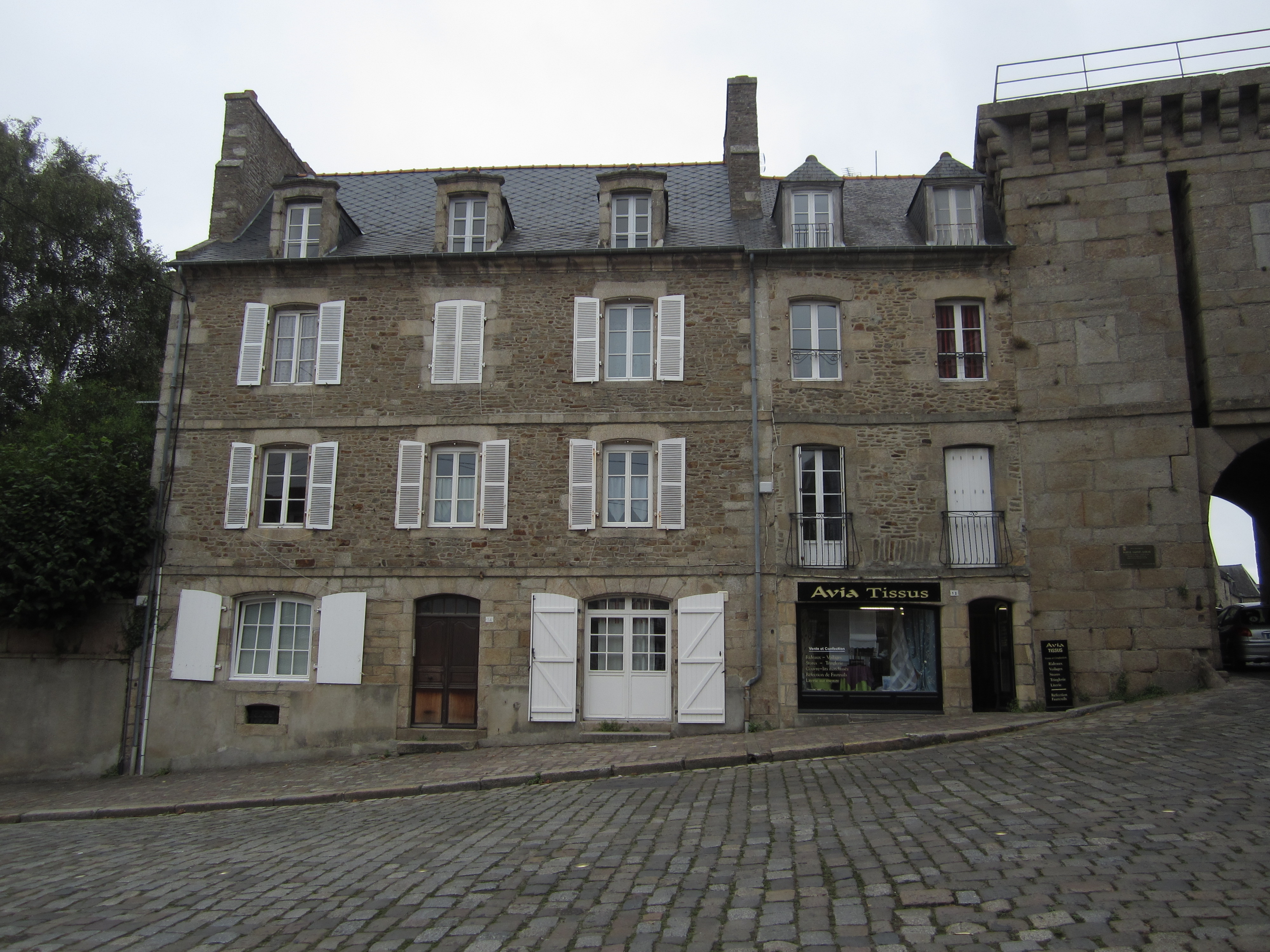
Until you can get there yourself, here is a photo tour of the Dinan sites in Little Women Abroad, starting with the building that once housed the pension in which the Alcotts stayed. It was just outside the fortified walls of the town, next to the Porte Saint Louis and just down the street from the Dinan Castle.

IMG_4571

14 Place Saint Louis, Dinan, France, the location of Madame Coste’s pension where the Alcott sisters stayed from April to June, 1870.  As Louisa May Alcott described it in a letter dated April 24, 1870: “We are living, en pension, with a nice old lady just on the walls of the town with Anne of Brittany’s round tower on the one hand, the Porte of St. Louis on the other, and a lovely promenade made in the old moat just before the door.”

IMG_4570

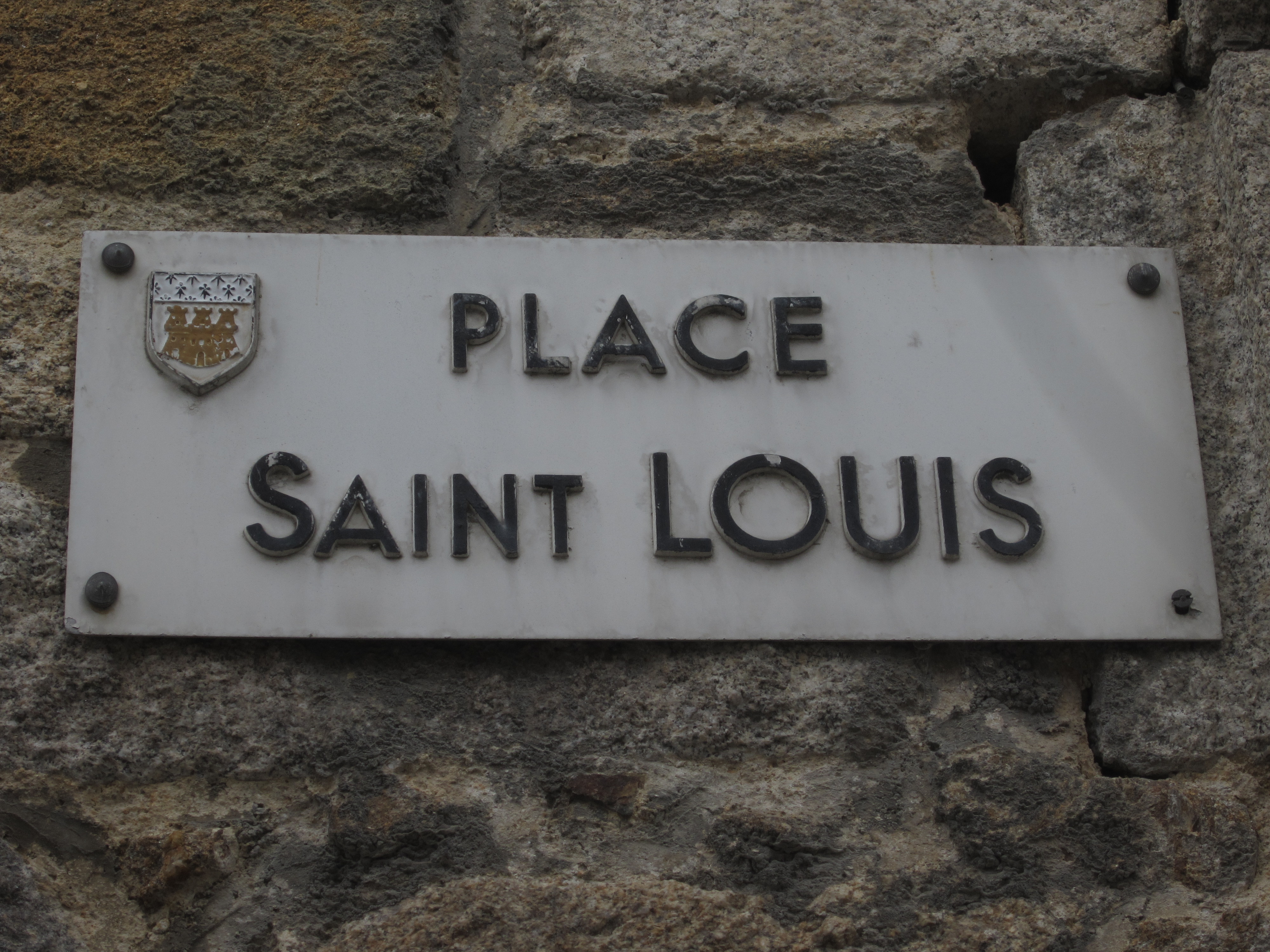
The plaque in the wall at Place Saint Louis, Dinan, France

The Porte Saint-Louis, located next to the Pension de Madame Costes

The Porte Saint-Louis, located next to the Pension de Madame Costes

The Dinan Castle, just down the street from Place Saint Louis, which May Alcott called Anne of Brittany's Round Tower. Built in the 1300s.

The Dinan Castle (which Louisa May called Anne of Brittany’s Round Tower), located just down the road from Place Saint Louis. Built in the 1300s.
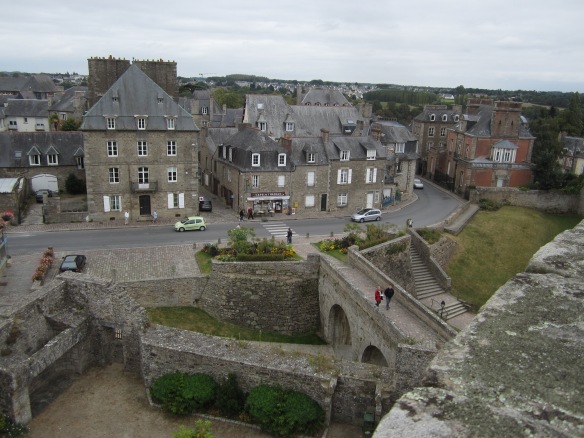
IMG_4583

The view of Dinan from atop the Dinan Castle. As May said in an April, 1870 letter to her mother: “From the top of her [Queen Anne’s] tower is the most superb view all over the country, and I am expecting great things in going to see it.”

May Alcott spent her time sketching throughout the medieval village, so full of “enchanting old ruins, picturesque towers and churches, and crumbling fortifications, that it almost seems like a dream.” There were so many good scenes for sketching that she didn’t think she could do them justice. As May said in a letter home:

I long to make pictures on every hand, but get extremely discouraged when I try, as it needs all the surroundings to make the scene complete.

May recommended Dinan to her fellow artists in a guidebook she would later write:

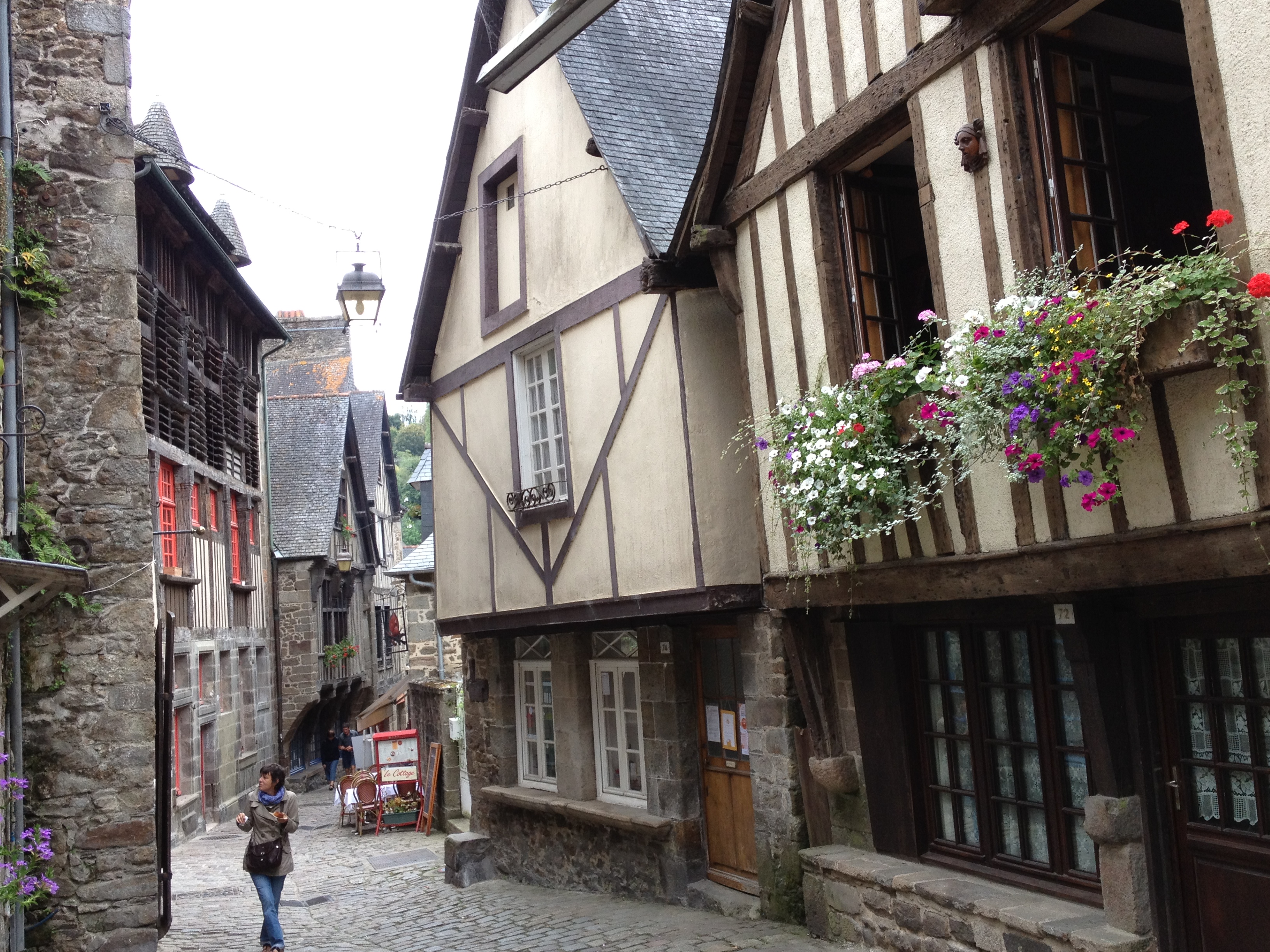
Here an artist can rest with delight for many months, as everything from the adjacent country, which is thought to be the most beautiful in Brittany, to the ancient gateways and clocktower in a street so narrow that the gabled roofs meet overhead, is sufficiently attractive to keep the brush constantly busy.

May visited or sketched nearly everything in town, from the Basilica of St. Saveur:
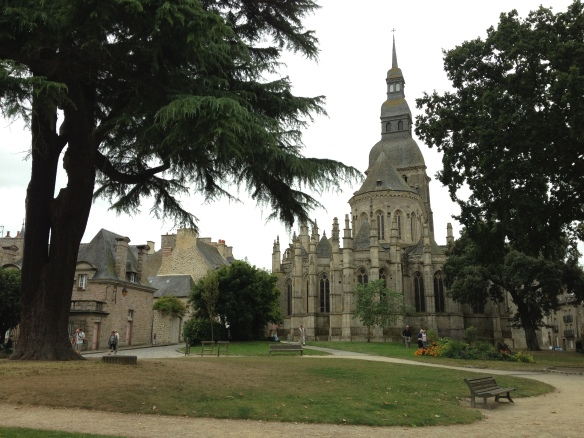
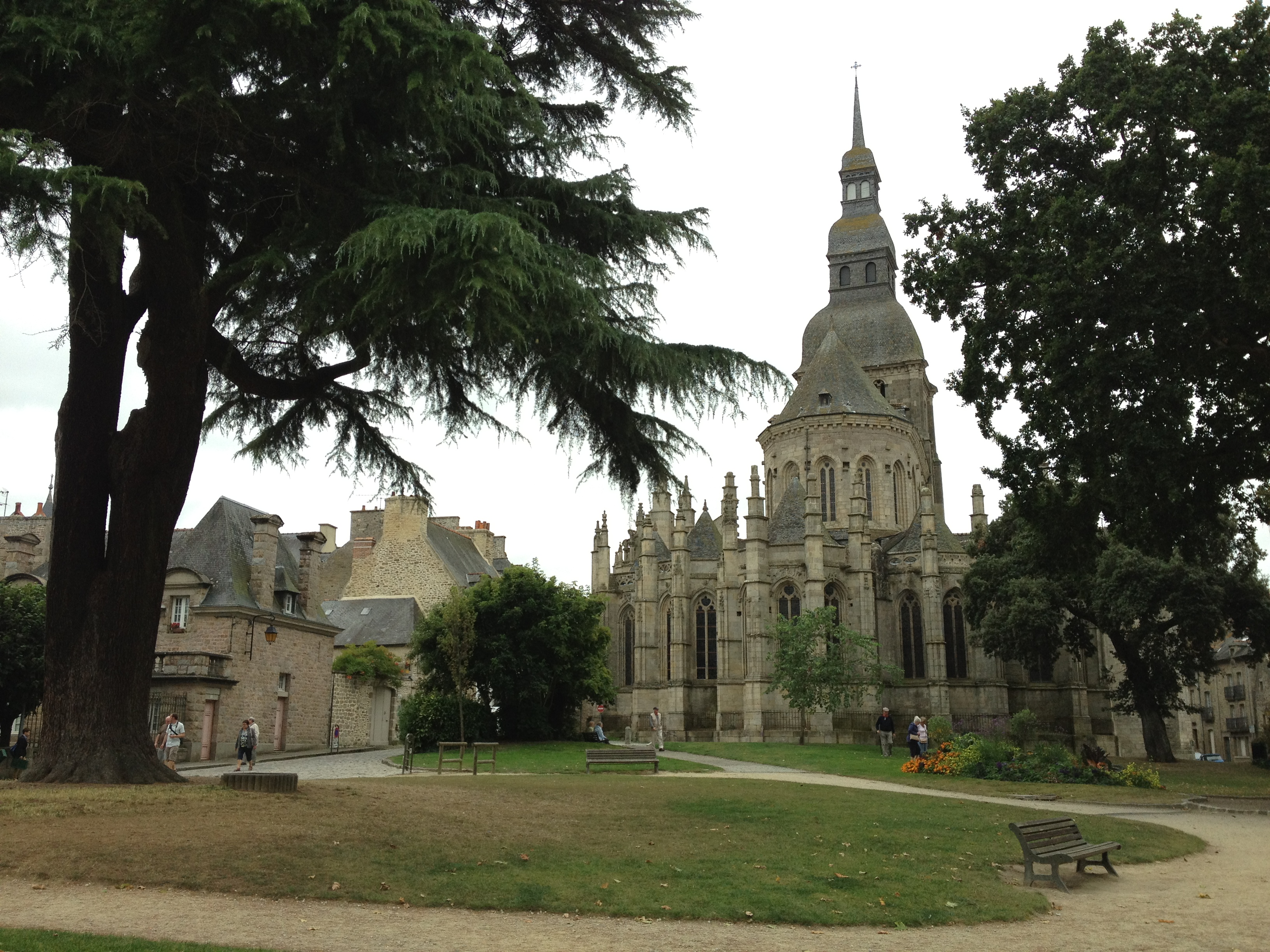
The gardens behind Basillica St-Saveur in Dinan, France

“Yesterday we went to some lovely gardens surrounding the most beautiful gothic church.” – May Alcott,  letter dated April 20, 1870 . This is a photograph of the small park and gardens that stand behind the Basilica St-Saveur today. Originally built in the 11th and 12th centuries, a Gothic chapel was added in the 15th century.

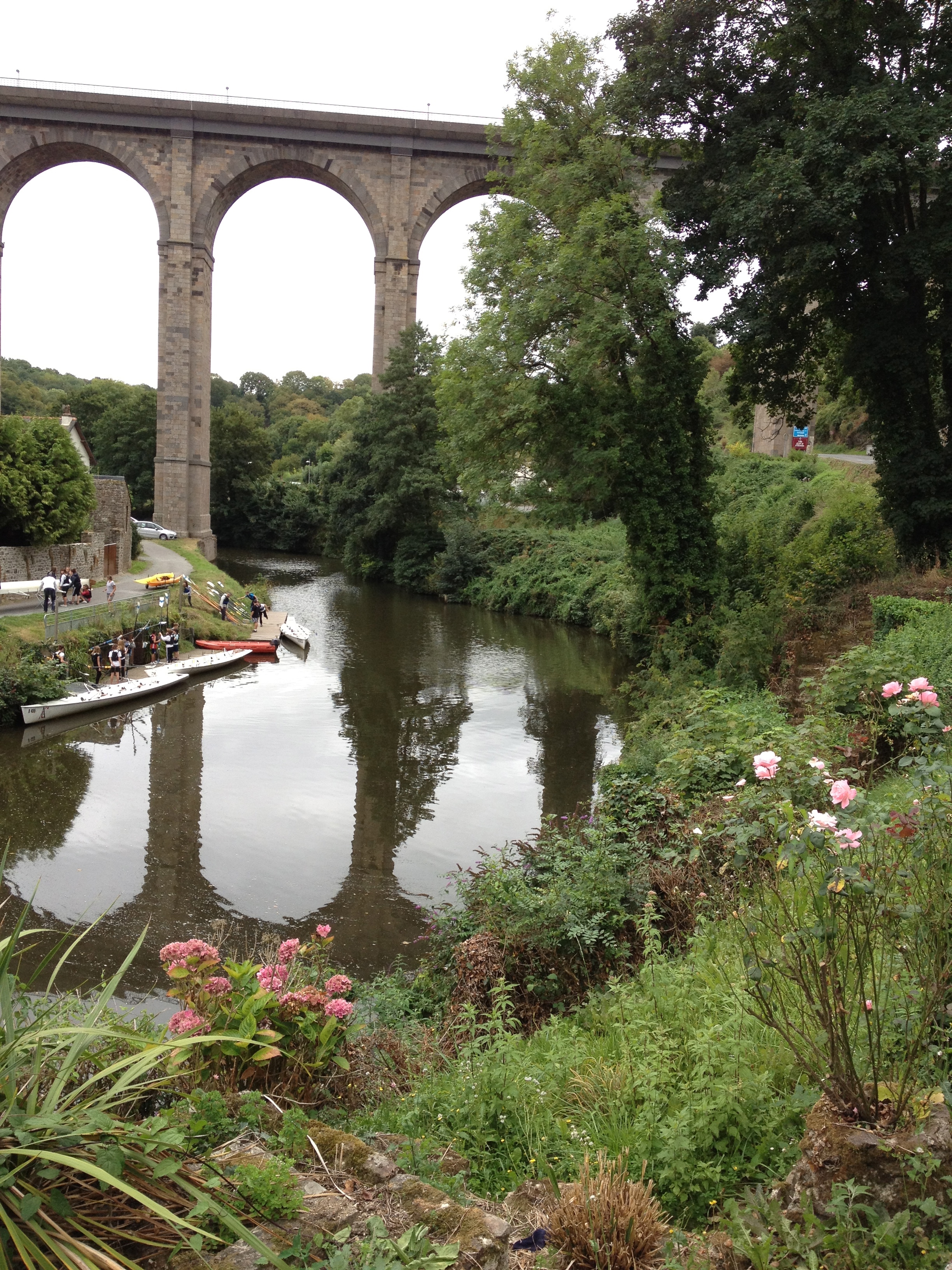
to the Viaduct of Dinan over the River Rance:

"The grand viaduct which, according to Murray [the Alcott's 1870 guidebook to France] is about the finest in the world, fairly took away my breath." -- May Alcott in a letter to Anna Alcott dated May 30, 1870

In a letter to Anna Alcott dated May 30, 1870, May Alcott said: “The grand viaduct which, according to Murray [an 1870 guidebook] is about the finest in the world, fairly took away my breath.”
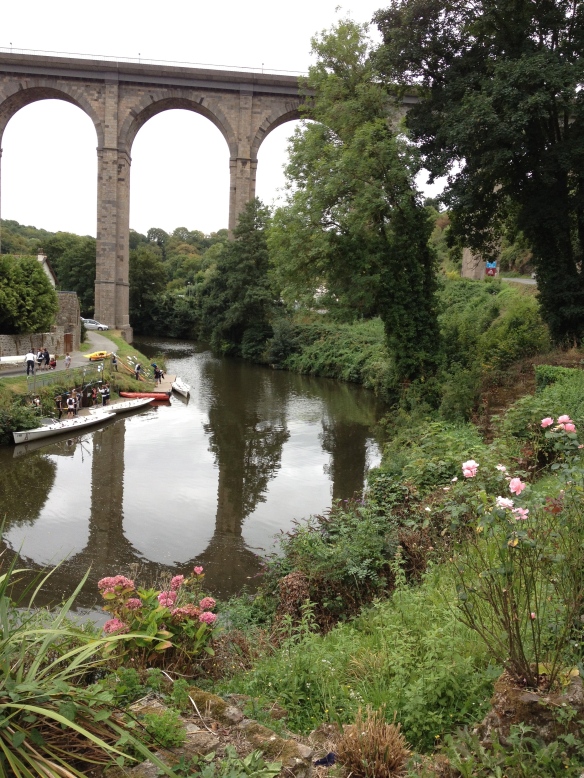
IMG_3340

The grand viaduct across the River Rance in Dinan is still breathtaking. The day I was there the local rowing club was preparing for practice on the other side of the river.

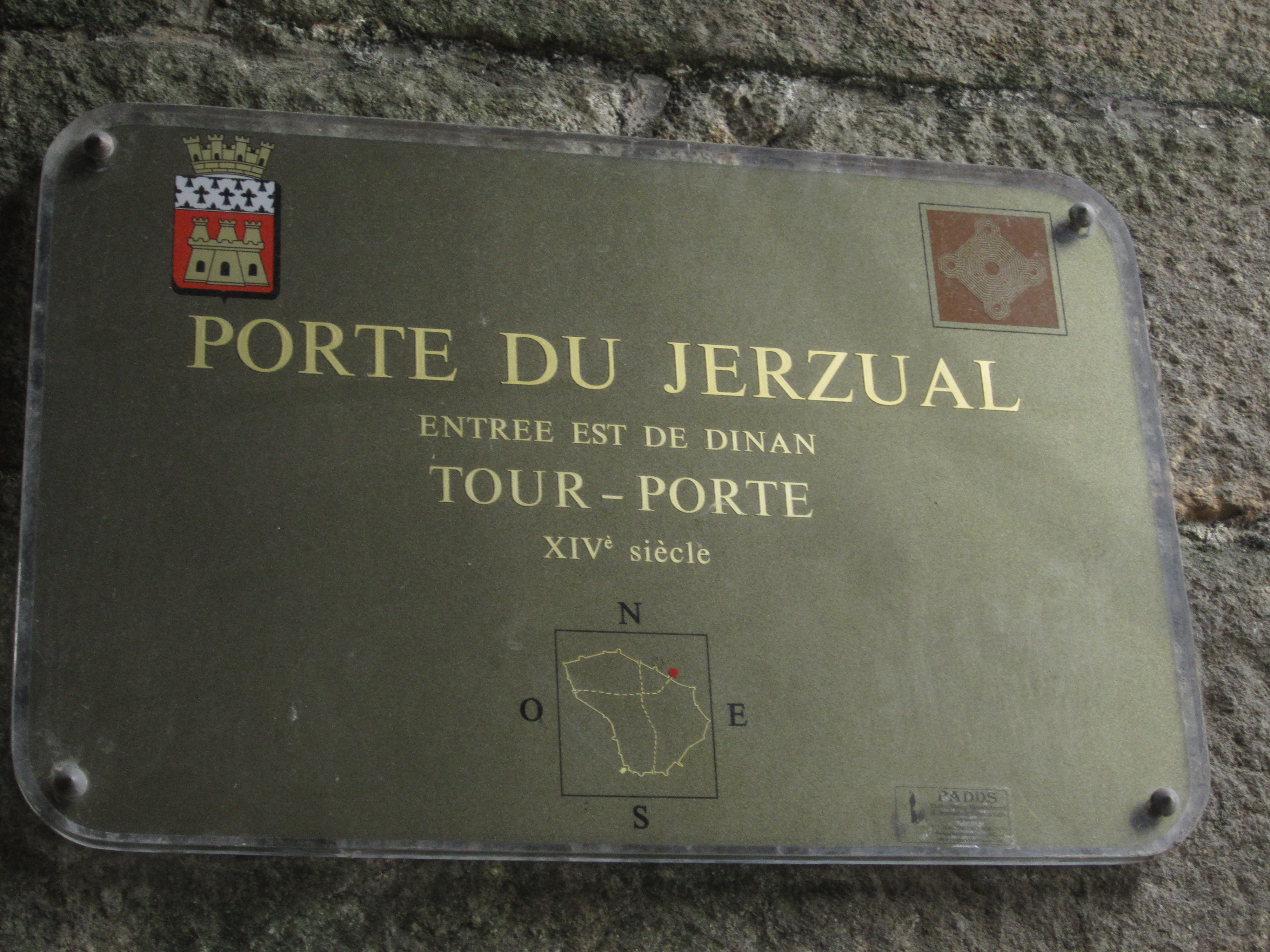
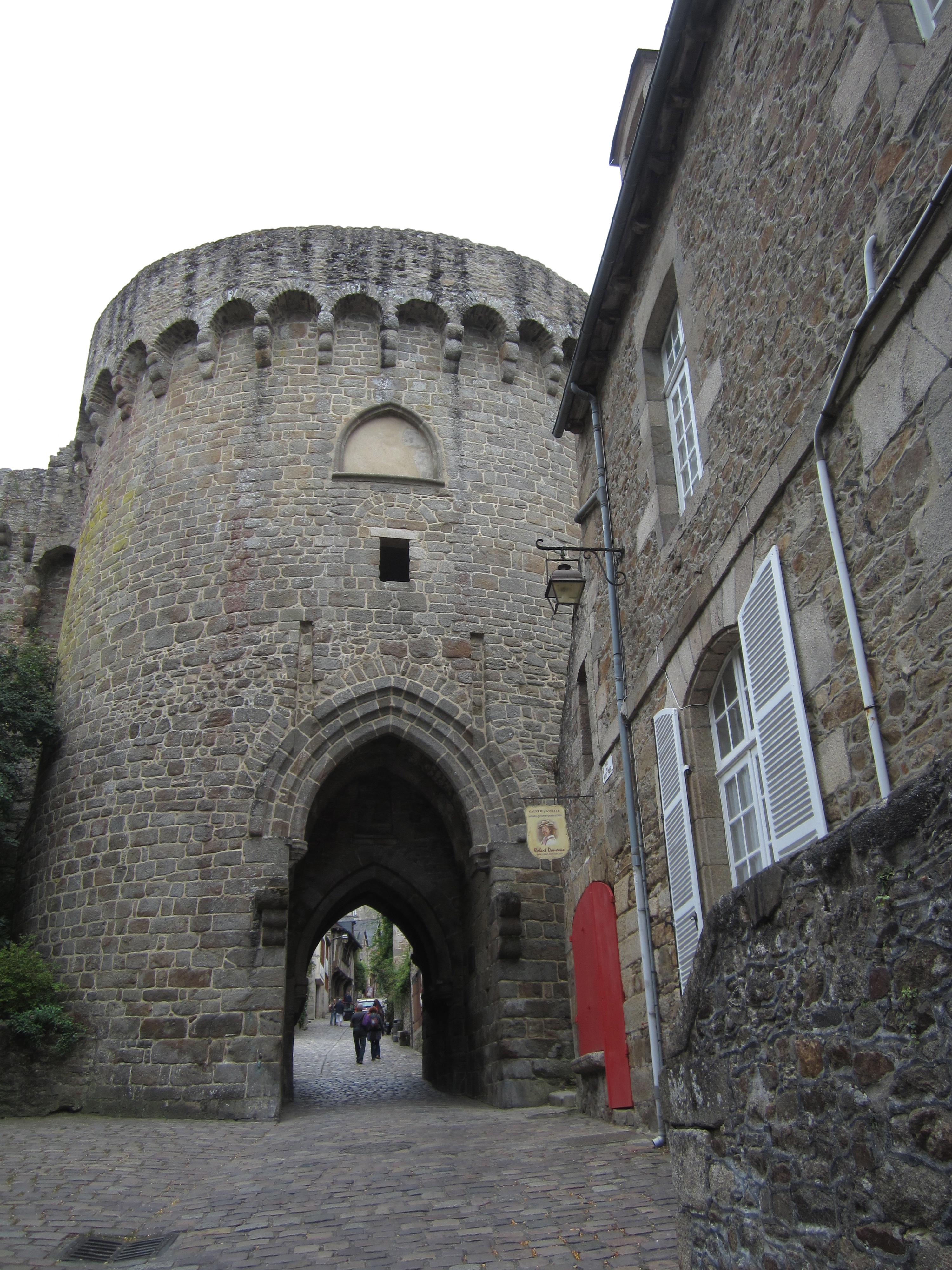
May sketched the Porte of Jerzual and the steep little rue de Jerzual, which winds down from the upper village to the river, and is lined with timbered old shops that lean in over the cobblestoned street:

IMG_4614

Porte du Jerzual, Dinan, France

Porte du Jerzual, Dinan, France

A scene from rue de Jerzual in Dinan. As May said in a letter home dated April 29, 1870: "Yesterday we down the oldest street in town, (where, in spite of the steepness, Queen Ann's carriage is said to have trundled over it), to the river which runs at the foot. The houses overhang the street in funny little gabled stories almost shutting out all light from above, and it being very narrow & extremely steep, you can see it was a sensation to have explored it."

A scene from rue de Jerzual in Dinan. As May said in a letter home dated April 29, 1870: “Yesterday we went down the oldest street in town, (where, in spite of the steepness, Queen Ann’s carriage is said to have trundled over it), to the river which runs at the foot. The houses overhang the street in funny little gabled stories almost shutting out all light from above, and it being very narrow & extremely steep, you can see it was a sensation to have explored it.”

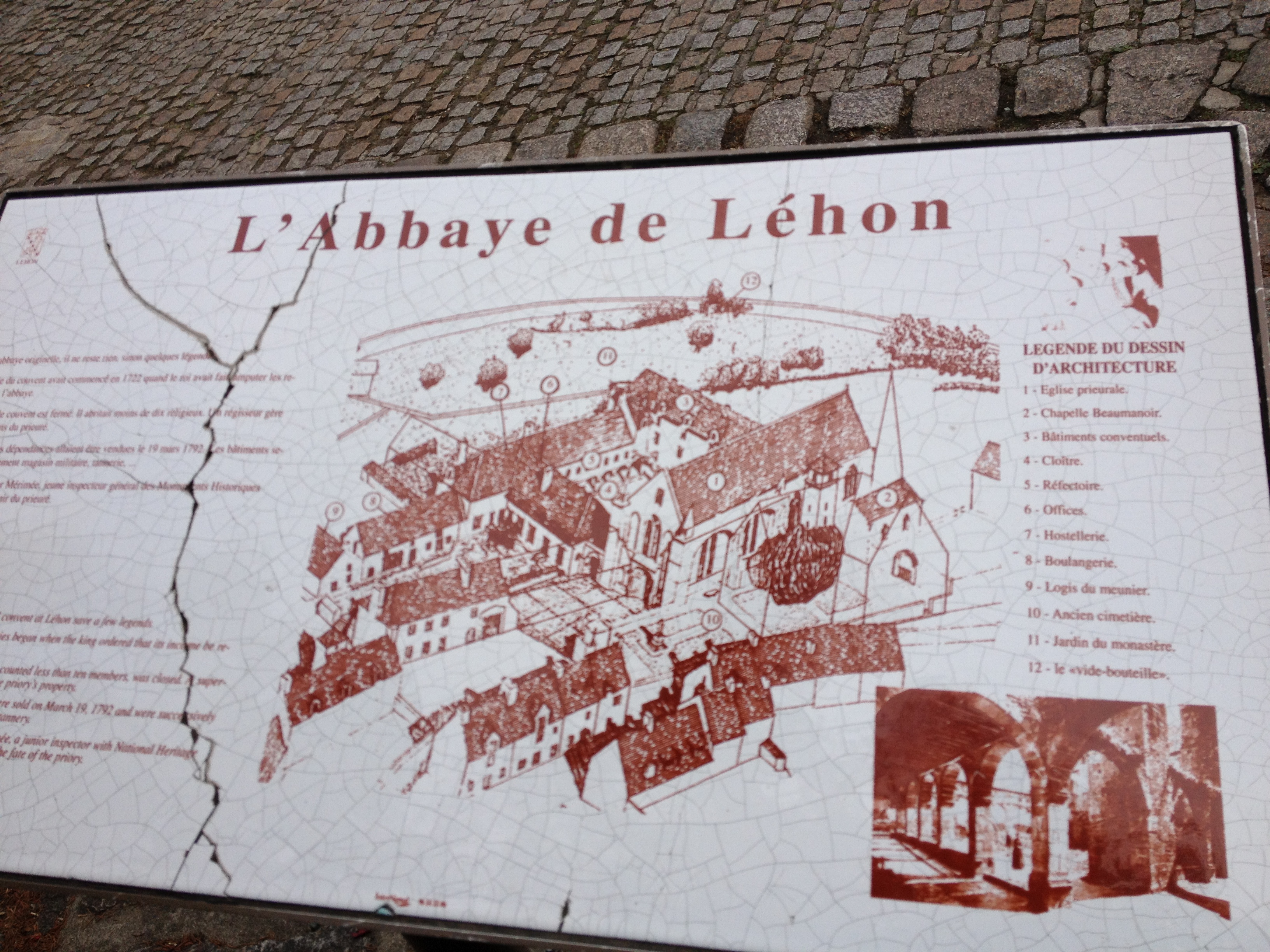
In their letters home, the Alcott sisters both mention their visit to the neighboring village of Léhon, which is just a mile or so down in the valley from Dinan along Route D12. Louisa May wrote home after going to a fair in the village and said (in a letter dated April 20, 1870):

May is going to sketch the castle so I won’t waste paper describing the pretty place with the ruined church full of rooks, the old mill with the water wheel housed in vines, or the winding river, and meadows full of blue hyacinths and rosy daisies.

IMG_3354

The remains of the Léhon castle in the background.

IMG_3370

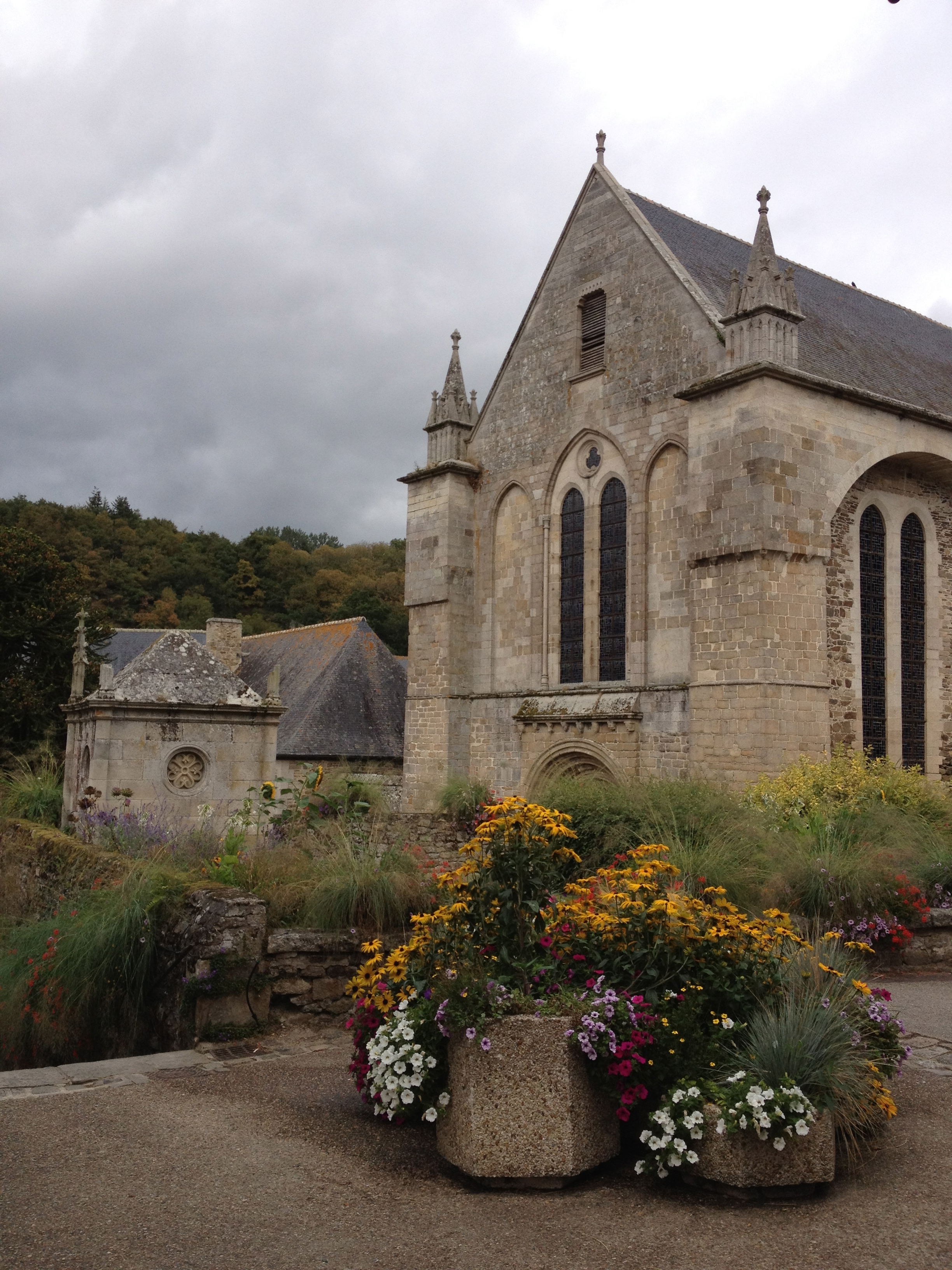
The Abbey and Chapel in Lehon, France, once sketched by May Alcott
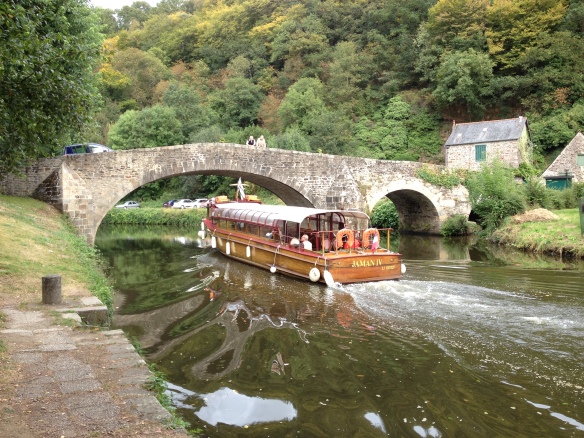
The Abbey Church in Lehon, France, once sketched by May Alcott

The River Rance through Léhon, France.

The River Rance through Léhon, France.

The Alcotts also visited the Chateau de la Garaye, a lovely site located just a couple of miles from the village of Dinan. May wrote home to tell her mother about the beautiful ruins there:

I have tried to sketch from memory a lovely old ruin, where we spent the day yesterday, but can give you a very indefinite notion of the gray old tower with ivy clinging to it in all directions, the rear walls having all crumbled away. The blue sky shone through the little ornamental windows in a way that was quite enchanting. It is only about two miles from Dinan and a pretty walk though the wood to the moat and great embattled walls, which surround the chateau.

Alice and I walked, while Lu went down in a donkey carriage. . . . We found a large party of English people already at the castle sketching it with pencil in colors. . . .
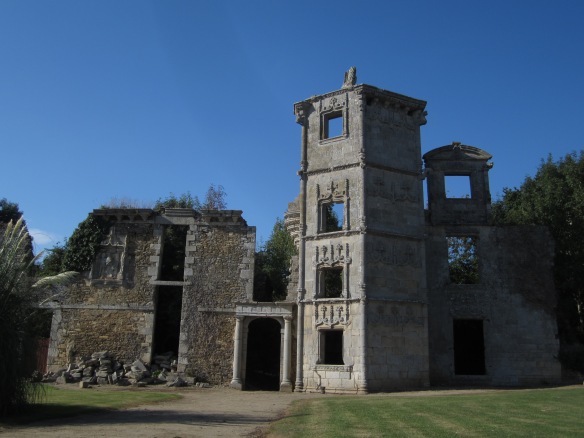
IMG_4685

The  ruins of the Chateau de la Garaye still stand today. “The blue sky shone though the little ornamental windows in a way that was quite enchanting.” — May Alcott, April 1870. It makes me so glad to know some things just don’t change in over 140 years.

IMG_4686

My own colored pencil sketch of the ruins of Chateau de la Garaye

May Alcott’s Life Beyond Dinan:

After the Alcott sisters left Dinan in the summer of 1870, they continued their European travels and proceeded to the Loire Valley, Switzerland and Italy. They found themselves the middle of the Franco-Prussian war which broke out that July but managed to find safety in Switzerland, along with many other refugees from Paris and Strasbourg. Louisa May returned to Boston the next summer, but May went on to study art in London on her own and didn’t return until November, 1871, when she was called home to help the rest of the family.

May Alcott returned to London and Paris in 1873 and then again in 1876. She would study at the Academie Julian in the Passage des Panoramas in 1876-77, and would attend the Paris Salon of 1877 where her own still life painting would be exhibited. She would be invited to Mary Cassatt’s home for tea, and would travel to the rather bohemian art colony in Grez in the summer of 1877. She was living a ground-breaking life as an American expatriate female artist.

In late 1877, while May was living on her own in London, she would learn that her mother had died. In her grief she developed a quick romance with Ernest Nieriker, a young Swiss businessman fifteen years her junior, to whom she would become engaged in March of 1878. The newlyweds would move to a lovely little home in the suburbs of Paris, where she dreamed of combining a career in art with marriage and a possible family. She would have yet another painting accepted in the Paris Salon, and would publish a guidebook for women artists called Studying Art Abroad and How to Do it Cheaply. At the end of 1878, May’s personal life and her art career were making gratifying moves forward.

studying art abroad

But then, in December of 1879, May Alcott Nieriker died six weeks after giving birth to her daughter Lulu. She was only 39 years old. Baby Lulu was first sent to live with her aunt Louisa May in the United States, but when Louisa May died just nine years later, young Lulu was returned to her father in Switzerland.
We are lucky to have been left with such a prolific record of May Alcott’s remarkable travels and experiences, even if they were short-lived. Thanks to the details and sketches provided in Little Women Abroad, we can follow along. It’s worth the trip.