Through Rembrandt’s Eyes: The Anatomy Lesson by Nina Siegal

I found another lovely art history novel that I think you really must read. If you loved Girl With a Pearl Earring by Tracy Chevalier, chances are you’re going to enjoy this one too.

anatomy lesson

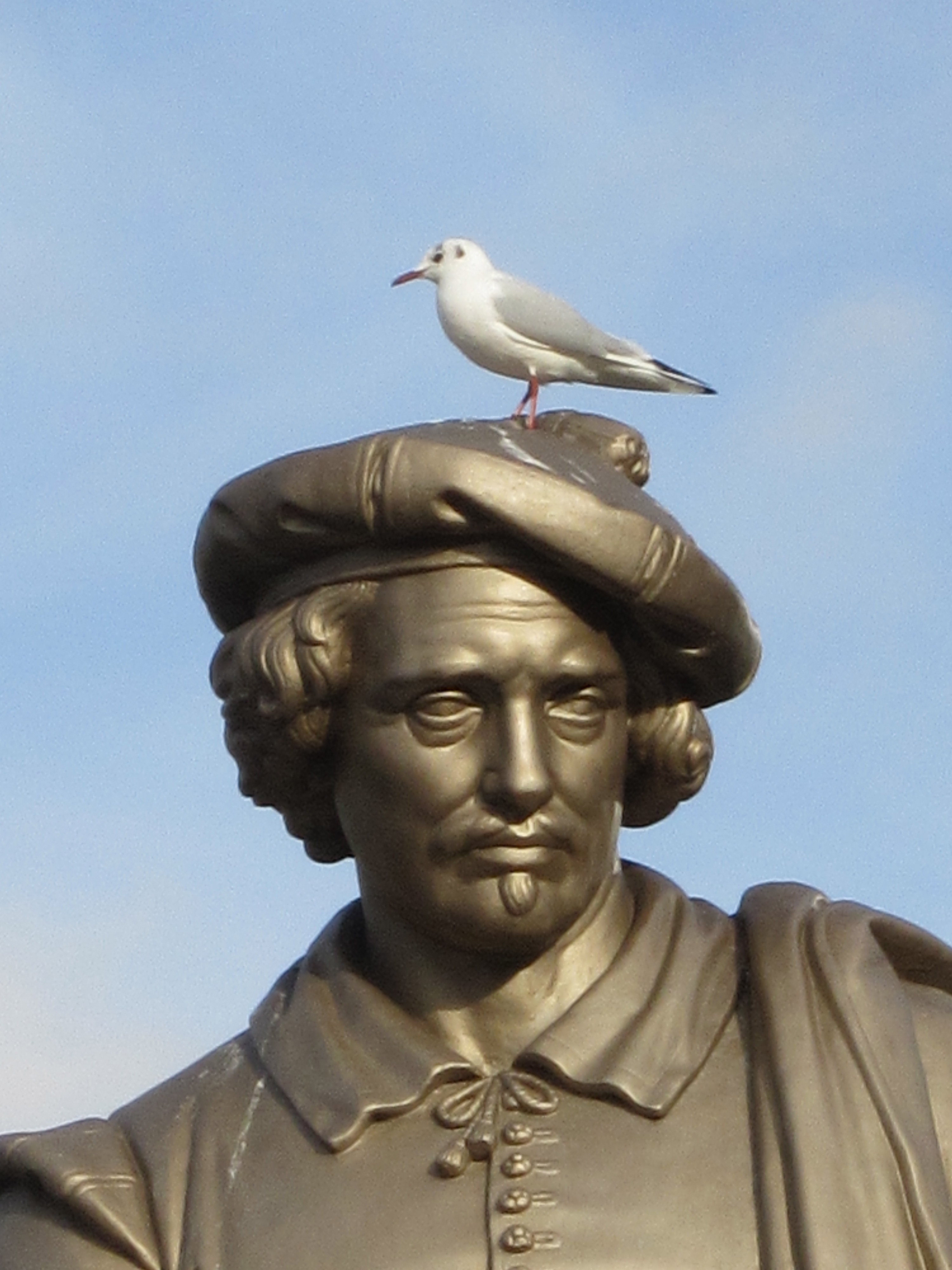
The Anatomy Lesson by Nina Siegal (Doubleday, 2014) tells the story behind The Anatomy Lesson of Dr. Nicolaes Tulp (1632), Rembrandt’s famous painting from the Mauritshuis in The Hague.

I love novels based on famous paintings (the list goes on and on: The Goldfinch, The Painted Girls, The Girl in Hyacinth Blue, The Luncheon of the Boating Party, so many that I think I need to do a follow-up post). But still, I couldn’t help but wonder, why would Nina Siegal choose this painting to write about? After all, it’s a bunch of Dutch guys goggling over a cadaver, right?
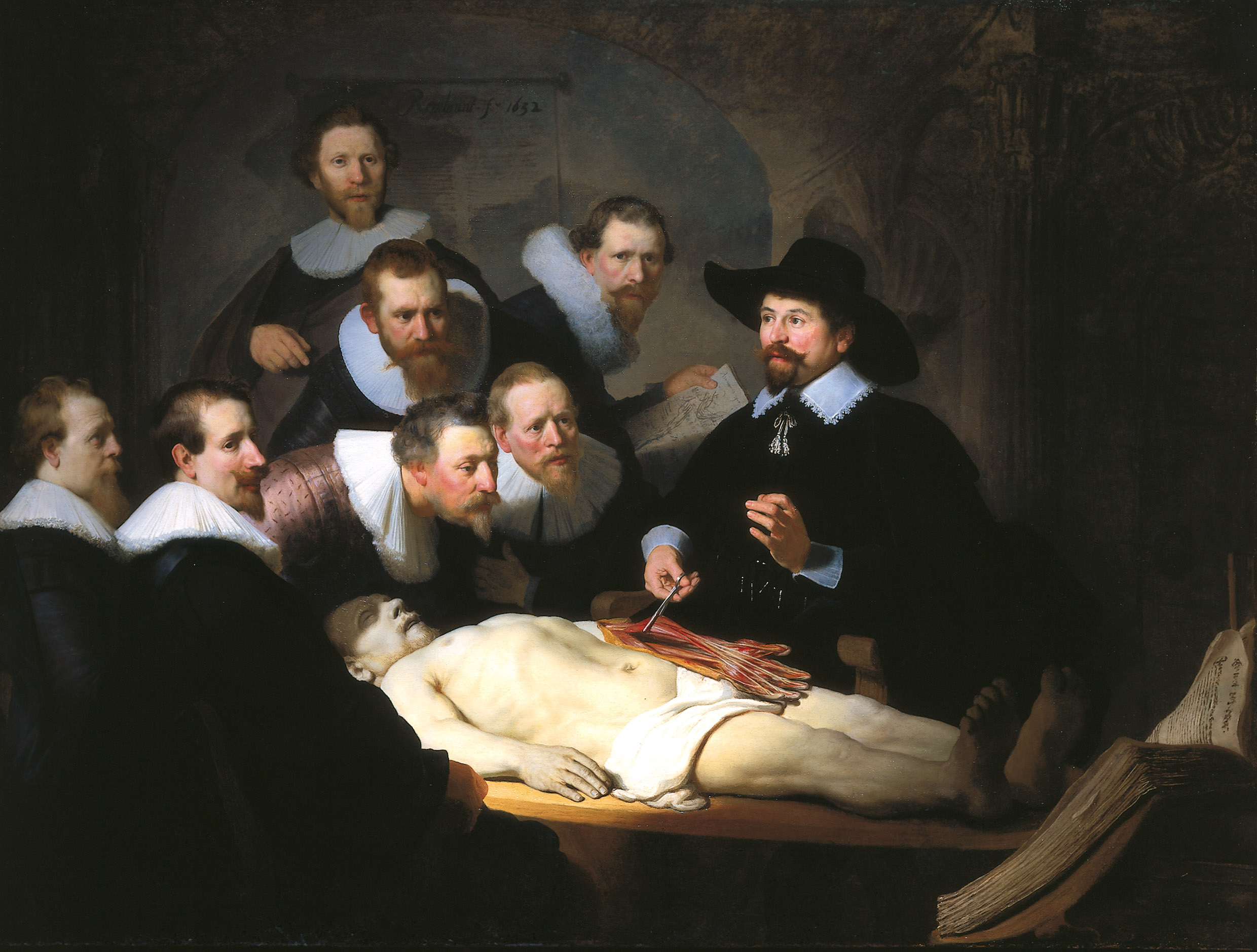
 

Rembrant, Anatomy of Dr. Nicholaes Van Tulp (1632), The HAuge, Marthuis

Rembrant, Anatomy of Dr. Nicholaes Van Tulp (1632), The Hague, Mauritshuis

The story behind a public autopsy in Amsterdam in the 1600s seems like a difficult subject for a novel, certainly less approachable than writing about Vermeer’s pretty girl with a pearl earring. But Siegal was meant to write this story. She grew up with a reproduction of this painting in her father’s study and has been intrigued with it all of her life.

Siegal was drawn into reading nonfiction accounts of Rembrandt’s life as well as the people and the cadaver pictured in The Anatomy Lesson. There were conflicting stories about the people behind the painting, which left Siegal a great deal of creative freedom to plan her own narrative. I think she did a marvelous job.

The story is told from alternating points of view including Rembrandt, Dr. Nicholaes Tulp, the French philosopher René Descartes, the dead man, a coat thief named Aris Kindt, as well as Aris’s sweetheart Flora. Each character adds interest and depth to the portrait, but it is the sympathetic love story between Aris and Flora that brings it to life.

When Rembrandt meets Flora and learns more about Aris’s story, Rembrandt is inspired to go far beyond the intent of the original commission – which was to make a portrait of the town’s elite Amsterdam Surgeon’s Guild – and to create a masterpiece that would honor Aris’s short tragic life.

Rembrandt, Self-Portrait, c. 1632, Kelvingrove Art Gallery and Museum, Glasgow, Scotland

Rembrandt, Self-Portrait, c. 1632, Kelvingrove Art Gallery and Museum, Glasgow, Scotland. Rembrandt made dozens of self-portraits throughout his career, but this one was made the same year he painted The Anatomy Lesson. It is the first portrait where he is starting to look like a successful painter. The success with The Anatomy Lesson did indeed launch his career.


I guess it’s no surprise that the scenes where Rembrandt was actually planning and executing the painting were my favorites. Siegal did a beautiful job of explaining how Rembrandt used highlights to create the mood and focal point of the scene, and why he didn’t display the body cut wide open during the autopsy.

I brought my lantern closer to the easel again. What if I were to illuminate Adriaen, to bring him into the light? If he were not sliced open and degraded but instead elevated and lit? What if I did not show the power of the men over him but his own power over them?

. . .

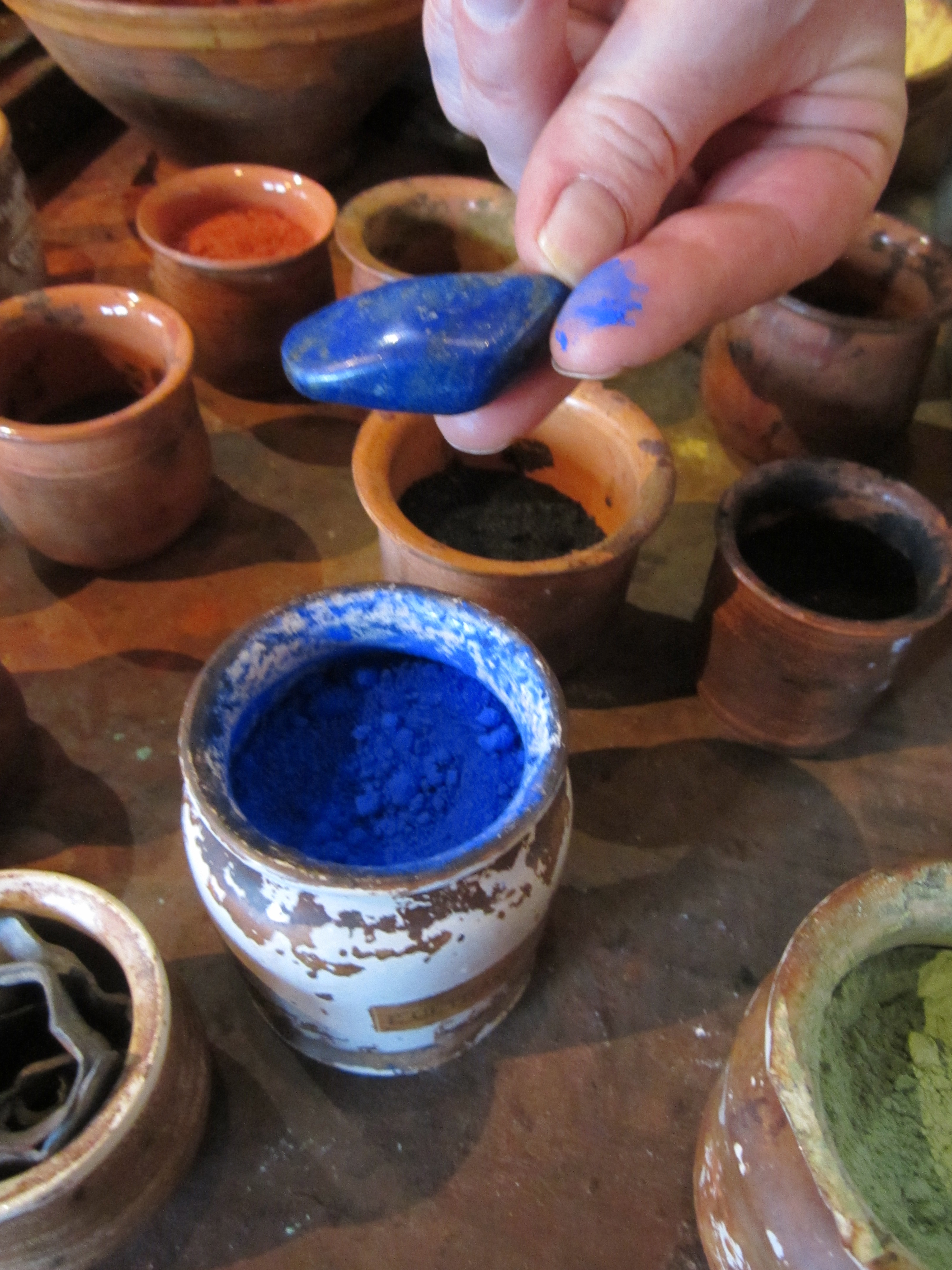
As I continued to dab my paintbrush into the Kassel earth and bone black, I recognized what was possible through this portrait. I could make a broken man whole. I added some lead white to my palette and painted on, . . . adding color to the flesh so that it was pristine.


Reading this book you get a sense that young Rembrandt is at a turning point in his life, and that he is about to become the master painter that we all know today. When Siegal has him pick up his paintbrush to finish The Anatomy Lesson, you feel as if this is the moment that his genius was sparked.

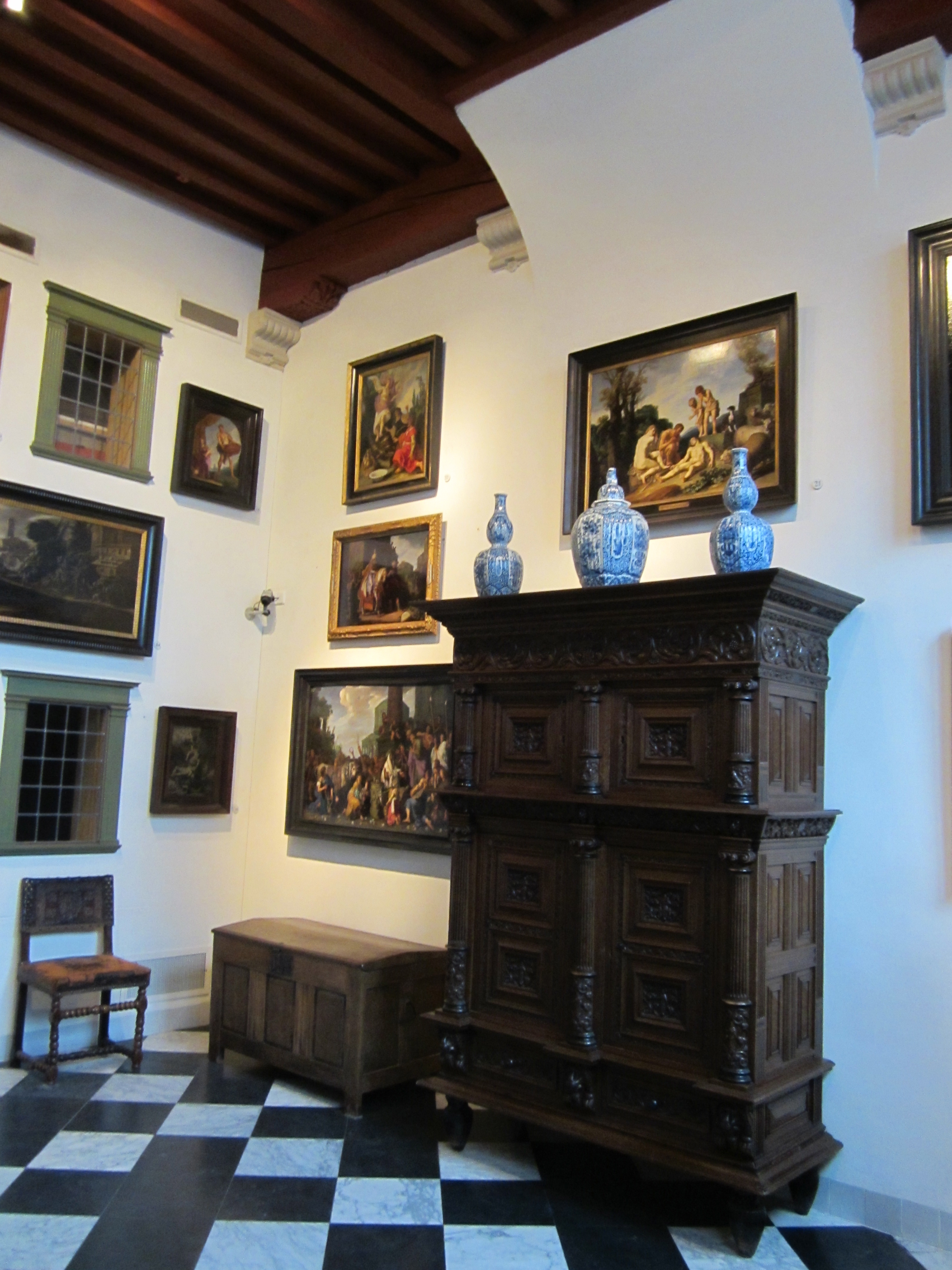
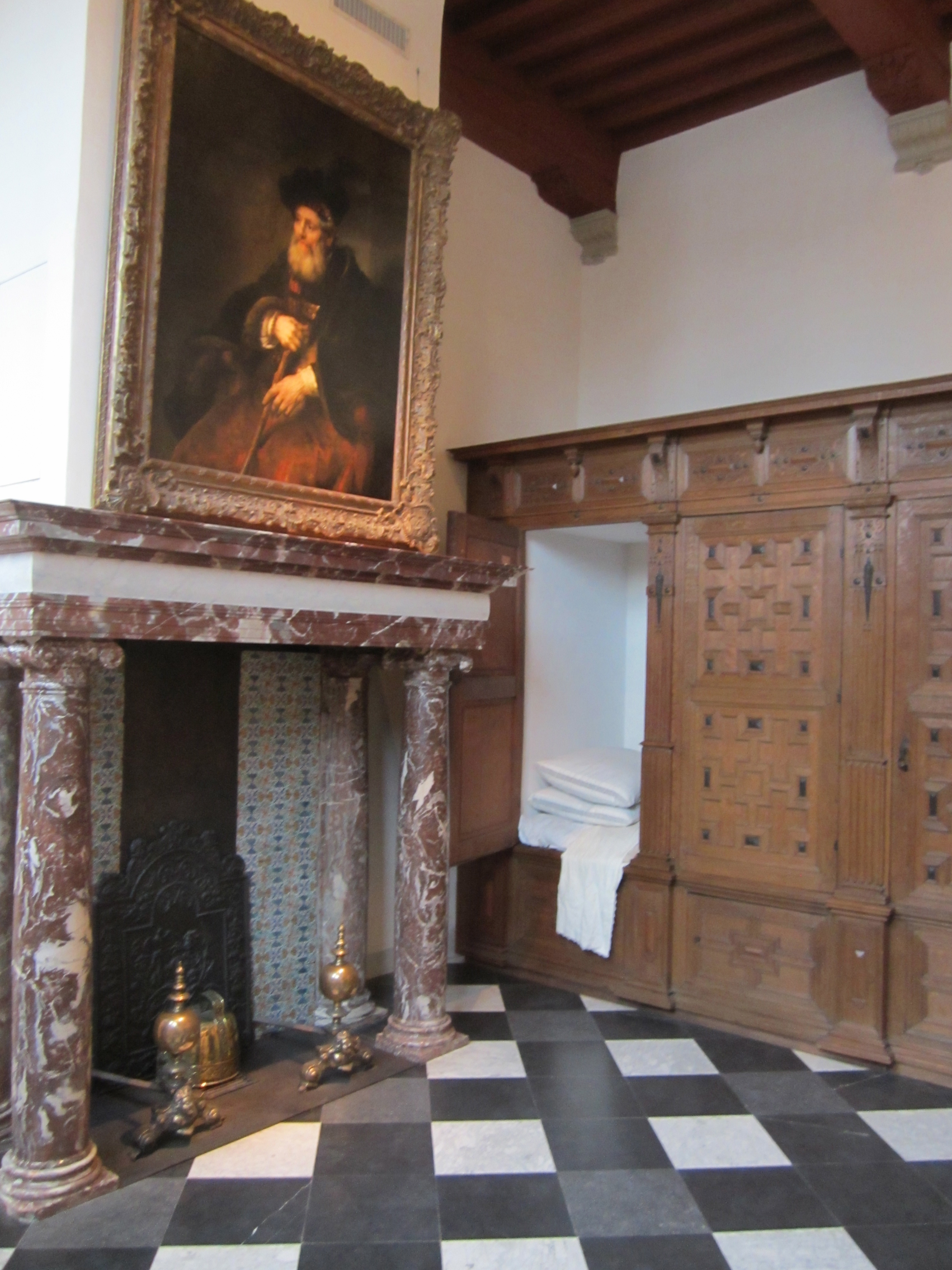
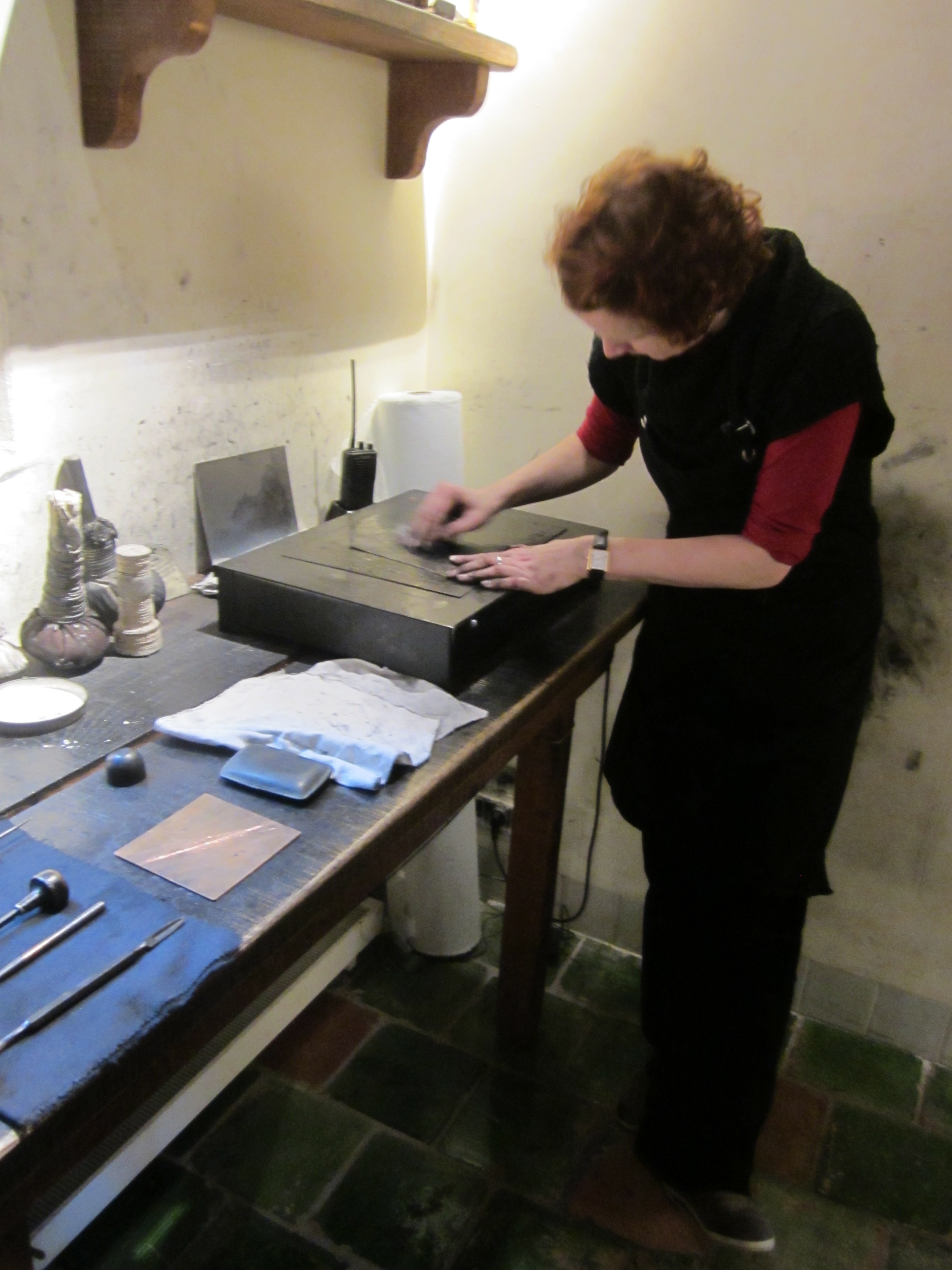
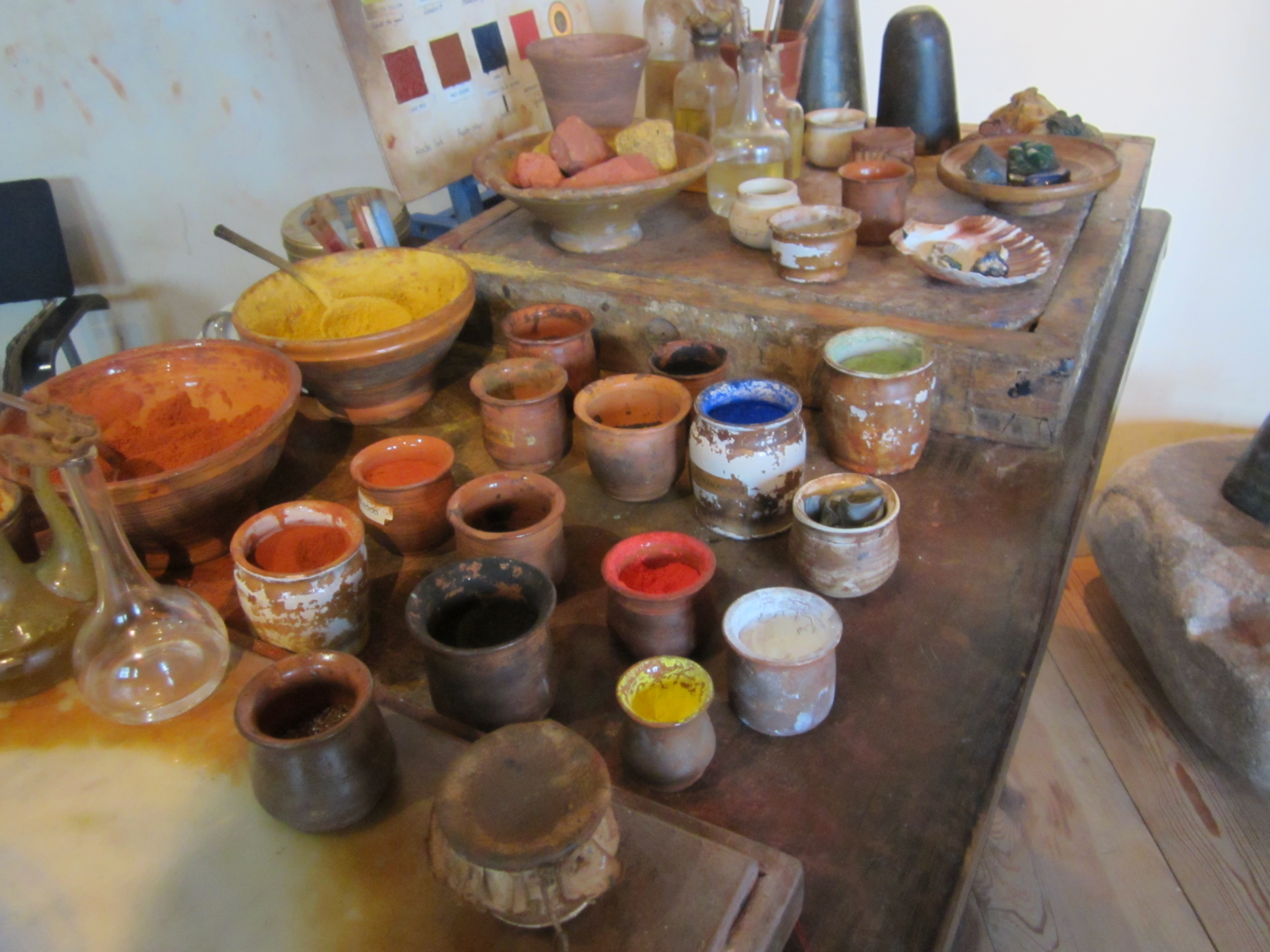
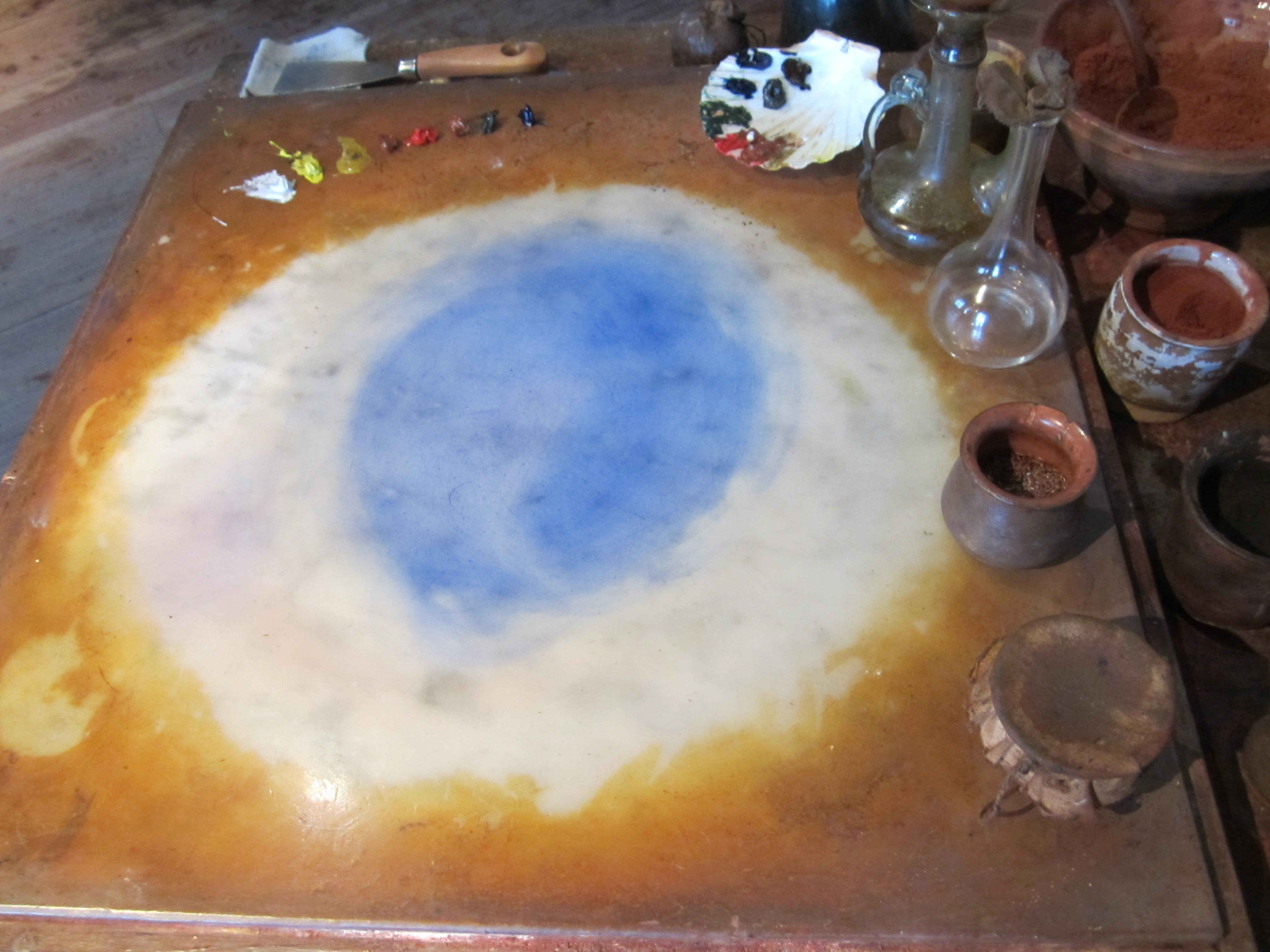
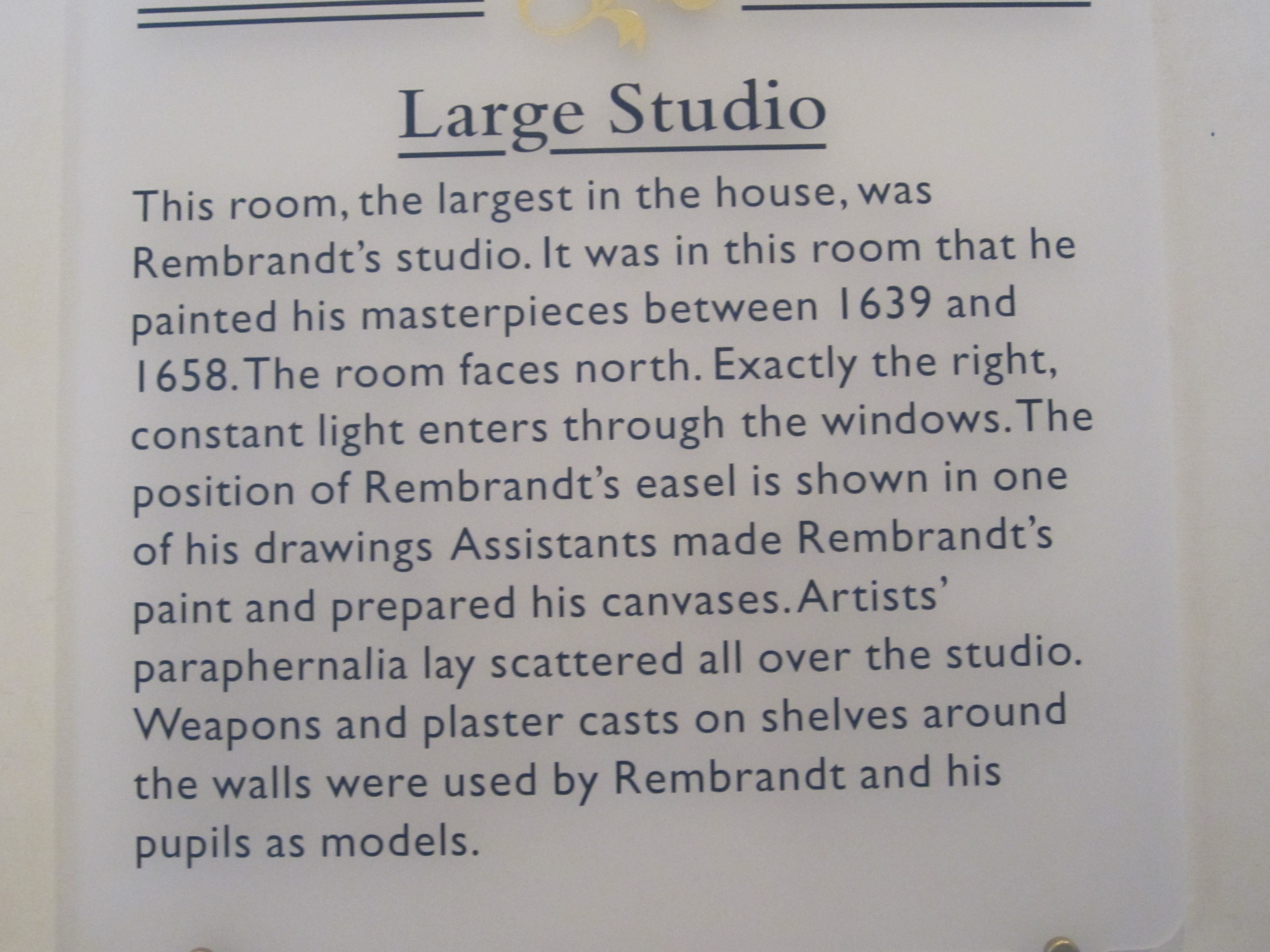
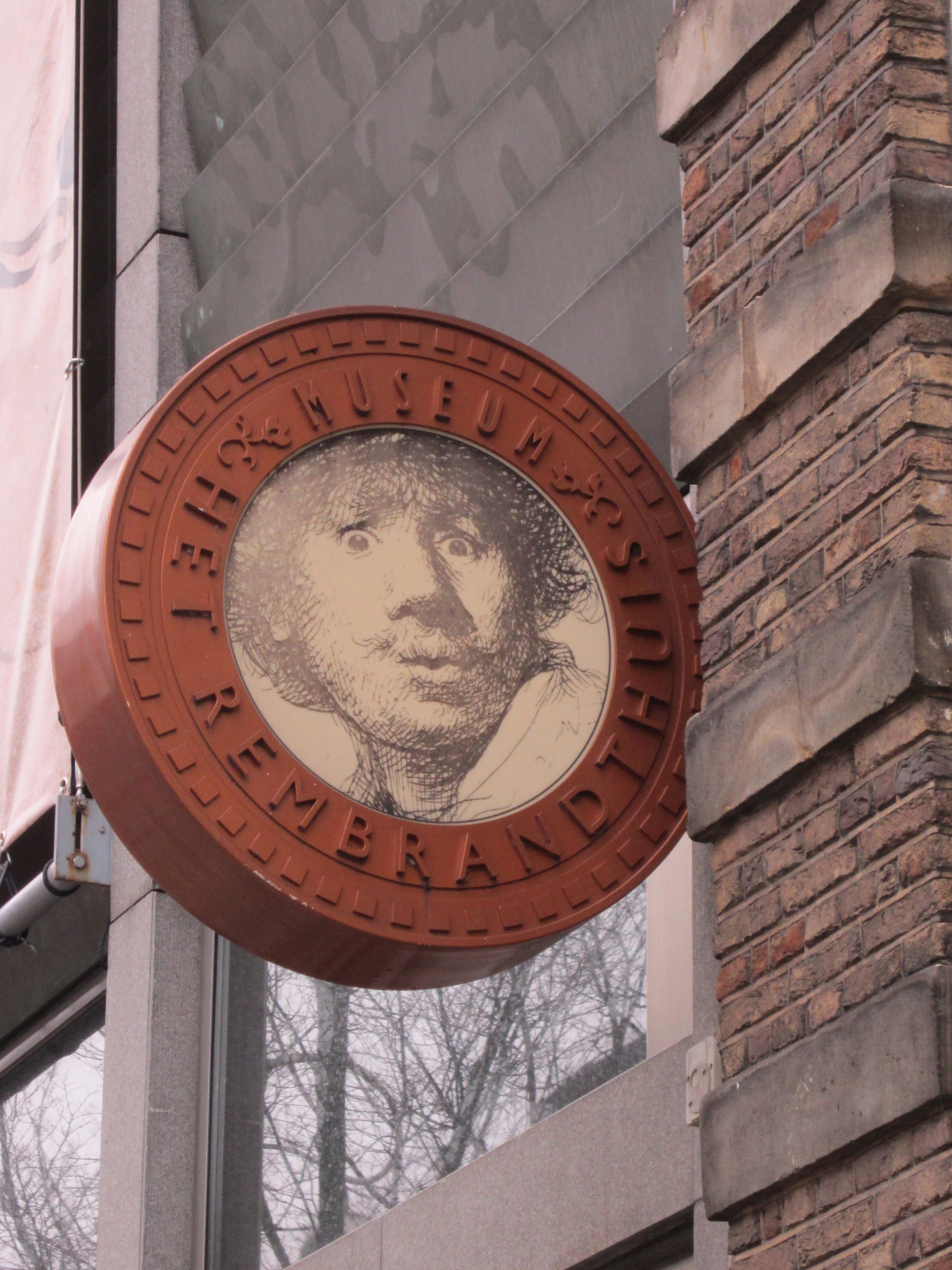
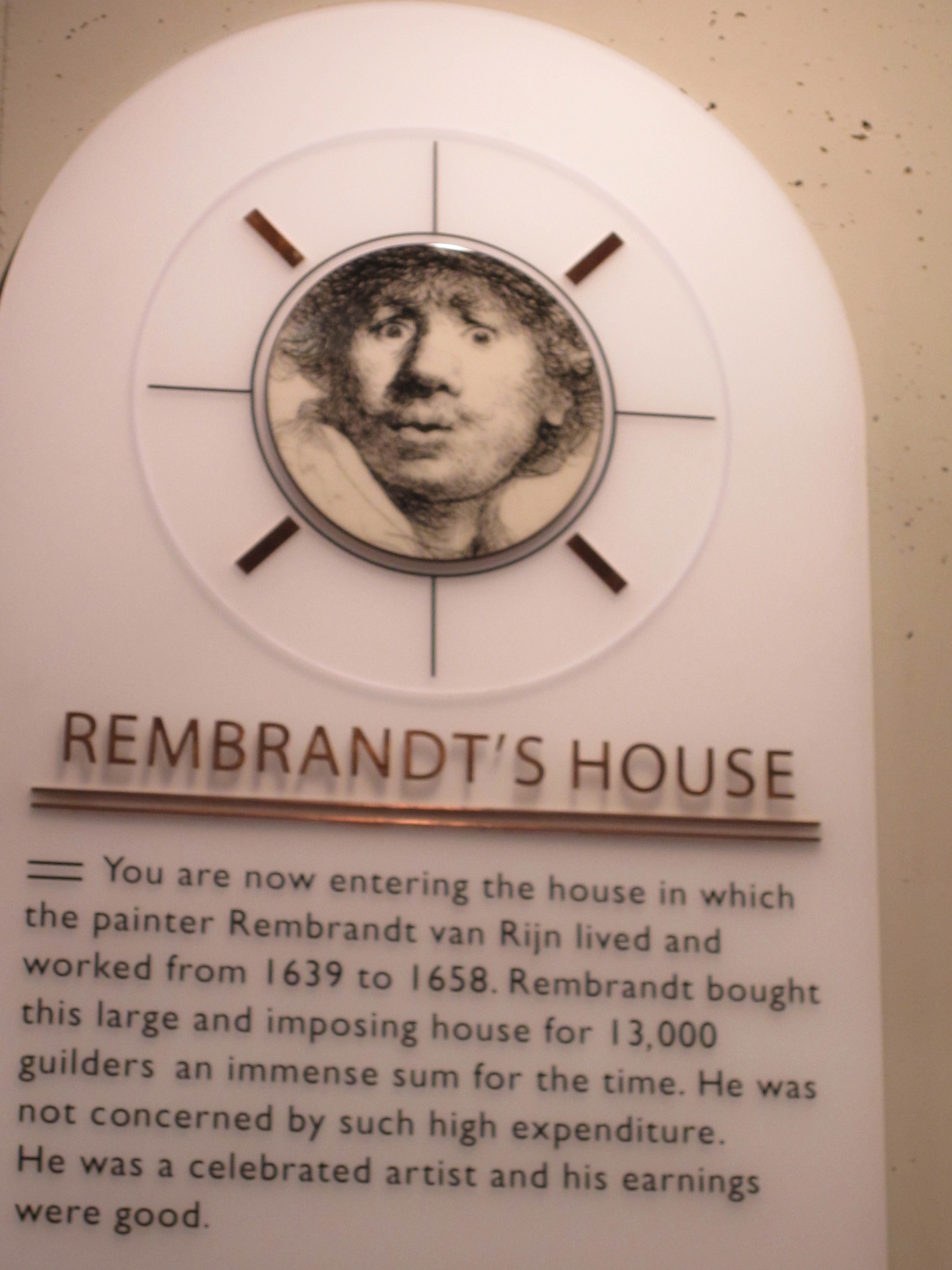
Most art travelers know that Amsterdam is the home of the Rijksmuseum and the Van Gogh Museum. But if you’ve never been to the Rembrandt House Museum in Amsterdam you really need to put it on your Art Travel Bucket List. It’s a complete gem.

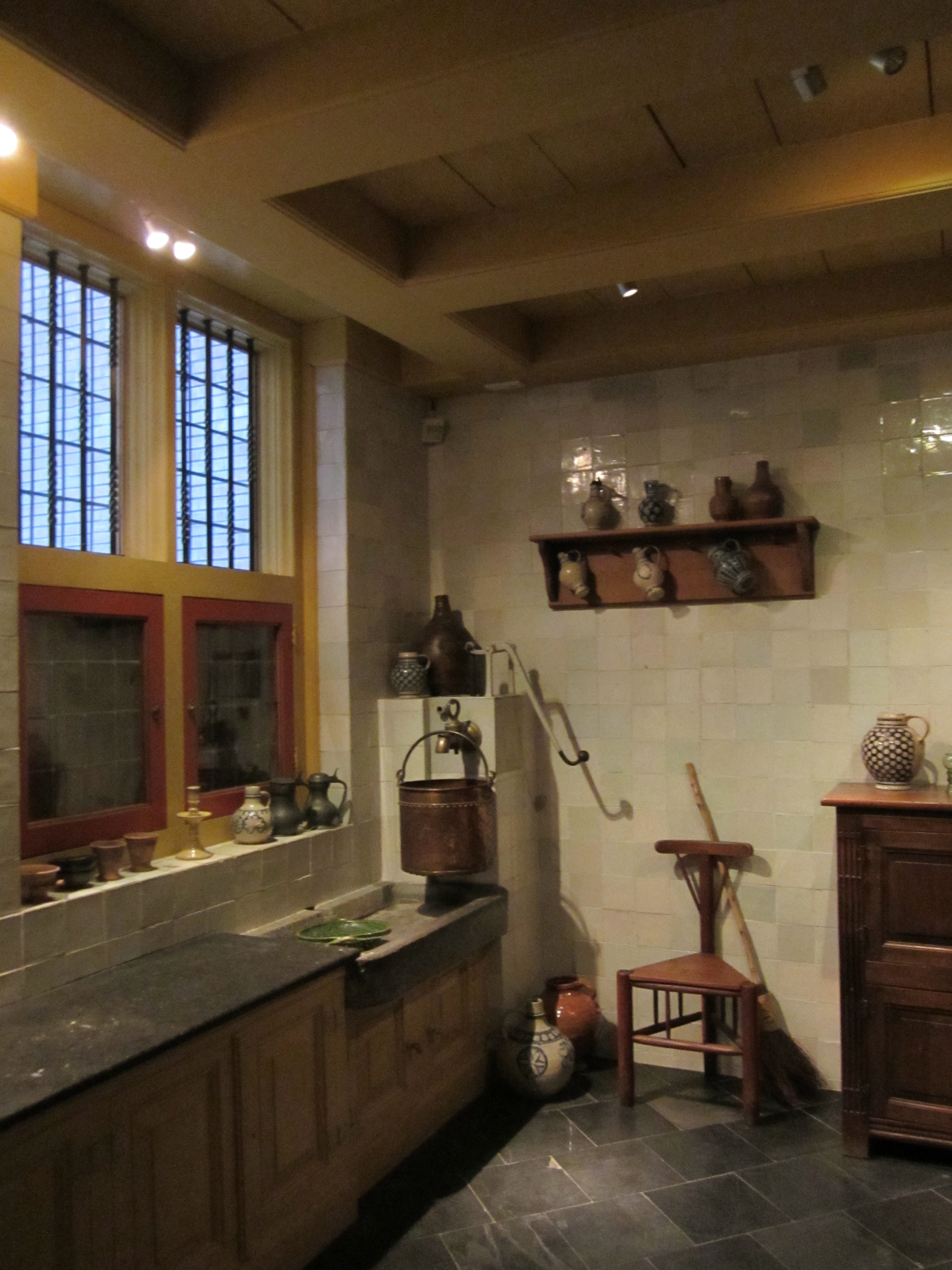
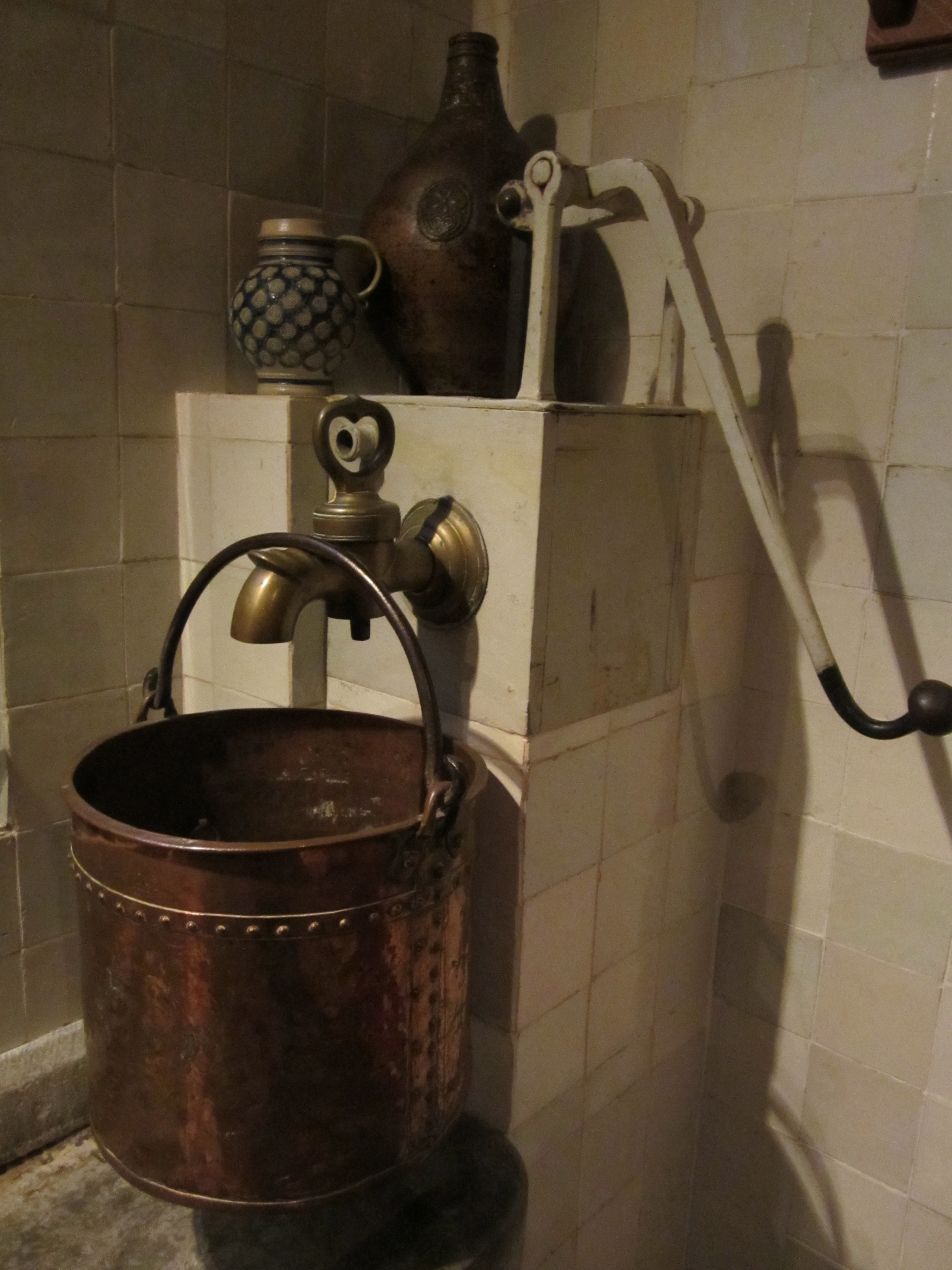
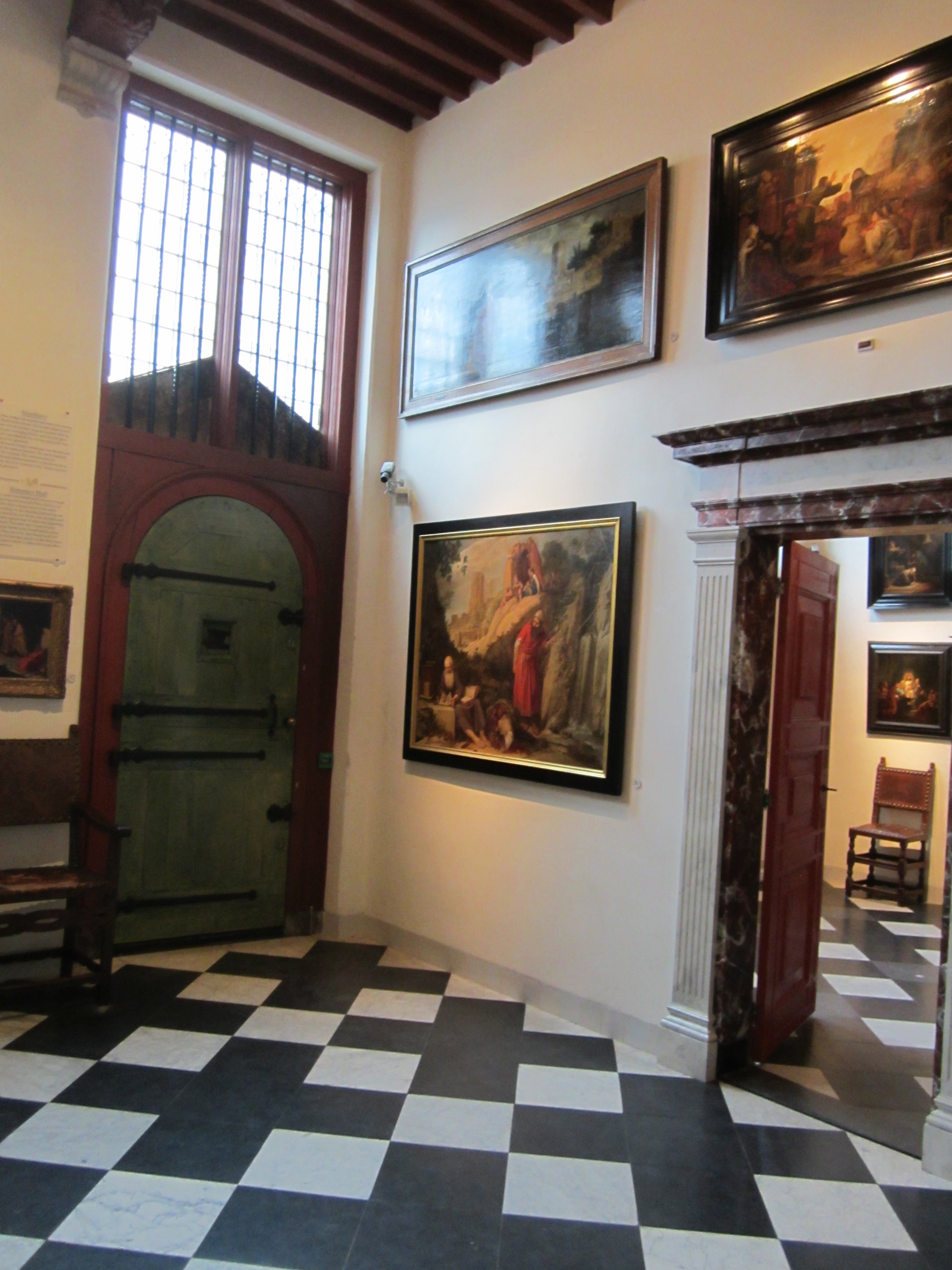
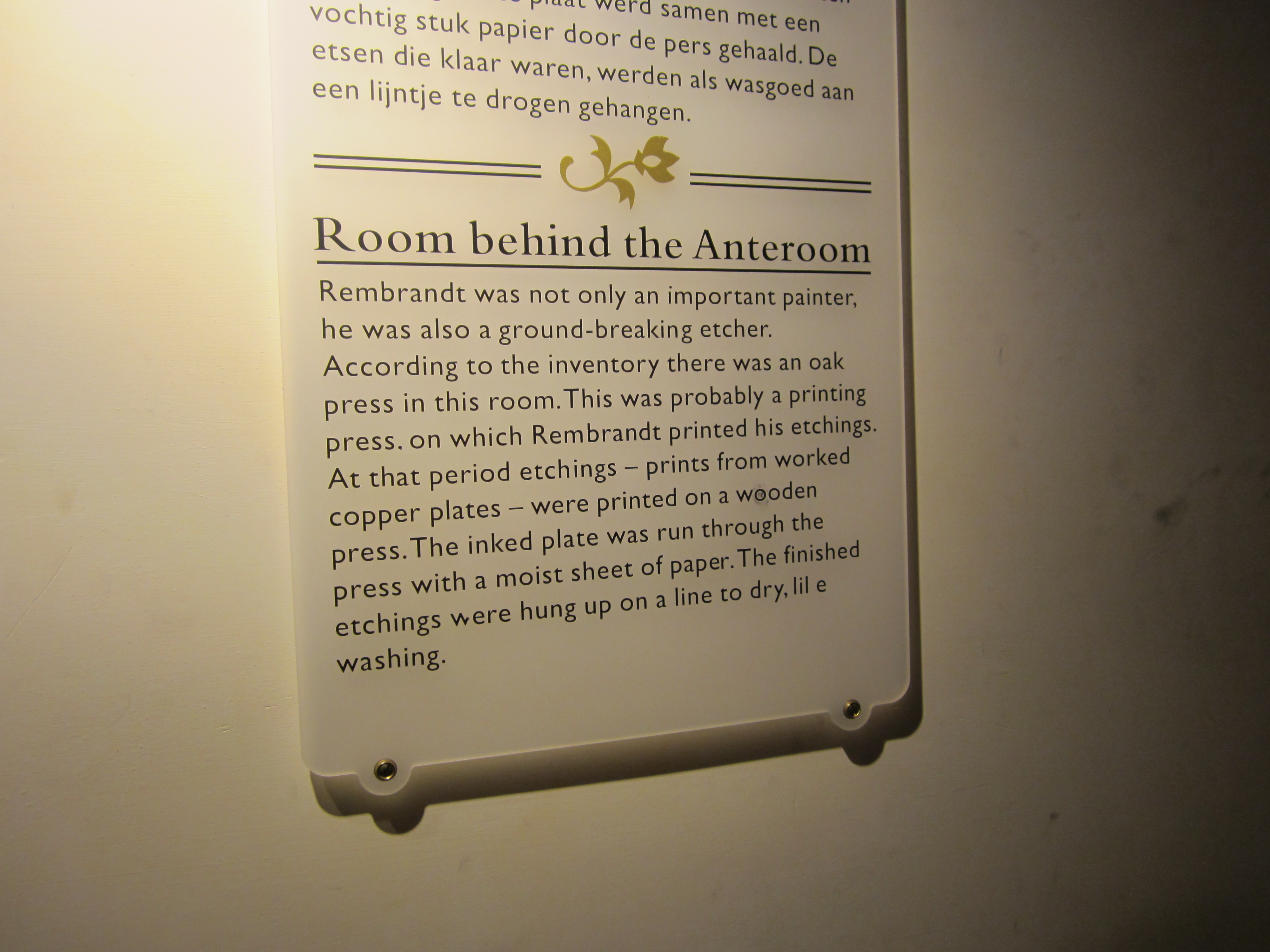
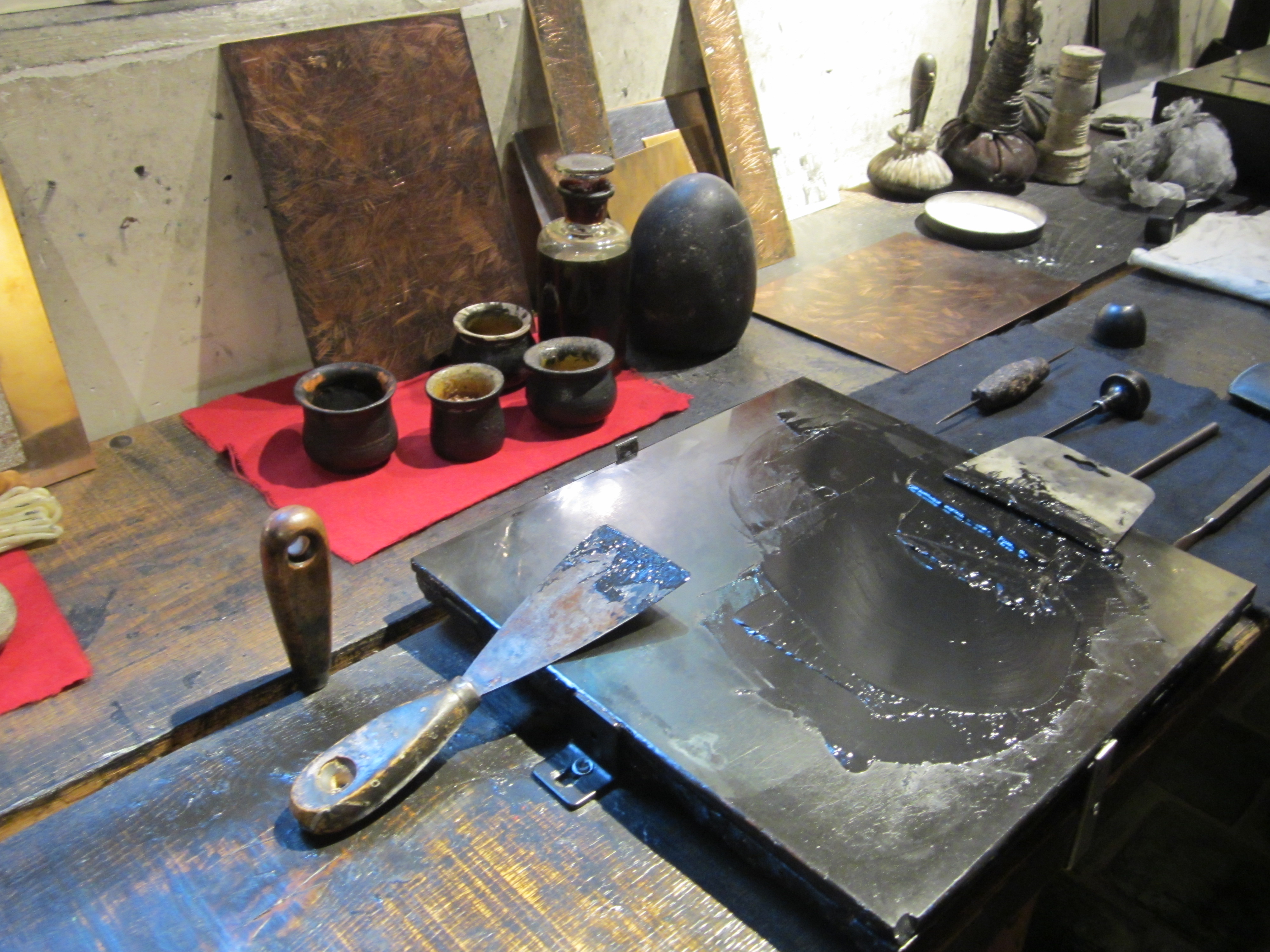
Rembrandt bought the house in 1639, just a few years after he painted The Anatomy Lesson, the same year he was commissioned to paint Nightwatch. He was living large, but only for the next 15 years. He went bankrupt in 1656 and was forced to auction off his house and assets. Luckily, the house was never torn down and was bought by the city of Amsterdam in 1906. It has been beautifully restored to the condition it would have been in during Rembrandt’s day, including many reproductions of his own and other paintings he collected. The museum staff offers daily art demonstrations in the etching and painting studios.

If you can’t get there soon, maybe you can still enjoy my photos. They’re not the best quality, but you get the idea.
IMG_1630 IMG_1632 IMG_1636 IMG_1637 IMG_1640 IMG_1642 IMG_1643 IMG_1645 IMG_1647 IMG_1648 IMG_1649 IMG_1650 IMG_1652 IMG_1654 IMG_1655 IMG_1657 IMG_1658 IMG_1659 IMG_1660 IMG_1661 IMG_1662 IMG_1663 IMG_1664 IMG_1665

IMG_1666

IMG_1667

IMG_1481

The Anatomy Lesson by Nina Siegal: Highly recommended

The Rembrandthuis in Amsterdam: Also highly recommended

For further reading: I highly recommend another historical novel set in Amsterdam: History of a Pleasure Seeker by Richard Mason. Read my post about that book and the Willet-Holthuysen Museum in Amsterdam here.
History of a Pleasure Seeker - US paperback cover

History of a Pleasure Seeker – US paperback cover



Visit Saint-Malo with Anthony Doerr

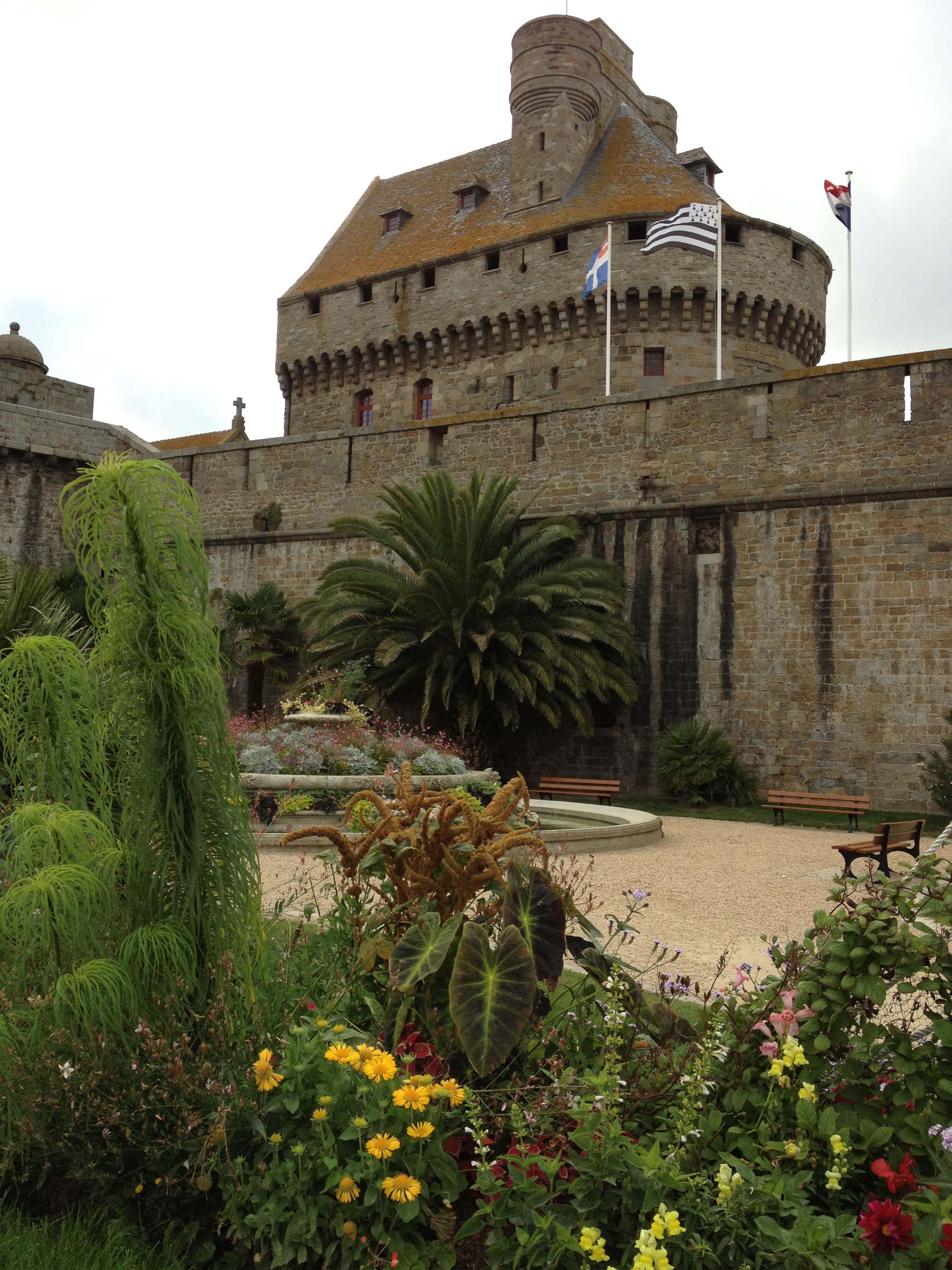
I just finished Anthony Doerr’s most recent book, All The Light We Cannot See (Scribner 2014). I’ve loved Doerr ever since The Shell Collector, About Grace and Four Seasons in Romebut this latest novel is nothing short of breathtaking. And best of all, at least for me, the novel is set in Saint-Malo, a small fortified town on the coast of Brittany which I’ve had the pleasure to visit. Doerr captures its briny smells and moody seas just perfectly.

allthelightwecannotsee

Doerr has a rare gift. He understands what makes science and nature tick, but he also has the words to elevate them them into art. He can make seashells, snails, rare diamonds and radio waves all seem miraculous.

This time Doerr sets his sights on France during World War II, blending history, technology and legend to tell the story of a blind French girl and a young German soldier whose destinies are entwined through the miracle of sound. All the light we cannot see.

The story is artfully woven. It moves back in forth in time and place, spiraling faster and faster toward its incredibly suspenseful center. It begins in Paris where a young blind girl named Marie-Laure lives with her devoted father, who is the master locksmith at the Museum of Natural History. She grows up in a magical world of science and cherishes her braille edition of Twenty Thousand Leagues Under the Sea.

In the meantime, Werner Pfenning begins his own story in a German orphanage where he lives with his sister Jutta. They come upon an abandoned radio out in the trash and Werner plays with it until they hear music — and as Doerr himself would say, “the magic of a stranger’s voice.” Werner dabbles with radios until his aptitude for math and technology (not to mention his snow-white hair and Aryan eyes) earns him a spot in an elite Hitler Youth Academy. Werner becomes an expert at radio transmissions and is drafted into the German army.

When the Germans occupy Paris in 1940, Marie-Laure and her father escape to the west and are welcomed in by a reclusive great-uncle who lives in an old house on the sea in Saint-Malo, Brittany.

The Germans quickly take over Saint-Malo as well, and it becomes a natural German stronghold with all of its medieval ramparts and old stone fortifications. The Germans rule the little town with an iron fist. Little do they know that Marie-Laure’s great-uncle has a secret radio transmitter in his attic.

In this video, Doerr tells us about the inspiration for his novel and his decision to choose Saint-Malo for the setting. Apparently he was traveling through France on a book tour and found himself in the lovely town of Saint-Malo. Like me, he had no idea that the town had nearly been destroyed by American bombs during the liberation of France in 1944.

If you get the chance to take a 2-3 day side trip from Paris, you should go to Saint-Malo. It is easily reachable by train from Gare Monparnasse. Or perhaps take the train to Rennes, rent a car, drive to Mont Saint-Michel, and then drive 25 or so miles to Saint-Malo. I enjoyed my stay at Le Grand Hôtel des Thermes, which is right on the beach and a short walk from the old town walls. You can take a tour of Fort National, the place where Marie-Laure’s great-uncle is imprisoned at the end of the German Occupation, or Memorial 39/45 Blockhaus, which is what remains of a German anti-aircraft defense blockhouse. A guided tour of the blockhouse is followed by a film “The Battle of Saint-Malo.”

But most of all, take an afternoon to stroll through the same Saint-Malo streets as the brave young Marie-Laure. Walk along the windswept ramparts, enjoy the fabulous seafood, and then maybe stop in a boulangerie and order a baguette. And just in case, check inside the baguette in case there’s a secret slip of paper from the French resistance. . . .

IMG_3412

Porte Saint-Thomas, Saint Malo, France.


IMG_3416

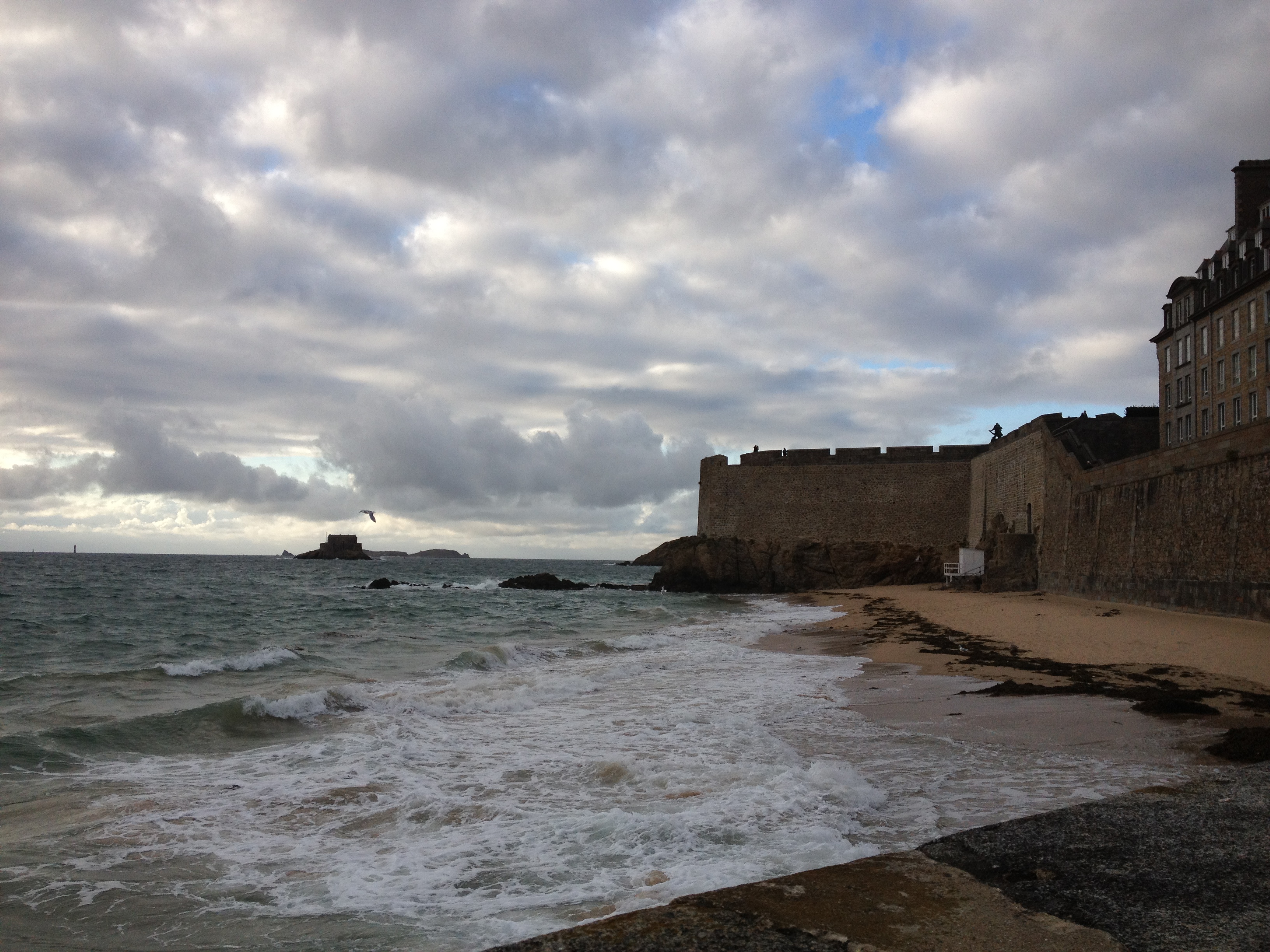
Saint-Malo sea ramparts with Fort National in the background. Marie-Laure’s uncle Etienne is arrested and imprisoned in Fort National at the end of the German occupation. A stray American shell hit the Fort on August 9th, killing 18. Etienne is there.

IMG_4539

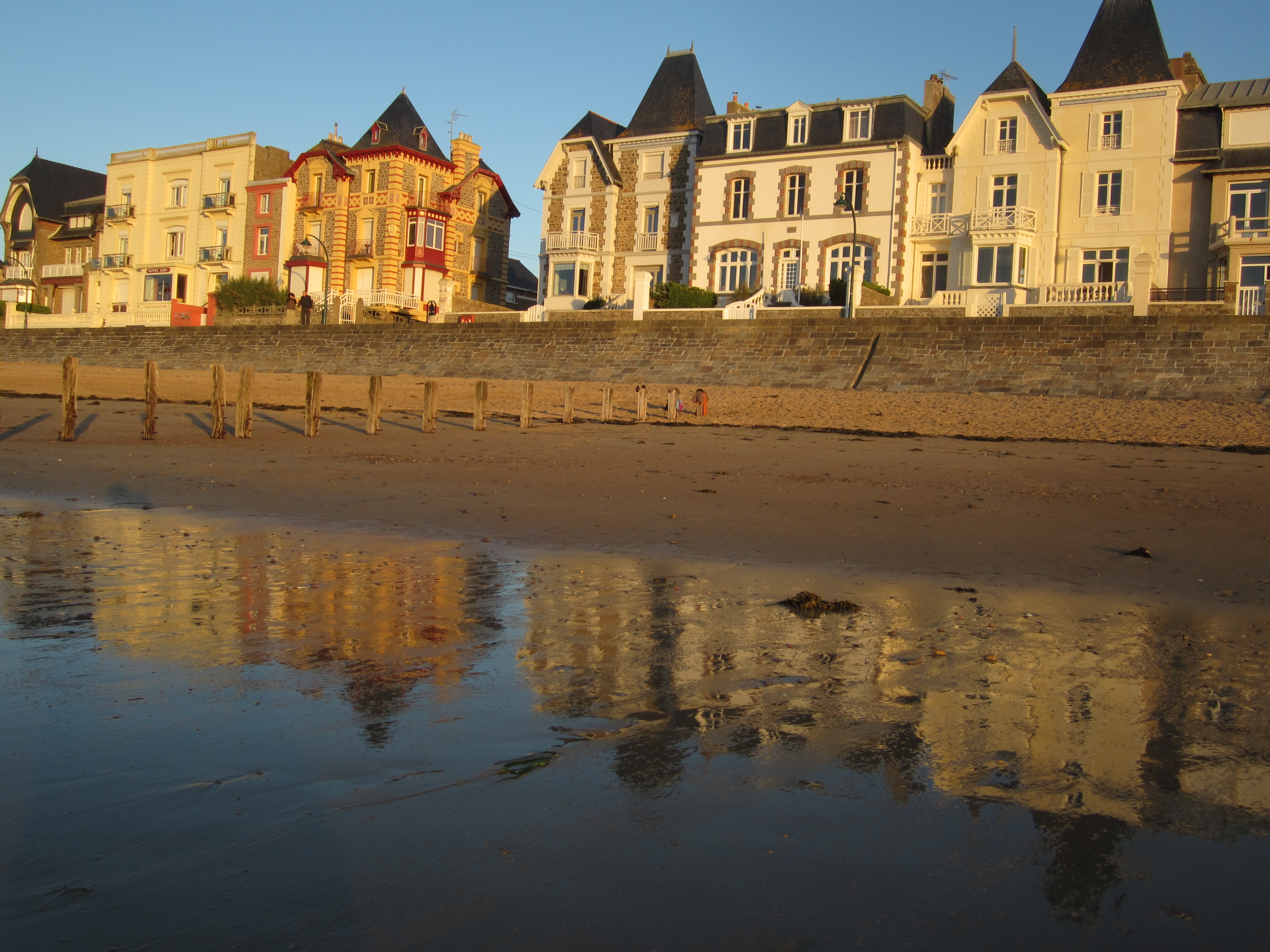
The houses of Saint-Malo reflect their golden light onto the wet beaches as the tide recedes. I didn’t know at the time that much of Saint-Malo had to be rebuilt after the war.

IMG_4553

IMG_4557

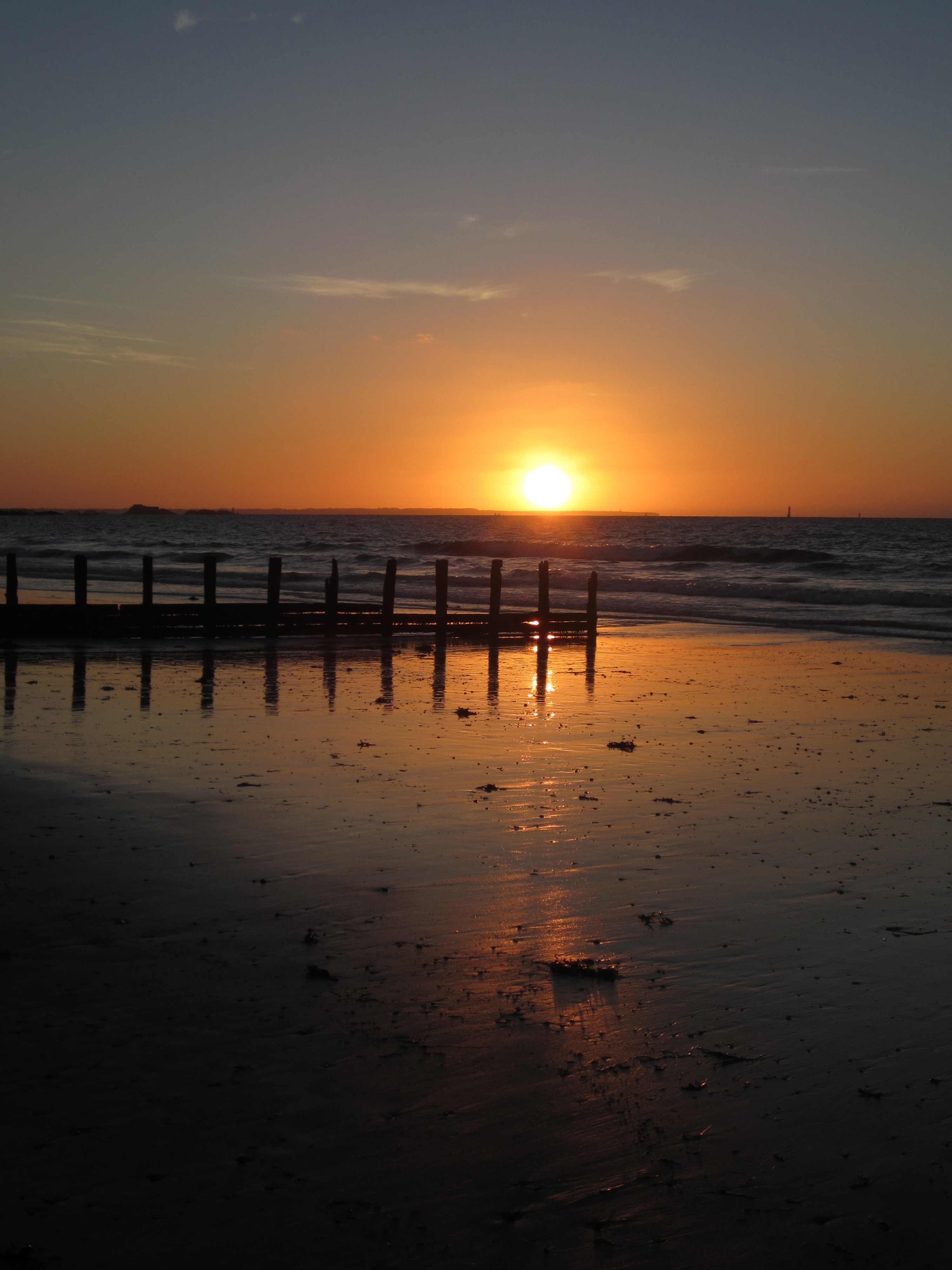
Saint-Malo sunset in more peaceful times.

IMG_4554

A view of Le Grand Hôtel des Thermes from the beach


The view from Le Grand Hôtel des Thermes

The view from Le Grand Hôtel des Thermes

IMG_4628

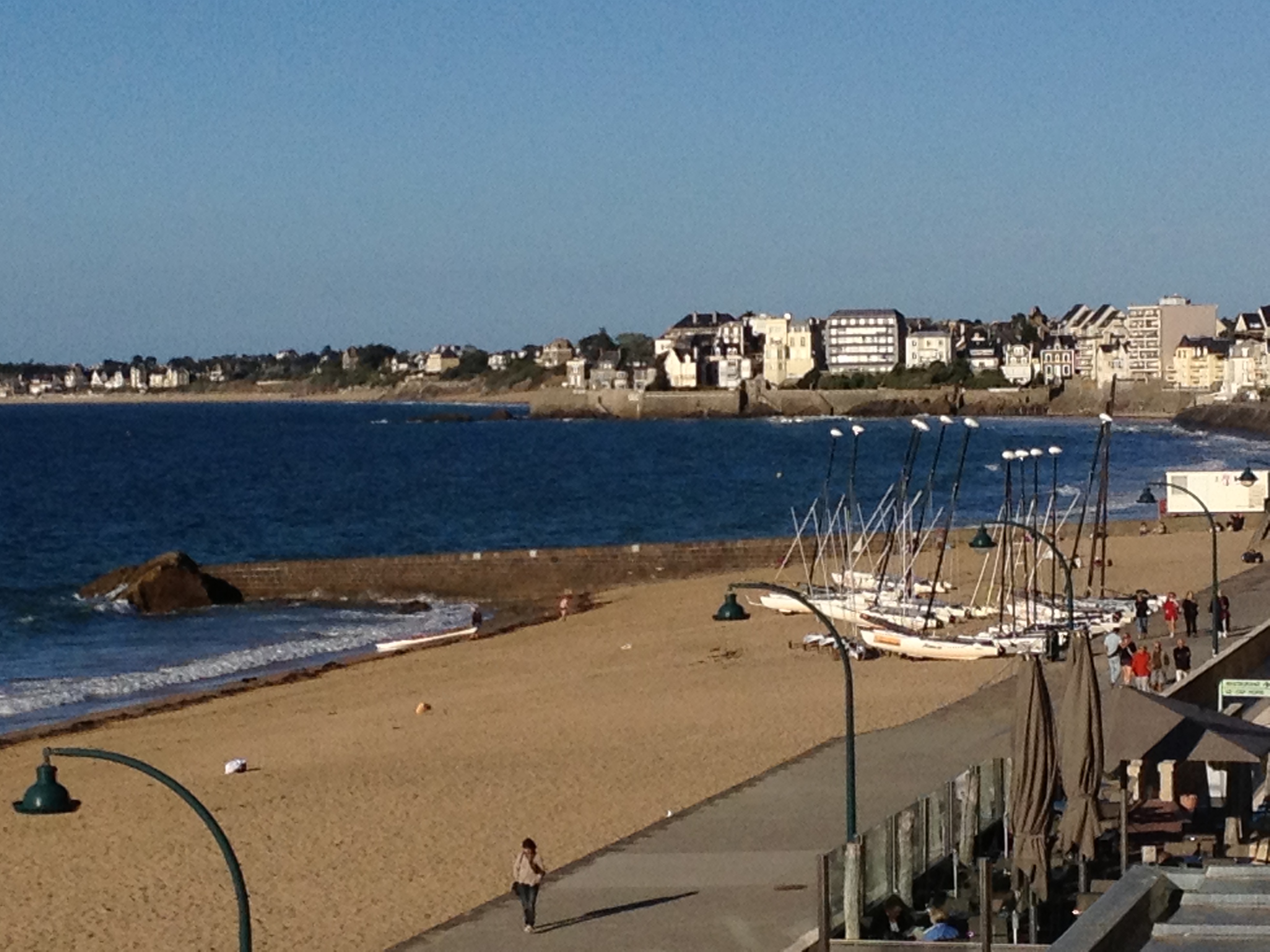
A view of the Saint-Malo harbor from Dinard

IMG_4633

If you have time, the drive west from Saint-Malo to Cap Fréhel is magnificent.

IMG_4638

Cap Fréhel, France, which was also occupied by the Germans in World War II.

IMG_4640

Cap Fréhel, France in more peaceful times


All The Light We Cannot See by Anthony Doerr: Most highly recommended. I’m serious, it’s knock-your-socks-off good.


A Paris Apartment: Boldini’s Madame de Florian

parisapartment


I’ve got a new Paris art novel for you: A Paris Apartment by Michelle Gable (St. Martin’s Press 2014).

It all began with an amazing but true story of a long-lost Boldini portrait of a woman named Marthe de Florian, pictured below.

Madame de Florian by Giovanni Boldini (1888), private collection. Sold for 2.1 million euros at a Drouot house auction in September, 2010.

In 2010, the London Telegraph reported the fascinating true story about an abandoned Paris apartment. When estate representatives entered the dusty apartment, it had been untouched for 70 years. They discovered roomfuls of antiques and what appeared to be a previously unknown portrait by the Italian painter Giovanni Boldini. It turns out the woman in the portrait was Marthe de Florian, who had lived in the abandoned apartment back in the 1890s. A love letter from Boldini to de Florian confirmed the painting’s provenance and a record-setting auction followed.

Marthe de Florian's apartment in Paris, abandoned by her descendants in 1940, reopened in 2010.

Marthe de Florian’s apartment in Paris, abandoned by her descendants in 1940, reopened in 2010. (Source: michellegable.com/2014/04/finding-inspiration-moving-forward )

This book brings to mind one of my favorite art history novels, Gioia Diliberto’s I Am Madame X, which told the story of the woman behind John Singer Sargent’s infamous painting. I’ve blogged about that book, that painting, and John Singer Sargent’s years in Paris here.

It turns out that Giovanni Boldini was a friend of John Singer Sargent’s and they traveled in the same Paris art circles. As Gable reveals in the book, Boldini took over Sargent’s art studio on rue Notre Dame des Champs after Sargent abandoned Paris in favor of London. Boldini’s style is similar to Sargent’s, but perhaps even bolder and more stylized. He was, as Michelle Gable says in the book, known as “The Master of Swish.”

Giovani Boldini, Self-Portrait (1892)

Giovani Boldini, Self-Portrait (1892)

73 rue des Notre-Dame-Des-Champs, once Boldini's studio in Paris

73 rue des Notre-Dame-Des-Champs, once Boldini’s studio in Paris

But who was this Madame de Florian? We know that she was an actress and demimondaine who modeled for Boldini in a scandalously seductive pose. She lived in a lovely Paris apartment in the 9th arrondissement. She had at least one descendant who lived in the south of France and who cared little for the remnants of her grandmother’s life. But the limited information available about her just makes you want to know more. Wouldn’t it be great if she had left behind a diary, telling us the secrets behind this mysterious life?

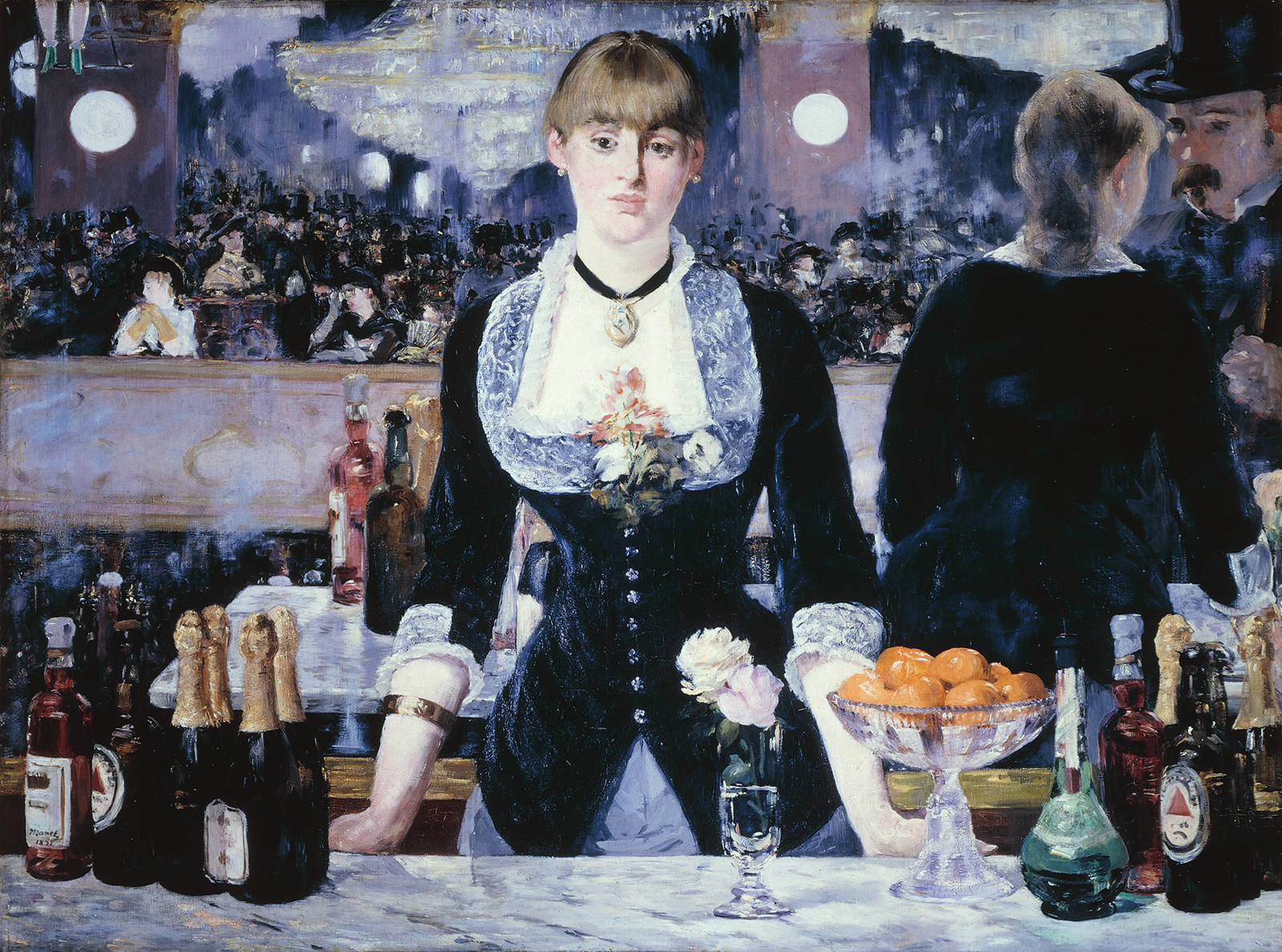
Thanks to Michelle Gable, that’s exactly what we get in A Paris Apartment. Marthe de Florian’s fictional diaries are rich, engaging and completely alive. Gable conjures up a woman who started as a bartender at Les Folies Bergères (I couldn’t help but picture her just like the bartender in Manet’s famous painting, including the dress and the jewelry). It was well known at the time that many of these bartenders were semi-prostitutes who supplemented their earnings at the bar with gifts and income from their customers. Michelle Gable’s Marthe de Florian knows just how to target the wealthiest customers, and soon she is living in a grand Paris apartment and wearing the most fashionable clothes.

Edouard Manet, A Bar at The Folies-Bergère (1881-1882)

Edouard Manet, A Bar at The Folies-Bergère (1881-1882)

Michelle Gable’s Marthe fully enjoys the demimonde lifestyle, sipping beer or absinthe with bohemian artists, writers and dandies, including Boldini, Singer Sargent, Proust, Zola, Dumas and the Count de Montesquiou. We even have an appearance by Victor Hugo’s granddaughter Jeanne. Like Marthe de Florian, many of these real-life characters posed for Boldini portraits, including de Montisquiou, Jeanne Hugo and Singer Sargent. A quick look at each of these portraits can really add to your enjoyment of these historical passages of the book.

Robert de Montisquiou as painted by Giovanni Boldini (1897), Musée d'Orsay

Giovanni Boldini,  Count Robert de Montesquiou (1897), Musée d’Orsay.  As Madame de Florian says in her fictional diary in the book: “According to Montesquiou, Boldini positively insisted on the inclusion of Le Compte’s beloved turquoise-handled cane in the portrait. He ordered Robert to hold it up near his mouth and gaze at it fondly, as one might an old lover one was glad to see again.”


Giovanni Boldini, Madame Georges Hugo (Jeanne Hugo) and Her Son, Charles Daudet (1897), private collection

Giovanni Boldini, Madame Georges Hugo (Jeanne Hugo) and Her Son, Charles Daudet (1898), private collection

Giovanni Boldini, JOhn Singer Sargent (1890), private collection

Giovanni Boldini, John Singer Sargent (1890), private collection

In addition to the story of Marthe de Florian, there is a parallel modern-day story of April Vogt, an American furniture expert from Sotheby’s who is called to Paris to help prepare the contents of the apartment for auction. Although these chapters might feel a little  “rom-com” predictable to some, they offer fascinating insights into the world of art world auction houses and estate sales, and add another layer of interest, romance and fun Paris scenery to the novel. One of the highlights is when April attends a traditional bal des pompiers (Fireman’s Ball) with an attractive French lawyer on the night before Bastille Day. I’m picturing the movie trailer already!

A Paris Apartment by Michelle Gable:  Highly Recommended

Related Reading: I Am Madame X by Gioia Diliberto

Related Post: John Singer Sargent and Madame X 

iammadamex


Book Review and Related Paris Sites: Lovers at the Chameleon Club, Paris 1932

lovers chameleon club

I couldn’t wait to get my hands on this book. I mean, just look at that cover. So hard to resist for a lover of all things Paris.

But I have to admit, the charms of the story resisted me for nearly 200 pages. While the structure of the book makes it feel as if it was enormously fun to write, it makes it quite a challenge for a reader to slip into. It is the story of a band of friends, acquaintances, enemies and lovers in Paris in the 30s and 40s. Their story doesn’t unfold, it demands that you piece it together for yourself, like a 2,000 piece jigsaw puzzle of a Picasso painting.

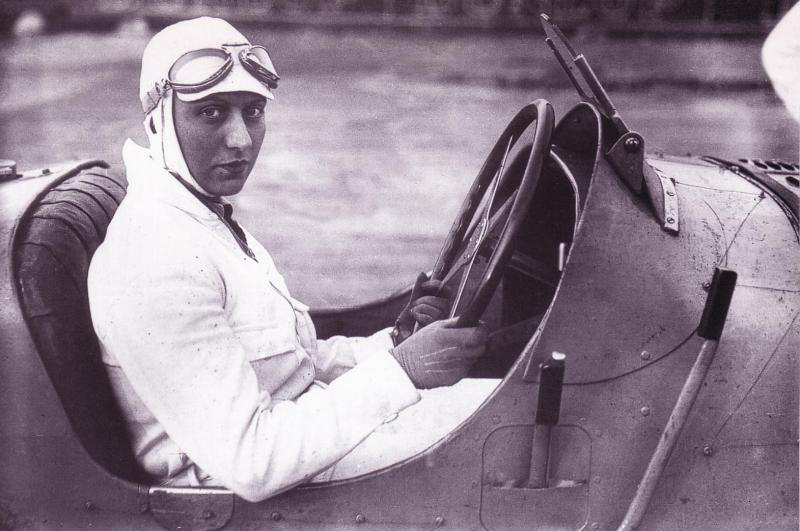
You hear the discordant voices of a number of strange and lively characters, from a Hungarian photographer named Gabor (modeled after the true-life Brassai ), an American expat writer (à la Henry Miller), a French baroness married into the Rossignol car dynasty, a French language teacher named Suzanne who works for the Resistance, and then most bizarrely of all, the alleged great-niece of a character named Lou Villars, a lesbian race-car driver, German spy and agent of the French Gestapo (a stand-in for the real-life Violet Morris). Yes, there’s a lot on the plate.

Violet Morris, French race car driver and Nazi spy. Source: http://www.influx.co.uk/wordpress/blog/fast-ladies-women-in-motor-sport/#sthash.nxVIbUzb.dpbs

Violet Morris, the French race car driver and Nazi spy who inspired the character Lou Villars. Source: http://www.influx.co.uk/wordpress/blog/fast-ladies-women-in-motor-sport/#sthash.nxVIbUzb.dpbs

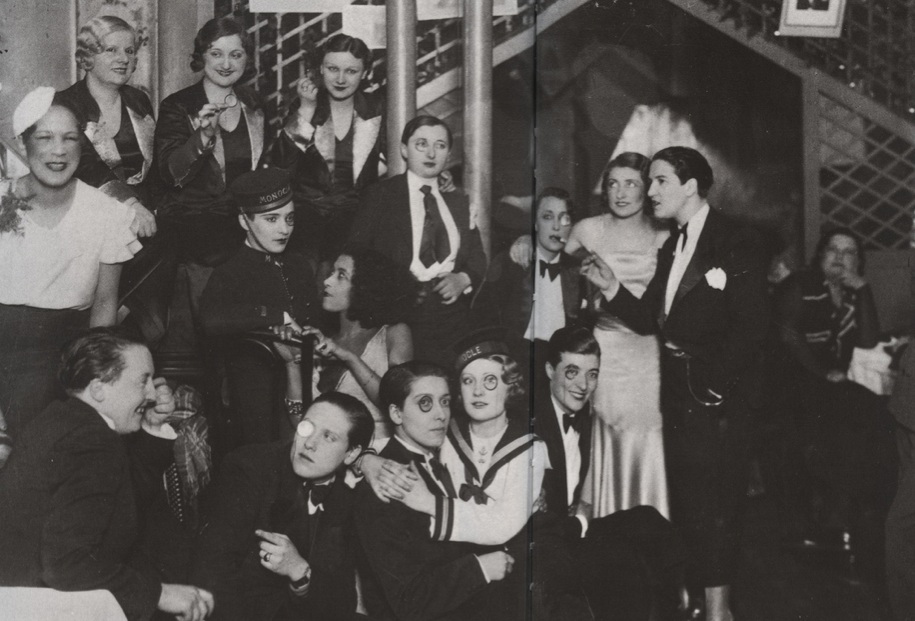
The characters are all drawn to a fictional Chameleon Club in Paris, a free-wheeling 1920s-40s era nightclub with singing acts by cross-dressing sailors and mermaids, men in drag, women in tuxedos, and an owner named Yvonne who parades around with a pet chameleon on her shoulder. When Gabor takes a photo of Lou Villars and her lover Arlette at the club, it is a clear shout-out to Brassai’s Lesbian Couple at Le Monocle, 1932 (Cleveland Museum of Art Collection).

"Lesbian Couple at Le Monocle, 1932" by Brassai, Cleveland Museum of Art

“Lesbian Couple at Le Monocle, 1932” by Brassai, Cleveland Museum of Art

A photo from Le Monocle, a lesbian bar in Montmartre in the 1920s-40s, via http://civillyunioned.tumblr.com/post/11186839284/le-monocle-was-a-well-know-lesbian-bar-located-in

A photo from Le Monocle, a lesbian bar in Montmartre in the 1920s-40s, via http://civillyunioned.tumblr.com

The fictional Chameleon Club is the perfect setting and a revealing title for a book about people who cross all sorts of lines in all sorts of ways. Especially when war comes.

That’s when the narrative shifts into a faster, more sinister gear. Lou Villars takes up professional race car driving on behalf of the Rossignols and becomes a public relations sensation. She dresses like a man and gets a double mastectomy to fit behind the wheel. But soon, enemies in France take away her license on the grounds that she is a threat to morality. Smelling opportunity, the Germans invite her to the 1936 Berlin Olympic Games and to dinner with Hitler. Lou is easily seduced into becoming a German spy, and agrees to travel through France seeking out intelligence such as the weakness in the Maginot Line. (Believe it or not, nearly all of this is a true story about the real Violet Morris.)

The stories about Lou Villars continue, and by now, you don’t care who’s narrating or why. You’re hooked into hearing about how the good people of the Chameleon Club endured and resisted the horrors of the Occupation, and how people like Villars could possibly rationalize the evils they perpetrated. We learn that Lou Villars (and in turn, the real Violet Morris) may have been involved in the Vel d’Hiv’ Round-up of 1942, and then became an agent of the French Gestapo, known for her violent interrogations of French resistance workers. Which would all be terrific fiction, but is actually based on the true story of Violet Morris.

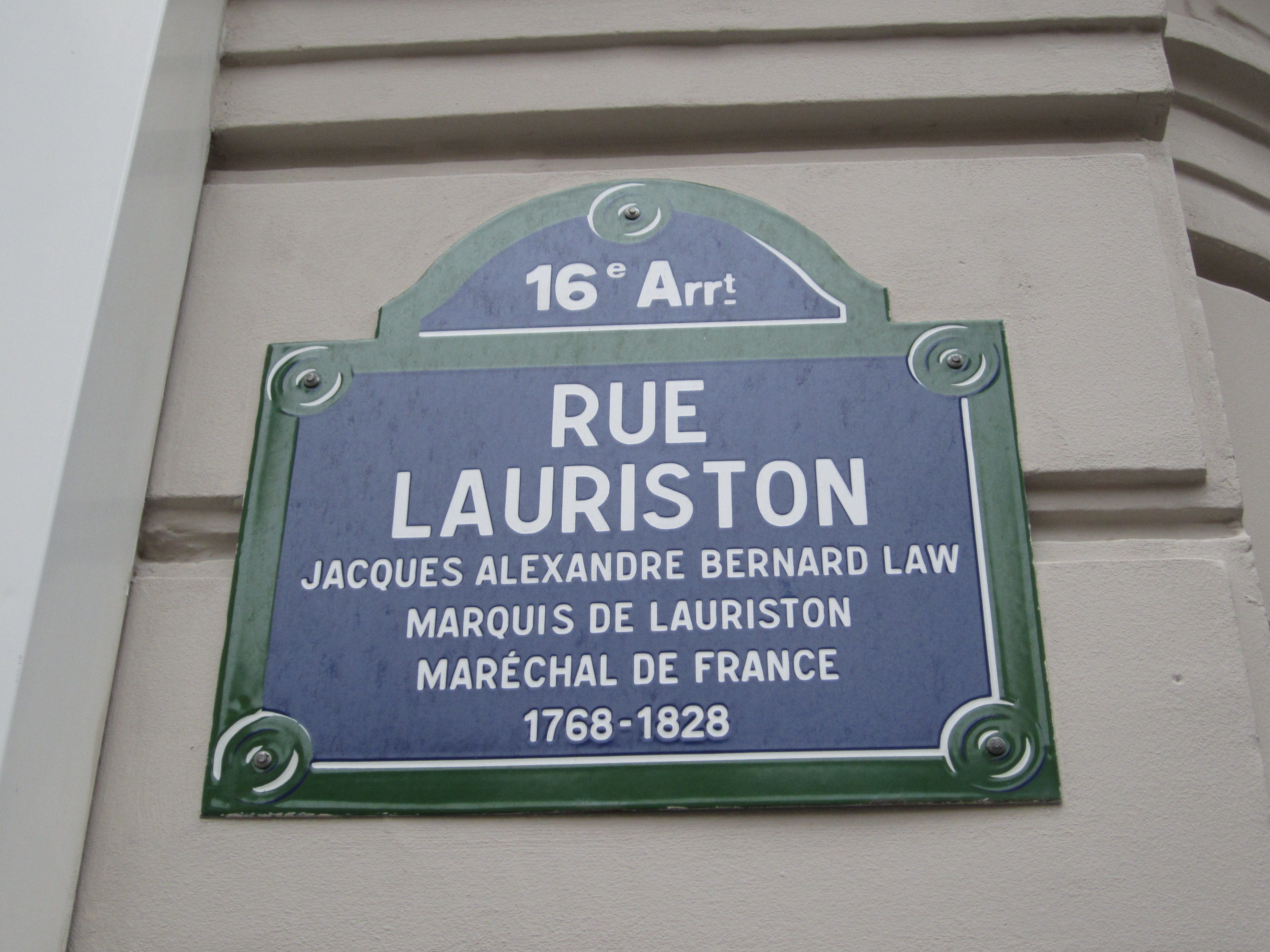
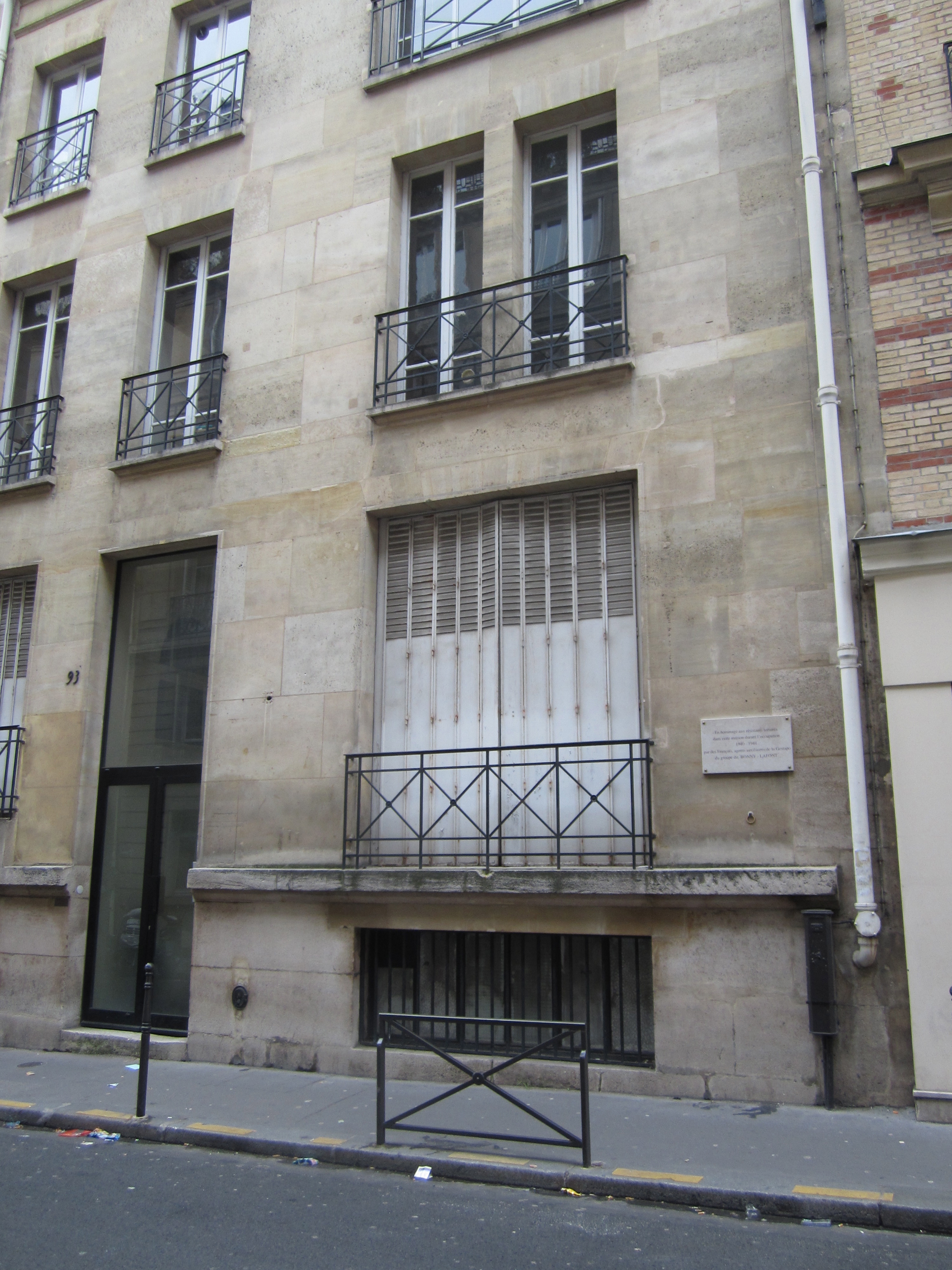
Lou Villars becomes a notorious interrogator with the 93 rue Lauriston Gang, a group of French Gestapo gangsters who have been the subject of many books and films, including Louis Malle’s 1974 film, Lacombe Lucien and the 2004 television movie 93, rue Lauriston. The gang’s headquarters were located on a quiet little street in the 16th arrondissement of Paris. Lou Villars conducted her interrogations in the cellar of their building.

I first spotted the plaques for 93 rue Lauriston on my frequent walks through my old neighborhood in the 16th. In fact, the address was just across the street from one of my favorite boulangeries. I took photos of the plaques and went back to learn more about the horrible history of this neighborhood.

IMG_0512

The plaque outside the former 93 rue Lauriston in the 16th arrondissement of Paris. "In homage to the resistants tortured in this house during the occupation 1940-1944 by the French agents, auxiliaries of the Gestapo, the group "Bonny-LaFont"

The plaque outside the former 93 rue Lauriston in the 16th arrondissement of Paris: In homage to the resistants tortured in this house during the occupation 1940-1944 by French agents, auxiliaries of the Gestapo, the group called “Bonny-LaFont”


93, rue Lauriston

93, rue Lauriston

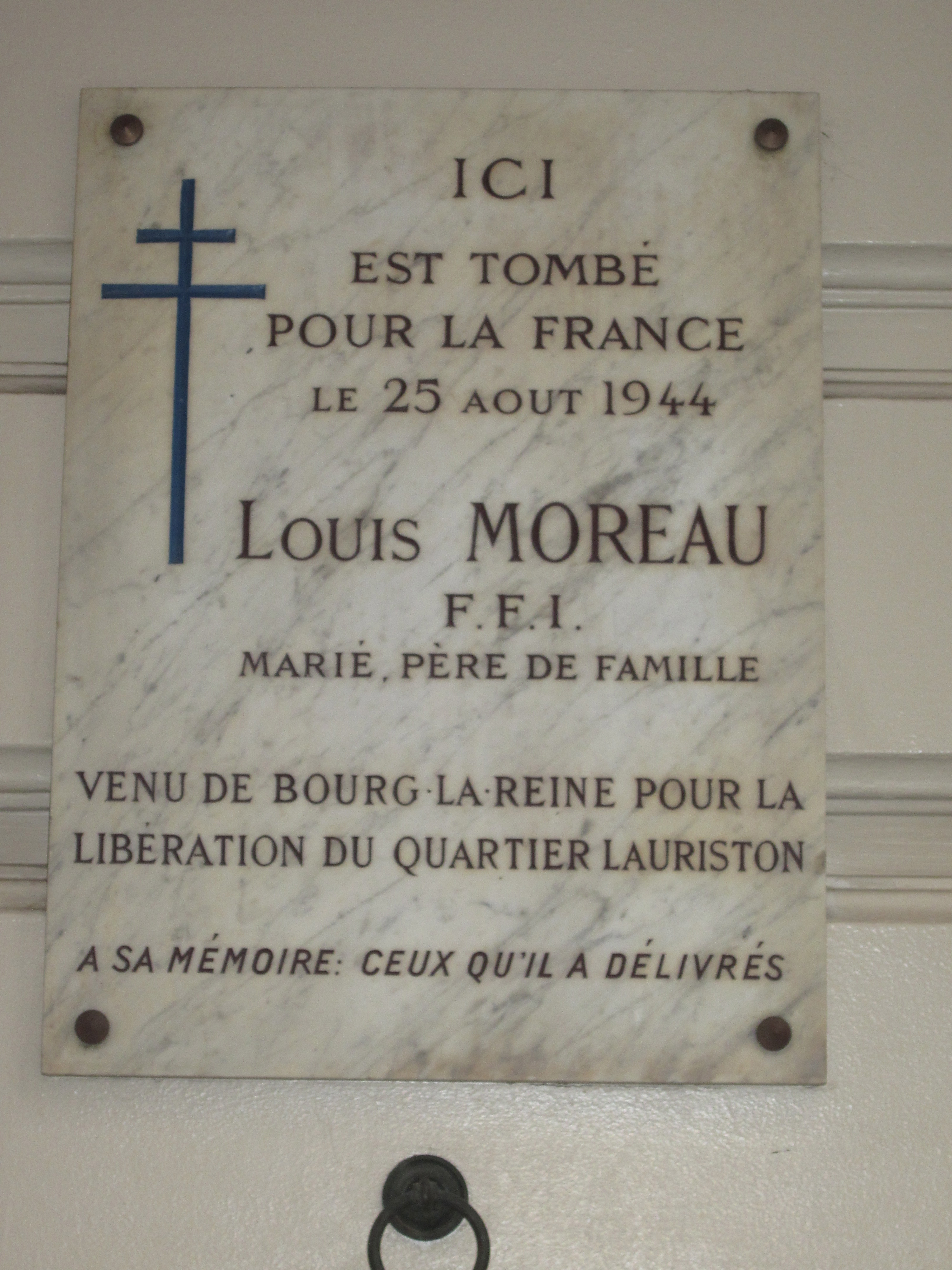
97, rue Lauriston, just a few doors down from the old Gestapo interrogation house, where a lovely boutique hotel now stands is a plaque commemorating one of the heroes who died trying to liberate the Quatier Lauriston.

At 97, rue Lauriston,  where a lovely boutique hotel now stands, there is a plaque commemorating one of the heroes who died trying to liberate the Quatier Lauriston. The hotel is just a few doors down from the French Gestapo house.


IMG_0510

The plaque at 97 rue Lauriston: Here Died For France, August 25, 1944, Louis Moreau, FFI, Married, Father of his Family, Came from Bourg-la-Reine for the Liberation of the Quartier Lauriston. In His Memory: Those He Delivered.

Here's my favorite little rue Lauriston boulangerie, which just goes to show how history and present day life go hand-in-hand in Paris.

Here’s my favorite little rue Lauriston boulangerie, which is just across the street from 93 rue Lauriston. It just goes to show how history and present day life go hand-in-hand in Paris. Maybe that’s why I love it so much.


The book ends without clear resolution, offering different versions about what might have happened to all of the friends and enemies from the Chameleon Club. To me, that was the most satisfying ending of all. Because if there is one thing that historians have learned about the aftermath of the Paris Occupation, is that truth and virtue are very slippery things. Kind of like a chameleon.

Lovers at the Chameleon Club, Paris 1932 by Francine Prose: Highly recommended.


Related posts on this blog about World War II Reads:

Sarah’s Key Paris Sites: https://americangirlsartclubinparis.wordpress.com/2011/12/09/pictures-at-an-exhibition-art-war-and-memory-in-paris/

In this blog post I share my own photographs of the plaques and memorials near the site of the old Paris Velodrome (Vel’ d’Hiv’), along with directions on where to find them.

sarahs-key-high-res1

Some V-E Day Reading – Paris During the Occupation: https://americangirlsartclubinparis.wordpress.com/2012/05/08/some-v-e-day-reading-recommendations/

suitefrancaise journalofheleneberr2 andtheshowentnon americansinparis


Coco Chanel: Sleeping with the Enemy: https://americangirlsartclubinparis.wordpress.com/2012/03/11/coco-chanel-sleeping-with-the-enemy/

sleeping-with-the-enemy-uk

Wine & War in France: https://americangirlsartclubinparis.wordpress.com/2012/10/01/wine-and-war-in-france/

wine-war

Crossing the Borders of Time: https://americangirlsartclubinparis.wordpress.com/2013/01/28/crossing-the-borders-of-time/

crossing-the-borders-2

Art, Books, Paris – The Hare with Amber Eyes: https://americangirlsartclubinparis.wordpress.com/2011/11/30/art-books-paris-the-hare-with-amber-eyes/

hareambereyes1

Pictures at an Exhibition: Art, War and Memory in Paris: https://americangirlsartclubinparis.wordpress.com/2011/12/09/pictures-at-an-exhibition-art-war-and-memory-in-paris/


pictures-at-an-exhibition


Marie-Antoinette’s Hamlet in Versailles

Whether you’ve learned about Marie-Antoinette in history books, novels or movies, you don’t want to miss a trip out to Marie-Antoinette’s Hamlet in Versailles. It deserves its own day on your itinerary. After numerous trips to the main palace of Versailles with friends and family, I finally scheduled an entire day to explore nothing but the grounds of Le Petit Trianon and the Hamlet. Hopefully you can manage to do the same sometime.

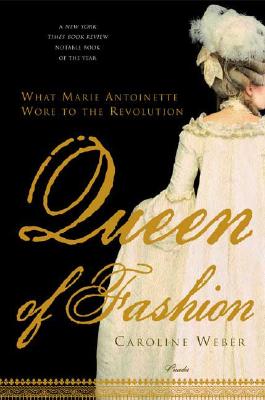
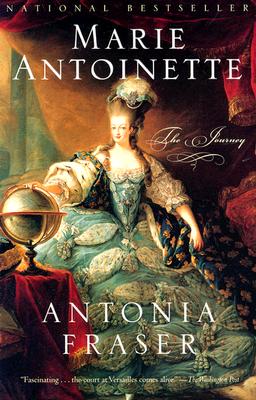
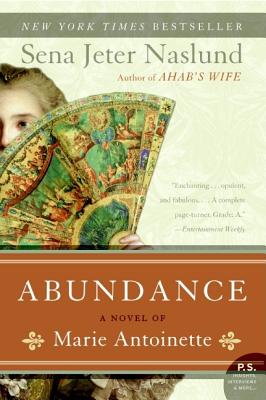
Before you head out, you ought to immerse yourself in Marie’s world through one of these most interesting books:

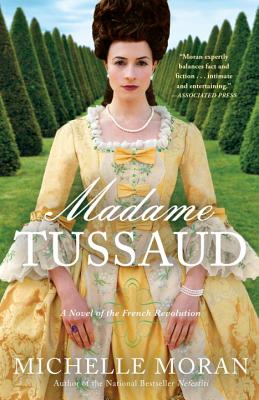
queen of fashion  marie antoinette fraserabundance marie antoinettezweig's marie anoinettemadame tussaud

You’ll find plenty of information about the grounds of Le Petit Trianon and the Queen’s Hamlet once you get to Versailles (excellent resources available on the “Marie-Antoinette’s Estate” tab of the Chateau de Versailles website) but it’s fun to know a little scoop ahead of time.

Marie received Le Petit Trianon as a gift from her husband in 1774, when she was only 18 years old, had just been crowned Queen of France, and apparently had yet to consummate the marriage. It was a sweet gift, considering it had been built for her father-in-law’s mistress Madame du Pompadour, and then passed along at her death to his next mistress, Madame du Barry.

And what does an 18 year-old do with a palace all her own? She calls in the royal architects to polish it up a bit. She started with Le Petit Trianon, which was lovely and private, but apparently lacking.

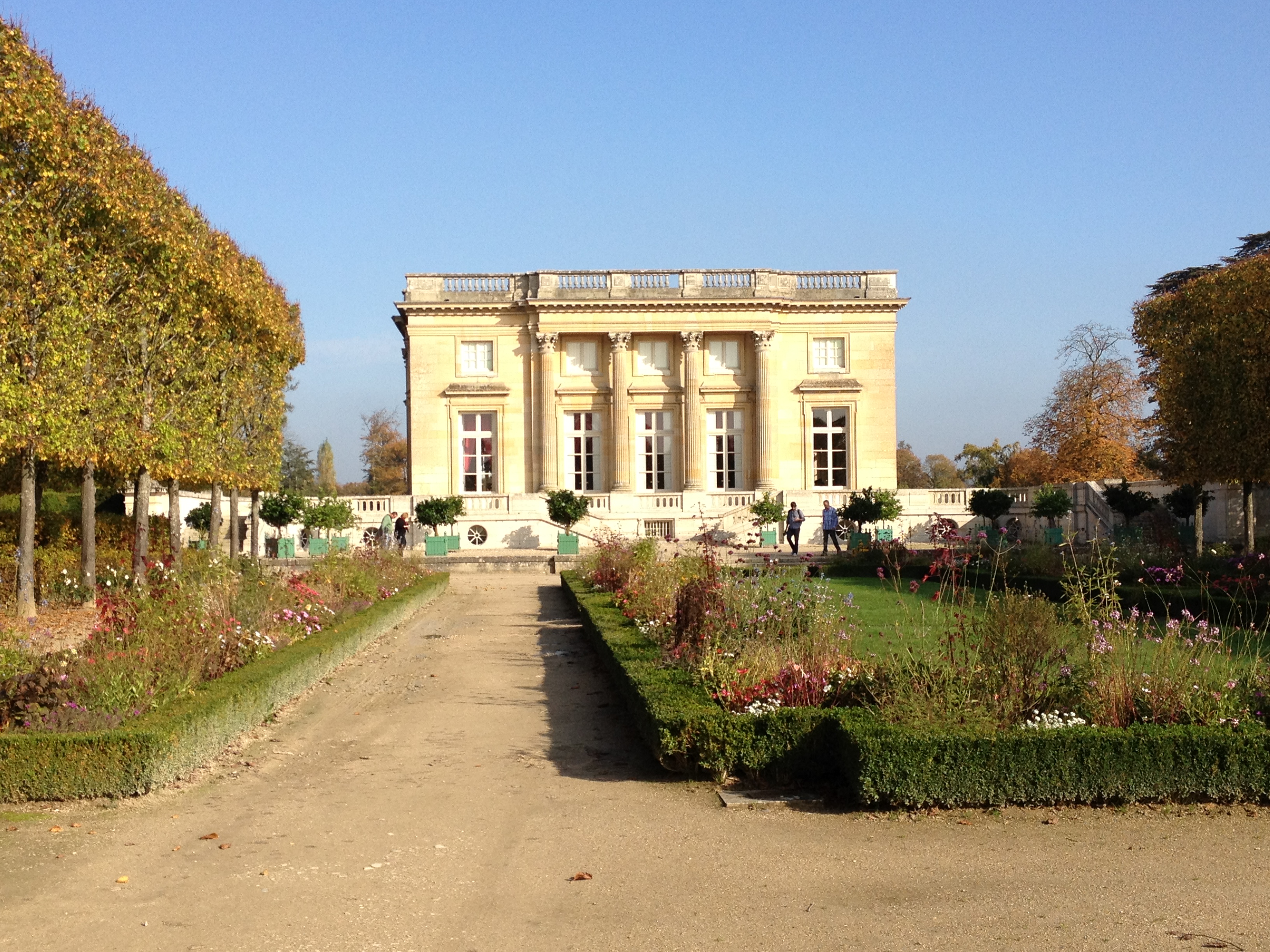
Le Petit Trianon, Versailles

Le Petit Trianon, Versailles

Architect Richard Mique designed Trianon gardens that included paths, hills, streams, a neo-classical Tea Room and Temple of Love, along with a faux farming village called Le Petit Hameau.

IMG_4643


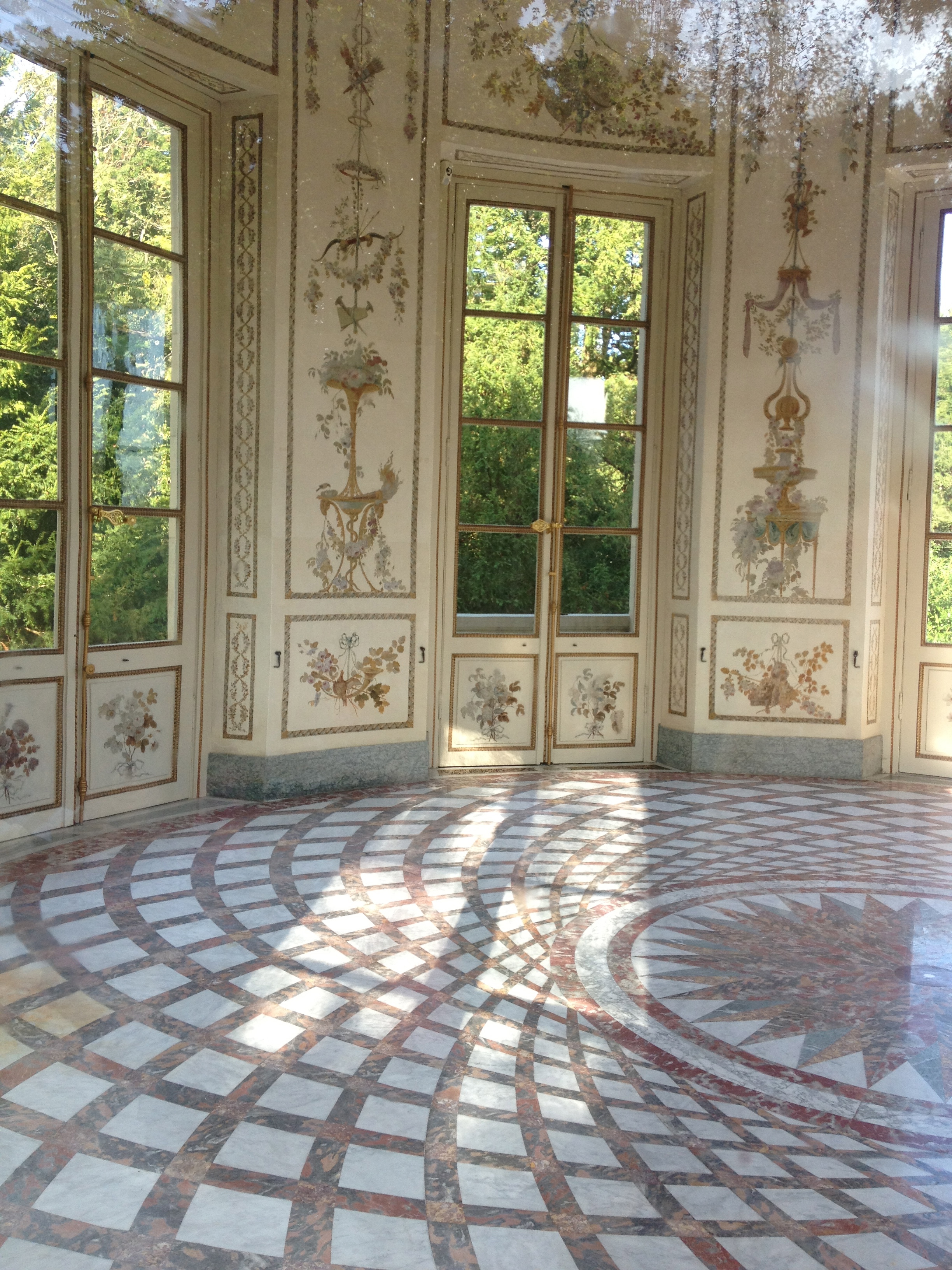
Interior of Le Belvédère

Interior of Le Belvédère, used as a tearoom and music salon by Marie Antoinette on the grounds of Le Petit Trianon

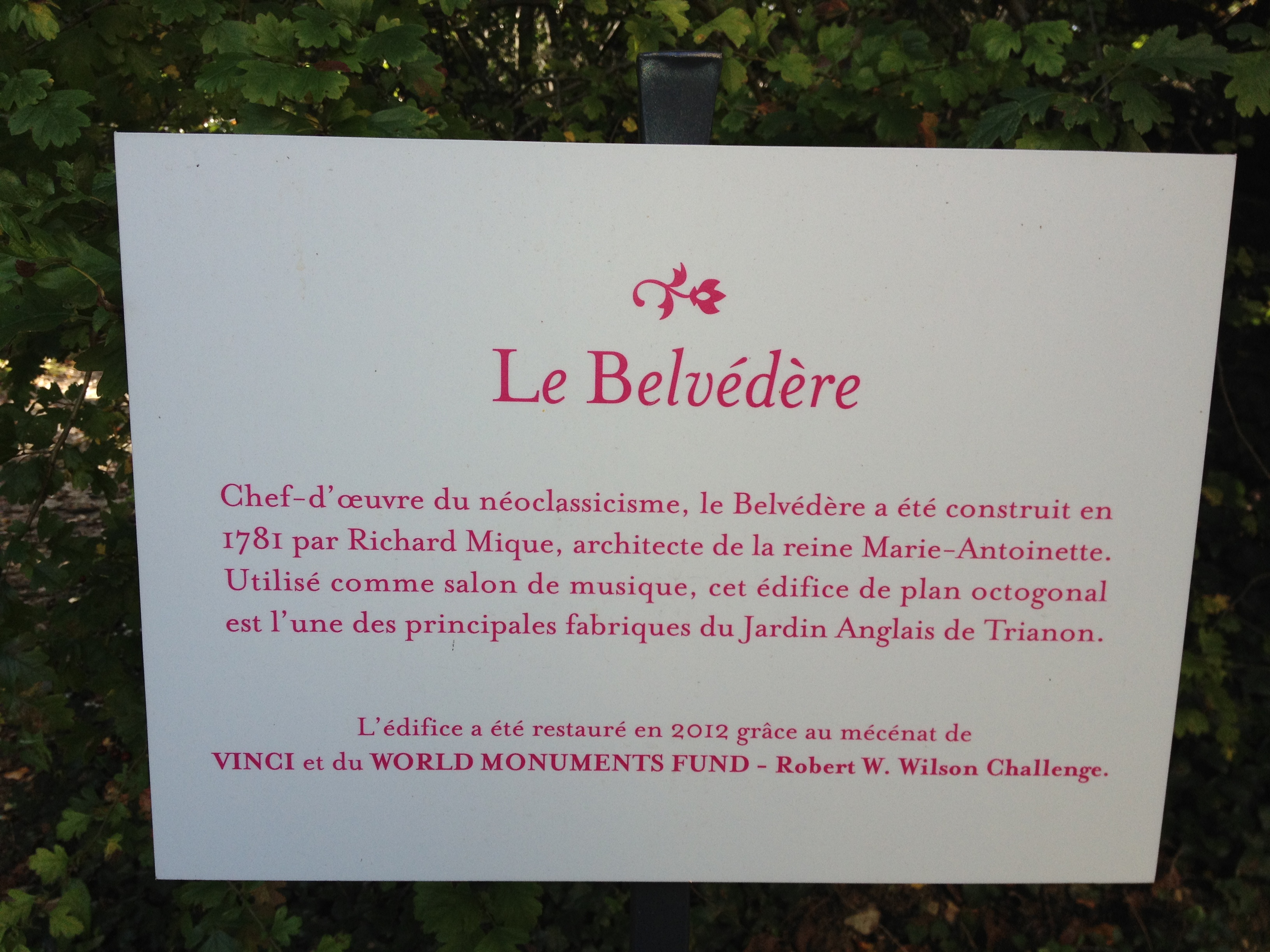
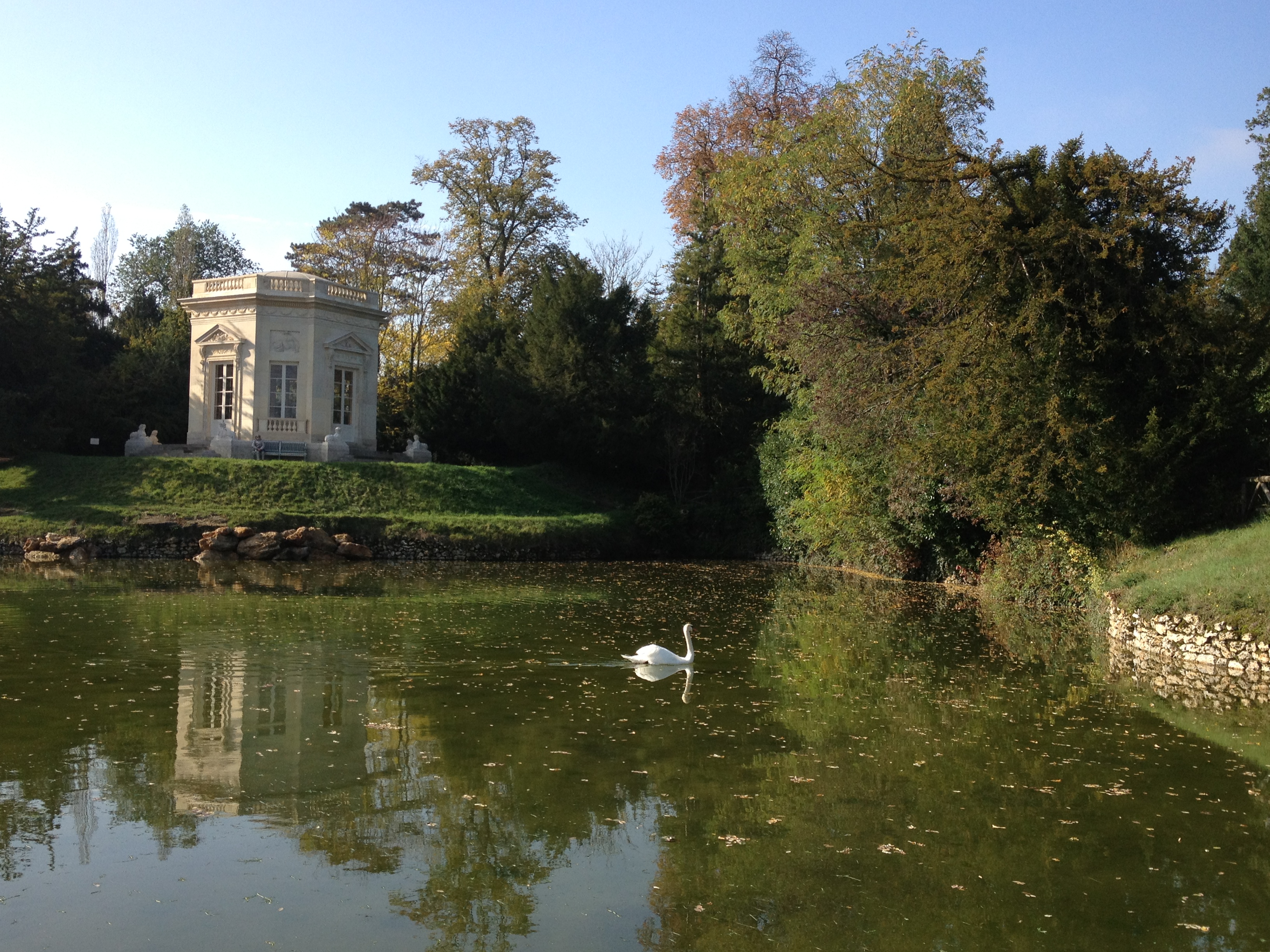
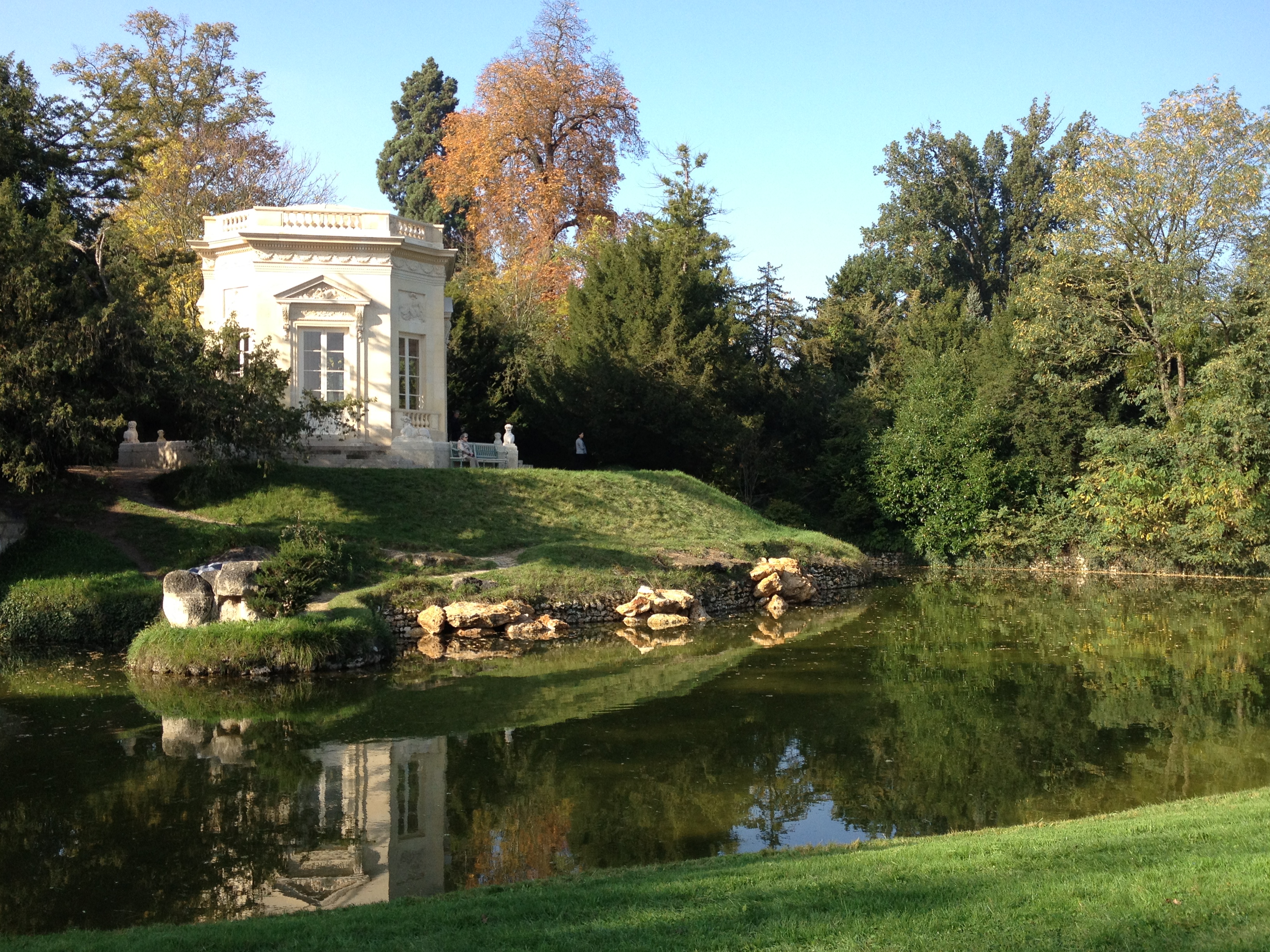
A view of the octagonal Belvédère from across the pond

A view of the octagonal Belvédère from across the pond on the grounds of Le Petit Trianon

Le Belvédère

Le Belvédère

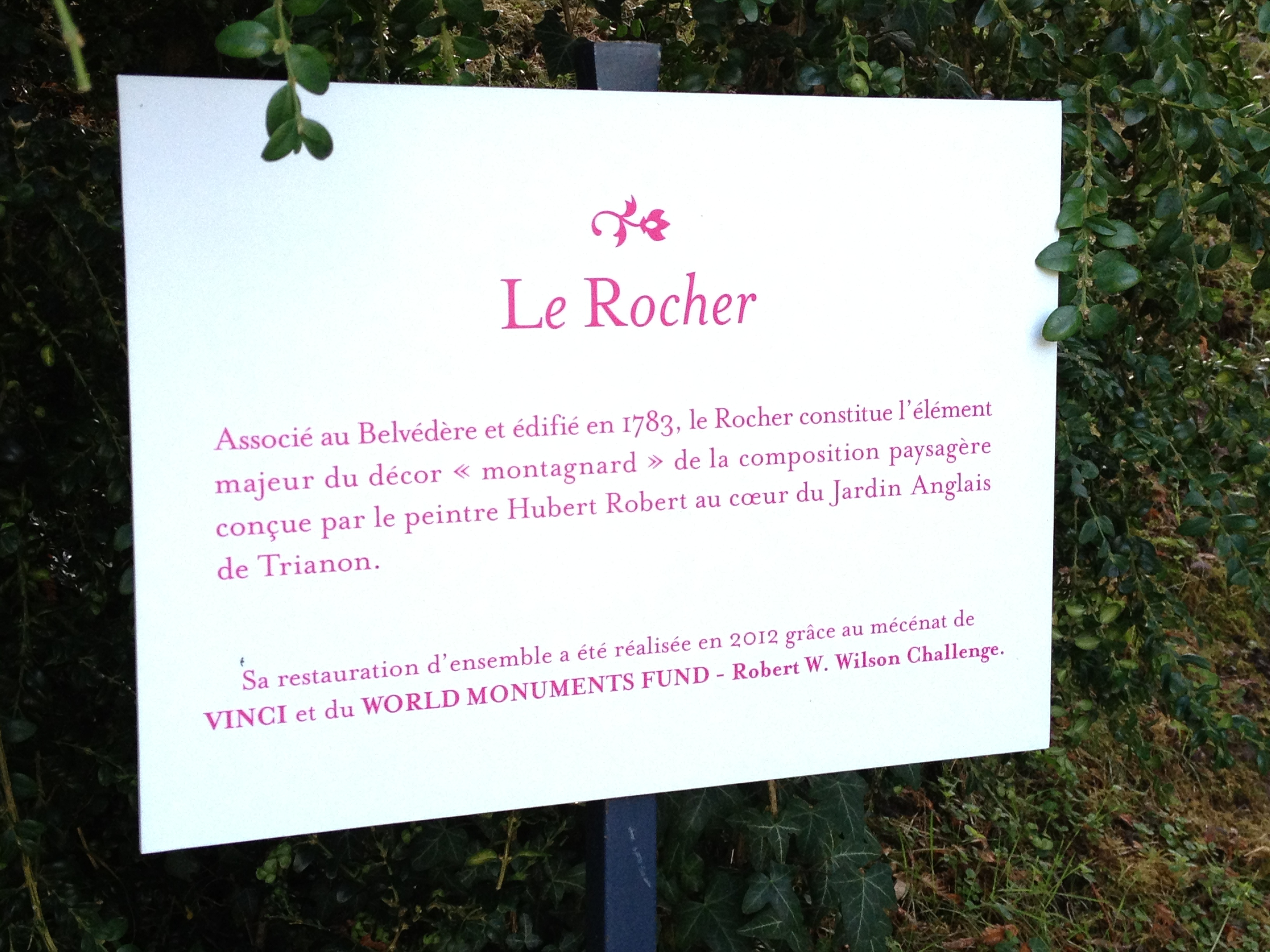
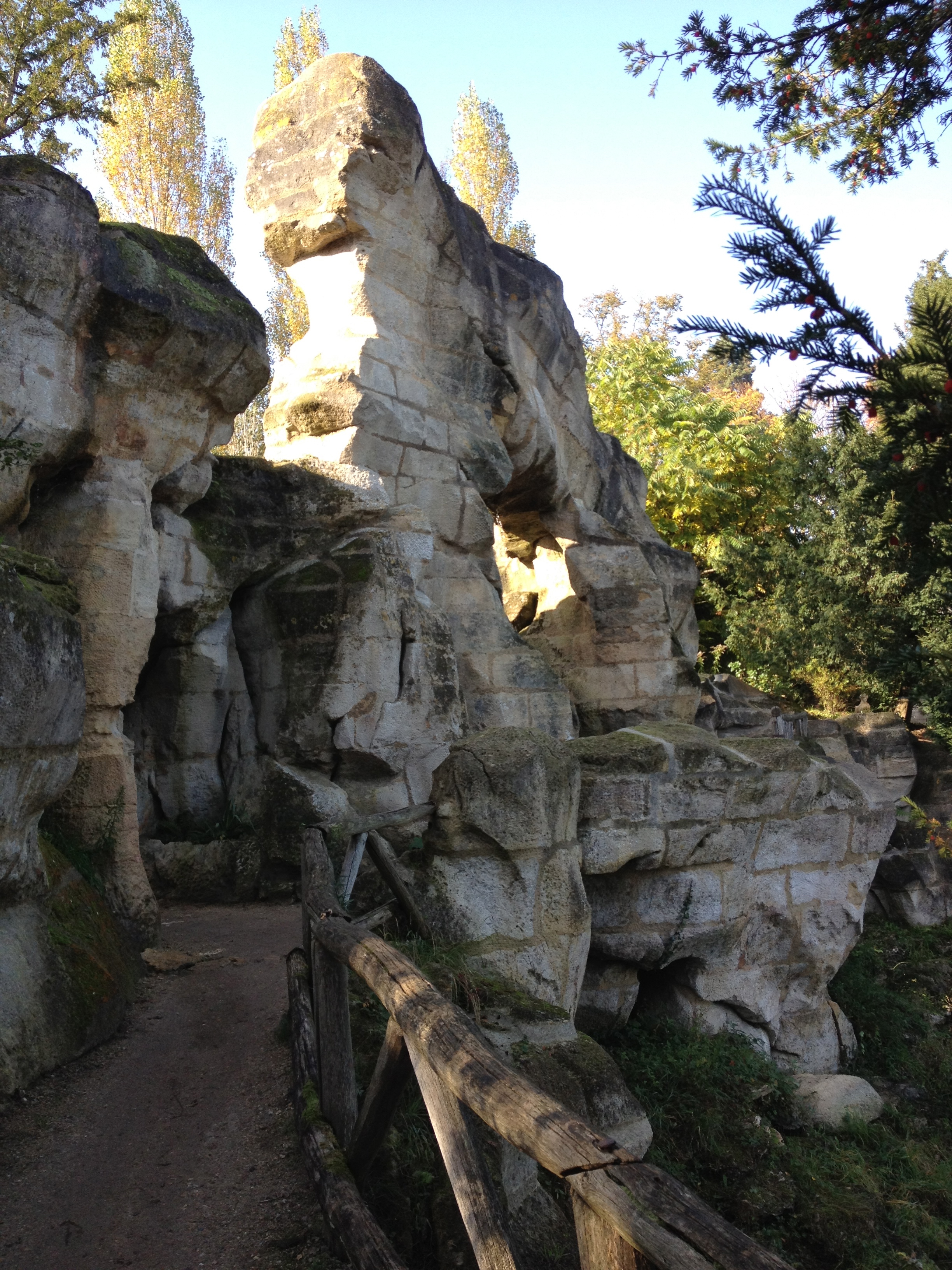
Le Rocher is a man-made rock formation created for Marie Antoinette's rustic gardens of the Petit Trianon

Le Rocher is a man-made rock formation created for Marie Antoinette’s rustic gardens of the Petit Trianon

A charming little path through Le Rocher

A charming little path through Le Rocher

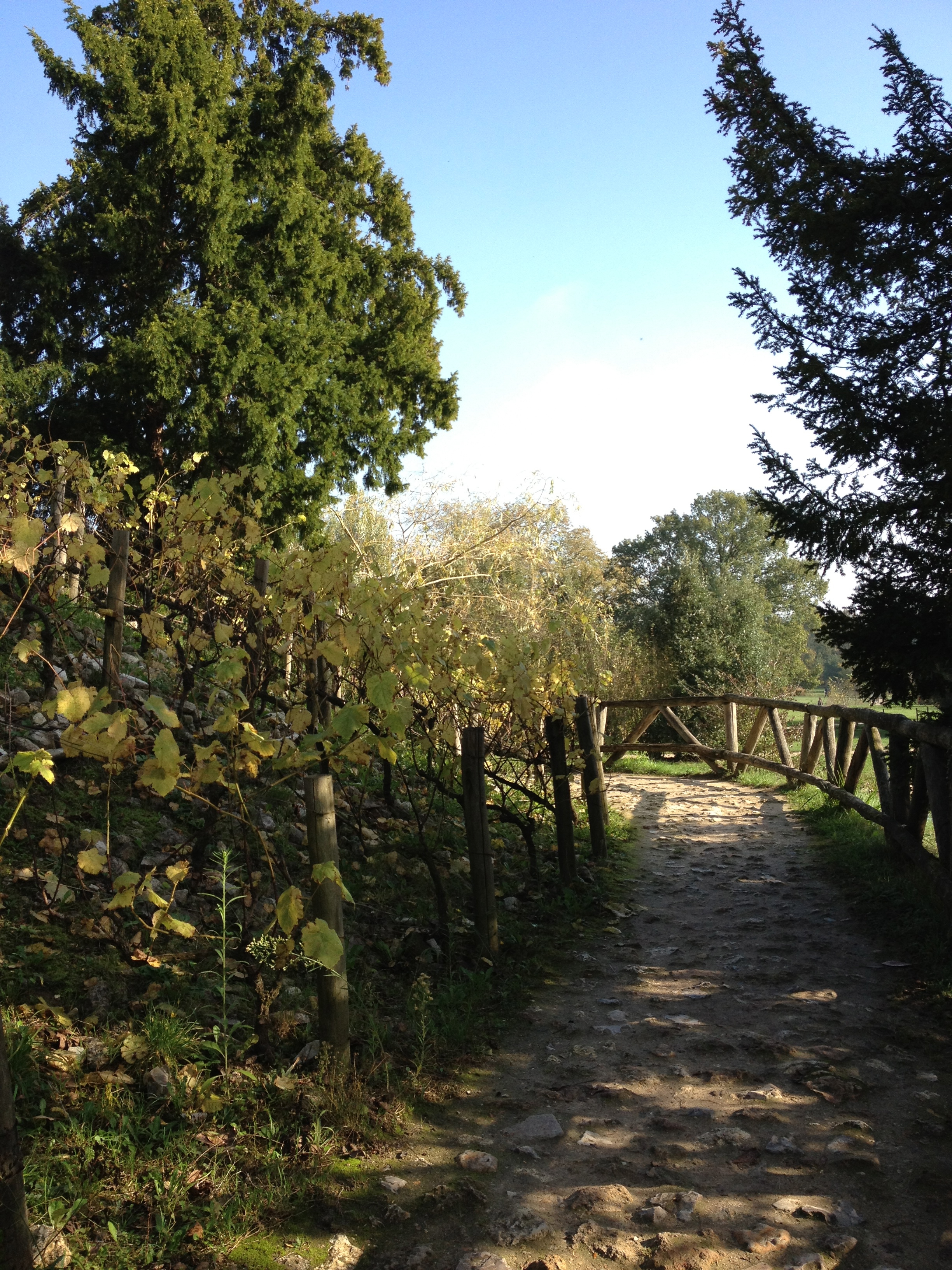
A rustic bridge alongside some grapevines near Le Rocher

A rustic bridge alongside some grapevines near Le Rocher

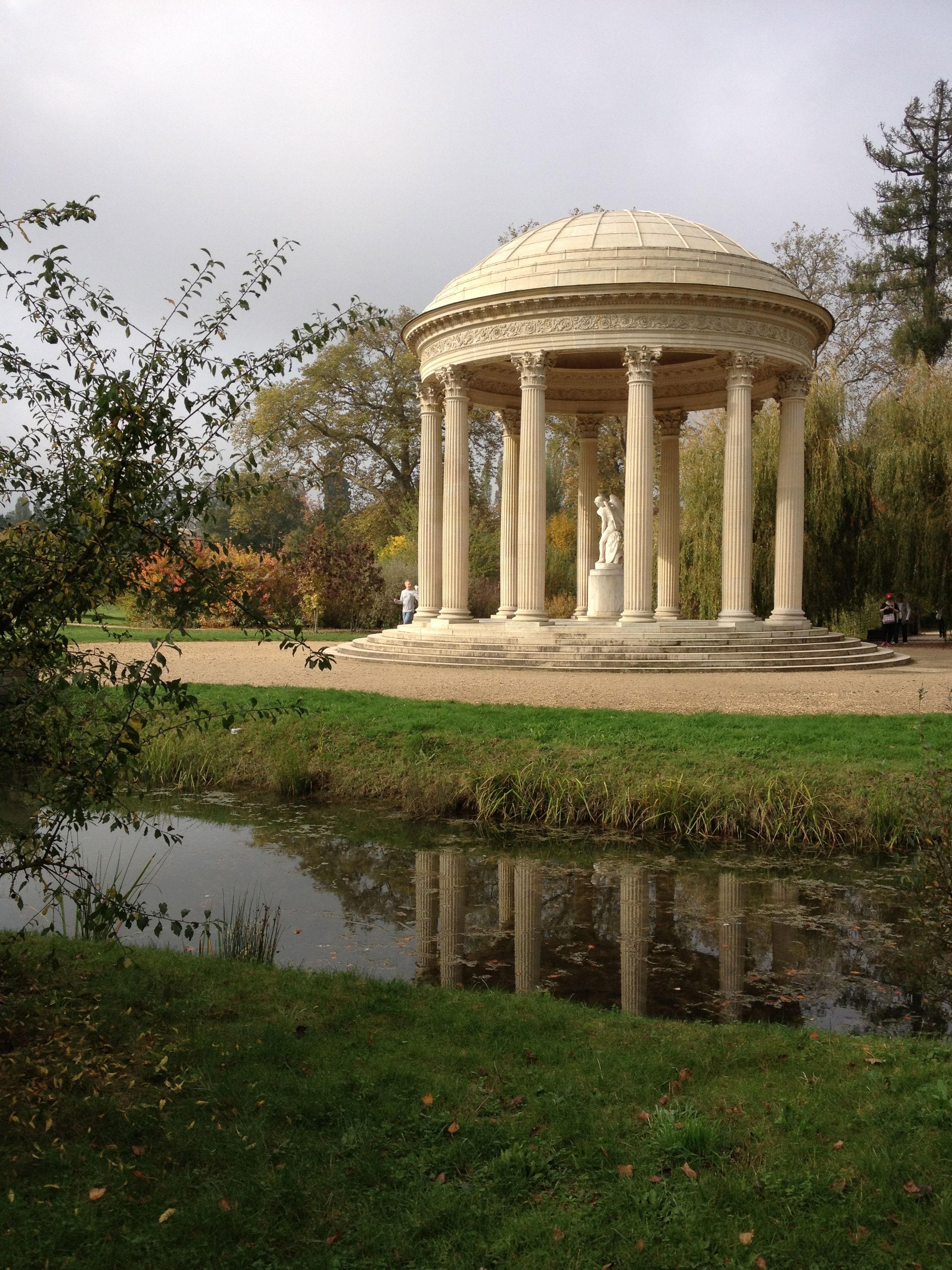
The Temple of Love in the gardens of Le Petit Trianon

The Temple of Love in the gardens of Le Petit Trianon

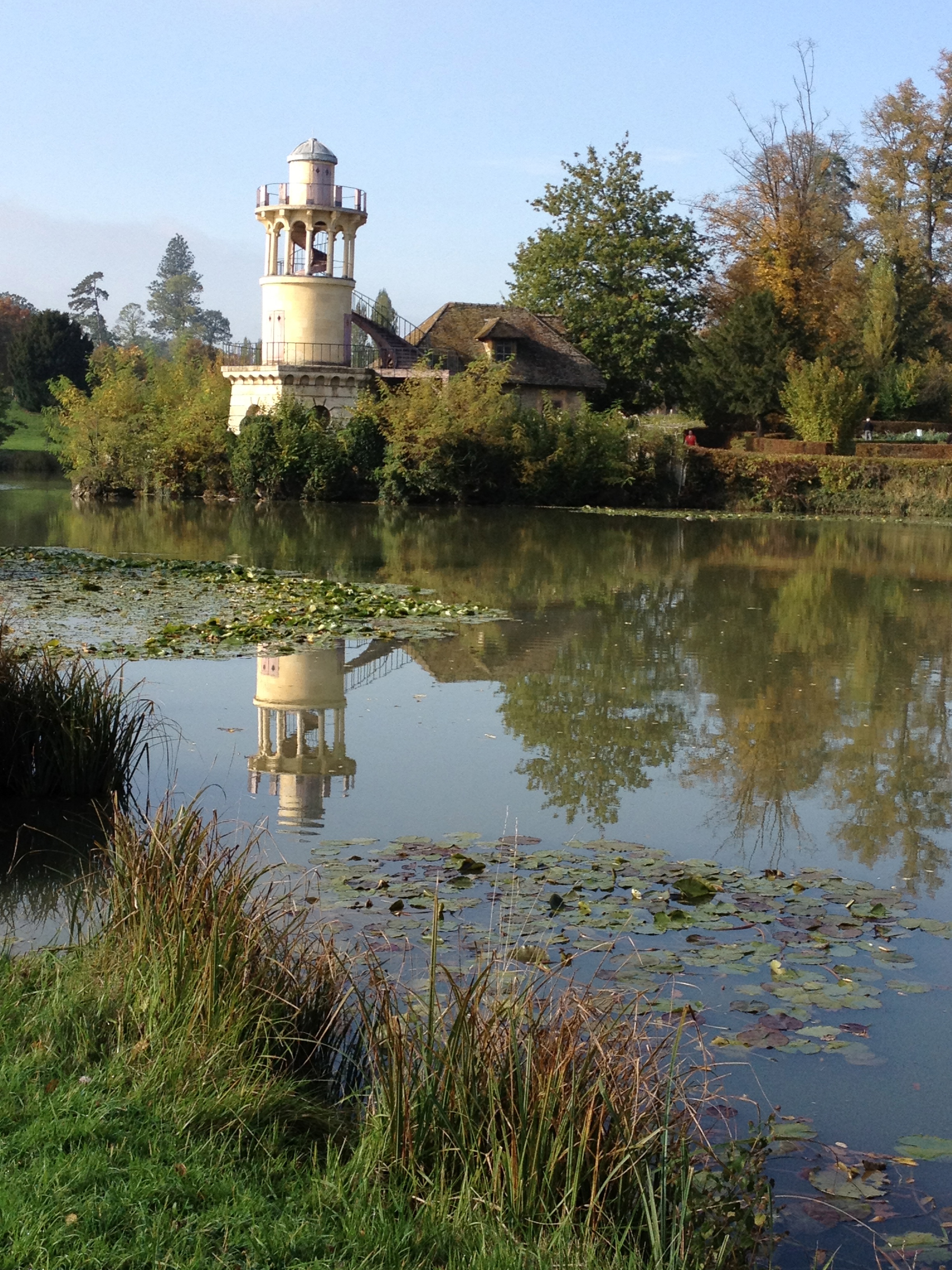
When I caught my first glimpse of the The Malborough Tower from the garden path I gasped.It's one of those once-in-a-lifetime things.

I caught my first glimpse of the the Malborough Tower as I turned a corner on the garden path. I actually gasped out loud. It’s one of those once-in-a-lifetime things.

IMG_4537

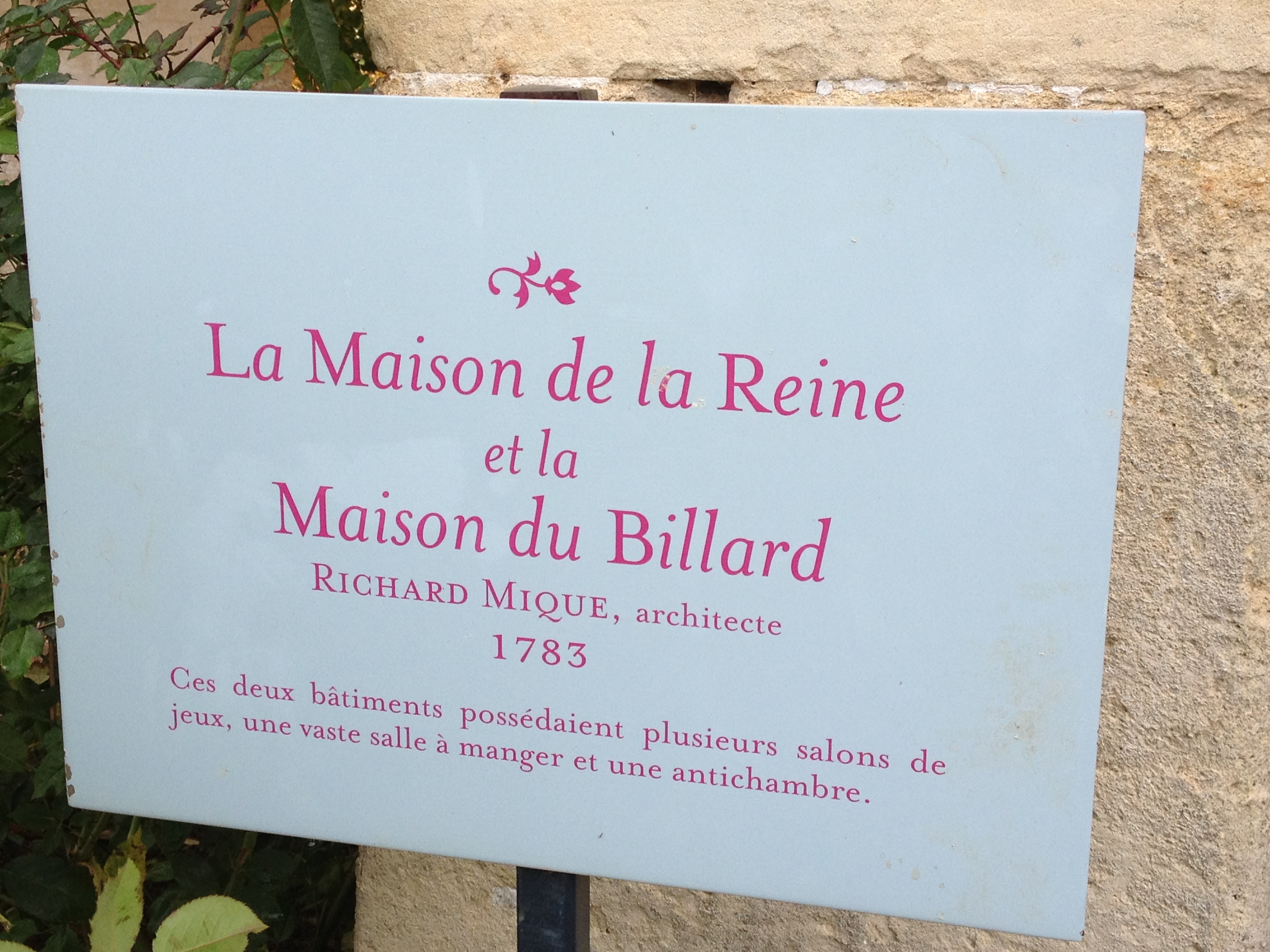
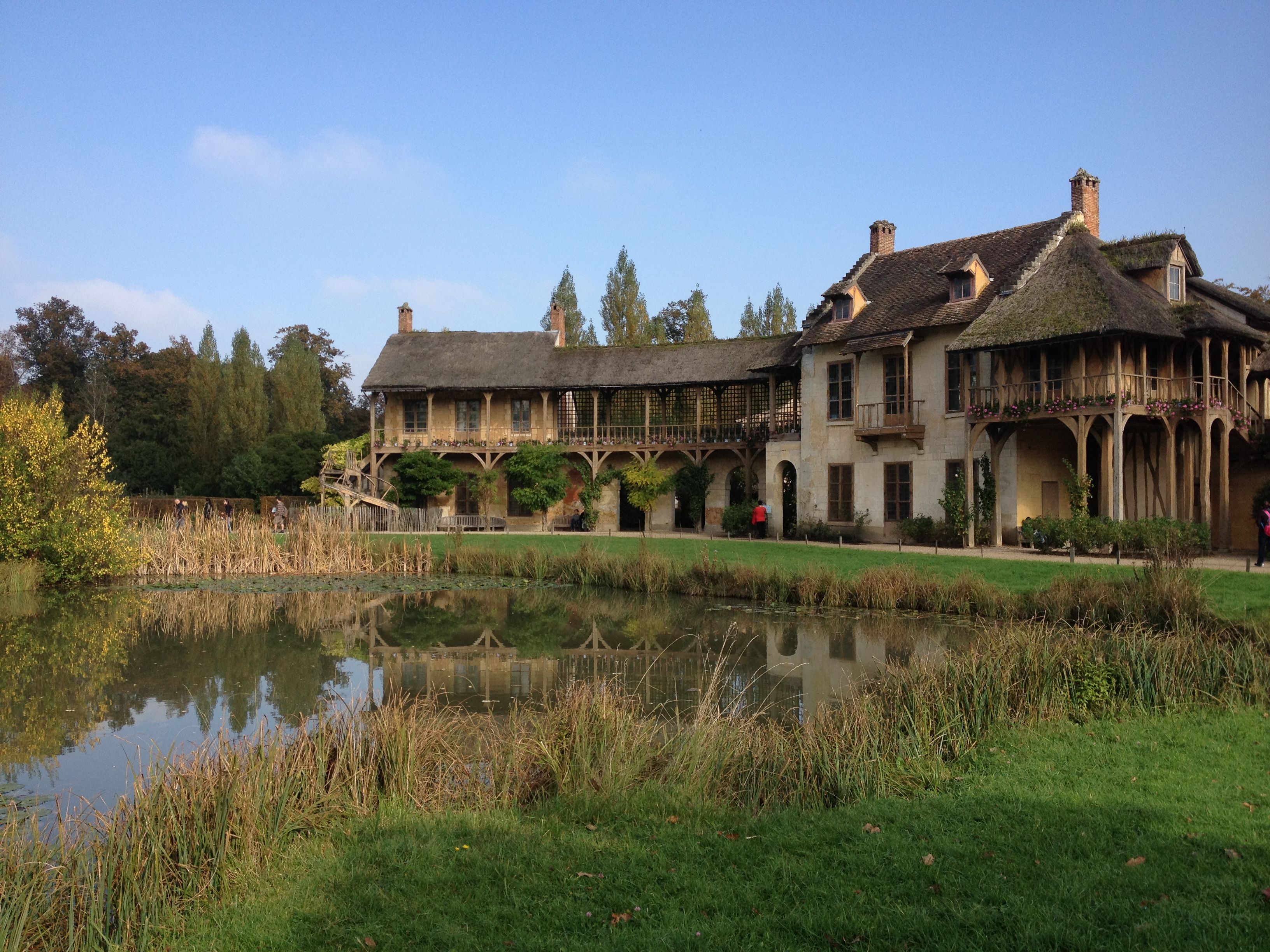
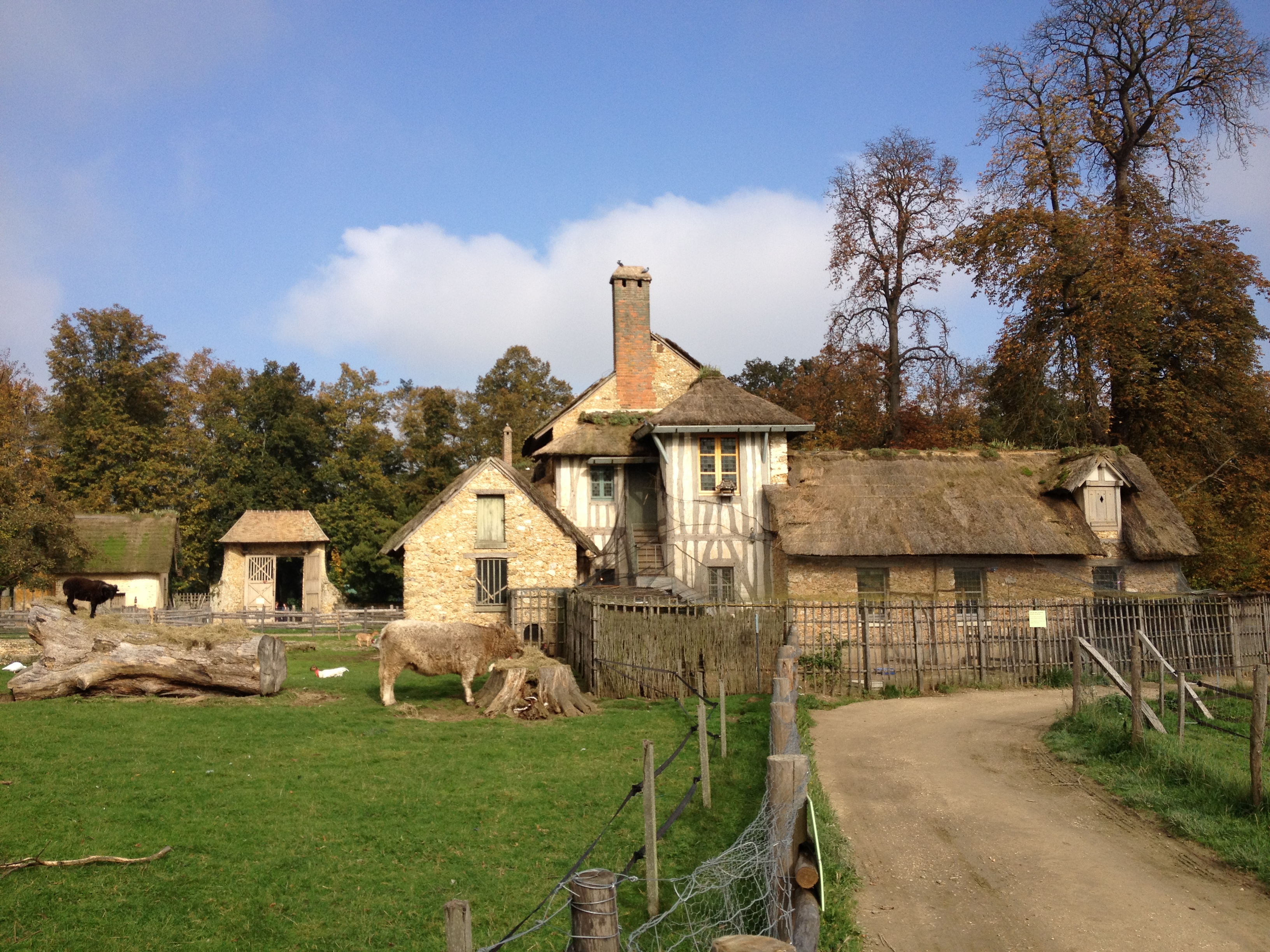
The Queen’s House and the Billiard House

The view of the Queen's Hamlet from across the pond.

The view of the Queen’s House and the Billiard House from across the pond.

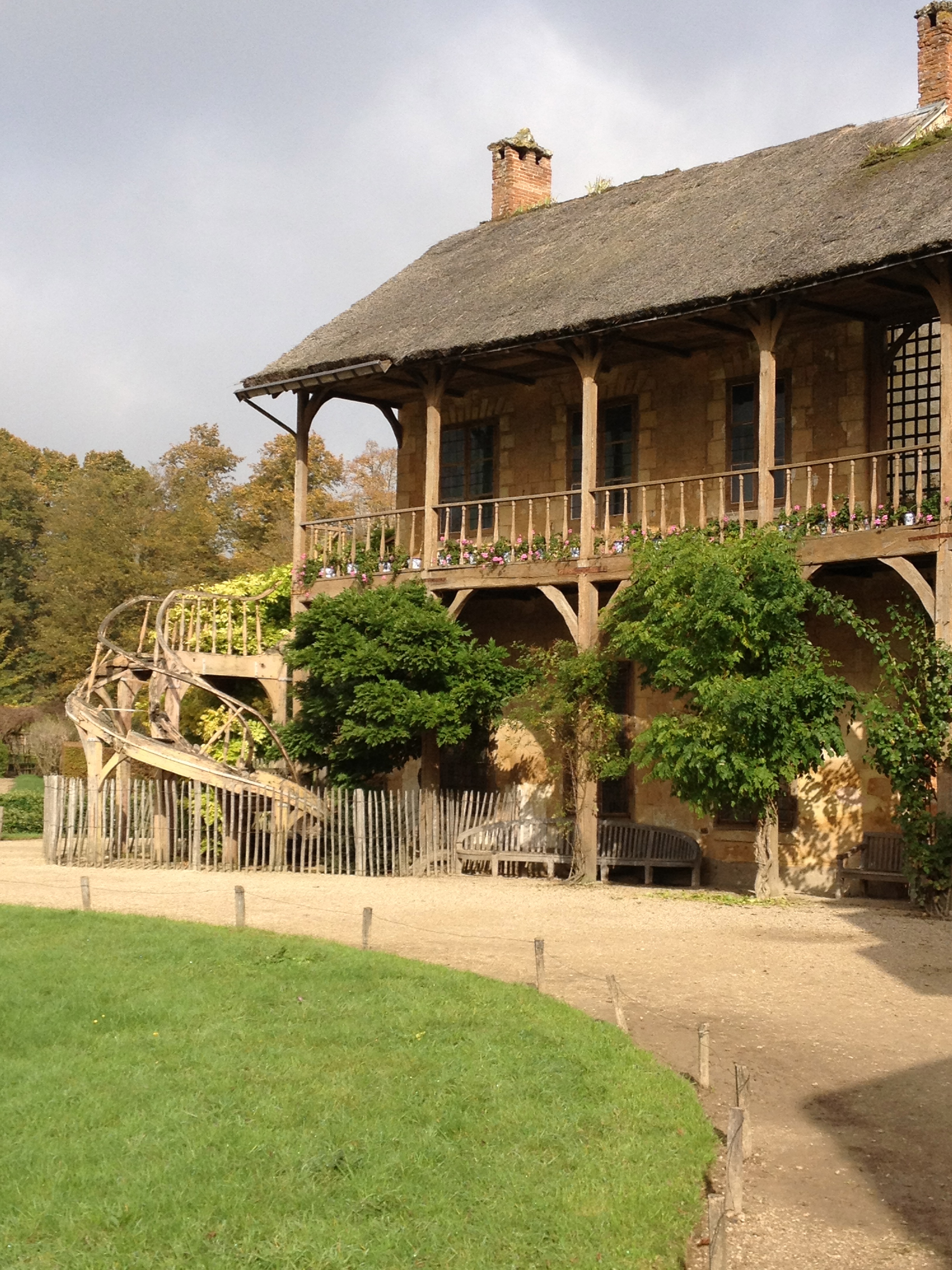
The spiral staircase up to the billiard and card rooms is being renovated in 2014

Much of the Queen’s House, including this crumbling spiral staircase, is being renovated in 2014

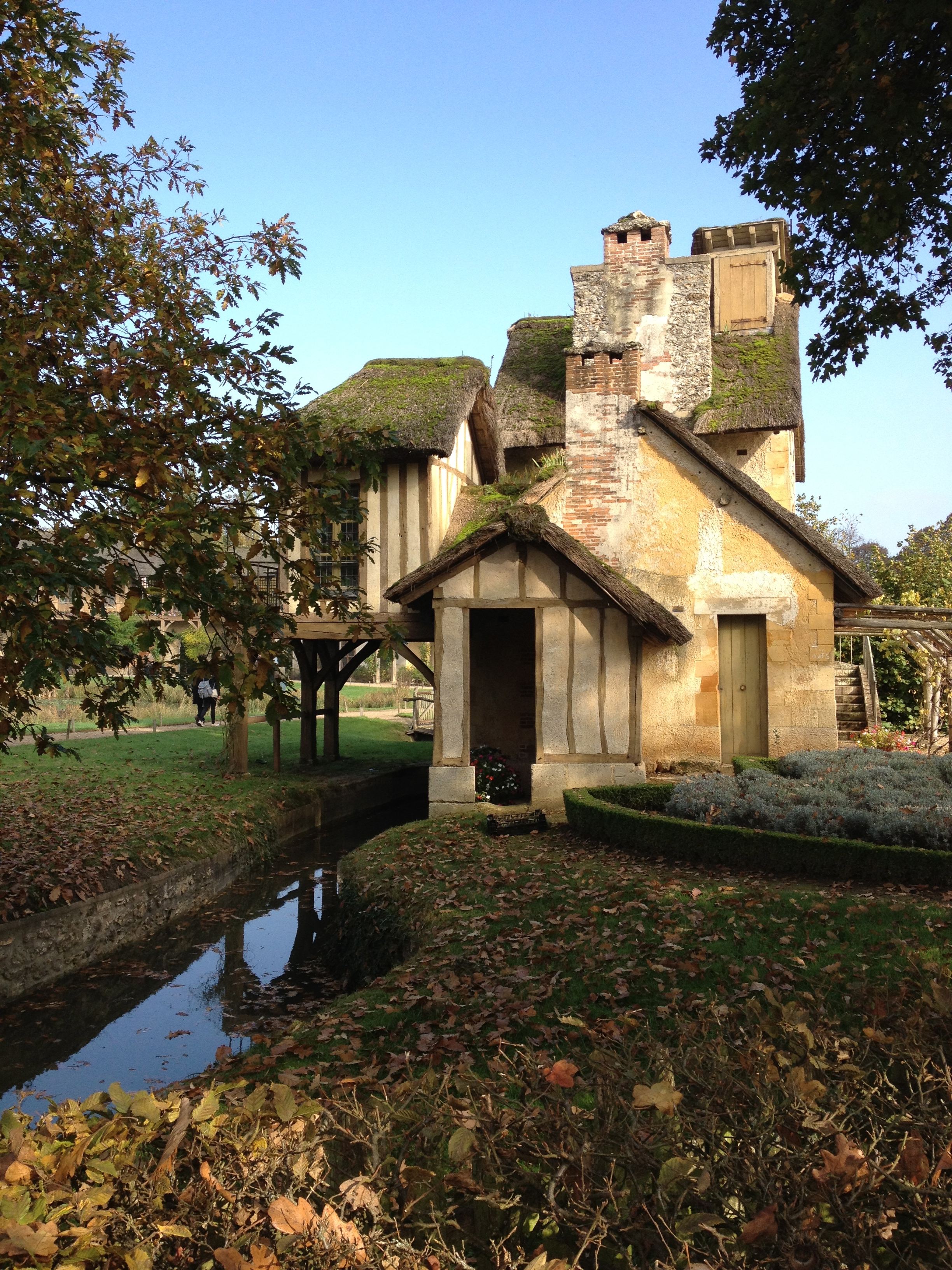
The Mill House, a charming little house built on a creek in the Queen's Hamlet

The Mill House, a charming little house built on a creek in the Queen’s Hamlet

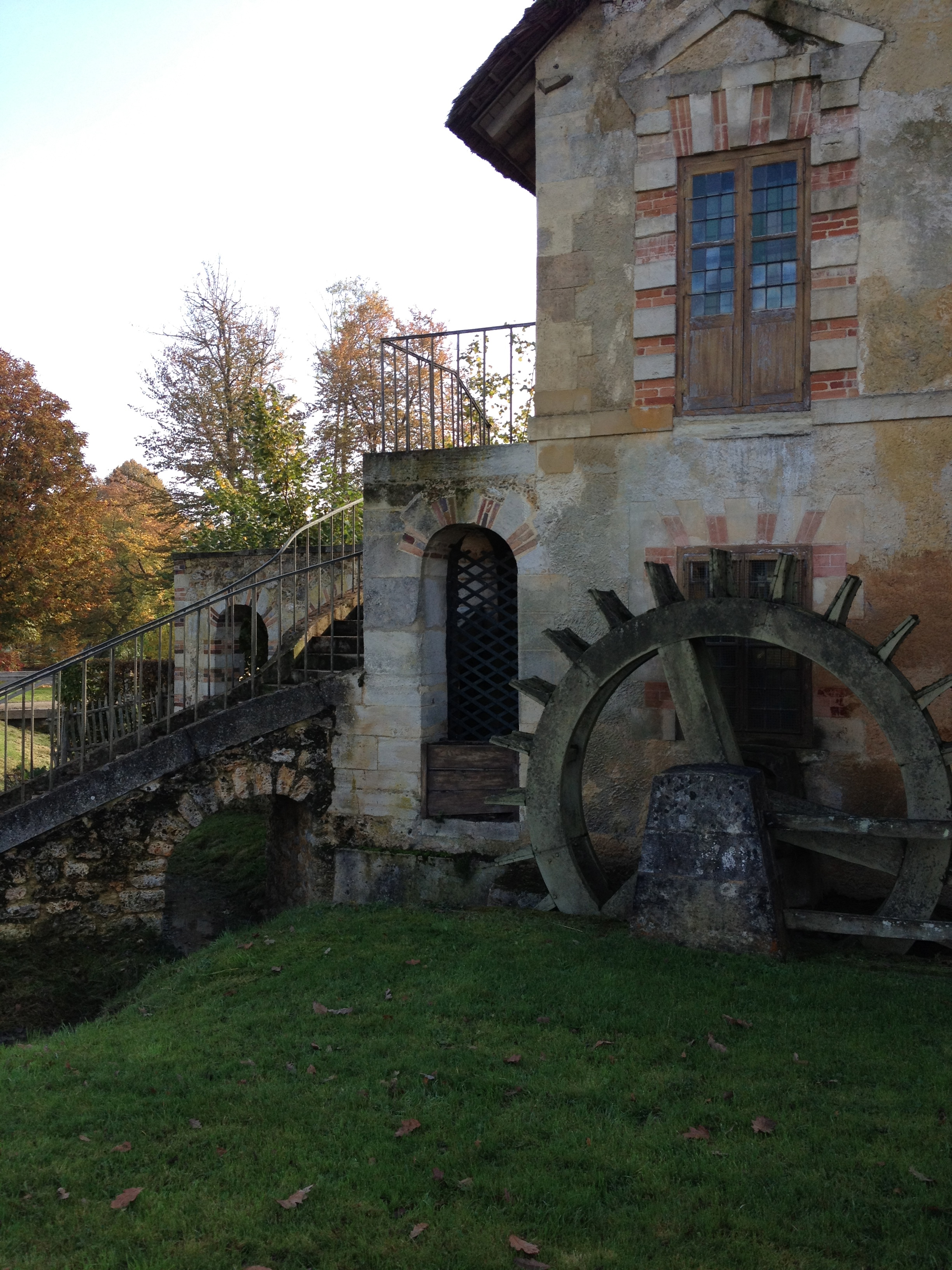
The Mill

The Mill, which was supposedly merely decorative

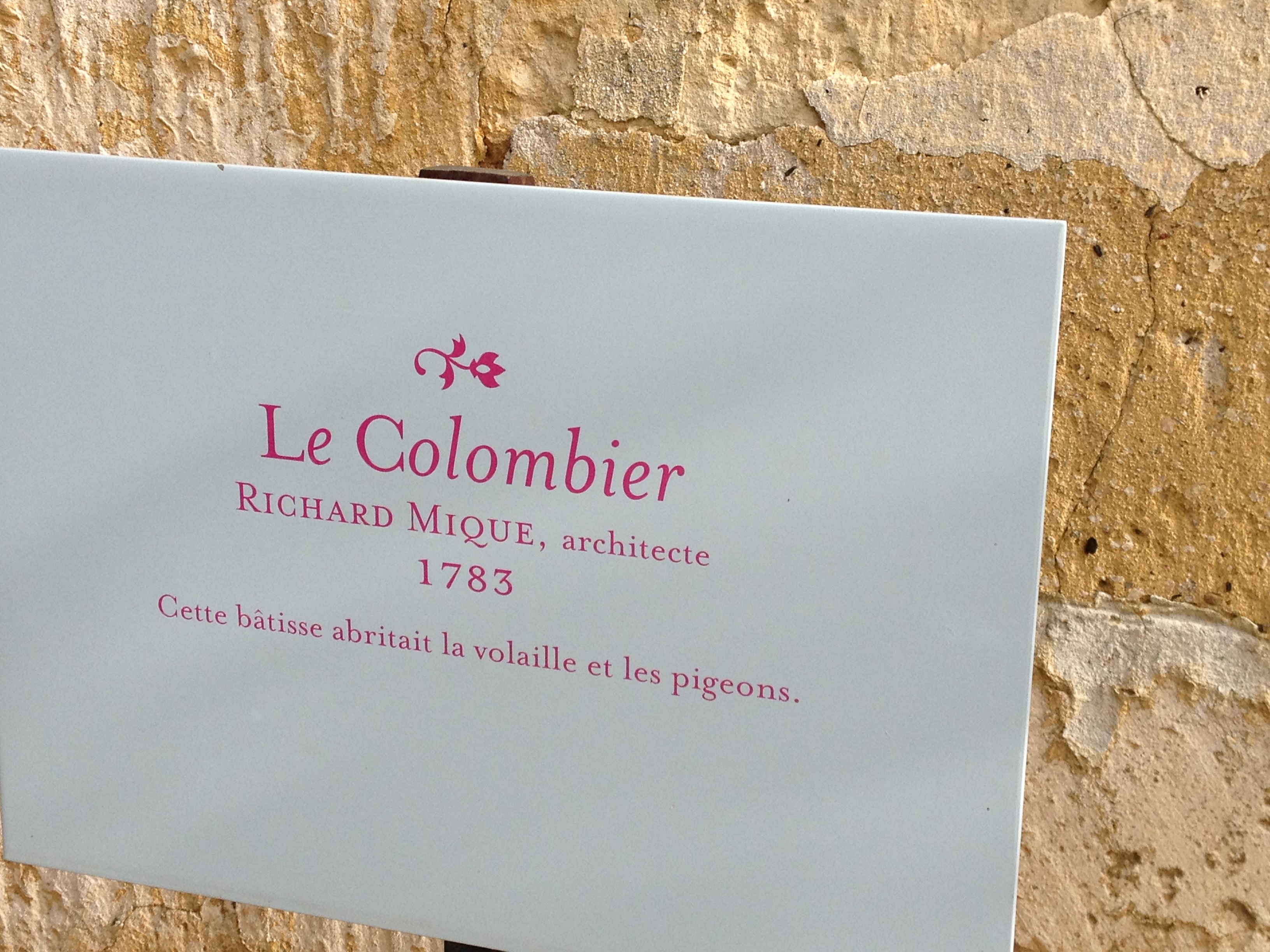
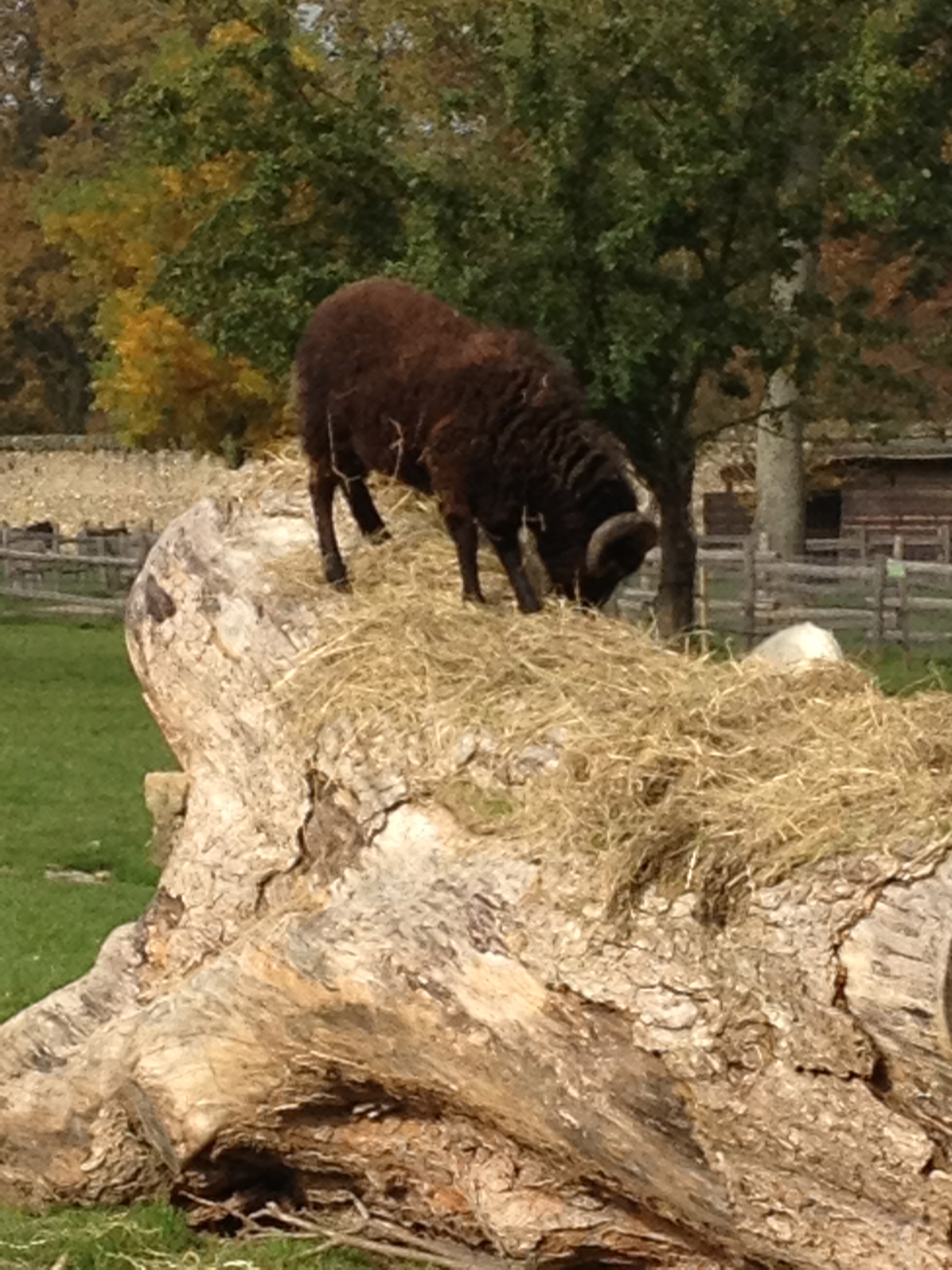
Le Colombier, the pigeon house, with working gardens

Le Colombier, or the pigeon house stood nearby

Le Colombier

Le Colombier

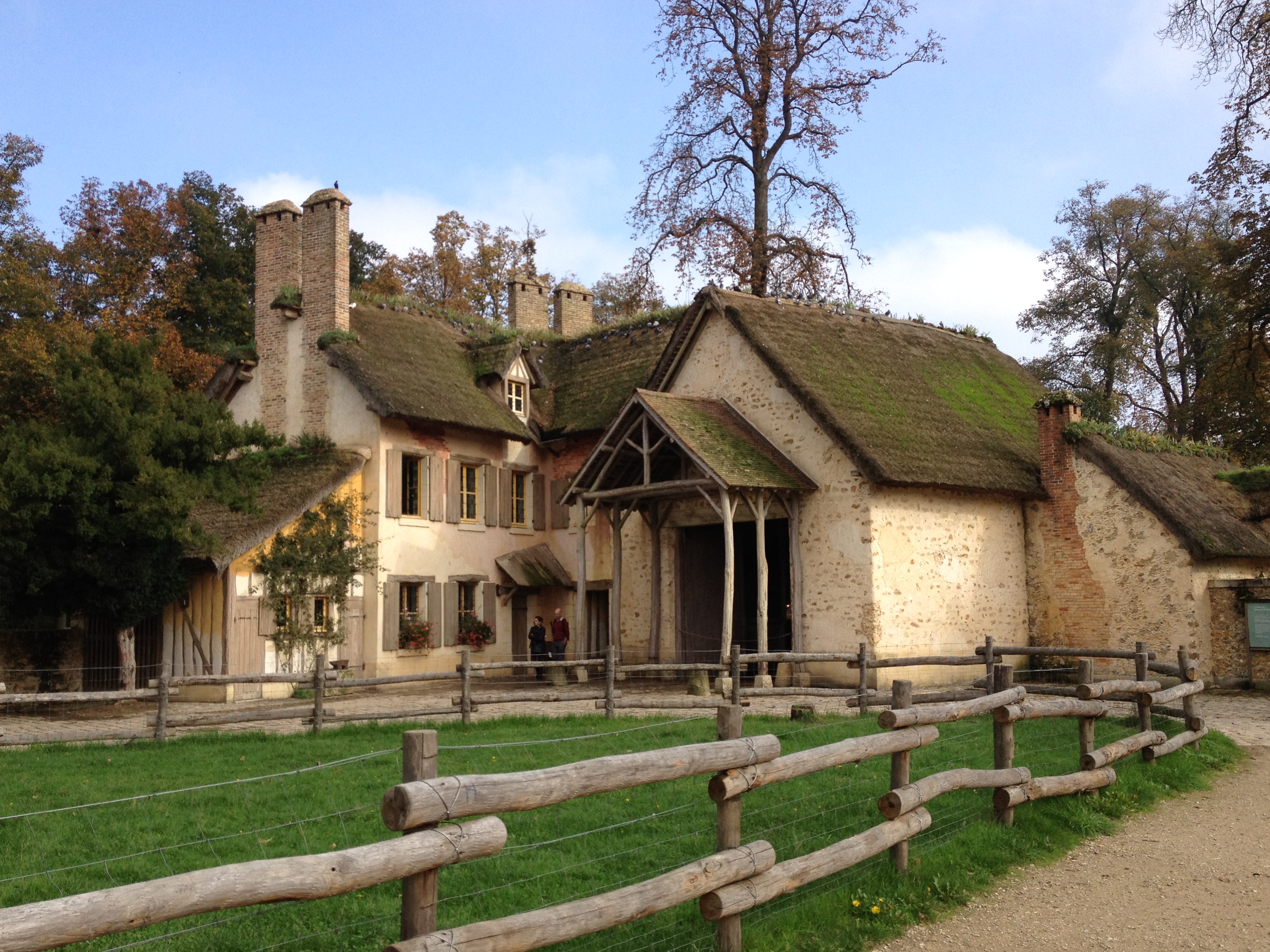
Le Boudoir in the background. Marie's extra private room.

Le Boudoir in the background. Marie’s extra private little house within the hamlet.


IMG_4575

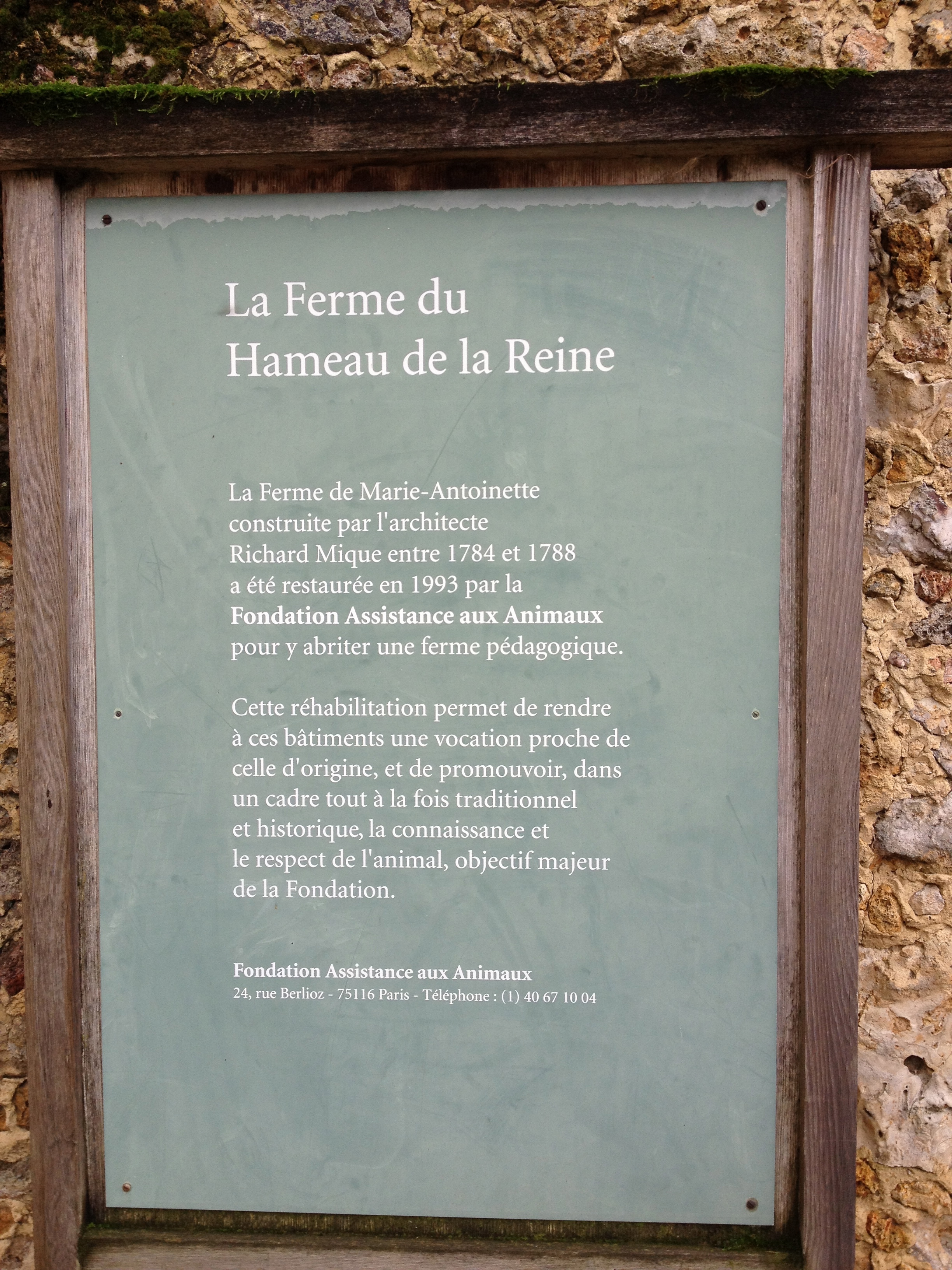
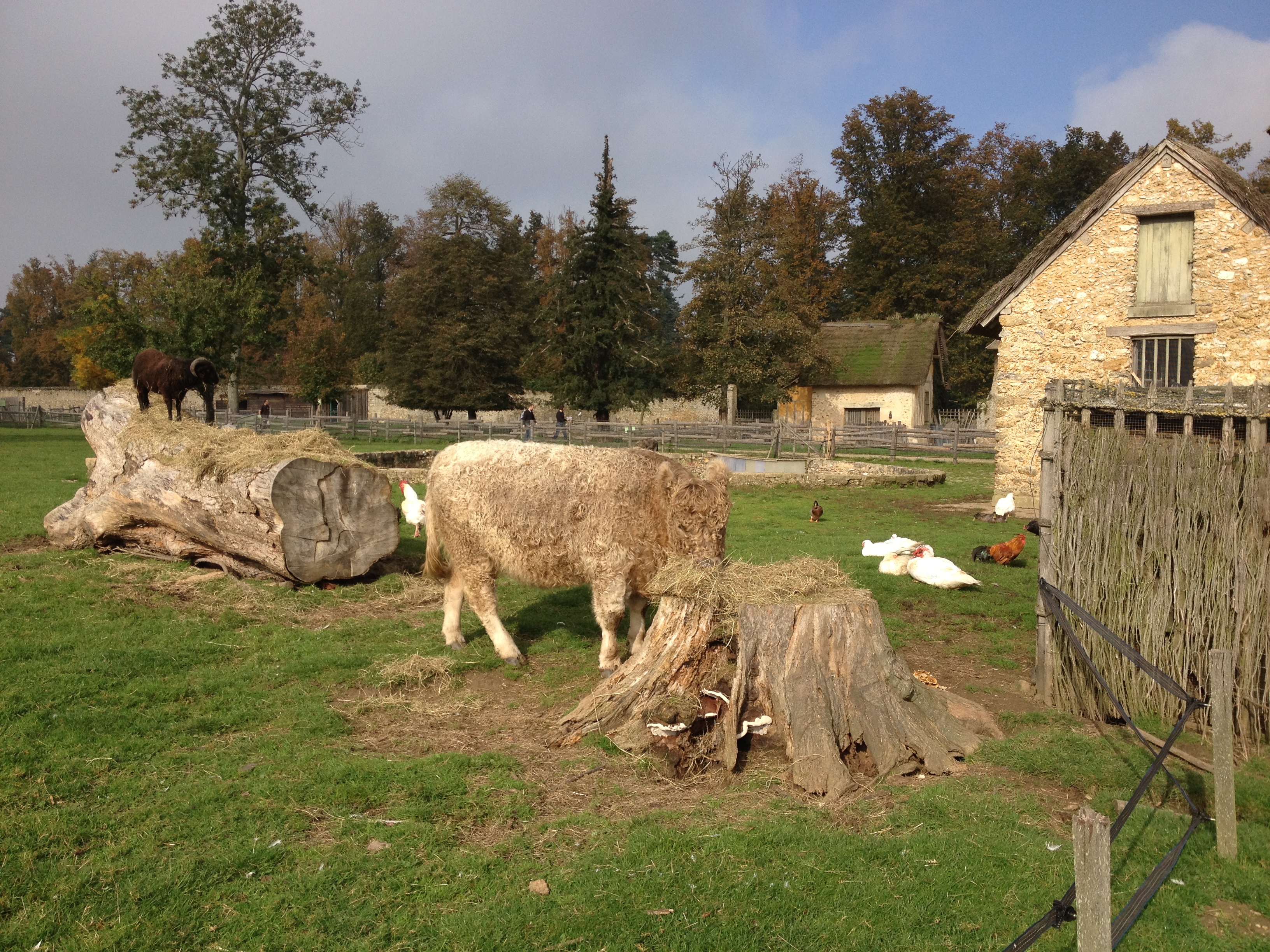
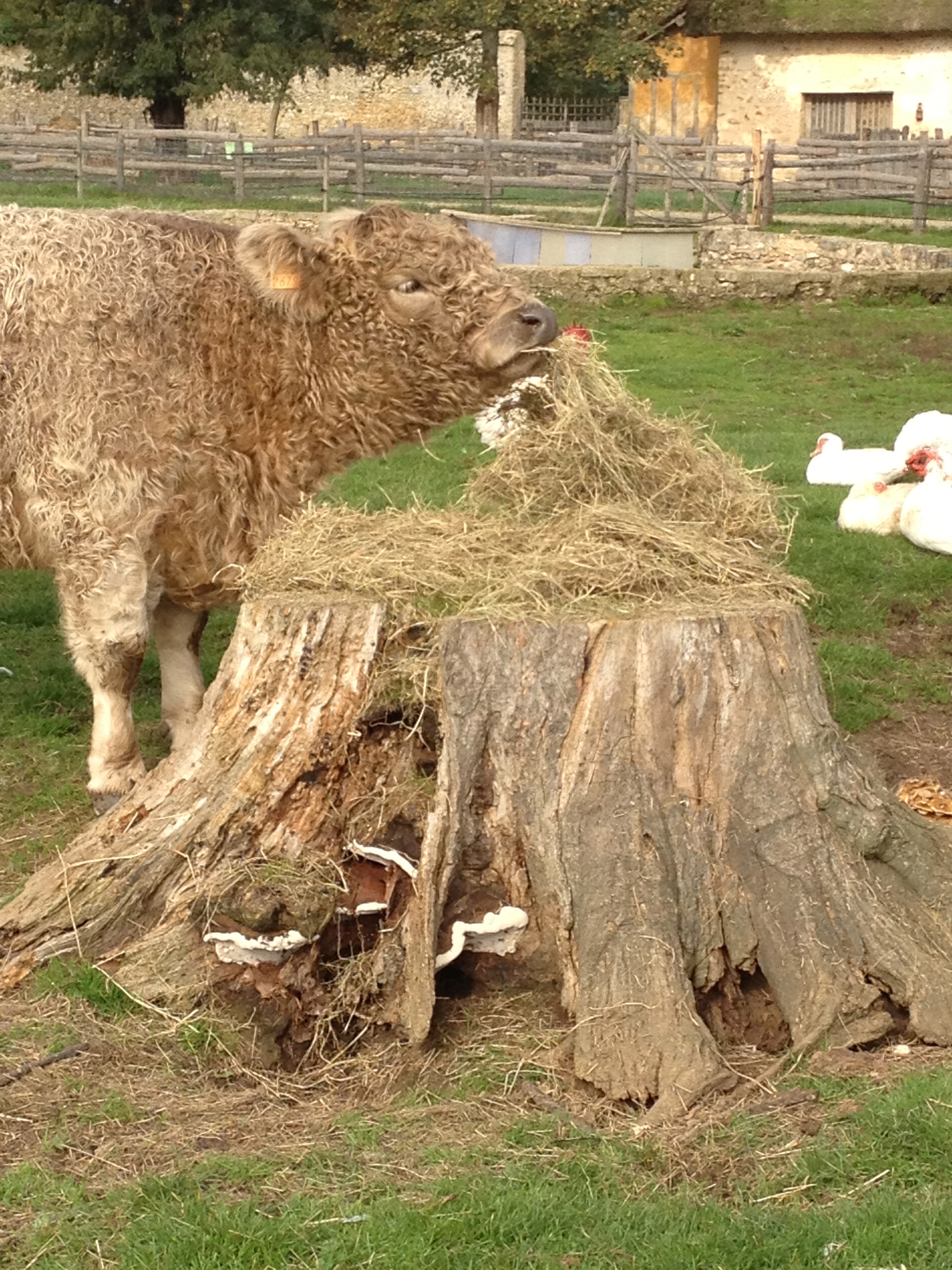
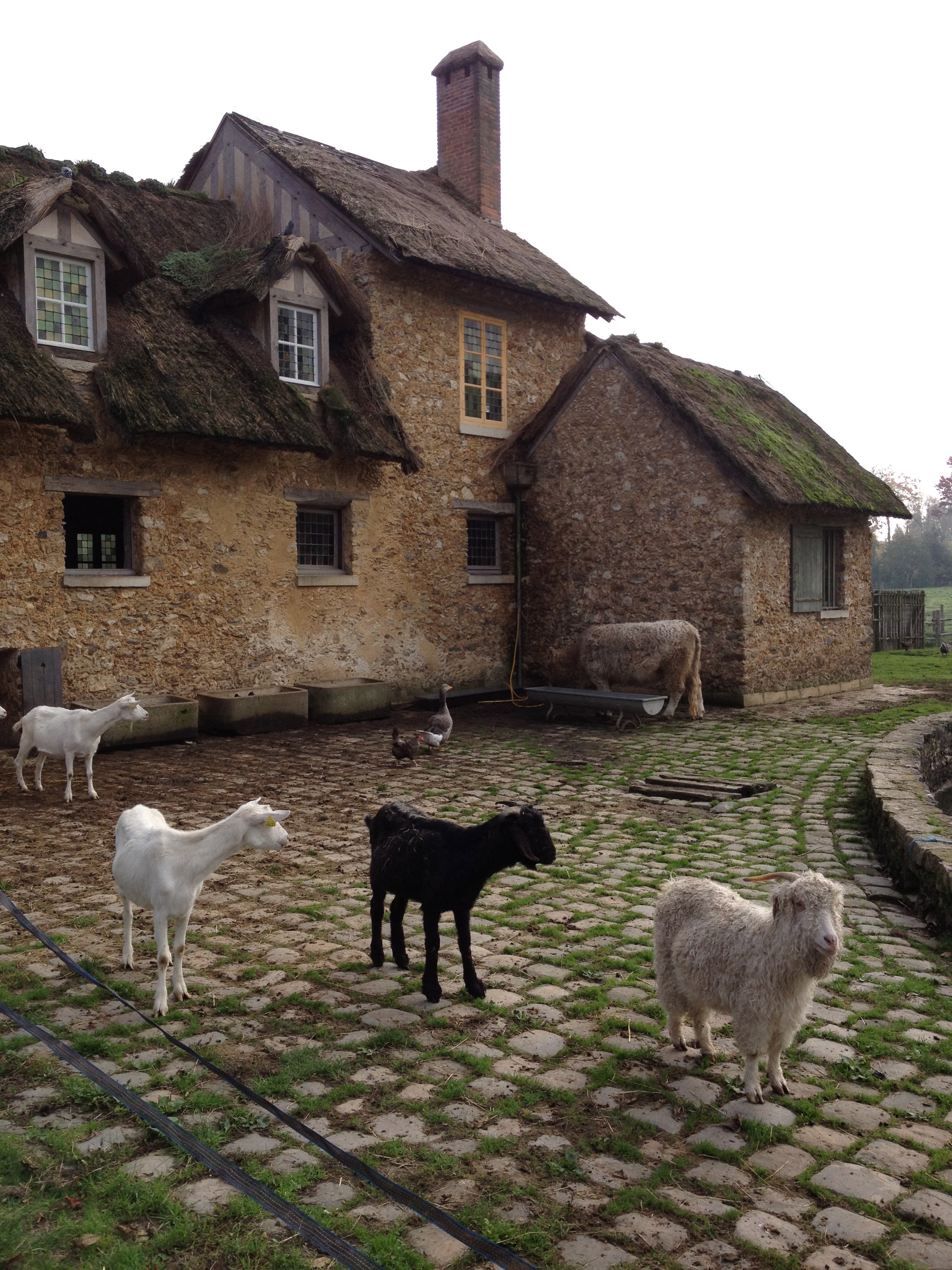
The farm within the hamlet

IMG_4562

IMG_4556

IMG_4558

IMG_4557

IMG_4559

IMG_4554

IMG_4552

IMG_4574

IMG_4573

IMG_4570


IMG_4478

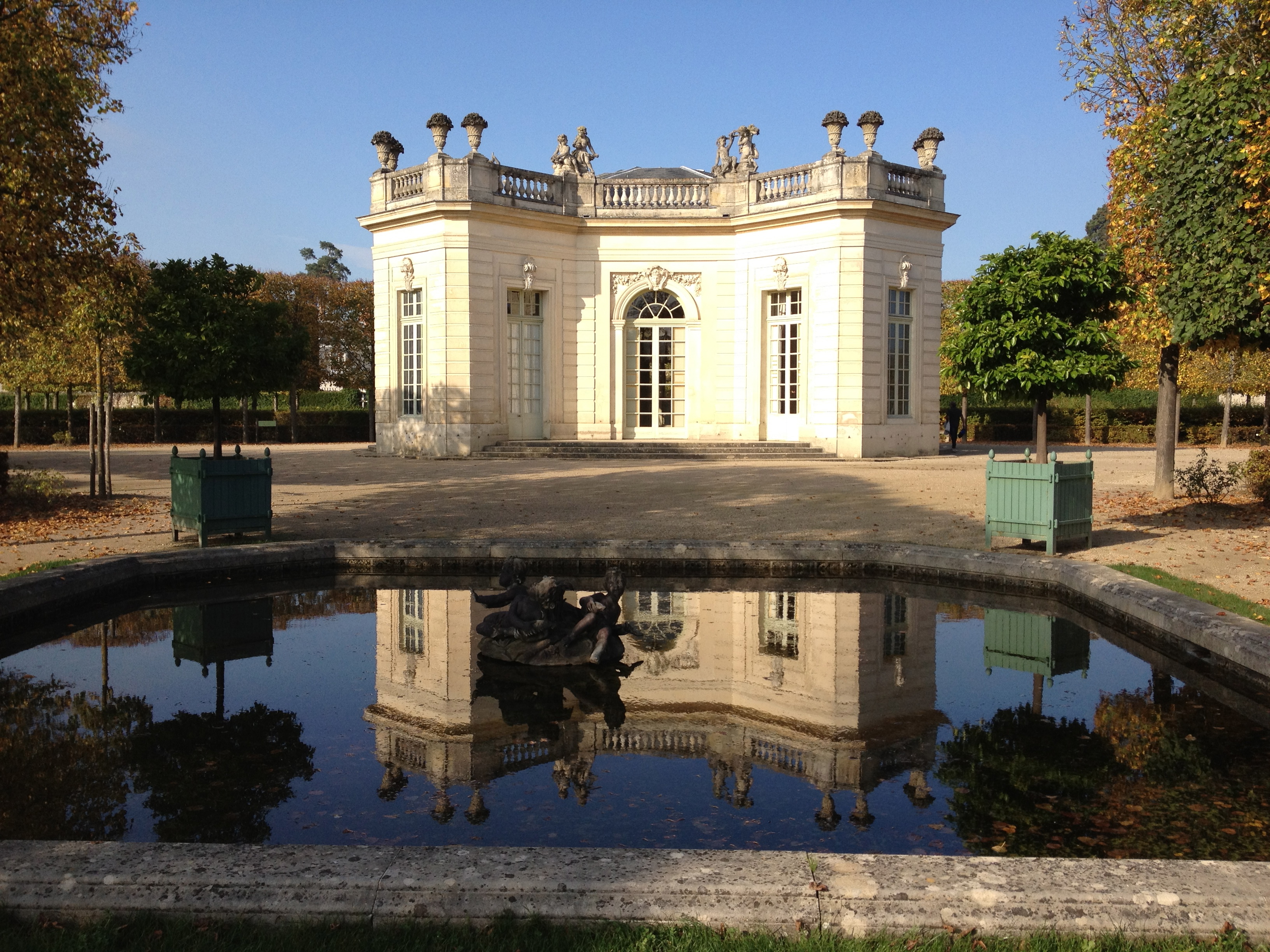
The French Pavillion

The French Pavillion

And yet, despite this entire beautiful day in the Queen’s Hamlet, I still managed to miss a few things, including the Queen’s Theater and Jussieu’s Orangerie. So I guess I’ve got to go back. Some things aren’t meant to be just once in a lifetime.

Suggested reading: My previous post about Marie-Anoinette’s portraitist, Elisabeth Vigee-LeBrun. https://americangirlsartclubinparis.wordpress.com/2013/10/29/elisabeth-vigee-le-brun-a-novel/


Astonish Me by Maggie Shipstead

astonish me


I don’t know how I do it, but it seems that every book I pick up these days has at least a touch of Paris in it. The latest is Astonish Me by Maggie Shipstead (Knopf 2014), which I highly recommend.

You might have heard of this book by now. Even Oprah’s touting it. It’s a steamy story of love and ambition in the competitive world of professional ballet. It is the story of Joan, an American ballet dancer who is starstruck (why not just say “astonished?”) by a famous star of the Russian Kirov Ballet. Picture Mikhail Baryshnikov in 1975.

While Joan is spending a year as a quadrille, a junior member of the Paris Opéra Ballet, she watches Arslan Rusakov rehearse from one of the dark crimson red loge boxes at the Palais Garnier. Joan manages to evade the Kirov Ballet security men and enters the star’s dressing room, where she makes an unforgettable impression on him. Their encounter kicks off a clandestine Cold War love affair, fueled by secret love letters delivered through helpful intermediaries. Joan agrees to help Rusakov defect to the United States during one of his ballet tours to Toronto. Together, they are front-page news. But only for a time. The love affair dies and Joan moves forward with a life as a wife, mother and owner of her own ballet school in Southern California.

The whole book is good, from New York to Paris to California, but I can’t tell you how much I enjoyed the passages set in Paris. No wonder, then, when I read the Acknowledgments at the back of the book (yes, I always read those, don’t you?) where Maggie Shipstead says: “Much of this book was written while I was in residence at the Cité Internationale des Arts in Paris.” You can tell.

Here is a passage from the book, which honest to God is one of the best paragraphs about visiting Paris I’ve ever read (and readers of this blog know I’ve read a lot):

For Joan, Paris has the feeling of waiting. All the elegance, the light and water and stone and refined bits of greenery, must be for something, something more than simple habitation and aggressive driving of Renaults and exuberant besmearing with dog shit. The city seems like an offering that has not been claimed. Its beauty is suspenseful. Joan has walked the boulevards and bridges and embankments, sat in the uncomfortable green metal chairs in the Tuileries, puttered down the Seine on a tourist barge, been to the top of the Eiffel Tower, stared politely at countless paintings, been leered at and kissed at by so many men, stood in patches of harlequin light in a dozen chilly naves, bought a scarf she couldn’t afford, surreptitiously stroked the neatly stacked skulls in the catacombs, listened to jazz, gotten drunk on wine, ridden on the back of scooters, done everything she thinks she should in Paris, and still there has always been the feeling of something still to come, a purpose as yet unmet, an expectation.


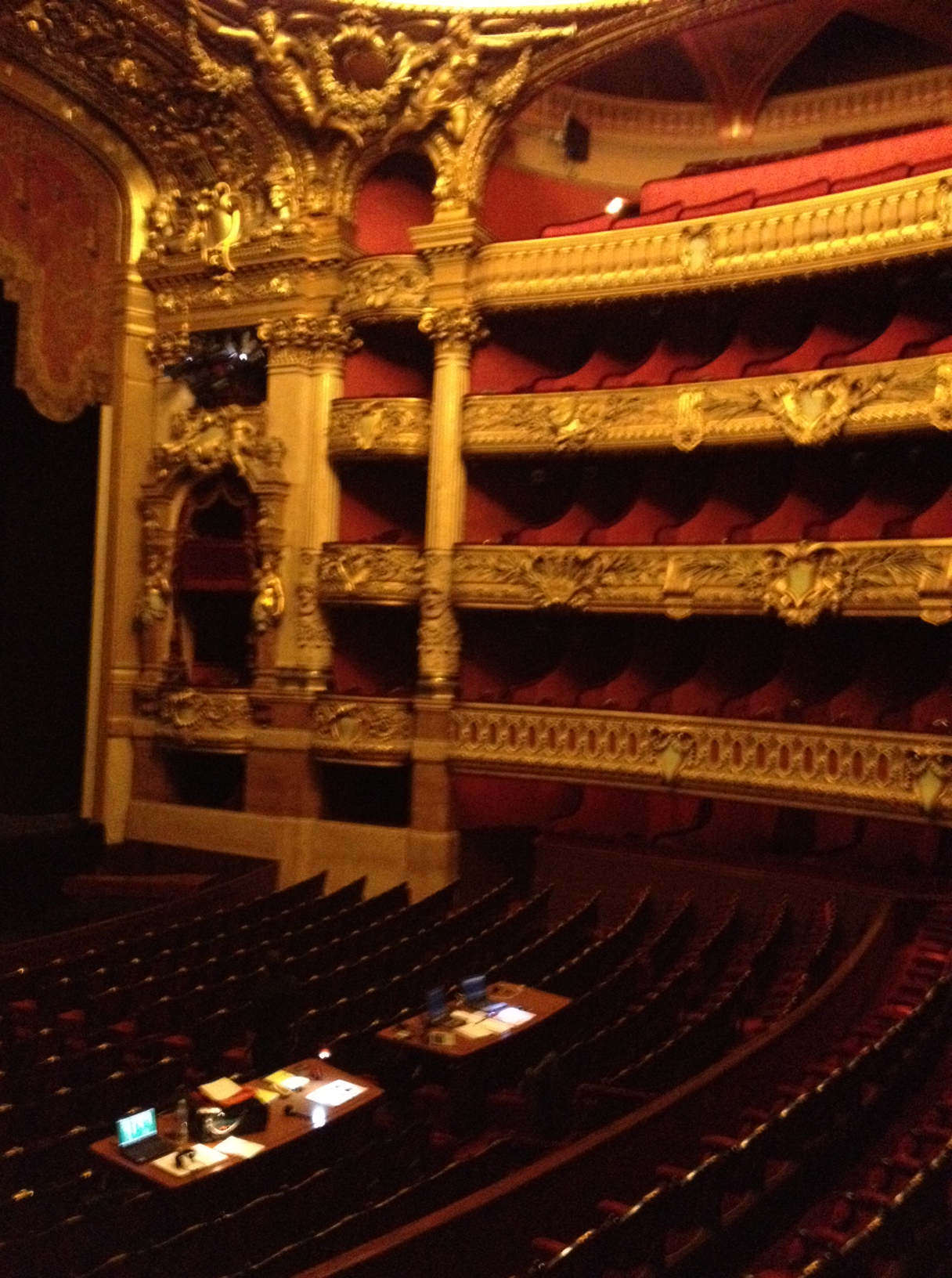
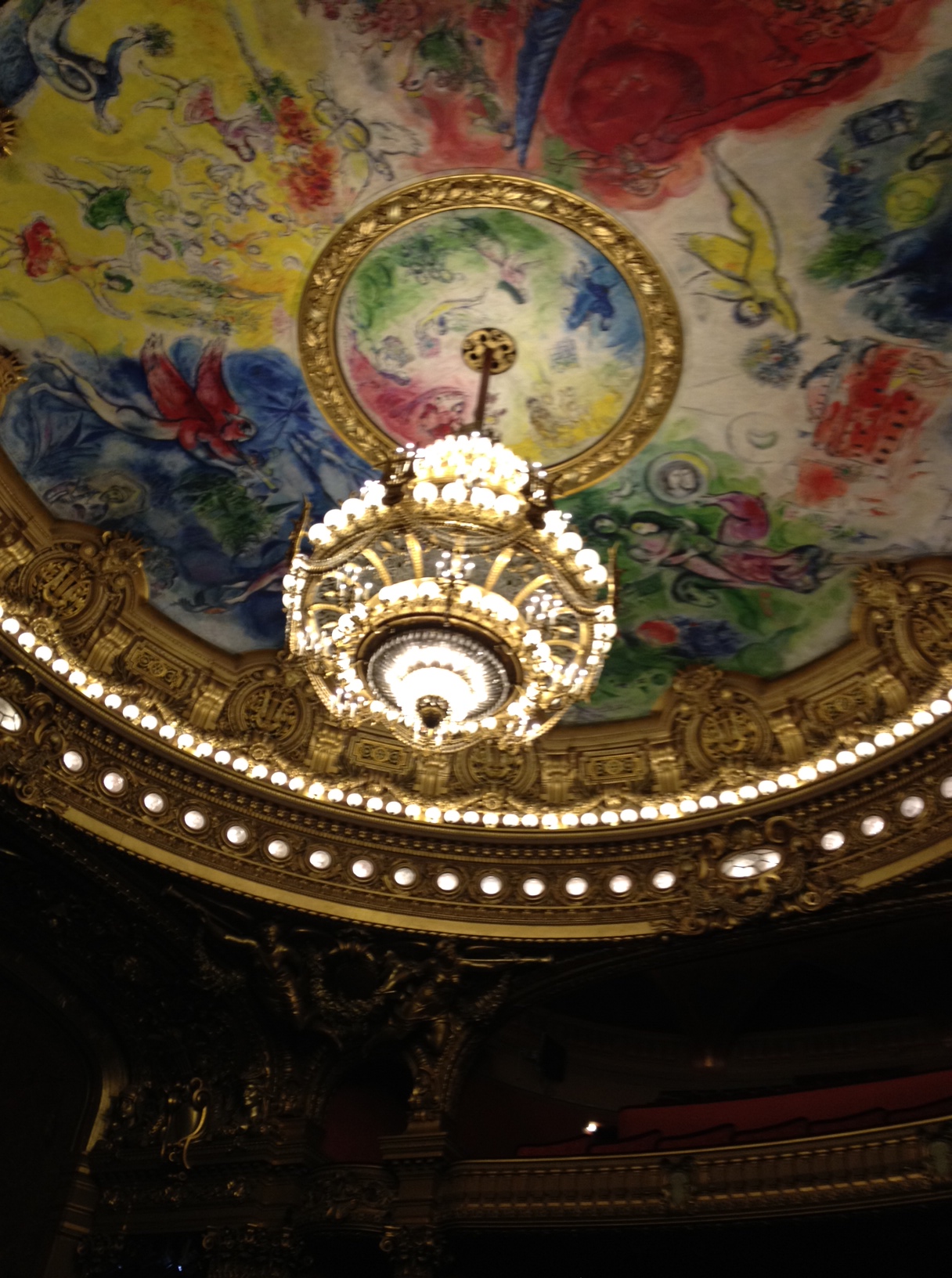
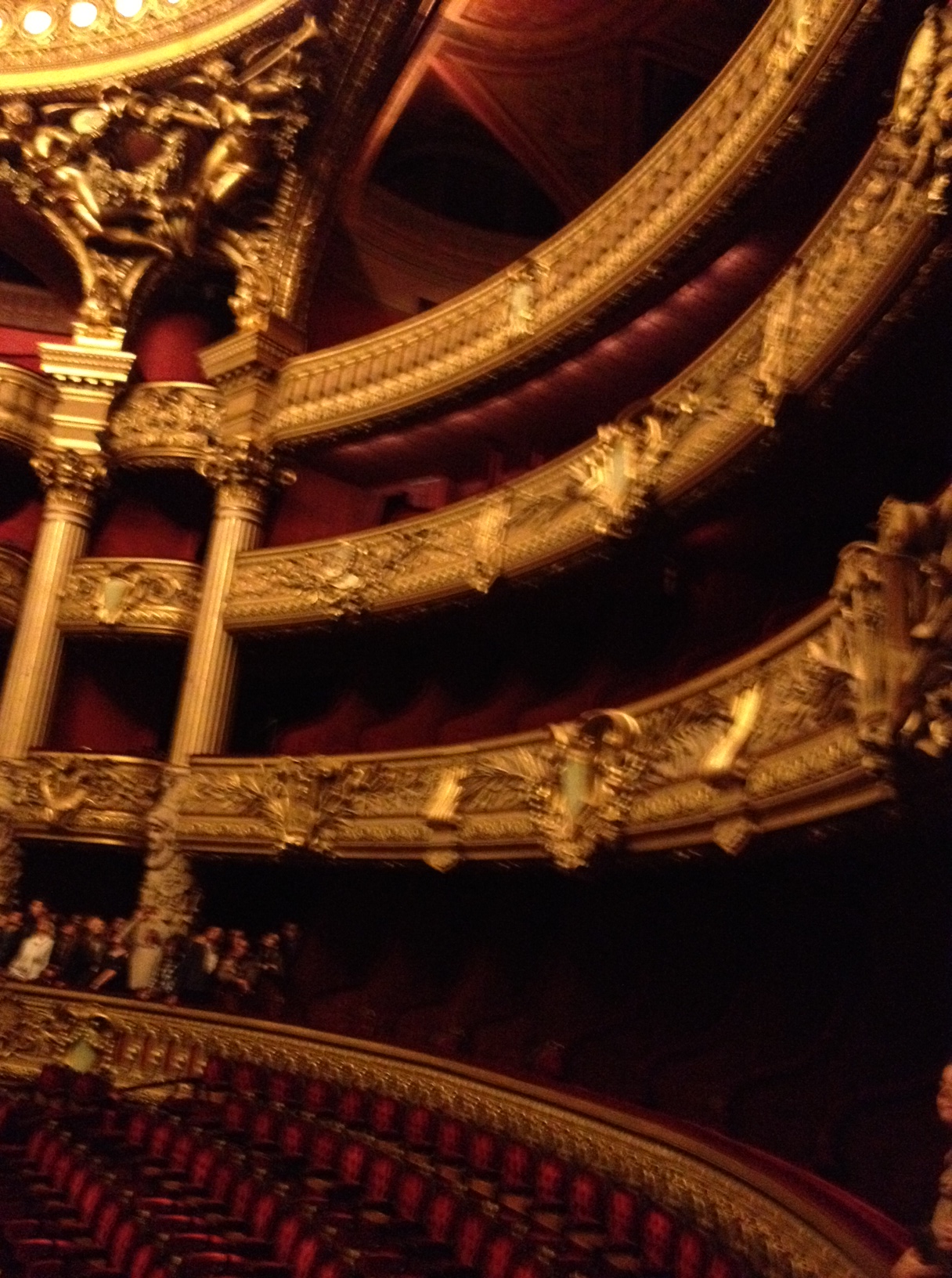
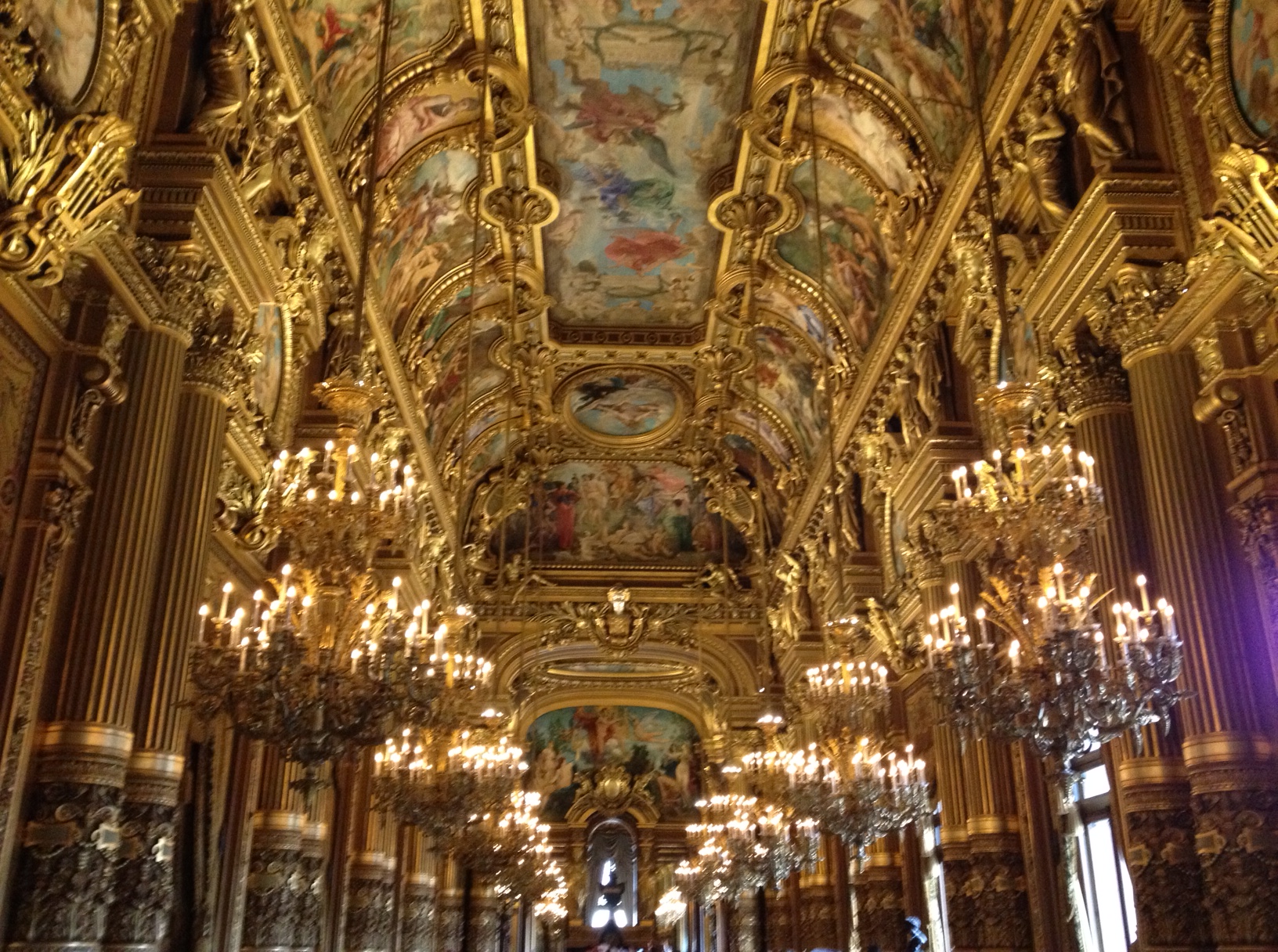
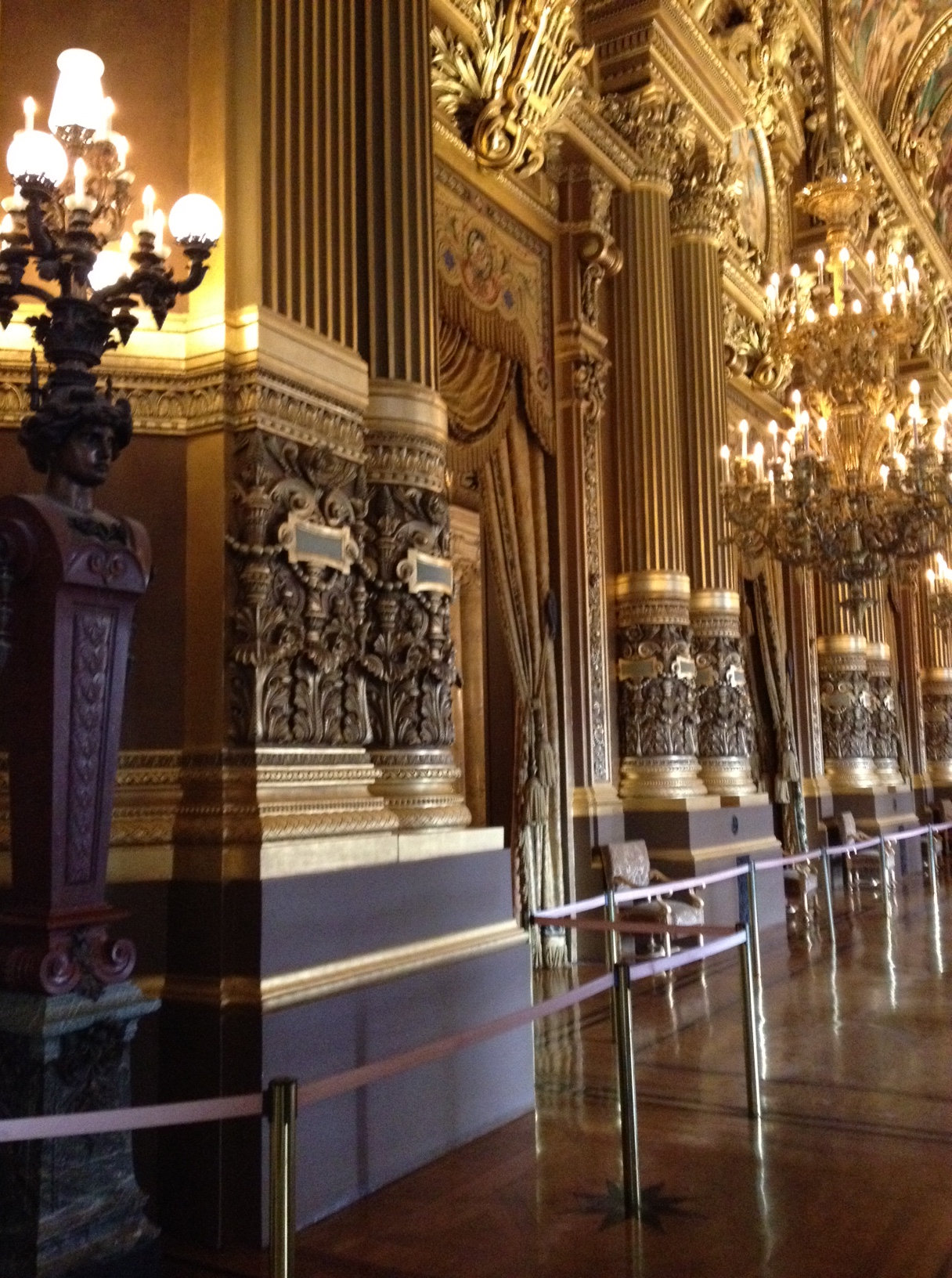
In particular, I loved Shipstead’s scene in the Opéra Garnier, which captures the beautiful excess better than a camera ever could:

The houselights are down, but the glow from the stage picks out a profusion of gilded plasterwork: serene deities, trumpeting angels, lyres, garlands, flowers, oak leaves, masks, Corinthian columns, all deeply shadowed, piling up around the proscenium and among the boxes like the walls of a craggy old cave, climbing to Chagall’s painted round ceiling of naked angels and volumptuous ballerinas and goats and chickens and lovers and blue Eiffel Tower and red-splotched rendering of the Palais itself. From the center of thing hangs the great sleeping chandelier: an enormous gold and glass thistle hung upside down to dry, darkly gleaming.


Speaking of cameras, here are some of my own photographs of the Opéra Garnier, which aren’t the best quality, but you get the idea:

photo 1 photo 2 photo 3 photo 4 photo 5

So whether you read Astonish Me for the ballet, the love story or the lovely Paris passages, I think you’ll be delighted.

If you’re in Paris or plan to visit, don’t miss a visit to Palais Garnier, whether it’s for a ballet performance or a public tour. Click here to go to their website, which has more beautiful photographs, a lot of history and information about your visit.

Suggested reading:  Check out my previous post The Painted Girls: Degas and the Dancers featuring Cathy Marie Buchanan’s book The Painted Girls, historical fiction about young French ballet dancers set in Belle Epoque Paris.


Astonish Me by Maggie Shipstead: Highly Recommended.


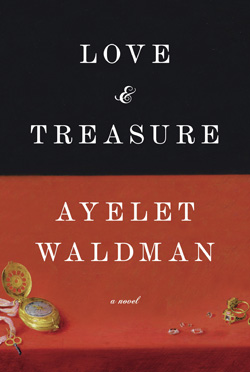
Love and Treasure by Ayelet Waldman

Ayelet Waldman’s new book, Lovayelet-waldman-love-and-treasure-2501e & Treasure, is a perfect treasure of an art novel. It  begins where The Monuments Men leaves off, daring to face the difficult questions about Nazi-plundered Jewish treasures. How do you ever figure out to whom the objects once belonged? Did the owner survive the war? If not, did any of their relatives survive? To whom should the treasure be returned?

Maybe you’d like to check out the book trailer here, which beautifully conveys the historical mood of the novel. The story is based on the Hungarian Gold Train, which American servicemen recovered in Salzburg, Austria at the end of WWII. The train was full of home goods, jewelry and personal artifacts plundered from Hungarian Jews, most of whom were executed in the Holocaust.

The story begins when an American serviceman helps himself to an unusual locket that he found on the Hungarian Gold Train. Before his death many years later, he hands the locket to his grandaughter and begs her to return it to its rightful owner. The grandaughter teams up with an art dealer of questionable morals who specializes in Nazi-era art, and together they set off to Hungary and Israel on a quest to solve the mystery.

In an unusual twist, the third part of the novel is humorously narrated by a Freud-era psychoanalyst who offers a report on a patient he believes to be suffering from “female hysteria.” It turns out that his report tells the true story of the locket’s owner, a young Jewish woman who is turns out was a turn-of-the-century feminist who had dreamed of going to medical school. It is a story we never could have imagined, a life we never would have known.

And isn’t that the greatest loss of all? Not the objects or the treasures the Nazis took away, but the story of the lives behind the treasures. How beautiful then, that by offering us this one imagined life, Ayelet honors the lives of the many others whose stories we will never know.

Love and Treasure by Ayelet Waldman: Highly recommended.

For further reading: The Gold Train: The Destruction of the Jews and the Looting of Hungary by Ronald W. Zweig

gold train zweig


Cassat and Degas: A Love Story?

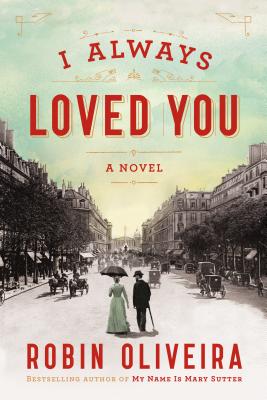
i always loved you

I Always Loved You is Robin Oliveira’s wonderfully atmospheric story about Mary Cassatt’s early years in Paris, beginning in 1877 when Edgar Degas invited her to exhibit with the revolutionary group of French artists known as the Impressionists. Oliveira has done a fabulous job of capturing the place and times of these 19th century artists, including Degas, Morisot, Manet, Renoir Caillebotte and Pissaro.

Oliveira offers us lively and colorful scenes in Paris, from the studios of Montmartre to the salon scene along the Champs d’Elysée. I have photos of some of these scenes in an earlier post called Mary Cassatt’s Greater Journey, including her homes on avenues Trudaine and Marignan.

As the title suggests, this book imagines that there was more to the story of the friendship  between Mary Cassatt (1844-1926) and Edgar Degas (1834-1917). Degas and Cassatt were known to be very close friends and colleagues. It is absolutely true that Degas had an enormous influence on Cassatt’s art and life. But was there ever more? Oliveira imagines their story as a love story.

Edgar Degas Self-Portrait (1886)

Edgar Degas Self-Portrait (1886), pastel on paper

Mary Cassatt, Self-Portrait (1878),  gouche on paper 23x17in Metropolitan Museum of Art, NY

Mary Cassatt, Self-Portrait (1878), gouche on paper 23×17″ 
Metropolitan Museum of Art,

But wait. Wasn’t Degas the disagreeable painter of nude prostitutes, working class absinthe drinkers and the petit rats from the demi-monde of the Opéra? He had a bad reputation, if rumors are to be believed. Some have made him out to be celibate, impotent, a misogynist, or even a sex offender.

And wasn’t Cassatt a cloistered woman of high social standing, best known for her tender portraits of mothers and children?

What could these two possibly have in common? Despite their differences, there was something that bound the two together, and I believe it was their fanatic devotion to their art. They both worked brutally hard at their technique and admired that in each other. They loved capturing the color of flesh and preferred to paint indoors, unlike many of the other Impressionists. They were the most experimental of the Impressionists, spending a great deal of time working and re-working their prints.

Was there ever more than this professional bond? We will never know. Cassatt destroyed all of her letters with Degas before she died. Oliveira draws her own inferences from that big mysterious gap, but I’m not so sure. Can’t Cassatt’s extraordinary work speak for itself? Isn’t her true story – as far as we know it – enough? Isn’t it enough that Cassatt and Degas had an intense, complicated, or even tortured friendship? Why do we have to impose on her our desire for romance?

This story is different than the one about the love affair between Edith Wharton and Morton Fullerton that Jennie Fields wrote about in Age of Desire (2012). That imagined story was based on Edith Wharton own letters. Her late-in-life extramarital affair might have been a surprise to Wharton’s many fans and admirers, but it was undeniably true. And with it came the revelation that Edith Wharton had written her own erotica. Quelle surprise! 

The Cassatt-Degas question is similar to the one between Berthe Morisot and her brother-in-law Édouard Manet, whose story is also told in Oliveira’s book. There were rumors of a romance there too, and inferences to be drawn. Both Morisot and Manet left behind some remarkable paintings that give us a potential peek at their inner secrets. I’ve written about this in the past – you might want to check out this previous post, Berthe Morisot’s Interior.

So are there any clues in Degas and Cassatt’s work?

Degas made numerous drawings, prints, pastels and etchings of Cassatt in the years between 1879 and 1885. But there is not one nude, no sweet smiles or sultry stares. Mary Cassatt would never have subjected herself to that kind of exposure. All we have are inscrutable poses like this:

Edgar Degas, Portrait of Mary Cassatt (1880-1884).  Mary Stevenson Cassatt / Edgar Degas / Oil on canvas, c. 1880-1884 / National Portrait Gallery, Smithsonian Institution; gift of the Morris and Gwendolyn Cafritz Foundation and the Regents' Major Acquisitions Fund, Smithsonian Institution.

Mary Stevenson Cassatt  by Edgar Degas, Oil on canvas, (1880-1884), National Portrait Gallery, Smithsonian Institution.

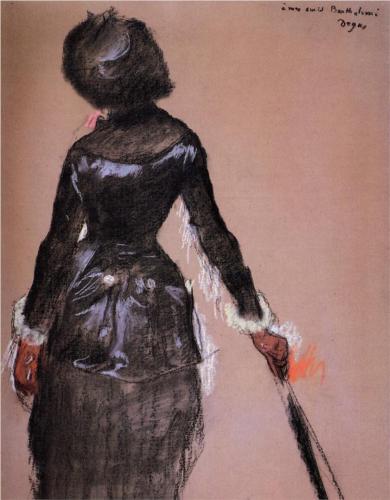
Degas made a series of studies, drawings and prints of Mary and her sister Lydia at the Louvre, including this study of Mary’s silhouette:

Mary Cassatt at the Louvre, Edgar Degas, Study (1880)

Mary Cassatt at the Louvre, Edgar Degas, Study in pastel (1880), Philadephia Museum of Art

The second pose is flattering, and has an unmistakeable sense of Degas’ interested gaze, but it is a long way from suggesting that they were lovers.

And yet it nags us, if there was nothing improper, why would Cassatt destroy their letters? It is entirely within this mysterious gap that Oliveria’s book takes place.

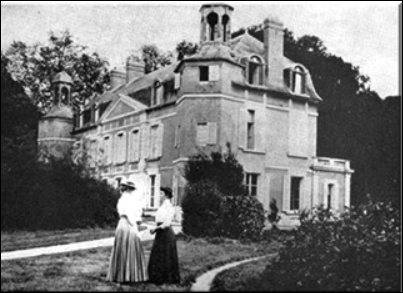
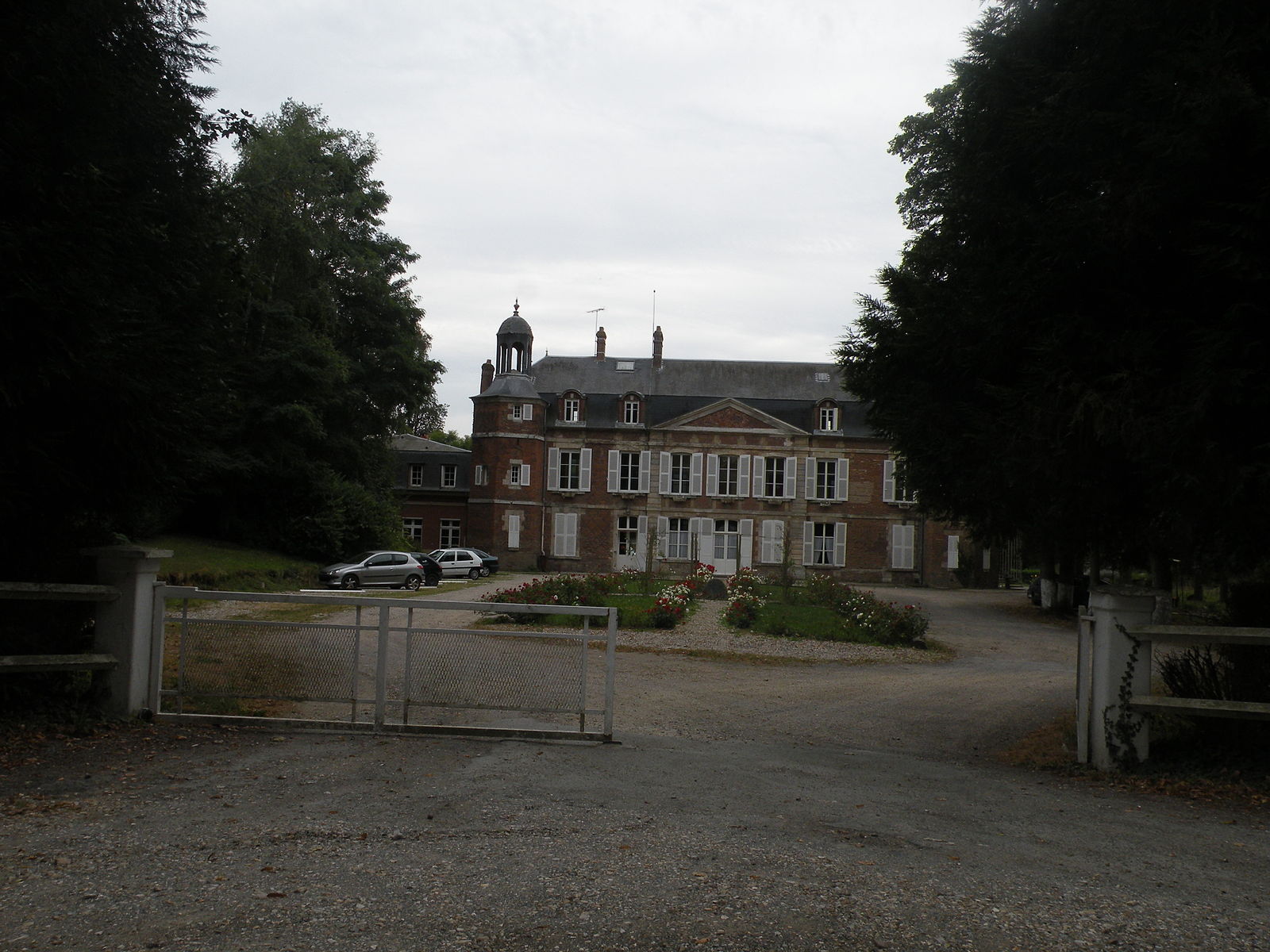
The letter burning story does make for lovely opening and closing scenes in I Always Loved You. Cassatt is elderly and living with no one but her long-term housekeeper at her country home, the Chateau de Beaufresne, and she is reading the letters she and Degas wrote to each other.

But she had kept these letters, as he had kept hers, though what they had been thinking, she couldn’t imagine. Such recklessness. Private conversations should always remain private. Why should anyone know what they themselves had barely known?

At the very end of the book, Oliveria returns to this same scene and shows Cassatt sitting in the dim light next to the fire, nearly blind from cataracts, as she decides to destroy the letters.

Was it a crime to burn memory? She didn’t know. Memory is all we have, Degas had once said. Memory is what life is, in the end.

She would be ash herself, soon, like all the others. She thrust the letters one by one into the fire. . . .

The pages burned on and on. And in those flames the years evaporated, the things unsaid and foregone, the misunderstandings and misconceptions and subverted hopes, the things that would now never be said.

Did they or didn’t they? We’ll never know for sure. Oliveira’s book offers one possible interpretation. What’s yours?

Mary Cassatt at Chateau de Beaufresne, undated photo. Source: http://www.mary-cassatt.net

Mary Cassatt at Chateau de Beaufresne, undated photo. Source: http://www.mary-cassatt.net

Chateau de Beaufresne (2012 photo). Source: http://commons.wikimedia.org/wiki/File:Château_de_Beaufresne.JPG

Chateau de Beaufresne (2012 photo). Source: http://commons.wikimedia.org/wiki/File:Château_de_Beaufresne.JPG

If you’re a fan of Mary Cassatt and would like to see more photos of Chateau de Beaufresne and the family gravesite nearby in Mesnil-Théribus, go to http://www.mary-cassatt.net. I hope to get there myself on my next trip to Paris.

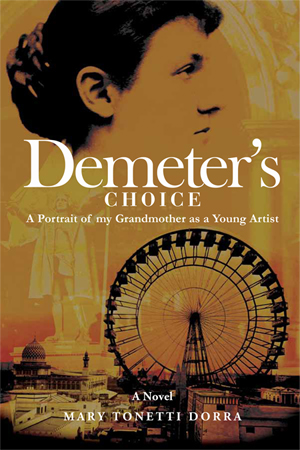
Demeter’s Choice: A Portrait of Artist Mary Lawrence Tonetti


Demeter's Choice

Demeter’s Choice: A Portrait of My Grandmother as a Young Artist is the story of a young American sculptor named Mary Lawrence Tonetti who began studying under Augustus Saint-Gaudens at a very young age. She came of age in the art studios of New York and Paris in the late 19th century, and is most famous for her sculpture of Christopher Columbus for the Chicago World’s Fair of 1893.

The author is the sculptor’s own granddaughter, Mary Tonetti Dorra, who had access to wonderful personal information to make the story rich with detail and insight. There are even copies of some of Mary Lawrence’s original pen and ink sketches and travel notes.

Demeter’s Choice tells the story of one woman’s choice between art and love. Mary Lawrence led a remarkable, artistic life both before and after her big choice. It’s a life worth knowing more about. And for the followers of this blog who like to hear about art history in Paris, I’ll point out all of the Paris sites and scenes of interest.

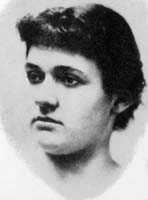
Mary Lawrence Tonetti (1868-1945). Source: sgnhs.org.

Mary Lawrence Tonetti (1868-1945). Source: sgnhs.org.

Mary Lawrence was a privileged young woman (her ancestors included a mayor of New York and Captain James Lawrence, a famous patriot famous for his wartime utterance: “Don’t give up the ship!”) who began a pampered life in Cliffside, her family’s large estate overlooking the Hudson River in Sneden’s Landing, New York. Mary was known to have grown up with a “robust temperament” and a taste for the outdoors. (Which to me is the Gilded Age way of saying she was a handful, a tomboy, a bit of a rebel. Funny how many of those kinds of Gilded Age girls turned out to be artists, especially sculptors….)

Mary enjoyed art from a very young age. When she was only seven years old, her family arranged for the up-and-coming Augustus Saint-Gaudens to come up to Sneden’s Landing to teach drawing and sculpture to Mary a group of other children. (Not a bad start for a kid!) When she was older, Mary continued art lessons at Saint-Gauden’s Fourteenth Street Studio in the German Savings Bank in New York City. Saint-Gaudens would have a huge influence on Mary’s life and career in art.

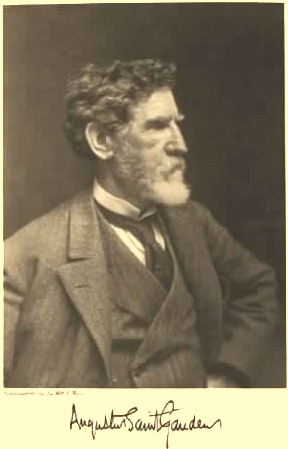
Augustus Saint-Gaudens, mentor and friend of Mary Lawrence

Augustus Saint-Gaudens, mentor and friend of Mary Lawrence

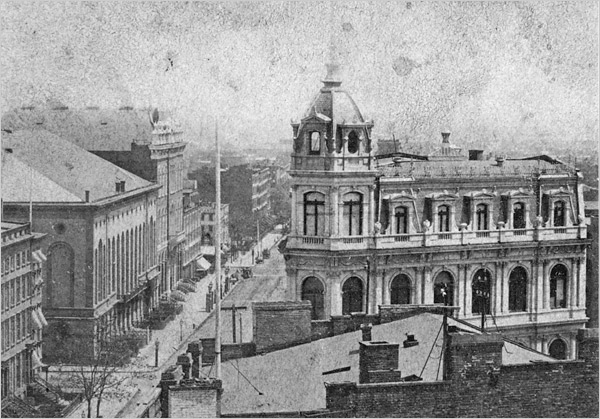
German Savings Bank around 1872, site of Augustus St. Gaudens studio. Source: Office for Metropolitan HIstory NYC

The German Savings Bank around 1872, the site of Augustus Saint-Gaudens 14th Street studio. Source: Office for Metropolitan History NYC.

By the time Mary was twenty years old, she was personal friends with Saint-Gaudens’ whole crowd, including the architects Charles McKim and Stanford White. Demeter’s Choice has a lovely scene where Saint-Gaudens, McKim and White joined Mary for a picnic at Sneden’s Landing before she set sail on her first Grand Tour of Europe in 1886. There were hints that Charles McKim, a married man of nearly forty, was already falling in love with her despite their vast difference in age.

Accompanied by a supportive aunt and her more conventional sister Edith, Mary Lawrence made the Grand Tour of Europe, including a summer of sightseeing through Belguim and Germany before she would settle in Paris and begin her art studies it the women’s atelier of the Académie Julian.

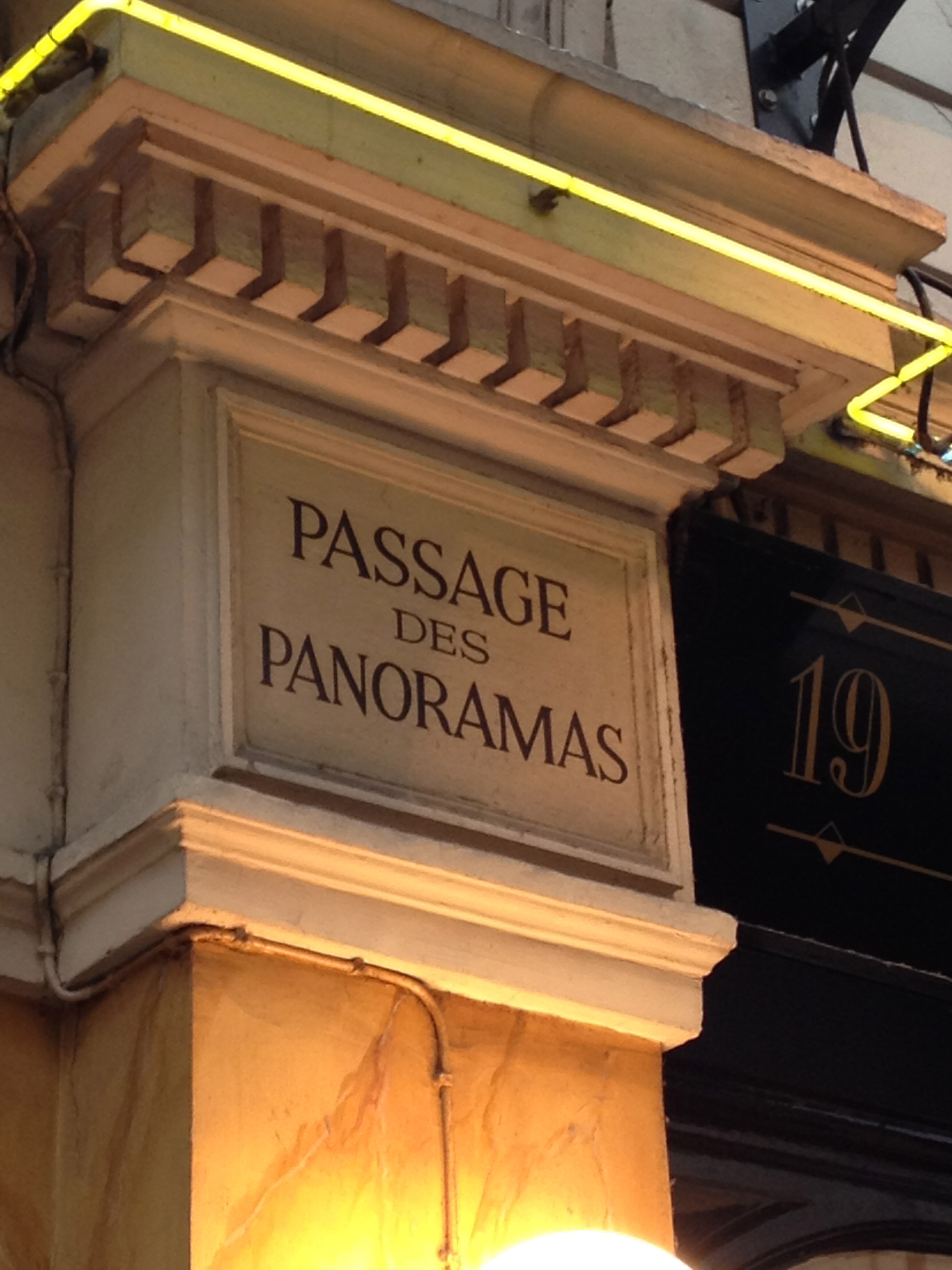
Passage des Panoramas in the 2nd arrondissement of Paris, the location of one of Académie Julian's atelier for women

Passage des Panoramas, just off of boulevard Montmartre in the 2nd arrondissement of Paris, the location of one of Académie Julian’s atelier for women. The studio is no longer there, but a stroll through the arcade will still give you a sense of the time and place.

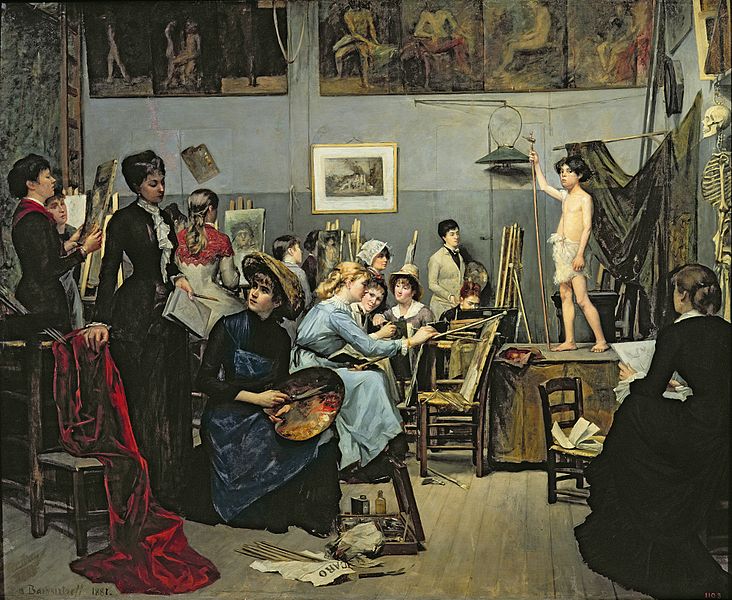
Marie Baskirtsheff, In The Studio (1881). A painting of the women of Académie Julian.

Marie Bashkirtseff, In The Studio (1881). A painting of the women of Académie Julian by a Russian student famous for her memoir, The Journal of Marie Bashkirtseff.

Being a friend and an assistant to Augustus Saint-Gaudens opened many doors upon Mary’s arrival in Paris. He introduced her to many of the American artists who worked or studied there, including Mary Louise Fairchild from St. Louis, who was studying with Carolus-Duran and the Académie Julian on a prestigious fellowship. In Demeter’s Choice, the two Marys meet at the opening night of the Paris Salon of 1886, where Mary Fairchild’s portrait of Sara Hallowell was on display. Sara Hallowell was an American art agent for wealthy American art collectors such as Bertha Palmer of Chicago. Sara lived part of the year in Paris developing close relationships with Mary Cassatt, Claude Monet, Edgar Degas and Auguste Rodin. Mary Lawrence was making all the right connections too, a rare opportunity for such a young artist.

Mlle S. H. (Sara Tyson Hollowell) by Mary Fairchild (1886). Source: www.pubhist.com)

Mlle S. H. (Sara Tyson Hollowell) oil on canvas by Mary Fairchild (1886). Property of The Warden and Fellows of Robinson College, University of Cambridge. This is the portrait that was exhibited in the 1886 Paris Salon where Mary Lawrence met Mary Fairchild and Sara Hallowell. Source: http://www.pubhist.com

Within a week of her arrival in Paris, Mary Lawrence was invited to Auguste Rodin’s art studio which he shared with his student and young mistress Camille Claudel. Together they strolled through the studio where Mary got to see the models for The Burghers of Calais and some of the figures from The Gates of Hell. Today you can see these works for yourself at the Musée Rodin, one of my favorite museums in Paris. Inside you can even see some of Camille Claudel’s sculptures as well.

Mary and her sister settled into their apartment at 56 rue Notre Dame des Champs in the heart of the Left Bank of Paris, within a few blocks of some of the biggest names in the art world, such as John Singer Sargent, Carolus-Duran, James Whistler and William-Adolphe Bouguereau. Saint-Gaudens and his wife lived nearby, at 3 rue Herschel just on the other side of the Luxembourg Gardens. Like many Americans ever since then, Mary came to adore Paris, from the macaroons at LaDurée, to the baguettes from her local boulangerie to a lovely stroll through the Palais Royal.

IMG_2263

.

Being a young woman of privilege in the Gilded Age meant you had the opportunity to travel throughout Europe instead of having to freeze or starve your way through a miserable winter in Paris. Mary Lawrence left Paris for a few winter months in Italy with her family entourage before she returned to New York in the summer of 1887. By the spring of 1888, she had returned to Paris for another season of classes at the Académie Julian.

Once her second session of Paris art studies were over, Mary returned to New York, where she taught at the Art Students League, served as Saint-Gaudens’ assistant and worked on her own sculpting projects.

In the fall of 1891, Mary learned that she would be awarded a contract to create a statue of Christopher Columbus for the Chicago World’s Fair under the supervision of Saint-Gaudens. It was a huge honor. Most women who received commissions for the fair (such as Mary Cassatt, Mary Fairchild MacMonnies and Sophia Hayden) were contracted through a separate Board of Lady Managers led by the Chicago society queen Bertha Palmer. Mary Lawrence received her commission directly from the Fair Commissioners, who were all male. You can read a fun 1893 New York Times article about Mary’s commission here.

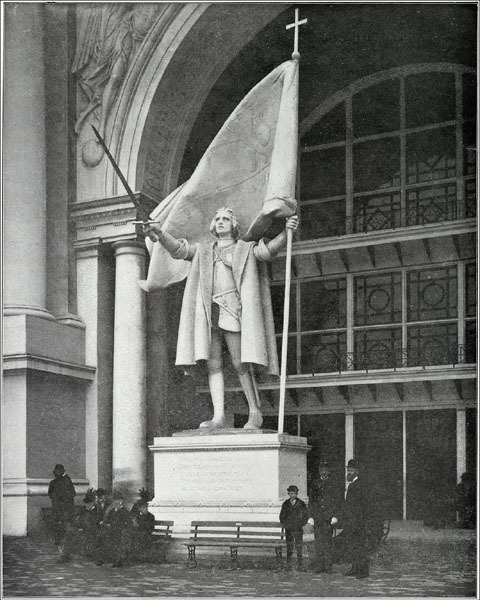
Demeter’s Choice tells the wonderful story of a fight between Mary Lawrence and her supporters versus Frank Millet, a particularly odious fair organizer, who objected to the prominent placement of her Columbus statue because it was made by a “female novice.” Millet actually arranged to have it moved to a spot near the train station. You’ll have to read for yourself to learn what happened next. If you look at the image below, it is amazing what a good job young Mary Lawrence did – she was young, but certainly no novice.

"Columbus Taking Possession." The Administration Building From Columbian Gallery: A Portfolio of Photographs of the World's Fair, The Werner Company. The prominent and handsome figure of Columbus, which stood in the portal, was the work of Miss Mary T. Lawrence, and represented the landing of Columbus, and the planting of the Spanish flag in the colonies of the New World. 1893. Source: http://www.flickr.com/photos/field_museum_library/3409425513/in/photostream/

“Columbus Taking Possession.”  Mary Lawrence’s statue of Columbus, which stood in the portal of the Administration Building at the Chicago Worlds Fair. Source: http://www.flickr.com/photos/field_museum_library/3409425513/in/photostream/

After the excitement of the Chicago World’s Fair was over, Mary went back to Paris. She continued her studies at the Académie Julian and renewed her many friendships with the artists of the Left Bank and beyond. Mary was on everyone’s guest list, attending soirées hosted by the likes of Charles Dana Gibson and James Whistler. It was at Gibson’s glamorous ball and then again at Whistler’s home at 110 rue de Bac that Mary Lawrence met François Tonetti, a sculpting assistant to Frederick MacMonnies. The rest, as they say, was history.

The plaque at James Whistler's home in rue de Bac where Mary Lawrence first met François Tonetti in 1893. Source: http://www.flickr.com/photos/monceau/7759948652/

The plaque at James Whistler’s home on rue de Bac, where Mary Lawrence and François Tonetti met for the second time in 1893. Source: http://www.flickr.com/photos/monceau/7759948652/

A close-up image of a portrait of François Tonetti by François Flameng. Source: http://palisadesny.com/nature/take-hike/

A close-up image of a portrait of François Tonetti by François Flameng. Source: http://palisadesny.com/nature/take-hike/

Even after she met the charming and passionate François, Mary Lawrence continued to work as a sculptor in her own Twenty-Third Street studio in New York and to teach Saint-Gaudens’ classes at the Art Students League through most of the1890s. Charles McKim continued to pursue her, as did François, her favorite Frenchman.

Saint-Gaudens didn’t want his protégée to marry, worried that she would give up her art for a house full of “festive children.” He asked: “wIll she just die and fade into the wife of François Tonetti…?” Others objected because François wasn’t from the “same stock” as the Lawrences. Mary’s own sister pressed her to choose Charles McKim, who offered a more proper and promising future than a bohemian artist could.

No matter what choice Mary Lawrence would make, it was clear that she wouldn’t die and fade away. She would always live in a world of art. Mary Lawrence lived the rest of her life surrounded by artists, founding and developing an artist’s colony in Sneden’s Landing. Generations of artists and actors have enjoyed living there, including Gerald and Sara Murphy, Orson Wells, Lawrence Olivier, Vivien Leigh, Al Pacino, Angelina Jolie, Bill Murray and Mikhail Baryshnikov. Just for fun, you can check out this recent gossip article about Tom Cruise checking out the real estate in Sneden’s Landing.

Quite a story and quite a legacy. We are so lucky that Mary Lawrence’s granddaughter wrote it all down. 

Mary Tonetti Dorra. Source: www.marytonettidora.com.

Mary Tonetti Dorra. Source: http://www.marytonettidorra.com.

Author Mary Tonetti Dorra has a list of appearances scheduled in early 2014. You can check them out for yourself on her website.

Review and Recommendation by Margie White of the American Girls Art Club in Paris

Fanny and Louis in Grez

wide starry sky

Nancy Horan, the bestselling author of Loving Frank, comes now with her long-awaited second novel, based on the nineteenth century love story between Fanny van de Grift Osbourne, a not-exactly-divorced American mother of three and the much younger writer Robert Louis Stevenson.

The pair met in the summer of 1875 in Grez, an art colony in France in the Fountainebleu Forest. Fanny had arrived in France the year before to escape her unhappy marriage and to study art alongside her 17 year-old daughter Belle.

Fanny and Belle were enjoying their studies in the women’s drawing classes at the Académie Julian alongside other international students, including May Alcott, Louisa May Alcott’s little sister. (You can read more about May Alcott’s art studies and travels through France at my previous post, Little Women in Dinan.)

After enduring an unspeakable tragedy in Paris, Fanny decides to bring her children to Grez for some quiet recovery time in the country. A fellow art student at the Académie Julian suggested a quiet place, “an inn at Grez, on the Loing River. It’s close to Barbizon but away from all the bustle, and cheap. It’s near the Fountainebleu Forest.” Fanny talks her estranged husband from California into supporting them for one more year in Europe.

Nancy Horan describes Grez-sur-Loing well:

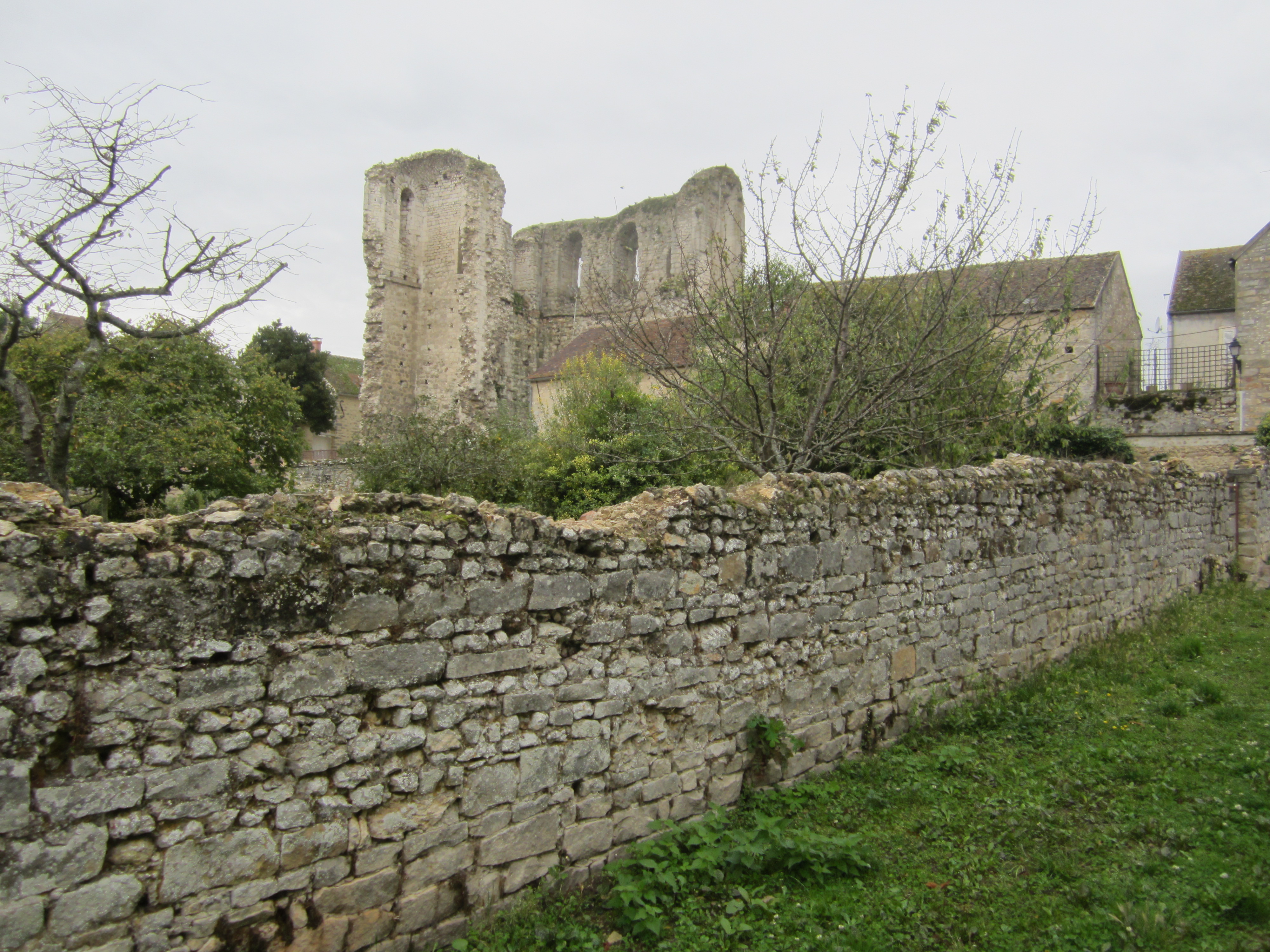
[N]estled in the midst of vast farm fields, the village was a smattering of stone houses, a picturesque bridge, and a ruined twelfth-century tower with ferns growing in its cracked walls.

During my year in France I loved to plan field trips to art history sites, and I just happened to spend a gray day in Grez myself. You can read another post (Visit an Art Colony in France: Grez-sur-Loing) about my trip to Grez, which includes directions and more information about the different artists who lived and painted there.

Here are some photos of Grez that readers of Under the Wide and Starry Sky and fans of Robert Louis Stevenson might especially enjoy:

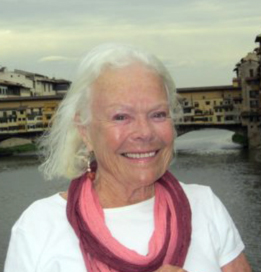
Standing in front of the bridge at Grez-sur-Loing in 2012.

Standing in front of the bridge at Grez-sur-Loing in 2012. The picturesque  12th century Tour de Ganne is in the background.

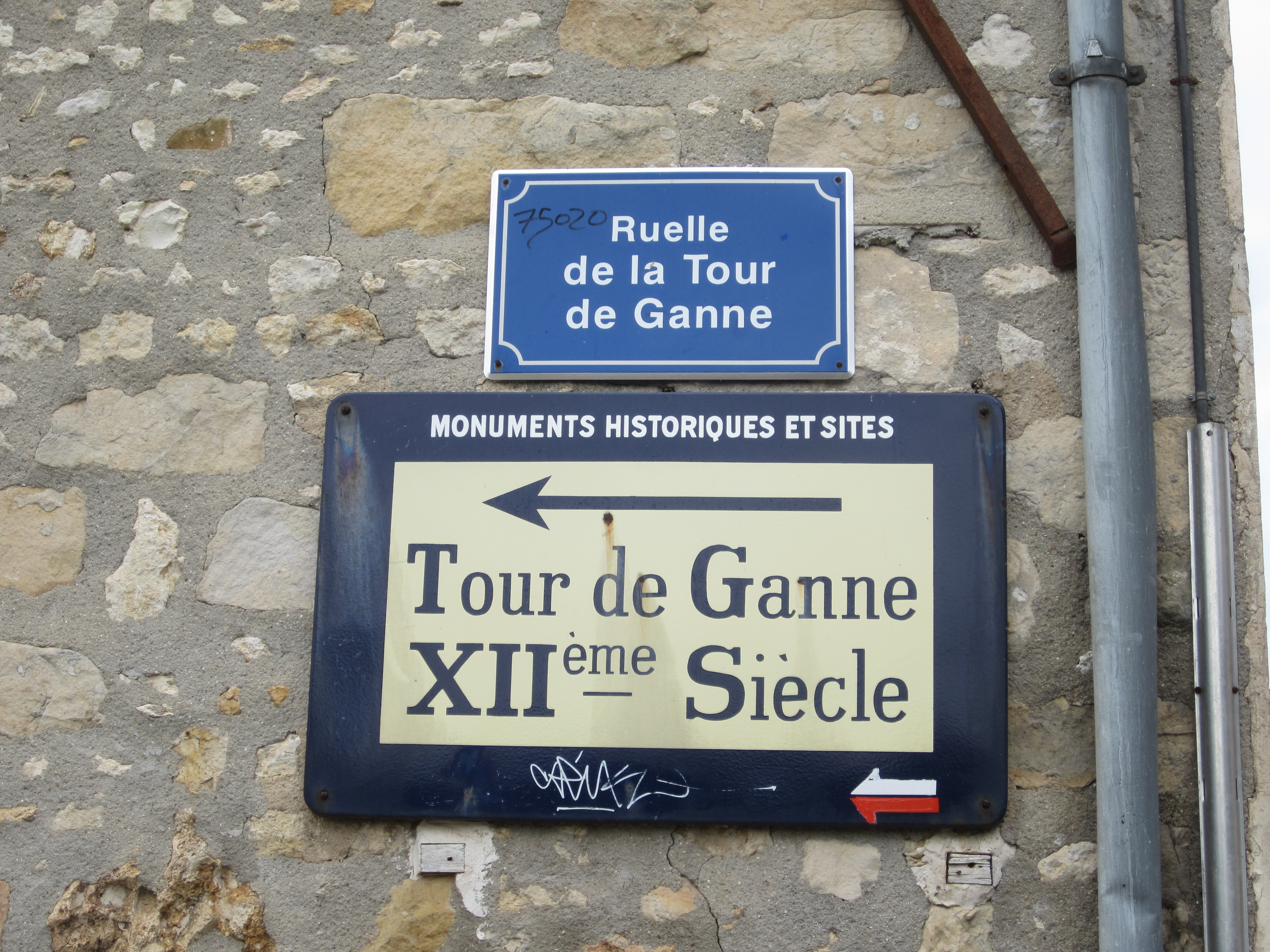
The 17th century Tour de Ganne in Grez

The 12th century Tour de Ganne in Grez

The Tour de Ganne in Grez from the grassy walk down toward the river

The Tour de Ganne in Grez as seen from the grassy walk down toward the river

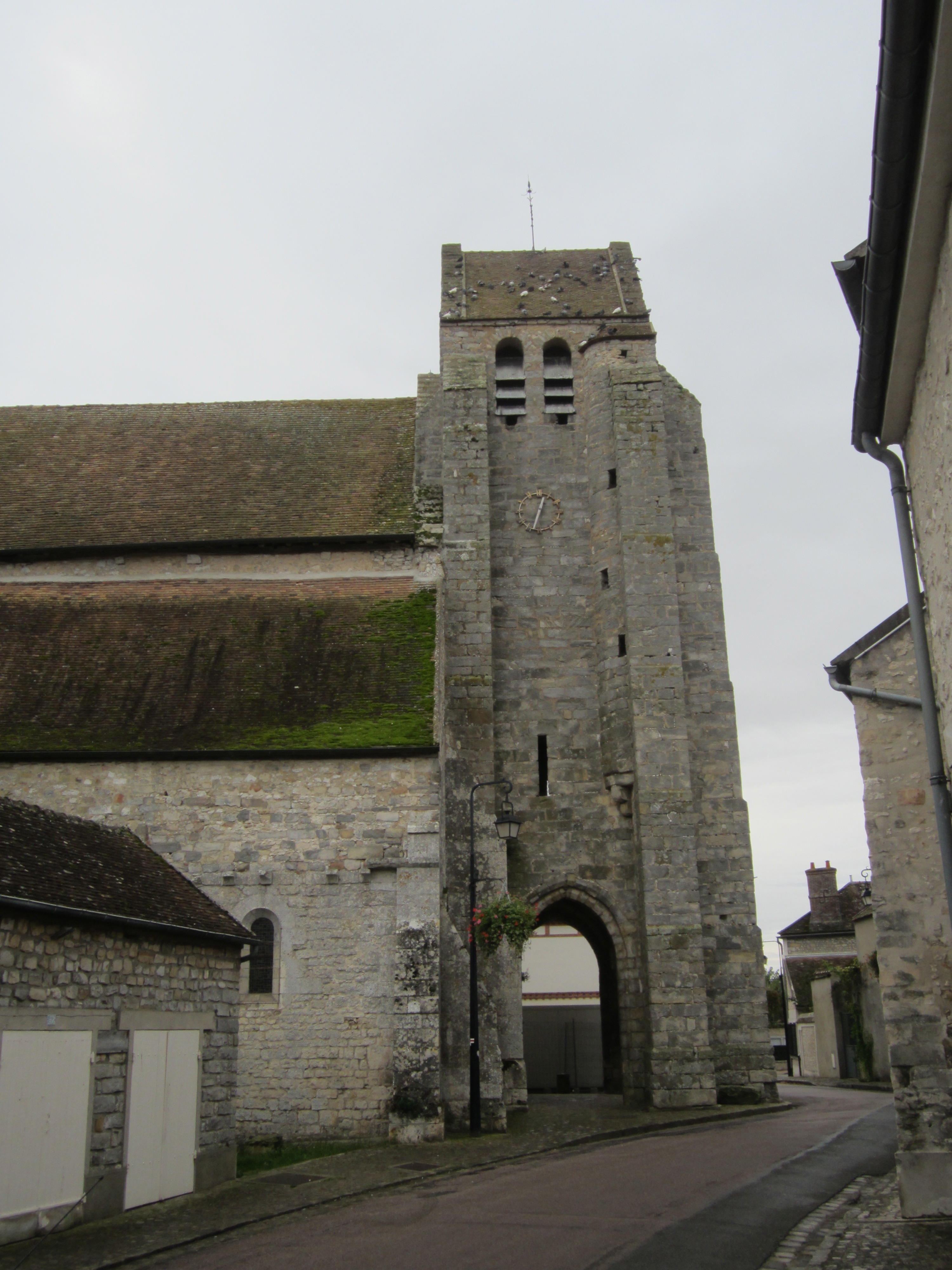
On the main street in Grez: Church of Our Lady and Saint Lawrence, 12th century

On the main street in Grez: Church of Our Lady and Saint Lawrence, 12th century

In the book, Nancy Horan has Fanny’s friend Margaret Wright tell her about the Hotel Chevillon in Grez, “one of the most bohemian of the bohemian gathering places near the Fountainebleu Forest.” Says Margaret:

Barbizon has become too fashionable. It’s overrun by poseurs more interested in the mis-en-scene than in producing any actual art. The real painters go to Grez. . . . And you needn’t worry. They will leave you alone, I think.

Little did Fanny know that the bohemians who enjoyed the summer season at Hotel Chevillon were dismayed to hear that an American woman and her children had arrived at the inn. Bob Stevenson (Robert Louis Stevenson’s cousin, and an artist in his own right) arrived ahead of the group of “Glasgow Boys” from Scotland with the intention of chasing Fanny away. In the book, Bob Stevenson hints Fanny might want to find other more suitable accommodations:

There’s an onslaught about to begin. . . . Once the others start to arrive you’ll discover this isn’t the place to be if you are hoping for a little peace. Madame Chevillon said you had come for the quiet. . . . There are places not far from here that would serve you much better if you are here to rest. . . .
But things would turn out much differently than the Stevensons had planned. Within a few short weeks, both of the Stevenson cousins would have a crush on Fanny. Although Fanny was 10 years older than Louis, they found comfort in each others hearts and minds. In the meantime, Fanny’s 17 year-old daughter Belle fell in love with the Irish artist Frank O’Meara.

The Hotel Chevillon still stands today, although it is not open to the public. It is a private art residency center operated by The Grez-sur-Loing Foundation in Sweden, which manages a stipend program for visiting artists, authors and photographers. There is even a Robert Louis Stevenson Fellowship available for interested writers (the application deadline for 2014 is February 28th, but it looks like it is limited to residents of Scotland.)

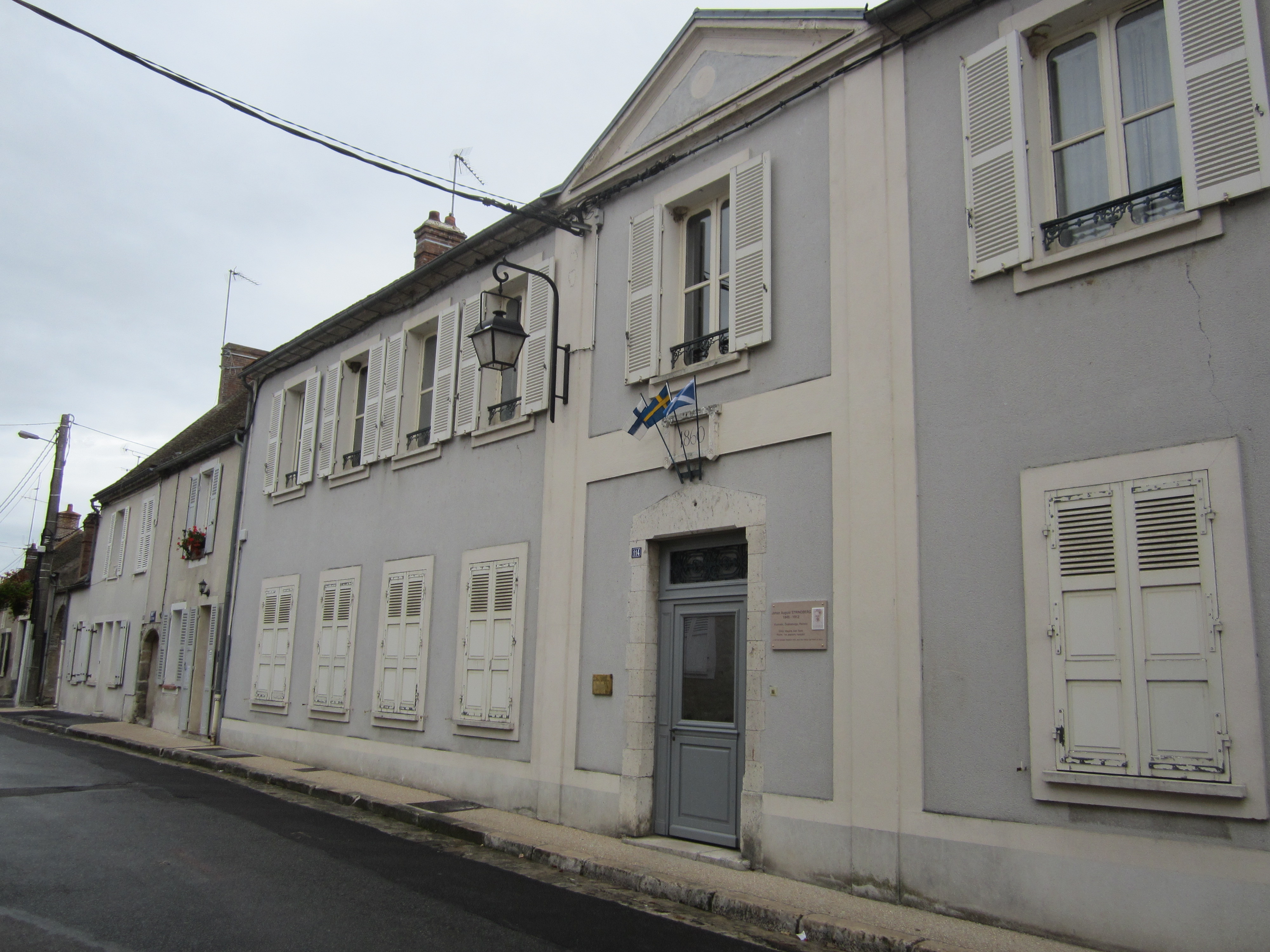
Hotel Chevillon is located on rue Carl Larsson, which is named after the Swedish painter.

Hotel Chevillon, the place where Fanny and Louis met,  is still standing! It is located on rue Carl Larsson, which is named after the Swedish painter. It was restored in 1994 and serves as an art center and residency program.

Hotel Chevillon: the place where Fanny Van de Grif Osbourne met Robert Louis Stevenson.

Hotel Chevillon from the street.

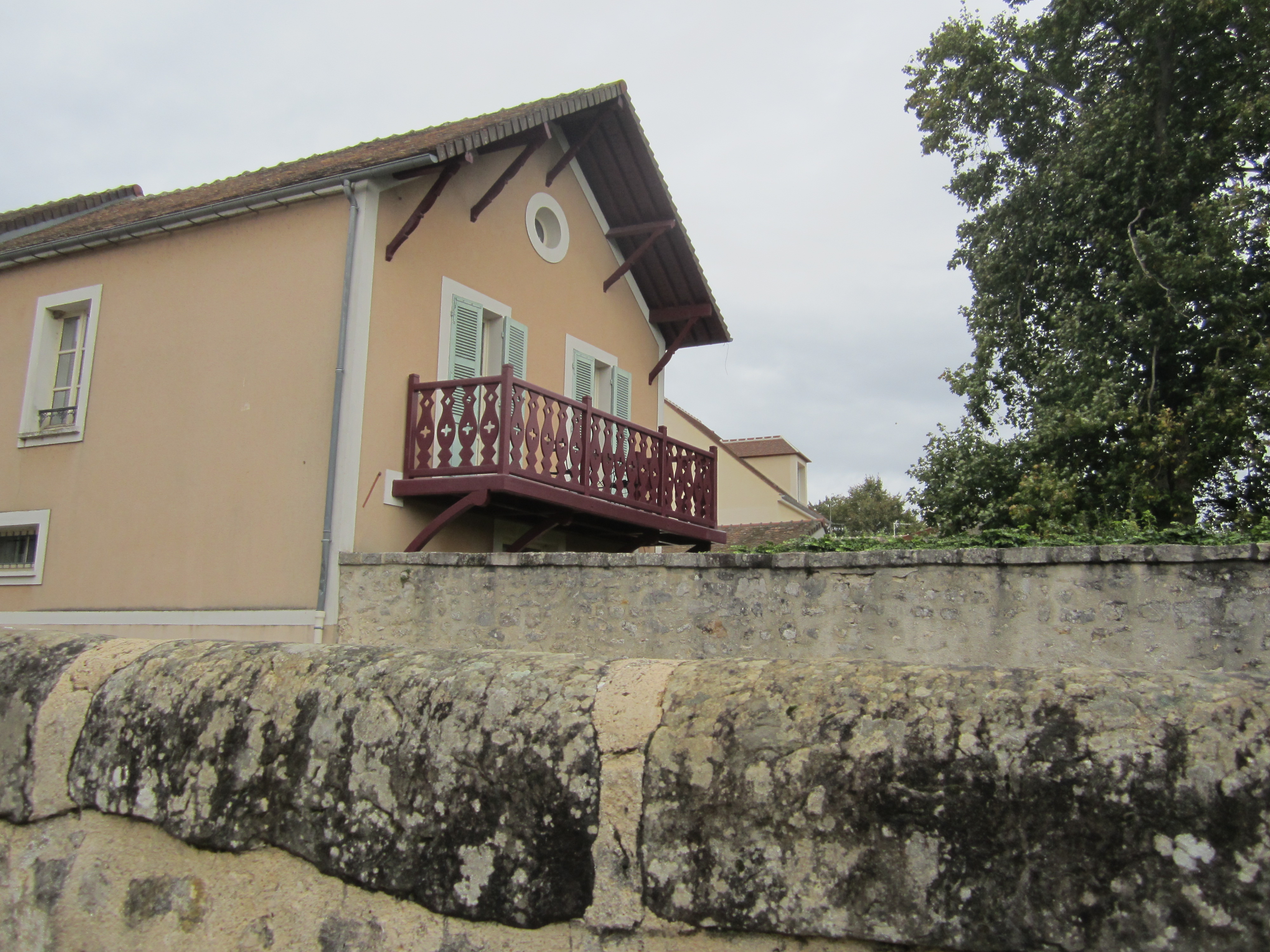
A view of the back balcony of Hotel Chevillon where Fanny, Louis and their fellow bohemians gathered to paint and relx by the river

A view of the back balcony of Hotel Chevillon from the nearby bridge. Just on the other side of this wall is where Fanny, Louis and their fellow bohemians gathered to paint and relax.

The backyard of the Hotel Chevillon today. Can you picture Fanny and Louis back there? Source: Carol Ferrelly, http://www.scottishbooktrust.com/blog/writing/2013/11/five-things-robert-louis-stevenson-fellowship

The backyard of the Hotel Chevillon today. Can you picture Fanny and Louis back there back in the day? Source: Carol Ferrelly, http://www.scottishbooktrust.com/blog/writing/2013/11/five-things-robert-louis-stevenson-fellowship

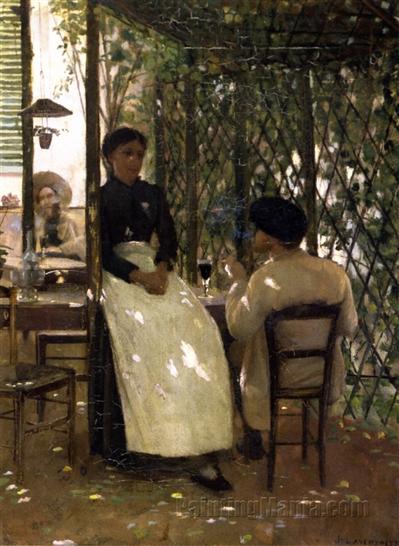
Hotel Chevillon by Sir John Lavery (1883), an Irish artist who visited Grez and painted this captivating picture of the garden at Hotel Chevillon.

Hotel Chevillon by Sir John Lavery (1883), an Irish artist who visited Grez. This painting captures the feel of the garden at Hotel Chevillon back in the time of Fanny and Louis. Source: http://www.paintingmainia.com

After their summer meeting in Grez, Fanny and her children returned to Paris, where they settled into an apartment in Montmartre. Louis would continue his pursuit of Fanny from Paris to California and beyond. They would finally marry in 1880 and spend their years traveling the world.

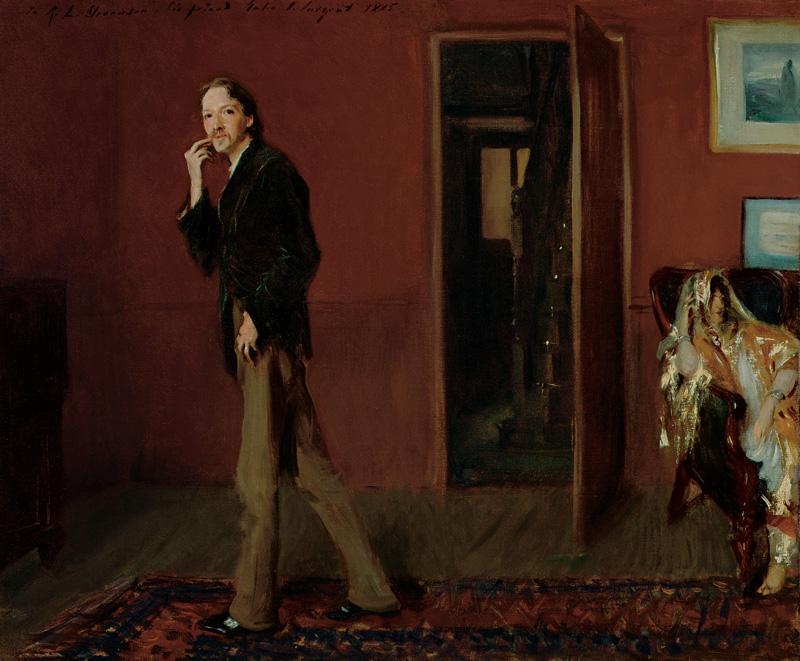
John Singer Sargent would paint a strange but perceptive portrait of RLS and Fanny when they were all living in Bournemouth, England in 1885. Apparently, Fanny was not too happy about the way she is marginalized and made to look so Moorish in this painting. As for me, I find it fascinating. What an odd pair.

Robert Louis Stevenson and His Wife by John Singer Sargent (1885)

Robert Louis Stevenson and His Wife by John Singer Sargent (1885)

Under The Wide and Starry Sky is an interesting portrait of an unorthodox and artistic couple from history, not unlike the story of Frank Lloyd Wright and Mamah Cheney. However, this love story didn’t seem nearly as compelling as Loving Frank, and I’m not sure why. Neither RLS nor Fanny are particularly admirable people, but then, neither were Frank and Mamah. For some reason, it bothered me that Fanny lacked any substantial talent or drive as an artist, that she acted so passively in the face of her son’s serious illness, and that she waffled over her commitment to a horrible marriage. Maybe it’s my mistake, expecting a 19th century woman to act with as much agency as a 21st century woman, but still, it interfered with my ability to identify and sympathize with Fanny. I have to admit, I take strange delight in the take-down Fanny suffers under the paintbrush of John Singer Sargent.

Even if Under the Wide and Starry Sky doesn’t measure up to Loving Frank, I would still recommend this book to fans of historical fiction, especially if you are interested in learning more about the writings of Robert Louis Stevenson or the 19th century art scene in Paris. And if you happen to be visiting Paris anytime soon, I highly recommend a day trip out to Grez.