Elisabeth Vigée Le Brun: A Novel

fountain st. james court

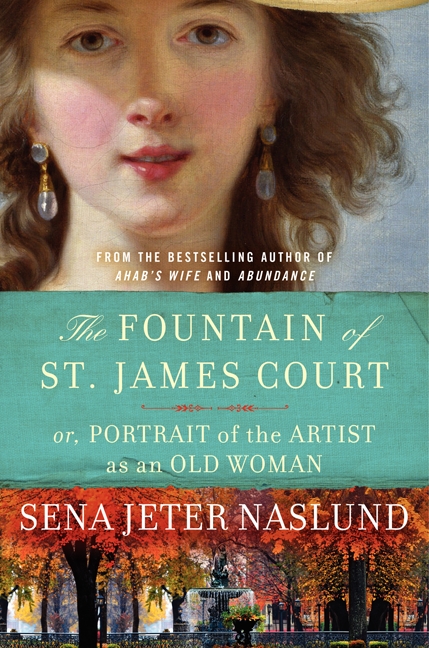
Sena Jeter Naslund (the author of nine other novels, including my own personal favorites Ahab’s Wife and Abundance, A Novel of Marie Antoinette) has written a marvelous new novel focusing on the life of Louise-Elisabeth Vigée Le Brun, a highly successful female portrait artist in 18th century France.

Vigée LeBrun’s own self-portrait (Self Portrait in a Straw Hat) gazes out at us from the book cover with an expression of confidence and contentment. Here is a woman who knew who she was and how to paint it.

Check out the full portrait below. Look how confidently Vigée Le Brun paints the light falling across her face, the glisten of her own lips, the cool shadows of her neck. And her hands, one firmly holding the tools of her profession, and the other, open, extended, and more feminine, welcoming the viewer’s closer scrutiny. The earrings, the flowers, the bows and the beauty: here I am, it says, I am a woman painter.
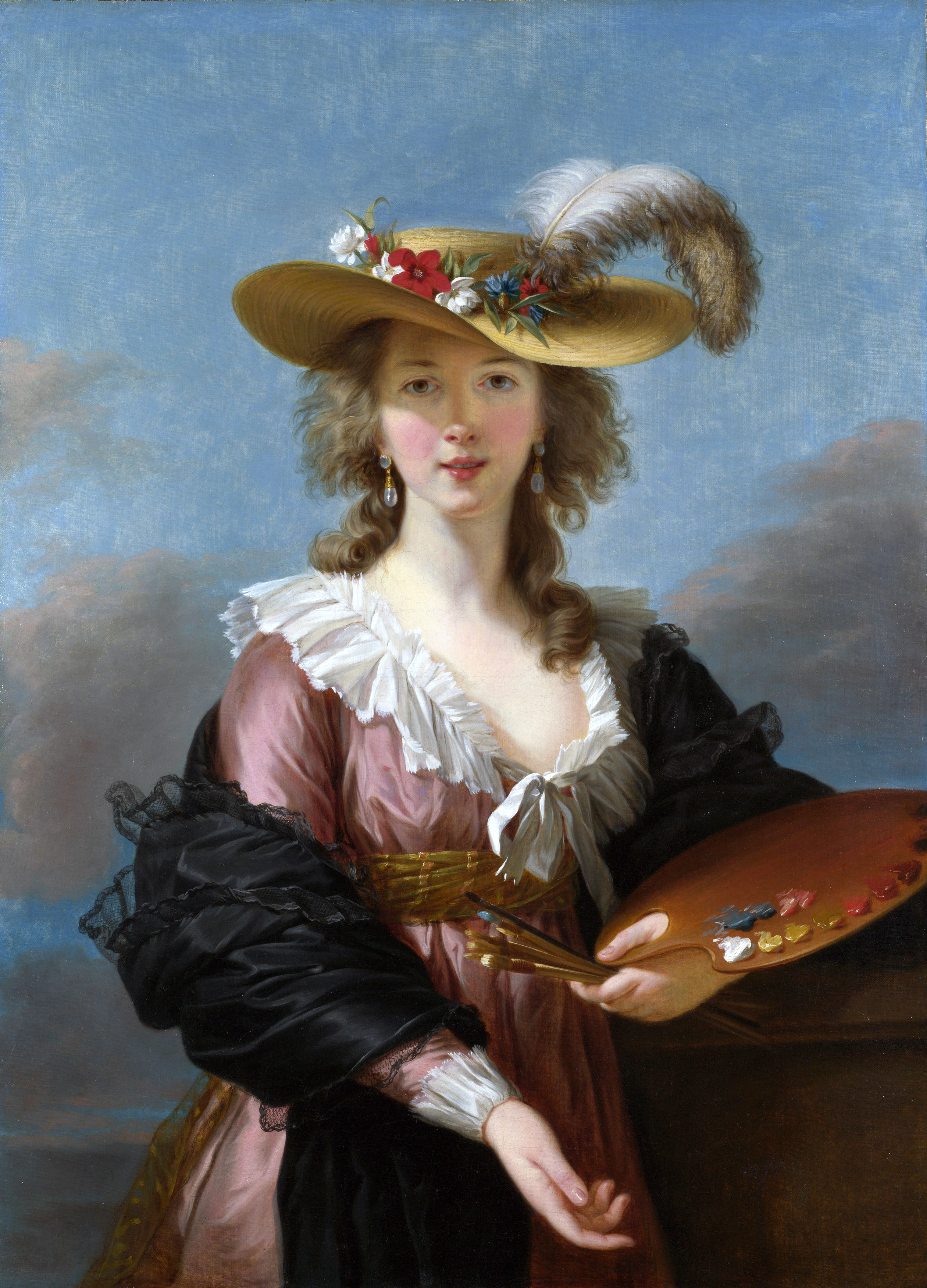
Self-Portrait in a Straw Hat by Elisabeth Vigée Le Brun (1782). Original in a private collection, copy at the National Gallery of London.

Self-Portrait in a Straw Hat by Elisabeth Vigée Le Brun (1782). Original in a private collection, copy at the National Gallery of London. (Source: Wikipedia)

The Fountain of St. James Court is much more than a biography of Vigée LeBrun’s life; its subtitle also makes clear that the book is an exploration of the lives of mature women artists, with a nod to James Joyce’s Portrait of the Artist as a Young Man. To me, the subtitle is a challenge: yes, Joyce’s portrait of a young man is masterful, but an equal if not superior wonder, is how female artists sustain joyful work over the course of a long and challenging life.

To answer this question, the novel follows a day in the life of Kathryn (“Ryn”) Callahan, a 69 year-old author who lives by herself in an older neighborhood known as St. James Court in Louisville, Kentucky. She has just finished the manuscript for her ninth novel, the story of Vigée Le Brun. Ryn spends much of the day contemplating her long artistic life that has included three unsuccessful marriages but many well-cultivated friendships, a satisfying career, and a devoted relationship with one adult son.

The two threads of this novel work together to explore the lives of women artists, who have so very much in common even though they are separated by over 200 years.

It’s probably no surprise that my favorite story line was that of Vigée LeBrun, who was born in Paris in 1755. Her father was an artist who gave Elisabeth her first set of pastels and allowed her to sit in on the evenings he hosted with the (male) artistic circles of Paris. By the time Elisabeth was 13 years old it was clear she was a gifted artist: she began taking art classes at the Louvre and painting stunning pictures of friends and family.
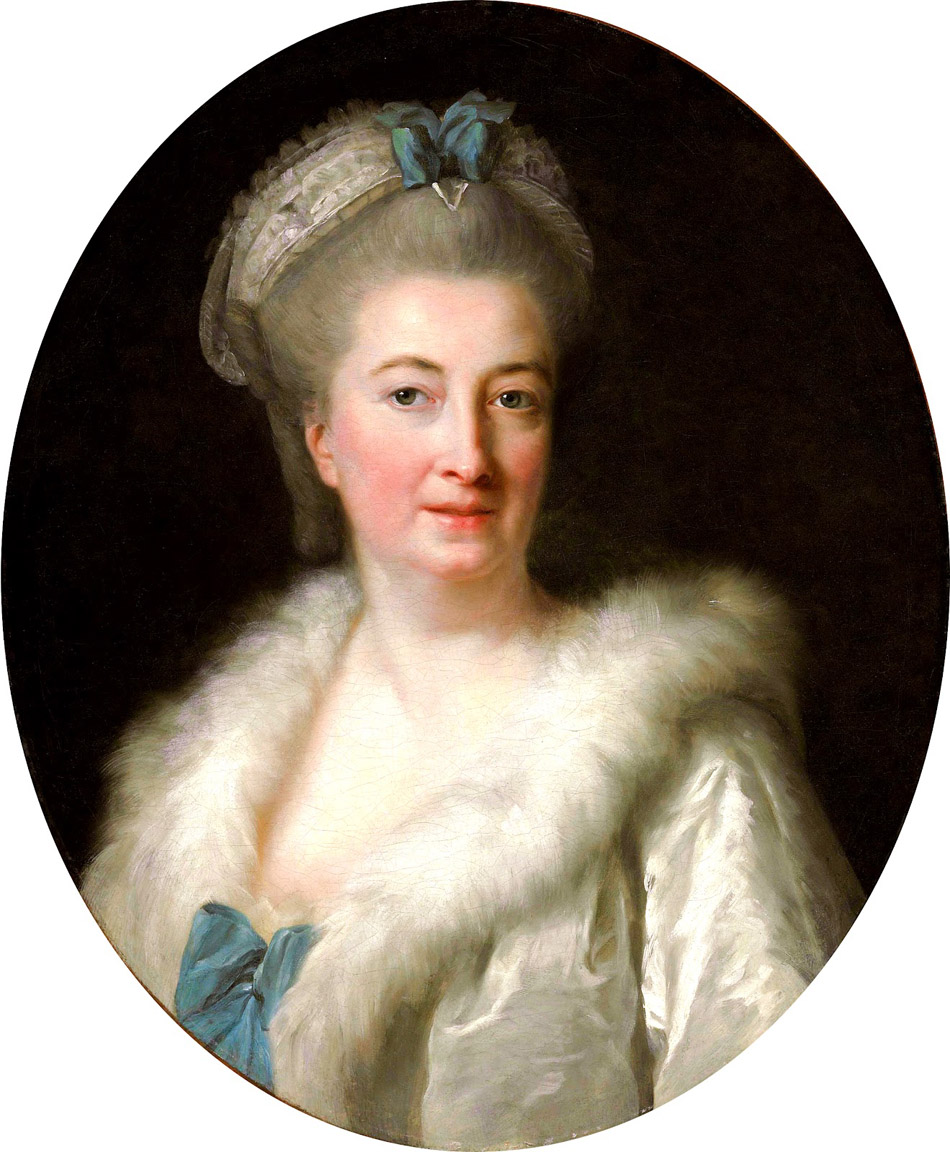
Portrait of The Artist's Mother, Madame Le Sevre (painted around 1768, when Elisabeth would have been only 13 years old.)  This painting was sold for $122,500 at a Christie's auction in 2012.

Portrait of The Artist’s Mother, Madame Le Sevre (painted around 1768-70, when Elisabeth would have been only 13-15 years old.) This painting was sold for $122,500 at a Christie’s auction in 2012. (Source: Christies.com)

After the death of Elisabeth’s father, her mother insisted on moving to a more fashionable neighborhood on rue St. Honoré overlooking the terrace of the Palais-Royale, where they could meet more of the aristocracy who would support Elisabeth’s  painting career. Soon Elisabeth is painting the portraits of Dukes and Duchesses, including the Duchesse de Chartres and the Comtess de Brionne.
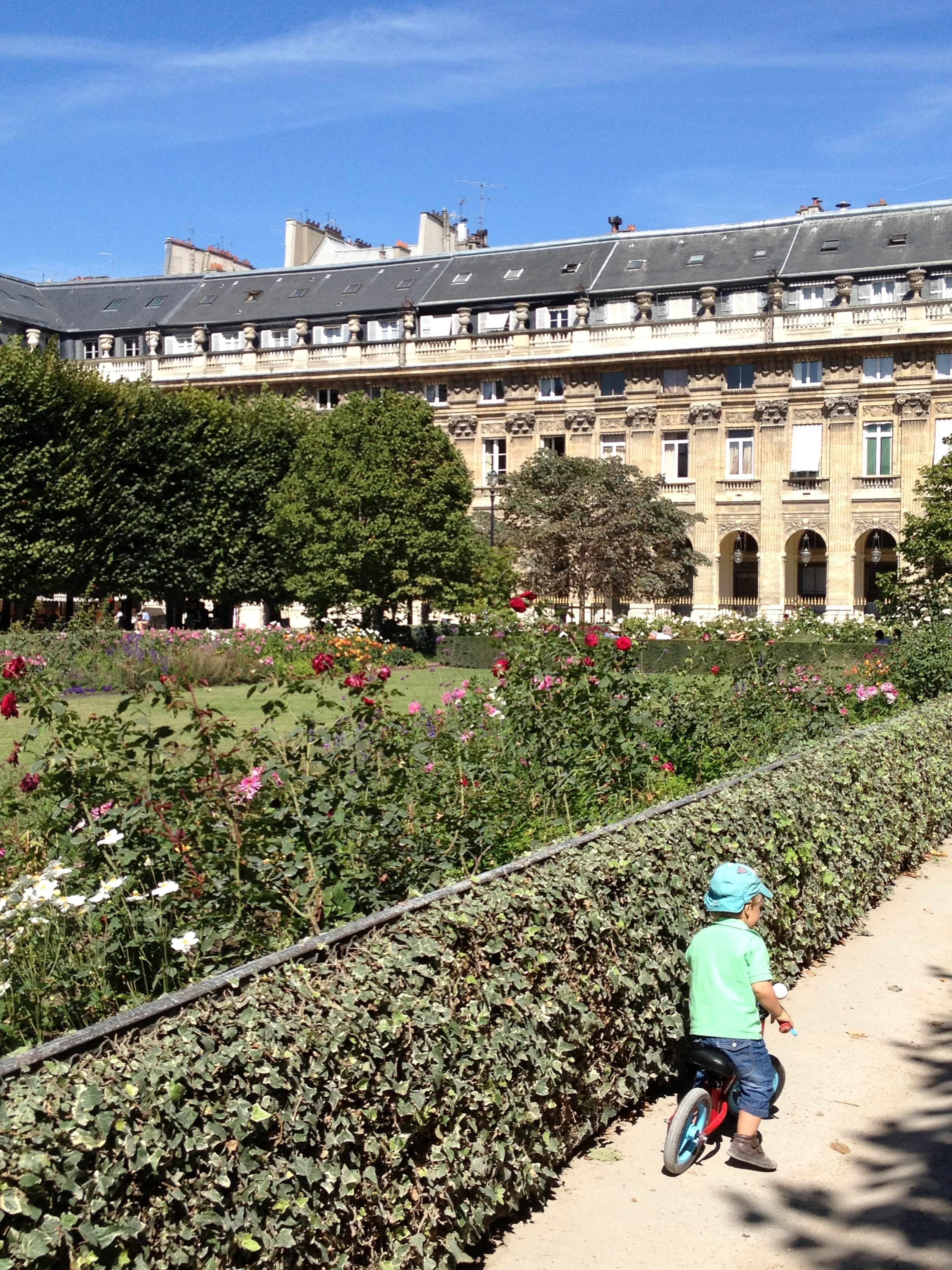
The gardens of the Palais-Royal, where Vigée Le Brun strolled alongside the French aristocracy who would commission her to paint their portraits.

The gardens of the Palais-Royal, where Vigée Le Brun once strolled alongside the French aristocracy. Today it’s still a lovely place for a walk or a picnic, with or without the aristocracy.
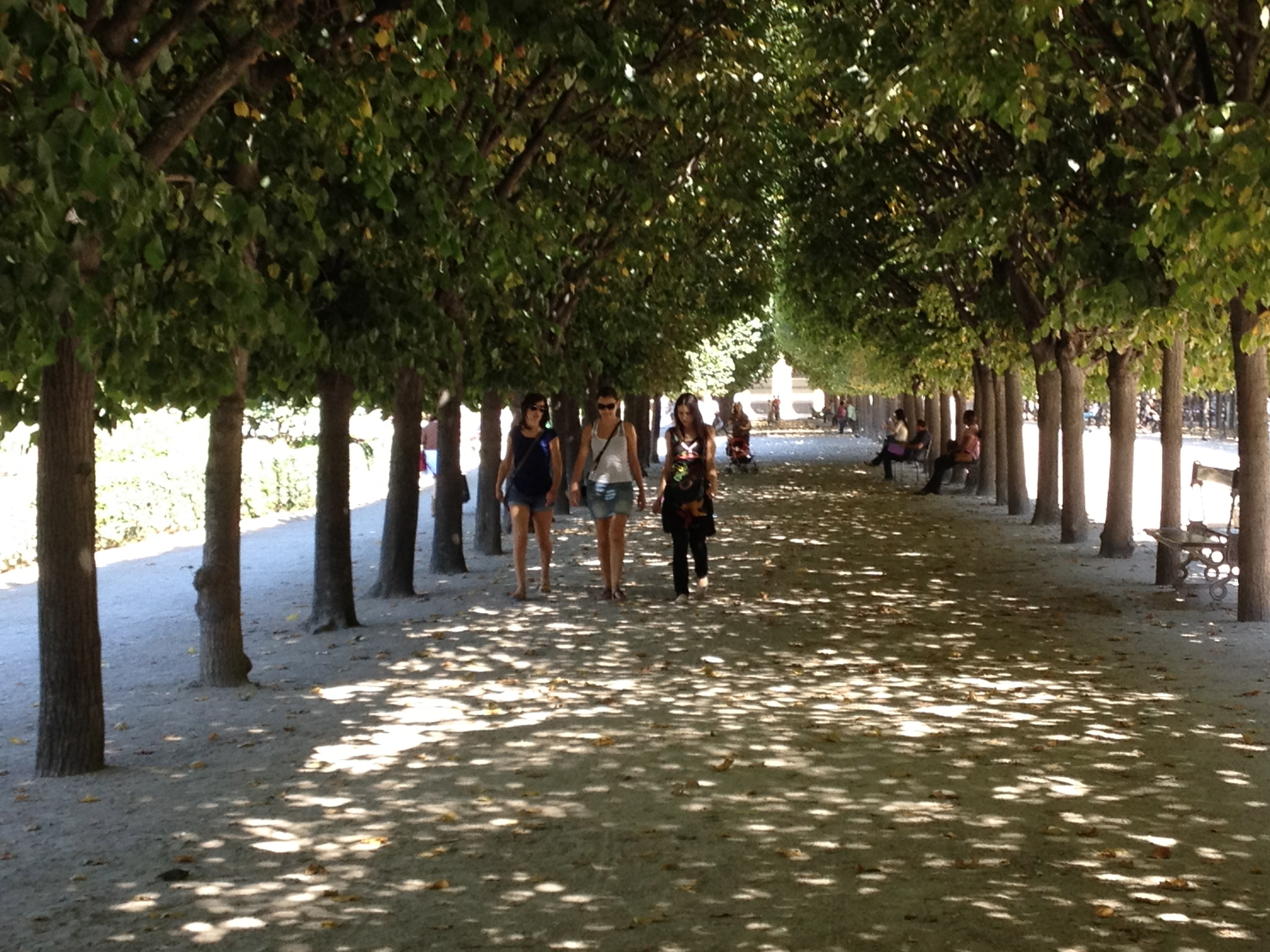
The carefully manicured trees cast dapples of shade in the gardens of the Palais-Royal, just as they would have 250 years ago in the days of Elisabeth Vigée Le Brun.

At the age of 20, Elisabeth married M. Le Brun, Parisian art dealer with whom she shared a love of art. Like her stepfather, her husband claimed all of her commissions, which was his legal right, and spent much of it on gambling and extravagant women. Elisabeth painted on, learning that “[a]s long as I can paint, I will always be happy.”

By the time she was 23, Elisabeth had been invited to Versailles to meet Marie Antoinette. Elisabeth was known for her flattering pictures of society women, so it was hoped that her paintings would present a more positive image of the increasingly unpopular queen. Elisabeth became a part of the royal inner circle and the royal family’s portraitist, making over 30 paintings of the queen and her family between 1778 and 1789.

Marie Antoinette by Elisabeth Vigée Le Brun (1778). Supposedly, Le Brun made 6 copies of this painting. Two are in the French state collection, one was lost or stolen when the US congress  was burned by the British in 1812, one was given to Catherine the Great (location now unknown) and two others are missing.
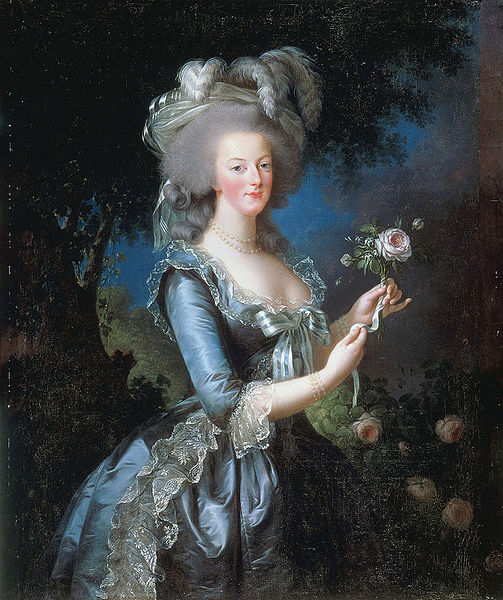
Marie Antoinette by Elisabeth Vigée Le Brun (1778). Supposedly, Le Brun made 6 copies of this painting. Two are in the French state collection, one was lost or stolen when the US congress was burned by the British in 1812, one was given to Catherine the Great (location now unknown) and two others are missing.

Marie Antoinette with a Rose by Elisabeth Vigée Le Brun (1783)

Marie Antoinette with a Rose by Elisabeth Vigée Le Brun (1783), in the Palace of Versailles.

Marie Antoinette and Her Children by Elisabeth Vigée Le Brun (1787).  One of the last paintings Elisabeth would ever make of the royal family before the revolution tore them away from Versailles. The painting can still be seen in the Palace of Versailles.

Marie Antoinette and Her Children by Elisabeth Vigée Le Brun (1787). One of the last paintings Elisabeth would ever make of the royal family before the revolution tore them away from Versailles. The painting can still be seen in the Palace of Versailles.

Vigée Le Brun’s career was not without controversy or criticism. She had to withstand the usual rumors about women artists: that she did not do her own work, that a man had to do it. Sena Jeter Nasland serves up a great line for Elisabeth’s response to this criticism in the book:

When I first hear the exclamation “Why, she paints like a man!” I am pleased; I take it only to mean that my work is truly excellent. But insult is also intended, and the innuendo, indeed the idea is expressed overtly, that my brush is my manly part!

Naslund’s story, then, serves as an obvious reminder that artistic gifts are not delivered on the basis of sex. But it is also so much more. It reveals the inner lives of gifted women who are learning not to discount themselves because of their sex or their age.

No matter how they compare to James Joyce’s Portrait of the Artist as a Young Man, Naslund’s portraits of Elisabeth Vigée Le Brun and Kathryn Callahan will likely stay with you for a long time. If you’re like me, you’ll find yourself dog-earring your book so you’ll be able to share all of your favorite passages with your book club.

The Fountain of St. James Court, or, Portrait of the Artist as an Old Woman by Sena Jeter Naslund (Harper Collins 2013): Highly recommended.

Also recommended for further reading:

The Project Gutenberg ebook of Vigée Le Brun by Haldane MacFall: http://www.gutenberg.org/files/30314/30314-h/30314-h.htm

The Project Gutenberg ebook of The Memoirs of Madame Le Brun by Marie Louise Elisabeth Vigée Le Brun: http://www.gutenberg.org/files/31934/31934-h/31934-h.htm

The Swing: Renoir, Jeanne and Me

Pierre-Auguste Renoir. The Swing, 1876. Musée d’Orsay, bequest of Gustave Caillebotte, 1894. On loan to the Art Institute of Chicago for the Impressionism, Fashion & Modernity Exhibit, June-September, 2013

Pierre-Auguste Renoir. The Swing, 1876. Musée d’Orsay, bequest of Gustave Caillebotte, 1894. On loan to the Art Institute of Chicago for the Impressionism, Fashion & Modernity Exhibit, June-September, 2013

The Swing by Pierre-Auguste Renoir is on its last “swing” through the United States in connection with the Impressionism, Fashion & Modernity Exhibit at the Art Institute of Chicago (through September 29, 2013). It’s a beautiful painting to see up close, whether you catch in in Chicago or back in its home at the Musée d’Orsay in Paris.

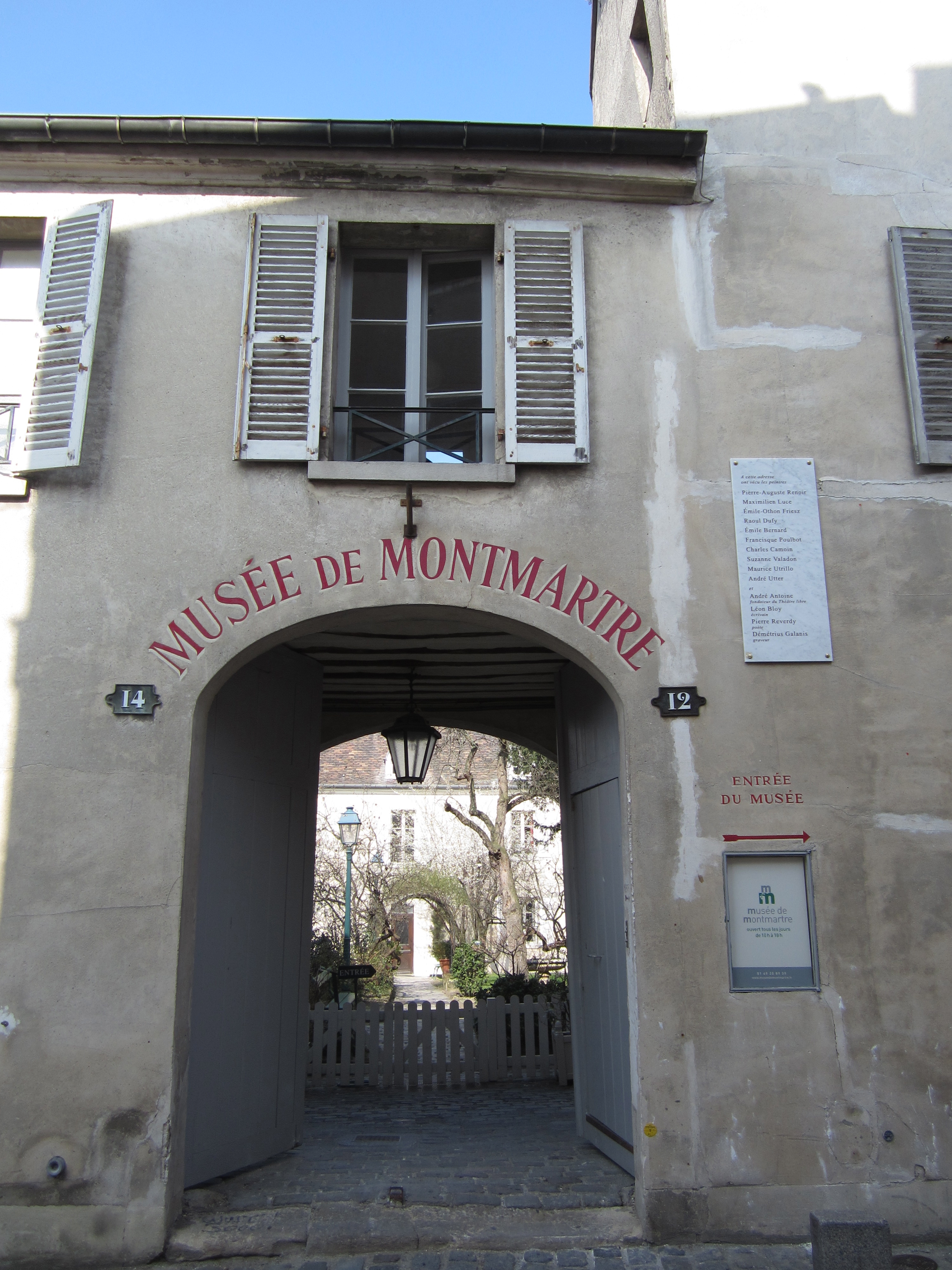
But it’s even more fun to climb onto the matching swing at the Musée Montmartre in Paris and indulge in a little reenactment of your own. If only I had found some blue bows and a couple of dapper admirers in a boater’s hats, I would have been all set.

That's me on the swing at the Musée Montmartre.

That’s me on the swing at the Musée Montmartre. Not the most flattering pose, and not the most fashionable ensemble, but a black turtleneck, jeans and black boots made up my daily Paris uniform in the cooler months. No bows, no corsets and no princess-cut muslim gown for me.

Museé Montmartre, 12-14 rue Cortot, Paris (18th)

Museé Montmartre, 12-14 rue Cortot, Paris (18th). You should go!

Recommended Reading: Renoir, My Father by Jean Renoir (2001)

renoir my father

Renoir, My Father by Jean Renoir (2001)

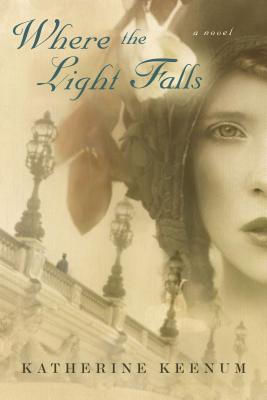
Where the Light Falls: An American Artist in Paris

wherethelightfalls

Where The Light Falls by Katherine Keenum is a lovely painterly novel set in late 19th century Paris. What a perfect book for a review and literary tour by The American Girls Art Club in Paris.

You can find various sites in the book on Where the Light Falls Literary Tour in Google Maps.

The story begins when a young artist named Jeannette Palmer gets expelled from Vassar College for helping her roommate elope.  Despite her public shaming, Jeannette talks her prominent Ohio family into supporting further art studies in Paris.

Jeannette and her chaperone, a “spinster” cousin, find lodging in a pension on rue Jacob on the Left Bank, while Jeannette enrolls in the women’s drawing class at the Académie Julian. Had Jeannette arrived in Paris a decade or so later, she could have easily been one of the lodgers at The American Girls Art Club in Paris, which opened its doors in 1893. Instead, Jeannette would be one of the first-wave  trailblazers of American women artists to journey to France.

Jeannette’s story is loosely based on the life of the author’s own great-grandmother, who was indeed expelled from Vassar College and who traveled to Paris to study art with Carolus-Duran. Because no journals, letters or memoirs survived, Katherine Keenum had to rely on her imagination to tell her great-grandmother’s story.

Keenum’s research is considerable, but it feels like a natural part of the story. When Jeannette is learning from such famous masters as William-Adolphe Bouguereau or Carolus-Duran, you feel like you’re there too. Keenum places Jeannette in Paris at a turning point in the history of art; it is remarkable how much Jeannette and her cousin Effie get to witness in just two years.

One of Keenum’s primary sources for the life and times of an American art student abroad  was Abigail May Alcott Nieriker’s guidebook for women artists called Studying Art Abroad and How to Do it Cheaply (1879), which describes May’s studies at Académie Julian, her approach to life in Paris, and her travels throughout France. (In a previous blog post here called Little Women in Dinan, France, I wrote about May and her famous sister’s travels abroad.) 

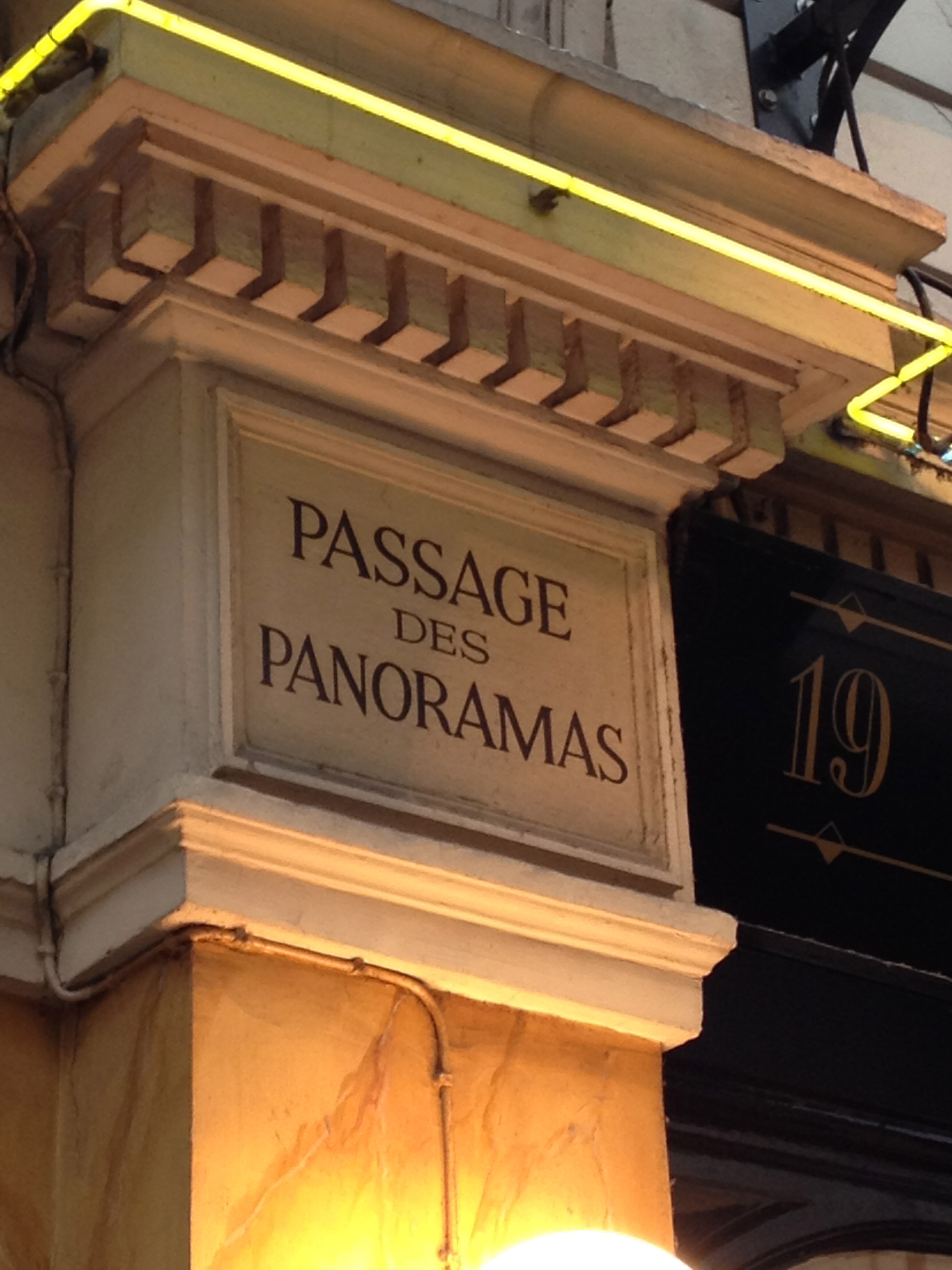
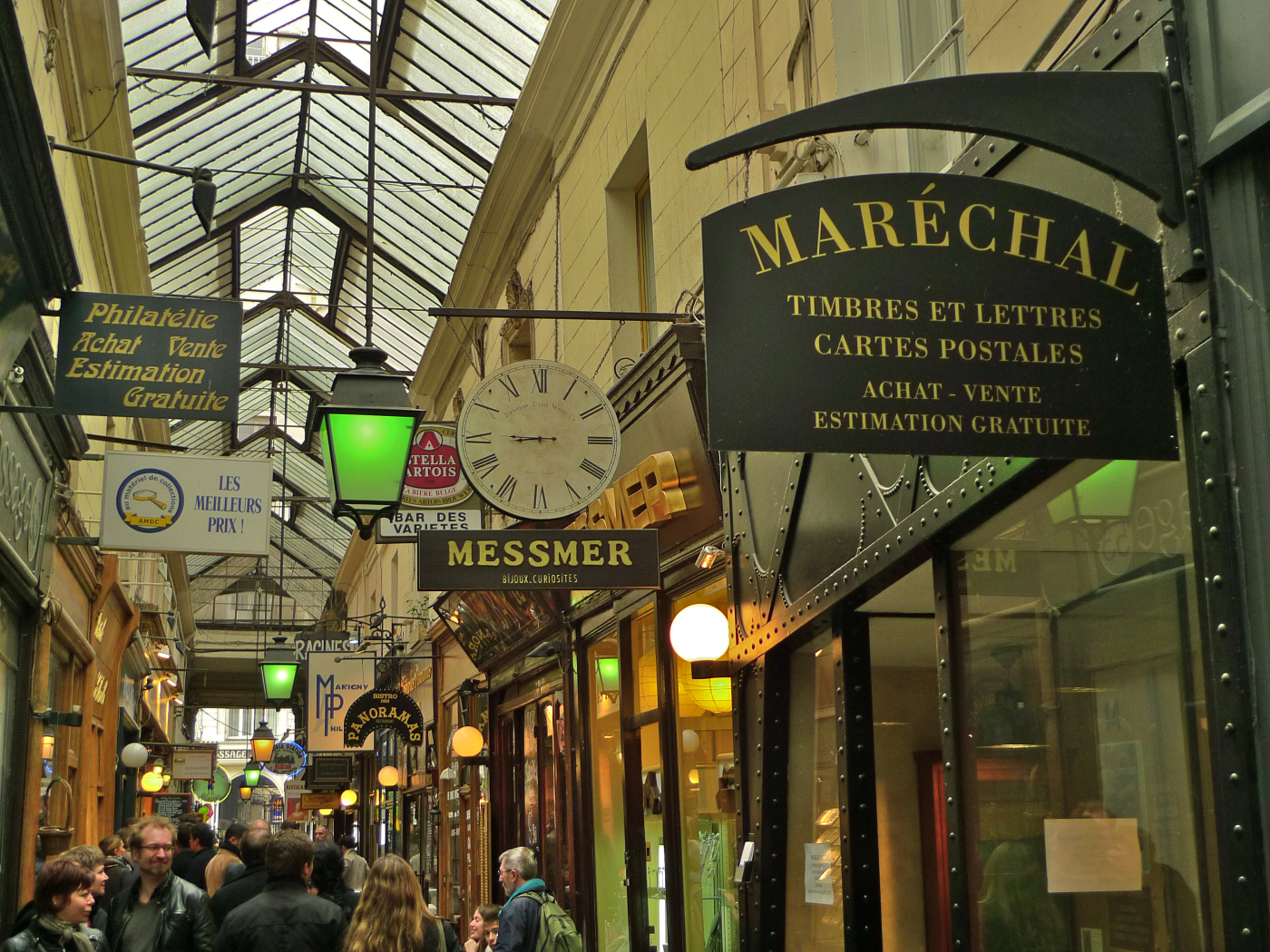
Jeannette begins her studies at the Académie Julian, a private art school which welcomed women into segregated studios, unlike L’Ecole des Beaux Arts. The first women’s atelier at Académie Julian was located in the Passage des Panoramas in the 2nd arrondissement of Paris. This Paris Passage still stands today – it it a lovely historic covered mall at 11 Boulevard Montmartre.

In Chapter 8, Jeannette has a hard time finding the stairs that led to the second floor studio of the Académie Julian. Keenum describes a set of service stairs along one of the transverse passages, but on my various visits to the Passage des Panoramas during my year in Paris, I was never able to find them. I could see a second floor under the peaked glass ceiling, I just couldn’t get there. I’d love to hear from any of my followers to see if they’ve ever managed to gain access to the second floor of the Passage des Panormas, or if it’s a place that belongs only to the past.

Passage des Panoramas in the 2nd arrondissement of Paris, the location of one of Académie Julian's atelier for women

An old sign inside the Passage des Panoramas in the 2nd arrondissement of Paris, the location of Académie Julian’s first atelier for women in the 1870s. You can still walk through the Passage today for a sense of the 19th century.

An interior view of the Passage des Panoramas in which a second floor is visible. I just couldn't figure out how to get up there.

An interior view of the Passage des Panoramas. In Chapter 8, Keenum describes it like this: “Inside, restaurants and small specialty shops crowded both sides of an arcade. Painted signs hung out at right angles overhead like banners; a tiled mosaic floor ran for two blocks. Above a second story of shops, the whole length was roofed with a peaked ceiling of glass.”

Passage des Panoramas

Passage des Panoramas entrance at 11 Boulevard Montmartre

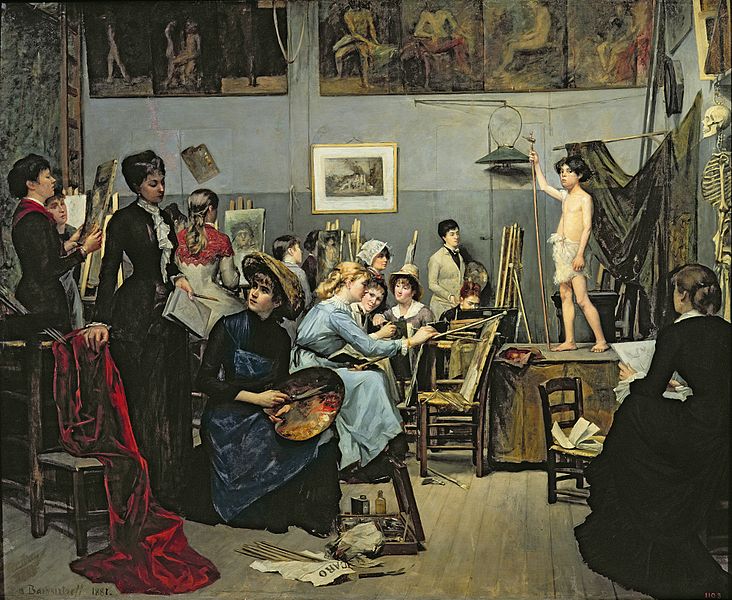
Marie Baskirtsheff, In The Studio (1881). A painting of the women of Académie Julian.

Marie Baskirtsheff, In The Studio (1881). A painting of the women of Académie Julian by one of its most famous students. Although the women were allowed to paint from live nude models, this painting avoids controversy and shows a draped figure of a young boy. Dnipropetrovsk State Art Museum, Ukraine. In Chapter 8, one of Jeanette’s classmates points out their fellow student “The Countess,” [Countess Marie Bashkirtseff] “a star student in the class for the full nude.” The Countess is supposedly picture in the center of this painting with the palette in her lap.

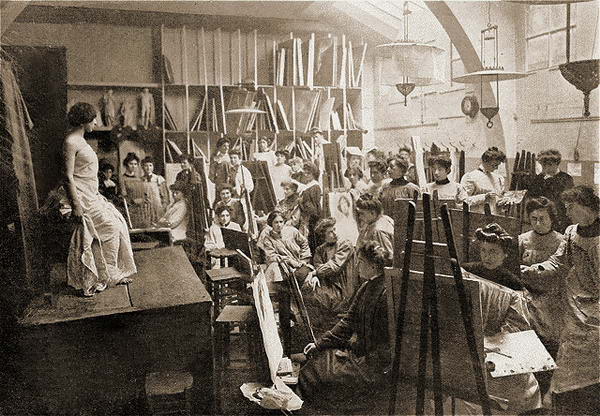
Atelier Julian, undated, so it is possible it is from the other women's atelier on rue de Berri. Source:http://verat.pagesperso-orange.fr/la_peinture/Mixite_Beaux-Arts.htm

A photo of one of the women’s classes a Académie Julian. It is undated, so it is possible it is from the other women’s atelier which opened in the 1880s on rue de Berri near the Champs Elysée. Source:http://verat.pagesperso-orange.fr/la_peinture/Mixite_Beaux-Arts.htm

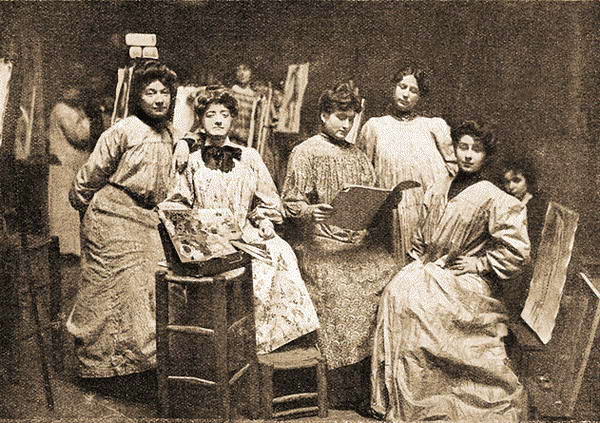
A photography of some of the female messiers (studio assistants) of the Académie Julian. Source:http://verat.pagesperso-orange.fr/la_peinture/Mixite_Beaux-Arts.htm

A photograph of some of the female messiers (studio assistants) of the Académie Julian. Source:http://verat.pagesperso-orange.fr/la_peinture/Mixite_Beaux-Arts.htm

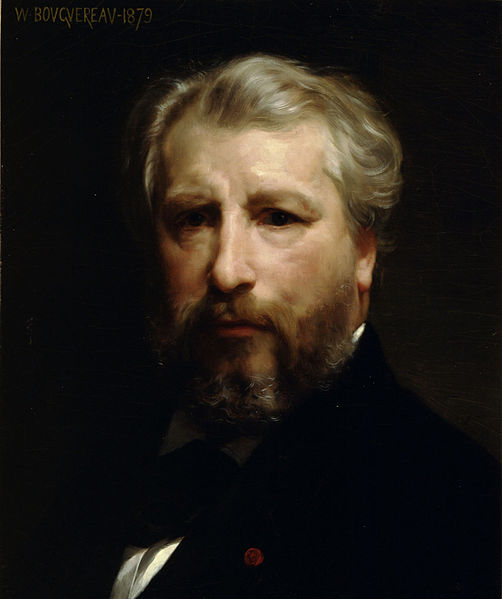
William-Adolphe Bougeureau, Self-Portrait (1879)

William-Adolphe Bouguereau, Self-Portrait (1879). Bouguereau was a famous 19th century Salon artist who provided private instruction for both men and women at the Académie Julian. He would be engaged to one of his American students, Elizabeth Jane Gardner, for 17 years. They would finally marry in 1896 after the death of his mother, who strongly disapproved of the match.

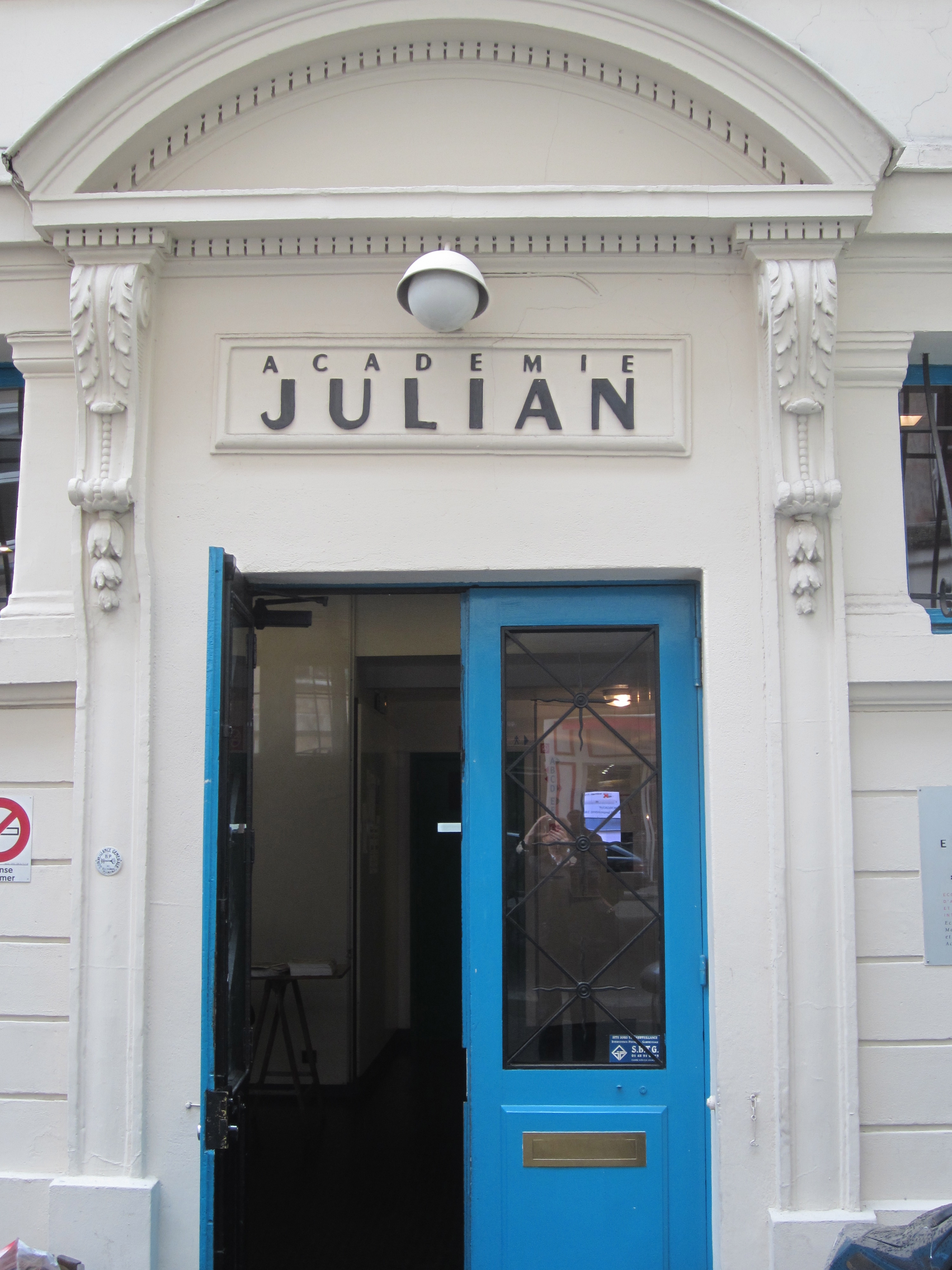
The Académie Julian still stands today on the rue du Dragon.

The Académie Julian still stands today on the rue du Dragon in the 6th arrondissement of Paris. This was originally one of the men’s ateliers, but has long accepted both men and women.

Jeannette enjoys her studies at the Académie Julian under William-Adolphe Bouguereau, but really, Bouguereau only passes through the class a couple of times a week with a few comments like pas mal, pas mal. Although she’s making friends with her fellow art students from around the world and learning all about the Paris art world, Jeannette couldn’t help but aspire for better art instruction.

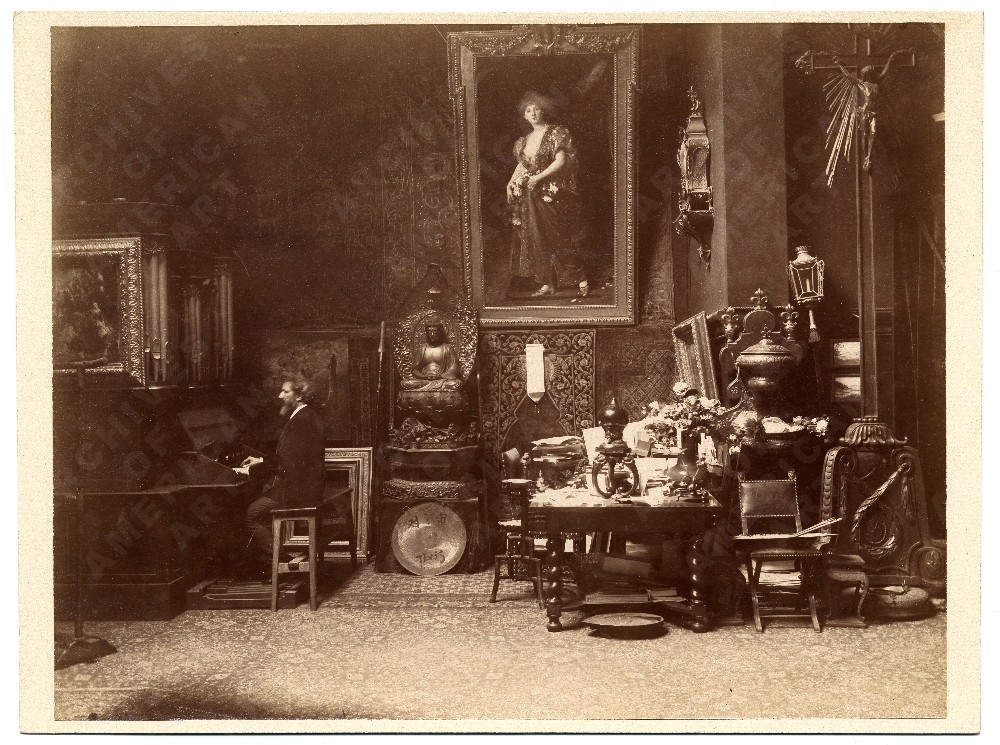
Jeannette gets her big break when she makes the acquaintance of Carolus-Duran through   a wealthy friend of the family who is having her portrait done. Duran invites Jeannette for a studio visit at 58 rue Notre Dame des Champs. When Jeannette and Effie arrive at his address, they quickly realize what a celebrity painter he is. There are three carriages at the curb and a servant to greet the guests. Effie gushes: “Why, it’s as elegant as a hotel lobby or a fashion house!”

A photo of Carolu-Duran playing the organ in his art studio (1885). From the image gallery at the American Archives of Art. Keenum gets it right when she describes the studio as being "strewn with thick Persian rugs and hung with tapestries and pictures."

A photo of Carolus-Duran playing the organ in his art studio (1885). From the digital image gallery at the American Archives of Art called “Photographs of Artists in their Paris Studios (1880-1890).” Keenum gets it right when she describes the studio as being “strewn with thick Persian rugs and hung with tapestries and pictures.”

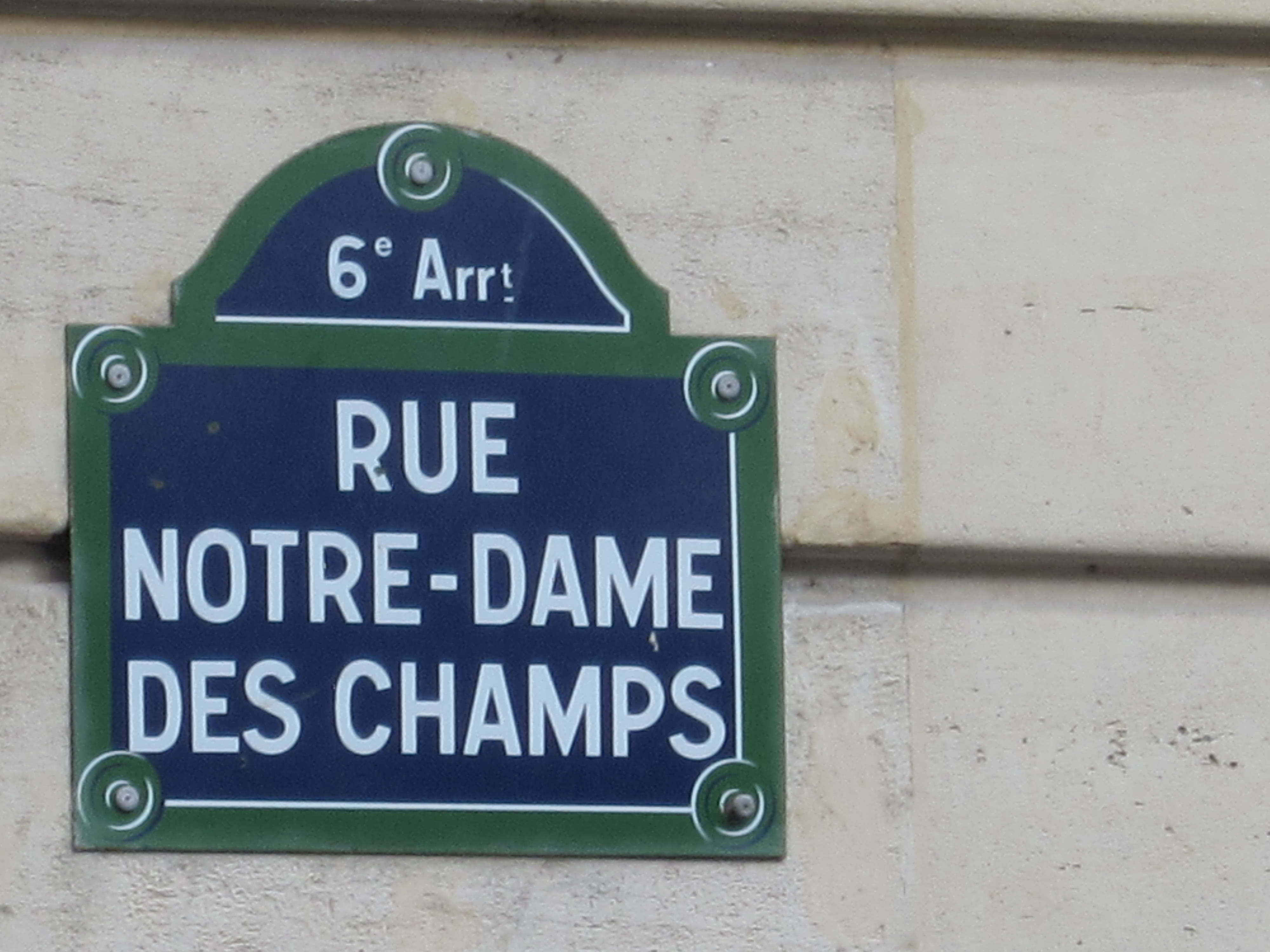
rue Notre Dame des Champs, a narrow winding road through Montparnasse which earned its title as "the royal road of painting" because of all the famous French artists who lived there, including Bouguereau,  Courbet and Carolus-Duran.

Rue Notre Dame des Champs, a narrow winding road through Montparnasse which earned the title “the royal road of painting” because of all the famous French artists who lived there, including Bouguereau, Courbet and Carolus-Duran.

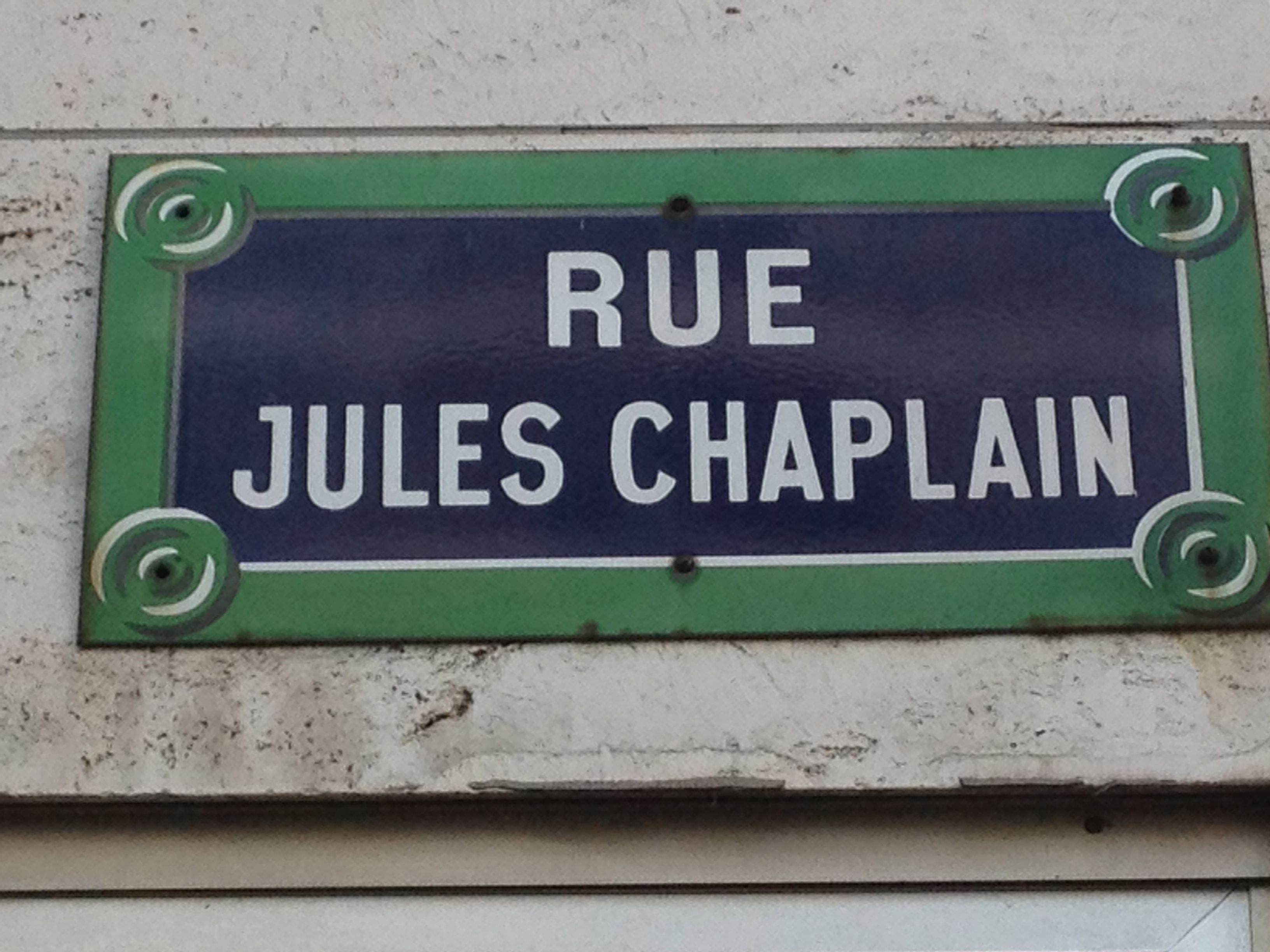
Carolus-Duran invites Jeannette to join his women’s painting classes at 11 Passage Stanislaus in Montparnasse. Passage Stanislaus is now known as rue Jules Chaplain, a small street just off of rue Notre Dame des Champs.

Rue Jules Chaplain, once Passage Stanislaus and the home of Carolus-Duran's atelier for women.

Rue Jules Chaplain, once Passage Stanislaus and the home of Carolus-Duran’s atelier for women.

Jeannete struggles to find the extra money to enroll in Carolus-Duran’s classes, but once she does, she gets to observe one of the true masters of the art. One of my favorite scenes in the book is in Chapter 30, when Carolus-Duran pulls Jeannette right up next to him to demonstrate the essence of portrait painting:

Study where the light falls and where the shadows lie. We commence by indicating the darkest masses. . . .

Either way, what is most important now is to find the demi-teinte generale. Half close your eyes, mademoiselle; regard the model.

It’s enough to make you want to find a model and set up and easel right nowisn’t it?

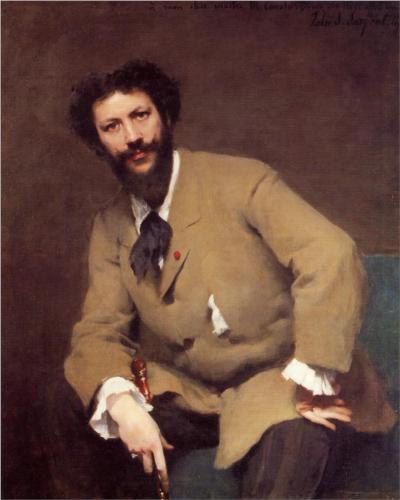
Jeannette is in the perfect place and time to witness art history. She meets a young John Singer Sargent, a fellow student in Carolus-Duran’s men’s atelier who would have been only 23 years old at the time. Jeannette and her classmates celebrate when Sargent’s portrait of Carolus-Duran wins an Honorable Mention at the Paris Salon of 1879.

John Singer Sargent's portrait of Carolus- Duran (1879), Clark Art Institute, Williamston, Massachusetts. When Jeanette meets JOhn Singer Sargent at a garden party, she says: "I hear your portrait of Carolus is wonderful."

John Singer Sargent’s portrait of Carolus- Duran (1879), Clark Art Institute, Williamston, Massachusetts. When Jeanette meets John Singer Sargent at a garden party, she says: “I hear your portrait of Carolus is wonderful.”

There are plenty of other moments in art history that Jeannette gets to be a part of, including the Fourth Impressionist Exhibit of 1879, where she sees and critiques Mary Cassatt’s Little Girl in a Blue Arm Chair (1878):

That grumpy little girl sprawled on the aqua-blue chair – well, she’s vivid, but all that other aqua furniture climbing to the ceiling, . . . it’s hideous!

Don’t blame Jeannette. Most of the world wasn’t yet ready for the Impressionists either.

Mary Cassatt, Little Girl in a Blue Armchair (1878), National Museum of Art.

Mary Cassatt, Little Girl in a Blue Armchair (1878), National Museum of Art.

It is an incredible time in the history of art, and Jeannette is it the middle of it all. What a wonderful way for Katherine Keenum to honor the memory of her great-grandmother, who really did have a chance to be a part of history. In ways we can only imagine.

Where the Light Falls by Katherine Keenum: Highly recommended.

Where the Light Falls Literary Tour: As created by The American Girls Art Club in Paris.

Paris Was the Place

pariswastheplace

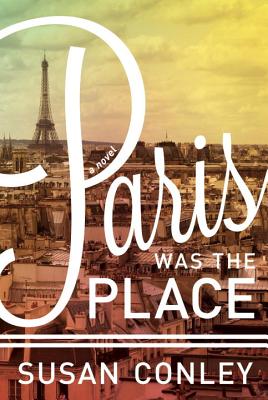
You probably think I will buy any book with a picture of Paris on the cover. No, really. I won’t. I’m not that easy.

But when your cover is this pretty, the font this inviting, and you have blurbs on the back from the likes of Lily King, Richard Russo, Ayelet Waldman, Margot Livesy, Maryann O’Hare and Sarah Blake, you’ve got me.

Paris Was The Place by Susan Conley is the story of a young woman’s experience while working at an immigration detention center for girls in Paris. You could say it’s Little Bee in Paris, but that would be missing half of the book’s appeal.

In some ways, Willow (“Willie”) Pears is a refugee too. Broken and lost after her mother’s recent death, Willie leaves California and comes to Paris in search of connections. Willie is estranged from her father, but wants to be closer to her brother Luke who lives in Paris with his boyfriend. Willie is a poetry professor at the Academy of France, and begins volunteering at an immigration center for girls. As Willie draws out the refugees’ heartbreaking stories, which they need to prepare for their asylum hearings, she becomes deeply involved in their desperate hope for a better life in France. In the meantime, Willie makes her own “French Connection” with an immigration lawyer who works at the center.

Part of the appeal of Willie’s story is the way she makes Paris her place. When Willie first arrives in Paris she is mystified by the geography of the city:

The sequencing of the neighborhoods here baffles me – arranged like the curvature of some terrestrial snail. I’m in the tenth arrondissement, anchored by two of Paris’s great train stations, where the alleyways weave into mapless places. I’m not embarrassed to carry my Michelin.

With her Michelin in hand, Willie maps her way through Paris, narrating her trips and transfers on the Métro, guiding us through each arrondissement. From her brother’s nice apartment on Victor Hugo in the 16th, her own apartment on Rue de la Clef in the Latin Quarter, the detention center on Rue de Metz in the 10th, and the Academy of France in the 6th, Willie stakes her claim on her new city.

Just for fun, I plotted out Willie’s Paris on this Google Map. Now you can walk in the footsteps of the characters of Paris Was the Place too.

Willie’s Michelin guide helps her unlock the baffling secrets of Paris. And isn’t that exactly the way it is when you’re a tourist or an expat in France? You might not understand half of what is said around you every day, but at least you can read your Métro map. Like color-coded bread crumbs that will always lead you home.

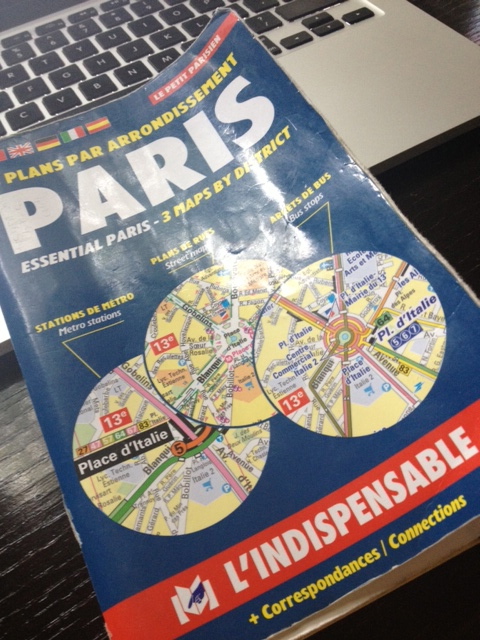
But there’s rarely a direct route. You need to study the map and plot your connections. What’s the best way to get from the 16th to the 10th? Can I get there without having to crowd in with all the tourists on Line 1? Can I do it with only one transfer? I used to start every day with my home-brewed espresso, plotting out my day on my own dog-eared Paris L’Indispensable.

And then, one day, just like Willie, you’ve mastered the Métro and you’ve developed an instinct for the spiraling arrondissements. You learned to cope with a life that isn’t always linear. You’ve made your connection and you feel like you belong. Paris is your place.

What makes Paris Was The Place so wonderful is the way Willie’s search for geographical connections runs parallel with her efforts to navigate through her personal connections: with her brother, her French lover, the girls at the detention center, her complicated family history, her widowed father. Some connections are made, while others are tragically lost. The fact that Willie’s estranged father is a mapmaker adds even more depth and grace to her story. Because belonging isn’t always just a matter of maps and Métros. It’s about making connections in the baffling, mapless places of the human heart.

My dog-eared L'Indispensable Paris Arrodissement Map. My own personal Rosetta Stone.

My dog-eared L’Indispensable Paris Arrondissement Map. My own personal Rosetta Stone.

IMG_2075

My home stop on Line 6 in the 16th, which Willie calls “the grown-up part of Paris” with “older women in pencil skirts walking their miniature poodles.” Ouch. That hurts. I swear I don’t own a pencil skirt or a miniature poodle.

IMG_2436

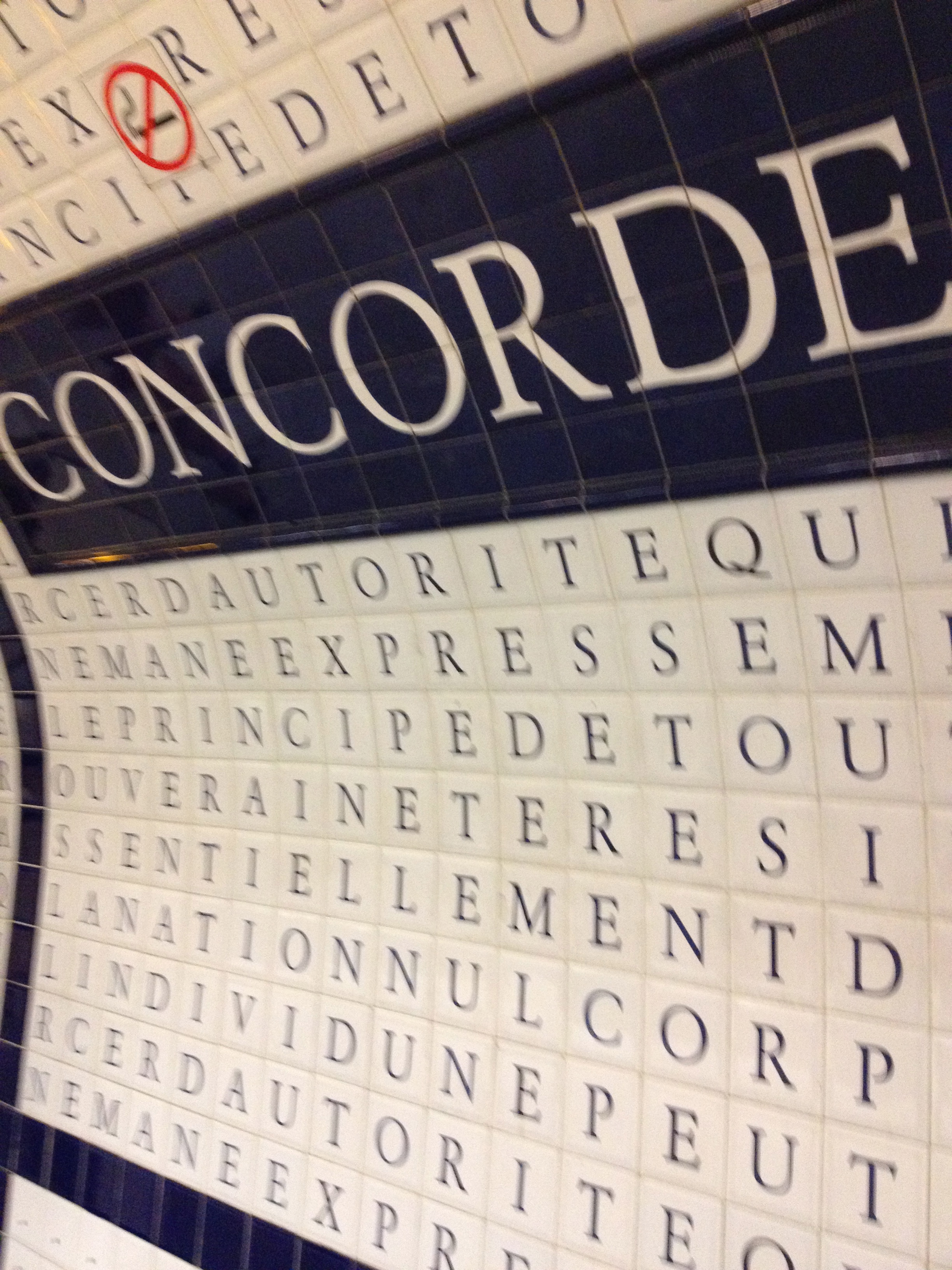
Willie, a fellow word nerd, would have loved this Métro stop too. The words from the Declaration of the Rights of Man form a word search at this Concorde Métro stop.

_DSC1014

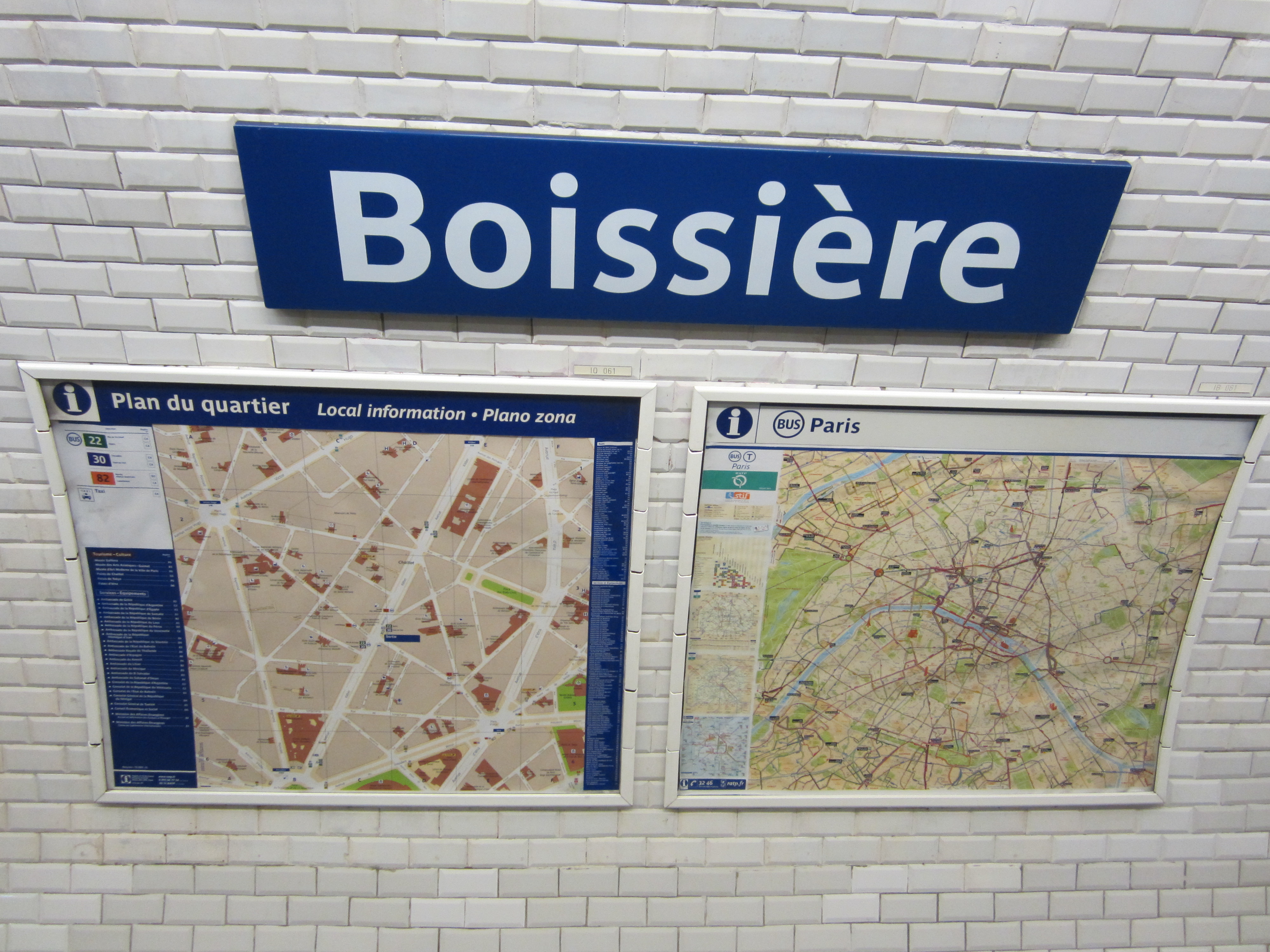
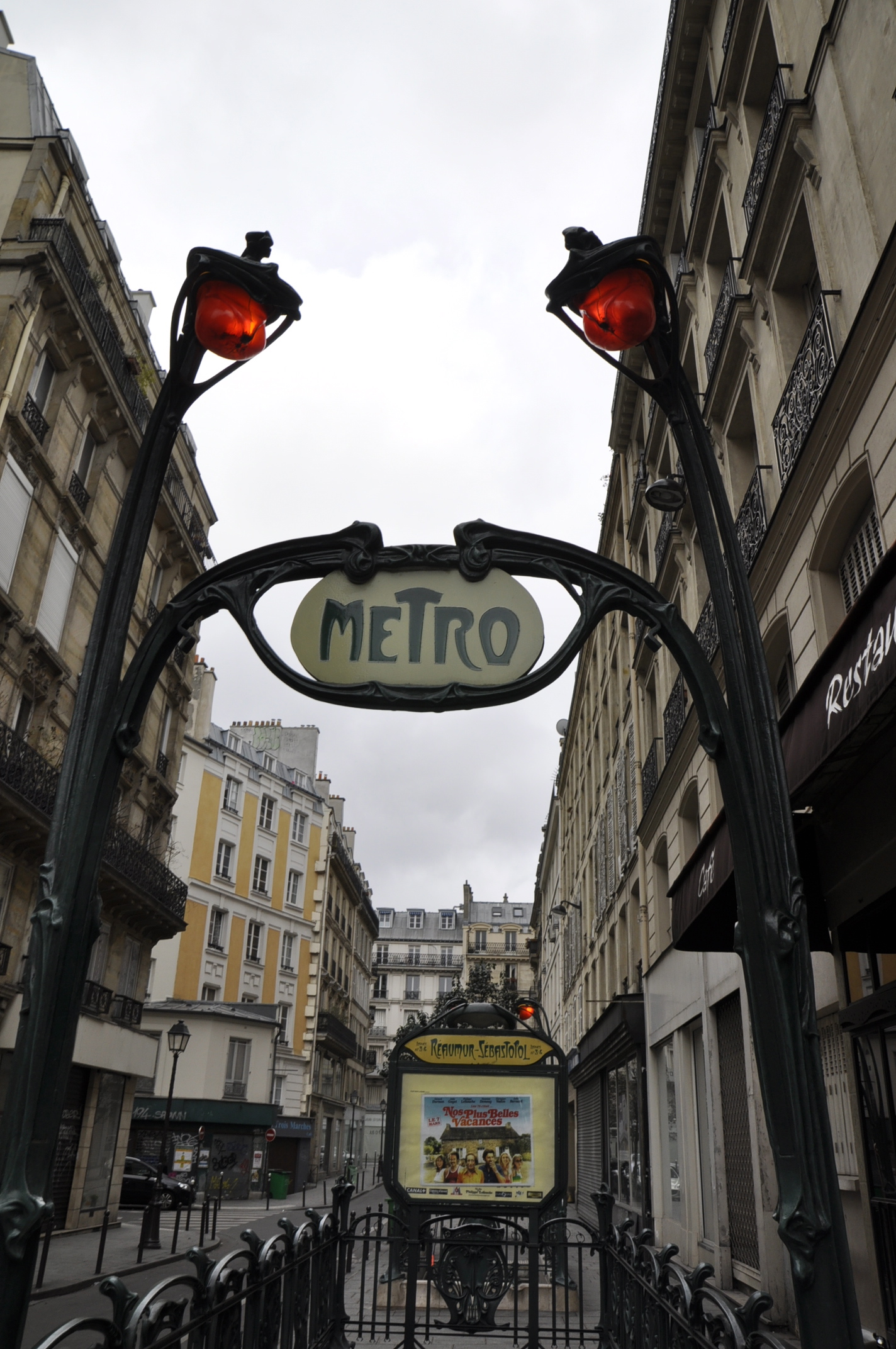
I love this Art Nouveau Métro stop at Réaumur Sébastopol on Line 4. Only one more stop until Willie’s stop for the Rue de Metz detention center.

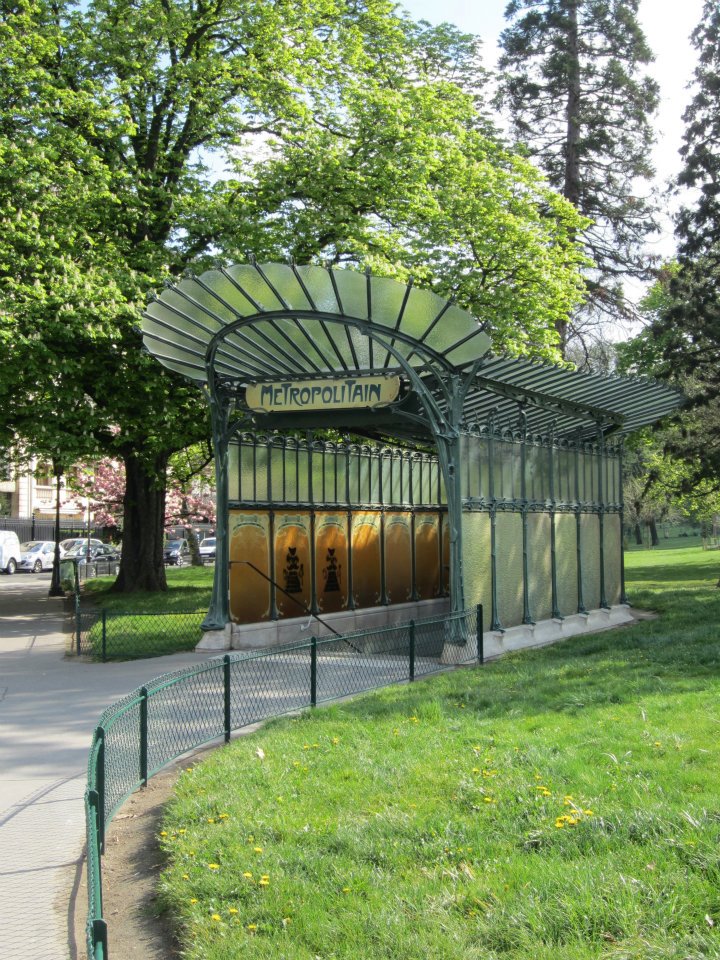
One of my favorite Métro stops. The Port Dauphine Métro stop on Line 2, just one stop past Luke's apartment on Victor Hugo.

One of my favorite Métro stops. The Port Dauphine Métro stop on Line 2, just one stop past Luke’s apartment on Victor Hugo. Just a short walk from the lovely Bois de Boulogne.

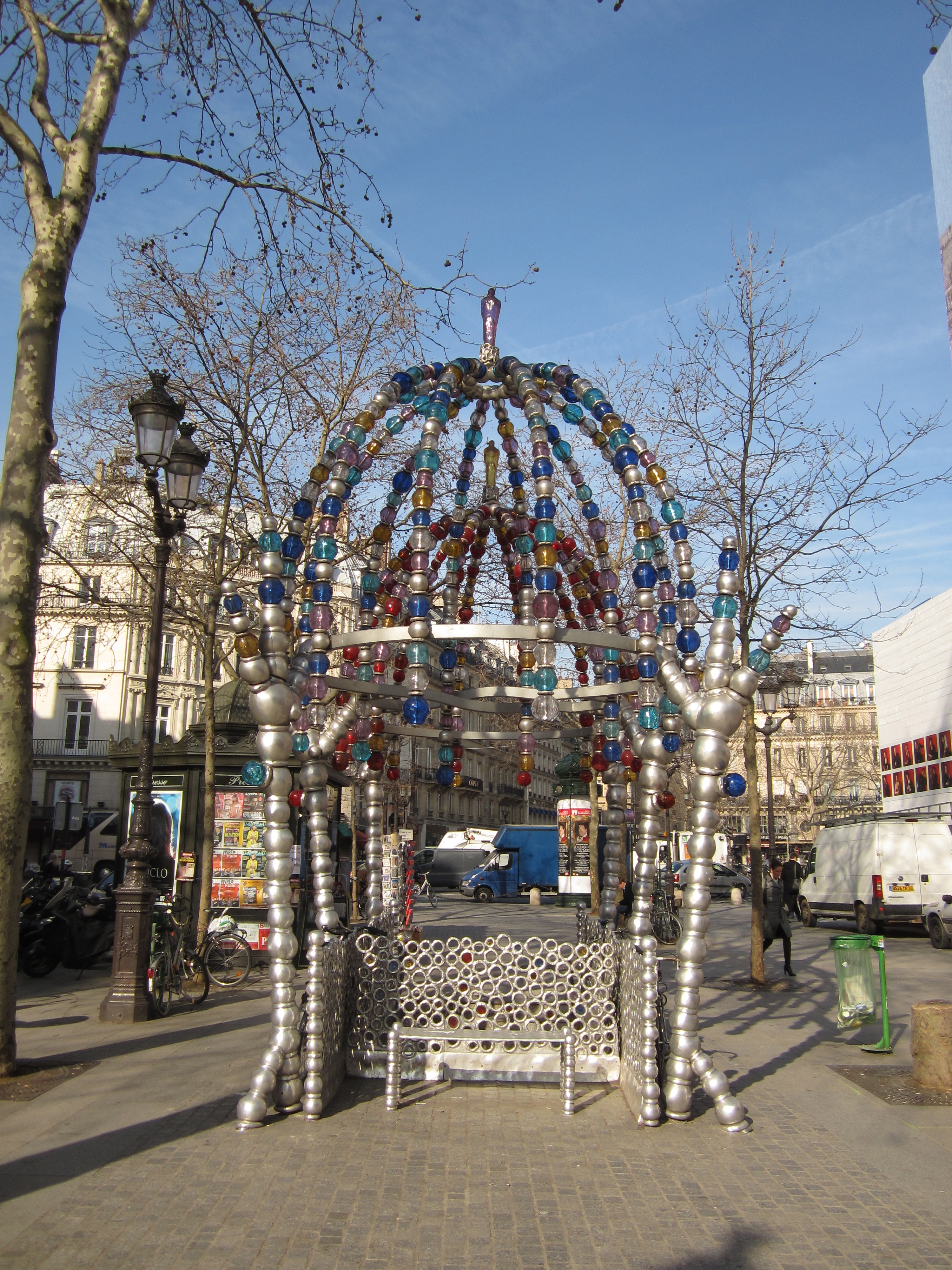
Who doesn't love the whimsical Louvre-Rivoli Métro stop?

Who doesn’t love the whimsical glass beads in the design of the Palais-Royal-Musée de Louvre Métro stop at Place Colette?

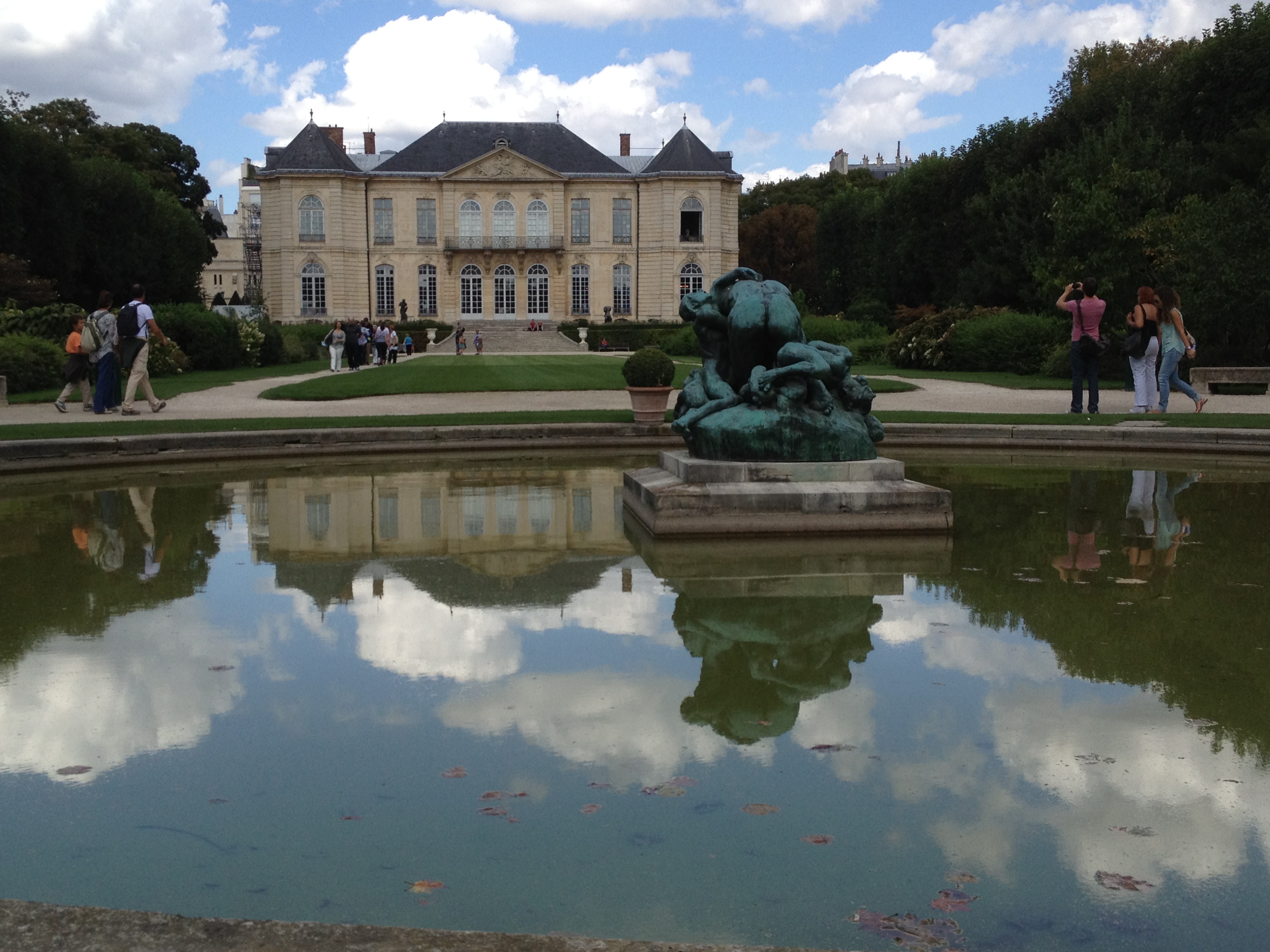
The gardens of Musée Rodin, the site of Willie and Gita's field trip

The gardens of Musée Rodin, the site of Willie and Gita’s field trip

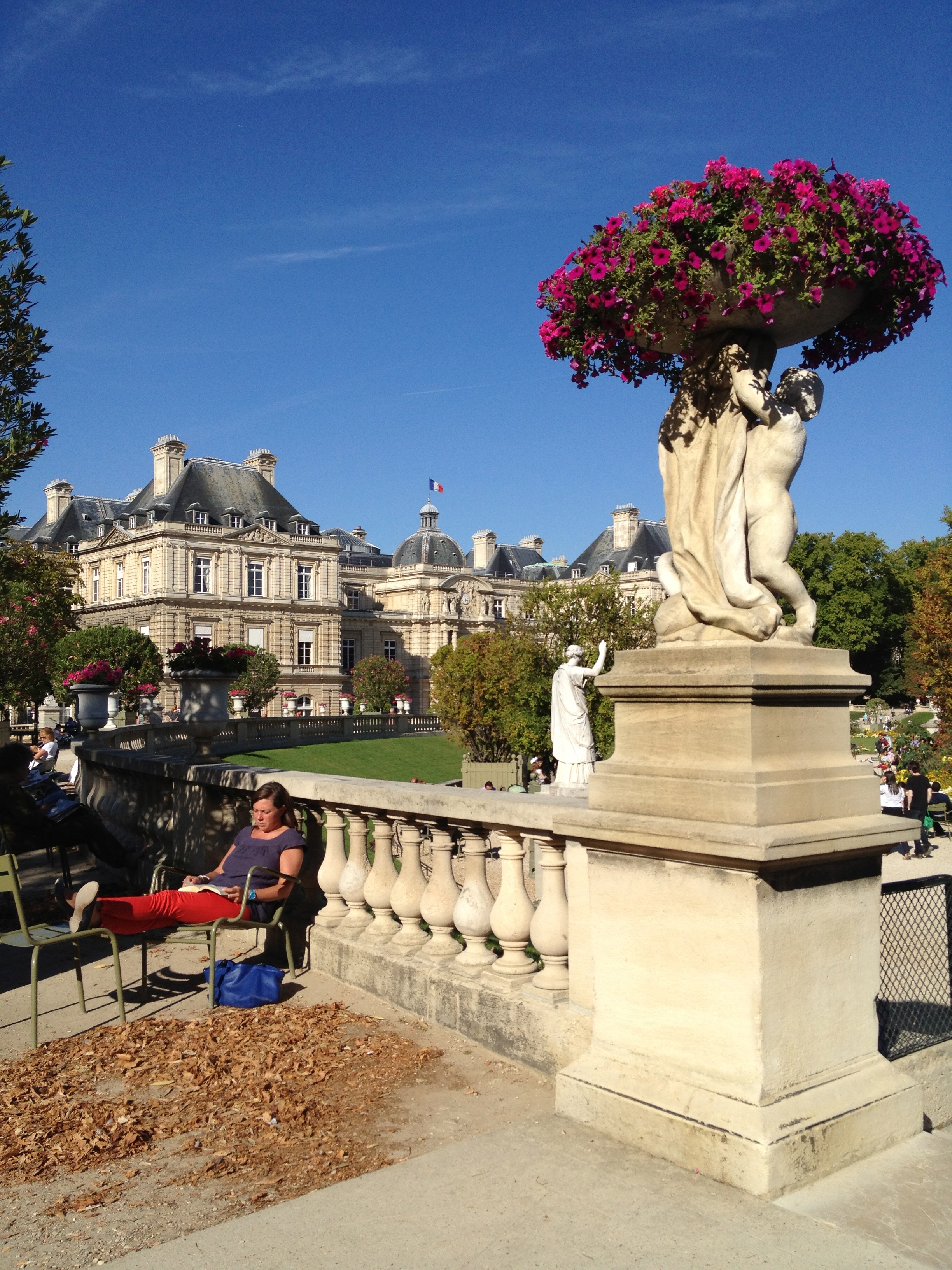
Luxembourg Gardens - where Willie and Gita enjoyed their brown-bag lunches together

Luxembourg Gardens – where Willie and Gita enjoyed their brown-bag lunches together

I have a feeling that it’s not just Willie and I who share this need to map out our place in Paris. Check out this quote from Susan Conley’s website, where she talks about her own Paris map OCD:

My craziest Francophile moment came when I found myself making these gigantic maps of the Paris neighborhoods covered in my novel. I used indelible markers on poster board in my little rabbit warren of an office on the third floor of our old house, and I tried to recreate the streets that Willie and Macon walked on in Paris. These hand-scrawled maps were my blue print of the city. They’re almost illegible but they gave me access to the parts of the city I really had to make sure the novel rendered fully. I needed to make the maps to feel like I was there in Paris. Then I knew that the reader would (hopefully!) feel like they were there too.

Yes, Susan, when I read your book I felt like I was in Paris too. Thanks for that, because now I miss it just a little less.

Paris Was The Place by Susan Conley:  Highly recommended.

Paris L’Insdispensable: Indispensable.

On Sisley’s Trail Outside Paris

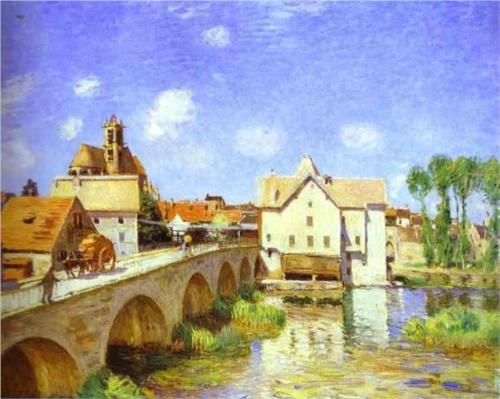
The Bridge at Moret, Alred Sisley (1893), Musée d'Orsay, Paris

The Bridge at Moret, Alfred Sisley (1893), Musée d’Orsay, Paris

On a recent trip to my neighborhood dry cleaners, I spotted this picture on a calendar thumbtacked to the wall. I snuck behind the desk to see it up close, and sure enough, it was a Sisley set in Moret. “I’ve been there!” (I kind of shrieked – the dry cleaning lady smiled indulgently.)

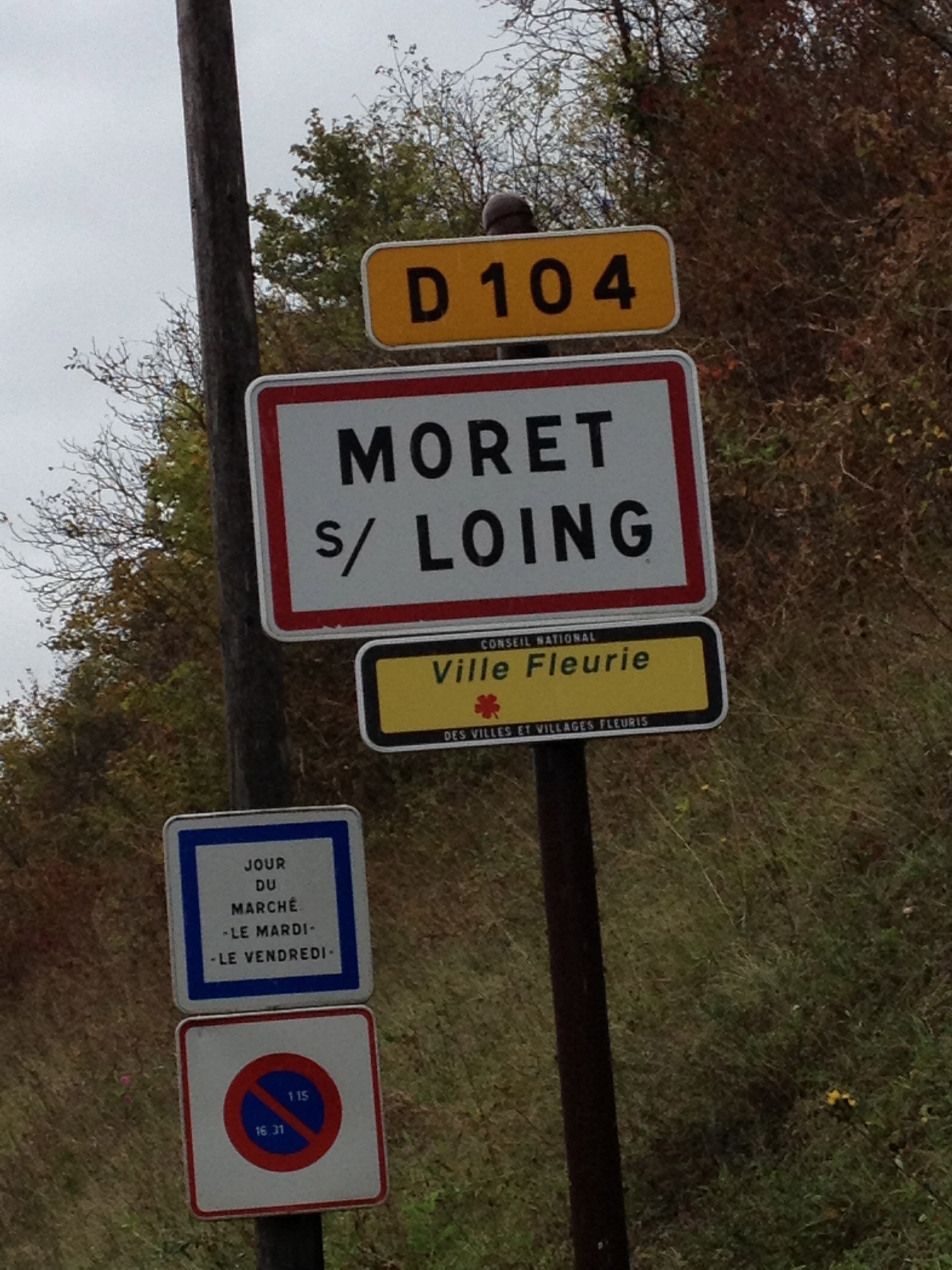
Moret-sur-Loing is one of the art villages and colonies I visited outside of Paris. Last year, I took two separate trip to the villages near the Fountainbleu Forest, including Barbizon, Grez, Moret-sur-Loing and Thomery. They’re all about an hour’s drive from Paris, and they make for a wonderful artsy day or weekend trip. I’ve previously written about visiting the historic art colony of Grez-sur-Loing here, and my tour of Rosa Bonheur’s Studio in Thomery here.

Moret-sur-Loing was the home of the Impressionist painter Alfred Sisley the last ten years before his death in 1899. Sisley also lived in the nearby town of Veneux-les-Sablons from 1883 to 1889. Walking through these towns is like stepping into a Sisley painting. Here is a Google Map of the various Sisley sightseeing locations in and near Moret and les Sablons.

Sisley’s backstory is interesting. He was from a wealthy British family and moved to Paris to study art in the 1860s. He took classes at the at the Académie Suisse, where he met Monet, Renoir and Bazille. They would become good friends and before long, they would develop their bold new Impressionist style. Sisley was able to rely on his family’s wealth to subsidize his art career until his father lost his fortune in the Franco-Prussian War. After that, Sisley became another starving artist just trying to get by.

After living in the Batignolles neighborhood of Paris through the 1860s and 70s, Sisley retreated to the village of Moret, where he lived a quiet painterly life with his common-law wife Eugénie (Marie) Lesouezec (they would not legally marry until 1897) and two children. Sisley died of throat cancer in 1899, but not before creating over 900 paintings, many of which depicted landscapes around the village of Moret.

Sisley’s paintings did not sell well during his lifetime. We now know that Sisley sold many of his paintings to local Moret townspeople at bargain prices just to pay the rent. Now, of course, a Sisley would sell in the millions.

This has all led to very curious consequences. According to this article from The Guardian, experts believe that locals in Moret are hoarding Sisley paintings that their ancestors may have purchased or bartered for many years ago. They’re hiding the pieces in attics or bank vaults because they’re afraid they will owe exorbitant inheritance taxes. It is possible that there are over 500 original Sisley paintings that have yet to be identified and authenticated. This in turn creates a ripe environment for forgery and art fraud: “Voila! Quelle suprise! An unknown Sisley in the attic!”

How fun to wander through the streets and pathways of Moret, to see the same sites that Sisley did over 125 years ago, and wonder what treasures might hidden in the attics and cellars of the longtime residents of this village.

IMG_4065

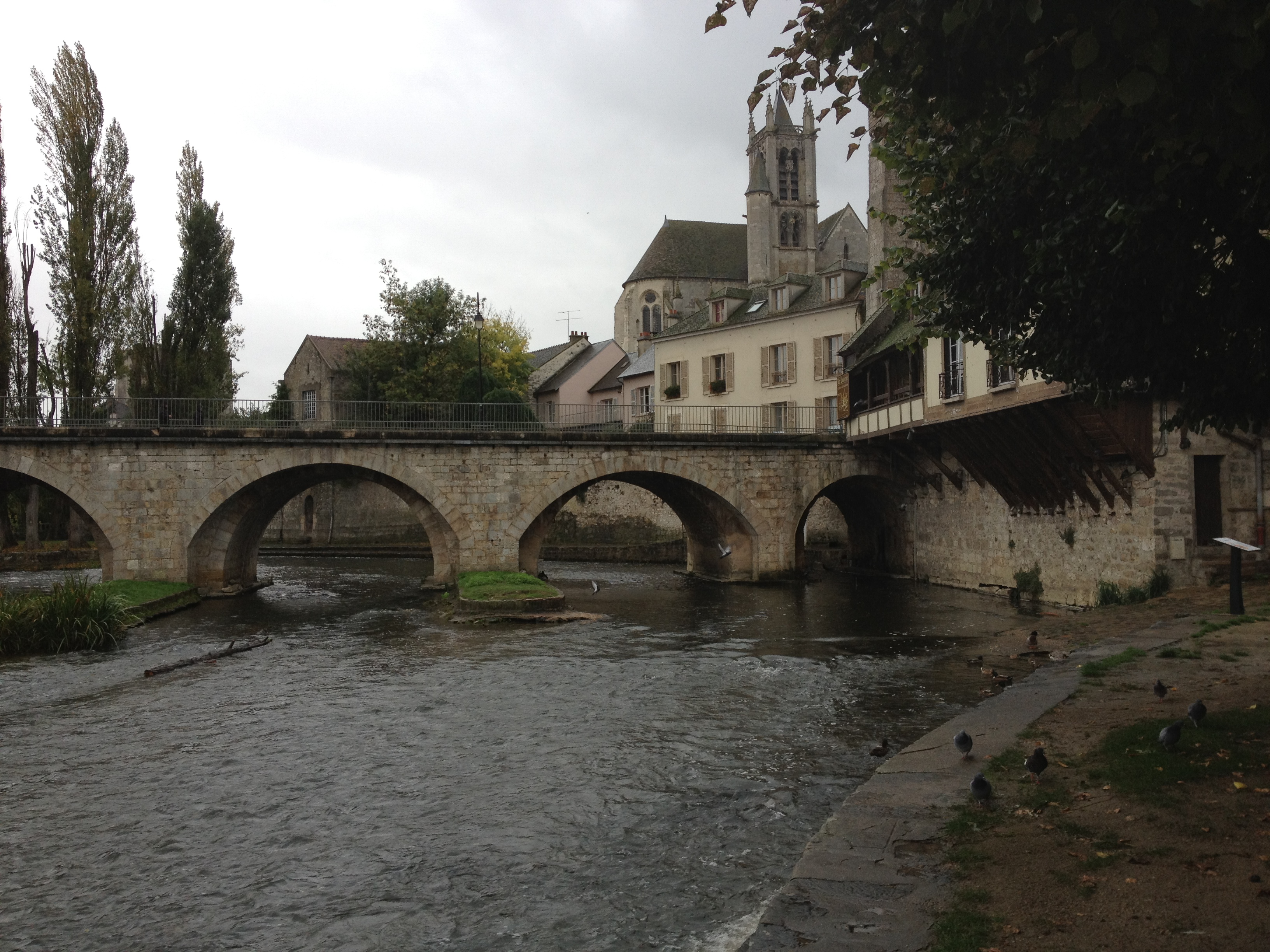
The bridge at Moret-sur-Loing on a gray day in 2011.

The bridge at Moret-sur-Loing on a gray day in 2011.

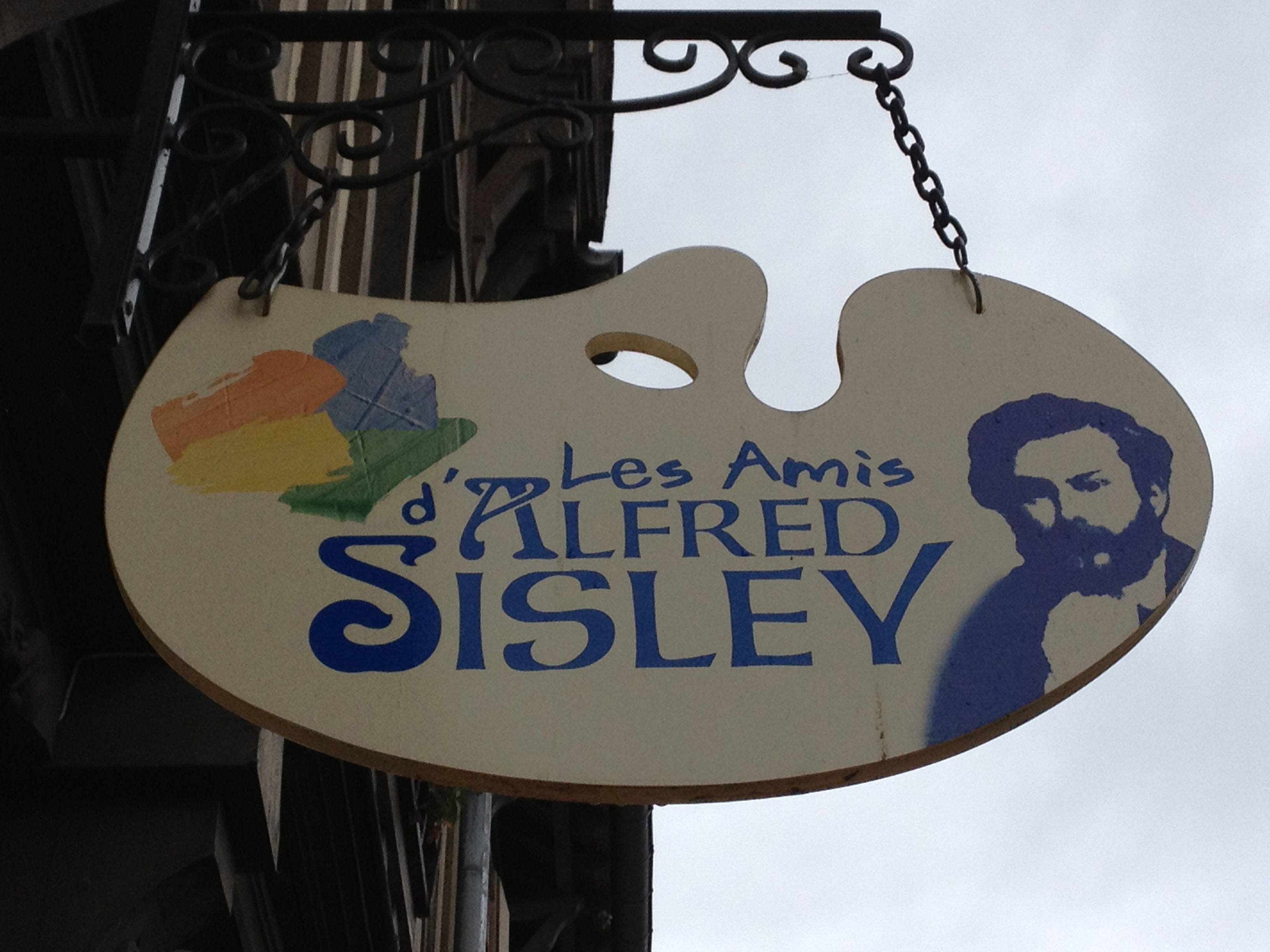
Les Amis d'Alfred Sisley: the Friends of Alfred Sisley, an art association that offers tourist information about Sisley. 24 rue Grande, Moret-sur-Loing.

Les Amis d’Alfred Sisley: the Friends of Alfred Sisley, an art association that offers tourist information about Sisley.
24 rue Grande, Moret-sur-Loing.

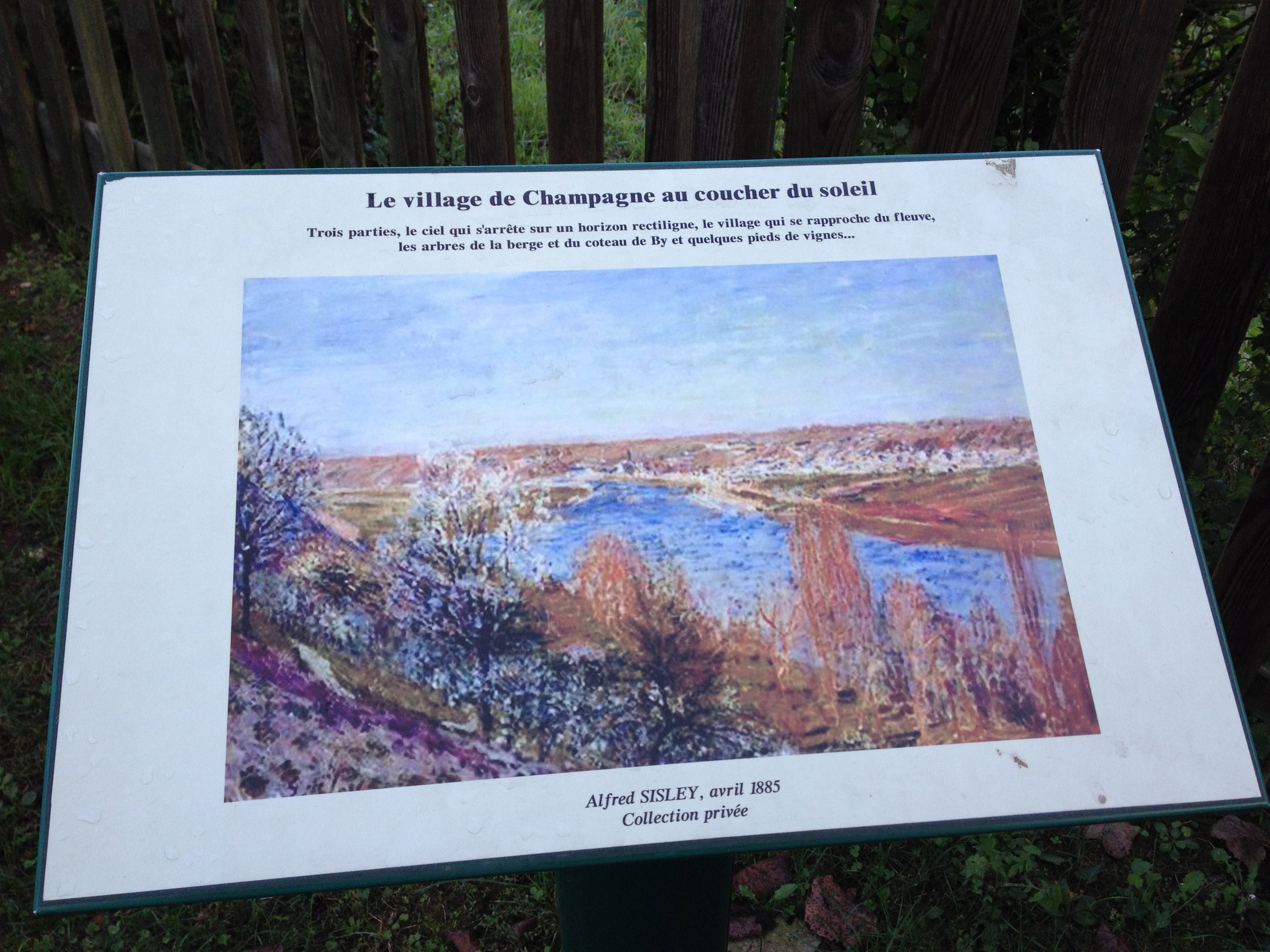
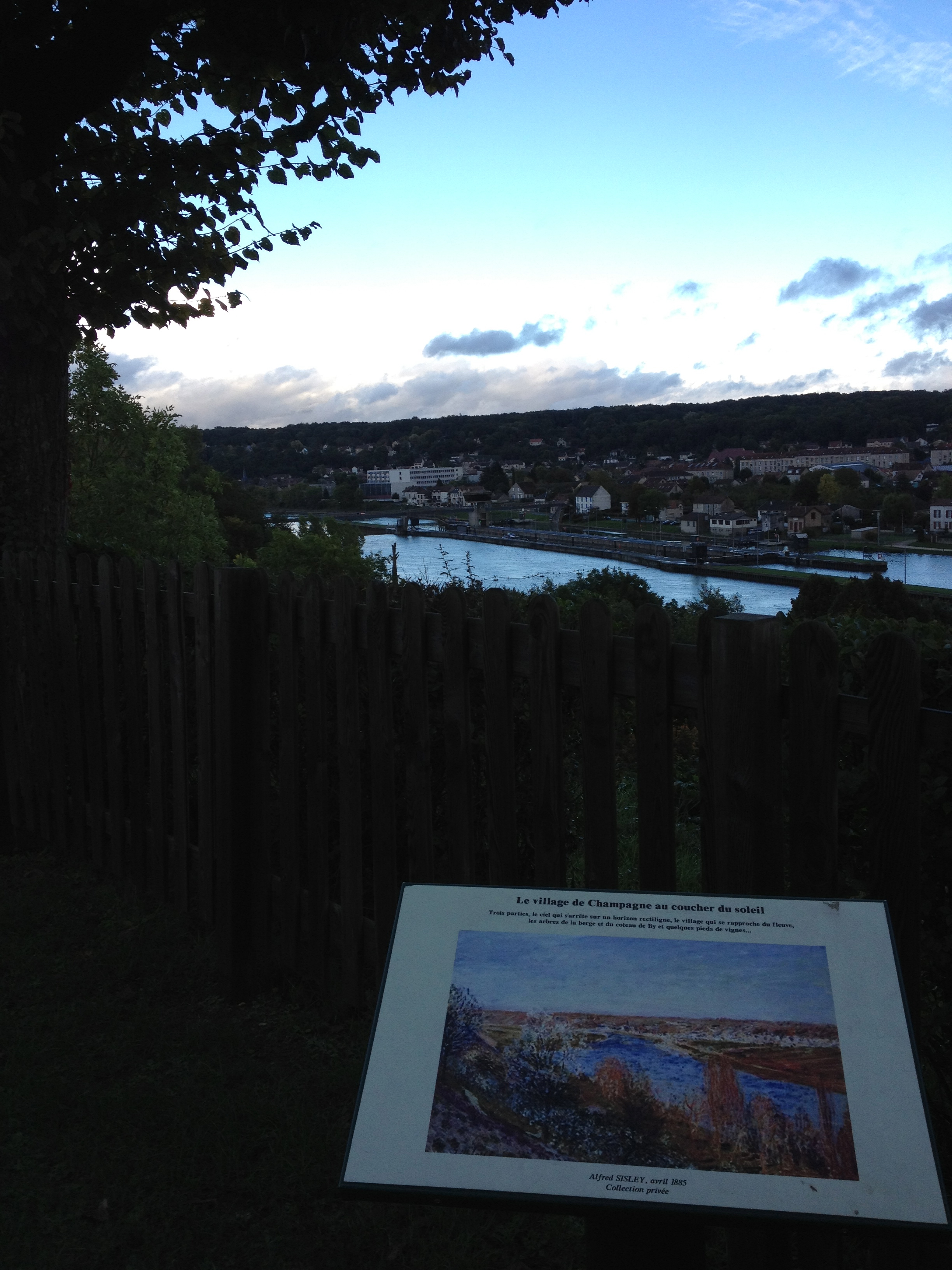
Just a mile from Moret along the Loing River, where the Loing meets the Seine, is the town of Veneux-les-Sablons. Sisley lived here from 1883-1889 and painted many scenes along down by the river. If you’re persistent, you can find some of the scenes for yourself, marked by a sign and a reproduction of his work. I marked them on this Google Map.

IMG_4115

The sign along the Seine that indicates where Sisley painted Le Village De Champagne au voucher du Soleil (1885)

IMG_4118

The light might have gotten pretty dim in this photo, but you can still make out the town of Champagne-sur-Seine across the river, much like it was in Sisley’s painting.

IMG_4120

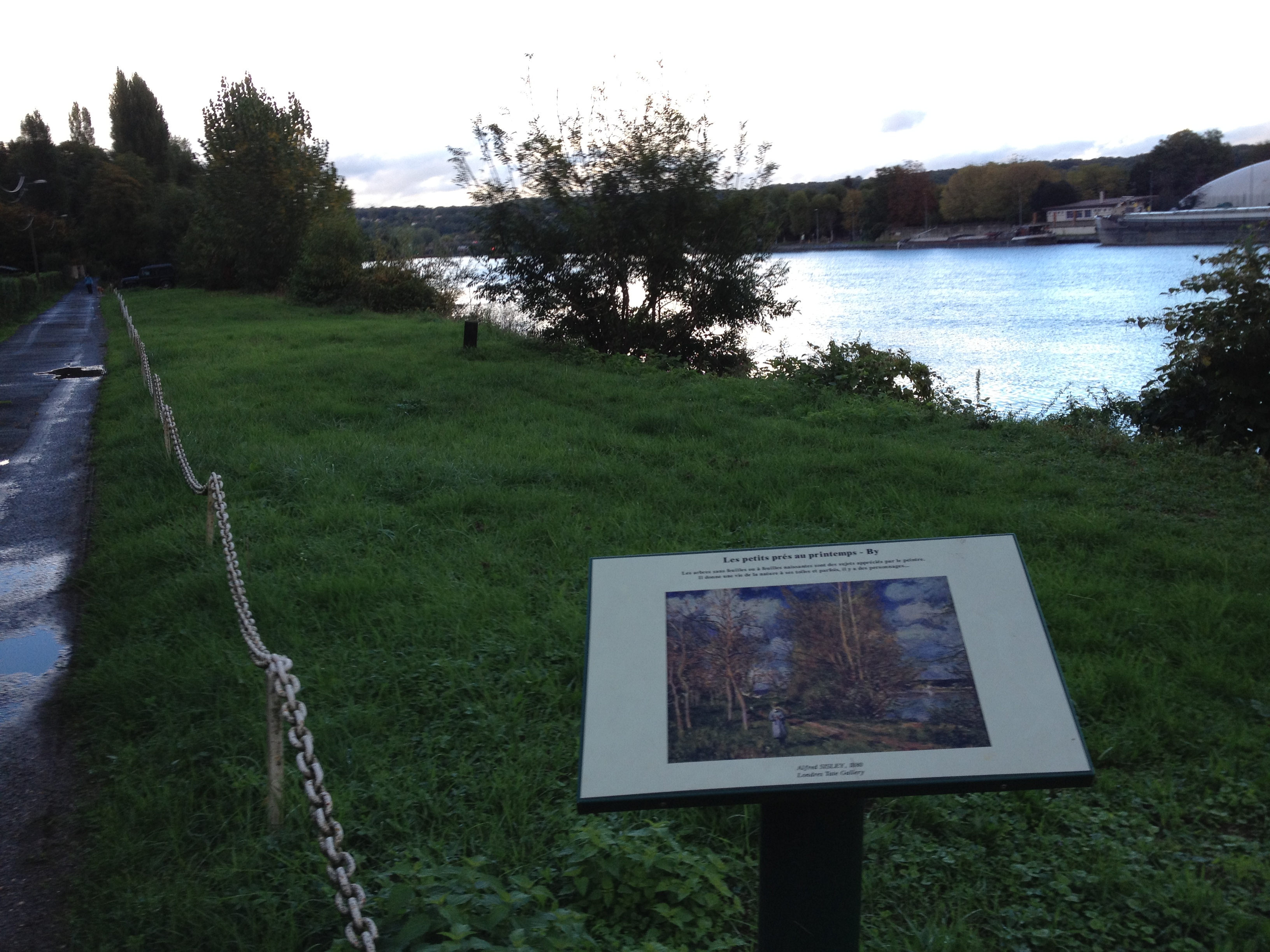
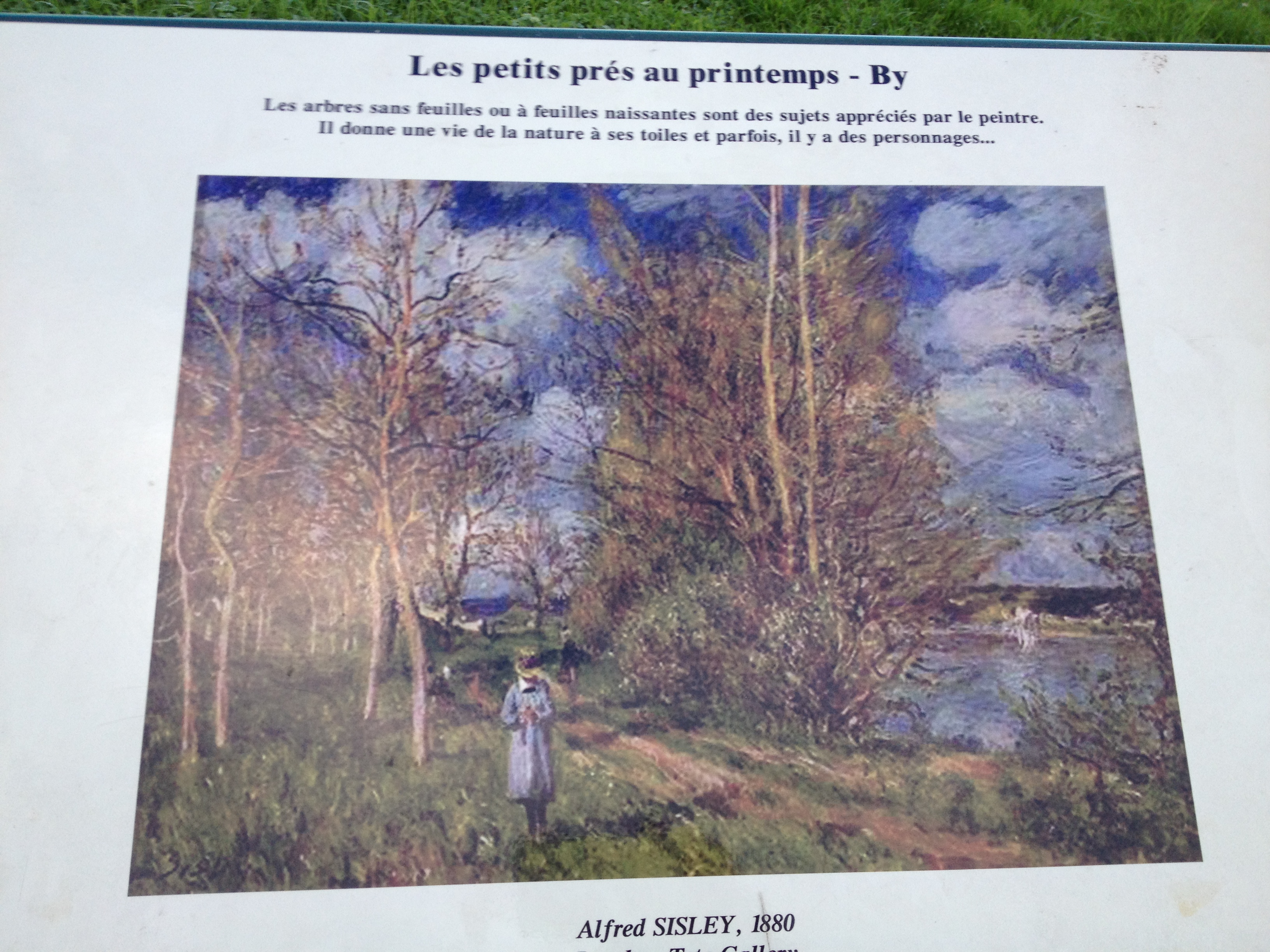
The path along the Seine as painted in “Les Petits Prés au Printemps – By (1880)

IMG_4121

The sign indicating where Sisley painted “Les Petits Prés au Printemps – By” (1880)

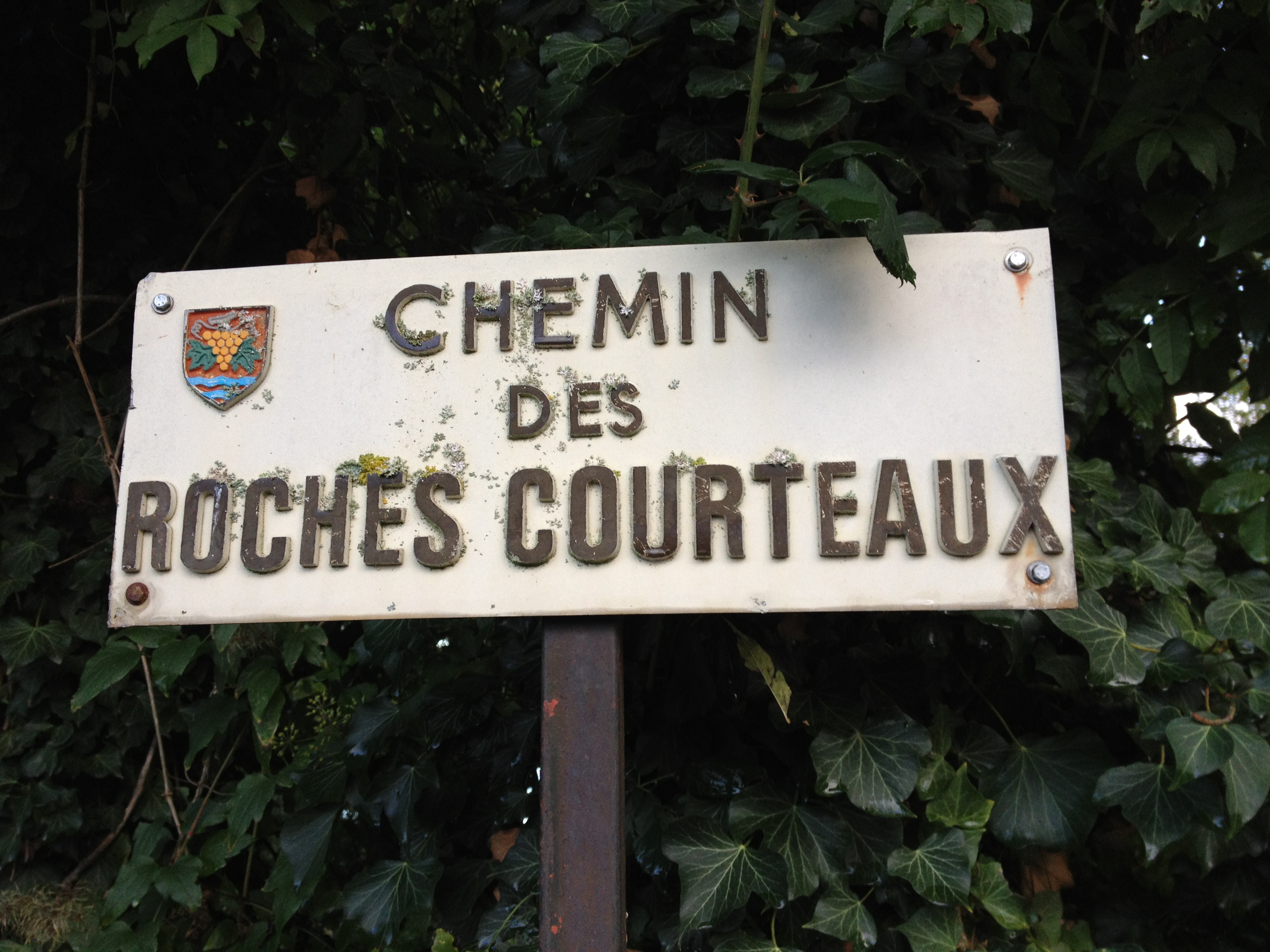
These signs might be hard to find without GPS. They're along a small little pathway called Chemin des Roches Courteuax that runs along the Seine.

The signs might be hard to find without GPS. They’re along a small little pathway called Chemin des Roches Courteuax that runs along the Seine.

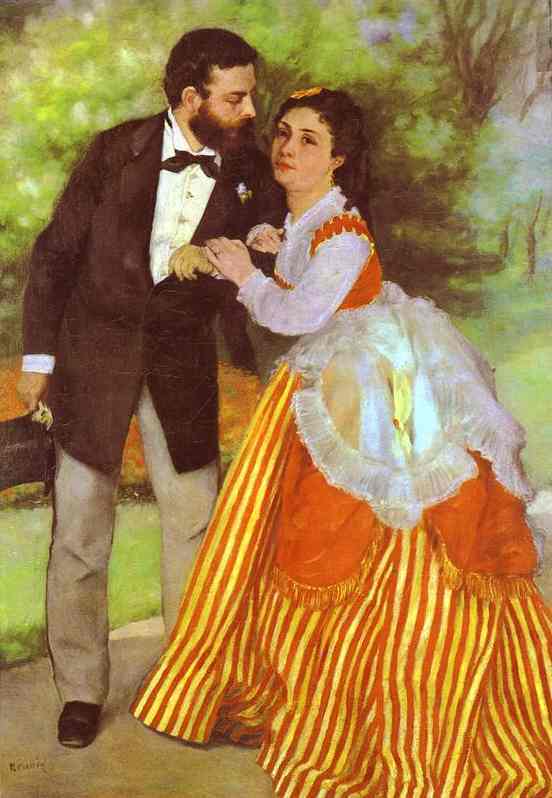
One final picture, a portrait of Sisley and his future wife Marie in 1868, a perfectly bourgeois couple who had not yet lost their family fortune in the Franco-Prussian War.

Renoir, Alfred Sisley and His Wife (1868)

Pierre-Auguste Renoir, Alfred Sisley and His Wife (1868), Wallraf-Richardz Museum, Cologne, Germany

In the Conservatory with Madame Bartholomé

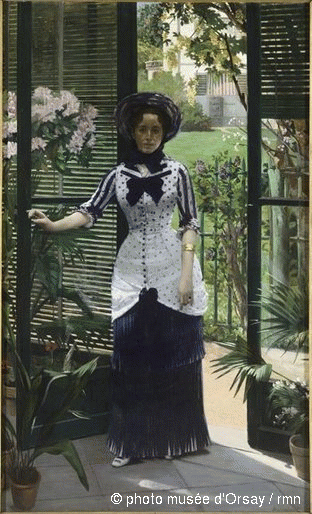
Albert Bartholomé, Dans la serre (1881), a portrait of his first wife Prospérie

Albert Bartholomé, Dans la serre (1881), a portrait of his first wife Prospérie. Musée d’Orsay, Paris, on loan to the Impressionism, Fashion & Modernity exhibit currently at the Art Institute of Chicago.

This painting, called Dans la Serre (In the Conservatory) is getting a lot of well-deserved attention in the Impressionism, Fashion and Modernity Exhibit currently on display at the Art Institute of Chicago (June-September 22, 2013).

In spite of the snippy things the New York Times had to say about it (“wide miss” and “cloying”), in my experience, this painting draws some of the biggest crowds at the exhibit, from Paris to Chicago. Behind it lies a tragic but fascinating story.

Albert Bartholomé (1848-1928) painted this portrait of his first wife Prospérie de Fleury (the daughter of the Marquis de Fleury) in 1881. She posed in a fashionable  dress in the conservatory of their home, which was located at 8 rue Bayard in Paris.


The dress of Prospérie Bartholomé, Musée d'Orsay

The dress of Prospérie Bartholomé, Musée d’Orsay.


The painting is large and captivating, but when exhibited right next to the very dress that Propérie (“Périe”) wore while she posed, it’s a show stopper. The detailing of the dress is as remarkable as its petite size. Seriously, I think I could have worn that dress in sixth grade.


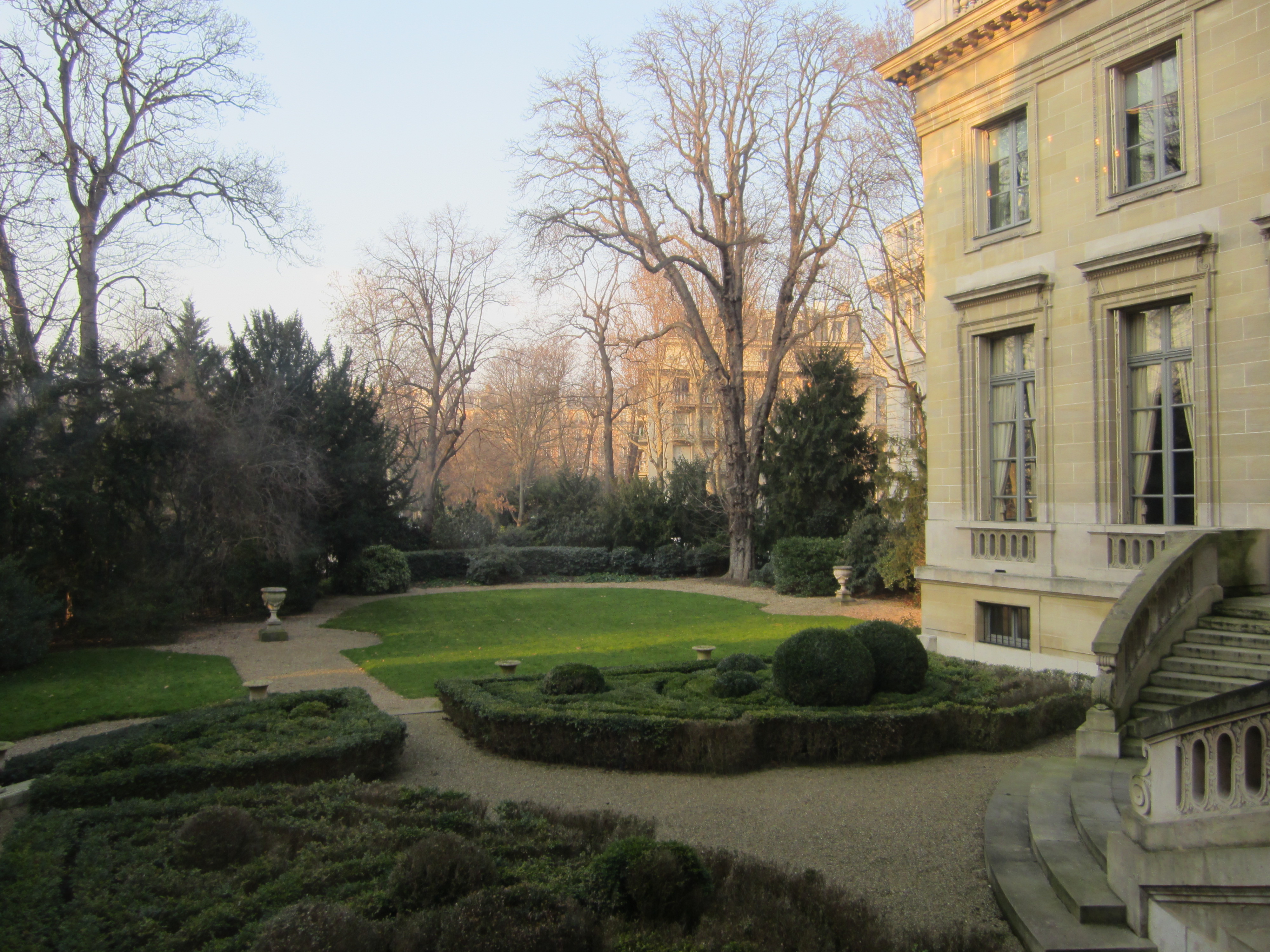
The setting of Dans Le Serre reflects the couple’s wealth and standing. The garden in the background reminds me of the beautiful gardens of the Musée Nissim de Camondo near Parc Monceau in Paris, another home of great wealth and history (a home I like to call the “Downton Abbey of Paris.”)

Backyard gardens of the Musée Nissim de Camondo in Paris.

Backyard gardens of the Musée Nissim de Camondo in Paris.

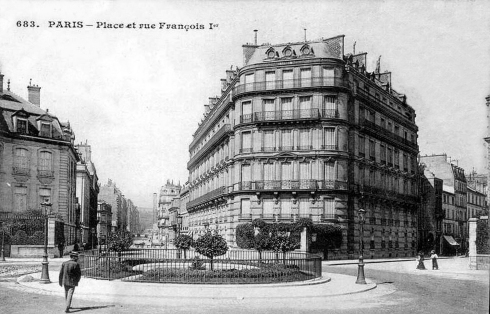
The Bartholomé home wasn’t in the fashionable Parc Monceau neighborhood, but it was located on an equally beautiful block in the “Golden Triangle” of the 8th arrondissement between the Seine and the Place de François 1er. This is what their block looked like back then:

Place François 1er before 1909, source: wikipedia.

Place François 1er before 1909, source: wikipedia.

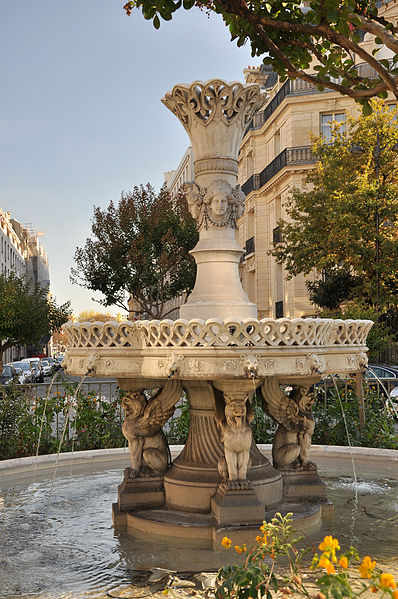
Fontaine de la Place François 1er, Paris. Source: wikipedia

Fontaine de la Place François 1er, Paris. Source: wikipedia


And here is the Place de François de 1er now, including the beautiful fountain you might recognize from the opening montage in Midnight in ParisThe Google Map Street View will give you a good glimpse of the structure that stands at 8 rue Bayard today.


According to the Musée d’Orsay, the Bartholomés enjoyed hosting salons for their artistic circle of friends (including Edgar Degas, Mary Cassatt and Jacques-Emile Blanche) with free-ranging intellectual discussions about music, painting and books.

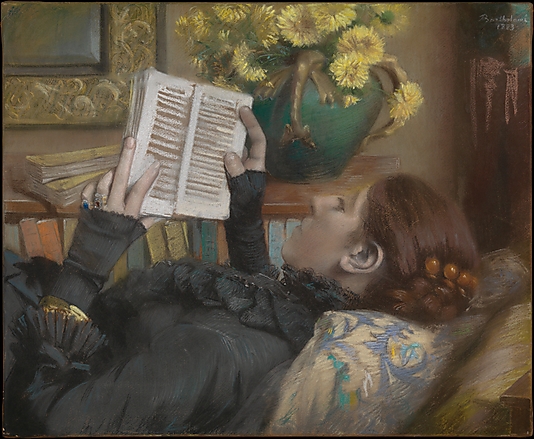
Two years after he painted Périe’s portrait in Dans le Serre, Bartholomé drew a pastel portrait showing her reading on the couch in front of a bookshelf. Clearly, their home was full of books. Périe is dressed in another fashionable dress, this one with black ruffles and resembling some of the other fashions in the Impressionism and Fashion exhibit, particularly Manet’s Parisienne. She seems to be wearing the same gold bracelet that she did in Dans le Serre.

Albert Bartholomé, The Artist’s Wife, Reading, pastel and charcoal (1883), The Metropolitan Museum of Art, Catharine Lorillard Wolfe Collection.

Two years later, Albert and Périe became the subject of a joint portrait by Edgar Degas, a painting started in 1885 called The Conversation. Once again, Périe’s outfit (in which her bustle resembles the tail plume of a turkey) seems to be the focus of the composition.

Edgar Degas, The Conversation (1885-1895), Yale University Art Gallery, Collection of Mr. and Mrs. Paul Mellon.

Edgar Degas, The Conversation (1885-1895), Yale University Art Gallery, Collection of Mr. and Mrs. Paul Mellon. Image: Yale Art Gallery e-catalogue.

Unfortunately, Prospérie was in poor health and would die in 1887, just two years after they posed for the Degas painting. Bartholomé was so overwhelmed with grief that he preserved the dress that Périe wore in the Dans le Serre. I’m not sure how it became the property of the Charles and André Bailly Gallery in Paris, but it was subsequently gifted to the Musée d’Orsay in 1991.

As if the Bartholomé story wasn’t sad enough, Périe’s death caused Albert to give up painting altogether. On the advice of his friend Edgar Degas, he took up sculpting instead. Maybe the highly physical act of molding large-scale plaster and bronze was more cathartic than painting with a brush.

His first sculpture was for his wife’s tomb in front of a church in Bouillant, France, near Crépy en Valois. Not only did Bartholomé express his own raw grief, he also captured his young wife’s likeness. She has the same delicately pointed nose that she does in the painting Dans la Serre.

Bartholomé sculpure on his first wife's tomb in Bouillant, France.

Bartholomé’s sculpture for his first wife’s tomb in Bouillant, France. Image: Parismyope.blogspot.com.

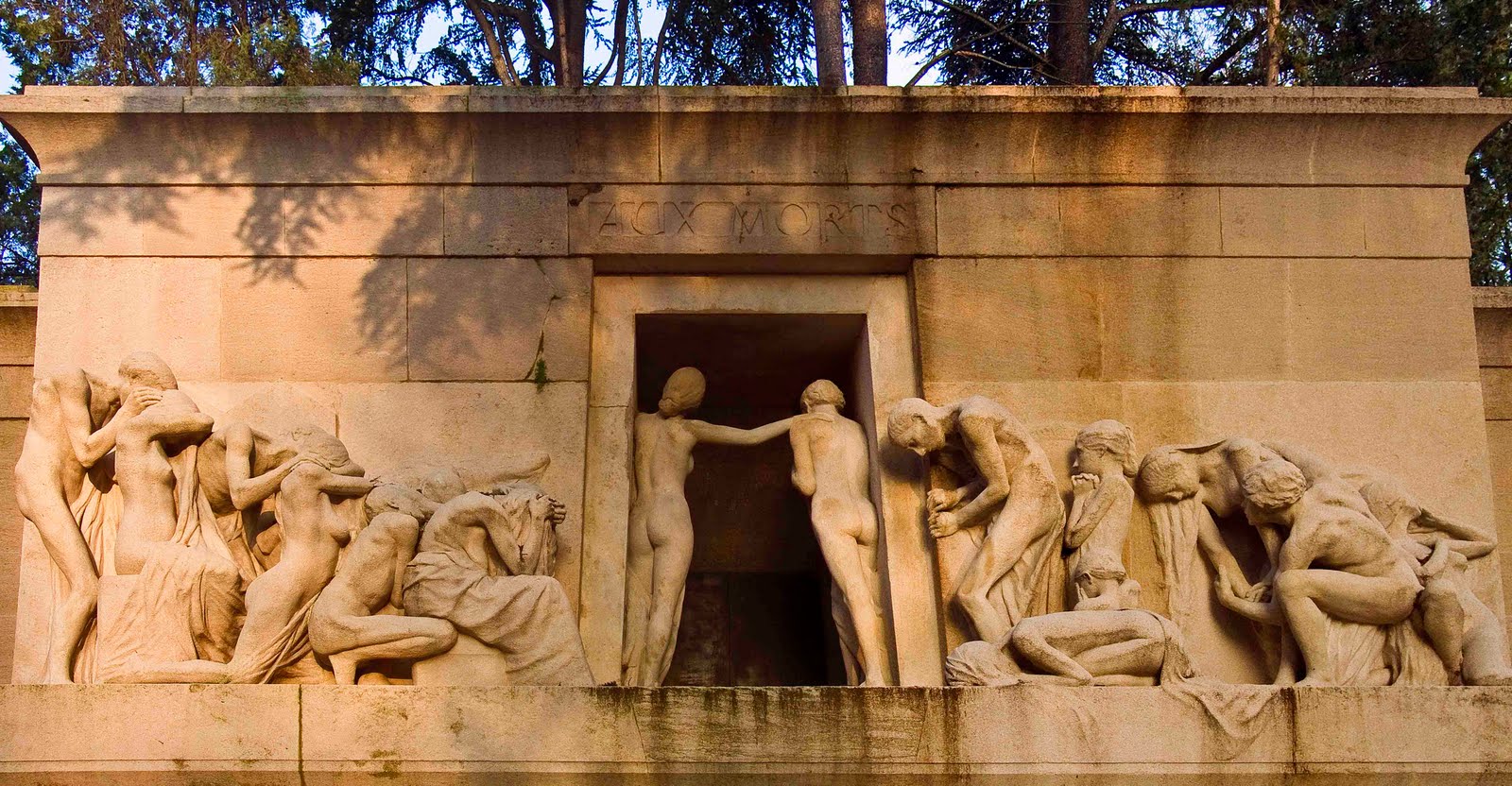
From that point on, Bartholomé’s entire oeuvre consisted of grief sculptures. He is probably best known for his Monument aux Morts at the Pere Lachaise Cemetery in Paris (1888-1889), which is heart wrenchingly sad.

Albert Bartholomé, Monuement aux Mortsu cimetière du Père Lachaise (1889-1899). Image: parismyope.blogspot. com.

Albert Bartholomé, Monuement aux Morts du cimetière du Père Lachaise (1889-1899). Image: parismyope.blogspot. com.

Despite Bartholomé’s deep and long-lasting grief, he did manage to remarry in 1901. I wish I knew the whole story, but all I can find is that his second wife Florence Letessier (18xx-1959) had been a model before their marriage, so presumably that’s how they met. Bartholomé would have been in his 50s at the time of his second marriage but Florence was much younger.

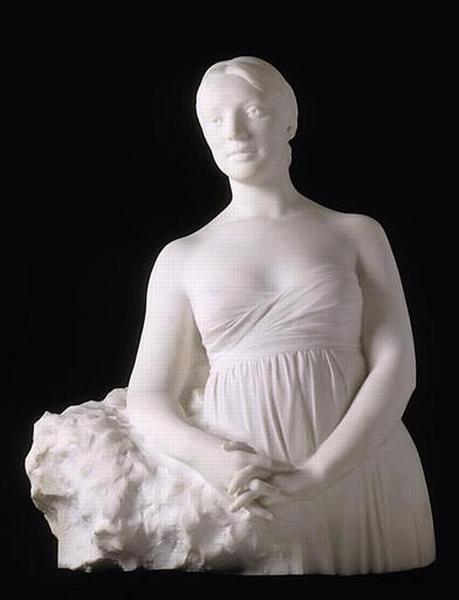
Bartholomé sculpted Florence in 1909, but it doesn’t look as though her youth and serenity captured his imagination as much as the memory of his first wife. Florence’s face looks full and healthy but her expression and posture are utterly bland.

Albert Bartholomé, Bust, Madame de Bartholomé, Née Florence Letessier, Second Spouse of the Artist (1909). Image:http://www.culture.gouv.fr/public/mistral/joconde

Albert Bartholomé, Bust, Madame de Bartholomé, Née Florence Letessier, Second Spouse of the Artist (1909), Musée d’Orsay. Image: http://www.culture.gouv.fr/public/mistral/joconde

Sometime after their marriage, Bartholomé and Florence moved to 1 rue Raffet in the 16th arrondissement of Paris, where he would have a sculpting studio right next door to their home. The home and studio are still standing, as you can see from Google Maps Street View. Today, the studio at 1 bis rue Raffet rents out separately from the apartment building next door.

On a side note, Bartholomé’s art studio on rue Raffet became part of a huge art controversy in the 1950s. Apparently, Degas allowed his good friend Bartholomé to make plaster casts of some of his sculptures for Bartholomé’s private collection, including a plaster cast of Little Dancer, Age 14. Florence inherited the plaster casts in upon Albert’s death in 1928, but they didn’t go on the art market until she was placed in an asylum in the 1950’s, creating a big controversy.

In any event, you shouldn’t miss the chance to go see Bartholomé’s portrait of his wife Périe in Dans le Serre at the Art Institute of Chicago’s Impressionism, Fashion and Modernity Exhibit. Just look into Périe’s eyes, and you can almost imagine their sad story. It’s anything but a wide miss.


Rainy Days in Paris

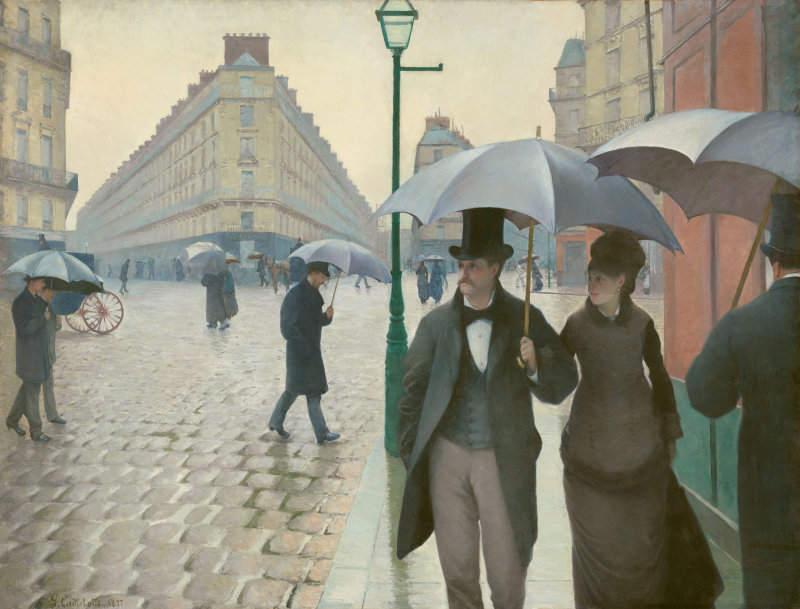
Gustave Caillebotte, Paris Street; Rainy Day (1877), Art Institute of Chicago, Charles H. and Mary F. S. Worcester Collection.

Gustave Caillebotte, Paris Street; Rainy Day (1877), Art Institute of Chicago, Charles H. and Mary F. S. Worcester Collection. Currently part of the Impressionism, Fashion and Modernity Exhibit (2013).

Who doesn’t love this painting? I’ve admired it ever since I first started visiting the Art Institute of Chicago as a young girl. It’s so big that it welcomes you in – it feels like you’re right there on the sidewalk. Maybe you were walking in front of this couple and turned around for a brief look at the intersection behind you. Do your shoes still feel wet from the rain?

I understand that Caillebotte did not actually stand in the street to paint on a rainy day.  (If he had, I guess you would call it en pleuviex air, not en plein air?) This was a studio painting, but no doubt, Caillebotte had plenty of experience observing the effect of rain on the streets of his neighborhood. We do know he drew a sketch of it first, most likely on site en plain air. The drawing is in the collection of the Art Institute of Chicago. As the Art Institute says, “This preparatory drawing seems to have been freely sketched on the spot before being laid out in the studio with a straightedge and compass to regularize the perspective lines.”

On my first trip to Paris, when I would look at every diagonal street corner and think of this painting. There are countless intersections like this in Paris, and so many rainy days. But there is only one Paris Street; Rainy Day. When I lived in Paris, I finally had time to track down the right place.

This iconic scene is located at the intersection of rue de Moscou and rue de St. Petersburg in the 8th arrondissement behind Gare St. Lazare, between Place de Clichy and Place de L’Europe. An easy walk from several Métro lines. I created a Google Map so you can check it out for yourself. Click on the street view and you’ll have the perfect view.

The scene of Caillebotte's Paris Street; Rainy Day (1877)

The scene of Caillebotte’s Paris Street; Rainy Day (1877). Funny that I should have captured this photo on a sunny day. It’s just not the same. (Not to mention the motorcycles and the lack of cobblestones!)

Rainy days in Paris can be beautiful. Or at least that’s what Parisians keep telling themselves so they don’t go bat-shit crazy during those long weeks of gloomy gray skies.

That’s what I told myself anyway. Check out these photos of mine and tell me you don’t agree. There’s just something about rainy days in Paris. . . .

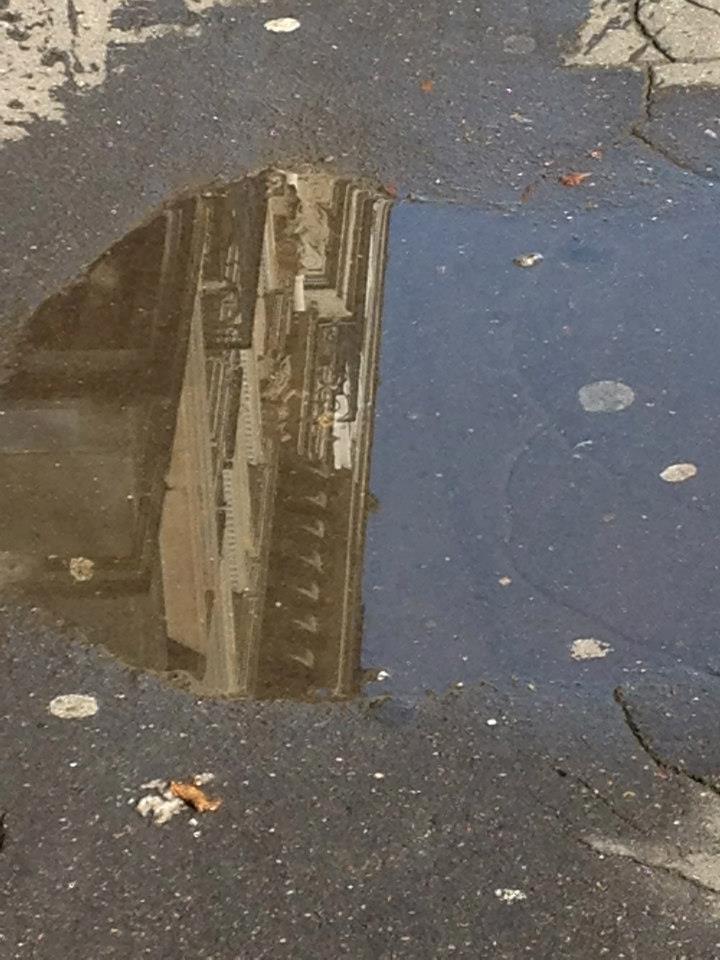
A Paris puddle on Avenue Kléber in the 16th

A Paris puddle on Avenue Kléber in the 16th

A Paris puddle on Avenue Kléber in the 16th

A Paris puddle on avenue Matignon in the 8th

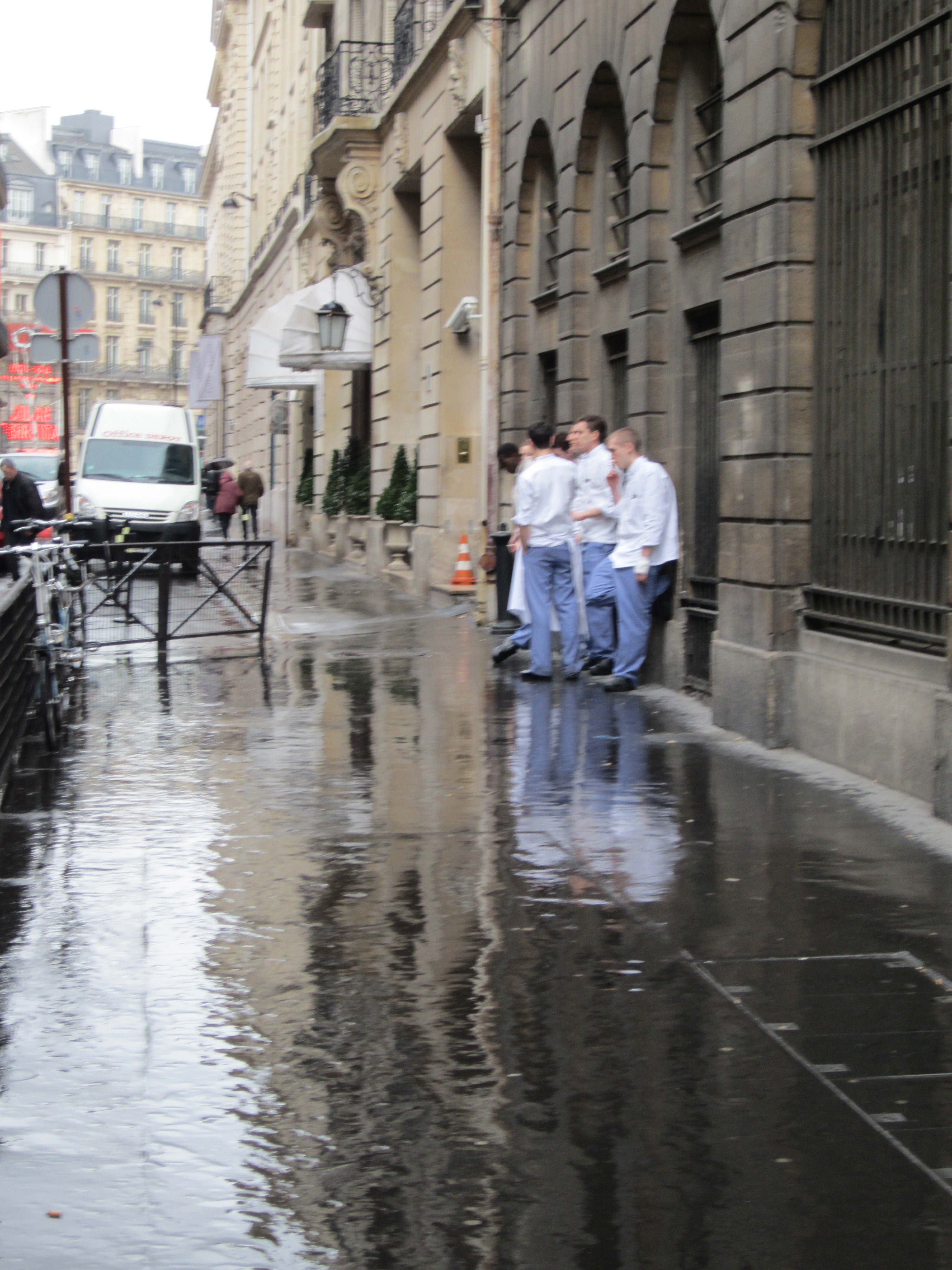
Rainy day, rue Cambon. Students on a cigarrette break from the Ecole Ritz Escoffier, across the street from Chanel Paris.

Rainy day, rue Cambon. Students on a cigarrette break from the Ecole Ritz Escoffier, across the street from Chanel Paris.

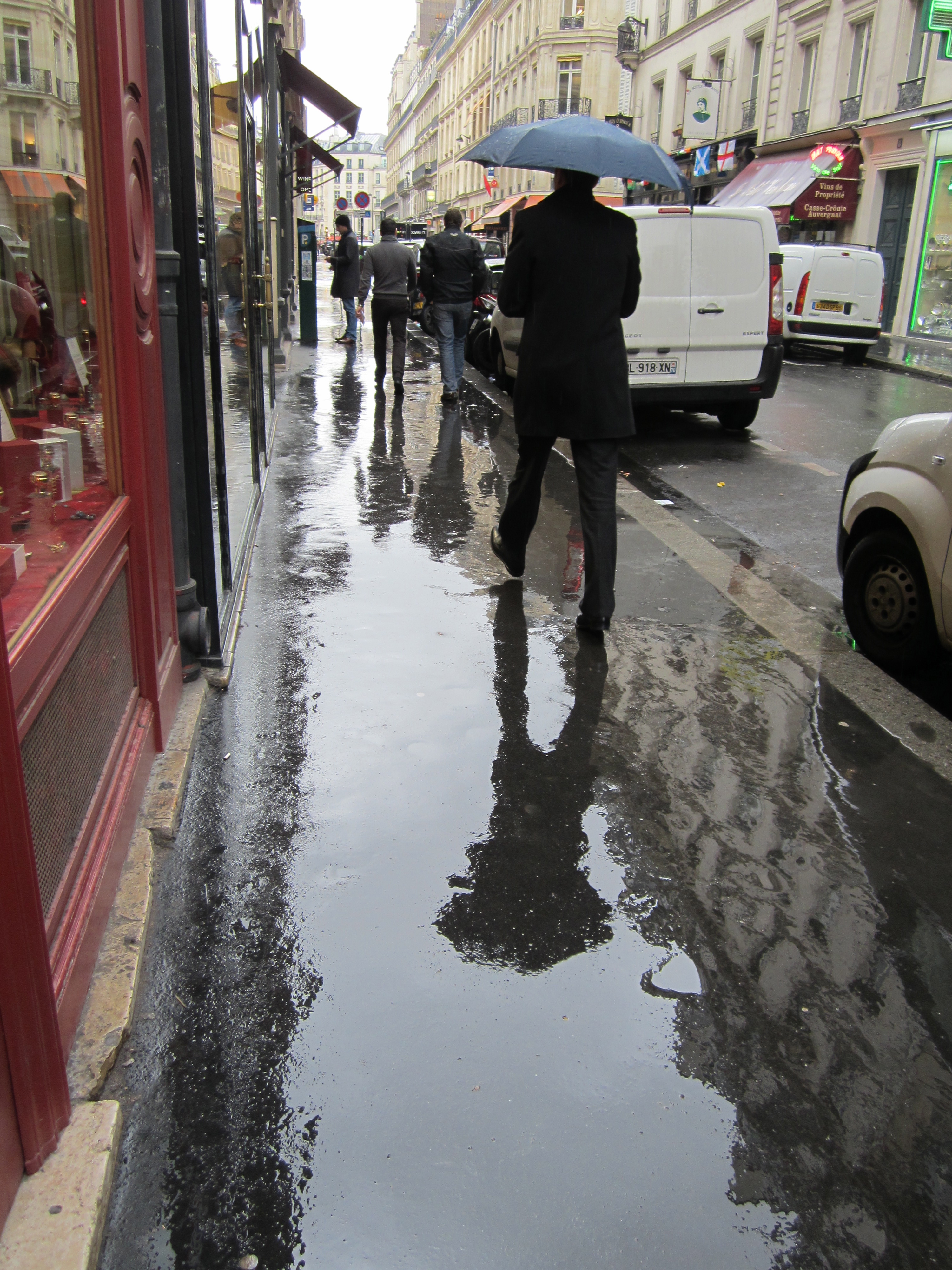
Paris street near Place de Vendome

Paris street near Place de Vendome

By now, Parisians are starting to wonder why I keep taking photos of the sidewalk.

At the corner of avenue Montaigne and avenue Gabriel in the 8th

Monet’s Window in Rouen

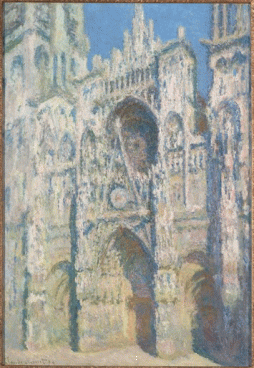
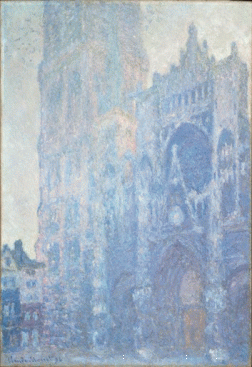
Many of us have seen the series of Monet’s paintings of the Rouen Cathedral at the Musée d’Orsay and have marveled at the difference in the light in each painting. We probably know the story: Monet kept up to 14 different canvases going at a time, and switched from one painting to another as the daylight shifted on the cathedral. It’s almost magical to see the differences.

tmp_8c5be5ac240e4976efde4db54b60e83atmp_d51228784af1404b5600cb06a29e6266

Here’s a great Smarthistory video created by two art historians, Dr. Beth Harris and Dr. Steven Zucker, in which they discuss Monet’s Rouen Cathedral Series. It’s worth a quick five minutes of your time if you’re a fan of Impressionism.

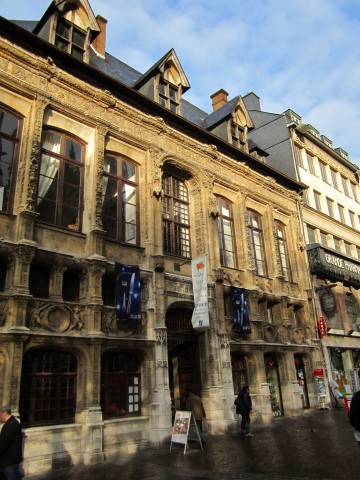
What a thrill it is to be able to travel to Rouen (just an hour’s drive from Paris, past Giverny  on the way to the Normandy shore) and stand in the very place where Monet stood when he created those paintings. He painted some of them en plein air from the Cour d’Albone in front of the cathedral,  but the rest from the second floor of the building across the street, 25 Place de la Cathédrale. Back in Monet’s day it was the Finance Bureau, but today this is the home of the Rouen Seine Valley Tourist Office.

It would be from this makeshift atelier that Monet would create 28 different paintings of the western view of the cathedral between 1892 and 1893.  All of these paintings were supposedly created in two different painting sessions, which might sound suspicious, unless you’ve actually been to Rouen and see for yourself how quickly the weather changes. You can have sun, clouds and rain all within an hour. Monet might have been forced to switch canvases, not because he wanted to, but because he had to. The light would have been changing so quickly, he wouldn’t get much painting done unless he had multiple canvases.

232323232fp43368>nu=4375>256>236>WSNRCG=35-672-6-7327nu0mrj

The Rouen Seine Valley Tourist Office across from the Rouen Cathedral. Although the sun is shining, notice the wet pavement. Sudden shifts in weather conditions are common, just as they were back in Monet’s day.


And if it’s not enough just to stand in Monet’s footsteps, you can also sign up for an art workshop where you get to paint Monet’s cathedral for yourself. I didn’t find out about this until after I’d left Rouen, but I’m dying to try it the next time I go. Check it out here. The workshop includes a tour of the Rouen Musée des Beaux Arts and a Monet-inspired dinner.

If you’re not able to swing a trip to Rouen, you can always catch two of Monet’s Rouen Cathedral paintings in the United States at the National Gallery of Art in Washington, D.C., one at the J. Paul Getty Museum in LA. If you want to take your hand at creating your own little Rouen Cathedral masterpiece, you can download this stencil from NPR’s website.

If you really want to feel like Monet, download 14 copies and have a go at each one a little differently. Cheers!

The Road to Burgundy by Ray Walker

road to burgundy

I just spent the weekend in Burgundy. Well actually, I was on my front porch in Chicago reading The Road to Burgundy by Ray Walker, and it felt like I was there all over again.

This book is Ray’s personal story based on his crazy dream to leave California and go make wine in Burgundy. Ray wasn’t even much of a wine expert – he’d only been tasting wine for a couple of years before he quit his day job – but there was just something about the purity and the story of the wines from Burgundy that seized his imagination and wouldn’t let go.

When I started the book I had serious doubts. Ray seemed a little delusional. I felt sorry for his long-suffering wife Christine. Who goes and makes wine in Burgundy (arguably the epicenter of winemaking in the entire world) without any experience, any clout, or any French language skills?

Well, Ray did. And it makes a great story, whether you know a lot about French wine or not. It takes you to the small villages of the Cote d’Or in Burgundy, and into the hearts and minds of the locals, who couldn’t resist helping Ray achieve his remarkable dream. (Well, there were a few notable exceptions, including a nasty Frenchman named Xavier and the typically frustrating French bureaucracy, but every story needs a villain or two).

This book will make you reexamine what you thought was possible with nothing but a dream and a whole lot of determination. It’s a great lesson for those of us who over-analyze, finding more reasons to keep it safe than to take a leap of faith. Ray’s whole story is summed up by the saying “Leap and the Net Will Appear.”

It’s downright inspiring.

At the very least, this book will make you want to call Air France to book a trip to Burgundy. In the meantime, you’ll have to satisfy yourself with a trip your favorite local wine shop and some photos from my Burgundy wine tour in 2012.

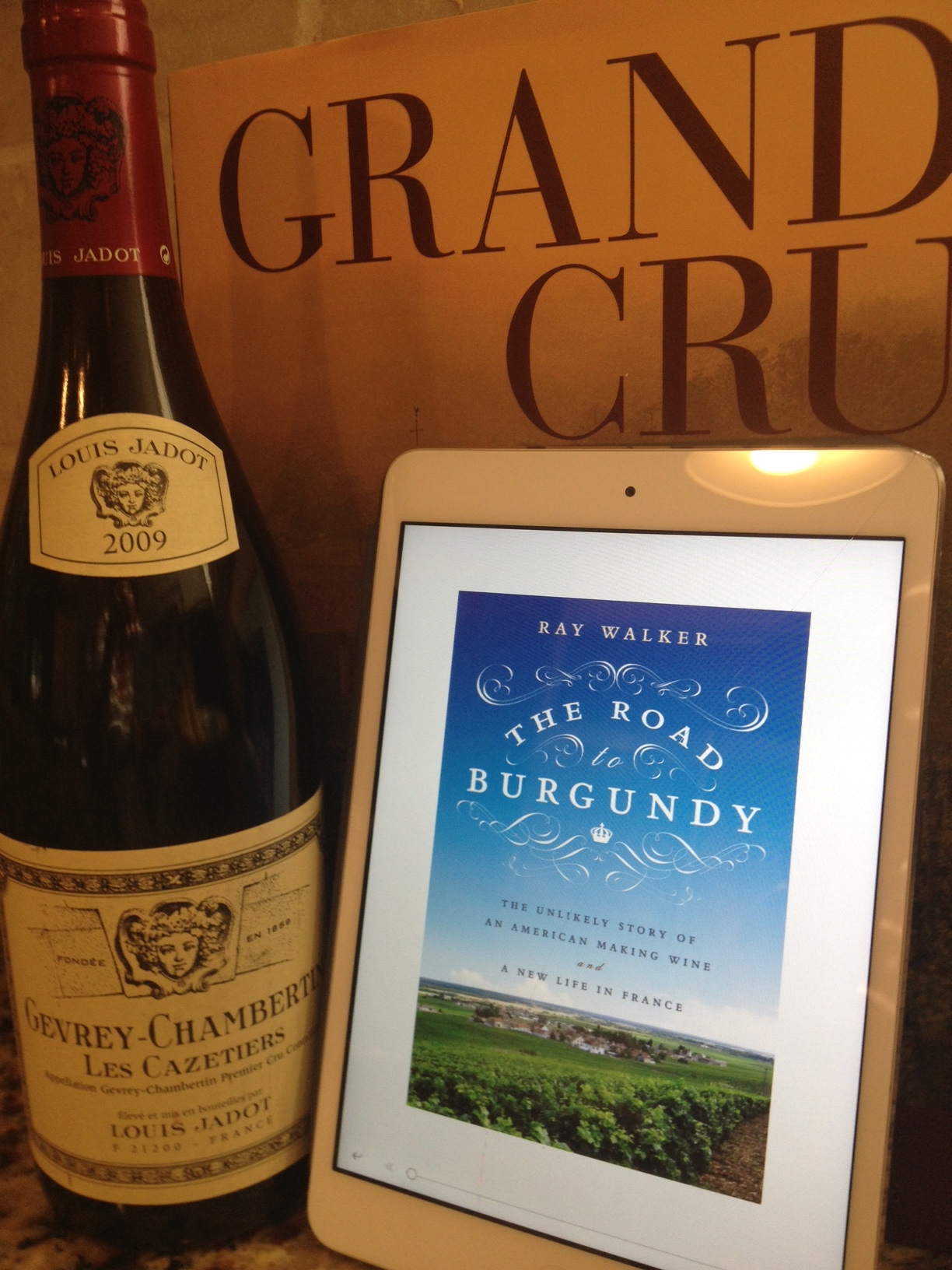
Before you settle down with The Road to Burgundy, stop by your local wine shop for a bottle of a nice Pinot Noir from Burgundy. This one's from Gevrey- Chambertin, not far from the vineyards where Walker's grapes grow.

Before you settle down with The Road to Burgundy, stop by your local wine shop for a bottle of a nice Pinot Noir from Burgundy. This one’s a 2009 from Gevrey-Chambertin, not far from the vineyards where Ray Walker grows his grapes. (Yum.)

As I was reading Ray’s book, I just had to pull out my photos and travel notes from my own trip to Burgundy in September, 2012, which to my great fortune just happened to coincide with harvest season.

I booked a wine tour with Tracy Thurling of Burgundy by Request, who did a great job of customizing our tour to the wines and vineyards we were interested in seeing. My husband loves Chardonnay while I’m more of a fan of Pinot Noir. After spending a day sightseeing and wine tasting in Beune, we were ready to see where the wine was actually made.

We started the morning with the whites in the south (Puligny-Montrachet) and then worked our way north to the reds of the Cote de Nuits (Moret-Saint-Denis) and eventually back to our hotel in Dijon. It was a lot to accomplish (a/k/a drink) in one day. Ideally, I would recommend you schedule one full day for the reds and another full day for the whites, leaving yourself time for a nice little nap before dinner. Because, after all, wine tours are really just legitimized day drinking with a designated driver.

The best part about Burgundy is getting out into the villages and vineyards, where the locals are as homespun and friendly as they appear in Ray’s book. Even on harvest day, we were welcomed into the fields to take photos and ask questions. It’s so different than the big corporate feel you get in Napa Valley in California.

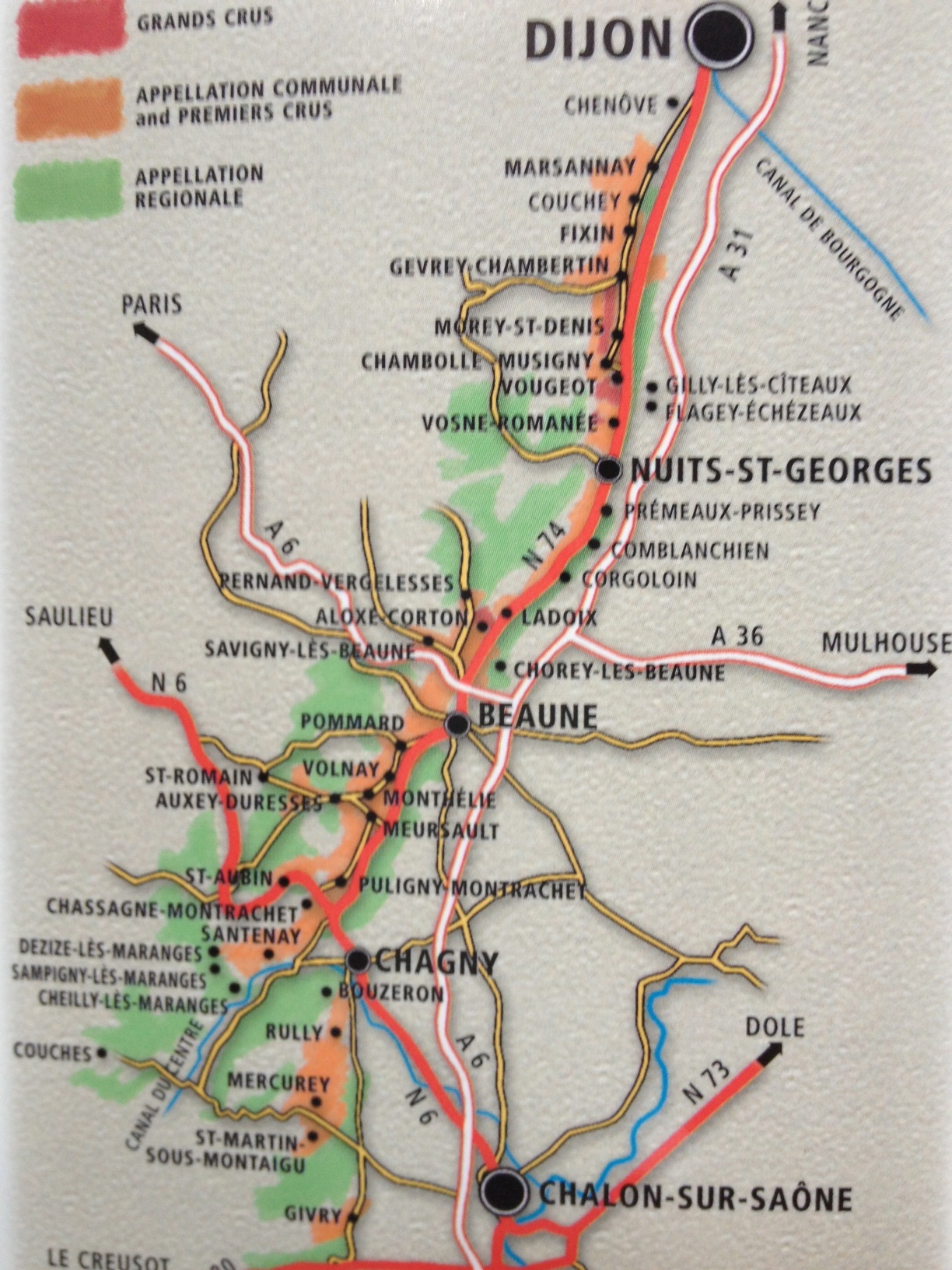
A map of Cote de Beaune and Cote de Nuits from Dijon to the north and St. Aubin to the south.

A wine map of Burgundy. From Dijon in the north, down through Nuits-St.-Georges and Beaune in the middle, toward Chalon-sur-Saone in the south. These roads are small and narrow, so to get from Ray’s first winery in St. Aubin to his grapes up in Gevrey-Chambertin and Moret-St-Denis would have been quite a schlepp.

IMG_4723

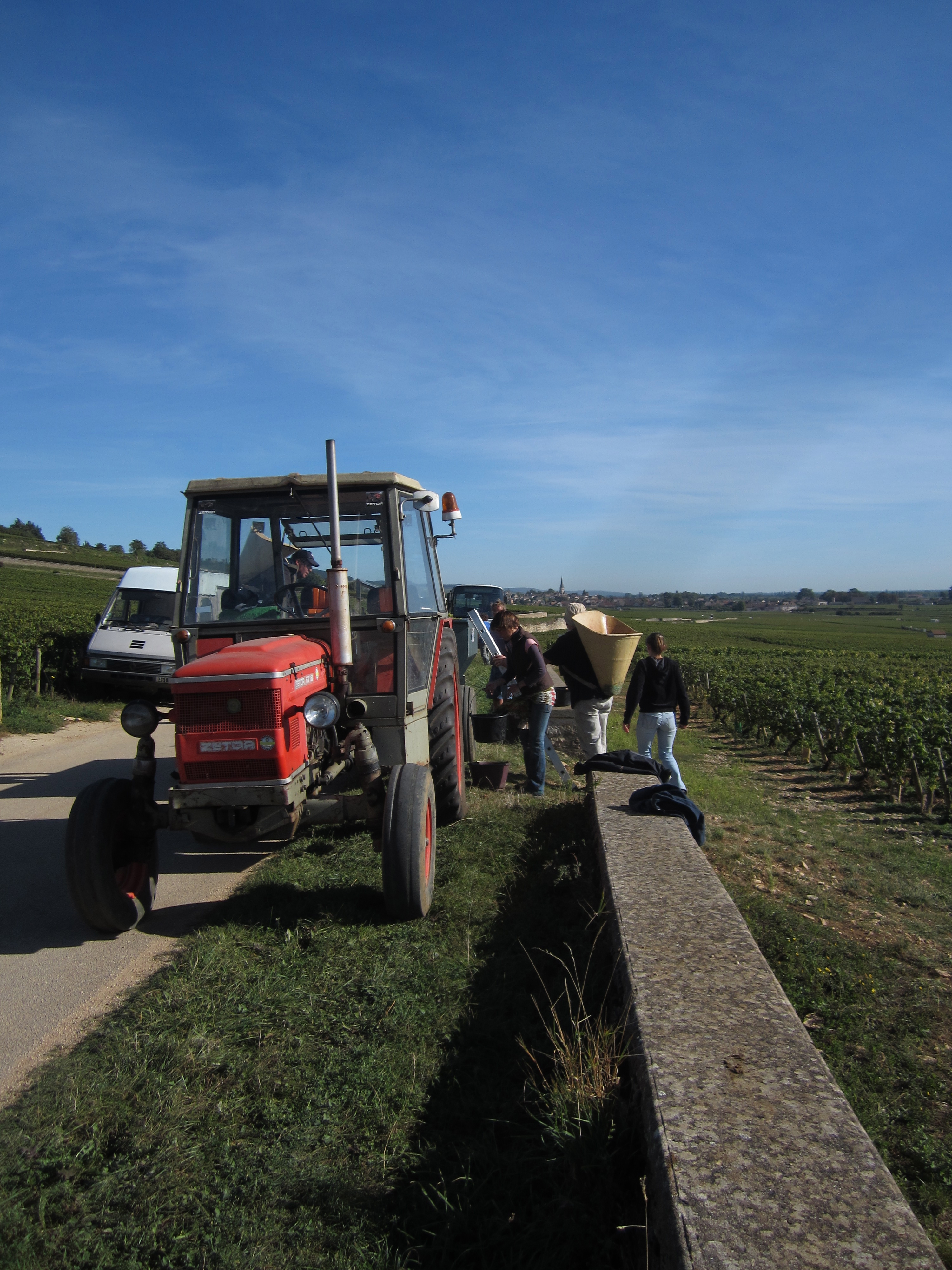
Harvest day September, 2012 in Puligny-Montrachet. White rental vans and red tractors crowd the tiny roads of Burgundy in September. You can feel the buzz of excitement in the air. These are world-class grapes.

SAMSUNG CSC

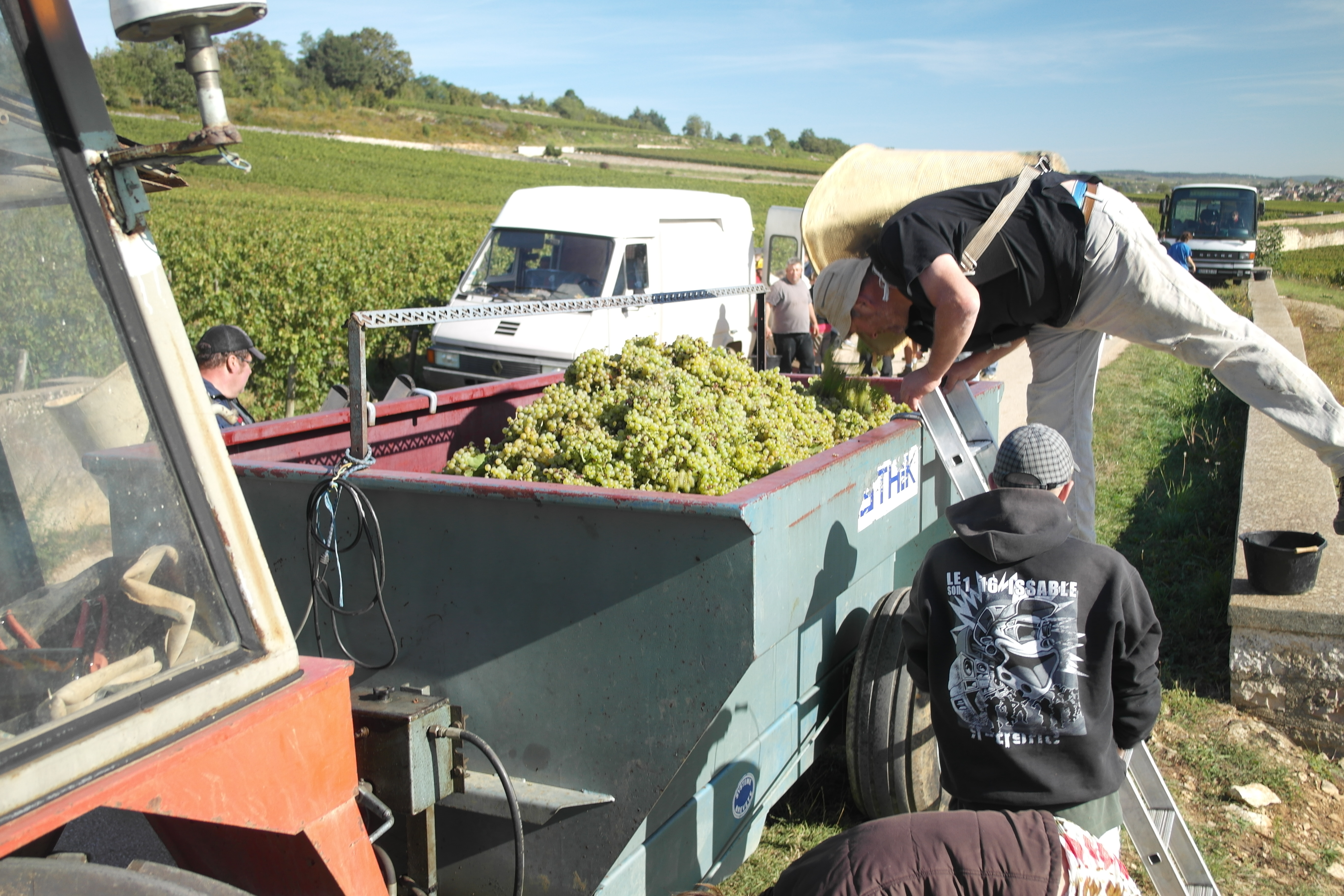
Here’s a porteur with the big cone-shaped backpack they use to collect the newly picked grapes. He had just leaned over, and with a somewhat graceful one-legged kick-out, dumped his grapes into the truck.

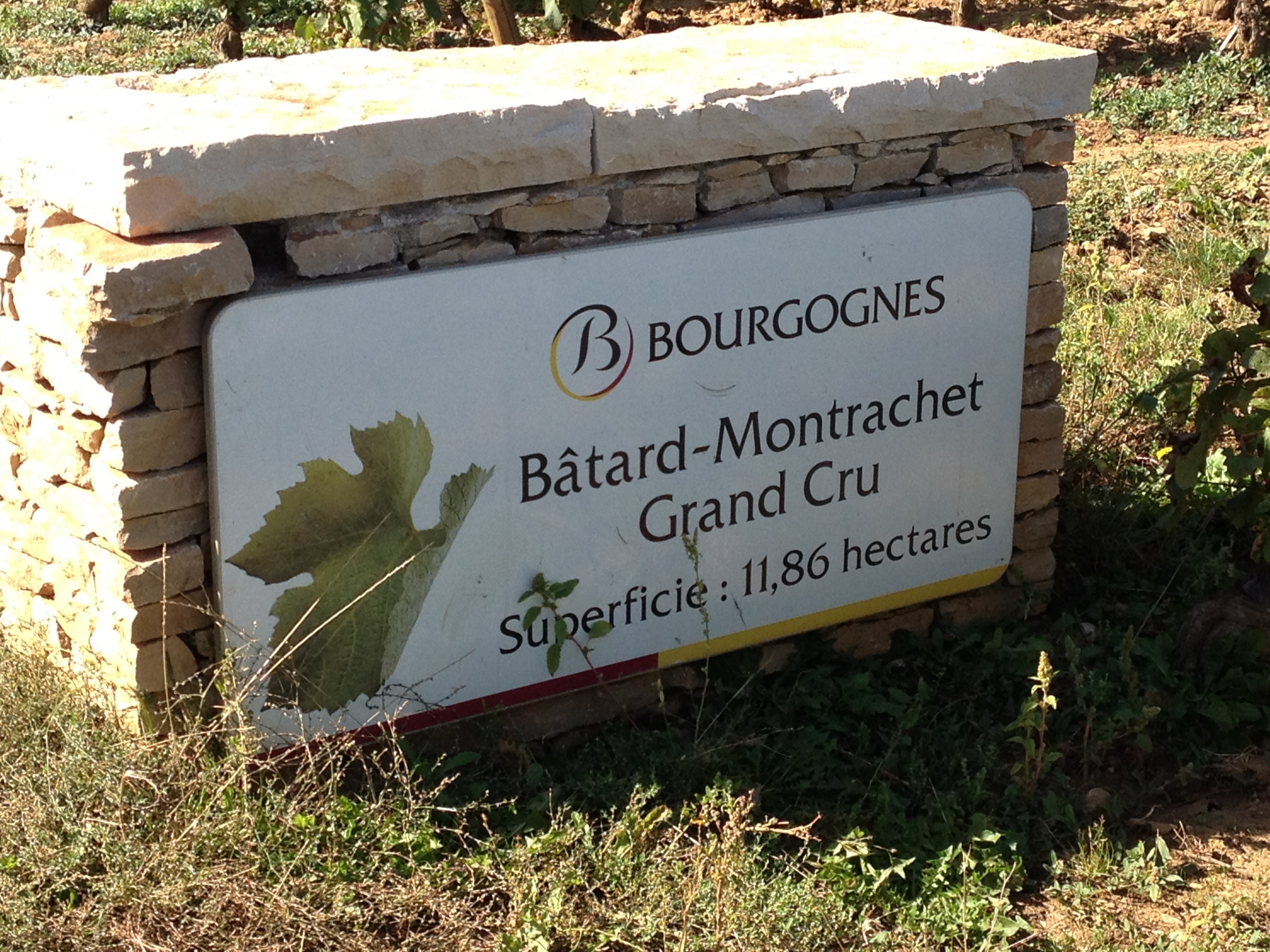
The vineyard of the legendary Batard-Montrachet.

The vineyard of the legendary Batard-Montrachet (literally the Bastard of Montrachet, who under French inheritance laws was entitled to a share of his father’s property).

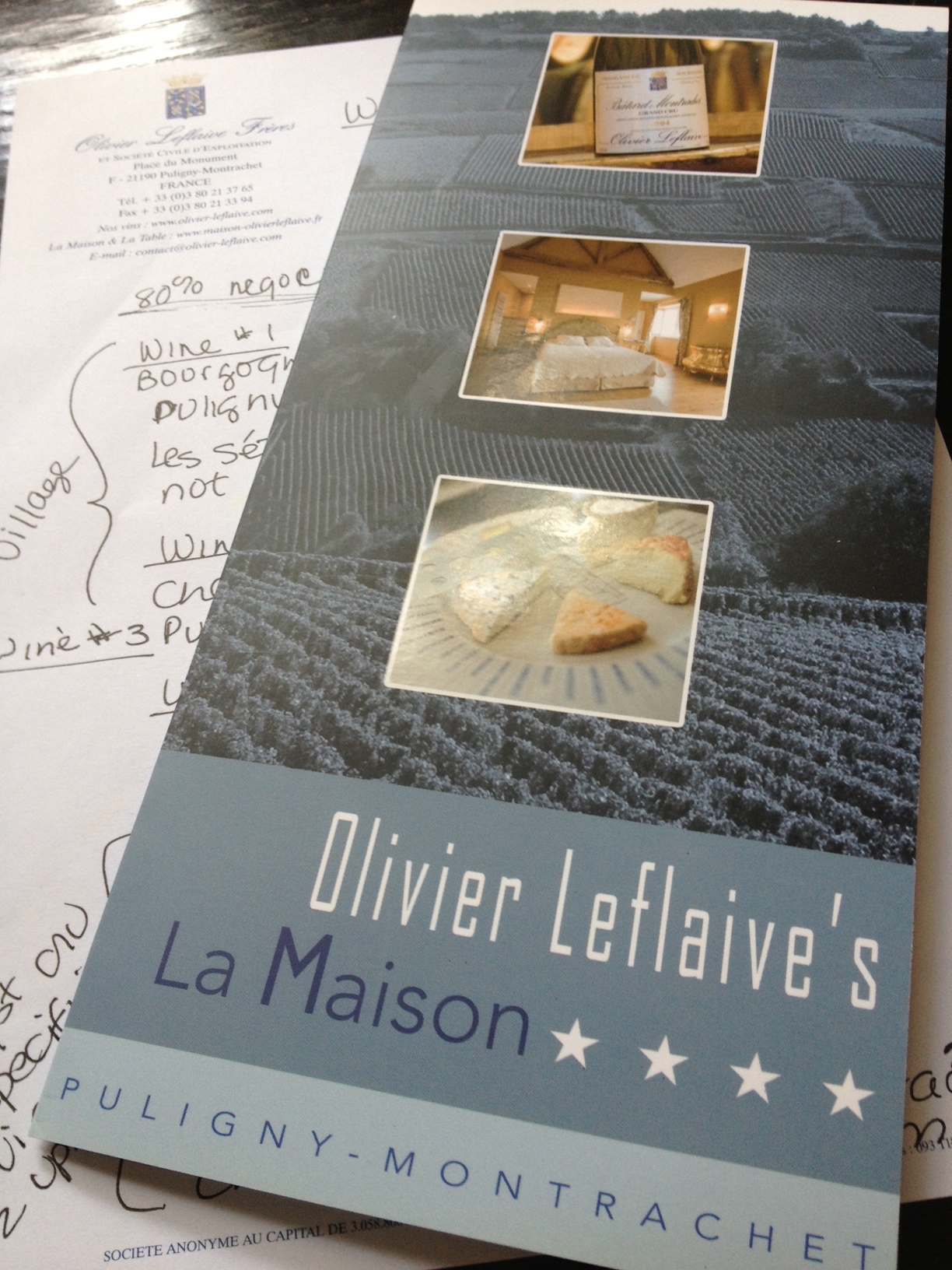
So what are the odds that I would have a wine tasting at Olivier Leflaive's in Puligny-Montrachet, the same place where Ray and his wife first stayed the winter of 2009?

So what are the odds that we had a wine tasting at Maison Olivier Leflaive’s in Puligny-Montrachet, the same place where Ray and his wife first stayed in Burgundy in 2010 (Chapter 10)? We even got to meet Olivier as he passed through the tasting room to say hello. Olivier was the first of many very generous locals who agreed to help Ray with his crazy quest.

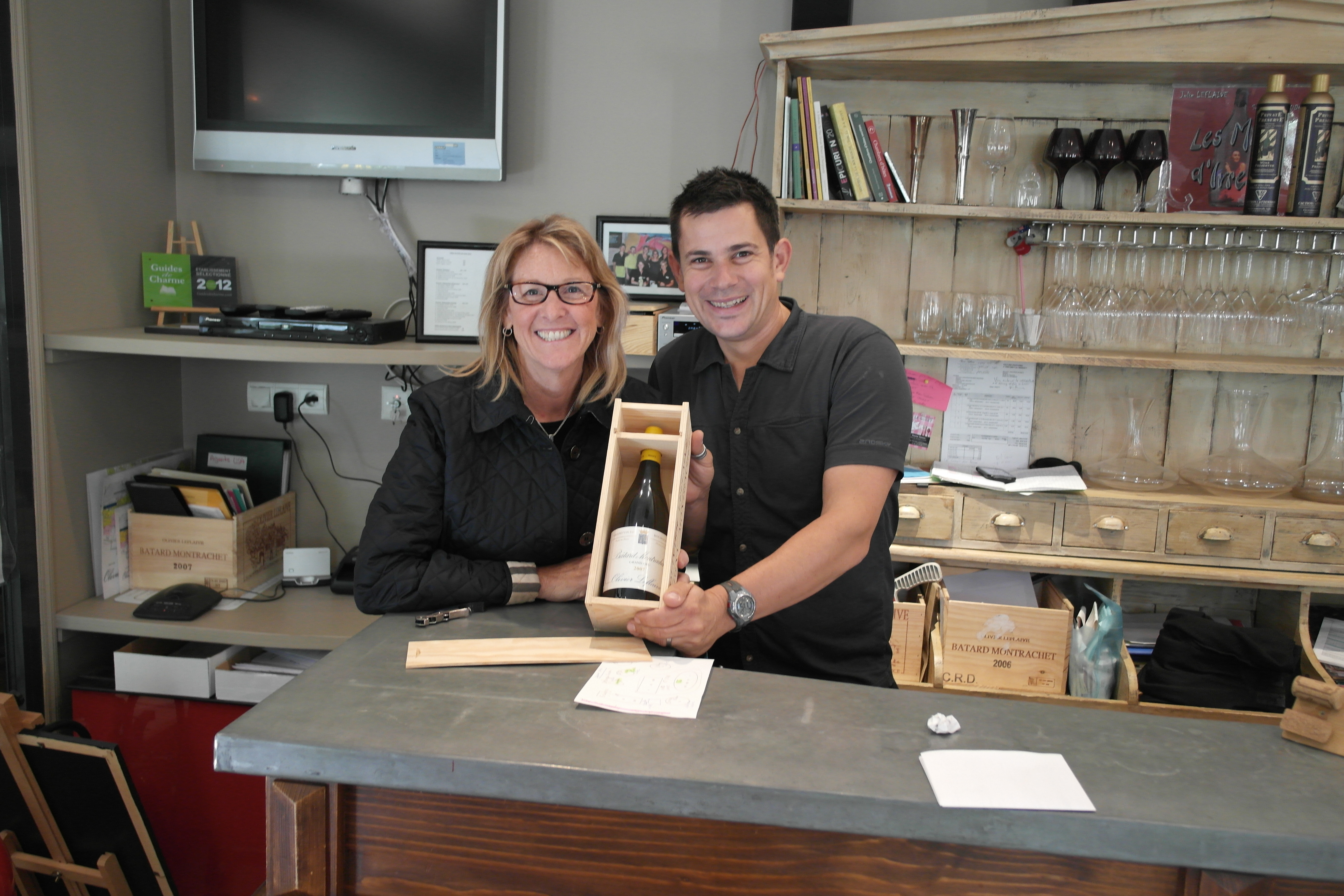
Me in the wine tasting room of Olivier Leflaive's grinning from ear to ear over the 2007 Grand Cru Batard Montrachet I'd just tasted.

In the wine tasting room of Olivier Leflaive’s. I’m grinning from ear to ear over the Grand Cru Batard Montrachet we’d just tasted. Too bad this isn’t Guilliame, the nice Brazillian fellow that Ray become pals with in the book – it sounds like he was gone by the time we got there.

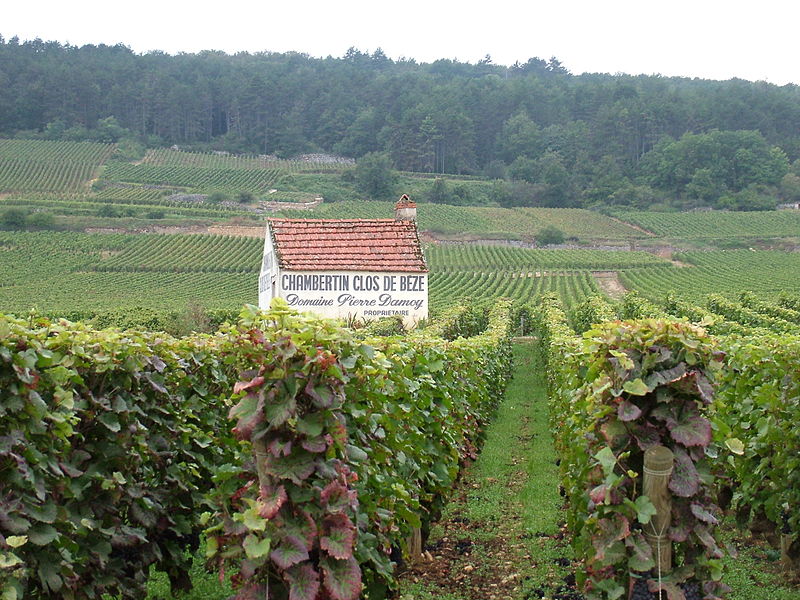
And if you think Burgundy couldn't get any prettier, this little out building in Chambertin-Clos de Beze.

And if you think Burgundy couldn’t get any prettier, this iconic little out building in Chambertin-Clos de Beze might put you over the top.

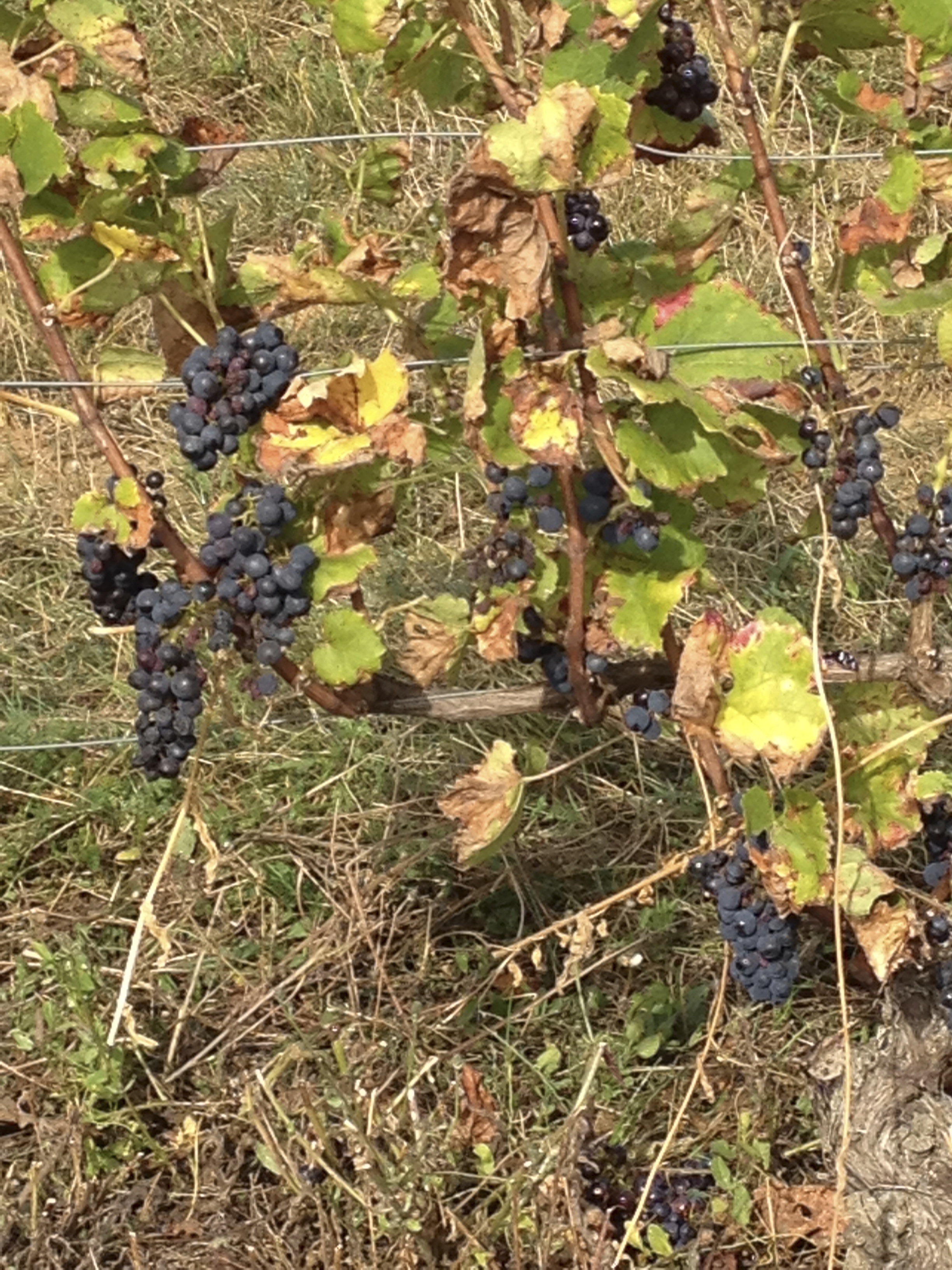
Pinot Noir grapes in the Cote de Nuits

Pinot Noir grapes in the Cote de Nuits just days away from harvesting.

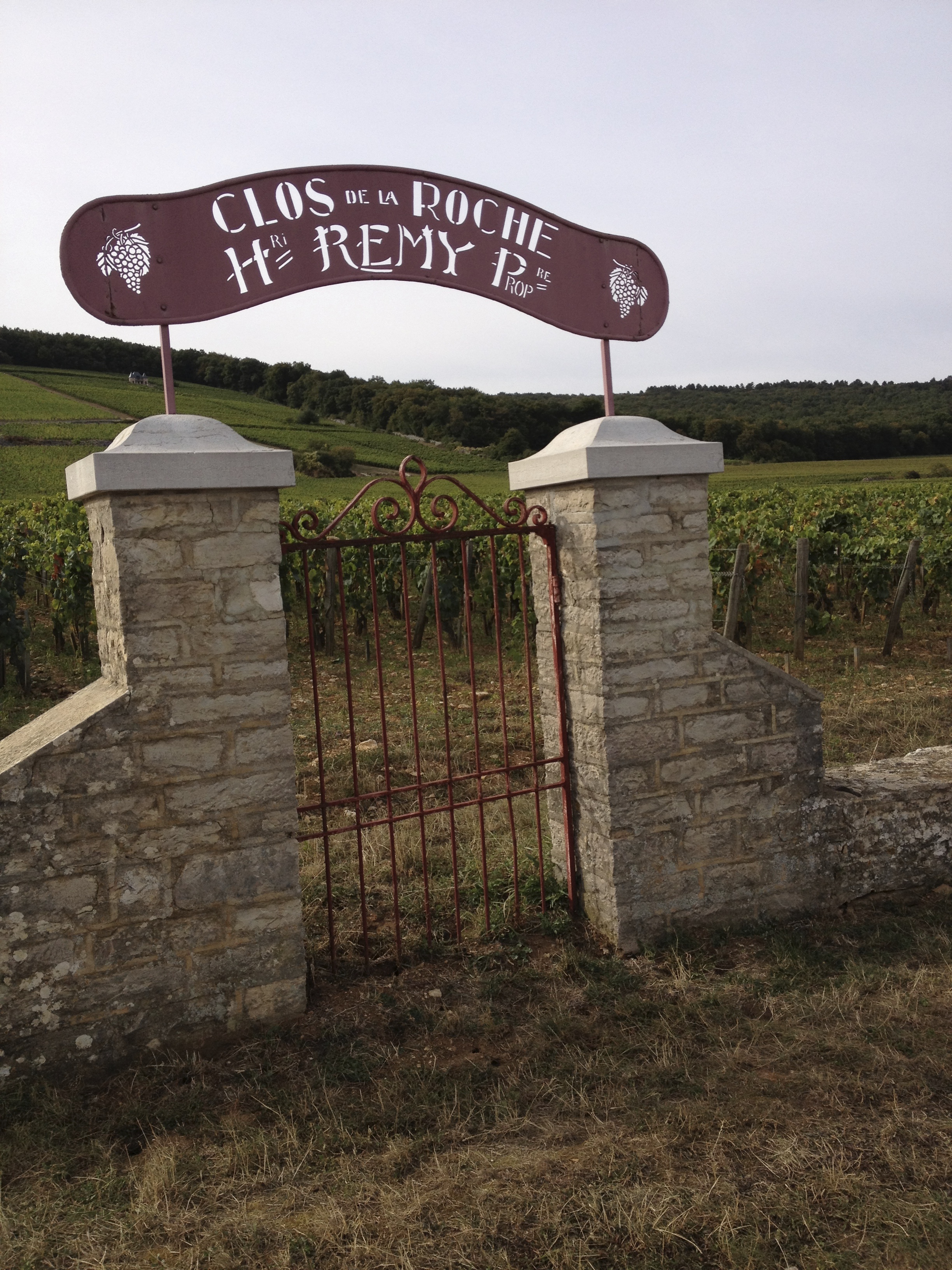
Clos de la Roche Grand Cru vineyard just north of Morey-Saint-Denis in Cote de Nuits, right next to Ray Walker's Les Chaffots.

We got to see the Clos de la Roche Grand Cru vineyard just north of Morey-Saint-Denis in Cote de Nuits, right next to Ray Walker’s grapes in Les Chaffots.

IMG_3613

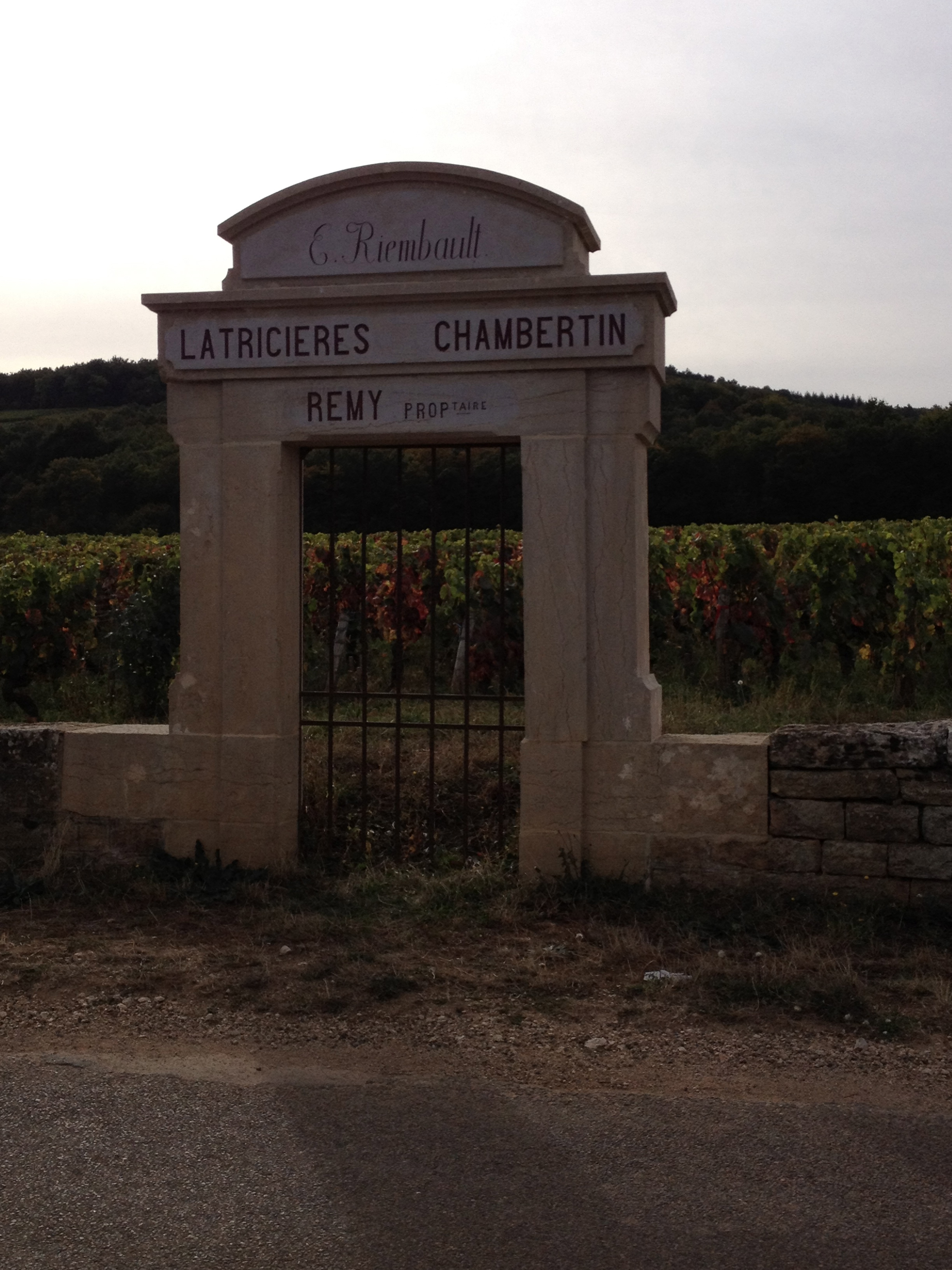
As the day was fading, we stopped at the Latricieres-Chambertin Grand Cru vineyard in Cote de Nuits. We got to taste a 2007 from Domain Rémy in Moret-Saint-Denis. This vineyard is awfully darn close to more of Ray’s grapes at Charmes-Chambertin.

If you really want to see some great photos of Ray Walker’s wines at Maison Ilena, go to their website and see for yourself. Their photos are way better than mine. In fact, they look so good they’re making me thirsty for a good French pinot, but then so does The Road to Burgundy. Worse things could happen, that’s for sure.

The Road to Burgundy by Ray Walker: Highly Recommended

I received nothing of consideration in exchange for this review. I just wrote about it because I loved it and I think you will too. If you’d like to read a post about another French wine book tour, check out my October, 2012 post on Wine and War by Don and Petie Kladstrup. Cheers!

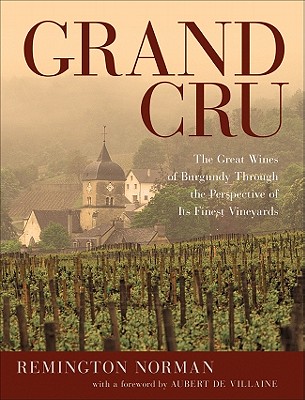
Also recommended for the more serious wine geek: Grand Cru by Remington Norman.

Also recommended for the more serious Burgundy wine geek: Grand Cru by Remington Norman.

Little Women in Dinan, France

little women abroadLittle Women Abroad, edited by Daniel Shealy (University of Georgia Press, 2008), is a wonderful account of the Alcott sisters’ trip to Europe together in 1870. Most readers will be interested in the travels and insights of the most famous sister, Louisa May Alcott, but for an artist, the real thrill is to see France through her little sister Abigail May’s eyes.

Most of us know Amy, the precocious little sister in Little Women who dreamed of becoming an artist. Few of us know much about Louisa’s real little sister Abigail May Alcott Nieriker (“May”), who did indeed grow up to be an accomplished artist. Unfortunately, May’s story ends tragically. She married at the age of 38, only to die one year later after giving birth to her first child.

May Alcott began to study art in 1856 when she was just sixteen years old. She studied with Stephen Salisbury Tuckerman, William Rimmer and finally William Morris Hunt, all of whom offered single-sex studio classes for Boston women. Hunt had studied at the Ecole des Beaux Arts in Paris and no doubt extolled the virtues of study abroad. May’s fellow students such as Elizabeth Boott, Sarah Wyman Whitman and Elizabeth Bartol were all making plans to study in France by the late 1860s and early 1870s.

After Louisa May Alcott achieved financial success with Little Women in 1868, the two sisters planned a trip to Europe with their friend Alice Bartlett. The women traveled by the French steamship Lafayette and arrived at the western port of Brest in Brittany in April, 1870.

It was May’s first trip to Europe and she was completely enchanted with France. Their first extended stay was in Dinan, a lovely medieval town in the middle of Brittany. May sent home sketches of a variety of scenes throughout Dinan, many of which are nicely reproduced in Little Women Abroad. It appears that all of May’s sketches were in pencil or pen and ink. In one of her letters, she said she wished she had been trained how to paint en plein air so she could capture the beautiful colors. Nevertheless, her sketches are sufficient to be able to identify the buildings and ruins which still stand today.

Here is a Google Map of the Alcott Sisters Sites in Dinan, in case you’re lucky enough to venture there yourself someday. Dinan is a beautiful little city which makes for a lovely day trip from a larger home base in Brittany such as St. Malo. Dinan has 13th century castles, gothic churches, bell towers, narrow winding streets and beautiful timbered architecture.

Until you can get there yourself, here is a photo tour of the Dinan sites in Little Women Abroad, starting with the building that once housed the pension in which the Alcotts stayed. It was just outside the fortified walls of the town, next to the Porte Saint Louis and just down the street from the Dinan Castle.

IMG_4571

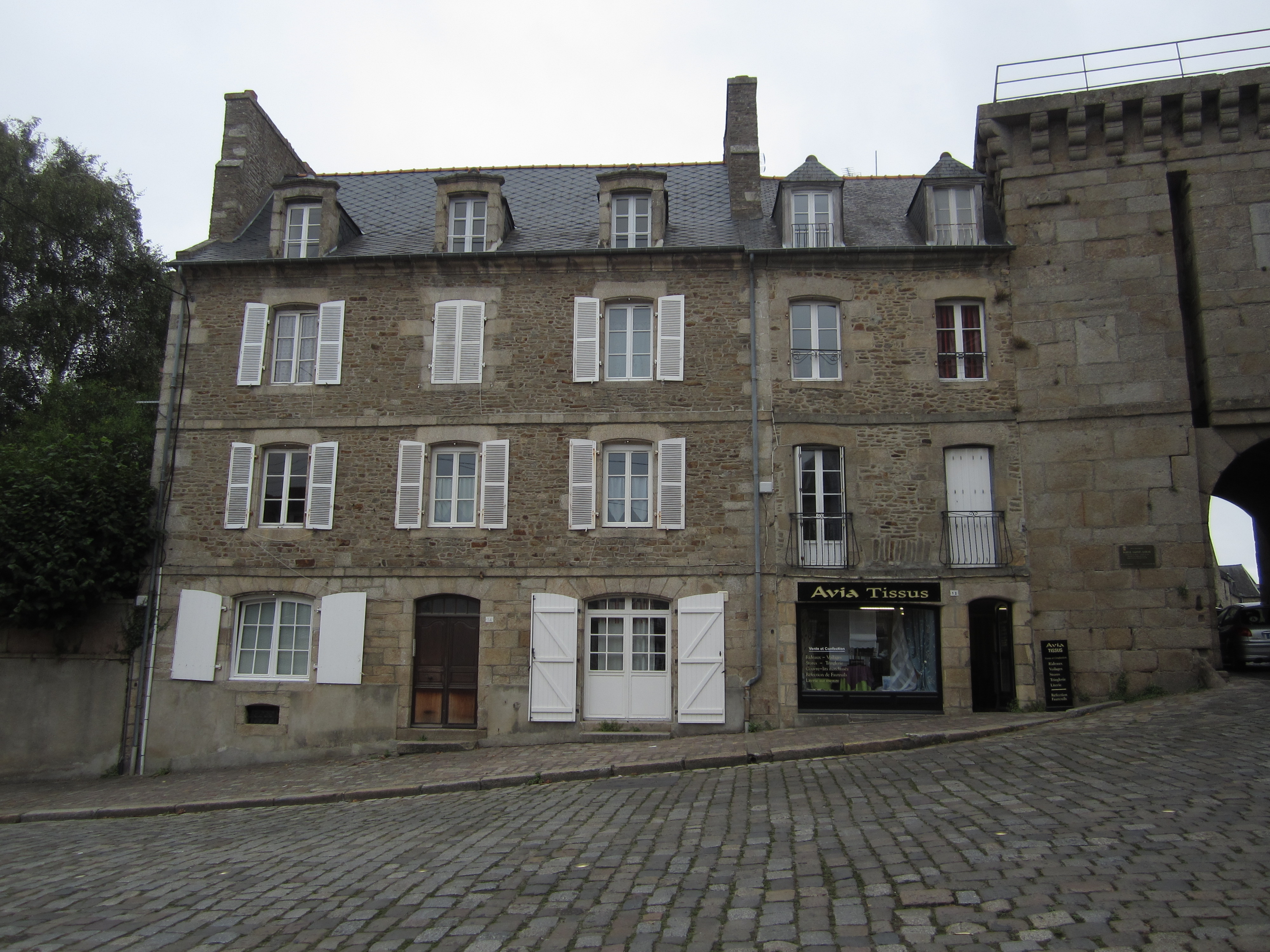
14 Place Saint Louis, Dinan, France, the location of Madame Coste’s pension where the Alcott sisters stayed from April to June, 1870.  As Louisa May Alcott described it in a letter dated April 24, 1870: “We are living, en pension, with a nice old lady just on the walls of the town with Anne of Brittany’s round tower on the one hand, the Porte of St. Louis on the other, and a lovely promenade made in the old moat just before the door.”

IMG_4570

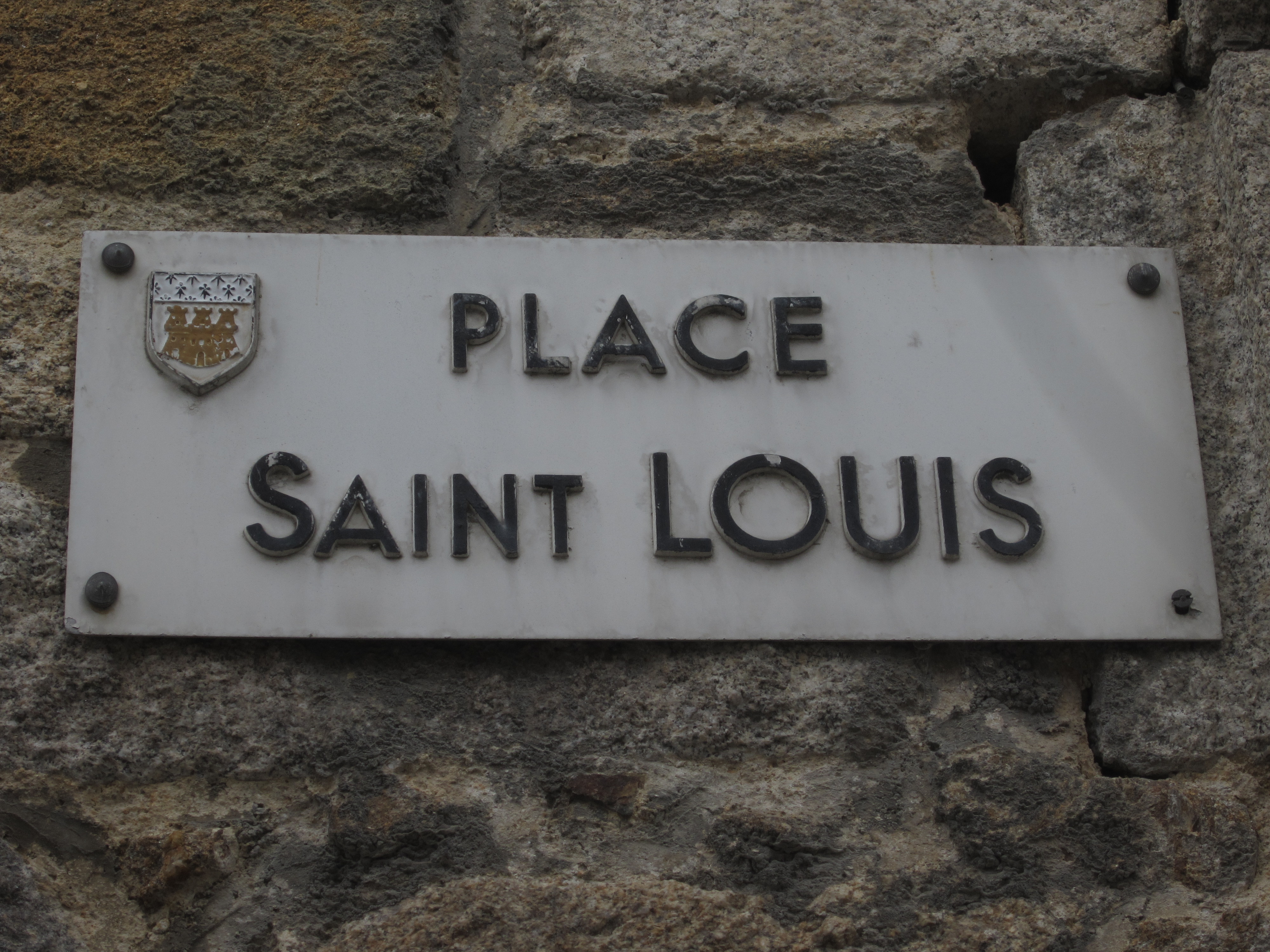
The plaque in the wall at Place Saint Louis, Dinan, France

The Porte Saint-Louis, located next to the Pension de Madame Costes

The Porte Saint-Louis, located next to the Pension de Madame Costes

The Dinan Castle, just down the street from Place Saint Louis, which May Alcott called Anne of Brittany's Round Tower. Built in the 1300s.

The Dinan Castle (which Louisa May called Anne of Brittany’s Round Tower), located just down the road from Place Saint Louis. Built in the 1300s.

IMG_4583

The view of Dinan from atop the Dinan Castle. As May said in an April, 1870 letter to her mother: “From the top of her [Queen Anne’s] tower is the most superb view all over the country, and I am expecting great things in going to see it.”

May Alcott spent her time sketching throughout the medieval village, so full of “enchanting old ruins, picturesque towers and churches, and crumbling fortifications, that it almost seems like a dream.” There were so many good scenes for sketching that she didn’t think she could do them justice. As May said in a letter home:

I long to make pictures on every hand, but get extremely discouraged when I try, as it needs all the surroundings to make the scene complete.

May recommended Dinan to her fellow artists in a guidebook she would later write:

Here an artist can rest with delight for many months, as everything from the adjacent country, which is thought to be the most beautiful in Brittany, to the ancient gateways and clocktower in a street so narrow that the gabled roofs meet overhead, is sufficiently attractive to keep the brush constantly busy.

May visited or sketched nearly everything in town, from the Basilica of St. Saveur:

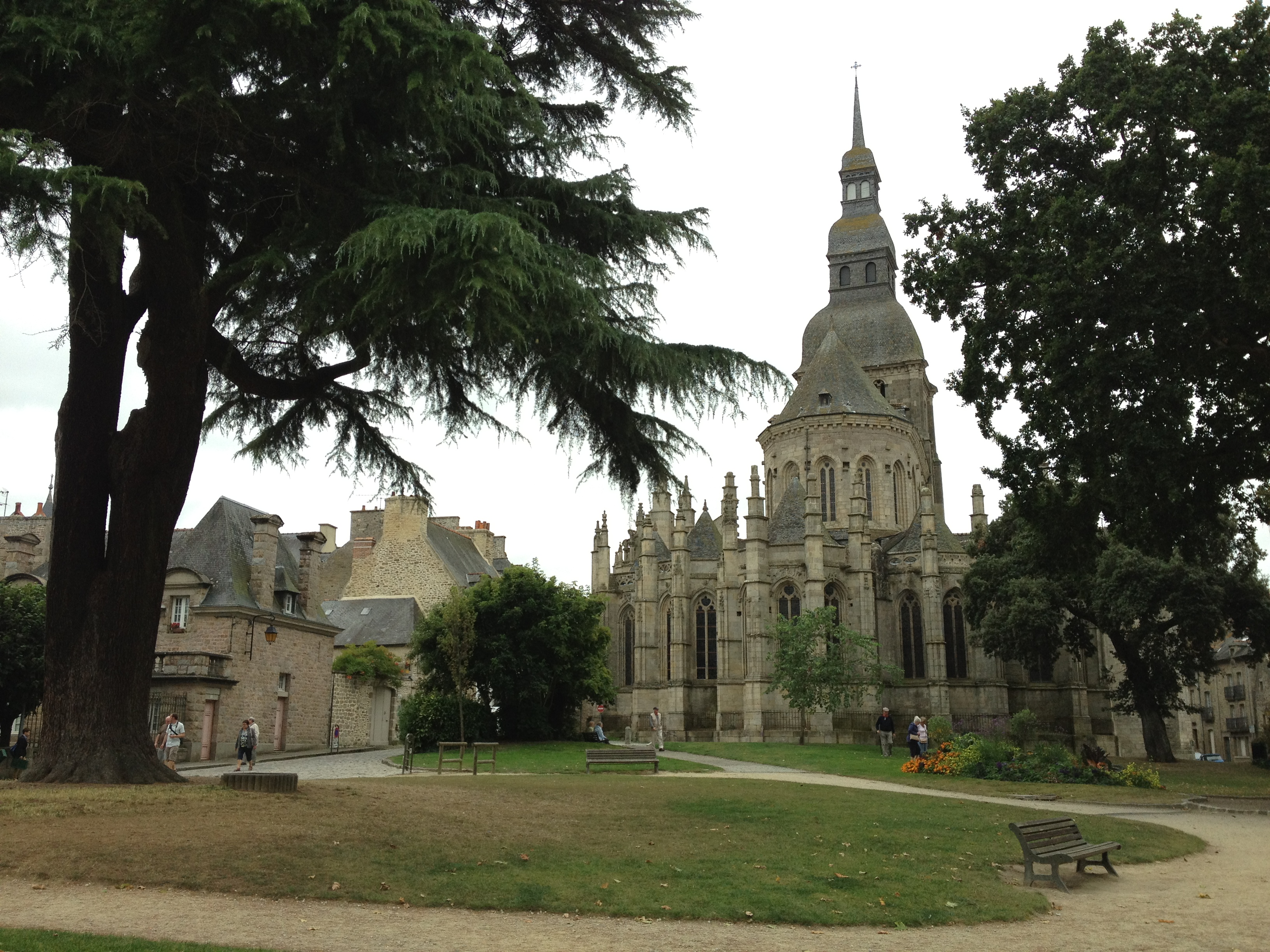
The gardens behind Basillica St-Saveur in Dinan, France

“Yesterday we went to some lovely gardens surrounding the most beautiful gothic church.” – May Alcott,  letter dated April 20, 1870 . This is a photograph of the small park and gardens that stand behind the Basilica St-Saveur today. Originally built in the 11th and 12th centuries, a Gothic chapel was added in the 15th century.

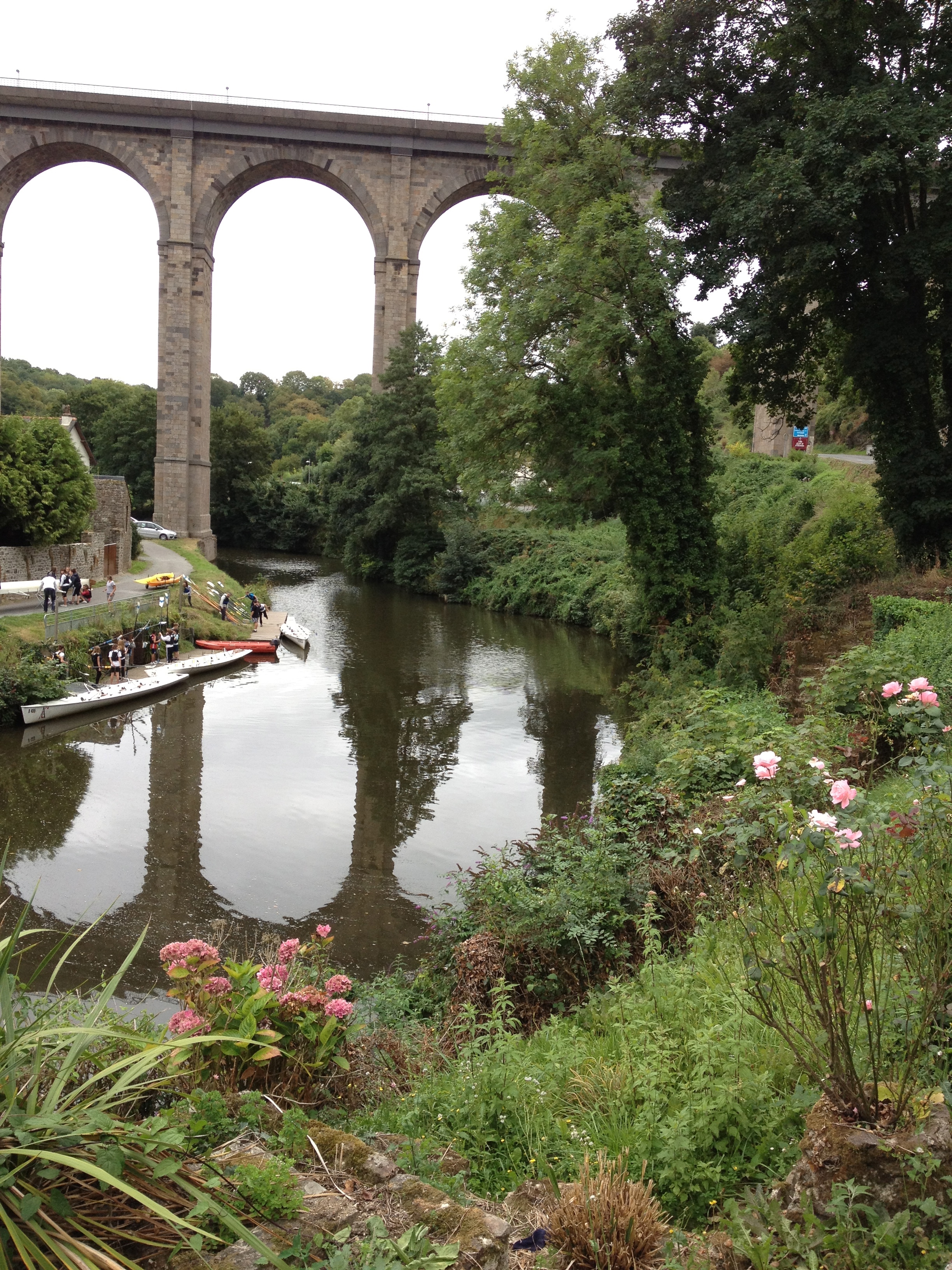
to the Viaduct of Dinan over the River Rance:

"The grand viaduct which, according to Murray [the Alcott's 1870 guidebook to France] is about the finest in the world, fairly took away my breath." -- May Alcott in a letter to Anna Alcott dated May 30, 1870

In a letter to Anna Alcott dated May 30, 1870, May Alcott said: “The grand viaduct which, according to Murray [an 1870 guidebook] is about the finest in the world, fairly took away my breath.”

IMG_3340

The grand viaduct across the River Rance in Dinan is still breathtaking. The day I was there the local rowing club was preparing for practice on the other side of the river.

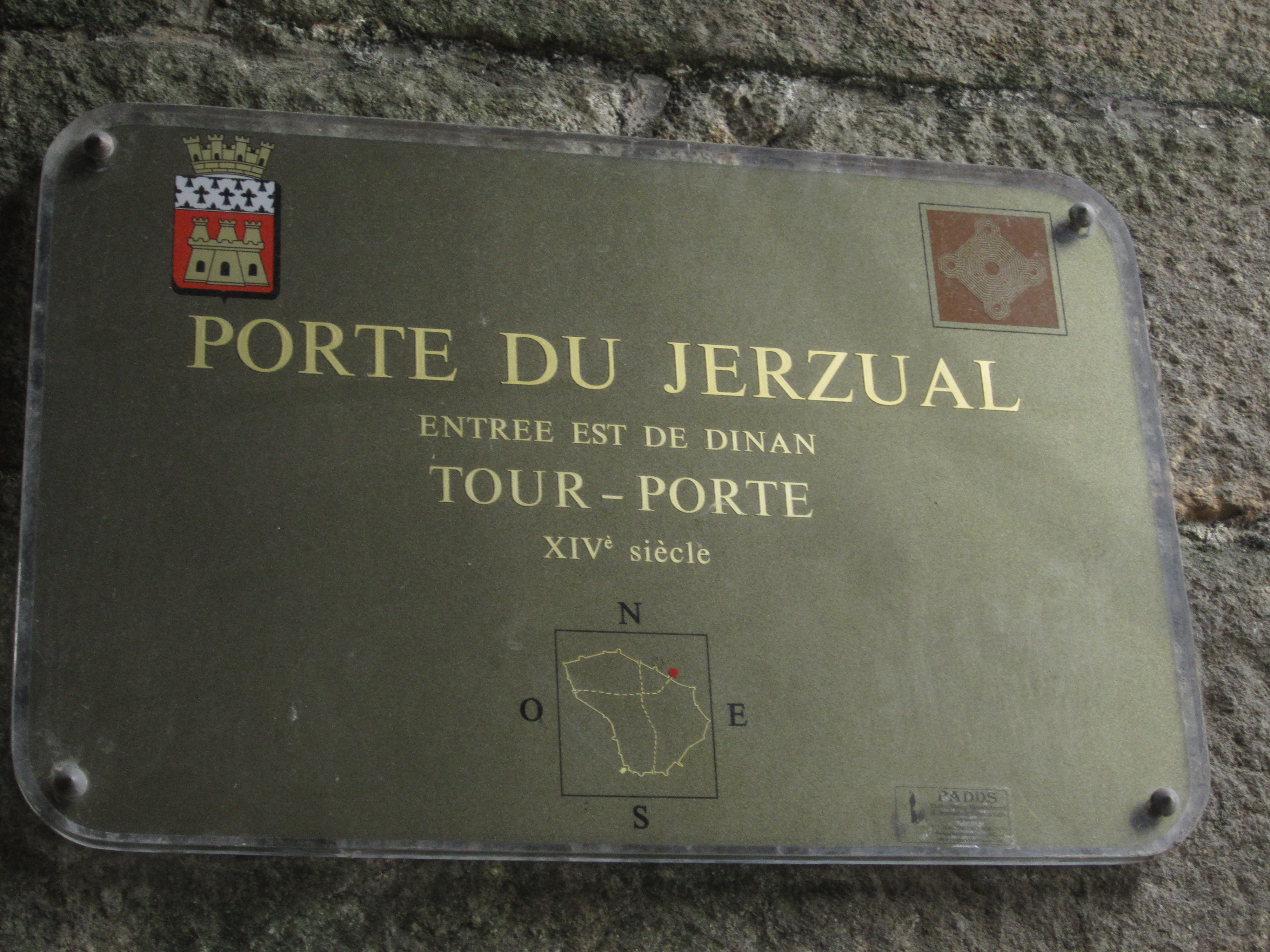
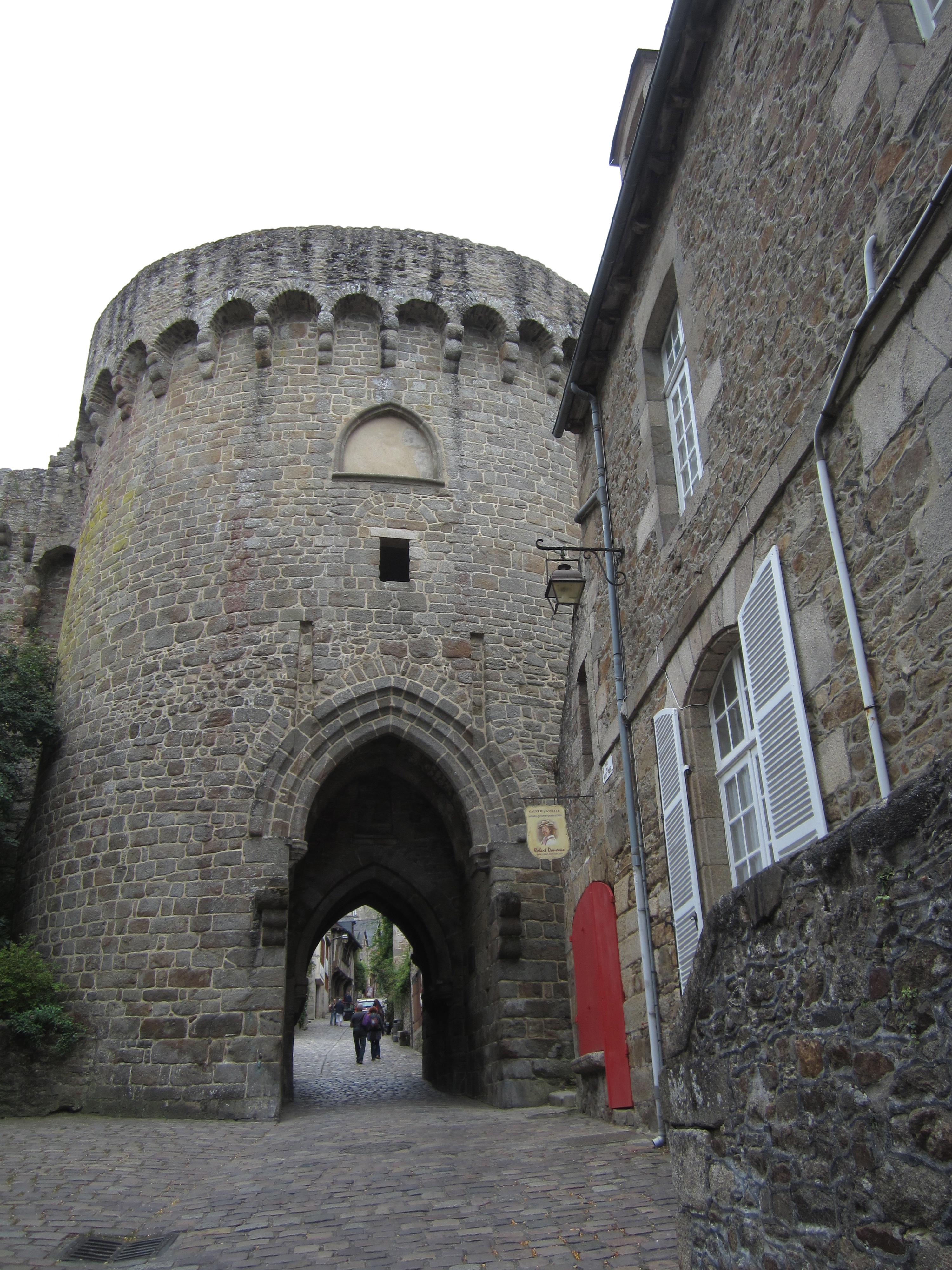
May sketched the Porte of Jerzual and the steep little rue de Jerzual, which winds down from the upper village to the river, and is lined with timbered old shops that lean in over the cobblestoned street:

IMG_4614

Porte du Jerzual, Dinan, France

Porte du Jerzual, Dinan, France

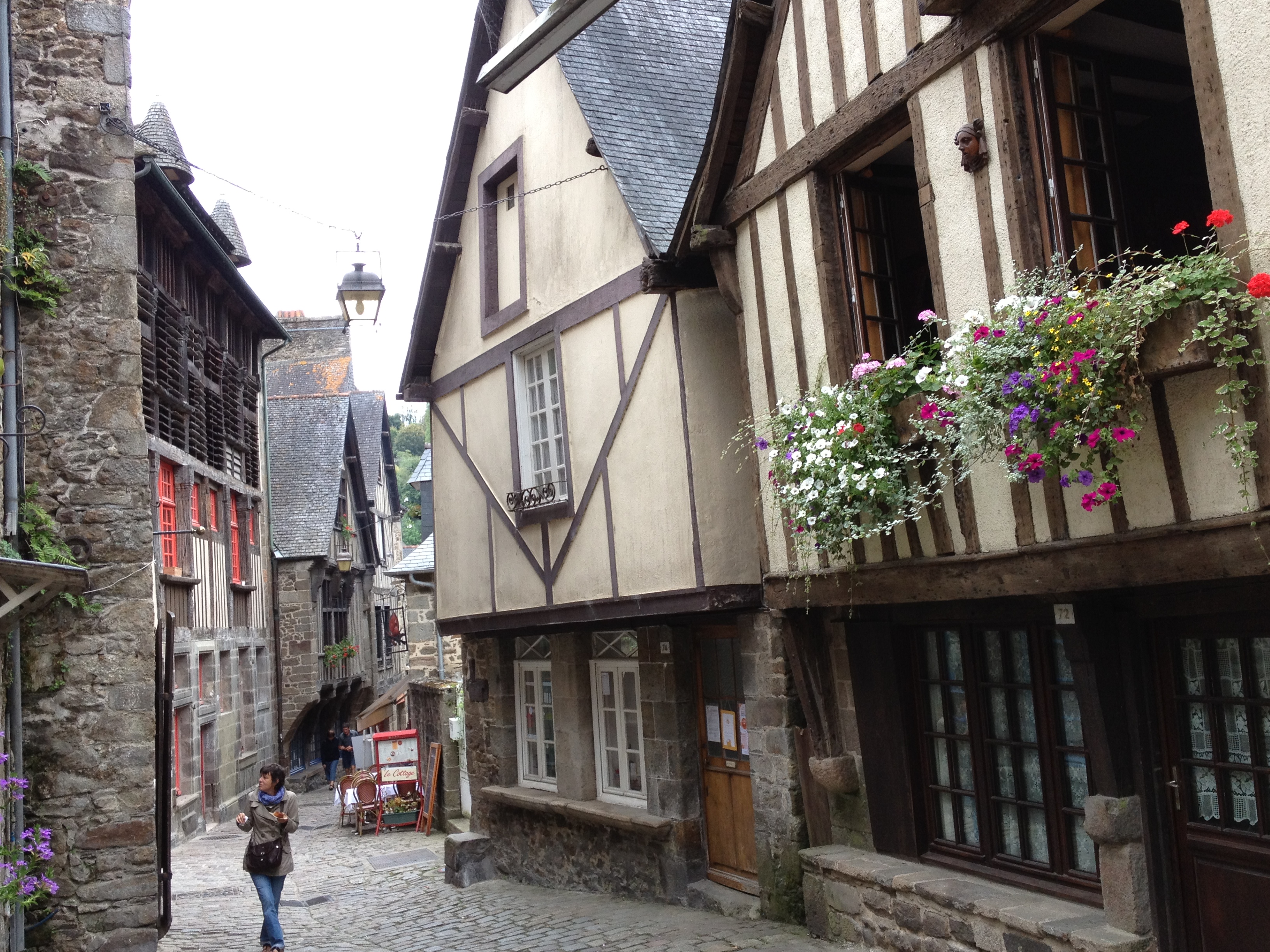
A scene from rue de Jerzual in Dinan. As May said in a letter home dated April 29, 1870: "Yesterday we down the oldest street in town, (where, in spite of the steepness, Queen Ann's carriage is said to have trundled over it), to the river which runs at the foot. The houses overhang the street in funny little gabled stories almost shutting out all light from above, and it being very narrow & extremely steep, you can see it was a sensation to have explored it."

A scene from rue de Jerzual in Dinan. As May said in a letter home dated April 29, 1870: “Yesterday we went down the oldest street in town, (where, in spite of the steepness, Queen Ann’s carriage is said to have trundled over it), to the river which runs at the foot. The houses overhang the street in funny little gabled stories almost shutting out all light from above, and it being very narrow & extremely steep, you can see it was a sensation to have explored it.”

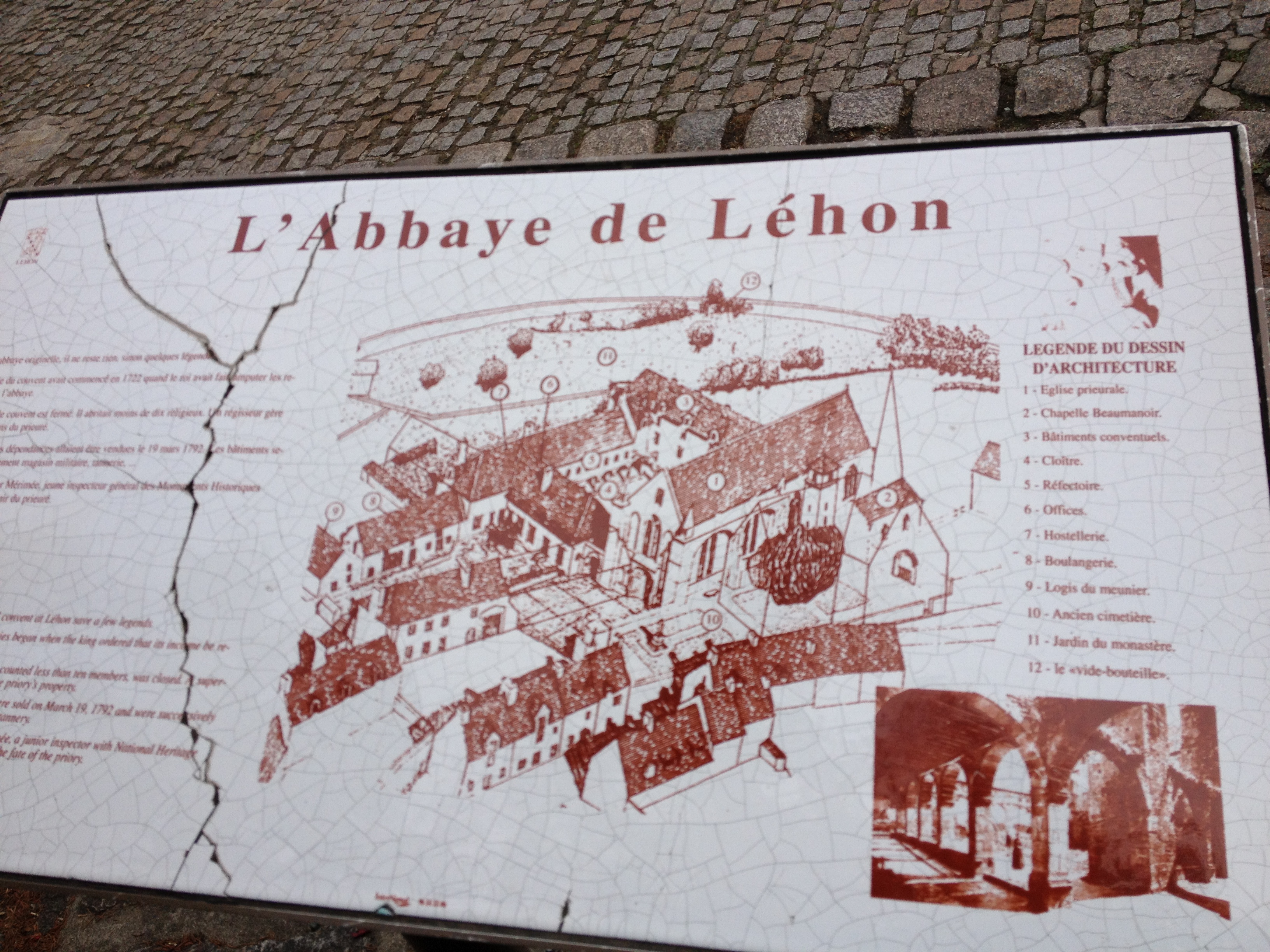
In their letters home, the Alcott sisters both mention their visit to the neighboring village of Léhon, which is just a mile or so down in the valley from Dinan along Route D12. Louisa May wrote home after going to a fair in the village and said (in a letter dated April 20, 1870):

May is going to sketch the castle so I won’t waste paper describing the pretty place with the ruined church full of rooks, the old mill with the water wheel housed in vines, or the winding river, and meadows full of blue hyacinths and rosy daisies.

IMG_3354

The remains of the Léhon castle in the background.

IMG_3370

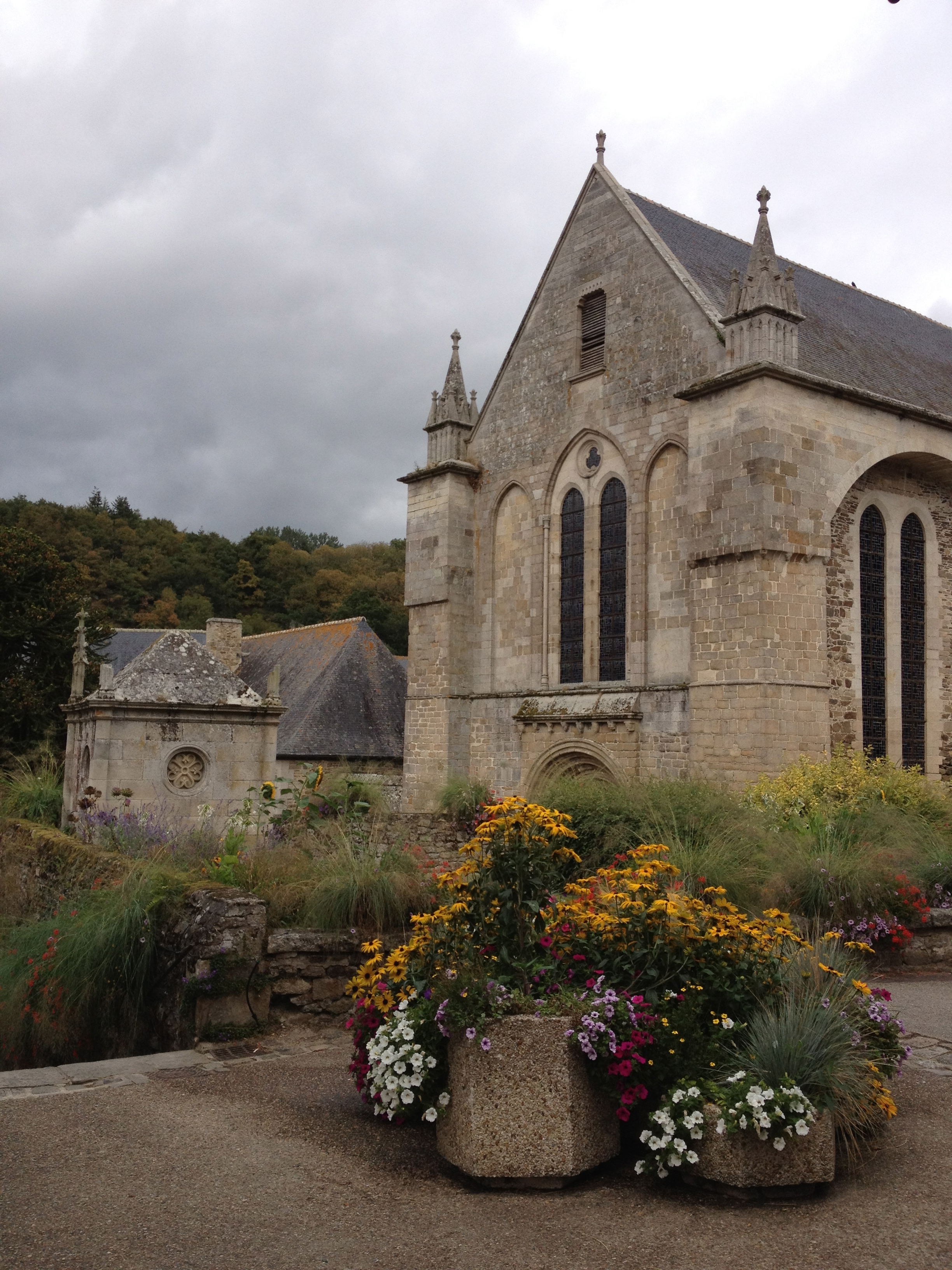
The Abbey and Chapel in Lehon, France, once sketched by May Alcott

The Abbey Church in Lehon, France, once sketched by May Alcott

The River Rance through Léhon, France.

The River Rance through Léhon, France.

The Alcotts also visited the Chateau de la Garaye, a lovely site located just a couple of miles from the village of Dinan. May wrote home to tell her mother about the beautiful ruins there:

I have tried to sketch from memory a lovely old ruin, where we spent the day yesterday, but can give you a very indefinite notion of the gray old tower with ivy clinging to it in all directions, the rear walls having all crumbled away. The blue sky shone through the little ornamental windows in a way that was quite enchanting. It is only about two miles from Dinan and a pretty walk though the wood to the moat and great embattled walls, which surround the chateau.

Alice and I walked, while Lu went down in a donkey carriage. . . . We found a large party of English people already at the castle sketching it with pencil in colors. . . .

IMG_4685

The  ruins of the Chateau de la Garaye still stand today. “The blue sky shone though the little ornamental windows in a way that was quite enchanting.” — May Alcott, April 1870. It makes me so glad to know some things just don’t change in over 140 years.

IMG_4686

My own colored pencil sketch of the ruins of Chateau de la Garaye

May Alcott’s Life Beyond Dinan:

After the Alcott sisters left Dinan in the summer of 1870, they continued their European travels and proceeded to the Loire Valley, Switzerland and Italy. They found themselves the middle of the Franco-Prussian war which broke out that July but managed to find safety in Switzerland, along with many other refugees from Paris and Strasbourg. Louisa May returned to Boston the next summer, but May went on to study art in London on her own and didn’t return until November, 1871, when she was called home to help the rest of the family.

May Alcott returned to London and Paris in 1873 and then again in 1876. She would study at the Academie Julian in the Passage des Panoramas in 1876-77, and would attend the Paris Salon of 1877 where her own still life painting would be exhibited. She would be invited to Mary Cassatt’s home for tea, and would travel to the rather bohemian art colony in Grez in the summer of 1877. She was living a ground-breaking life as an American expatriate female artist.

In late 1877, while May was living on her own in London, she would learn that her mother had died. In her grief she developed a quick romance with Ernest Nieriker, a young Swiss businessman fifteen years her junior, to whom she would become engaged in March of 1878. The newlyweds would move to a lovely little home in the suburbs of Paris, where she dreamed of combining a career in art with marriage and a possible family. She would have yet another painting accepted in the Paris Salon, and would publish a guidebook for women artists called Studying Art Abroad and How to Do it Cheaply. At the end of 1878, May’s personal life and her art career were making gratifying moves forward.

studying art abroad

But then, in December of 1879, May Alcott Nieriker died six weeks after giving birth to her daughter Lulu. She was only 39 years old. Baby Lulu was first sent to live with her aunt Louisa May in the United States, but when Louisa May died just nine years later, young Lulu was returned to her father in Switzerland.

We are lucky to have been left with such a prolific record of May Alcott’s remarkable travels and experiences, even if they were short-lived. Thanks to the details and sketches provided in Little Women Abroad, we can follow along. It’s worth the trip.