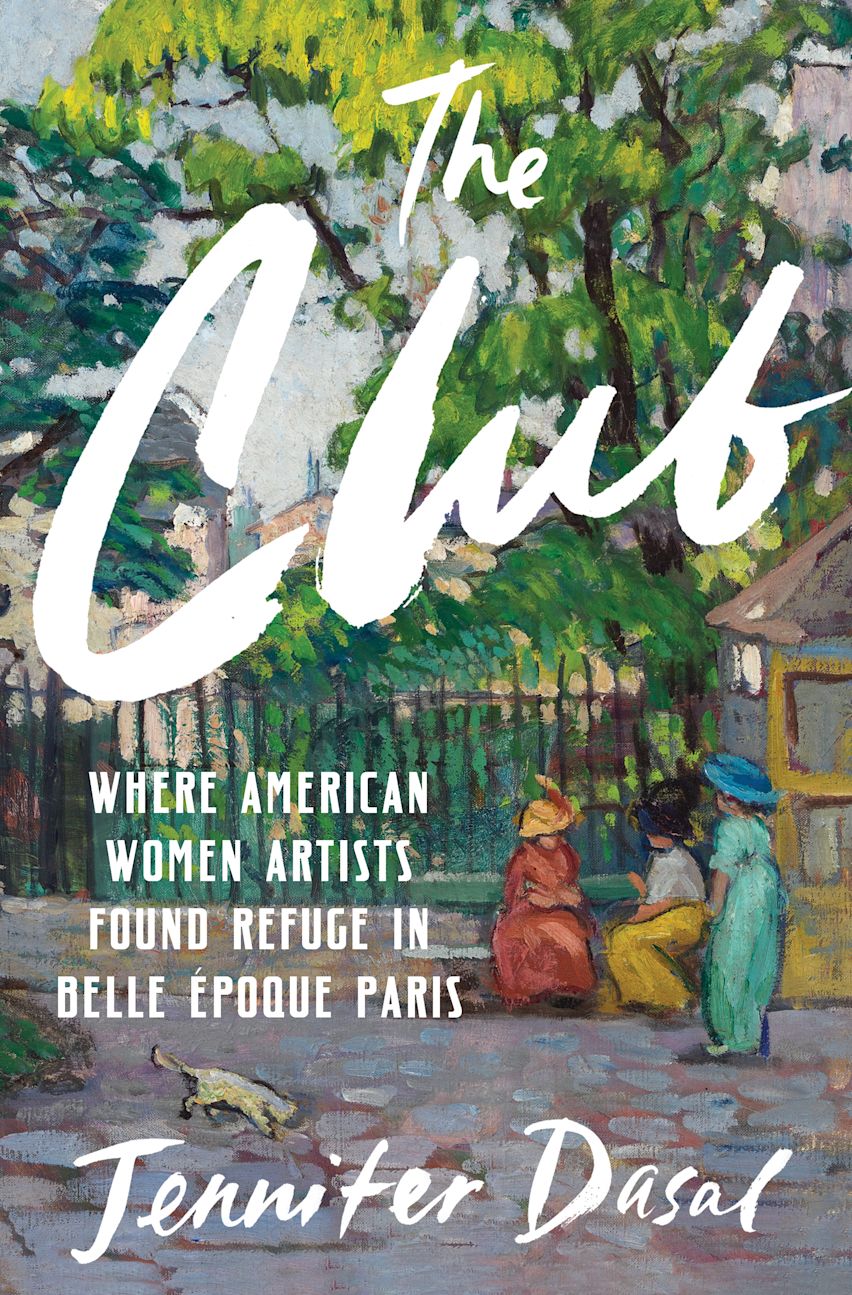
The Club: Where American Women Artists Found Refuge in Belle Epoque Paris, by Jennifer Dasal

To the longtime followers of this blog, welcome back! It’s been a long time since I have updated this blog. (Does anybody read blogs anymore?) I feel like I’m updating a time capsule. To the new readers who just found me, welcome. Either way, I have some exciting news.

I am thrilled to share with you a newly published book called The Club, by Jennifer Dasal. Imagine my surprise when I read a book review, first in the Wall Street Journal, and then in the New York Times, about this book and its author, an art historian, curator and popular podcast host of the ArtCurious podcast. (ArtCurious episodes have for the most part ended, but there is an amazing archive of episodes from 2016-2023. If you haven’t followed them before, you can still listen to the archived episodes on your favorite podcast app. I’m now addicted to them as I walk my dog!)

In case you haven’t guessed yet, this book is about the title of this blog, the American Girls Art Club in Paris. Jennifer Dasal kindly gave me a shout out in the acknowledgments section (which as a former independent bookseller, I always read first) where she said “a special nod to Margie White, who clued me in to the Club’s existence in the first place.” Wow, little did I know that my decades old blog with so few followers could ever be such a big inspiration!

My longtime readers will know why I chose the name of this 1890s boarding house and women’s art club as the title of my blog, but in case you don’t know, you can read about it here. I did a little research into the history of the club myself, which I posted about here.

Like me, Jennifer Dasal was inspired and intrigued by the story of the Club and its members. However, thanks to all of the resources and skills from her MA in art history from the University of Notre Dame, Jennifer was able to do a deep and thorough dive into the history of the club, from its founders to its members to its allies in Paris and beyond.

The result is a fabulous book that needs to be on the shelves of any Francophile or fan of art history. It tells the lesser known story of the young American women who pursued their artistic dreams all the way to Paris. It was an era where young women’s dreams were limited and narrowly proscribed, so the chance to study art in Paris was liberating and life changing. It connects this Paris art club with the larger social and historical movements of the time, and helps to explain why so many of us have never heard about the club or the women artists who were thrilled to have made it their home.

The Club by Jennifer Dasal: Highly recommended.

_________________________________________________________________________________

More Stories About Women Artists in Paris

For those who are interested in Dasal’s latest book, I invite you into the archives of my blog where I tell other stories of women artists in Paris at the turn of the nineteenth century, from Mary Cassatt to Cecilia Beaux and many more. Let me suggest the following (just click on the blue link):

Mary Cassatt’s Greater Journey

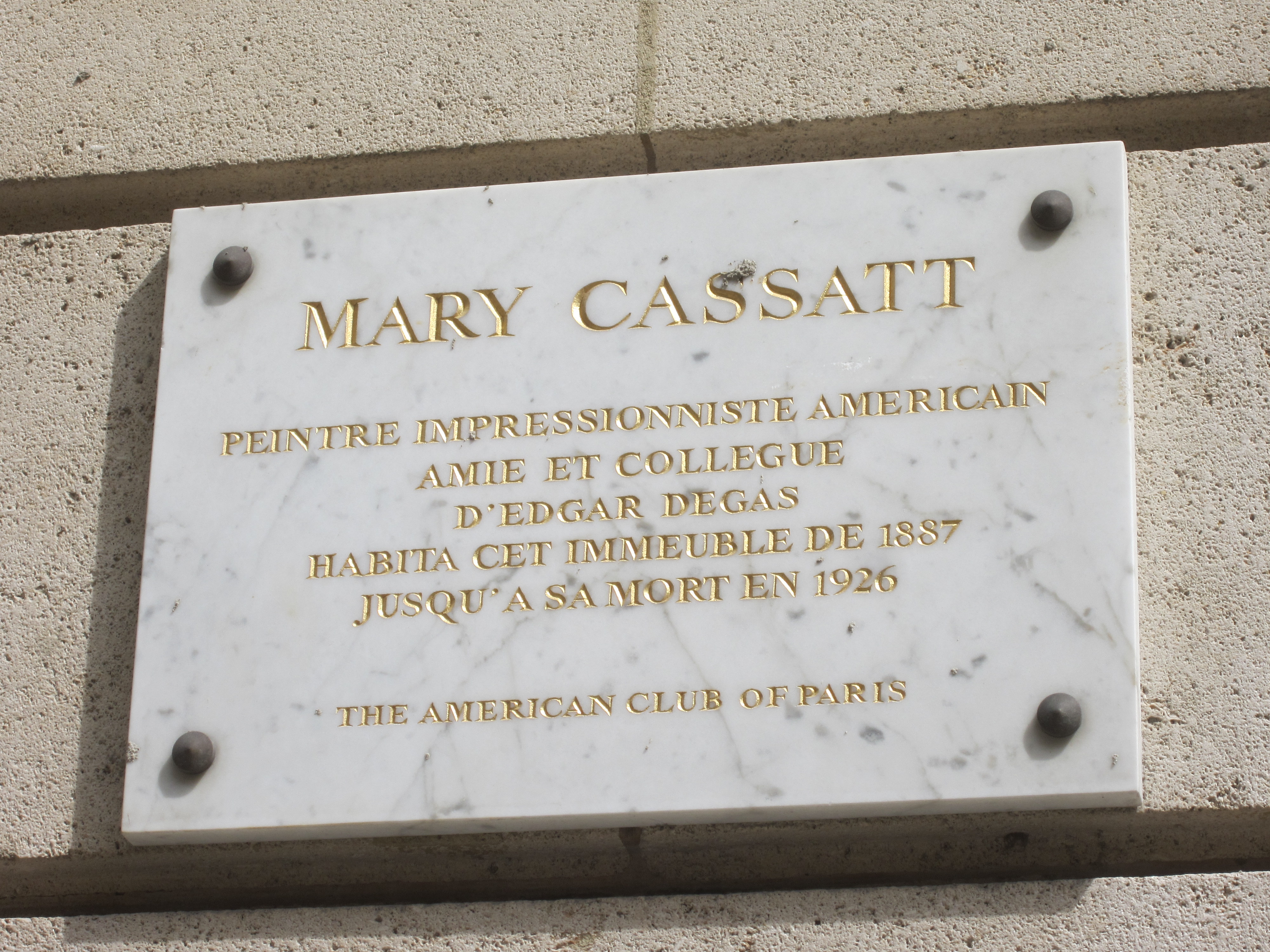
Mary Cassatt was one of the American pioneers who came to Paris in the late nineteenth century to study and practice art. She never left. This post traces Cassatt’s footsteps through Paris from her first apartment with her sister in 1874, and thereafter a fashionable apartment at 10 avenue Marignan near the Champs-Élysées.

Mary Cassatt’s Chateau de Beaufresne-

After spending nearly two decades in Paris, Mary Cassatt finally bought her own lovely French chateau in Le Mesnil-Theribus, a small village to the north of Paris. This post will take you on a rare view of the grounds and inside the chateau, which still stands today.
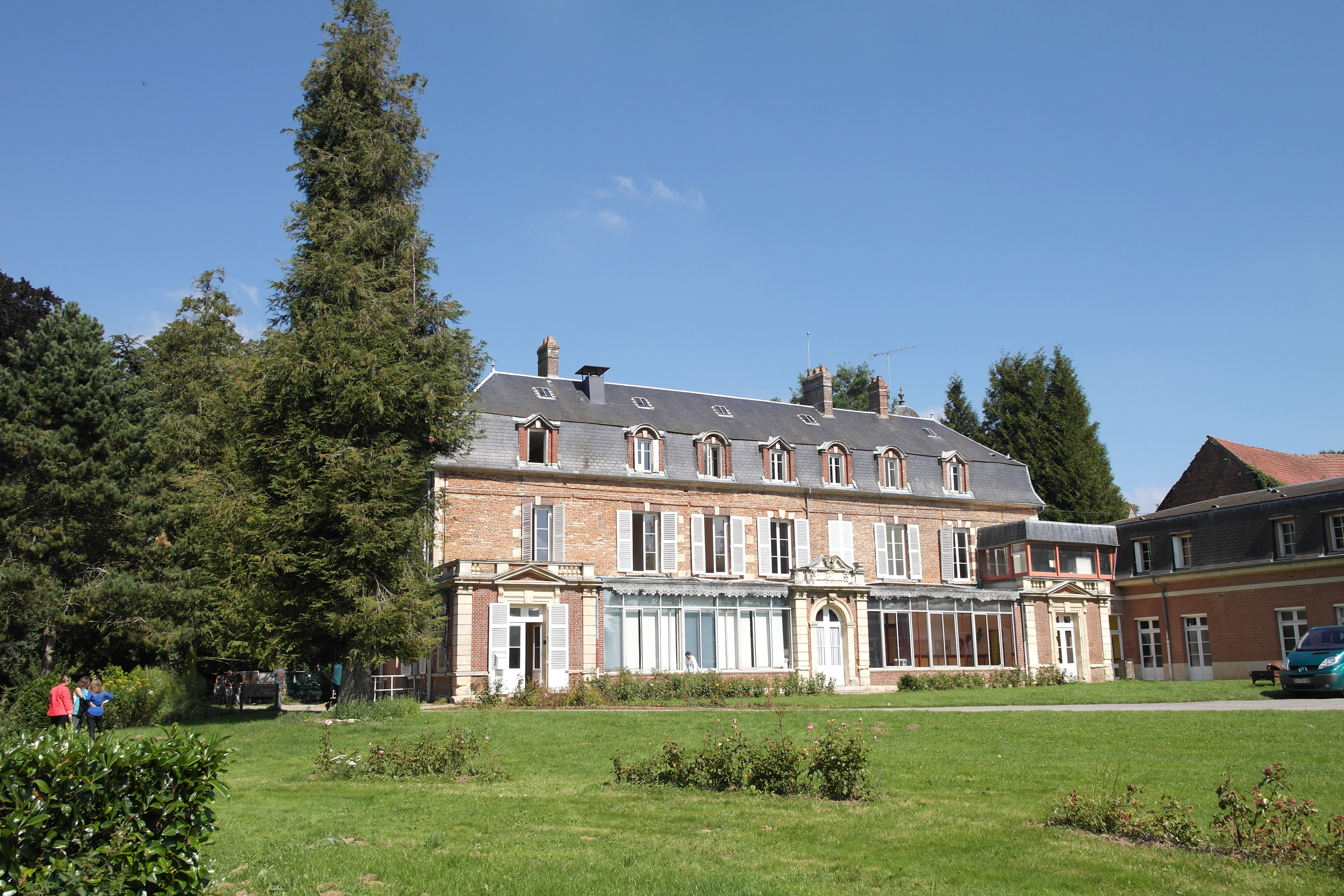
Mary Cassatt’s country home outside Paris: Chateau Beaufresne

Mary Cassatt’s Chicago Mural

In 1892, Mary Cassatt was commissioned to paint a giant mural for the Chicago World’s Fair. Cassatt painted her mural at a country home that she was renting in Bachivillers, France, a suburb of Paris just down the road from Chateau de Beaufresne. I was able to find the home and find out some local scoop. The story is that Cassatt had workmen dig a giant 60×6 foot trench in the backyard so that she wouldn’t have to climb on ladders or scaffolds to complete the outsized mural. 

Chateau Bachivillers, Mary Cassatt’s rental home north of Paris the summers of 1891 and 1892, the place where she painted the Modern Woman Mural for the Chicago World’s Fair of 1893.

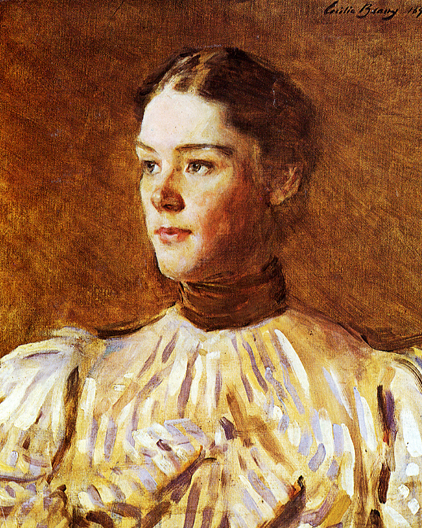
Cecilia Beaux: The Power of Paris (1888)

I take a deep look at the time that American artist Cecelia Beaux spent in Paris and Brittany in 1888, guided by her autobiography Background with Figures (1930). You can’t help but notice the transformation Beaux underwent after her time abroad.
Berthe Morisot’s Garden

In this post, you can follow Berthe Morisot’s footsteps through Paris as she moves from home to home in the 16th arrondissement of Paris. Aside from her travels and her summers in suburban Paris, she spent her entire life in the 16th.
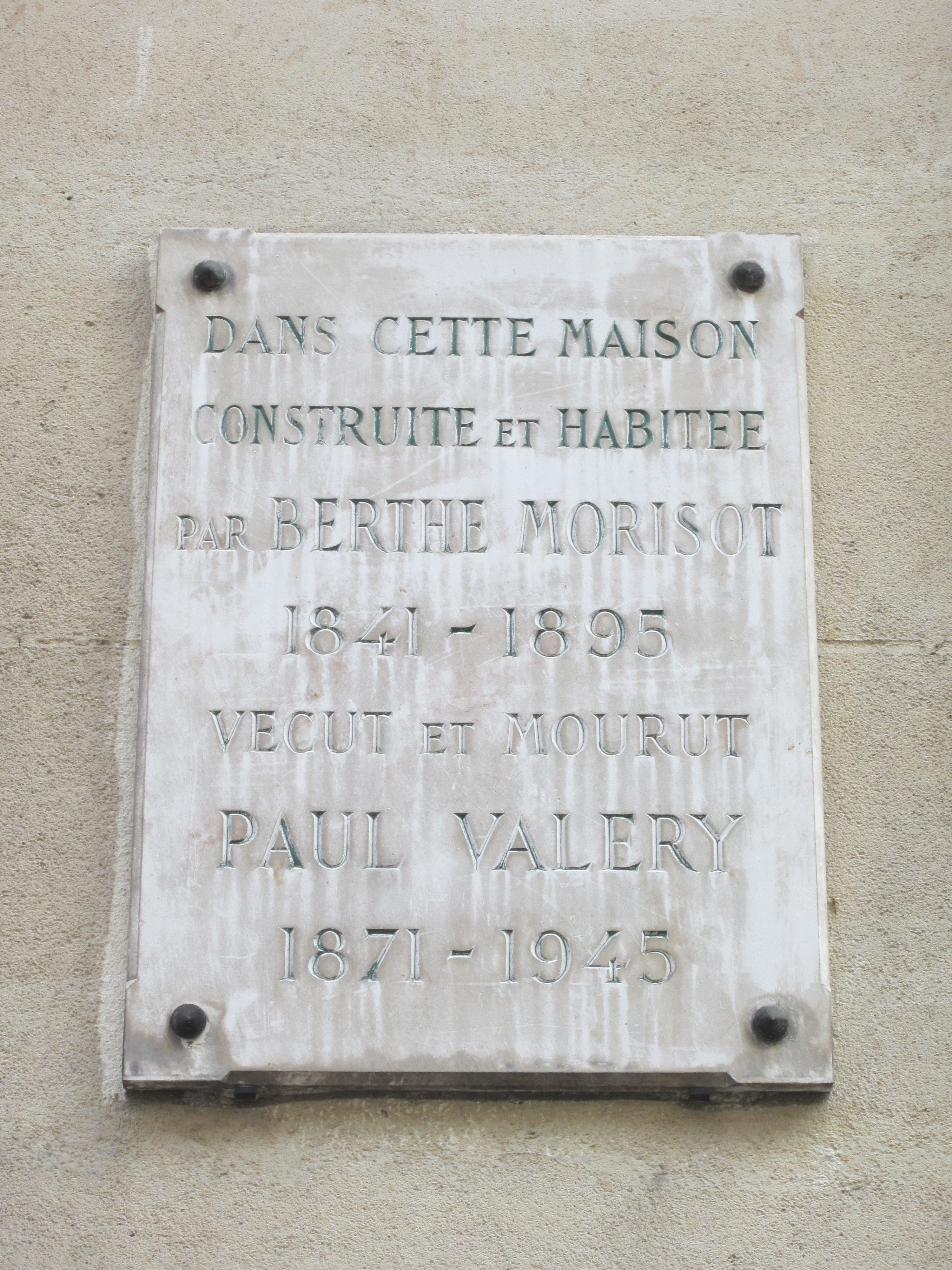
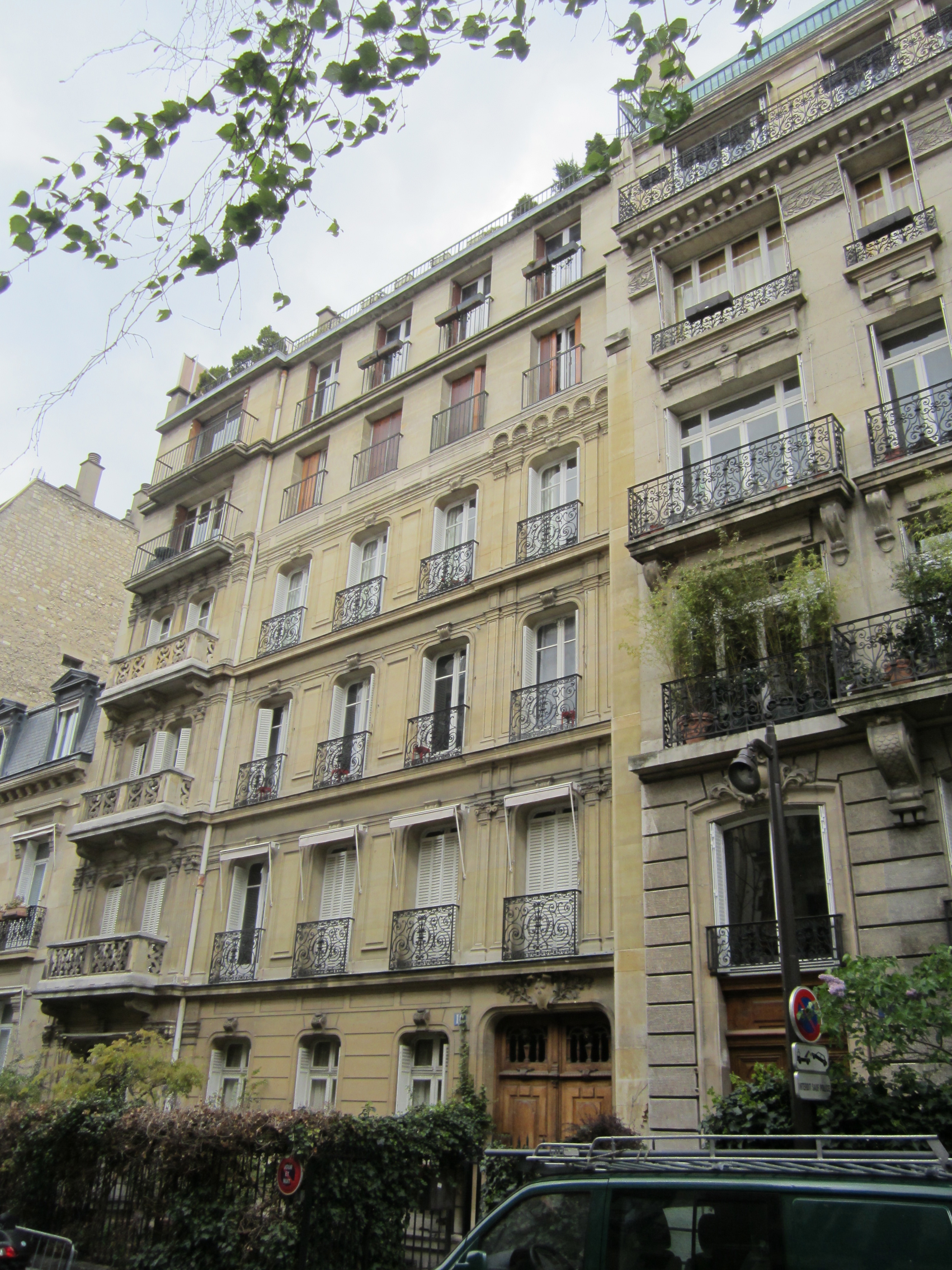
Berthe Morisot’s Interior: Her Last Home on rue Weber

In this post, I explore Berthe Morisot’s life after the death of her husband, Eugene Manet. If you go to rue Weber in the 16th arrondissement today, you can find Morisot’s lovely apartment still standing. There is no historical marker, and few of the neighbors I spoke to even know it was once Morisot’s home.
I

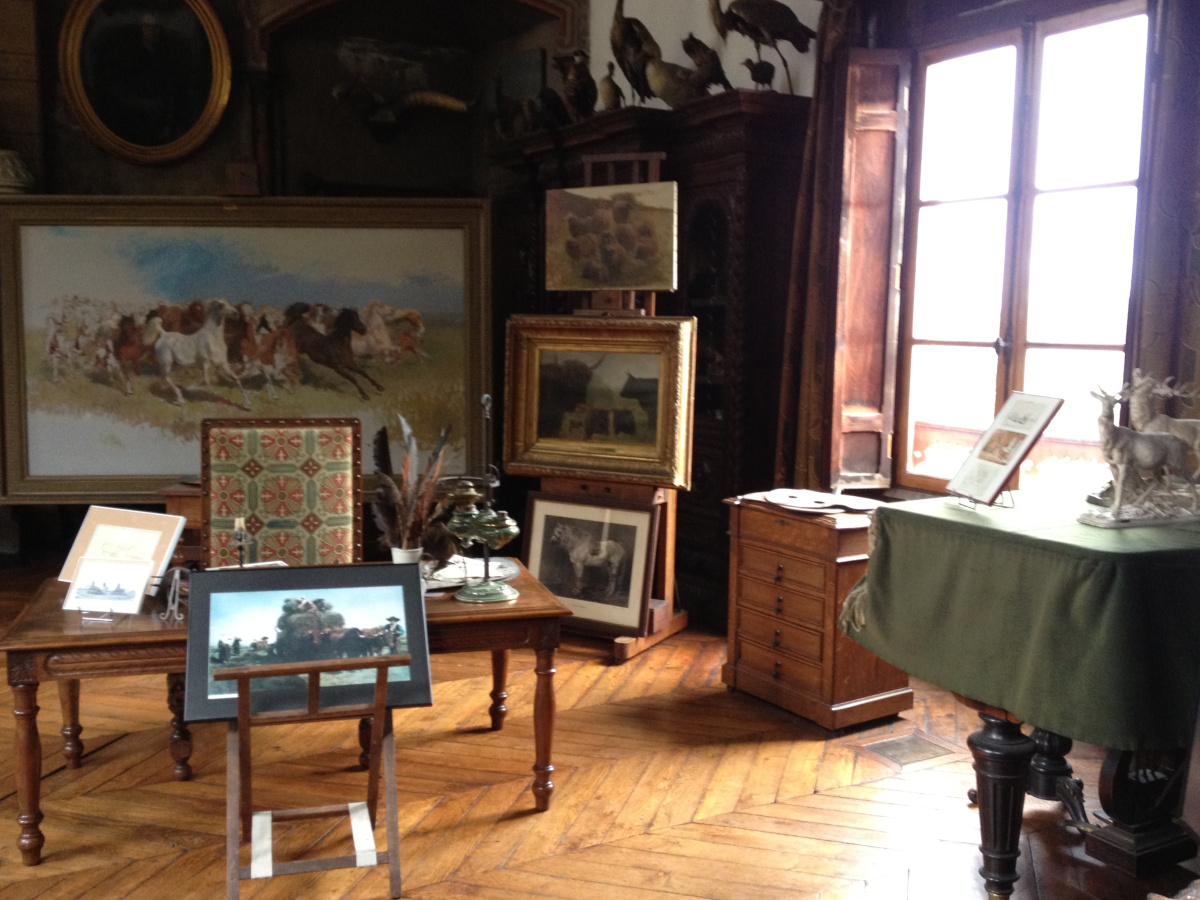
Visiting Rosa Bonheur’s Studio 

Directions to and photos of Rosa Bonheur’s art studio in Thoméry, France, just an hour’s drive south of Paris near Fontainbleu. Rosa Bonheur was a famous 19th century French painter known for her realistic portrayal of horses and animals, particularly Horse Fair (1853-55), Metropolitan Museum of Art. One of my favorite art studio tours ever!
The Académie Julian and Women Artists in Paris
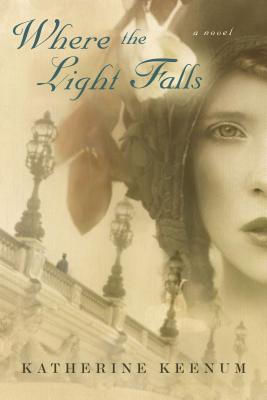
wherethelightfalls

Where The Light Falls by Katherine Keenum is a lovely painterly novel based on a young American who studies at the Académie Julian in late 19th century Paris. This post reviews the book and shares photos of the sites associated with Académie Julian, one of the foremost art academies for women in 19th century Paris.

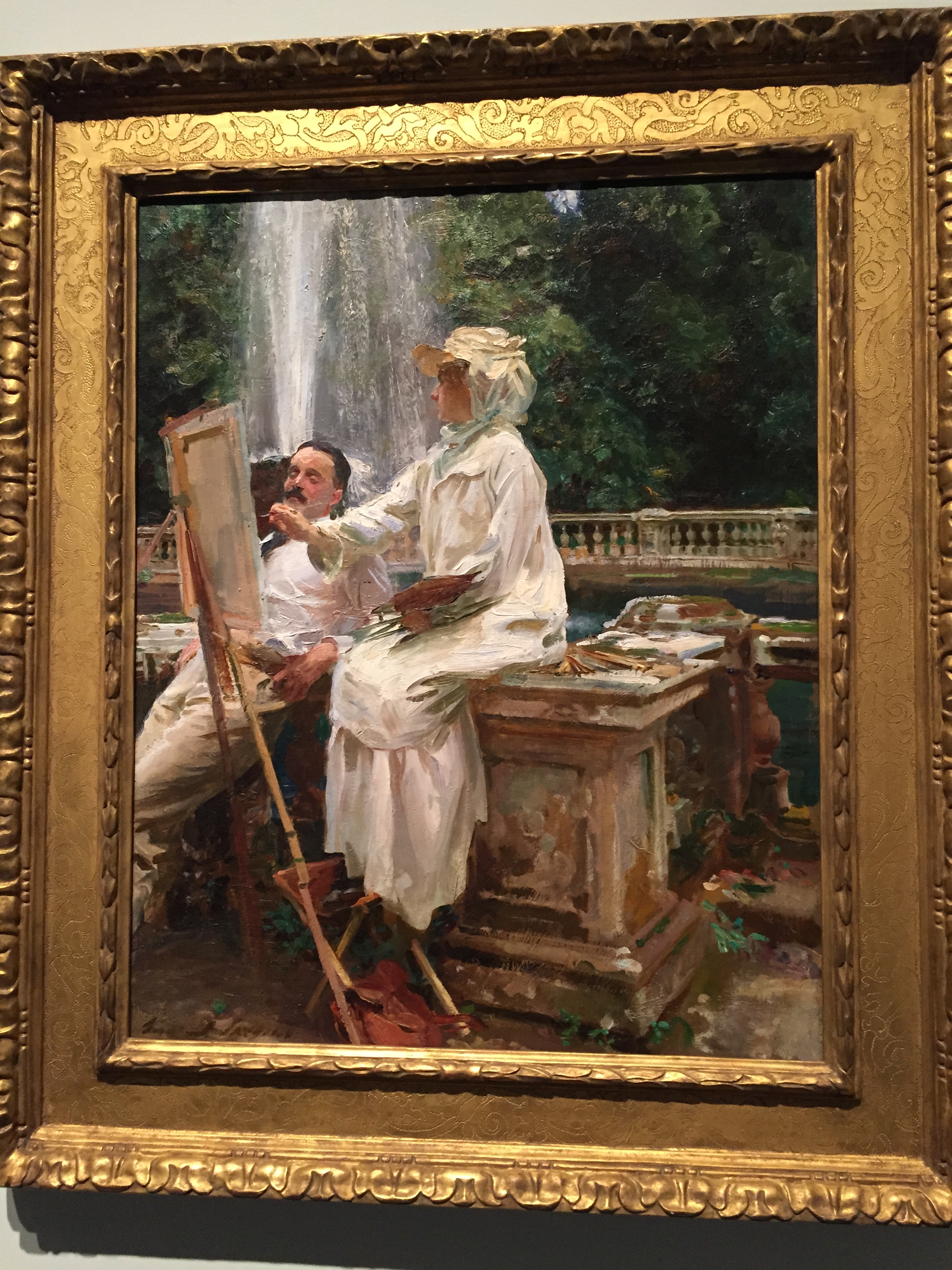
The Painter at the Fountain: Jane Emmet de Glenn

This post explores the story behind the woman in this fabulous John Singer Sargent painting, The Fountain, Villa Torlonia, Frascati, Italy (1907) from the Art Institute of Chicago. Her name is Jane Emmet de Glen and she came from a long line of successful American women painters from New York. She came to study art in Paris in 1897, then met and married Sargent’s friend and fellow painter, John de Glenn. The three of them became loyal travel and Plein air painting companions.
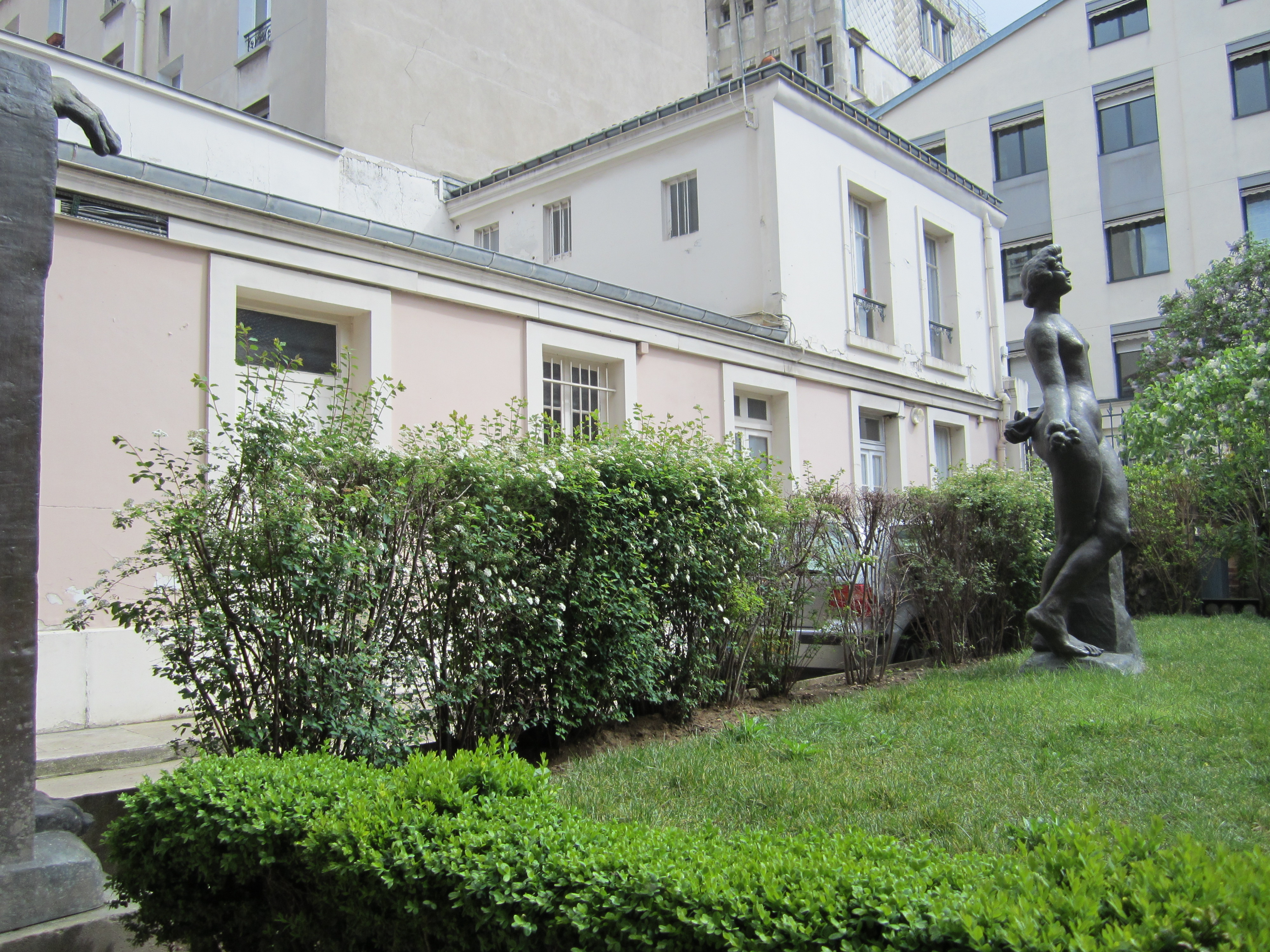
Mary and Frederick MacMonnies, Parisian Power Couple

Mary Fairchild MacMonnies Low (1858-1946), was a St. Louis native who had won a scholarship to study art in Paris in the late 1880s. She met fellow American art student Frederick MacMonnies (1863-1937) and fell in love. Fairchild and MacMonnies shared an apartment and art studio at 16 Impasse du Maine which is now the site of Musée Bourdelle, one of Montparnasse’s little jewels.
Although my primary interest is in women artists, I would never turn down the chance to visit any art museum, studio or historical site. During my year in Paris and our visits since then, I managed to visit quite a few! You might enjoy my posts about the following male artists as well:

Luncheon of the Boating Party: A Day in Chatou

A Day with Renoir in Montmartre

Van Gogh in St. Remy

Claude and Camille Along the Seine

An Artist’s Weekend in Honfleur

Van Gogh in Auvers Sur Oise

Rainy Days in Paris (Caillebotte)

Cézanne and Chagall in Provence

John Singer Sargent and Madame X in Paris
On Sisley’s Trail Outside Paris

Degas and the Paris Opéra

Picasso in Paris

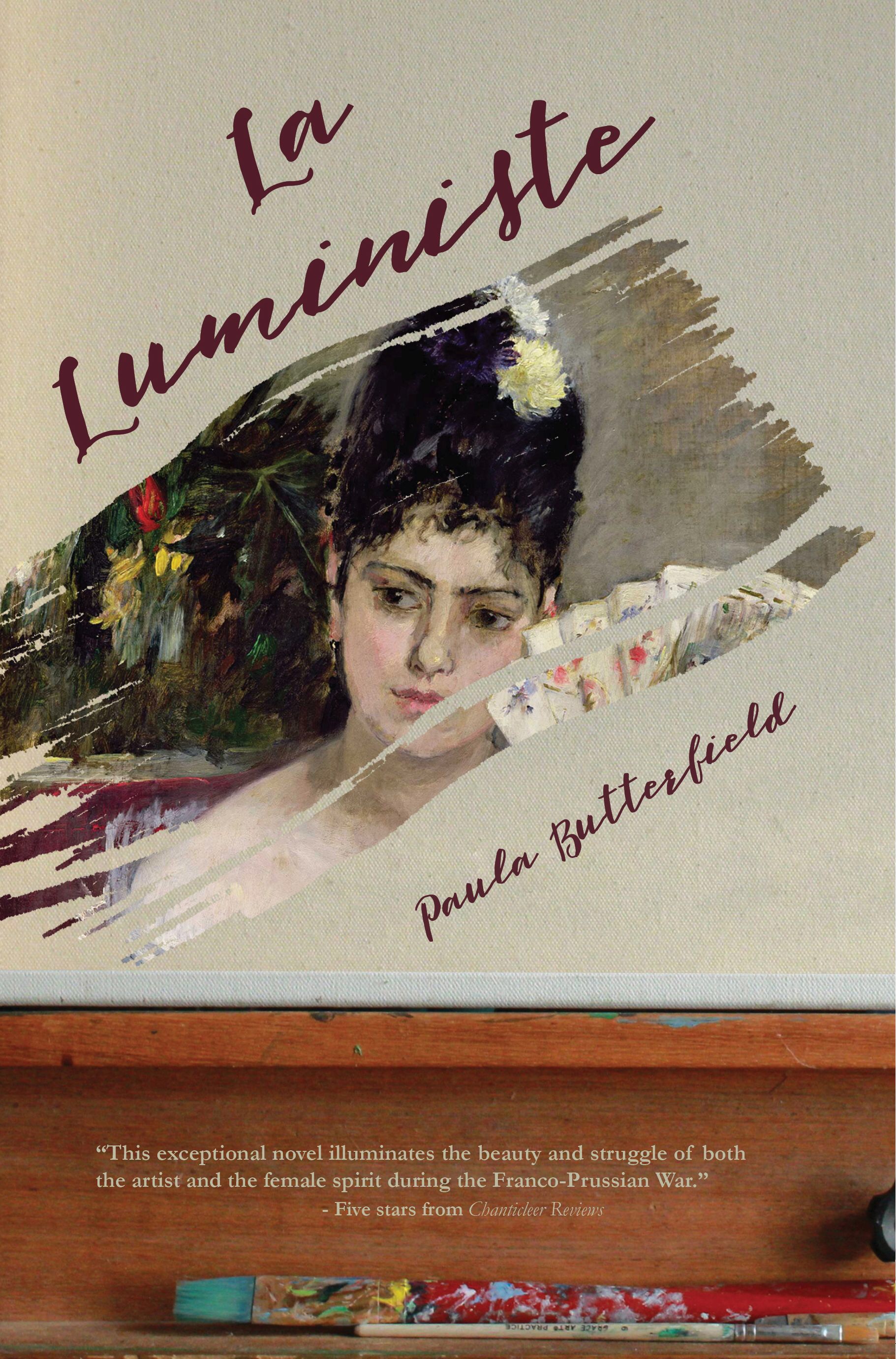
La Luministe by Paula Butterfield

La Luministe by Paula Butterfield (March 15, 2019 Regal Books) is a lovely new novel about the life and art of Berthe Morisot, a French Impressionist who was able to capture the effect of light and atmosphere perhaps better than any of her contemporaries. They called her La Luministe, a nickname she most certainly earned.

La Luministe cover (don’t the easel and paint brushes make such a nice painterly touch?)

This book reads as if you are standing in front of a Berthe Morisot painting, wishing she would speak to you – and then quietly, privately, she does. And not just about her daring brush strokes or her use of quiet color, but also the secrets, the stories and the struggles hidden in each canvas. Yes, you will be fascinated to read about Morisot’s scandalous love triangle with the Manet brothers, but at its heart, this book is about a woman’s greatest passion: her art.

I absolutely loved the book and knew I’d found a kindred spirit who was as fascinated with Berthe Morisot as I was. I reached out to Paula Butterfield and she agreed to respond to a few interview questions. I hope you enjoy our chat!

  1. Early on in your novel, Berthe and her sister Edma create a “Bonheur Society” for themselves in honor of Rosa Bonheur. What a fun little detail. Isn’t that just what young artistic girls would do? Was this little treasure based on fact or did it come straight out of your imagination? [Note:  long-term followers of this blog know I too am a big Rosa Bonheur fan. Check out my previous post about visiting her studio museum outside of Paris.]

As a women’s studies academic for almost twenty years, I saw over and over my students’ stunned reactions when they learned about previously unknown women’s contributions. I feel like when Berthe and Edma saw a Rosa Bonheur painting in person, they would have been tremendously excited and encouraged. Representation is something we consider now, and it would have been equally applicable for young 19th century would-be artists—if a woman could paint a work that earned the Legion of Honor, maybe they could, too!

Also, I wanted to illustrate the bond between Berthe and Edma. They were sisters only a year apart in age, but they were also each other’s only artistic colleagues, since girls were not permitted to attend art school or to socialize with artists. I was always forming clubs with my sister and my friends as a kid, so I guess it was only natural that I’d form a club for these two artistic sisters.

2. Which Berthe Morisot painting is your personal favorite and why? (Okay, that’s impossible, so give me your top 3.) Have you had the chance to see them in person, and if so, how did that affect your novel?

I’ve seen lots of Berthe’s paintings, in Paris, Washington D.C., Philadelphia, Chicago, San Francisco, and more places I can’t remember. And you’re right; there’s no way to choose one favorite. For my top three, I suppose I’ll choose Summer, the painting in which Berthe came closest to achieving her goal of making a figure dissolve into the atmosphere. 

Berthe Morisot, Young Woman at a Window or Summer (1880), oil on canvas, Musée Fabre, Montpellier

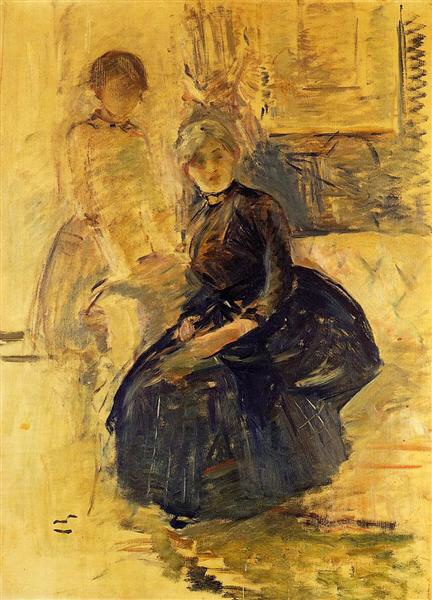
I’m compelled to add a painting of Berthe’s daughter, Julie, the light of her life and her favorite model. To me, this study for a painting of Berthe and Julie (tellingly, never completed) says everything about being an artist-mother. Sometimes, if you want to get anything done with your little anchor following you around, you have to integrate your child in your work! 

Berthe Morisot, Self-Portrait with Julie (Study) (1887) – Private Collection

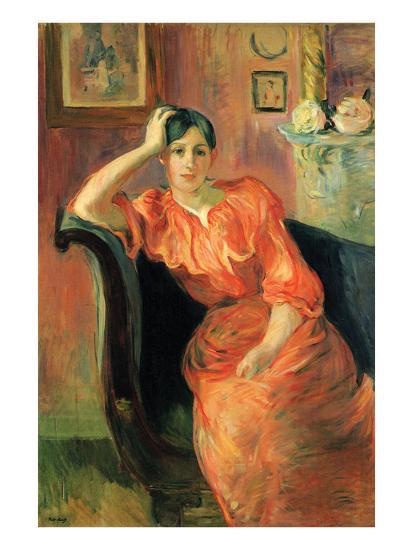
And finally, I have to include one of Berthe’s paintings from the post-Impressionist years, when she returned to Renaissance techniques. Jeanne Pontillon, a portrait of Berthe’s niece, uses rich hues and long brushstrokes.

Berthe Morisot, Portrait of Jeanne Pontillon (1894), Private Collection

3. Tell me about your thoughts that shaped one of my favorite sentences in the book, where Berthe is getting to know Manet. As she said: “I was baffled about my feelings for Manet. Was I falling in love with him, or did I wish I could be him?”  

4. I myself have wondered for years whether Berthe and Edouard Manet were in fact lovers. When there is no concrete proof and letters have been destroyed, it’s hard to know for sure. What tipped the scale for you? 

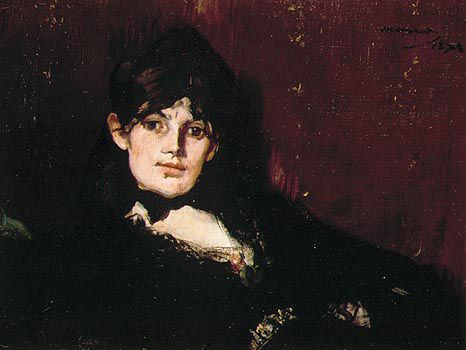
No, there is no concrete proof that Berthe and Edouard were lovers. And Berthe’s biographers have varying opinions. For me, Edouard’s portraits of Berthe tell the tale. For one thing, he painted more portraits of her than of any other model, and he never parted with any of them. One of Berthe’s biographers, Margaret Shennan, refers to the relationship between Berthe and Edouard as “a dialogue of two intelligences.” They were of the same social class, so it was possible for them to get to know each other in the first place. The two met their intellectual and artistic matches in one another. And just look at the paintings, which range from flirtatious to downright steamy. Can anyone look at Reclining and tell me that Berthe and Edouard were not lovers?

Edouard Manet, Berthe Morisot Reclining (1873)

5. I never before understood what an enormous impact the Franco-Prussian War had on the Morisot family and particularly Berthe’s health. What sources did you rely on to dig into that period in the Passy neighborhood? Do you think her health issues from the war contributed to her early death?

Every book I read about Berthe or Edouard discussed the war. The Judgment of Paris: The Revolutionary Decade That Gave the World Impressionism, by Ross King, and The Greater Journey: Americans in Paris, by David McCullough are two non-academic books that offer harrowing descriptions of Paris during war and its aftermath.

Most definitely, the deprivations Berthe suffered during the siege of the Franco-Prussian War left her lungs permanently weakened. She suffered from bronchitis every winter for the rest of her life, and when she contracted pneumonia during the winter of 1894, that illness was too much for Berthe to withstand.

  1. I am surprised to learn how many men of this time period were afflicted with syphilis. In the novel, Berthe learns about Edouard Manet’s disease and says: “my sympathy for him transformed into utter rage that he would let his taste for women lead to the destruction of his genius.” How did you decide you had to address this issue?

It wasn’t a decision; I wasn’t going to dissemble about the cause of Edouard’s death. But I made the effort to put it in context to emphasize the dark side of the City of Light. Even Berthe, who lived a sheltered life, knew that one in five Parisian men suffered from syphilis. And I also make a point of Berthe’s awareness of prostitution and illegitimate children. She was conscious of the light and shadow in life and was contemptuous of the enormous hypocrisy displayed by Parisian society. Later, that same contempt spilled over into her opinion of the ossified art establishment. That rebellious attitude shaped what was a radical life: she loved whom she chose to love, and she painted in the style she wished to paint.

  1. Tell me what made you want to write a book about Berthe. What was it in her artistic struggle that captured your imagination the most?

What spoke to me personally about Berthe’s story was what I think of as the prison of her privilege. While no women were permitted to attend l’Ecole des Beaux Arts, the prestigious state school that trained, exhibited, and provided patrons for its students, there were some art schools open to working class women. Rosa Bonheur, the artist Berthe and Edma idolized, ran such a school herself. But it was deemed unseemly for upper-class girls to attend a school that prepared students to earn their livings as artists. Girls like Berthe did not pursue professions or enter the commercial world to any degree.

I’ve often wondered how life might have been different if Berthe had attended a women’s art school. She would have had many more artistic colleagues, to fall back on when Edma gave up painting. And with more artists with whom she could exchange ideas, Berthe might have developed her own style earlier in life, saving herself years of paralyzing self-doubt.

      *         *          *

About the Author

Author Paula Butterfield taught courses about women artists for twenty years before turning to writing about them. La Luministe, her debut novel, earned the Best Historical Fiction Chanticleer Award. Paula lives with her husband and daughter in Portland and on the Oregon coast. 

X

Author’s Statement:

Berthe Morisot was a fist in a velvet glove. In 19th century Paris, an haute-bourgeois woman was expected to be discreet to the point of near-invisibility. But Berthe, forbidden to enter L’École des Beaux Arts, started the Impressionist movement that broke open the walls of the art establishment. And, unable to marry the love of her life, Édouard Manet, she married his brother. While she epitomized femininity and decorum, Morisot was a quiet revolutionary.

Author Contact:

@pbutterwriter  (Twitter)
https://www.pinterest.com/luministe/ (“illustrations” for La Luministe.)

Anna Ancher: Danish Artist

 Anna Ancher (1859-1935) is a hugely popular artist within Denmark, but she and her paintings are much lesser known beyond Scandinavia. Thankfully that is beginning to change.

Anna Ancher, Self-Portrait (1877), completed when she was just 18 years old

The National Museum of Women in the Arts in Washington, D.C. hosted an exhibit in 2013 called A World Apart: Anna Ancher and the Skagen Art Colony, bringing a comprehensive collection of Anna Ancher’s work to the United States for the first time. I first encountered her art more recently, when I saw two of her paintings in a traveling exhibit sponsored by the American Federation of the Arts entitled Women Artists in Paris 1850-1900 (previously written about here). As wonderful as those two exhibits were, it is a rare event to witness Anna Ancher’s work outside of Denmark.

Anna Ancher, The Harvesters (1902), one of Anna Ancher’s paintings that traveled to the Women Artists in Paris 1850-1900 exhibit in the U.S.

Anna Ancher deserves wider recognition because her work in oil and pastel is truly remarkable. Given the fact that she was born and raised in a small village at the northernmost tip of Denmark and received little formal training, her understanding of form, color, light and shadow is exceptional. She deserves to be ranked among the best 19th century artists, including Degas, Cassatt and Morisot.

In addition to her surprising talent, her story is inspiring and instructional for anyone interested in the gender struggle of women artists in the late 19th century. While American and French women artists fought to be taken seriously during this time period, Anna Ancher received great encouragement and recognition from her family, fellow artists and the official art world in Denmark. She didn’t have to forsake marriage and family for her career. According to our 21st century vocabulary, here was a woman who seems to have had it all. So what was her secret? What was the difference? My curiosity took me all the way to Copenhagen.

The Hirschsprung Collection in Copenhagen hosted a 2018-19 exhibition called Michael Ancher and the Women of Skagen. At the same time, the museum hosted an exhibit called the Allure of Color: Pastels from Anna Archer to P.S. KroyerWhat an opportunity to get acquainted with this exceptional woman.

The Hirschsprung Collection, Copenhagen


Exhibit Catalog, Michael Ancher and the Women of Skagen (2018)

 Anna Ancher, (sounds like “anchor” in Danish) née Brøndum, was born in Skagen, a small little fishing village on the northernmost point of Denmark. Her parents ran an inn, where she was lucky to meet visiting artists who came to paint the raw coastal scenery in the summer. Inspired by these visiting artists, she began to draw at an early age.

The painter Michael Ancher arrived in Skagen the summer of 1874, when Anna was 16 years old and he was 10 years her senior. Michael had received academic art training at the Royal Danish Academy of Fine Arts in the 1870s, and was drawn to the seaside to capture large-scale scenes of fisherman and their nets. The village became widely known in artist circles when Michael exhibited in Copenhagen. The next summer Michael Ancher was joined by his artist friends Karl Madsen and Viggo Johansen. The artists stayed at the Brøndum family inn and they encouraged Anna to take professional training to develop her talents.

Anna’s mother, Ane Møller Brøndum, was a strong intellectual woman who ruled the family inn while pursuing an independent study of literature and history. Although she joined a very strict evangelical religion, she still allowed her daughters to pursue an education and associate with the visiting artists who were considered radicals.

As progressive as Denmark is supposed to have been, women were still not allowed to attend the Royal Danish Academy of Art until 1888. So instead, Anna’s parents sent her to Vilhelm Kyhn’s private art school for women (Tegneskolen til Kvinder) in Copenhagen. Vilhelm Kyhn was a highly talented landscape painter in the naturalist tradition. He had been trained at the Royal Academy, but after a series of quarrelsome spats with the Danish art establishment, he broke off and started an alternative studio for other dissatisfied artists, including women. Thus, Anna received traditional instruction in painting and drawing, with an emphasis on the Golden Age of Danish painting (1800-1850). Luckily, her training was more rigorous than one would expect from a women’s art school at the time.

Anna Ancher, Portrait of Vilhelm Kyhn (1903)

Anna spent three winters studying in Copenhagen, with summers in Skagen. The visiting artists continued to gather at her parents’ inn in the summer, where she must have benefited from their advice, demonstrations and no doubt some of their casual artistic banter.

Anna and Michael Ancher developed a romance and announced their engagement in 1877. Perhaps her parents insisted on a delayed wedding date, or perhaps the pair just didn’t feel as if they had enough financial security to tie the knot at the time. When Michael achieved a significant degree of artistic success in 1881, they married.

During their long engagement, Anna and Michael welcomed new international artists to Skagen, including Karl Madsen, who had studied in France and Germany. Anna was exposed to new ideas by leading European artists in a relaxed and nurturing setting. Perhaps it also helped Anna to have a fiancée and parents nearby  to prevent unwanted attention or gendered ridicule from other male artists. She had allies.

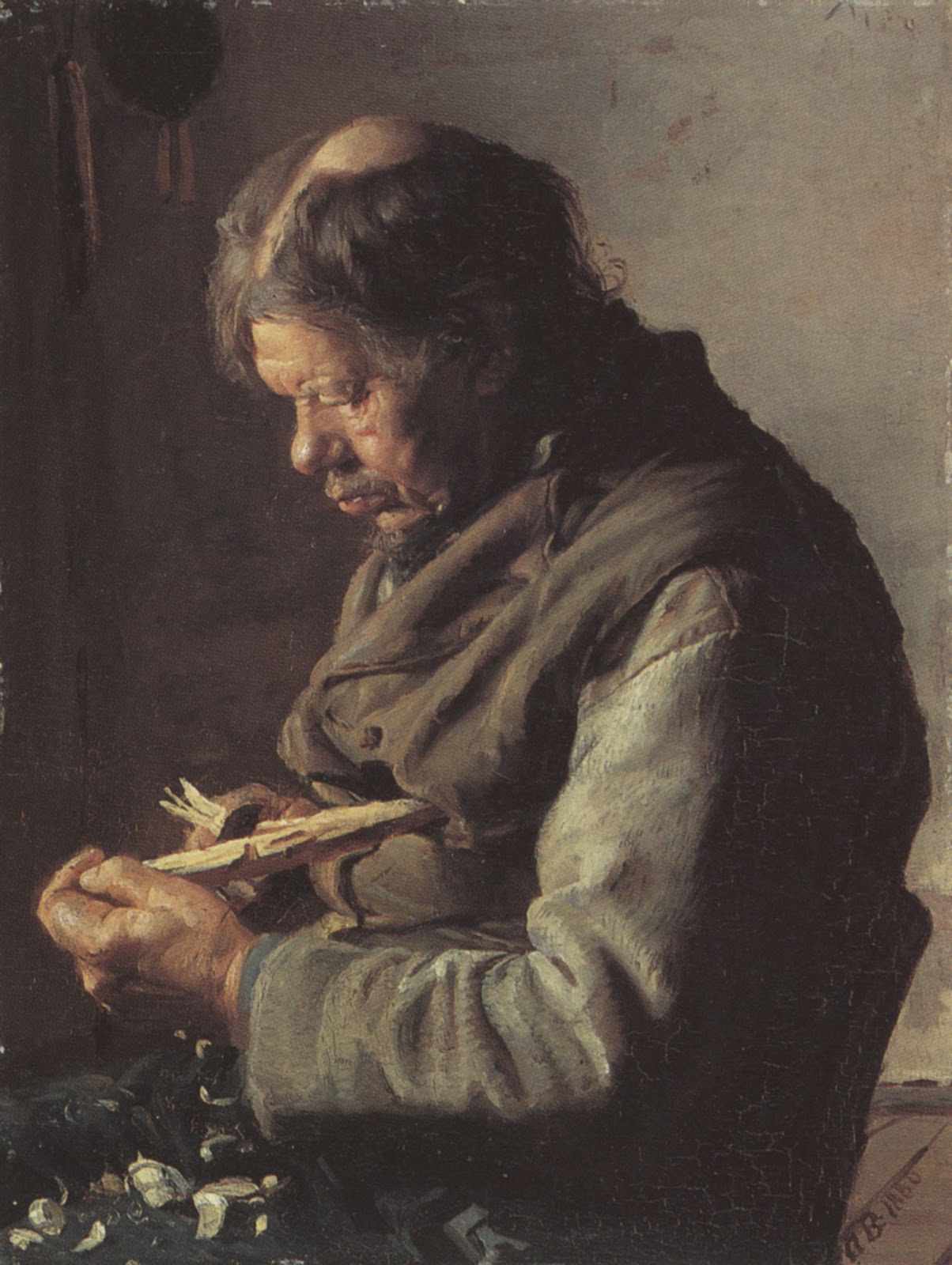
Anna’s painting and pastel skills developed quickly, from both her formal education in Copenhagen and the informal lessons in a thriving art colony. In 1880, she made her début as a professional artist in the Charlottenborg Spring Exhibition in Copenhagen. She sold a pastel and received good reviews. The painting below, part of her début exhibit, shows her sophistication and talent at the young age of 20.

Anna Archer, An Old Man Whittling Sticks (1880), Skagens Museum, Copenhagen. First exhibited at the Charlottenborn Spring Exhibition in 1880.


Anna Archer, A Young Girl, Tine Normand (1880), pastel on paper, private collection. Sold at the 1881 Charlottenborg Spring Exhibit.

After Anna married Michael Ancher in 1881, her dedication to art intensified. Michael considered his wife an equal partner and supported her artistic ambitions. Together with her artist husband, Anna had more artistic opportunities than she might have had on her own. In 1882, the couple received government funding to travel to art centers in Berlin, Dresden, Vienna and Munich. Although she may have lived on an isolated tip of Denmark, Anna was able to travel to see major art exhibitions in leading art centers of the world.

Anna had two major accomplishments in 1883: first, her painting The Maid in the Kitchen, shown below, an exquisite painting that displays a sophisticated use of color and light, and second, the birth of her daughter Helga, a golden-haired girl who would remain their only child.

Anna Ancher, The Maid in the Kitchen (1883). Oil on canvas, Den Hirschsprungke Samling, Copenhagen

Michael Ancher’s portrait of Anna while she was pregnant that reveals a deep respect and admiration for his wife. At the time, however, it was controversial. This was considered a pose appropriate only for royalty, and with the dog’s nose so close to her pregnant stomach, it would have been considered immodest. What woman wouldn’t want a husband who values her more than he values tradition and modesty?

File:Michael Ancher - Portrait of my wife. The painter Anna Ancher - Google Art Project.jpg
Michael Ancher, Portrait of My Wife, 1883
Anna and Michael Ancher, Judgment of a Day’s Work (1883), Art Museums of Skagen, on deposit from Statens Museum for Kunst (SMK), Denmark.

Anna and Michael enjoyed collaborating on their art. So much so that in 1883, they created a joint painting, where each painted the portrait of the other. Quite an amazing project, as I wrote about here.

In 1884, Anna, Michael and Helga moved into a small house a few minutes away from her parents’ inn. The Anchers were able to pop down the street to join the Brøndums for dinner, sparing Anna from having to prepare family meals. Anna also enjoyed the double benefit of having her own maid: not only was she spared many domestic and child-rearing chores, she also had an artist’s model at her disposal all day long. That is why The Maid in the Kitchen (above) should be appreciated as a decidedly feminist statement. The artist is behind the easel, and not behind the sink.

Even after the birth of their child, Anna continued to travel to European art destinations from Amsterdam to Paris. Perhaps her parents helped out with child care, or perhaps they brought their young daughter along on their travels. In 1889 she and Michael visited Paris for six months, where they both exhibited and won prizes in the Paris World’s Fair. In addition, Anna took instruction from the famous French artist Puvis de Chavannes.

In 1891, Anna executed an ambitious work called A Funeral, an impressively large 48′ x 57″ piece, featuring multiple subjects in a serious setting, not unlike a previous work of her husband’s, The Christening. This painting reveals a mastery of color, while at the same time conveying a distinct impression of calm and control. Purchased by the Statens Musem for Kunst in 1891, this painting elevated Anna’s status as an artist even further.

Anna Ancher, A Funeral (1891), Statens Musem for Kunst (SMK), Denmark.

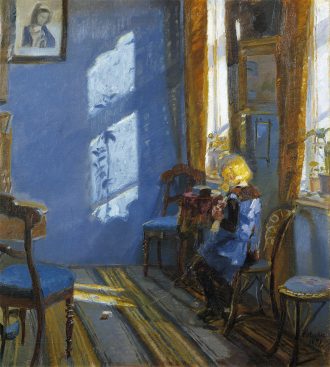
Anna often painted their daughter Helga, as well as light-dappled interiors. She was known for her observation of light as it fell across a room, creating patterns of its own.

Anna Ancher, Sunlight in the Blue Room (1891), picturing Helga at work on a crochet project.
Anna Ancher, Two Girls, Sewing Lessons (1910)

In 1893, Anna’s work was represented in the Chicago World’s Fair. In 1894 she was a member of a committee of Danish women who organized a Women’s Exhibition in Copenhagen. From 1900 on, Anna received many medals and honors, elevating her to a membership in the Royal Danish Academy of Fine Arts.

Interestingly, Michael and Anna’s daughter Helga grew up to be an artist as well. She was admitted to the Danish Royal Academy of Art School for Women in 1901, and studied art in Paris in 1909-1910. The pastel below reveals her mother’s strong influence.

Helga Ancher, Anna Ancher Reading in the Drawing Room, undated pastel

Michael Ancher died in 1927, Anna in 1935. Their memory lives on at the Skagen Museum, first founded in the dining room of the Brøndum Inn in 1908. Today the museum includes the historic Ancher Hus, the home of Anna, Michael and Helga Ancher. After Helga’s death in 1964, their home was restored and turned into a museum.

Such a fascinating woman, especially for her time and place. The fact that she lived in such an isolated and beautiful spot might have actually been the secret to her success. In contrast to many other women artists of the 19th century, who struggled against a family and culture that valued modesty, propriety and conformity, Anna was lucky to grow up in an art colony that encouraged her talent and stoked her ambition. Artistic expression was her birthright.

What a difference.